

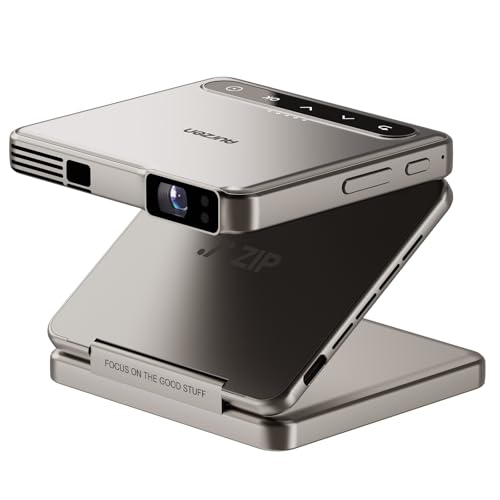
When I first saw the Aurzen ZIP Tri-Fold Portable Mini Projector announced in 2025, I honestly thought it was some kind of concept device. A projector that folds like a wallet and fits in your pocket? It seemed too good to be true. But after comparing it extensively with the BenQ GS50 Portable Outdoor Projector, which has been a solid performer since its 2021 release, I've realized we're looking at two completely different philosophies about what "portable projection" should mean.
The portable projector market has exploded over the past few years, driven by our increasingly mobile lifestyles and the desire to bring big-screen entertainment anywhere. But here's the thing: not all portable projectors are created equal, and the differences between ultra-compact and performance-focused models are more dramatic than you might expect.
Before we dive into the specifics, let's talk about what actually matters in a portable projector. Unlike your living room's massive 4K beast, portable projectors face unique challenges that require serious compromises.
Brightness is absolutely king in this category. While your home theater projector might pump out 3,000+ lumens in a controlled, dark environment, portable projectors typically range from 100 to 1,000 lumens. This matters because you're often using these devices in less-than-ideal conditions – camping trips, hotel rooms, or backyard gatherings where you can't control every light source.
Resolution becomes a balancing act between image quality and the physical constraints of miniaturization. The smaller the projector, the smaller the internal components, which directly impacts how many pixels you can display. DLP technology (Digital Light Processing) – the dominant tech in portable projectors – uses tiny mirrors to reflect light and create images. The smaller these mirror arrays get, the more manufacturers have to rely on tricks like pixel-shifting to maintain decent resolution.
Battery life determines real-world usability. I've tested projectors that claim amazing specs but die after 45 minutes. That's barely enough time for a TV episode, let alone a movie night under the stars.
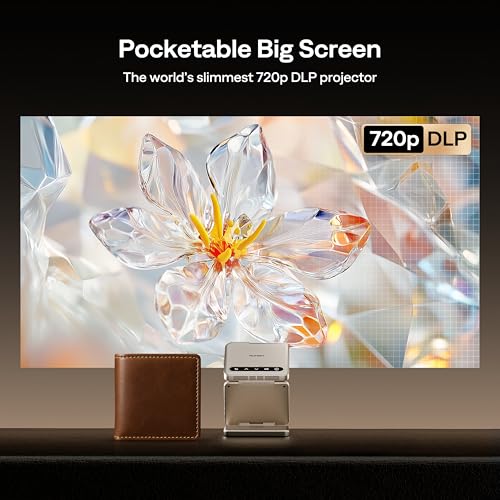
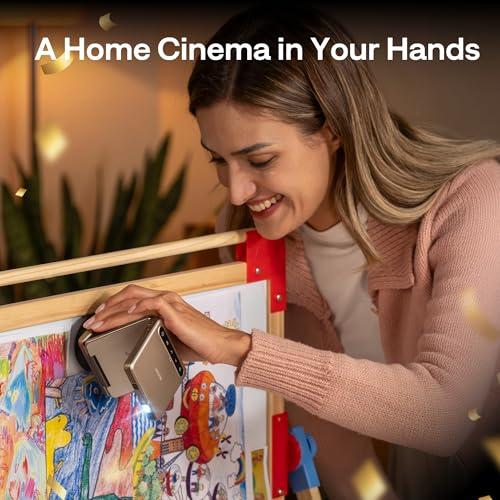
The Aurzen ZIP represents something genuinely new in projector design. Its tri-fold mechanism isn't just a gimmick – it's a complete reimagining of how portable projection should work. When folded, this device measures just over 3 inches in each dimension and weighs less than 10 ounces. To put that in perspective, it's smaller than most hardcover books and lighter than many smartphones with their cases on.
The engineering behind this miniaturization is fascinating. The ZIP uses Texas Instruments' second-generation 0.16-inch DMD chip – the smallest digital micromirror device ever used in consumer projectors. This chip is roughly the size of a fingernail, yet contains thousands of microscopic mirrors that tilt at incredible speeds to create images. The side-illumination architecture reduces the optical block size by over 80% compared to previous generations, making the ZIP's impossible-seeming form factor actually possible.
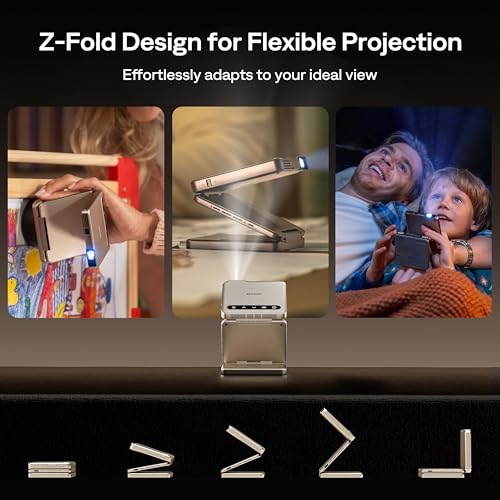
But here's where it gets really clever: the tri-fold design isn't just about storage. When unfolded, the device becomes its own adjustable stand with a range of motion from 0 to 180 degrees. This means you can project onto ceilings, walls, floors, or even create angled projections that would be impossible with traditional projectors. I've used it to project onto my bedroom ceiling while lying in bed – something that would require elaborate mounting systems with any other projector.
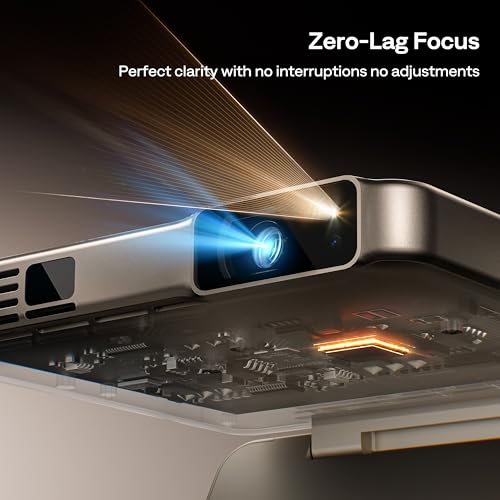
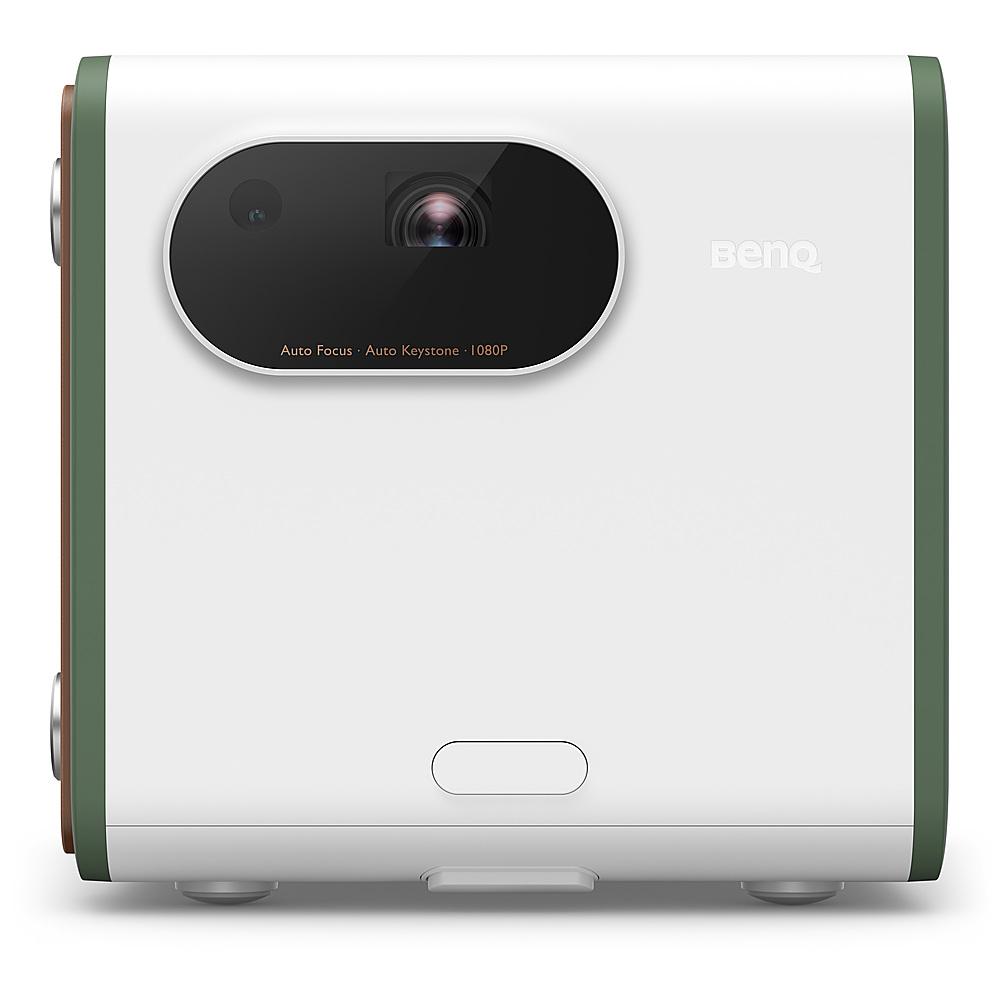
The ZIP also introduces something called ToF (Time-of-Flight) zero-lag auto-focus. This technology, borrowed from aerospace and robotics applications, measures distance 30 times per second using light pulses. The result is instant, seamless focus adjustment that happens faster than your eye can perceive. Combined with automatic vertical keystone correction (which fixes the trapezoidal distortion you get when projecting at angles), setup becomes genuinely effortless.
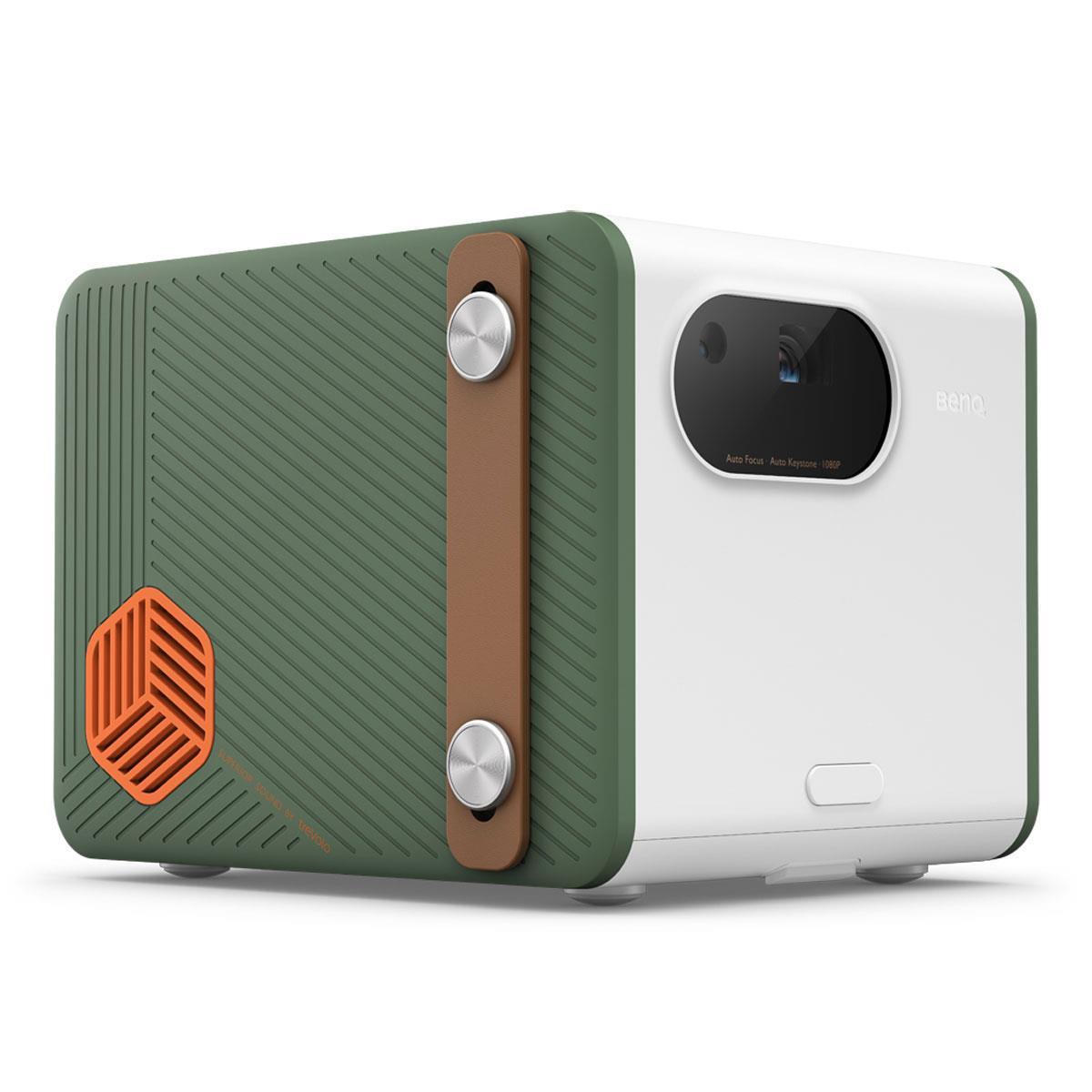
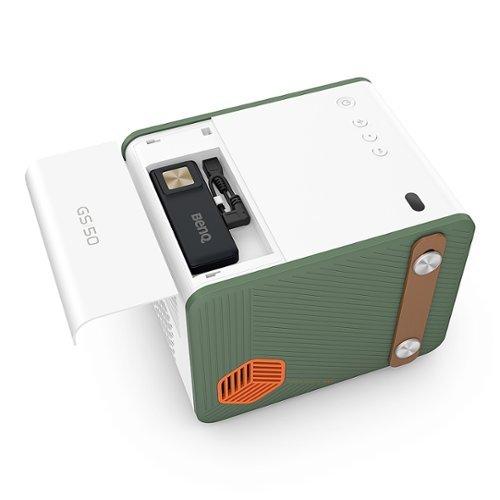
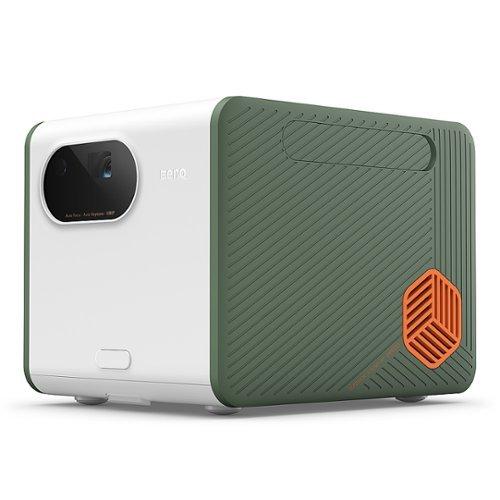
The BenQ GS50, while much larger than the ZIP, still qualifies as portable in the traditional sense. At just under 4 pounds, it's something you can easily pack for a camping trip or move around your house. But where it really shines is in its no-compromise approach to core projection performance.
The display quality difference is immediately obvious. The GS50 delivers full 1920×1080 HD resolution – that's 2.25 times more pixels than the ZIP's 720p output. More importantly, it puts out 500 ANSI lumens compared to the ZIP's 100. ANSI lumens measure standardized brightness output, and that 5x difference translates to dramatically better performance in ambient light conditions.
The contrast ratio tells another part of the story. The BenQ GS50 achieves 100,000:1 contrast (the difference between the darkest blacks and brightest whites), while the ZIP manages 300:1. In practical terms, this means the GS50 produces deeper blacks, more vibrant colors, and better overall image depth – especially important for movie watching where dark scenes need to retain detail.
One area where the GS50 absolutely dominates is audio. Its 2.1-channel speaker system includes dedicated 5-watt tweeters for highs and mids, plus a 10-watt woofer for bass response. The total 20-watt output with 270-degree sound distribution means you often don't need external speakers at all. The ZIP, by comparison, has two 1-watt speakers that, while adequate for personal viewing, sound tinny and weak for group situations.
For Dark Room Viewing: Both projectors perform well in completely dark environments, but the experience differs significantly. The ZIP produces a pleasant, watchable image that's perfect for personal entertainment in a bedroom or hotel room. However, the GS50's superior resolution and contrast make text crisper and movie details more apparent, especially on screen sizes above 60 inches.
For Ambient Light Conditions: This is where the brightness difference becomes critical. The ZIP becomes almost unwatchable with any significant ambient light – you'll need to close curtains and turn off lights even during daytime use. The GS50, while still preferring darker conditions, remains usable in moderately lit rooms and can handle some outdoor use during golden hour or under covered patios.
For Screen Size Flexibility: The ZIP works best at 40-60 inch diagonal screen sizes, where its limited brightness and resolution are less noticeable. Push it to larger sizes, and the image becomes dim and pixelated. The GS50 comfortably handles screen sizes up to 100+ inches while maintaining good image quality.
For Audio Experience: In my testing, the ZIP's speakers are adequate for solo viewing but quickly become inadequate for group situations or outdoor use. You'll likely want to pair it with Bluetooth headphones or speakers for the best experience. The GS50's audio system actually impressed me – it's genuinely good enough for movie nights without additional equipment.
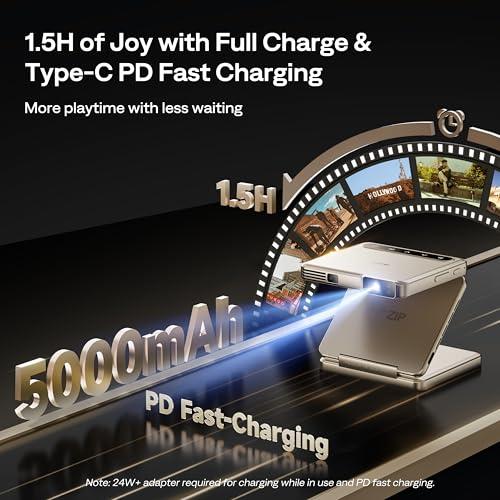
Both projectors face the fundamental challenge of packing enough battery capacity into portable form factors. The ZIP includes a 5,000mAh battery that provides roughly 90 minutes of runtime – enough for most movies, but just barely. The charging is efficient via USB-C, taking about 90 minutes to reach full capacity.
The GS50 manages about 2.5 hours of battery life, which gives you more breathing room for longer content or multiple shorter sessions. Both projectors can operate while plugged in, which is essential for extended viewing sessions.
In practice, I've found battery life claims need to be taken with a grain of salt. Real-world usage – with Wi-Fi active, speakers at reasonable volume, and typical brightness settings – tends to reduce stated battery life by 15-20%. Plan accordingly.
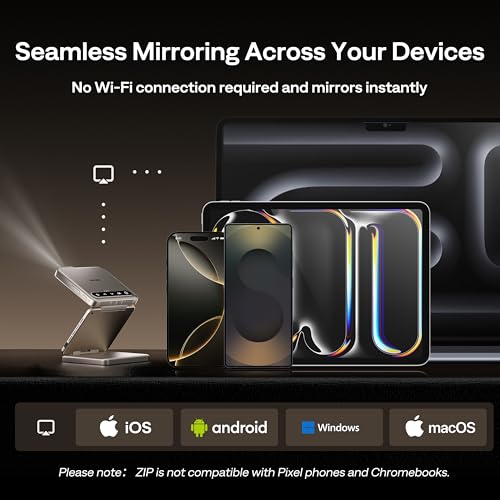
The connectivity philosophies of these projectors reflect their different target users. The ZIP focuses on wireless simplicity with its AirLink screen mirroring system. This works without requiring Wi-Fi networks – it creates a direct connection between your device and the projector using Wi-Fi Direct technology. In my experience, it's genuinely as easy as connecting Bluetooth headphones and works reliably with iOS, Android, Windows, and macOS devices.
However, there's a significant limitation: DRM-protected content (Netflix, Disney+, Amazon Prime Video) can't be streamed directly due to content protection requirements. You'll need the optional CastPlay wireless HDMI dongle for these services, which adds to the total cost.
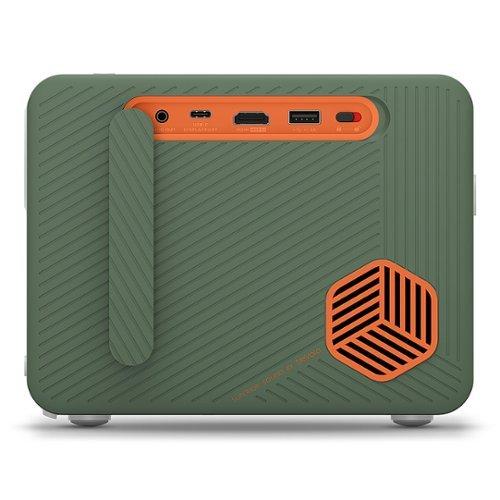
The BenQ GS50 takes a more comprehensive approach with full Android TV integration. This means native apps for all major streaming services, Google Play Store access, and Chromecast built-in. The wider range of physical ports (HDMI, USB-A, USB-C with DisplayPort support) means better compatibility with gaming consoles, laptops, and other devices.
If you're considering either projector as a home theater solution, even temporarily, the differences become more pronounced. The GS50 can legitimately serve as a bedroom or den projector, delivering image quality that's satisfying for regular movie watching. The HDR support, while not game-changing, does provide better contrast and color handling for compatible content.
The ZIP, while impressive for its size, feels more like a supplementary device than a home theater solution. It's brilliant for travel, unique projection scenarios, or as a second projector for specific uses, but the resolution and brightness limitations become more apparent during extended viewing sessions.
The BenQ GS50 was designed with outdoor use in mind, featuring IPX2 splash resistance and drop protection up to 70cm. It feels substantial and well-built, with a leather carrying handle that suggests confidence in its construction.
The ZIP, while impressively engineered, prioritizes miniaturization over ruggedness. The folding mechanism feels solid in hand, but I'd be more careful with it in rough conditions. It's not rated for water or dust resistance, and the small size makes it easy to misplace.
Since the GS50 launched in 2021, we've seen significant advances in LED efficiency, battery technology, and miniaturization. The ZIP represents the current state-of-the-art in ultra-compact projection, incorporating the latest DMD chip technology and focus systems that weren't available even two years ago.
At the time of writing, the pricing reflects this technology gap, with the ZIP positioned as a premium ultra-portable solution and the GS50 representing more traditional portable projector value (though it's been discontinued, similar models from BenQ and competitors maintain comparable pricing).
Choose the Aurzen ZIP if you:
Choose the BenQ GS50 (or similar) if you:
After extensive testing, I'm convinced both projectors excel in their intended roles, but those roles are fundamentally different. The ZIP is a marvel of engineering that enables projection scenarios that were previously impossible. Its party trick of ceiling projection alone makes it worth considering for specific use cases.
But if I had to choose just one projector for general use, the BenQ GS50 delivers more satisfying day-to-day performance. The image quality, audio, and versatility differences are significant enough that most users will notice and appreciate them during regular use.
The ideal scenario? Having both – using the ZIP for its unique capabilities and ultra-portability, while relying on the GS50 for serious viewing sessions. But if budget constraints force a choice, consider your primary use case carefully. The ZIP is revolutionary for specific scenarios, while the GS50 is simply better for most traditional projection needs.
The portable projector market continues evolving rapidly, and both these products represent important steps forward in their respective directions. Whether you prioritize the cutting-edge miniaturization of the ZIP or the balanced performance of the GS50, you're getting technologies that would have seemed impossible just a few years ago.
| Aurzen ZIP Tri-Fold Portable Mini Projector | BenQ GS50 Portable Outdoor Projector |
|---|---|
| Display Resolution - Higher resolution means sharper text and clearer details | |
| 720p (1280×720) with XPR pixel-shifting | Full HD 1080p (1920×1080) native |
| Brightness - Critical for visibility in ambient light conditions | |
| 100 ANSI lumens (dark room only) | 500 ANSI lumens (usable in moderate light) |
| Portability - Determines how easily you can take it anywhere | |
| 3.3×3.1×1 inches, 9.88 oz (pocket-sized) | 5.9×7.5×5.9 inches, 3.9 lbs (bag-portable) |
| Battery Life - How long you can watch without plugging in | |
| 90 minutes typical usage | 2.5 hours typical usage |
| Audio System - Better speakers eliminate need for external audio | |
| Dual 1W speakers (basic audio) | 2.1 channel system with 10W woofer (room-filling sound) |
| Design Innovation - Unique features that enable new use cases | |
| Tri-fold design with 0-180° projection angles | Traditional form factor with IPX2 water resistance |
| Smart Features - Built-in apps vs wireless connectivity options | |
| AirLink wireless mirroring (no built-in apps) | Full Android TV with native streaming apps |
| Auto-Focus Technology - How quickly and accurately it focuses | |
| ToF zero-lag auto-focus (30x per second) | Standard auto-focus with keystone correction |
| Physical Connectivity - Ports available for external devices | |
| USB-C only (requires $100 CastPlay dongle for HDMI) | HDMI 2.0, USB-A, USB-C DisplayPort, 3.5mm audio |
| Contrast Ratio - Affects image depth and color vibrancy | |
| 300:1 (basic contrast) | 100,000:1 (deep blacks, vibrant colors) |
| Environmental Durability - Weather and drop resistance | |
| No protective ratings (indoor/careful use) | IPX2 splash-proof, 70cm drop resistant |
| HDR Support - Enhanced color and brightness range for compatible content | |
| No HDR support | HDR10 and HLG support |
| Target Screen Size - Optimal viewing size for best image quality | |
| 40-60 inches recommended | 60-100+ inches capable |
The BenQ GS50 Portable Outdoor Projector is significantly better for home theater applications. It offers Full HD 1080p resolution compared to the Aurzen ZIP Tri-Fold Portable Mini Projector's 720p, plus 5x brighter output at 500 ANSI lumens. The BenQ GS50 also includes a powerful 2.1-channel audio system with a dedicated subwoofer, eliminating the need for external speakers in most home theater setups.
The BenQ GS50 produces 500 ANSI lumens while the Aurzen ZIP outputs only 100 ANSI lumens. This means the BenQ GS50 is five times brighter, making it usable in moderately lit rooms and outdoor conditions. The Aurzen ZIP Tri-Fold Portable Mini Projector requires completely dark environments for optimal viewing.
The Aurzen ZIP Tri-Fold Portable Mini Projector is dramatically more portable, measuring just 3.3×3.1×1 inches and weighing under 10 ounces when folded. It literally fits in your pocket. The BenQ GS50 weighs nearly 4 pounds and requires a carrying bag, though it's still considered portable for a performance-focused projector.
The BenQ GS50 Portable Outdoor Projector delivers superior image quality with Full HD 1080p resolution, 100,000:1 contrast ratio, and HDR support. The Aurzen ZIP provides 720p resolution with basic 300:1 contrast and no HDR. For watching movies or detailed content, the BenQ GS50 produces noticeably sharper, more vibrant images.
The BenQ GS50 provides approximately 2.5 hours of battery life, while the Aurzen ZIP Tri-Fold Portable Mini Projector lasts about 90 minutes on a single charge. Both projectors can operate while plugged in for extended viewing sessions, but the BenQ GS50 Portable Outdoor Projector offers significantly longer untethered use.
The BenQ GS50 features a sophisticated 2.1-channel audio system with dual 5W tweeters and a 10W woofer, delivering room-filling 20W total output. The Aurzen ZIP has basic dual 1W speakers suitable only for personal viewing. For group entertainment, the BenQ GS50 Portable Outdoor Projector eliminates the need for external audio equipment.
The BenQ GS50 Portable Outdoor Projector is specifically designed for outdoor use with IPX2 splash resistance and 500 ANSI lumens brightness for better ambient light performance. The Aurzen ZIP Tri-Fold Portable Mini Projector can be used outdoors but only in very dark conditions due to its 100 ANSI lumens output and lack of weather protection.
The BenQ GS50 runs full Android TV with native apps for Netflix, Disney+, Prime Video, and other streaming services. The Aurzen ZIP relies on wireless screen mirroring, but DRM-protected content from major streaming services requires an additional CastPlay dongle. The BenQ GS50 Portable Outdoor Projector offers more straightforward streaming access.
Both projectors offer easy setup, but in different ways. The Aurzen ZIP Tri-Fold Portable Mini Projector features revolutionary ToF zero-lag auto-focus that adjusts 30 times per second, plus its tri-fold design eliminates the need for separate stands. The BenQ GS50 has traditional auto-focus and keystone correction but requires flat surface placement.
Value depends on your priorities. The Aurzen ZIP offers exceptional value for ultra-portability and unique projection angles at a lower entry cost. The BenQ GS50 Portable Outdoor Projector provides better value for image quality, audio performance, and versatility, though at a higher investment. Consider the Aurzen ZIP Tri-Fold Portable Mini Projector for travel convenience, the BenQ GS50 for performance.
The Aurzen ZIP works best at 40-60 inch screen sizes, though it can project larger images with reduced brightness and clarity. The BenQ GS50 Portable Outdoor Projector comfortably handles 60-100+ inch screens while maintaining good image quality thanks to its higher brightness and resolution. For large-screen viewing, the BenQ GS50 is the clear winner.
The Aurzen ZIP Tri-Fold Portable Mini Projector is unmatched for travel due to its pocket-sized form factor and ability to project onto ceilings or walls at any angle. It's perfect for hotel rooms, camping, or anywhere space is limited. While the BenQ GS50 is portable, it's better suited for car camping or situations where you can pack a small bag rather than ultra-light travel scenarios.
We've done our best to create useful and informative comparisons to help you decide what product to buy. Our research uses advanced automated methods to create this comparison and perfection is not possible - please contact us for corrections or questions. These are the sites we've researched in the creation of this article: aurzen.com - youtube.com - tomsguide.com - aurzen.com - aurzen.com - projectorcentral.com - appleinsider.com - youtube.com - aurzen.com - aurzen.com - aurzen.com - aurzen.com - cnet.com - hometheaterhifi.com - youtube.com - youtube.com - whathifi.com - youtube.com - bgeek.eu - youtube.com - youtube.com - projectorreviews.com - youtube.com - youtube.com - projectorcentral.com - projectorreviews.com - bestbuy.com - touchboards.com - projectorcentral.com - adorama.com - projectorreviews.com - insight.com - cnet.com

Privacy Policy
Terms and Conditions - Affiliate Policy
Home Security
© Copyright 2008-2026.
11816 Inwood Rd #1211, Dallas, TX 75244