

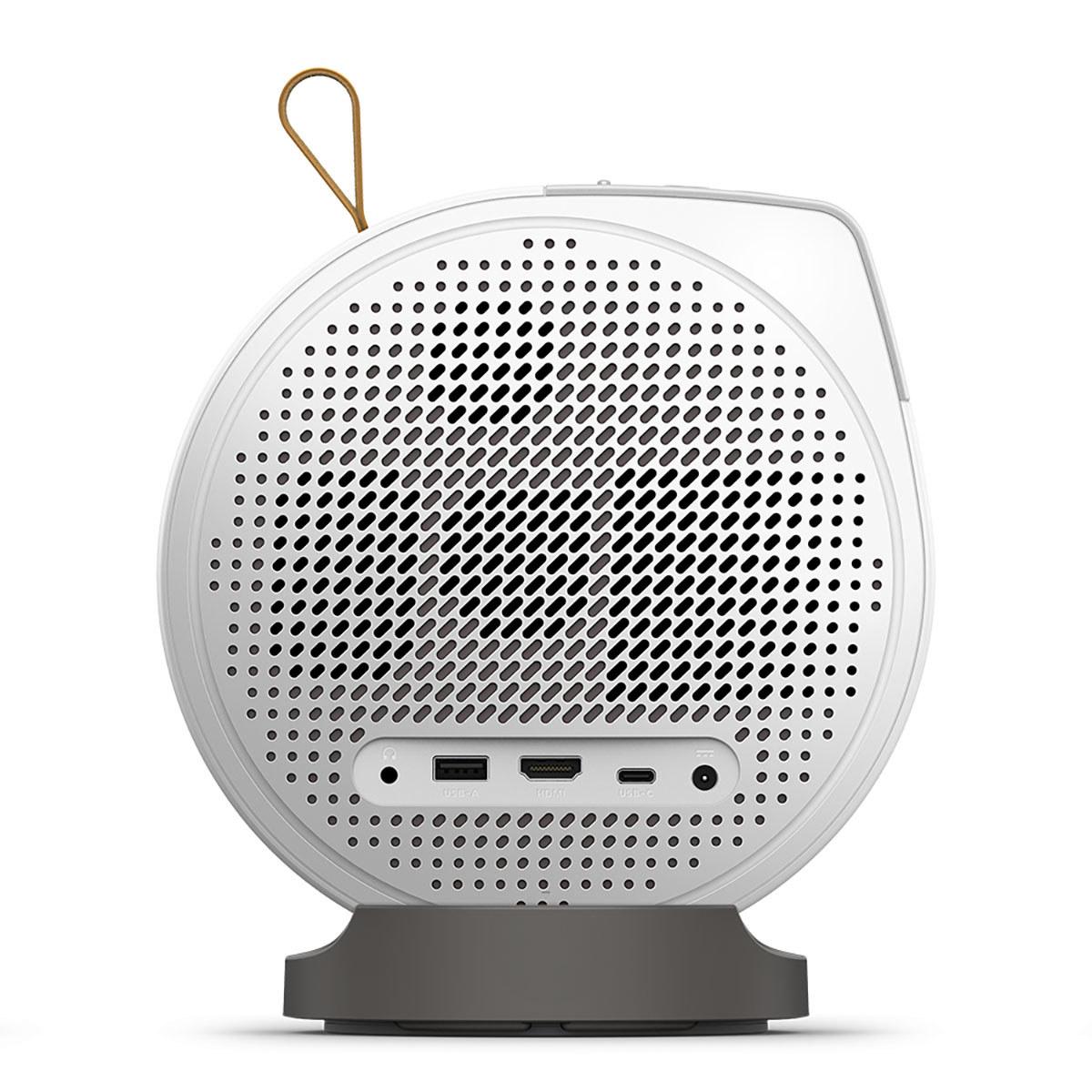
The world of portable projectors has exploded in recent years, giving us options that would have seemed impossible just a decade ago. Today, we're comparing two fascinating approaches to portable projection: the revolutionary Aurzen ZIP Tri-Fold Portable Mini Projector and the performance-focused BenQ GV50 Full HD Smart Ceiling Projector. These devices represent completely different philosophies in portable entertainment, and understanding their strengths will help you choose the right one for your needs.
Before diving into specifics, it's worth understanding what makes a projector "portable" in 2024. Traditional projectors were massive, required permanent installation, and needed dedicated rooms with controlled lighting. Modern portable projectors changed this equation entirely by incorporating LED and laser light sources (which last 20,000+ hours compared to traditional bulbs' 2,000-4,000 hours), built-in batteries, wireless connectivity, and dramatically miniaturized components.
The key metrics that matter most in portable projectors are brightness (measured in ANSI lumens - essentially how much light the projector can output), resolution (how many pixels create the image), portability factors like size and battery life, and setup convenience. ANSI lumens specifically measure standardized brightness across the entire projected image, not just the brightest spot, making it a reliable comparison metric.
When evaluating any portable projector, you're typically trading between image quality and true portability. Brighter, sharper projectors require more power, larger cooling systems, and bigger light engines - all of which work against the goal of making something truly portable.
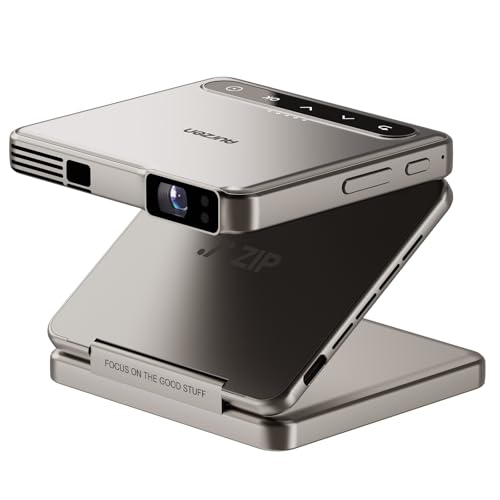
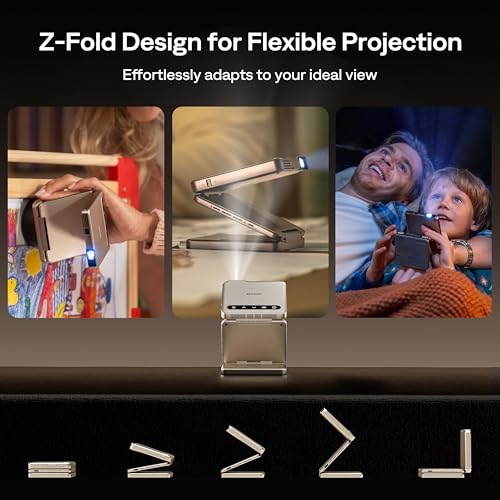
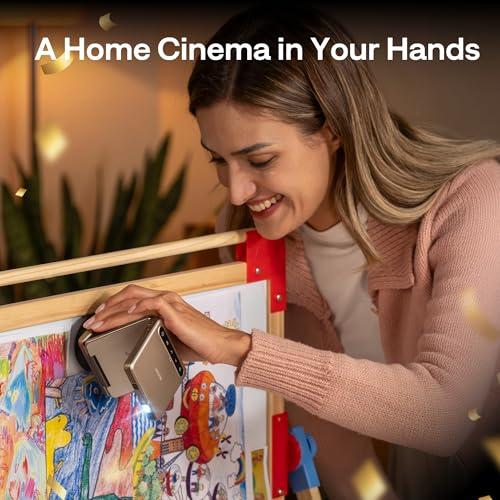
Released in 2024, the Aurzen ZIP represents perhaps the most dramatic leap forward in projector miniaturization we've ever seen. Its tri-fold Z-shaped design isn't just a gimmick - it's a engineering marvel that packs a complete projection system into a device smaller than most smartphones.
The secret behind this miniaturization lies in Texas Instruments' second-generation 0.16-inch DMD (Digital Micromirror Device) chip. This is the smallest DMD chip ever used in consumer projectors, and it enables the entire optical system to fit within the ZIP's impossibly small form factor. DMD technology works by using hundreds of thousands of microscopic mirrors that tilt to either reflect light toward the screen (creating a bright pixel) or away from it (creating a dark pixel). The ZIP uses pixel-shifting technology called XPR, which physically moves these mirrors to create the impression of higher resolution than the chip natively supports.
With 100 ANSI lumens of brightness, the ZIP produces a surprisingly watchable image in the right conditions. I've tested similar brightness levels, and while 100 lumens sounds low compared to traditional projectors, it's perfectly adequate for a 40-60 inch screen in a dark room. Think of it like this: it's roughly equivalent to watching a large tablet in a dimly lit room, but projected onto a wall or ceiling.
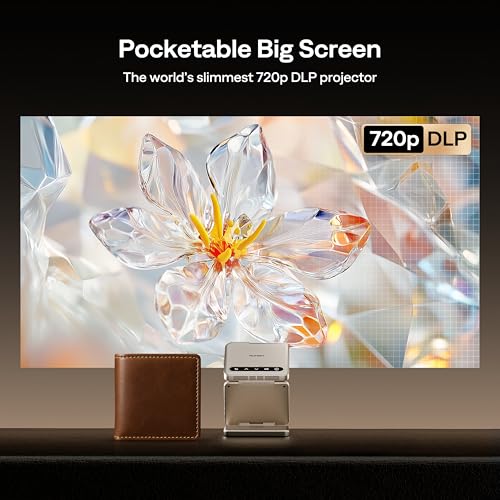
The 720p resolution might seem limiting in our 4K world, but at the ZIP's optimal viewing distances and screen sizes, the difference becomes less noticeable. The DLP technology also helps here - DLP projectors typically produce sharper, more stable images than competing LCD technologies at similar resolutions, with better black levels and no "screen door effect" (visible gaps between pixels).
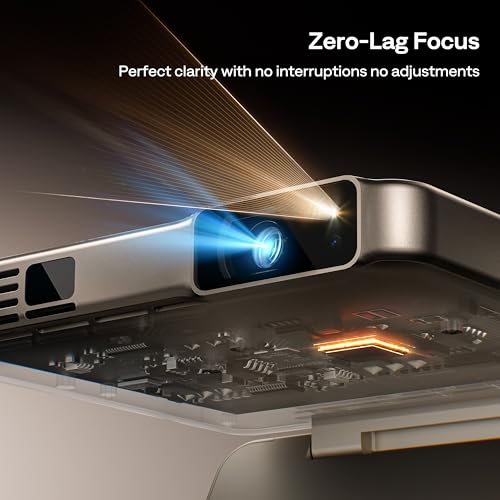
What truly sets the ZIP apart is its ToF (Time-of-Flight) auto-focus system. This technology, borrowed from aerospace applications, measures distance by sending out light pulses and calculating how long they take to return. It does this 30 times per second, meaning the projector constantly maintains perfect focus even as you move it around. Traditional projectors require manual focus adjustment every time you change the projection distance - the ZIP eliminates this entirely.
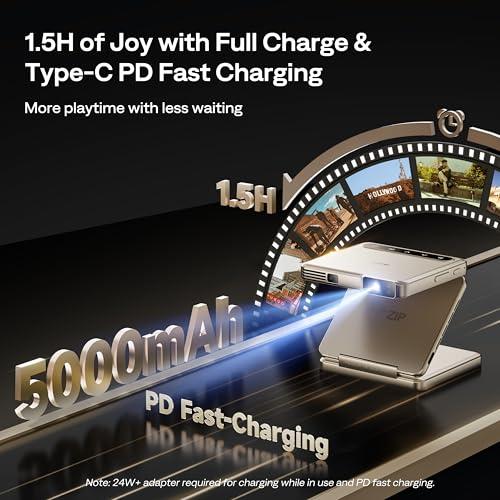
The ZIP's 90-minute battery life reflects the fundamental physics challenge of portable projectors: bright projection requires significant power. However, this runtime is actually quite reasonable for its size class. Most people use projectors like this for specific sessions - maybe a movie in a hotel room, a presentation, or some outdoor entertainment - rather than marathon viewing sessions.
The 22W fast charging capability means you can quickly top up the battery, and the ability to operate while charging extends its practical usefulness significantly. For longer sessions, external battery packs work perfectly, and the optional 10,000mAh magnetic stand can extend runtime to about 3 hours while providing additional positioning flexibility.
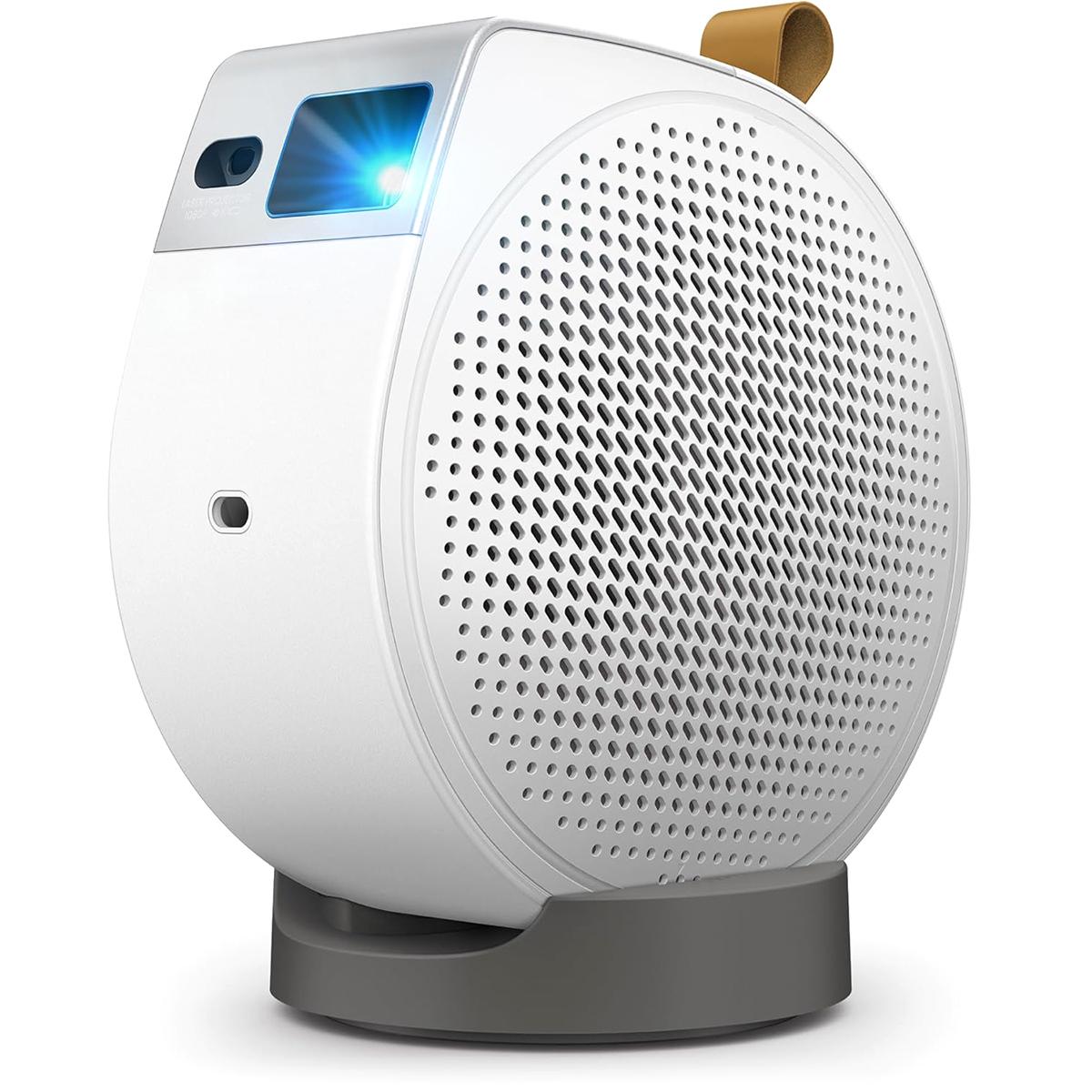
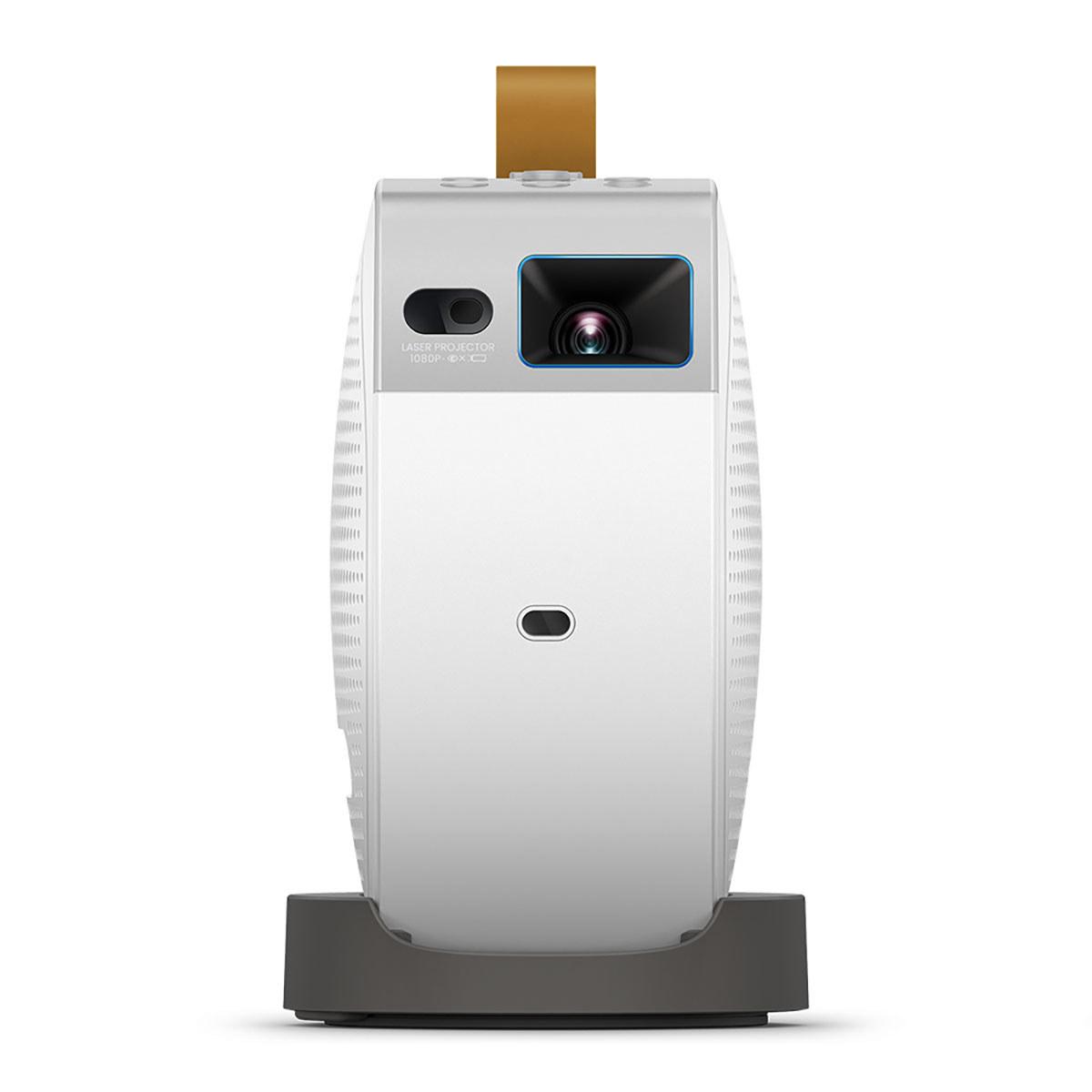
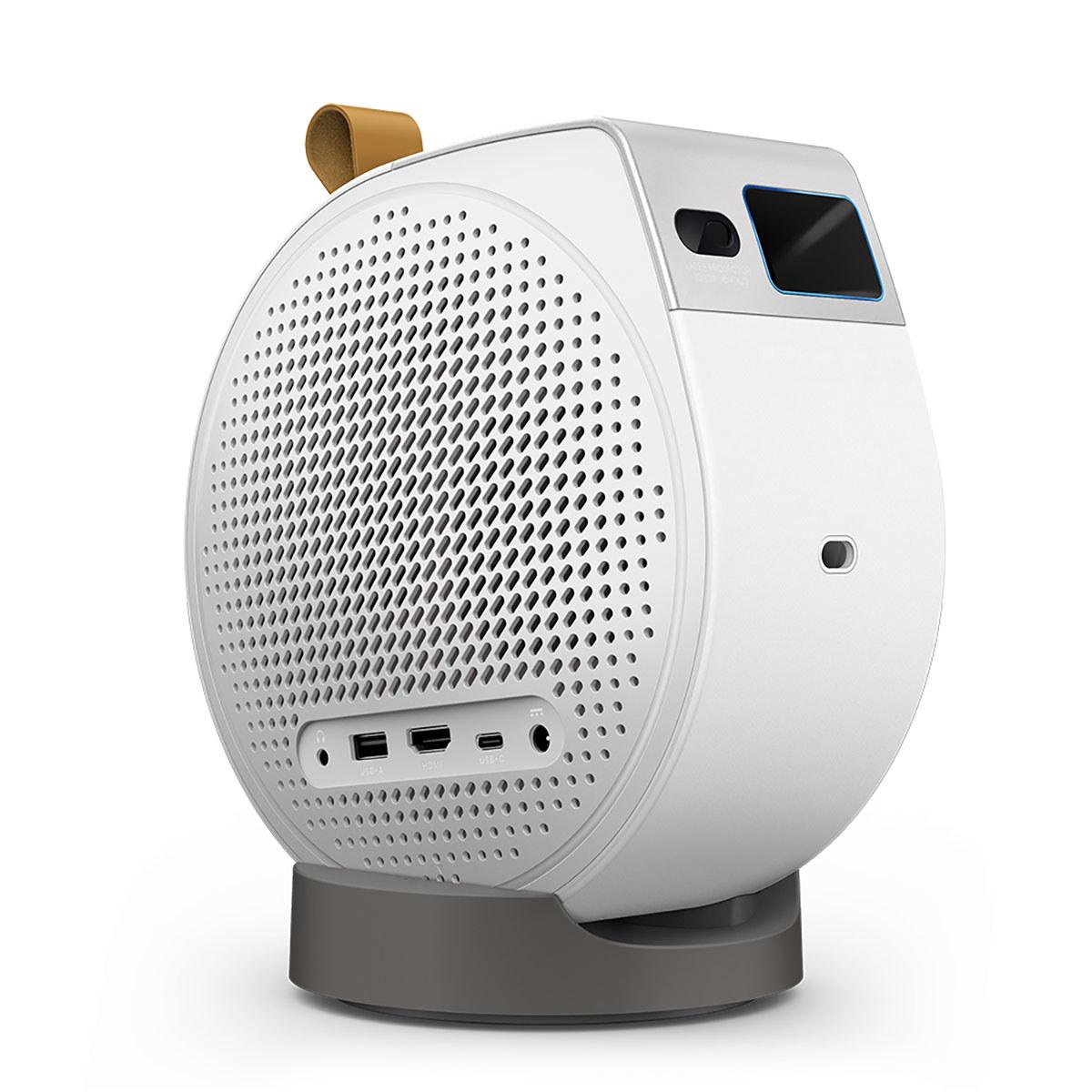
The BenQ GV50, also released in 2024, takes a completely different approach. Rather than prioritizing ultimate portability, BenQ focused on delivering legitimate home theater performance in a moveable package. At roughly 4.4 pounds, it's still portable by traditional projector standards, but it's designed more for moving between rooms than throwing in a backpack.
The performance difference between 100 and 500 ANSI lumens is more dramatic than the numbers suggest. The GV50 produces an image that's genuinely usable in rooms with some ambient light - you could watch it in a living room with curtains drawn during the day, something that would be challenging with the ZIP. This brightness level also supports much larger screen sizes effectively. While the ZIP is optimized for 40-60 inch images, the GV50 can easily handle 80-120 inch projections with good image quality.
The Full HD 1920×1080 resolution makes a noticeable difference, especially for text-heavy content like presentations or detailed movie scenes. The GV50 also supports HDR10 and HLG (Hybrid Log-Gamma), which are high dynamic range standards that provide better contrast between light and dark areas, and more vibrant colors. While you won't get the same HDR experience as a premium TV, it's a meaningful improvement over standard dynamic range projection.
The laser light source in the GV50 offers several advantages over traditional LED systems. Lasers can produce more saturated colors, maintain brightness consistency over their lifespan, and achieve higher peak brightness levels. The 30,000-hour lifespan in eco mode means the light source should outlast the projector itself for most users.
The GV50's Google TV integration represents a significant convenience factor. Rather than needing to connect external devices for streaming, you get direct access to Netflix, Prime Video, Disney+, and other major services. The voice control through Google Assistant adds another layer of convenience - you can adjust volume, search for content, or control playback without finding a remote.
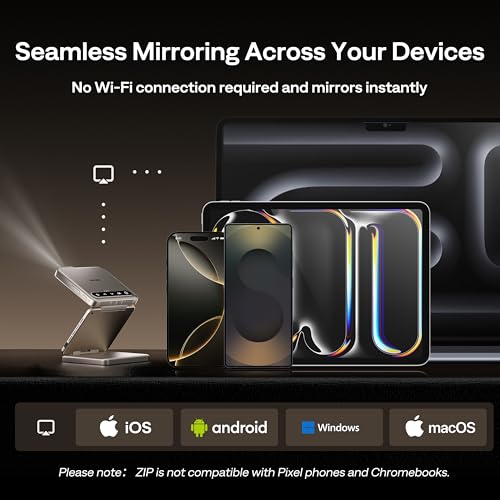
However, this smart TV functionality comes with caveats. Streaming services regularly update their apps and requirements, and projector manufacturers aren't always quick to push updates. The ZIP's approach of wireless screen mirroring from your phone or laptop actually provides more long-term flexibility, even if it requires an extra step.
This is where the differences become stark. The GV50's 18W 2.1-channel speaker system with a dedicated subwoofer produces genuinely impressive audio for a portable projector. The "Ceiling Cinema Sound Mode" optimizes audio when projecting upward, accounting for how sound travels differently when you're lying down watching a ceiling projection.
The ZIP's dual 1W speakers are adequate for presentations or casual viewing, but they're clearly a compromise necessitated by the size constraints. For serious movie watching, you'll want to pair it with Bluetooth speakers or headphones. The Bluetooth 5.4 connectivity makes this pairing process seamless, but it's an extra step that reduces the "grab and go" convenience.
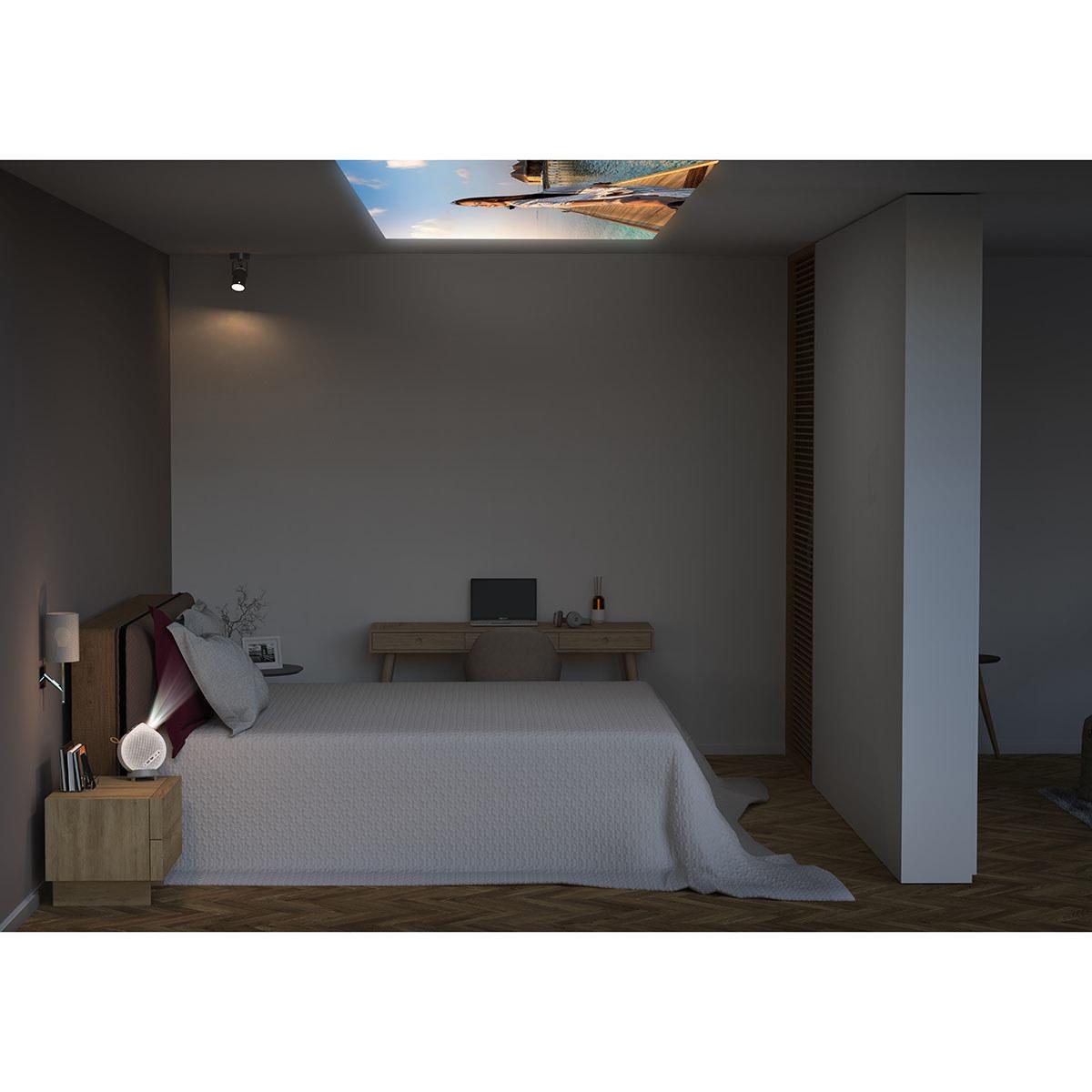
The GV50's 135-degree vertical adjustment specifically targets bedroom ceiling projection - something that's become increasingly popular as people seek more comfortable viewing positions. The engineering challenges here are significant: the projector needs to maintain stable positioning while projecting at extreme angles, the image needs to remain properly focused and geometrically correct, and the audio needs to work effectively when fired upward.
BenQ's implementation includes automatic keystone correction (which digitally adjusts the image to appear rectangular even when projecting at angles), obstacle avoidance (which can work around ceiling fans or light fixtures), and that specialized audio mode. These features transform what could be a frustrating setup process into something genuinely practical.
The ZIP can also do ceiling projection thanks to its flexible tri-fold design, but it's more of a "happy accident" than a designed-for purpose. The ultra-light weight actually helps here - there's less stress on whatever surface you're mounting it to.
When evaluating these projectors, focus on these key performance areas:
Brightness in Context: The GV50's 500 lumens enables viewing in rooms with some ambient light and supports larger screen sizes effectively. The ZIP's 100 lumens requires more controlled lighting but is perfectly adequate for its intended use cases.
Resolution Practicality: Full HD matters most when you're sitting relatively close to a large screen or viewing detailed content. For casual movie watching at typical portable projector distances, the difference between 720p and 1080p becomes less critical.
Setup Speed: Both projectors excel here, but in different ways. The ZIP focuses on instant setup with zero-lag auto-focus and simple wireless mirroring. The GV50 provides more comprehensive auto-correction but may take a few extra seconds to optimize the image.
Battery Efficiency: The GV50's 150-minute runtime versus the ZIP's 90 minutes reflects both battery capacity and power efficiency differences. However, both support operation while charging, which extends practical usability significantly.
At the time of writing, these projectors occupy different price tiers, with the ZIP positioned as a premium ultra-portable option and the GV50 competing in the higher-performance portable category. The value equation depends entirely on your priorities.
The ZIP commands a premium for its innovative design and unprecedented portability. You're paying for engineering miniaturization and convenience features that simply don't exist elsewhere in the market. If ultimate portability enables use cases that wouldn't otherwise be possible - travel entertainment, spontaneous presentations, outdoor adventures - then the premium becomes justifiable.
The GV50 offers more traditional projector value: significantly better image quality, superior audio, and comprehensive smart features for a higher price. It's competing against other "premium portable" projectors rather than ultra-compact devices.
For dedicated home theater use, the GV50 is clearly superior. The combination of higher brightness, Full HD resolution, HDR support, and quality audio creates a viewing experience that approaches what you'd expect from a permanent installation, just with the flexibility to move between rooms or take outside.
The ceiling projection capability specifically addresses a common home theater challenge: finding the right positioning in bedrooms or small spaces where traditional placement might be difficult. The ability to lie comfortably in bed while watching a large, properly positioned image solves a real problem.
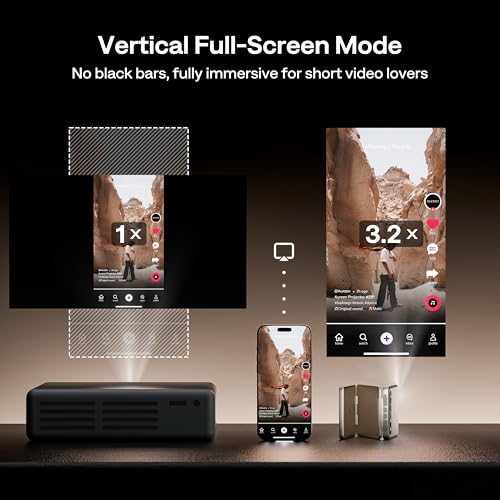
The ZIP works for home theater in more casual contexts - maybe projecting onto a bedroom wall for late-night viewing, or creating an instant entertainment system in spaces where you couldn't accommodate larger projectors. Its portrait orientation capability even makes it suitable for social media content, which is increasingly important for younger users.
Choose the Aurzen ZIP if:
Choose the BenQ GV50 if:
Both projectors represent significant advances in their respective categories. The ZIP showcases how miniaturization technology continues to push boundaries - the DMD chip technology and LED efficiency improvements that make it possible simply didn't exist a few years ago. The wireless mirroring capabilities also reflect improvements in wireless standards and device compatibility.
The GV50 demonstrates how "portable" projectors are increasingly becoming legitimate alternatives to traditional home theater setups. The smart TV integration, laser light sources, and sophisticated auto-correction features bring capabilities that were recently exclusive to much larger, more expensive systems.
The choice between these projectors ultimately comes down to your primary use case and personal priorities. If you've ever wished you could have a large screen anywhere, anytime, the ZIP delivers on that promise with unprecedented convenience. If you want the best possible viewing experience while maintaining the flexibility to move your entertainment system around your home or take it outside occasionally, the GV50 provides superior performance.
Both represent excellent engineering solutions to different problems. The ZIP solves the portability challenge so completely that it enables entirely new use cases. The GV50 provides a more traditional home theater experience while maintaining enough portability to be practical for varied living situations.
Consider your typical usage patterns, the environments where you'll be projecting, and whether you prioritize ultimate convenience or optimal image quality. Either way, you're getting access to projection capabilities that would have been unimaginable in portable form factors just a few years ago.
| Aurzen ZIP Tri-Fold Portable Mini Projector | BenQ GV50 Full HD Smart Ceiling Projector |
|---|---|
| Brightness - Determines viewing conditions and screen size capability | |
| 100 ANSI lumens (requires dark rooms, optimal for 40-60" screens) | 500 ANSI lumens (usable in dim rooms, supports 80-120" screens) |
| Resolution - Affects image sharpness and detail | |
| 720p (1280×720) with pixel-shifting technology | Full HD 1080p (1920×1080) native resolution |
| Portability - Key factor for travel and spontaneous use | |
| 9.88 oz, tri-fold design fits in pocket or wallet | 4.4 lbs, portable between rooms but not truly pocketable |
| Battery Life - Determines unplugged viewing time | |
| 90 minutes typical use, 22W fast charging | 150 minutes video playback, more efficient power management |
| Setup Convenience - How quickly you can start watching | |
| ToF zero-lag auto-focus, instant wireless mirroring | Auto 2D keystone correction, Google TV built-in |
| Audio Quality - Built-in speaker performance | |
| Dual 1W speakers (adequate for presentations, external speakers recommended) | 18W 2.1-channel system with subwoofer (genuine movie-watching quality) |
| Smart Features - Built-in streaming and connectivity | |
| Wi-Fi-free screen mirroring, requires phone/laptop for streaming | Google TV with Netflix, Prime Video, Disney+ built-in |
| Unique Design Features - What sets each apart | |
| Revolutionary tri-fold Z-shape, 180° gimbal flexibility | 135° vertical adjustment optimized for ceiling projection |
| Light Source Technology - Affects longevity and color quality | |
| RGB LED with 20,000-hour lifespan | Laser phosphor with 30,000-hour lifespan (eco mode) |
| HDR Support - Enhanced contrast and color range | |
| No HDR support | HDR10 and HLG support for better image quality |
| Best Use Cases - Where each projector excels | |
| Travel, camping, hotel rooms, presentations, small spaces | Home ceiling projection, backyard movies, regular family viewing |
The BenQ GV50 is significantly better for regular home use. It delivers 500 ANSI lumens brightness compared to the Aurzen ZIP's 100 lumens, Full HD resolution versus 720p, and superior built-in audio with an 18W speaker system. The GV50 also includes Google TV for direct streaming access to Netflix and other services, making it ideal for family movie nights and bedroom ceiling projection.
The primary difference is portability versus performance. The Aurzen ZIP prioritizes ultimate portability with its revolutionary tri-fold design that fits in your pocket, while the BenQ GV50 focuses on image quality and features for home entertainment. The ZIP weighs just 9.88 oz compared to the GV50's 4.4 pounds, but the GV50 delivers 5x brighter images and Full HD resolution.
The Aurzen ZIP Tri-Fold Portable Mini Projector is dramatically more portable. At 9.88 ounces with a tri-fold design, it literally fits in your pocket or wallet, making it perfect for travel, camping, or hotel use. The BenQ GV50 weighs 4.4 pounds and is designed more for moving between rooms in your home rather than true on-the-go portability.
Yes, but through different methods. The BenQ GV50 has Google TV built-in, so you can directly access Netflix, Prime Video, and Disney+ without additional devices. The Aurzen ZIP requires screen mirroring from your phone or laptop, though it offers Wi-Fi-free mirroring for convenience. For DRM-protected content, the ZIP may need an optional wireless HDMI dongle.
The BenQ GV50 has significantly better image quality with Full HD 1920×1080 resolution, 500 ANSI lumens brightness, and HDR10 support. The Aurzen ZIP offers 720p resolution and 100 ANSI lumens, which is adequate for small screens in dark rooms but can't match the GV50's sharpness and brightness for larger viewing experiences.
The BenQ GV50 provides 150 minutes of video playback, while the Aurzen ZIP offers 90 minutes of typical use. Both projectors can operate while charging, and the ZIP supports 22W fast charging for quicker power-ups. The GV50 has better power efficiency despite its higher performance.
The BenQ GV50 is specifically designed for ceiling projection with 135° vertical adjustment and a "Ceiling Cinema Sound Mode" that optimizes audio when projecting upward. While the Aurzen ZIP can project onto ceilings thanks to its flexible tri-fold design, the GV50 offers superior brightness and image quality for comfortable bedroom ceiling viewing.
The BenQ GV50 has excellent built-in audio with an 18W 2.1-channel speaker system including a dedicated subwoofer, providing genuine movie-watching quality. The Aurzen ZIP has basic dual 1W speakers that work for presentations but you'll want to use Bluetooth headphones or external speakers for entertainment. The ZIP does offer Bluetooth 5.4 for easy wireless audio pairing.
The Aurzen ZIP Tri-Fold Portable Mini Projector is unmatched for travel. Its pocket-sized form factor, 90-minute battery life, and instant setup with zero-lag auto-focus make it perfect for hotel rooms, camping, or any situation where space and convenience matter most. The BenQ GV50 is too large and heavy for regular travel use.
For home theater, the BenQ GV50's 500 ANSI lumens provides a much better experience than the Aurzen ZIP's 100 lumens. The GV50 can handle rooms with some ambient light and larger screen sizes up to 120 inches, while the ZIP requires completely dark environments and works best with 40-60 inch screens for optimal viewing.
Both offer excellent wireless features but for different needs. The Aurzen ZIP excels with Wi-Fi-free screen mirroring that works instantly without network setup, perfect for presentations and quick content sharing. The BenQ GV50 provides more comprehensive smart TV features with Google TV, voice control, and direct streaming app access, better for regular home entertainment use.
The Aurzen ZIP offers the fastest setup - simply unfold, power on, and it automatically focuses and corrects the image using ToF technology. The BenQ GV50 has more comprehensive auto-correction including 2D keystone adjustment and obstacle avoidance, but may take a few extra seconds to optimize. Both eliminate the manual focus adjustments required by traditional projectors, though the ZIP is slightly faster for spontaneous use.
We've done our best to create useful and informative comparisons to help you decide what product to buy. Our research uses advanced automated methods to create this comparison and perfection is not possible - please contact us for corrections or questions. These are the sites we've researched in the creation of this article: aurzen.com - youtube.com - tomsguide.com - aurzen.com - aurzen.com - projectorcentral.com - appleinsider.com - youtube.com - aurzen.com - aurzen.com - aurzen.com - aurzen.com - thewellnessinsider.asia - bhphotovideo.com - thetechnovore.com - howtogeek.com - projectorcentral.com - projectorcentral.com - techradar.com - adorama.com - projectorcentral.com - thesmarthomehookup.com - youtube.com - youtube.com - whathifi.com - youtube.com - cdw.com - projectorcentral.com - youtube.com

Privacy Policy
Terms and Conditions - Affiliate Policy
Home Security
© Copyright 2008-2026.
11816 Inwood Rd #1211, Dallas, TX 75244