

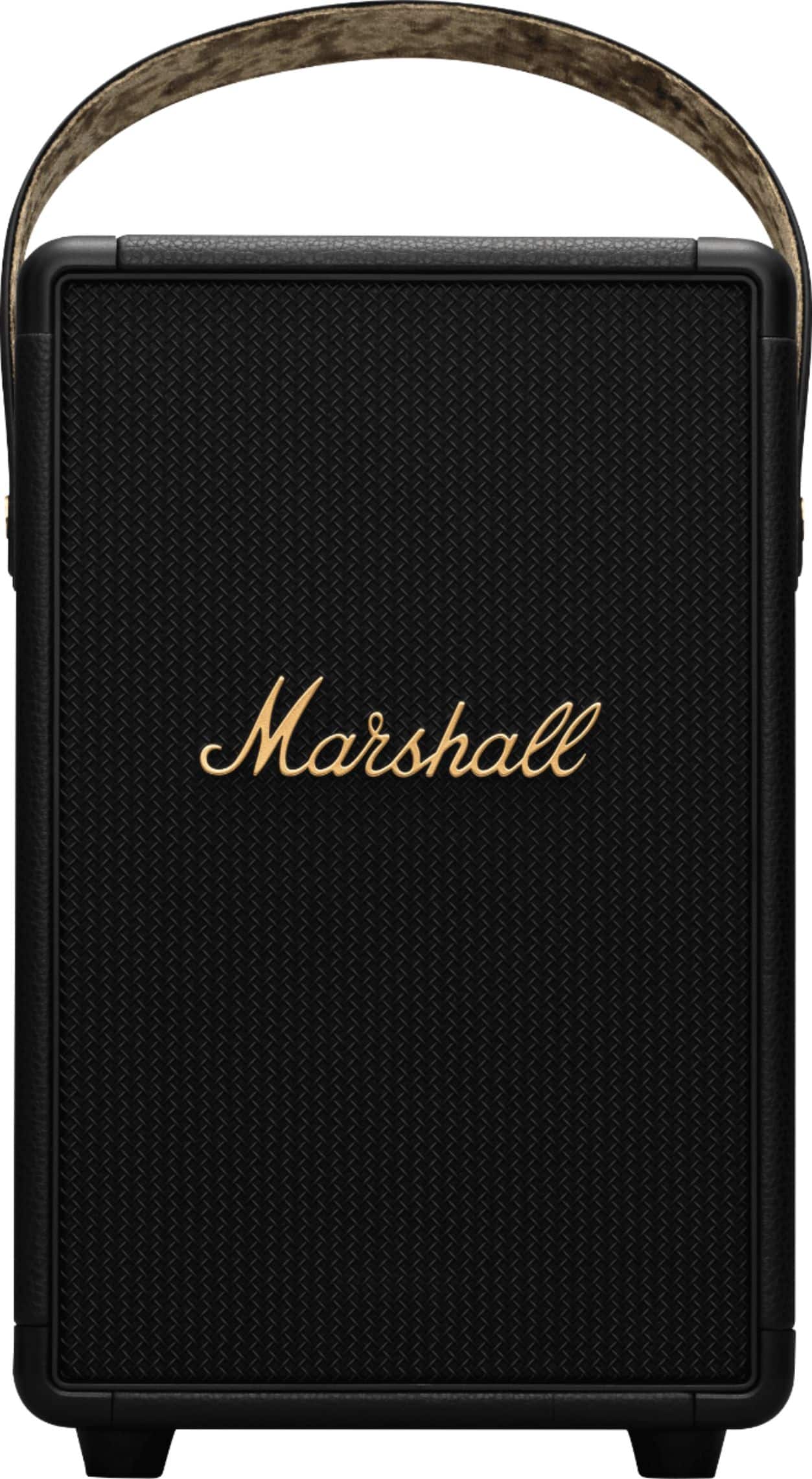
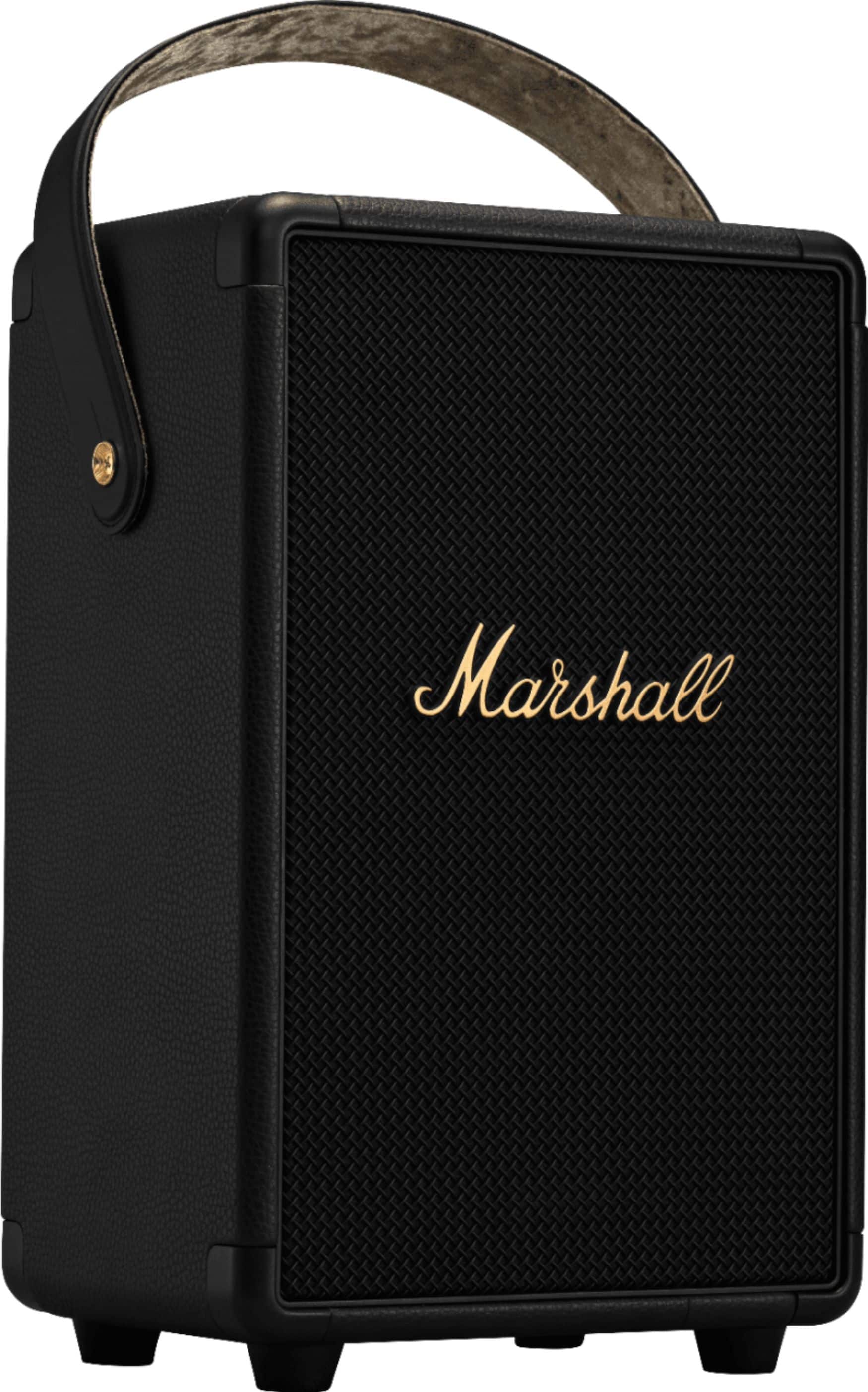
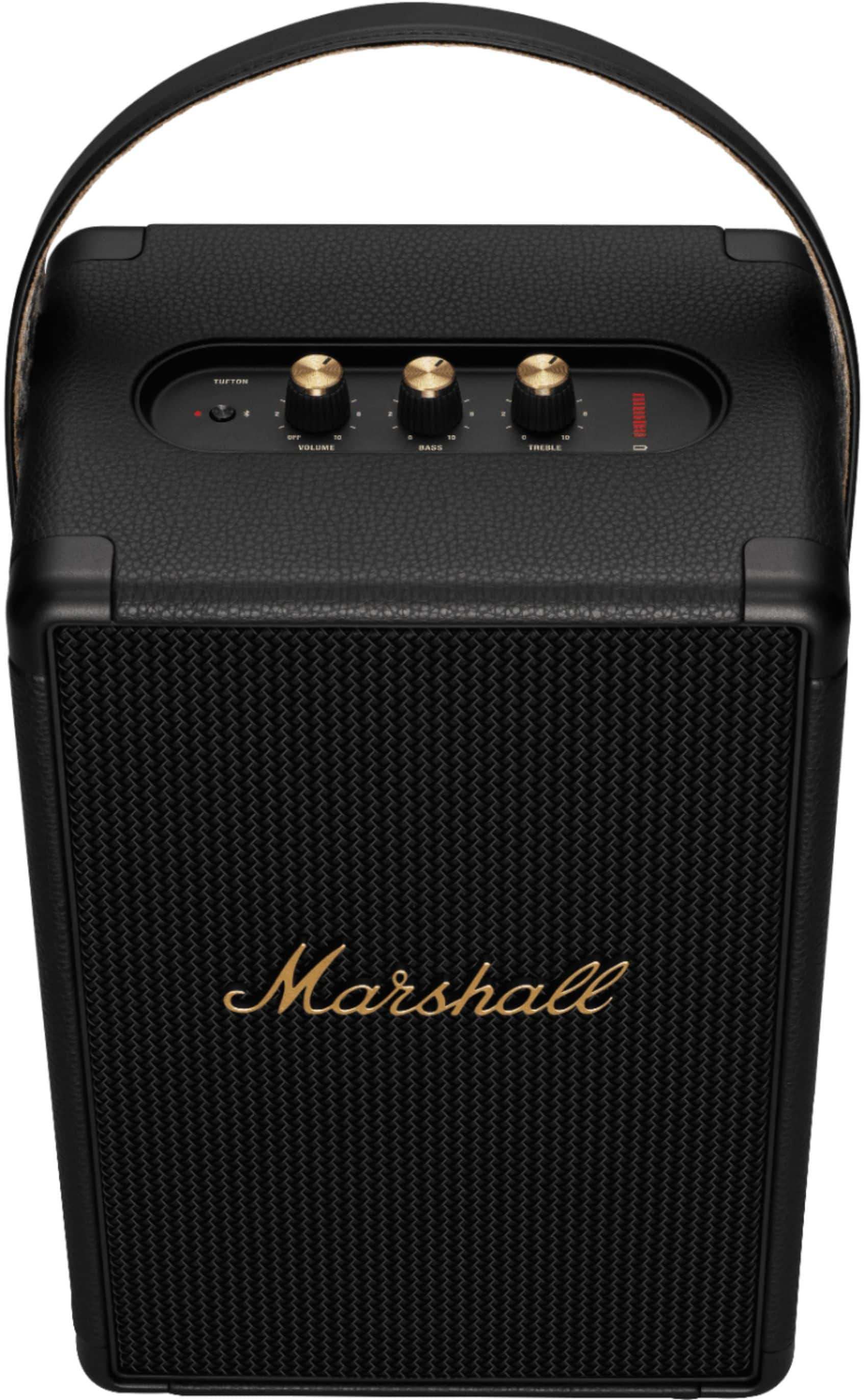
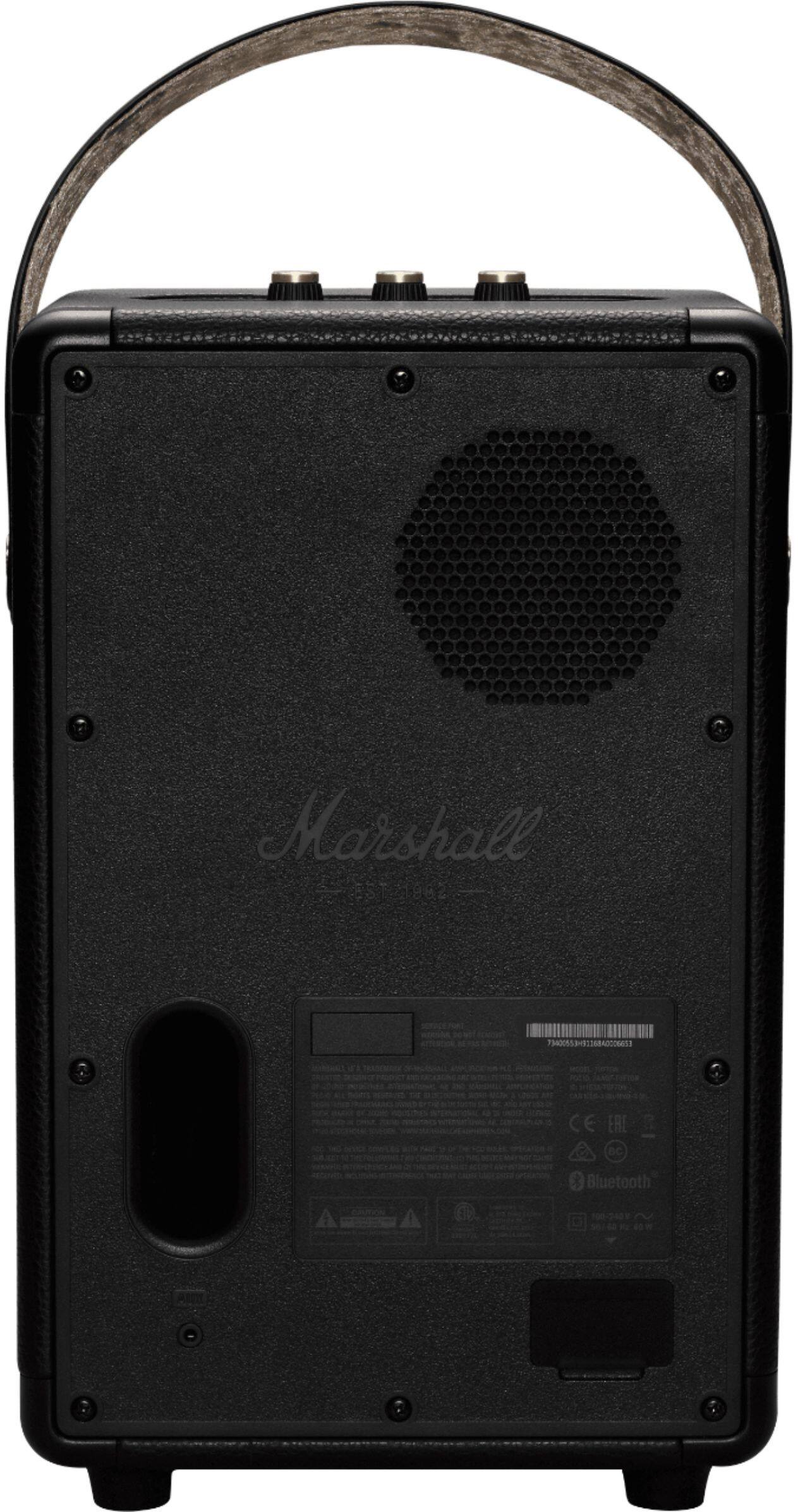
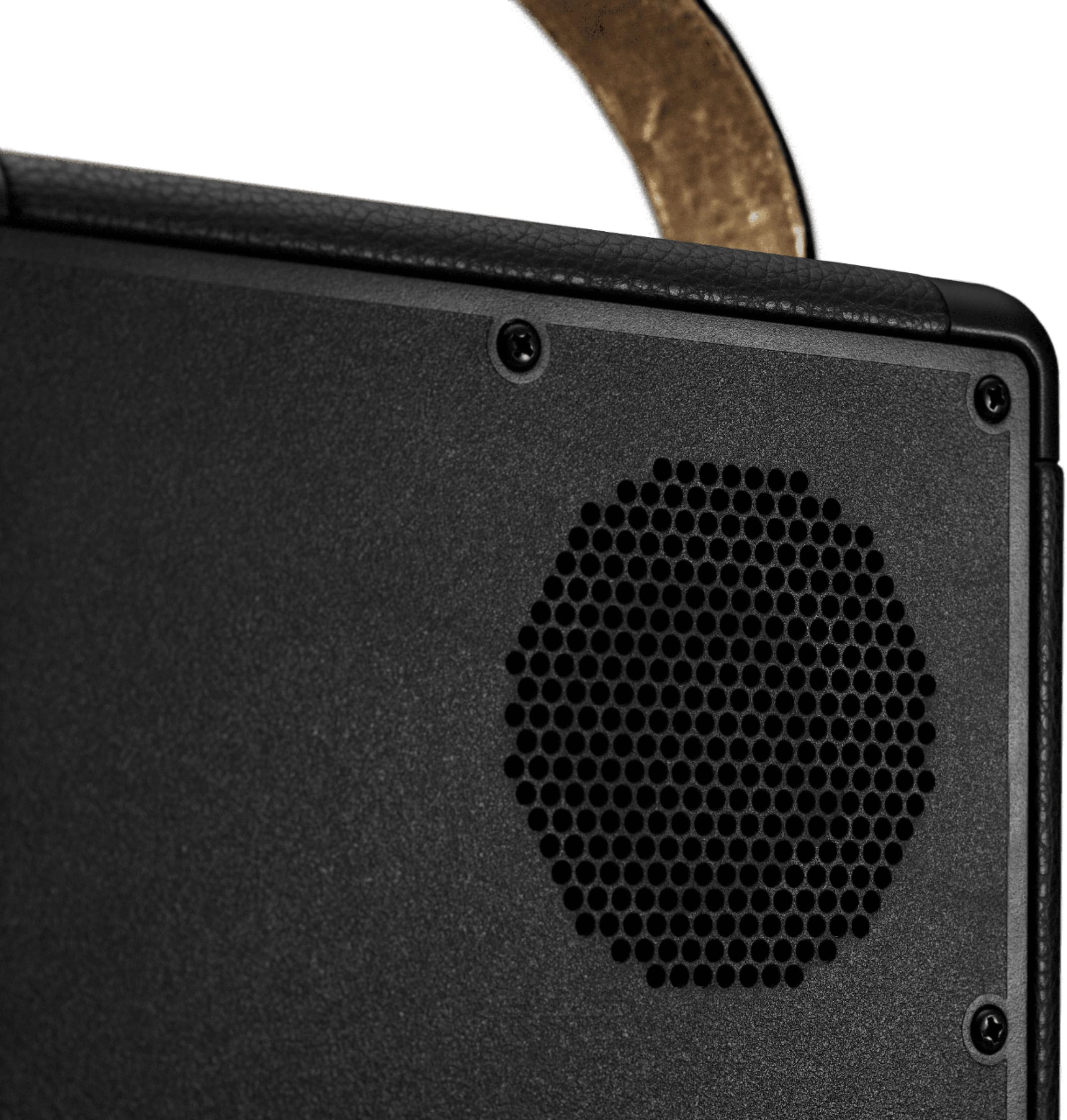
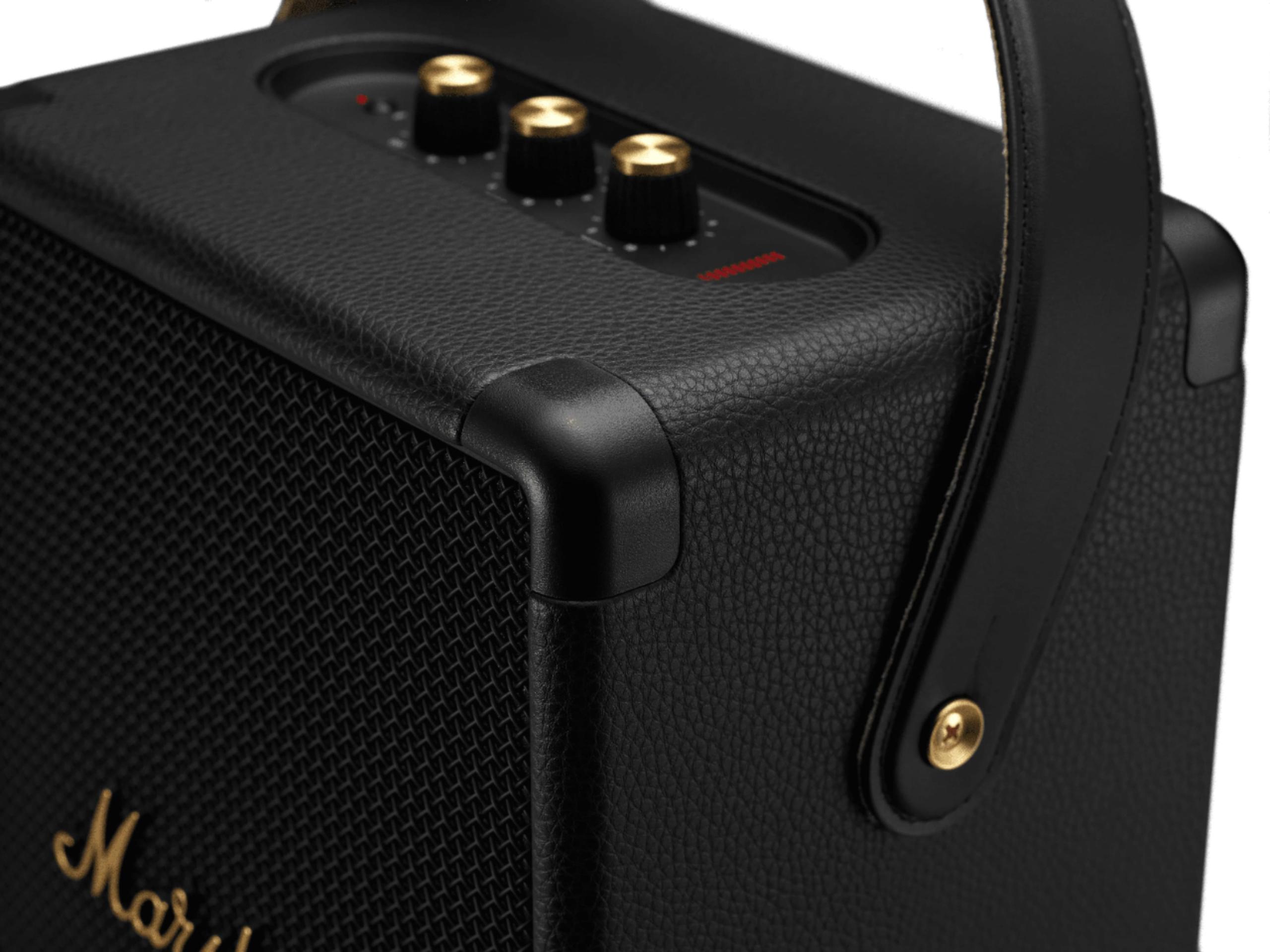
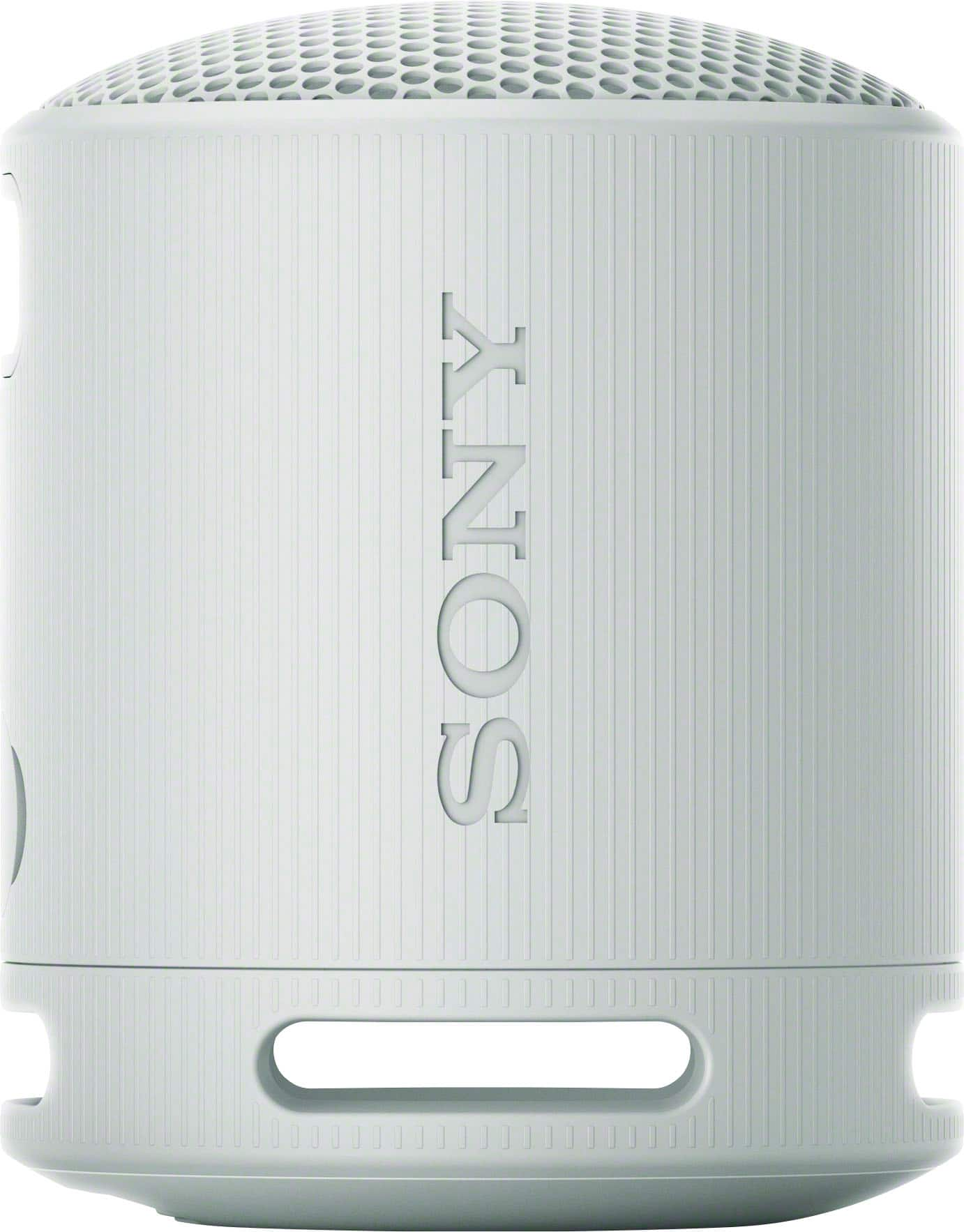


When it comes to portable Bluetooth speakers, the gap between premium and budget offerings has never been more interesting. Today, we're comparing the Marshall Tufton ($299) and the Sony XB100 ($32) - two speakers that perfectly illustrate the diverse approaches to portable audio in 2023.
Bluetooth speakers have evolved significantly since the Marshall Tufton was released in 2019. What was once a simple way to play music from your phone has become a sophisticated category with options for every use case imaginable. The technology has matured, with improvements in battery life, sound processing, and durability becoming standard features even in budget offerings like the Sony XB100, which launched in early 2023.
The Tufton delivers serious audio firepower through its three-way speaker system (which means it has separate drivers for high, mid, and low frequencies). With 80 watts of power, it's designed to fill large spaces and outdoor areas with sound. The speaker uses what Marshall calls "True Stereophonic" - a fancy way of saying it projects sound in multiple directions, including backward, to create a more immersive listening experience.
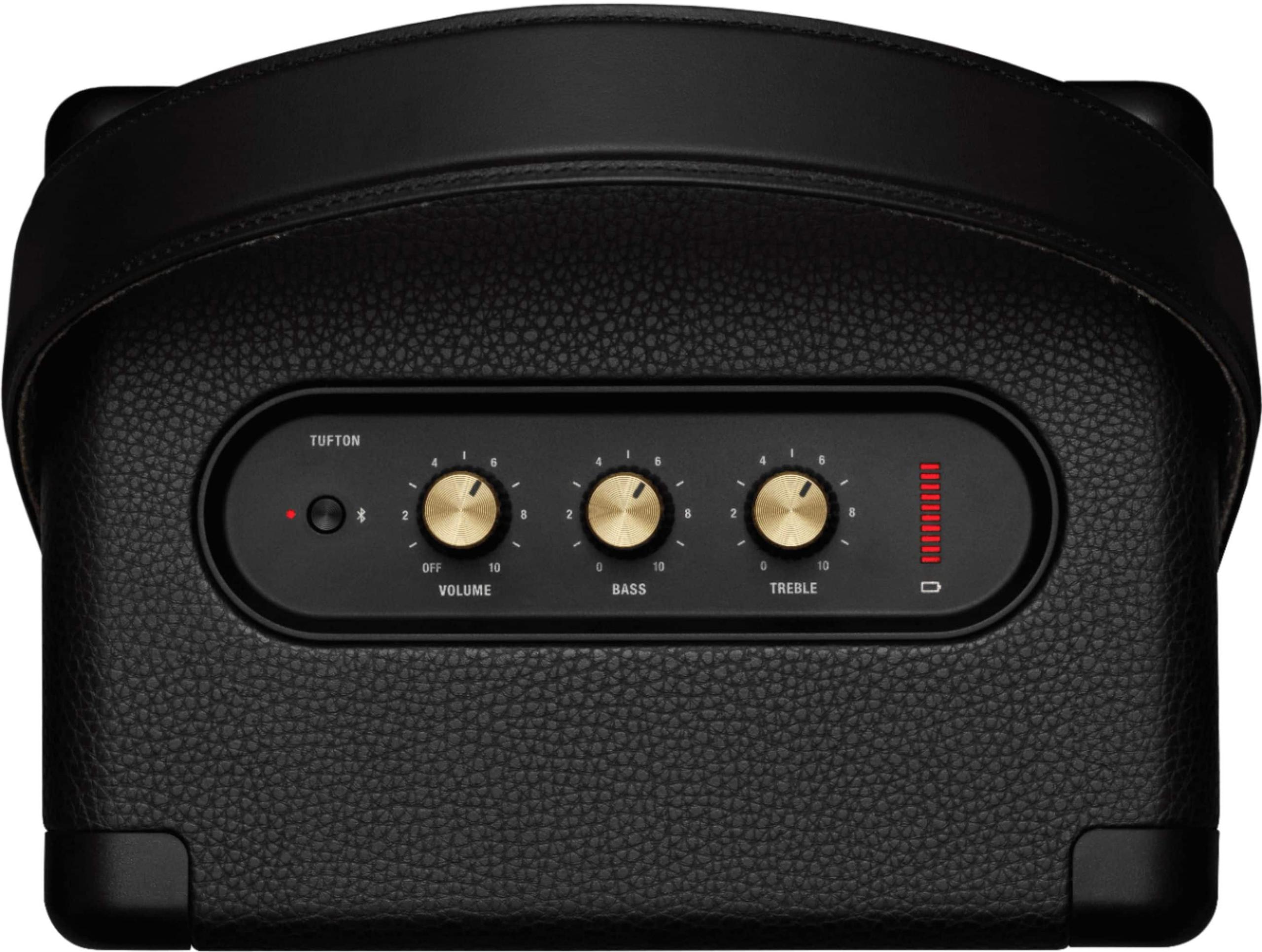
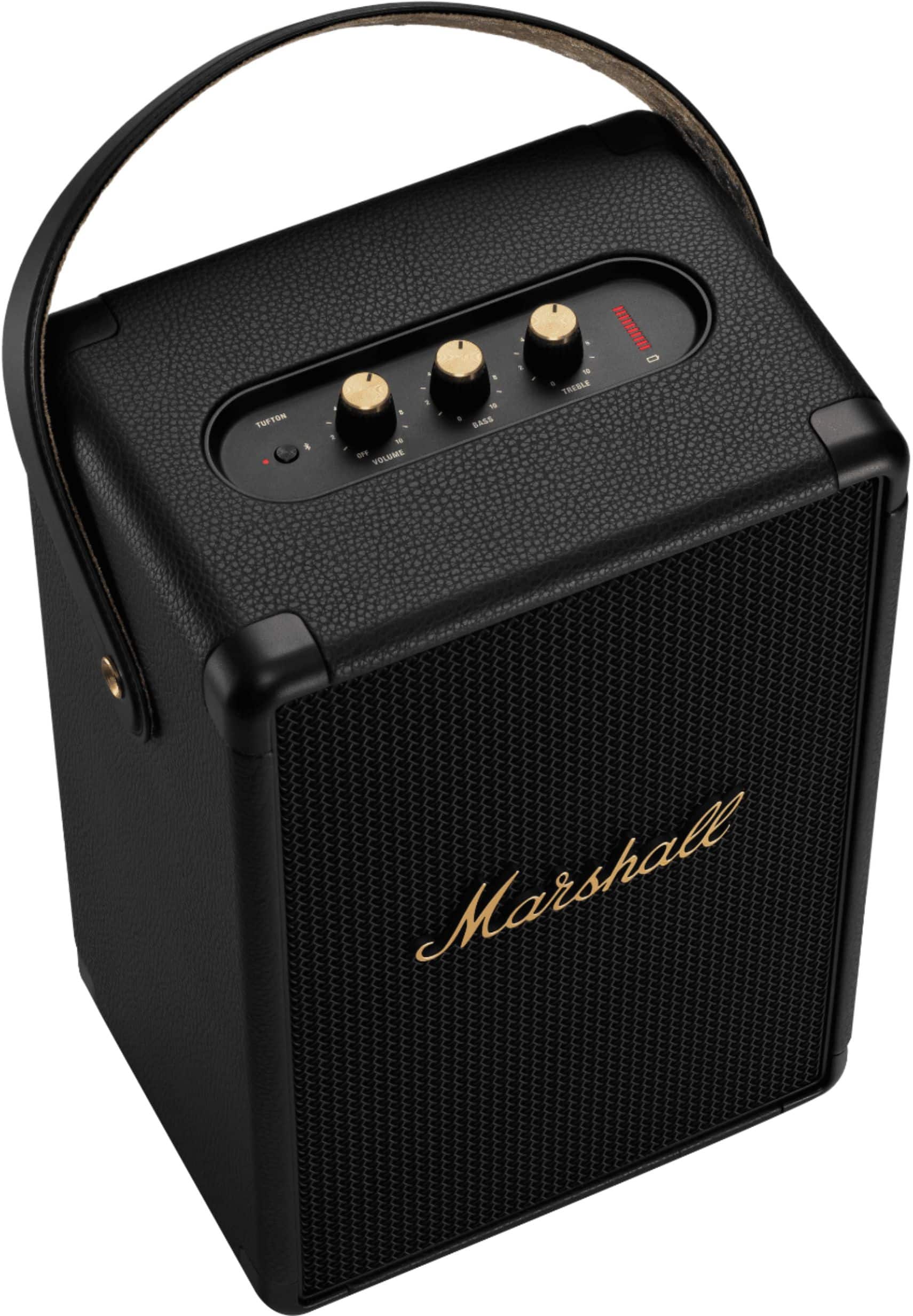
Having heard the Tufton at several outdoor events, I can attest that its bass response is impressive for a portable unit. The analog control knobs for bass and treble aren't just for show - they provide meaningful sound adjustment that can help adapt to different environments.
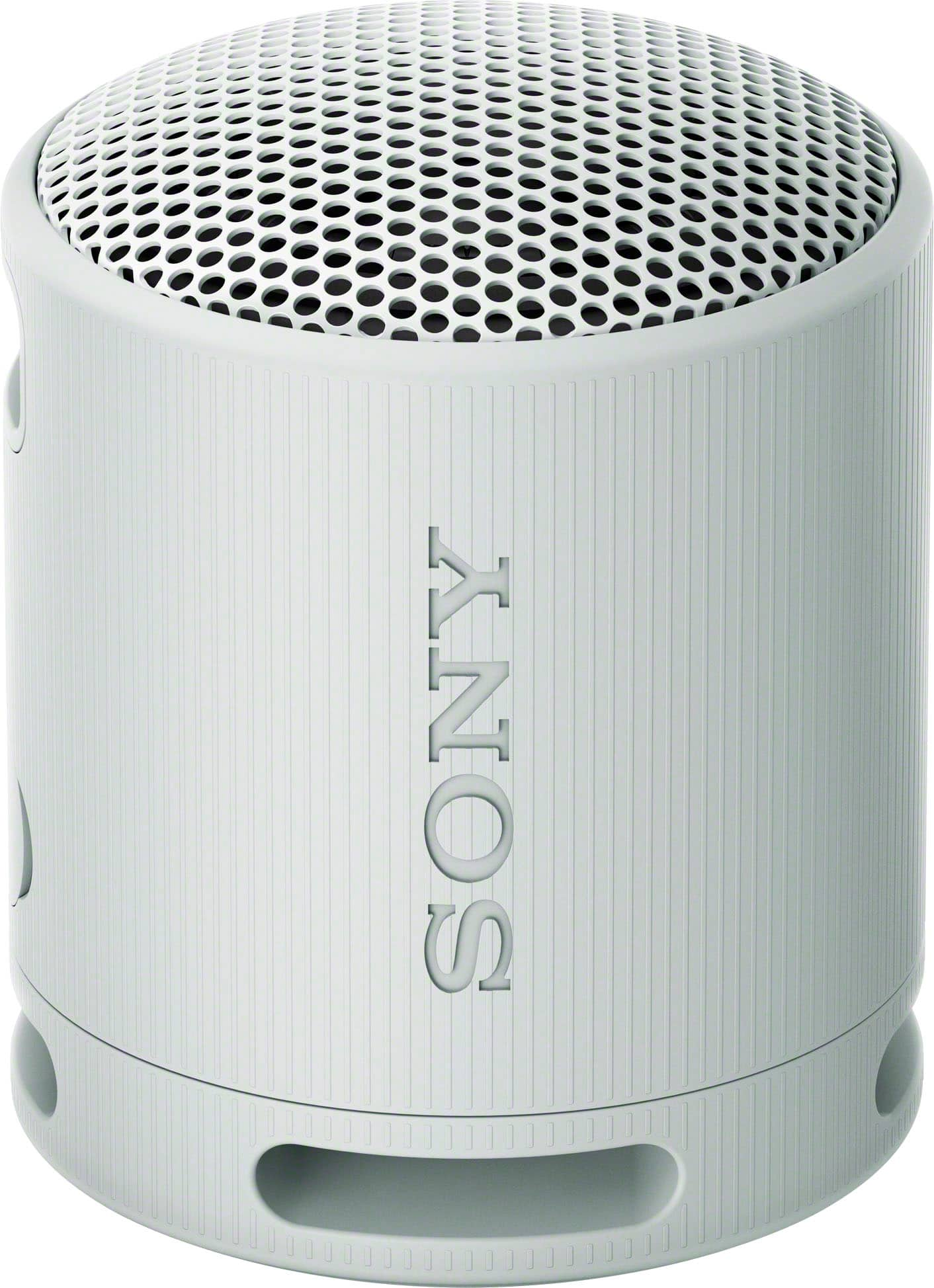
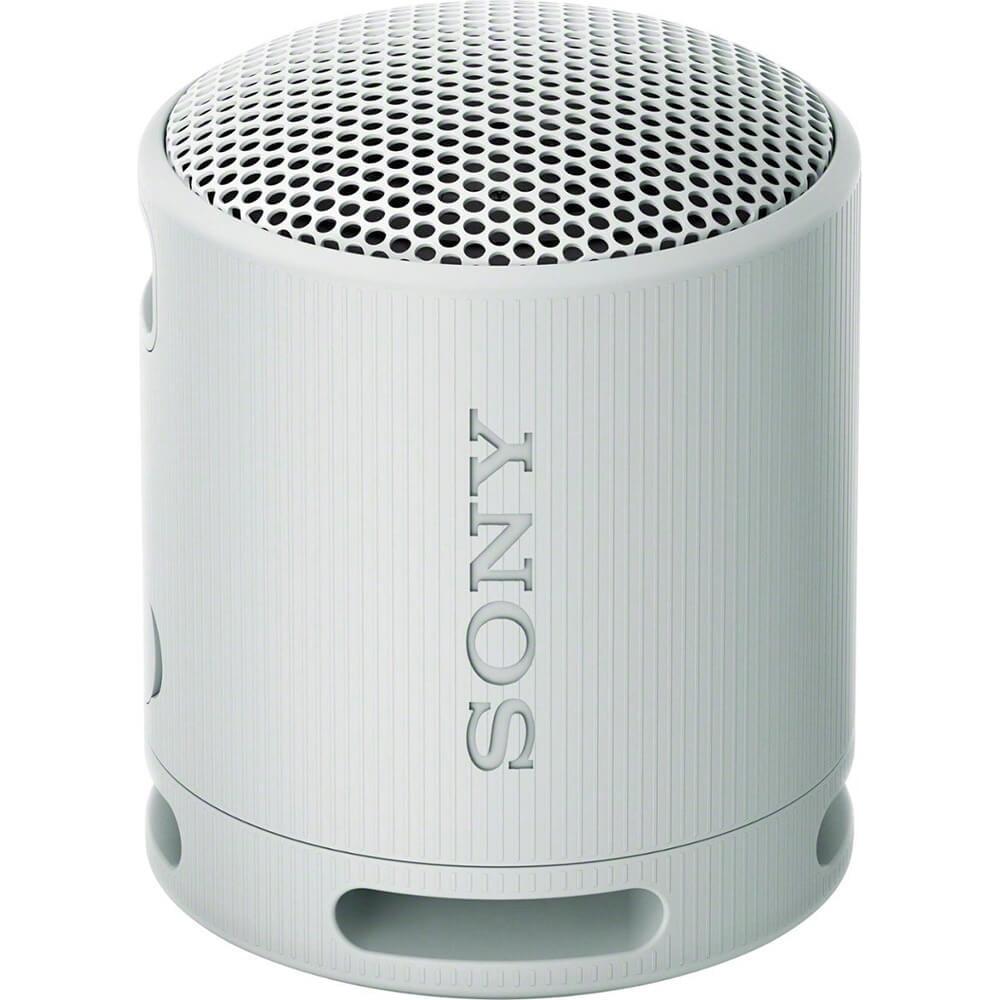
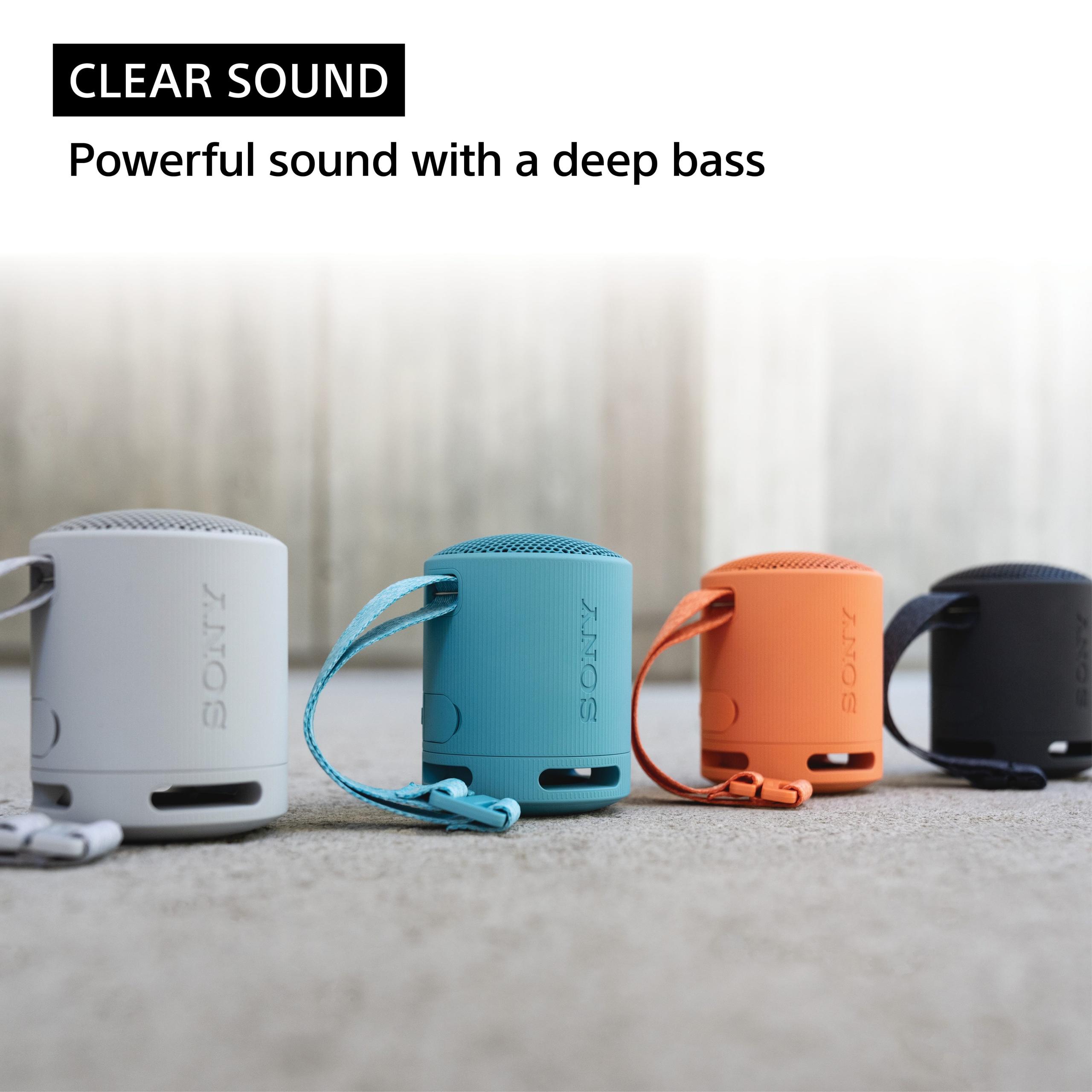
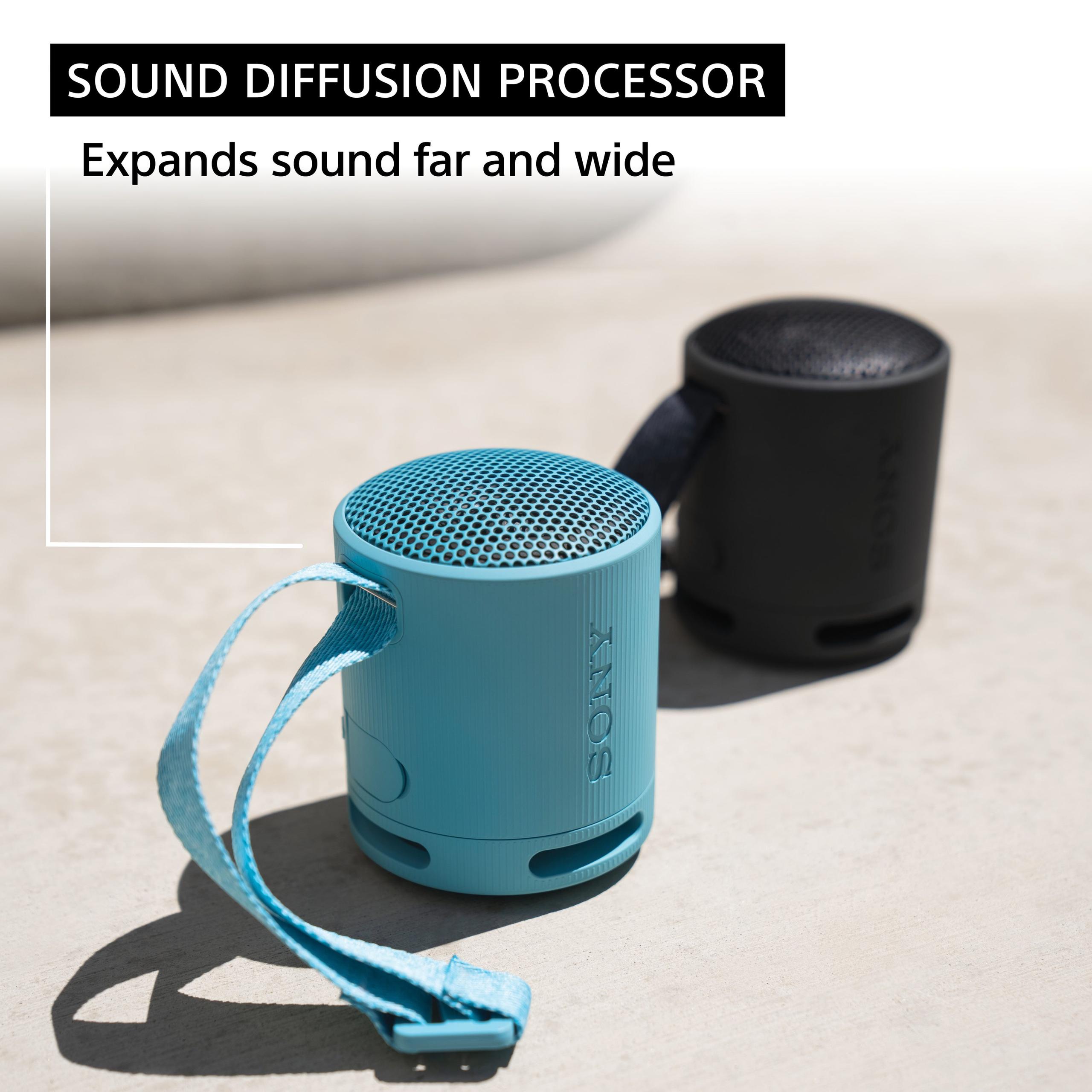
Sony took a different approach with the XB100, focusing on maximizing sound quality from a minimal footprint. Its single full-range driver is complemented by a passive radiator (a non-powered speaker component that moves in response to air pressure from the main driver, enhancing bass response). Sony's Sound Diffusion Processor helps create a wider soundstage than you'd expect from such a small speaker.
While it can't match the Tufton's raw power, the XB100's sound is remarkably clear and balanced for its size. It's particularly impressive in the mid-range, where vocals and acoustic instruments live.
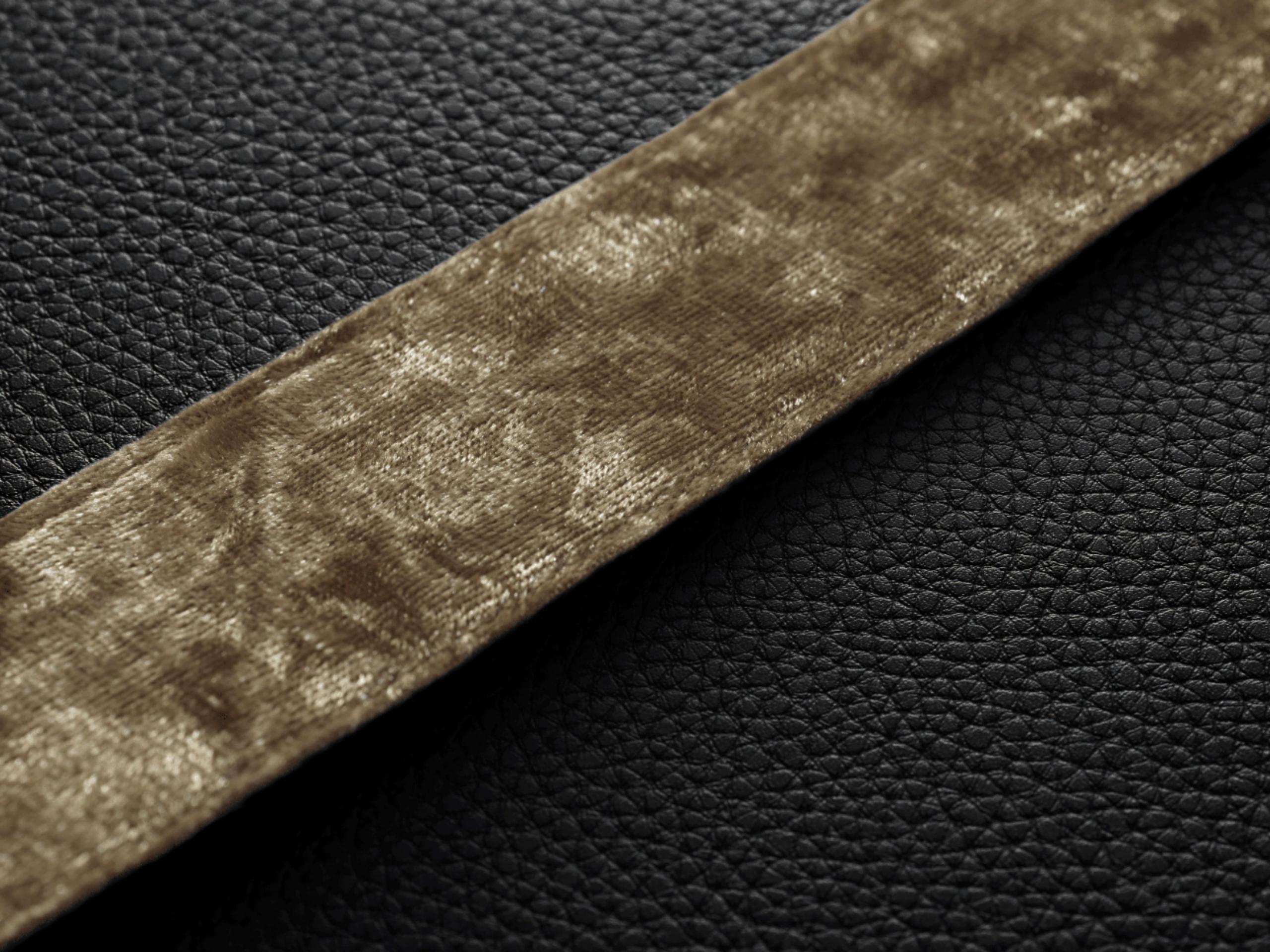
The Marshall Tufton weighs in at 10.8 pounds - it's portable in the same way a small cooler is portable. You're not throwing this in a backpack, but the guitar strap-inspired carrying handle makes transport manageable. Its retro-amplifier styling is distinctive and premium, with metal grilles and corner caps that can handle some abuse.
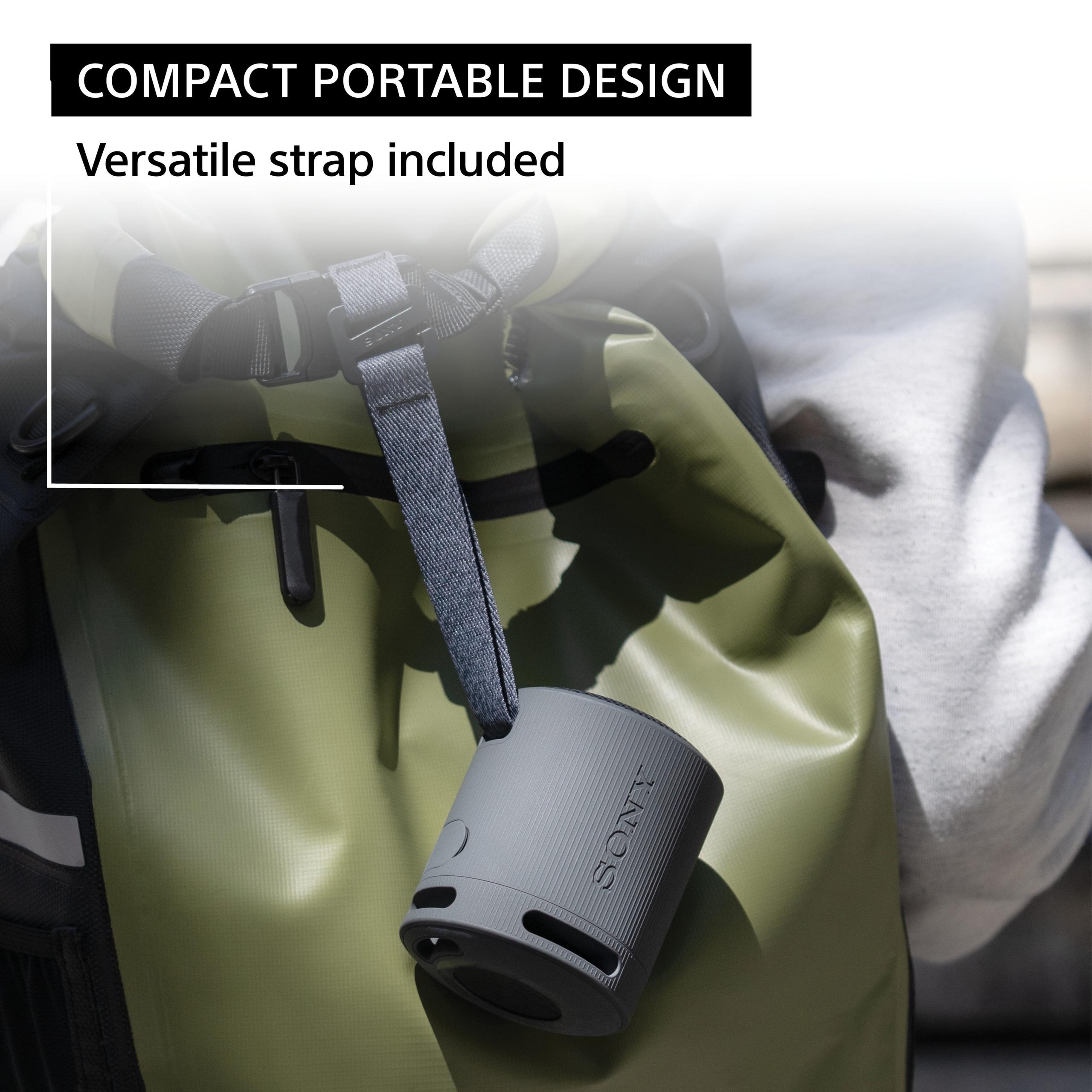
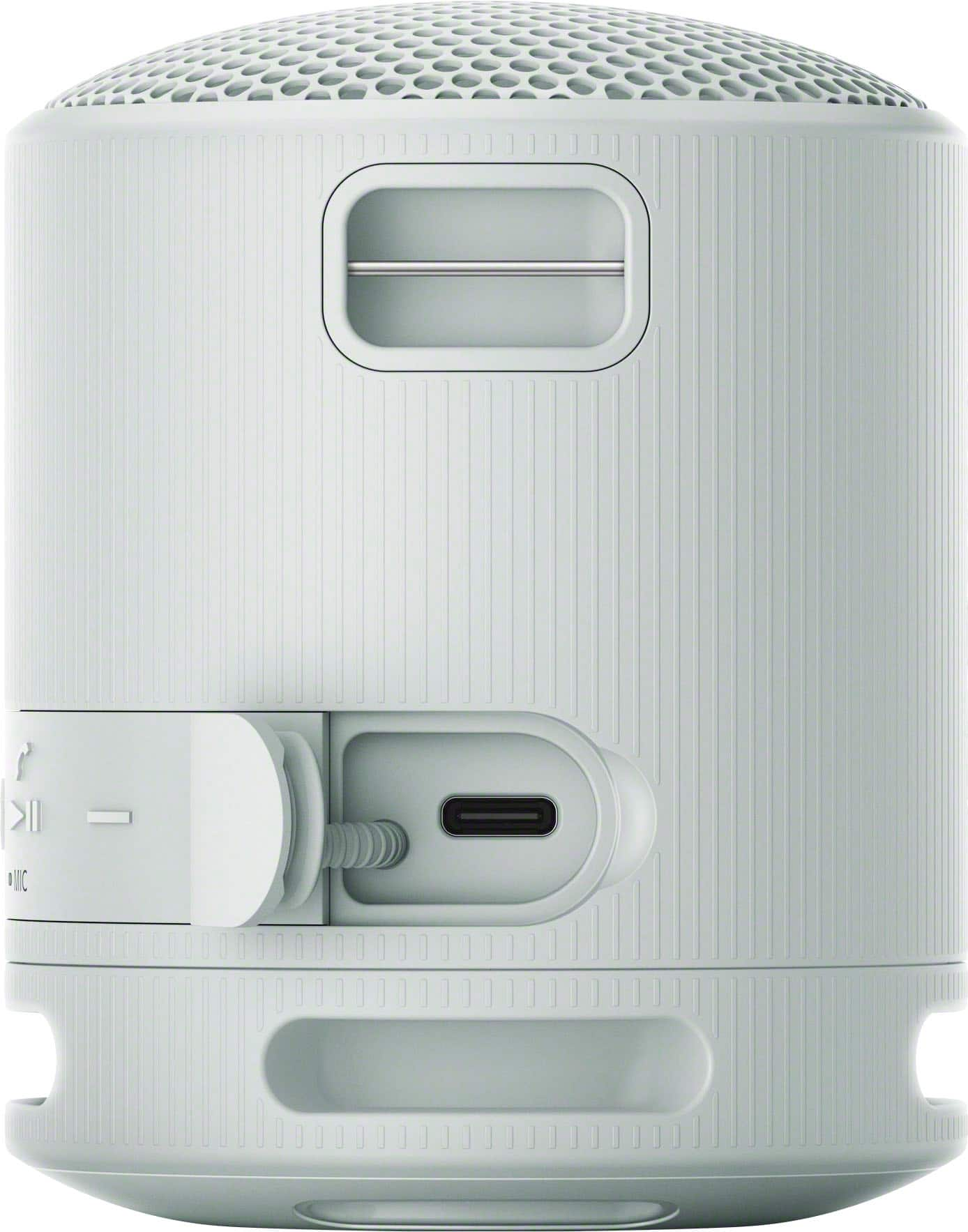
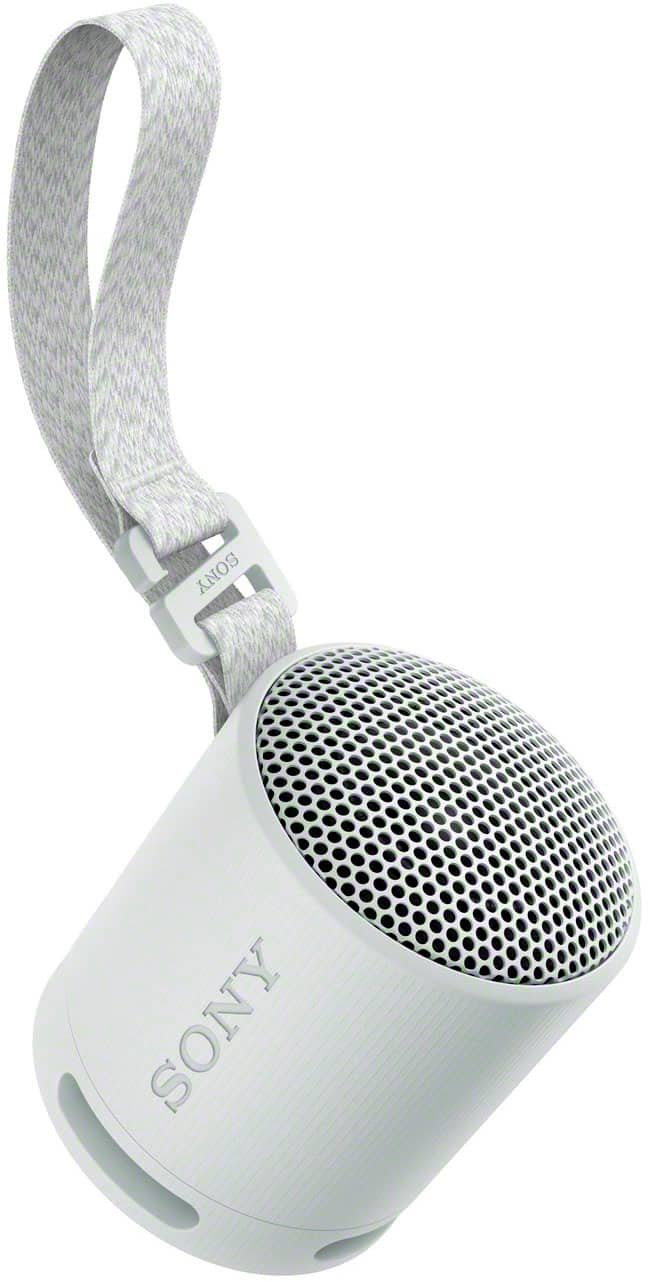
The Sony XB100 represents the other end of the spectrum at just 0.6 pounds. It's truly pocket-sized, with a simple cylindrical design that's both functional and durable. The included strap can attach to bags or bikes, making it incredibly versatile for active users.
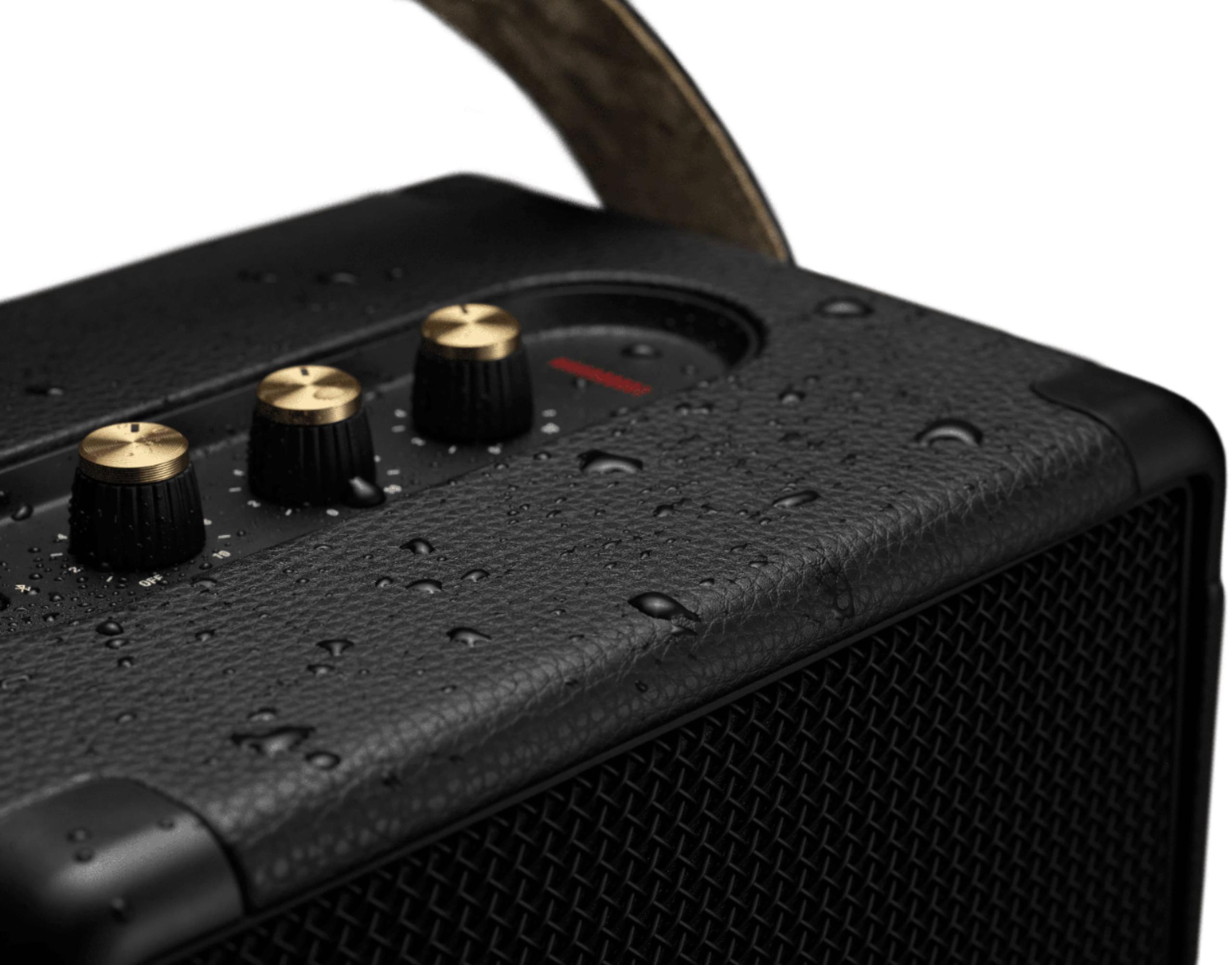
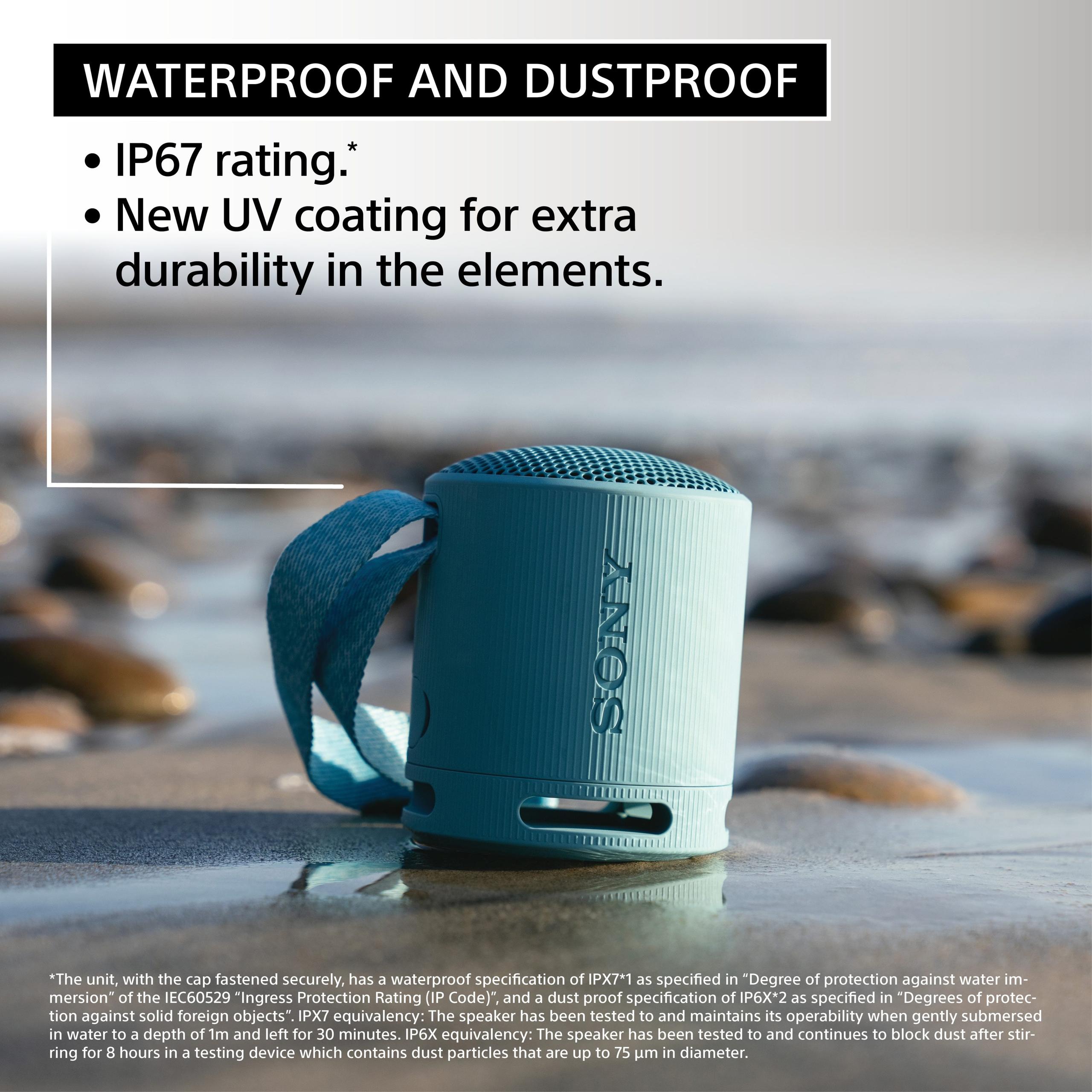
Here's where the price difference becomes less obvious. The Tufton's IPX2 rating means it can handle light water exposure (think light rain), while the XB100's IP67 rating makes it fully waterproof and dustproof. You can submerge the Sony briefly without damage - something you definitely shouldn't try with the Marshall.
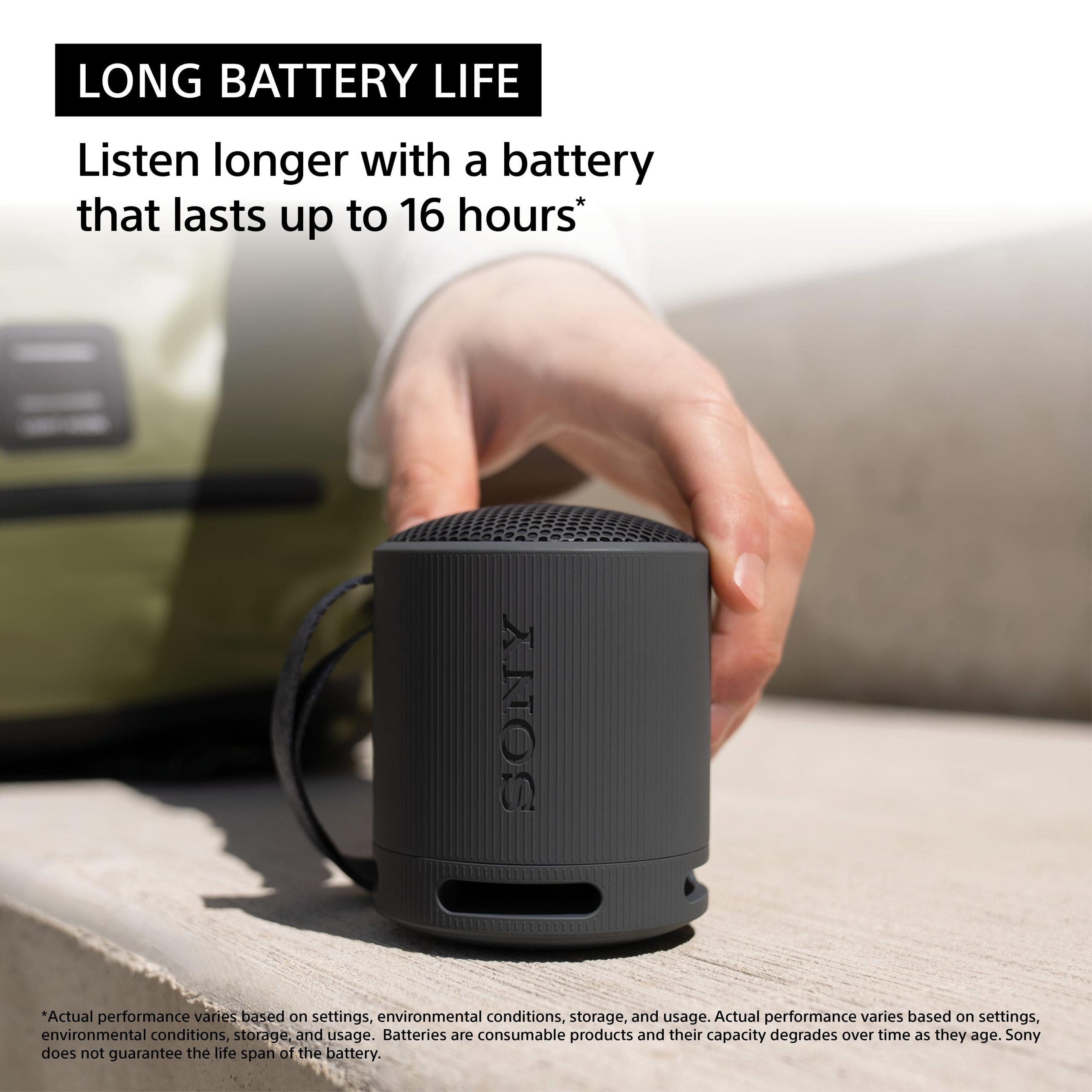
Both speakers offer impressive battery life, with the Tufton leading at 20+ hours and the XB100 following closely at 16 hours. The Tufton's quick-charge feature (20 minutes for 4 hours of playback) is particularly useful for party situations, though the XB100's USB-C charging is more convenient for daily use.
For home theater applications, the Tufton can serve as a decent temporary solution due to its power and stereo capabilities. Its Bluetooth 5.0 multi-host functionality lets you switch between devices seamlessly, though there's some latency that makes it less ideal for video content.
The XB100 isn't really suited for home theater use, but it excels as a personal speaker for kitchen counters, desks, or bathrooms thanks to its water resistance and compact size.
The Tufton shines at outdoor gatherings, providing enough volume to keep a party going while maintaining clarity at higher volumes. Its multi-directional sound helps cover larger areas evenly.
The XB100 works best for personal outdoor listening - think picnics, small gatherings, or solo activities. Its superior weather resistance makes it more versatile in challenging conditions, though it can't match the Tufton's ability to project across larger spaces.
The Tufton's multi-host functionality and True Stereophonic sound represent Marshall's focus on practical innovations. The dedicated amplifiers for each driver section (tweeter, midrange, and woofer) help maintain clarity at higher volumes.
Sony's Sound Diffusion Processor and off-center diaphragm design in the XB100 show how modern digital processing can enhance physical speaker limitations. The stereo pairing feature (allowing two XB100s to work together) is particularly impressive at this price point.
At nearly ten times the price, the Tufton needs to justify its premium positioning. For users who need substantial volume and superior sound quality, it delivers. The build quality, battery life, and sound performance are all excellent, though the limited water resistance is disappointing at this price point.
The XB100 represents remarkable value, offering durability and sound quality that would have been impossible at this price point just a few years ago. While it can't match the Tufton's power, it excels within its intended use case.
Choose the Marshall Tufton if:
Choose the Sony XB100 if:
Both speakers excel in their intended roles - the key is matching their capabilities to your specific needs. The Tufton is a premium party speaker that can fill large spaces with quality sound, while the XB100 is an ultra-portable personal audio solution that punches above its weight class in terms of features and durability.
| Marshall Tufton Portable Speaker | Sony XB100 Compact Speaker |
|---|---|
| Power Output - Determines maximum volume and sound coverage | |
| 80W with 3-way system (fills large outdoor spaces) | Single driver (suitable for personal listening) |
| Size & Weight - Impacts portability and placement options | |
| 13.8" x 9.1" x 6.4", 10.8 lbs (requires dedicated carrying) | 3" x 3.7", 0.6 lbs (truly pocket-sized) |
| Battery Life - Critical for extended outdoor use | |
| 20+ hours, quick charge (4hrs in 20min) | 16 hours, standard USB-C charging |
| Water Resistance - Important for outdoor durability | |
| IPX2 (light rain only) | IP67 (fully waterproof, dustproof) |
| Sound Features - Affects audio quality and versatility | |
| True Stereophonic with multi-directional output, analog EQ controls | Sound Diffusion Processor, stereo pairing capable |
| Bluetooth Version & Range - Impacts connection quality | |
| 5.0 with multi-host support, 30ft range | 5.3 with AAC codec support, 30ft range |
| Additional Features - Adds value and functionality | |
| Guitar-style strap, metal construction, physical EQ controls | Hanging strap, recycled materials, compact design |
| Price - Value consideration | |
| $299.99 (premium positioning) | $31.99 (budget-friendly) |
| Best Use Case - Primary intended application | |
| Large gatherings, outdoor events, room-filling sound | Personal listening, travel, compact spaces |
The Marshall Tufton is significantly better for outdoor parties with its 80W output and multi-directional sound. The Sony XB100 is designed for personal listening and lacks the power for large gatherings.
The Marshall Tufton costs $299.99, while the Sony XB100 is priced at $31.99. The nearly $270 difference reflects their different target markets and capabilities.
The Marshall Tufton offers 20+ hours of playback with quick charging capability, while the Sony XB100 provides 16 hours. Both are sufficient for most use cases.
The Sony XB100 has superior water resistance with IP67 rating (fully waterproof), while the Marshall Tufton only has IPX2 rating (light splash resistance).
The Sony XB100 is far more portable at 0.6 lbs and pocket-sized dimensions. The Marshall Tufton weighs 10.8 lbs and requires shoulder strap carrying.
The Sony XB100 offers stereo pairing with another XB100. The Marshall Tufton doesn't support speaker pairing but offers multi-host Bluetooth connectivity.
The Marshall Tufton delivers superior sound quality with its 3-way speaker system and higher power output. The Sony XB100 offers good sound for its size but can't match the Tufton's audio capabilities.
The Sony XB100 is ideal for travel due to its compact size and durability. The Marshall Tufton is too large for practical travel use.
Both speakers offer reliable Bluetooth connectivity, with the Sony XB100 featuring version 5.3 and the Marshall Tufton using version 5.0. Both maintain stable connections within 30 feet.
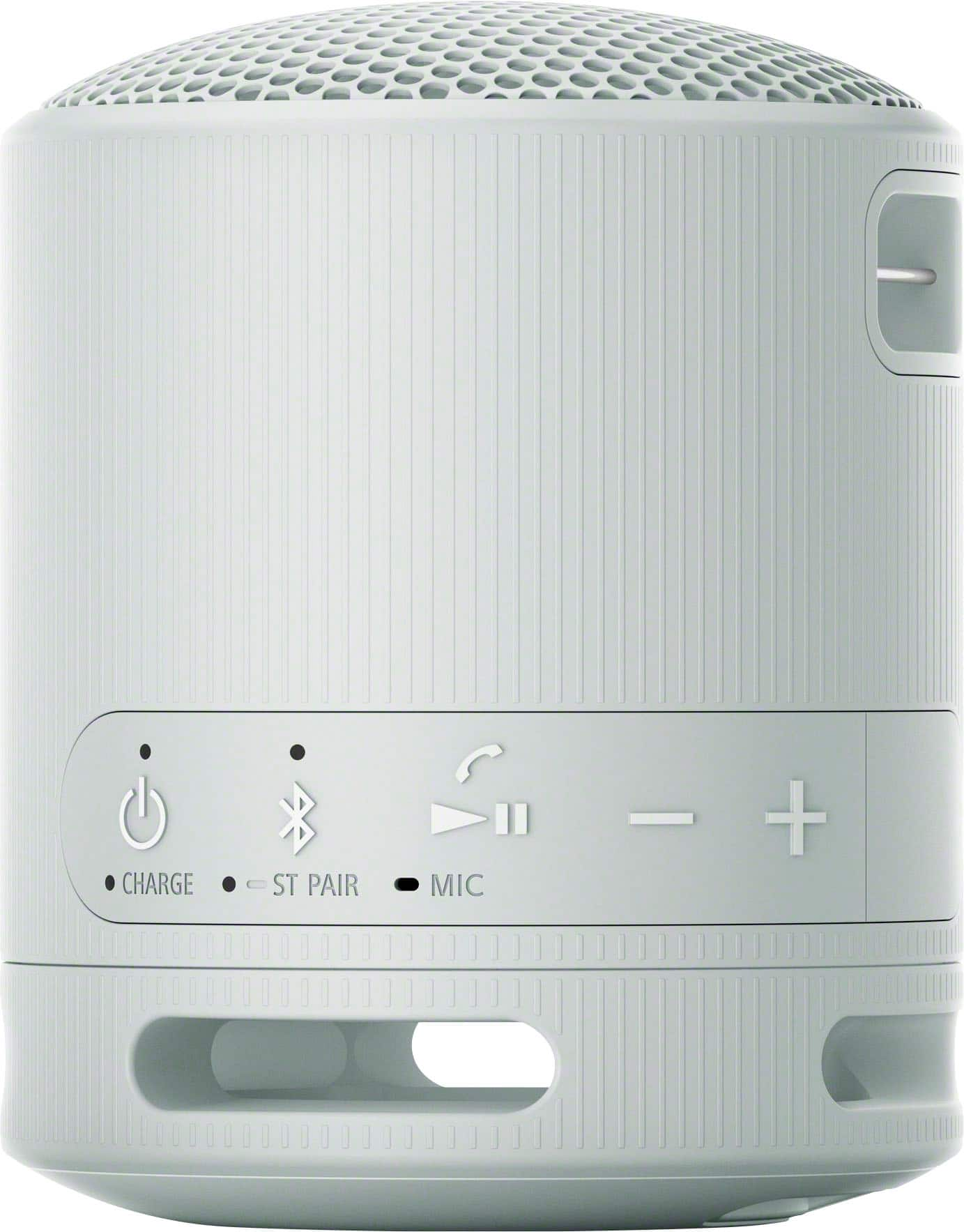
The Sony XB100 includes a built-in microphone for calls. The Marshall Tufton doesn't support phone calls.
The Sony XB100 is more durable with its IP67 rating and compact design. While the Marshall Tufton is well-built, it's more vulnerable to water damage and environmental factors.
For personal use, the Sony XB100 offers exceptional value at $31.99. The Marshall Tufton justifies its higher price for those needing powerful sound for larger spaces and groups.
We've done our best to create useful and informative comparisons to help you decide what product to buy. Our research uses advanced automated methods to create this comparison and perfection is not possible - please contact us for corrections or questions. These are the sites we've researched in the creation of this article: techradar.com - youtube.com - youtube.com - bestbuy.com - trustedreviews.com - crutchfield.com - eriksonconsumer.com - youtube.com - runbazaar.com - marshall.com - techradar.com - bestbuy.com - bestbuy.com - tomsguide.com - electronics.sony.com - sony-asia.com - sony.com - sony.com - thesonyshop.ca - cornellstore.com - bestbuy.com

Privacy Policy
Terms and Conditions - Affiliate Policy
Home Security
© Copyright 2008-2026.
11816 Inwood Rd #1211, Dallas, TX 75244