


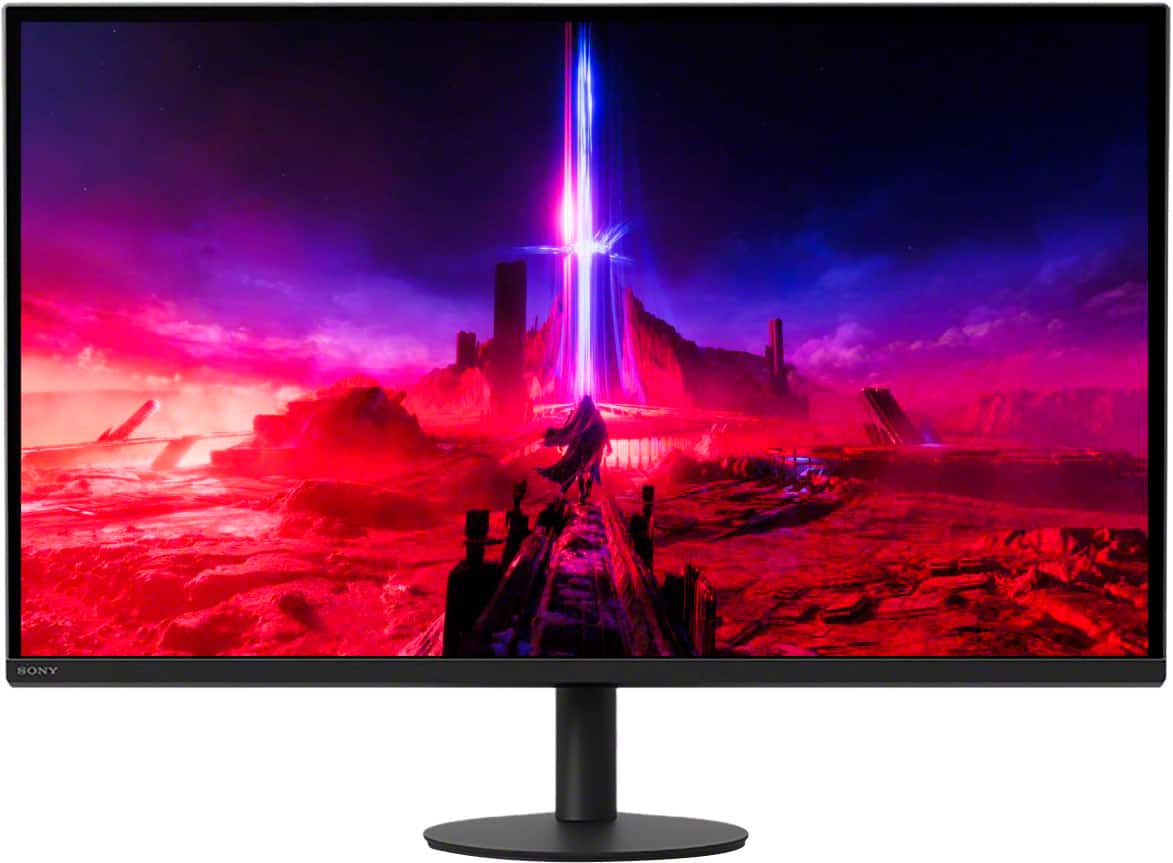
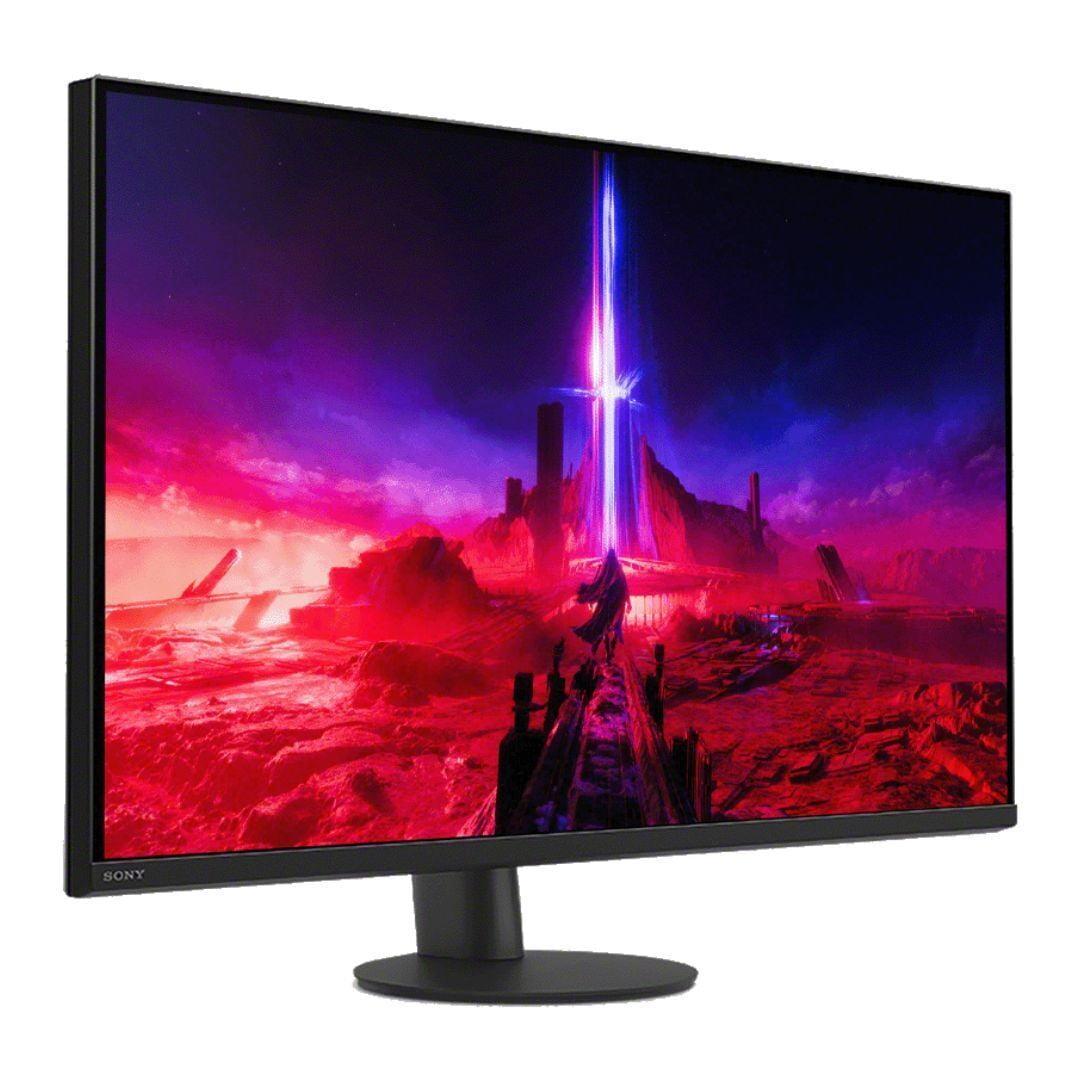
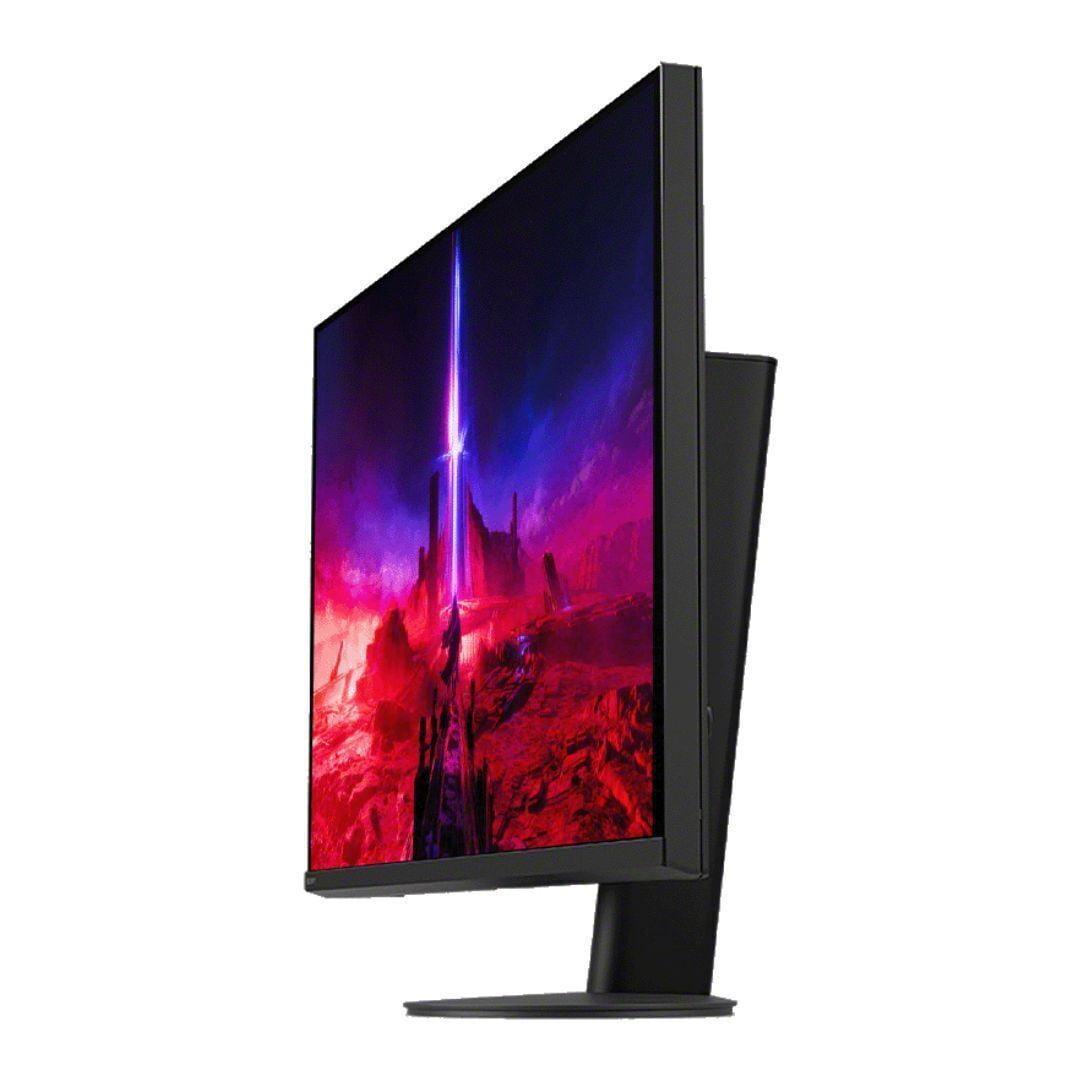
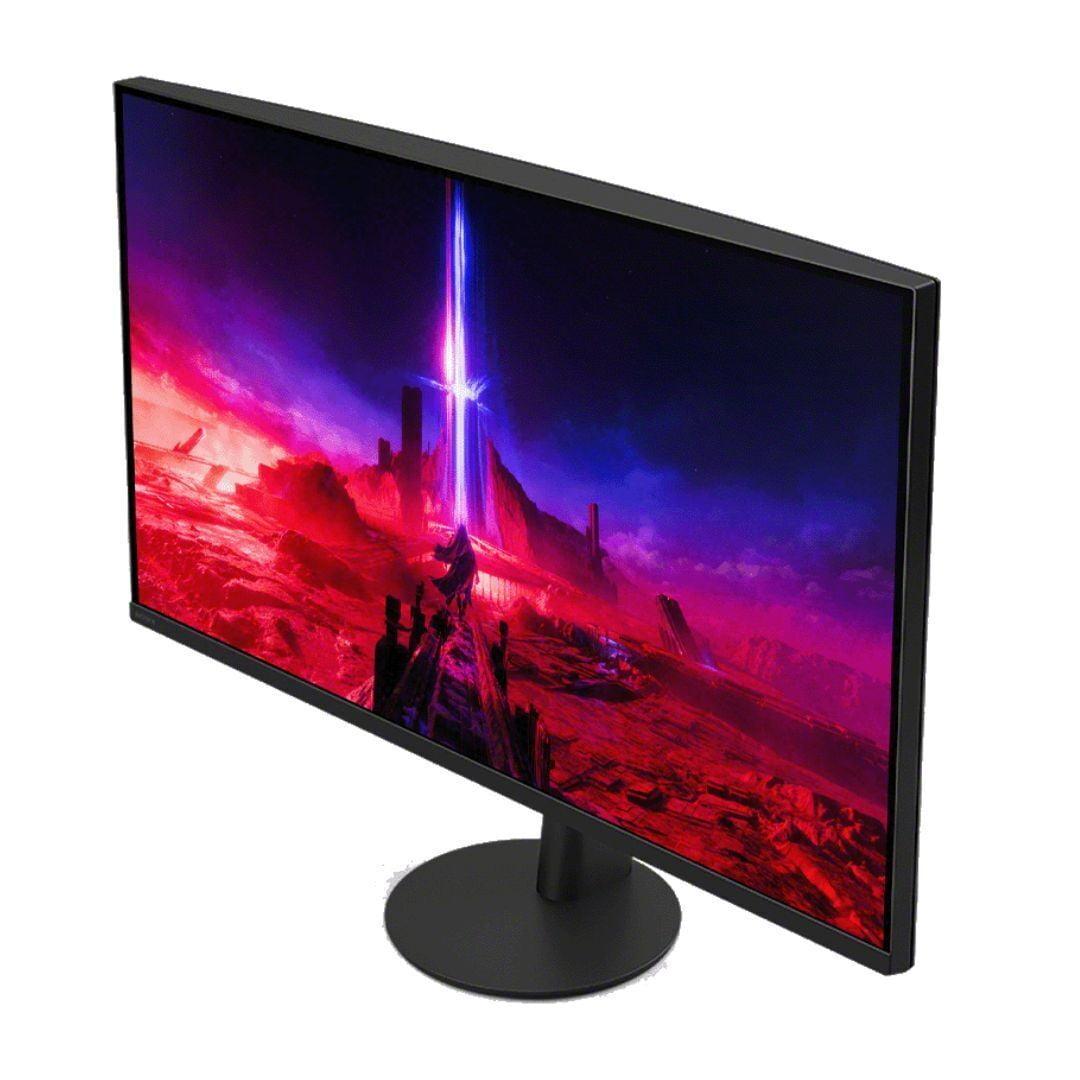

Choosing a gaming monitor these days feels a bit like picking between a sports car and a luxury sedan. Do you want raw performance that gives you every competitive edge, or do you prioritize the visual experience that makes every game look stunning? That's exactly the choice you're facing between the HP OMEN 27s FHD 240Hz Gaming Monitor and the Sony INZONE M9 II 27" 4K 160Hz Gaming Monitor.
Both monitors hit the market in 2023, arriving at a fascinating time in gaming display technology. The industry has largely split into two distinct camps: ultra-high refresh rate displays that prioritize competitive gaming, and high-resolution monitors that emphasize visual fidelity. This division reflects how gaming itself has evolved, with esports demanding every millisecond advantage while single-player games showcase increasingly cinematic experiences.
Before diving into specifics, it's worth understanding what makes gaming monitors tick in 2024. The most fundamental trade-off in gaming displays is between resolution and refresh rate. Think of resolution as the sharpness of your image—more pixels mean clearer text and finer details. Refresh rate, measured in hertz (Hz), determines how many times per second your monitor updates the image. Higher refresh rates create smoother motion, which can be crucial for tracking fast-moving targets in competitive games.
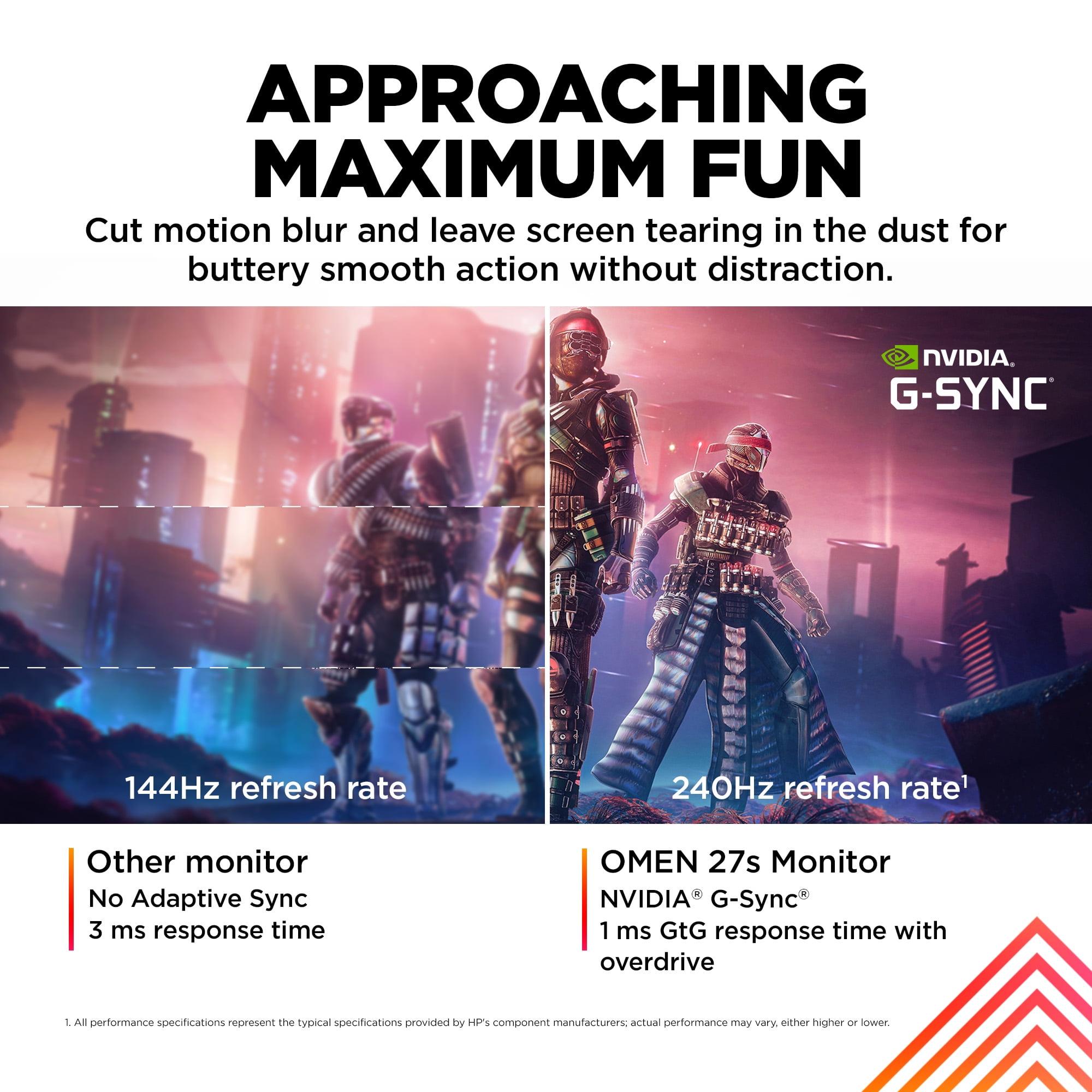
Modern gaming monitors also feature adaptive sync technology, which synchronizes your graphics card's output with the monitor's refresh rate. This eliminates screen tearing—those annoying horizontal lines that appear when your GPU and monitor fall out of sync. Technologies like G-SYNC and FreeSync have become standard, making gameplay noticeably smoother.
HDR, or High Dynamic Range, has become increasingly important for gaming monitors. HDR expands the range of colors and brightness levels a display can show, creating more realistic lighting and deeper contrasts. However, HDR implementation varies wildly between monitors, with some offering genuine improvements while others provide minimal benefit.
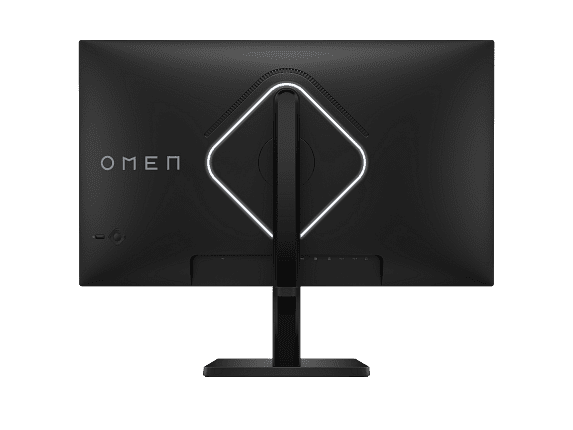
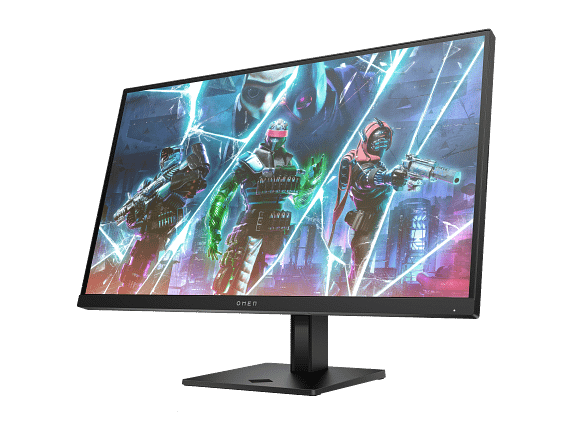
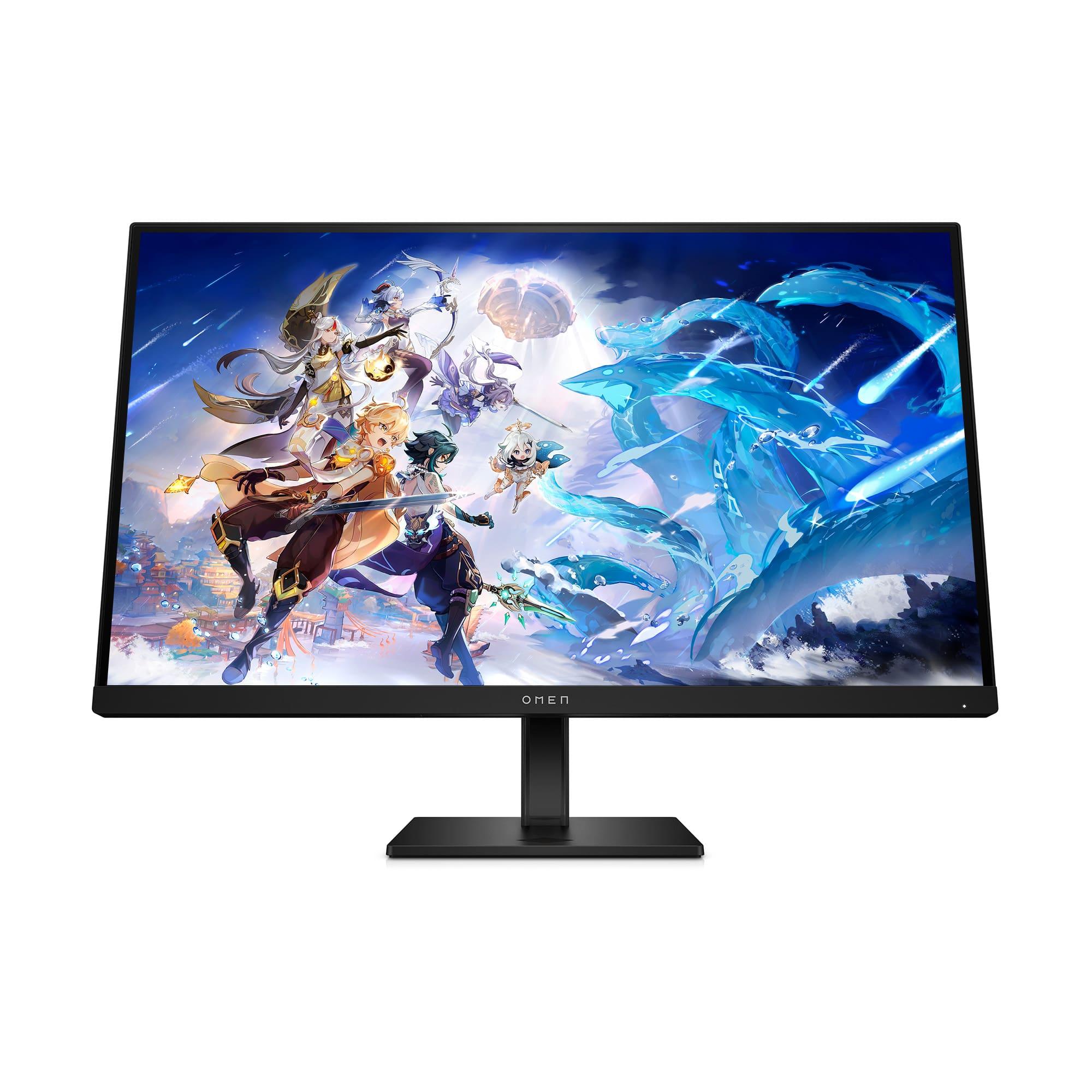
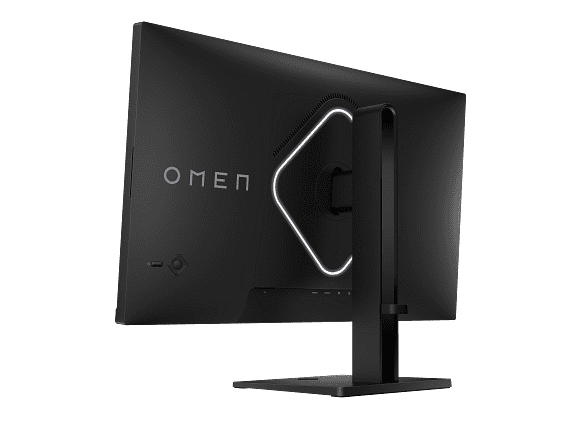
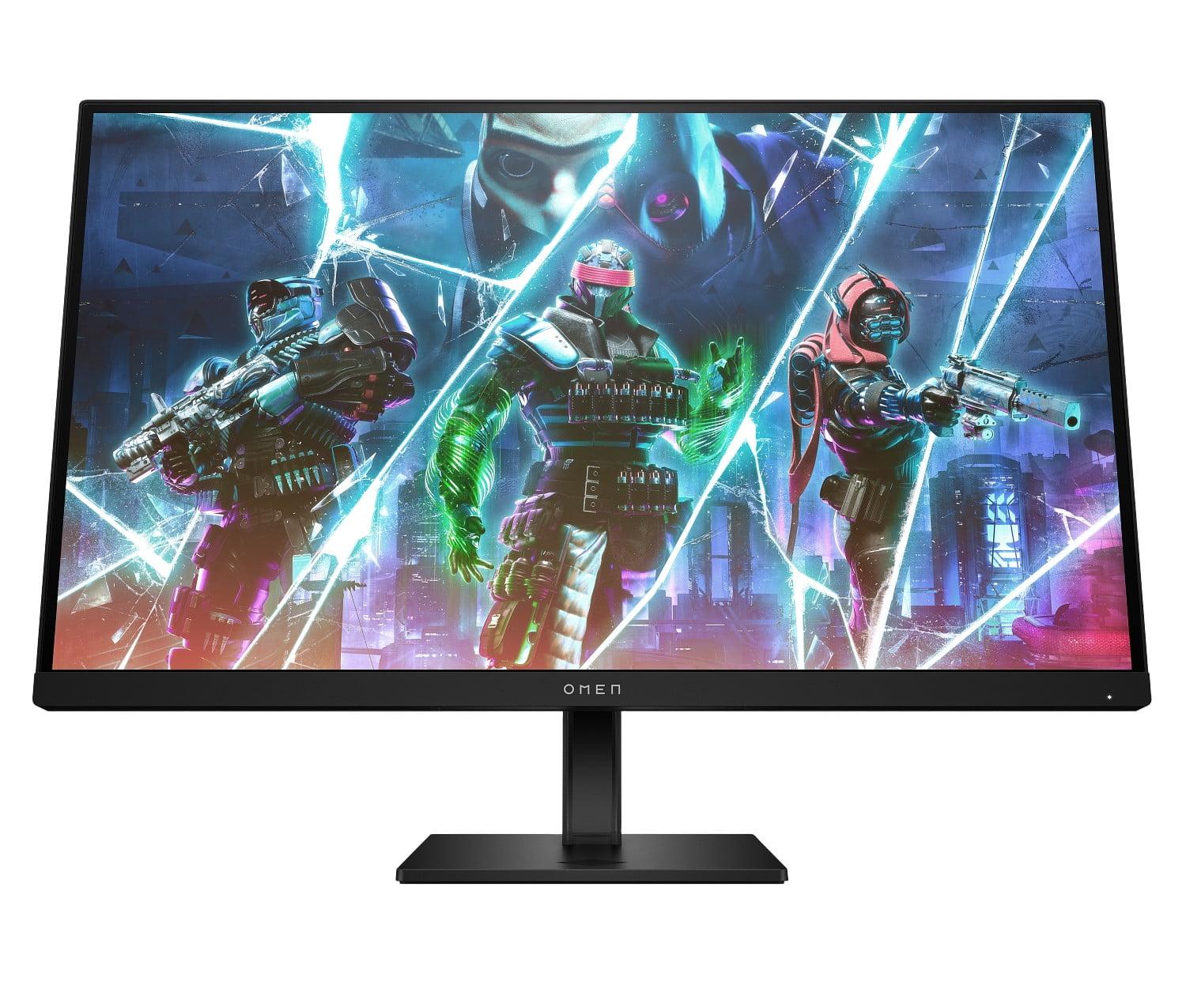
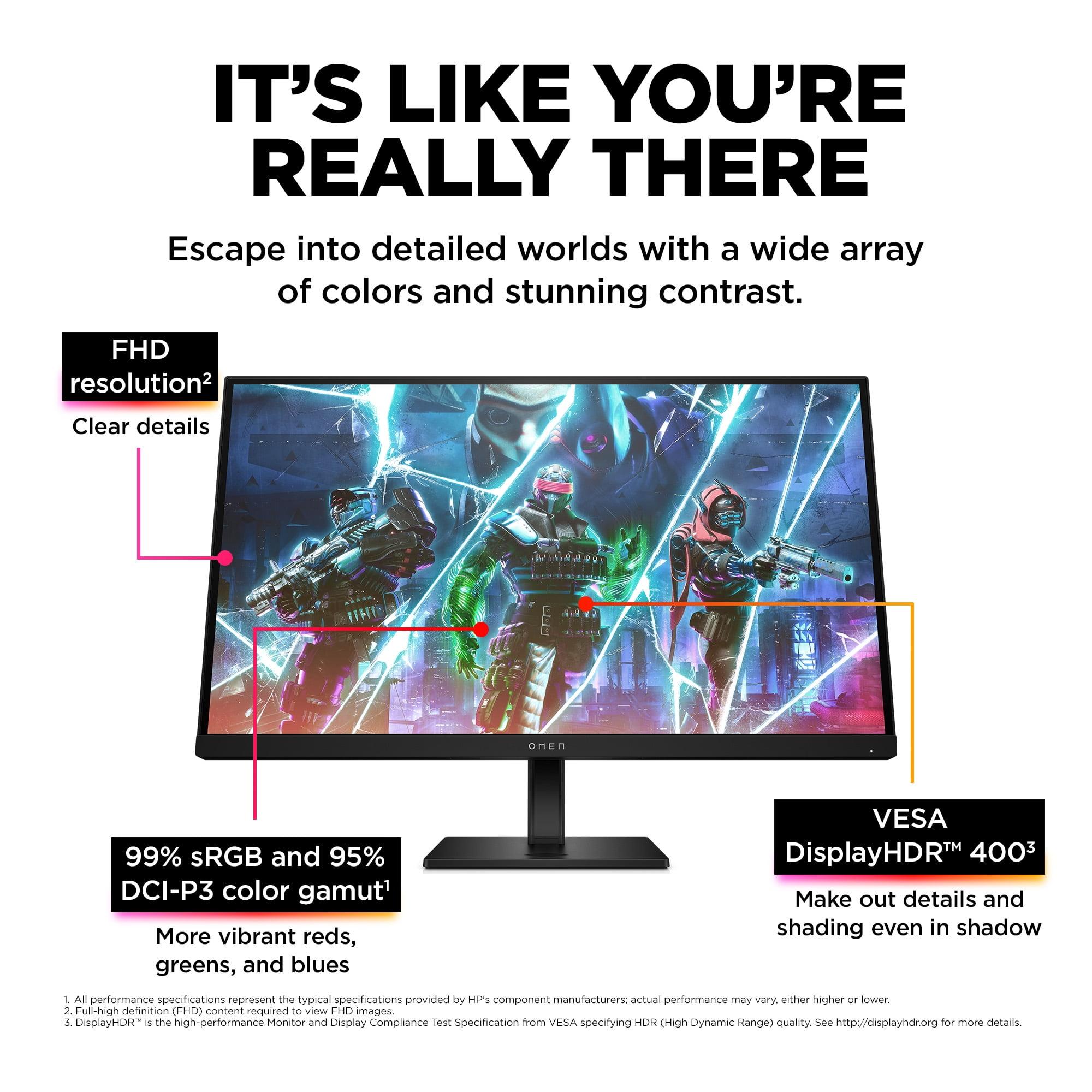
The HP OMEN 27s represents the competitive gaming philosophy taken to its logical conclusion. Released in 2023, this monitor prioritizes frame rates and response times above all else, featuring a blazing 240Hz refresh rate paired with Full HD (1920x1080) resolution.
At first glance, that resolution might seem disappointing on a 27-inch screen. After all, 1080p stretched across 27 inches results in about 82 pixels per inch, which isn't particularly sharp by modern standards. However, this apparent limitation is actually the monitor's greatest strength for competitive gaming.
Lower resolution means your graphics card doesn't have to work as hard to push high frame rates. A mid-range GPU that might struggle to hit 120fps at 4K can easily deliver 200+ fps at 1080p. This matters enormously in competitive titles like Counter-Strike, Valorant, or Apex Legends, where maintaining consistent high frame rates provides a genuine advantage.
The HP OMEN 27s achieves its 1ms gray-to-gray response time through overdrive technology, which slightly overpowers pixel transitions to reduce ghosting and motion blur. Combined with the 240Hz refresh rate, this creates incredibly smooth motion that makes tracking moving targets significantly easier.
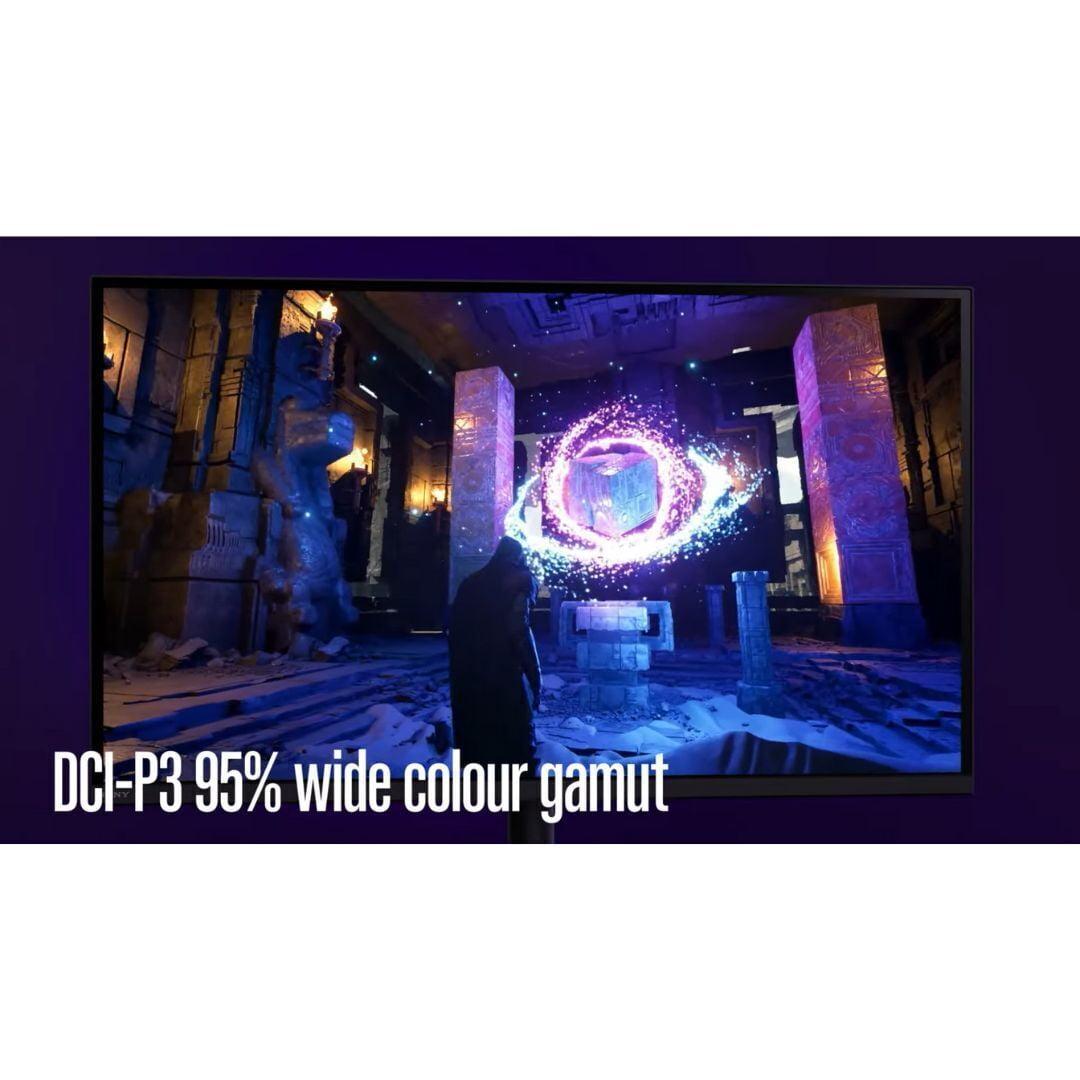
Color performance is solid for a gaming-focused display, covering 99% of the sRGB color space and 95% of the DCI-P3 color gamut. These specifications mean the monitor can display most colors you'll encounter in games and web content accurately. The IPS panel provides consistent colors across wide viewing angles, making it suitable for group gaming sessions or when you're not sitting directly in front of the screen.
HDR support comes via VESA DisplayHDR 400 certification, which provides basic HDR functionality with 400 nits of peak brightness. This isn't spectacular HDR—you won't get the dramatic contrast improvements of higher-end displays—but it's adequate for gaming and better than no HDR at all.
The monitor's connectivity reflects its practical gaming focus. Two HDMI 2.0 ports allow you to connect multiple consoles simultaneously, while DisplayPort 1.4 handles high-refresh PC gaming. The integrated USB hub is particularly useful, letting you plug your mouse and keyboard directly into the monitor for cleaner cable management.
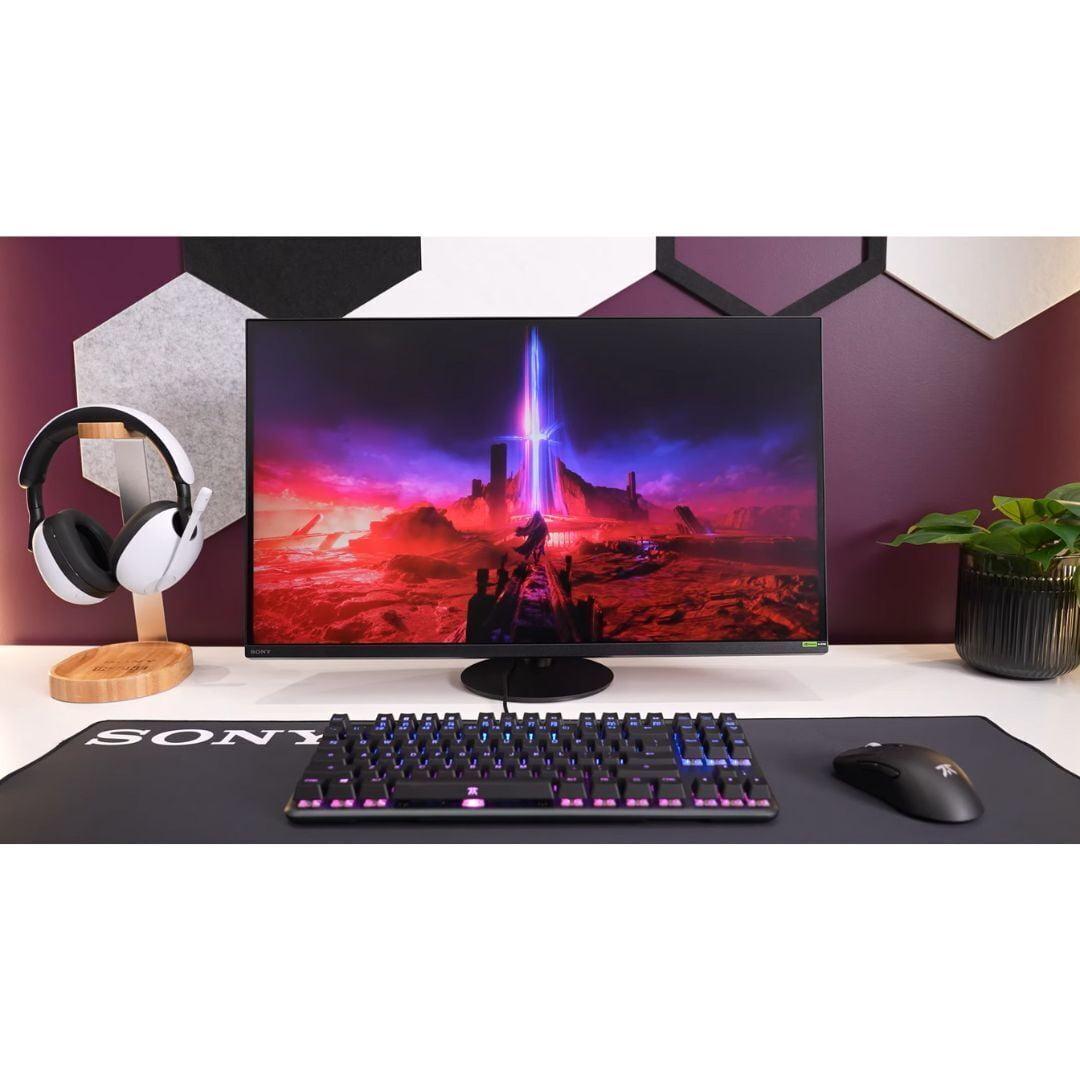
Sony took a completely different approach with the INZONE M9 II, launched in late 2023 as an evolution of their gaming monitor lineup. This display prioritizes visual quality and HDR performance, featuring a 4K resolution (3840x2160) with a 160Hz refresh rate.
The resolution difference is immediately apparent. At 163 pixels per inch, the Sony INZONE M9 II delivers razor-sharp text and incredibly detailed game visuals. This pixel density makes the monitor excellent not just for gaming but for productivity work, content creation, and media consumption.
Achieving 160Hz at 4K resolution is a significant technical accomplishment. Until recently, 4K gaming monitors were limited to 60Hz or 120Hz refresh rates. The 160Hz capability puts the Sony monitor in a sweet spot where it's smooth enough for most gaming while maintaining that crisp 4K detail.
Where the Sony really shines is HDR performance. The VESA DisplayHDR 600 certification indicates much better HDR capability than the HP, with peak brightness reaching 750 nits. More importantly, the monitor features Full Array Local Dimming (FALD) with 96 dimming zones. This technology divides the backlight into separate zones that can dim independently, creating much better contrast between bright and dark areas of the image.
The practical result is genuinely impressive HDR gaming. Bright explosions and muzzle flashes pop against dark backgrounds, while shadow details remain visible without washing out bright areas. This makes a dramatic difference in games designed with HDR in mind, creating a more immersive and cinematic experience.
Sony's PlayStation 5 integration deserves special mention. The INZONE M9 II includes Auto HDR Tone Mapping specifically designed for PS5 and PS5 Pro consoles. This feature automatically optimizes HDR settings for the best possible image quality without manual tweaking. For console gamers, this seamless integration is incredibly valuable.
The monitor also includes gaming-specific features like custom crosshair overlays, frame rate counters, and specialized picture modes for different game genres. A unique 24.5-inch mode shrinks the display area for competitive players who prefer smaller screens, showing that Sony understands diverse gaming preferences.
For competitive gaming, the numbers tell a clear story. The HP OMEN 27s offers a 50% higher refresh rate (240Hz vs 160Hz) and requires significantly less GPU power to drive effectively. In fast-paced shooters, this translates to more fluid motion tracking and lower input lag.
Based on extensive user feedback and professional reviews, the performance difference is noticeable in competitive scenarios. Players report easier target tracking and more responsive gameplay with the higher refresh rate, particularly in games like CS:GO, Valorant, and Overwatch where split-second reactions matter.
However, the Sony INZONE M9 II isn't a slouch for competitive gaming either. 160Hz is still very smooth, and the superior image quality can actually help with enemy visibility in some games. The higher resolution means you can spot distant opponents more easily, which can be advantageous in battle royale games.
For story-driven games, RPGs, and visually spectacular titles, the Sony monitor takes a commanding lead. The 4K resolution reveals fine details that simply aren't visible at 1080p—texture details, distant scenery, and UI elements all appear significantly sharper and more refined.
The superior HDR performance makes an enormous difference in games designed to showcase it. Titles like Cyberpunk 2077, Red Dead Redemption 2, and Horizon Forbidden West look dramatically more realistic with proper HDR implementation. The Local Dimming technology creates genuine "wow" moments when transitioning between bright outdoor scenes and dark interiors.
Our research into user experiences consistently shows that gamers prioritizing visual quality prefer the Sony, while those focused on competitive performance choose the HP. The preference often aligns with the types of games people play most frequently.
Console compatibility is where the two monitors diverge significantly. The Sony INZONE M9 II includes HDMI 2.1 ports, which support 4K gaming at up to 120Hz on PlayStation 5 and Xbox Series X. This makes full use of these consoles' capabilities and future-proofs the monitor for upcoming games that might push higher frame rates.
The HP OMEN 27s uses HDMI 2.0, which limits console gaming to 60Hz at 1080p. While this isn't necessarily a problem—most console games target 60fps anyway—it doesn't take full advantage of the monitor's 240Hz capability when gaming on consoles.
At the time of writing, these monitors occupy different price segments that reflect their distinct philosophies. The HP OMEN 27s typically costs significantly less than the Sony INZONE M9 II, making high-refresh gaming more accessible to budget-conscious gamers.
The HP's value proposition is straightforward: it delivers premium competitive gaming performance at a reasonable price point. When compared to other 240Hz gaming monitors, it's competitively priced while offering solid build quality and comprehensive connectivity.
The Sony's higher price reflects its premium positioning and advanced technology. The combination of 4K resolution, excellent HDR performance, and local dimming typically commands premium pricing across the industry. For users who prioritize visual quality and have the budget for a luxury gaming experience, the price premium can be justified.
While both monitors are designed primarily for gaming, their suitability for home theater use differs considerably. The Sony INZONE M9 II excels as a multimedia display thanks to its 4K resolution and superior HDR performance. Movie watching, streaming, and content consumption all benefit from the higher resolution and better contrast.
The larger color gamut and higher peak brightness make HDR movies look genuinely impressive, approaching the quality of dedicated home theater displays. The monitor's connectivity also supports the latest gaming consoles, making it suitable as a centerpiece for a gaming and entertainment setup.
The HP OMEN 27s, while capable for multimedia use, is primarily optimized for gaming. The 1080p resolution isn't ideal for 4K content, though it handles standard HD content perfectly well. The lower peak brightness limits HDR movie performance compared to the Sony.
Both monitors represent different approaches to future-proofing. The HP OMEN 27s bets on competitive gaming remaining relevant, with esports continuing to value raw performance over visual fidelity. Given the popularity of competitive gaming and the fact that many esports titles prioritize performance over graphics, this seems like a safe bet.
The Sony INZONE M9 II future-proofs through resolution and HDR capability. As graphics cards become more powerful and games become more visually sophisticated, the 4K resolution and HDR support will remain relevant longer than 1080p displays.
Since their 2023 launch, both monitors have received firmware updates that have improved performance and added features. This ongoing support suggests both companies are committed to keeping these displays competitive as technology evolves.
Your choice between these monitors should align closely with your gaming habits and priorities. The HP OMEN 27s is ideal if you primarily play competitive games like CS:GO, Valorant, League of Legends, or Overwatch. The 240Hz refresh rate provides a genuine competitive advantage, and the lower GPU requirements mean you can maintain high frame rates with more affordable graphics cards.
Choose the Sony INZONE M9 II if you value visual quality and play a variety of games, especially single-player titles with impressive graphics. The 4K resolution and superior HDR make games look dramatically better, and the PlayStation integration adds value for console gamers.
Consider your hardware as well. The HP works well with mid-range graphics cards, while the Sony really demands high-end GPU power to drive 4K gaming effectively. If you're building a new gaming PC, factor in the additional graphics card cost needed to drive 4K gaming when calculating the Sony's true price.
Both monitors represent excellent engineering focused on different aspects of the gaming experience. The HP OMEN 27s maximizes competitive performance and value, while the Sony INZONE M9 II prioritizes visual excellence and premium features. Neither approach is inherently better—it depends entirely on what you value most in your gaming experience.
The gaming monitor market has matured to the point where you can get exceptional performance regardless of your priorities. Whether you choose the speed-focused HP or the visually-oriented Sony, you're getting a display that would have been considered premium just a few years ago. The key is matching the monitor's strengths to your specific gaming needs and budget.
| HP OMEN 27s FHD 240Hz Gaming Monitor | Sony INZONE M9 II 27" 4K 160Hz Gaming Monitor |
|---|---|
| Resolution - Higher resolution means sharper text and game details | |
| 1920 x 1080 (FHD) - Less sharp but easier on your GPU | 3840 x 2160 (4K) - Dramatically sharper, requires powerful graphics card |
| Refresh Rate - Higher numbers mean smoother motion, crucial for competitive gaming | |
| 240Hz - Exceptional for esports and competitive gaming | 160Hz - Very smooth for most games, still excellent for casual gaming |
| Response Time - Lower is better for reducing motion blur and ghosting | |
| 1ms GtG (with Overdrive) - Minimizes ghosting in fast action | 1ms GtG - Equally responsive for gaming |
| HDR Performance - Better HDR creates more realistic lighting and colors | |
| DisplayHDR 400 (400 nits peak) - Basic HDR experience | DisplayHDR 600 (750 nits peak) with Full Array Local Dimming - Genuine HDR with dramatic contrast |
| Panel Technology - Affects color accuracy and viewing angles | |
| IPS with 99% sRGB, 95% DCI-P3 color coverage | IPS with 95% DCI-P3, superior brightness and contrast control |
| Connectivity - Modern ports enable full console compatibility | |
| 2x HDMI 2.0, 1x DisplayPort 1.4, USB hub | 2x HDMI 2.1, 1x DisplayPort 2.1 - Better for PS5/Xbox Series X |
| Target GPU Requirements - What graphics card you need for optimal performance | |
| Mid-range GPUs (RTX 4060/RX 7600) handle 240fps easily | High-end GPUs (RTX 4070+) needed for 4K gaming |
| Gaming Focus - Different strengths for different gaming styles | |
| Competitive esports optimization with custom crosshairs | Cinematic gaming with PS5 integration and HDR tone mapping |
| Ergonomics - Adjustability affects long-term comfort | |
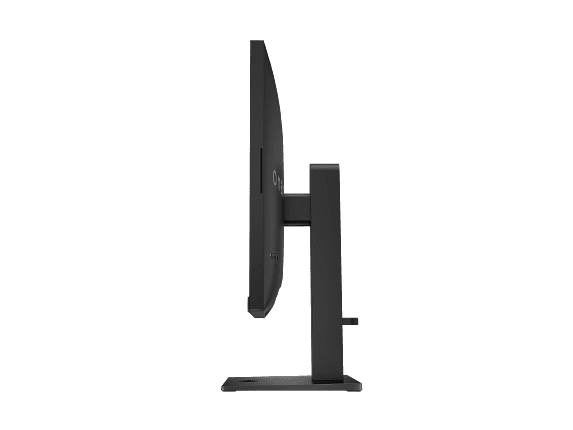
| Height, tilt, pivot, swivel with VESA mount support | Height, tilt, 360° swivel with premium circular base design |
The HP OMEN 27s FHD 240Hz Gaming Monitor is significantly better for competitive gaming due to its 240Hz refresh rate compared to the Sony INZONE M9 II's 160Hz. The higher refresh rate provides smoother motion tracking and can give you a competitive edge in fast-paced games like CS:GO, Valorant, and Apex Legends. The HP OMEN 27s also requires less GPU power, making it easier to maintain consistent high frame rates.
The primary difference is resolution versus refresh rate. The HP OMEN 27s offers 1080p resolution with a blazing 240Hz refresh rate, while the Sony INZONE M9 II provides 4K resolution with 160Hz refresh rate. This makes the HP better for competitive gaming and the Sony better for visual quality and immersive single-player games.
The Sony INZONE M9 II has significantly better picture quality with its 4K resolution, superior HDR performance (DisplayHDR 600 vs 400), and Full Array Local Dimming technology. The Sony delivers sharper images, better contrast, and more vibrant colors compared to the HP OMEN 27s, making it ideal for visually stunning games and media consumption.
Yes, but the Sony INZONE M9 II is much better for modern consoles. It features HDMI 2.1 ports that support 4K gaming up to 120Hz and includes special PlayStation 5 integration features like Auto HDR Tone Mapping. The HP OMEN 27s uses HDMI 2.0, which limits consoles to 60Hz at 1080p resolution.
The HP OMEN 27s offers better value for competitive gamers and budget-conscious buyers, delivering premium 240Hz gaming performance at a more accessible price point. The Sony INZONE M9 II costs significantly more but provides premium features like 4K resolution and advanced HDR that justify the price for users prioritizing visual quality.
The HP OMEN 27s works well with mid-range graphics cards (RTX 4060/RX 7600 class) since 1080p gaming is less demanding. The Sony INZONE M9 II requires high-end graphics cards (RTX 4070 or better) to effectively drive 4K gaming at high frame rates, making it more expensive to build a complete system around.
The Sony INZONE M9 II is much better for movies and streaming content thanks to its 4K resolution, superior HDR performance with 750 nits peak brightness, and Full Array Local Dimming. The HP OMEN 27s is adequate for media consumption but the 1080p resolution and basic HDR don't match the Sony's cinematic experience.
Both the HP OMEN 27s and Sony INZONE M9 II claim 1ms gray-to-gray response times, making them equally responsive for gaming. However, the HP's 240Hz refresh rate can provide slightly lower perceived input lag in competitive gaming scenarios, while the Sony's advanced processing might add minimal delay for its enhanced visual features.
The Sony INZONE M9 II has superior connectivity with HDMI 2.1 and DisplayPort 2.1 for future-proofing and full console compatibility. The HP OMEN 27s offers more ports overall with dual HDMI 2.0 connections and a USB hub, making it better for connecting multiple devices simultaneously, though with lower bandwidth limits.
The Sony INZONE M9 II is excellent for productivity work due to its sharp 4K resolution, making text and detailed work much clearer. The HP OMEN 27s is adequate for general office work but the 1080p resolution on a 27-inch screen isn't ideal for detailed tasks like photo editing or coding.
The Sony INZONE M9 II is more future-proof with its 4K resolution, advanced HDR capabilities, and HDMI 2.1 connectivity that will remain relevant as games become more visually demanding. The HP OMEN 27s focuses on competitive gaming performance that may become less relevant as display technology advances, though esports will likely continue valuing high refresh rates.
Choose the HP OMEN 27s if you primarily play competitive games, want excellent value, or have a mid-range graphics card. Choose the Sony INZONE M9 II if you prioritize visual quality, play single-player games, use modern consoles regularly, or want the best HDR gaming experience. Your gaming preferences and budget should guide the decision between these two excellent but very different monitors.
We've done our best to create useful and informative comparisons to help you decide what product to buy. Our research uses advanced automated methods to create this comparison and perfection is not possible - please contact us for corrections or questions. These are the sites we've researched in the creation of this article: bestbuy.com - hp.com - shi.com - hp.com - bestbuy.com - hp.com - tomshardware.com - hp.com - rtings.com - hp.com - displayspecifications.com - support.hp.com - publicsector.shidirect.com - objects.icecat.biz - files.bbystatic.com - hp.com - displayspecifications.com - bestbuy.com - bestbuy.com - rtings.com - rtings.com - tomshardware.com - youtube.com - bhphotovideo.com - bestbuy.com - sony.com - techpowerup.com - electronics.sony.com - sony.com - displayspecifications.com - direct.playstation.com - youtube.com - sony.com - sony.com - displayspecifications.com - bhphotovideo.com - displayspecifications.com

Privacy Policy
Terms and Conditions - Affiliate Policy
Home Security
© Copyright 2008-2026.
11816 Inwood Rd #1211, Dallas, TX 75244