

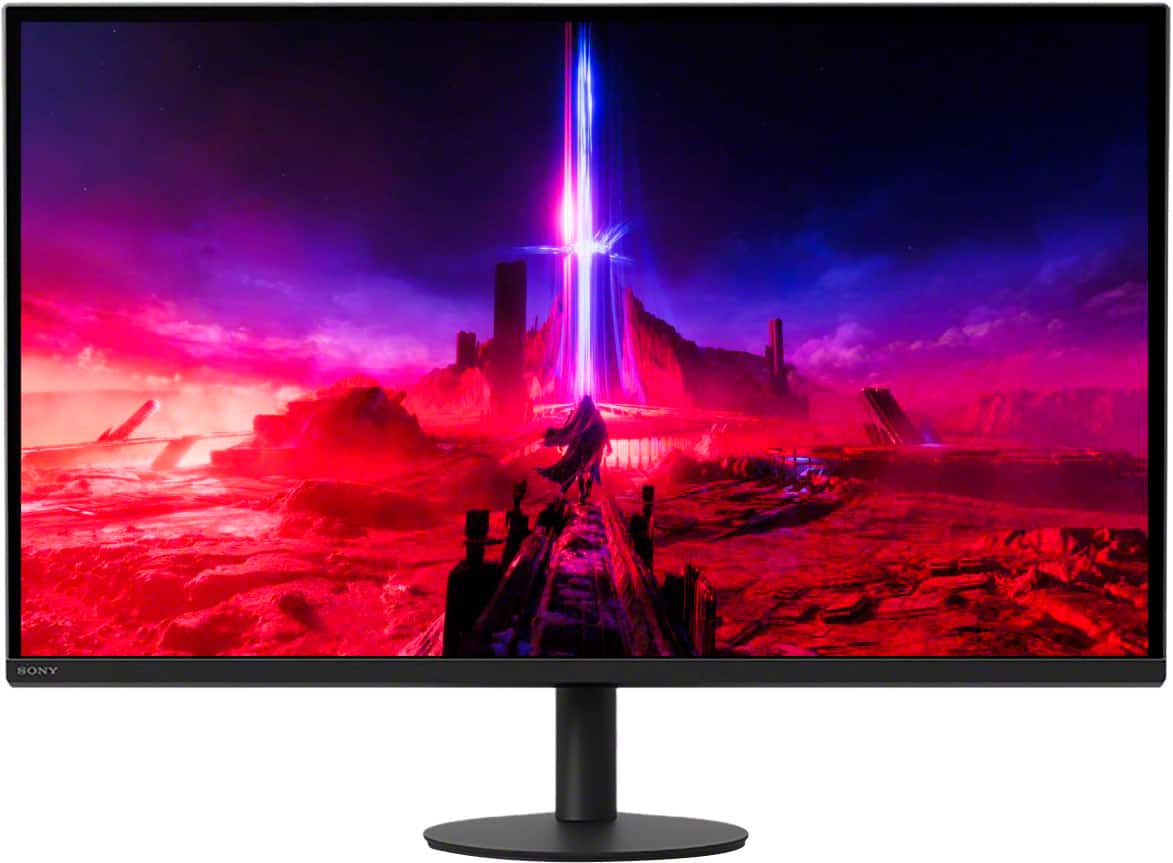
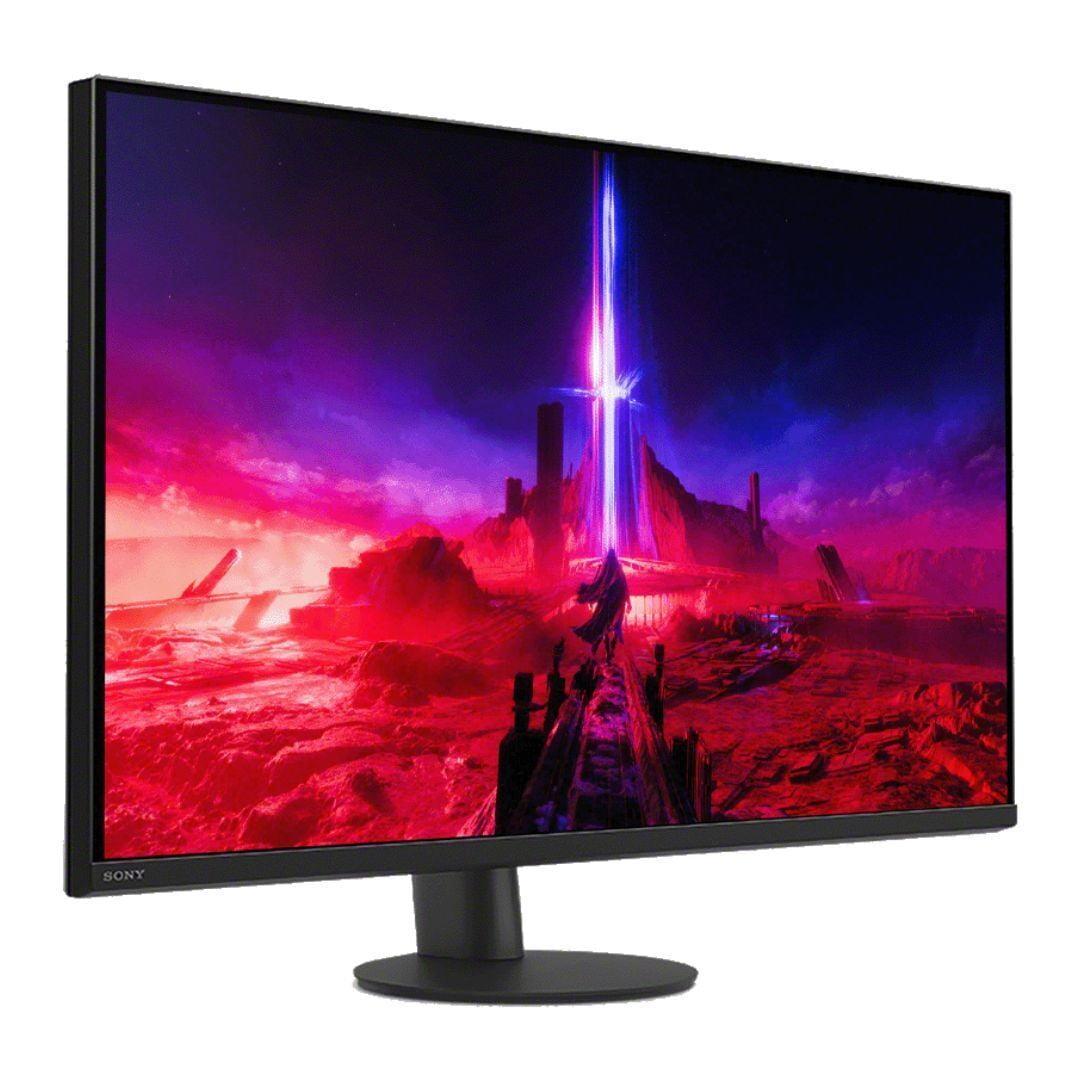

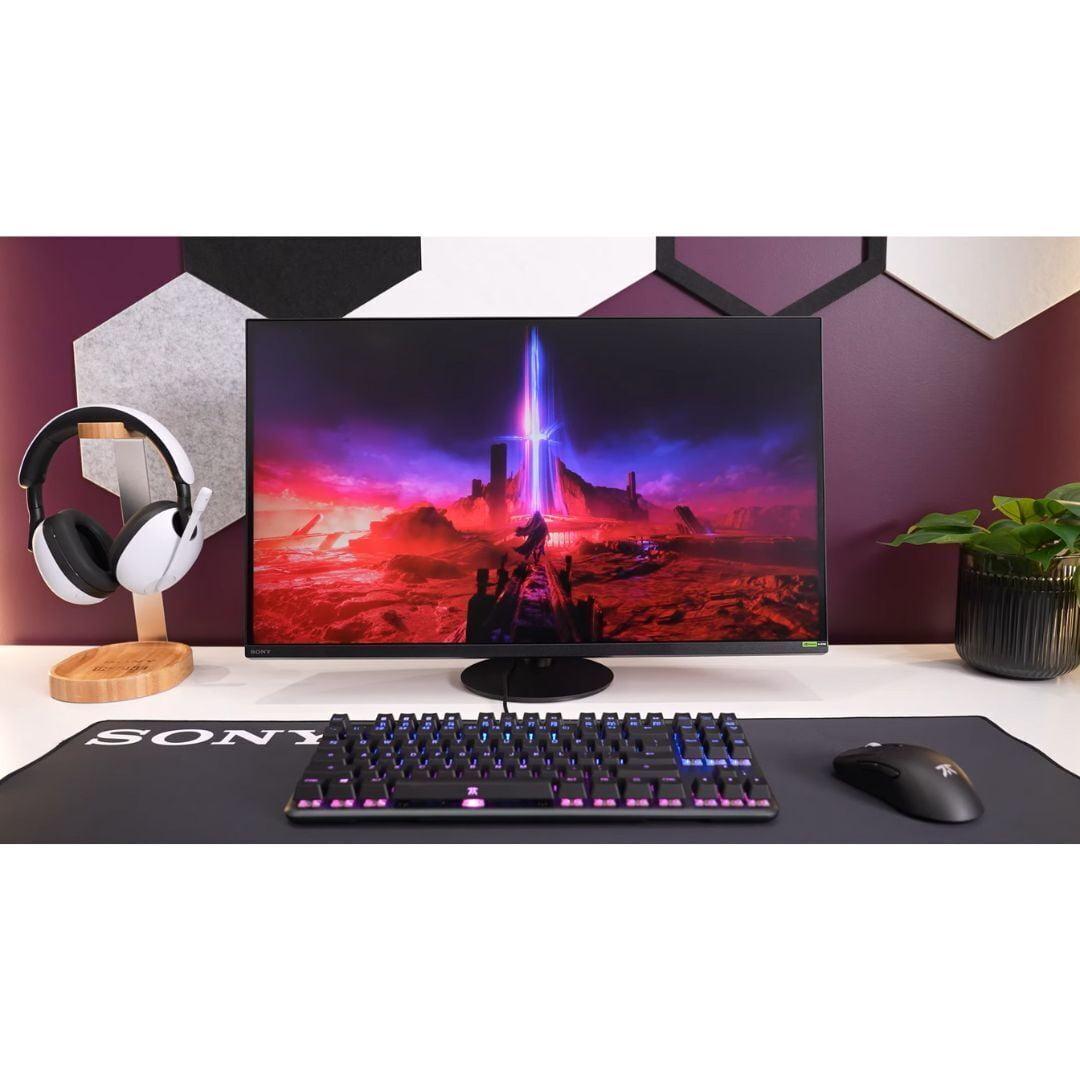
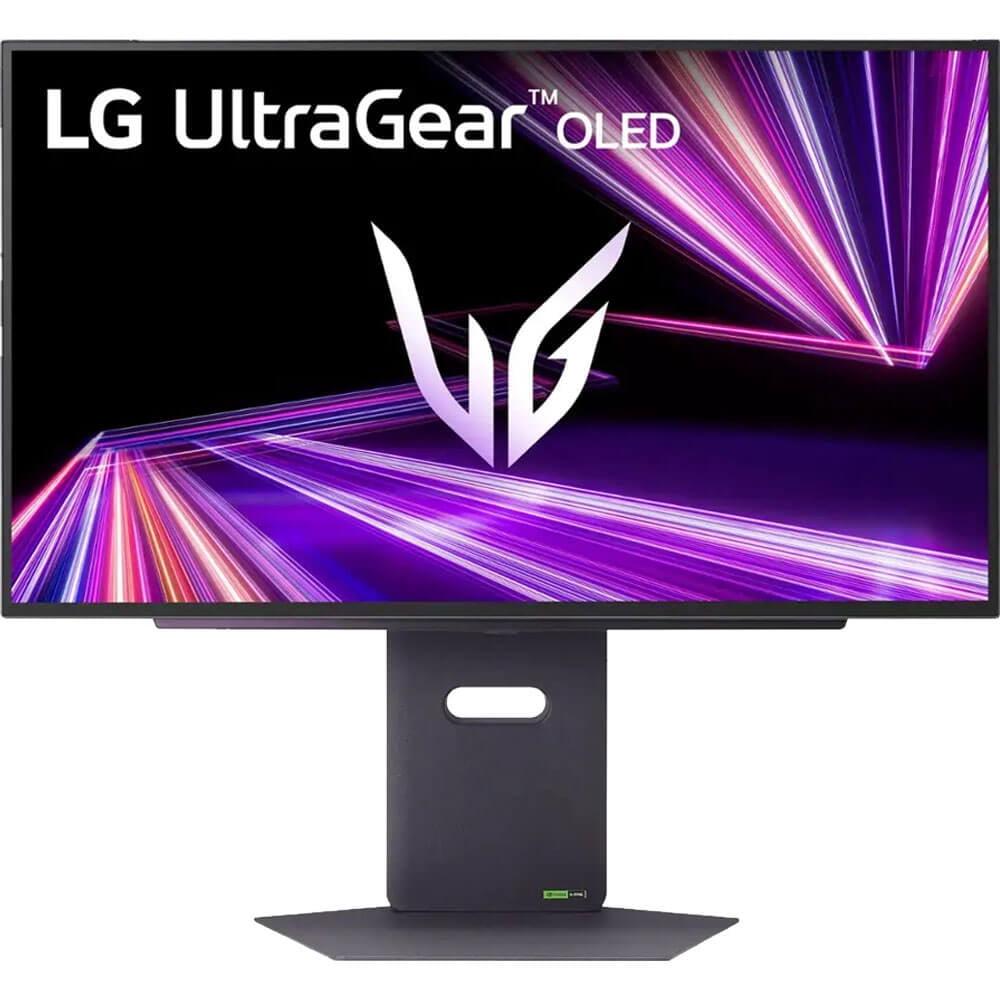
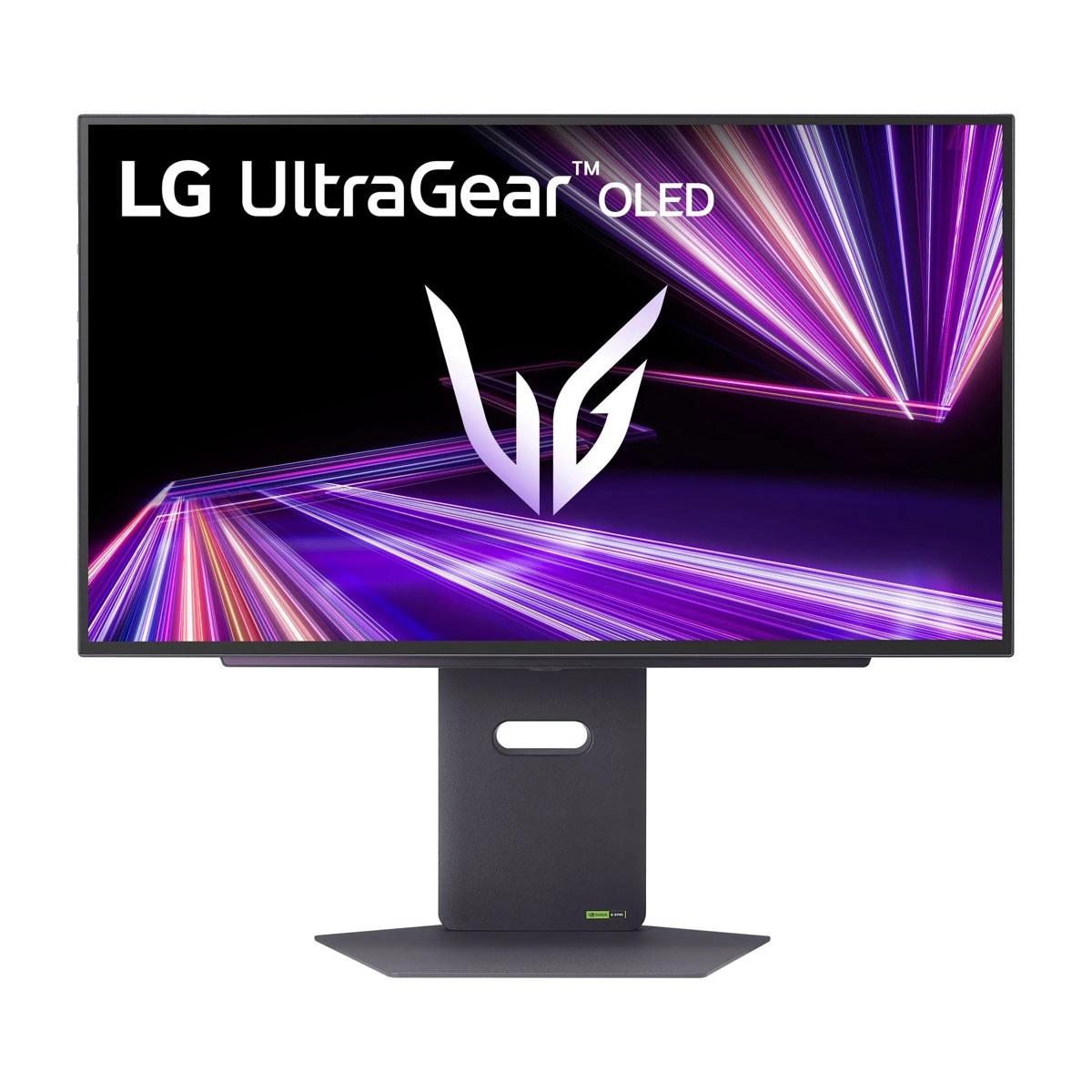
If you're shopping for a premium gaming monitor, you've probably noticed that the market has become incredibly sophisticated—and confusing. Two standout options that represent completely different philosophies are the Sony INZONE M9 II and the LG UltraGear 27" OLED. Both are 27-inch gaming monitors, but they take radically different approaches to delivering the best gaming experience.
Understanding these differences is crucial because your choice will significantly impact your gaming experience for years to come. The Sony INZONE M9 II prioritizes visual fidelity with its 4K resolution and bright display, while the LG UltraGear 27" OLED focuses on competitive gaming performance with its blazing-fast 480Hz refresh rate. At the time of writing, both monitors are priced in the premium segment, with the Sony typically commanding a slight premium over the LG.
Before diving into the comparison, let's establish what makes a gaming monitor great in 2024. The technology has evolved dramatically over the past few years, moving beyond simple refresh rate wars to encompass display technology, HDR capabilities, and specialized gaming features.
Gaming monitors now fall into two primary categories: visual quality champions that emphasize resolution, color accuracy, and brightness for immersive single-player experiences, and competitive performance monsters that maximize refresh rates and response times for esports and fast-paced gaming. The Sony INZONE M9 II and LG UltraGear 27" OLED represent the best of each approach.
The key factors that separate good gaming monitors from great ones include display technology (which affects contrast, color reproduction, and response times), resolution versus refresh rate optimization, HDR implementation, and connectivity options that future-proof your setup. Understanding these elements will help you make the right choice for your specific gaming needs.
The most fundamental difference between these monitors lies in their display technology, which affects everything from color reproduction to response times. The Sony INZONE M9 II uses IPS (In-Plane Switching) technology with Full Array Local Dimming, while the LG UltraGear 27" OLED employs WOLED (White Organic Light-Emitting Diode) technology.
IPS technology, as found in the Sony INZONE M9 II, has been the gold standard for color accuracy and viewing angles for years. The Sony takes this further with Full Array Local Dimming (FALD), which uses 96 individual LED zones across the back of the display. This means different areas of the screen can be dimmed independently, creating better contrast than standard LED displays. Think of it like having 96 tiny dimmers controlling different sections of your screen—when a scene has both dark shadows and bright highlights, the system can dim the LED zones behind the dark areas while keeping bright zones at full intensity.
The Sony INZONE M9 II can reach up to 750 nits of peak brightness, making it excellent for gaming in bright rooms or enjoying HDR content that needs punchy highlights. VESA DisplayHDR 600 certification means it meets strict standards for HDR performance, including specific brightness and color requirements.
OLED technology in the LG UltraGear 27" OLED works completely differently. Instead of a backlight illuminating liquid crystals, each pixel generates its own light. When a pixel needs to be black, it simply turns off completely, creating perfect blacks that no LED display can match. This results in an infinite contrast ratio—literally 1,500,000:1 according to LG's specifications.
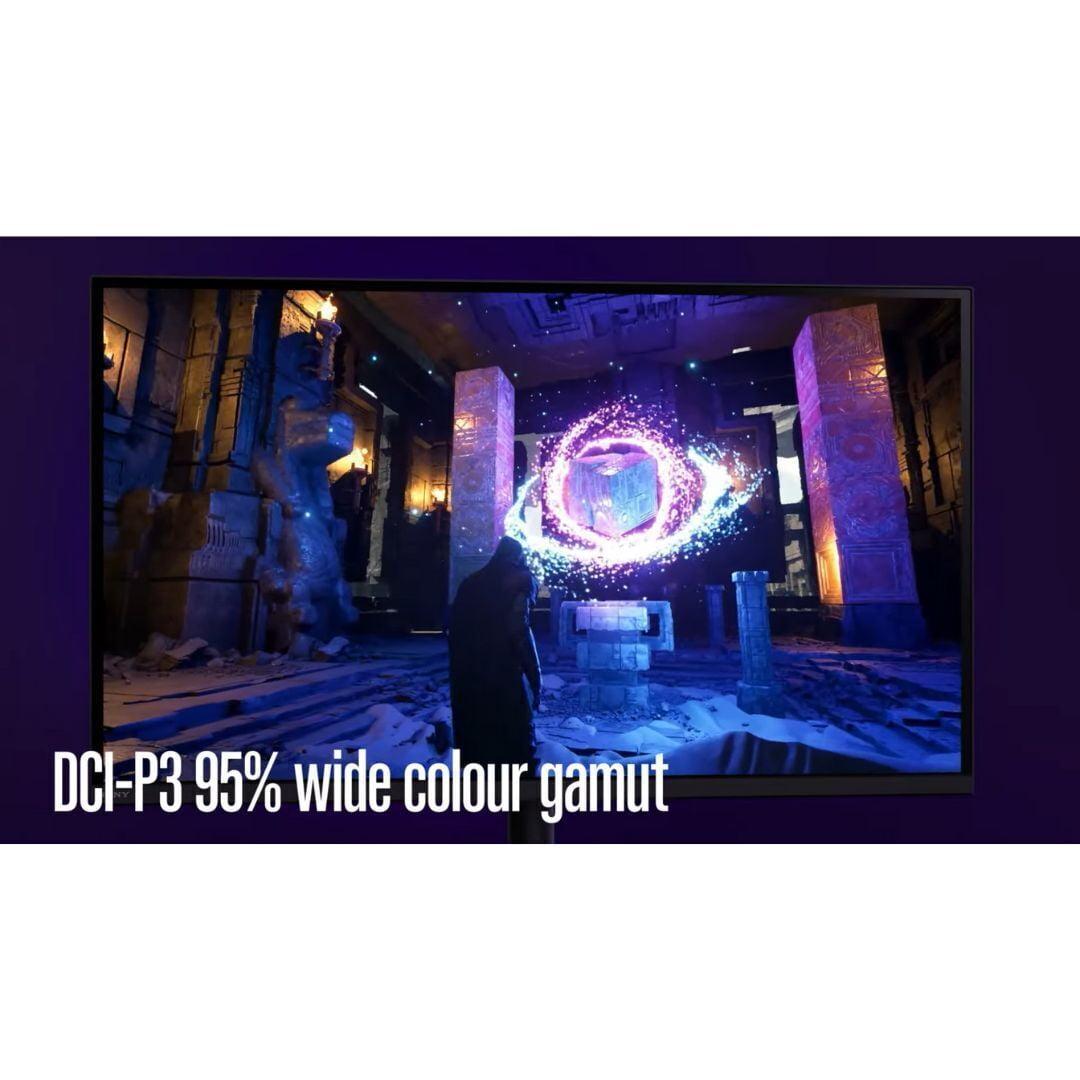
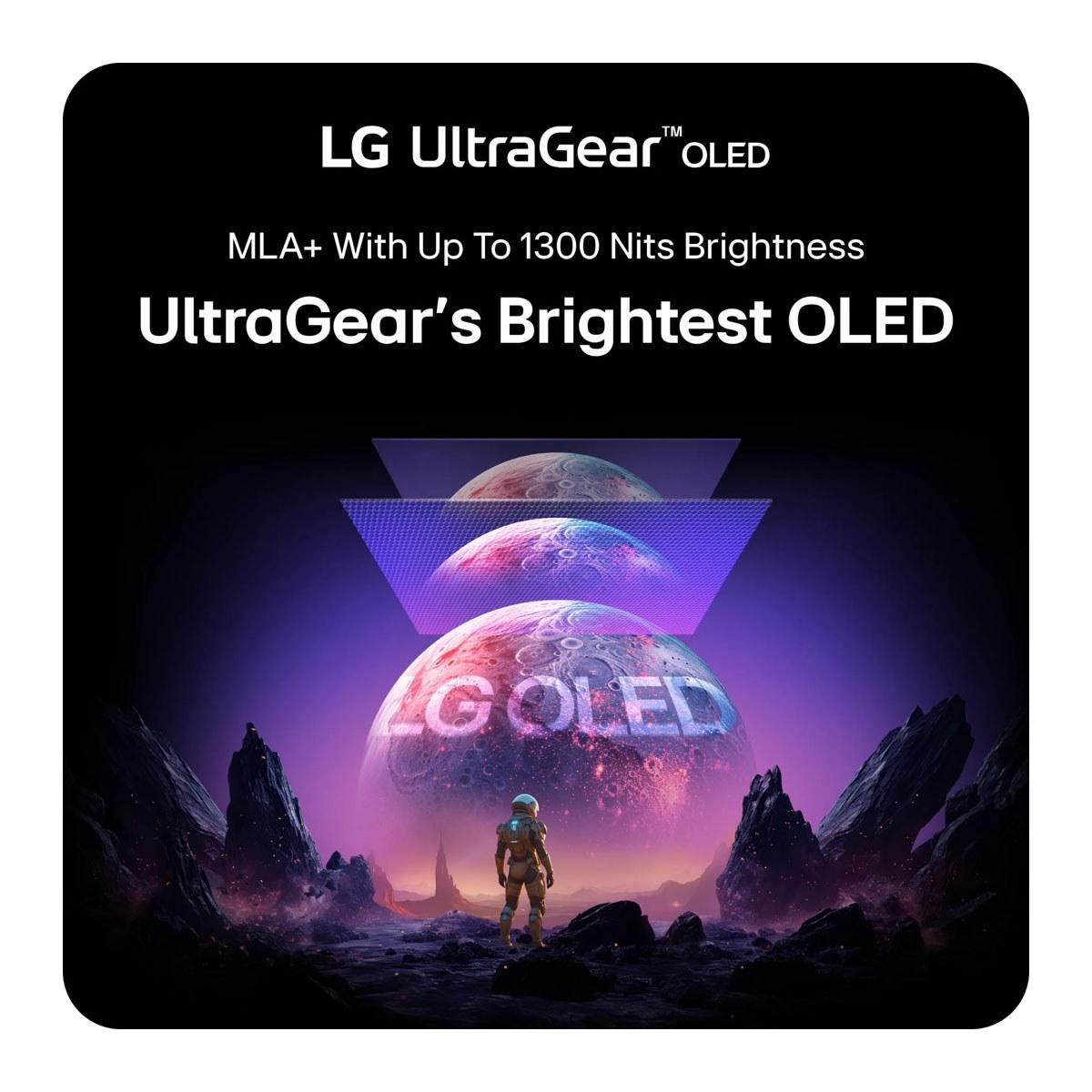
The OLED approach delivers stunning color accuracy, covering 98.5% of the DCI-P3 color space (the standard used in digital cinema). However, OLED displays typically can't get as bright as high-end LED displays, with the LG UltraGear 27" OLED peaking around 400 nits in typical viewing conditions, earning DisplayHDR True Black 400 certification.
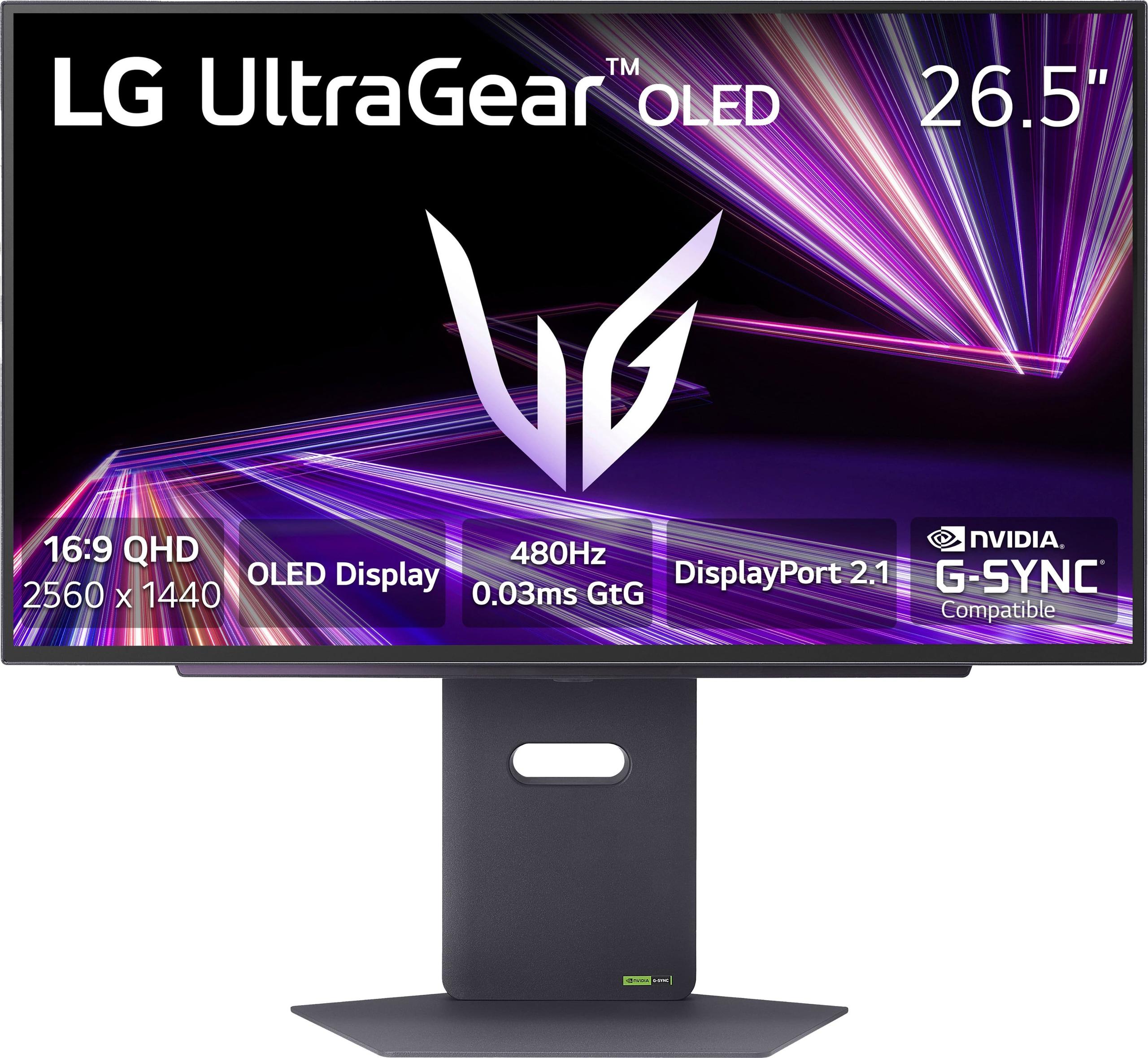
This is where the philosophical difference becomes most apparent. The Sony INZONE M9 II delivers true 4K resolution at 3840 × 2160 pixels, while the LG UltraGear 27" OLED uses QHD resolution at 2560 × 1440 pixels.
4K resolution provides approximately 78% more pixels than QHD, resulting in noticeably sharper text, more detailed textures in games, and clearer UI elements. On a 27-inch screen, 4K delivers roughly 163 pixels per inch, making individual pixels virtually invisible at normal viewing distances. This is particularly beneficial for single-player games where you want to appreciate every detail in beautifully crafted environments, from the intricate stonework in historical settings to the fine details in character faces during cutscenes.
The Sony INZONE M9 II also excels beyond gaming. If you use your monitor for productivity tasks, content creation, or media consumption, that extra resolution provides more screen real estate and sharper text rendering. It's genuinely useful for having multiple windows open simultaneously or working with high-resolution images and videos.
QHD resolution on the LG UltraGear 27" OLED represents a strategic choice prioritizing performance over pixel density. While it has fewer pixels to display, this means your graphics card doesn't have to work as hard to achieve high frame rates. For competitive gaming, this trade-off makes perfect sense—you want every available frame per second for the smoothest possible motion and fastest response to your inputs.
QHD at 27 inches still provides sharp visuals with about 109 pixels per inch, which looks crisp and detailed for gaming purposes. The reduced pixel count allows even mid-range graphics cards to achieve the high frame rates necessary to take advantage of the monitor's incredible 480Hz refresh rate.
The performance characteristics of these monitors tell the story of their intended use cases. The LG UltraGear 27" OLED delivers groundbreaking speed metrics that redefine what's possible in competitive gaming, while the Sony INZONE M9 II focuses on delivering beautiful visuals with solid performance.
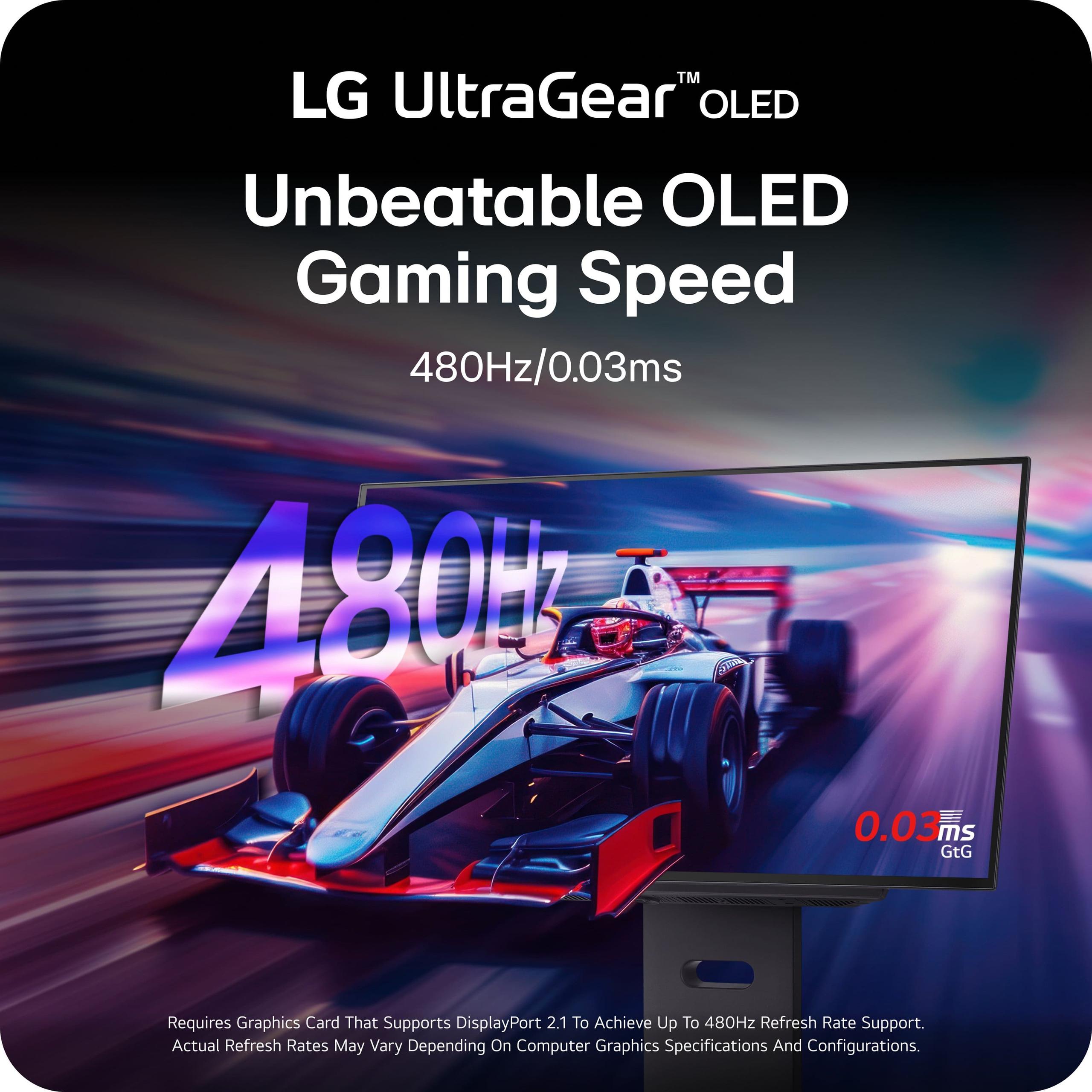
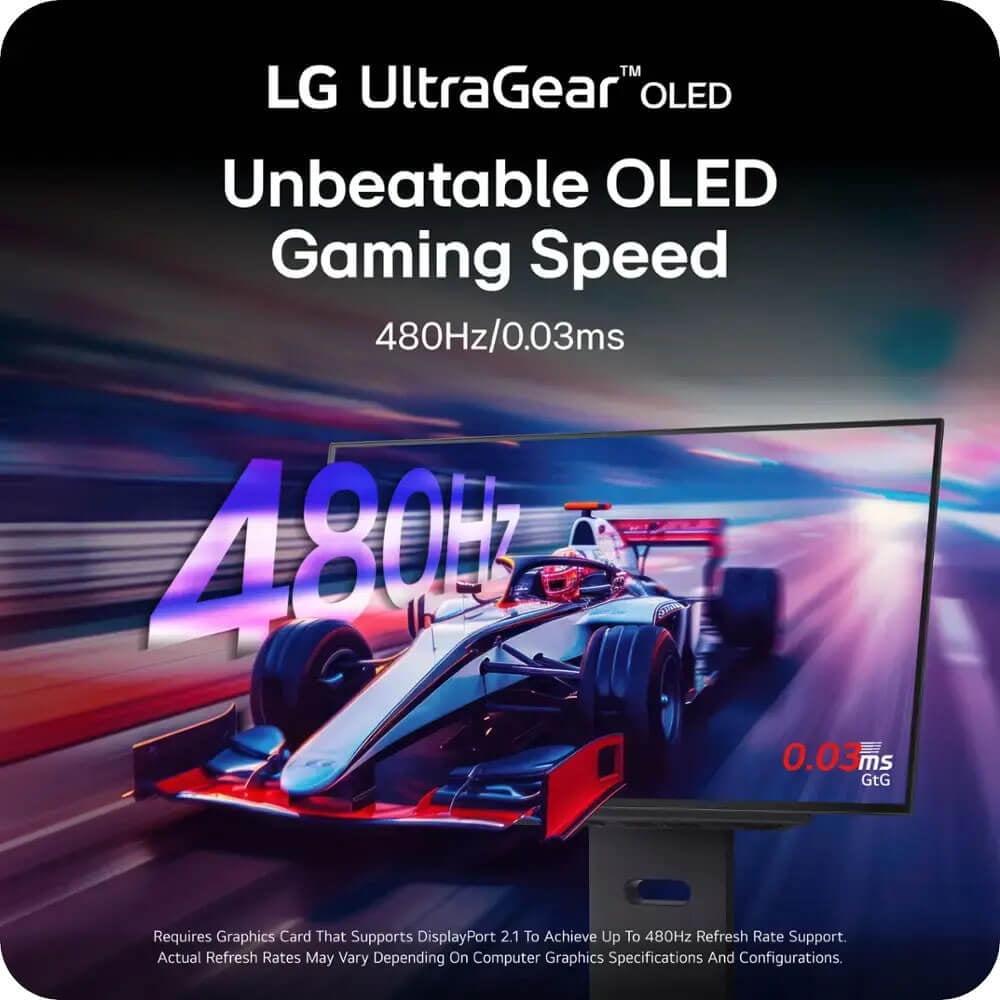
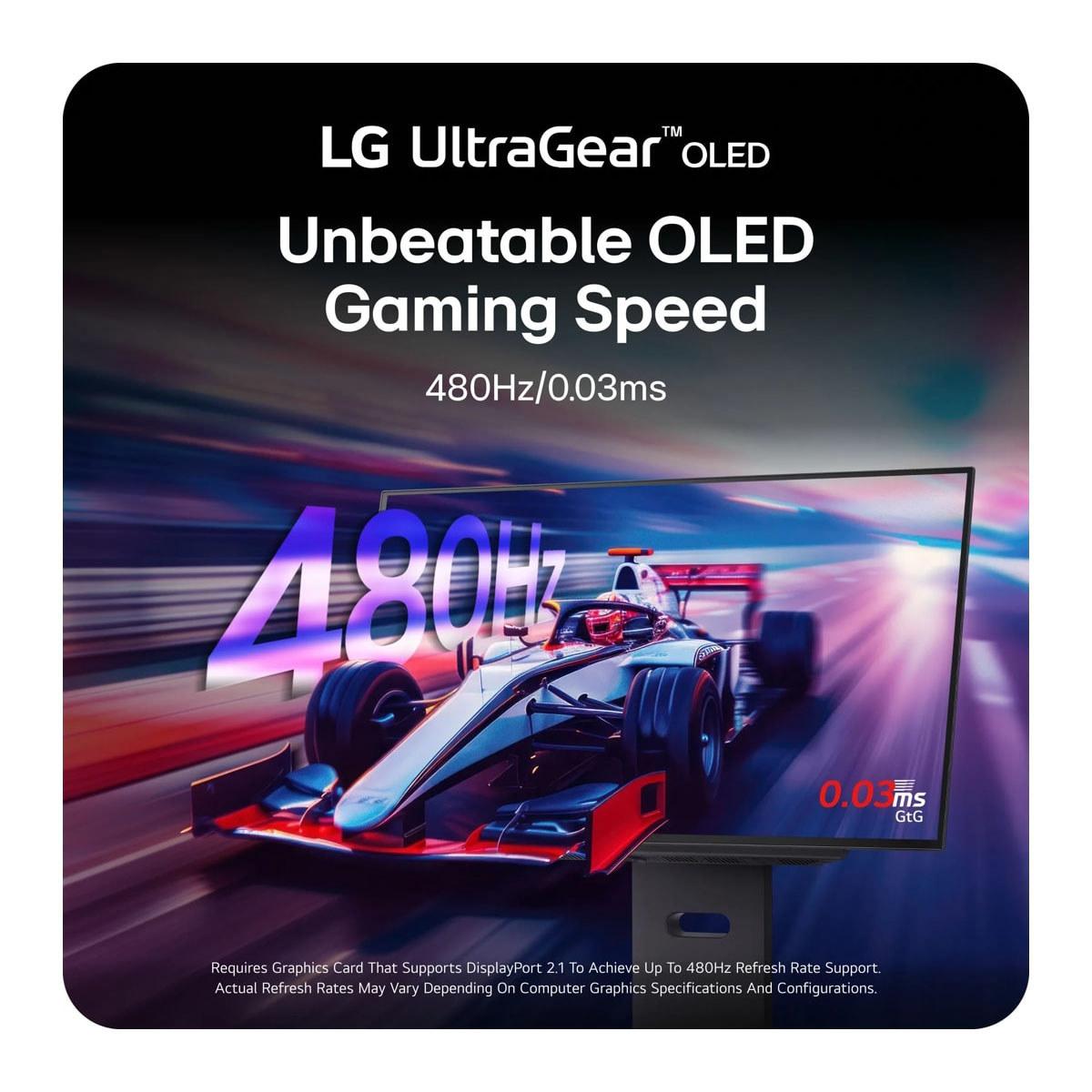
Refresh rate is perhaps the most talked-about gaming specification, and here the difference is dramatic. The LG UltraGear 27" OLED achieves an unprecedented 480Hz refresh rate, meaning it can display up to 480 unique frames every second. To put this in perspective, traditional monitors often maxed out at 60Hz, and even many current gaming monitors top out at 165Hz or 240Hz.
This ultra-high refresh rate creates incredibly smooth motion, particularly beneficial in fast-paced competitive games like Counter-Strike, Valorant, or Rocket League. When tracking targets across the screen or making quick directional changes, the additional frames provide more visual information and can give competitive players a measurable advantage.
The Sony INZONE M9 II operates at 160Hz, which is still excellent for gaming and provides smooth motion for most use cases. While not as extreme as the LG's offering, 160Hz is more than adequate for single-player games and provides a great balance between performance and the processing power needed to drive 4K resolution.
Response time measures how quickly pixels can change from one color to another, directly impacting motion blur. The LG UltraGear 27" OLED achieves an incredibly fast 0.03ms gray-to-gray response time, effectively eliminating motion blur entirely. OLED technology has an inherent advantage here because pixels can change states almost instantaneously without the liquid crystal transitions required in LCD displays.
The Sony INZONE M9 II delivers a 1ms response time, which is still very good and fast enough for most gaming scenarios, but it can't match the instantaneous response of OLED technology.
Both monitors support adaptive sync technologies including NVIDIA G-Sync compatibility and AMD FreeSync, which synchronize the monitor's refresh rate with your graphics card's output to eliminate screen tearing and stuttering. The LG UltraGear 27" OLED also supports FreeSync Premium Pro, which provides additional HDR gaming optimizations.
High Dynamic Range (HDR) has become increasingly important for gaming, and both monitors approach it differently. The Sony INZONE M9 II excels in HDR brightness with its 750-nit peak brightness and DisplayHDR 600 certification. This means it can display the bright highlights in HDR content—like sunlight glinting off metal or explosions—with impressive intensity while maintaining detail in darker areas through its local dimming zones.
The LG UltraGear 27" OLED takes a different HDR approach with DisplayHDR True Black 400 certification. While it can't get as bright as the Sony, its ability to display perfect blacks creates dramatic contrast that can be more impactful in dark scenes. The OLED's superior contrast ratio means you'll see more detail in shadows and darker areas of games, particularly beneficial in atmospheric titles or horror games where subtle details in dark environments matter.
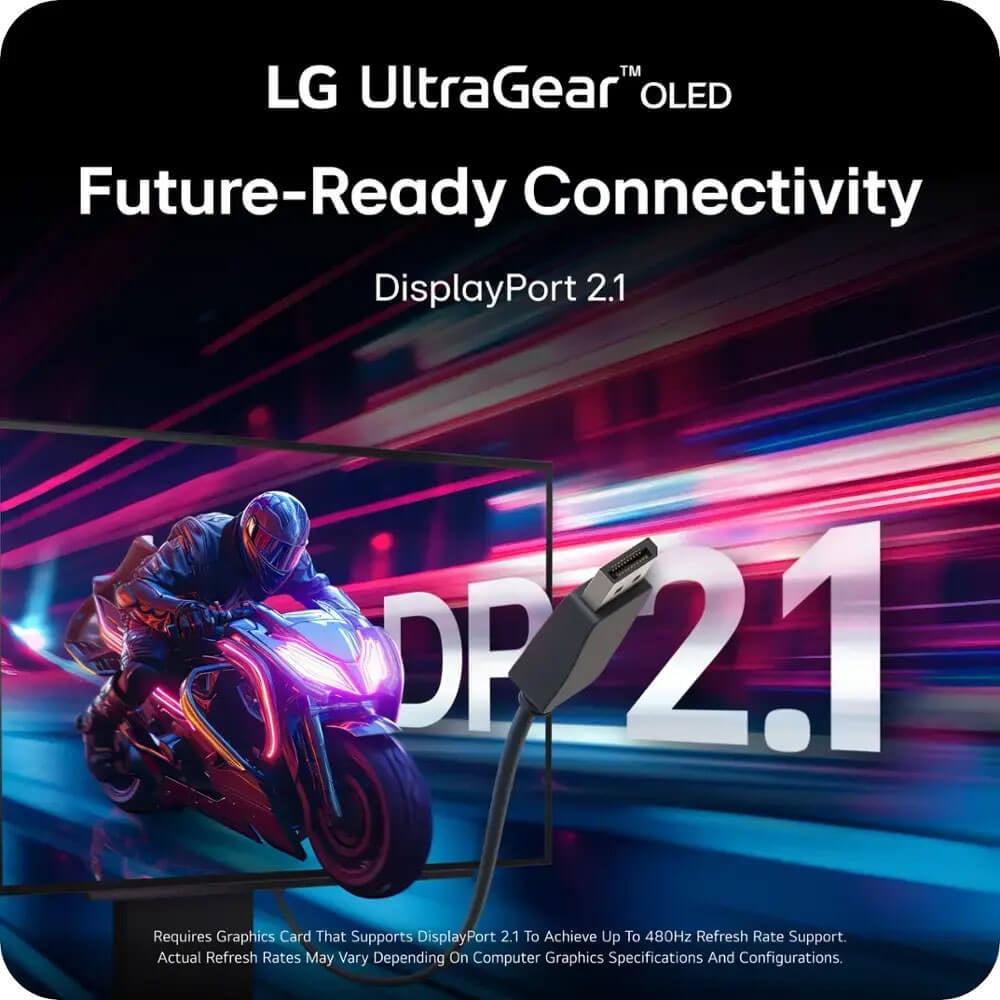
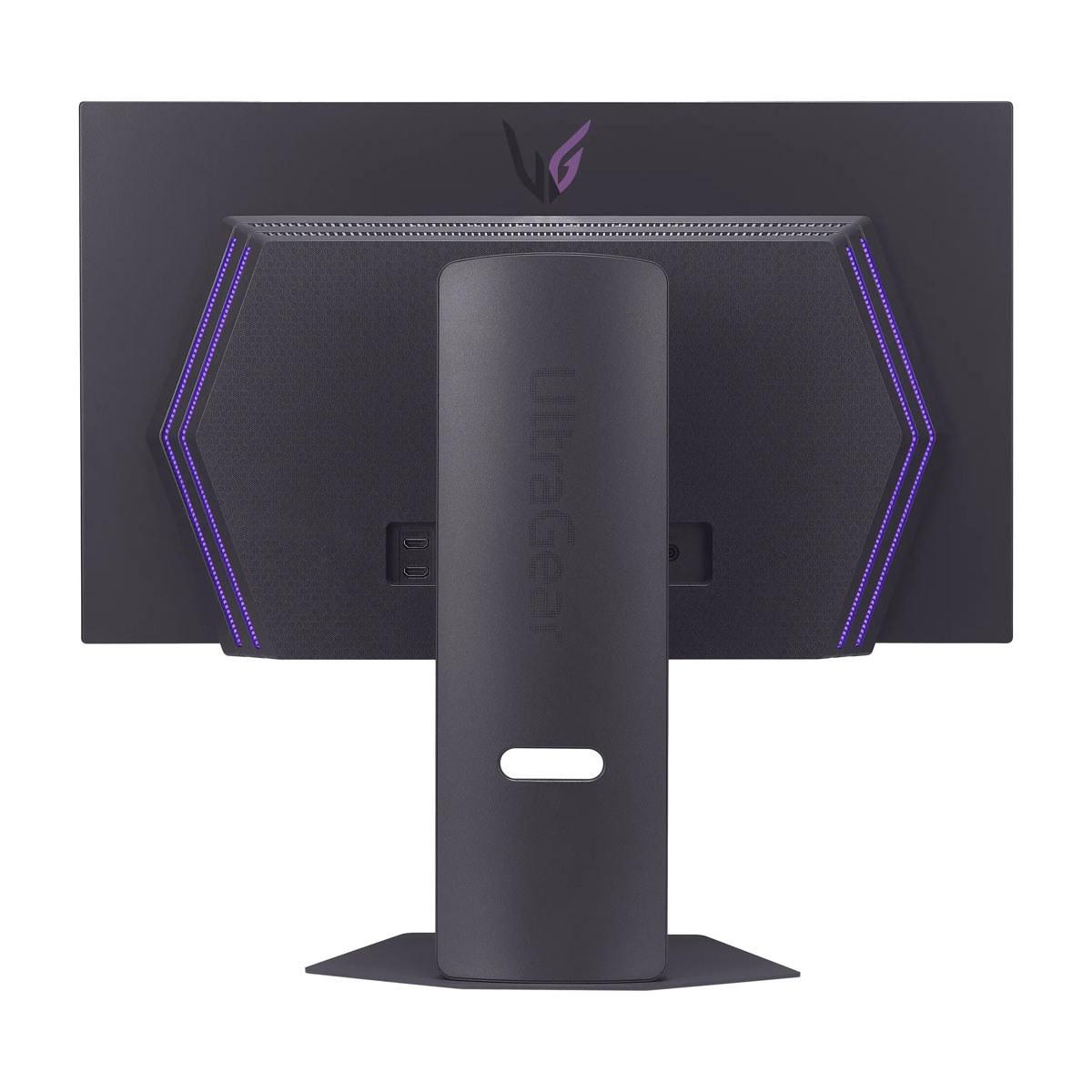
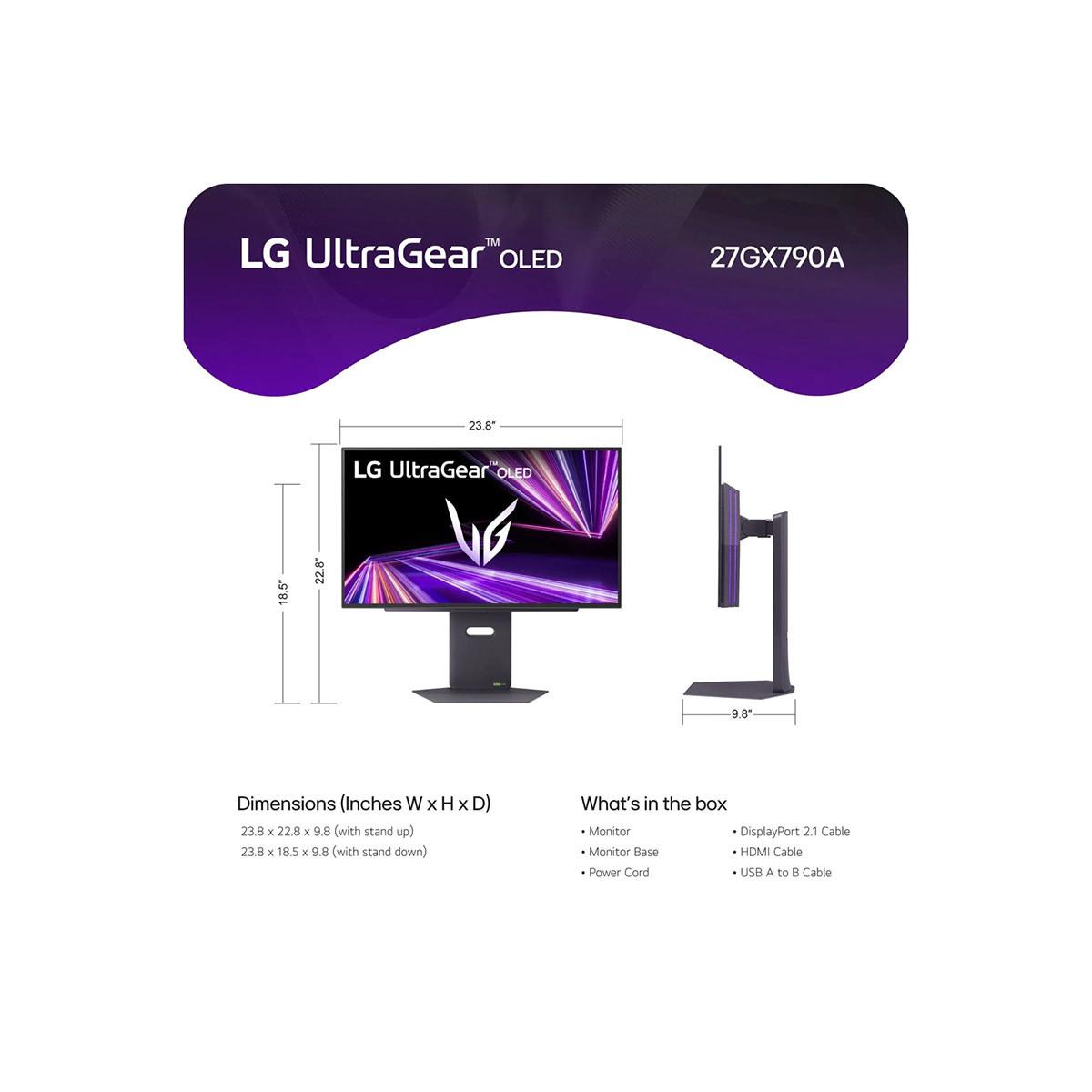
Both monitors include modern connectivity options, but with some important differences. Each features DisplayPort 2.1 and dual HDMI 2.1 connections, ensuring compatibility with current and future graphics cards and gaming consoles.
DisplayPort 2.1 is particularly important for the LG UltraGear 27" OLED because driving 480Hz at QHD resolution requires significant bandwidth. The newer standard provides enough capacity to handle these extreme refresh rates without compression, ensuring optimal image quality.
The Sony INZONE M9 II includes additional USB-A ports for connecting peripherals directly to the monitor, which can help reduce cable clutter on your desk. Both monitors support the latest HDMI 2.1 features for optimal console gaming performance.
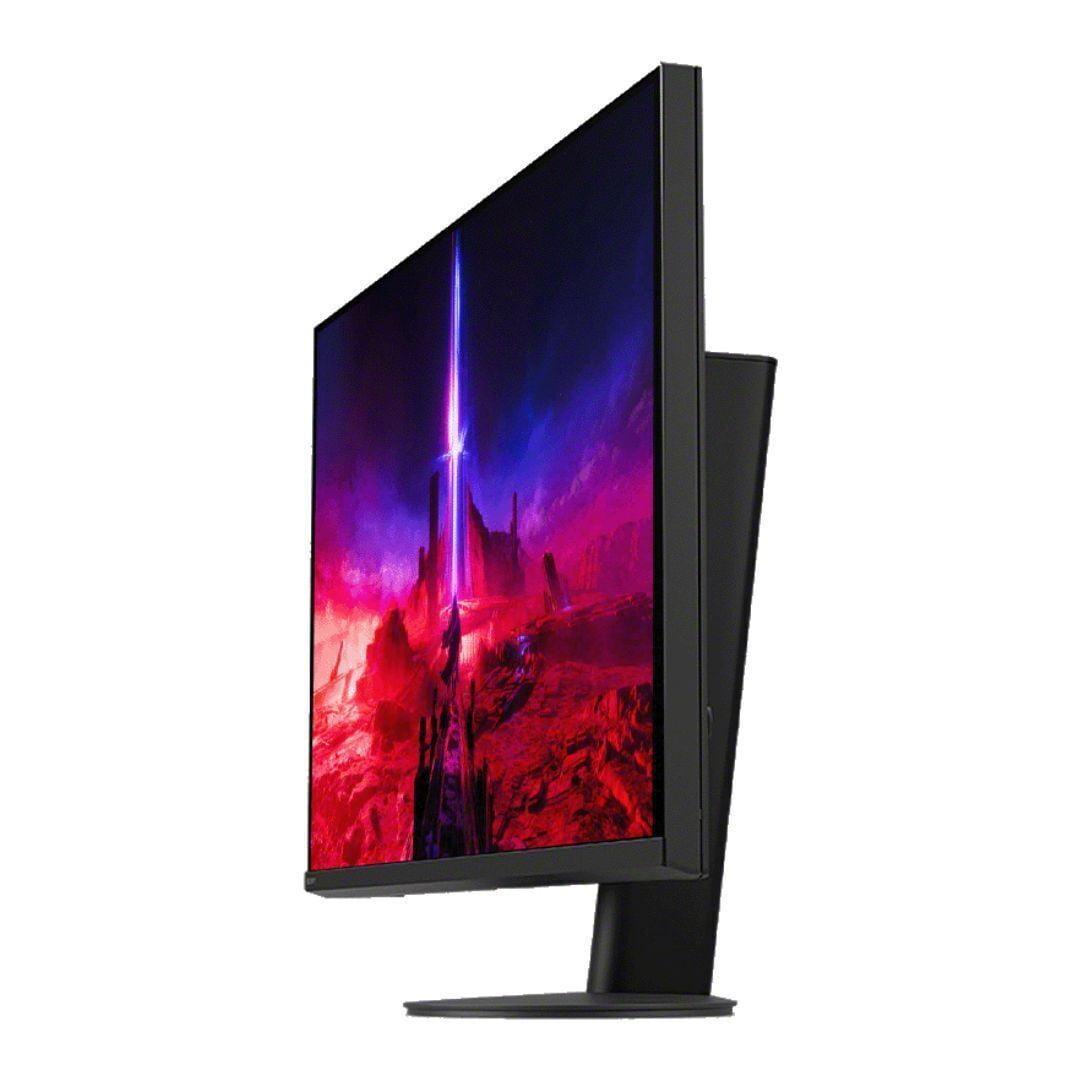
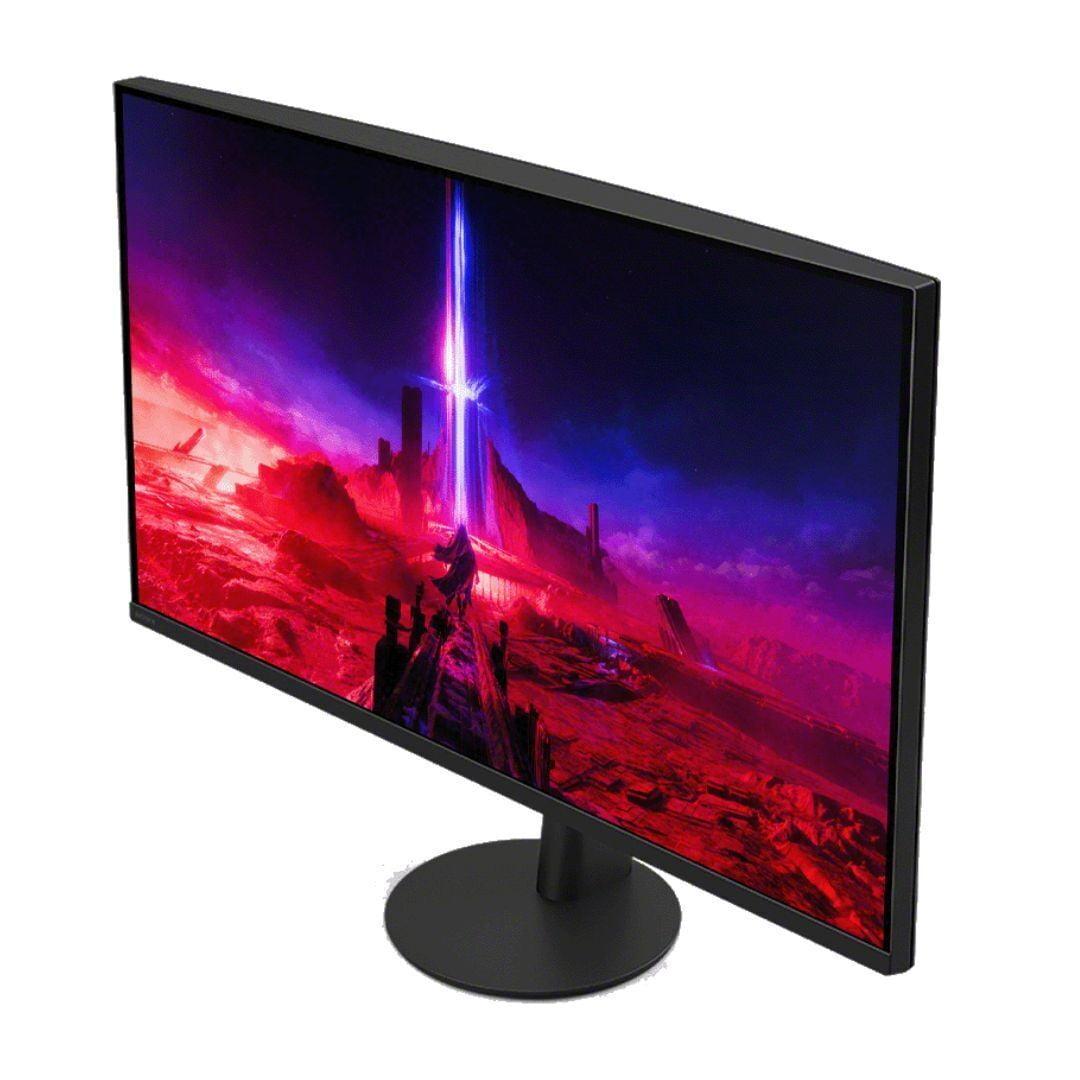
The physical design and adjustability of your monitor matters more than many people realize, especially for long gaming sessions. The Sony INZONE M9 II features a robust circular stand with extensive adjustability, including 130mm of height adjustment and ±180° swivel capability. This flexibility allows you to position the screen perfectly for your setup and viewing preferences.
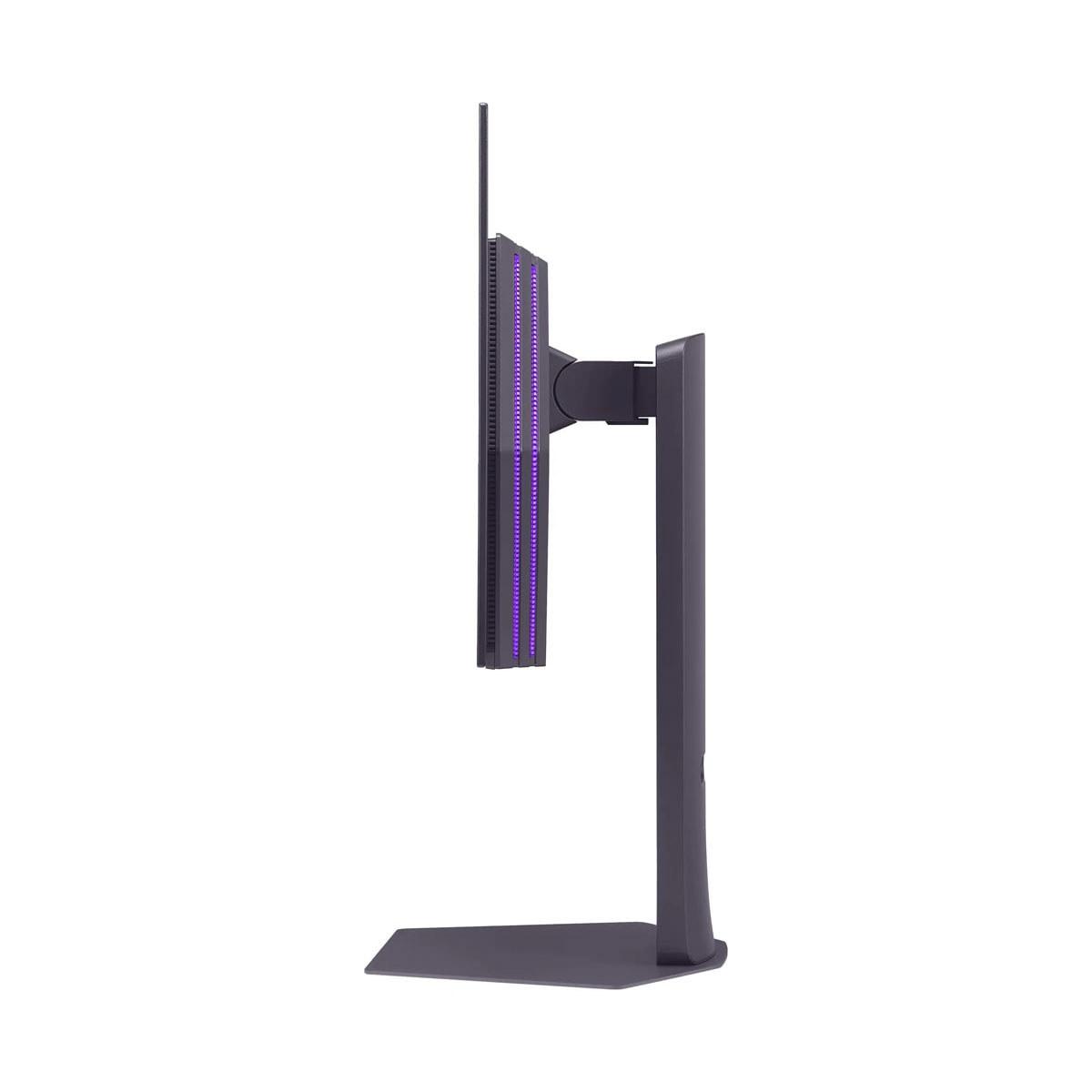
The LG UltraGear 27" OLED showcases OLED's signature ultra-thin profile, creating a sleek, modern appearance. While its stand provides good adjustability, it's not quite as extensive as Sony's offering. However, the thin design and minimal bezels create an impressive visual impact that many users find appealing.
If you're considering using either monitor in a home theater setup, there are specific factors to consider. The Sony INZONE M9 II with its 4K resolution and high brightness makes it excellent for watching movies and TV shows, particularly in rooms with ambient lighting. The larger color gamut and HDR capabilities ensure that streaming content and Blu-rays look their best.
The LG UltraGear 27" OLED provides a more cinematic experience in darker rooms due to its perfect blacks and infinite contrast ratio. However, its lower peak brightness might not be ideal if you watch content in bright rooms during the day.
The Sony INZONE M9 II includes PlayStation 5-specific optimizations, including Auto HDR Tone Mapping that automatically adjusts settings for optimal PS5 gaming. There's also a unique 24.5-inch mode for competitive gaming, which displays games at a smaller size with black borders—something preferred by some esports players.
The LG UltraGear 27" OLED includes OLED Care features designed to prevent burn-in, a concern with OLED displays when static images remain on screen for extended periods. LG provides a 2-year OLED warranty for additional peace of mind.
Choosing between these monitors ultimately comes down to your gaming priorities and use cases. The Sony INZONE M9 II excels when you want the sharpest possible image quality, game in bright rooms, or use your monitor for varied tasks beyond gaming. Its 4K resolution provides future-proof visual fidelity that will remain relevant as games become more detailed.
The LG UltraGear 27" OLED is the clear choice for competitive gamers who prioritize performance above all else. Its 480Hz refresh rate and instantaneous response times provide a competitive advantage that's measurable in fast-paced games. The OLED's superior contrast and color accuracy also create a more immersive experience for single-player games, particularly those with darker, more atmospheric settings.
Consider the Sony INZONE M9 II if you value versatility, work in bright environments, own a PlayStation 5, or want the absolute sharpest image quality for both gaming and productivity. Choose the LG UltraGear 27" OLED if you're serious about competitive gaming, prefer gaming in darker environments, or want the most advanced display technology at a competitive price point.
Both monitors represent excellent value in their respective categories at the time of writing, with the choice depending more on your specific needs than on getting more for your money. The gaming monitor market continues to evolve rapidly, but these two options showcase the current pinnacle of their respective approaches to high-performance gaming displays.
| Sony INZONE M9 II 27" 4K 160Hz Gaming Monitor | LG UltraGear 27" OLED QHD 480Hz Gaming Monitor |
|---|---|
| Display Technology - Fundamentally affects contrast, color accuracy, and response times | |
| IPS with Full Array Local Dimming (96 zones) | WOLED (White Organic Light-Emitting Diode) |
| Resolution - Higher resolution means sharper details but requires more GPU power | |
| 4K (3840 x 2160) - 78% more pixels for sharper gaming and productivity | QHD (2560 x 1440) - Optimized for high frame rate gaming |
| Refresh Rate - Higher rates provide smoother motion, crucial for competitive gaming | |
| 160Hz - Excellent for most gaming, balances performance with 4K demands | 480Hz - Industry-leading speed for competitive esports advantage |
| Response Time - Lower numbers reduce motion blur in fast-paced games | |
| 1ms Gray-to-Gray - Very good for gaming | 0.03ms Gray-to-Gray - Virtually eliminates all motion blur |
| Peak Brightness - Higher brightness better for bright rooms and HDR highlights | |
| 750 nits - Excellent for bright environments and punchy HDR | ~400 nits - Better for darker rooms, focuses on contrast over brightness |
| Contrast Ratio - Higher contrast creates more dramatic visuals and better dark scenes | |
| ~1,000:1 (typical IPS with local dimming enhancement) | 1,500,000:1 - Perfect blacks create infinite contrast |
| HDR Certification - Indicates quality of high dynamic range performance | |
| VESA DisplayHDR 600 - Good HDR with bright highlights | VESA DisplayHDR True Black 400 - Superior dark scene detail |
| Color Coverage - Wider coverage means more vibrant, accurate colors | |
| 95% DCI-P3 - Excellent color reproduction | 98.5% DCI-P3 - Near-perfect cinematic color accuracy |
| Connectivity - Future-proofs your setup for next-gen hardware | |
| DisplayPort 2.1, 2x HDMI 2.1, USB-A ports | DisplayPort 2.1, 2x HDMI 2.1, USB 3.0 hub |
| Ergonomics - Affects comfort during long gaming sessions | |
| Extensive adjustability: 130mm height, ±180° swivel, tilt, pivot | Good adjustability with ultra-thin OLED design aesthetic |
| Special Gaming Features - Manufacturer-specific optimizations | |
| PlayStation 5 Auto HDR Tone Mapping, 24.5" esports mode | OLED Care burn-in prevention, RGB backlighting |
| Warranty Coverage - Important for expensive gaming monitors | |
| Standard 1-year warranty | 2-year OLED-specific warranty for peace of mind |
| Best Use Cases - Who should choose each monitor | |
| 4K gaming, bright rooms, PS5 users, mixed productivity use | Competitive gaming, dark rooms, OLED enthusiasts, esports professionals |
The LG UltraGear 27" OLED QHD 480Hz Gaming Monitor is significantly better for competitive gaming. Its 480Hz refresh rate and 0.03ms response time provide a substantial advantage in fast-paced esports titles like Counter-Strike and Valorant. The Sony INZONE M9 II with its 160Hz refresh rate is good for gaming but can't match the competitive performance of the LG UltraGear.
The Sony INZONE M9 II offers 4K resolution with 78% more pixels for sharper details, while the LG UltraGear 27" OLED provides superior contrast with perfect blacks and infinite contrast ratio. The Sony excels in brightness and detail, while the LG OLED delivers more dramatic visuals with deeper blacks and more vibrant colors.
The Sony INZONE M9 II is generally better for single-player games due to its 4K resolution providing incredibly sharp textures and details. However, the LG UltraGear OLED offers superior contrast for atmospheric games with dark scenes. If you prioritize visual detail and play in bright rooms, choose the Sony INZONE M9 II.
Both monitors work for media consumption, but in different scenarios. The Sony INZONE M9 II is better for bright rooms due to its 750-nit peak brightness and 4K resolution matching most streaming content. The LG UltraGear OLED provides a more cinematic experience in dark rooms with its perfect blacks and superior contrast ratio.
The Sony INZONE M9 II requires significantly more GPU power due to its 4K resolution. You'll need a high-end graphics card to maintain good frame rates at 4K settings. The LG UltraGear QHD monitor is less demanding on your GPU, allowing mid-range cards to achieve the high frame rates needed for its 480Hz capability.
Only the LG UltraGear OLED has potential burn-in concerns, as all OLED displays can develop permanent image retention with static content displayed for extended periods. However, LG includes OLED Care features and provides a 2-year OLED warranty. The Sony INZONE M9 II uses traditional LED technology with no burn-in risk.
The Sony INZONE M9 II has advantages for console gaming, especially PlayStation 5, with Auto HDR Tone Mapping and 4K resolution matching console capabilities. The LG UltraGear works well with consoles but its 480Hz refresh rate can't be fully utilized since consoles typically output at much lower frame rates.
The Sony INZONE M9 II performs much better in bright rooms with its 750-nit peak brightness and anti-glare coating. The LG UltraGear OLED with around 400 nits peak brightness is better suited for darker, controlled lighting environments where its superior contrast can shine.
Value depends on your priorities. The LG UltraGear OLED typically costs less while offering cutting-edge OLED technology and record-breaking performance specs. The Sony INZONE M9 II commands a premium for its 4K resolution and versatile use cases. For competitive gaming, the LG offers better value, while the Sony provides more versatility.
The Sony INZONE M9 II is excellent for productivity with its 4K resolution providing sharp text and ample screen real estate for multiple windows. The LG UltraGear OLED works for productivity but its QHD resolution offers less workspace, and potential burn-in makes it less ideal for displaying static content like spreadsheets for long periods.
The Sony INZONE M9 II offers superior ergonomics with 130mm height adjustment, ±180° swivel, and a robust circular stand design. The LG UltraGear OLED features good adjustability but prioritizes the ultra-thin OLED aesthetic. Both monitors are well-built, but the Sony provides more ergonomic flexibility.
This depends on your gaming style. Choose the Sony INZONE M9 II with 4K if you prioritize visual fidelity in single-player games and have a powerful GPU. Select the LG UltraGear 480Hz OLED if you play competitive games where every frame matters and prefer the smoothest possible motion over maximum resolution.
We've done our best to create useful and informative comparisons to help you decide what product to buy. Our research uses advanced automated methods to create this comparison and perfection is not possible - please contact us for corrections or questions. These are the sites we've researched in the creation of this article: bestbuy.com - bestbuy.com - rtings.com - rtings.com - tomshardware.com - youtube.com - bhphotovideo.com - bestbuy.com - sony.com - techpowerup.com - electronics.sony.com - sony.com - displayspecifications.com - direct.playstation.com - youtube.com - sony.com - sony.com - displayspecifications.com - bhphotovideo.com - displayspecifications.com - bestbuy.com - bhphotovideo.com - engadget.com - newegg.com - youtube.com - bestbuy.com - techpowerup.com - techpowerup.com - rtings.com - lg.com - lgnewsroom.com - rtings.com - bestbuy.com - jonesapplianceandtv.com - thefrogpadappliances.com - lg.com - lg.com - lg.com - techpowerup.com - lg.com - lg.com

Privacy Policy
Terms and Conditions - Affiliate Policy
Home Security
© Copyright 2008-2026.
11816 Inwood Rd #1211, Dallas, TX 75244