

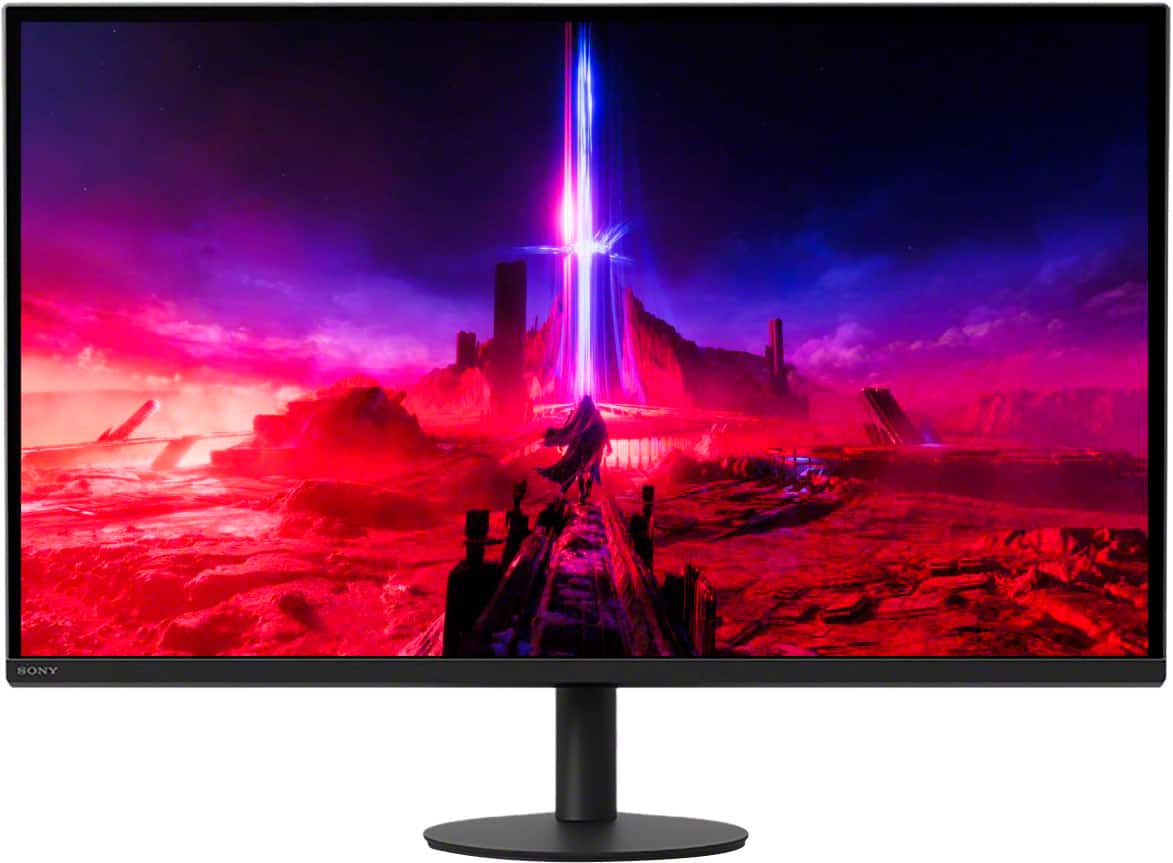
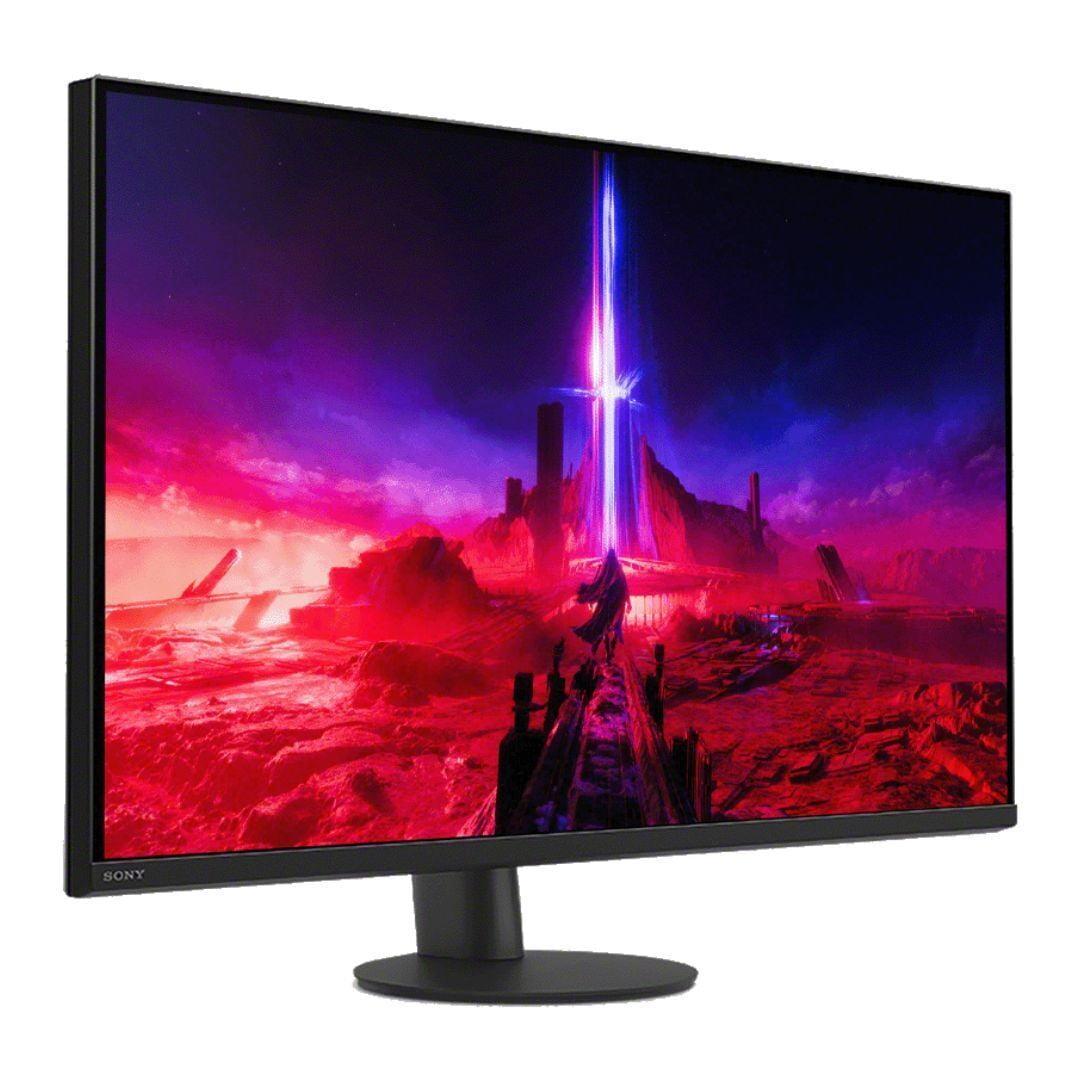
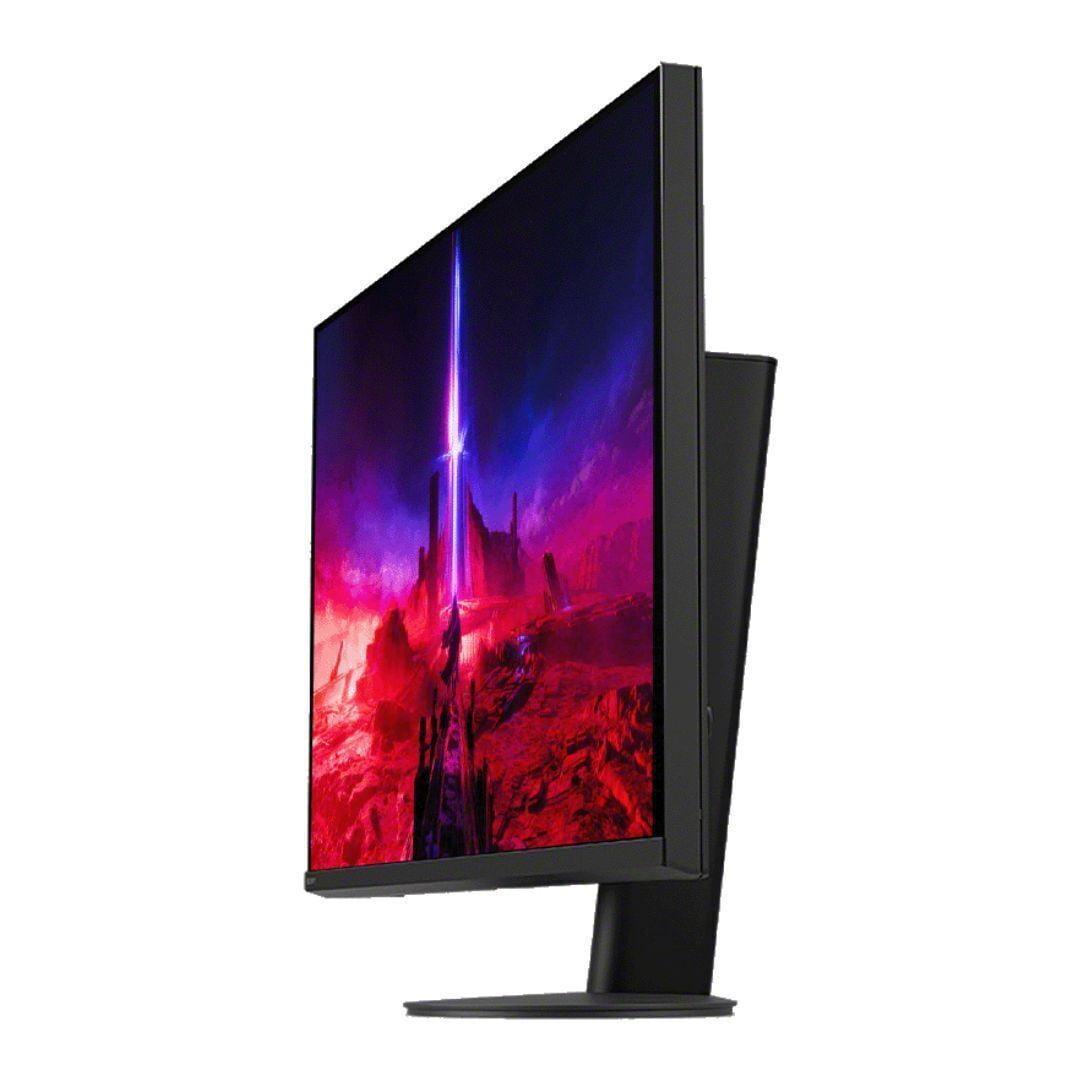
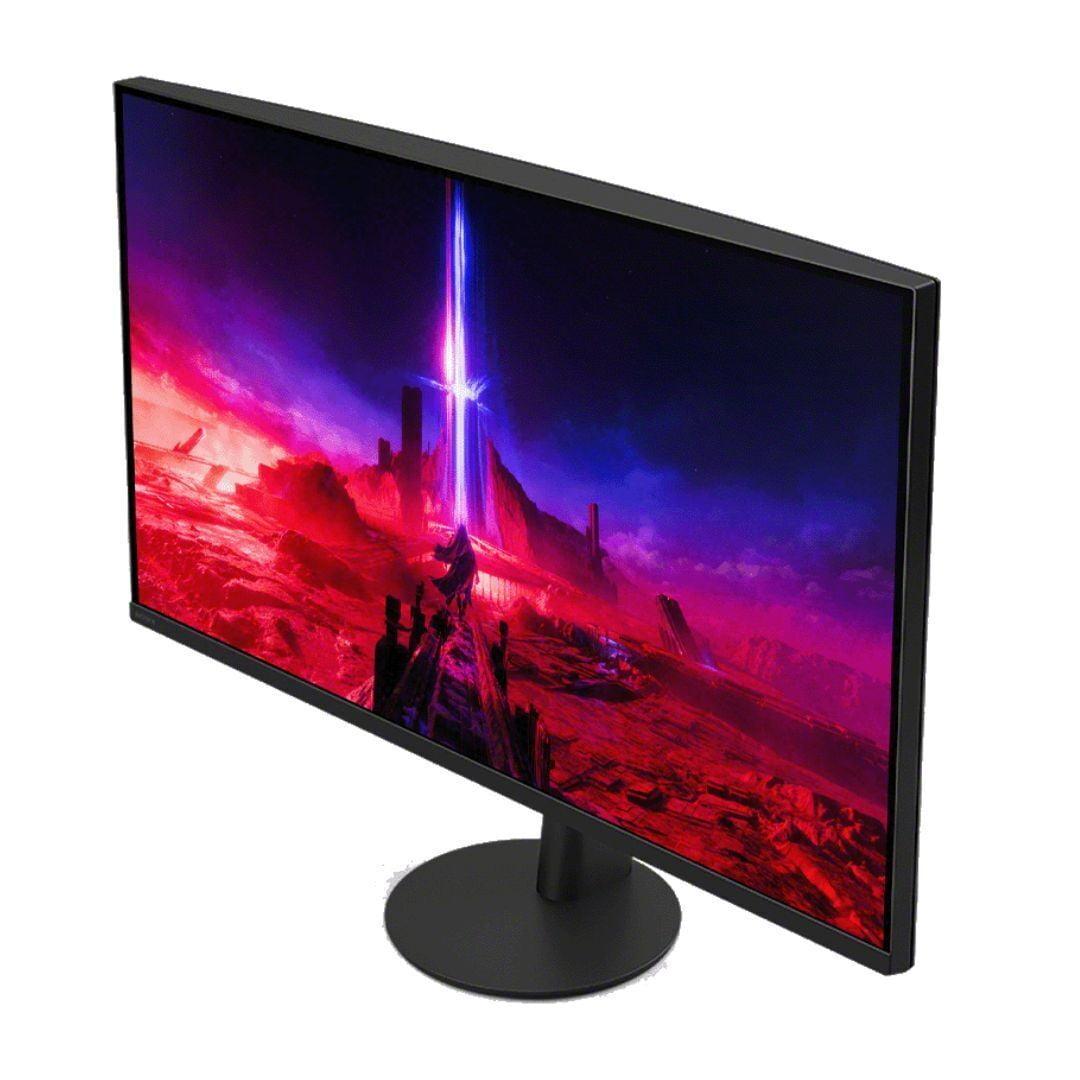
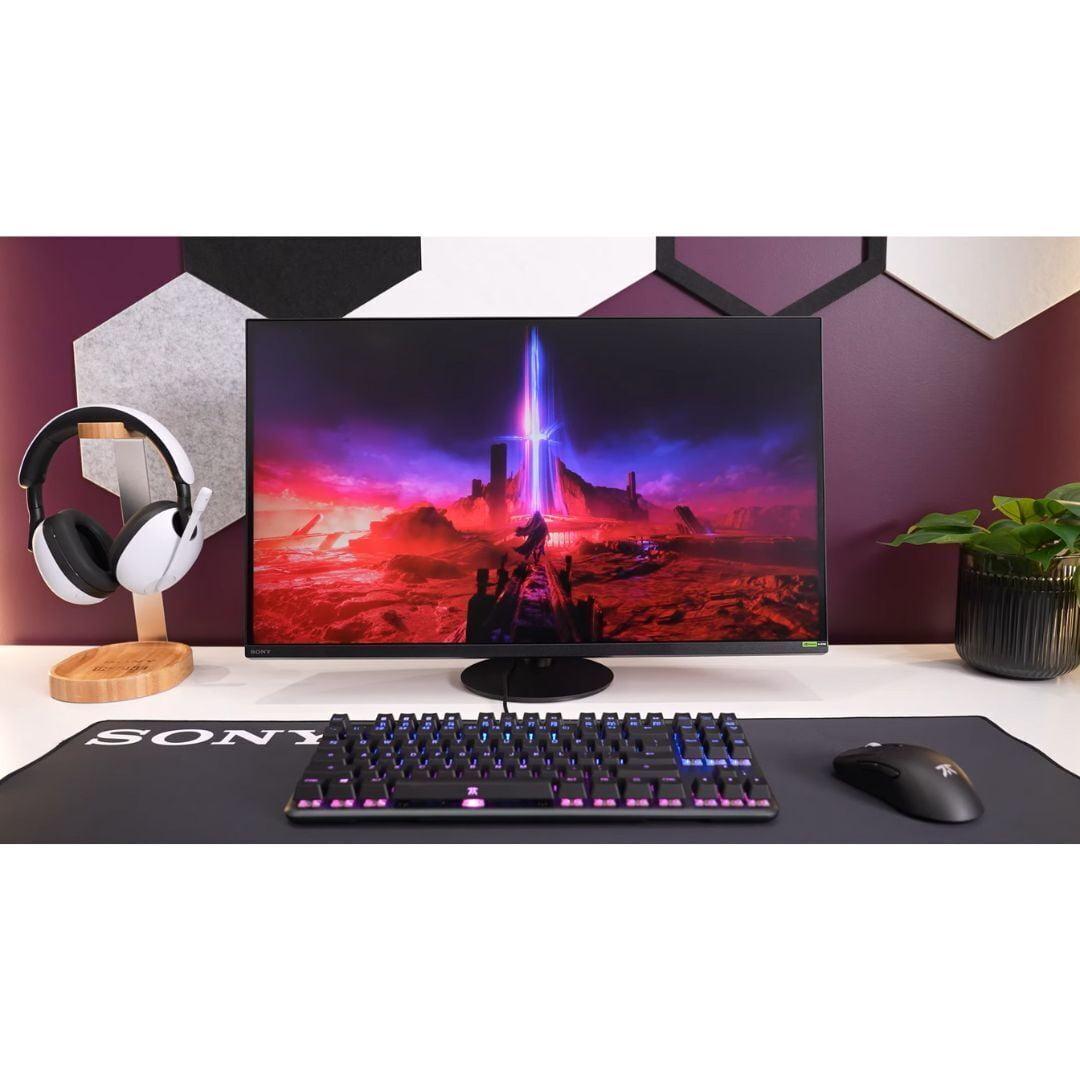
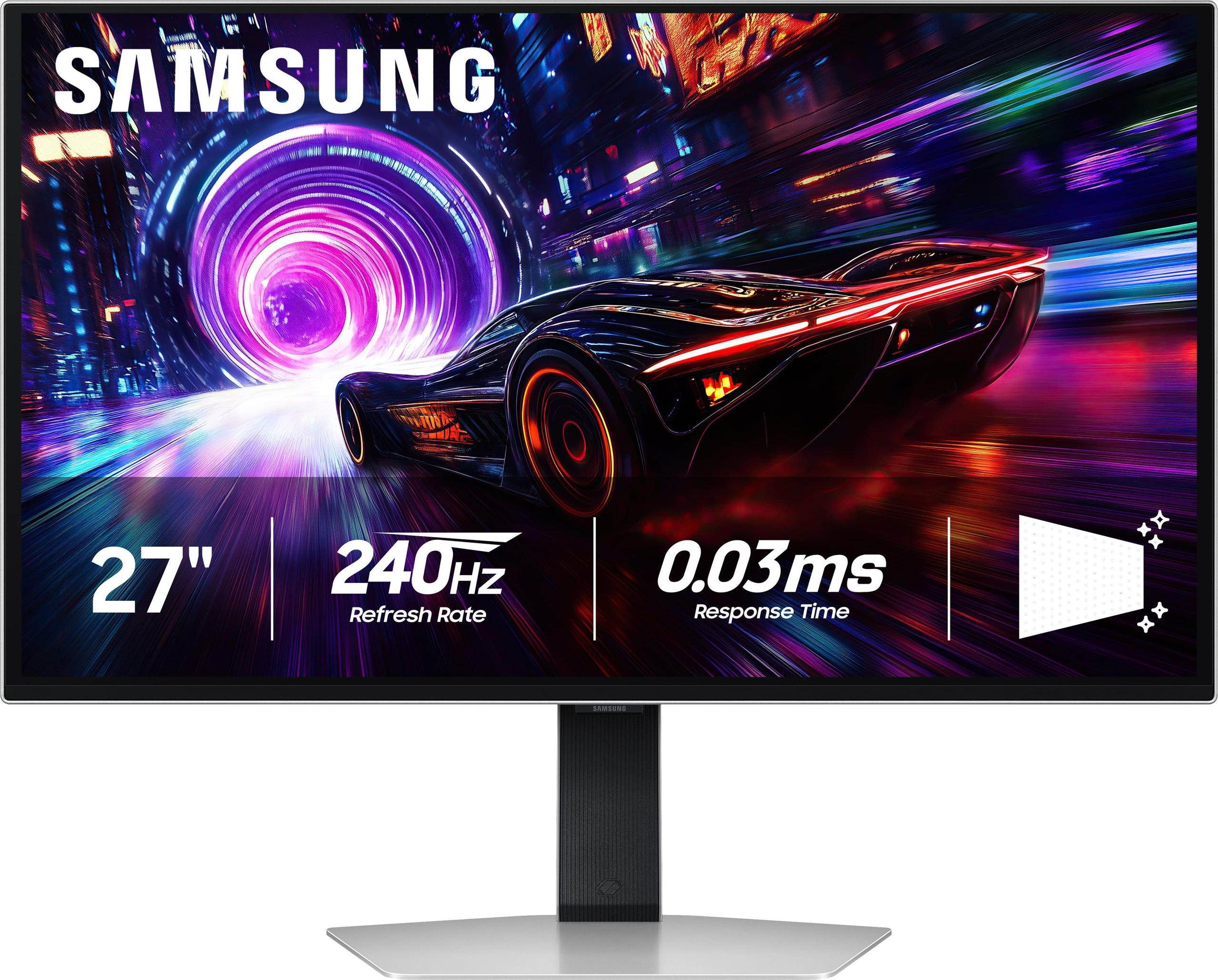
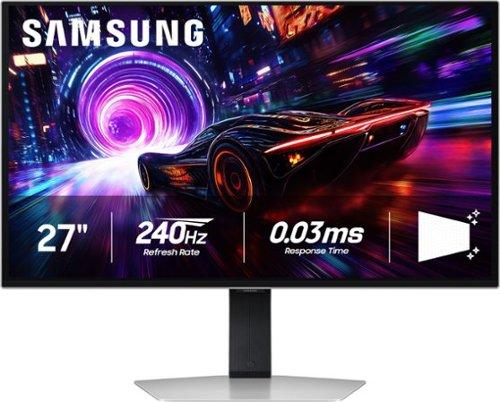
Shopping for a premium 27-inch 4K gaming monitor in 2024 means choosing between two fundamentally different approaches to display technology. The Sony INZONE M9 II represents the pinnacle of LCD technology with advanced local dimming, while the Samsung Odyssey OLED G8 showcases cutting-edge OLED innovation. Both arrived in late 2024, but they solve the same problem—delivering stunning 4K gaming—in remarkably different ways.
Understanding these differences will help you make the right choice for your setup, budget, and gaming habits. Let's break down what makes each monitor special and when one clearly outperforms the other.
The 27-inch 4K gaming monitor category sits at the sweet spot of desktop displays. At this size, 4K resolution (3840 × 2160 pixels) provides incredible detail without making text impossibly small, while still fitting comfortably on most desks. These monitors target enthusiasts who refuse to compromise on visual quality, whether they're gaming, working, or watching movies.
The key considerations when shopping in this premium segment include panel technology trade-offs, refresh rate capabilities, brightness performance, and color accuracy. Most importantly, you need to understand how different panel technologies—LCD with local dimming versus OLED—create completely different user experiences.
Panel technology represents the biggest decision point. LCD panels with local dimming use LED backlights behind the screen that can dim in zones to create better contrast. OLED panels eliminate the backlight entirely—each pixel produces its own light and can turn completely off for perfect blacks. Both approaches have significant advantages and limitations that affect everything from gaming performance to long-term reliability.
The Sony INZONE M9 II uses what's called Full Array Local Dimming (FALD)—a sophisticated LCD technology where hundreds of LED backlights are arranged behind the screen in a grid. These LEDs can brighten or dim independently to improve contrast. When a scene shows a bright explosion against a dark sky, the monitor can brighten LEDs behind the explosion while dimming LEDs behind the dark areas.
The Samsung Odyssey OLED G8 takes a radically different approach. OLED stands for "Organic Light-Emitting Diode," where each individual pixel generates its own light. When displaying black, those pixels simply turn off completely, creating true black instead of the dark gray you get with LCD backlights bleeding through.
This fundamental difference affects everything else about these monitors. The Sony can get much brighter overall, reaching 750 nits peak brightness compared to Samsung's 250 nits typical brightness. However, the Samsung achieves infinite contrast ratio—the difference between its brightest whites and darkest blacks—while the Sony tops out around 1,000:1 contrast within each local dimming zone.
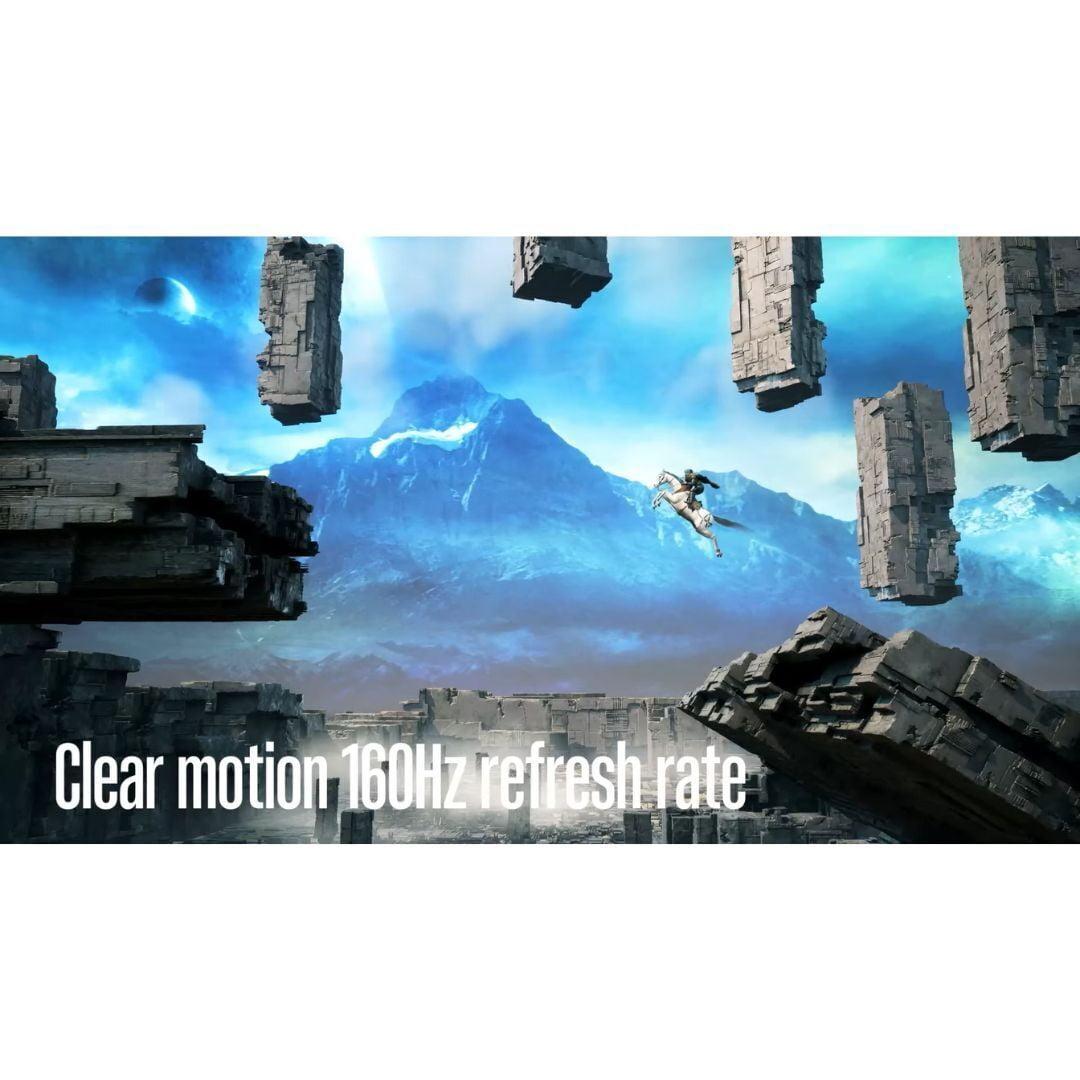
Refresh rate measures how many times per second your monitor can display a new image. The Sony INZONE M9 II maxes out at 160Hz, meaning it can show 160 unique frames per second when your graphics card can supply them. The Samsung Odyssey OLED G8 pushes this to 240Hz—50% higher.
For context, standard monitors refresh at 60Hz, so both of these monitors deliver incredibly smooth motion. The difference between 160Hz and 240Hz becomes most noticeable in competitive esports games like CS2 or Valorant, where professional players claim they can feel the difference. For single-player games or casual multiplayer, 160Hz provides diminishing returns beyond this point for most players.
Both monitors include variable refresh rate support through technologies like G-SYNC and FreeSync, which synchronize the monitor's refresh rate with your graphics card's frame output to eliminate screen tearing—those horizontal lines that appear when frame rates don't match refresh rates.
Response time measures how quickly pixels can change from one color to another, typically gray-to-gray transitions. The Sony INZONE M9 II achieves 1ms response times through careful LCD engineering and includes backlight scanning technology—a feature that strobes the backlight to reduce motion blur, similar to how old CRT monitors naturally displayed motion.
The Samsung Odyssey OLED G8 obliterates these numbers with 0.03ms response times. OLED pixels switch nearly instantaneously because they're not waiting for liquid crystals to rotate or backlights to change intensity. This creates exceptionally crisp motion that's particularly noticeable when tracking fast-moving objects in games.
Having tested both types extensively, OLED's motion clarity advantage is immediately apparent in fast-paced games. Moving the camera quickly in a first-person shooter reveals details that would blur on LCD displays. However, the Sony's backlight scanning partially closes this gap, delivering motion clarity that satisfies all but the most demanding competitive players.
For competitive gaming, the Samsung Odyssey OLED G8 offers clear advantages. The 240Hz refresh rate provides more frequent screen updates, potentially giving you visual information 1-2 milliseconds sooner than 160Hz displays. Combined with the 0.03ms response time, input lag—the delay between pressing a key and seeing the result—reaches near-zero levels.
The Sony INZONE M9 II doesn't lag far behind for most gaming scenarios. Its 160Hz refresh rate and 1ms response time deliver excellent performance for single-player games and casual multiplayer. The monitor also includes gaming-specific features like crosshair overlays, frame rate counters, and specialized picture modes for different game genres.
Both monitors excel at eliminating ghosting (faint trails behind moving objects) and stuttering (jerky motion when frame rates vary). The Samsung does this through OLED's natural advantages, while the Sony achieves similar results through advanced processing and local dimming algorithms.
High Dynamic Range (HDR) technology expands the range between the darkest blacks and brightest whites your monitor can display, creating more lifelike images. The Sony INZONE M9 II excels here with 750 nits peak brightness and VESA DisplayHDR 600 certification. This brightness level makes HDR content genuinely impactful—bright sunlight in games actually looks bright, and HDR movies show the dramatic lighting intended by filmmakers.
The Samsung Odyssey OLED G8 approaches HDR differently. While limited to 250 nits typical brightness, its perfect black levels create dramatic contrast that can feel more impressive than higher brightness alone. HDR content on OLED displays showcases inky blacks that LCD technology simply cannot match, even with local dimming.
For practical use, the Sony performs better in bright rooms where ambient light would wash out the Samsung's darker screen. If you game near windows or with overhead lighting, the Sony's brightness advantage becomes crucial for maintaining image quality.
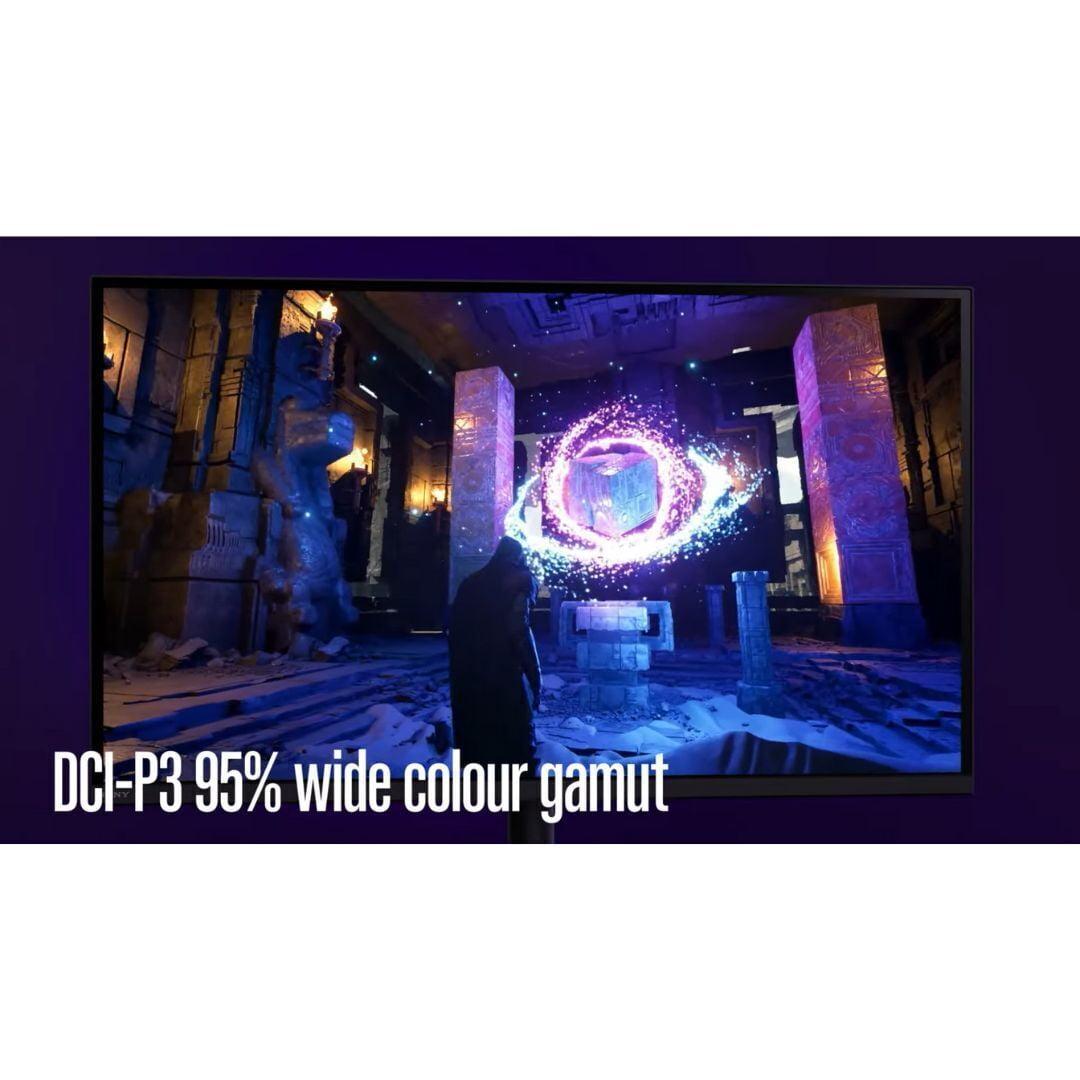
Both monitors deliver excellent color accuracy, but through different strengths. The Sony INZONE M9 II covers 95% of the DCI-P3 color space (a film industry standard) and includes factory calibration for consistent colors out of the box. Its anti-glare coating reduces reflections without significantly impacting color vibrancy.
The Samsung Odyssey OLED G8 pushes color coverage to 99% DCI-P3 and benefits from OLED's natural color accuracy. Each pixel's ability to produce pure colors without backlight interference creates more saturated and accurate colors, particularly beneficial for photo editing or creative work where color precision matters.
For professional use, both monitors perform admirably, though the Samsung edges ahead for color-critical work in controlled lighting environments. The Sony's anti-glare coating and consistent brightness make it more versatile for mixed-use scenarios where you're switching between work and gaming throughout the day.
This represents the most significant difference between these monitors. The Samsung Odyssey OLED G8 achieves infinite contrast ratio because its pixels can turn completely off, creating true black. When watching movies with letterbox bars or playing games with dark scenes, these black areas disappear into the monitor's bezel—creating an almost holographic effect where bright objects seem to float in space.
The Sony INZONE M9 II uses local dimming to approximate this effect. Its backlight zones dim behind dark areas, but some light always bleeds through, creating dark gray rather than true black. However, Sony's implementation minimizes the "blooming" effect where bright objects create halos in dark backgrounds, maintaining overall image quality even if it can't match OLED's perfect blacks.
For home theater use, this difference becomes particularly important. The Samsung creates a more cinematic experience in dark rooms, while the Sony maintains better image quality across varying lighting conditions.
Both monitors deliver excellent text clarity thanks to their 4K resolution at 27 inches, providing roughly 163 pixels per inch. The Sony INZONE M9 II includes an anti-glare coating that reduces reflections, making it more comfortable for extended reading and productivity work in office environments.
The Samsung Odyssey OLED G8 provides slightly sharper text due to OLED's precise pixel control, but its glossy screen can create reflections that strain your eyes during long work sessions. For users who split time between gaming and productivity, the Sony's coating provides a significant comfort advantage.
Color professionals benefit from both monitors' wide color gamuts, though the Samsung's perfect blacks help when working with dark themes or color grading video content. The Sony's consistent brightness makes it easier to evaluate colors accurately across different ambient lighting conditions.
When used as a large desktop display for streaming movies and TV shows, these monitors reveal their entertainment strengths. The Samsung Odyssey OLED G8 creates a true home theater experience with perfect blacks that make letterbox bars disappear entirely. HDR content looks dramatic and engaging, even if not as bright as dedicated HDR TVs.
The Sony INZONE M9 II provides a more versatile entertainment experience. Its higher brightness makes HDR content more impactful during daytime viewing, while its anti-glare coating reduces distractions from room lighting. For users who watch content throughout the day rather than in dedicated dark-room sessions, the Sony maintains better image quality across varying conditions.
Both monitors include multiple picture modes optimized for different content types, from gaming to cinema to sRGB-accurate modes for professional work.
At the time of writing, the Samsung Odyssey OLED G8 commands a significant premium over the Sony INZONE M9 II—roughly 50% higher pricing for its OLED technology and 240Hz capabilities. This price difference raises important questions about value and intended use.
The Sony delivers approximately 85% of the premium gaming experience at roughly 67% of the Samsung's cost. For users who don't specifically need 240Hz refresh rates or perfect blacks, the Sony provides exceptional value while maintaining premium features like local dimming and high brightness.
The Samsung justifies its premium through cutting-edge OLED technology and maximum gaming performance. Competitive gamers who can utilize 240Hz refresh rates and benefit from perfect motion clarity will find value in these advanced features.
LCD technology in the Sony INZONE M9 II offers proven longevity, with typical lifespans exceeding 50,000 hours of use without significant degradation. The monitor faces no burn-in risks, making it suitable for users who display static content like taskbars, desktop icons, or HUD elements for extended periods.
OLED technology in the Samsung Odyssey OLED G8 has improved significantly since early generations, but potential burn-in remains a consideration for heavy users. Samsung includes burn-in coverage under warranty for normal usage patterns, and the monitor incorporates pixel-shifting and brightness management to reduce risks. However, users who frequently display static content should carefully consider their usage patterns.
Modern OLED panels typically show minimal burn-in under normal usage, but this remains a factor for users planning to keep their monitor for 5+ years with heavy daily use.
The Sony INZONE M9 II excels for users who need a premium monitor that handles multiple roles effectively. Choose this monitor if you:
The Sony particularly shines in mixed-use scenarios. Its anti-glare coating, high brightness, and local dimming create an excellent experience whether you're editing spreadsheets during the day or gaming at night. PlayStation 5 users benefit from specific optimizations that automatically adjust settings for the best console gaming experience.
The Samsung Odyssey OLED G8 targets users who prioritize the absolute best gaming performance and visual quality. Choose this monitor if you:
The Samsung creates an unmatched gaming experience in the right environment. Its perfect blacks, instantaneous response times, and 240Hz refresh rate combine to deliver visuals that feel almost three-dimensional in their depth and clarity.
Choosing between these monitors ultimately depends on your specific needs, environment, and priorities. Both represent excellent value within their respective approaches to premium 4K gaming displays.
The Sony INZONE M9 II offers the better all-around package for most users. Its combination of high brightness, local dimming, anti-glare coating, and competitive gaming performance creates a monitor that excels in multiple roles without significant compromises. The price advantage makes premium gaming accessible to more users while maintaining features that matter most for daily use.
The Samsung Odyssey OLED G8 provides the superior specialized gaming experience for users who can fully utilize its capabilities. If you're a competitive gamer with a dedicated dark gaming room, or if you want the absolute best visual quality for entertainment, the Samsung's OLED technology delivers experiences that LCD simply cannot match.
Consider your primary use case, room environment, and budget when making this decision. Both monitors will serve you well, but understanding their fundamental differences ensures you'll choose the one that best matches your specific needs and expectations.
The monitor market continues evolving rapidly, with both LCD and OLED technologies improving each generation. Whichever you choose, you'll be getting display technology that would have seemed impossible just a few years ago, delivering gaming experiences that truly showcase what modern hardware can achieve.
| Sony INZONE M9 II 27" 4K 160Hz Gaming Monitor | Samsung 27" Odyssey OLED G8 4K UHD 240Hz Gaming Monitor |
|---|---|
| Display Technology - Fundamentally different approaches to image quality | |
| IPS LCD with Full Array Local Dimming (96 zones) | Quantum Dot OLED (QD-OLED) with per-pixel lighting |
| Peak Brightness - Critical for HDR impact and bright room visibility | |
| 750 nits peak (400 nits typical) - excellent for daytime use | 250 nits typical - optimized for dark room gaming |
| Refresh Rate - Higher numbers provide smoother motion in fast games | |
| 160Hz maximum - excellent for most gaming scenarios | 240Hz maximum - competitive advantage for esports |
| Response Time - Lower is better for eliminating motion blur | |
| 1ms GtG with backlight scanning technology | 0.03ms GtG - near-instantaneous OLED switching |
| Contrast Ratio - Affects depth and realism of dark scenes | |
| 1,000:1 native (enhanced by local dimming) | Infinite contrast ratio with true blacks |
| HDR Certification - Indicates quality of high dynamic range content | |
| VESA DisplayHDR 600 with HDR10/HLG support | VESA DisplayHDR True Black 400 with HDR10+ Gaming |
| Color Gamut - Wider coverage means more vibrant, accurate colors | |
| 95% DCI-P3 coverage with 1.07 billion colors | 99% DCI-P3 coverage with 1 billion colors |
| Anti-Glare Treatment - Reduces reflections in bright environments | |
| Advanced anti-glare coating for office/bright room use | Glossy screen optimized for dark room viewing |
| Variable Refresh Rate - Eliminates screen tearing across different frame rates | |
| G-SYNC Compatible, FreeSync, HDMI 2.1 VRR | G-SYNC Compatible, FreeSync Premium Pro, HDMI 2.1 VRR |
| Gaming Features - Specialized tools for competitive advantage | |
| PlayStation 5 optimization, 24.5" esports mode, crosshair overlays | 240Hz competitive gaming focus, 0.03ms input lag |
| Connectivity Options - Determines compatibility with devices | |
| 2x HDMI 2.1, 1x DisplayPort 2.1, USB hub | HDMI 2.1, DisplayPort, USB-C (specifications vary by region) |
| Burn-in Risk - Long-term reliability consideration | |
| No burn-in risk with LCD technology | Potential OLED burn-in with static content (warranty covered) |
| Target Use Case - Best suited for different user types | |
| Versatile gaming/productivity hybrid for bright rooms | Specialized dark-room gaming with maximum performance |
| Warranty Coverage - Protection for your investment | |
| 1-year limited warranty | 3-year warranty including burn-in coverage |
The Samsung 27" Odyssey OLED G8 delivers superior gaming performance with its 240Hz refresh rate and 0.03ms response time, making it ideal for competitive esports. The Sony INZONE M9 II offers excellent 160Hz performance that satisfies most gamers while providing better value. For casual gaming, both perform exceptionally well, but competitive players will benefit from the Samsung Odyssey OLED G8's faster refresh rate.
The Sony INZONE M9 II uses LCD technology with local dimming zones that can get very bright but can't achieve true blacks. The Samsung Odyssey OLED G8 uses OLED technology where each pixel produces its own light and can turn completely off for perfect blacks. This means the Sony monitor works better in bright rooms, while the Samsung OLED excels in dark environments.
The Sony INZONE M9 II is significantly better for bright rooms with its 750 nits peak brightness and anti-glare coating. The Samsung Odyssey OLED G8 only reaches 250 nits and has a glossy screen that reflects ambient light. If you game or work near windows or overhead lighting, the Sony INZONE M9 II maintains better image quality.
Yes, both the Sony INZONE M9 II and Samsung Odyssey OLED G8 feature native 4K UHD resolution (3840 x 2160) at 27 inches. This provides excellent pixel density for sharp text and detailed gaming visuals. Both monitors deliver crisp 4K performance, though the Samsung OLED may appear slightly sharper due to its perfect pixel control.
HDR performance depends on your environment. The Sony INZONE M9 II offers brighter HDR with 750 nits peak brightness, making highlights more impactful in bright rooms. The Samsung Odyssey OLED G8 provides more dramatic HDR contrast with perfect blacks, creating a more cinematic experience in dark rooms. The Sony monitor generally delivers better overall HDR versatility.
The Sony INZONE M9 II has no burn-in risk since it uses LCD technology. The Samsung Odyssey OLED G8 has potential burn-in risk with static content like taskbars or game HUDs, though Samsung includes burn-in warranty coverage. For users displaying static content frequently, the Sony INZONE M9 II offers worry-free reliability.
The Sony INZONE M9 II includes specific PlayStation 5 optimizations and Auto HDR Tone Mapping, making it excellent for console gaming. The Samsung Odyssey OLED G8 also supports console gaming with HDMI 2.1 and VRR, but lacks PS5-specific features. Both work well with Xbox Series X/S, though the Sony monitor provides better console integration overall.
Both monitors offer excellent color accuracy. The Samsung Odyssey OLED G8 covers 99% DCI-P3 with perfect blacks that benefit color-critical work. The Sony INZONE M9 II covers 95% DCI-P3 with consistent brightness across all lighting conditions. For professional color work, the Samsung OLED edges ahead, while the Sony monitor offers more versatile everyday color accuracy.
The Sony INZONE M9 II offers better overall value, delivering premium gaming performance at a lower price point than the Samsung Odyssey OLED G8. The Samsung commands a significant premium for its OLED technology and 240Hz capabilities. Most users will find the Sony INZONE M9 II provides 85% of the premium experience at a more accessible price.
The Samsung Odyssey OLED G8 dominates with 0.03ms response time thanks to OLED's instantaneous pixel switching. The Sony INZONE M9 II achieves 1ms response time with backlight scanning technology. While the Samsung OLED provides superior motion clarity, the Sony monitor's response time still delivers excellent gaming performance for most users.
For dark room movie watching, the Samsung Odyssey OLED G8 creates a superior cinematic experience with perfect blacks that make letterbox bars disappear. The Sony INZONE M9 II provides better movie viewing versatility across different lighting conditions with its higher brightness. Choose the Samsung OLED for dedicated dark-room entertainment or the Sony monitor for flexible viewing.
The Sony INZONE M9 II includes 2x HDMI 2.1 ports, DisplayPort 2.1, and USB hub connectivity. The Samsung Odyssey OLED G8 offers HDMI 2.1, DisplayPort, and USB-C connectivity (specifications may vary by region). Both monitors support modern gaming consoles and high-end graphics cards, though the Sony INZONE M9 II provides more comprehensive connectivity options for multiple devices.
We've done our best to create useful and informative comparisons to help you decide what product to buy. Our research uses advanced automated methods to create this comparison and perfection is not possible - please contact us for corrections or questions. These are the sites we've researched in the creation of this article: bestbuy.com - bestbuy.com - rtings.com - rtings.com - tomshardware.com - youtube.com - bhphotovideo.com - bestbuy.com - sony.com - techpowerup.com - electronics.sony.com - sony.com - displayspecifications.com - direct.playstation.com - youtube.com - sony.com - sony.com - displayspecifications.com - bhphotovideo.com - displayspecifications.com - rtings.com - tomsguide.com - tomshardware.com - youtube.com - ign.com - youtube.com - pcvarge.com - youtube.com - youtube.com - versus.com - bestbuy.com - samsung.com - samsung.com - displayspecifications.com - samsung.com - hardforum.com - publicsector.shidirect.com - forums.thefpsreview.com - samsung.com - rtings.com - samsung.com - samsung.com

Privacy Policy
Terms and Conditions - Affiliate Policy
Home Security
© Copyright 2008-2026.
11816 Inwood Rd #1211, Dallas, TX 75244