

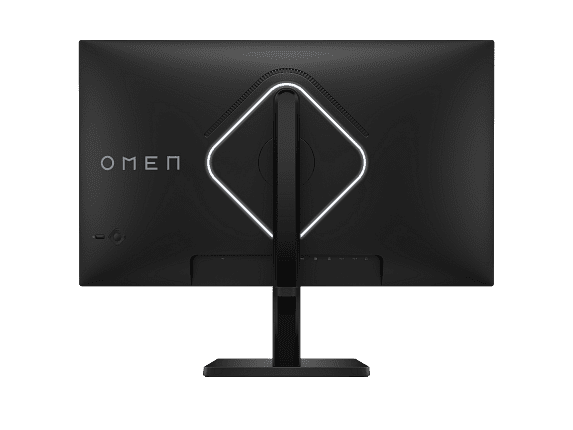
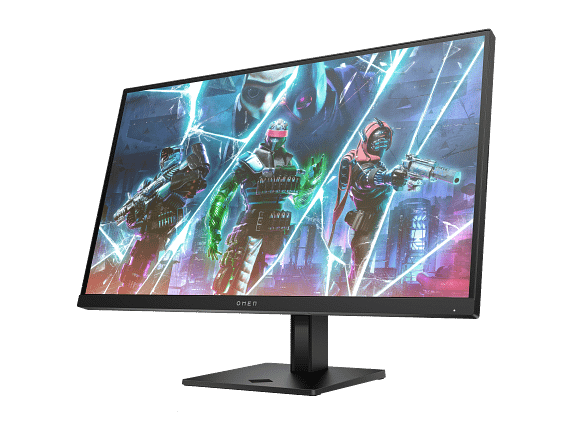
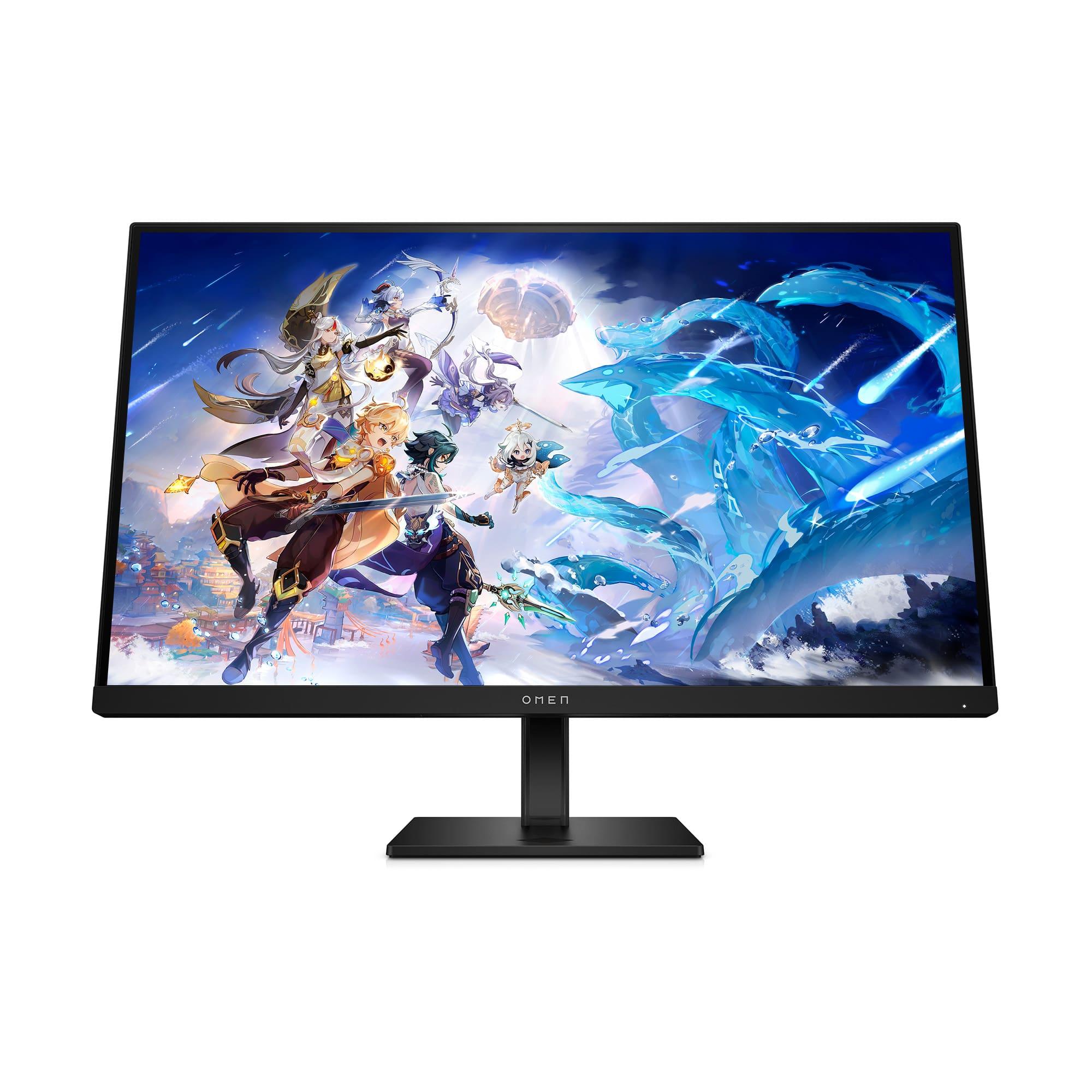

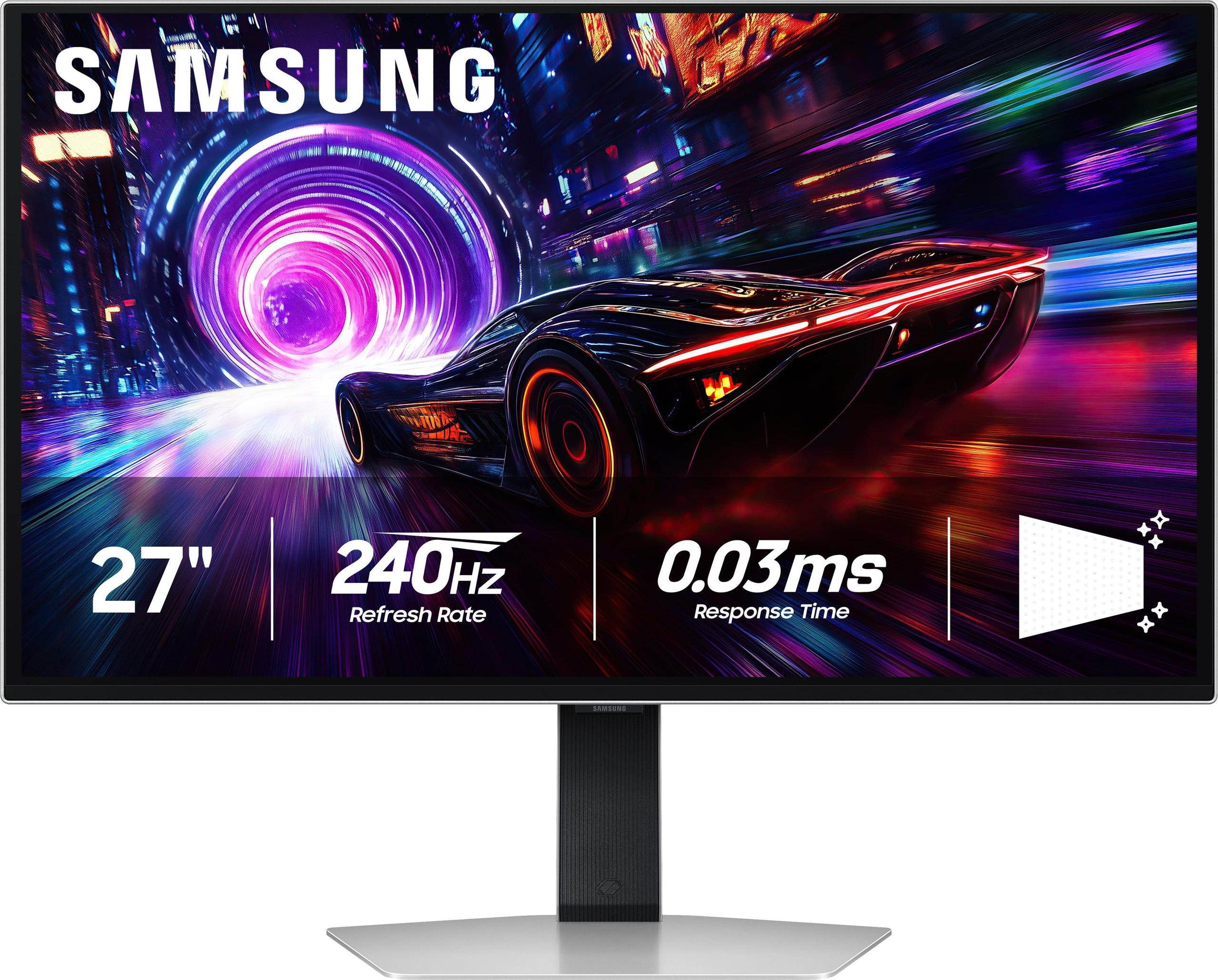
When you're serious about gaming, your monitor choice can make the difference between hitting that clutch shot and watching the killcam. Today we're diving deep into two compelling 27-inch gaming displays that represent very different approaches to high-refresh gaming: the HP OMEN 27s and the Samsung 27" Odyssey OLED G8.
At first glance, both monitors share the same screen size and 240Hz refresh rate—that's the number of times per second your screen can update with new images. But underneath, they're built with completely different philosophies and technologies that affect everything from your gaming performance to your wallet.
Before we compare these specific models, let's establish what makes a great gaming monitor. The most critical factors are refresh rate, response time, and input lag—three specifications that directly impact how smooth and responsive your games feel.
Refresh rate, measured in hertz (Hz), tells you how many frames per second your monitor can display. Higher refresh rates mean smoother motion, especially crucial in fast-paced games like first-person shooters or racing simulators. Both monitors we're examining hit 240Hz, which is excellent for competitive gaming.
Response time measures how quickly individual pixels can change from one color to another, typically gray-to-gray (GtG). Faster response times reduce motion blur and ghosting—those annoying trails you see behind moving objects. Input lag represents the delay between your mouse click and the corresponding action appearing on screen.
Then there's the panel technology itself. Traditional LCD panels use a backlight shining through liquid crystals, while OLED (Organic Light-Emitting Diode) panels have pixels that light themselves. This fundamental difference creates vastly different viewing experiences, which we'll explore in detail.
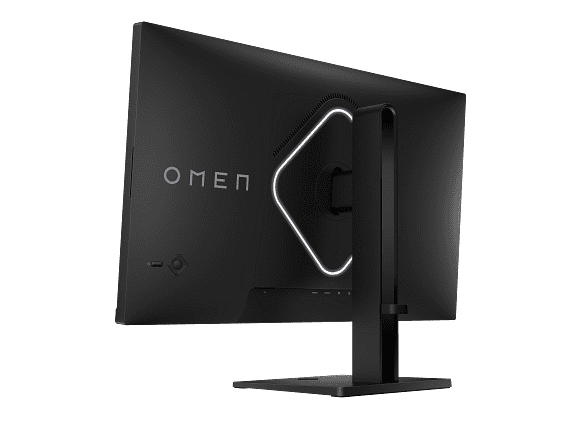
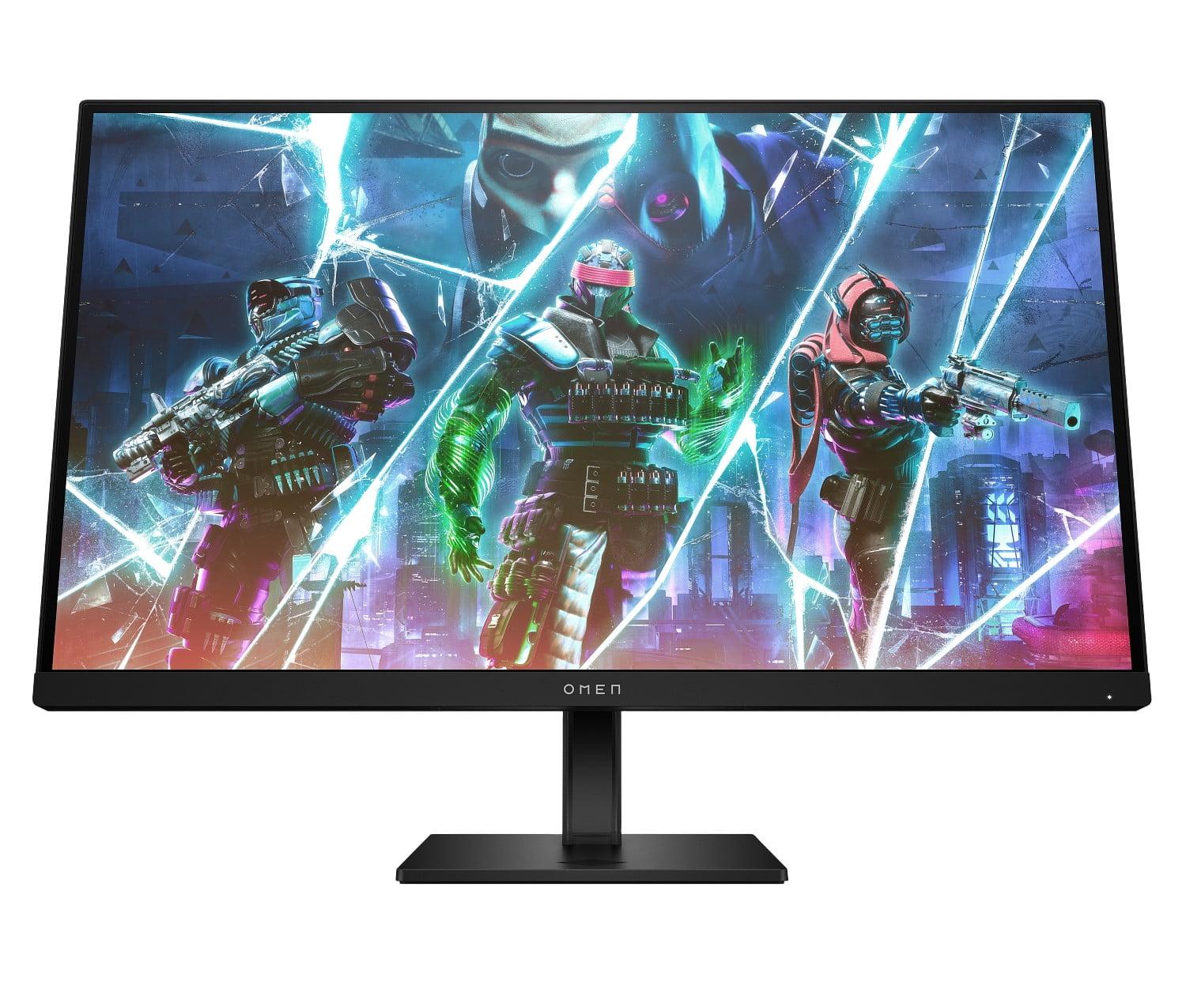
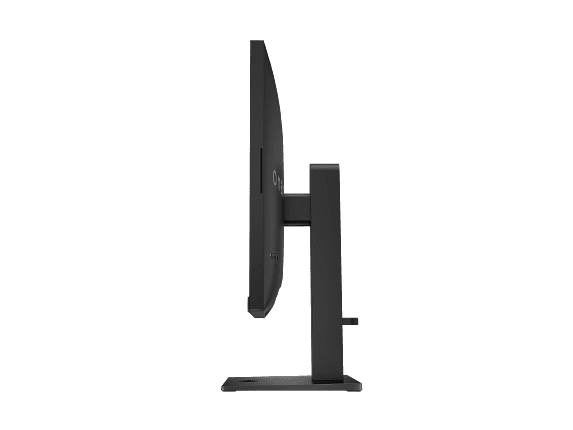
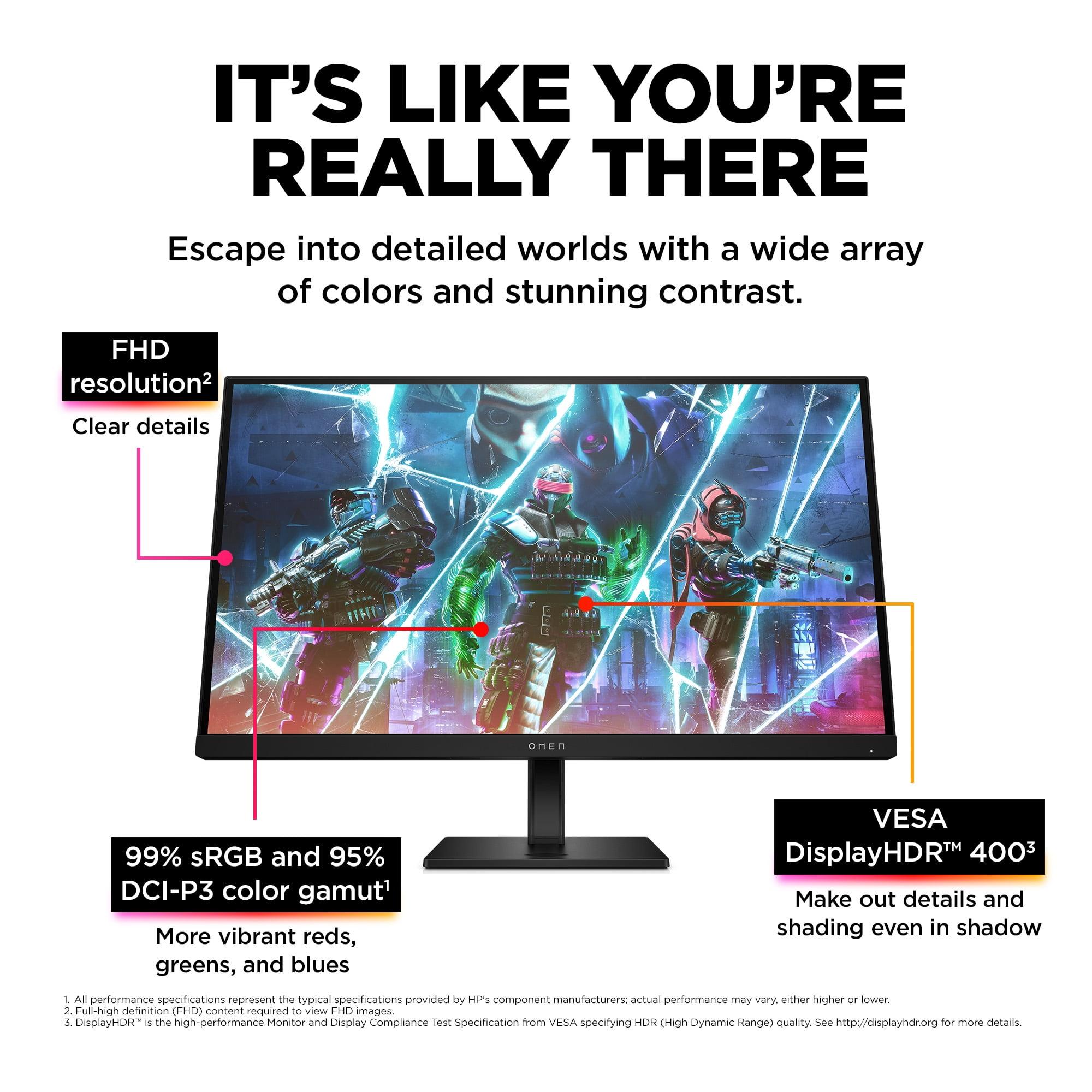
The HP OMEN 27s, released in 2023, represents the refined evolution of competitive gaming monitors. It's built around a 27-inch IPS LCD panel with Full HD (1920×1080) resolution, prioritizing consistent high-frame-rate performance over pixel density. At the time of writing, it typically costs around $400, positioning it as a performance-focused value option.
The Samsung Odyssey OLED G8, launching in 2024, showcases cutting-edge display technology with its 4K UHD (3840×2160) QD-OLED panel. This monitor costs significantly more—roughly double the HP's price at the time of writing—but delivers premium visual quality that represents the current pinnacle of gaming display technology.
These monitors target different segments of the gaming market, and understanding which philosophy aligns with your needs is crucial for making the right choice.
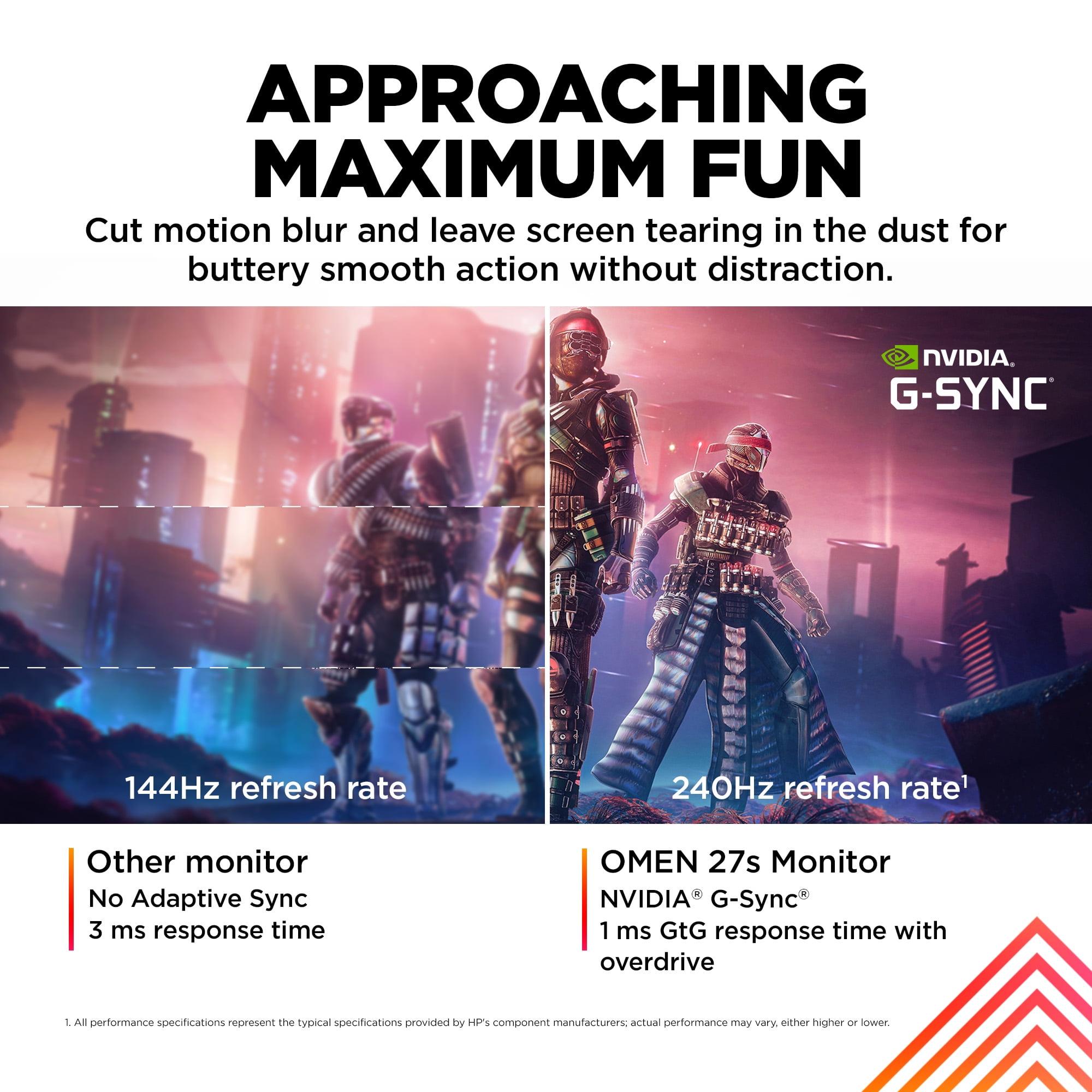
When it comes to pure gaming performance, both monitors excel but through different approaches. The HP OMEN 27s achieves its 1ms gray-to-gray response time through carefully tuned overdrive technology—essentially pushing pixels to change faster by applying extra voltage. This proven approach delivers consistently smooth motion with minimal artifacts.
The Samsung G8 takes a more advanced route with its 0.03ms response time, made possible by OLED technology's instant pixel switching. Since OLED pixels generate their own light, they can turn completely on or off essentially instantaneously. This creates the smoothest possible motion with zero ghosting or overshoot artifacts that can affect LCD monitors.
In practical gaming terms, both monitors will feel incredibly responsive. The difference between 1ms and 0.03ms response time isn't perceptible to human reflexes, but the Samsung's OLED technology eliminates motion artifacts entirely. If you're playing fast-paced competitive shooters like CS2 or Valorant, both monitors will give you the edge you need.
However, there's a crucial performance consideration: achieving 240fps consistently. The HP OMEN 27s's 1080p resolution is much easier to drive than the Samsung's 4K resolution. A mid-range graphics card like an RTX 4060 can push 240fps in competitive games at 1080p, while you'd need something like an RTX 4080 or better to hit those frame rates at 4K.
Here's where these monitors diverge dramatically. The HP OMEN 27s delivers excellent color accuracy with 99% sRGB coverage—that's the standard color space used by most games and web content. Its 400-nit brightness and anti-glare coating make it comfortable for extended gaming sessions in various lighting conditions.
The Samsung G8 operates in a different league entirely. Its QD-OLED panel combines quantum dot color enhancement with OLED's perfect blacks, creating a contrast ratio of 1,000,000:1 compared to the HP's 1,000:1. In practical terms, this means darker scenes in games like horror titles or atmospheric RPGs will show details you've never seen before, while bright highlights pop with incredible intensity.
The 4K resolution advantage is substantial for visual clarity. Text is razor-sharp, game textures show fine details, and the overall image appears more lifelike. However, this comes with tradeoffs in performance requirements and cost.
One interesting technical detail: the Samsung's advanced anti-glare coating reduces reflections by 54% compared to conventional treatments. This addresses a common OLED weakness—reflectivity in bright rooms—making it more practical for varied lighting environments.
Both monitors support variable refresh rate technology, which synchronizes your graphics card's frame output with the monitor's refresh rate to eliminate screen tearing. The HP OMEN 27s is certified for both NVIDIA G-SYNC compatibility and AMD FreeSync Premium, ensuring smooth gameplay regardless of your graphics card brand.
The Samsung G8 includes FreeSync Premium Pro and G-SYNC compatibility, with the added benefit of HDR gaming support. Its VESA DisplayHDR True Black 400 certification enables genuine high dynamic range gaming, where bright explosions and dark shadows can coexist with realistic intensity.
A unique feature of the HP monitor is its custom crosshair overlay system through the OMEN Gaming Hub software. This lets you add personalized crosshairs for games that lack them or prefer different styles—a genuinely useful competitive feature.
The Samsung counters with CoreSync lighting, an RGB ambient lighting system on the monitor's rear that can synchronize with on-screen content. While not performance-critical, it creates an immersive gaming atmosphere that many find enhancing.
The HP OMEN 27s shines in practical connectivity with dual HDMI 2.0 ports, DisplayPort 1.4, and a USB hub with two USB-A ports. The integrated USB hub is particularly valuable—you can connect your mouse and keyboard directly to the monitor and switch between different input sources seamlessly. It even includes modest 3-watt speakers for basic audio needs.
The Samsung G8 provides similar core connectivity but focuses more on premium features. Its HDMI 2.1 support enables full 4K 240Hz operation with compatible graphics cards, while the monitor's advanced thermal management system prevents overheating during extended gaming sessions.
One practical consideration often overlooked is burn-in risk with OLED displays. The Samsung includes multiple protection systems: pixel shifting, logo detection that dims static elements, and thermal modulation that adjusts brightness to prevent overheating. At the time of writing, Samsung offers a 3-year warranty that covers burn-in under normal usage conditions.
For gaming monitors that might pull double duty as entertainment displays, the differences become more pronounced. The HP OMEN 27s handles movies and streaming content well, with good color accuracy and adequate HDR support through DisplayHDR 400 certification. However, its 1080p resolution limits detail in high-quality content.
The Samsung G8 excels as an entertainment display. Its OLED technology delivers the deep blacks and vibrant colors that make movies and shows look their best, while 4K resolution ensures you see every detail in high-quality content. The infinite contrast ratio particularly benefits darker content like film noir or atmospheric shows.
For console gaming, both monitors work well, but the Samsung better showcases the visual capabilities of PlayStation 5 and Xbox Series X games designed for 4K output. The HP remains excellent for competitive console gaming where frame rate trumps resolution.
After extensive research into professional reviews and user experiences, the most important performance characteristics for gaming monitors are consistent frame delivery, motion clarity, and input responsiveness. Both monitors excel in these areas but through different approaches.
The HP OMEN 27s consistently delivers its advertised performance across a wide range of systems and games. Its 1080p resolution ensures that most modern graphics cards can actually utilize the full 240Hz refresh rate, making the high-refresh benefits accessible to more users.
The Samsung G8 provides superior technical performance but requires high-end hardware to fully realize its potential. If you have the graphics card to drive it properly, it offers an unmatched gaming experience with perfect motion clarity and stunning visual quality.
Input lag measurements from professional reviews show both monitors performing excellently, with sub-1ms input lag that ensures your reflexes aren't artificially limited by display latency.
The HP OMEN 27s makes the most sense for competitive gamers and those building performance-focused setups. If you primarily play esports titles like CS2, Valorant, Apex Legends, or League of Legends, this monitor delivers everything you need at an accessible price point. It's also ideal if you have a mid-range graphics card and want to experience high-refresh gaming without upgrading your entire system.
The Samsung Odyssey OLED G8 suits enthusiasts and users who want the absolute best visual experience. If you play single-player AAA games, enjoy cinematic experiences, or do content creation work, the superior visual quality justifies the premium price. It's also future-proof—as graphics cards become more powerful, you'll be ready to fully utilize 4K 240Hz gaming.
For competitive gaming specifically, both monitors will serve you well, but the HP offers better price-to-performance value. For immersive, single-player gaming and multimedia use, the Samsung provides an experience that's genuinely transformative.
Based on our research and analysis of expert reviews, the choice comes down to your priorities and budget. At the time of writing, the HP OMEN 27s represents exceptional value for performance-focused gaming, delivering 95% of the gaming benefits at roughly half the cost of premium alternatives.
The Samsung Odyssey OLED G8 justifies its premium pricing through superior technology and visual quality. If you have high-end hardware and want the best possible gaming experience, it's worth the investment.
Consider your graphics card capabilities, preferred game types, and whether you need the monitor for non-gaming tasks. The HP excels at competitive gaming and general use, while the Samsung provides a premium experience across gaming, entertainment, and creative work.
Both monitors represent excellent choices within their respective market segments. Your decision should align with your specific needs, system capabilities, and how much you value cutting-edge display technology versus proven performance value.
| HP OMEN 27s FHD 240Hz Gaming Monitor | Samsung 27" Odyssey OLED G8 4K UHD 240Hz Gaming Monitor |
|---|---|
| Resolution - Higher resolution means sharper images but requires more GPU power | |
| 1920 x 1080 (FHD) - Easy to drive at 240fps with mid-range GPUs | 3840 x 2160 (4K UHD) - Requires high-end GPU for optimal performance |
| Panel Technology - Determines contrast, colors, and motion performance | |
| IPS LCD - Excellent color accuracy, good brightness, proven reliability | QD-OLED - Perfect blacks, infinite contrast, premium visual quality |
| Response Time - Lower is better for eliminating motion blur in fast games | |
| 1ms GtG with overdrive - Excellent for competitive gaming | 0.03ms GtG - Near-instantaneous, eliminates all motion artifacts |
| Brightness - Higher brightness better for bright rooms and HDR content | |
| 400 nits - Good for most lighting conditions | 250 nits typical - Best in controlled lighting environments |
| Contrast Ratio - Higher contrast creates more realistic dark scenes | |
| 1,000:1 - Standard for LCD panels | 1,000,000:1 - Infinite contrast delivers true blacks |
| Color Gamut Coverage - Wider coverage means more vibrant, accurate colors | |
| 99% sRGB, 95% DCI-P3 - Excellent color accuracy for gaming | 99% DCI-P3 with quantum dots - Premium color reproduction |
| HDR Support - Better HDR creates more realistic lighting in games | |
| VESA DisplayHDR 400 - Basic HDR enhancement | VESA DisplayHDR True Black 400 - True HDR with perfect blacks |
| Connectivity - More ports and features increase versatility | |
| 2x HDMI 2.0, 1x DP 1.4, USB hub, built-in speakers | HDMI 2.1, DisplayPort, premium build quality |
| GPU Requirements - What graphics card you need for optimal performance | |
| RTX 4060 / RX 7600 XT adequate for 240fps in competitive games | RTX 4080+ recommended for 4K 240fps gaming |
| Burn-in Risk - Important consideration for long-term reliability | |
| No burn-in risk with LCD technology | OLED burn-in possible but protected by 3-year warranty |
| Best Use Cases - Who should choose each monitor | |
| Competitive gaming, esports, mid-range systems, value-focused buyers | Premium gaming, content creation, high-end systems, visual enthusiasts |
The HP OMEN 27s is generally better for competitive gaming due to its 1080p resolution, which allows mid-range graphics cards to consistently hit 240fps in esports titles like CS2, Valorant, and Apex Legends. While the Samsung Odyssey OLED G8 has superior response times at 0.03ms, the HP's 1ms response time is still excellent for competitive play, and its lower resolution ensures you can actually utilize the full 240Hz refresh rate without needing a high-end GPU.
The primary difference is resolution and panel technology. The HP OMEN 27s uses a 1080p IPS LCD panel focused on high-refresh gaming performance, while the Samsung Odyssey OLED G8 features a 4K OLED panel that prioritizes premium visual quality. This affects everything from GPU requirements to price, with the Samsung costing roughly double the HP's price while requiring significantly more graphics horsepower.
The Samsung Odyssey OLED G8 has dramatically better picture quality with its OLED technology delivering perfect blacks, infinite contrast ratio (1,000,000:1 vs 1,000:1), and more vibrant colors. The 4K resolution also provides much sharper images compared to the HP OMEN 27s's 1080p display. However, the HP still offers excellent color accuracy with 99% sRGB coverage for gaming purposes.
The HP OMEN 27s works well with mid-range graphics cards like the RTX 4060 or RX 7600 XT, allowing you to hit 240fps in competitive games. The Samsung Odyssey OLED G8 requires a high-end graphics card (RTX 4080 or better) to fully utilize its 4K 240Hz capabilities, making it a more expensive overall investment when factoring in GPU requirements.
The Samsung Odyssey OLED G8 is significantly better for single-player AAA games due to its 4K resolution, OLED contrast, and superior HDR support. Games like Cyberpunk 2077, Red Dead Redemption 2, and other visually demanding titles will look substantially better with the deeper blacks, vibrant colors, and sharp 4K detail that the Samsung provides compared to the HP OMEN 27s.
The HP OMEN 27s has no burn-in risk since it uses LCD technology. The Samsung Odyssey OLED G8 does have potential burn-in risk due to its OLED panel, but Samsung includes multiple protection features like pixel shifting, logo detection, and thermal modulation. Additionally, Samsung covers burn-in under their 3-year warranty for normal usage conditions.
The HP OMEN 27s offers better value for most gamers, providing excellent 240Hz gaming performance at a significantly lower price point. The Samsung Odyssey OLED G8 costs roughly double but delivers premium visual quality that may justify the price for enthusiasts who prioritize image quality and have high-end hardware to match.
Both monitors work well with consoles, but serve different purposes. The HP OMEN 27s is excellent for competitive console gaming where high refresh rates matter most. The Samsung Odyssey OLED G8 better showcases the visual capabilities of PlayStation 5 and Xbox Series X games designed for 4K output, making it ideal for single-player console experiences.
The Samsung Odyssey OLED G8 is significantly better for entertainment content due to its 4K resolution, perfect blacks, and superior HDR support. Movies and streaming shows will look much more cinematic compared to the HP OMEN 27s, though the HP still handles media content adequately for casual viewing.
The Samsung Odyssey OLED G8 has a faster 0.03ms response time compared to the HP OMEN 27s's 1ms response time. While both are excellent for gaming, the Samsung's OLED technology eliminates motion blur and ghosting entirely. However, the difference isn't noticeable in practical gaming scenarios for most users.
The HP OMEN 27s offers more practical connectivity with dual HDMI 2.0 ports, DisplayPort 1.4, a USB hub with two USB-A ports, and built-in speakers. The Samsung Odyssey OLED G8 provides HDMI 2.1 and DisplayPort connections suitable for its 4K capabilities, but lacks the convenient USB hub functionality of the HP monitor.
For competitive gaming and mid-range systems, the HP OMEN 27s's 1080p resolution is often preferable because it's easier to achieve high frame rates consistently. For immersive gaming, content creation, and premium visual experiences, the Samsung Odyssey OLED G8's 4K resolution provides noticeably sharper images and more detail, especially beneficial for larger game worlds and cinematic titles.
We've done our best to create useful and informative comparisons to help you decide what product to buy. Our research uses advanced automated methods to create this comparison and perfection is not possible - please contact us for corrections or questions. These are the sites we've researched in the creation of this article: bestbuy.com - hp.com - shi.com - hp.com - bestbuy.com - hp.com - tomshardware.com - hp.com - rtings.com - hp.com - displayspecifications.com - support.hp.com - publicsector.shidirect.com - objects.icecat.biz - files.bbystatic.com - hp.com - displayspecifications.com - rtings.com - tomsguide.com - tomshardware.com - youtube.com - ign.com - youtube.com - pcvarge.com - youtube.com - youtube.com - versus.com - bestbuy.com - samsung.com - samsung.com - displayspecifications.com - samsung.com - hardforum.com - publicsector.shidirect.com - forums.thefpsreview.com - samsung.com - rtings.com - samsung.com - samsung.com

Privacy Policy
Terms and Conditions - Affiliate Policy
Home Security
© Copyright 2008-2026.
11816 Inwood Rd #1211, Dallas, TX 75244