


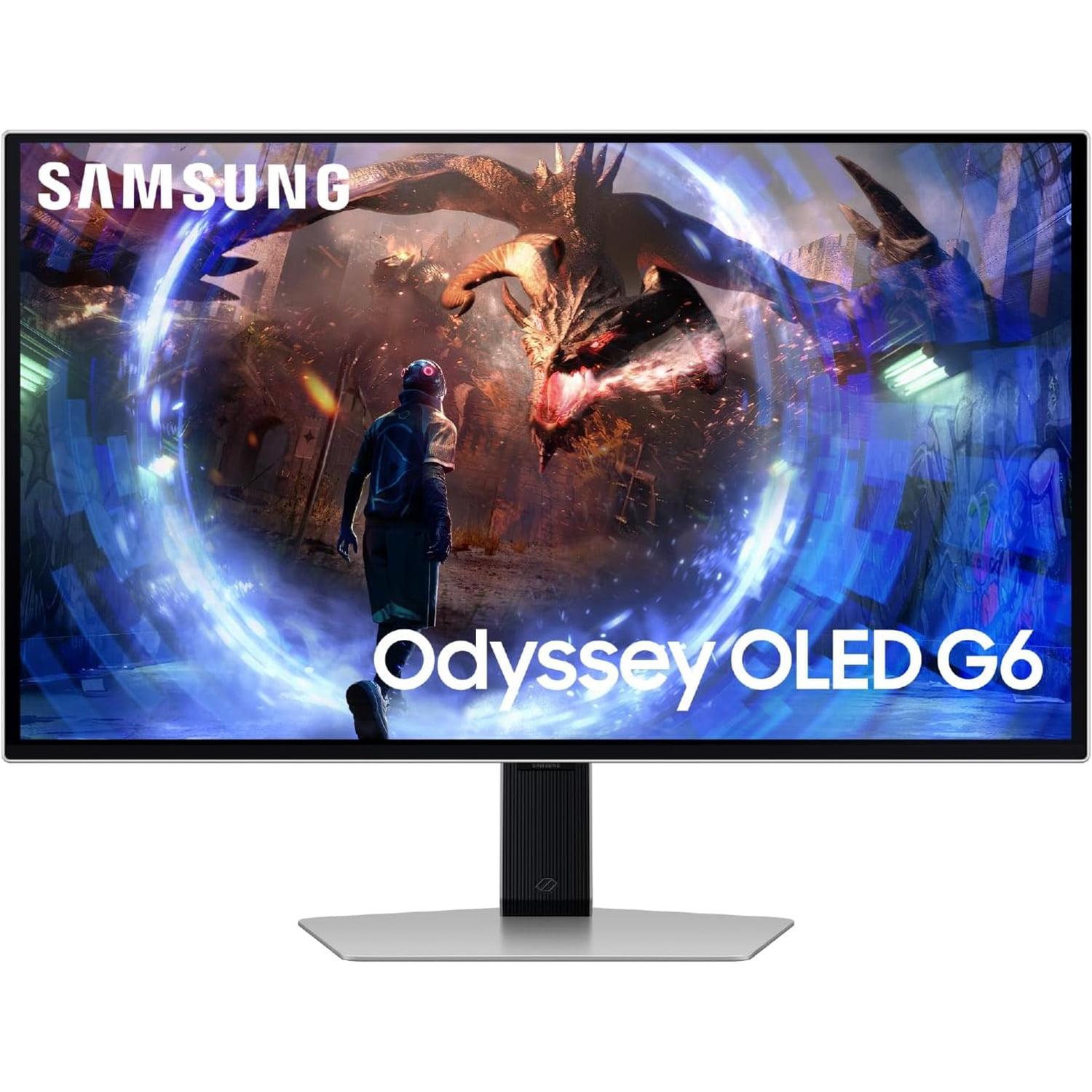
Shopping for a gaming monitor can feel overwhelming with all the technical specs and marketing jargon thrown around. Today we're comparing two excellent 27-inch gaming monitors that take very different approaches: the HP OMEN 27s, a reliable FHD IPS display with a 240Hz refresh rate, and the Samsung Odyssey OLED G6, a cutting-edge QHD OLED panel pushing 360Hz. At the time of writing, these monitors are priced fairly close to each other, making the choice between them particularly interesting.
Before diving into specifics, let's break down what makes a gaming monitor tick. The most important specs are refresh rate (how many times per second the screen updates), response time (how quickly pixels can change colors), and panel technology (the underlying display tech that affects image quality).
Refresh rate is measured in Hertz (Hz) – a 240Hz monitor refreshes the image 240 times per second, while 360Hz does it 360 times. Higher refresh rates make motion appear smoother, especially in fast-paced games. However, your graphics card needs to produce enough frames per second (FPS) to match the monitor's capabilities.
Response time measures how quickly a pixel can change from one color to another, usually gray-to-gray (GtG). Lower numbers mean less motion blur and ghosting – those annoying trails you sometimes see behind moving objects.
Panel technology is where things get interesting. IPS (In-Plane Switching) panels offer great color accuracy and wide viewing angles but typically have limited contrast. OLED (Organic Light-Emitting Diode) panels can turn individual pixels completely off, creating true black levels and incredible contrast, but they're more expensive and can potentially suffer from burn-in if static images are left on screen too long.
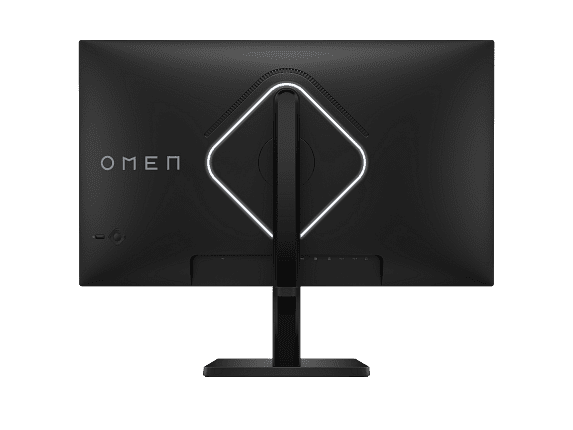
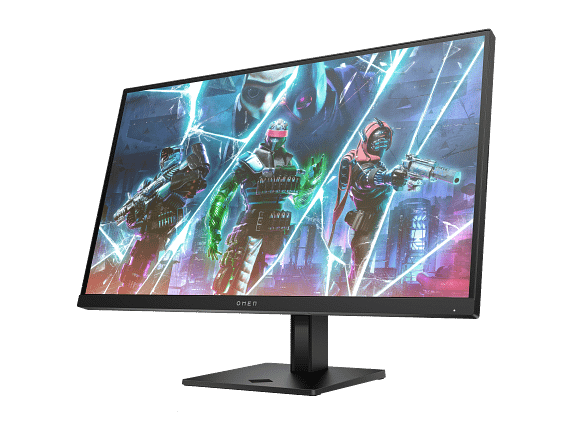
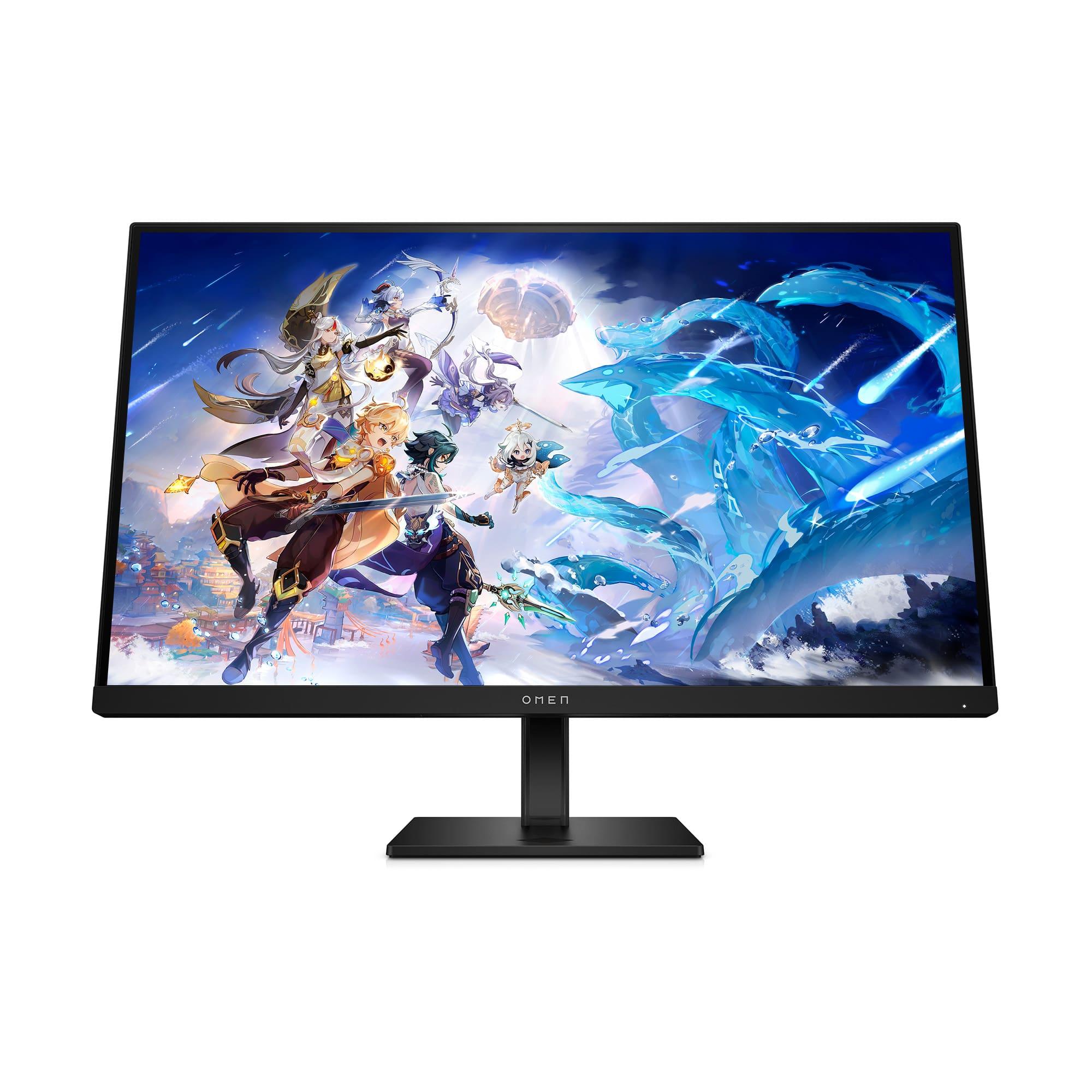
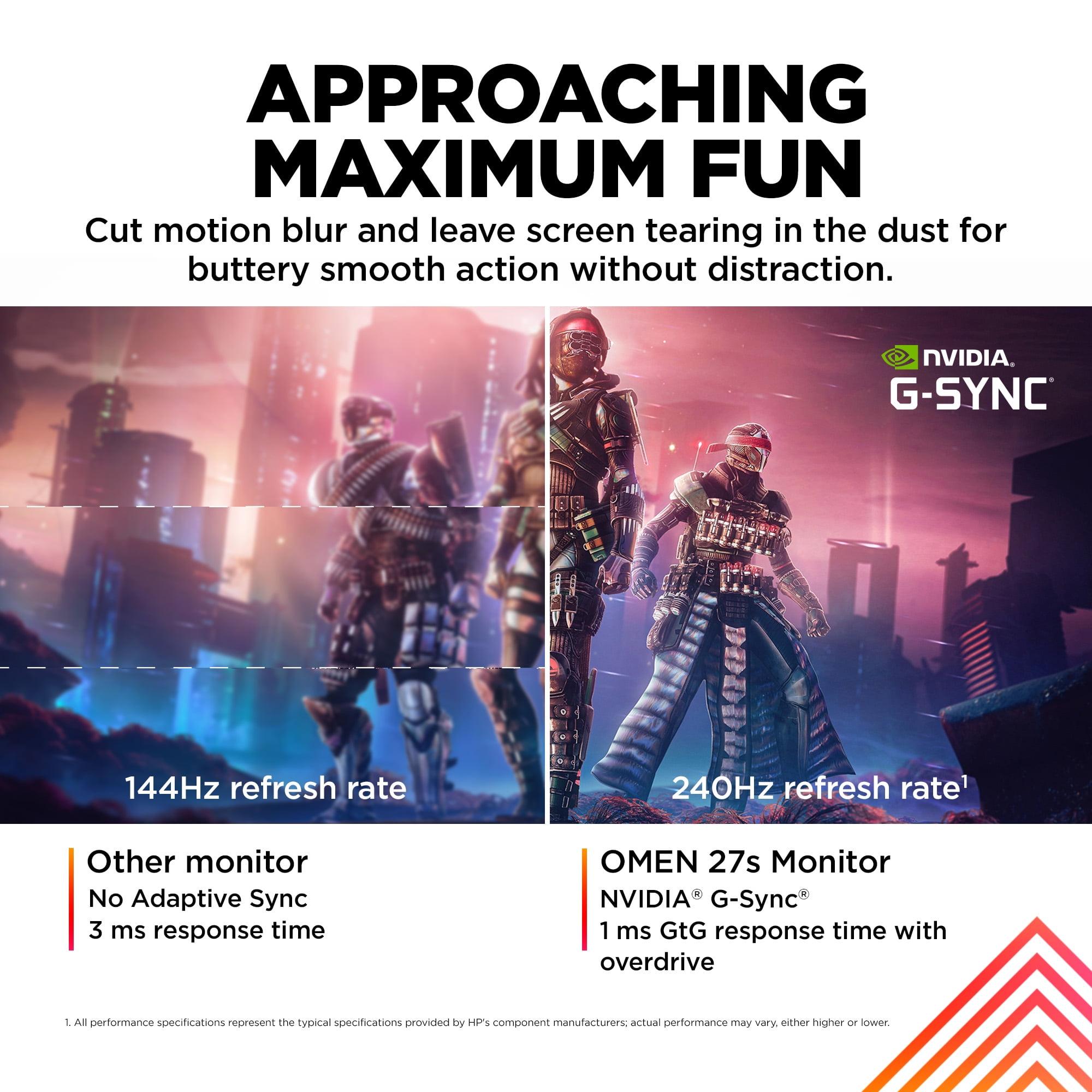
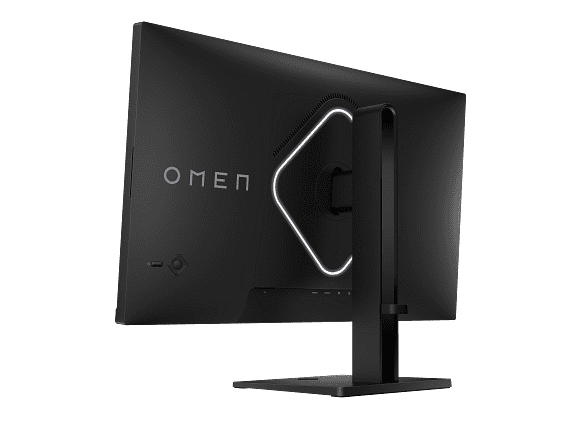
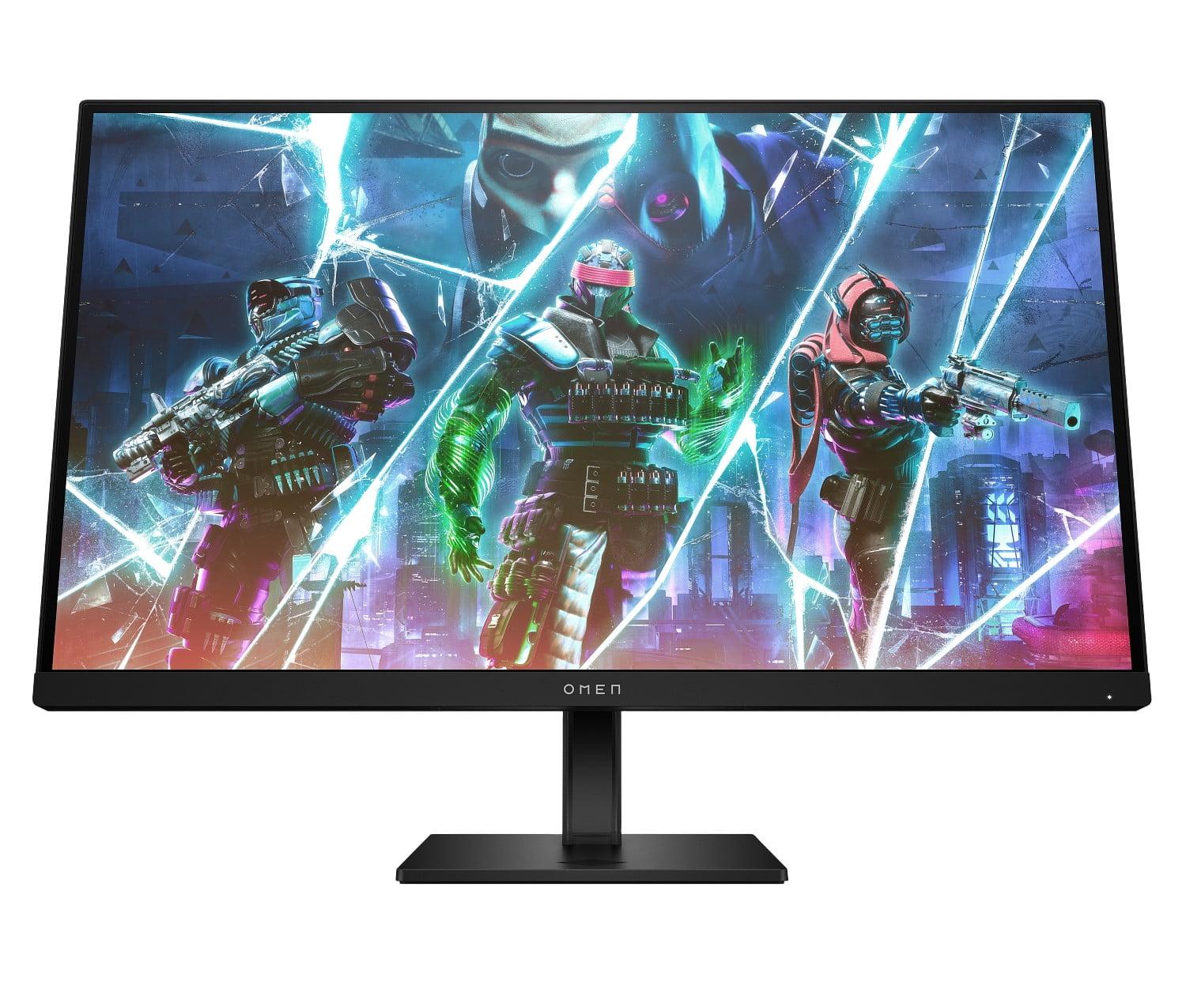
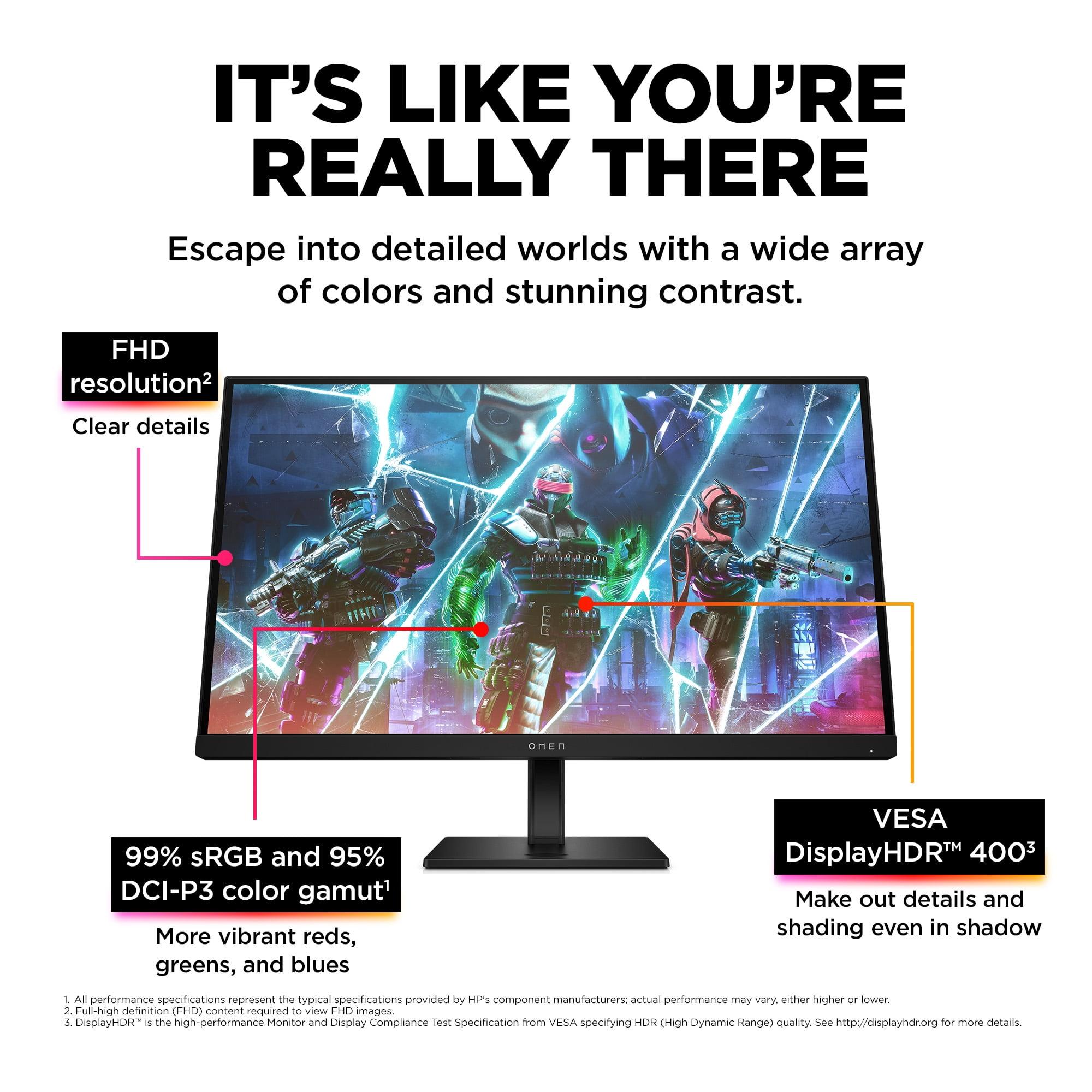
The HP OMEN 27s, released in 2023, represents the sweet spot of competitive gaming monitors. It features a 27-inch IPS panel with Full HD (1920×1080) resolution, 240Hz refresh rate, and 1ms response time. HP designed it as a reliable, no-nonsense gaming display that covers the essentials without breaking the bank.
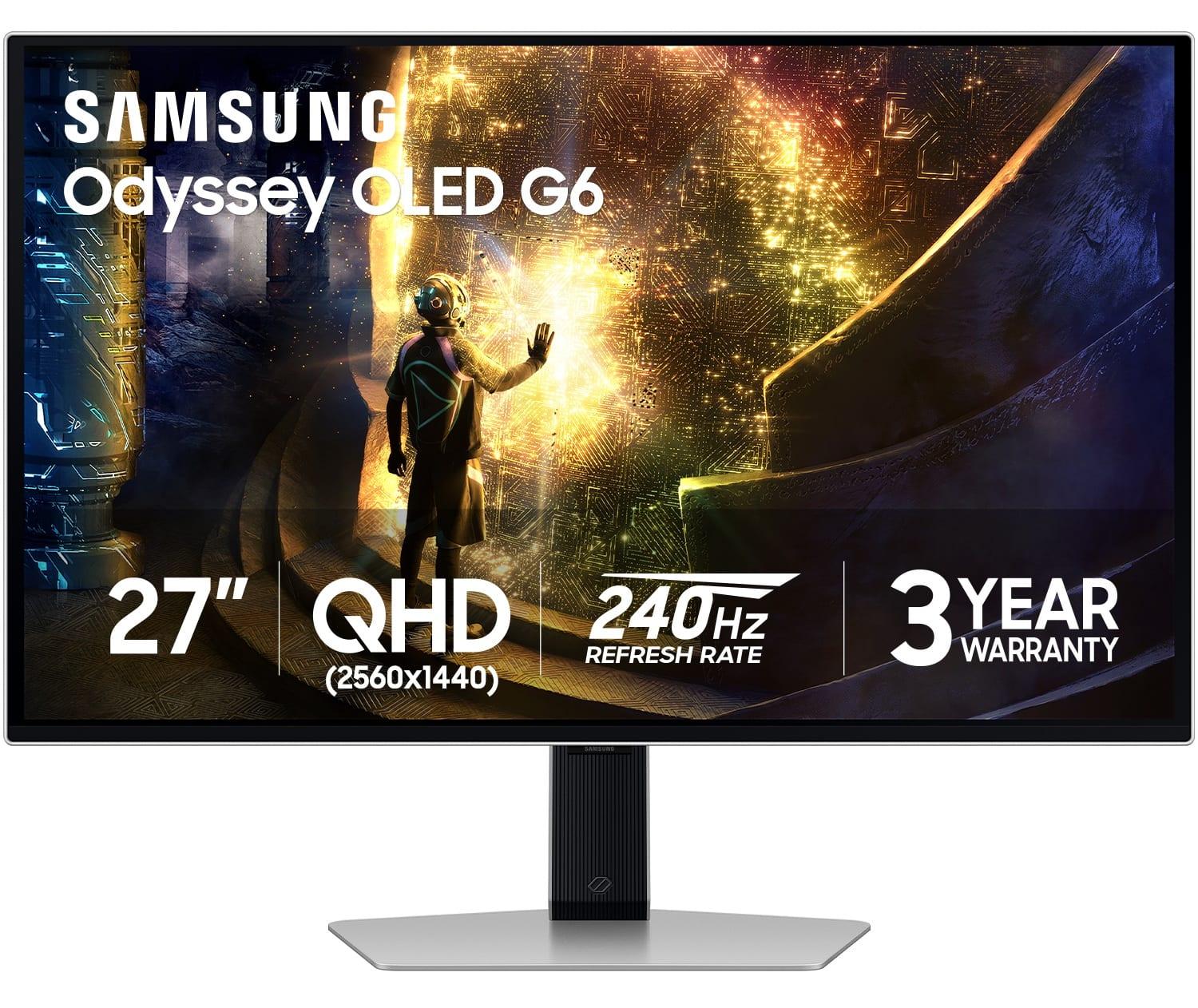
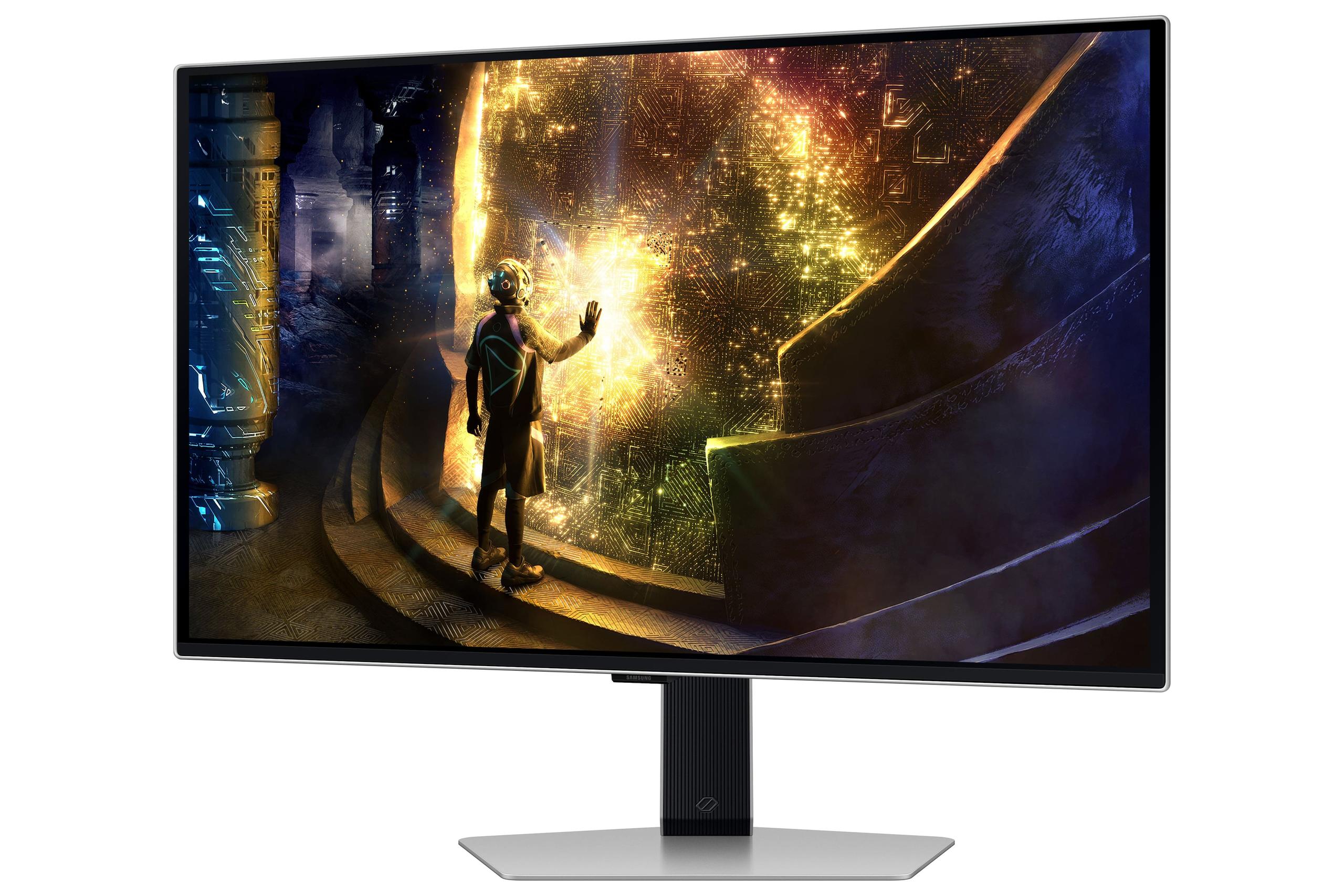
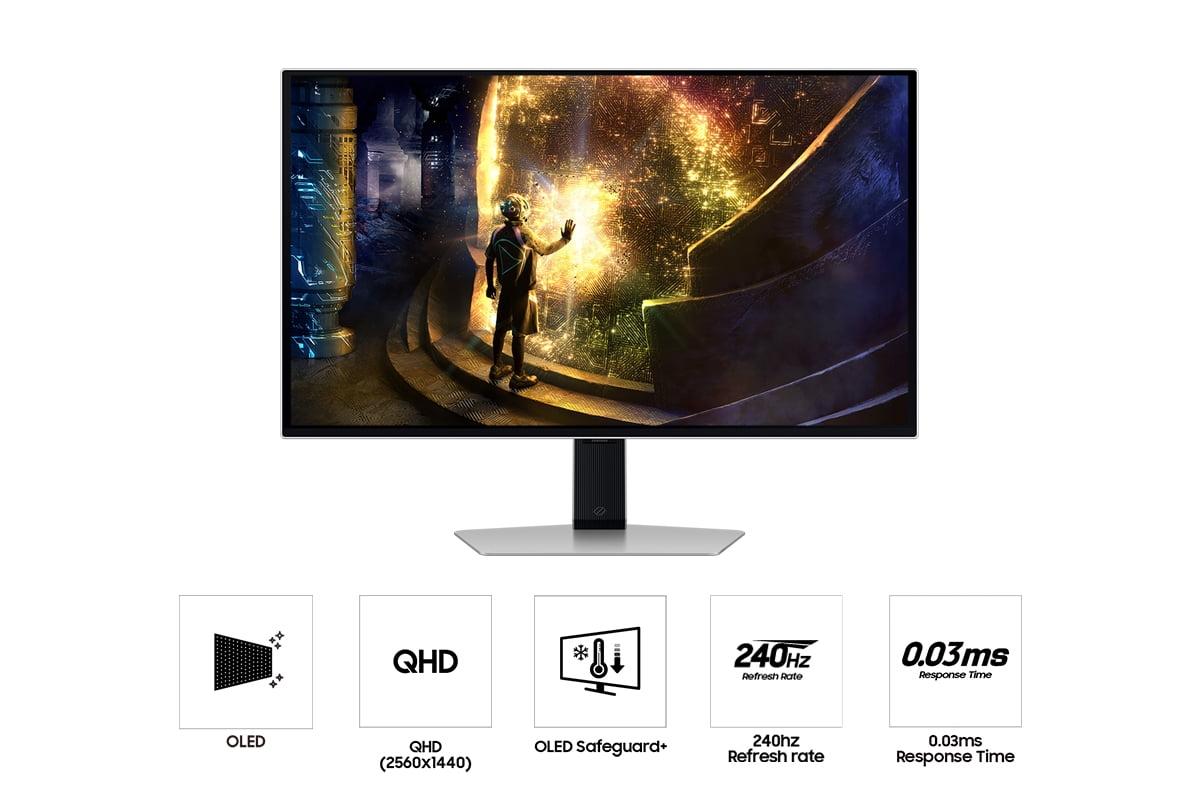
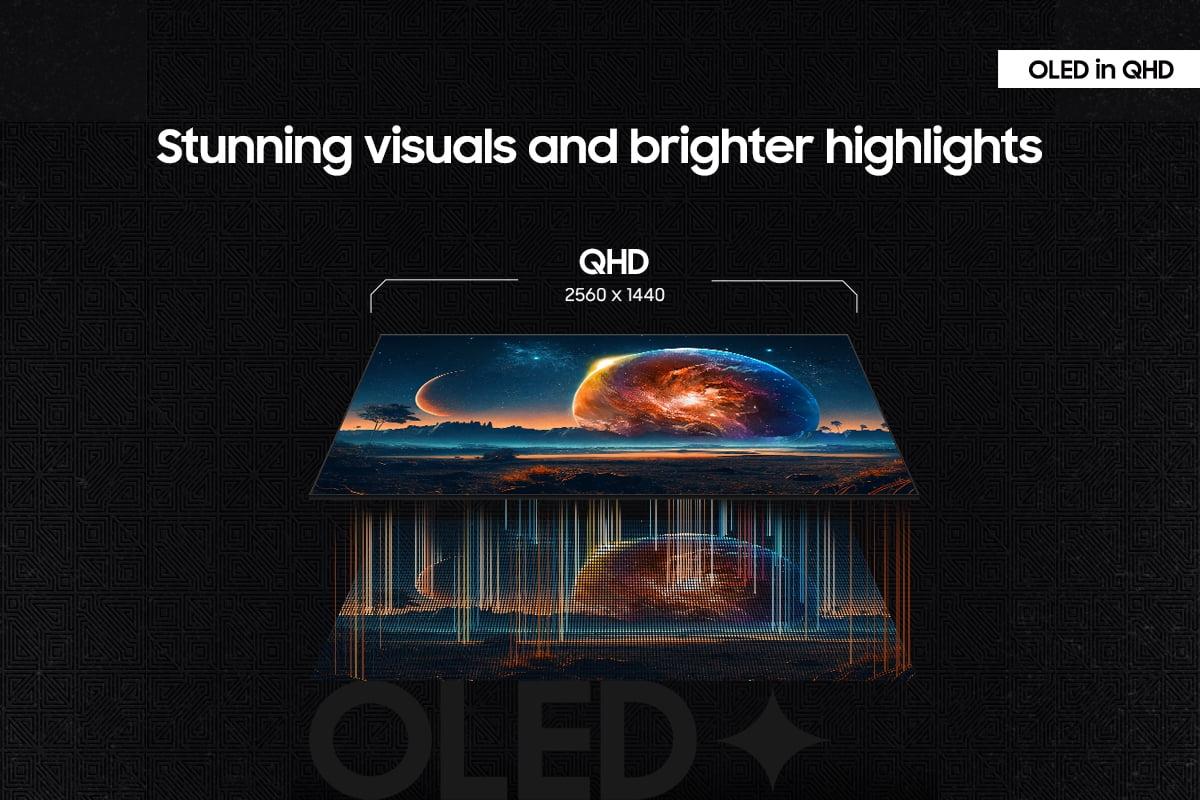
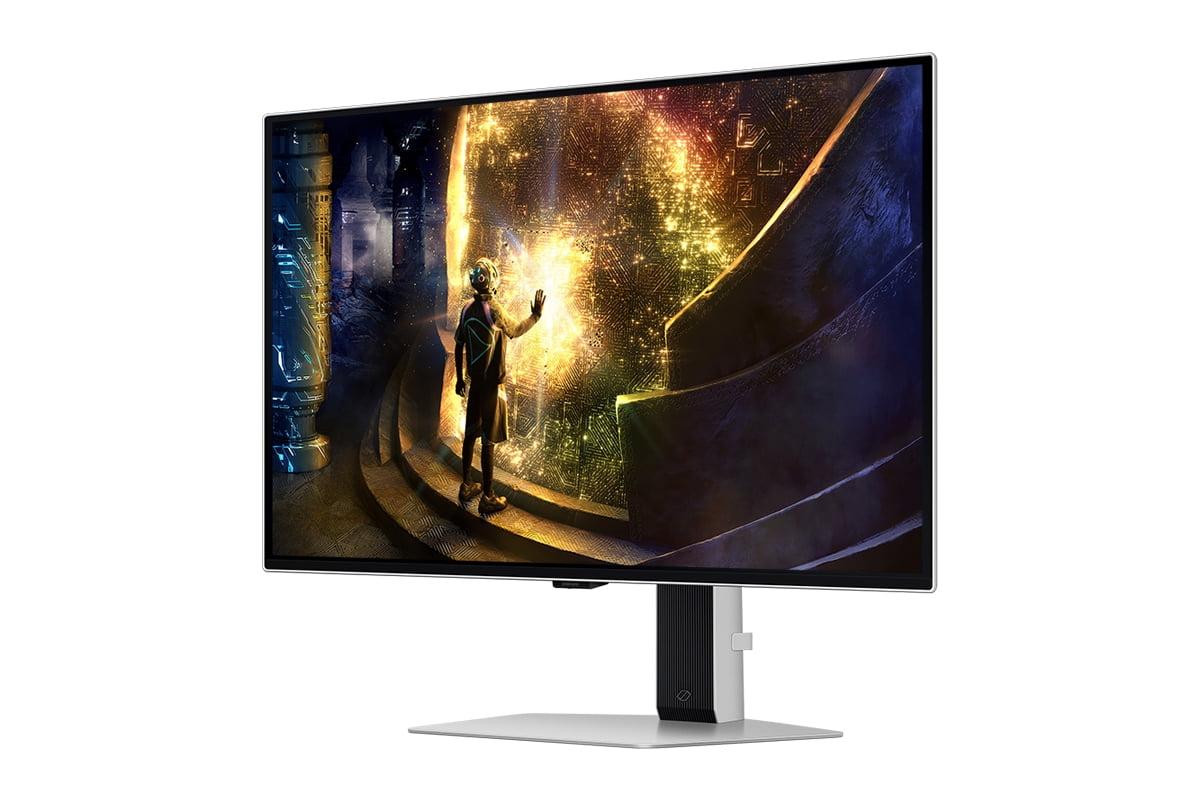
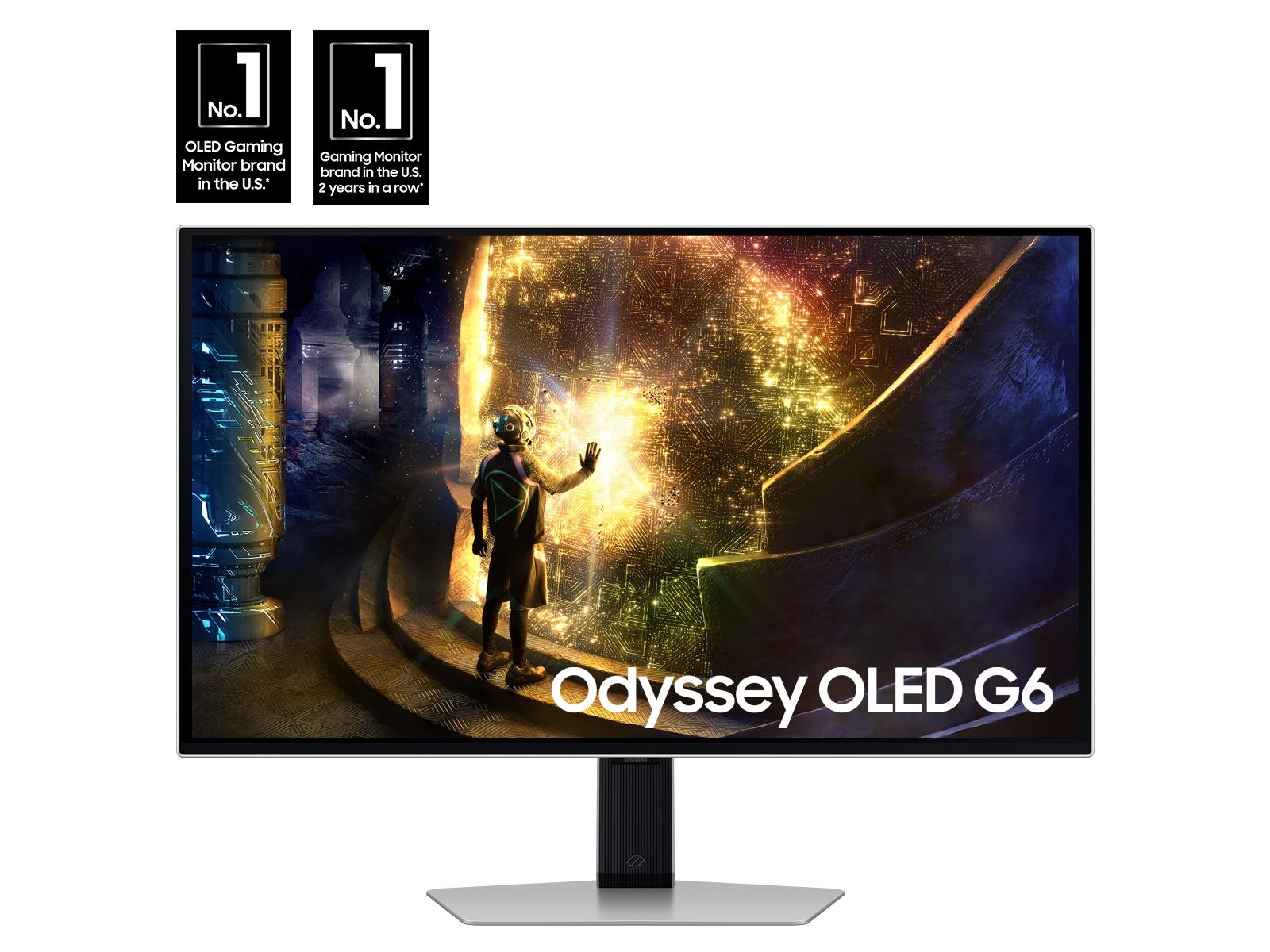
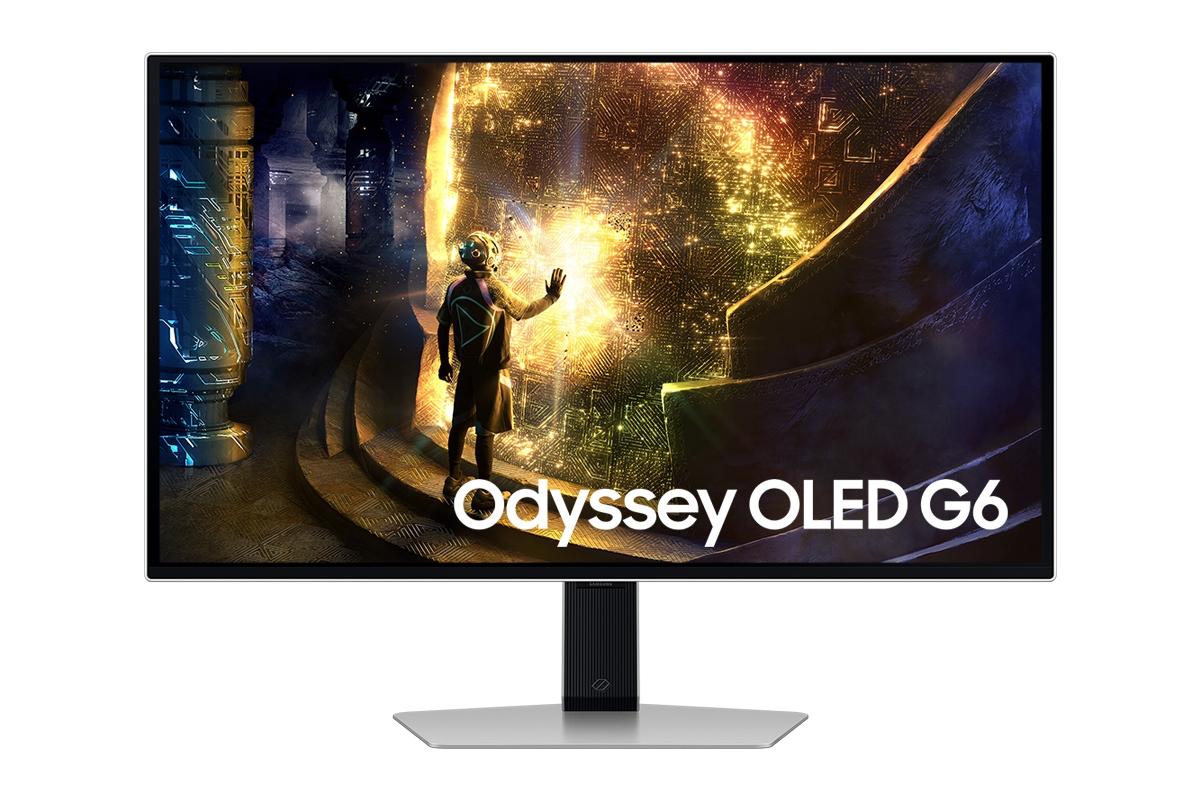
The Samsung Odyssey OLED G6, launched in 2024, showcases the latest in display technology. It uses a 27-inch QD-OLED (Quantum Dot OLED) panel with QHD (2560×1440) resolution, 360Hz refresh rate, and an incredibly fast 0.03ms response time. Samsung positioned it as a premium gaming monitor that pushes the boundaries of what's possible.
This is where the biggest differences emerge between these monitors. The Samsung OLED G6 absolutely dominates in visual quality thanks to its OLED technology. OLED pixels emit their own light and can turn completely off to produce true black levels. This creates a contrast ratio of 1,000,000:1 compared to the HP OMEN 27s's 1,000:1 typical of IPS panels.
What does this mean in practice? When you're sneaking through dark corridors in a horror game or watching the space scenes in sci-fi titles, the Samsung displays inky blacks that make details pop. Colors appear more vibrant and realistic because they're not competing with a backlight bleeding through. The Samsung also supports HDR10 and HDR10+ Gaming, which expands the range of colors and brightness levels the monitor can display.
The HP OMEN 27s still delivers solid image quality with its IPS panel. It covers 99% of the sRGB color space and 95% of DCI-P3, which means colors look accurate and vibrant. The IPS technology provides consistent colors across the entire screen, even when viewed from the side – something that's useful if you have friends watching you game or if you use the monitor for productivity tasks.
However, there's a significant resolution difference to consider. The Samsung's QHD resolution packs 78% more pixels than the HP's Full HD display. This translates to sharper text, more detailed game textures, and an overall crisper image. If you've been gaming on 1080p and upgrade to 1440p, the difference is immediately noticeable – especially on a 27-inch screen where individual pixels become more apparent at FHD resolution.
Both monitors excel in different aspects of gaming performance. The Samsung OLED G6 takes the crown for raw speed with its 360Hz refresh rate and 0.03ms response time. That response time is practically instantaneous – faster than you can blink. For competitive gamers playing Counter-Strike, Valorant, or Apex Legends, this translates to seeing enemies a fraction of a second sooner and having your inputs register with minimal delay.
The HP OMEN 27s's 240Hz and 1ms response time shouldn't be underestimated though. The jump from 60Hz to 144Hz is massive, 144Hz to 240Hz is noticeable, but 240Hz to 360Hz offers diminishing returns that only the most competitive players will appreciate. For 95% of gamers, 240Hz provides all the smoothness they'll ever need.
Both monitors support adaptive sync technology – NVIDIA G-SYNC compatibility and AMD FreeSync – which synchronizes the monitor's refresh rate with your graphics card's frame output. This eliminates screen tearing (when parts of different frames appear simultaneously) and reduces stuttering.
Here's where things get practical. The Samsung's QHD resolution demands significantly more from your graphics card. To hit 360 FPS at 1440p in competitive games, you'll need a high-end GPU like an RTX 4080 or better. Even with top-tier hardware, most AAA games won't consistently reach 360 FPS at max settings.
The HP monitor's FHD resolution is much more forgiving. A mid-range graphics card like an RTX 4060 Ti or RX 7700 XT can easily push 240+ FPS in competitive titles, making the monitor's full potential accessible to more users. This is a crucial consideration since there's no point buying a high-refresh monitor if your system can't feed it enough frames.
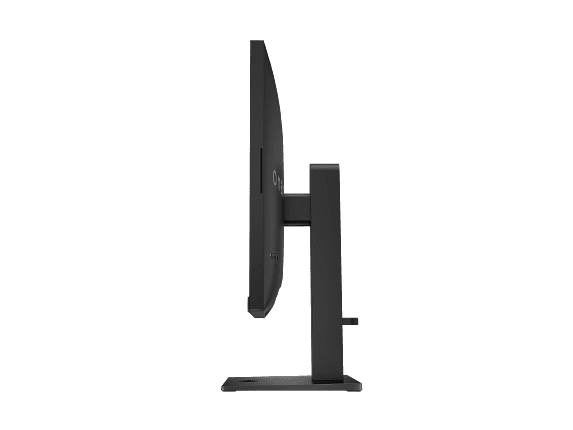
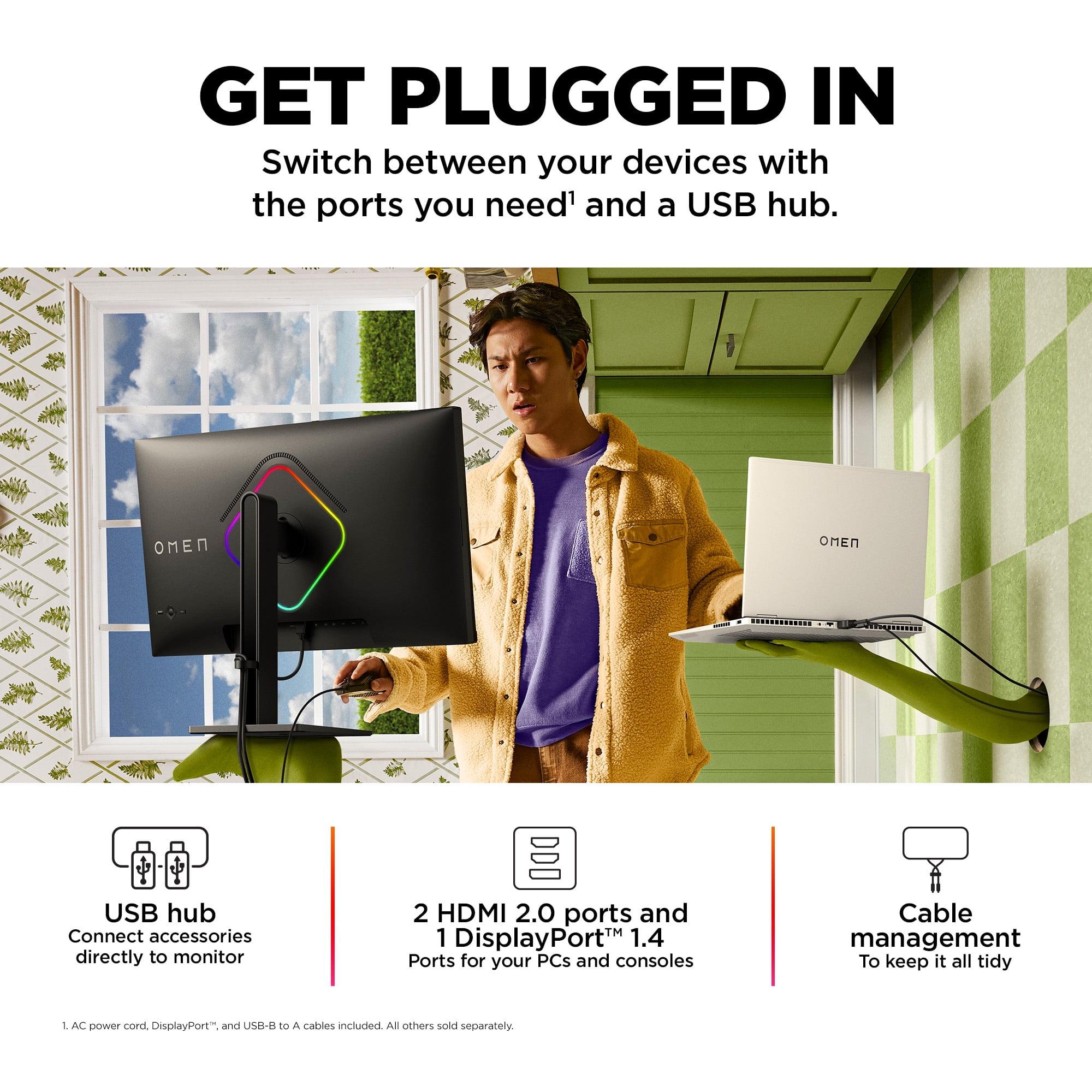
Both monitors feature solid construction, but they take different design approaches. The HP OMEN 27s focuses on functionality with a clean, understated look that fits most setups. The stand offers height, tilt, and swivel adjustments, and the monitor includes cable management to keep your desk tidy. HP also built in dual 3W speakers – nothing spectacular, but convenient for casual use.
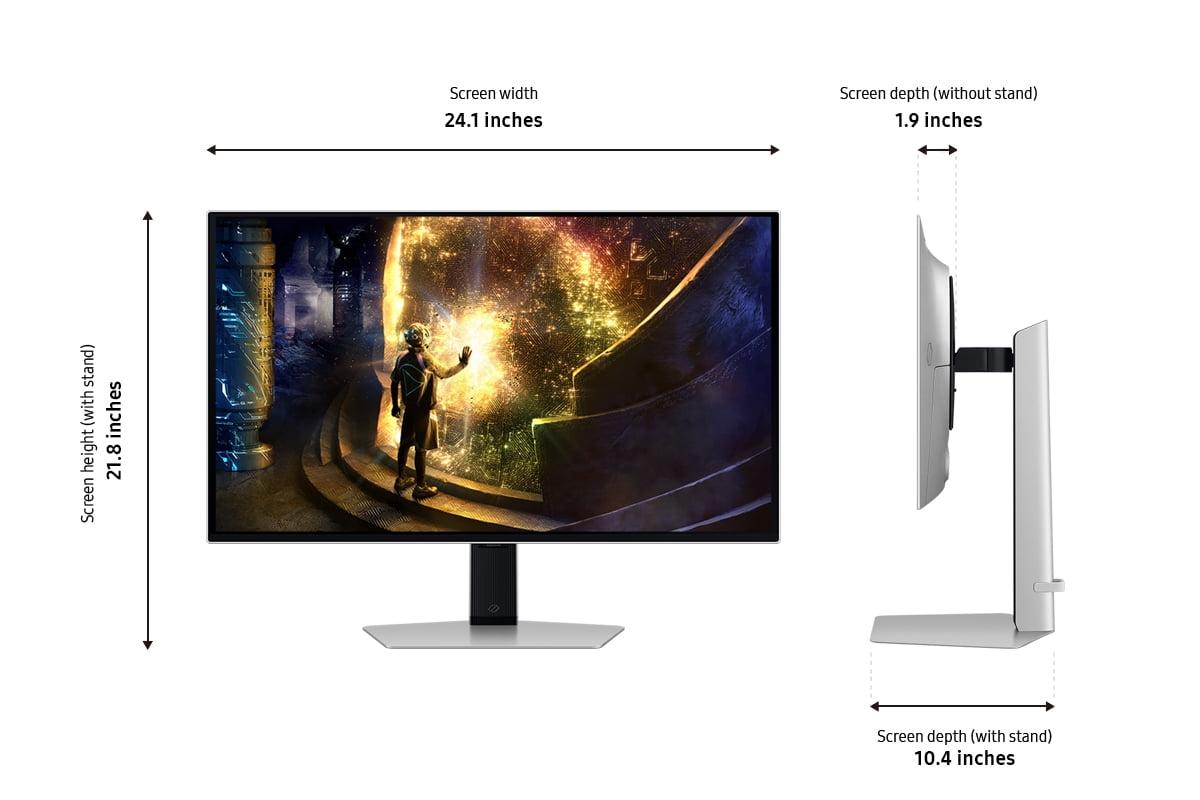
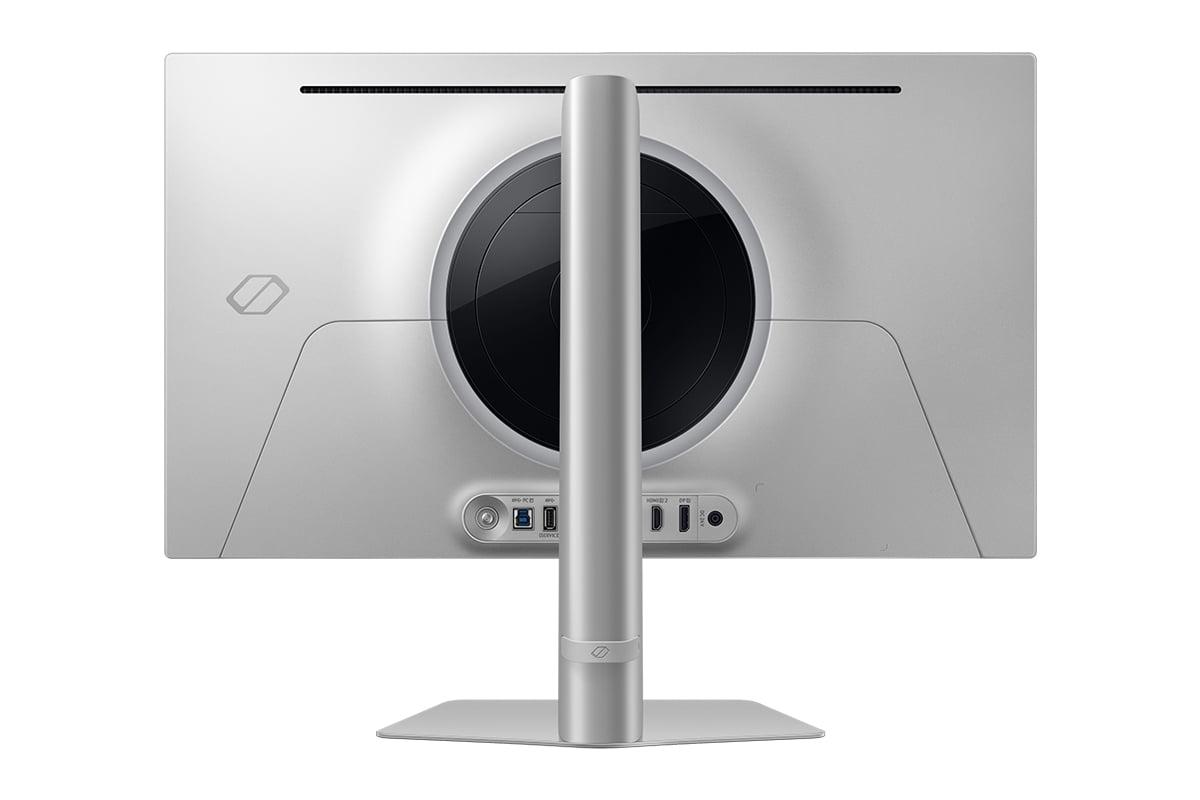
The Samsung OLED G6 makes more of a visual statement with its sleek metal chassis and customizable RGB lighting on the back. The stand provides similar ergonomic adjustments, though some users find the controls less convenient since they're located on the back of the monitor.
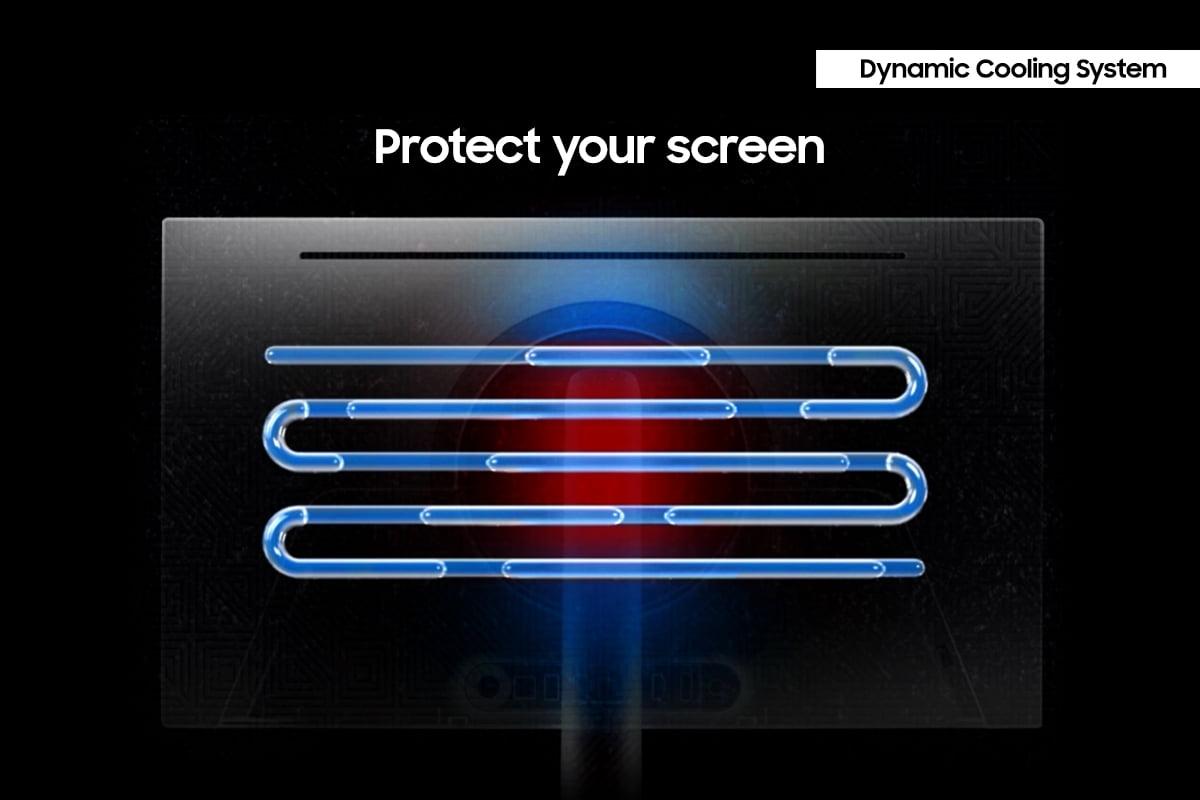
One unique feature of the Samsung is its OLED Safeguard+ technology, which includes a sophisticated cooling system to prevent burn-in. The monitor uses algorithms to detect static elements like taskbars or game UI elements and automatically dims them when necessary. While OLED burn-in is less of an issue with modern panels compared to older TV models, it's still worth considering if you frequently leave static images on screen.
The HP OMEN 27s offers more comprehensive connectivity with two HDMI 2.0 ports, one DisplayPort 1.4, two USB-A ports, and a USB-B hub connection. The built-in USB hub is genuinely useful – you can plug your mouse, keyboard, and other peripherals directly into the monitor and switch between devices easily.
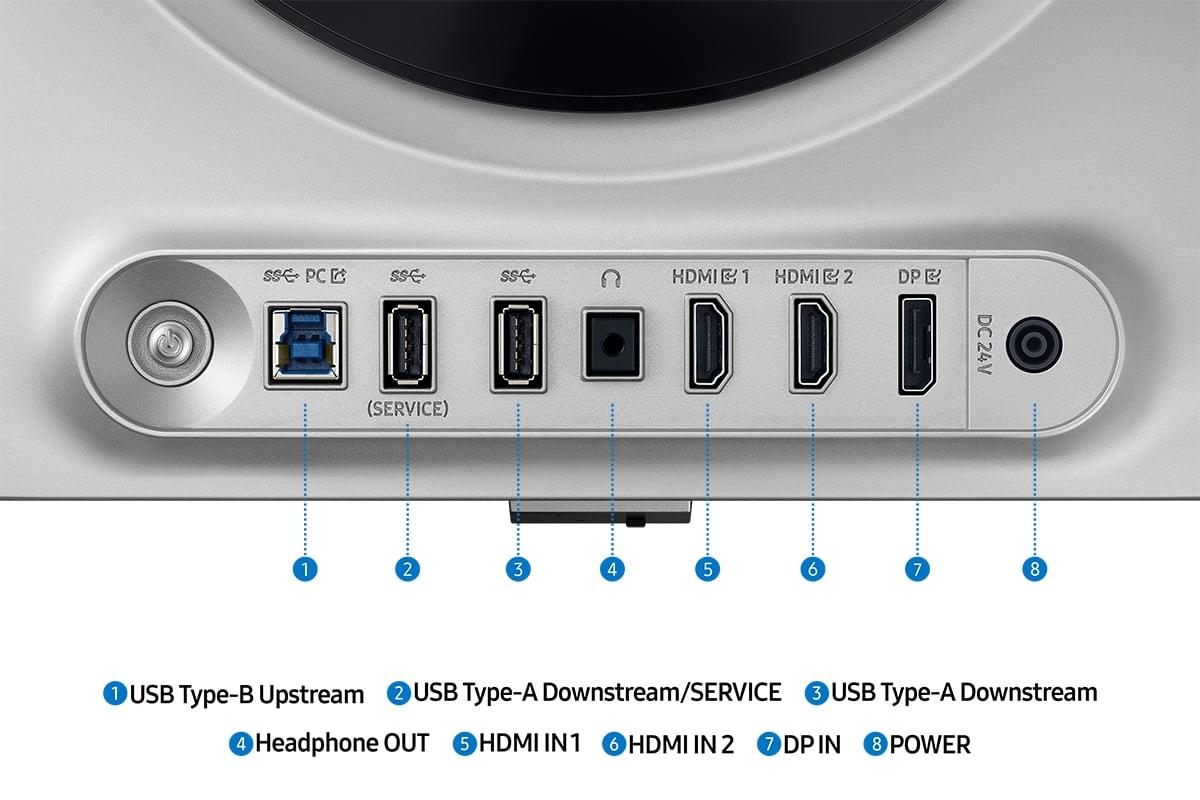
The Samsung OLED G6 provides two HDMI 2.1 ports and one DisplayPort 1.4, plus two USB 3.0 ports. The HDMI 2.1 support is crucial for next-gen consoles, allowing full resolution and high refresh rates from PS5 and Xbox Series X. However, it lacks the more extensive USB hub functionality of the HP.
For competitive esports gaming, both monitors excel, but in different ways. The Samsung offers the absolute fastest response time and highest refresh rate, potentially giving you a slight edge in reaction-dependent games. However, many professional players still use 240Hz monitors, and the HP OMEN 27s delivers that performance at a more accessible price point.
In single-player adventure and RPG games, the Samsung OLED G6 provides a dramatically better experience. The superior contrast, deeper blacks, and higher resolution make games like Cyberpunk 2077, Red Dead Redemption 2, or The Witcher 3 look stunning. The OLED's ability to display true black makes dark scenes more immersive and easier to navigate.
For mixed gaming and productivity use, the HP OMEN 27s might be the safer choice. IPS panels handle text and static elements better than OLED for extended periods, and you won't worry about burn-in from leaving spreadsheets or browsers open.
If you game on PlayStation 5 or Xbox Series X, the Samsung's HDMI 2.1 ports give it a clear advantage. These consoles can output 1440p at 120Hz, which the Samsung can display natively. The HP monitor would upscale this signal to 1080p, losing some visual fidelity.
However, console games rarely hit the frame rates needed to take advantage of either monitor's full refresh rate capabilities. Most console games target 60 FPS, with some offering 120 FPS modes. Both monitors will make these games look smooth, but you won't be using their full potential.
At the time of writing, these monitors are priced relatively close to each other, with the Samsung carrying a moderate premium for its advanced technology. The value equation depends heavily on your specific needs and system capabilities.
The HP OMEN 27s offers excellent value for competitive gaming, especially if you have a mid-range graphics card. It delivers the core gaming performance most users need without the premium cost of cutting-edge technology. The built-in speakers, comprehensive connectivity, and proven IPS reliability add to its practical value.
The Samsung OLED G6 provides substantially better visual quality and future-proofing for a relatively modest price increase. If you have the graphics card power to drive it and prioritize image quality, the premium feels justified. The 3-year warranty that covers burn-in under normal usage conditions also adds peace of mind.
After researching extensive user feedback and professional reviews, the choice comes down to your priorities and system setup.
Choose the HP OMEN 27s if:
Choose the Samsung Odyssey OLED G6 if:
Both monitors represent excellent choices in their respective categories. The HP OMEN 27s delivers reliable, high-performance gaming at an accessible price point, while the Samsung OLED G6 pushes the boundaries with cutting-edge technology and superior visual quality.
The technology gap between these monitors is significant – OLED represents the future of display technology, and the Samsung's implementation is particularly impressive. However, the HP's proven IPS technology and broader compatibility make it a safer choice for many users.
Consider your graphics card capabilities, gaming preferences, and willingness to pay a premium for the latest technology. Either way, you'll be getting a monitor that will serve you well for years to come and provide a significant upgrade over standard 60Hz displays.
| HP OMEN 27s FHD 240Hz Gaming Monitor | Samsung 27" Odyssey OLED G6 QHD 360Hz Gaming Monitor |
|---|---|
| Screen Size - Both offer the sweet spot for competitive gaming | |
| 27 inches | 27 inches |
| Resolution - Major difference in sharpness and GPU requirements | |
| FHD (1920×1080) - easier on graphics cards | QHD (2560×1440) - 78% more pixels, sharper image |
| Panel Technology - Fundamentally different display approaches | |
| IPS LCD - reliable, no burn-in risk, good viewing angles | QD-OLED - superior contrast, true blacks, premium visual quality |
| Refresh Rate - Higher numbers mean smoother motion in fast games | |
| 240Hz - excellent for competitive gaming | 360Hz - ultimate smoothness for esports pros |
| Response Time - Lower is better for eliminating motion blur | |
| 1ms GtG - fast enough for competitive play | 0.03ms GtG - virtually instant, best-in-class |
| Contrast Ratio - Affects how deep blacks appear and overall image pop | |
| 1,000:1 typical IPS contrast | 1,000,000:1 infinite OLED contrast |
| HDR Support - Enhanced brightness and color range for compatible content | |
| VESA DisplayHDR 400 - basic HDR implementation | HDR10/HDR10+ Gaming - superior HDR experience |
| Color Coverage - How vibrant and accurate colors appear | |
| 99% sRGB, 95% DCI-P3 - good color accuracy | 99% DCI-P3, 1 billion colors - exceptional color reproduction |
| Adaptive Sync - Eliminates screen tearing across different GPU brands | |
| G-SYNC Compatible, FreeSync Premium | G-SYNC Compatible, FreeSync Premium Pro |
| Connectivity - Ports available for gaming systems and peripherals | |
| 2× HDMI 2.0, 1× DP 1.4, USB hub, speakers | 2× HDMI 2.1, 1× DP 1.4, USB ports, no speakers |
| Special Features - Unique technologies that set each monitor apart | |
| Built-in speakers, comprehensive USB hub, custom crosshair | OLED Safeguard+ cooling, VRR flicker reduction, glare-free coating |
| Durability Concerns - Long-term reliability considerations | |
| No burn-in risk, proven IPS longevity | Advanced burn-in protection, 3-year warranty covers burn-in |
| Best Graphics Card Pairing - GPU power needed to maximize performance | |
| RTX 4060 Ti / RX 7700 XT for 240fps competitive gaming | RTX 4080+ / RX 7900 XTX for 360fps at 1440p |
| Ideal Use Case - Who should choose each monitor | |
| Budget-conscious competitive gamers, mixed gaming/productivity | High-end gaming enthusiasts, visual quality prioritizers |
The Samsung Odyssey OLED G6 delivers significantly better picture quality thanks to its OLED technology. It produces true blacks with infinite contrast (1,000,000:1 ratio) compared to the HP OMEN 27s's 1,000:1 IPS contrast. The Samsung also offers higher resolution (1440p vs 1080p), HDR10+ Gaming support, and more vibrant colors with 1 billion color support.
The Samsung OLED G6 offers 360Hz while the HP OMEN 27s provides 240Hz. The 360Hz provides smoother motion and can reduce input lag for competitive esports, but the difference is mainly noticeable to professional gamers. For most users, 240Hz on the HP monitor is already excellent and more than sufficient for competitive gaming.
Both excel at competitive gaming, but serve different needs. The Samsung OLED G6 has the fastest 0.03ms response time and 360Hz refresh rate, giving it a technical edge. However, the HP OMEN 27s at 240Hz and 1ms is still excellent for competitive play and easier to drive with mid-range graphics cards at 1080p resolution.
The HP OMEN 27s is much easier to drive at 1080p resolution - a RTX 4060 Ti can hit 240fps in competitive games. The Samsung OLED G6 requires high-end GPUs like RTX 4080 or better to reach 360fps at 1440p. Consider your graphics card capabilities before choosing the Samsung monitor.
The Samsung OLED G6 features HDMI 2.1 ports that support PS5 and Xbox Series X at full 1440p 120Hz, while the HP OMEN 27s has HDMI 2.0 limited to 1080p from consoles. However, the HP monitor offers more comprehensive USB hub functionality and built-in speakers for convenience.
Modern OLED monitors like the Samsung OLED G6 include advanced burn-in protection with cooling systems and automatic dimming of static elements. Samsung covers burn-in under their 3-year warranty for normal usage. The HP OMEN 27s has no burn-in risk with IPS technology, making it worry-free for mixed gaming and productivity use.
The Samsung OLED G6 excels in story-driven games with its superior contrast, deeper blacks, and higher 1440p resolution that makes textures and environments look sharper. Games like Cyberpunk 2077 or Red Dead Redemption 2 look dramatically better on the Samsung's OLED panel compared to the HP OMEN 27s.
The HP OMEN 27s is better suited for mixed gaming and productivity with its IPS panel that handles text clearly and has no burn-in concerns from static elements like taskbars. The Samsung OLED G6 can suffer from text fringing and requires more careful usage patterns to avoid burn-in from office applications.
Both offer good value in different ways. The HP OMEN 27s provides excellent gaming performance per dollar and works with more affordable graphics cards. The Samsung OLED G6 offers premium display technology and future-proofing for a modest price increase, making it worthwhile if you have high-end hardware.
The HP OMEN 27s uses IPS LCD technology offering consistent colors, wide viewing angles, and no burn-in risk. The Samsung OLED G6 uses OLED where pixels emit their own light, creating perfect blacks and infinite contrast but with potential burn-in concerns. OLED provides superior visual quality while IPS offers proven reliability.
For content creation, the Samsung OLED G6 offers superior color accuracy with 99% DCI-P3 coverage and higher 1440p resolution for detailed editing work. However, content creators who work with static interfaces might prefer the HP OMEN 27s to avoid potential OLED burn-in from editing software toolbars and timelines.
Consider your current graphics card first - the HP OMEN 27s maximizes performance with mid-range hardware today. If you plan to upgrade to high-end GPUs soon, the Samsung OLED G6 offers better future-proofing with its higher resolution and refresh rate. The Samsung monitor will remain relevant longer as graphics cards become more powerful.
We've done our best to create useful and informative comparisons to help you decide what product to buy. Our research uses advanced automated methods to create this comparison and perfection is not possible - please contact us for corrections or questions. These are the sites we've researched in the creation of this article: bestbuy.com - hp.com - shi.com - hp.com - bestbuy.com - hp.com - tomshardware.com - hp.com - rtings.com - hp.com - displayspecifications.com - support.hp.com - publicsector.shidirect.com - objects.icecat.biz - files.bbystatic.com - hp.com - displayspecifications.com - bestbuy.com - gamesradar.com - gamesradar.com - versus.com - lowyat.net - youtube.com - player2.net.au - versus.com - rtings.com - youtube.com - samsung.com - files.bbystatic.com - bestbuy.com - samsung.com - samsung.com - bestbuy.com - de.shi.com - bhphotovideo.com - pangoly.com - youtube.com

Privacy Policy
Terms and Conditions - Affiliate Policy
Home Security
© Copyright 2008-2026.
11816 Inwood Rd #1211, Dallas, TX 75244