


When you're shopping for a gaming monitor, you're essentially choosing between two philosophies: maximum speed or maximum visual quality. The HP OMEN 27s and Samsung Odyssey G7 G70D represent these opposing approaches perfectly, and understanding which path suits your gaming habits will save you from buyer's remorse.
Gaming monitors have evolved dramatically over the past few years. Where once you had to choose between fast refresh rates and good colors, modern IPS panels now deliver both—but you still face fundamental trade-offs. Do you want the smoothest possible motion for competitive gaming, or the sharpest possible image for immersive experiences?
The core decision comes down to refresh rate versus resolution. Higher refresh rates (measured in Hz, or how many times per second the screen updates) make motion appear smoother and reduce input lag (the delay between your mouse click and the action appearing on screen). Higher resolution means more pixels packed into the same screen size, creating sharper images and more detailed visuals.
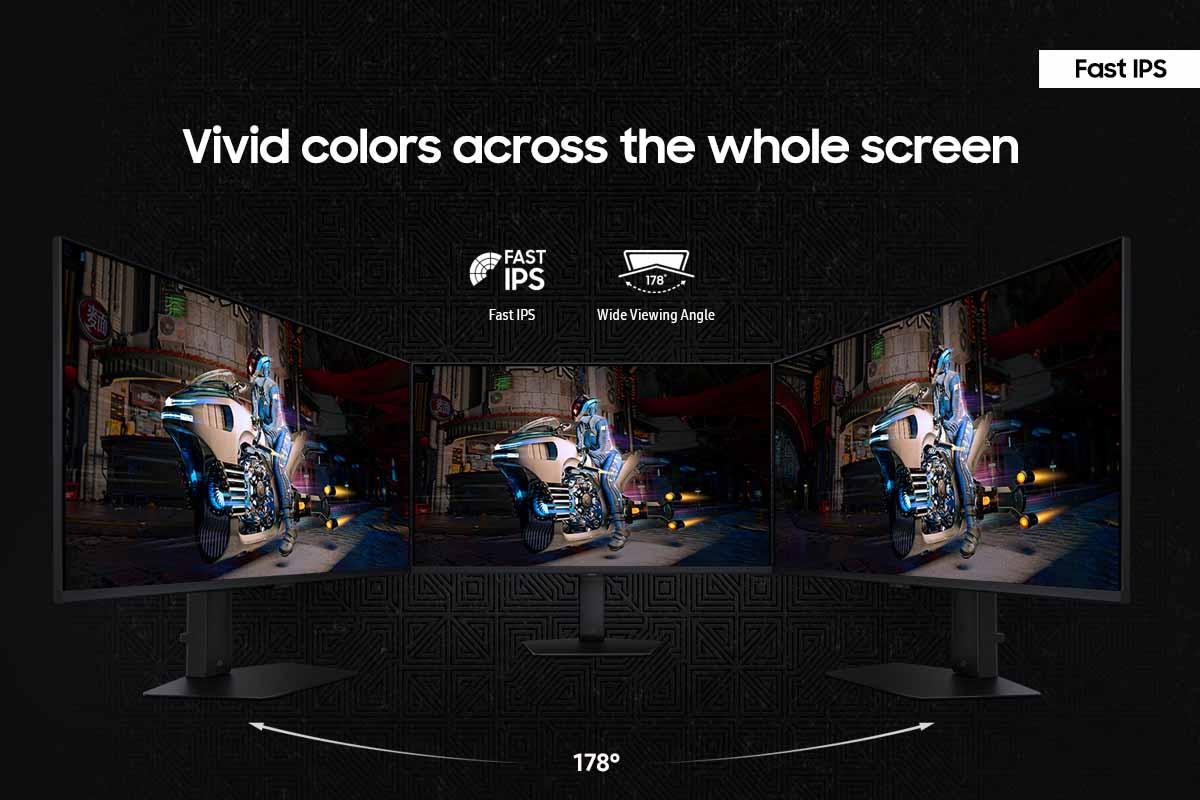
Both monitors use IPS panel technology, which stands for In-Plane Switching. This technology delivers consistent colors from wide viewing angles—you won't see colors shift when you move your head or view the screen from the side. Traditional gaming panels used TN (Twisted Nematic) technology for speed but sacrificed color quality. Modern Fast IPS panels, like what both monitors use, bridge this gap by maintaining good color reproduction while achieving the fast response times gamers demand.
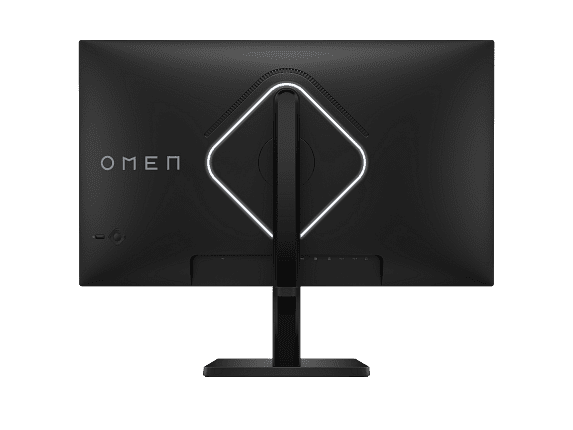
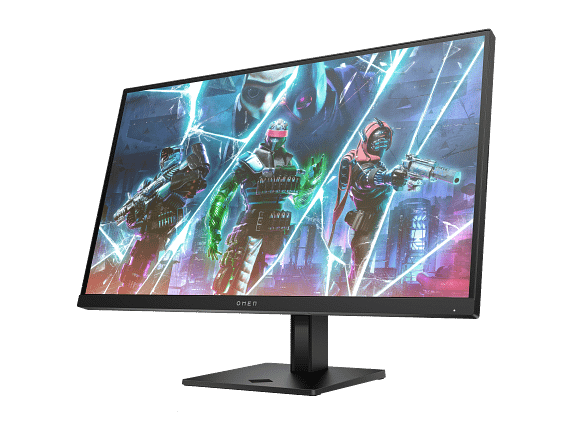
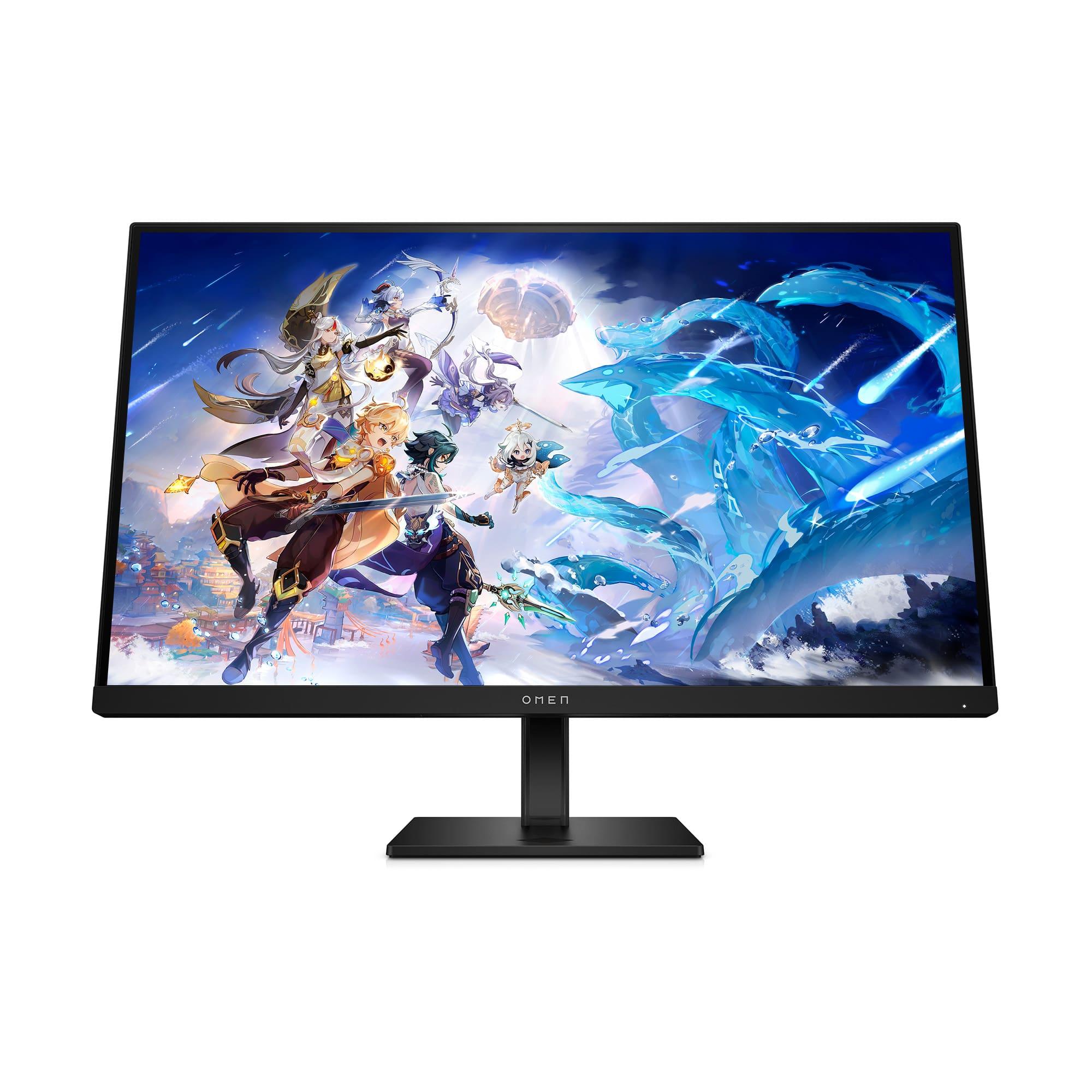
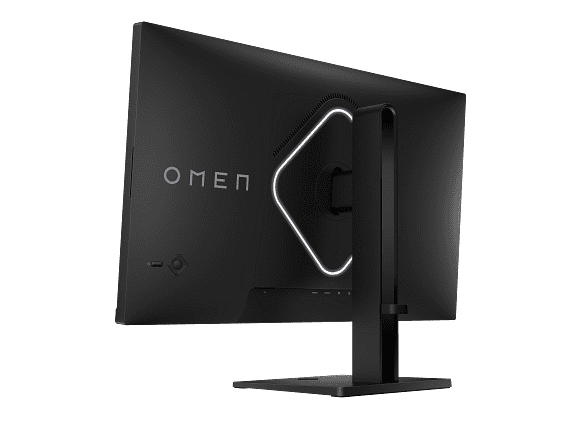
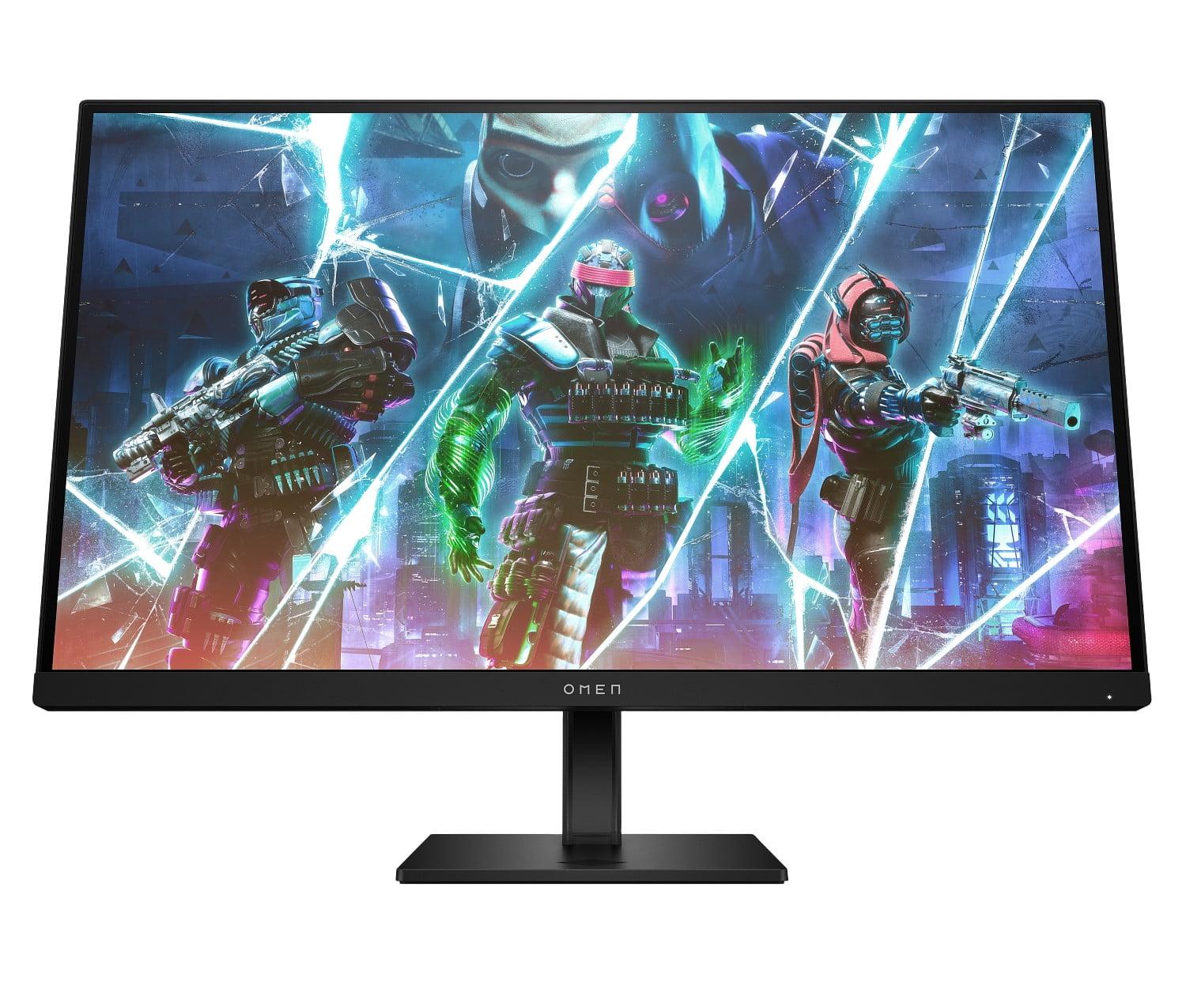
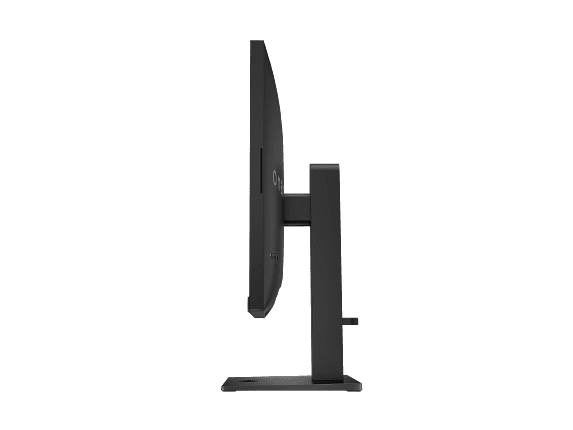
The HP OMEN 27s, released in 2023, represents HP's focused approach to competitive gaming. It's a 27-inch monitor that prioritizes frame rate above all else, pushing a 240Hz refresh rate at 1920x1080 resolution—what we call Full HD or FHD. Think of it as the sports car of gaming monitors: built for pure performance.
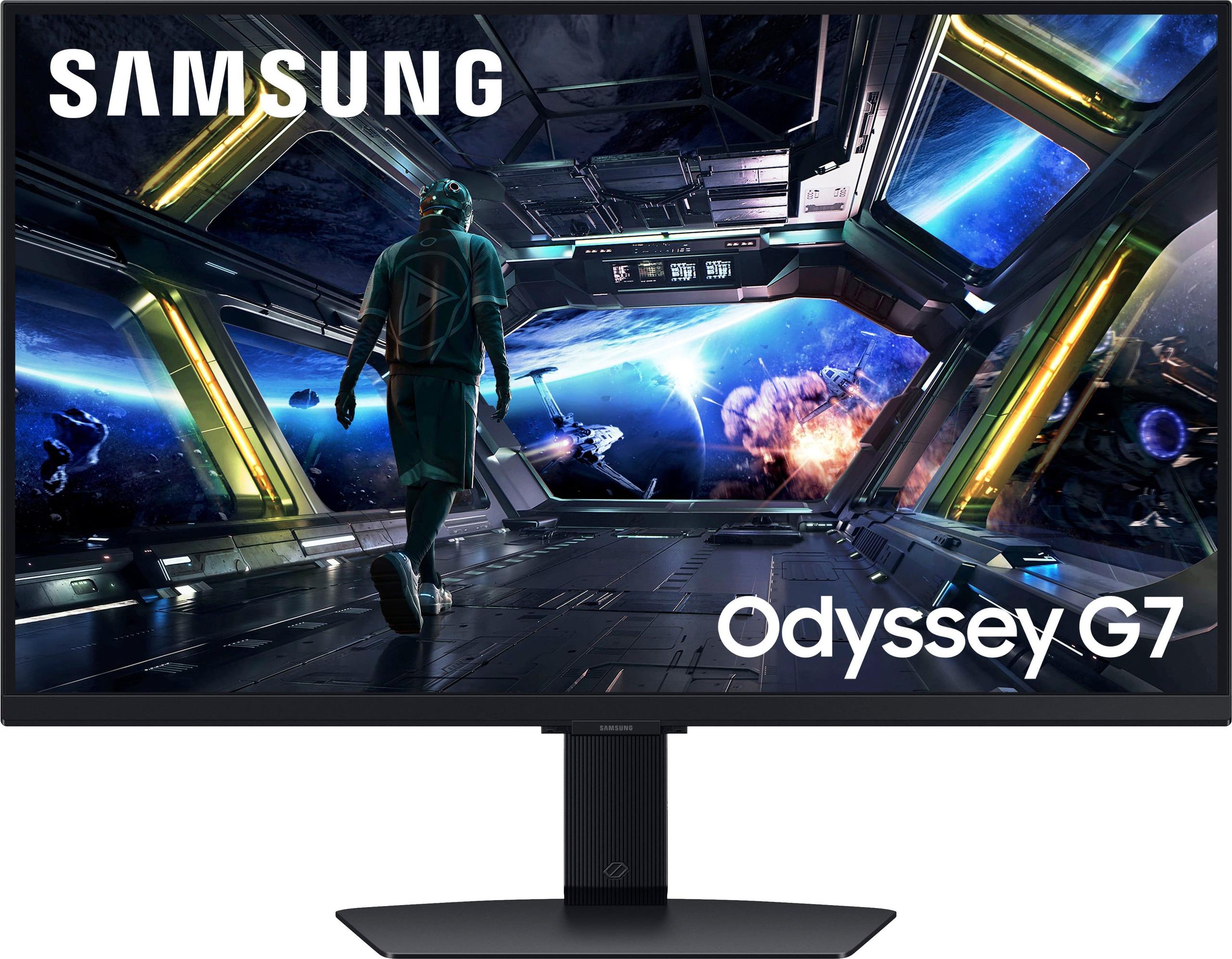
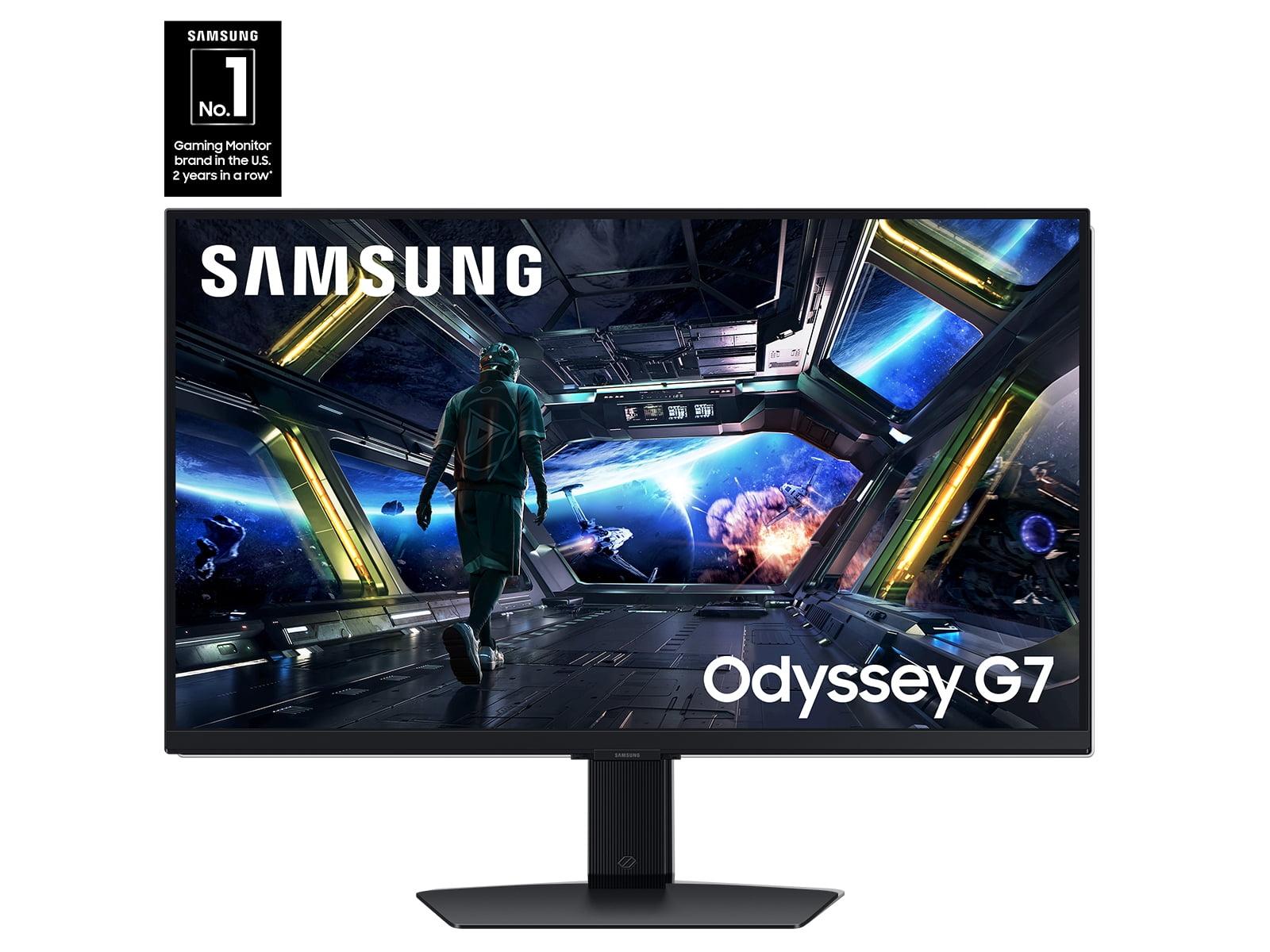
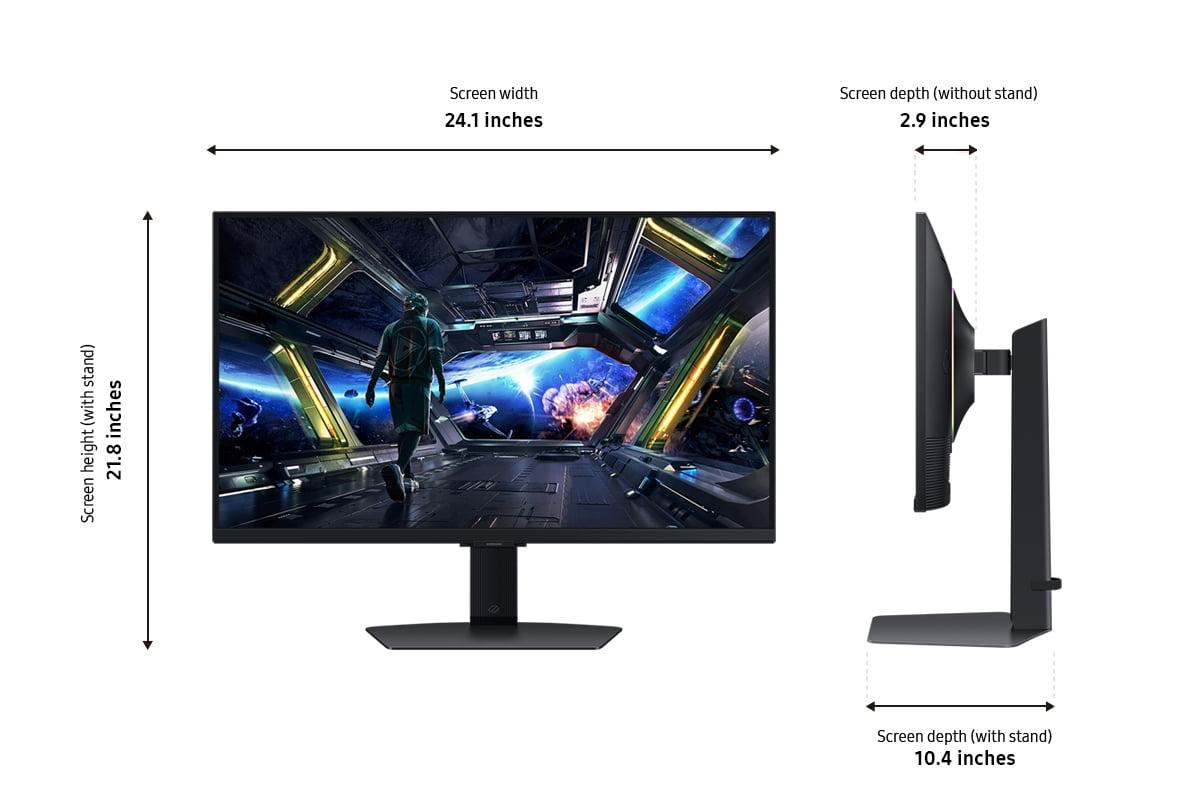
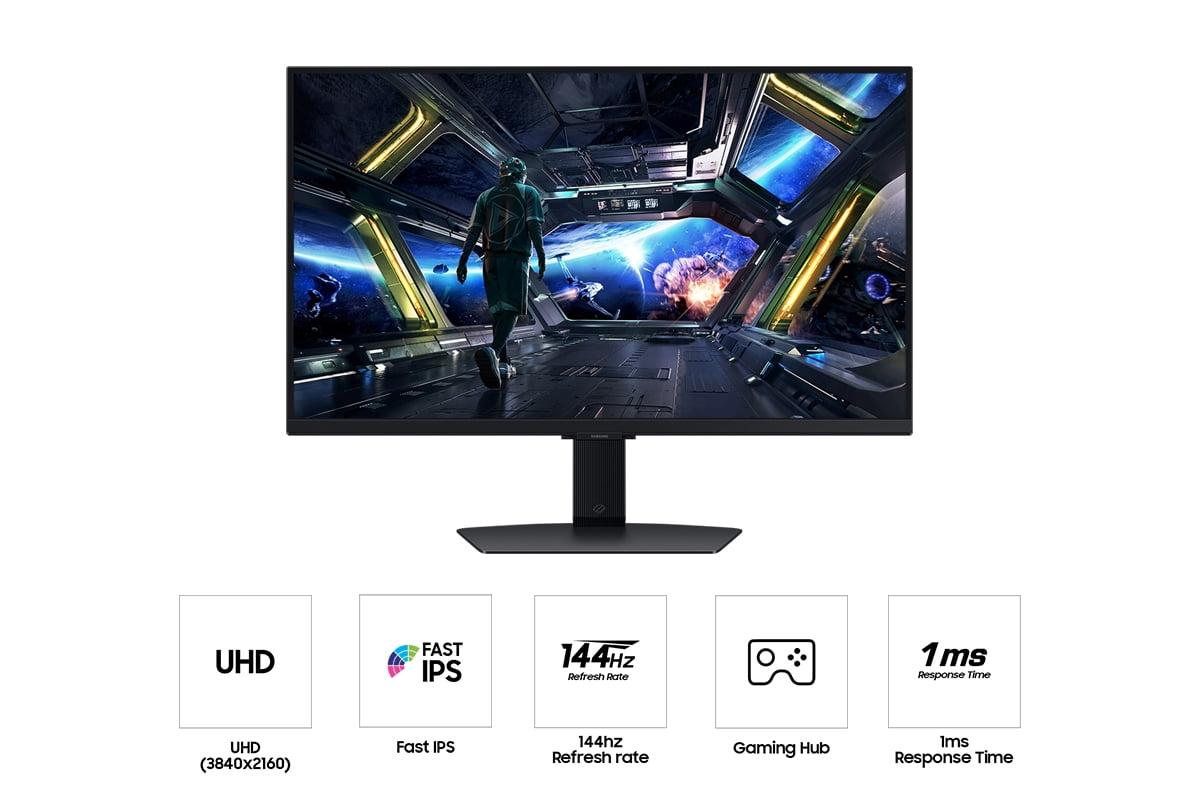
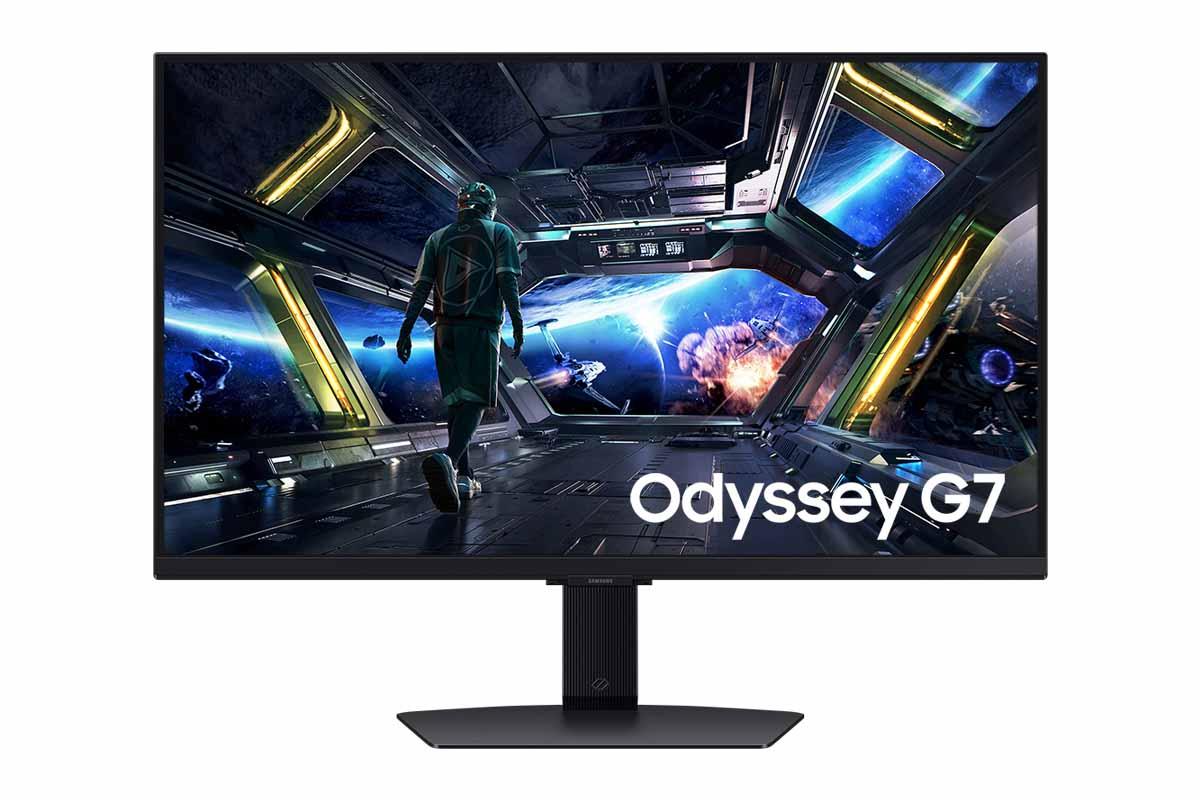
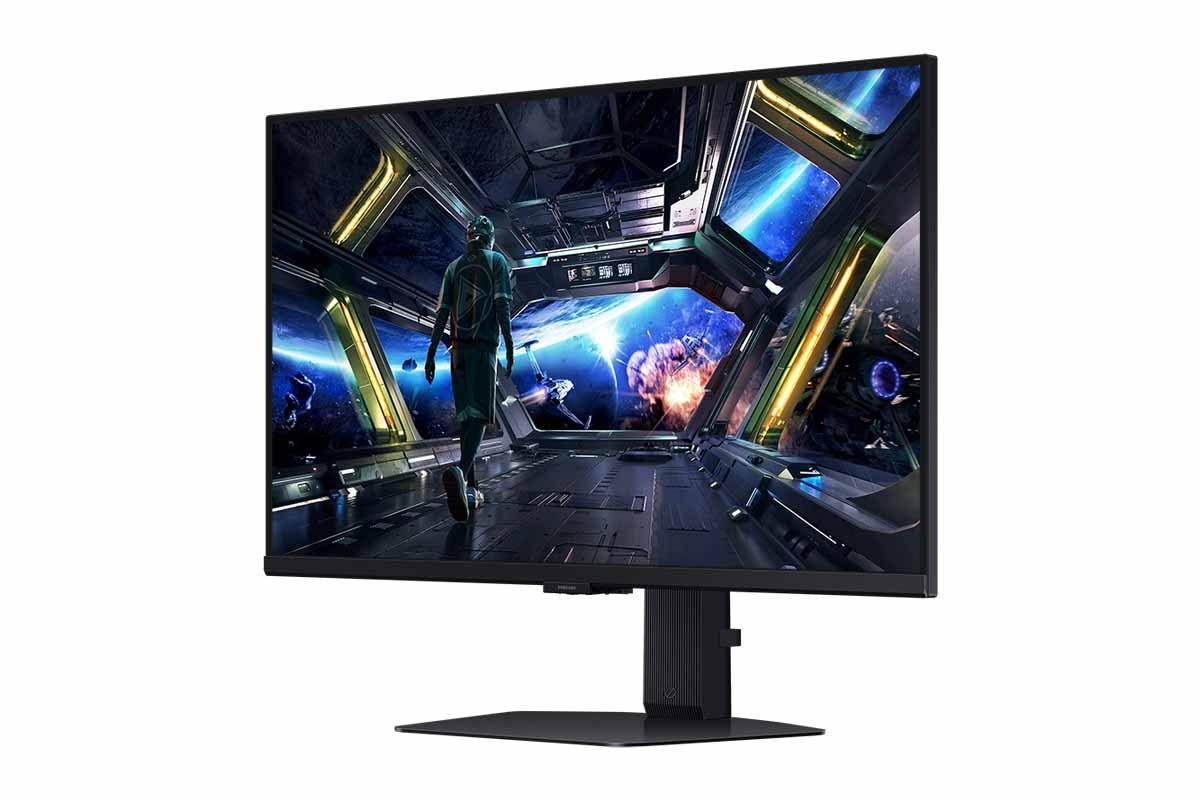
The Samsung Odyssey G7 G70D, launched in early 2024, takes a different approach. It's also 27 inches but runs at 4K resolution (3840x2160) with a 144Hz refresh rate. This monitor is more like a luxury sedan—it delivers excellent performance while offering premium features and visual quality that extend beyond gaming.
At the time of writing, you'll typically find the HP OMEN 27s priced significantly lower than the Samsung G70D, which reflects their different market positions. The Samsung commands a premium for its 4K resolution and smart features, while the HP offers exceptional value for pure gaming performance.
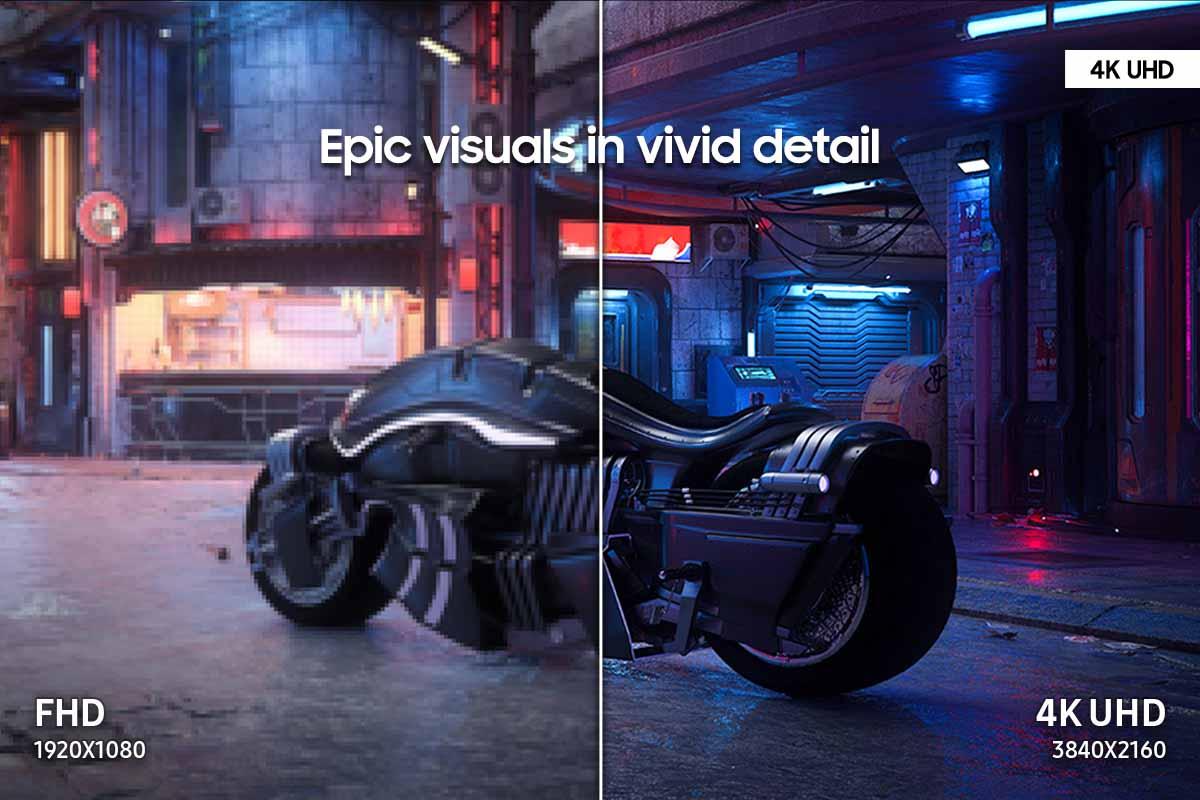
The resolution difference between these monitors is dramatic. The Samsung G70D packs four times as many pixels as the HP OMEN 27s—that's the difference between 2.1 million pixels and 8.3 million pixels filling the same 27-inch screen.
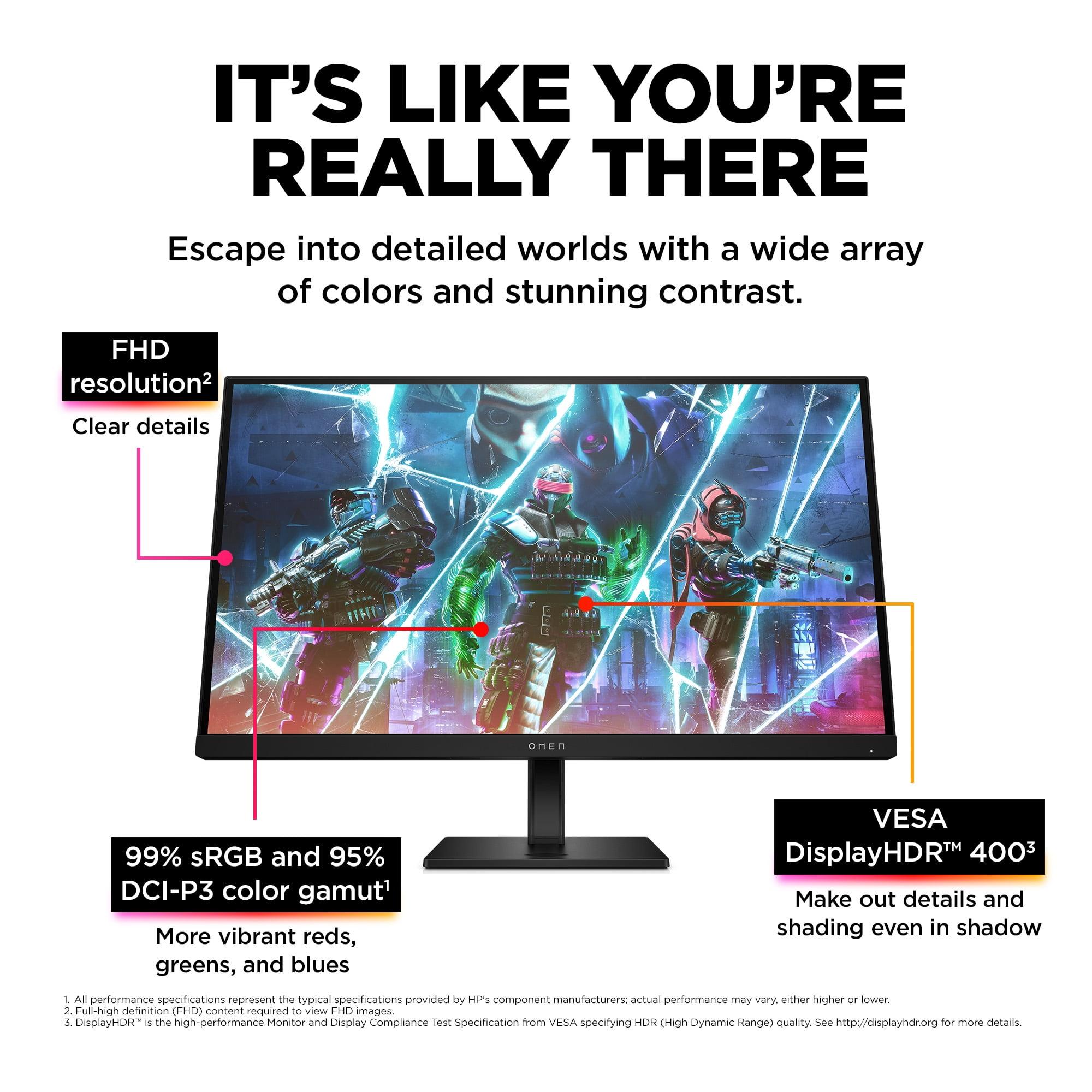
What does this mean in practice? Text on the Samsung appears razor-sharp, like reading a printed page. Games show incredible detail—you can make out individual leaves on distant trees, read small text without squinting, and appreciate fine textures in character models and environments. The pixel density of 163 pixels per inch (PPI) on the Samsung approaches what you'd find on high-quality printed materials.
The HP OMEN 27s, at 82 PPI, shows more visible pixel structure when you sit at normal desktop distances (about arm's length from the screen). Text has slight jaggedness around curves, and fine details in games appear softer. However, this isn't necessarily a disadvantage—many competitive gamers actually prefer lower resolutions because they make targets appear larger and easier to spot.
Both monitors cover excellent color ranges. The HP OMEN 27s reproduces 99% of the sRGB color space (the standard for most content) and 95% of DCI-P3 (a wider color space used in movies and modern games). The Samsung G70D offers similar coverage but adds HDR support through VESA DisplayHDR 400 certification, meaning it can display a wider range of brightness levels for more realistic lighting in supported content.
Here's where things get interesting: the Samsung includes an NQM AI Processor that upscales lower-resolution content. When you're watching 1080p YouTube videos or playing older games, this chip analyzes the image and intelligently adds detail to make it look closer to native 4K. It's like having a smart assistant that makes everything look better than it originally was.
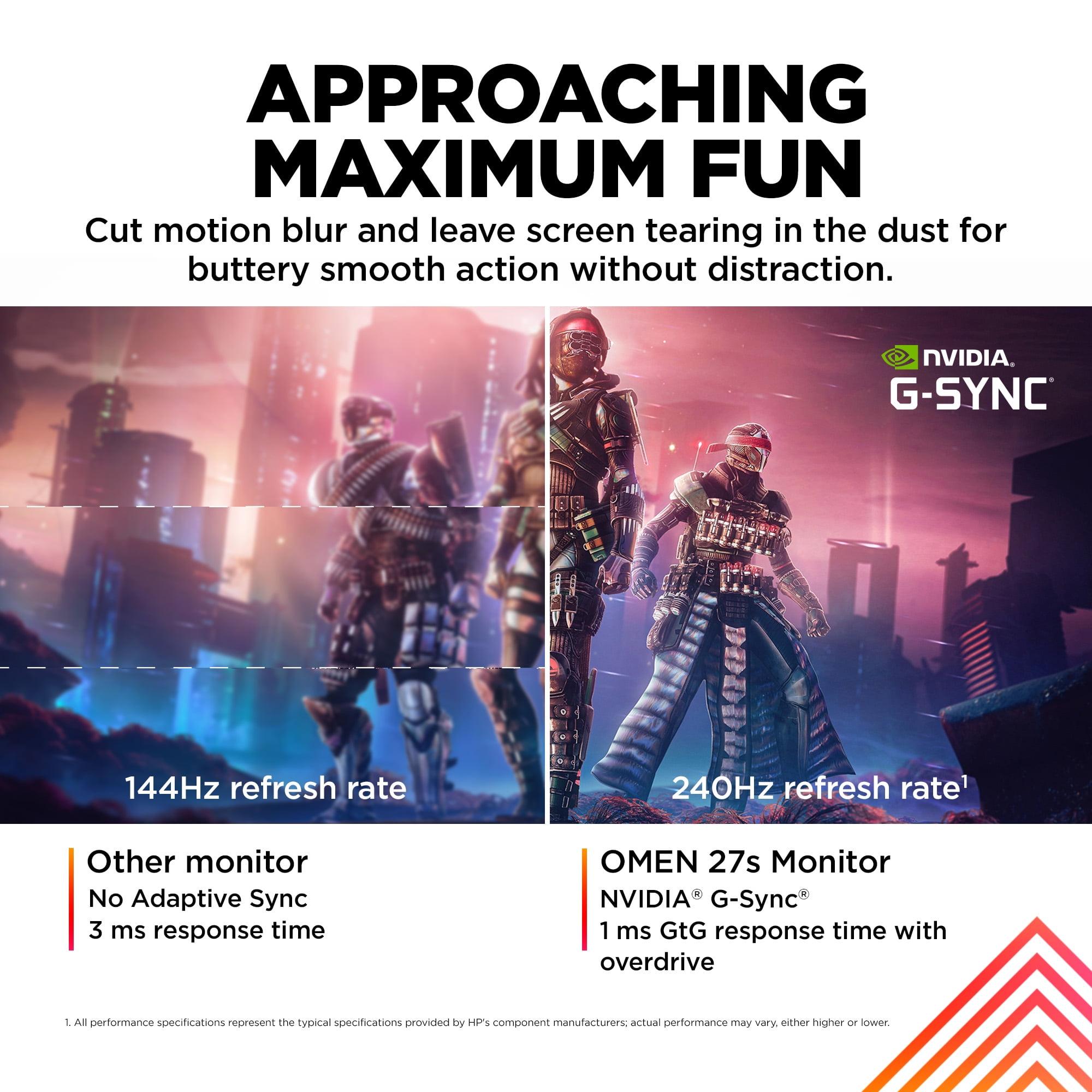
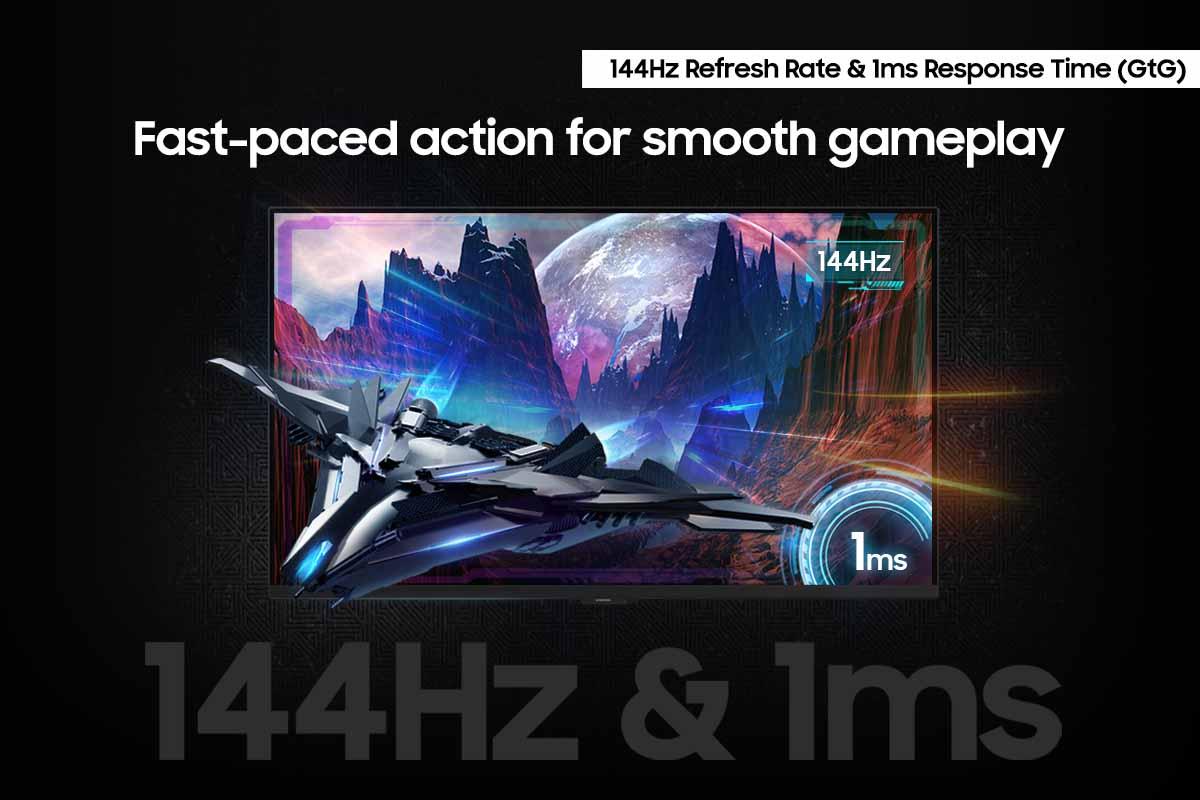
This is where the fundamental philosophical difference becomes clear. The HP OMEN 27s refreshes its image 240 times per second, while the Samsung G70D manages 144Hz. Both numbers are excellent—standard monitors typically run at 60Hz—but the difference matters for specific types of gaming.
At 240Hz, the HP OMEN 27s updates every 4.17 milliseconds. At 144Hz, the Samsung G70D updates every 6.94 milliseconds. That 2.77-millisecond difference might sound tiny, but in competitive gaming where reactions are measured in milliseconds, it can provide a genuine advantage.
Think of it like high-speed photography. A 240Hz monitor captures more "frames" of motion, making tracking moving targets smoother and reducing the blur when you quickly turn your character. Professional esports players often swear by 240Hz displays because they can spot enemies emerging from cover or track fast-moving targets with greater precision.
Both monitors achieve 1ms gray-to-gray (GtG) response times, which measures how quickly pixels can change from one shade of gray to another. This spec helps prevent ghosting—the visual trail that fast-moving objects sometimes leave behind. However, the HP OMEN 27s includes VESA ClearMR 6000 certification, which is a newer standard that measures motion clarity more comprehensively than simple response time measurements.
Both monitors support adaptive sync technologies, which synchronize the monitor's refresh rate with your graphics card's frame output. This eliminates screen tearing (when parts of different frames display simultaneously, creating a horizontal line across the image) and reduces stuttering.
The HP OMEN 27s supports both NVIDIA G-SYNC Compatible and AMD FreeSync Premium, making it work well with graphics cards from both manufacturers. Its variable refresh rate operates from 60Hz to 240Hz via DisplayPort, giving you a wide range of smooth gaming even when frame rates fluctuate.
The Samsung G70D focuses on AMD FreeSync Premium but adds some unique gaming features. Its Dynamic Black Equalizer uses artificial intelligence to analyze dark scenes in games and automatically brighten shadow areas without affecting the rest of the image. This can give you a competitive advantage in games where enemies hide in dark corners—you'll spot them while they can't see you.
The Samsung also includes what it calls "simulated ultrawide gaming," which crops the top and bottom of the image to create a 21:9 aspect ratio experience on the 16:9 panel. While not as immersive as a true ultrawide monitor, it can provide a wider field of view in supported games.
For competitive gaming, the HP OMEN 27s includes customizable crosshairs through HP's OMEN Gaming Hub software. You can overlay different crosshair styles and colors on any game, which is particularly useful for titles with poor default crosshairs or when you want consistency across different games.
Here's where the Samsung G70D truly differentiates itself. It's not just a gaming monitor—it's a smart display that can function independently of your computer. Samsung's Gaming Hub provides access to cloud gaming services like Xbox Game Pass Ultimate and NVIDIA GeForce Now without needing a console or powerful PC. You can literally game with just the monitor, a controller, and an internet connection.
The Samsung includes a full smart TV interface with streaming apps, a remote control, and even Bluetooth connectivity for wireless headphones. This makes it viable as a bedroom or dorm room entertainment center that happens to be an excellent gaming monitor.
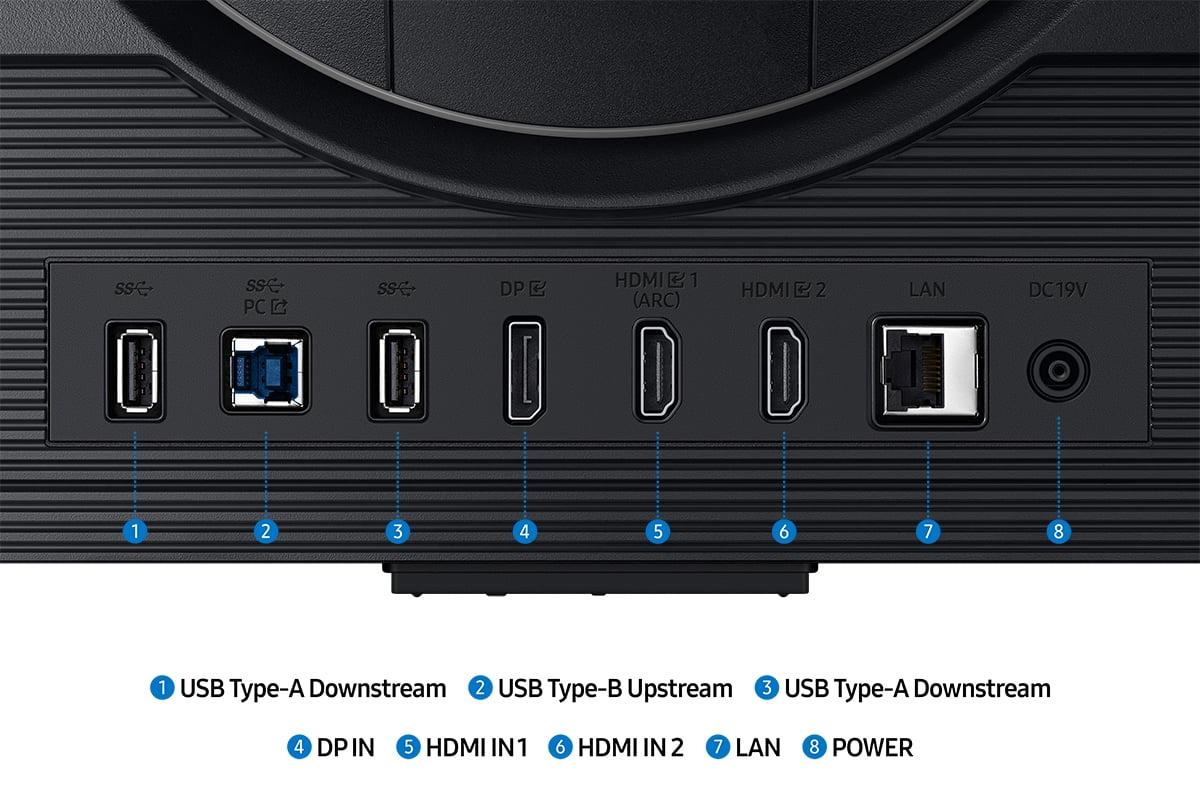
Both monitors include USB hubs, but they serve different purposes. The HP OMEN 27s provides two USB-A ports primarily for connecting gaming peripherals like your mouse and keyboard directly to the monitor. The Samsung G70D also includes USB ports but integrates them into its broader ecosystem of smart features and device connectivity.
For audio, both monitors include built-in speakers, though neither is particularly impressive. The HP OMEN 27s has dual 3-watt speakers that handle system sounds adequately but won't satisfy serious gamers or movie watchers. You'll want dedicated speakers or headphones for the best experience with either monitor.
For competitive esports titles like Counter-Strike 2, Valorant, or League of Legends, the HP OMEN 27s holds significant advantages. These games benefit enormously from high refresh rates and low input lag, and they're optimized to run at high frame rates on modest hardware. The lower resolution means your graphics card can easily push 200+ frames per second, taking full advantage of the 240Hz capability.
Professional esports players often prefer FHD resolution in these games anyway. Lower resolution makes character models appear larger on screen, potentially making them easier to spot and target. The HP OMEN 27s also includes features specifically designed for competitive gaming, like reduced input lag modes and gaming-optimized color presets.
For AAA single-player games like Cyberpunk 2077, Red Dead Redemption 2, or Microsoft Flight Simulator, the Samsung G70D provides a dramatically better experience. These games are designed to showcase visual fidelity, and 4K resolution reveals details that simply aren't visible at 1080p. Textures appear crisp, environments look more realistic, and the overall immersion improves significantly.
The Samsung's HDR support, while not as advanced as premium TVs, still adds value in supported games. You'll notice better contrast in scenes with both bright skies and dark shadows, and colors appear more vibrant and realistic.
For content creation or productivity work, the Samsung G70D excels due to its high pixel density. Text appears sharp, and you can fit more content on screen without sacrificing readability. If you plan to use your monitor for work, homework, or creative projects alongside gaming, the 4K resolution provides tangible benefits.
Your graphics card significantly influences which monitor makes sense. For the HP OMEN 27s to shine, you need hardware capable of pushing 200+ frames per second in your favorite games. A mid-range card like the RTX 4060 or RX 7600 can easily achieve this in competitive titles, making the HP an excellent choice for gamers who want maximum performance without requiring the most expensive graphics cards.
The Samsung G70D demands more GPU horsepower. To take advantage of 4K gaming, you'll want at least an RTX 4070 or RX 7800 XT, and even these cards might require reducing some settings in the most demanding games to maintain smooth frame rates. However, the Samsung offers better future-proofing—as graphics cards become more powerful and affordable, you'll be able to increase settings and maintain excellent performance for years to come.
Consider your upgrade timeline. If you plan to keep your current graphics card for 2-3 years, the HP OMEN 27s might provide better immediate satisfaction. If you're planning to upgrade your GPU soon or want a monitor that will remain impressive for 5+ years, the Samsung G70D makes more sense.
While both are primarily gaming monitors, they can serve double duty in entertainment setups. The Samsung G70D is naturally better suited for this role thanks to its smart TV features, 4K resolution, and HDR support. It can replace a small TV in a bedroom or office setup, providing access to streaming services and decent picture quality for movies and shows.
The Samsung's larger color gamut and HDR certification mean movies and shows appear more vibrant and realistic. The 4K resolution ensures you can sit closer to the screen without seeing individual pixels, which is important for TV-style viewing.
The HP OMEN 27s, while lacking smart features, still works well for streaming content from a connected device. Its excellent color reproduction ensures movies look good, though the FHD resolution and lack of HDR limit its appeal for premium content viewing.
Choose the HP OMEN 27s if you're primarily a competitive gamer who values performance over everything else. It's perfect for esports enthusiasts, players with mid-range graphics cards who want maximum frame rates, and anyone who prioritizes responsive, smooth gameplay over visual fidelity. At the time of writing, it also represents significantly better value for pure gaming performance.
The Samsung Odyssey G7 G70D makes sense for gamers who want the best overall visual experience and appreciate premium features. It's ideal for players who enjoy AAA single-player games, anyone who wants a monitor that can double as entertainment center, and users planning to upgrade their graphics cards in the near future. While more expensive, it offers considerably more versatility and future-proofing.
Both monitors excel in their intended roles, but they serve different gaming philosophies. The HP prioritizes competitive advantage and value, while the Samsung emphasizes visual quality and versatility. Your choice should reflect not just your current gaming habits, but how you expect them to evolve over the next few years.
| HP OMEN 27s FHD 240Hz Gaming Monitor | Samsung 27" Odyssey G7 G70D 4K UHD IPS Gaming Monitor |
|---|---|
| Display Resolution - Determines image sharpness and GPU requirements | |
| 1920 x 1080 (FHD) - Easier on GPUs, preferred for competitive gaming | 3840 x 2160 (4K UHD) - 4x sharper image, excellent for AAA games and productivity |
| Refresh Rate - Critical for smooth motion and competitive advantage | |
| 240Hz - Ultra-smooth for esports, significant competitive edge | 144Hz - Excellent for most gaming, balances smoothness with 4K performance |
| Response Time - Affects motion blur and ghosting | |
| 1ms GtG with VESA ClearMR 6000 certification | 1ms GtG with Fast IPS technology |
| Panel Technology - Impacts color quality and viewing angles | |
| IPS with 178° viewing angles, 99% sRGB coverage | Fast IPS with 178° viewing angles, similar color accuracy |
| Adaptive Sync - Eliminates screen tearing | |
| NVIDIA G-SYNC Compatible + AMD FreeSync Premium | AMD FreeSync Premium (no G-SYNC compatibility) |
| HDR Support - Enhanced contrast and color range | |
| VESA DisplayHDR 400 basic HDR support | VESA DisplayHDR 400 + HDR10+ Gaming support |
| Smart Features - Extra functionality beyond gaming | |
| Basic gaming features via OMEN Gaming Hub | Full Smart TV OS, Gaming Hub, cloud gaming, streaming apps |
| Connectivity - Ports and device compatibility | |
| 2x HDMI 2.0, 1x DisplayPort 1.4, USB hub | HDMI 2.1 support, DisplayPort, USB hub, Bluetooth |
| Target Graphics Card Requirements - Hardware needed for optimal performance | |
| RTX 3060/RX 6600 XT or better for 240Hz gaming | RTX 4070/RX 7800 XT or better for 4K high-refresh gaming |
| Best Use Cases - Who should choose this monitor | |
| Competitive esports, mid-range builds, maximum frame rates | AAA gaming, content creation, entertainment center, future-proofing |
| Ergonomics - Adjustability and comfort features | |
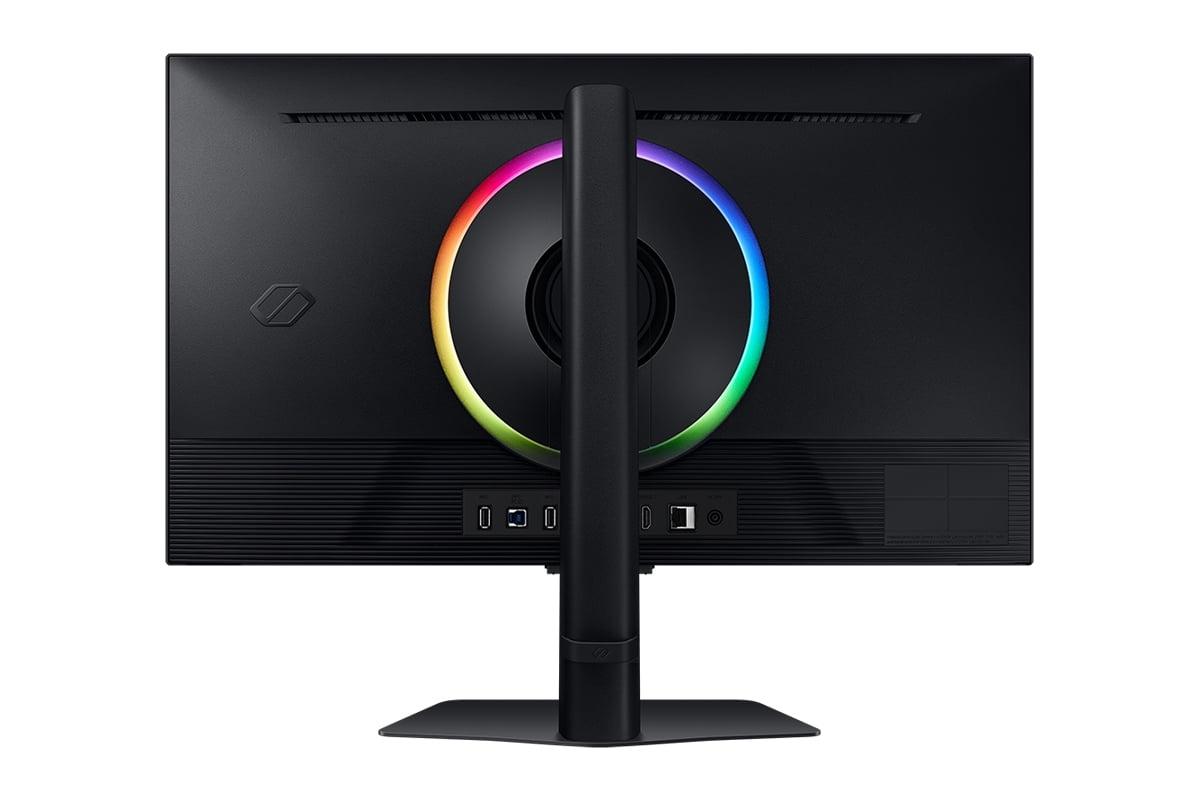
| Full adjustment: height, tilt, pivot, swivel | Full adjustment: height, tilt, pivot, swivel + ambient lighting |
| Unique Selling Points - What sets each apart | |
| Highest refresh rate, excellent value, competitive focus | 4K resolution, AI upscaling, smart TV features, premium experience |
The HP OMEN 27s FHD 240Hz Gaming Monitor is significantly better for competitive gaming. Its 240Hz refresh rate provides ultra-smooth motion that's crucial for esports titles like Counter-Strike, Valorant, and League of Legends. The lower FHD resolution also means your graphics card can easily push 200+ frames per second, taking full advantage of the high refresh rate. Professional esports players often prefer FHD resolution because it makes targets appear larger and easier to spot.
The primary difference is resolution versus refresh rate. The HP OMEN 27s focuses on maximum speed with 240Hz refresh rate at 1080p resolution, while the Samsung Odyssey G7 G70D prioritizes visual quality with 4K resolution at 144Hz. This represents two different gaming philosophies: competitive performance versus immersive visual experience.
The Samsung Odyssey G7 G70D 4K UHD IPS Gaming Monitor delivers dramatically better image quality with four times more pixels than the HP model. Text appears razor-sharp, game textures show incredible detail, and the overall visual experience is much more immersive. It also includes HDR support and AI upscaling technology that enhances lower-resolution content.
The HP OMEN 27s works well with mid-range graphics cards like the RTX 4060 or RX 7600, making it accessible for most gaming builds. The Samsung G70D requires more powerful hardware—at least an RTX 4070 or RX 7800 XT—to take full advantage of 4K gaming. Your graphics card choice significantly impacts which monitor makes sense.
The Samsung Odyssey G7 G70D excels for AAA single-player games like Cyberpunk 2077 and Red Dead Redemption 2. The 4K resolution reveals incredible detail in game environments, character models, and textures that simply aren't visible at 1080p. Combined with HDR support, it provides a much more immersive gaming experience for story-driven games.
Yes, the Samsung Odyssey G7 G70D can effectively replace a small TV thanks to its built-in Smart TV features, streaming apps, remote control, and 4K resolution. It includes access to Netflix, YouTube, and other services without needing a separate device. The HP OMEN 27s lacks these smart features and is primarily designed as a dedicated gaming monitor.
The HP OMEN 27s FHD 240Hz Gaming Monitor typically offers better value for pure gaming performance, especially for competitive players. It delivers exceptional refresh rates without requiring expensive graphics cards. The Samsung G70D costs more but provides additional features like 4K resolution, smart TV capabilities, and future-proofing that justify the premium for users who want versatility.
The HP OMEN 27s supports up to 240Hz refresh rate with variable refresh from 60-240Hz via DisplayPort. The Samsung Odyssey G7 G70D maxes out at 144Hz but maintains this high refresh rate even at 4K resolution, which is impressive for such high pixel density.
Both monitors support VESA DisplayHDR 400, but the Samsung G70D offers more advanced HDR features including HDR10+ Gaming support. While neither provides premium HDR experiences like high-end TVs, the Samsung's implementation is more comprehensive and provides better contrast and color enhancement in supported games.
The Samsung Odyssey G7 G70D 4K UHD IPS Gaming Monitor is superior for content creation and productivity work. The 4K resolution provides sharp text that's comfortable for extended reading and editing, while the high pixel density allows you to fit more content on screen. The HP OMEN 27s shows more visible pixels at normal desktop viewing distances.
The HP OMEN 27s focuses on competitive gaming features like customizable crosshairs, VESA ClearMR certification for motion clarity, and dual adaptive sync support. The Samsung G70D includes advanced gaming tools like Dynamic Black Equalizer for better visibility in dark scenes, simulated ultrawide gaming modes, and comprehensive on-screen gaming indicators.
The Samsung Odyssey G7 G70D offers better future-proofing with its 4K resolution, HDMI 2.1 support for next-gen consoles, and smart TV features that will remain relevant for years. As graphics cards become more powerful, you'll be able to increase game settings while maintaining excellent performance. The HP OMEN 27s is optimized for current competitive gaming but may feel dated sooner due to its FHD resolution.
We've done our best to create useful and informative comparisons to help you decide what product to buy. Our research uses advanced automated methods to create this comparison and perfection is not possible - please contact us for corrections or questions. These are the sites we've researched in the creation of this article: bestbuy.com - hp.com - shi.com - hp.com - bestbuy.com - hp.com - tomshardware.com - hp.com - rtings.com - hp.com - displayspecifications.com - support.hp.com - publicsector.shidirect.com - objects.icecat.biz - files.bbystatic.com - hp.com - displayspecifications.com - bestbuy.com - typectechreviews.com - rtings.com - rtings.com - youtube.com - youtube.com - samsung.com - samsung.com - samsung.com - bhphotovideo.com - samsung.com - samsung.com - versus.com - abt.com - abt.com - bestbuy.com - bhphotovideo.com - youtube.com - abt.com

Privacy Policy
Terms and Conditions - Affiliate Policy
Home Security
© Copyright 2008-2026.
11816 Inwood Rd #1211, Dallas, TX 75244