


The portable projector market has exploded in recent years, driven by our appetite for big-screen entertainment without the commitment of a dedicated home theater. Gone are the days when projectors meant heavy, noisy boxes that required professional installation. Today's smart portable projectors pack streaming services, automatic setup, and surprisingly good image quality into packages you can carry with one hand.
But here's the thing about portable projectors: they're all about trade-offs. Want brighter images? You'll sacrifice portability. Need ultra-compact design? You'll give up some audio power. The TCL C1 Google TV Portable Projector and Aurzen BOOM Mini Smart Projector represent two different philosophies in this balancing act, and understanding their approaches will help you pick the right one for your needs.
Before diving into specifics, let's talk about what makes or breaks a portable projector experience. The most critical factor is brightness, measured in lumens—think of this as the projector's ability to produce a viewable image in different lighting conditions. A projector with 200 lumens might look fantastic in a pitch-black room but disappear completely with even modest ambient lighting.
Next comes resolution and image quality. While both our contenders offer native 1080p (that's 1920x1080 pixels), the way they handle colors, contrast, and motion varies significantly. Contrast ratio—the difference between the darkest blacks and brightest whites—dramatically affects how cinematic your viewing experience feels.
Smart features have become equally important. Built-in operating systems like Google TV eliminate the need for streaming sticks or dongles, but only if they work reliably. Auto-focus and keystone correction (automatically fixing trapezoid-shaped images when projecting at angles) can mean the difference between a five-minute setup and a frustrating twenty-minute ordeal.
Audio integration rounds out the essentials. While you could always connect external speakers, built-in audio that actually sounds good transforms these devices from projectors into complete entertainment systems.
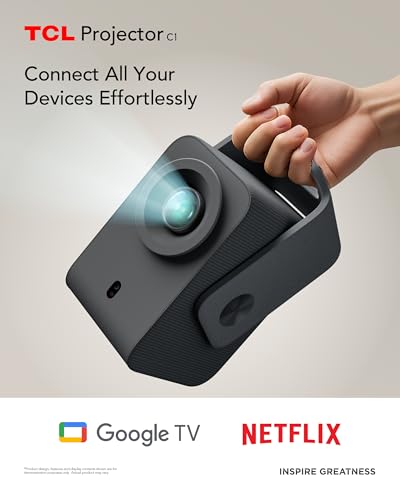
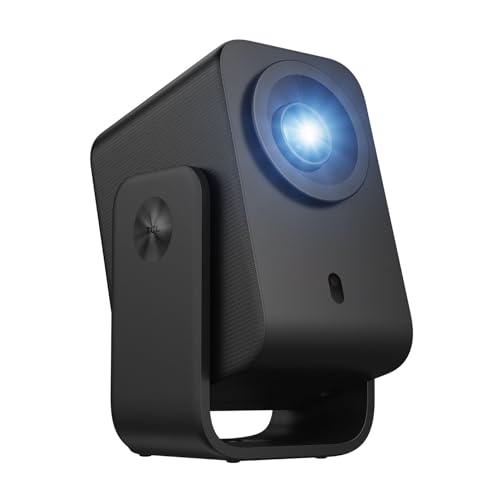
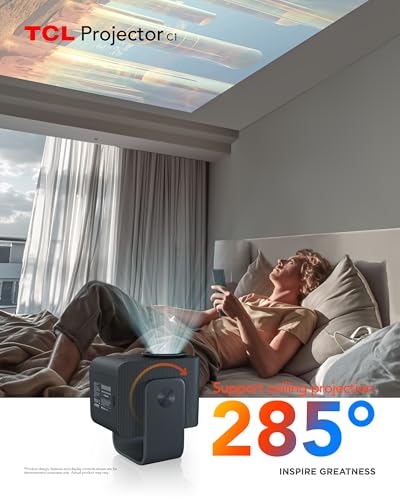
Released in 2024, the TCL C1 represents TCL's attempt to solve portable projection's biggest problem: awkward positioning. Their solution? An integrated gimbal system that lets you rotate the projector 285 degrees without moving its base. This isn't just a fancy stand—it's a fundamental reimagining of how portable projectors should work.
The gimbal design enables something most projectors can't do easily: ceiling projection. Want to watch movies while lying in bed? The TCL C1 can project directly overhead without complex mounting or precarious positioning. This flexibility extends to wall projection at unusual angles, making it genuinely useful in spaces where traditional projectors would struggle.
The TCL C1 delivers 230 ISO lumens of brightness. ISO lumens represent a standardized measurement that's typically more conservative than manufacturer claims, so this rating suggests honest performance expectations. In practical terms, 230 ISO lumens works beautifully in dark rooms but requires dimmed lighting for optimal viewing.
Where the TCL C1 truly shines is contrast ratio—at 1500:1, it produces noticeably deeper blacks than most portable projectors. This matters more than you might think. Good contrast makes movie scenes feel more immersive and prevents that "washed out" look common in budget projectors. TCL's TrueHue technology actively optimizes colors and contrast frame-by-frame, essentially processing each moment of video to look its best.
The sealed optical engine design deserves special mention. Most budget projectors suffer from dust infiltration over time, gradually degrading image quality as particles settle on internal lenses. The TCL C1's sealed system prevents this degradation, maintaining image quality for years without professional cleaning.
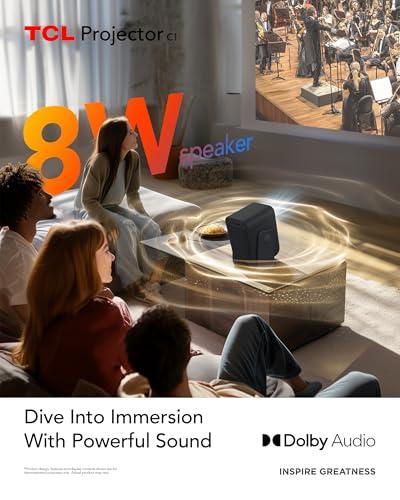
The built-in 8-watt speaker with Dolby Audio processing punches above its weight class. While it won't replace a dedicated sound system, it's surprisingly capable for dialogue-heavy content and casual viewing. The speaker can also function as a Bluetooth speaker for music streaming from your phone.
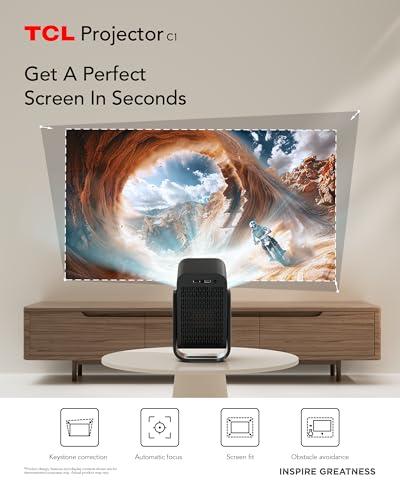
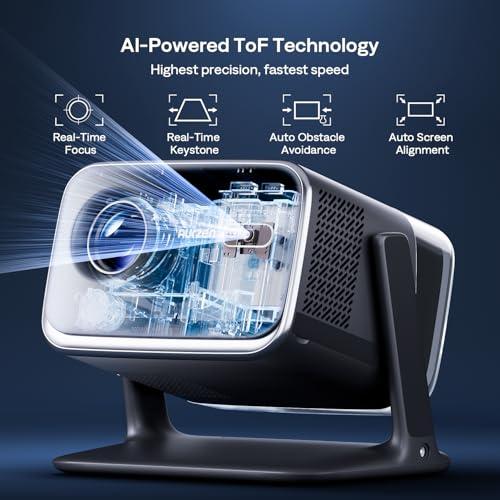
Setup automation on the TCL C1 is genuinely impressive. Auto-focus engages within seconds, automatically adjusting for sharp images regardless of distance. Omni-directional keystone correction fixes image distortion from virtually any angle, while obstacle avoidance detects objects in the projection path and adjusts accordingly. Combined with the gimbal positioning, you can literally place this projector anywhere and have it working perfectly in under thirty seconds.
The Aurzen BOOM Mini, also arriving in 2024, takes a different approach. Instead of maximizing portability, it focuses on delivering near-traditional projector performance in a still-portable form factor. The results are compelling for users who want versatility across different lighting conditions.
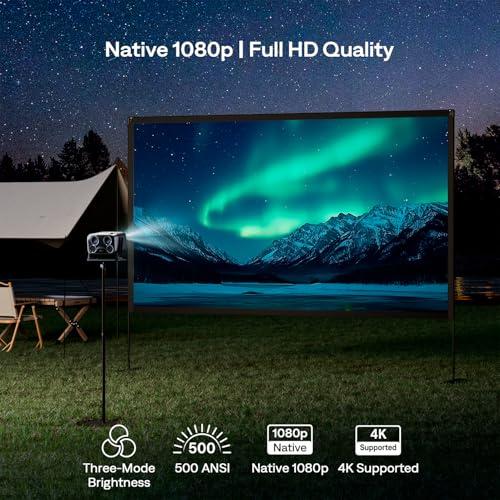
At 500 ANSI lumens, the Aurzen BOOM Mini produces more than double the light output of the TCL C1. ANSI lumens represent another standardized measurement, and this difference is transformative in real-world use. Where the TCL C1 requires darkened rooms, the Aurzen BOOM Mini remains usable with moderate ambient lighting—think table lamps or partially closed curtains during daytime.
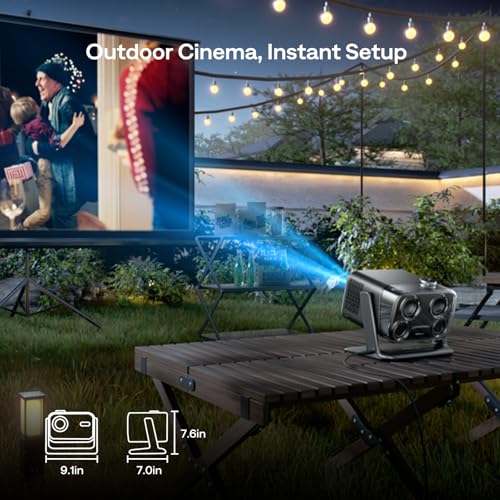
This brightness advantage extends to outdoor use, where even evening ambient light can overwhelm dimmer projectors. The Aurzen BOOM Mini maintains image quality in conditions that would render the TCL C1 unwatchable.
The trade-off comes in contrast ratio, rated at 1000:1 compared to the TCL C1's 1500:1. In dark room conditions, this difference is noticeable—blacks appear slightly grayer, and shadow detail isn't as crisp. However, the brightness advantage often compensates for this in mixed lighting conditions.
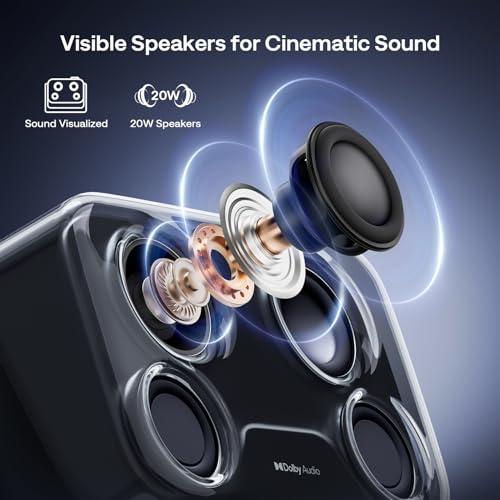
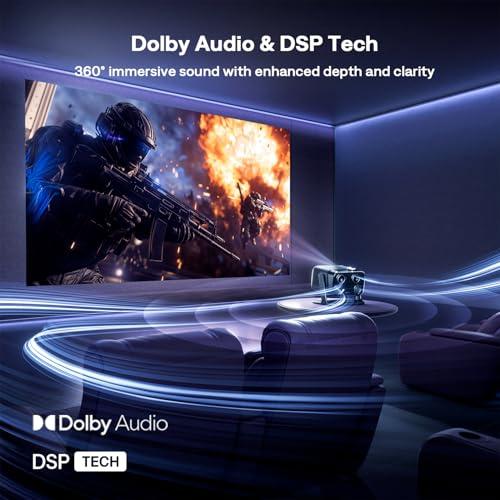
The Aurzen BOOM Mini's dual 10-watt speakers (20 watts total) represent a significant step up from typical portable projector audio. The stereo separation and bass response approach what you'd expect from a modest soundbar. For many users, this eliminates the need for external audio entirely.
The speakers utilize Dolby Audio processing and can function as a standalone Bluetooth speaker system. The difference in audio power becomes obvious with action movies or music—the Aurzen BOOM Mini fills medium-sized rooms with genuinely immersive sound.
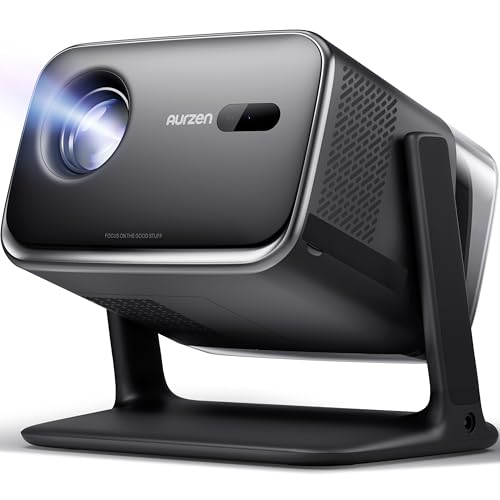
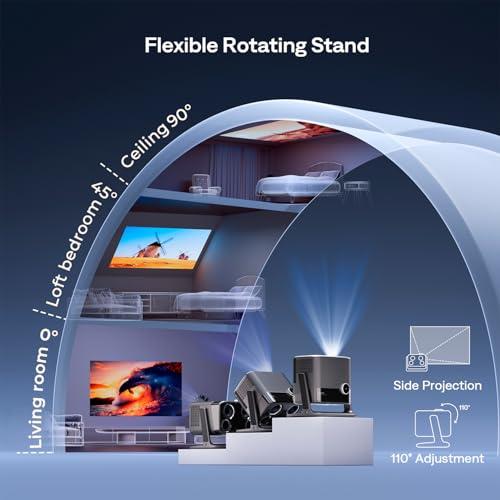
The 110-degree flexible stand provides excellent positioning options, though it lacks the TCL C1's gimbal elegance. More importantly, the Aurzen BOOM Mini supports projection sizes up to 200 inches with throw distances reaching 6 meters. This range flexibility makes it suitable for larger rooms and outdoor installations where the TCL C1's 120-inch maximum might feel constraining.
HDR10 and HLG support add another dimension to image quality. High Dynamic Range content—increasingly common on Netflix, Disney+, and other services—displays with enhanced color depth and brightness range, making compatible content more visually striking.
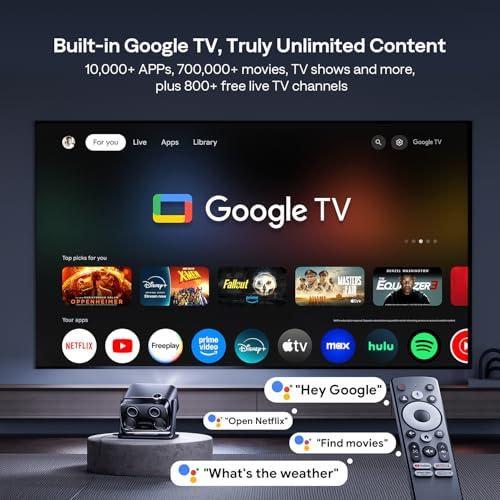
Both projectors run Google TV, but their implementations differ subtly. The TCL C1 uses Google TV version 11.1.0.33 with official Netflix certification—a significant achievement since Netflix restricts certification to devices meeting strict performance and security standards. This ensures smooth Netflix streaming without the compatibility issues that plague some portable projectors.
The Aurzen BOOM Mini features a more powerful MT9630 processor paired with the same 2GB RAM and 16GB storage configuration. In practice, both handle streaming apps reliably, though the Aurzen BOOM Mini's processor provides slightly snappier interface navigation and app switching.
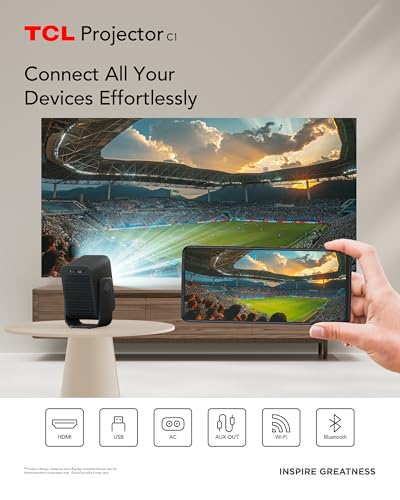
Connectivity options favor the Aurzen BOOM Mini with dual USB ports versus the TCL C1's single USB connection. Both include HDMI inputs, Wi-Fi, Bluetooth, and 3.5mm audio outputs, but the extra USB port proves useful for simultaneous device connections or expanded storage.
In dedicated dark room viewing, the TCL C1 creates a more cinematic experience. The superior contrast ratio produces deeper blacks that make movie scenes more immersive. Colors appear more saturated, and shadow detail remains visible without appearing washed out. The sealed optics maintain this quality over time, while the gimbal design enables perfect positioning for ceiling mounting or unusual angles.
For bedroom use, the TCL C1's advantages compound. The ultra-quiet operation (under 30dB) won't disturb sleeping partners, while ceiling projection capability eliminates the need for bedside tables or mounting hardware. Setup takes seconds, making it ideal for casual viewing sessions.
The Aurzen BOOM Mini's brightness advantage becomes decisive in mixed lighting conditions. During daytime viewing with curtains partially open, or evening outdoor projection with landscape lighting, the Aurzen BOOM Mini maintains image clarity where the TCL C1 becomes difficult to see.
This capability extends the projector's usefulness beyond dedicated viewing sessions. Background entertainment during dinner parties, daytime sports viewing, or backyard movie nights all become viable with the Aurzen BOOM Mini's light output.
Neither projector replaces dedicated home theater systems, but they serve different roles in entertainment setups. The TCL C1 excels as a secondary viewing device—perfect for bedroom cinema, guest room entertainment, or portable movie nights. Its compact size and instant setup make it ideal for occasional use without permanent installation.
The Aurzen BOOM Mini approaches primary entertainment system territory. The combination of bright projection, powerful audio, and large screen capability makes it suitable as a main viewing device for smaller homes or apartments where dedicated theater systems aren't practical.
At the time of writing, these projectors occupy different value propositions despite similar core specifications. The TCL C1 typically costs significantly less, delivering exceptional value for users who primarily watch in dark conditions. The unique gimbal design and sealed optics justify any price premium over basic portable projectors.
The Aurzen BOOM Mini commands a moderate premium but delivers substantially more brightness and audio power. For users requiring versatile lighting performance, the extra cost represents good value compared to buying a dimmer projector plus external speakers.
Long-term ownership considerations favor both models with 30,000-hour LED lamp life—essentially eliminating lamp replacement concerns for most users. The TCL C1's sealed design should maintain performance longer, while the Aurzen BOOM Mini's higher power output might accelerate component aging.
The decision between these projectors should primarily depend on your lighting conditions and use cases. The TCL C1 is ideal for users who want the ultimate in portability and convenience, primarily viewing in dark or dimly lit environments. Its gimbal design and instant setup make it perfect for bedroom use, travel, or secondary viewing locations.
Choose the TCL C1 if you frequently move your projector between locations, primarily watch in dark rooms, value ceiling projection capability, or want the most compact possible solution. It's also the clear choice for budget-conscious buyers who don't need bright room performance.
The Aurzen BOOM Mini suits users who need versatility across different lighting conditions and larger projection sizes. Its brightness and audio power make it viable as a primary entertainment system for smaller spaces or users who frequently entertain guests.
Select the Aurzen BOOM Mini if you need bright room viewing, want larger screen sizes, prioritize powerful built-in audio, or plan to use the projector as your main entertainment device. The extra cost delivers meaningful performance advantages for users who need the added capabilities.
Both projectors represent the current state of portable projection technology—smart, capable, and remarkably easy to use. Your specific viewing environment and use patterns should drive the decision, but either choice will deliver an impressive big-screen experience that seemed impossible in portable form just a few years ago.
| TCL C1 Google TV Portable Projector | Aurzen BOOM Mini Smart Projector Google TV |
|---|---|
| Brightness - Critical for determining where you can watch | |
| 230 ISO lumens (requires dark rooms) | 500 ANSI lumens (works in moderate ambient light) |
| Audio Power - Determines if you need external speakers | |
| 8W single speaker (adequate for personal viewing) | 20W dual speakers (room-filling sound) |
| Maximum Screen Size - How big your image can get | |
| 120 inches (suitable for small to medium rooms) | 200 inches (works for larger spaces) |
| Weight & Portability - How easy it is to move around | |
| 1.77 kg / 3.9 lbs (ultra-compact, built-in handle) | 2.14 kg / 4.7 lbs (still portable but less convenient) |
| Unique Design Feature - What sets each apart | |
| 285° gimbal with handle (ceiling projection made easy) | 110° flexible stand (traditional but versatile positioning) |
| Contrast Ratio - How deep blacks look in dark scenes | |
| 1500:1 (better dark room cinema experience) | 1000:1 (good but not as cinematic) |
| Throw Distance Range - How far from the wall you can place it | |
| 1.15m - 3.30m (optimized for closer distances) | 1.2m - 6.0m (better for larger rooms) |
| Connectivity Options - What devices you can plug in | |
| 1× HDMI 2.1, 1× USB-A, Wi-Fi 5, Bluetooth 5.1 | 1× HDMI, 2× USB, dual-band Wi-Fi, Bluetooth 5.1 |
| Operating Noise - How quiet it runs during movies | |
| Under 30dB (whisper quiet) | ≤36dB (still very quiet) |
| Special Durability Feature - Long-term reliability | |
| Sealed optical engine (dust protection for lasting image quality) | Standard design (good build quality but not dust-sealed) |
| HDR Support - Enhanced color and brightness for streaming | |
| Standard dynamic range | HDR10 and HLG support |
| Best Use Case - Who should choose each projector | |
| Dark room viewing, bedroom cinema, maximum portability | Bright room capability, larger screens, primary entertainment system |
The Aurzen BOOM Mini Smart Projector is significantly brighter at 500 ANSI lumens compared to the TCL C1 Google TV Portable Projector's 230 ISO lumens. This makes the Aurzen BOOM Mini much better for rooms with ambient lighting, while the TCL C1 works best in dark environments.
The Aurzen BOOM Mini has dual 10W speakers (20W total) that provide room-filling stereo sound, while the TCL C1 features a single 8W speaker. The Aurzen BOOM Mini delivers significantly better audio performance and can eliminate the need for external speakers in most situations.
The TCL C1 Google TV Portable Projector is more portable at 1.77 kg with a built-in handle and ultra-compact design. The Aurzen BOOM Mini weighs 2.14 kg and is larger, making the TCL C1 the clear winner for frequent transportation and travel use.
Yes, but the TCL C1 makes ceiling projection much easier with its 285° gimbal design that rotates without moving the base. The Aurzen BOOM Mini Smart Projector has a 110° flexible stand that can project upward, but requires more careful positioning for ceiling viewing.
The Aurzen BOOM Mini can project up to 200 inches, while the TCL C1 maxes out at 120 inches. If you want very large screen sizes for bigger rooms or outdoor viewing, the Aurzen BOOM Mini offers more flexibility.
The TCL C1 Google TV Portable Projector provides better contrast with a 1500:1 ratio compared to the Aurzen BOOM Mini's 1000:1 ratio. This means deeper blacks and more cinematic image quality in dark room viewing, making the TCL C1 superior for dedicated movie watching.
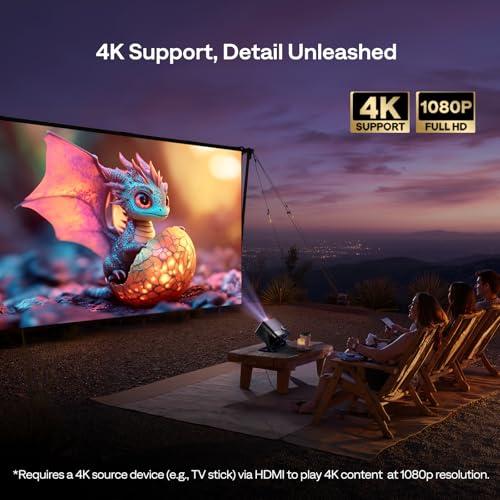
Both the TCL C1 and Aurzen BOOM Mini accept 4K input signals but display them at native 1080p resolution. The Aurzen BOOM Mini adds HDR10 and HLG support for enhanced color and brightness, while the TCL C1 focuses on standard dynamic range content.
For dedicated dark room home theater, the TCL C1 offers superior contrast and quieter operation. For versatile home theater use in various lighting conditions, the Aurzen BOOM Mini Smart Projector provides better brightness and audio. Choose based on your room's lighting control.
Both projectors run Google TV with access to Netflix, YouTube, and thousands of apps. The TCL C1 features official Netflix certification and Google TV version 11.1.0.33, while the Aurzen BOOM Mini offers a more powerful MT9630 processor for slightly faster navigation and app performance.
The TCL C1 Google TV Portable Projector typically offers better value for dark room viewing with its unique gimbal design and sealed optics. The Aurzen BOOM Mini provides better value if you need bright room capability and powerful audio, justifying its higher price point.
Both projectors work outdoors, but the Aurzen BOOM Mini Smart Projector performs much better due to its higher brightness. The TCL C1 requires very dark outdoor conditions to produce a viewable image, while the Aurzen BOOM Mini works well in typical evening outdoor lighting.
The TCL C1 is ideal for bedroom use with its ultra-quiet operation (under 30dB), ceiling projection capability, and compact size. The gimbal design makes it perfect for bed viewing, while the Aurzen BOOM Mini is better suited for living rooms where you need more brightness and audio power.
We've done our best to create useful and informative comparisons to help you decide what product to buy. Our research uses advanced automated methods to create this comparison and perfection is not possible - please contact us for corrections or questions. These are the sites we've researched in the creation of this article: youtube.com - thegadgetflow.com - notebookcheck.net - shopabunda.com - youtube.com - youtube.com - youtube.com - youtube.com - tcl.com - androidauthority.com - manuals.plus - westcoast.co.uk - aurzen.com - aurzen.com - the-gadgeteer.com - projectorcentral.com - aurzen.com - aurzen.com - youtube.com - bestbuy.com - bestbuy.com - youtube.com - aurzen.com - youtube.com - hometechnologyreview.com - youtube.com - aurzen.com

Privacy Policy
Terms and Conditions - Affiliate Policy
Home Security
© Copyright 2008-2026.
11816 Inwood Rd #1211, Dallas, TX 75244