

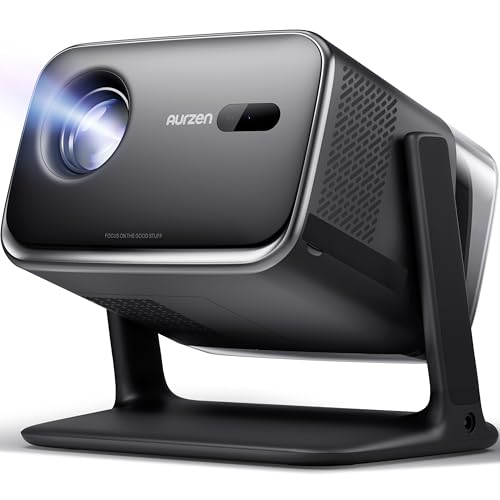
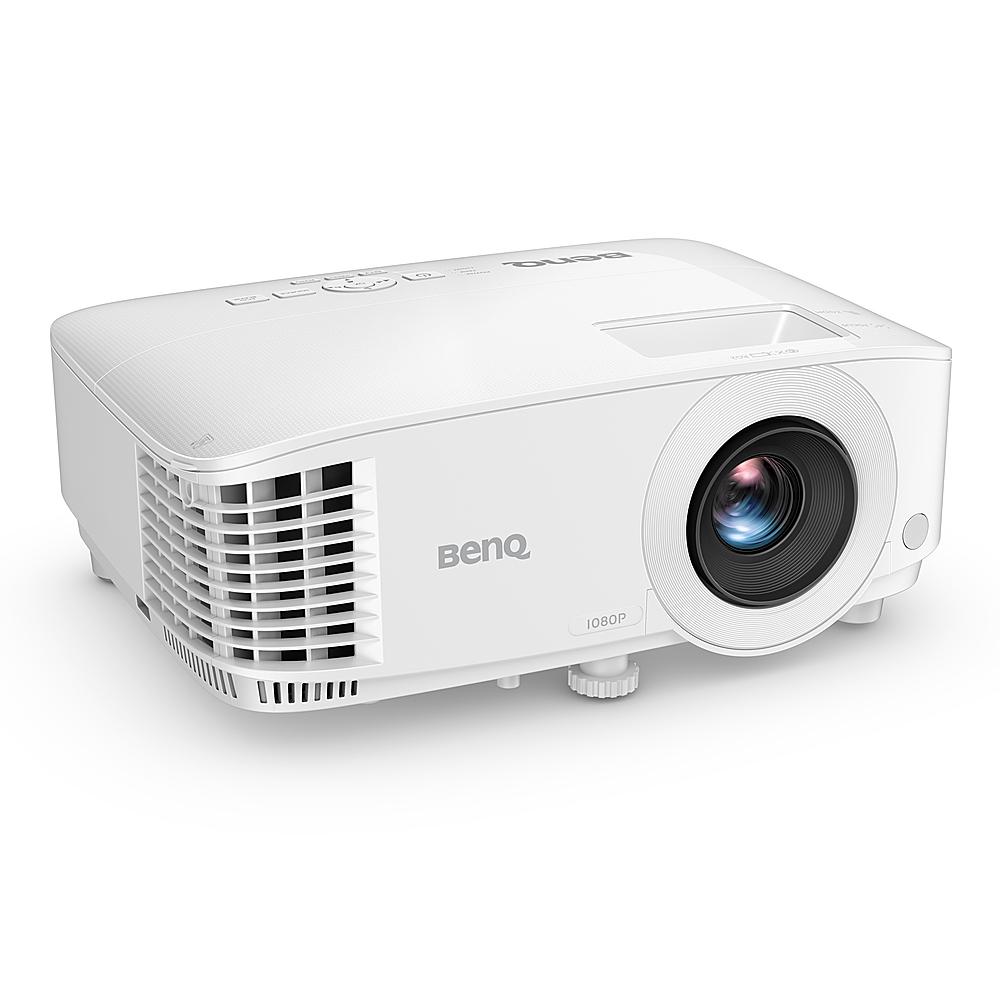
The home projector market has fundamentally changed over the past few years. What used to be a choice between "cheap" and "expensive" projectors has evolved into something much more interesting: smart projectors that prioritize convenience versus performance projectors that excel at specific tasks. The Aurzen BOOM Mini Smart Projector and BenQ TH575 Gaming Projector represent these two distinct philosophies, and understanding their differences will help you avoid buyer's remorse.
At the time of writing, these projectors sit in completely different price brackets - the Aurzen BOOM Mini costs roughly half what you'd pay for the BenQ TH575. But that price difference tells only part of the story. The real question isn't which is cheaper, but which approach better matches your viewing habits and room setup.
The projector world has split into two camps since around 2022. Traditional manufacturers like BenQ continue refining performance metrics - brightness, color accuracy, input lag - while newer companies like Aurzen focus on eliminating the complexity that has historically made projectors intimidating for average users.
The BenQ TH575, released in 2022, represents the traditional performance approach refined to near-perfection for gaming. Meanwhile, the Aurzen BOOM Mini, launching in 2025, showcases how much smart TV integration and automatic features have advanced. The three-year gap between these releases shows in their fundamentally different assumptions about what users want from a projector.
This evolution matters because projectors are no longer just for dedicated home theater rooms. They've become viable for bedrooms, apartments, and even outdoor use - but only if they're designed with convenience in mind.
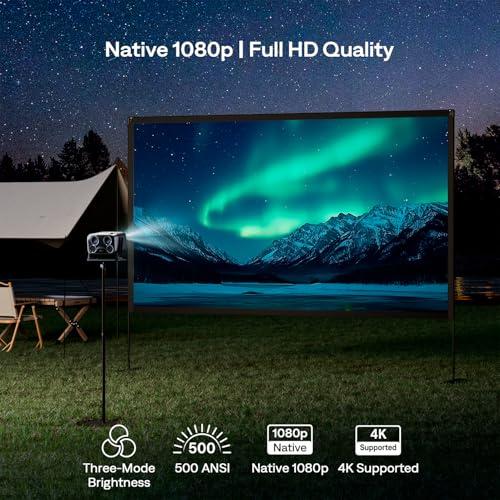
Let's address the elephant in the room: brightness measured in ANSI lumens (a standardized measurement of how much light a projector actually produces). The BenQ TH575 outputs 3,800 ANSI lumens while the Aurzen BOOM Mini manages 500 ANSI lumens. This nearly 8-to-1 difference isn't just a number on a spec sheet - it completely changes where and when you can use each projector.
The BenQ TH575 can produce watchable images in moderately lit rooms. You won't need blackout curtains for afternoon gaming sessions, and table lamps won't wash out the image entirely. This brightness comes from a 203-watt metal halide lamp - essentially a very bright, very hot bulb that needs active cooling (hence the fan noise).
The Aurzen BOOM Mini tells a different story. With its LED light source producing 500 ANSI lumens, you're essentially committed to dark room viewing. This isn't necessarily bad - many people prefer dimmed lights for movies anyway - but it does limit flexibility. The upside? LED light sources run cooler, quieter, and typically last much longer than traditional projector lamps.
Here's the practical reality: if your projector will live in a basement, bedroom, or dedicated theater room where you control the lighting, the Aurzen's brightness suffices. If you're planning to use it in a living room with windows, or for daytime gaming sessions, the BenQ TH575 becomes essential.
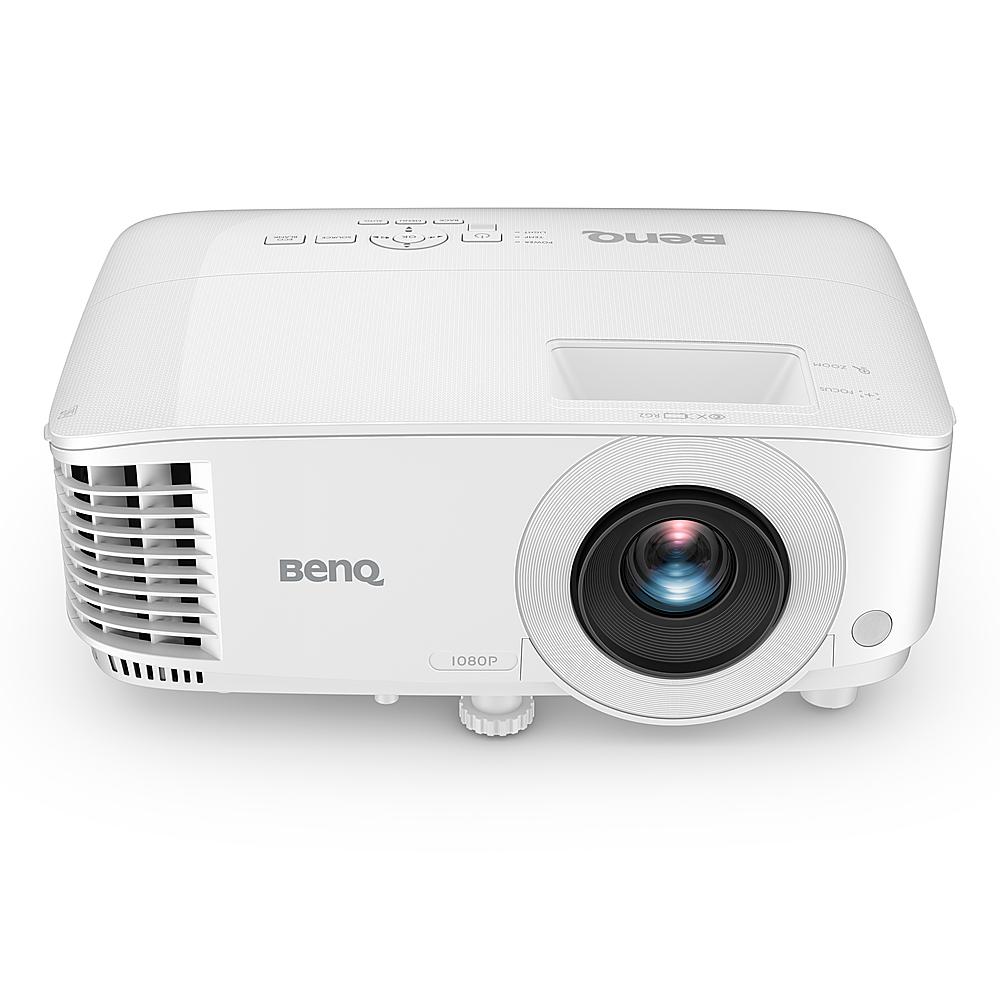
The BenQ TH575 uses DLP (Digital Light Processing) technology with a 0.65-inch DMD (Digital Micromirror Device) chip. Think of this chip as containing nearly two million tiny mirrors that flip thousands of times per second to create images. DLP typically produces higher contrast ratios - the difference between the darkest blacks and brightest whites. The BenQ's 15,000:1 contrast ratio means dark scenes in games and movies retain detail without everything becoming muddy gray.
The Aurzen BOOM Mini uses TFT LCD (Thin Film Transistor Liquid Crystal Display) technology - similar to what's in computer monitors but optimized for projection. LCD projectors can be more compact and energy-efficient, which suits the Aurzen's portable design. However, the 1,000:1 contrast ratio means black levels won't be as deep, and dark movie scenes might look slightly washed out.
In practical terms, if you watch a lot of dark, atmospheric content - think Christopher Nolan movies or survival horror games - the BenQ's superior contrast becomes immediately apparent. For brighter content like sitcoms or animated movies, the difference becomes less noticeable.
Gaming performance hinges on input lag - the delay between when you press a button and when the action appears on screen. The BenQ TH575 achieves an exceptional 16.7ms input lag at 1080p/60Hz, which puts it in the same league as dedicated gaming monitors. For competitive gaming, especially fast-paced shooters or fighting games, this responsiveness can mean the difference between winning and losing.
The Aurzen BOOM Mini doesn't publish input lag specifications, which typically indicates it's not optimized for gaming. Smart TV processing, while convenient for streaming, often adds 50-100ms of lag as the system processes and enhances the image. This makes precise gaming frustrating, though casual gaming remains perfectly enjoyable.
The BenQ TH575 also includes Game Mode, which optimizes image settings for gaming by enhancing dark scene visibility - crucial for spotting enemies hiding in shadows. Black Detail Enhancement further improves contrast in dark areas without overbrightening the entire image.
If gaming represents more than 25% of your projector usage, especially competitive online gaming, the BenQ TH575 justifies its higher price through superior gaming performance alone.
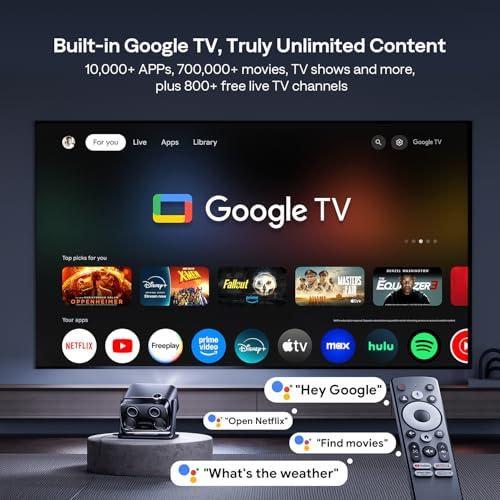
This represents the most fundamental difference between these projectors. The Aurzen BOOM Mini includes built-in Google TV with access to Netflix, Disney+, YouTube, and thousands of other apps. No streaming stick required, no HDMI cable management, no switching inputs. The 2GB of RAM and 16GB of storage provide smooth app performance, and Google Assistant enables voice control.
The BenQ TH575 is essentially a display-only device. Want to watch Netflix? You'll need a streaming stick, Roku, Apple TV, or gaming console connected via HDMI. This creates cable clutter and requires juggling remotes, but it also means no smart TV lag affecting gaming performance.
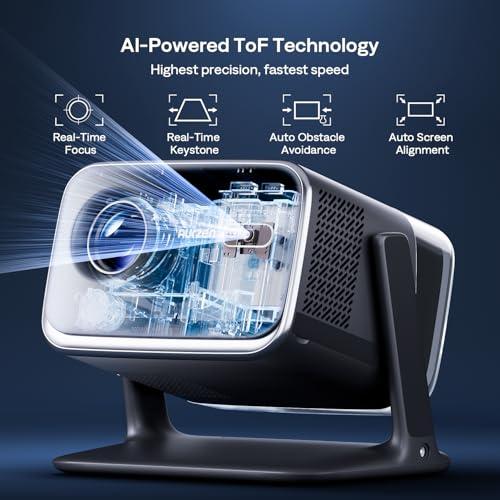
The Aurzen's automatic features deserve special mention. Real-time autofocus uses ToF (Time-of-Flight) sensors to maintain sharp images even when the projector moves slightly. Automatic keystone correction fixes distorted rectangular images when projecting at angles. These features eliminate the frustrating manual adjustments that have historically made projector setup tedious.
For users who just want to turn on the projector and start watching content immediately, the Aurzen BOOM Mini delivers an almost magical simplicity. For users who prioritize image quality and already own streaming devices, the BenQ TH575 avoids potential smart TV complications.
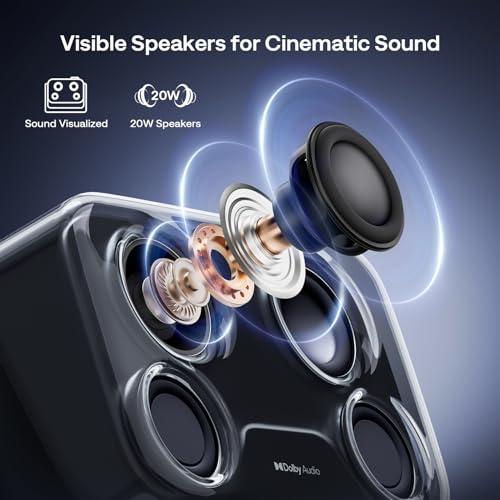
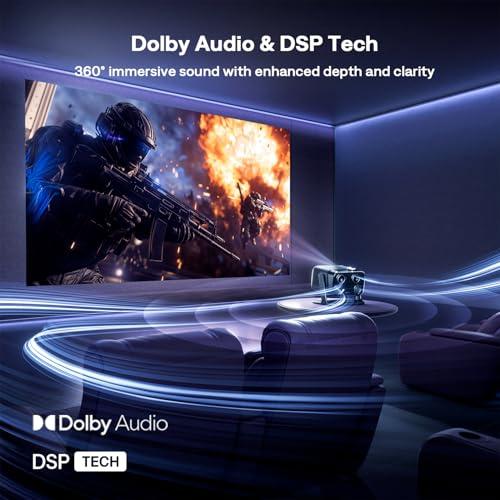
The Aurzen BOOM Mini features dual 10-watt full-range speakers (20 watts total) with Dolby Audio processing. The rear-facing speaker design disperses sound more effectively than typical projector audio, and Bluetooth connectivity allows the unit to function as a standalone speaker when not projecting.
The BenQ TH575 includes a single 10-watt mono speaker - functional but unremarkable. Most users serious about audio will connect external speakers or a soundbar anyway.
Neither projector replaces a proper audio system, but the Aurzen's speakers prove adequate for casual viewing, while the BenQ's audio feels like an afterthought. If you're planning to use built-in speakers regularly, the Aurzen provides a notably better experience.
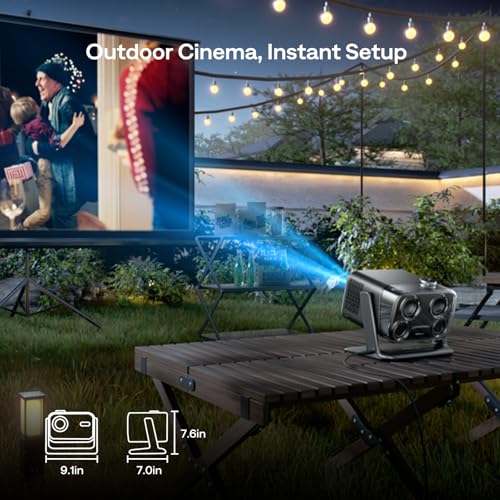
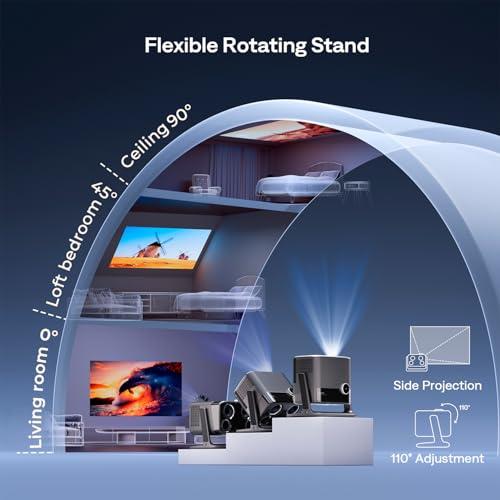
The Aurzen BOOM Mini embraces true portability with its 9.1×7×7.6-inch form factor and 110-degree flexible stand. This gimbal-style mount enables ceiling projection - perfect for bedroom movie nights - and the ultra-quiet ≤36dB operation won't disturb others nearby. The compact design sacrifices some image quality for convenience, but gains tremendous flexibility in placement options.
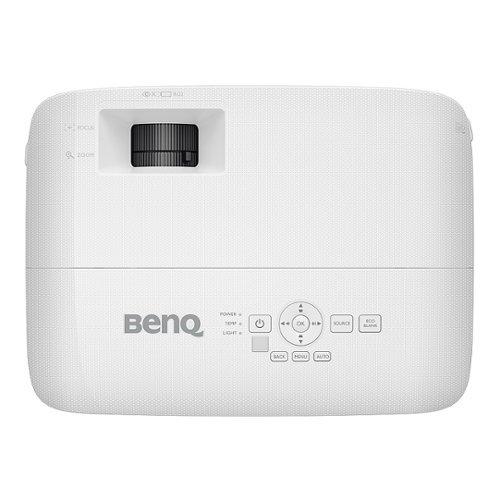
The BenQ TH575 measures 11.7×4.7×8.7 inches and weighs 5.5 pounds, making it more of a "portable but not pocket-sized" projector. It includes manual zoom and focus controls that provide precise adjustments unavailable on the Aurzen. Fan noise runs 34dB in normal mode, 29dB in eco mode - noticeable but not intrusive in most viewing scenarios.
For apartments, dorm rooms, or frequent moves, the Aurzen's portability becomes a major advantage. For dedicated installations or users who rarely move their projector, the BenQ's larger size enables better heat dissipation and brighter output.
At the time of writing, the Aurzen BOOM Mini costs roughly half what you'd pay for the BenQ TH575, but direct price comparisons miss the bigger picture. The Aurzen eliminates the need for a $50-150 streaming device and reduces cable requirements, while the BenQ may require eventual lamp replacement at several hundred dollars.
The Aurzen delivers exceptional value for users prioritizing convenience and smart features over maximum brightness. If your viewing happens primarily in controlled lighting conditions, you're getting 90% of the experience for 50% of the cost.
The BenQ TH575 justifies its premium through superior gaming performance and bright-room capability. For serious gamers or users who can't control ambient lighting, the extra cost becomes necessary rather than optional.
Neither projector replaces a dedicated home theater setup, but they serve different roles in that ecosystem. The BenQ TH575 works better as a main display in a proper theater room, where its brightness and contrast can shine on a large screen with controlled lighting and external audio equipment.
The Aurzen BOOM Mini excels as a secondary or casual viewing device - the projector you set up quickly for movie nights, outdoor viewing, or bedroom entertainment. Its smart features and quiet operation suit informal viewing better than formal theater experiences.
For projection screens larger than 120 inches, the BenQ's brightness becomes increasingly necessary. The Aurzen works best with screens under 100 inches where its 500 lumens can maintain adequate image intensity.
The BenQ TH575 uses traditional lamp technology with a finite 6,000-15,000 hour lifespan depending on usage mode. Replacement lamps cost several hundred dollars but maintain consistent brightness throughout their lifetime.
The Aurzen BOOM Mini's LED light source should theoretically last 30,000+ hours without replacement, though LED brightness can gradually decrease over time. However, by the time LED degradation becomes noticeable, you'll likely want to upgrade to whatever technology emerges over the next 5-7 years.
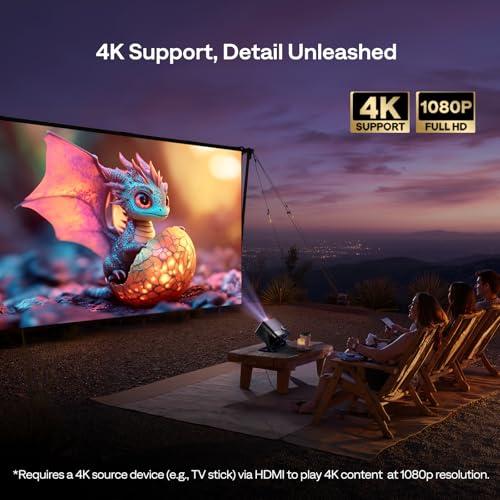
Both projectors support 4K input (downscaled to 1080p output), providing some future compatibility as content continues moving toward higher resolutions.
The Aurzen BOOM Mini revolutionizes projector accessibility through smart integration and automatic features, but sacrifices brightness for convenience. Choose it if you value plug-and-play simplicity, primarily stream content, need portability, or have dedicated dark viewing spaces.
The BenQ TH575 delivers professional-grade gaming performance and bright-room capability but requires more complex setup and additional hardware. Choose it if gaming performance matters, you need bright room viewing, image quality trumps convenience, or you're building a dedicated entertainment setup.
Neither approach is inherently superior - they serve different users with different priorities. The Aurzen makes projection accessible to users who previously found projectors too complicated, while the BenQ satisfies enthusiasts who demand maximum performance. Understanding which philosophy matches your viewing habits ensures you'll be happy with your choice for years to come.
Your decision ultimately comes down to this: Do you want a projector that gets out of your way and just works, or one that delivers maximum performance when properly configured? Both are excellent at their intended purposes - the key is choosing the one that matches your lifestyle.
| Aurzen BOOM Mini Smart Projector Google TV | BenQ TH575 1080p Gaming Projector |
|---|---|
| Brightness - Most critical spec for room lighting flexibility | |
| 500 ANSI lumens (requires dark room viewing) | 3,800 ANSI lumens (works well in moderately lit rooms) |
| Display Technology - Affects contrast and color quality | |
| LCD with 1,000:1 contrast ratio (adequate blacks) | DLP with 15,000:1 contrast ratio (deep blacks, vivid colors) |
| Gaming Performance - Essential for competitive gaming | |
| Input lag not specified (likely 50-100ms due to smart TV processing) | 16.7ms input lag with dedicated Game Mode (tournament-level performance) |
| Smart Features - Determines setup complexity | |
| Built-in Google TV with 10,000+ apps, voice control, no external devices needed | No smart features - requires streaming stick or console for content |
| Setup Convenience - How easy it is to get perfect picture | |
| Real-time autofocus, automatic keystone correction, obstacle avoidance | Manual focus and keystone adjustment, requires careful positioning |
| Audio Quality - Important if using built-in speakers | |
| Dual 10W speakers (20W total) with Dolby Audio, Bluetooth capability | Single 10W mono speaker (basic functionality) |
| Portability - Matters for frequent moves or temporary setups | |
| 9.1×7×7.6 inches, 110° flexible stand, ≤36dB ultra-quiet operation | 11.7×4.7×8.7 inches, 5.5 lbs, 34dB normal mode (more permanent setup) |
| Projection Size Range - Determines viewing flexibility | |
| 40"-200" optimal viewing (best under 100" due to brightness limits) | 30"-300" with manual zoom (excellent for large screens) |
| Light Source Longevity - Long-term ownership costs | |
| LED with 30,000+ hour lifespan (no replacement needed) | Metal halide lamp: 6,000-15,000 hours (expensive replacement required) |
| 3D Support - For specialized content viewing | |
| No 3D support | Full HD 3D compatibility |
| Connectivity Options - For multiple devices | |
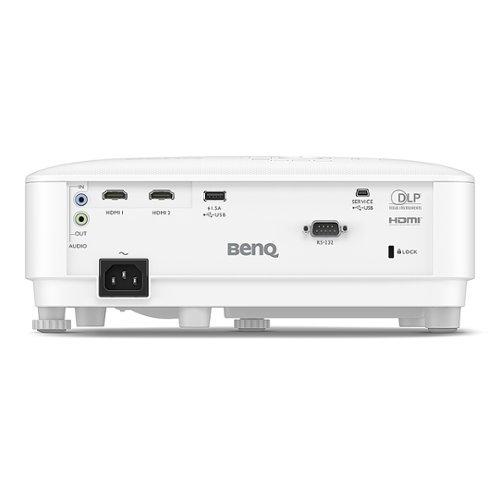
| HDMI×1, USB×2, dual-band Wi-Fi, Bluetooth 5.1, Google Cast | HDMI×2, USB×2, no wireless (requires wired connections for all content) |
| Best Use Cases - Who should choose this projector | |
| Casual viewers, renters, bedroom/small room use, streaming priority | Gamers, bright room viewing, dedicated home theater, performance priority |
The BenQ TH575 is significantly better for gaming due to its exceptional 16.7ms input lag and dedicated Game Mode. The Aurzen BOOM Mini doesn't specify input lag and likely has 50-100ms delay due to smart TV processing, making competitive gaming frustrating. If gaming is a priority, choose the BenQ TH575.
No, the Aurzen BOOM Mini produces only 500 ANSI lumens and requires dark room viewing for optimal picture quality. The BenQ TH575 outputs 3,800 ANSI lumens, making it suitable for moderately lit rooms. For bright room viewing, the BenQ TH575 is essential.
The Aurzen BOOM Mini has built-in Google TV with Netflix, YouTube, Disney+, and 10,000+ apps - no streaming device needed. The BenQ TH575 requires an external streaming stick, Roku, or gaming console for accessing online content. The Aurzen BOOM Mini eliminates this extra cost and complexity.
The Aurzen BOOM Mini is much more portable with its compact 9.1×7×7.6-inch size, 110° flexible stand, and automatic focus/keystone correction. The BenQ TH575 is larger and requires manual adjustments for optimal picture quality. Choose the Aurzen BOOM Mini for portability and quick setup.
The BenQ TH575 delivers superior picture quality with DLP technology, 15,000:1 contrast ratio, and much higher brightness. The Aurzen BOOM Mini uses LCD technology with 1,000:1 contrast, resulting in less vibrant colors and weaker black levels. For best picture quality, the BenQ TH575 wins clearly.
The Aurzen BOOM Mini features dual 10W speakers (20W total) with Dolby Audio and can function as a Bluetooth speaker. The BenQ TH575 has a basic 10W mono speaker. For built-in audio quality, the Aurzen BOOM Mini provides a better experience without external speakers.
The BenQ TH575 works better in dedicated home theater setups due to its superior brightness, contrast, and large screen capability up to 300 inches. The Aurzen BOOM Mini is better suited for casual viewing in bedrooms or small spaces under 100-inch screens.
The Aurzen BOOM Mini uses LED technology lasting 30,000+ hours with no lamp replacement needed. The BenQ TH575 requires lamp replacement every 6,000-15,000 hours at significant cost. The Aurzen BOOM Mini has lower long-term maintenance costs.
Both the Aurzen BOOM Mini and BenQ TH575 accept 4K input but display at native 1080p resolution. Neither provides true 4K projection, but both can downscale 4K content from streaming services or gaming consoles effectively.
The Aurzen BOOM Mini operates at ≤36dB, making it ultra-quiet for bedroom use. The BenQ TH575 runs at 34dB normal mode and 29dB eco mode. Both are relatively quiet, but the Aurzen BOOM Mini has a slight edge for noise-sensitive environments.
Only the BenQ TH575 supports Full HD 3D content playback. The Aurzen BOOM Mini does not include 3D support. If 3D movie viewing is important, choose the BenQ TH575.
For casual movie watching, the Aurzen BOOM Mini offers excellent value with its built-in streaming, automatic setup, and compact design. The BenQ TH575 provides superior image quality but requires additional hardware and setup complexity. Choose the Aurzen BOOM Mini for convenience-focused casual viewing.
We've done our best to create useful and informative comparisons to help you decide what product to buy. Our research uses advanced automated methods to create this comparison and perfection is not possible - please contact us for corrections or questions. These are the sites we've researched in the creation of this article: aurzen.com - aurzen.com - the-gadgeteer.com - projectorcentral.com - aurzen.com - aurzen.com - youtube.com - bestbuy.com - bestbuy.com - youtube.com - aurzen.com - youtube.com - hometechnologyreview.com - youtube.com - aurzen.com - lifeisxbox.eu - ai-techreport.com - electronics.woot.com - ai-techreport.com - laurentwillen.com - bestbuy.com - bestbuy.com - projectorcentral.com - tvsbook.com - shidirect.com - blog.richersounds.com - memoryexpress.com - versus.com - adorama.com - avsforum.com - shi.com - bestbuy.com - bhphotovideo.com - cdw.com - insight.com - shi.ca - projectorcentral.com - insight.com - specsradar.com - touchboards.com

Privacy Policy
Terms and Conditions - Affiliate Policy
Home Security
© Copyright 2008-2026.
11816 Inwood Rd #1211, Dallas, TX 75244