

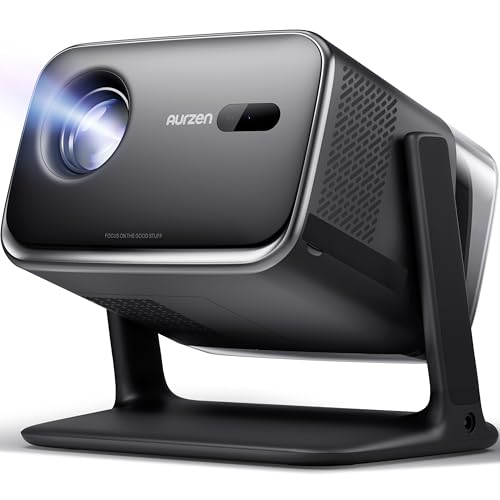
The portable projector market has exploded in recent years, transforming from clunky, dim devices into surprisingly capable entertainment systems. Two standout models have caught our attention: the Aurzen BOOM Mini Smart Projector and the Nebula Capsule 3 GTV Projector. Both launched in the mid-2020s during a wave of innovation that brought Google TV integration and advanced auto-setup features to portable projection.
After extensive research into expert reviews and user feedback, we've found these represent two fundamentally different approaches to portable entertainment. One prioritizes raw performance and value, while the other pushes the boundaries of true portability. Understanding their differences will help you choose the right projector for your specific needs.
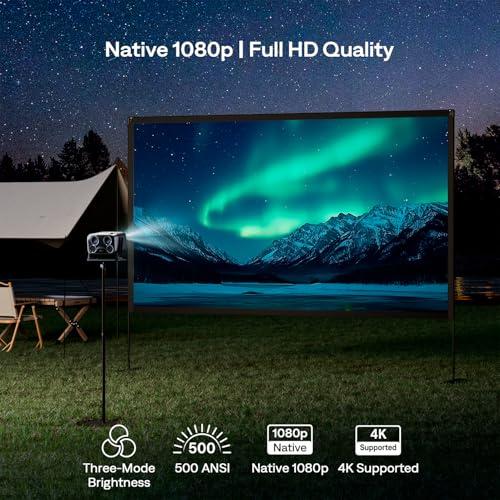
Before diving into specifics, let's establish what makes a portable projector worth buying. The most critical factor is brightness, measured in ANSI lumens (American National Standards Institute lumens) — a standardized way to measure actual light output that prevents manufacturers from inflating numbers. Anything below 200 lumens requires a completely dark room, while 500+ lumens gives you flexibility for ambient light situations.
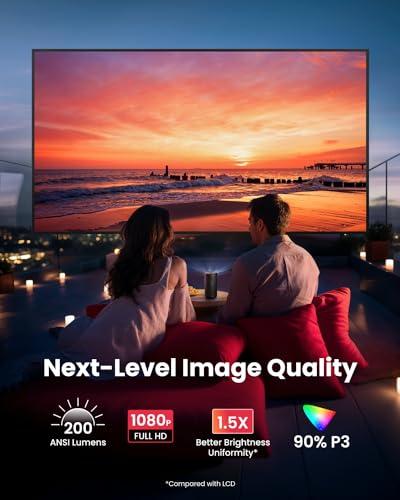
Display technology also matters significantly. LCD projectors like the Aurzen BOOM Mini use liquid crystal displays to create images, typically offering consistent colors and good contrast. DLP (Digital Light Processing) projectors like the Nebula Capsule 3 use microscopic mirrors to reflect light, often producing sharper pixel definition but sometimes showing rainbow artifacts in fast-moving content.
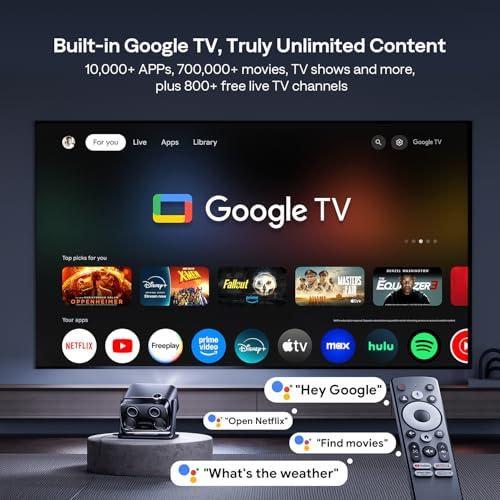
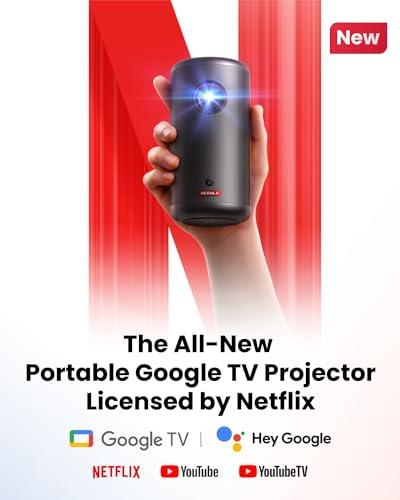
The smart features have become equally important. Both projectors run Google TV, Google's streaming platform that replaced Android TV, providing access to major streaming services. However, Netflix licensing remains tricky — many projectors can't run Netflix natively due to content protection requirements, making official support a valuable feature.
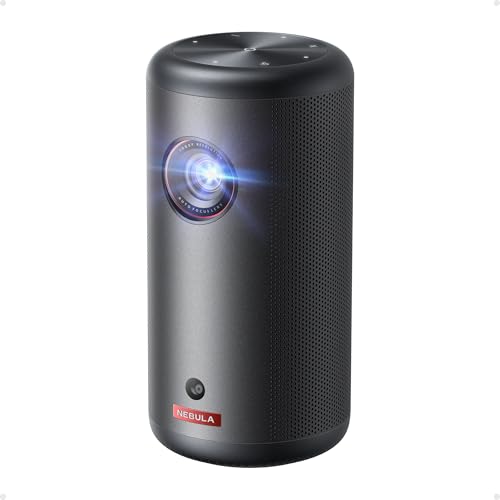
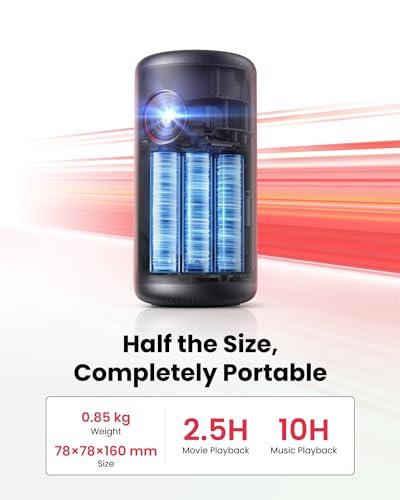
The fundamental difference between these projectors lies in their power design philosophy. The Nebula Capsule 3 represents the battery-powered approach, packing a 52Wh battery into its cylindrical form factor. This provides roughly 2.5 hours of movie playback — enough for most films but requiring careful power management for longer content.
What's particularly interesting about the Capsule 3's battery design is how it affects brightness. When running on battery power alone, the projector drops to approximately 46 lumens to preserve runtime. This dramatic reduction means you're essentially getting two different projectors: a moderately bright 200-lumen device when plugged in, and an ultra-dim 46-lumen device on battery power.
The Aurzen BOOM Mini, conversely, requires constant AC power through its 29V adapter. This plug-in design eliminates battery anxiety and enables consistent 500 ANSI lumens throughout operation. While this limits true portability, it provides reliability that battery-powered units simply can't match.
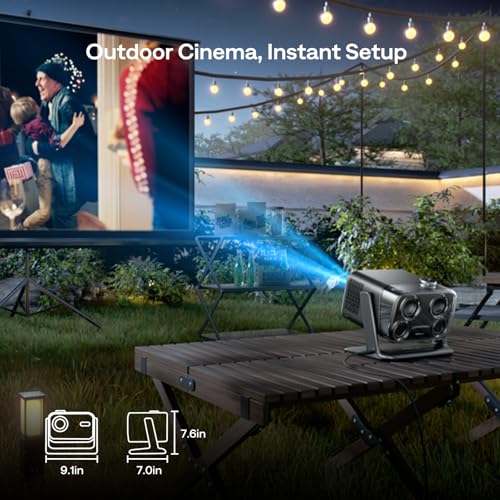
From a practical standpoint, the power difference determines your use cases. Battery power enables camping trips, beach outings, or any location without electrical access. AC power ensures consistent brightness for backyard movie nights, guest room setups, or semi-permanent installations where power availability isn't a concern.
Our research consistently shows brightness as the make-or-break factor for portable projectors. The Aurzen BOOM Mini's 500 ANSI lumens represent a significant advantage in real-world usage. Independent testing confirms this brightness enables watchable images up to 100+ inches even with some ambient light, while dimmer projectors struggle beyond 60 inches in similar conditions.
The Nebula Capsule 3's 200 ANSI lumens place it firmly in the dark-room-required category. User reports indicate optimal performance requires blackout conditions and screen sizes under 70 inches. When the room isn't perfectly dark, you'll notice washed-out colors and reduced contrast that make viewing less enjoyable.
Both projectors deliver native 1080p resolution, but their different display technologies create subtle viewing differences. The BOOM Mini's LCD technology provides more consistent color reproduction across the entire image, while the Capsule 3's DLP system can produce slightly sharper text and graphics. However, brightness limitations often overshadow these technical differences in practical use.
HDR (High Dynamic Range) support exists on both models but with varying effectiveness. The Aurzen BOOM Mini provides meaningful HDR10 and HLG support, delivering noticeably improved contrast and color depth with compatible content. The Nebula Capsule 3 accepts HDR input but struggles to display meaningful improvements due to brightness limitations — a common issue with dim projectors regardless of HDR capability.
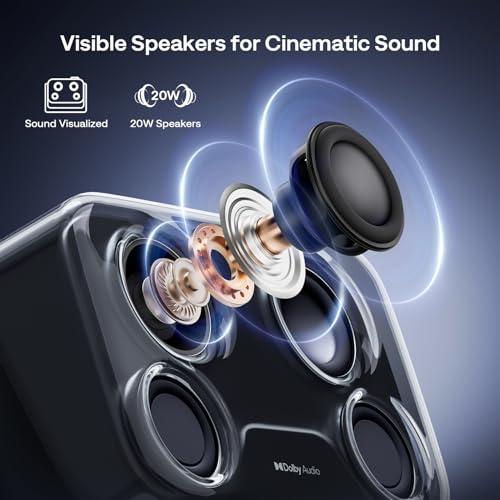
Sound quality often gets overlooked in projector comparisons, but it significantly impacts the viewing experience. The Aurzen BOOM Mini includes dual 10W speakers totaling 20W output power, positioned rear-facing for better room dispersion. This configuration produces surprisingly robust sound that can fill medium-sized rooms without external speakers.
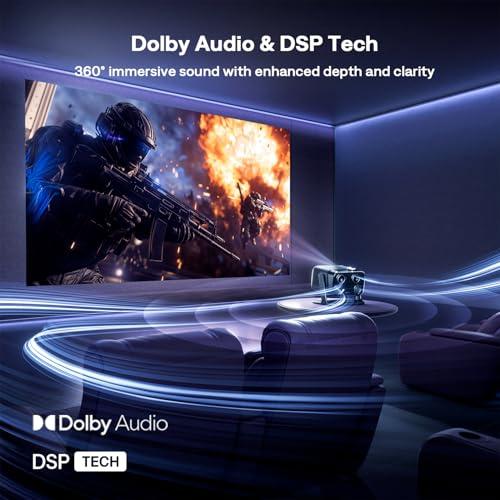
The implementation of Dolby Audio processing in the BOOM Mini noticeably enhances dialogue clarity and provides better separation between sound effects and music. For casual viewing, the built-in audio eliminates the need for additional equipment — a significant convenience factor.
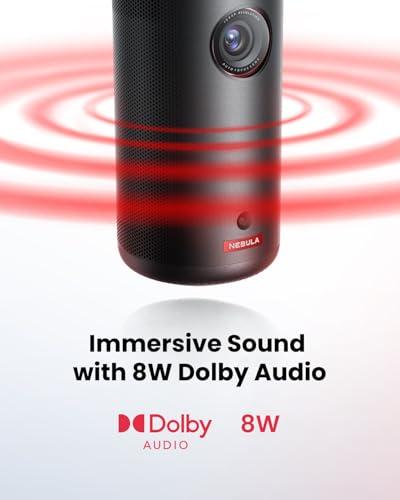
The Nebula Capsule 3's single 8W speaker performs adequately for personal viewing but struggles with group entertainment. Its cylindrical design helps with 360-degree sound dispersion, but the limited power output means you'll likely want external speakers for anything beyond intimate viewing sessions.
Interestingly, the Capsule 3 doubles as a Bluetooth speaker when not projecting, providing up to 8 hours of music playback. This versatility adds value for users who appreciate multi-functional devices, though dedicated Bluetooth speakers typically provide superior audio quality.
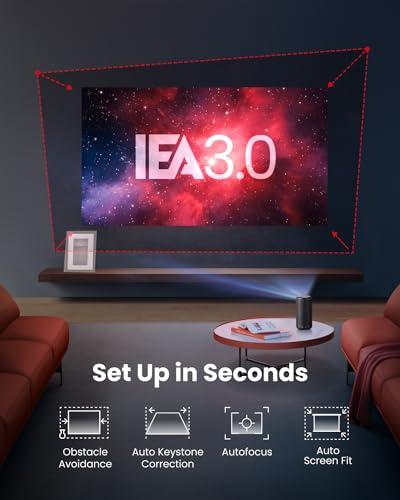
Both projectors excel at eliminating traditional projector setup headaches through intelligent automation, but with different approaches. The Nebula Capsule 3's Intelligent Environment Adaptation Technology performs complete setup — focus, keystone correction, and obstacle avoidance — in approximately 3 seconds. This lightning-fast automation impresses consistently across user reviews.
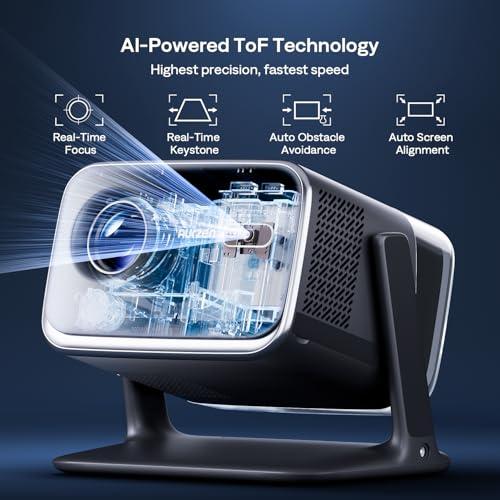
The Aurzen BOOM Mini takes a more nuanced approach with real-time adjustments. Its ToF (Time-of-Flight) sensors continuously monitor the projection environment, making micro-adjustments as needed. While initial setup takes slightly longer, this system adapts to changes like someone walking in front of the projector or slight movements of the device.
The precision rotary knob on the BOOM Mini provides manual override capability that tech-savvy users appreciate. Sometimes automatic systems make choices you disagree with, and having manual control prevents frustration. The Capsule 3 prioritizes simplicity over granular control.
Netflix licensing deserves special attention here. The Nebula Capsule 3 includes official Netflix support, while the Aurzen BOOM Mini requires workarounds or external devices for Netflix access. This difference matters significantly for users whose primary entertainment revolves around Netflix content.
The portability debate centers on defining "portable" for your specific needs. The Nebula Capsule 3 achieves true portability through its 2.1-pound weight and cylindrical design that fits in most backpacks. This enables genuine anywhere-entertainment scenarios — camping trips, hotel rooms, or impromptu outdoor gatherings.
However, true portability comes with significant compromises. The battery operation brightness reduction makes outdoor use challenging except in complete darkness. The limited audio output means you'll often need additional speakers for group viewing. These limitations don't eliminate the value but require realistic expectations.
The Aurzen BOOM Mini represents semi-portability — easily moved between rooms or locations with power access but requiring planning for setup. Its 4.7-pound weight and larger dimensions make casual transport less convenient, but the consistent performance eliminates the compromises inherent in battery operation.
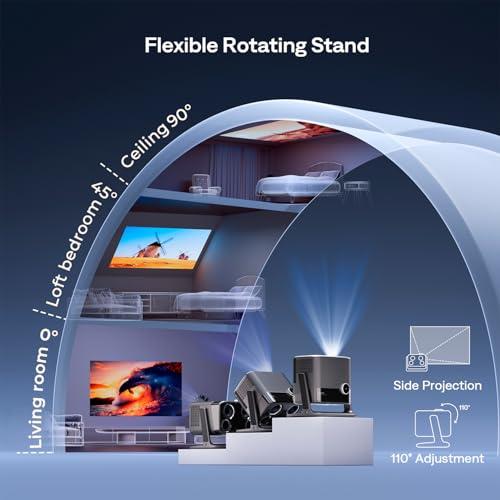
The flexible stand design on the BOOM Mini deserves mention for its 110-degree adjustment range, enabling ceiling projection and unusual mounting angles. This versatility proves valuable for bedroom entertainment or unconventional room layouts where traditional placement doesn't work.
At the time of writing, pricing creates an interesting value discussion. The Aurzen BOOM Mini typically costs significantly less while delivering superior brightness and audio performance. This combination provides exceptional performance-per-dollar value for users who can accommodate its power requirements.
The Nebula Capsule 3 commands a premium for its portability features and battery operation. When evaluating cost-per-lumen, the difference becomes stark — you're paying substantially more for each unit of brightness with the battery-powered option. This premium may be justified if portability is essential, but represents poor value for stationary use.
Long-term ownership costs favor the Aurzen BOOM Mini significantly. Battery degradation will eventually affect the Capsule 3's runtime and potentially its brightness output, while the plug-in design ensures consistent performance throughout its lifespan. LED light sources in both models provide 30,000+ hour lifespans, but only the BOOM Mini maintains full capability throughout that period.
For home theater applications, the Aurzen BOOM Mini provides a more cinema-appropriate experience. Its higher brightness enables larger screen sizes that create proper immersion, while the dual-speaker audio system reduces dependency on external sound equipment.
The Capsule 3's portability becomes less relevant in dedicated home theater scenarios where consistent setup location and power access are guaranteed. The brightness limitations restrict screen size to dimensions that don't provide the immersive experience most home theater enthusiasts seek.
However, the Capsule 3 excels for bedroom entertainment or situations where you want cinema-quality content without permanent installation. Its quick setup makes it perfect for impromptu movie nights or guest entertainment.
Both projectors benefit from recent technological advances that weren't available in earlier portable projectors. The 2024-2025 timeframe saw widespread adoption of Google TV in portable projectors, replacing earlier Android TV implementations with better streaming app support and more intuitive interfaces.
Auto-setup technology has particularly improved, with ToF sensors and advanced algorithms eliminating the manual calibration that made older projectors frustrating. The Aurzen BOOM Mini's real-time adjustment system represents the latest evolution of this technology, providing continuous optimization rather than one-time setup.
The choice between these projectors depends entirely on your primary use case and priorities. Choose the Aurzen BOOM Mini if you need maximum image quality and don't require battery operation. Its superior brightness, audio performance, and value proposition make it ideal for users with reliable power access who want the best possible viewing experience.
The Nebula Capsule 3 suits users who prioritize true portability and convenience above all else. If you plan to use your projector camping, traveling, or in locations without power access, the battery operation and ultra-compact design justify the compromises in brightness and audio performance.
For home theater applications, the Aurzen BOOM Mini provides better performance and value unless you specifically need the flexibility to move the projector frequently. For travelers and outdoor enthusiasts, the Nebula Capsule 3 enables entertainment scenarios that simply aren't possible with plug-in projectors.
Both represent significant improvements over earlier portable projectors, but they serve distinctly different audiences. Understanding your primary use case — stationary entertainment with maximum quality versus mobile entertainment with maximum convenience — should guide your decision more than any specific technical feature.
| Aurzen BOOM Mini Smart Projector Google TV | Nebula Capsule 3 GTV Projector |
|---|---|
| Brightness - Most critical spec determining usability in different lighting conditions | |
| 500 ANSI lumens (usable with some ambient light, larger screens up to 200") | 200 ANSI lumens when plugged in, 46 lumens on battery (requires dark rooms, best under 70" screens) |
| Power Source - Determines true portability vs consistent performance | |
| AC-powered only (reliable brightness but requires power outlet) | Built-in 52Wh battery (2.5 hours video, 8 hours music, enables anywhere use) |
| Audio Performance - Built-in sound quality affects need for external speakers | |
| Dual 10W speakers (20W total) with Dolby Audio, rear-facing design | Single 8W mono speaker, doubles as Bluetooth speaker |
| Portability - Physical size and weight impact transport convenience | |
| 9.1" × 7" × 7.6", 4.7 lbs (semi-portable, moves easily between rooms) | 3.3" diameter × 6.6" height, 2.1 lbs (ultra-portable, fits in backpack) |
| Display Technology - Affects color accuracy and image sharpness | |
| LCD with LED light source (consistent colors, good contrast) | DLP with LED light source (sharper pixels, potential rainbow artifacts) |
| Setup Automation - How quickly you get a properly aligned image | |
| Real-time autofocus and keystone correction with ToF sensors, manual override controls | Intelligent Environment Adaptation 3.0 completes full setup in 3 seconds |
| Netflix Support - Critical for many users' primary streaming needs | |
| Requires workarounds or external devices for Netflix access | Official Netflix licensing with native app support |
| Projection Size Range - Maximum usable screen sizes in optimal conditions | |
| 40" to 200" (maintains quality at larger sizes due to higher brightness) | 25" to 120" (best performance under 70" due to brightness limitations) |
| HDR Performance - Enhanced contrast and color for compatible content | |
| HDR10 and HLG with meaningful visual improvements | HDR input accepted but minimal enhancement due to brightness constraints |
| Noise Level - Fan noise during operation affects viewing experience | |
| ≤36dB (ultra-quiet operation) | 38.3dB (slightly audible but not distracting) |
| Connectivity Options - Available ports for external devices | |
| HDMI ×1, USB ×2, 3.5mm audio out, dual-band WiFi, Bluetooth 5.1 | HDMI 2.1, USB-C (charging), USB-A, 3.5mm audio out, dual-band WiFi, Bluetooth |
| Value Proposition - Performance and features relative to typical pricing | |
| Exceptional brightness and audio per dollar, best for stationary use with power access | Premium pricing for portability features, justified only if battery operation is essential |
The Aurzen BOOM Mini Smart Projector is significantly brighter at 500 ANSI lumens compared to the Nebula Capsule 3 GTV Projector at 200 ANSI lumens. This means the Aurzen BOOM Mini can handle some ambient light and larger screen sizes, while the Nebula Capsule 3 requires dark rooms for optimal viewing.
The Aurzen BOOM Mini Smart Projector requires constant AC power and must be plugged in at all times. The Nebula Capsule 3 GTV Projector has a built-in battery that provides 2.5 hours of video playback, making it truly portable for camping or travel use.
The Aurzen BOOM Mini has superior audio with dual 10W speakers (20W total) and Dolby Audio support, providing room-filling sound. The Nebula Capsule 3 has a single 8W speaker that's adequate for personal viewing but may require external speakers for group entertainment.
The Nebula Capsule 3 GTV Projector has official Netflix licensing and can run the Netflix app natively. The Aurzen BOOM Mini Smart Projector requires workarounds or external devices like streaming sticks to access Netflix due to content protection restrictions.
The Nebula Capsule 3 is designed for true portability, weighing just 2.1 pounds with a cylindrical design that fits in most backpacks. The Aurzen BOOM Mini is semi-portable at 4.7 pounds and requires power outlets, making it better suited for moving between rooms rather than travel.
The Nebula Capsule 3 offers faster automated setup with its Intelligent Environment Adaptation technology that completes focus, keystone correction, and alignment in 3 seconds. The Aurzen BOOM Mini provides real-time adjustments with manual override options for users who want more control over their setup.
The Aurzen BOOM Mini Smart Projector is better suited for home theater use due to its higher brightness (500 vs 200 lumens), superior audio system, and ability to maintain consistent performance on larger screens up to 200 inches. The Nebula Capsule 3 is better for bedroom or casual viewing scenarios.
The Aurzen BOOM Mini supports projection sizes from 40" to 200" and maintains good image quality at larger sizes due to its higher brightness. The Nebula Capsule 3 supports 25" to 120" but performs best under 70" due to brightness limitations, especially when running on battery power.
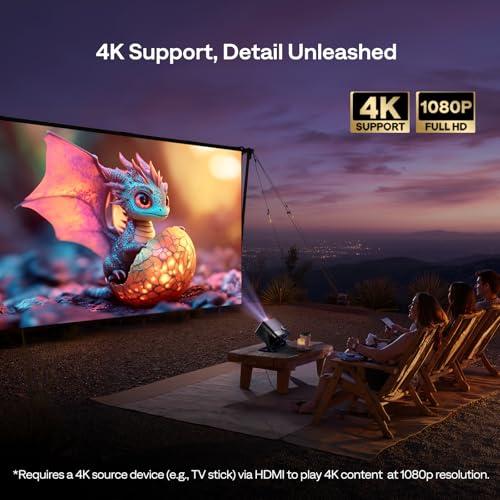
The Aurzen BOOM Mini Smart Projector accepts 4K input and downscales to its native 1080p resolution with good results. The Nebula Capsule 3 GTV Projector also supports 4K input downscaled to 1080p. Both projectors have native 1080p resolution, not true 4K projection.
Both the Aurzen BOOM Mini and Nebula Capsule 3 run Google TV with access to thousands of streaming apps. The main difference is that the Nebula Capsule 3 includes official Netflix support, while the Aurzen BOOM Mini has broader codec support for various file formats and external devices.
The Aurzen BOOM Mini Smart Projector operates at ≤36dB, making it ultra-quiet during viewing. The Nebula Capsule 3 GTV Projector runs at 38.3dB, which is slightly more audible but still considered quiet and not distracting during normal viewing.
The Aurzen BOOM Mini typically offers better performance per dollar with higher brightness, superior audio, and more features at a lower price point. The Nebula Capsule 3 commands a premium for its portability and battery operation, making it worthwhile only if true portability is essential for your use case.
We've done our best to create useful and informative comparisons to help you decide what product to buy. Our research uses advanced automated methods to create this comparison and perfection is not possible - please contact us for corrections or questions. These are the sites we've researched in the creation of this article: aurzen.com - aurzen.com - the-gadgeteer.com - projectorcentral.com - aurzen.com - aurzen.com - youtube.com - bestbuy.com - bestbuy.com - youtube.com - aurzen.com - youtube.com - hometechnologyreview.com - youtube.com - aurzen.com - projectorreviews.com - projectorcentral.com - tvsbook.com - gadgetoid.com - newegg.com - thesmarthomehookup.com - whathifi.com - seenebula.com - rtings.com - cnet.com - seenebula.com - youtube.com - youtube.com - walmart.com - support.seenebula.com

Privacy Policy
Terms and Conditions - Affiliate Policy
Home Security
© Copyright 2008-2026.
11816 Inwood Rd #1211, Dallas, TX 75244