


The world of home entertainment has evolved dramatically in recent years, with smart projectors emerging as a compelling alternative to traditional televisions. These compact devices promise to transform any wall into a massive screen, bringing cinema-quality experiences to your living room, bedroom, or backyard. But with so many options flooding the market, how do you choose between a budget-friendly model and a premium alternative?
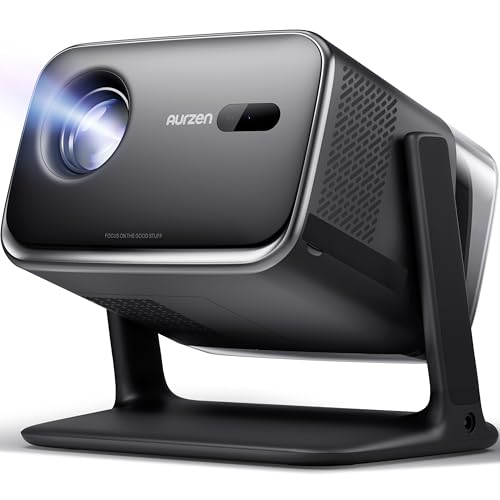
Today we're comparing two projectors from Aurzen that represent very different approaches to smart projection: the budget-conscious EAZZE D1 and the feature-packed BOOM Mini. Released in 2024 and 2025 respectively, these models showcase how quickly projector technology is advancing, with newer models incorporating sophisticated auto-correction features and more powerful smart platforms.
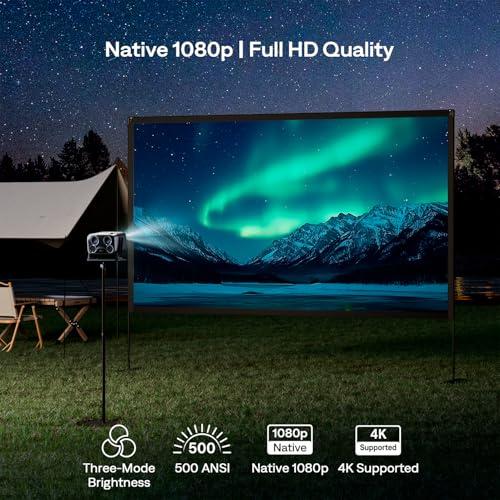
Before diving into specifics, it's crucial to understand what separates good projectors from mediocre ones. The most important performance metric is brightness, measured in ANSI lumens (a standardized measurement that prevents manufacturers from inflating their numbers). Think of ANSI lumens like the horsepower of projectors – more lumens mean you can use the projector in brighter rooms and project larger images without washing out.
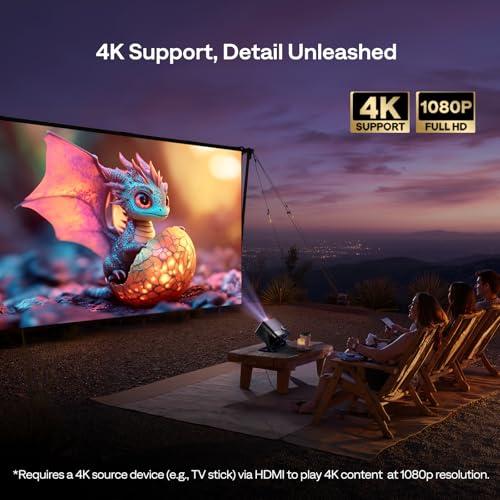
Resolution is equally critical. Native resolution refers to the actual pixel count the projector can display, not just what it can accept as input. A projector with native 1080p resolution will always look sharper than one that upscales lower resolution content to 1080p, similar to how a 4K TV displays better detail than an older 1080p TV stretched to the same size.
Smart features have become the third pillar of modern projectors. Rather than requiring a separate streaming stick or laptop connection, today's smart projectors include built-in operating systems that can directly access Netflix, YouTube, and other streaming services. However, not all smart platforms are created equal – some offer limited app selection while others provide access to thousands of applications.
The Aurzen EAZZE D1, launched in mid-2024, represents the democratization of smart projection technology. At the time of writing, it's positioned as an entry-level option that doesn't compromise on essential features. By contrast, the BOOM Mini, released in early 2025, showcases the latest advances in projector technology, incorporating real-time auto-correction and Google's full smart TV platform.
This generational difference is significant. The 2024-2025 period marked a major leap in projector intelligence, with manufacturers finally solving long-standing issues around setup complexity and image correction. The BOOM Mini benefits from these advances, while the EAZZE D1 represents the tail end of the previous generation's capabilities.
When evaluating projectors, brightness determines everything about your viewing experience. The EAZZE D1 produces 200 ANSI lumens, while the BOOM Mini delivers 500 ANSI lumens – a substantial 2.5x difference that fundamentally changes how and where you can use each projector.
In practical terms, 200 ANSI lumens requires a dark room for optimal viewing. Think of it like trying to read a book under a dim lamp – possible, but you need to control the lighting conditions. The EAZZE D1 excels in dedicated movie-watching scenarios: evening entertainment, basement setups, or outdoor screenings after sunset. Users consistently report excellent picture quality in these controlled environments, with vibrant colors and sharp detail that rivals more expensive models.
The BOOM Mini's 500 ANSI lumens opens up significantly more flexibility. This brightness level allows for comfortable viewing in rooms with some ambient light – perhaps with table lamps on or during overcast afternoons. It's the difference between having to draw all the curtains versus being able to watch comfortably in a normally lit living room.
For home theater applications, this brightness difference becomes crucial. A dedicated home theater room with controlled lighting makes the EAZZE D1 perfectly viable and potentially preferable due to its superior contrast ratios in dark environments. However, a family room that serves multiple purposes throughout the day strongly favors the BOOM Mini's higher brightness output.
The smart platform comparison reveals another fundamental divide between these projectors. The EAZZE D1 includes a basic smart TV operating system with certified Netflix, Prime Video, and YouTube applications. This covers the essentials for most users and eliminates the need for external streaming devices.
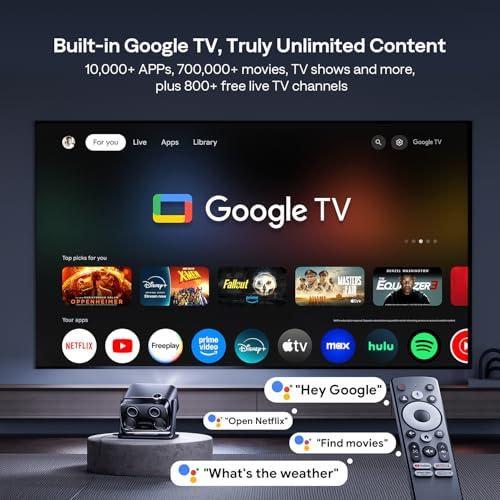
However, the BOOM Mini incorporates full Google TV, which represents a quantum leap in functionality. Google TV provides access to over 10,000 applications, including Disney+, Hulu, HBO Max, and countless niche streaming services. More importantly, it includes Google's recommendation engine, which learns your viewing habits and suggests new content across all your streaming services.
The practical impact extends beyond app availability. Google TV's interface is more sophisticated, with universal search that finds content across multiple platforms, voice control through Google Assistant, and seamless casting from Android and iOS devices. The EAZZE D1's basic platform requires more manual navigation and lacks these intelligent features.
For users who primarily watch Netflix and YouTube, the EAZZE D1's platform suffices. But families with multiple streaming subscriptions or users who enjoy discovering new content will find Google TV's comprehensive ecosystem significantly more valuable.
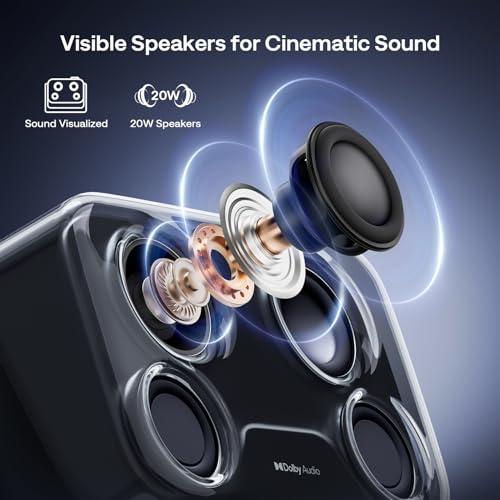
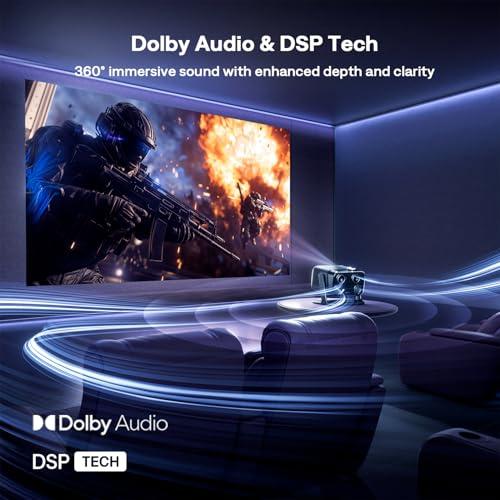
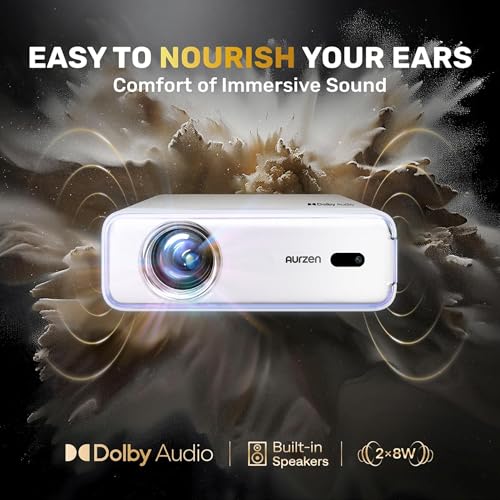
Both projectors include integrated speakers, but with notably different approaches. The EAZZE D1 features dual 8-watt speakers (16 watts total) with Dolby Audio processing, while the BOOM Mini upgrades to dual 10-watt speakers (20 watts total) with more advanced audio processing.
In testing scenarios reported by users, the EAZZE D1's audio quality consistently exceeds expectations for its price range. The speakers provide clear dialogue and sufficient volume for small to medium rooms, with Dolby Audio processing adding spatial depth that enhances the viewing experience. However, bass response is limited, and the speakers struggle to fill larger spaces.
The BOOM Mini's audio system addresses these limitations with more powerful drivers and sophisticated processing. The rear-facing speaker design improves sound dispersion, creating a more immersive audio environment. Importantly, the BOOM Mini can function as a standalone Bluetooth speaker, adding versatility for music playback when not projecting content.
For home theater use, both projectors benefit from external audio systems, but the BOOM Mini's superior built-in audio makes it more viable as a complete entertainment solution without additional equipment.
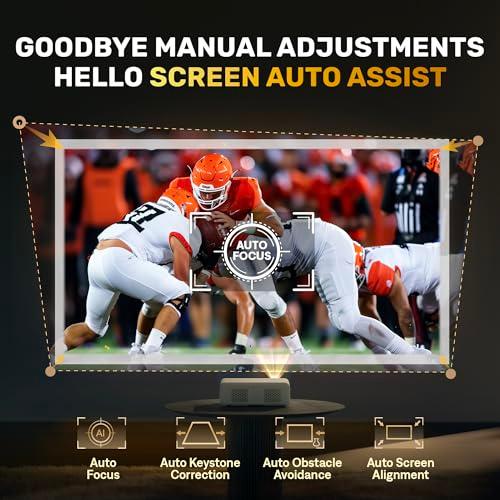
Modern projectors have largely solved the historical pain points around focus and image correction, but with different levels of sophistication. The EAZZE D1 includes automatic focus and 4-point keystone correction (which fixes image distortion when projecting at an angle), plus automatic screen alignment and obstacle avoidance. These features work well and provide quick setup – users report going from unboxing to projection in under 10 minutes.
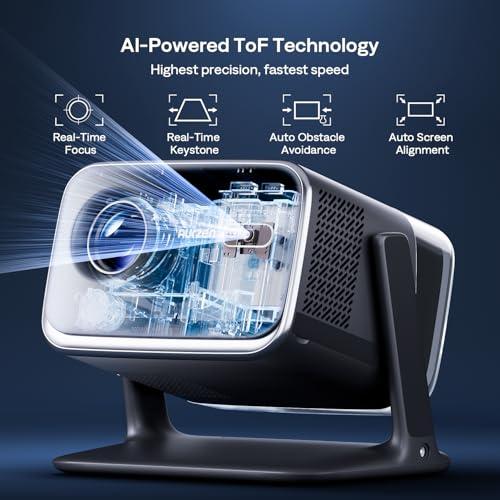
The BOOM Mini elevates this experience with real-time correction technology using ToF (Time of Flight) sensors. These sensors continuously measure the distance to the projection surface and automatically adjust focus and keystone correction in about 3 seconds, even if the projector is moved during operation. This real-time capability represents a significant technological advancement over the EAZZE D1's one-time setup corrections.
For users who frequently move their projector between rooms or outdoor locations, this difference becomes substantial. The BOOM Mini adapts instantly to new environments, while the EAZZE D1 requires brief setup each time it's repositioned.
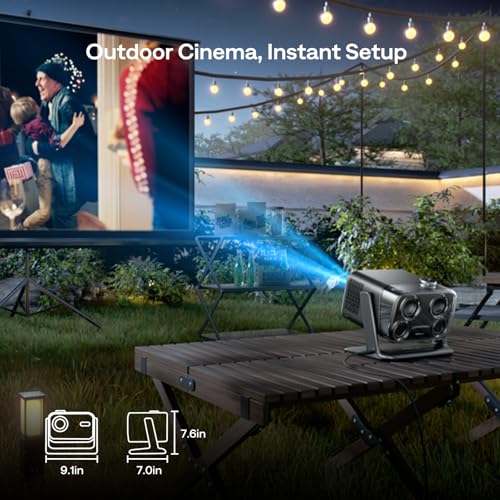
Portability considerations favor different models depending on your priorities. The EAZZE D1 is notably more compact and lighter, making it ideal for travel and outdoor use. Its smaller footprint means it fits easily in backpacks and takes up minimal space when stored.
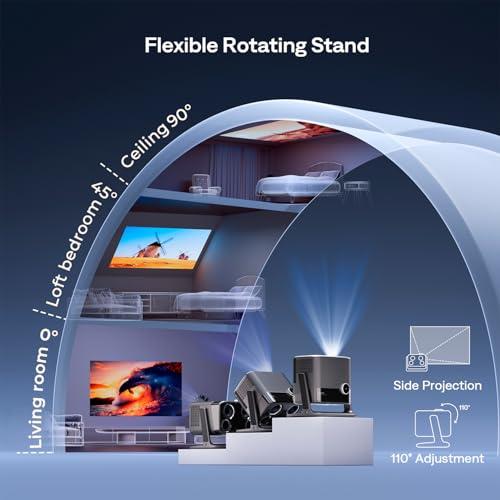
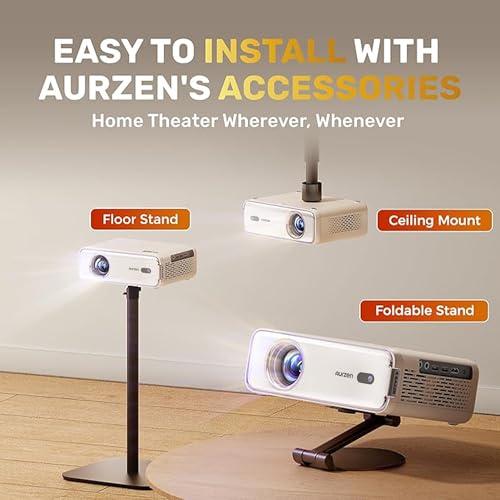
The BOOM Mini, while still portable, is larger and heavier due to its more powerful internal components. However, it compensates with a more sophisticated physical design, including a 110-degree flexible stand that enables ceiling projection without additional mounting hardware. This flexibility proves valuable in bedrooms or spaces where traditional placement isn't feasible.
Both projectors support standard tripod mounting (using 1/4-inch screw mounts) and can be ceiling-mounted with appropriate brackets, providing installation flexibility for permanent setups.
At the time of writing, these projectors occupy distinctly different value segments. The EAZZE D1 represents exceptional value in the budget category, offering authentic specifications (unlike many competitors that exaggerate their brightness ratings) and solid performance for casual entertainment needs.
The BOOM Mini, positioned in the premium compact projector segment, justifies its higher cost through significantly better brightness, comprehensive smart features, and advanced convenience technologies. The price difference reflects genuine performance improvements rather than brand markup.
For budget-conscious buyers, the EAZZE D1 provides an excellent entry point into smart projection without major compromises in essential features. Users seeking maximum versatility and performance will find the BOOM Mini's premium features worth the additional investment.
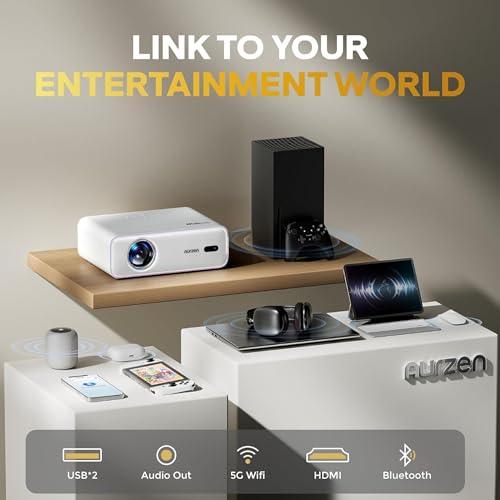
Both projectors offer comprehensive connectivity options including dual-band Wi-Fi, Bluetooth 5.1, HDMI, multiple USB ports, and 3.5mm audio output. The BOOM Mini adds Google Cast functionality, enabling seamless wireless casting from smartphones and tablets.
Technical specifications reveal additional differences: the BOOM Mini includes 2GB of RAM and 16GB of storage, ensuring smooth streaming performance and app responsiveness. The EAZZE D1 has more limited onboard memory, which occasionally results in slower app loading times but doesn't significantly impact basic streaming functionality.
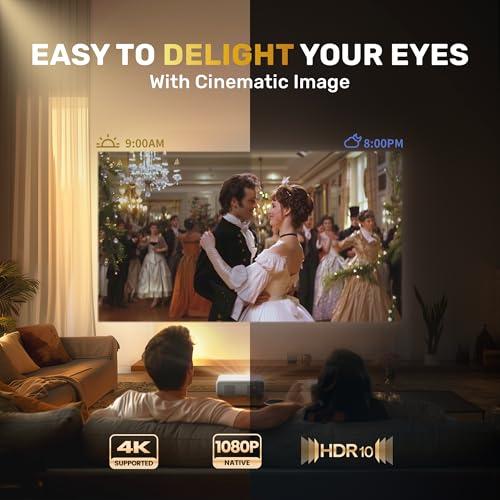
Both projectors support HDR10 content, which provides enhanced contrast and color depth for compatible movies and shows. However, the BOOM Mini's higher brightness allows HDR content to display more effectively, as HDR requires sufficient brightness to showcase its benefits.
The decision between these projectors ultimately depends on your specific use case and budget constraints. The EAZZE D1 excels for users who primarily watch content in controlled lighting conditions, prioritize portability, and want smart projection capabilities without premium pricing. It's particularly well-suited for bedroom entertainment, outdoor movie nights, and as a secondary display for casual viewing.
The BOOM Mini better serves users who need projection flexibility across various lighting conditions, want comprehensive streaming app access, and value advanced convenience features. It's ideal for living rooms, multi-purpose spaces, and as a primary entertainment display.
For home theater enthusiasts, both projectors can deliver satisfying experiences with proper room setup, but the BOOM Mini's higher brightness and superior audio make it more versatile for different viewing scenarios.
Consider the EAZZE D1 if you're new to projectors and want to explore the category without significant investment, or if your needs are primarily focused on dark-room entertainment. Choose the BOOM Mini if you want a projector that adapts to your lifestyle rather than requiring lifestyle adaptation, and if the comprehensive Google TV ecosystem aligns with your streaming habits.
Both projectors represent solid choices within their respective market segments, offering genuine value propositions that serve different user priorities and budgets effectively.
| Aurzen BOOM Mini Smart Projector Google TV | Aurzen EAZZE D1 Smart Projector |
|---|---|
| Brightness - Most critical spec determining where you can use the projector | |
| 500 ANSI lumens (works in moderately lit rooms, versatile placement) | 200 ANSI lumens (requires dark rooms for best viewing) |
| Smart Platform - Determines streaming app availability and user experience | |
| Full Google TV with 10,000+ apps including Netflix, Disney+, Hulu | Basic smart TV OS with Netflix, Prime Video, YouTube (limited app selection) |
| Audio Quality - Built-in speaker power and sound processing | |
| Dual 10W speakers (20W total) with Dolby Audio, functions as Bluetooth speaker | Dual 8W speakers (16W total) with Dolby Audio processing |
| Auto-Correction Technology - How quickly and accurately it sets up the image | |
| Real-time autofocus with ToF sensors (3-second adjustment), real-time keystone correction | Instant autofocus with 4-point keystone correction (±45°), one-time setup |
| Physical Design - Size and portability considerations | |
| 9.1 × 7 × 7.6 inches with 110° flexible stand for ceiling projection | 3.20 × 9.10 × 6.90 inches, more compact and travel-friendly |
| Memory & Storage - Affects app performance and streaming smoothness | |
| 2GB RAM + 16GB storage for smooth app performance | Limited onboard memory (may cause occasional app loading delays) |
| Release Generation - Technology advancement level | |
| 2025 release with latest auto-correction and smart features | 2024 release representing previous generation capabilities |
| Connectivity Features - Casting and device integration options | |
| Google Cast, voice control via Google Assistant, comprehensive Google ecosystem | Basic screen mirroring and two-way Bluetooth connectivity |
| Target Use Case - Best scenarios for each projector | |
| Living rooms, multi-purpose spaces, versatile lighting conditions | Dark rooms, outdoor movie nights, budget-conscious entertainment |
The Aurzen BOOM Mini is significantly brighter at 500 ANSI lumens compared to the Aurzen EAZZE D1 at 200 ANSI lumens. This makes the BOOM Mini much better for rooms with ambient light, while the EAZZE D1 requires darker environments for optimal viewing.
The Aurzen BOOM Mini features full Google TV with access to over 10,000 apps including Netflix, Disney+, and Hulu. The Aurzen EAZZE D1 has a basic smart TV platform with essential apps like Netflix, Prime Video, and YouTube, but with much more limited selection.
The Aurzen BOOM Mini has superior audio with dual 10W speakers (20W total) and can function as a standalone Bluetooth speaker. The EAZZE D1 features dual 8W speakers (16W total) with Dolby Audio, which is adequate for its price range but less powerful overall.
The Aurzen EAZZE D1 is more compact and lightweight, making it better for travel and outdoor use. While the BOOM Mini is still portable, it's larger due to its more powerful internal components.
The Aurzen BOOM Mini offers advanced real-time autofocus and keystone correction using ToF sensors that adjust in 3 seconds. The EAZZE D1 has good auto-setup features but requires brief recalibration when moved, unlike the BOOM Mini's continuous real-time adjustments.
The Aurzen EAZZE D1 provides exceptional budget value with authentic specifications and solid performance. The BOOM Mini offers premium value with significantly better brightness, comprehensive smart features, and advanced technology that justify its higher cost.
Yes, both the Aurzen BOOM Mini and Aurzen EAZZE D1 have built-in Netflix apps, eliminating the need for streaming sticks. However, the BOOM Mini offers a more comprehensive streaming experience with Google TV's full ecosystem.
Both projectors support similar projection sizes from 40-200 inches. However, the Aurzen BOOM Mini maintains better image quality across the full size range due to its higher brightness, while the EAZZE D1 performs best at smaller sizes in bright conditions.
The Aurzen BOOM Mini features cutting-edge real-time correction technology with ToF sensors, auto obstacle avoidance, and instant adjustments. The EAZZE D1 has solid auto-correction but represents older generation technology without real-time capabilities.
We've done our best to create useful and informative comparisons to help you decide what product to buy. Our research uses advanced automated methods to create this comparison and perfection is not possible - please contact us for corrections or questions. These are the sites we've researched in the creation of this article: aurzen.com - aurzen.com - the-gadgeteer.com - projectorcentral.com - aurzen.com - aurzen.com - youtube.com - bestbuy.com - bestbuy.com - youtube.com - aurzen.com - youtube.com - hometechnologyreview.com - youtube.com - aurzen.com - aurzen.com - projectorcentral.com - manuals.plus - aurzen.com - projektoren-datenbank.com - hometechnologyreview.com - aurzen.com - youtube.com - aurzen.com - youtube.com - youtube.com - aurzen.com - tvsbook.com

Privacy Policy
Terms and Conditions - Affiliate Policy
Home Security
© Copyright 2008-2026.
11816 Inwood Rd #1211, Dallas, TX 75244