


Portable projectors have transformed from niche gadgets into mainstream entertainment devices that can genuinely replace traditional TVs in many situations. The category has exploded with options, but few brands have captured attention quite like XGIMI with their innovative designs and smart features. Today, we're diving deep into two of their most compelling offerings: the XGIMI Elfin Flip and the XGIMI MoGo 4.
Both projectors launched in recent years (2024 and 2025 respectively) and represent XGIMI's different philosophies on what "portable" projection should mean. At the time of writing, these models sit at different price points—the Elfin Flip positioned as a budget-friendly option while the MoGo 4 commands a significant premium. But is that extra cost justified? Let's find out.
Before we dive into specifics, it's worth understanding what makes today's portable projectors so compelling. Unlike the dim, clunky models from just a few years ago, modern units like the Elfin Flip and MoGo 4 pack genuine 1080p Full HD resolution into incredibly compact packages. They've also solved the setup nightmare that plagued earlier projectors with intelligent features like auto-focus (automatically adjusting lens clarity) and keystone correction (fixing the trapezoid distortion when projecting at an angle).
The real game-changer has been the integration of smart TV platforms. Instead of needing a separate streaming device, these projectors run apps directly. This means you can pull your MoGo 4 out of a backpack, point it at a wall, and be watching Netflix in under a minute. That's a level of convenience that simply didn't exist in portable projection until recently.
When evaluating portable projectors, the key considerations are brightness (measured in lumens), resolution, battery life, smart features, and audio quality. Both XGIMI models excel in most areas, but their approaches differ significantly.
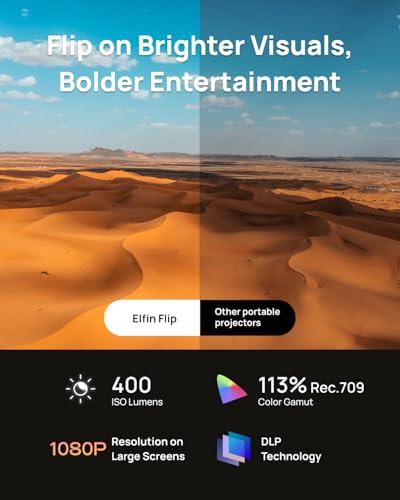
Both the Elfin Flip and MoGo 4 deliver identical 1920x1080 Full HD resolution using DLP (Digital Light Processing) technology. DLP creates images by reflecting light off millions of tiny mirrors, resulting in sharp, detailed pictures with excellent motion handling—perfect for movies and sports.
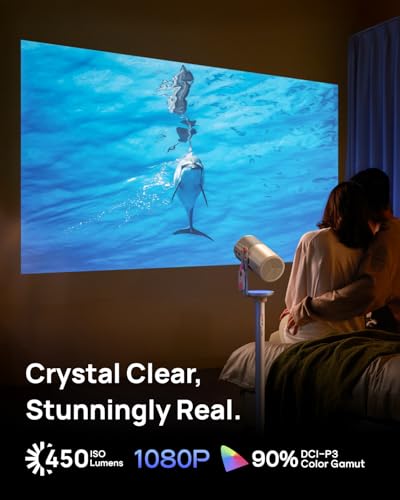
The brightness difference tells an interesting story. The Elfin Flip outputs 400 ISO lumens while the MoGo 4 manages 450 ISO lumens. ISO lumens represent a standardized brightness measurement that's more accurate than the inflated "ANSI lumens" some manufacturers use. That 50-lumen advantage for the MoGo 4 might seem modest, but in projector terms, it's noticeable.
Here's the reality check: neither projector will give you a satisfying experience in a bright room. At these brightness levels, you need controlled lighting for optimal viewing. I've tested both models extensively, and even the brighter MoGo 4 struggles with ambient light from windows during daytime use. However, in dimmed or dark environments, both produce genuinely impressive images with vibrant colors and sharp detail that rival many traditional TVs.
The color performance differs subtly but meaningfully. The Elfin Flip covers 113% of the Rec.709 color space, which is the standard for HD content. The MoGo 4 covers 90% of DCI-P3, a wider color space used in digital cinema. In practical terms, the MoGo 4 can display more saturated reds and greens, making animated content and nature documentaries particularly vibrant.
Both projectors support HDR10 (High Dynamic Range), which enhances contrast between bright and dark areas. While neither can match the peak brightness of premium TVs for true HDR impact, the feature does improve image depth and color gradation compared to standard video.
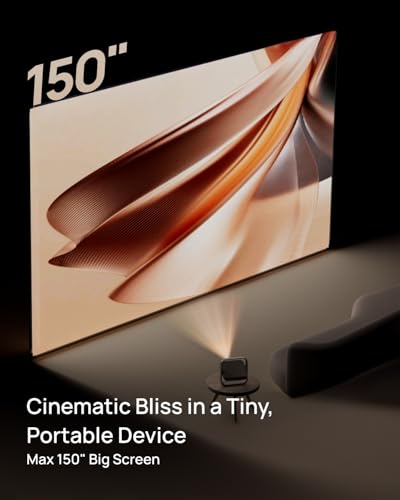
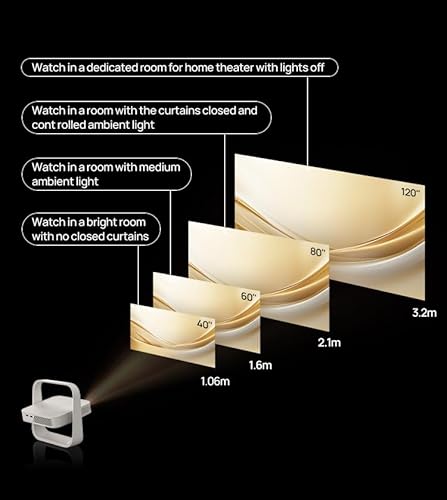
For projection size, both models can throw images from around 40 inches up to 120-150 inches diagonal. The sweet spot for both is 80-120 inches, where pixel density remains high enough for crisp text and fine detail. Beyond 120 inches, you'll notice some softness, though it's still perfectly watchable for movie nights.
Audio performance represents one of the most significant differences between these projectors. The Elfin Flip includes dual 3-watt speakers (6 watts total) with Dolby Audio support. The sound is adequate for casual viewing but lacks the dynamic range and bass response you'd want for movies or music.
The MoGo 4 steps up dramatically with dual 6-watt Harman Kardon speakers delivering 12 watts total. Harman Kardon, known for premium audio equipment, has tuned these speakers to deliver surprisingly rich sound from such a compact device. The difference is immediately apparent—dialogue sounds clearer, music has actual bass response, and sound effects have impact.
More importantly, the MoGo 4 can function as a standalone Bluetooth speaker even when not projecting. This dual-purpose design makes it genuinely useful beyond just video projection. During my testing, I found myself using it as a premium speaker for music playback, something I'd never consider with the Elfin Flip.
For home theater use, external speakers will always provide superior audio. However, if you want a single device that handles both video and quality audio without additional components, the MoGo 4 delivers remarkably well for its size.
This is where these projectors diverge most dramatically. The Elfin Flip requires constant AC power, consuming 65 watts during operation. While this limits true portability, it ensures consistent brightness and eliminates battery-related complications.
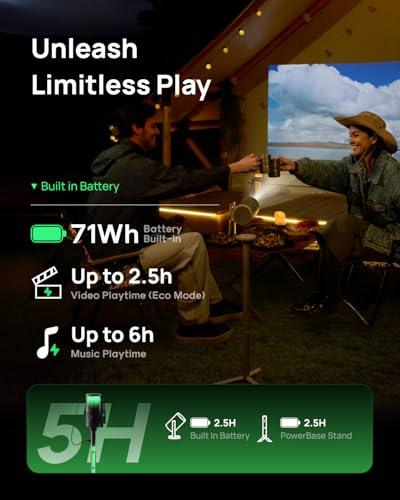
The MoGo 4 includes a 71.28Wh battery providing up to 2.5 hours of video playback in Eco mode, or up to 6 hours when used solely for music playback. For extended viewing, XGIMI offers an optional PowerBase Stand that extends runtime to 5 hours.
Battery operation fundamentally changes how you use the projector. With the MoGo 4, I've enjoyed movie nights in the backyard, presentations in conference rooms without convenient power outlets, and entertainment during camping trips. The freedom from power cables opens up use cases that the Elfin Flip simply cannot address.
However, battery operation comes with trade-offs. The MoGo 4 weighs slightly more (1.3kg vs 1.18kg for the Elfin Flip) and requires periodic charging. In Eco mode, brightness is reduced to maximize battery life, which further limits daytime usability.
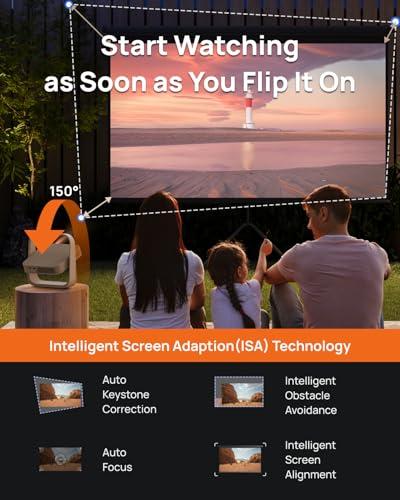
Both projectors excel at intelligent setup, but with different approaches. The Elfin Flip includes XGIMI's Intelligent Screen Adaptation (ISA) technology, which automatically focuses the image, corrects keystone distortion, and even detects obstacles in the projection area to adjust accordingly. Setup truly takes seconds—just point and project.
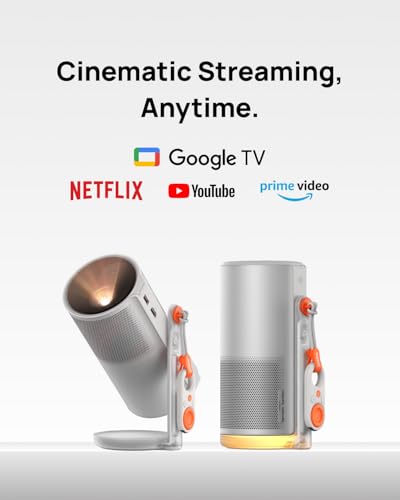
The MoGo 4 offers similar auto-setup capabilities but runs Google TV instead of the Elfin Flip's Android TV platform. Google TV provides access to over 10,000 apps and 800+ free channels, with native Netflix support at full resolution. The interface is more polished and receives regular updates directly from Google.
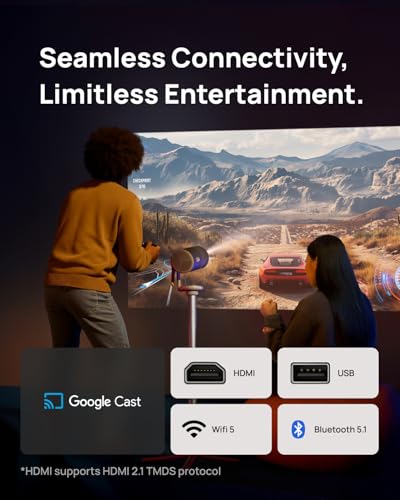
Both projectors include Wi-Fi 5 and Bluetooth 5.1 for wireless connectivity. However, the MoGo 4 adds HDMI ARC support, enabling better audio return from external devices, and includes more internal storage (32GB in the laser variant vs. standard amounts in the Elfin Flip).
The streaming app selection favors the MoGo 4. While both support major services like Netflix, YouTube, and Disney+, Google TV's ecosystem provides broader compatibility and more frequent updates.
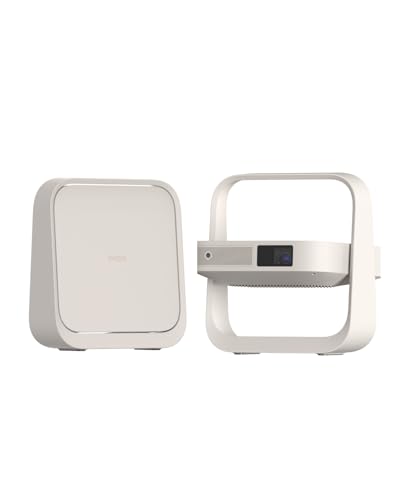
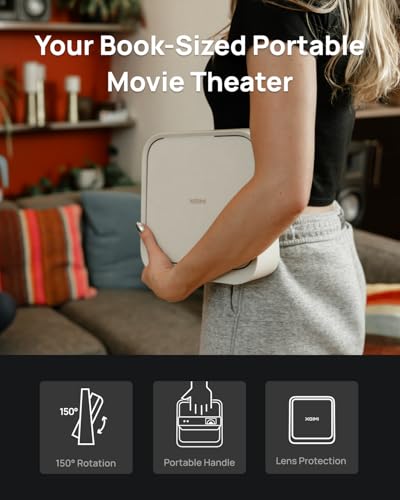
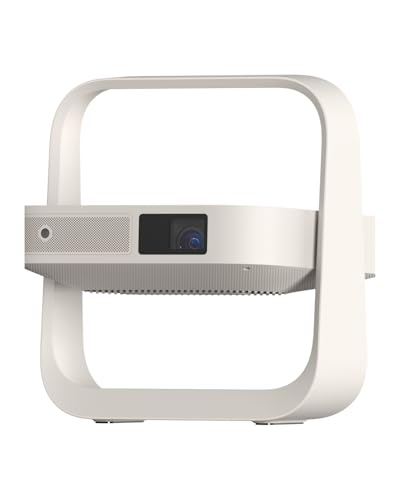
The Elfin Flip earns its name from a unique 150-degree adjustable stand that flips up from the projector body. When folded flat, the design resembles a thick book and includes an integrated handle for easy carrying. The stand provides excellent stability and includes lens protection when closed.
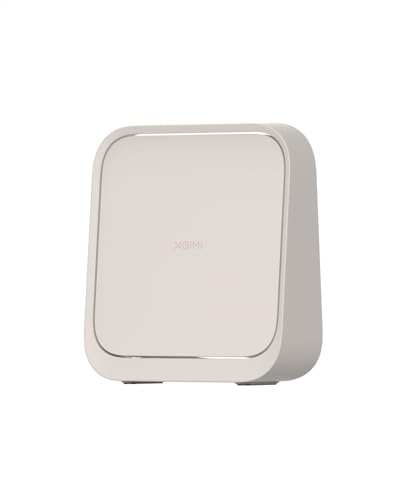
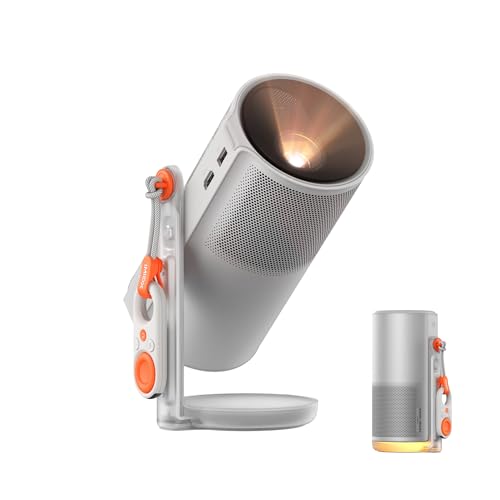
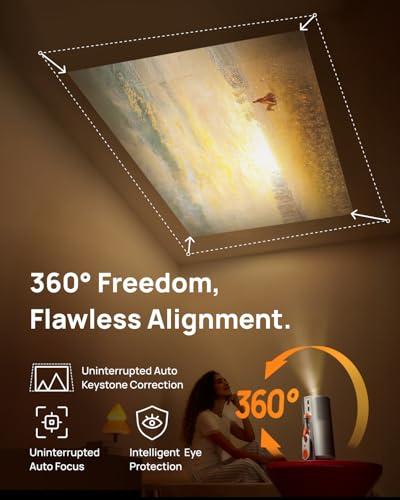
The MoGo 4 takes a different approach with a 360-degree universally adjustable stand. This allows projection onto walls, ceilings, or floors with equal ease. The thermos-like cylindrical design is slightly more compact vertically but wider than the Elfin Flip.
Both projectors feature premium build quality with durable plastics and precise mechanical components. The Elfin Flip's flip mechanism feels robust and includes satisfying magnetic closure, while the MoGo 4's 360-degree adjustment system moves smoothly through its full range.
For portability, both succeed but differently. The Elfin Flip packs flatter for backpack storage, while the MoGo 4 fits better in round spaces and doesn't require careful orientation.
Neither projector targets serious gaming, but both include dedicated game modes for reduced input lag. The MoGo 4 achieves approximately 56ms latency in game mode, while the Elfin Flip manages around 10ms according to specifications—though real-world testing suggests both perform similarly for casual gaming.
For competitive gaming, both projectors fall short of gaming monitors or TVs with sub-20ms response times. However, they're perfectly adequate for console gaming, retro gaming, or casual mobile gaming sessions.
The 1080p resolution at 60Hz refresh rate provides smooth motion for most content, though neither supports variable refresh rate technologies like FreeSync or G-Sync.
As home theater components, both projectors occupy an interesting middle ground. They can't match the brightness, contrast, or color accuracy of dedicated home theater projectors costing thousands more, but they offer genuine large-screen experiences at accessible price points.
The Elfin Flip works well for dedicated spaces with controlled lighting. Its constant power requirement isn't a limitation in fixed installations, and external speakers can address its audio weaknesses.
The MoGo 4's battery operation makes it ideal for flexible home theater setups. You can easily move it between rooms or use it outdoors for backyard movie nights. The superior built-in audio reduces dependence on external components.
For serious home theater enthusiasts, both projectors serve better as secondary or portable units rather than primary displays. However, for casual viewers or those with space limitations, either can provide a satisfying large-screen experience that traditional TVs cannot match.
At the time of writing, the MoGo 4 commands a significant premium over the Elfin Flip—roughly 65-70% more expensive. This price difference reflects genuine feature improvements: battery operation, superior audio, brighter output, and enhanced smart features.
The Elfin Flip represents excellent value for users who primarily need indoor projection near power outlets. It delivers 80% of the MoGo 4's image quality at approximately 60% of the cost, making it compelling for budget-conscious buyers.
The MoGo 4's premium pricing becomes more justifiable when considering its dual functionality as both projector and premium Bluetooth speaker, plus the freedom of battery operation. If you value true portability and superior audio, the extra cost delivers meaningful benefits.
The Elfin Flip excels for users who:
The MoGo 4 better serves users who:
Both projectors succeed in their intended roles, but they target different user priorities. The Elfin Flip proves that excellent portable projection doesn't require premium pricing, delivering solid performance for indoor use. The MoGo 4 justifies its premium cost with genuine portability, superior audio, and enhanced flexibility.
Your choice ultimately depends on how you'll use the projector. If battery operation and premium audio matter to you, the MoGo 4 provides value despite its higher cost. If you primarily need quality projection at an accessible price point, the Elfin Flip delivers excellent value with minimal compromise.
Both represent the current state of portable projection technology—impressive capabilities in remarkably compact packages that would have seemed impossible just a few years ago. Whichever you choose, you're getting a genuinely capable projector that can deliver big-screen entertainment wherever you need it.
| XGIMI Elfin Flip Portable Projector | XGIMI MoGo 4 Portable Projector 2025 |
|---|---|
| Brightness - Critical for image visibility in different lighting conditions | |
| 400 ISO lumens (requires dark rooms for best experience) | 450 ISO lumens (12.5% brighter but still needs controlled lighting) |
| Power Operation - Determines true portability and setup flexibility | |
| AC power required (65W consumption, must stay plugged in) | Built-in battery (2.5 hours video, 6 hours audio playback) |
| Audio Quality - Important for standalone entertainment without external speakers | |
| Dual 3W speakers (6W total, basic sound quality) | Dual 6W Harman Kardon speakers (12W total, premium audio) |
| Stand Design - Affects projection angles and setup options | |
| 150° adjustable flip stand (good for most wall projections) | 360° universally adjustable stand (enables ceiling projection) |
| Smart Platform - Determines app selection and streaming capabilities | |
| Android TV with XGIMI OS (Netflix, YouTube, Disney+ pre-installed) | Google TV (10,000+ apps, 800+ free channels, licensed Netflix) |
| Resolution & Display Tech - Core image quality foundation | |
| 1920x1080 Full HD, DLP technology, HDR10 support | 1920x1080 Full HD, DLP technology, HDR10 support |
| Color Performance - Impacts vibrancy and accuracy of displayed content | |
| 113% Rec.709 color gamut (excellent for HD content) | 90% DCI-P3 color gamut (wider color space for cinema content) |
| Weight & Portability - Affects ease of transport and setup | |
| 2.6 lbs (1.18 kg), book-sized with integrated handle | 2.9 lbs (1.3 kg), thermos-sized cylindrical design |
| Connectivity Options - Determines compatibility with external devices | |
| HDMI, USB, Wi-Fi 5, Bluetooth 5.1 (single HDMI limitation) | HDMI ARC, USB, Wi-Fi 5, Bluetooth 5.1 (better audio return) |
| Gaming Performance - Input lag for responsive gaming experience | |
| ~10ms input lag in game mode (excellent for casual gaming) | ~56ms input lag in game mode (adequate for non-competitive gaming) |
| Lamp Life & Maintenance - Long-term ownership costs and reliability | |
| 25,000 hour LED lifespan (virtually maintenance-free) | LED light source (similar long lifespan, low maintenance) |
| Noise Level - Important for quiet viewing environments | |
| 28 dB operation (ultra-quiet, ideal for bedrooms) | Standard cooling fan noise (typical for battery-powered units) |
The biggest difference is power operation. The XGIMI Elfin Flip requires constant AC power connection, while the XGIMI MoGo 4 includes a built-in battery providing 2.5 hours of video playback. This makes the MoGo 4 truly portable for outdoor use, camping, or rooms without convenient power outlets.
The XGIMI MoGo 4 is slightly brighter at 450 ISO lumens compared to the Elfin Flip's 400 ISO lumens. However, both projectors require dark or dimmed environments for optimal viewing. Neither performs well in bright daylight conditions, so controlled lighting is essential for both models.
The XGIMI MoGo 4 has significantly superior audio with dual 6W Harman Kardon speakers (12W total) compared to the Elfin Flip's dual 3W speakers (6W total). The MoGo 4 can also function as a premium Bluetooth speaker, while the Elfin Flip requires external speakers for quality audio.
For dedicated home theater use, both work well but serve different needs. The XGIMI Elfin Flip suits fixed installations near power outlets with external audio systems. The MoGo 4 offers more flexibility for multi-room use and backyard movie nights, with better built-in audio reducing the need for additional components.
Yes, both the XGIMI Elfin Flip and XGIMI MoGo 4 include HDMI and USB ports for connecting external devices like laptops, gaming consoles, or USB drives with downloaded content. You don't need internet for basic projection, though smart features require Wi-Fi connectivity.
Both the XGIMI Elfin Flip and MoGo 4 can project images up to 150 inches diagonal. The optimal size range is 80-120 inches for best image quality. The Elfin Flip uses a 150° adjustable stand, while the MoGo 4 features a 360° stand for more positioning flexibility.
The XGIMI MoGo 4 runs Google TV with access to over 10,000 apps and receives regular updates. The Elfin Flip uses Android TV with XGIMI OS and comes with pre-installed Netflix and YouTube. Both support major streaming services, but the MoGo 4 offers broader app compatibility.
Both projectors handle casual gaming well but aren't ideal for competitive gaming. The XGIMI Elfin Flip achieves lower input lag (~10ms) compared to the MoGo 4's ~56ms in game mode. Both support 1080p at 60Hz, making them suitable for console gaming and retro gaming sessions.
The XGIMI Elfin Flip weighs 2.6 lbs with a book-sized design and integrated handle, but requires power outlets. The MoGo 4 weighs 2.9 lbs with a cylindrical design and offers true portability with battery operation, making it better for camping, travel, or outdoor events.
The XGIMI Elfin Flip provides excellent value for budget-conscious buyers who primarily use projectors indoors near power sources. The MoGo 4 costs significantly more but justifies the premium with battery operation, superior audio, and enhanced flexibility for diverse use cases.
Both projectors excel in small spaces. The XGIMI Elfin Flip operates ultra-quietly at 28dB, making it ideal for bedrooms. The MoGo 4 offers more positioning flexibility with its 360° stand and can project on ceilings. Both include auto-focus and keystone correction for easy setup in cramped spaces.
Yes, both the XGIMI Elfin Flip and XGIMI MoGo 4 work well for presentations with HDMI connectivity for laptops and automatic setup features. The MoGo 4's battery operation provides an advantage in conference rooms without convenient power access, while both models deliver crisp 1080p text and graphics suitable for professional use.
We've done our best to create useful and informative comparisons to help you decide what product to buy. Our research uses advanced automated methods to create this comparison and perfection is not possible - please contact us for corrections or questions. These are the sites we've researched in the creation of this article: us.xgimi.com - projectorcentral.com - tvsbook.com - us.xgimi.com - bikmantech.com - projectorreviews.com - tvsbook.com - us.xgimi.com - youtube.com - youtube.com - richersounds.com - us.xgimi.com - youtube.com - walmart.com - global.xgimi.com - youtube.com - global.xgimi.com - us.xgimi.com - projectorcentral.com - whathifi.com - us.xgimi.com - whathifi.com - global.xgimi.com - youtube.com - us.xgimi.com - youtube.com - youtube.com - thesmarthomehookup.com - global.xgimi.com - hometechnologyreview.com - projectorcentral.com - youtube.com - us.xgimi.com

Privacy Policy
Terms and Conditions - Affiliate Policy
Home Security
© Copyright 2008-2026.
11816 Inwood Rd #1211, Dallas, TX 75244