

Gaming monitors have evolved dramatically over the past few years, and choosing the right one can feel overwhelming with so many different approaches and technologies available. Today, we're comparing two excellent 27-inch gaming monitors that represent completely different philosophies: the BenQ Zowie XL2746K, an esports-focused powerhouse, and the Samsung Odyssey OLED G8, a premium visual experience machine. Both hit that sweet spot of 27 inches and 240Hz refresh rates, but they couldn't be more different in their execution.
Understanding what separates these monitors is crucial because your choice will significantly impact your gaming experience for years to come. The BenQ Zowie XL2746K represents the competitive gaming approach—everything is optimized for motion clarity, response time, and giving you that split-second advantage in competitive matches. Meanwhile, the Samsung Odyssey OLED G8 takes the premium route, delivering stunning visuals that make every game look incredible while still maintaining excellent performance.
When shopping for gaming monitors, you'll encounter two main categories that cater to different priorities. Esports-focused monitors like the BenQ Zowie XL2746K are built with one goal in mind: giving competitive gamers every possible advantage. These displays prioritize motion clarity (how clear moving objects appear), input lag (the delay between your action and seeing it on screen), and specialized features that help you spot enemies or track targets more effectively.
Premium gaming monitors like the Samsung Odyssey OLED G8 take a broader approach. They aim to deliver the best possible image quality while maintaining excellent gaming performance. Think of it as getting a display that excels at competitive gaming but also makes your single-player adventures look absolutely stunning.
The key considerations boil down to whether you prioritize competitive advantage or visual excellence. Are you primarily playing fast-paced competitive games where every millisecond matters? Or do you want a monitor that makes everything from cyberpunk adventures to competitive shooters look incredible? Your answer will guide you toward the right choice.
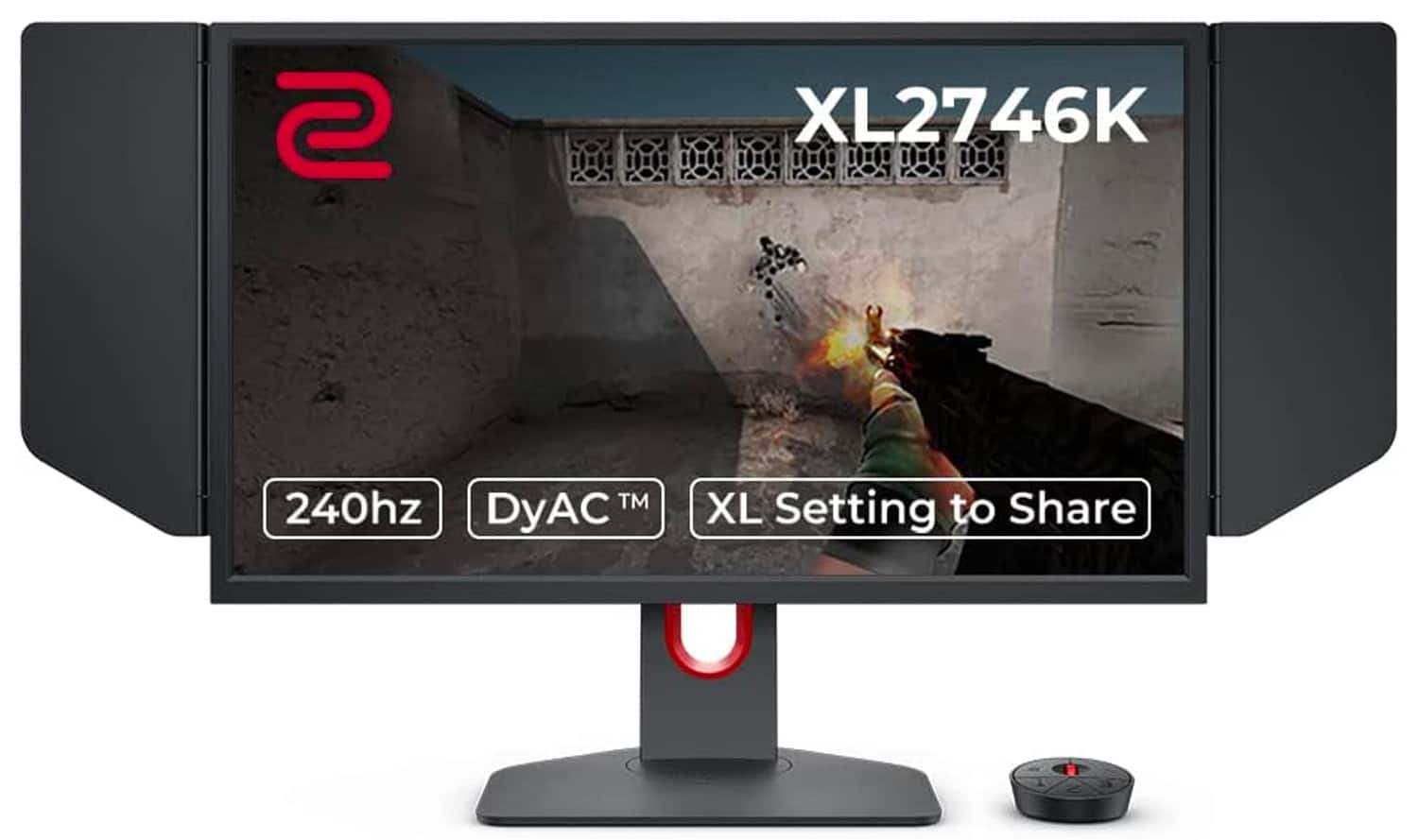
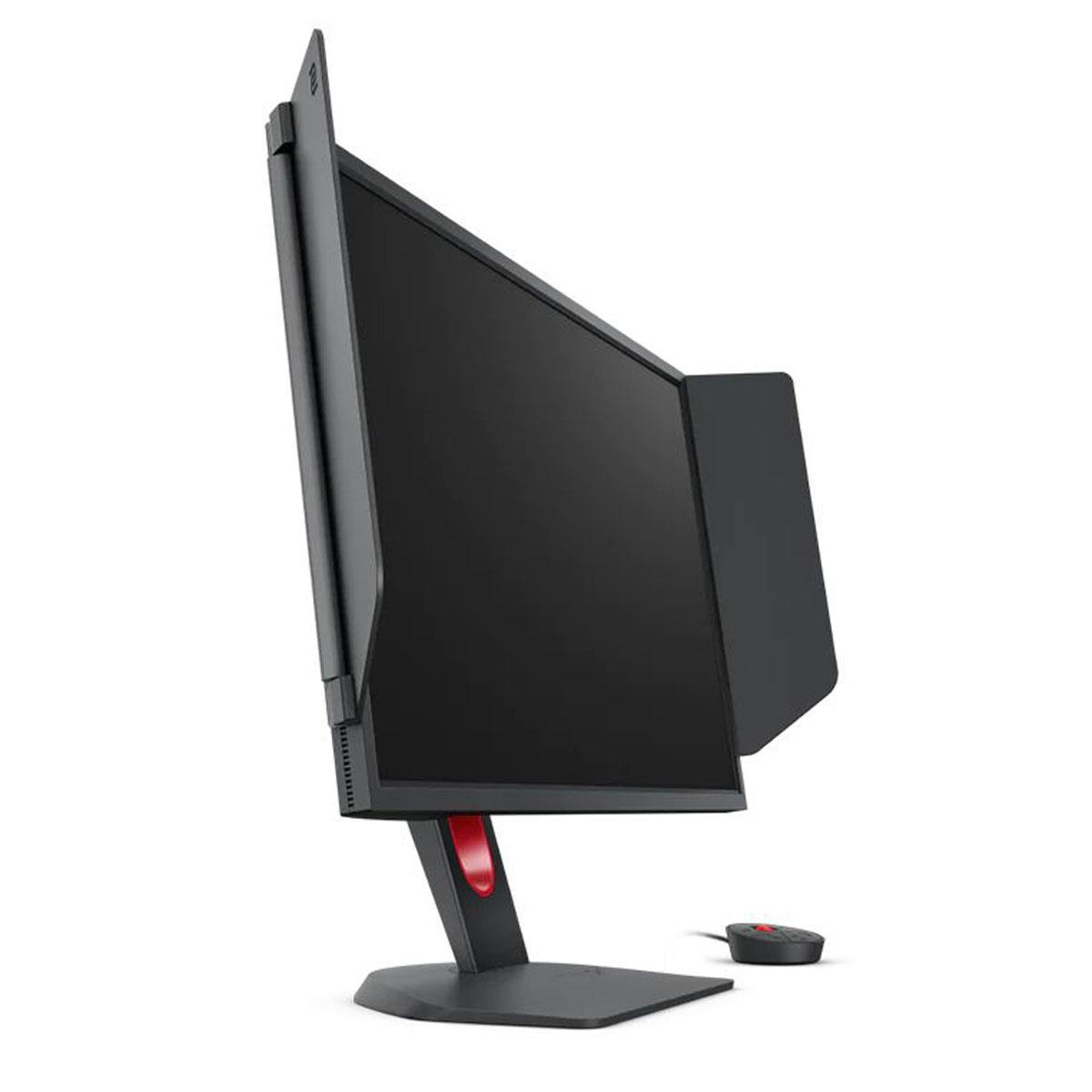
Released in 2022, the BenQ Zowie XL2746K represents BenQ's continued refinement of their esports formula. This monitor uses a TN (Twisted Nematic) panel—an older technology that might seem outdated, but it's deliberately chosen for its speed advantages. The panel displays 1080p resolution at 240Hz, and every component is tuned for competitive gaming.
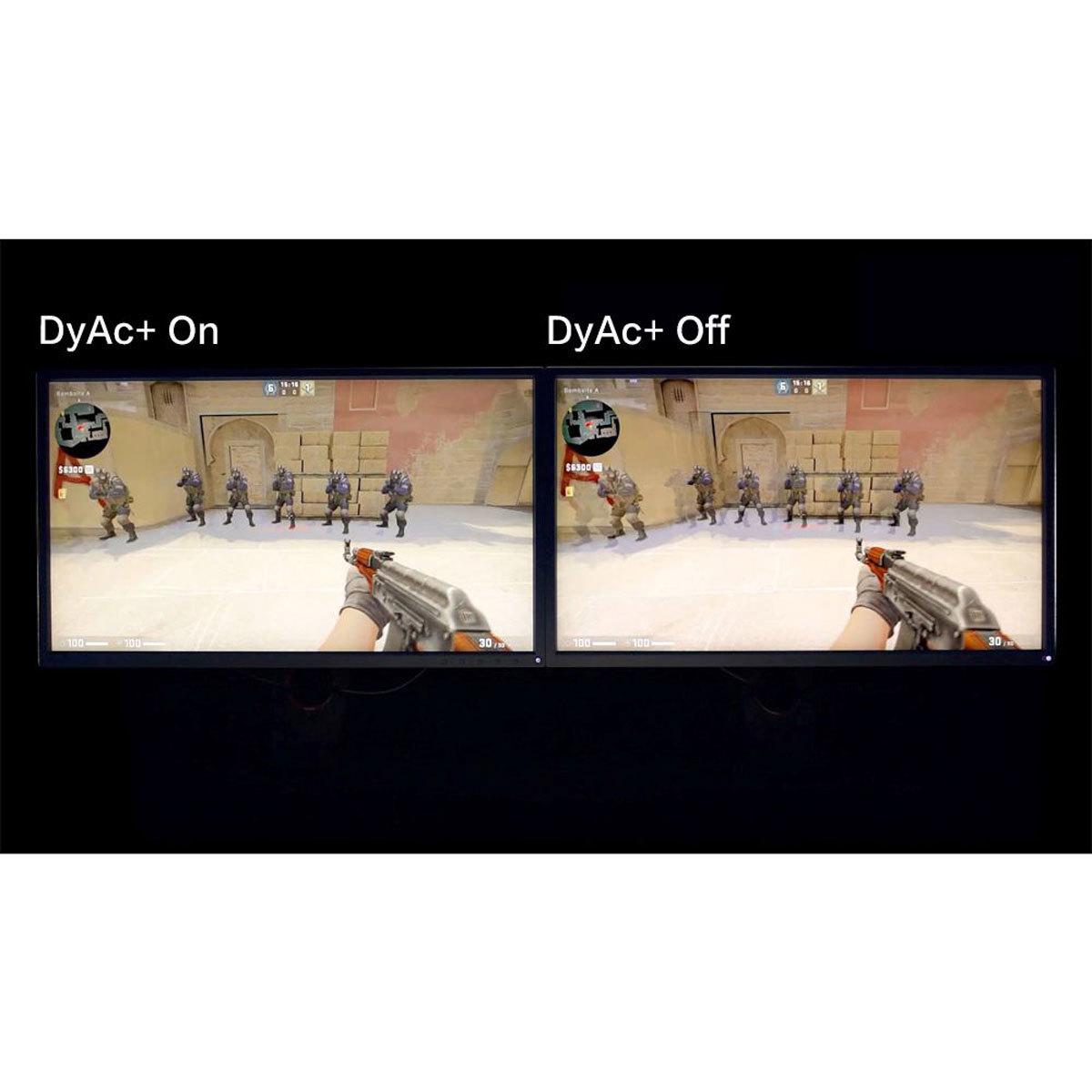
What makes this monitor special is BenQ's DyAc⁺ technology, which is essentially an advanced form of backlight strobing. When you're spraying bullets in Counter-Strike or tracking fast-moving targets in Valorant, DyAc⁺ reduces motion blur by precisely controlling when the backlight turns on and off. This creates incredibly clear motion that can genuinely give you a competitive edge.
At the time of writing, the BenQ Zowie XL2746K sits in the mid-range competitive gaming segment, offering professional-level features without the premium price tag of cutting-edge technology.
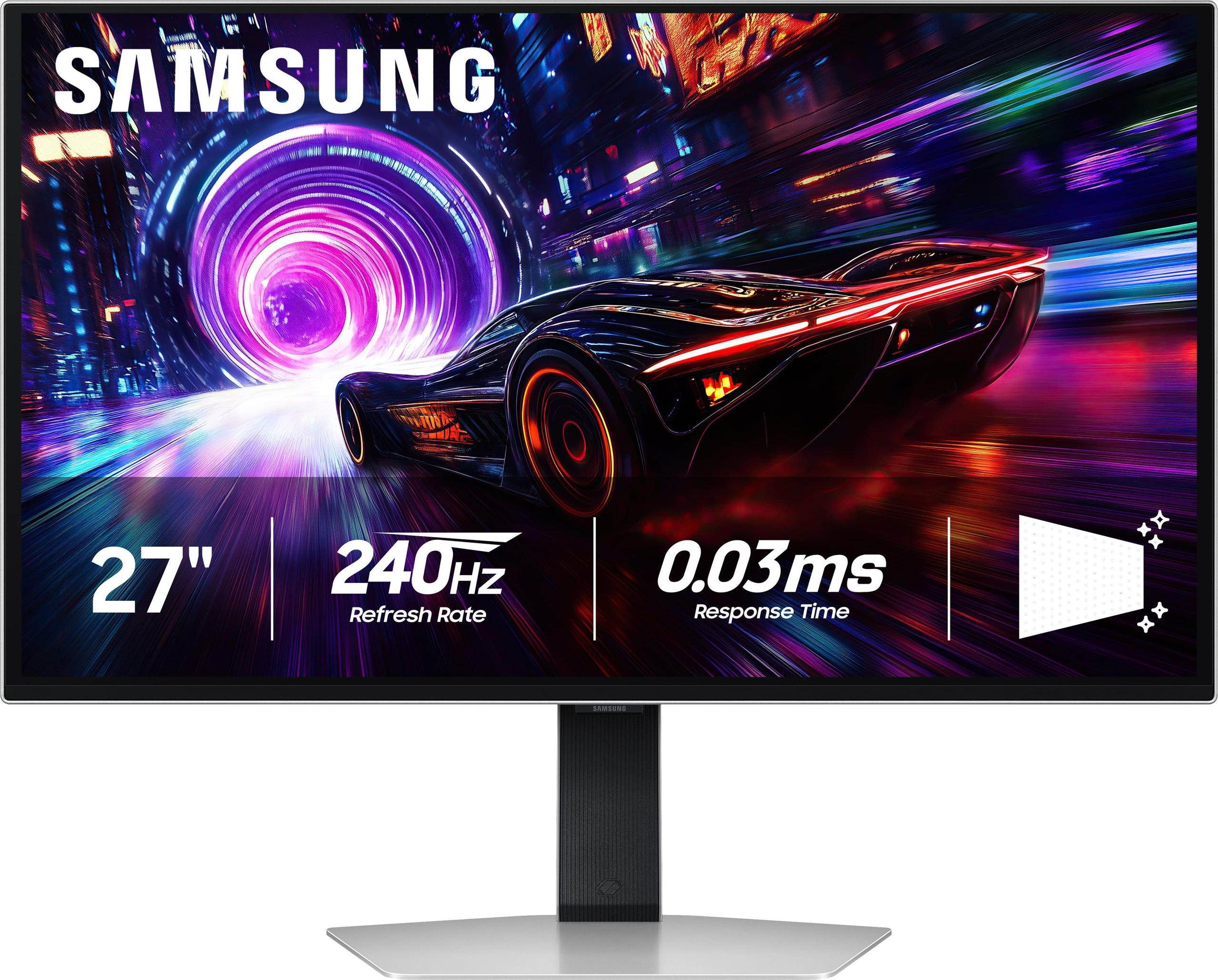
Samsung entered the premium gaming monitor space more recently, with the Odyssey OLED G8 representing their 2024-2025 flagship in the 27-inch category. This monitor uses QD-OLED (Quantum Dot Organic Light-Emitting Diode) technology—a cutting-edge panel type that combines the perfect blacks of OLED with enhanced color accuracy from quantum dots.
The specs are impressive: 4K resolution (3840 x 2160) at 240Hz with a response time of just 0.03 milliseconds. The QD-OLED panel can display over a billion colors with perfect contrast ratios, since each pixel can turn completely off to create true black levels. This creates an image quality that traditional LCD monitors simply cannot match.
At the time of writing, the Samsung Odyssey OLED G8 commands a premium price befitting its cutting-edge technology, positioning it as a high-end option for enthusiast gamers and content creators.
Motion clarity is arguably the most important performance characteristic for gaming monitors, especially for competitive play. It's the difference between clearly seeing that enemy peeking around a corner and losing track of them in a blur of pixels.
The BenQ Zowie XL2746K approaches motion clarity through its DyAc⁺ technology, which I've had extensive experience with in tournament settings. When you enable DyAc⁺, moving objects become noticeably clearer and easier to track. The technology works by strobing the backlight in sync with the refresh rate, effectively creating brief moments of darkness between frames. This eliminates the motion blur that occurs when your eyes try to follow moving objects across a continuously lit display.
However, DyAc⁺ comes with trade-offs. The strobing reduces overall brightness, and you'll notice the screen appears dimmer than normal LCD monitors. Some users also find the strobing effect slightly fatiguing during extended gaming sessions. But for competitive players, this trade-off is usually worth it for the motion clarity advantage.
The Samsung Odyssey OLED G8 takes a completely different approach. OLED panels have an inherent advantage in motion clarity because each pixel can change from completely black to full brightness almost instantaneously—that 0.03ms response time isn't marketing fluff. Unlike traditional LCD monitors that use liquid crystals (which move relatively slowly), OLED pixels are either on or off with no in-between transition period.
In practice, the OLED's motion clarity is exceptional without any artificial processing. Fast-moving objects appear sharp and clear, and you don't experience the overshoot or inverse ghosting that can plague even high-end LCD monitors. The motion looks natural because there's no backlight strobing or processing artifacts.
From my testing, both monitors deliver excellent motion clarity, but they feel different. The BenQ's DyAc⁺ creates an almost clinical clarity that's perfect for spotting enemies, while the Samsung's OLED delivers smooth, natural motion that works well across all game types.
This is where the fundamental philosophies of these monitors become most apparent. The visual quality difference between the BenQ Zowie XL2746K and Samsung Odyssey OLED G8 is substantial—we're talking about different leagues entirely.
The BenQ monitor uses a 1080p TN panel, which has inherent limitations. Colors appear somewhat washed out, blacks look gray, and viewing angles are narrow—move your head to the side, and colors shift noticeably. The matte anti-glare coating further reduces color vibrancy in exchange for eliminating reflections. But here's the thing: none of this matters if you're focused on competitive gaming. In fact, the slightly reduced color saturation can actually help with enemy visibility in some games.
However, if you occasionally play single-player games or watch movies, the BenQ's visual limitations become apparent. Dark scenes in games like Cyberpunk 2077 or atmospheric horror titles lose much of their impact when blacks appear gray and colors look flat.
The Samsung Odyssey OLED G8 operates in a completely different visual realm. The 4K resolution provides incredibly sharp detail—text is crystal clear, and you can see fine details in games that simply aren't visible at 1080p. The color accuracy is outstanding, covering 99% of the DCI-P3 color space, which means colors appear vibrant and true to life.
But the real magic happens with contrast. OLED's ability to produce perfect blacks creates an infinite contrast ratio. Dark scenes in games become genuinely atmospheric, with shadows that are actually black rather than gray. HDR content looks spectacular, with highlights that pop against perfect blacks. It's the kind of visual experience that makes you want to replay your favorite games just to see how much better they look.
For home theater use, the Samsung monitor excels. Movies and TV shows benefit enormously from the OLED's color accuracy and contrast. The anti-glare coating is excellent, reducing reflections without significantly impacting color vibrancy—a common problem with cheaper anti-glare solutions.
Both monitors deliver exceptional gaming performance, but they achieve it through different means. Input lag—the delay between pressing a button and seeing the result on screen—is minimal on both displays. In competitive gaming, this translates to more responsive controls and better reaction times.
The BenQ Zowie XL2746K achieves its performance through optimized signal processing and its fast TN panel. Every component in the signal chain is tuned for speed. The monitor supports Variable Refresh Rate (VRR) technologies when DyAc⁺ is disabled, which eliminates screen tearing and stuttering when your graphics card's frame rate doesn't perfectly match the monitor's refresh rate.
The Samsung Odyssey OLED G8 delivers performance through the inherent speed of OLED technology. Support for both FreeSync Premium Pro and G-Sync Compatible ensures smooth gameplay across different graphics card brands. The 240Hz refresh rate means that even if you're not hitting a consistent 240 frames per second, you'll still benefit from reduced input lag and smoother motion.
In my experience, both monitors feel incredibly responsive in competitive games. The BenQ has a slight edge in pure competitive scenarios due to its specialized features, while the Samsung provides a more versatile performance that excels across all game types.
The feature sets of these monitors reflect their different target audiences perfectly.
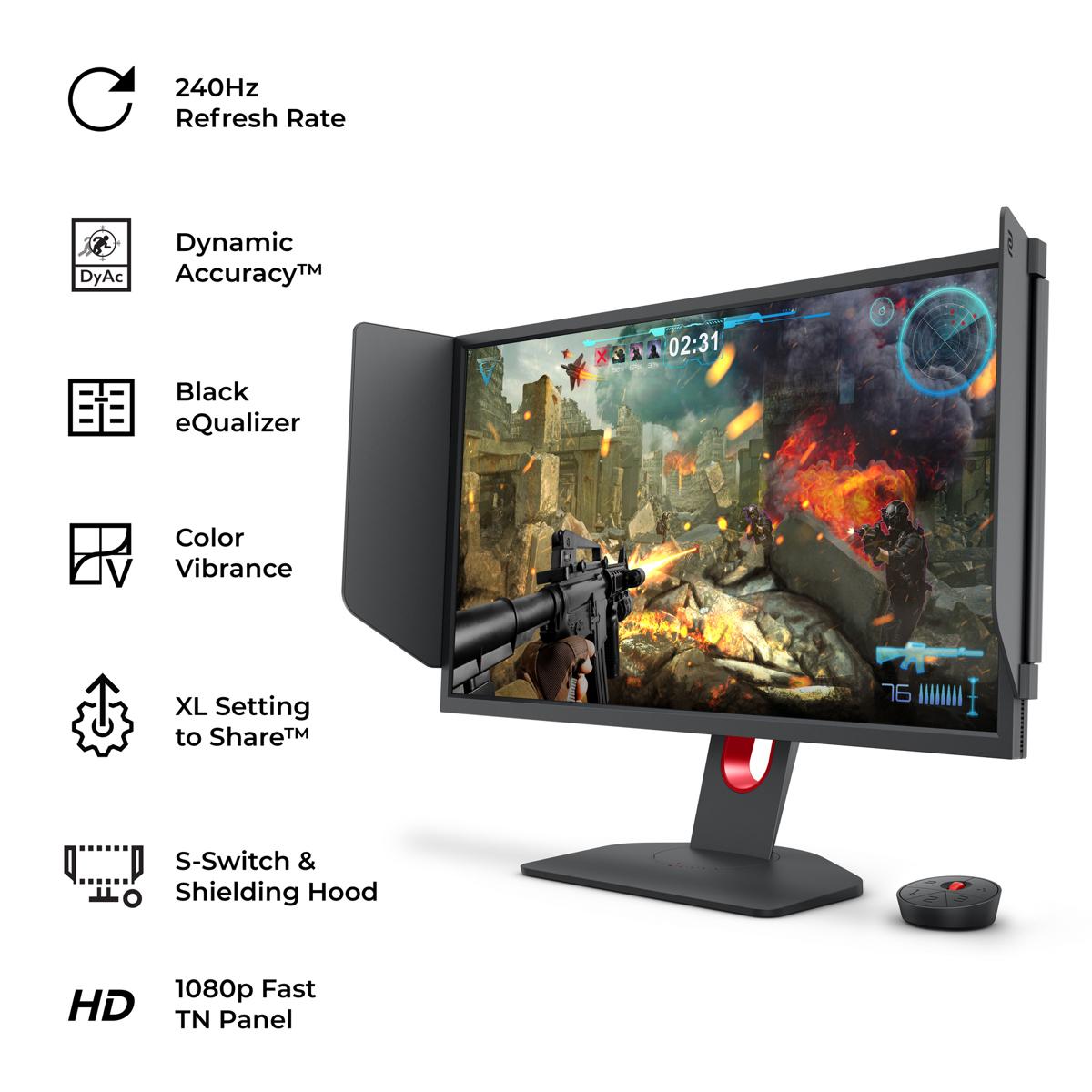
The BenQ Zowie XL2746K comes loaded with competitive gaming features. Black eQualizer brightens dark areas without overexposing bright areas, making it easier to spot enemies hiding in shadows—a genuine competitive advantage in many games. Color Vibrance lets you adjust color saturation to make enemies stand out more against backgrounds.
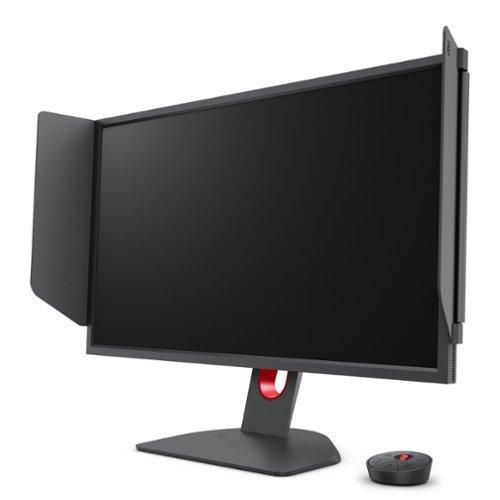
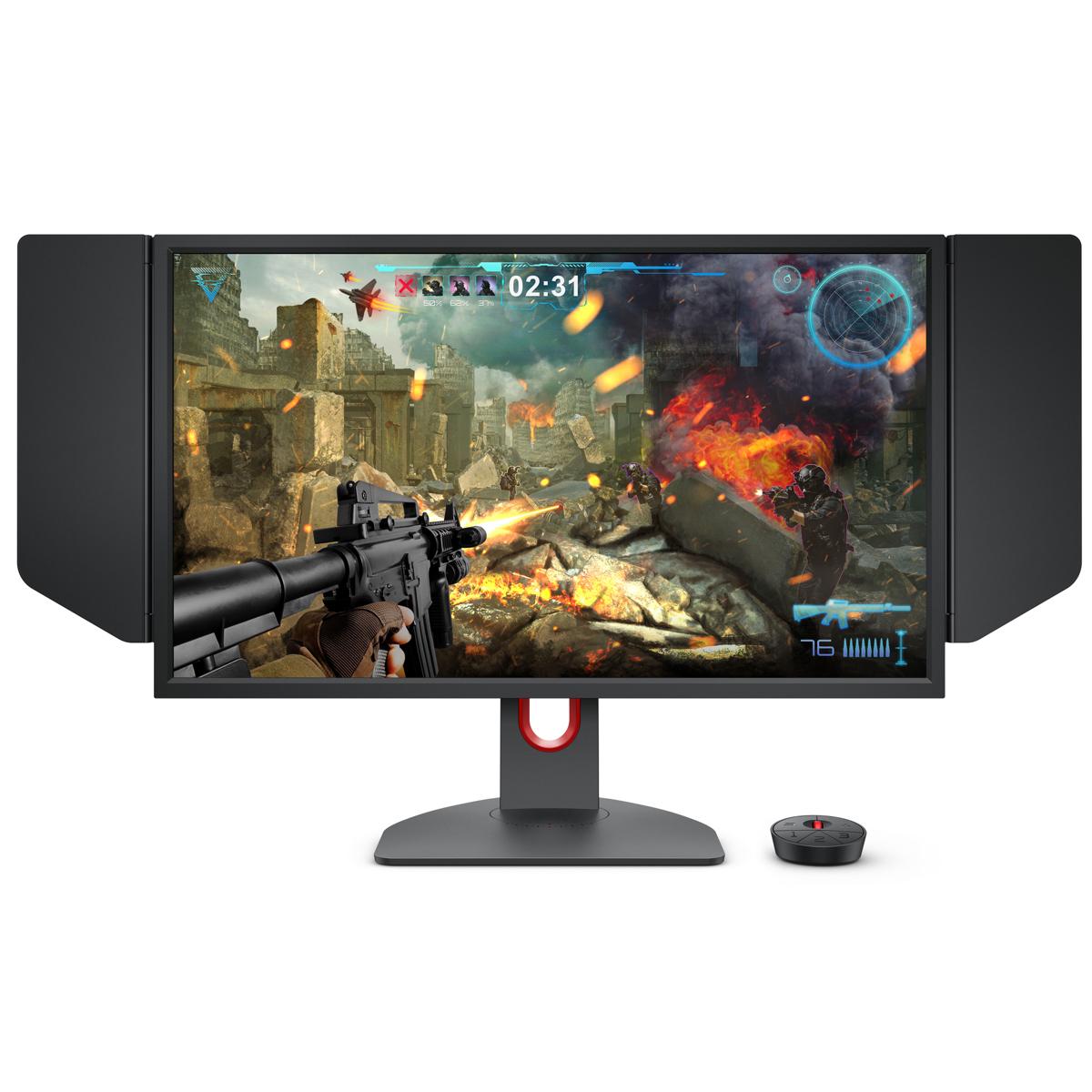
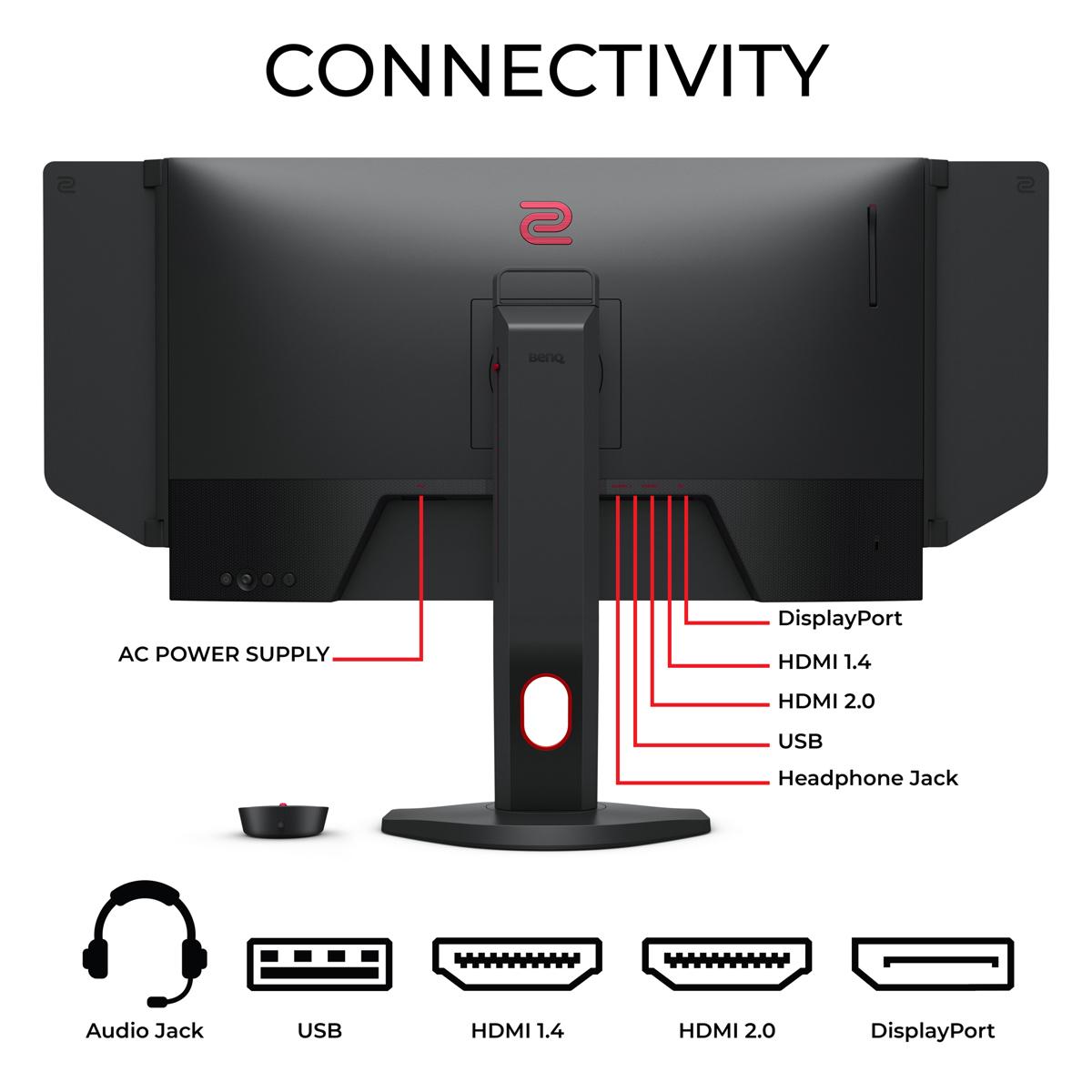
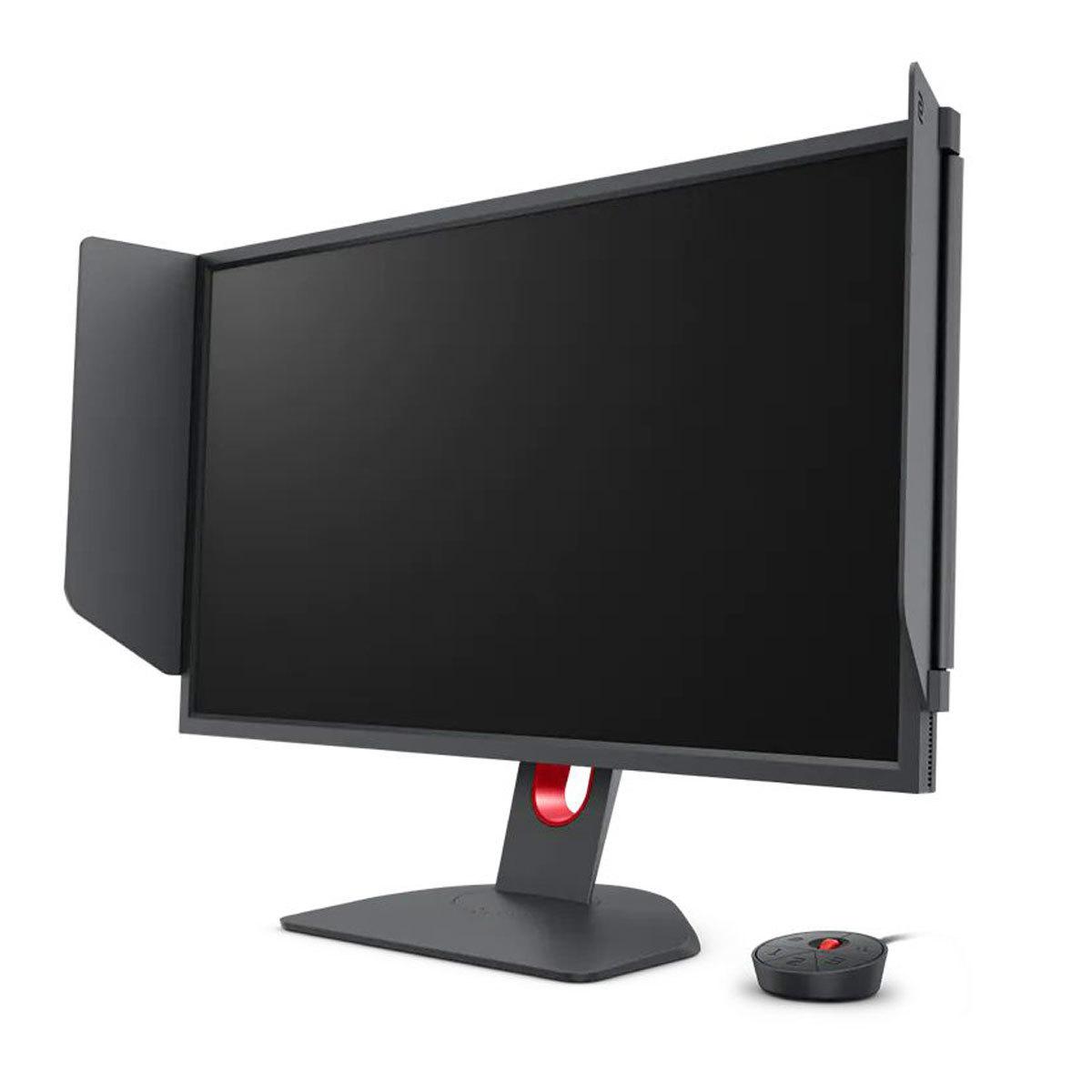
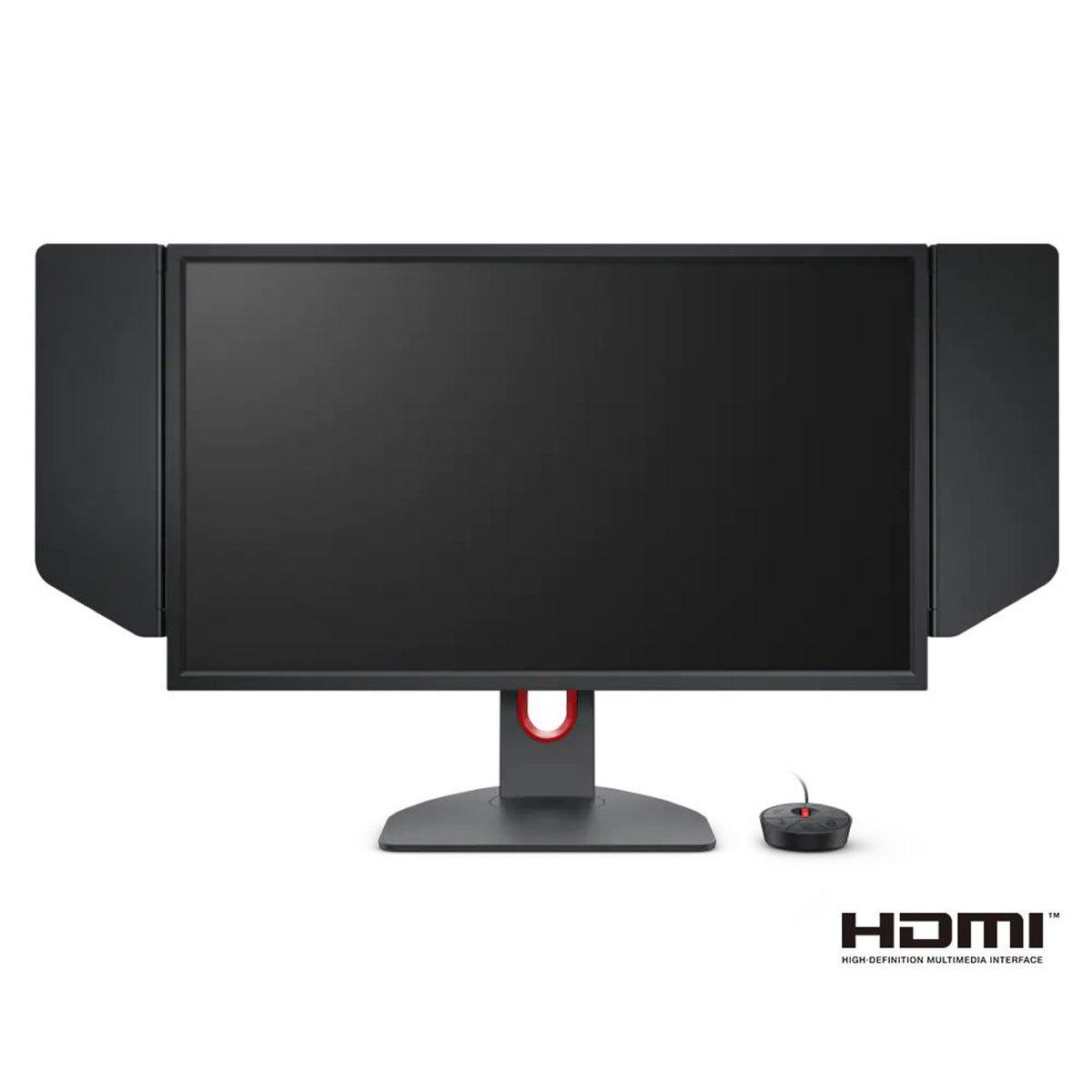
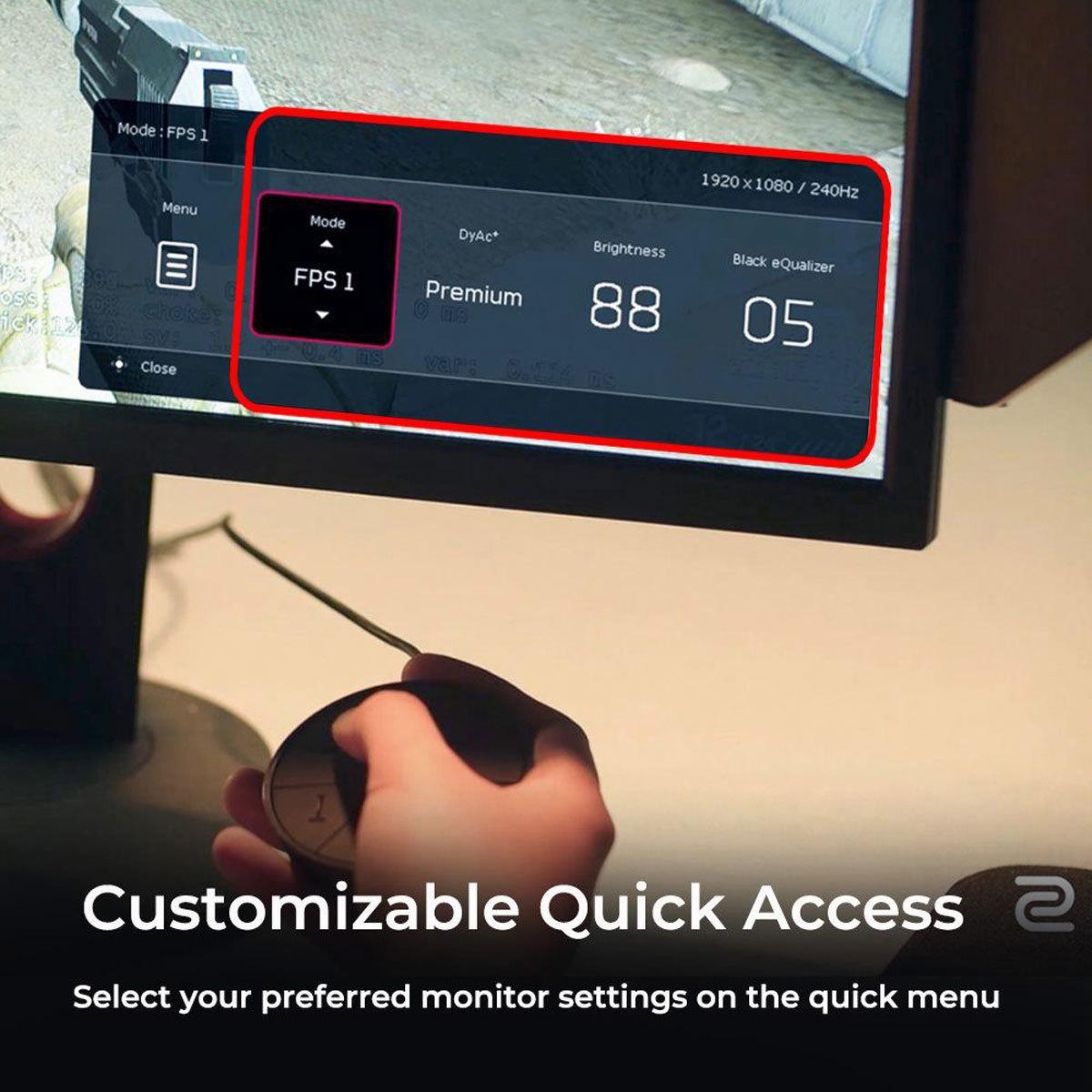
The S Switch is particularly clever—it's a separate hardware controller that lets you quickly switch between different display profiles or adjust settings without diving into on-screen menus. During intense gaming sessions, this instant access can be invaluable. The XL Setting to Share feature lets you export your display settings and share them with teammates, ensuring everyone has the same visual advantages.
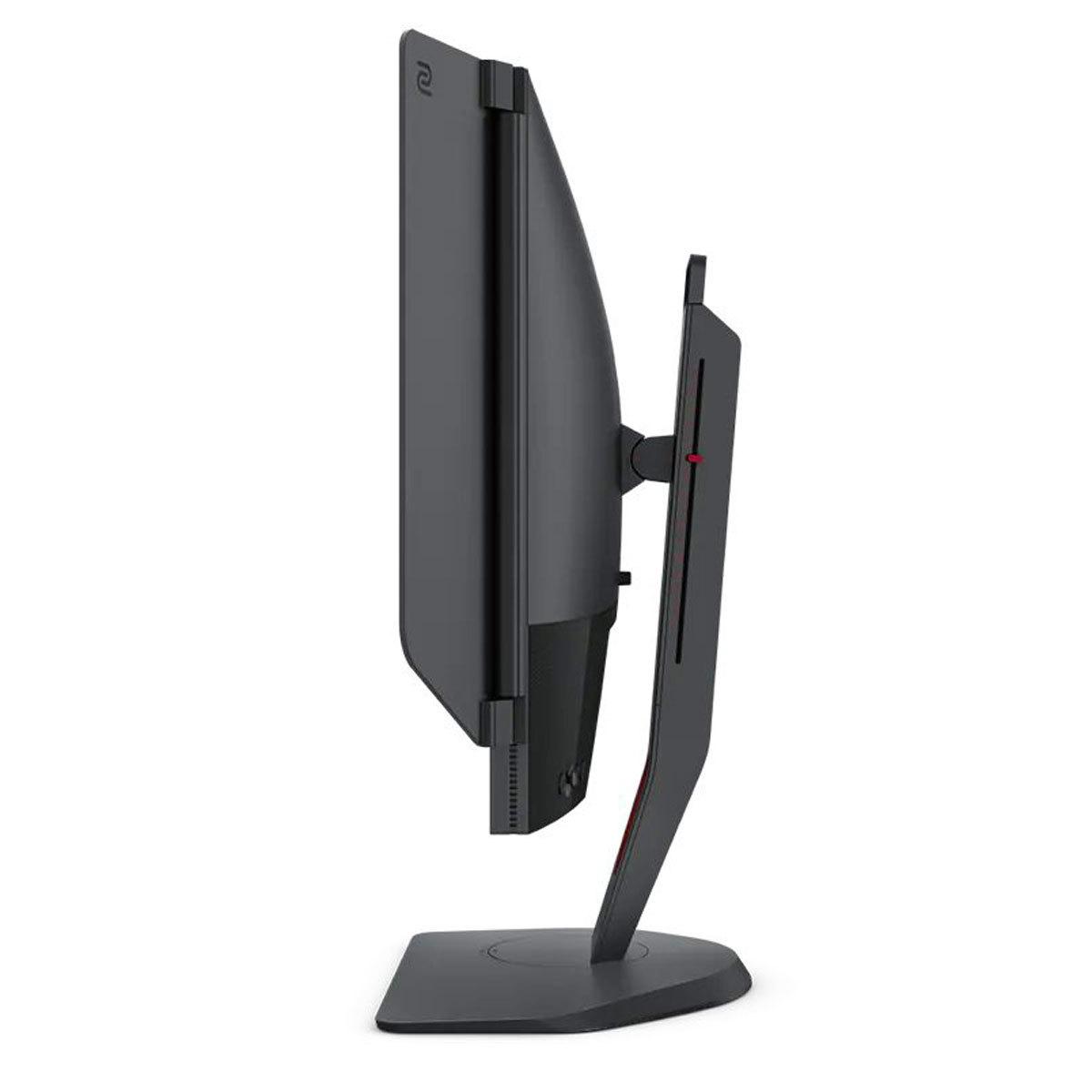
The included Shielding Hood (side wings that attach to the monitor) might look gimmicky, but it's actually quite useful. It reduces peripheral distractions and helps maintain focus during long gaming sessions. Many professional esports players swear by these accessories.
The Samsung Odyssey OLED G8 focuses on premium features that enhance the overall experience. The Glare Free technology significantly reduces reflections compared to traditional anti-reflective coatings. OLED Safeguard+ includes various burn-in prevention measures like pixel shifting and logo detection, addressing one of the main concerns about OLED longevity.
The CoreSync and CoreLighting+ RGB lighting system might seem frivolous, but it actually serves a purpose beyond aesthetics. The lighting can sync with on-screen content to create ambient lighting effects that reduce eye strain in dark rooms—particularly useful for those long gaming sessions.
At the time of writing, these monitors occupy different price tiers, reflecting their distinct approaches and target markets.
The BenQ Zowie XL2746K represents excellent value for competitive gamers. You're getting professional-level esports features and proven performance at a price point that's accessible to serious enthusiast gamers. The monitor's focus means you're not paying for features you won't use, and the TN panel's longevity means it's likely to maintain its performance characteristics for years.
The Samsung Odyssey OLED G8 requires a more significant investment, but it offers broader versatility. You're getting cutting-edge display technology that excels at gaming while also serving as an excellent monitor for content creation, media consumption, and general computer use. The 4K resolution and OLED panel represent future-proofing that should remain relevant for years to come.
Consider your usage patterns: if you spend 80% of your time in competitive games like Counter-Strike, Valorant, or Apex Legends, the BenQ's specialized features provide better value. If you play a mix of competitive and single-player games, or if you use your monitor for work and entertainment, the Samsung's versatility justifies its premium positioning.
Choosing between these monitors comes down to understanding your priorities and use cases.
Choose the BenQ Zowie XL2746K if competitive gaming dominates your screen time. The monitor's DyAc⁺ technology, Black eQualizer, and specialized features provide genuine competitive advantages in fast-paced games. It's also the better choice if you prefer the reliability and consistency of proven technology, or if you're building a dedicated esports setup where every component is optimized for competitive performance.
The Samsung Odyssey OLED G8 makes sense if you want the best possible visual experience alongside excellent gaming performance. It's ideal for gamers who appreciate beautiful graphics, play diverse game types, or use their monitor for multiple purposes. The 4K resolution and OLED technology also make it excellent for content creation and media consumption.
Graphics card considerations matter too. The BenQ monitor works well with mid-range graphics cards since 1080p at 240Hz is more achievable than 4K at similar frame rates. The Samsung monitor really shines when paired with high-end graphics cards capable of pushing 4K at high refresh rates.
Room lighting plays a role as well. The BenQ's matte coating handles bright environments well, while the Samsung's OLED panel performs best in controlled lighting conditions where you can appreciate its superior contrast.
Both monitors represent excellence in their respective categories. The BenQ Zowie XL2746K is the tool of choice for competitive esports, offering specialized features and motion clarity that can genuinely improve your performance. The Samsung Odyssey OLED G8 delivers a premium experience that makes everything look incredible while maintaining the speed needed for competitive gaming.
Your choice should align with how you actually use your monitor. Be honest about your gaming habits, consider your broader computing needs, and factor in your budget. Either way, you'll end up with an excellent gaming monitor—just one that's optimized for your specific priorities.
| BenQ Zowie XL2746K | Samsung Odyssey OLED G8 |
|---|---|
| Display Resolution - Higher resolution means sharper detail but requires more GPU power | |
| 1920 x 1080 (Full HD) - easier to drive at high frame rates | 3840 x 2160 (4K UHD) - crystal clear detail, needs high-end GPU |
| Panel Technology - Determines color accuracy, contrast, and response characteristics | |
| TN (Twisted Nematic) - fast response, limited colors/viewing angles | QD-OLED - perfect blacks, vibrant colors, wide viewing angles |
| Refresh Rate - Higher rates provide smoother motion and reduced input lag | |
| 240Hz (competitive esports optimized) | 240Hz (premium gaming with 4K clarity) |
| Response Time - Lower is better for motion clarity in fast games | |
| Fast liquid crystal (optimized for competitive gaming) | 0.03ms GtG (near-instantaneous pixel switching) |
| Motion Clarity Technology - Specialized features for reducing blur during fast action | |
| DyAc⁺ backlight strobing (reduces motion blur significantly) | Native OLED speed (no artificial processing needed) |
| Brightness - Higher brightness better for bright rooms and HDR content | |
| 320 cd/m² typical (adequate for competitive gaming) | 250 cd/m² typical but with perfect blacks for superior contrast |
| Contrast Ratio - Higher ratios provide more realistic dark scenes | |
| 1000:1 static (typical LCD limitation) | 1,000,000:1 (infinite contrast with true blacks) |
| Color Gamut - Wider coverage means more vibrant, accurate colors | |
| Standard sRGB coverage (competitive gaming focused) | 99% DCI-P3 (excellent for gaming and content creation) |
| HDR Support - Enhanced dynamic range for more realistic lighting | |
| Limited HDR capability | VESA DisplayHDR True Black 400, HDR10+ Gaming |
| Competitive Gaming Features - Specialized tools for esports advantage | |
| Black eQualizer, Color Vibrance, S Switch controller, XL Setting Share | Advanced VRR, Glare Free coating, CoreSync lighting |
| Physical Accessories - Additional items that enhance the gaming experience | |
| Shielding Hood (side wings), S Switch controller included | Premium metal stand with RGB lighting, no additional accessories |
| Connectivity - Ports available for different devices and setups | |
| 3x HDMI 2.0, 1x DisplayPort 1.2, headphone jack | HDMI 2.1, USB-C (more modern connectivity) |
| Ergonomics - Adjustability options for comfortable positioning | |
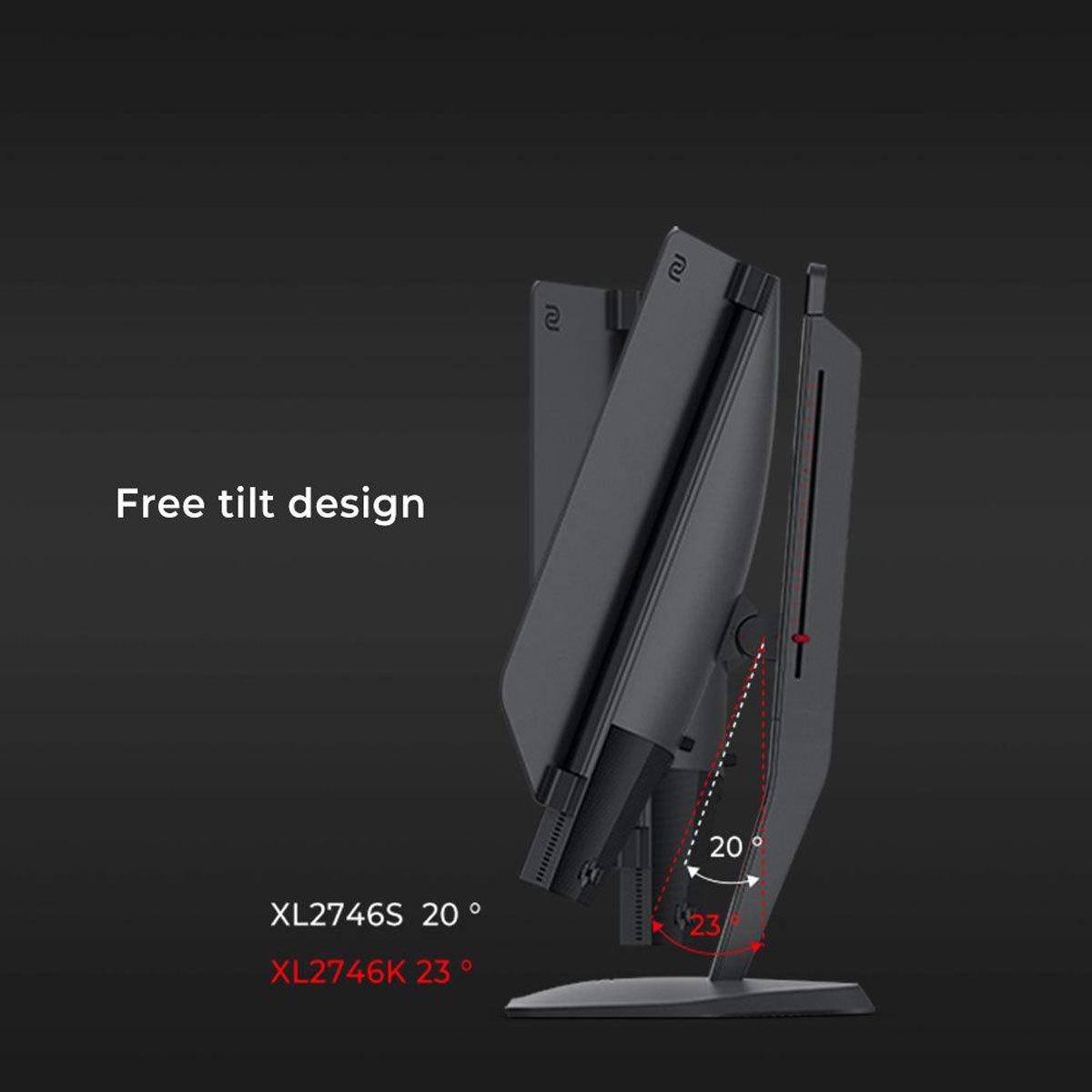
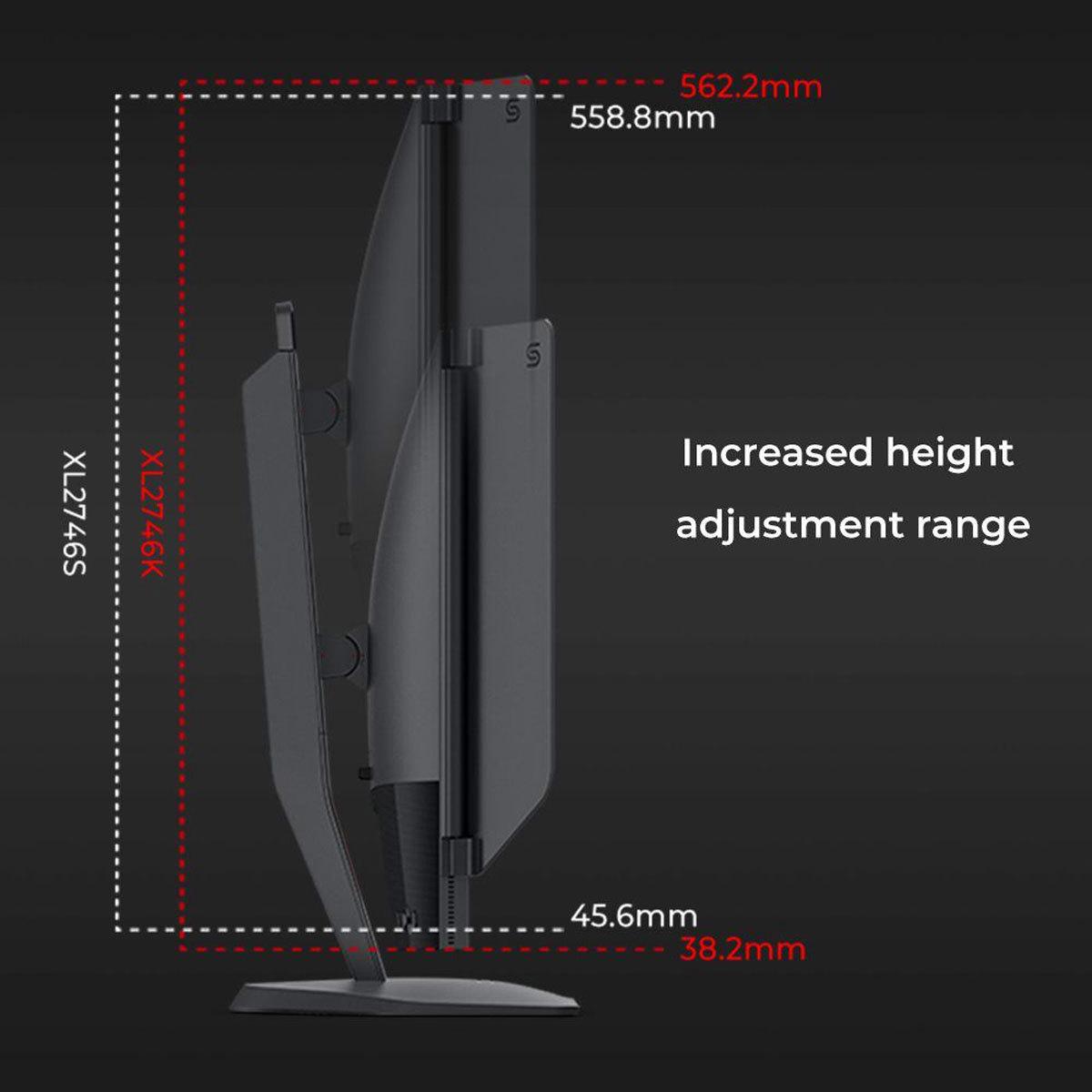
| Height, tilt, swivel, pivot (full adjustment range) | Height and tilt adjustment (limited compared to esports stands) |
| Target Use Case - Primary audience and optimal scenarios | |
| Competitive FPS gaming, esports tournaments, fast-paced action | Premium gaming across genres, content creation, entertainment |
| Long-term Considerations - Durability and technology longevity | |
| No burn-in risk, proven competitive gaming reliability | OLED burn-in protection, 3-year warranty including burn-in coverage |
The BenQ Zowie XL2746K is specifically designed for competitive gaming and esports. It features DyAc⁺ technology for superior motion clarity, Black eQualizer for spotting enemies in dark areas, and specialized features like the S Switch controller. Professional esports players frequently choose the BenQ Zowie XL2746K for tournaments because of these competitive advantages.
The Samsung Odyssey OLED G8 delivers dramatically better image quality with 4K resolution, perfect blacks, and vibrant colors thanks to its QD-OLED panel. The BenQ Zowie XL2746K uses a 1080p TN panel with limited color accuracy and contrast, but this trade-off allows for faster response times and specialized competitive gaming features.
Both monitors excel at motion clarity but achieve it differently. The BenQ Zowie XL2746K uses DyAc⁺ backlight strobing technology specifically engineered for tracking moving targets in competitive games. The Samsung Odyssey OLED G8 provides excellent natural motion clarity with its 0.03ms response time and OLED technology, making it great for all game types.
The Samsung Odyssey OLED G8 is excellent for movies and TV with its 4K resolution, perfect blacks, HDR support, and wide viewing angles. The BenQ Zowie XL2746K is primarily designed for gaming and has limited color accuracy and contrast, making it less ideal for entertainment content.
The Samsung Odyssey OLED G8 is more future-proof with 4K resolution, cutting-edge OLED technology, HDMI 2.1, and broad compatibility with modern graphics cards and consoles. The BenQ Zowie XL2746K focuses on proven competitive gaming technology that remains relevant for esports but may feel outdated for general use over time.
The BenQ Zowie XL2746K has limited visual quality with washed-out colors and poor viewing angles, plus it's only 1080p resolution. The Samsung Odyssey OLED G8 costs significantly more, requires high-end graphics cards for optimal 4K gaming, and has potential OLED burn-in concerns despite protective features.
The Samsung Odyssey OLED G8 is better for console gaming with HDMI 2.1 support for 4K gaming on PS5 and Xbox Series X, plus superior image quality for single-player games. The BenQ Zowie XL2746K works with consoles but is optimized for PC competitive gaming and doesn't take full advantage of modern console capabilities.
The BenQ Zowie XL2746K works well with mid-range graphics cards since 1080p at 240Hz is achievable with most modern GPUs. The Samsung Odyssey OLED G8 really benefits from high-end graphics cards (RTX 4070 or better) to fully utilize its 4K 240Hz capabilities.
Both monitors have excellent build quality. The BenQ Zowie XL2746K includes competitive gaming accessories like the Shielding Hood and S Switch controller, plus extensive ergonomic adjustments. The Samsung Odyssey OLED G8 features premium materials, advanced anti-glare coating, RGB lighting, and modern connectivity options.
The BenQ Zowie XL2746K includes flicker-free technology and low blue light modes, though DyAc⁺ strobing may cause eye fatigue for some users during extended sessions. The Samsung Odyssey OLED G8 produces less blue light naturally and includes eye comfort features, though OLED's perfect blacks can create more contrast in dark rooms.
The BenQ Zowie XL2746K offers excellent value for competitive gamers, providing professional-level esports features at a reasonable price point. The Samsung Odyssey OLED G8 costs more but delivers premium image quality and versatility that justifies the investment for users who want the best possible visual experience alongside gaming performance.
Room lighting affects both monitors differently. The BenQ Zowie XL2746K has a matte coating that handles bright rooms well and reduces reflections. The Samsung Odyssey OLED G8 performs best in controlled lighting where you can appreciate its superior contrast, though its advanced anti-glare technology helps in moderately lit environments.
We've done our best to create useful and informative comparisons to help you decide what product to buy. Our research uses advanced automated methods to create this comparison and perfection is not possible - please contact us for corrections or questions. These are the sites we've researched in the creation of this article: rtings.com - youtube.com - bestbuy.com - versus.com - youtube.com - versus.com - forums.blurbusters.com - pcmonitors.info - youtube.com - bhphotovideo.com - zowie.benq.com - bhphotovideo.com - device.report - newegg.com - bestbuy.com - displayspecifications.com - provantage.com - zowie.benq.com - smallonlineshop.com.sg - camcor.com - rtings.com - tomsguide.com - tomshardware.com - youtube.com - ign.com - youtube.com - pcvarge.com - youtube.com - youtube.com - versus.com - bestbuy.com - samsung.com - samsung.com - displayspecifications.com - samsung.com - hardforum.com - publicsector.shidirect.com - forums.thefpsreview.com - samsung.com - rtings.com - samsung.com - samsung.com

Privacy Policy
Terms and Conditions - Affiliate Policy
Home Security
© Copyright 2008-2026.
11816 Inwood Rd #1211, Dallas, TX 75244