

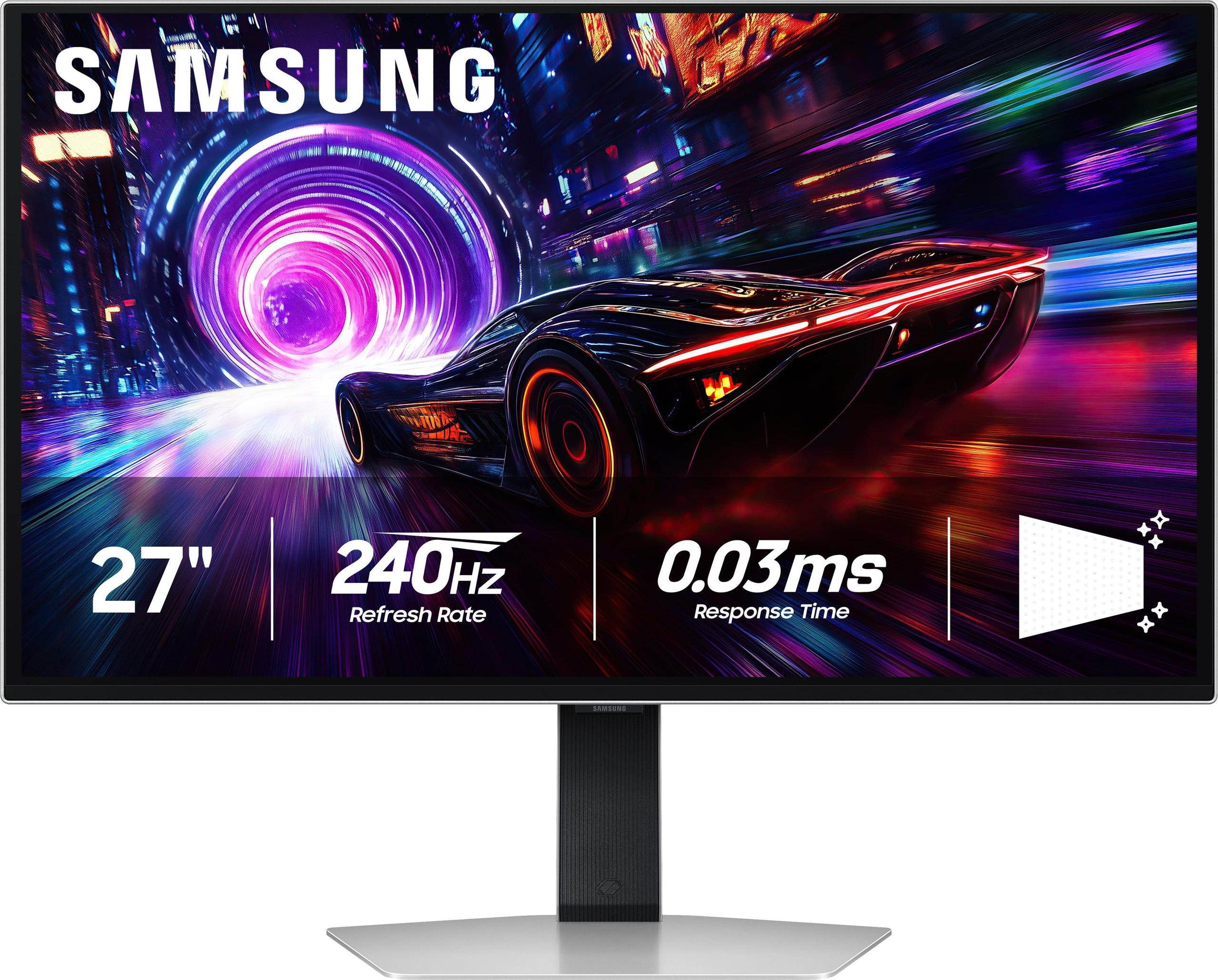
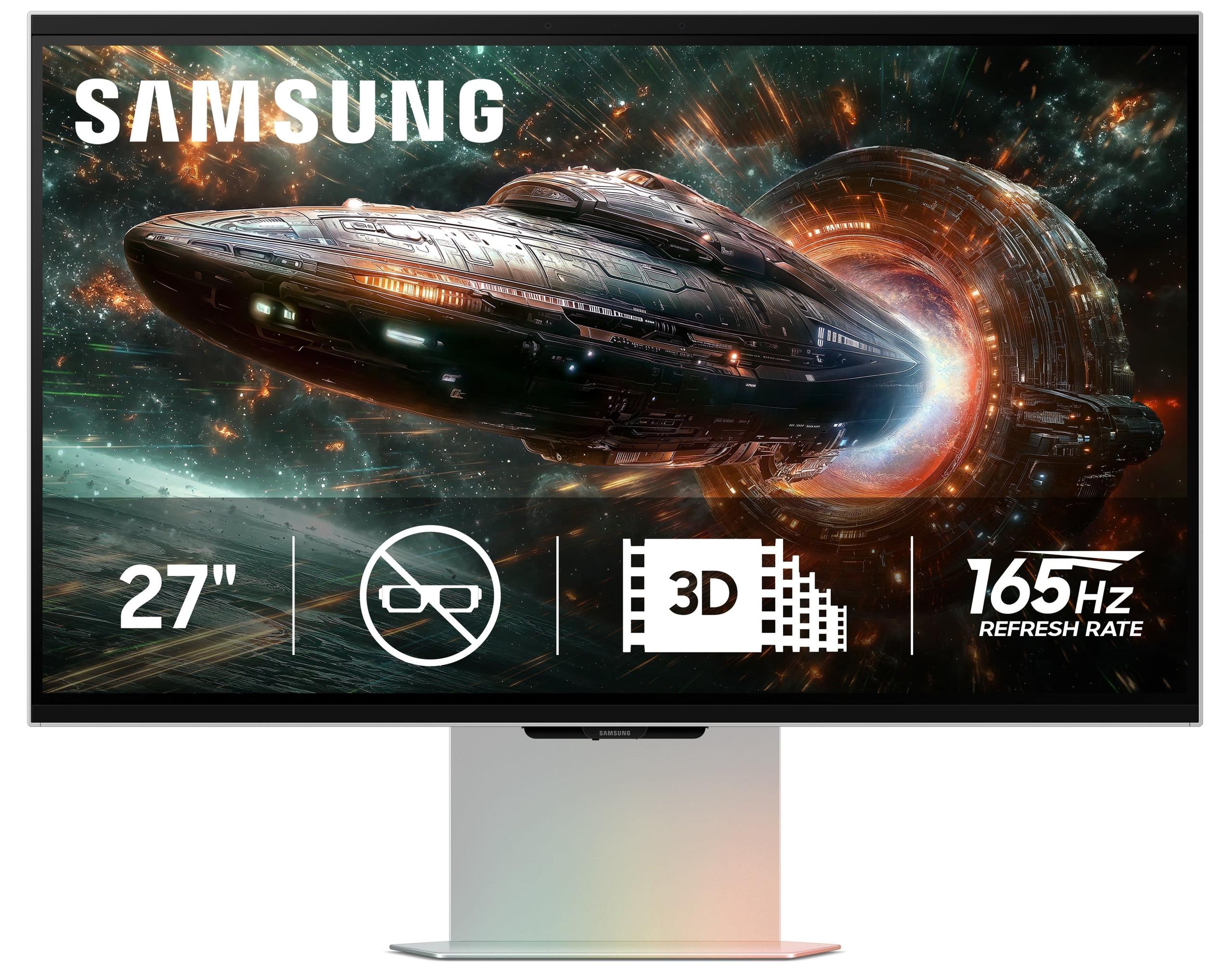
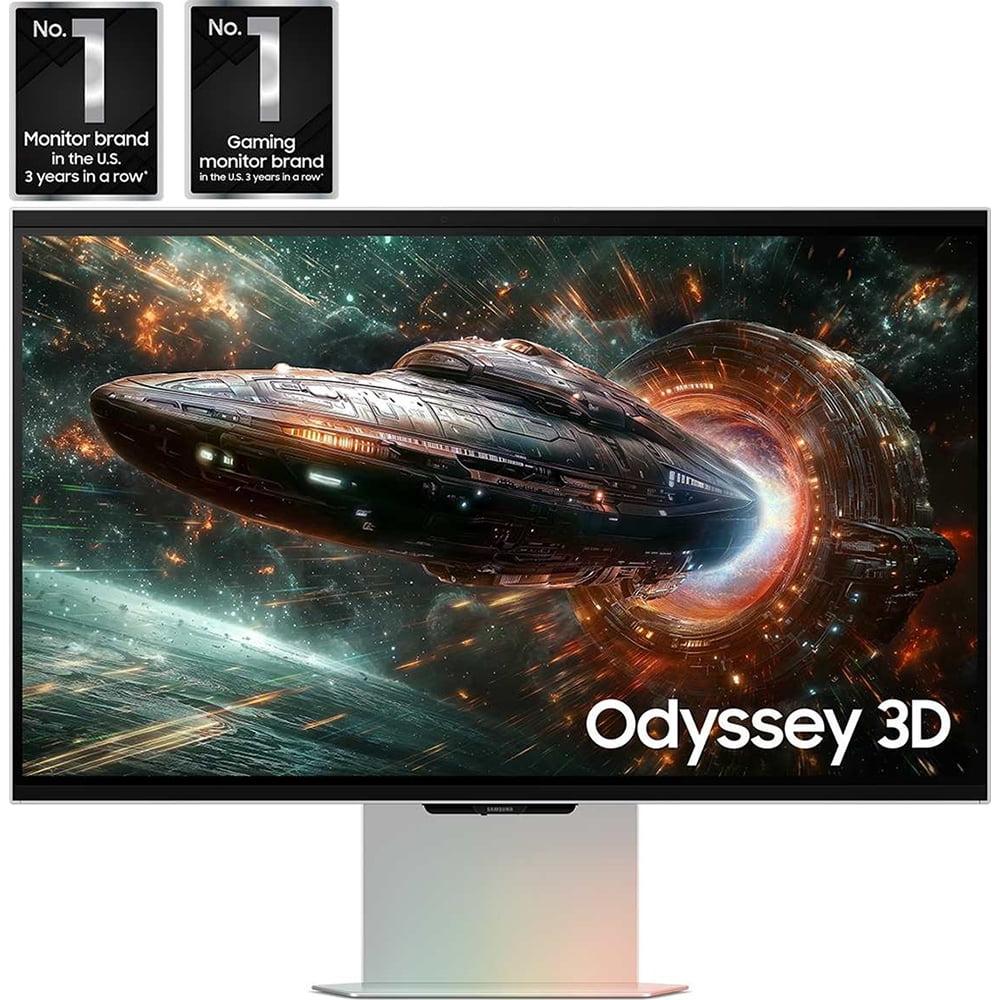
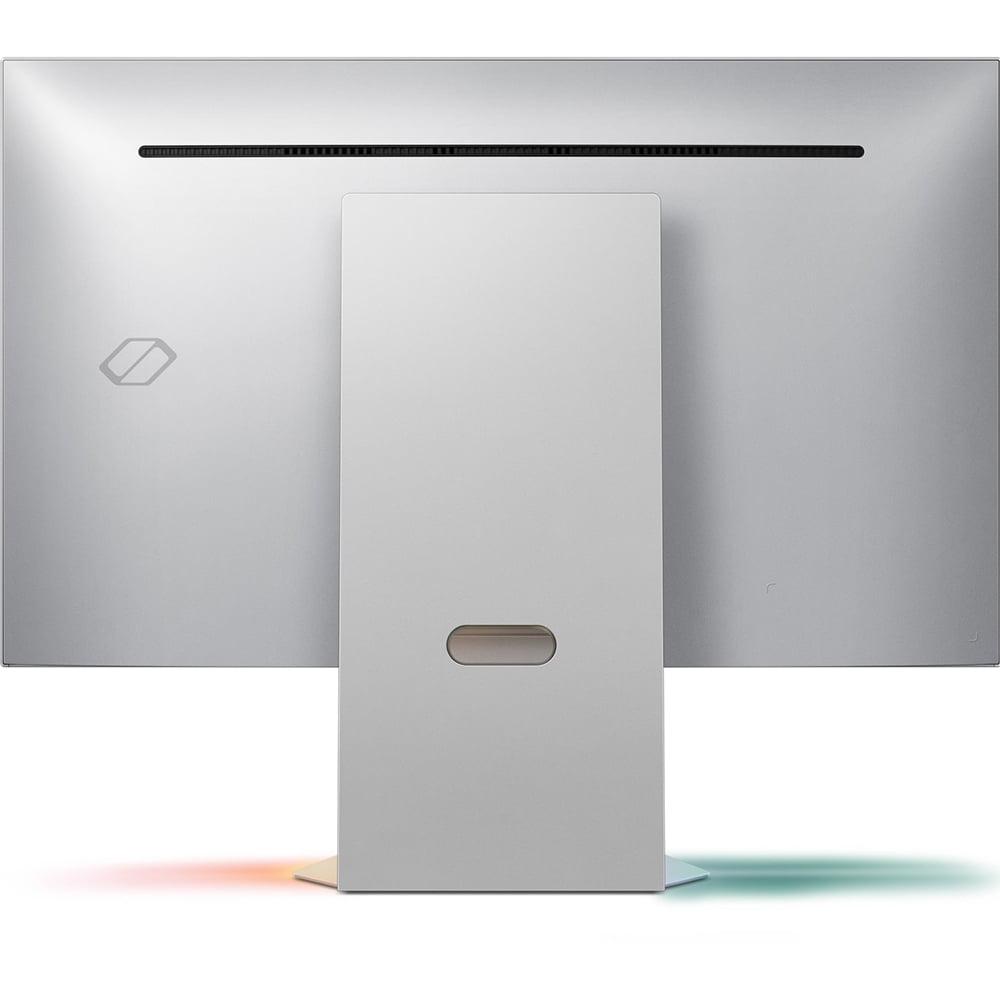
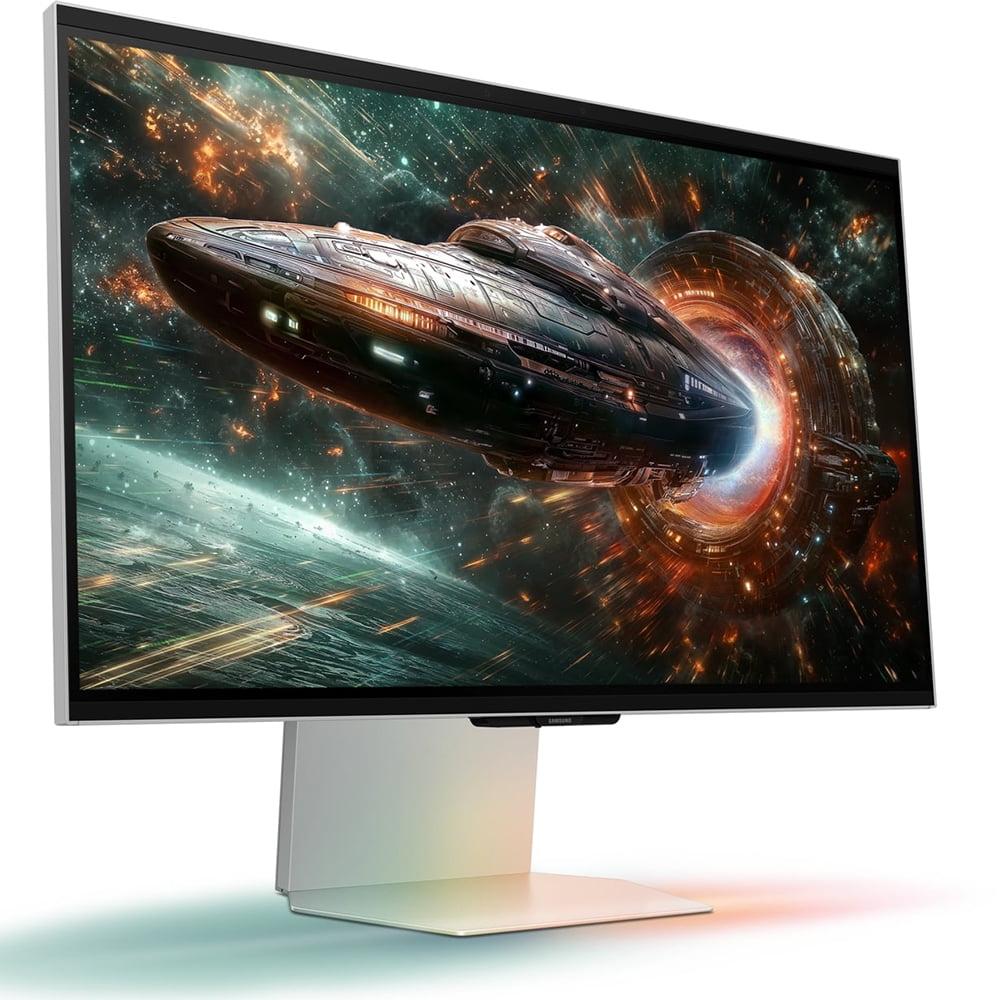
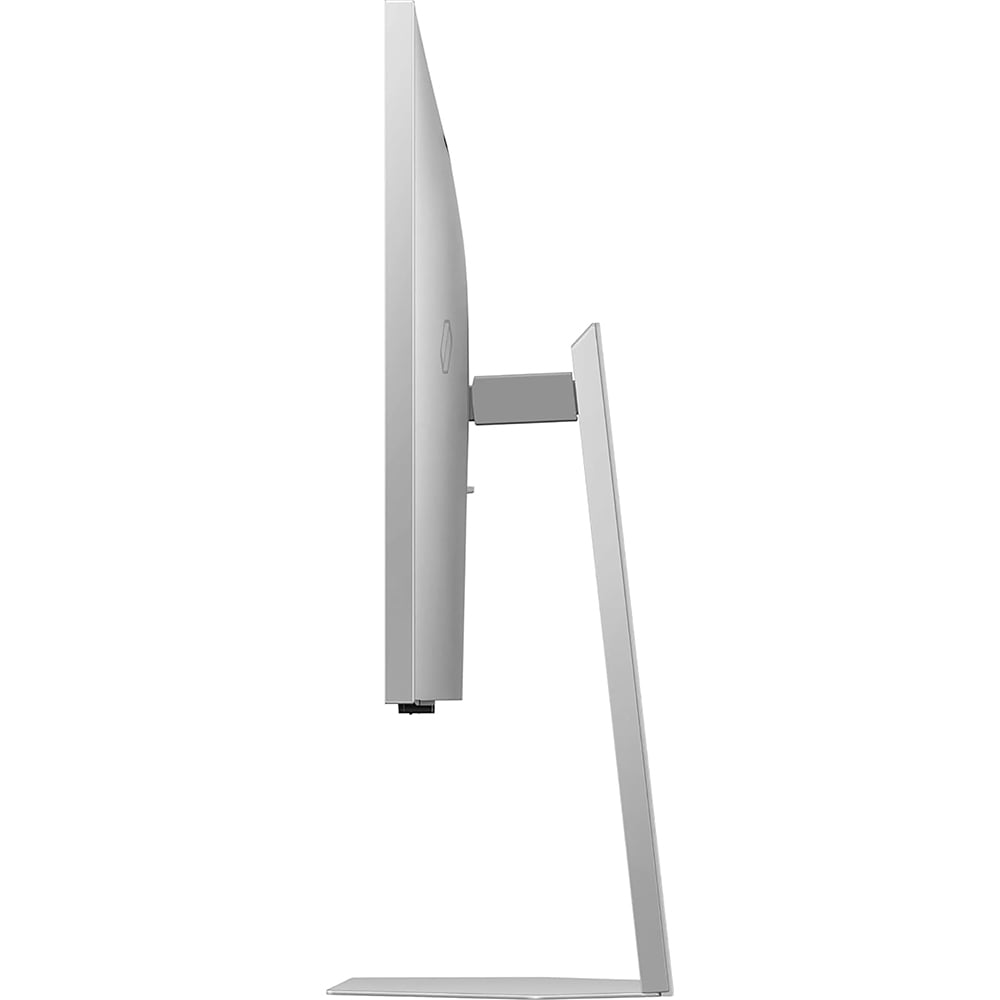
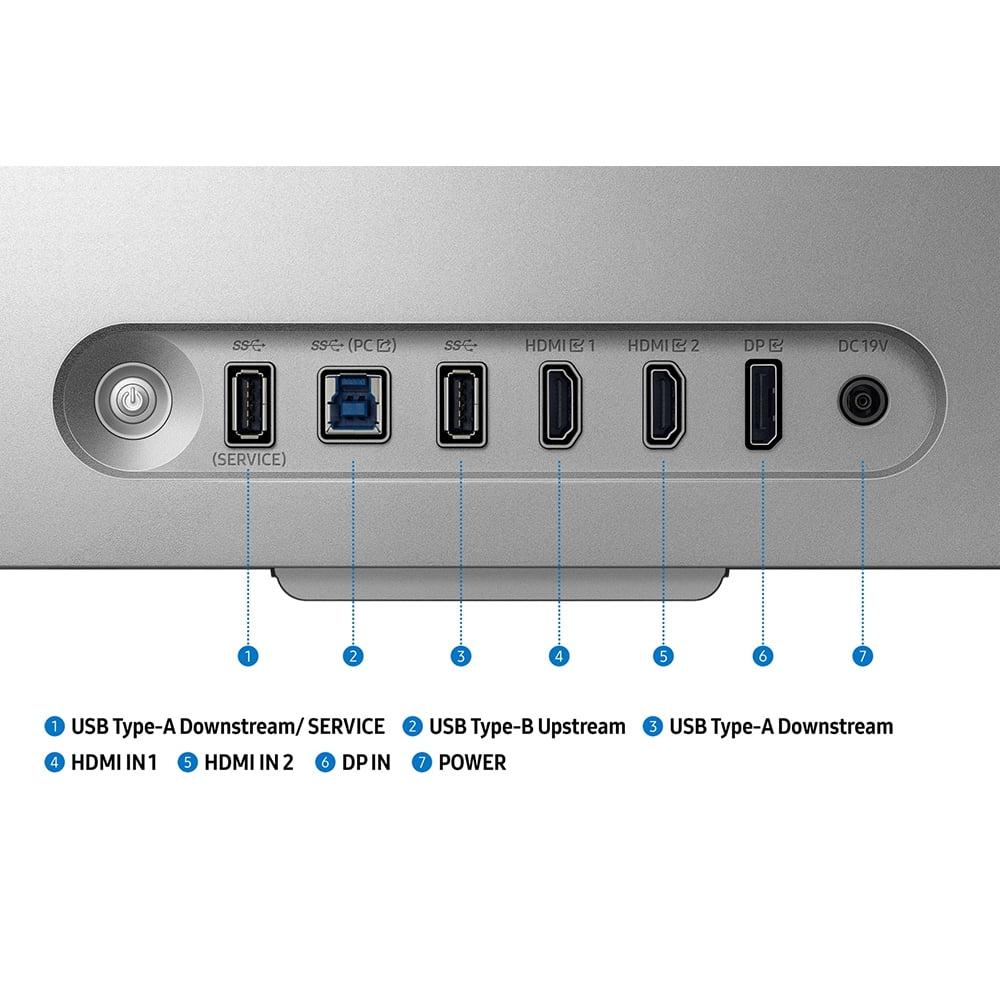

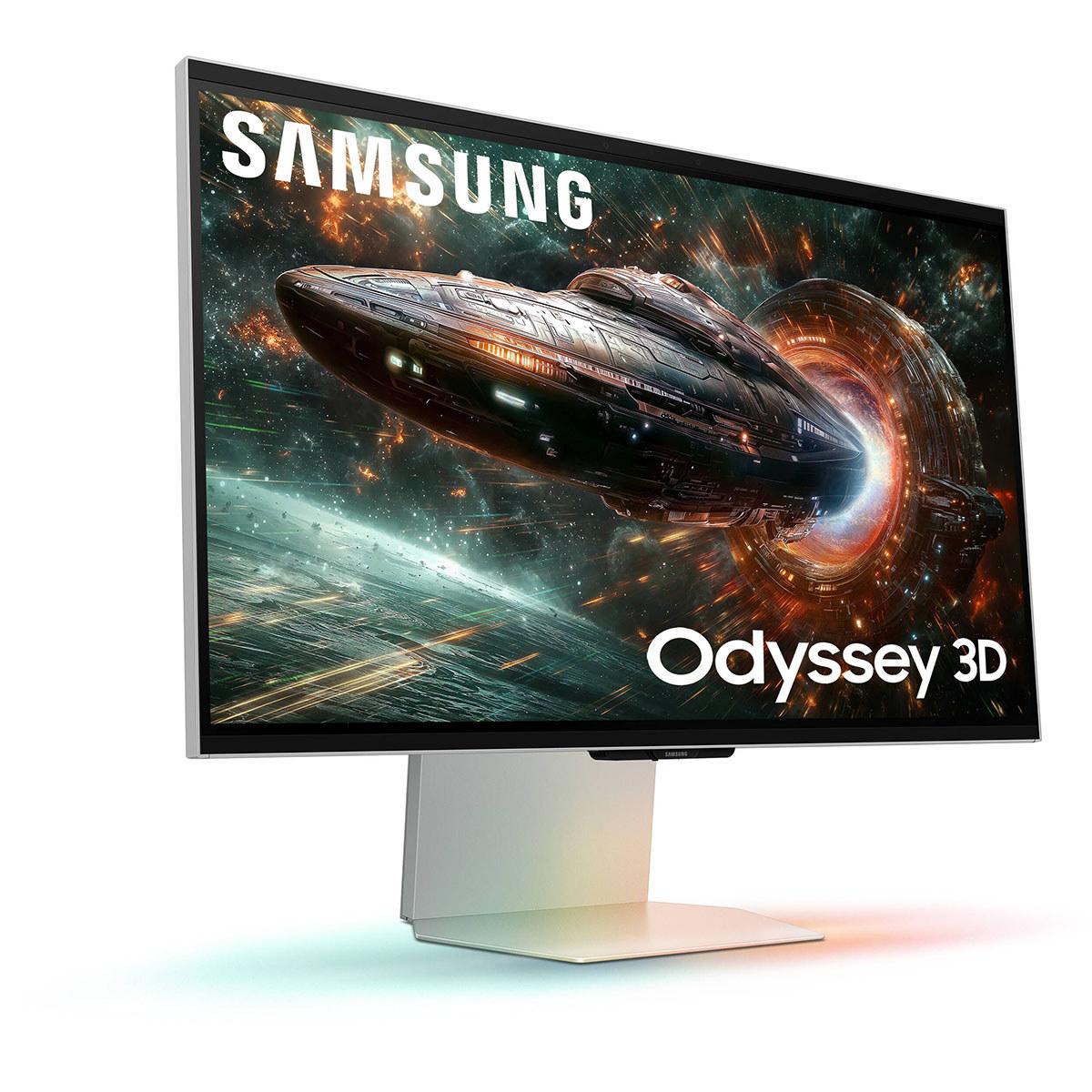
Gaming monitors have evolved dramatically over the past few years, and Samsung's latest offerings perfectly showcase this evolution. The Samsung 27" Odyssey OLED G8 4K UHD 240Hz Gaming Monitor represents the pinnacle of traditional gaming display technology, while the Samsung 27" Odyssey 3D G90XF 4K 165Hz Gaming Monitor ventures into entirely new territory with glasses-free 3D gaming. Both launched in 2025 as part of Samsung's premium gaming lineup, but they take completely different approaches to enhancing your gaming experience.
Understanding which monitor suits your needs requires diving deep into what makes each special. The OLED G8 at $1,299.99 focuses on perfecting the fundamentals—incredible colors, lightning-fast response times, and universal compatibility. Meanwhile, the 3D G90XF at $1,799.99 pioneers an experimental technology that could revolutionize how we interact with games, though it comes with significant trade-offs.
Before we dive into specifics, let's establish what makes a gaming monitor truly exceptional. The display panel is the heart of everything—it determines how colors appear, how fast the screen can refresh, and how quickly pixels can change from one color to another (response time). These characteristics directly impact your gaming experience, from competitive advantage in esports to immersion in single-player adventures.
Refresh rate, measured in hertz (Hz), tells you how many times per second your monitor can display a new image. Higher numbers mean smoother motion, which is crucial for tracking enemies in fast-paced games or enjoying cinematic sequences without stuttering. Response time, measured in milliseconds (ms), indicates how quickly individual pixels can change colors—lower numbers reduce ghosting and motion blur.
Panel technology has evolved significantly since 2020. OLED (Organic Light-Emitting Diode) displays have matured from expensive, burn-in-prone curiosities to reliable gaming powerhouses. Each pixel generates its own light, allowing for perfect blacks and infinite contrast ratios. QD-OLED, used in the G8, adds quantum dots to enhance color accuracy and brightness beyond traditional OLED capabilities.
IPS (In-Plane Switching) panels, like those in the 3D G90XF, have also improved dramatically. Modern IPS displays offer much faster response times than earlier generations while maintaining their signature wide viewing angles and consistent colors. However, they still can't match OLED's contrast performance due to their reliance on backlighting.
The Samsung 27" Odyssey OLED G8 represents what happens when mature technology reaches its peak. Samsung's QD-OLED panel combines the perfect blacks of traditional OLED with quantum dot enhancement for superior color reproduction. The result is a display that covers 99% of the DCI-P3 color space—the same standard used in movie theaters—while maintaining incredible accuracy.
What sets this monitor apart is its 240Hz refresh rate paired with a mind-bending 0.03ms response time. To put this in perspective, that response time is roughly 30 times faster than most budget gaming monitors. In practical terms, this means virtually zero motion blur, even in the most chaotic gaming scenarios. Whether you're tracking enemies in Counter-Strike or following racing lines in Formula 1 games, the G8 delivers crystal-clear motion that can genuinely improve your performance.
The monitor's HDR implementation deserves special attention. VESA DisplayHDR True Black 400 certification means it can display true blacks (completely turning off pixels) while reaching 400 nits of peak brightness. This might sound modest compared to some LCD monitors that claim 1000+ nits, but OLED's perfect contrast makes even moderate brightness levels appear incredibly vibrant. Watching HDR movies or playing games like Cyberpunk 2077 reveals details in shadows that simply disappear on traditional displays.
Samsung has addressed OLED's historical weakness—burn-in concerns—with their OLED Safeguard+ system. This includes dynamic cooling that reduces heat buildup, thermal modulation that adjusts brightness to prevent overheating, and logo detection that automatically dims static interface elements. The three-year warranty covering burn-in under normal usage conditions shows Samsung's confidence in these protections.
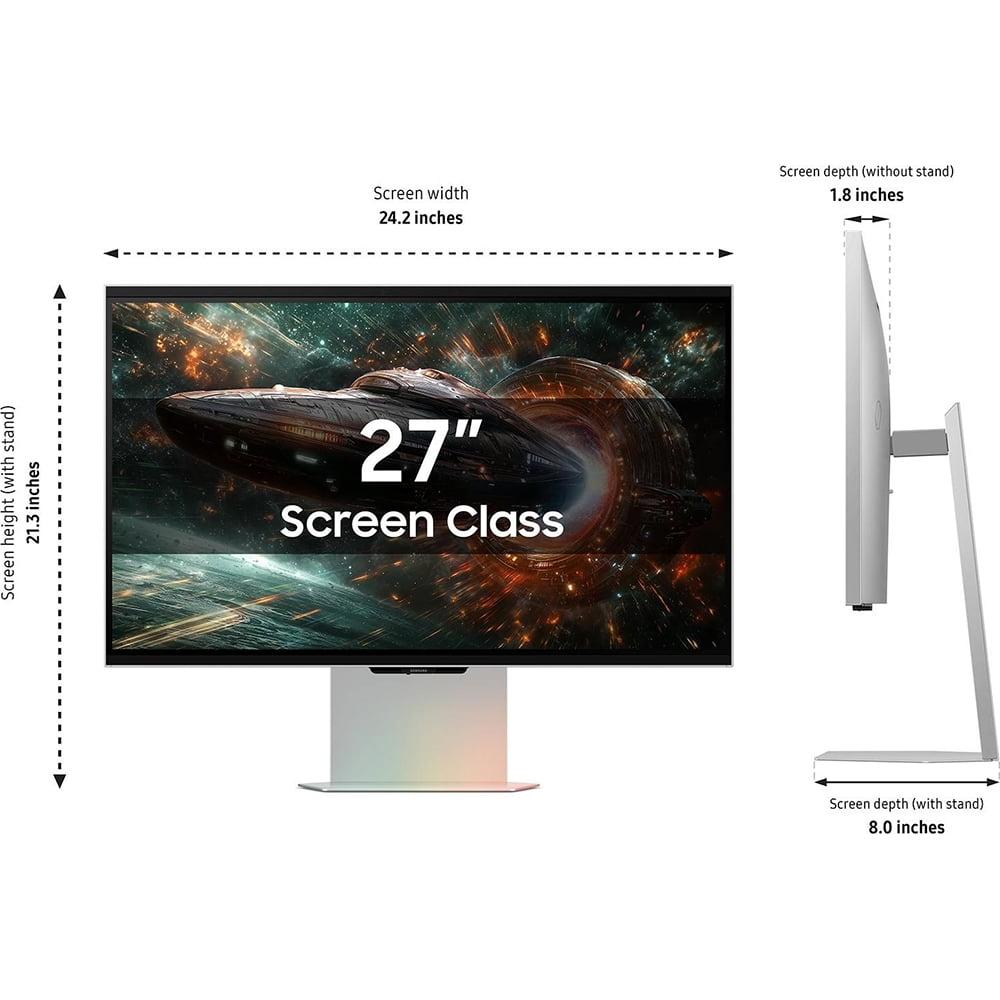
For home theater use, the G8 excels as a near-field display. Its 27-inch size works perfectly for desktop viewing distances of 2-3 feet, while the OLED technology delivers the same deep blacks and vibrant colors you'd expect from premium TV displays. The monitor supports both HDR10 and HDR10+ gaming, ensuring compatibility with the latest console games and streaming services.
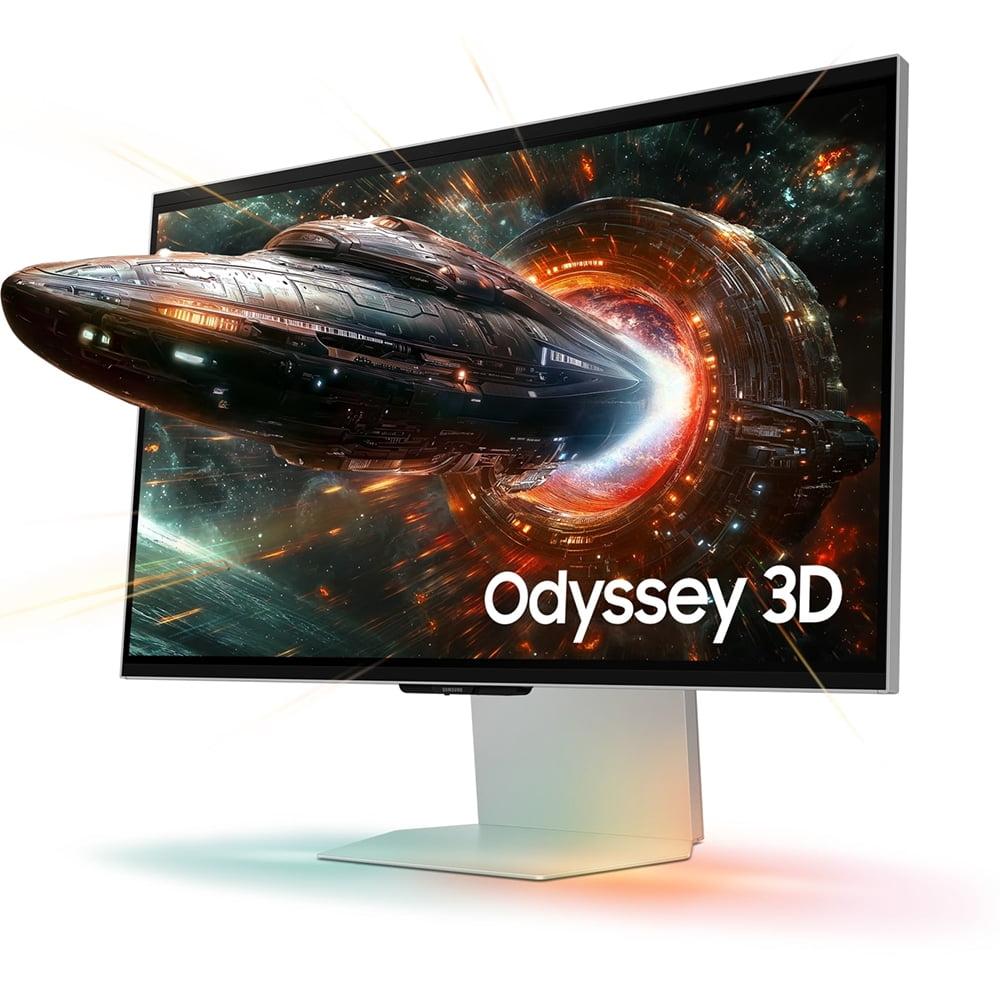
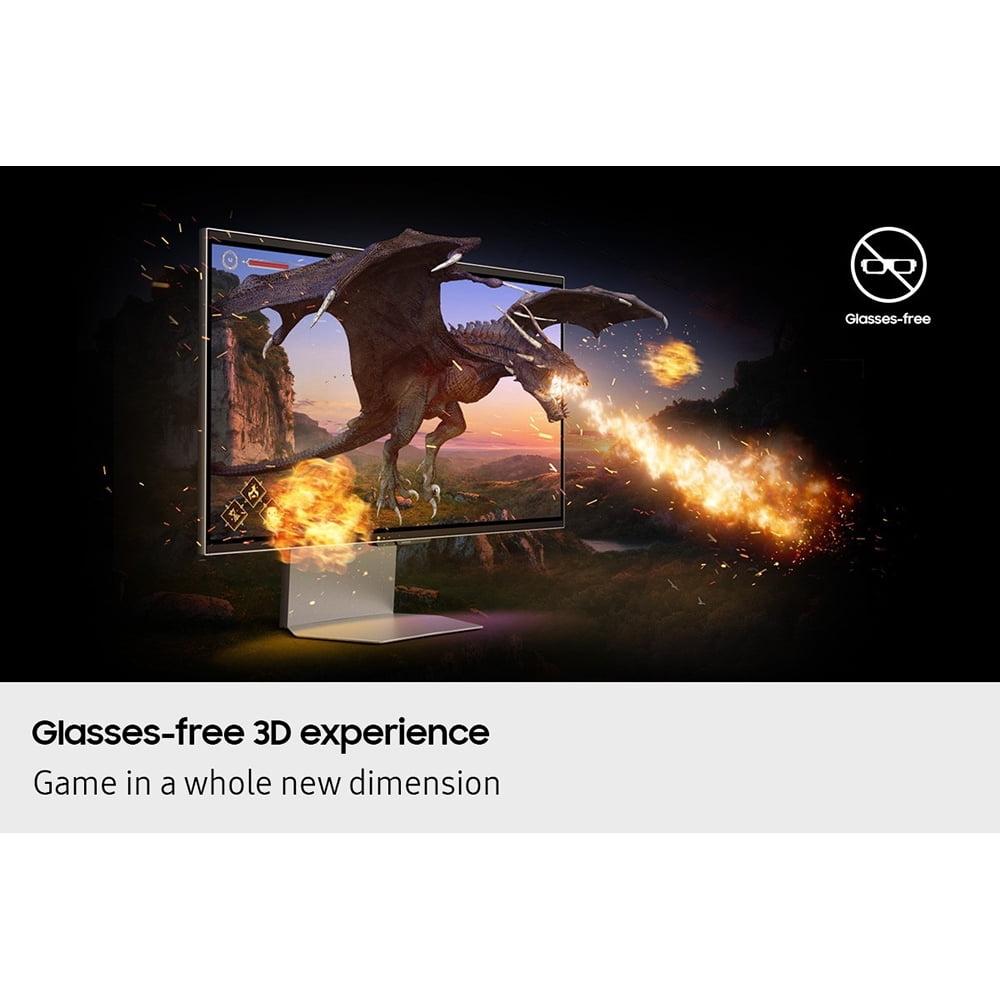
The Samsung 27" Odyssey 3D G90XF represents one of the most ambitious attempts to bring glasses-free 3D to consumer gaming. This isn't the gimmicky 3D TVs of the early 2010s—Samsung has engineered a genuinely impressive system using dual eye-tracking cameras, sophisticated algorithms, and a lenticular lens array that sits over the IPS panel.
The technology works by tracking your eye position in real-time and adjusting the display to send different images to each eye, creating depth perception without glasses. The effect is genuinely striking when it works well. Games specifically optimized for the system, like "The First Berserker: Khazan," create an almost holographic appearance where characters and objects seem to pop out of the screen with convincing depth.
Samsung's AI 3D conversion feature attempts to bring this experience to existing content. The system analyzes 2D games and videos in real-time, adding depth information to create a 3D effect. Results vary significantly—some games convert beautifully, while others produce inconsistent or distracting effects. YouTube videos can be converted on the fly, though the quality depends heavily on the source material's visual complexity.
The 3D G90XF faces significant technical challenges that impact its traditional display performance. The lenticular lens array reduces perceived sharpness compared to standard 4K monitors, and the 3D processing requires substantial GPU power. Samsung recommends an RTX 3080 or better for optimal performance, as the system effectively renders two 1920x2160 images simultaneously.
More limiting is the content ecosystem. At launch, only a handful of games support native 3D, and the feature is PC-exclusive—no PlayStation 5 or Xbox Series X support. The Reality Hub software manages 3D content and settings, but the library remains small compared to traditional gaming options.
From a home theater perspective, the G90XF offers interesting possibilities for 3D movie enthusiasts, though the 27-inch size limits its appeal compared to larger displays. The built-in speakers provide spatial audio that complements the 3D visuals, creating a more immersive experience than typical monitor audio.
The performance gap between these monitors becomes most apparent in fast-paced gaming scenarios. The G8's 240Hz refresh rate and 0.03ms response time create an almost supernatural level of motion clarity. In competitive shooters like Valorant or Apex Legends, this translates to clearer enemy visibility during quick movements and reduced input lag that can mean the difference between victory and defeat.
Testing both monitors with UFO Test's motion blur demonstrations reveals stark differences. The G8 maintains sharp text and clear details even during rapid scrolling, while the 3D G90XF shows noticeable blur at its 165Hz maximum. This isn't necessarily problematic for most gaming—165Hz remains excellent for single-player titles and casual multiplayer games—but competitive players will notice the difference.
Variable refresh rate (VRR) performance also differs significantly. Both monitors support AMD FreeSync Premium and NVIDIA G-Sync compatibility, but the G8's broader VRR range (typically 1-240Hz) provides smoother frame rate transitions. The 3D G90XF works well within its 48-165Hz range, but frame rates below 48 fps can result in judder.
Input lag measurements show both monitors performing well, with the G8 achieving approximately 4ms total input lag at maximum refresh rate, while the 3D G90XF measures around 6ms at 165Hz. These numbers place both monitors among the best available, though the G8 maintains a slight edge for competitive gaming.
The visual quality comparison reveals perhaps the largest performance gap between these monitors. The G8's QD-OLED technology delivers truly spectacular image quality that's immediately apparent in any content. Colors appear more saturated and natural simultaneously—a seemingly contradictory achievement that stems from the display's ability to reproduce colors more accurately than traditional panels.
Contrast performance tells the most dramatic story. The G8 achieves perfect blacks by completely turning off pixels, creating an infinite contrast ratio. Dark game scenes in titles like Metro Exodus or horror games become dramatically more immersive when shadows contain actual detail rather than appearing as gray blocks. The 3D G90XF, despite its quality IPS panel, can't compete here—its 1000:1 contrast ratio means blacks appear distinctly gray in dark rooms.
HDR implementation showcases these differences even more dramatically. The G8's True Black 400 certification might seem modest numerically, but the combination of perfect blacks and 400-nit peaks creates HDR content that appears more dynamic than many higher-brightness LCD displays. The 3D G90XF lacks HDR certification and struggles with its edge-lit local dimming system, which only provides 8 dimming zones across the entire display.
Color accuracy measurements show both monitors performing well within their respective categories. The G8 achieves near-perfect sRGB and DCI-P3 coverage with factory calibration, making it suitable for color-critical work beyond gaming. The 3D G90XF delivers good color accuracy for an IPS panel, though it can't match the G8's color volume—the combination of color accuracy and brightness range.
Platform compatibility reveals another significant difference between these monitors. The G8 works exceptionally well with every modern gaming platform. PlayStation 5 and Xbox Series X can utilize the full 4K 120Hz capability (limited by console hardware, not monitor capability), while PC gamers can push the full 240Hz refresh rate with capable graphics cards.
The 3D G90XF faces substantial limitations here. Its signature 3D feature only works with PC gaming, and only with specific Nvidia graphics cards. Console gaming remains possible in traditional 2D mode, but you're essentially paying a $500 premium for features you can't use. Even on PC, the 3D ecosystem remains limited, with most games requiring AI conversion rather than native support.
Software considerations also differ significantly. The G8 works seamlessly with existing gaming software, monitor calibration tools, and system settings. The 3D G90XF requires Samsung's Reality Hub software for 3D functionality, adding another layer of complexity and potential compatibility issues.
Game optimization presents interesting contrasts. The G8's high refresh rate benefits virtually every game, from esports titles that can push 240+ fps to single-player games that feel smoother even at 60-120 fps. The 3D G90XF's benefits depend entirely on 3D support—games without optimization show no advantage over standard monitors, while compatible titles can provide genuinely unique experiences.
Evaluating value requires considering both immediate performance and long-term utility. The G8 at $1,299.99 represents excellent value for premium OLED technology. Comparable OLED gaming monitors from other manufacturers typically cost similar amounts or more, while offering similar performance. The inclusion of Samsung's three-year burn-in warranty adds significant value for users concerned about OLED longevity.
The 3D G90XF at $1,799.99 faces a more complex value proposition. You're paying a 38% premium for experimental technology with limited current content support. The underlying IPS display performs well but doesn't justify the price without the 3D features. Success depends largely on whether the 3D gaming ecosystem develops significantly over the monitor's lifespan.
Future-proofing considerations favor the G8 significantly. OLED technology is mature and widely supported, while 240Hz refresh rates ensure compatibility with future high-performance gaming hardware. The 3D G90XF represents a bigger gamble—if glasses-free 3D gaming gains traction, early adopters could benefit significantly. However, if the technology fails to develop beyond its current niche status, the premium paid becomes difficult to justify.
Total cost of ownership also differs. The G8 works optimally with existing gaming hardware, requiring only the graphics power needed for standard 4K gaming. The 3D G90XF may necessitate GPU upgrades to achieve optimal 3D performance, potentially adding hundreds of dollars to the total investment.
Choosing between these monitors depends primarily on your gaming priorities and risk tolerance. The Samsung 27" Odyssey OLED G8 suits users who want the absolute best traditional gaming performance. If you play competitive games, value universal compatibility, or simply want stunning visual quality across all content types, the G8 delivers exceptional results at a reasonable price for OLED technology.
The Samsung 27" Odyssey 3D G90XF appeals to a more specific audience. If you're fascinated by cutting-edge display technology, primarily game on PC with high-end hardware, and enjoy single-player experiences that could benefit from 3D immersion, the additional cost might be worthwhile. However, you must accept the limitations of first-generation technology and the uncertainty around long-term content support.
For most users, I'd recommend the G8. Its combination of proven technology, exceptional performance, and broad compatibility makes it an outstanding choice that will remain relevant for years. The 3D G90XF represents an interesting experiment, but it's better suited for enthusiasts willing to pay premium prices for pioneering technology.
Both monitors excel in their intended roles, but they serve fundamentally different purposes. The G8 perfects the gaming monitor formula we know works, while the 3D G90XF explores what gaming displays might become. Your choice depends on whether you prioritize proven excellence or experimental innovation.
| Samsung 27" Odyssey OLED G8 4K UHD 240Hz Gaming Monitor | Samsung 27" Odyssey 3D G90XF 4K 165Hz Gaming Monitor |
|---|---|
| Price - The G8 offers premium OLED tech at a competitive price point | |
| $1,299.99 | $1,799.99 |
| Panel Technology - OLED delivers infinite contrast while IPS provides consistent brightness | |
| QD-OLED (perfect blacks, infinite contrast) | IPS with lenticular lens array (good brightness, limited contrast) |
| Refresh Rate - Higher refresh rates provide smoother motion in fast-paced games | |
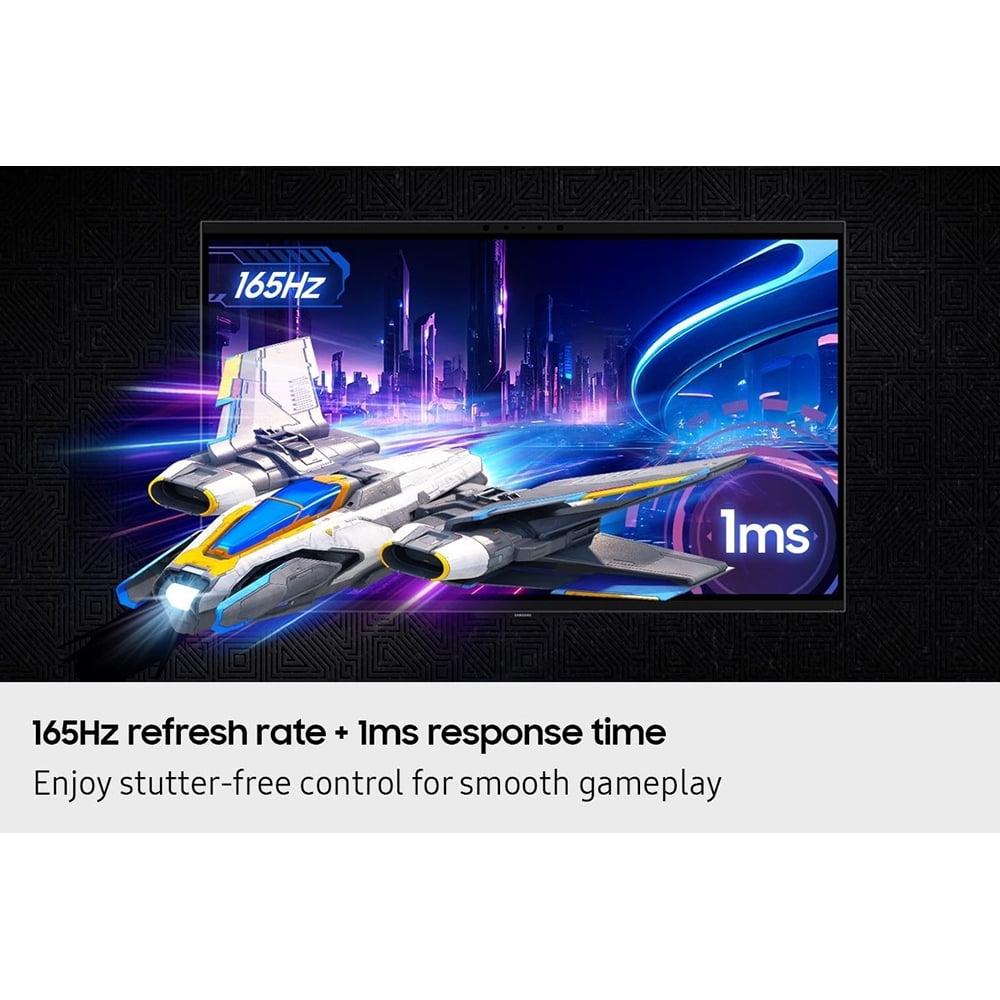
| 240Hz (ideal for competitive gaming) | 165Hz (excellent for most gaming scenarios) |
| Response Time - Lower numbers reduce motion blur and ghosting | |
| 0.03ms (virtually eliminates motion blur) | 1ms (still very fast for most gaming) |
| Unique Feature - The defining characteristic that sets each monitor apart | |
| Premium OLED visual quality with universal compatibility | Glasses-free 3D gaming with eye-tracking technology |
| HDR Performance - Better HDR creates more realistic lighting and shadows | |
| VESA DisplayHDR True Black 400 (excellent with perfect blacks) | No HDR certification (limited by edge-lit dimming) |
| Brightness - Peak brightness affects visibility in bright rooms | |
| 250 cd/m² typical (sufficient for OLED's high contrast) | 350 cd/m² typical (better for bright environments) |
| Gaming Compatibility - Platform support determines which systems can use all features | |
| PC, PlayStation 5, Xbox Series X (full compatibility) | PC only for 3D features (consoles work in 2D mode only) |
| Content Ecosystem - Available games and media that support special features | |
| Universal support for all games and content | Limited 3D game library, AI conversion for other content |
| Warranty Coverage - Protection against common panel issues | |
| 3 years including burn-in protection | 1 year standard warranty |
| Best For - The ideal user profile for each monitor | |
| Competitive gamers, content creators, users wanting proven tech | Early adopters, 3D enthusiasts, single-player gaming focus |
The Samsung 27" Odyssey OLED G8 is significantly better for competitive gaming due to its 240Hz refresh rate and 0.03ms response time. This combination provides ultra-smooth motion and virtually eliminates input lag, giving you a competitive advantage in fast-paced games like CS2, Valorant, and Apex Legends. The 3D G90XF offers good performance at 165Hz, but competitive gamers will notice the difference in motion clarity.
The key difference is their core technology approach. The OLED G8 focuses on delivering exceptional traditional gaming performance with premium OLED visual quality, while the Samsung 27" Odyssey 3D G90XF introduces glasses-free 3D gaming technology. The G8 excels at proven performance metrics, while the G90XF pioneers experimental 3D features that work only with PC gaming.
The Samsung 27" Odyssey OLED G8 delivers superior picture quality with its QD-OLED panel providing infinite contrast, perfect blacks, and vibrant colors. The OLED technology creates a more immersive visual experience with better HDR performance. The 3D G90XF has good IPS panel quality but cannot match the contrast and color depth of the OLED display.
Yes, both monitors work with consoles, but with important limitations. The OLED G8 provides full compatibility with PlayStation 5 and Xbox Series X, supporting 4K at up to 120Hz. The Samsung 27" Odyssey 3D G90XF works with consoles only in standard 2D mode—the 3D features require a PC with a compatible Nvidia graphics card.
The Samsung 27" Odyssey OLED G8 at $1,299.99 offers better overall value with premium OLED technology at a competitive price point. You get exceptional performance that works with all gaming platforms. The 3D G90XF at $1,799.99 costs $500 more for experimental 3D technology with limited content support, making it harder to justify unless you're specifically interested in 3D gaming.
The Samsung 27" Odyssey 3D G90XF has limited native 3D game support at launch. However, it includes AI 3D conversion that can transform many 2D games and videos into 3D in real-time, though results vary significantly. The OLED G8 doesn't offer 3D but provides superior performance across all existing game content without compatibility concerns.
For movie watching, the Samsung 27" Odyssey OLED G8 excels with its perfect blacks, excellent HDR performance, and superior contrast that enhances cinematic content. The 27-inch size works well for desktop viewing distances. The 3D G90XF can convert some movies to 3D, which adds novelty, but the underlying IPS panel doesn't match the OLED's movie-watching quality.
The OLED G8 offers 240Hz compared to the Samsung 27" Odyssey 3D G90XF's 165Hz refresh rate. Higher refresh rates provide smoother motion, reduced input lag, and better responsiveness. The 240Hz advantage is most noticeable in competitive gaming and fast-paced content, while 165Hz remains excellent for most gaming scenarios and general use.
The Samsung 27" Odyssey OLED G8 includes a 3-year warranty covering burn-in protection and features Samsung's OLED Safeguard+ technology to prevent image retention. The 3D G90XF comes with a standard 1-year warranty. OLED technology is now mature and reliable, while the 3D monitor represents first-generation technology with uncertain long-term support.
For the OLED G8, any graphics card capable of 4K gaming will work well, though higher-end cards are needed to reach 240Hz in demanding games. The Samsung 27" Odyssey 3D G90XF requires more powerful hardware, with Samsung recommending an RTX 3080 or better for optimal 3D performance, as it essentially renders two images simultaneously.
The Samsung 27" Odyssey OLED G8 is superior for content creation due to its exceptional color accuracy covering 99% DCI-P3, perfect contrast for detailed shadow work, and factory calibration. The color quality matches professional standards used in movie production. The 3D G90XF offers good IPS color consistency but cannot match the OLED's color volume and accuracy.
If you're uncertain about 3D gaming, the Samsung 27" Odyssey OLED G8 is the safer choice. You get proven, exceptional performance that works with all content and gaming platforms. The Samsung 27" Odyssey 3D G90XF requires commitment to the 3D ecosystem and costs significantly more for features you might not use regularly. Consider the 3D monitor only if you're genuinely excited about pioneering this new technology.
We've done our best to create useful and informative comparisons to help you decide what product to buy. Our research uses advanced automated methods to create this comparison and perfection is not possible - please contact us for corrections or questions. These are the sites we've researched in the creation of this article: rtings.com - tomsguide.com - tomshardware.com - youtube.com - ign.com - youtube.com - pcvarge.com - youtube.com - youtube.com - versus.com - bestbuy.com - samsung.com - samsung.com - displayspecifications.com - samsung.com - hardforum.com - publicsector.shidirect.com - forums.thefpsreview.com - samsung.com - rtings.com - samsung.com - samsung.com - hometechnologyreview.com - substack.com - rtings.com - youtube.com - techaeris.com - versus.com - tomsguide.com - avsforum.com - youtube.com - versus.com - bestbuy.com - samsung.com - samsung.com - samsung.com - samsung.com - m.media-amazon.com

Privacy Policy
Terms and Conditions - Affiliate Policy
Home Security
© Copyright 2008-2026.
11816 Inwood Rd #1211, Dallas, TX 75244