

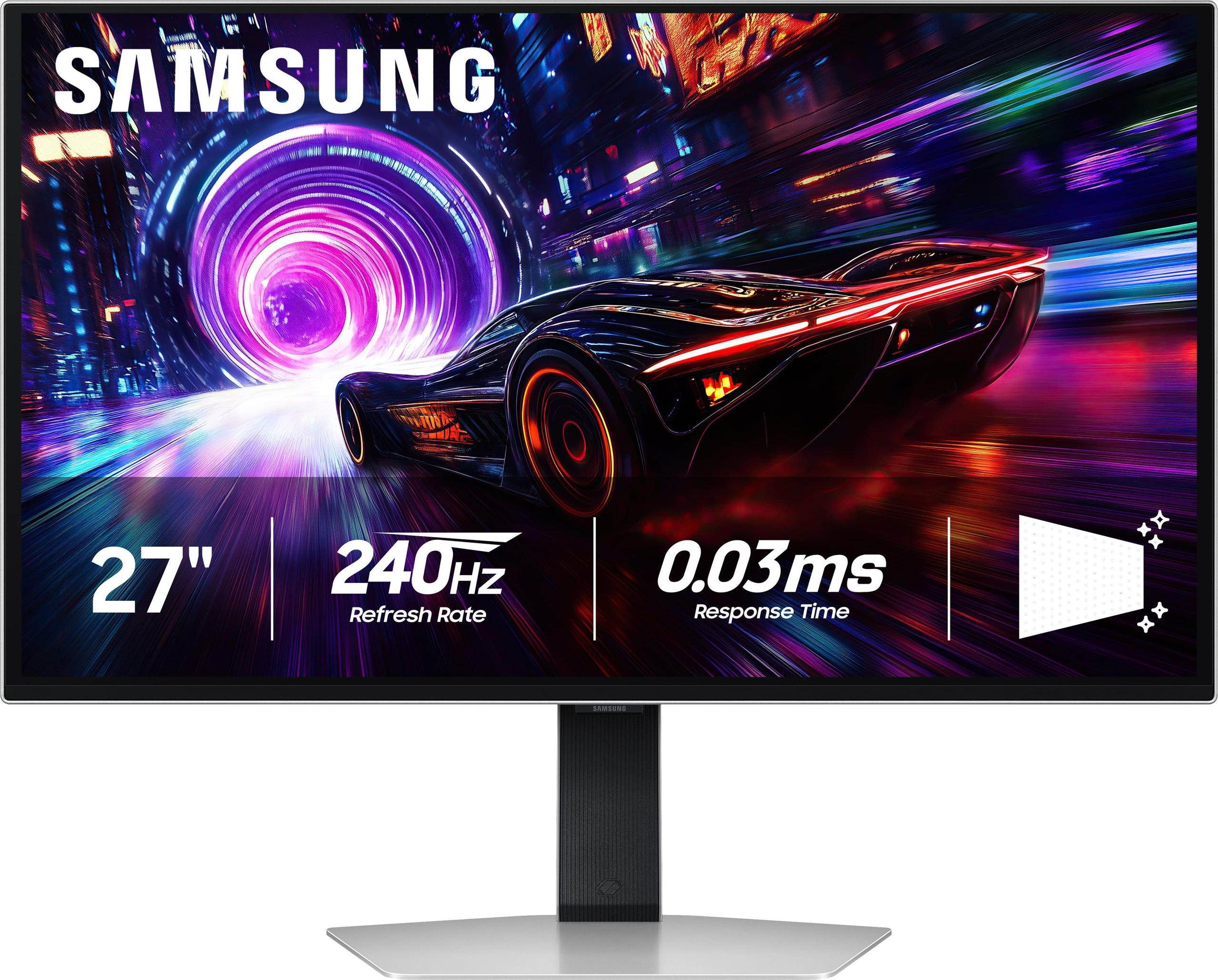
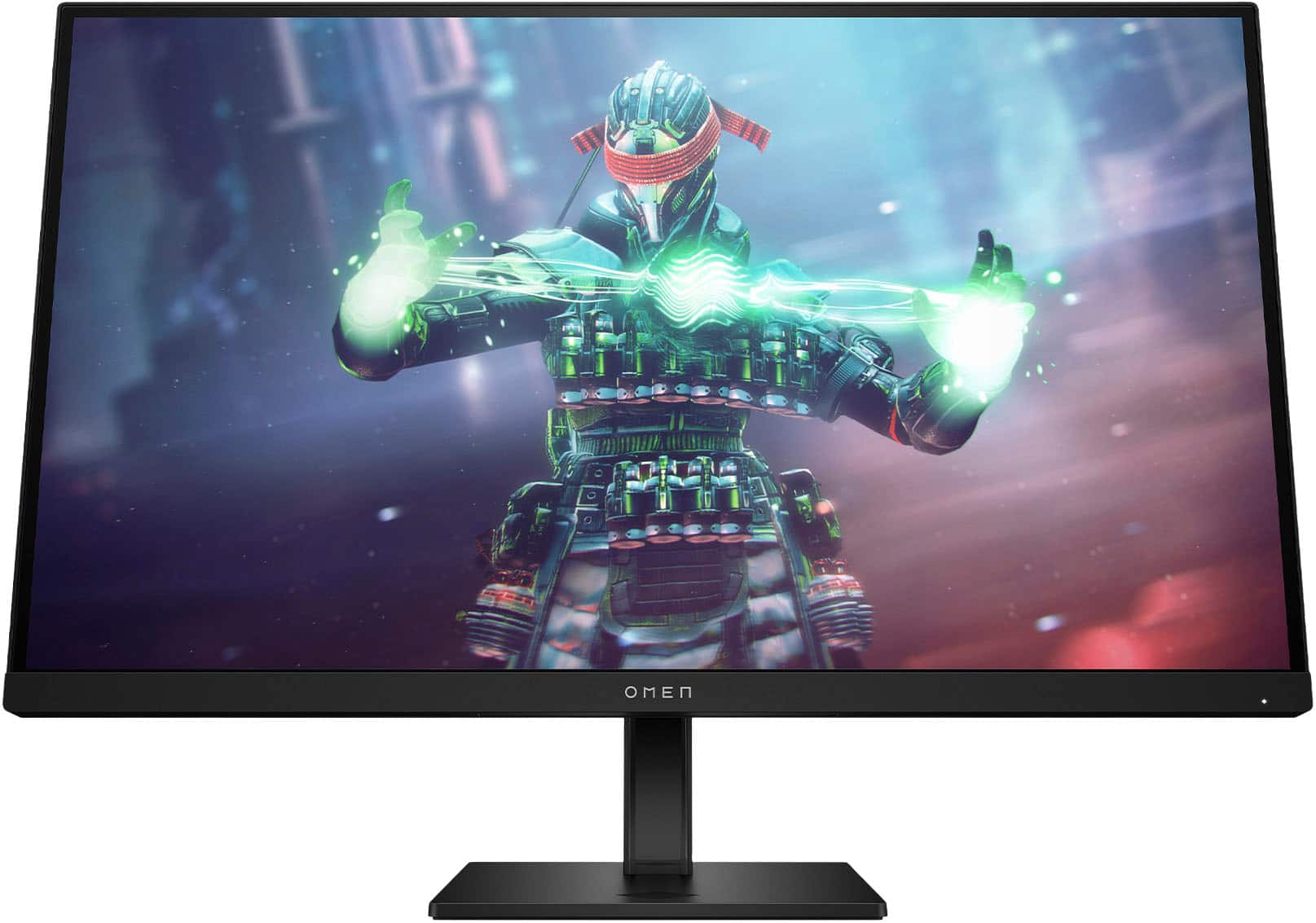
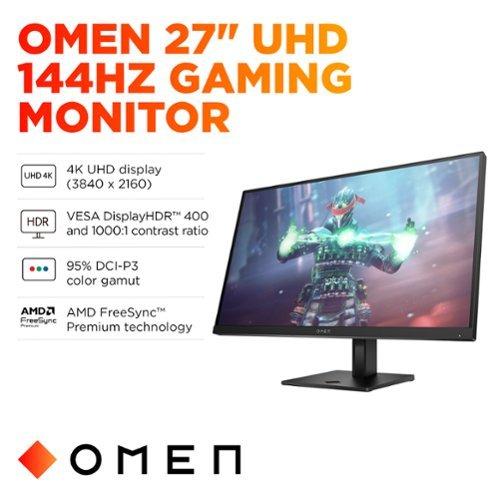
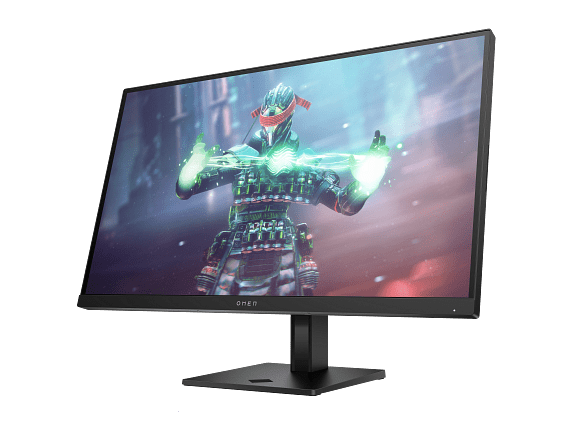
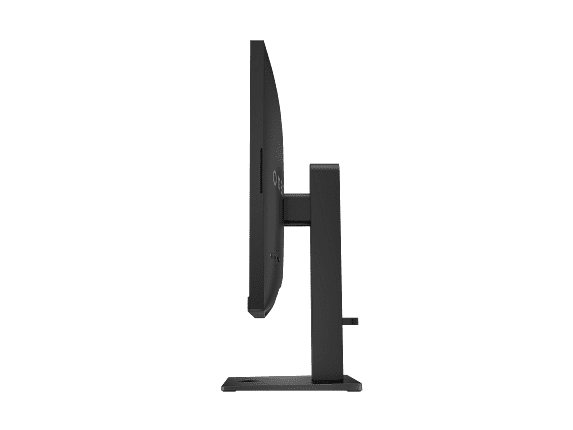
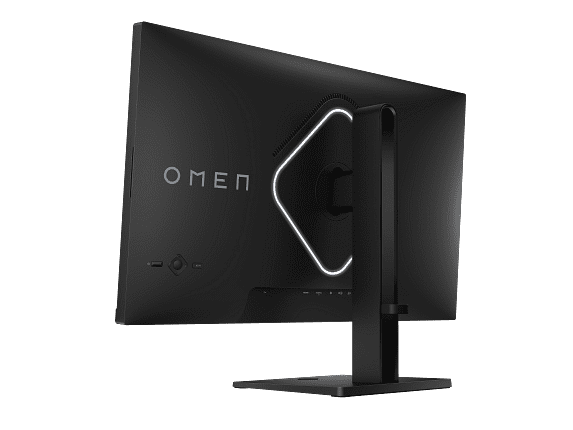
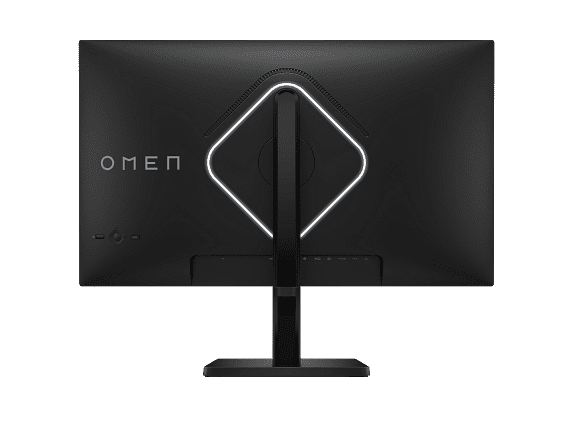
Shopping for a 4K gaming monitor can feel overwhelming with all the technical specs and marketing claims. Today, we're comparing two very different approaches to 4K gaming: the premium Samsung 27" Odyssey OLED G8 4K UHD 240Hz Gaming Monitor at $1,299.99 and the value-focused HP Omen 27k 4K UHD 144Hz Gaming Monitor at $509.99. Both deliver sharp 4K visuals, but they take completely different paths to get there.
Before diving into specifics, let's talk about what makes a great 4K gaming monitor. Resolution is just the starting point – 4K means 3840 x 2160 pixels, giving you incredibly sharp detail that's especially noticeable on a 27-inch screen. But resolution alone doesn't make a great gaming experience.
The real magic happens with refresh rate (how many times per second the screen updates), response time (how quickly pixels change color), and panel technology (the underlying display method). These factors determine whether you get smooth, responsive gameplay or a choppy, laggy experience that ruins competitive gaming.
Think of it like a high-performance car – having a powerful engine (high resolution) is great, but you also need good suspension (low response time) and precise steering (high refresh rate) to actually use that power effectively.
The fundamental difference between these monitors lies in their display technology. The Samsung OLED G8 uses Organic Light-Emitting Diode (OLED) technology, where each pixel produces its own light and can turn completely off to create true black. The HP Omen 27k uses In-Plane Switching (IPS) technology, which uses a backlight that shines through liquid crystal pixels.
OLED technology is relatively new to PC gaming monitors, having made the jump from TVs and smartphones around 2022-2023. The Samsung G8 represents the latest generation of gaming OLEDs, featuring Samsung's QD-OLED (Quantum Dot OLED) panel that launched in 2024.
What makes OLED special is its infinite contrast ratio – literally 1,000,000:1 according to Samsung's specs. When a pixel needs to display black, it simply turns off completely. This creates incredibly deep, inky blacks that make colors pop and give images a sense of depth that's hard to describe until you see it in person.
I've spent considerable time with OLED displays, and the difference is striking when watching movies or playing games with dark scenes. In a game like Cyberpunk 2077 or Alan Wake 2, the contrast between bright neon signs and dark alleyways creates an almost 3D-like depth that draws you into the world.
However, OLED has limitations. The Samsung G8's peak brightness is limited to around 250 nits in typical use, which can make HDR content look dimmer than expected, especially in bright rooms. There's also the long-term concern about burn-in – permanent image retention that can occur if static elements stay on screen for extended periods.
IPS technology has been the go-to choice for professional monitors for years, and the HP Omen 27k represents a mature, refined implementation. Released in 2023, it benefits from years of IPS development and optimization.
The HP's IPS panel delivers over 400 nits of brightness with VESA DisplayHDR 400 certification, making HDR content significantly brighter and more impactful than the Samsung in well-lit rooms. The trade-off is a standard 1,000:1 contrast ratio – good, but nowhere near OLED levels.
Where IPS really shines is consistency and reliability. You don't need to worry about burn-in, the brightness stays consistent over time, and the anti-glare coating handles room lighting better than most OLED panels.
The Samsung OLED G8 pushes 240Hz – that's 240 screen updates per second. The HP Omen 27k delivers 144Hz. Both are significant upgrades over standard 60Hz displays, but the difference between them depends heavily on what you play and how competitive you are.
For esports titles like Counter-Strike 2, Valorant, or Overwatch 2, that extra 96Hz can provide a measurable advantage. The smoother motion tracking makes it easier to follow fast-moving targets, and the reduced input lag can mean the difference between landing a crucial shot or missing it.
However, most single-player games and even many competitive titles won't fully utilize 240Hz. Your graphics card needs to push 240 frames per second to take advantage of the Samsung's full capability, which is challenging even for high-end GPUs at 4K resolution.
The HP's 144Hz hits a sweet spot for most gamers. It's smooth enough for competitive play while being more achievable for graphics cards to maintain consistently. It also perfectly matches the 120Hz capabilities of PlayStation 5 and Xbox Series X consoles.
Response time measures how quickly pixels can change from one color to another, typically measured in gray-to-gray (GtG) transitions. The Samsung OLED G8 claims an incredibly fast 0.03ms response time, while the HP Omen 27k achieves 1ms with overdrive enabled.
OLED's near-instantaneous response time is a genuine advantage. There's virtually no ghosting or motion blur, even in the fastest-paced games. IPS panels have improved dramatically over the years, and the HP's 1ms performance is excellent, but it's not quite at OLED levels.
In practical terms, both monitors will feel responsive and smooth for gaming. The difference is most noticeable in extremely fast-paced competitive scenarios or when you're sensitive to motion artifacts.
High Dynamic Range (HDR) promises more realistic lighting with brighter highlights and deeper shadows. However, implementation varies dramatically between these monitors.
The HP Omen 27k delivers superior HDR performance despite its lower contrast ratio. Its VESA DisplayHDR 400 certification, 8-zone local dimming, and 400+ nits peak brightness create impactful HDR experiences. When playing Horizon Zero Dawn or watching Netflix content, bright explosions and sunlight effects have real punch.
The Samsung OLED G8's HDR is more nuanced. While it has perfect blacks that make dark scenes incredibly atmospheric, its limited brightness means HDR highlights don't pop as dramatically. It's excellent for moody, cinematic games but less impressive for bright, vibrant HDR content.
For home theater use, this difference becomes more pronounced. If you plan to watch movies and HDR content regularly, the HP's brighter, more aggressive HDR presentation often feels more satisfying, even though it lacks OLED's perfect blacks.
Modern gaming setups often involve multiple devices – gaming PCs, consoles, work laptops, and more. This is where the HP Omen 27k really shines with its comprehensive connectivity.
The HP Omen 27k includes a built-in KVM (Keyboard, Video, Mouse) switch that lets you control multiple connected devices with a single keyboard and mouse. This is incredibly useful if you switch between a gaming PC and work laptop, or if you have multiple consoles connected.
The USB-C port with DisplayPort Alt Mode means you can connect modern laptops with a single cable, handling both video and data. The USB hub functionality lets you connect peripherals that can be shared between devices through the KVM switch.
HDMI 2.1 support ensures full 4K 120Hz compatibility with PlayStation 5 and Xbox Series X consoles – something that's becoming increasingly important as more games support high refresh rates on consoles.
The Samsung OLED G8 takes a more focused approach with standard DisplayPort and HDMI connections. It lacks USB-C and KVM functionality, but includes gaming-specific features like customizable RGB lighting through CoreSync and advanced OLED protection systems.
If you have a dedicated gaming setup that doesn't require device switching, the Samsung's approach works fine. But for users who need versatility, the HP's connectivity suite is significantly more valuable.
For serious competitive gamers, the Samsung OLED G8 provides genuine advantages. The 240Hz refresh rate and 0.03ms response time create the smoothest, most responsive gaming experience available. In games where milliseconds matter, these specs can provide a competitive edge.
However, you need a powerful graphics card to take full advantage. Running Counter-Strike 2 at 240fps in 4K requires significant GPU horsepower, often meaning reduced graphics settings to maintain frame rates.
The HP Omen 27k is better suited for console gaming. Its 144Hz refresh rate perfectly accommodates console capabilities, HDMI 2.1 ensures full compatibility, and the KVM switch lets you easily manage multiple consoles or switch between console and PC gaming.
The brighter HDR performance also benefits console gaming, where many titles are optimized for higher brightness displays rather than deep blacks.
For content creators, both monitors offer advantages. The Samsung's OLED panel provides incredible color depth and contrast for video editing and photo work, especially content with dark scenes or high contrast elements.
The HP Omen 27k offers better versatility with its USB-C connectivity for laptops, consistent brightness for long work sessions, and color accuracy that covers 95% DCI-P3 and 99% sRGB color spaces.
In a home theater context, the choice depends on your viewing environment and content preferences. The Samsung OLED G8 excels in dark rooms with cinematic content, providing an almost TV-like viewing experience with perfect blacks and rich colors.
The HP Omen 27k works better in brighter environments and with HDR content that benefits from higher peak brightness. Its anti-glare coating also handles ambient lighting better than most OLED panels.
At $1,299.99, the Samsung OLED G8 commands a significant premium for its cutting-edge technology. You're paying for the newest display technology, maximum gaming performance, and the visual experience that only OLED can provide.
The HP Omen 27k at $509.99 delivers exceptional value, offering 90% of the gaming performance at roughly 40% of the cost. The money saved could go toward a better graphics card, which would likely have a bigger impact on gaming performance than the monitor upgrade.
Both monitors represent current display technology, but they're positioned differently for the future. OLED technology in the Samsung G8 represents the cutting edge, with improvements in brightness and burn-in resistance expected in coming generations.
The HP Omen 27k uses mature IPS technology that's well-understood and reliable, but unlikely to see dramatic improvements. However, its comprehensive connectivity ensures compatibility with future devices and standards.
Choose the Samsung 27" Odyssey OLED G8 4K UHD 240Hz Gaming Monitor if you:
Choose the HP Omen 27k 4K UHD 144Hz Gaming Monitor if you:
Both monitors deliver excellent 4K gaming experiences, but they serve different needs and budgets. The Samsung pushes the boundaries of display technology for those willing to pay for the best, while the HP provides outstanding value and versatility for the majority of users. Your choice should align with your priorities, budget, and how you plan to use your monitor beyond just gaming.
| Samsung 27" Odyssey OLED G8 4K UHD 240Hz Gaming Monitor | HP Omen 27k 4K UHD 144Hz Gaming Monitor |
|---|---|
| Price - Major factor determining value proposition | |
| $1,299.99 (premium pricing for cutting-edge tech) | $509.99 (excellent value for 4K 144Hz gaming) |
| Panel Technology - Determines contrast, brightness, and long-term reliability | |
| QD-OLED (perfect blacks, infinite contrast, potential burn-in) | IPS (consistent brightness, proven reliability, no burn-in risk) |
| Refresh Rate - Higher is smoother for competitive gaming | |
| 240Hz (advantage for esports, requires powerful GPU) | 144Hz (sweet spot for most gaming, console-compatible) |
| Response Time - Lower reduces motion blur and ghosting | |
| 0.03ms GtG (virtually eliminates ghosting) | 1ms GtG (excellent for gaming, minimal ghosting) |
| Brightness - Critical for HDR and bright room visibility | |
| 250 nits typical (limited for HDR, best in dark rooms) | 400+ nits (strong HDR impact, works in bright rooms) |
| Contrast Ratio - Affects image depth and dark scene detail | |
| 1,000,000:1 (infinite OLED contrast, incredible blacks) | 1,000:1 (standard IPS, good but limited contrast) |
| HDR Performance - Important for modern games and movies | |
| Basic HDR (limited by brightness constraints) | VESA DisplayHDR 400 with 8-zone dimming (superior HDR) |
| Connectivity - Determines device compatibility and versatility | |
| HDMI 2.1, DisplayPort 1.4 (gaming-focused, basic ports) | HDMI 2.1, DisplayPort 1.4, USB-C, KVM switch (excellent versatility) |
| Color Accuracy - Important for content creation and visual quality | |
| 99% DCI-P3 (excellent OLED color depth) | 95% DCI-P3, 99% sRGB (strong IPS color accuracy) |
| Warranty Coverage - Protection against potential issues | |
| 3 years including burn-in protection | 1 year standard warranty |
| Best Use Cases - Who should buy each monitor | |
| Premium gaming enthusiasts, competitive esports, dark room setups | Value-conscious gamers, console users, mixed work/gaming setups |
Both are excellent gaming monitors, but the Samsung 27" Odyssey OLED G8 excels for competitive esports with its 240Hz refresh rate and 0.03ms response time. The HP Omen 27k offers better value at $509.99 with 144Hz performance that's perfect for most gamers and console users.
The Samsung OLED G8 uses OLED technology for perfect blacks and infinite contrast, creating stunning visuals in dark scenes. The HP Omen 27k uses IPS technology for brighter displays (400+ nits vs 250 nits) and no burn-in concerns, making it better for bright rooms and long-term reliability.
The HP Omen 27k at $509.99 offers exceptional value, delivering 90% of the performance at 40% of the cost. The Samsung OLED G8 at $1,299.99 targets users who want the absolute best display quality regardless of price.
For most gamers, the HP Omen 27k's 144Hz is plenty and matches console capabilities perfectly. The Samsung OLED G8's 240Hz benefits serious competitive gamers in esports titles, but requires a powerful graphics card to reach those frame rates at 4K.
The HP Omen 27k delivers superior HDR with VESA DisplayHDR 400 certification, 8-zone local dimming, and higher brightness. The Samsung OLED G8 has more basic HDR that's limited by OLED's brightness constraints, though it excels in dark scene contrast.
Yes, both support 4K gaming with consoles. The HP Omen 27k is better suited for console gaming with HDMI 2.1, perfect 144Hz compatibility, and a KVM switch for managing multiple devices. The Samsung OLED G8 also works but lacks the versatility features.
The HP Omen 27k performs better in bright rooms with its higher 400+ nits brightness and anti-glare coating. The Samsung OLED G8 is limited to 250 nits and works best in dark or controlled lighting environments.
The HP Omen 27k uses proven IPS technology with no burn-in risk and consistent performance over time. The Samsung OLED G8 includes burn-in protection and a 3-year warranty covering burn-in, but OLED panels can potentially develop image retention with heavy static content use.
The HP Omen 27k offers superior connectivity with HDMI 2.1, DisplayPort, USB-C, built-in KVM switch, and USB hub functionality. The Samsung OLED G8 has basic gaming-focused ports but lacks USB-C and device management features.
Both work well for productivity, but the HP Omen 27k is more versatile with USB-C laptop connectivity, consistent brightness for long work sessions, and excellent color accuracy. The Samsung OLED G8 excels for creative work requiring deep blacks and contrast.
For movie watching, the choice depends on your room. The Samsung OLED G8 provides cinema-like experience with perfect blacks and rich colors in dark rooms. The HP Omen 27k delivers brighter, more impactful HDR that works better in normal lighting conditions.
Choose the Samsung OLED G8 if you want the best possible display quality, are a competitive gamer, and have $1,299.99 to spend on premium technology. Choose the HP Omen 27k if you want excellent 4K gaming performance, versatility for multiple devices, and great value at $509.99.
We've done our best to create useful and informative comparisons to help you decide what product to buy. Our research uses advanced automated methods to create this comparison and perfection is not possible - please contact us for corrections or questions. These are the sites we've researched in the creation of this article: rtings.com - tomsguide.com - tomshardware.com - youtube.com - ign.com - youtube.com - pcvarge.com - youtube.com - youtube.com - versus.com - bestbuy.com - samsung.com - samsung.com - displayspecifications.com - samsung.com - hardforum.com - publicsector.shidirect.com - forums.thefpsreview.com - samsung.com - rtings.com - samsung.com - samsung.com - tomshardware.com - windowscentral.com - digitaltrends.com - youtube.com - hp.com - youtube.com - hp.com - hp.com - displayspecifications.com - files.bbystatic.com - newegg.com - hp.com - hp.com - hp.com - hp.com - target.com - files.bbystatic.com - displayspecifications.com

Privacy Policy
Terms and Conditions - Affiliate Policy
Home Security
© Copyright 2008-2026.
11816 Inwood Rd #1211, Dallas, TX 75244