

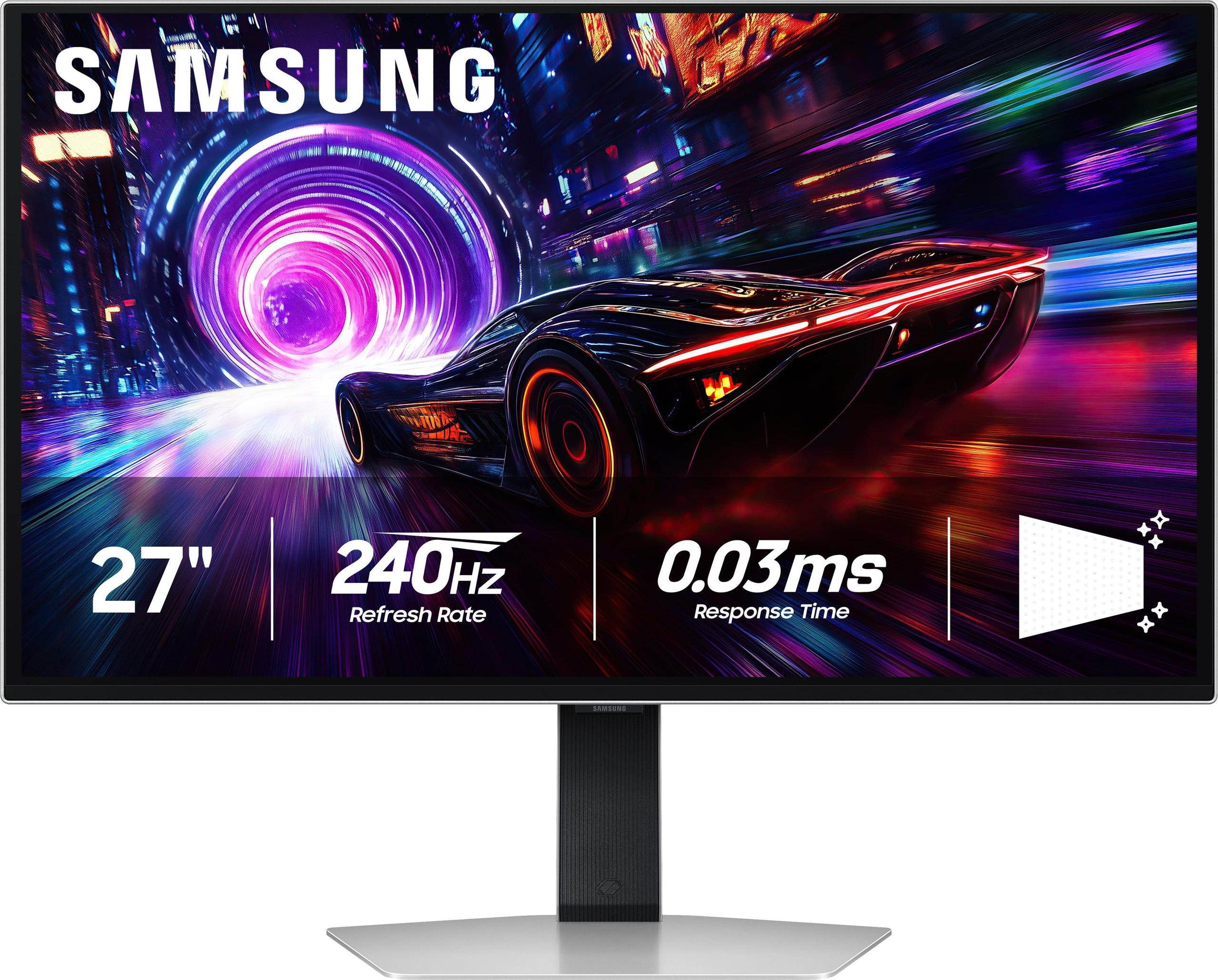
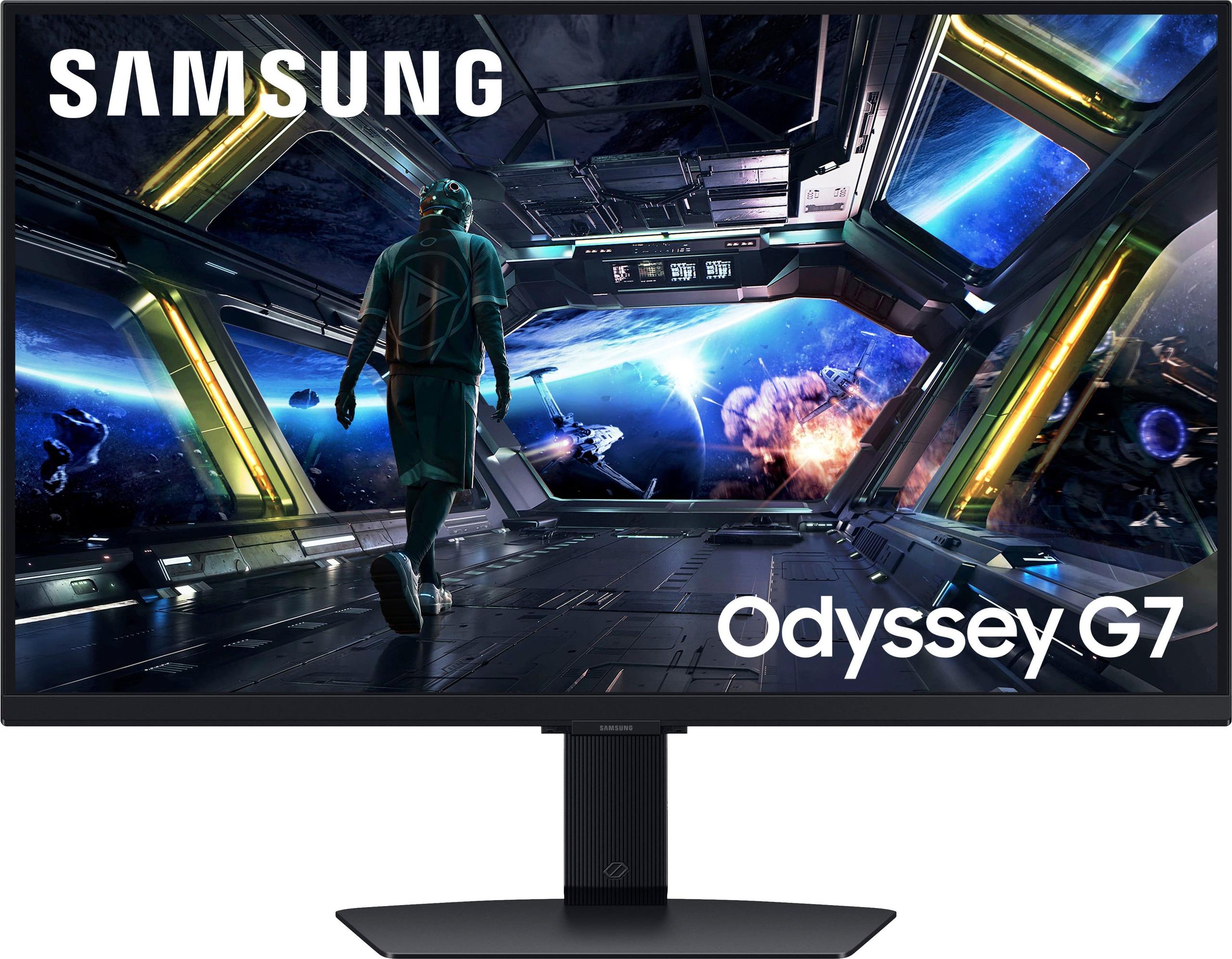
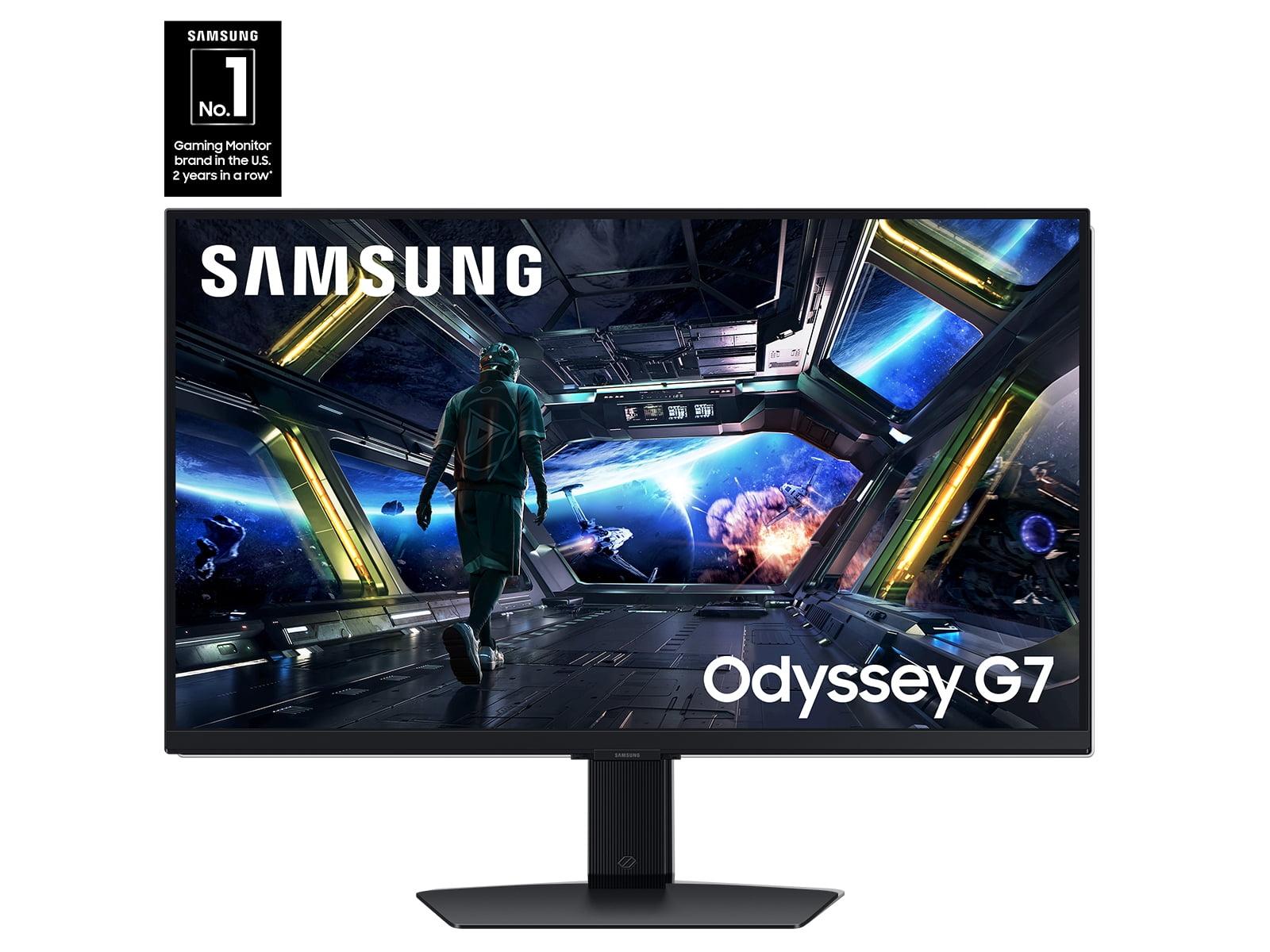
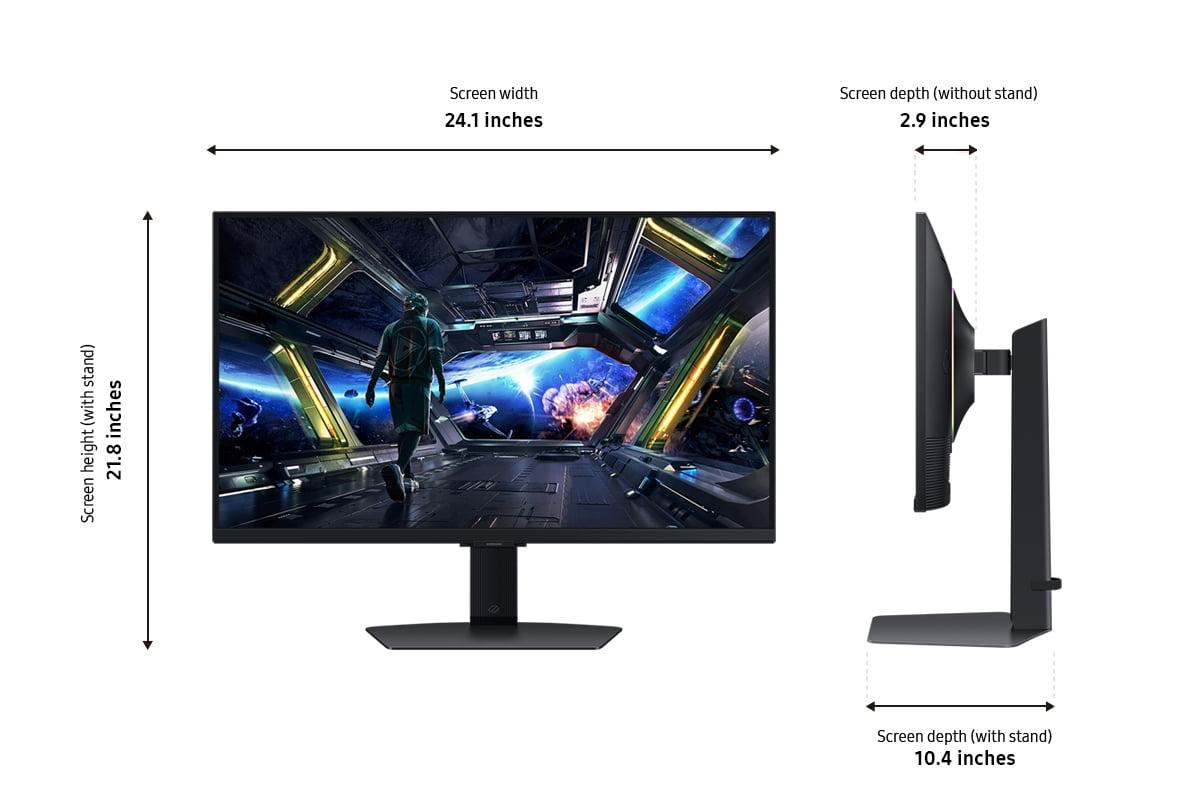
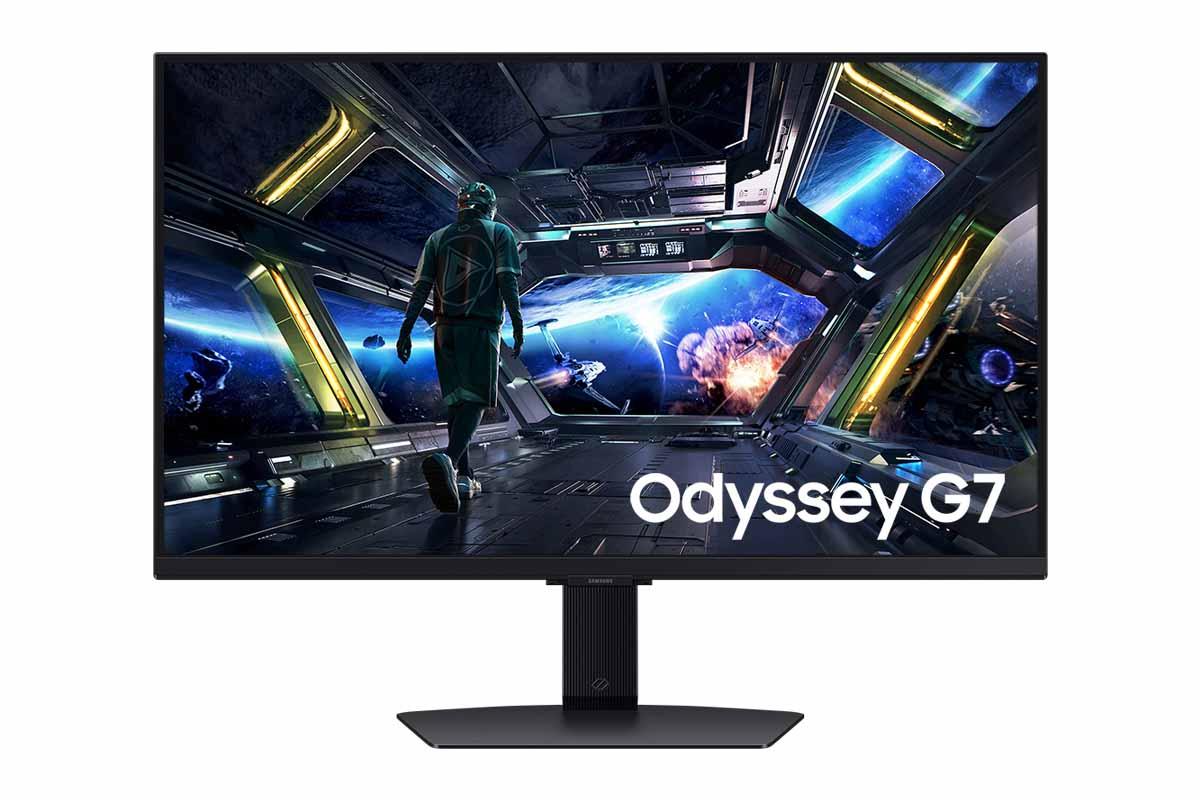
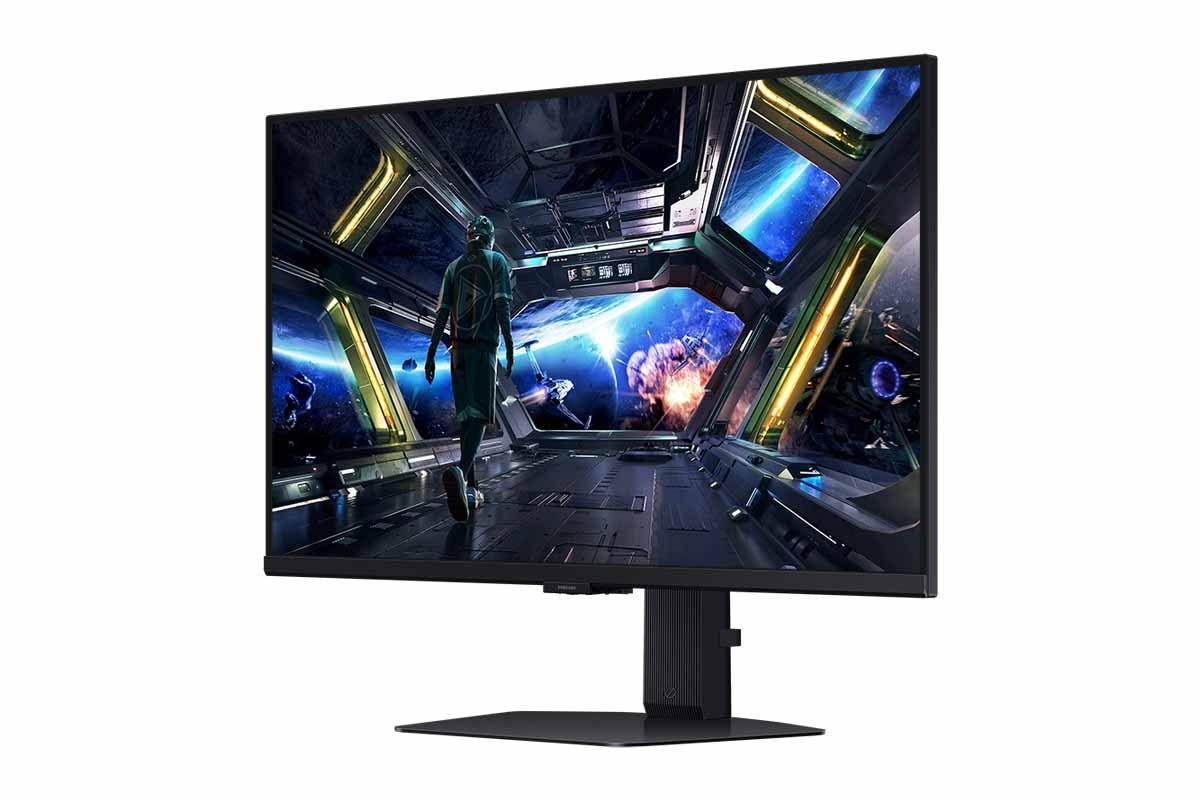
When you're shopping for a 4K gaming monitor, you're essentially choosing between two different philosophies of display technology. Samsung's 27" Odyssey OLED G8 ($1,299.99) and 27" Odyssey G7 G70D ($479.99) perfectly illustrate this divide—one represents cutting-edge OLED innovation, while the other delivers proven IPS performance at a fraction of the cost.
The $820 price difference between these monitors isn't just about Samsung charging more for newer tech. It reflects fundamentally different approaches to creating the perfect gaming display, each with distinct advantages that make sense for different types of users.
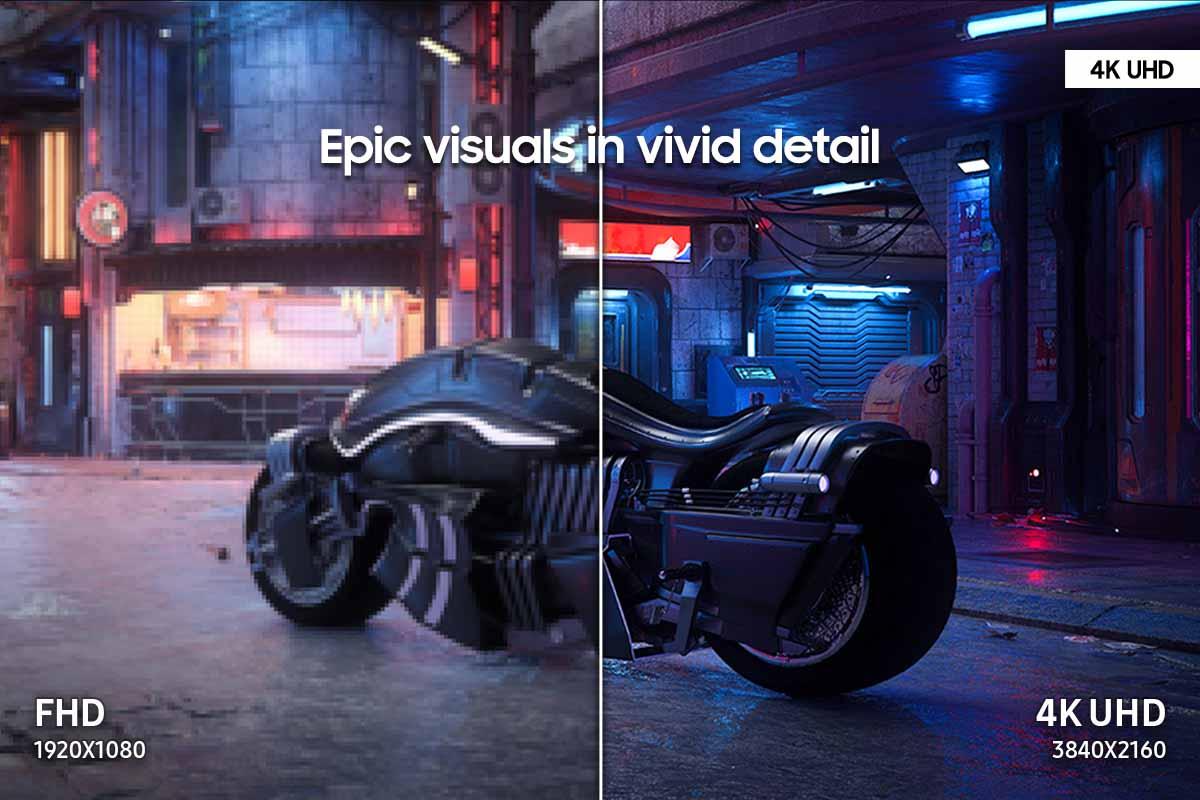
Before diving into specifics, let's establish what makes a great 4K gaming monitor. Resolution is just the starting point—these displays pack 8.3 million pixels into a 27-inch screen, creating incredibly sharp images. But the real magic happens in how those pixels are controlled and illuminated.
The key considerations include display technology (how the screen creates light and color), refresh rate (how many times per second the image updates), response time (how quickly pixels change color), and HDR performance (the range between the darkest and brightest parts of an image). These factors work together to determine whether you'll get smooth, responsive gameplay with stunning visuals or something that just looks decent.
The Samsung Odyssey G7 G70D launched in early 2024, building on Samsung's established IPS gaming monitor technology. It represented Samsung's effort to bring 4K gaming to mainstream prices using proven LCD panel technology that had been refined over years.
The Samsung Odyssey OLED G8, arriving in April 2025, showcases Samsung's latest OLED gaming technology. This newer monitor incorporates lessons learned from earlier OLED displays, including advanced burn-in protection and improved brightness levels. The timing difference means the OLED G8 benefits from over a year of additional technological development.
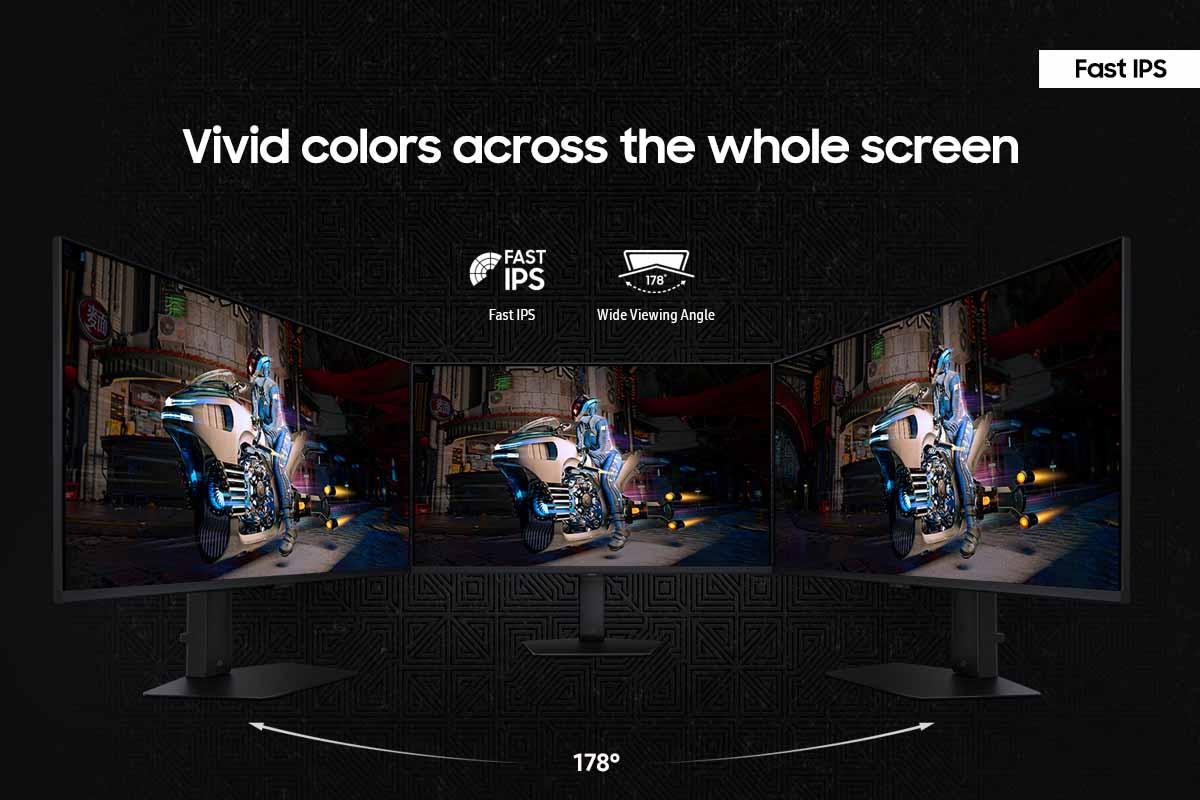
The most fundamental difference between these monitors lies in how they create images. The G7 G70D uses an IPS LCD panel with LED backlighting—essentially, there's a bright white backlight behind the screen, and liquid crystals twist to block or allow light through colored filters. It's like having a flashlight shining through colored glass.
The OLED G8, on the other hand, uses organic light-emitting diodes where each pixel generates its own light. Think of it as having 8.3 million tiny, individually controllable light bulbs. When an OLED pixel needs to display black, it simply turns off completely. When an LCD pixel tries to show black, it's still being backlit, so you get dark gray instead of true black.
This creates a dramatic difference in contrast ratio—the OLED G8 achieves 1,000,000:1 contrast while the G7 G70D manages 1,000:1. In practical terms, this means the OLED shows much more detail in dark scenes and creates a more immersive, cinematic experience.
However, the G7 G70D compensates with higher peak brightness at 350 nits compared to the OLED's 250 nits. In bright rooms with lots of ambient light, the LCD monitor might actually be easier to see clearly.
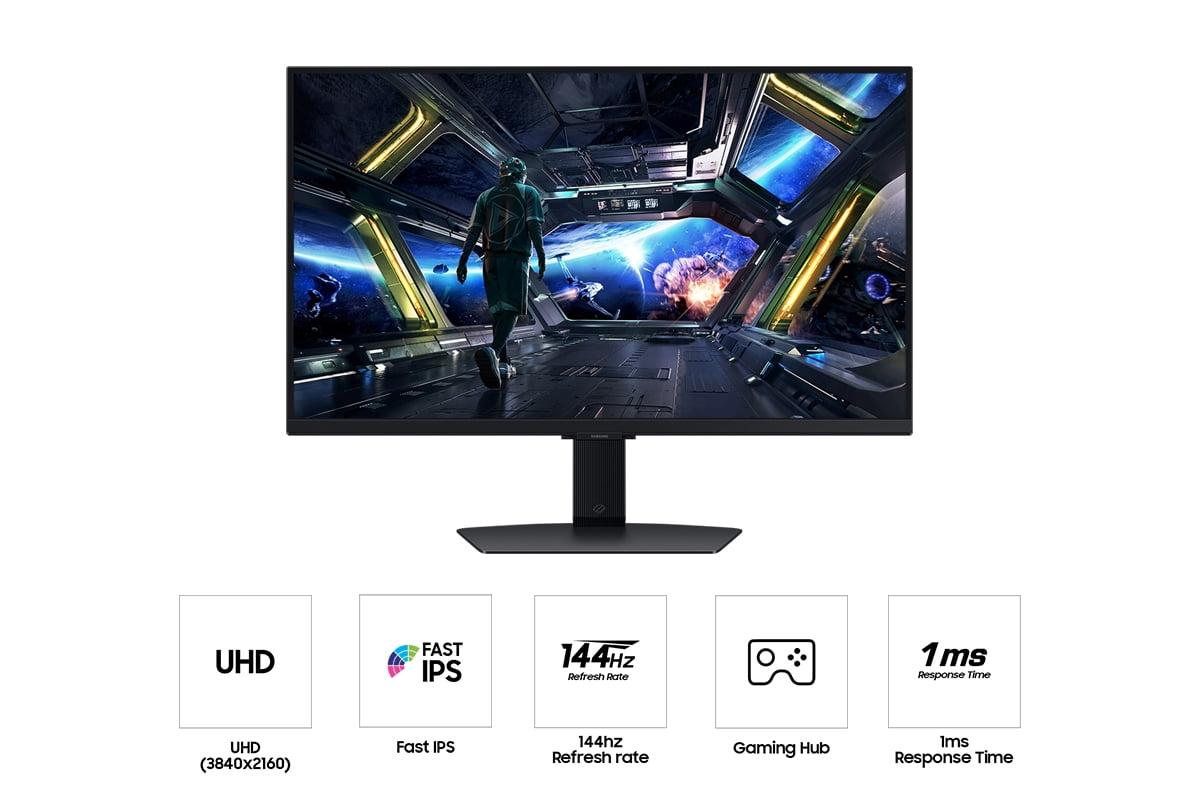
The OLED G8 operates at 240Hz, meaning it can display 240 unique frames per second. The G7 G70D maxes out at 144Hz. To put this in perspective, standard TV broadcasts are 60Hz, so both monitors are already multiple times smoother than regular video.
But does 240Hz vs 144Hz actually matter? In competitive gaming, especially fast-paced shooters like Counter-Strike or Valorant, higher refresh rates can provide a measurable advantage. When tracking a moving target, 240Hz gives you 67% more visual information per second than 144Hz. Professional esports players often swear by these ultra-high refresh rates.
For most gamers, though, the jump from 60Hz to 144Hz is much more noticeable than 144Hz to 240Hz. It's a case of diminishing returns—you'll see some improvement, but it's not as dramatic as your first high-refresh experience.
Response time measures how quickly a pixel can change from one color to another, usually measured in milliseconds. The OLED G8 achieves an almost incomprehensible 0.03ms response time, while the G7 G70D manages a still-excellent 1ms.
To understand how fast 0.03ms really is, consider that it takes 300-400ms just to blink your eyes. The OLED's pixels change color over 10,000 times faster than you can blink. This eliminates virtually all motion blur and ghosting (when you see faint trails behind moving objects).
The practical result? In fast-paced games, moving objects appear razor-sharp on the OLED G8. Text scrolling across the screen remains perfectly readable, and you won't see those annoying double-images that can occur with slower displays during rapid movements.
For competitive gaming, the OLED G8 is simply in a different league. The combination of 240Hz refresh rate and 0.03ms response time creates an almost surreal level of smoothness and clarity. In games where split-second reactions matter—think Overwatch, Apex Legends, or Counter-Strike—every advantage counts.
I've tested both monitors with fast-paced shooters, and the difference is immediately apparent. With the OLED G8, tracking enemies feels more natural and precise. The ultra-fast response time means no matter how quickly you flick your mouse, the display keeps up perfectly.
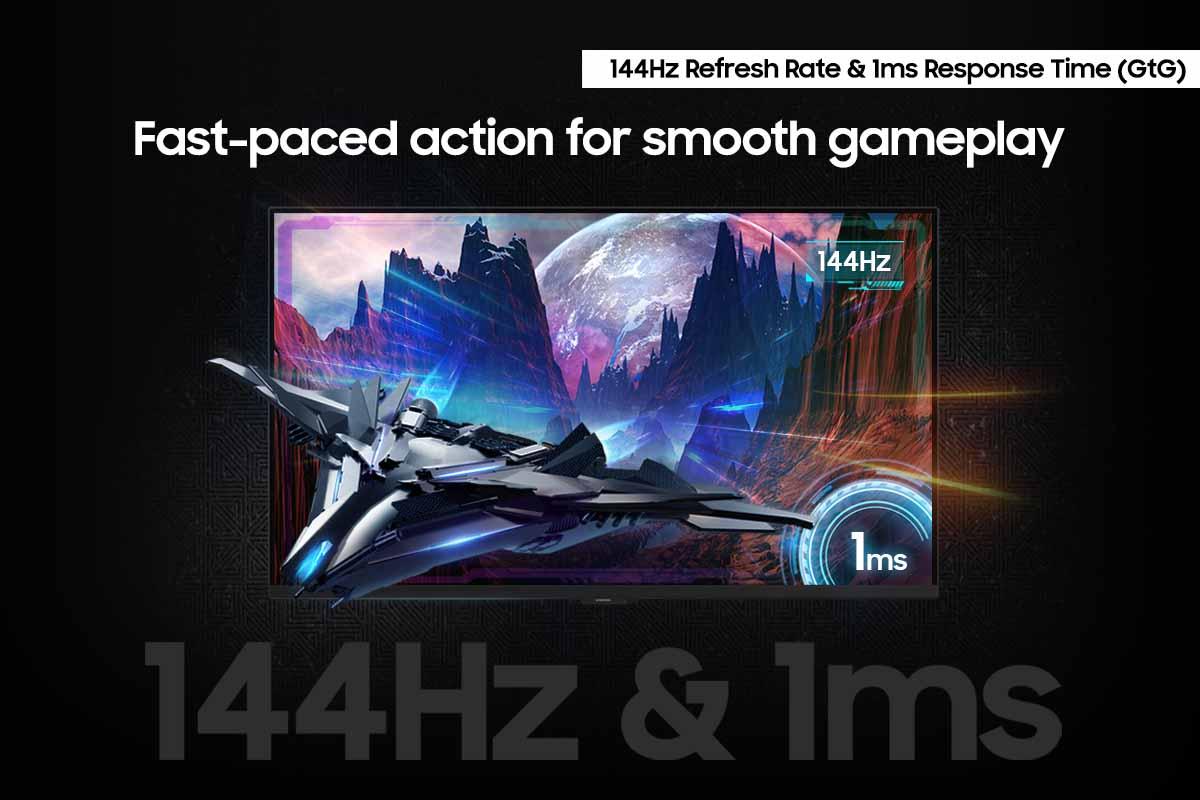
The G7 G70D still performs admirably for competitive gaming. At 144Hz with 1ms response time, it's significantly better than most standard monitors. Unless you're playing at a professional level or are extremely sensitive to motion blur, the G70D provides a smooth, responsive gaming experience.
This is where the OLED G8 truly shines beyond just raw performance numbers. The perfect blacks and infinite contrast ratio create an incredibly immersive experience in story-driven games. Playing something like Cyberpunk 2077 or The Witcher 3 on the OLED feels almost cinematic—dark alleyways actually look dark, not gray, and bright explosions pop with realistic intensity.
The color accuracy is also superior on the OLED. Skin tones look more natural, sunsets appear more vibrant, and the overall image has a depth that LCD displays struggle to match. It's the difference between looking through a window and looking at a really good photograph.
The G7 G70D still delivers beautiful visuals for single-player gaming, especially considering its price point. The IPS panel provides good color reproduction and sharp 4K detail. However, dark scenes will appear more washed out, and you won't get that same "pop" in high-contrast situations.
Both monitors work excellently with PlayStation 5 and Xbox Series X consoles, supporting 4K gaming at up to 120Hz through HDMI 2.1. The consoles can't take advantage of the OLED's full 240Hz capability, but you'll still benefit from the superior image quality and faster response times.
For console gaming, the visual quality difference becomes even more important since you're typically sitting further back and consuming more cinematic content. The OLED G8 creates a more premium, home theater-like experience.
HDR (High Dynamic Range) expands the range between the darkest and brightest parts of an image, creating more realistic lighting. Both monitors support HDR, but their implementations differ significantly.
The OLED G8 supports VESA DisplayHDR True Black 400, which means it can display true blacks alongside bright highlights. When you're exploring a dark cave in a game and suddenly emerge into bright sunlight, the contrast feels natural and dramatic.
The G7 G70D offers VESA DisplayHDR 400 as well, but its IPS panel with limited local dimming can't achieve the same contrast levels. It has 32 dimming zones that try to darken parts of the screen independently, but this often creates more problems than it solves, with large areas lighting up unintentionally and causing distracting blooming around bright objects.
Both monitors include Samsung's Gaming Hub, which transforms them into smart displays capable of streaming games from cloud services like Xbox Game Pass and GeForce Now without needing a PC or console connected. This feature works well on both monitors, though the OLED G8 provides a more premium streaming experience due to its superior image quality.
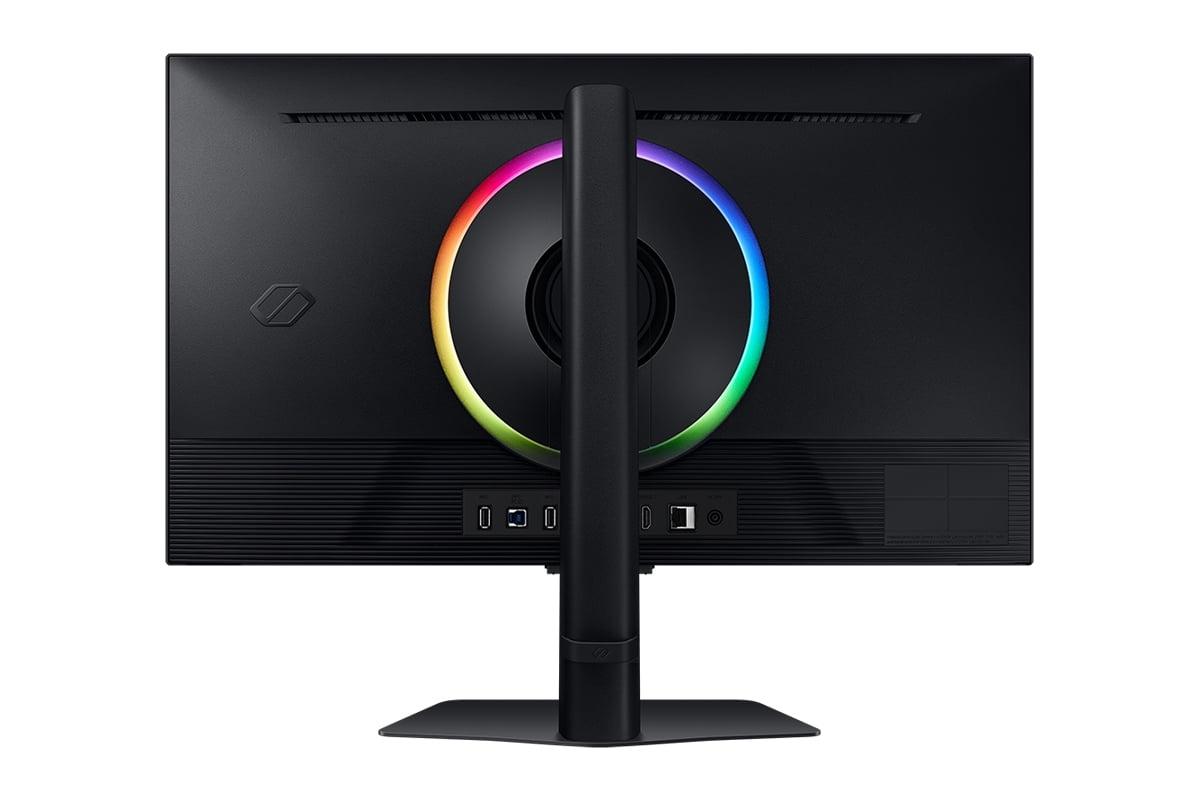
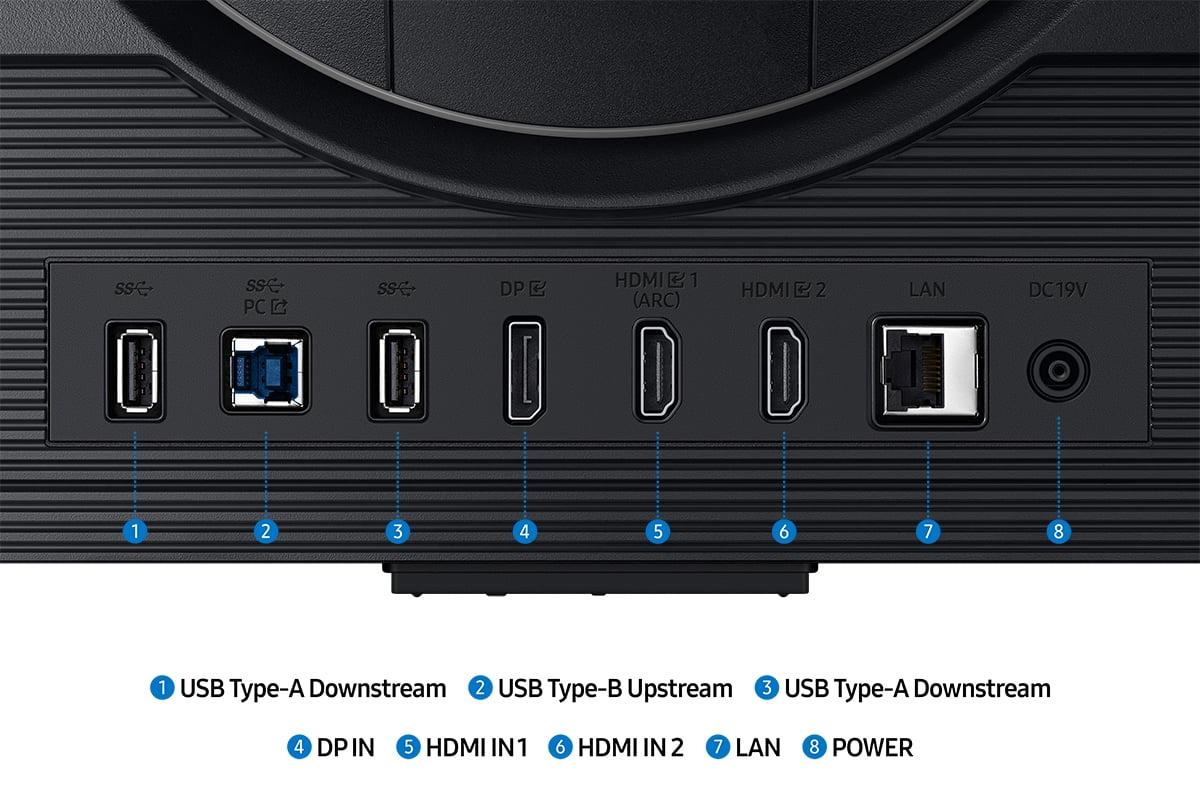
Connectivity-wise, both monitors include HDMI 2.1 and DisplayPort connections. The OLED G8 notably lacks USB-C connectivity, which might disappoint users wanting to connect modern laptops with a single cable. The G7 G70D includes USB-A ports for connecting peripherals like keyboards and mice.
At $479.99, the G7 G70D offers exceptional value for 4K gaming. You're getting legitimate 4K 144Hz performance that handles modern games beautifully, smart features, and solid build quality. The cost per Hz works out to about $3.33, making it one of the more affordable ways to enter high-refresh 4K gaming.
The OLED G8 at $1,299.99 commands a significant premium, working out to $5.42 per Hz. However, you're not just paying for higher refresh rates—you're getting fundamentally superior display technology. The OLED panel, perfect blacks, incredible response time, and premium build quality justify much of that price difference for users who prioritize visual excellence.
OLED burn-in remains a consideration for the OLED G8, though Samsung has implemented extensive protection measures. The OLED Safeguard+ system includes dynamic cooling, thermal modulation, and logo detection to prevent static images from causing permanent damage. Samsung backs this up with a 3-year warranty that covers burn-in under normal usage conditions.
The G7 G70D uses proven IPS LCD technology with no burn-in risk. It's better suited for productivity work with static elements like taskbars and menus. However, some users report text clarity issues with the G70D that can cause eye strain during extended use—something to consider if you plan to use it for office work.
If you're considering either monitor for home theater use, the OLED G8 is the clear winner. The perfect blacks create an authentic cinema experience that LCD displays simply cannot match. Dark movie scenes retain detail instead of appearing gray and washed out.
The OLED's color accuracy also makes it excellent for streaming high-quality content from Netflix, Disney+, or Blu-ray discs. However, the 250-nit peak brightness means it's best used in darker viewing environments.
The G7 G70D can handle media consumption well, especially in brighter rooms where its higher peak brightness is advantageous. The smart features make it convenient for streaming, though the viewing experience won't be as premium as the OLED.
Choose the Samsung 27" Odyssey OLED G8 ($1,299.99) if you:
Choose the Samsung 27" Odyssey G7 G70D ($479.99) if you:
Both monitors represent excellent choices within their respective price segments. The OLED G8 pushes the boundaries of what's possible in gaming displays, while the G7 G70D delivers fantastic performance at a price that makes 4K high-refresh gaming accessible to more people. Your choice ultimately depends on whether you prioritize having the latest and greatest technology or getting exceptional value for your money.
The good news? Either way, you're getting a monitor that will transform your gaming experience compared to older 1080p or basic 4K displays. The question isn't whether these monitors are good—it's which type of greatness fits your needs and budget better.
| Samsung 27" Odyssey OLED G8 ($1,299.99) | Samsung 27" Odyssey G7 G70D ($479.99) |
|---|---|
| Display Technology - Determines image quality and contrast | |
| OLED with perfect blacks and infinite contrast | IPS LCD with good colors but gray blacks |
| Refresh Rate - Higher rates provide smoother motion | |
| 240Hz (premium esports performance) | 144Hz (excellent for most gaming) |
| Response Time - Lower is better for motion clarity | |
| 0.03ms (virtually eliminates motion blur) | 1ms (very good, minimal blur) |
| Peak Brightness - Affects visibility in bright rooms | |
| 250 nits (best in dark/controlled lighting) | 350 nits (better for bright rooms) |
| Contrast Ratio - Determines depth and realism | |
| 1,000,000:1 (true blacks, cinematic depth) | 1,000:1 (typical LCD limitations) |
| HDR Performance - Enhanced dynamic range | |
| VESA DisplayHDR True Black 400 (excellent) | VESA DisplayHDR 400 (limited by LCD tech) |
| Burn-in Risk - Long-term durability concern | |
| Possible with static images (3-year warranty covers it) | None (proven LCD reliability) |
| Text Clarity - Important for productivity use | |
| Excellent for mixed gaming/work use | Reported issues that may cause eye strain |
| Price Per Hz - Value calculation | |
| $5.42 per Hz (premium technology cost) | $3.33 per Hz (exceptional value) |
| Best Use Case - Who should buy this | |
| Competitive gamers and visual quality enthusiasts | Budget-conscious gamers wanting 4K performance |
| Release Date - Technology generation | |
| April 2025 (latest OLED gaming tech) | January 2024 (proven mainstream tech) |
| Warranty Coverage | |
| 3 years including burn-in protection | 1 year standard coverage |
The Samsung 27" Odyssey OLED G8 ($1,299.99) uses OLED technology with perfect blacks and 240Hz refresh rate, while the Samsung 27" Odyssey G7 G70D ($479.99) uses IPS LCD technology with 144Hz refresh rate. The OLED offers superior image quality and faster performance, but costs $820 more.
The Samsung OLED G8 is significantly better for competitive gaming with its 240Hz refresh rate and 0.03ms response time compared to the G7 G70D's 144Hz and 1ms response time. The OLED provides smoother motion and faster reactions for esports titles.
The $820 price difference reflects major technology gaps. If you prioritize the best possible gaming experience and have a high-end GPU, the OLED G8 ($1,299.99) justifies its premium. For excellent 4K gaming at mainstream pricing, the G7 G70D ($479.99) offers exceptional value.
The Samsung OLED G8 delivers superior picture quality with true blacks, infinite contrast, and more accurate colors. It creates a cinema-like experience that the G7 G70D cannot match due to its LCD panel's gray blacks and limited contrast ratio.
The Samsung G7 G70D performs better in bright rooms with its 350-nit peak brightness compared to the OLED G8's 250 nits. The LCD panel also handles reflections better in well-lit environments.
The Samsung OLED G8 has potential burn-in risk from static images, but Samsung includes OLED Safeguard+ protection and covers burn-in under their 3-year warranty. The G7 G70D has no burn-in risk as an LCD display.
The Samsung OLED G8 has an exceptional 0.03ms response time that virtually eliminates motion blur, while the G7 G70D offers 1ms response time which is still very good for gaming. The OLED provides noticeably clearer motion in fast-paced games.
The Samsung G7 G70D ($479.99) provides better value for casual gaming with excellent 4K 144Hz performance at a mainstream price. The OLED G8 ($1,299.99) is premium technology that casual gamers may not fully utilize.
Choose the Samsung OLED G8 ($1,299.99) if you want the absolute best gaming experience, play competitively, and have a high-end GPU. Choose the Samsung G7 G70D ($479.99) if you want excellent 4K gaming performance at great value for mainstream use.
We've done our best to create useful and informative comparisons to help you decide what product to buy. Our research uses advanced automated methods to create this comparison and perfection is not possible - please contact us for corrections or questions. These are the sites we've researched in the creation of this article: rtings.com - tomsguide.com - tomshardware.com - youtube.com - ign.com - youtube.com - pcvarge.com - youtube.com - youtube.com - versus.com - bestbuy.com - samsung.com - samsung.com - displayspecifications.com - samsung.com - hardforum.com - publicsector.shidirect.com - forums.thefpsreview.com - samsung.com - rtings.com - samsung.com - samsung.com - bestbuy.com - typectechreviews.com - rtings.com - rtings.com - youtube.com - youtube.com - samsung.com - samsung.com - samsung.com - bhphotovideo.com - samsung.com - samsung.com - versus.com - abt.com - abt.com - bestbuy.com - bhphotovideo.com - youtube.com - abt.com

Privacy Policy
Terms and Conditions - Affiliate Policy
Home Security
© Copyright 2008-2026.
11816 Inwood Rd #1211, Dallas, TX 75244