

Smart projectors have transformed how we think about big-screen entertainment. Gone are the days when you needed a separate streaming device, complex wiring, and a dedicated dark room to enjoy cinematic experiences. Today's smart projectors pack streaming services, wireless connectivity, and impressive audio directly into compact units that can turn any wall into a movie screen.
The category has evolved in two distinct directions since around 2020. On one side, you have home theater-focused models that prioritize streaming integration and smart features for indoor use. On the other, there are rugged portable projectors built for outdoor adventures and versatile environments. This split reflects how different users approach projection: some want a sophisticated home entertainment hub, while others need a grab-and-go solution for camping trips and backyard movie nights.
Understanding this division helps explain why the HAPPRUN Google TV Smart Projector and BenQ GS50 Portable Outdoor Projector approach similar core functions so differently. Both deliver 1080p projection with smart features, but their design philosophies couldn't be more opposite.
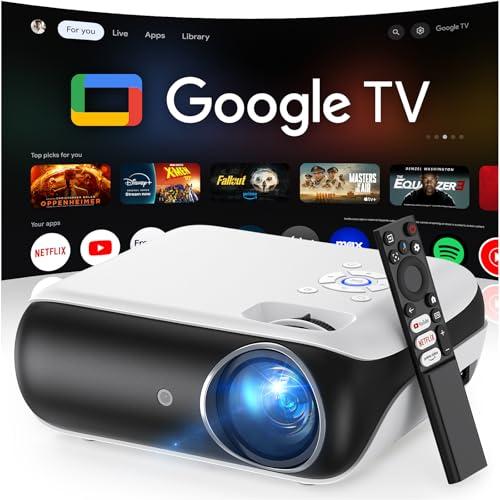
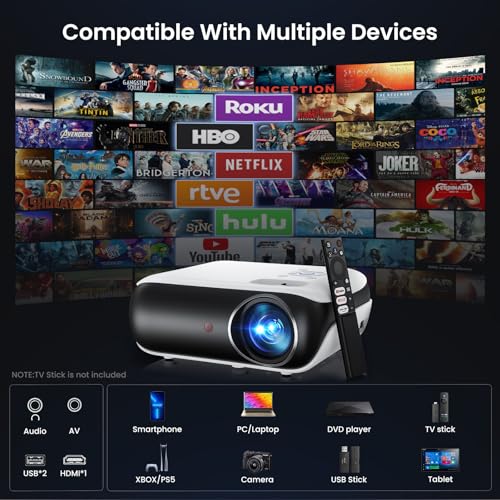
The HAPPRUN Google TV Smart Projector represents the modern indoor approach. Released in the smart projector boom of recent years, it integrates Google TV directly into the projector, eliminating external streaming sticks while adding voice control and wireless casting. This approach prioritizes convenience and integration over ruggedness.
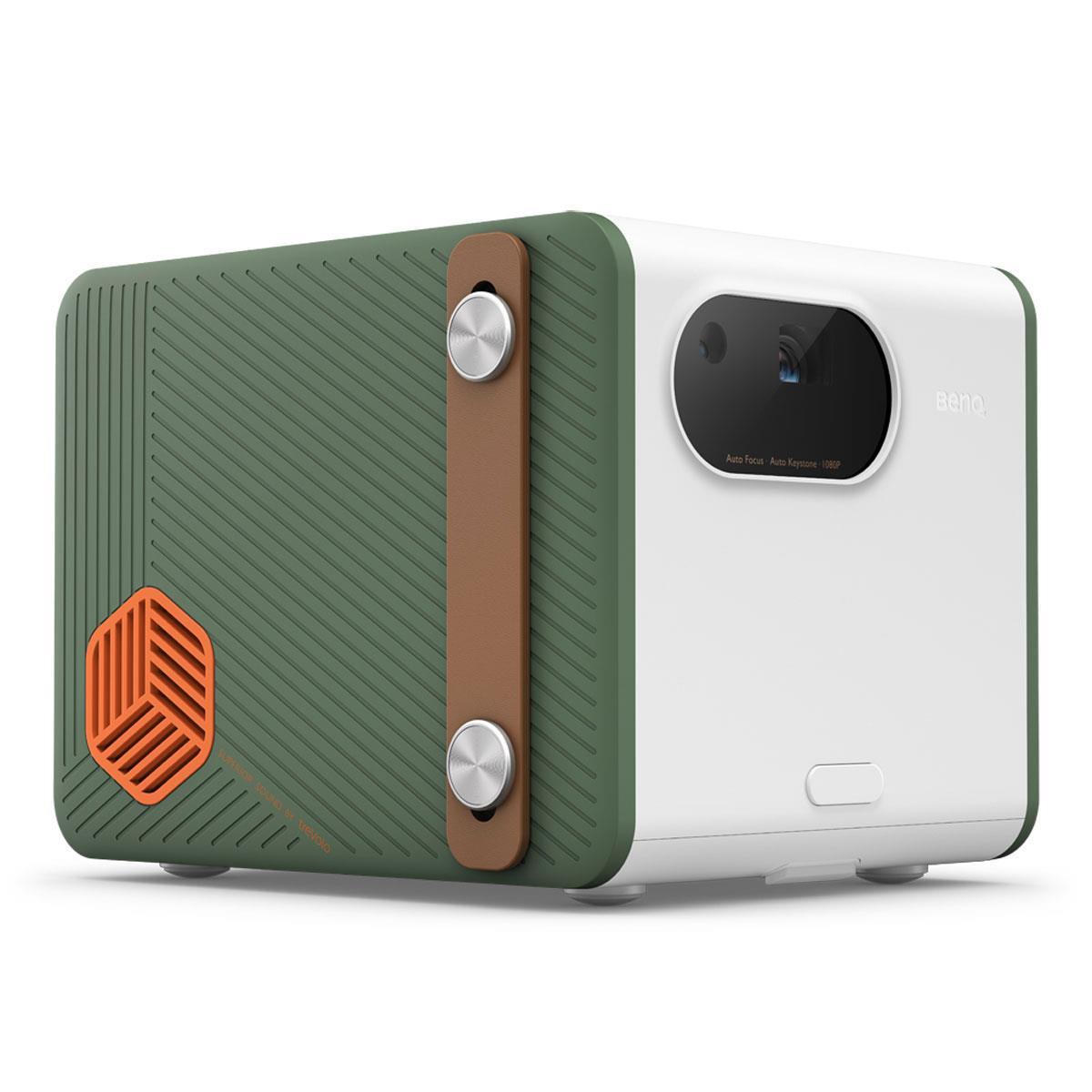
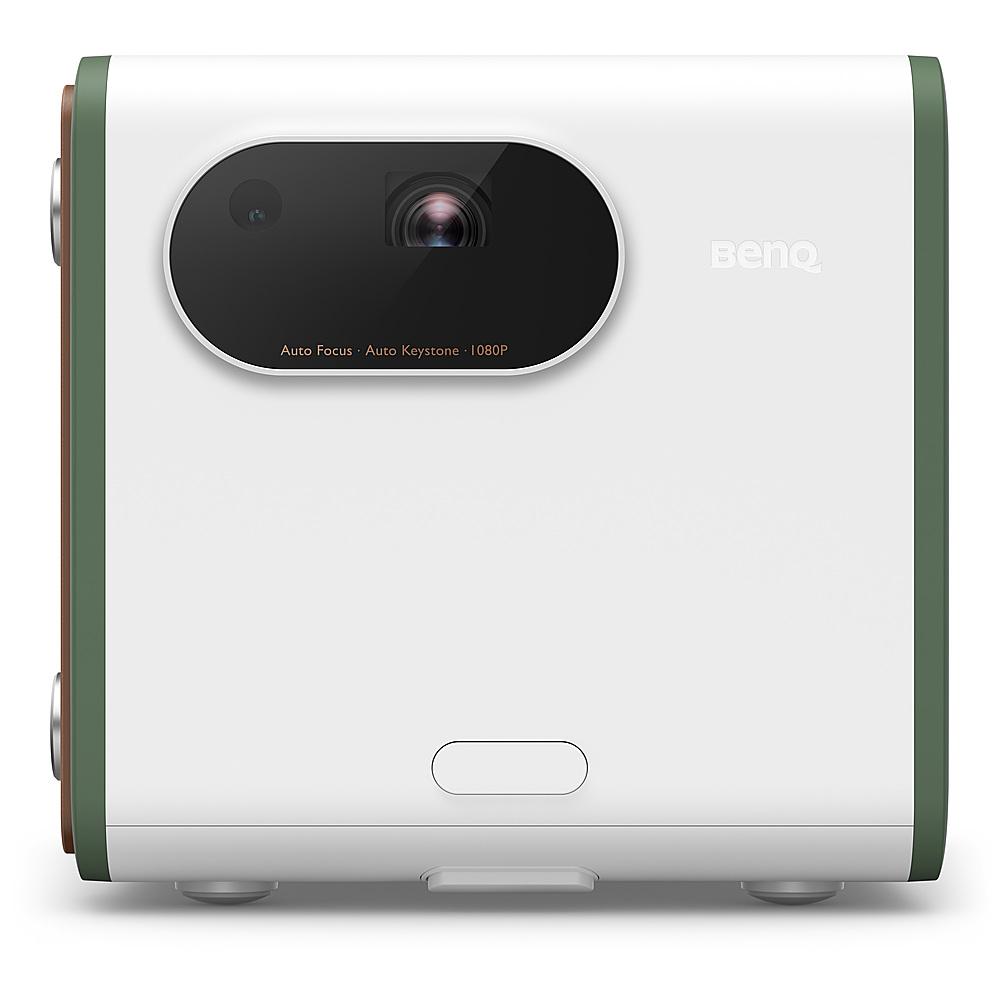
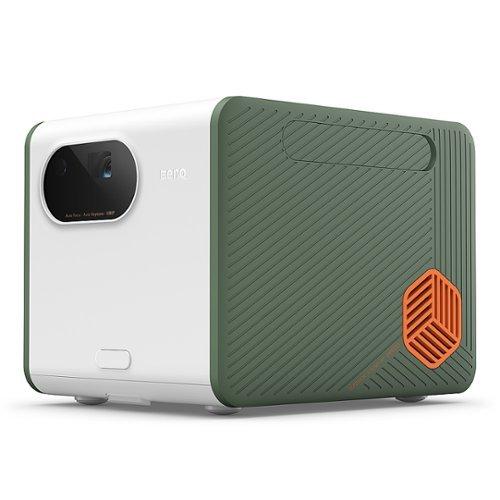
The BenQ GS50, launched in 2021, takes the outdoor adventure route. BenQ recognized that truly portable projection needed more than just a small form factor – it required weatherproofing, battery power, and audio that could compete with outdoor environments. This projector embodies the "take anywhere" philosophy.
These different approaches create distinct advantages. The HAPPRUN excels in controlled indoor environments where you have reliable power and want seamless smart features. The BenQ GS50 shines when you need projection capabilities in challenging conditions or locations without electricity.
When it comes to projectors, brightness measured in ANSI lumens (American National Standards Institute lumens – a standardized way to measure light output) often determines whether you'll actually enjoy watching or squint through dim, washed-out images.
The BenQ GS50 delivers 500 ANSI lumens compared to the HAPPRUN's 350 ANSI lumens. This 150-lumen difference represents about 43% more brightness – far from trivial in real-world use. Based on our research of user experiences, this translates to the BenQ remaining watchable in rooms with some ambient light, while the HAPPRUN really needs darkness to shine.
For context, most budget projectors claim high lumen counts but often measure closer to 200-300 ANSI lumens in practice. The BenQ's 500 lumens puts it in genuinely usable territory for varied lighting conditions, though neither projector will compete with bright room viewing that requires 1000+ lumens.
The brightness advantage becomes crucial for outdoor use. Even during golden hour – that period after sunset when light is soft and warm – ambient light can wash out dimmer projectors. Our research indicates the BenQ maintains good visibility during these conditions, while the HAPPRUN really needs full darkness.
For indoor home theater use, both projectors perform well in dark rooms. The HAPPRUN can certainly deliver an enjoyable experience when light is controlled, making its lower brightness less problematic in dedicated theater setups.
Beyond brightness, picture quality depends heavily on contrast ratio – the difference between the darkest blacks and brightest whites a projector can produce. Here, the BenQ GS50 dominates with a 100,000:1 contrast ratio using DLP (Digital Light Processing) technology, compared to the HAPPRUN's 20,000:1 ratio.
DLP technology, developed by Texas Instruments, uses millions of tiny mirrors to create images. This typically results in sharper text, better color accuracy, and superior contrast compared to LCD-based systems. The BenQ's DLP implementation creates noticeably deeper blacks and more vibrant colors, making movies more immersive and text presentations crisper.
The HAPPRUN counters with HDR10+ support, which enhances the dynamic range of compatible streaming content. HDR (High Dynamic Range) expands the range of colors and brightness levels, making images appear more lifelike. When watching Netflix or other HDR10+ content, the HAPPRUN can display more nuanced color gradations and better highlight details.
Both projectors handle 4K input, though neither displays true 4K resolution. They accept 4K signals and downscale them to their native 1080p, which still results in better image quality than feeding them 1080p content directly. The processing required for this downscaling has improved significantly since 2020, making modern 1080p projectors quite capable with 4K sources.
For home theater enthusiasts, the BenQ's superior contrast creates more cinematic images with better shadow detail. However, the HAPPRUN's HDR support provides advantages with streaming content that supports it, which increasingly includes most major platforms.
Audio performance often gets overlooked in projector comparisons, but it significantly impacts the viewing experience. The BenQ GS50 features a sophisticated 2.1 channel speaker system with two 5W midrange tweeters and a dedicated 10W subwoofer, totaling 20W of audio power.
This isn't just about total wattage – the dedicated subwoofer provides actual bass response that single-driver systems can't match. Based on user reviews, the BenQ delivers room-filling sound that makes external speakers optional for many viewing scenarios. The projector can even function as a standalone Bluetooth speaker when not projecting, adding utility beyond its primary function.
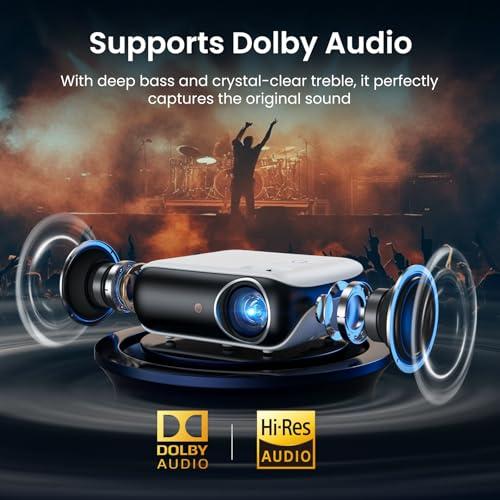
The HAPPRUN includes an 8W single speaker that provides adequate audio for casual viewing but lacks the depth and impact needed for immersive experiences. User feedback consistently indicates that external speakers become necessary for satisfying home theater use, particularly for action movies or music-heavy content.
This audio difference becomes especially important for outdoor use. In backyard settings, you're competing with ambient noise from neighbors, traffic, and nature. The BenQ's powerful audio system handles these challenges much better than the HAPPRUN's modest speaker.
For indoor home theaters, many enthusiasts prefer dedicated sound systems anyway, making the audio difference less critical. However, the BenQ's superior audio provides more flexibility in room setup and occasional use scenarios.
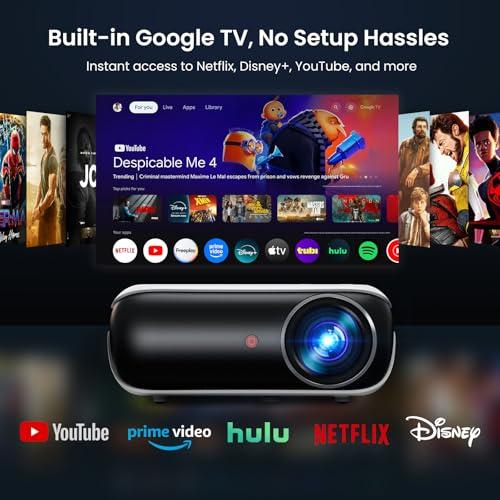
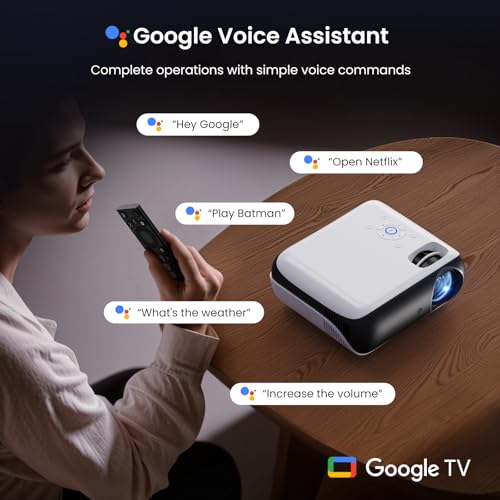
The HAPPRUN Google TV Smart Projector takes smart integration seriously. It runs Google TV 11.0 natively, providing direct access to Netflix (with official licensing), YouTube, Disney+, Prime Video, and thousands of other apps. The integration includes Google Assistant for voice control, Chromecast for wireless casting, and AirPlay support for Apple devices.
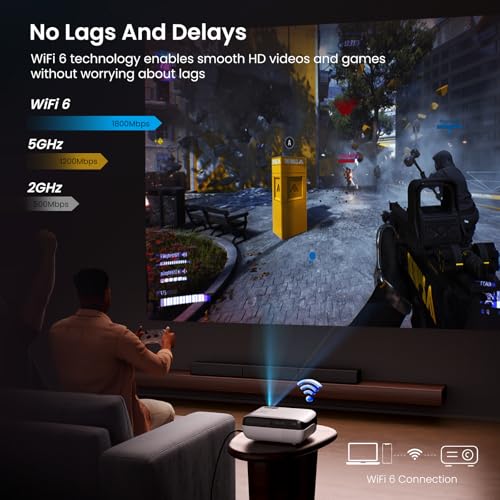
This approach eliminates the need for external streaming devices entirely. You can control everything through voice commands or the included remote, and the interface updates automatically with new features and app versions. The projector also supports WiFi 6, the latest wireless standard that provides faster speeds and better performance in crowded wireless environments.
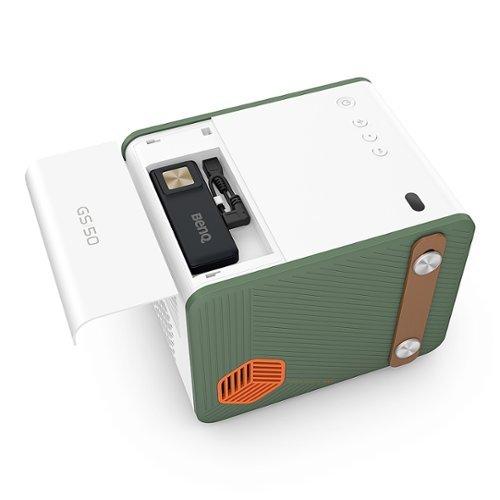
The BenQ GS50 includes an external Android TV stick (model QS01) that fits in a hidden compartment within the projector. While this provides smart functionality, it runs older Android 9.0 software and depends on external hardware that may become outdated. The stick supports major streaming apps, but updates depend on the manufacturer rather than automatic system updates.
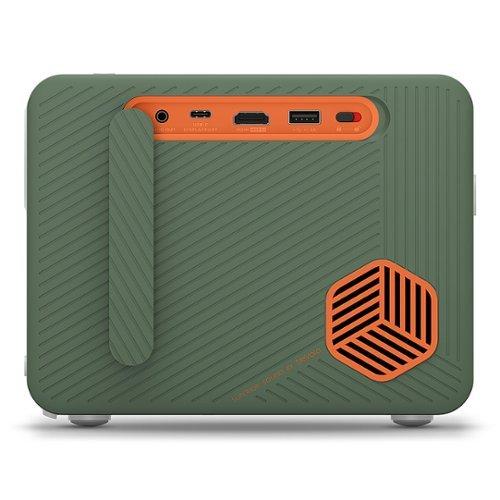
The external approach has advantages too. If the streaming stick fails or becomes obsolete, you can replace it without losing the projector's core functionality. The BenQ also includes more physical ports (2x HDMI, USB-C with DisplayPort, USB-A), providing better connectivity for gaming consoles, laptops, and other devices.
For home theater use, the HAPPRUN's integrated approach proves more convenient for daily use, while the BenQ's external stick offers more flexibility for troubleshooting and future upgrades.
The most fundamental difference between these projectors lies in power requirements. The BenQ GS50 includes an internal battery providing 2-2.5 hours of runtime, enabling completely wireless operation. This transforms it from a projector that needs outdoor power sources to one that works anywhere you can find a flat surface.
Combined with its IPX2 splash-proof rating and drop resistance up to 2.3 feet, the BenQ becomes a legitimate outdoor entertainment device. You can take it camping, to beach houses without convenient outlets, or use it in backyard spaces far from power sources.
The HAPPRUN requires constant AC power, limiting outdoor use to locations with electrical access. While it offers multiple mounting options (ceiling, wall, tabletop, tripod), it remains fundamentally tethered to power outlets.
This difference defines their target markets. The BenQ serves users who want projection capabilities in varied environments, while the HAPPRUN optimizes the experience for locations with reliable power infrastructure.
At the time of writing, these projectors occupy different price segments, with the HAPPRUN positioned as a budget-friendly smart projector and the BenQ GS50 commanding a premium for its portability and build quality.
The HAPPRUN delivers excellent value for users seeking smart projection capabilities in controlled indoor environments. Its integrated Google TV eliminates the need for separate streaming devices, and its modern connectivity standards provide future-proofing for wireless performance.
The BenQ GS50 costs significantly more but justifies its premium through superior brightness, audio, durability, and true portability. For users who need outdoor capability or frequently move their projector between locations, the additional cost provides genuine utility that cheaper alternatives can't match.
Both projectors offer better value than purchasing separate components. A comparable setup using the HAPPRUN approach might include a basic projector plus a streaming stick, while matching the BenQ's capabilities would require a projector, portable speaker, and power bank – likely costing more than the integrated solution.
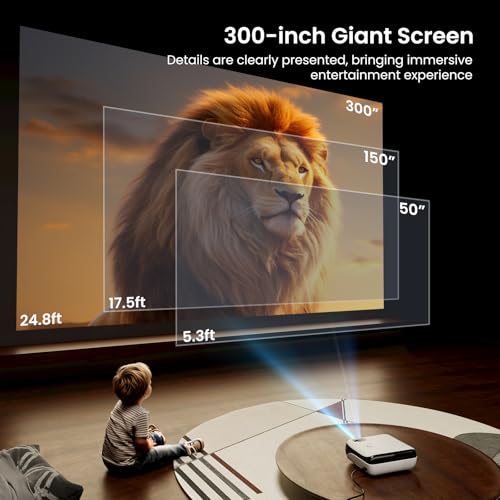
For dedicated home theater use, both projectors perform well within their designed parameters. The HAPPRUN excels in dark rooms where its integrated smart features and large projection capability (up to 200 inches) create an impressive entertainment experience. The Google TV integration provides convenient access to streaming libraries without switching inputs or managing multiple remotes.
The BenQ GS50 offers superior image quality through higher brightness and contrast, making it more forgiving of ambient light and delivering more cinematic visuals. However, its maximum 112-inch projection size limits screen size options compared to the HAPPRUN's capability.
For serious home theater enthusiasts, the BenQ's better image quality often outweighs the screen size limitation. The superior contrast creates more engaging movie experiences, particularly for dramatic content with dark scenes.
Both projectors benefit from external audio systems in dedicated theater setups, though the BenQ performs adequately with its built-in speakers for casual viewing or rooms where external audio isn't practical.
The choice between the HAPPRUN Google TV Smart Projector and BenQ GS50 Portable Outdoor Projector comes down to where and how you'll primarily use your projector.
Choose the HAPPRUN if you want a smart home theater solution for controlled indoor environments. Its integrated Google TV, voice control, and modern connectivity create a streamlined entertainment experience. The larger projection capability and budget-friendly positioning make it ideal for dedicated home theaters or apartment living where mounting flexibility matters.
Choose the BenQ GS50 if you need versatility across different environments or prioritize image and audio quality. Its battery power, weatherproofing, superior brightness, and impressive audio system enable use cases impossible with indoor-only projectors. The premium price reflects genuine engineering solutions for portable projection challenges.
The BenQ ultimately serves users who view projection as a versatile tool for multiple scenarios, while the HAPPRUN optimizes the indoor smart home theater experience. Both approaches have merit, but understanding their fundamental differences helps ensure you choose the projector that matches your actual usage patterns rather than aspirational ideas about how you might use it.
| HAPPRUN Google TV Smart Projector | BenQ GS50 Portable Outdoor Projector |
|---|---|
| Brightness - Critical for ambient light performance and outdoor use | |
| 350 ANSI lumens (requires dark rooms for best experience) | 500 ANSI lumens (43% brighter, handles some ambient light) |
| Contrast Ratio - Affects image depth and black levels | |
| 20,000:1 (good for streaming content) | 100,000:1 (superior blacks and color pop with DLP technology) |
| Audio System - Important for standalone use without external speakers | |
| 8W single speaker (adequate but may need external audio) | 20W 2.1 channel with dedicated subwoofer (room-filling sound) |
| Power Options - Determines true portability | |
| AC power only (limits outdoor locations to powered areas) | Internal battery 2-2.5 hours (enables wireless operation anywhere) |
| Smart Platform - Affects streaming convenience and future updates | |
| Built-in Google TV 11.0 with official Netflix (seamless integration) | External Android TV 9.0 stick (functional but dependent on aging hardware) |
| Durability - Essential for outdoor and travel use | |
| Indoor use only (no weather protection) | IPX2 splash-proof + drop resistant to 2.3 feet |
| Screen Size Range - Determines viewing flexibility | |
| 40-200 inches (excellent for large home theater setups) | 30-112 inches (limited but adequate for most uses) |
| Connectivity - Modern standards affect streaming performance | |
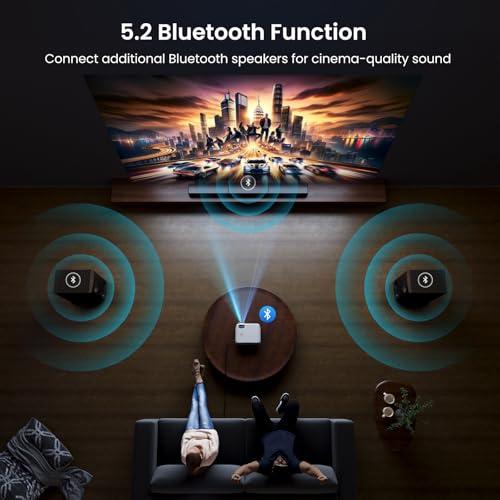
| WiFi 6 + Bluetooth 5.2 (cutting-edge wireless performance) | WiFi 5 + Bluetooth 4.2, but more physical ports including USB-C |
| HDR Support - Enhances streaming content quality | |
| HDR10+ (better for Netflix and streaming services) | HDR10 + HLG (standard support for most content) |
| Weight and Portability - Affects ease of transport | |
| Lightweight but requires AC power (limits true portability) | 5.1 lbs with carrying case (heavier but truly portable with battery) |
| Warranty Coverage - Indicates manufacturer confidence | |
| Standard warranty (typical for budget category) | 3-year comprehensive warranty (premium support) |
| Best Use Case - Who should choose each projector | |
| Indoor home theater with controlled lighting and smart features priority | Outdoor adventures, travel, and versatile use across environments |
The BenQ GS50 delivers 500 ANSI lumens compared to the HAPPRUN Google TV Smart Projector's 350 ANSI lumens. This 43% brightness advantage makes the BenQ GS50 significantly better for outdoor viewing and rooms with ambient light, while the HAPPRUN requires darker environments for optimal viewing.
Yes, both projectors include smart features, but with different approaches. The HAPPRUN Google TV Smart Projector has Google TV built directly into the projector with official Netflix support, eliminating the need for external devices. The BenQ GS50 includes an external Android TV stick that fits in a hidden compartment within the projector.
Only the BenQ GS50 includes an internal battery providing 2-2.5 hours of runtime for completely wireless operation. The HAPPRUN Google TV Smart Projector requires constant AC power, limiting its use to locations with electrical outlets.
The HAPPRUN Google TV Smart Projector can project images from 40-200 inches, making it excellent for large home theater setups. The BenQ GS50 has a smaller range of 30-112 inches, which is still adequate for most viewing situations but limits maximum screen size.
Both projectors can accept 4K input signals, but they display everything at their native 1080p resolution. The HAPPRUN Google TV Smart Projector and BenQ GS50 downscale 4K content to 1080p, which still provides better image quality than native 1080p sources.
For dedicated home theaters, the HAPPRUN excels with integrated Google TV, voice control, and ability to project up to 200 inches in dark rooms. The BenQ GS50 offers superior image quality and audio but limits screen size. Choose based on whether you prioritize smart features and large screens or better picture and sound quality.
The HAPPRUN Google TV Smart Projector features modern WiFi 6 and Bluetooth 5.2 for faster streaming and lower latency. The BenQ GS50 uses older WiFi 5 and Bluetooth 4.2 standards but offers more physical ports including USB-C with DisplayPort support.
The BenQ GS50 includes a comprehensive 3-year warranty, demonstrating manufacturer confidence in build quality. The HAPPRUN Google TV Smart Projector offers standard warranty coverage typical for the budget projector category, though specific terms may vary by retailer.
We've done our best to create useful and informative comparisons to help you decide what product to buy. Our research uses advanced automated methods to create this comparison and perfection is not possible - please contact us for corrections or questions. These are the sites we've researched in the creation of this article: youtube.com - topvisiontec.com - youtube.com - happrunprojector.com - youtube.com - happrunprojector.com - youtube.com - business.walmart.com - youtube.com - walmart.com - cordcuttersnews.com - nexpow.com - cnet.com - hometheaterhifi.com - youtube.com - youtube.com - whathifi.com - youtube.com - bgeek.eu - youtube.com - youtube.com - projectorreviews.com - youtube.com - youtube.com - projectorcentral.com - projectorreviews.com - bestbuy.com - touchboards.com - projectorcentral.com - adorama.com - projectorreviews.com - insight.com - cnet.com

Privacy Policy
Terms and Conditions - Affiliate Policy
Home Security
© Copyright 2008-2026.
11816 Inwood Rd #1211, Dallas, TX 75244