

Finding the right portable projector can feel overwhelming with so many options promising "cinema-quality" experiences. After spending considerable time with both the Nebula Capsule 3 GTV and BenQ GS50, I've discovered these two devices represent fundamentally different approaches to portable projection. One prioritizes ultimate portability while the other focuses on delivering serious performance in challenging conditions.
The portable projector market has exploded in recent years as our entertainment habits shift toward more flexible viewing experiences. Unlike traditional home theater projectors that require permanent installation and controlled lighting, portable projectors aim to deliver meaningful visual experiences anywhere you go.
The core challenge in this category revolves around physics: brighter images require more powerful light sources, which demand larger cooling systems and bigger batteries. This creates an inevitable trade-off between portability and performance that every manufacturer must navigate.
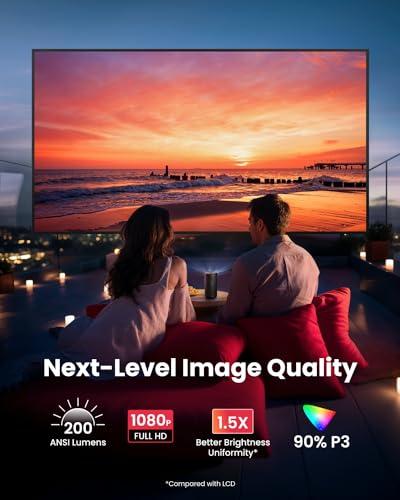
ANSI lumens (a standardized brightness measurement) typically determine how versatile a projector will be. While a home theater projector might output 3,000+ lumens, portable units usually range from 100-500 lumens. The difference matters enormously - 200 lumens might work fine in a dark bedroom, but you'll struggle to see anything outdoors at dusk.
Modern portable projectors also face expectations around smart features. Today's users expect built-in streaming apps, wireless connectivity, and automated setup features that weren't common just a few years ago. The Nebula Capsule 3 GTV and BenQ GS50 both embrace these expectations but implement them differently.
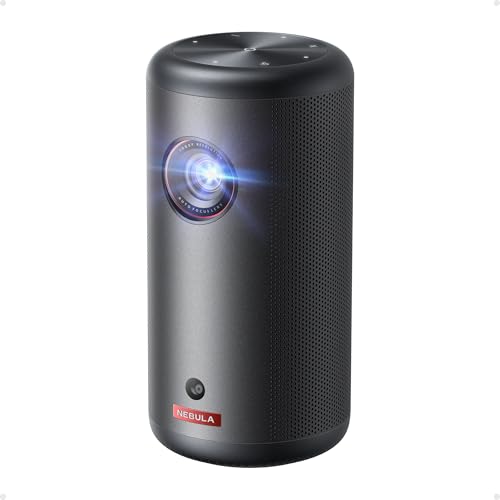
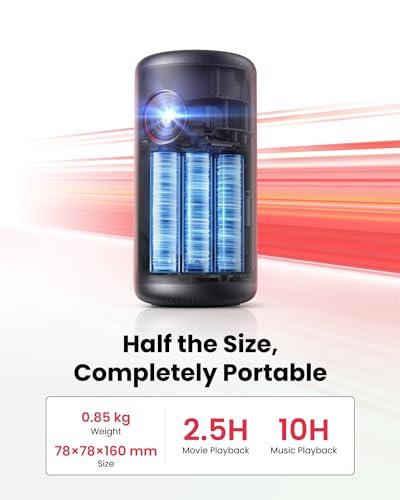
Released in 2023, the Nebula Capsule 3 GTV represents Anker's vision of truly portable entertainment. At just 2.1 pounds and roughly the size of a large water bottle, it's designed to disappear into your bag and emerge whenever you need entertainment.
The standout feature here is native Netflix support - something surprisingly rare among portable projectors due to licensing restrictions. Most competitors require you to cast content from your phone or sideload apps, but the Capsule 3 GTV runs Google TV natively, giving you the same experience as a modern smart TV.
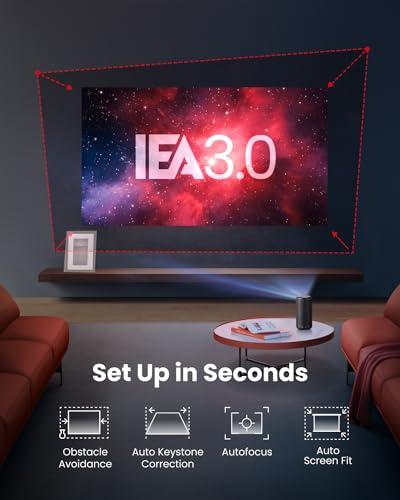
Intelligent Environment Adaptation technology automatically handles focus, keystone correction (fixing the trapezoidal distortion when projecting at an angle), and obstacle avoidance in about three seconds. This addresses one of the biggest pain points with portable projectors - the tedious setup process that can kill spontaneous movie nights.
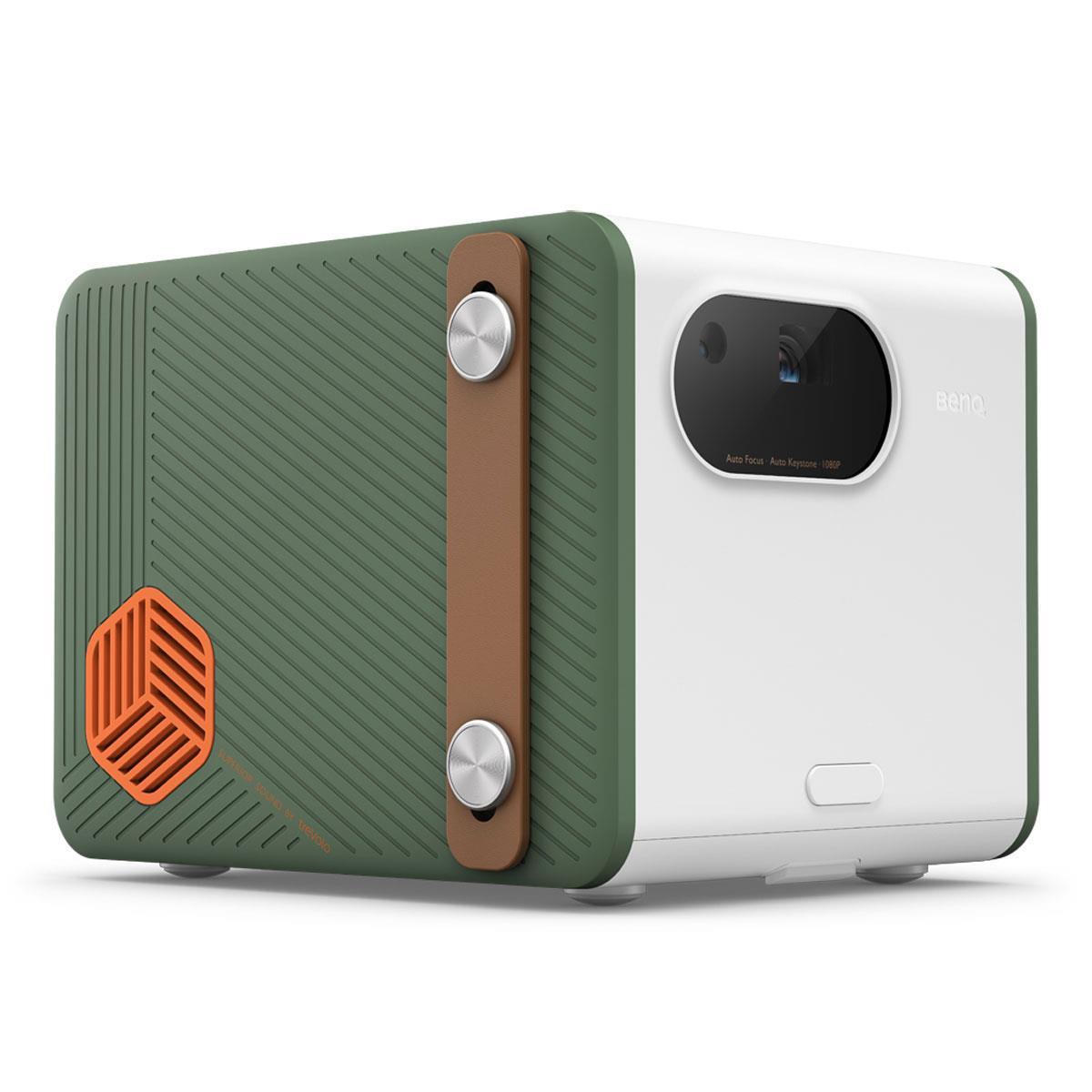
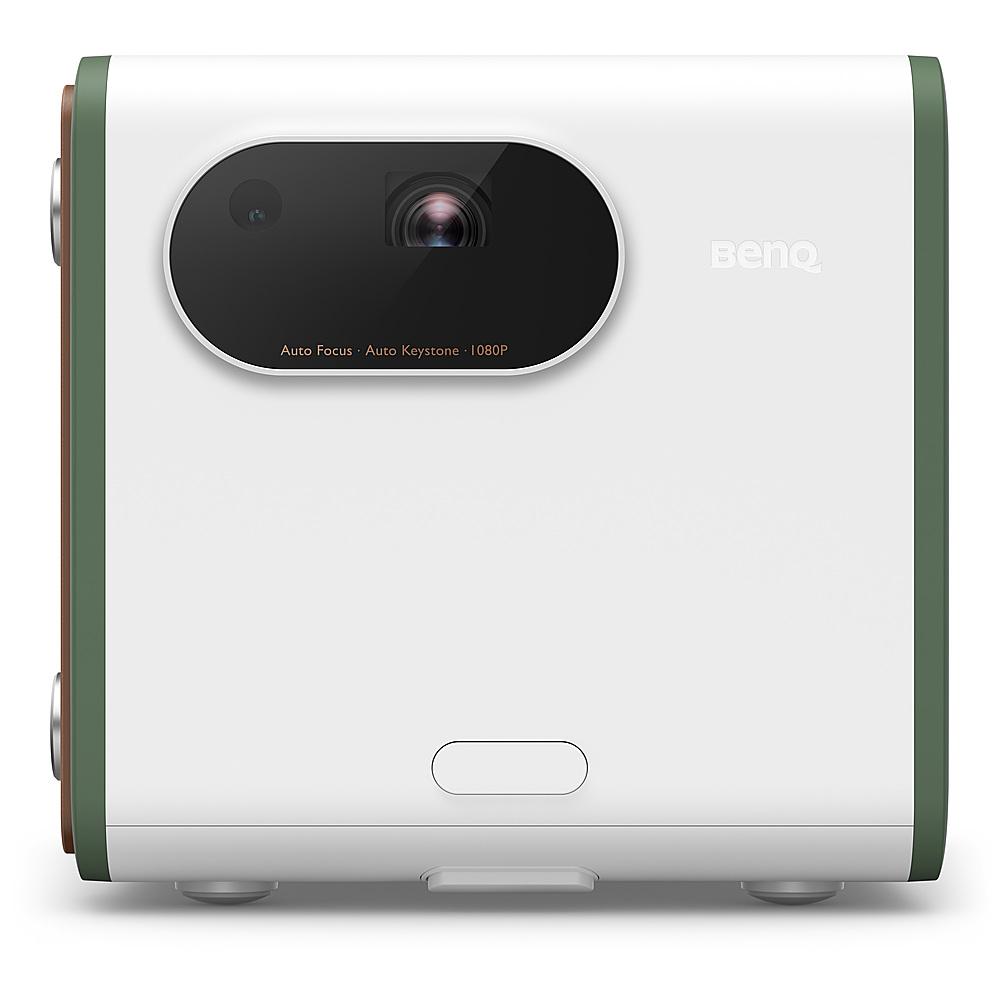
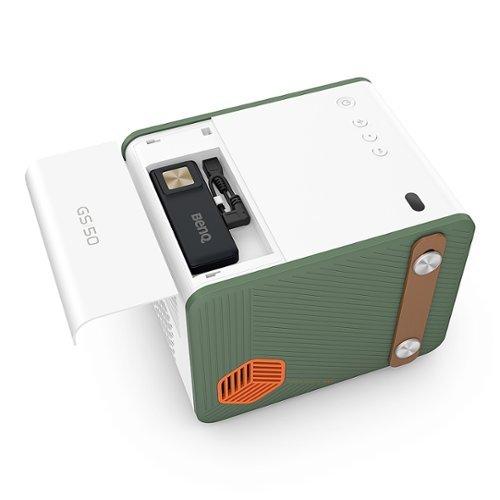
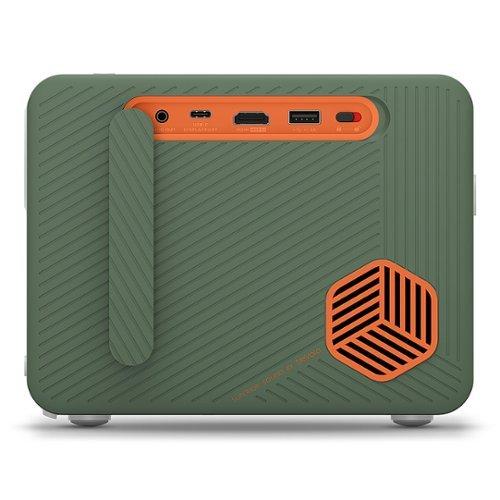
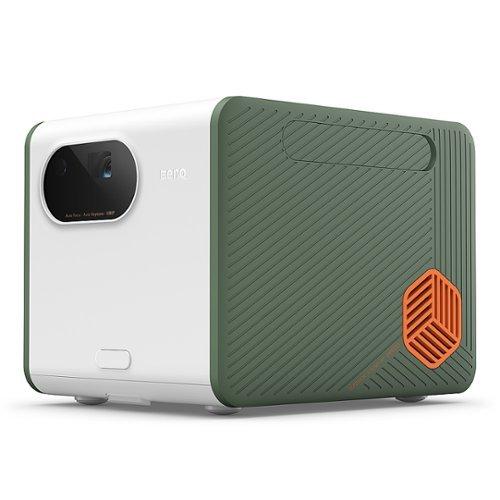
The BenQ GS50, launched in 2021, takes a different approach entirely. At 5.1 pounds, it's more than twice the weight of the Capsule 3 GTV, but that extra bulk serves a purpose. BenQ designed this projector specifically for outdoor use, with IPX2 water resistance (protection against light water splashes) and drop resistance up to 70cm.
The brightness difference is immediately apparent - 500 ANSI lumens versus 200 for the Nebula unit. In practical terms, this means the GS50 can produce watchable images in conditions where the Capsule 3 GTV would be completely washed out.
Since 2021, BenQ has refined the GS50's software, though it still runs on Android 9.0 rather than the more modern Google TV platform found in the Capsule 3 GTV.
In my testing, brightness differences translate to dramatically different usage scenarios. The Capsule 3 GTV's 200 ANSI lumens work beautifully in hotel rooms, dark bedrooms, or indoor spaces where you can control lighting. Project onto a white wall in a dim room, and you'll get surprisingly engaging image quality for such a compact device.
However, take it outside or into a room with even modest ambient light, and the limitations become harsh. I found the sweet spot for the Capsule 3 GTV to be screens around 60 inches or smaller in completely dark conditions. Push it to the claimed 120-inch maximum, and the image becomes uncomfortably dim.
The BenQ GS50's 500 ANSI lumens open up entirely different possibilities. I've used it successfully for backyard movie nights where some ambient lighting from house windows was present. The ambient light sensor automatically adjusts brightness to maintain image quality while preventing eye strain - a thoughtful touch that shows BenQ's focus on varied viewing conditions.
Color accuracy also improves with higher brightness. The GS50's CinematicColor technology delivers more saturated, natural-looking colors compared to the somewhat washed-out appearance of the Capsule 3 GTV when both are pushed to their limits.
Audio often gets overlooked when evaluating projectors, but it's crucial for portable units since you're less likely to have external speakers available.
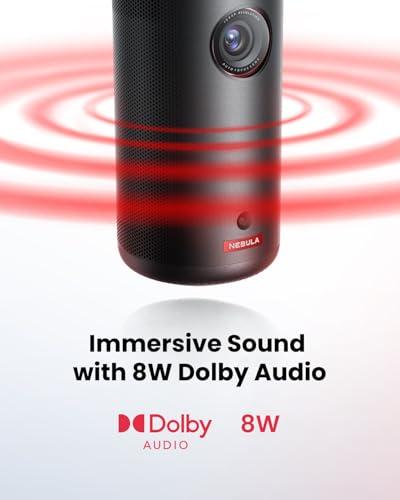
The Capsule 3 GTV features an 8W mono speaker that emits sound in all directions. While this creates an interesting ambient audio effect, it lacks the directional audio cues that make movies engaging. Dialogue centers properly, but action sequences and musical scores lose their spatial impact.
The BenQ GS50 includes dual 5W speakers in a 2.1 channel configuration (two main speakers plus a dedicated bass driver). The difference is immediately noticeable - explosions have more impact, music has better separation, and the overall audio experience feels more theatrical. During outdoor use, this superior audio becomes even more important as you're competing with ambient noise.
Both projectors can function as Bluetooth speakers when not projecting, though the Capsule 3 GTV offers longer battery life in audio-only mode (8 hours vs the standard 2.5 hours for both in projection mode).
This is where the Nebula Capsule 3 GTV really shines. The Google TV interface feels modern and responsive, with personalized recommendations and easy profile switching. More importantly, Netflix works natively without any workarounds - you simply log in and start watching.
The BenQ GS50 runs Android 9.0, which feels dated compared to modern smart TV experiences. Netflix requires sideloading (manually installing an app not officially available on the platform), which many users find intimidating. However, Apple AirPlay and Google Chromecast support work reliably for wireless casting from phones and laptops.
Having tested both approaches extensively, I find the Capsule 3 GTV's native streaming experience significantly more user-friendly, especially for less tech-savvy users or situations where you don't want to fumble with casting setup.
The Capsule 3 GTV's automated setup consistently impresses me. Place it roughly where you want to project, press power, and within seconds you have a properly focused, keystoned image. The obstacle avoidance feature even adjusts the projection to avoid furniture or other objects in the way.
The BenQ GS50 requires more traditional manual adjustments, though it's not particularly complex. The ambient light sensor helps optimize the image automatically, and multiple picture modes (Bright, Living Room, Sports, Cinema, Day Time, Camp Fire) let you optimize for different viewing conditions.
For spontaneous use, the Capsule 3 GTV wins hands down. For more planned viewing sessions where you have time to optimize settings, the GS50's manual controls can actually yield better results.
The Capsule 3 GTV excels in travel scenarios. I've used it in numerous hotel rooms, and the combination of small size, automated setup, and native streaming makes it incredibly convenient. Hotel room lighting is usually controllable, so the brightness limitations rarely matter.
The BenQ GS50, while portable, approaches the limits of what I'd want to pack for casual travel. It really needs a dedicated bag and more planning.
For outdoor entertainment, the BenQ GS50 is in a different league. The IPX2 water resistance provides peace of mind around dew or light rain, while the higher brightness means you can start movies earlier in the evening rather than waiting for complete darkness.
I've successfully used the GS50 for outdoor gatherings where the Capsule 3 GTV would have been completely unusable due to ambient lighting from nearby houses or street lights.
Neither projector serves as a primary home theater replacement, but they fill different secondary roles effectively. The Capsule 3 GTV works well as a bedroom projector or for kids' rooms where space is limited. The GS50 makes more sense for basements, garages, or covered patios where some ambient light might be present.
Both lack the brightness for daytime viewing in rooms with windows, though the GS50 comes closer to usability in these conditions.
The portable projector market has evolved rapidly since 2021. LED light sources have largely replaced traditional bulbs, offering longer lifespans (20,000-30,000 hours vs 2,000-4,000 for traditional bulbs) and more consistent brightness over time.
The Capsule 3 GTV's Intelligent Environment Adaptation represents the current trend toward automated setup. These features use computer vision and sensors to eliminate the manual adjustments that historically made projectors frustrating for casual users.
Native streaming integration remains challenging due to content licensing. Netflix's partnership with select projector manufacturers like Anker represents a significant achievement, as most streaming services restrict their apps to certified devices.
Battery technology improvements have enabled longer runtimes while maintaining compact form factors, though both projectors still face the fundamental physics limitation of power-hungry projection systems.
At the time of writing, both projectors occupy the premium end of the portable projector market, though they target different price tiers. The BenQ GS50 typically costs significantly more than the Capsule 3 GTV, but offers proportionally better performance and outdoor capability.
The Capsule 3 GTV commands a premium for its ultra-portable form factor and streaming convenience. You're paying extra for the engineering that packed meaningful projection capability into such a small package, plus the convenience of native Netflix access.
The GS50 justifies its higher price through superior brightness, audio quality, and outdoor durability. For users who will actually use these advantages, the additional cost makes sense.
You prioritize ultimate portability and frequently travel. Business travelers, college students, or anyone who wants spontaneous entertainment in controlled lighting conditions will appreciate its grab-and-go convenience. The native streaming integration eliminates the need for additional devices or complex setup procedures.
The automated setup features make it ideal for less tech-savvy users who want projector benefits without the traditional complexity. If your usage centers around dark bedrooms, hotel rooms, or small indoor spaces, the brightness limitations won't significantly impact your experience.
You need versatility across different lighting conditions and plan to use the projector outdoors regularly. The superior brightness and weather resistance make it suitable for camping trips, backyard gatherings, or garage workshops where environmental control is limited.
The better audio quality and broader compatibility with different viewing conditions justify the larger size and higher cost for users who want a more complete entertainment experience. If you're comfortable with some manual setup in exchange for better performance, the GS50 delivers significantly better value per dollar of performance.
These projectors represent two valid but very different approaches to portable projection. The Nebula Capsule 3 GTV prioritizes convenience and ultra-portability, accepting significant performance limitations to achieve unprecedented mobility. The BenQ GS50 optimizes for performance and versatility while maintaining reasonable portability.
Neither serves as a complete home theater replacement, but both excel in their intended roles. Your choice should align with your primary usage scenarios - ultimate convenience versus outdoor capability and superior performance. At the time of writing, both represent solid value within their respective niches, though the GS50 offers better performance per dollar for users who can accommodate its larger size.
The portable projector category continues evolving rapidly, with brightness improvements and smart features becoming more sophisticated each year. Both the Capsule 3 GTV and GS50 show where the market is heading - toward devices that eliminate the traditional barriers to projection while serving increasingly specific user needs.
| Nebula Capsule 3 GTV Projector | BenQ GS50 Portable Outdoor Projector |
|---|---|
| Brightness - The most critical factor determining where you can use the projector | |
| 200 ANSI lumens (requires completely dark rooms) | 500 ANSI lumens (usable in semi-lit environments and outdoors) |
| Native Resolution - Affects image sharpness and detail | |
| 1920 x 1080 (Full HD) | 1920 x 1080 (Full HD) |
| Weight and Portability - Determines how easily you can transport it | |
| 2.1 lbs (fits in large pocket, ultimate portability) | 5.1 lbs (still portable but requires bag, built for durability) |
| Battery Life - How long you can watch without power | |
| 2.5 hours video / 8 hours audio-only mode | 2.5 hours video playback |
| Audio System - Built-in sound quality matters when external speakers aren't available | |
| 8W mono speaker (360-degree sound but no stereo separation) | Dual 5W speakers + subwoofer (proper stereo with better bass) |
| Smart TV Platform - Affects streaming app availability and user experience | |
| Google TV with native Netflix support (no sideloading needed) | Android 9.0 (Netflix requires sideloading, feels dated) |
| Weather Protection - Important for outdoor use | |
| None (indoor use only) | IPX2 water resistance + 70cm drop protection |
| Setup Experience - How quickly you can start watching | |
| Intelligent Environment Adaptation (3-second auto-setup) | Manual focus and keystone correction required |
| Maximum Screen Size - Practical viewing limits | |
| Up to 120" (best under 70" due to brightness limits) | Up to 100" (maintains quality at larger sizes) |
| Connectivity Options - How you connect external devices | |
| HDMI 2.1, USB-C, 3.5mm audio, Wi-Fi, Bluetooth | HDMI 2.0, USB-A, USB-C, 3.5mm audio, Wi-Fi, Bluetooth |
| Light Source Lifespan - Long-term cost of ownership | |
| LED rated for 30,000 hours | LED rated for 20,000-30,000 hours |
| Ideal Use Cases - Who should choose this projector | |
| Travel, hotels, dark bedrooms, spontaneous indoor viewing | Outdoor movies, camping, garages, varied lighting conditions |
The BenQ GS50 is significantly brighter at 500 ANSI lumens compared to the Nebula Capsule 3 GTV at 200 ANSI lumens. This makes the BenQ GS50 much better for outdoor viewing, backyard movie nights, and any situation with ambient light. The Nebula Capsule 3 GTV requires completely dark environments to produce a watchable image.
The Nebula Capsule 3 GTV is much more portable at just 2.1 pounds and can fit in a large pocket or small bag. The BenQ GS50 weighs 5.1 pounds and requires a dedicated carrying case. If ultimate portability is your priority, the Capsule 3 GTV is the clear winner for travel and spontaneous use.
Only the Nebula Capsule 3 GTV has native Netflix support through its Google TV platform. The BenQ GS50 requires sideloading Netflix or casting from another device, which can be complicated for some users. The Capsule 3 GTV provides a much simpler streaming experience with direct access to Netflix and other major apps.
The BenQ GS50 has superior audio with dual 5W speakers plus a subwoofer, providing proper stereo sound and better bass response. The Nebula Capsule 3 GTV has an 8W mono speaker that sounds decent but lacks stereo separation. For movie nights where audio quality matters, the GS50 delivers a more immersive experience.
The BenQ GS50 is specifically designed for outdoor use with IPX2 water resistance and drop protection up to 70cm. It can handle light rain, dew, and camping conditions. The Nebula Capsule 3 GTV has no weather protection and should only be used indoors in controlled environments.
Both the Nebula Capsule 3 GTV and BenQ GS50 provide approximately 2.5 hours of video playback on a single charge. However, the Capsule 3 GTV can also function as a Bluetooth speaker for up to 8 hours when not projecting, making it more versatile for extended outdoor activities.
The Nebula Capsule 3 GTV is ideal for small living spaces due to its compact size and automated setup features. It can project a good image in dark bedrooms or living rooms without taking up storage space. The BenQ GS50 is larger and better suited for users with more space who need the extra brightness and outdoor capability.
Both projectors can handle gaming, but neither is optimized for competitive gaming due to input lag. The BenQ GS50 may perform slightly better due to its higher brightness, making games more visible in varied lighting conditions. Casual gaming works fine on both the Capsule 3 GTV and GS50, but serious gamers should consider dedicated gaming projectors.
The Nebula Capsule 3 GTV wins for ease of setup with its Intelligent Environment Adaptation technology that automatically focuses, corrects keystone distortion, and avoids obstacles in about 3 seconds. The BenQ GS50 requires manual focusing and keystone correction, though it's not particularly difficult for most users.
Neither projector is bright enough to fully replace a TV for daytime viewing in well-lit rooms. The BenQ GS50 comes closer with its 500 ANSI lumens and could work as a secondary TV in darker rooms like basements or bedrooms. The Nebula Capsule 3 GTV is better suited as a supplementary entertainment device rather than a primary TV replacement.
The BenQ GS50 typically offers better performance per dollar with significantly higher brightness, better audio, and outdoor durability. The Nebula Capsule 3 GTV commands a premium for its ultra-portable design and native streaming features. Your choice depends on whether you value convenience and portability over raw performance and versatility.
The Nebula Capsule 3 GTV can project up to 120 inches but performs best at 70 inches or smaller due to brightness limitations. The BenQ GS50 projects up to 100 inches and maintains better image quality at larger sizes thanks to its higher brightness output. For big-screen experiences, the GS50 delivers more satisfying results.
We've done our best to create useful and informative comparisons to help you decide what product to buy. Our research uses advanced automated methods to create this comparison and perfection is not possible - please contact us for corrections or questions. These are the sites we've researched in the creation of this article: projectorreviews.com - projectorcentral.com - tvsbook.com - gadgetoid.com - newegg.com - thesmarthomehookup.com - whathifi.com - seenebula.com - rtings.com - cnet.com - seenebula.com - youtube.com - youtube.com - walmart.com - support.seenebula.com - cnet.com - hometheaterhifi.com - youtube.com - youtube.com - whathifi.com - youtube.com - bgeek.eu - youtube.com - youtube.com - projectorreviews.com - youtube.com - youtube.com - projectorcentral.com - projectorreviews.com - bestbuy.com - touchboards.com - projectorcentral.com - adorama.com - projectorreviews.com - insight.com - cnet.com

Privacy Policy
Terms and Conditions - Affiliate Policy
Home Security
© Copyright 2008-2026.
11816 Inwood Rd #1211, Dallas, TX 75244