

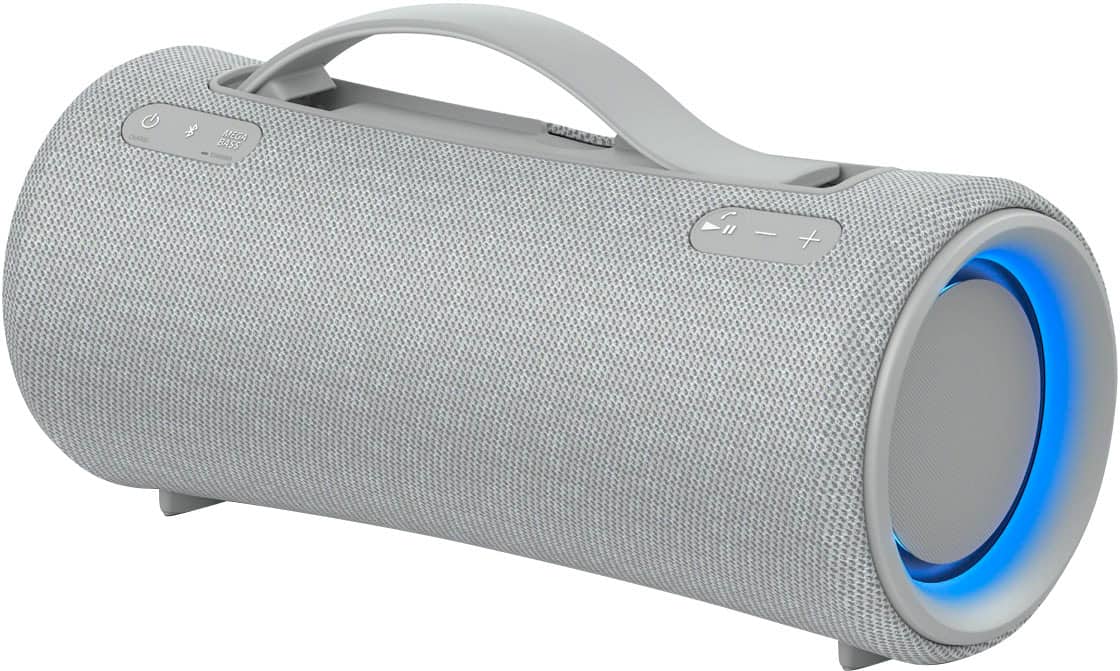
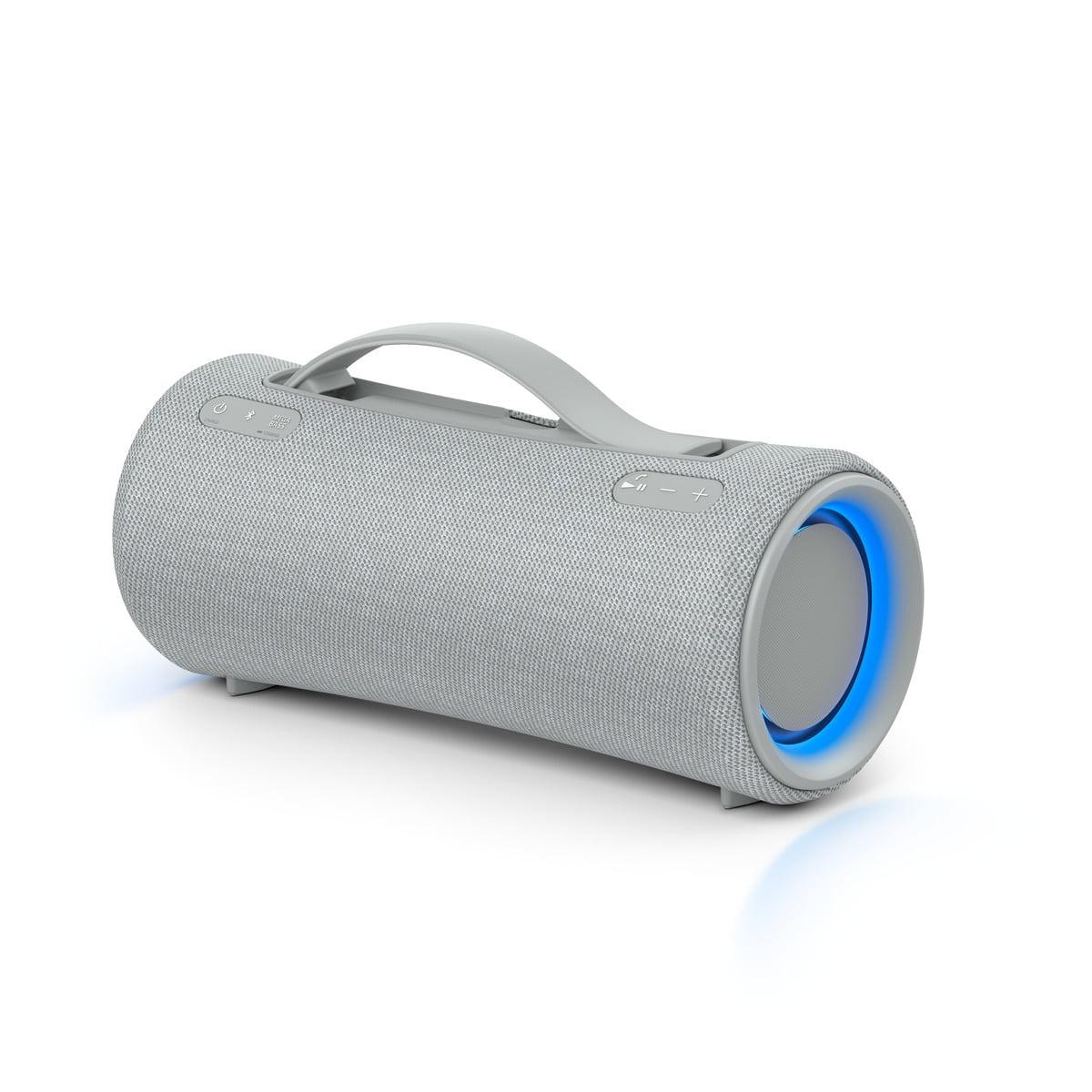


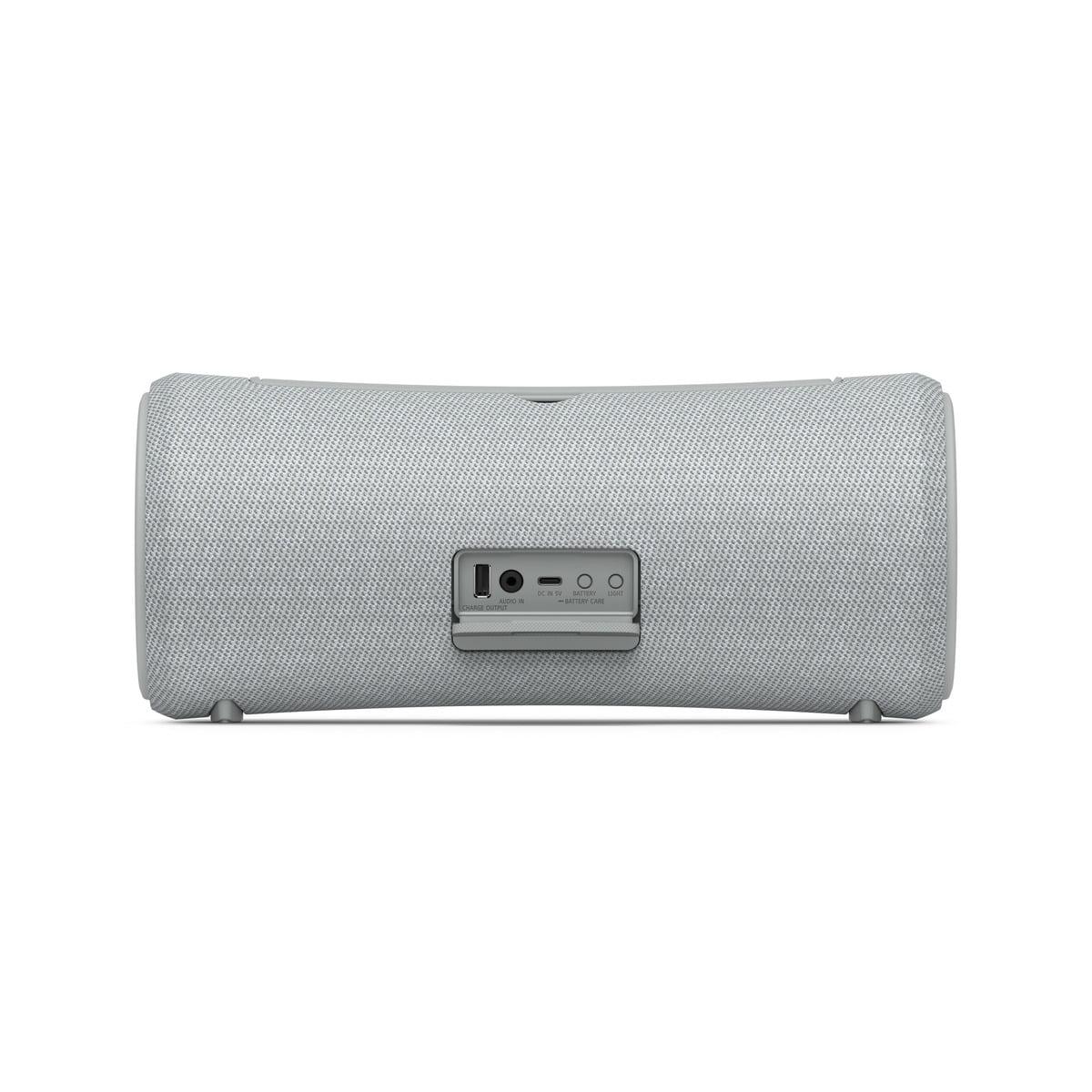
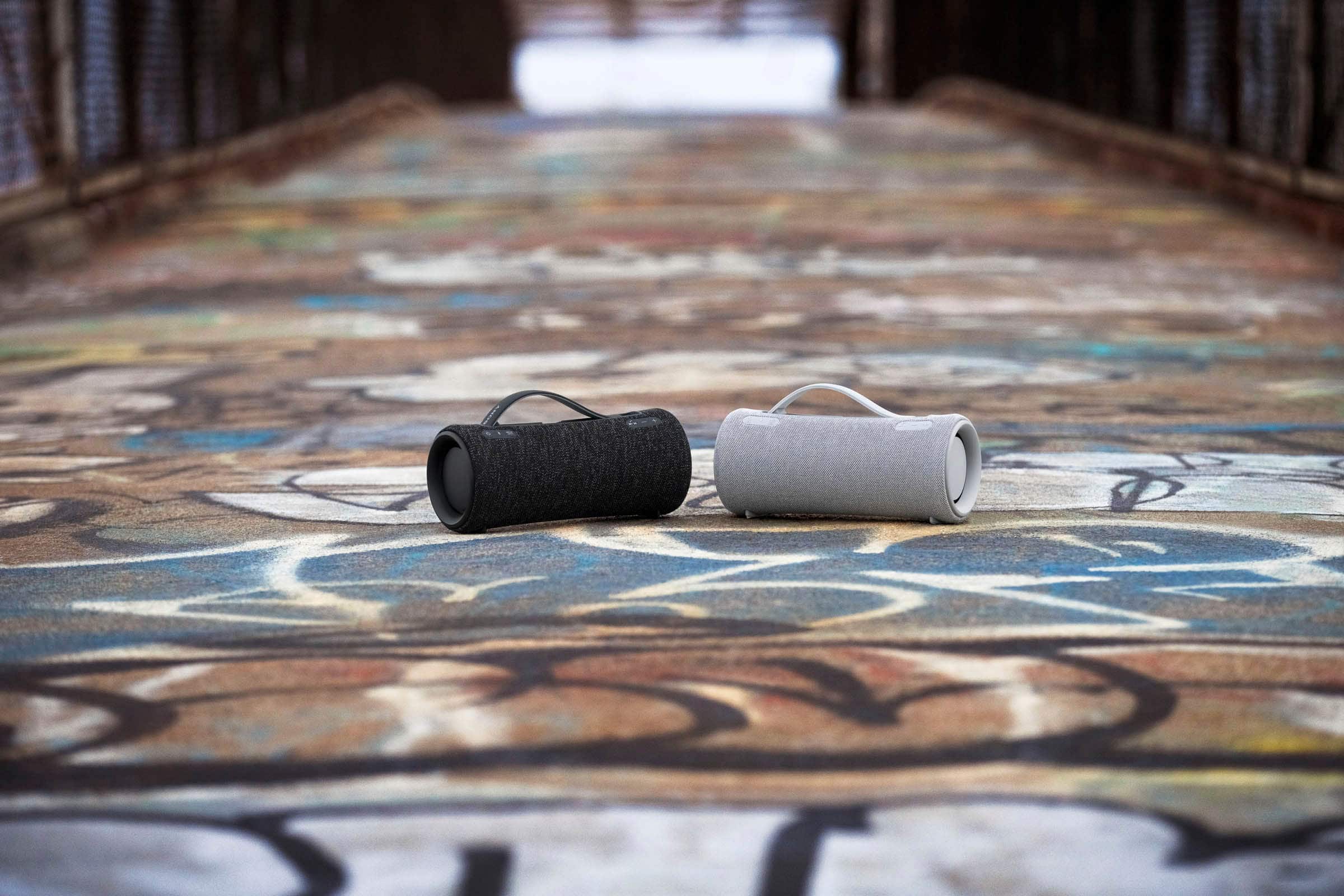
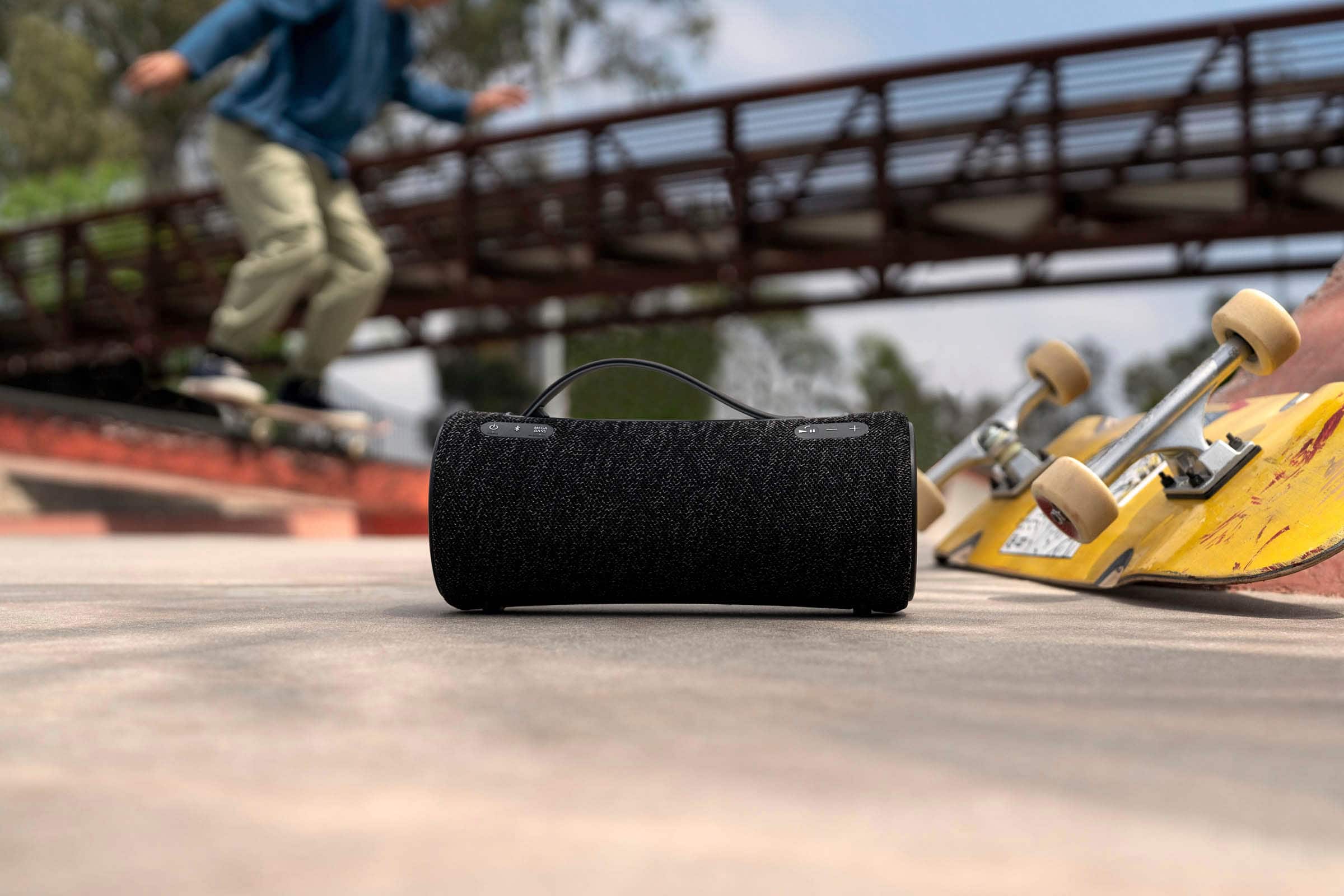
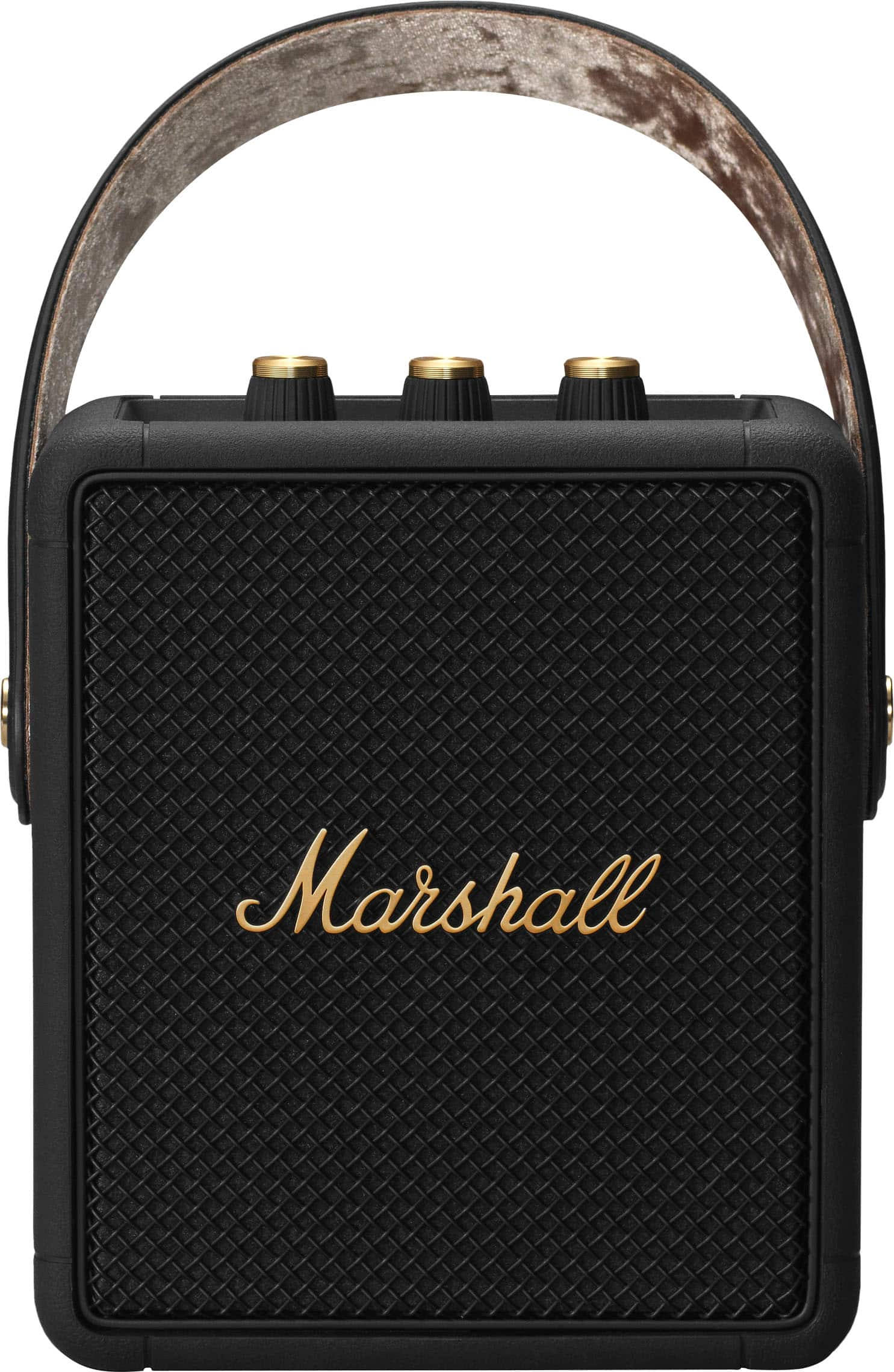
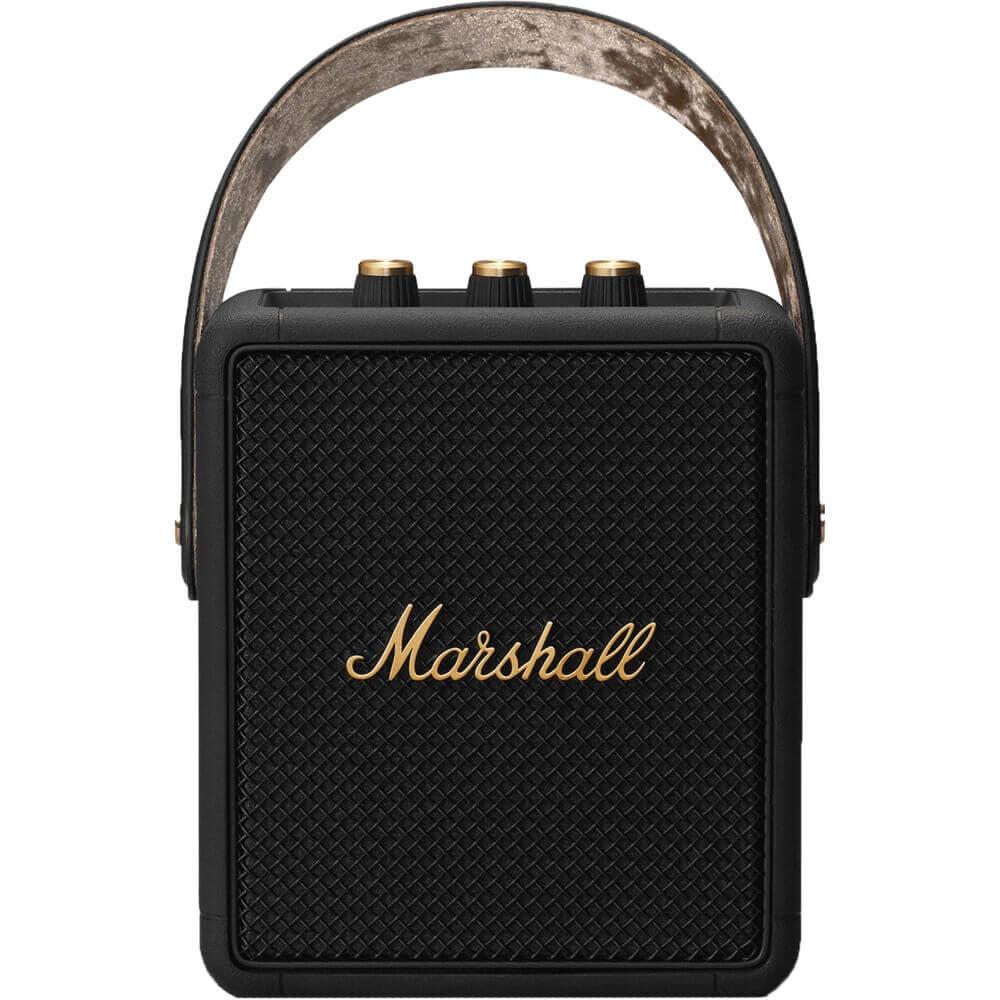

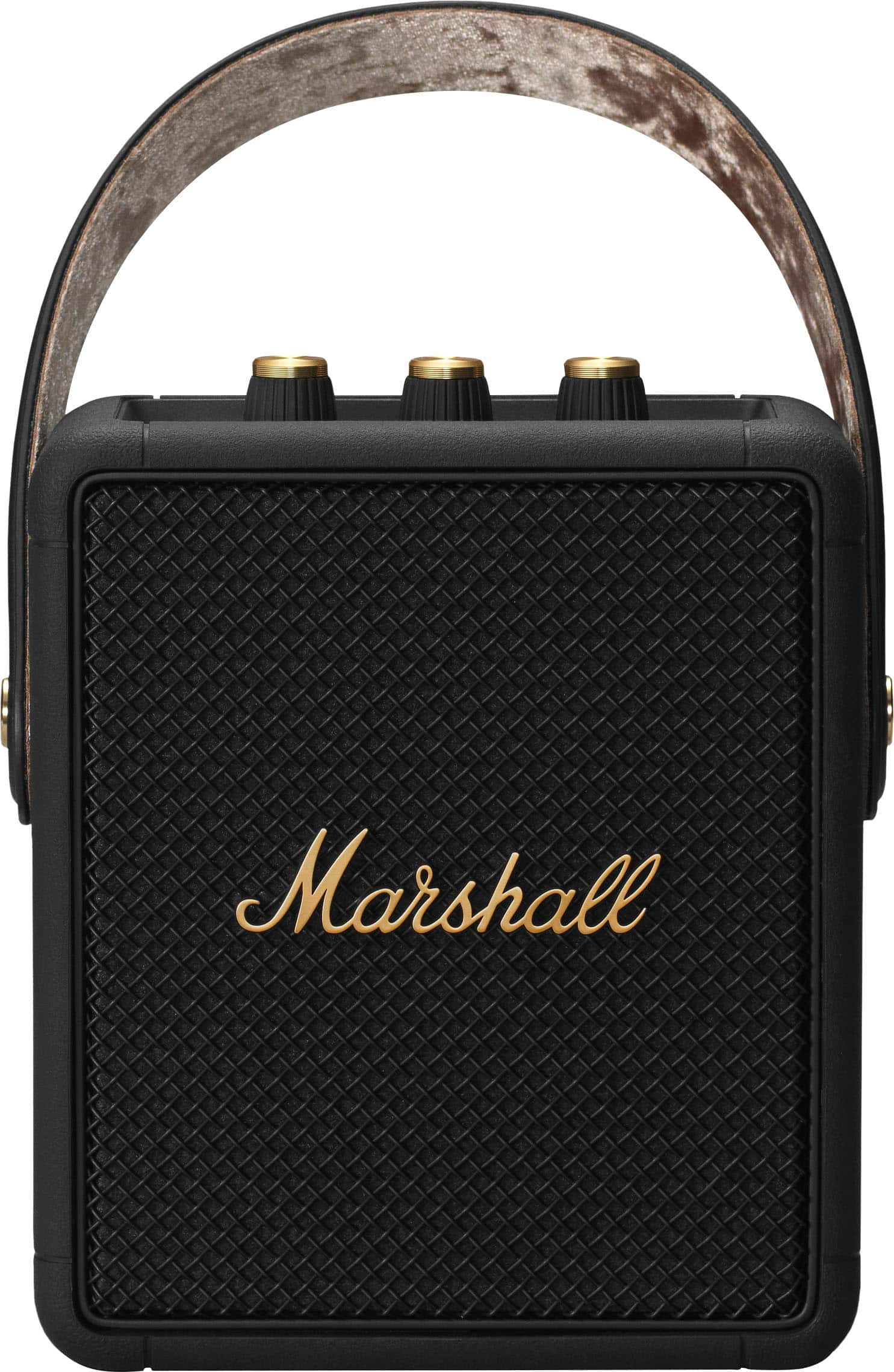
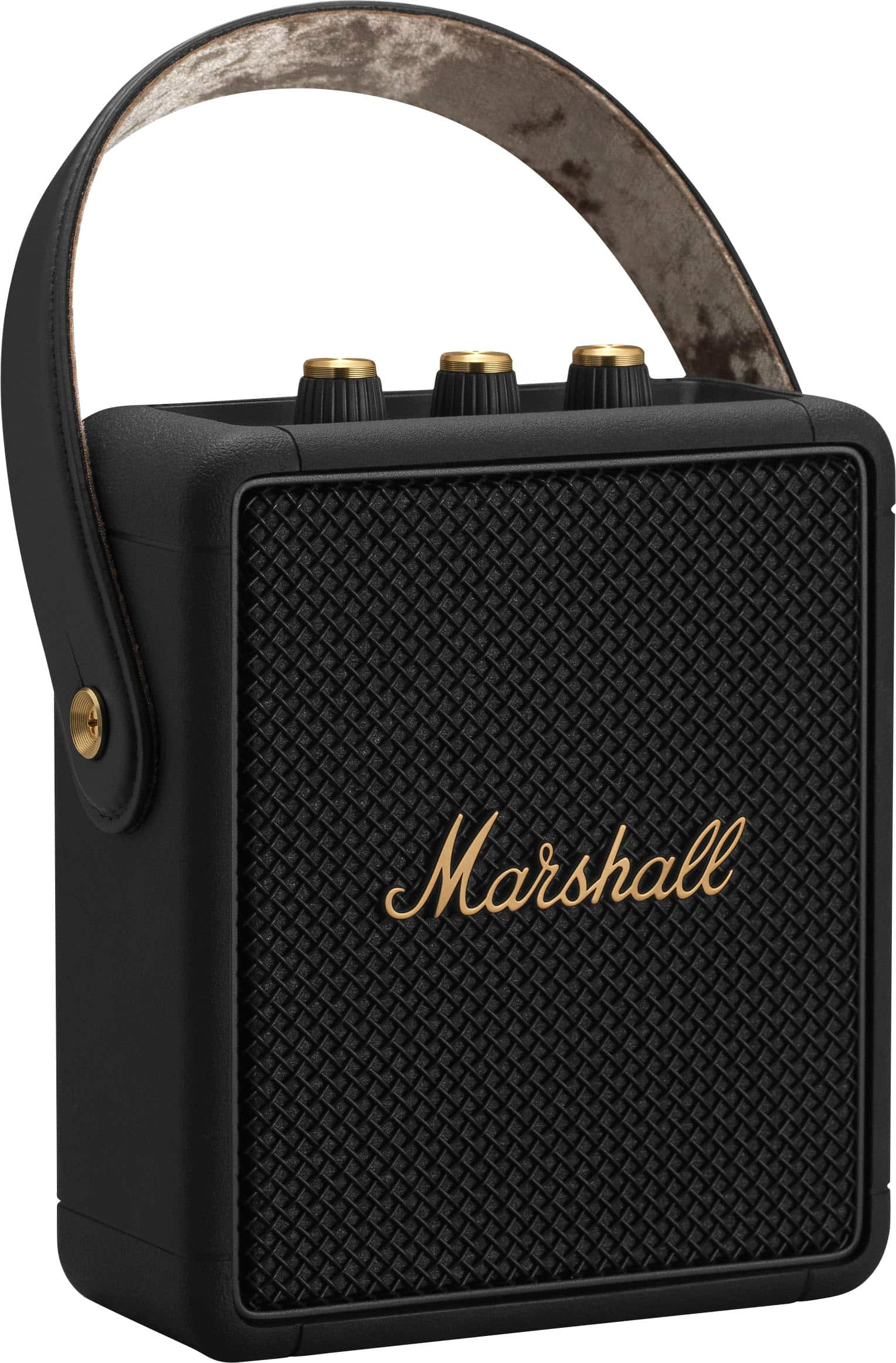
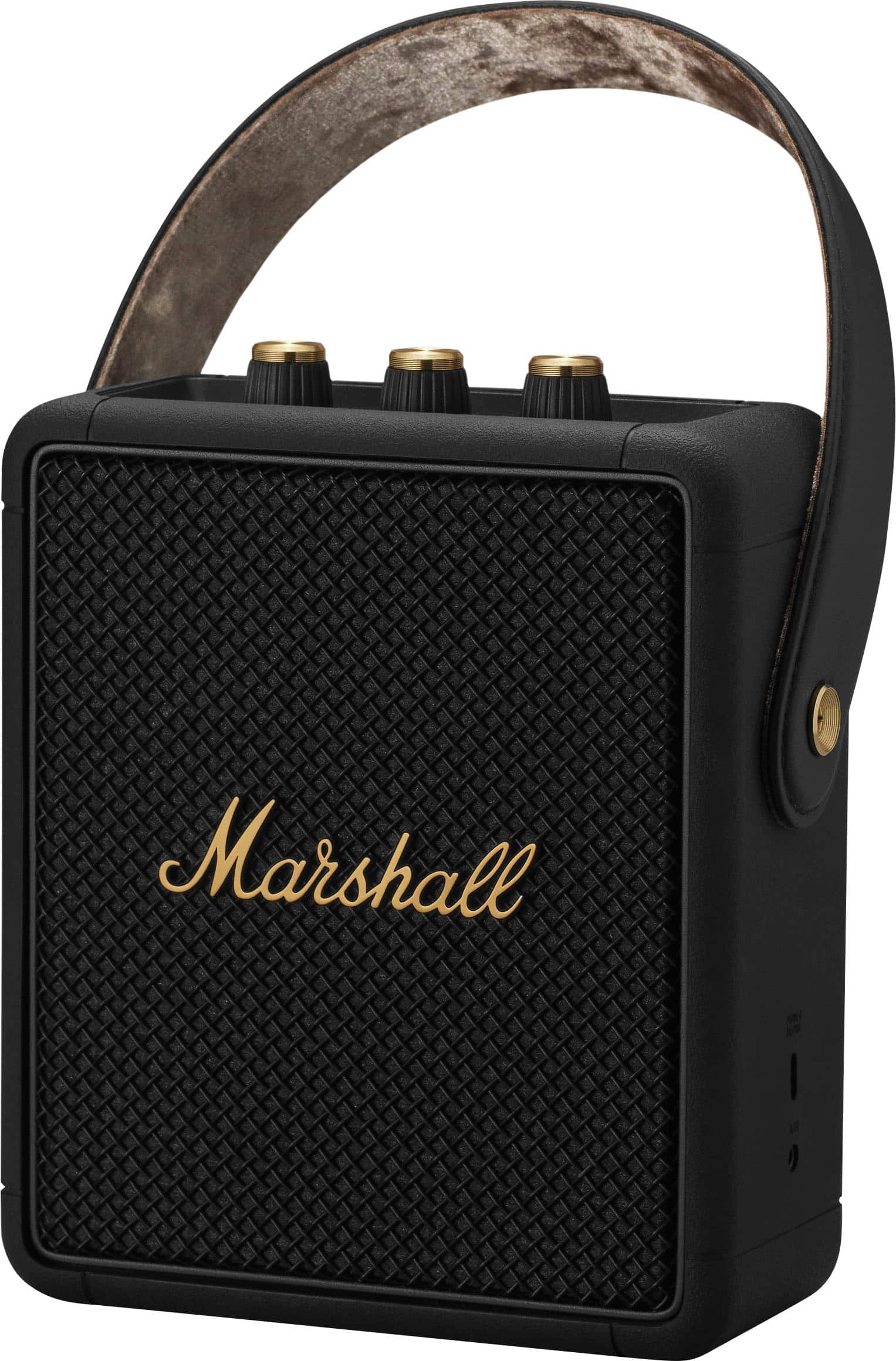
Portable Bluetooth speakers have become essential companions for music lovers, offering the perfect blend of convenience and quality sound. Today, we're comparing two popular options: the Sony XG300 MEGA BASS ($149.99) and the Marshall Stockwell II ($149.00), examining how these speakers stack up in 2024's competitive landscape.
When the Marshall Stockwell II launched in 2019, it represented a classic approach to portable audio - physical controls, robust build quality, and straightforward functionality. The Sony XG300, released in mid-2022, showcases how far the technology has advanced, with features like app integration, multi-speaker connectivity, and advanced water resistance becoming standard expectations.
The Sony XG300 takes a decisive lead in bass reproduction, thanks to its X-Balanced Speaker Unit technology. This non-circular speaker design increases sound pressure and reduces distortion compared to traditional round speakers. The MEGA BASS feature, when enabled, delivers impressive low-end punch that you can actually feel - perfect for modern genres like hip-hop and electronic music.
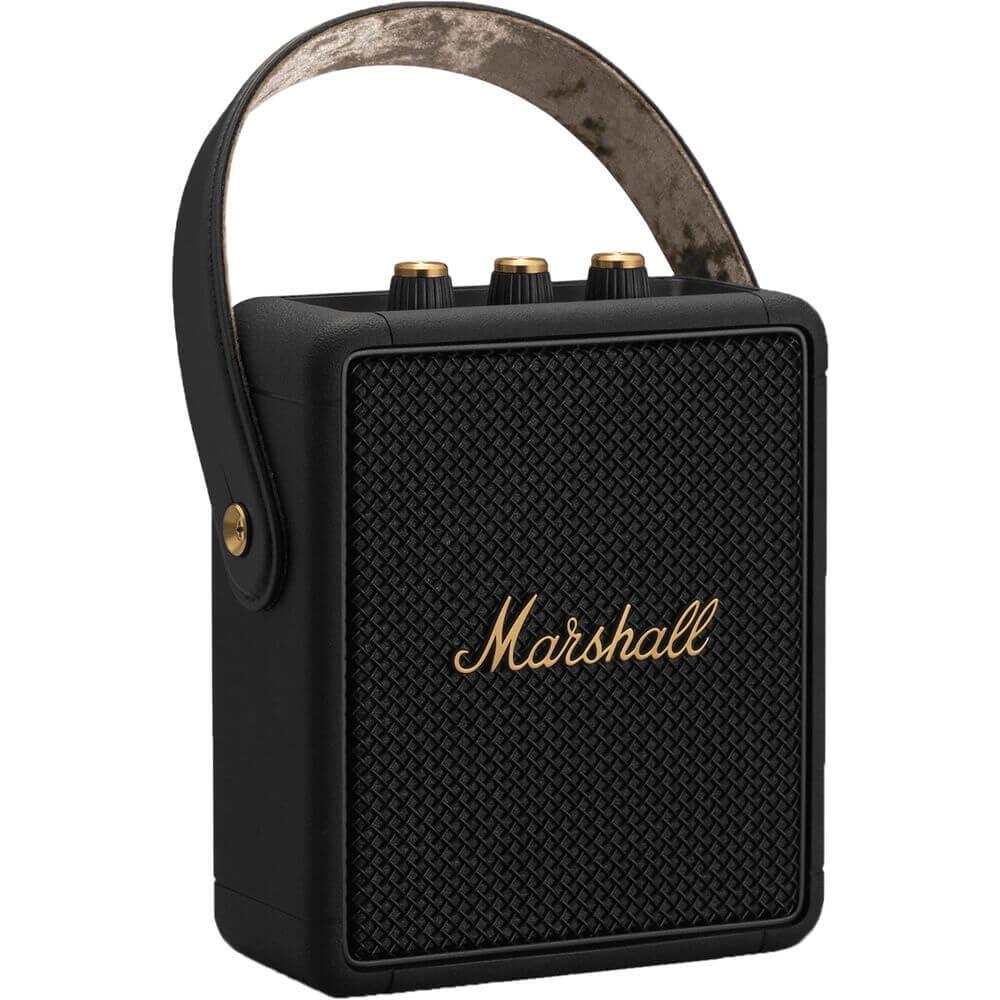
The Marshall Stockwell II takes a more traditional approach, focusing on balanced, studio-like sound reproduction. Its bass response is tight and controlled rather than overwhelming, making it particularly well-suited to rock, jazz, and acoustic genres where accuracy matters more than pure power.
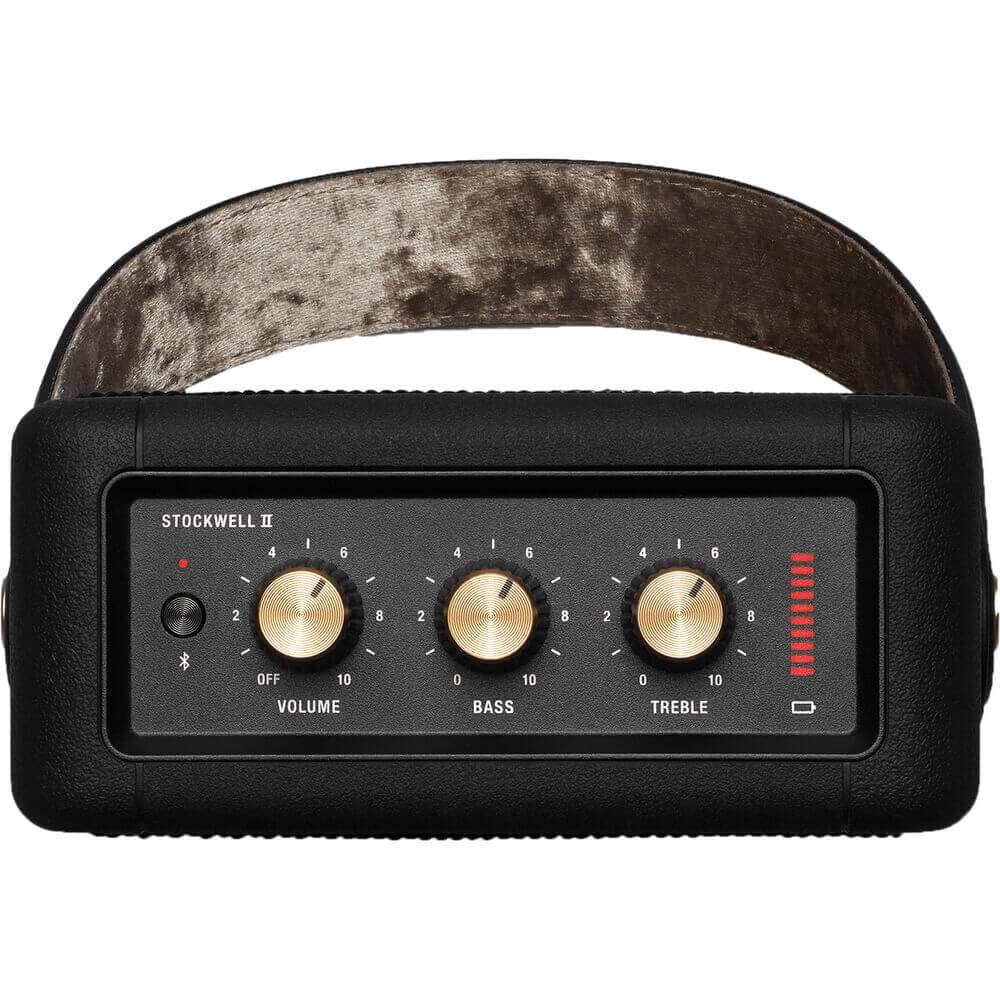
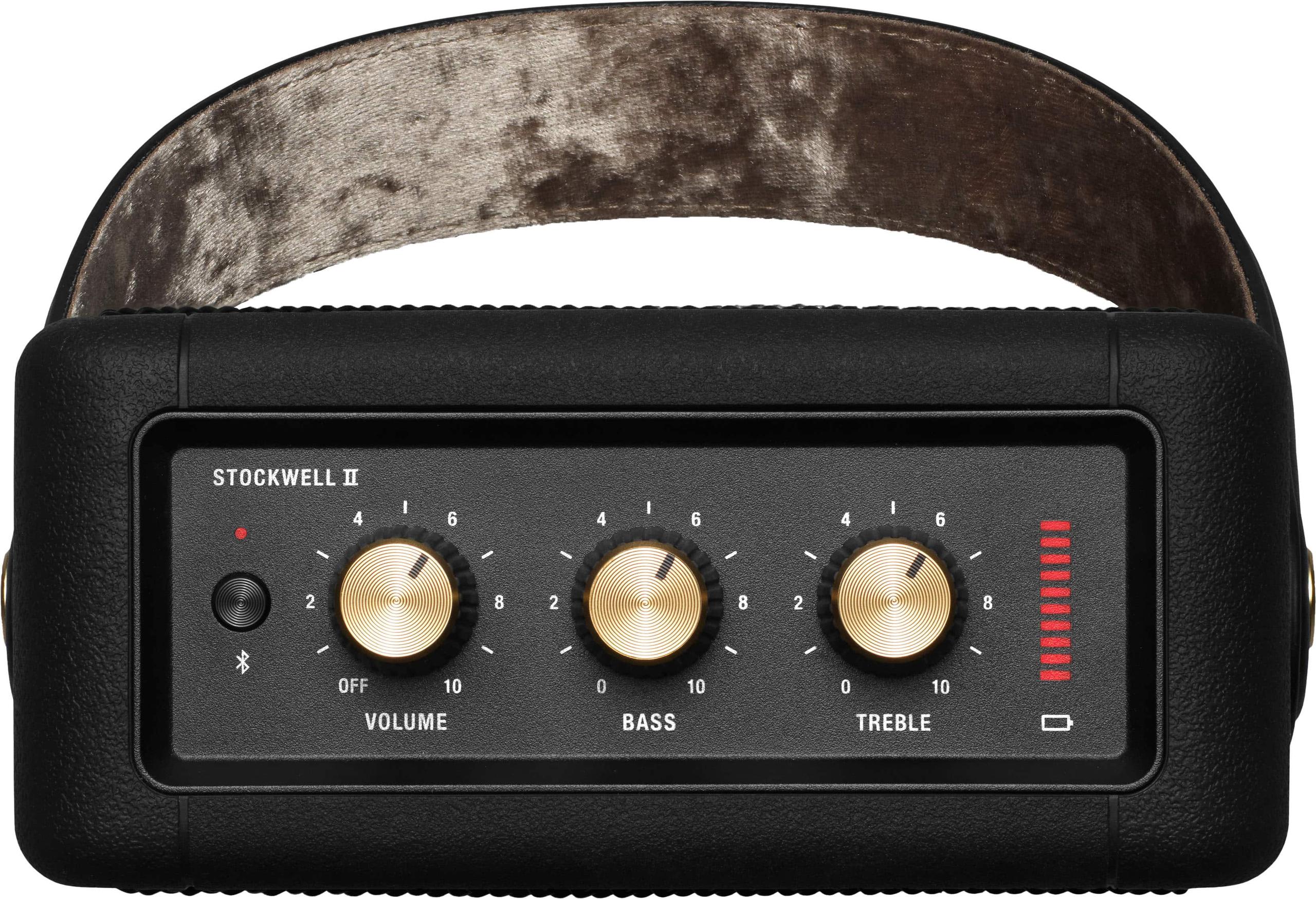
Here's where things get interesting. The Marshall's heritage as an amp manufacturer shines through in its mid-range reproduction. Guitars and vocals have a natural warmth and presence that's particularly noticeable when listening to classic rock or acoustic performances. The physical bass and treble controls allow for immediate, intuitive sound shaping.
The Sony counters with more modern technology, offering app-based EQ control and preset sound modes. While this provides more precise control, some users might prefer the Marshall's immediate tactile adjustment capability. The Sony's dual tweeters deliver crisp high frequencies, though they can occasionally sound a bit harsh at maximum volume.
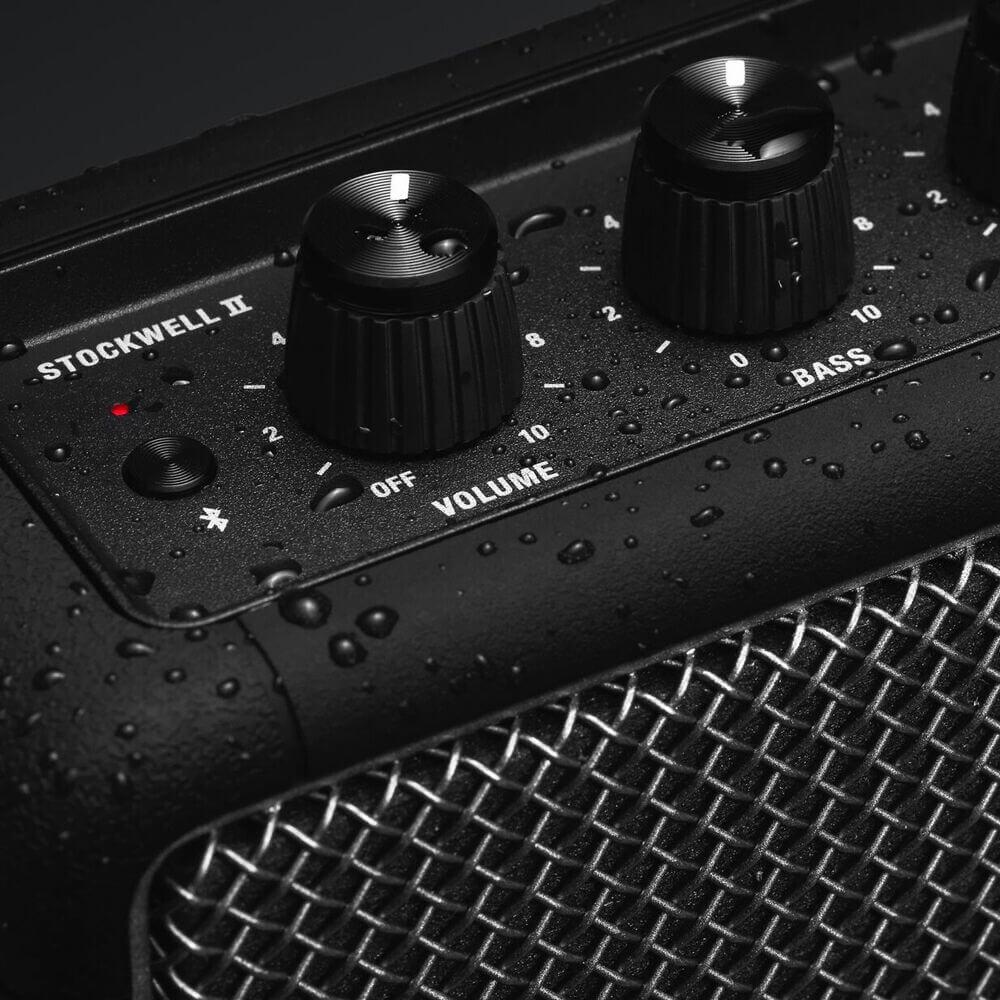
The Sony XG300 features IP67 protection, meaning it's fully dustproof and can be submerged in water up to 1 meter deep for 30 minutes. This makes it genuinely poolside-friendly and beach-ready. The Marshall Stockwell II offers IPX4 protection, which handles splashes but isn't submersible. This difference could be crucial depending on your intended use.
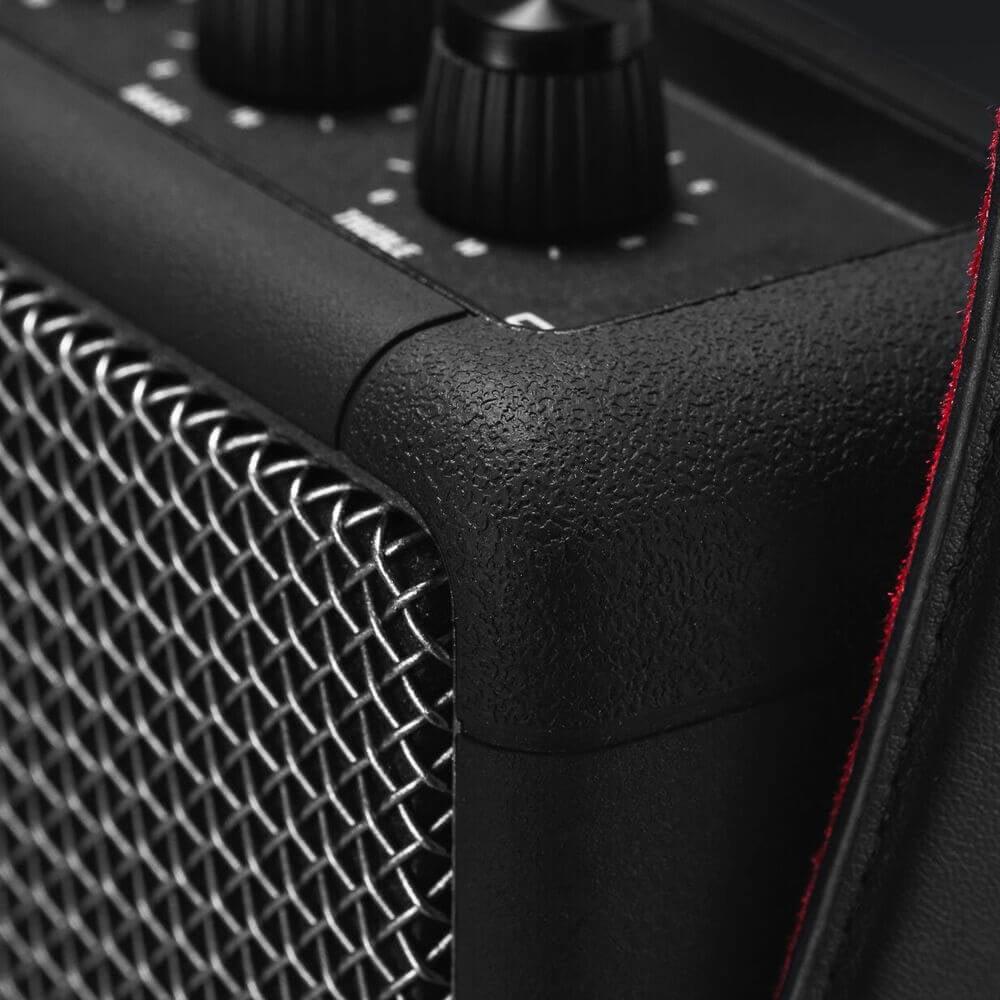
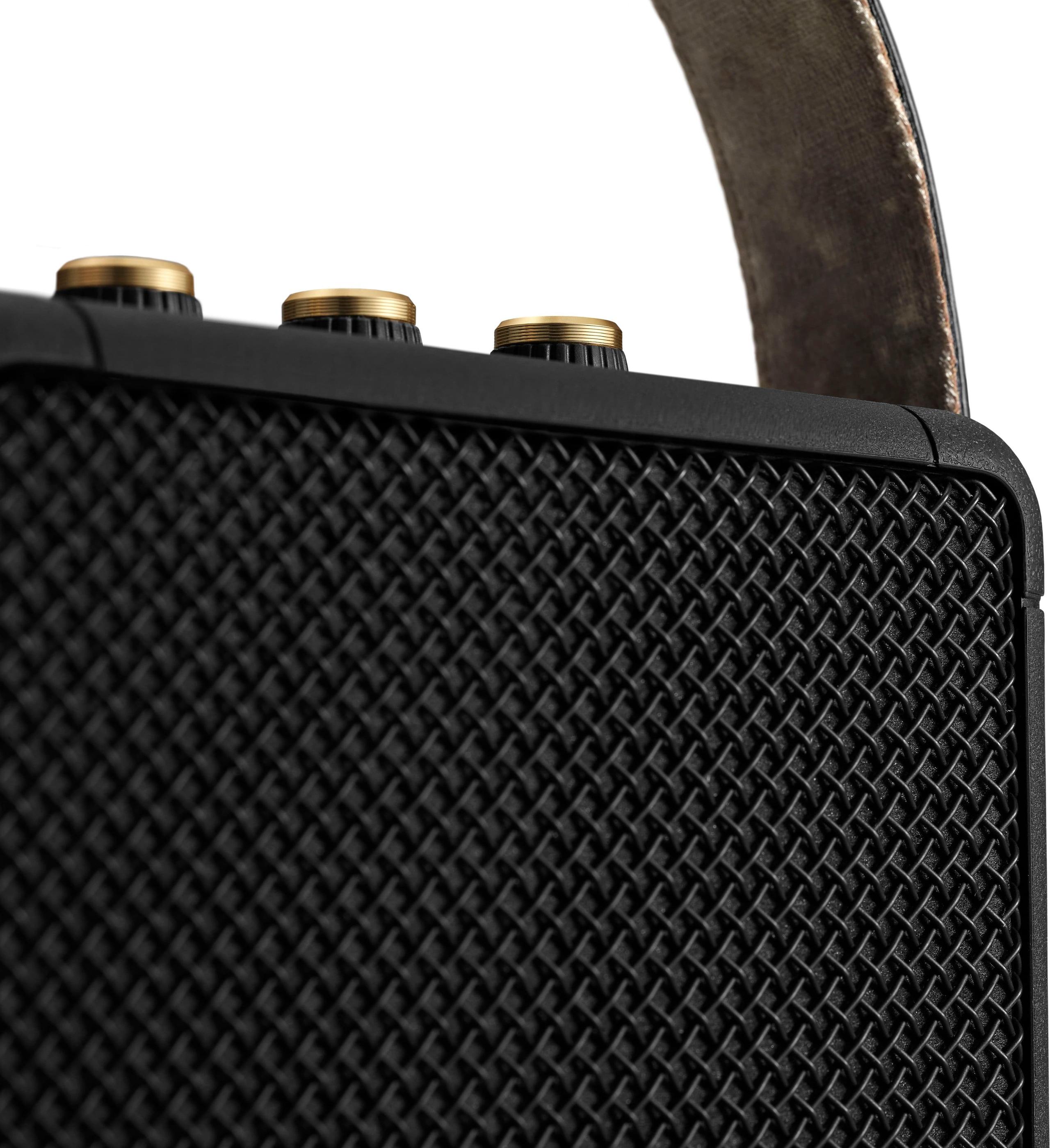
Marshall's approach emphasizes classic styling with modern materials. The metal grille and silicone exterior feel premium, while the analog control knobs provide satisfying tactical feedback. At 1.38kg, it's noticeably lighter than the Sony.
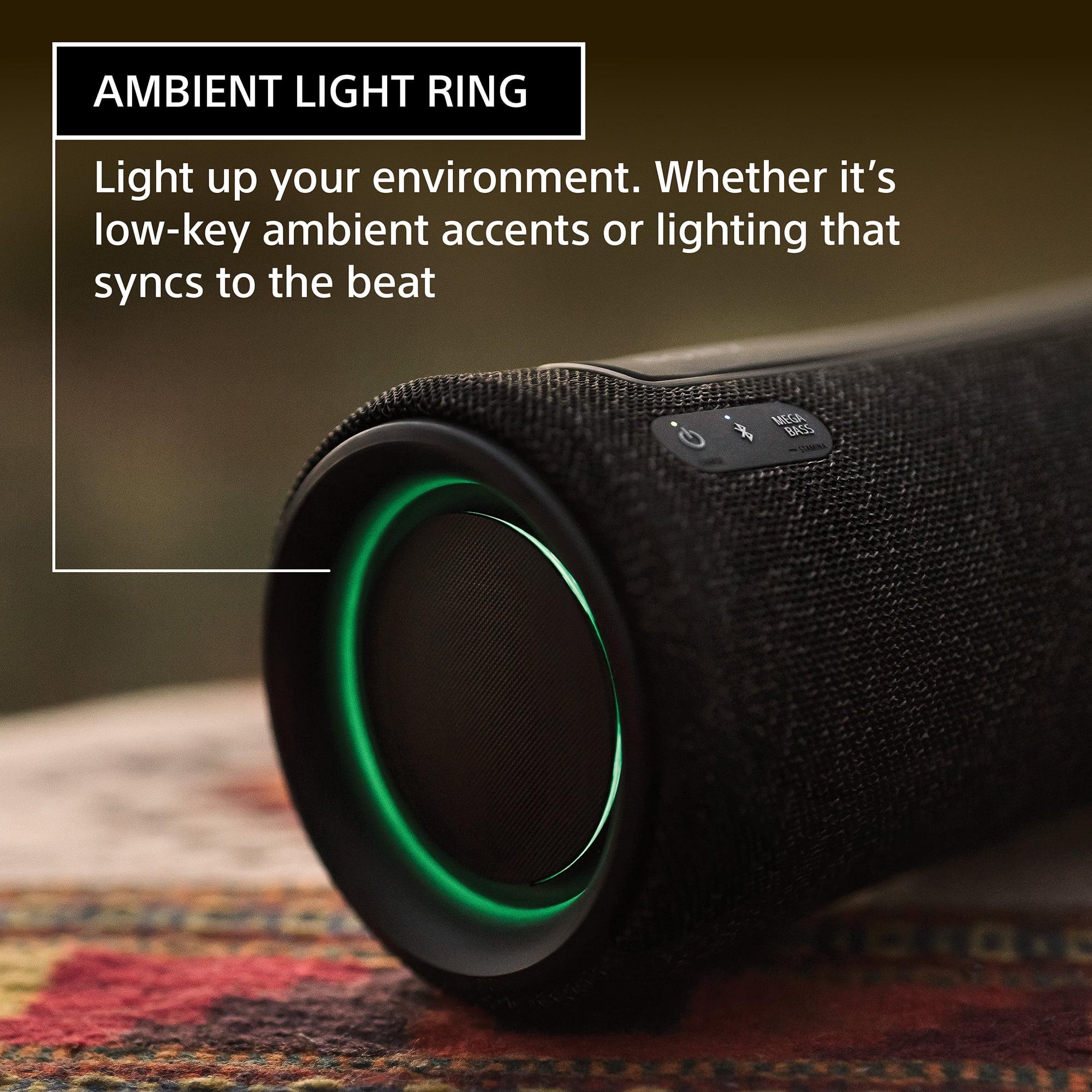
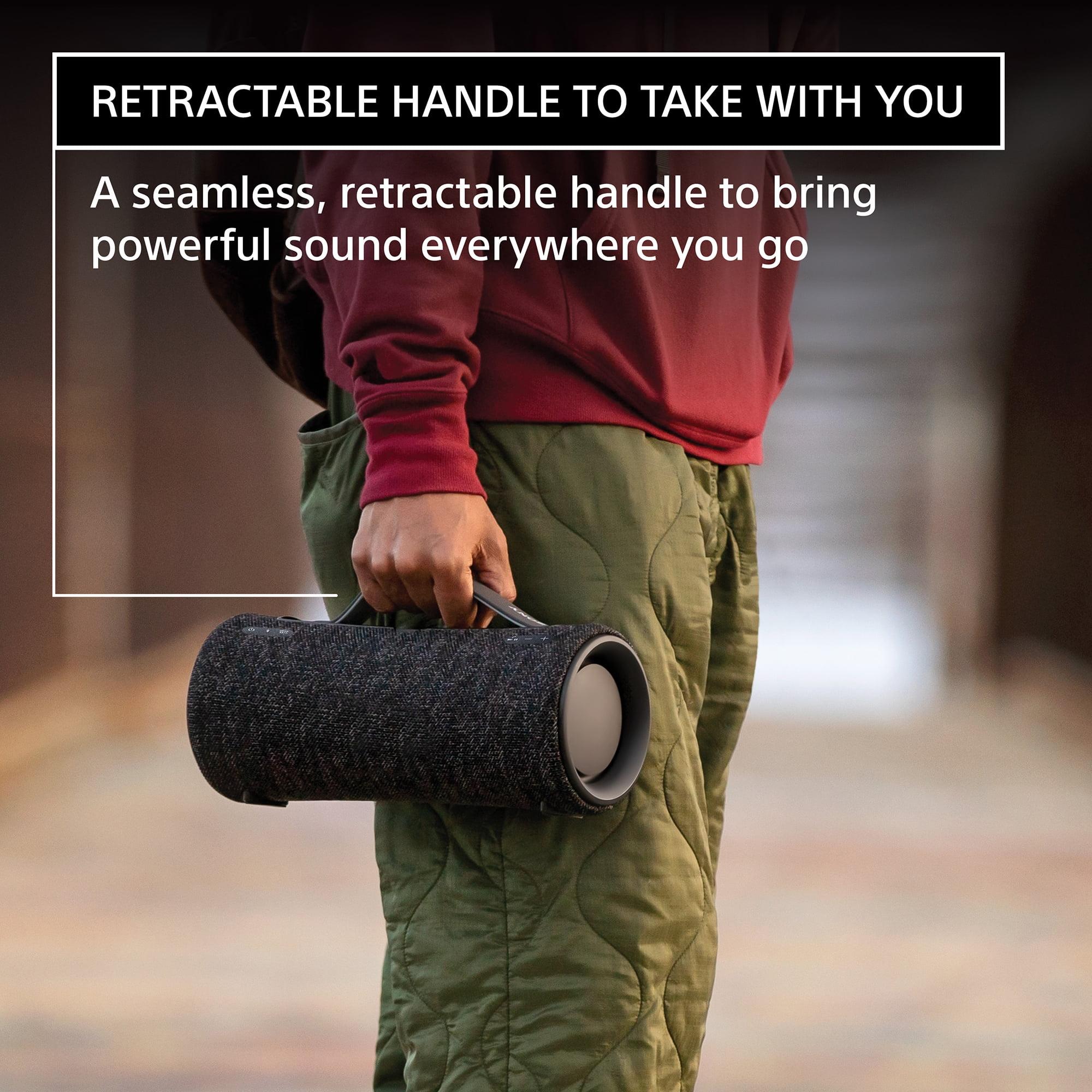
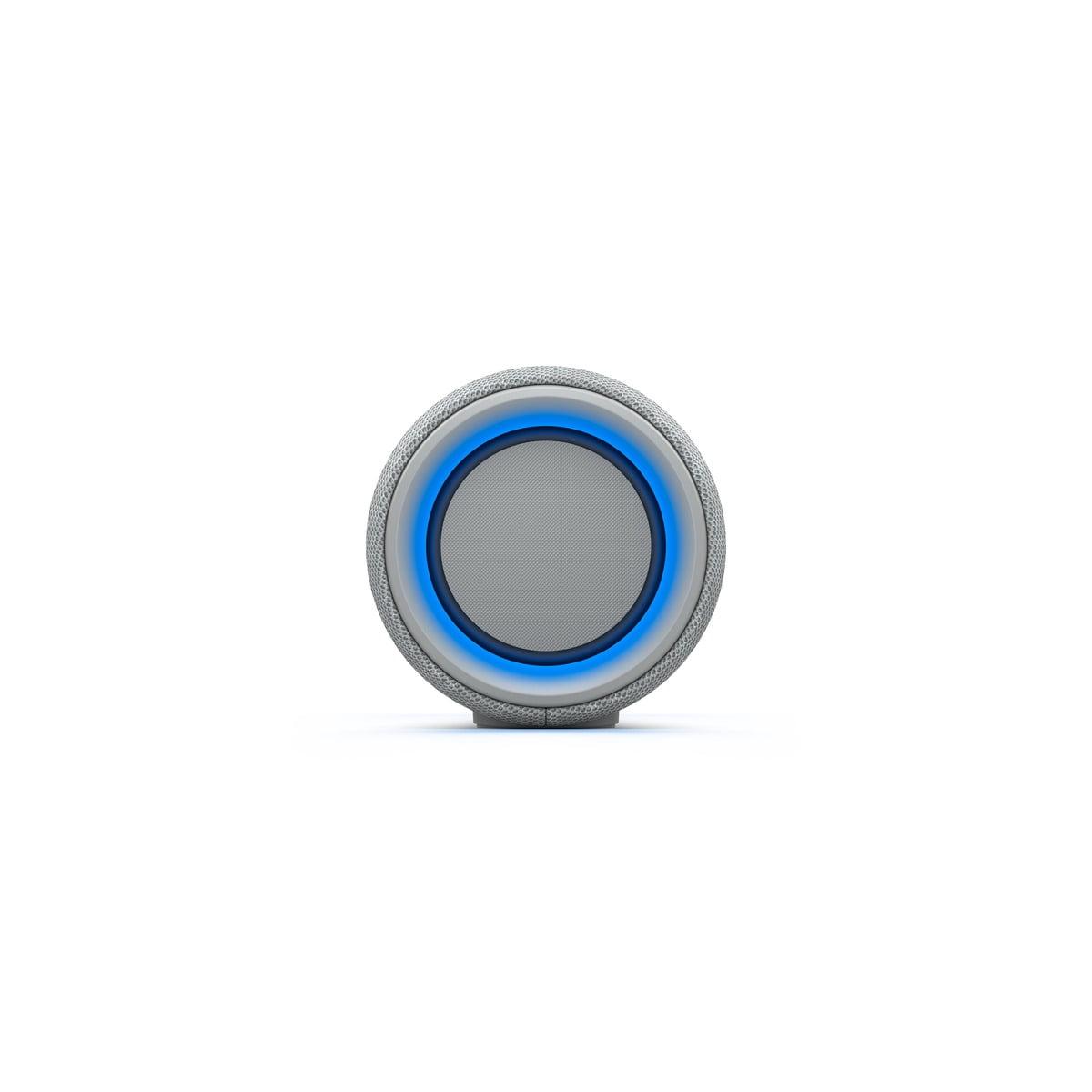
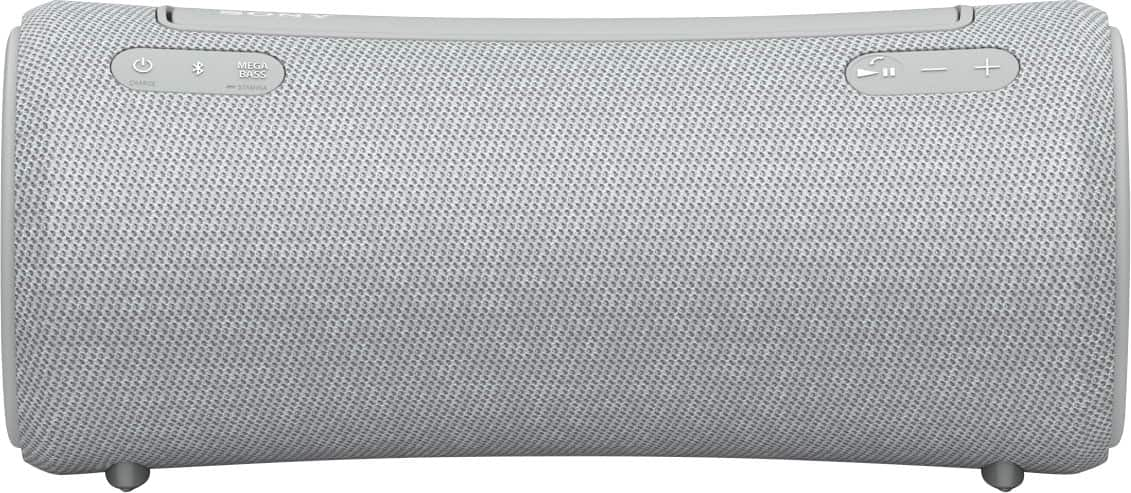
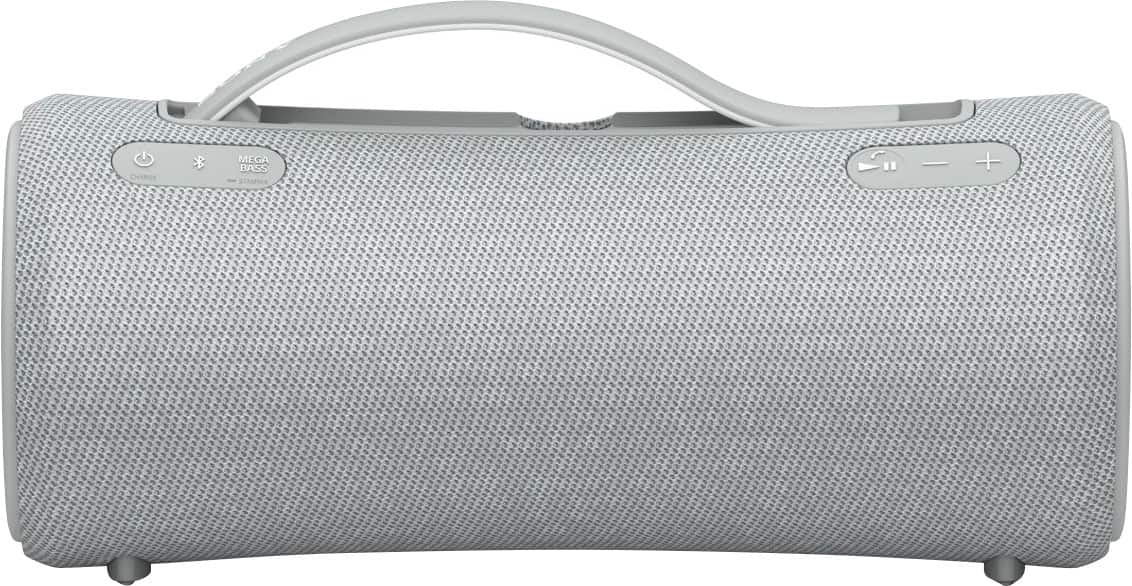
The Sony's modern design incorporates LED lighting that pulses with the music - a fun feature for parties. Its retractable handle improves portability, though at 3kg, it's significantly heavier than the Marshall. The build quality feels solid, with particular attention paid to weather sealing.
Both speakers offer impressive battery life, but there are notable differences:
The Sony's battery performance is more impressive on paper, but the Marshall's quick charging capability might be more practical for some users. Both speakers include battery level indicators, though the Sony's app provides more detailed information.
The Sony supports Bluetooth 5.2 with LDAC, AAC, and SBC codecs, offering better wireless audio quality when paired with compatible devices. The Marshall uses Bluetooth 5.0 with aptX, providing good quality but lacking the more advanced LDAC support.
Sony's Party Connect feature allows linking up to 100 compatible speakers - an impressive feat for large gatherings. The Marshall can only pair with another Stockwell II for stereo playback, but this might be sufficient for most users.
The Sony includes:
The Marshall focuses on core features:
At their current identical price points ($149.99 vs $149.00), both speakers offer compelling value for different users. The Sony provides more features and newer technology, while the Marshall focuses on sound quality and simplicity.
For home theater use, the Sony's additional features like LED lighting and multi-speaker connectivity make it more versatile. However, the Marshall's more neutral sound signature might be preferred for movie dialogue and general TV viewing.
The Sony's superior water resistance and powerful bass make it ideal for outdoor gatherings and pool parties. The Marshall's lighter weight and more compact size make it better suited for picnics and casual outdoor listening.
For regular commuting or office use, the Marshall's smaller size and physical controls offer practical advantages. The Sony's larger size and weight make it less convenient for daily transport but provide better sound output for fixed locations.
Choose the Sony XG300 if you:
Choose the Marshall Stockwell II if you:
Both speakers represent excellent value at their current price points, but they serve different user needs. The Sony offers more modern features and superior weather protection, while the Marshall provides a more traditional, straightforward listening experience in a more portable package.
The choice ultimately depends on your primary use case and personal preferences regarding sound signature and features. Consider your typical listening environment, preferred music genres, and whether you value additional features over simplicity when making your decision.
| Sony XG300 MEGA BASS ($149.99) | Marshall Stockwell II ($149.00) |
|---|---|
| Sound Output - Determines overall volume and clarity | |
| 2x woofers + 2x tweeters, higher max volume | 1x woofer + 2x tweeters, moderate volume |
| Water Resistance - Critical for outdoor use | |
| IP67 (fully waterproof, dustproof) | IPX4 (splash resistant only) |
| Battery Life - Important for extended use | |
| 25 hours, 10min charge = 70min playback | 20 hours, 20min charge = 6hrs playback |
| Weight & Portability - Affects everyday usability | |
| 3.0 kg (6.6 lbs), larger size with handle | 1.38 kg (3.04 lbs), more compact design |
| Sound Customization - Control over audio profile | |
| App-based EQ, presets, MEGA BASS button | Physical bass/treble/volume knobs |
| Bluetooth Version - Impacts connection quality | |
| 5.2 with LDAC, AAC, SBC support | 5.0 with aptX support |
| Additional Features - Extra functionality | |
| LED lights, Party Connect (100 speakers), phone charging | Multi-directional sound, dual-host pairing |
| Sound Signature - Different listening preferences | |
| Bass-heavy, modern sound profile | Balanced, studio-like sound profile |
| Construction - Build quality and durability | |
| Modern plastic, LED-enhanced design | Metal grille, classic amp styling |
| Price-to-Feature Ratio - Overall value | |
| More features, better water resistance | Simpler design, better portability |
The Sony XG300 ($149.99) is better for bass-heavy music and outdoor use with its IP67 rating, while the Marshall Stockwell II ($149.00) excels for acoustic music and portability. They're similarly priced, so the choice depends on your specific needs.
The Sony XG300 offers more powerful bass and higher volume, while the Marshall Stockwell II provides more balanced, natural sound. The Sony has better overall sound for parties, while the Marshall excels at intimate listening.
The Sony XG300 has superior durability with IP67 waterproofing and dustproofing. The Marshall Stockwell II has IPX4 splash resistance, making it less suitable for poolside or beach use.
The Sony XG300 offers 25 hours of playback versus the Marshall's 20 hours. However, the Marshall's quick charging provides 6 hours from a 20-minute charge, while Sony gives 70 minutes from a 10-minute charge.
Both work well outdoors, but the Sony XG300 is better suited with its waterproofing and louder volume. The Marshall Stockwell II is more portable but less weather-resistant.
The Marshall Stockwell II is significantly more portable at 1.38kg compared to the Sony XG300's 3kg weight. The Marshall's compact size makes it better for daily carrying.
Yes, both speakers work with all Bluetooth-enabled phones. The Sony XG300 uses Bluetooth 5.2 with LDAC support, while the Marshall uses Bluetooth 5.0 with aptX.
The Sony XG300 is better for parties with its louder volume, LED lights, and ability to connect with up to 100 other Sony speakers. The Marshall Stockwell II is better suited for smaller gatherings.
The Sony XG300 offers app-based EQ control and preset modes, while the Marshall Stockwell II has physical knobs for bass, treble, and volume adjustment.
Both speakers offer similar Bluetooth range of about 30 feet, though the Sony XG300's newer Bluetooth 5.2 may provide slightly more stable connectivity than the Marshall's 5.0.
At $149.99 and $149.00 respectively, both the Sony XG300 and Marshall Stockwell II offer good value. The Sony provides more features, while the Marshall offers better portability and classic design.
While both can connect to TVs via Bluetooth or aux input, neither is specifically designed for home theater use. For TV audio, consider a dedicated soundbar instead.
We've done our best to create useful and informative comparisons to help you decide what product to buy. Our research uses advanced automated methods to create this comparison and perfection is not possible - please contact us for corrections or questions. These are the sites we've researched in the creation of this article: bestbuy.com - youtube.com - sony.ca - youtube.com - electronics.sony.com - sony.com - abt.com - helpguide.sony.net - bhphotovideo.com - rtings.com - thesonyshop.ca - helpguide.sony.net - bestbuy.com - stuff.tv - idownloadblog.com - stereoguide.com - kendallgiles.com - termagoods.com - aplaze.com - manua.ls - youtube.com - sg.tcacoustic.asia - marshall.com - youtube.com

Privacy Policy
Terms and Conditions - Affiliate Policy
Home Security
© Copyright 2008-2026.
11816 Inwood Rd #1211, Dallas, TX 75244