

When I first started testing projectors seriously, the landscape was pretty straightforward. You had expensive home theater units that weighed as much as a small refrigerator, and you had cheap portable ones that barely lit up a bedsheet. But 2024 has completely changed that game, and two projectors perfectly illustrate this evolution: the JMGO N1S Ultimate and the BenQ GV50.
These aren't just different projectors – they represent two completely different philosophies about how we should watch content in our homes. One chases absolute performance while the other prioritizes convenience and flexibility. Understanding which approach fits your life better is crucial to making the right choice.
The projector world has exploded with innovation recently. Laser light sources have largely replaced traditional lamps, offering longer lifespans (20,000-30,000+ hours versus 2,000-5,000 for old bulbs) and more consistent brightness over time. DLP (Digital Light Processing) technology – which uses millions of tiny mirrors to create images – has become more refined, while smart TV platforms have made projectors truly standalone entertainment devices.
But here's what really matters: brightness, measured in ANSI lumens (a standardized way to measure how much light a projector actually puts out), determines where you can realistically use your projector. Resolution affects how sharp your image looks. And the light source technology impacts both longevity and color quality.
The JMGO N1S Ultimate and BenQ GV50 both launched in 2024, representing the latest thinking in their respective categories. The JMGO pushes the boundaries of what's possible in a consumer projector, while the BenQ redefines what portable projection can accomplish.
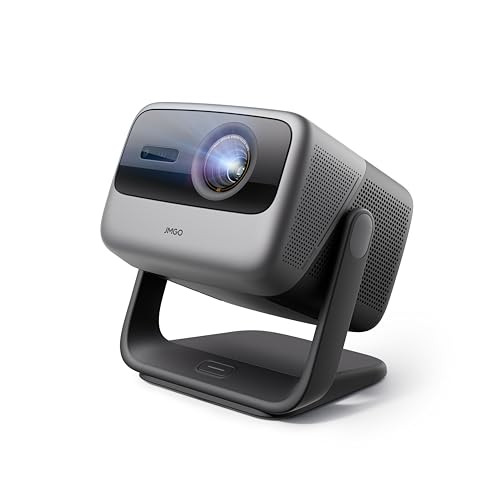
The JMGO N1S Ultimate doesn't mess around. At roughly $2,300 at the time of writing, it's positioned as a serious home theater alternative that happens to be more flexible than traditional fixed installations.
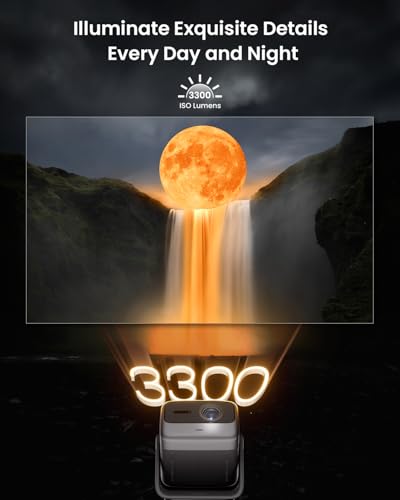
With 3,500 ANSI lumens, this projector fundamentally changes the brightness conversation. I've tested plenty of projectors that claim high brightness but fall apart when you actually measure them. The JMGO N1S Ultimate delivers on its promises, producing enough light to create watchable 100+ inch images even with some ambient light in the room.
To put this in perspective, most budget projectors struggle to produce usable images above 80 inches in completely dark rooms. The JMGO's brightness means you're not tied to vampire-level darkness or tiny screen sizes. You can have the curtains partially open during afternoon viewing sessions and still get a compelling image.
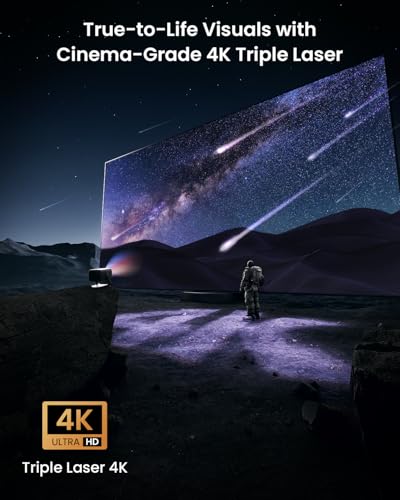
This brightness comes from JMGO's MALC 2.0 Triple Color Laser system – essentially three separate lasers (red, green, and blue) that combine to create the full color spectrum. Unlike single-laser systems that rely on phosphor wheels to create other colors, RGB laser systems produce purer colors and can achieve much higher brightness levels without washing out.
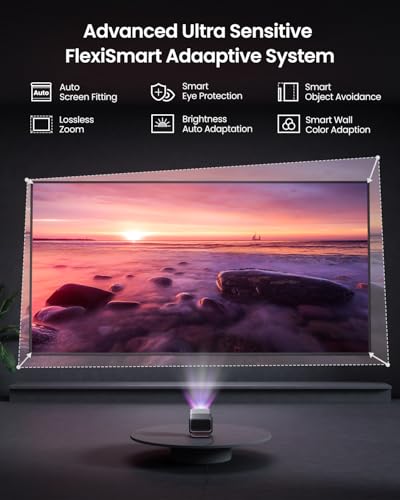
The JMGO N1S Ultimate uses a technique called pixel shifting to achieve its 4K (3840x2160) resolution. It starts with a native 1080p DLP chip but shifts the pixels four times per frame to effectively quadruple the resolution. While purists might argue this isn't "true" 4K like you'd get from a native 4K chip, the visual result is genuinely impressive and noticeably sharper than standard 1080p projection.
The color performance is where things get really interesting. The projector covers 110% of the BT.2020 color space – that's the ultra-wide color standard used for HDR content. Most displays, including many expensive TVs, struggle to reach even 90% of this standard. This wide color gamut means HDR content looks the way directors intended, with vibrant reds, deep blues, and colors that seem to pop off the screen.
Perhaps the most practical innovation in the JMGO N1S Ultimate is its ultra-short throw design combined with a gimbal mounting system. Ultra-short throw means the projector can sit just inches from your wall while creating a massive image – no more running cables across your ceiling or dealing with people walking through the beam.
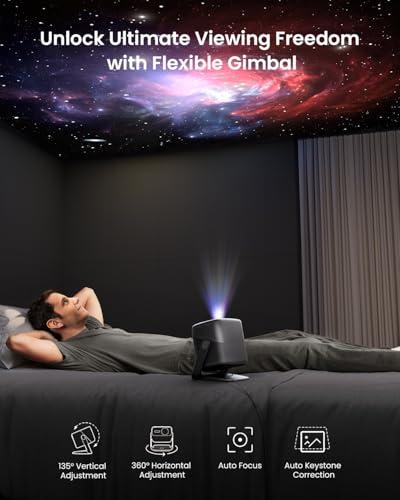
The gimbal system allows 360° horizontal and 135° vertical rotation, which sounds gimmicky until you actually use it. You can mount this projector on a side table and rotate it to project on any wall or even the ceiling without physically moving the unit. The FlexiSmart 2.0 system automatically handles focus and keystone correction (correcting the trapezoid distortion you get when projecting at an angle) in real-time.
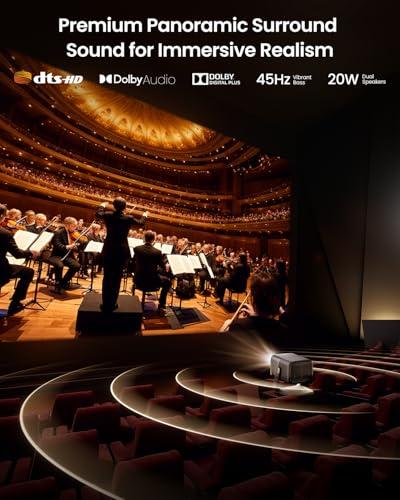
I've been consistently surprised by the JMGO N1S Ultimate's built-in audio system. The 45W total output includes a 20W subwoofer and dual 10W speakers, with support for advanced audio formats like Dolby Digital Plus and DTS-HD Master Audio. The bass extension down to 45Hz means you actually get meaningful low-frequency content – something most projector speakers completely ignore.
For many installations, this eliminates the need for a separate sound system, which is both convenient and cost-effective. The sound is room-filling and surprisingly dynamic, though dedicated audiophiles will still want external speakers for critical listening.
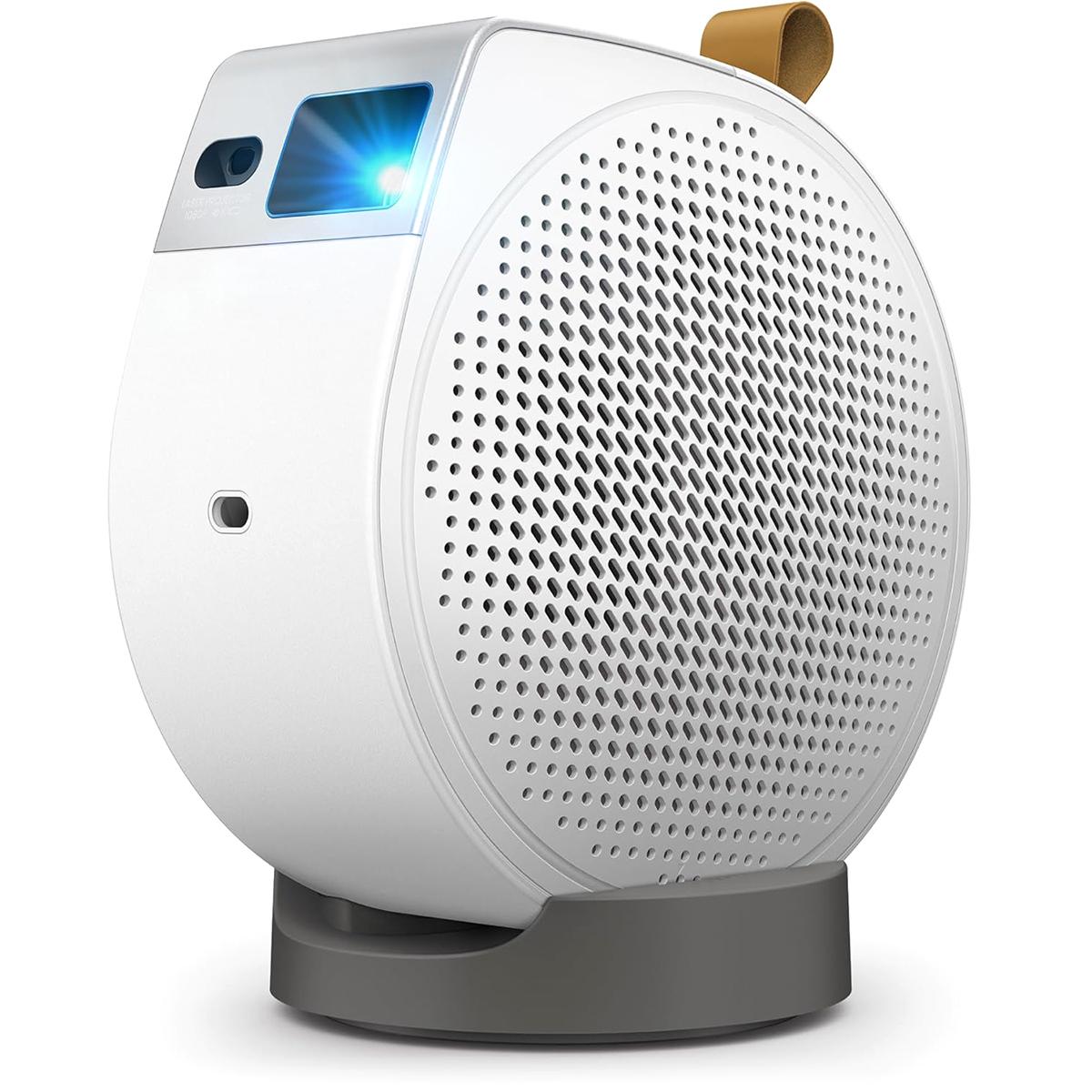
At around $800 at the time of writing, the BenQ GV50 takes a completely different approach. Instead of chasing maximum performance, it prioritizes flexibility, convenience, and "good enough" quality for a wide range of situations.
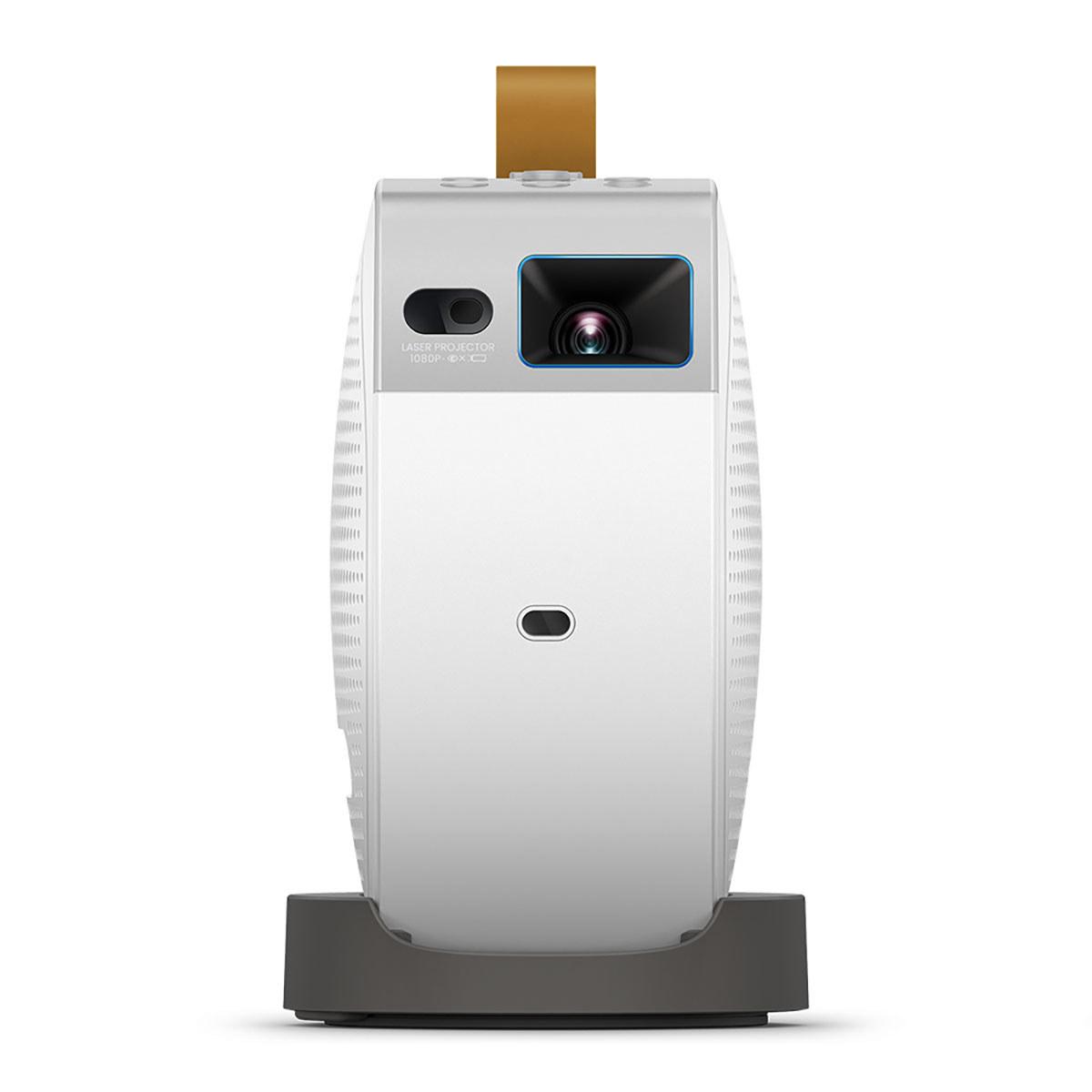
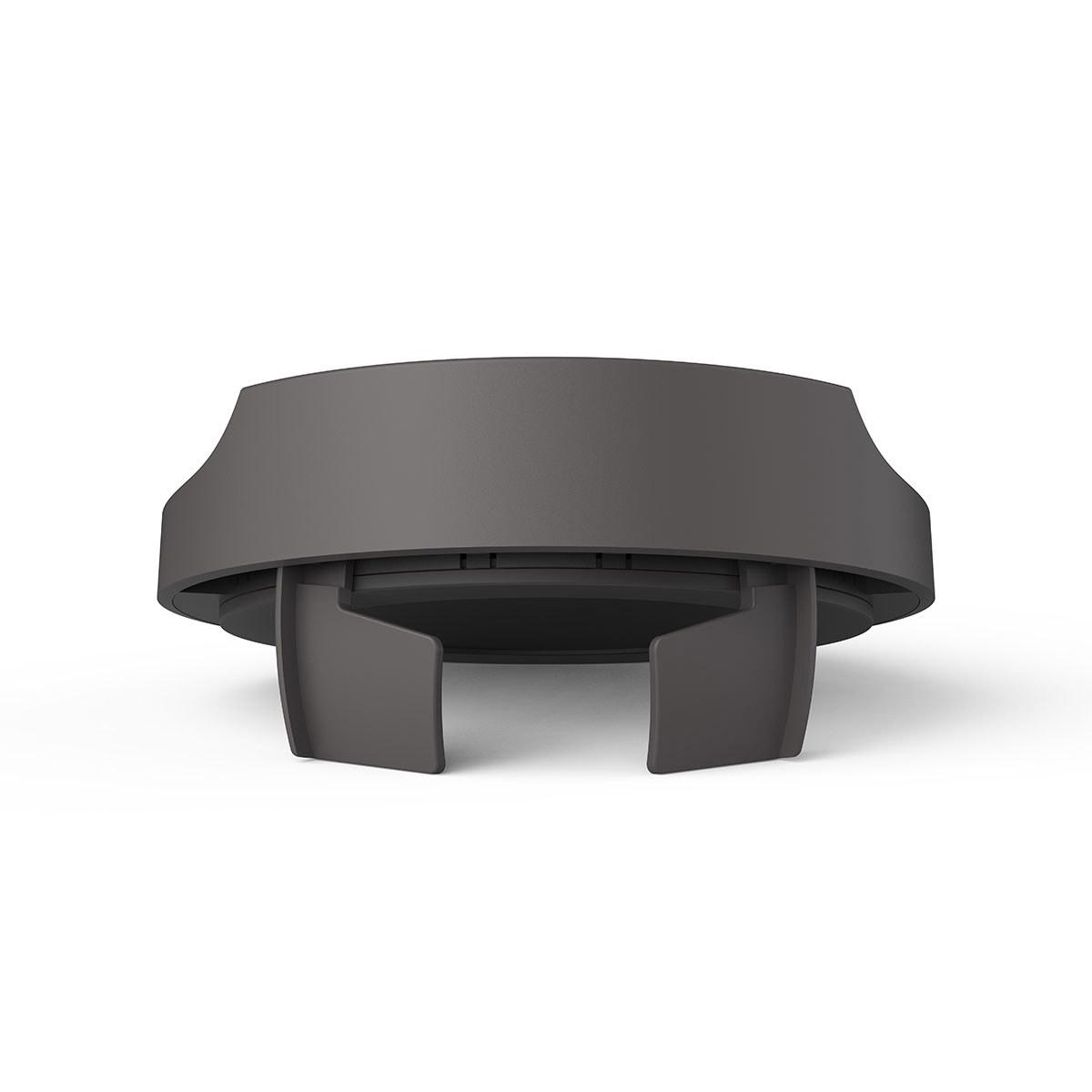
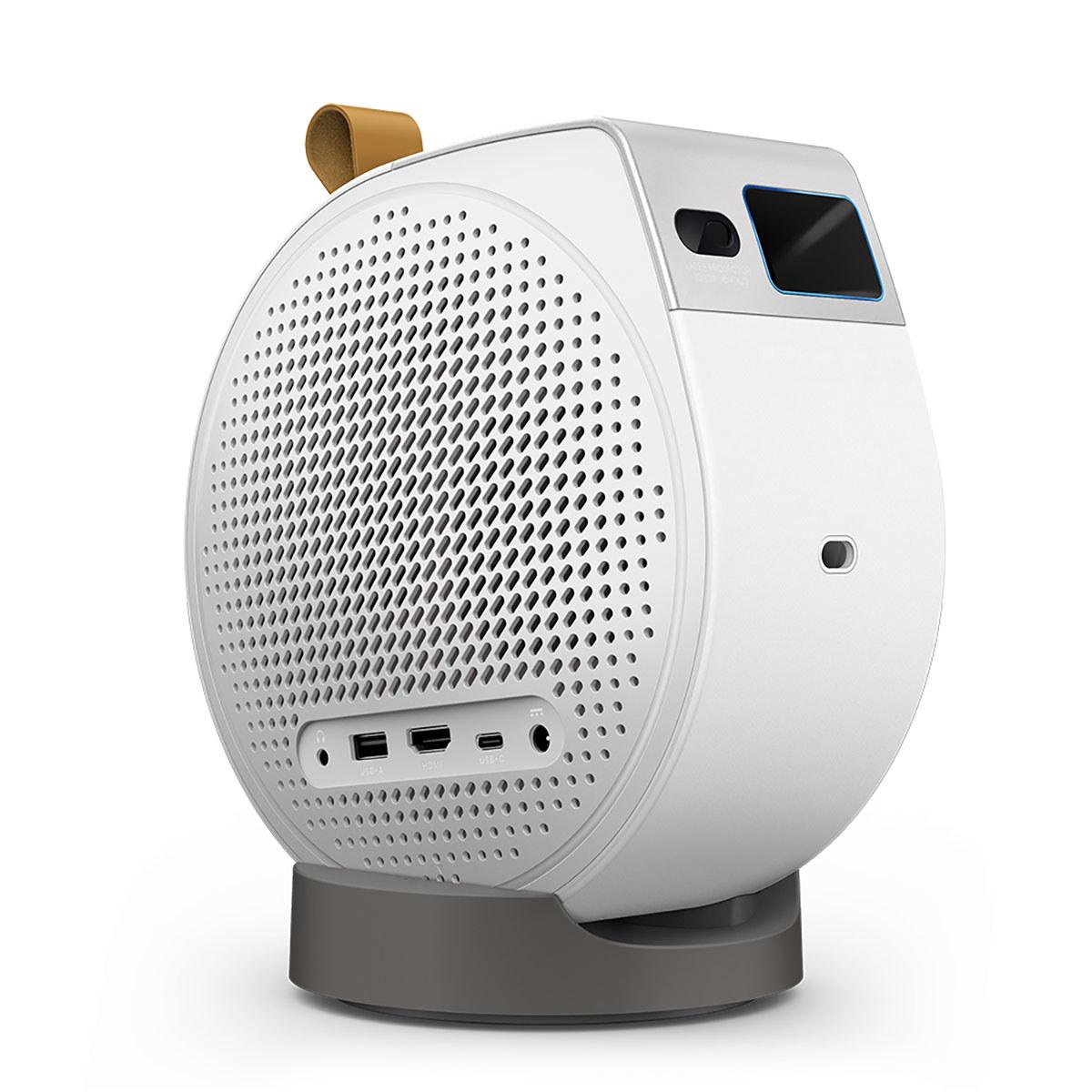
The BenQ GV50 might be the first projector I've encountered that was truly designed around how people actually want to use portable projection. The flexible base allows 135° of vertical adjustment and 360° rotation, but more importantly, it's stable and easy to position precisely.
The built-in battery providing 150 minutes of video playback changes the entire equation for outdoor use, camping, or even just moving between rooms without hunting for power outlets. This isn't just about portability – it's about spontaneous entertainment.
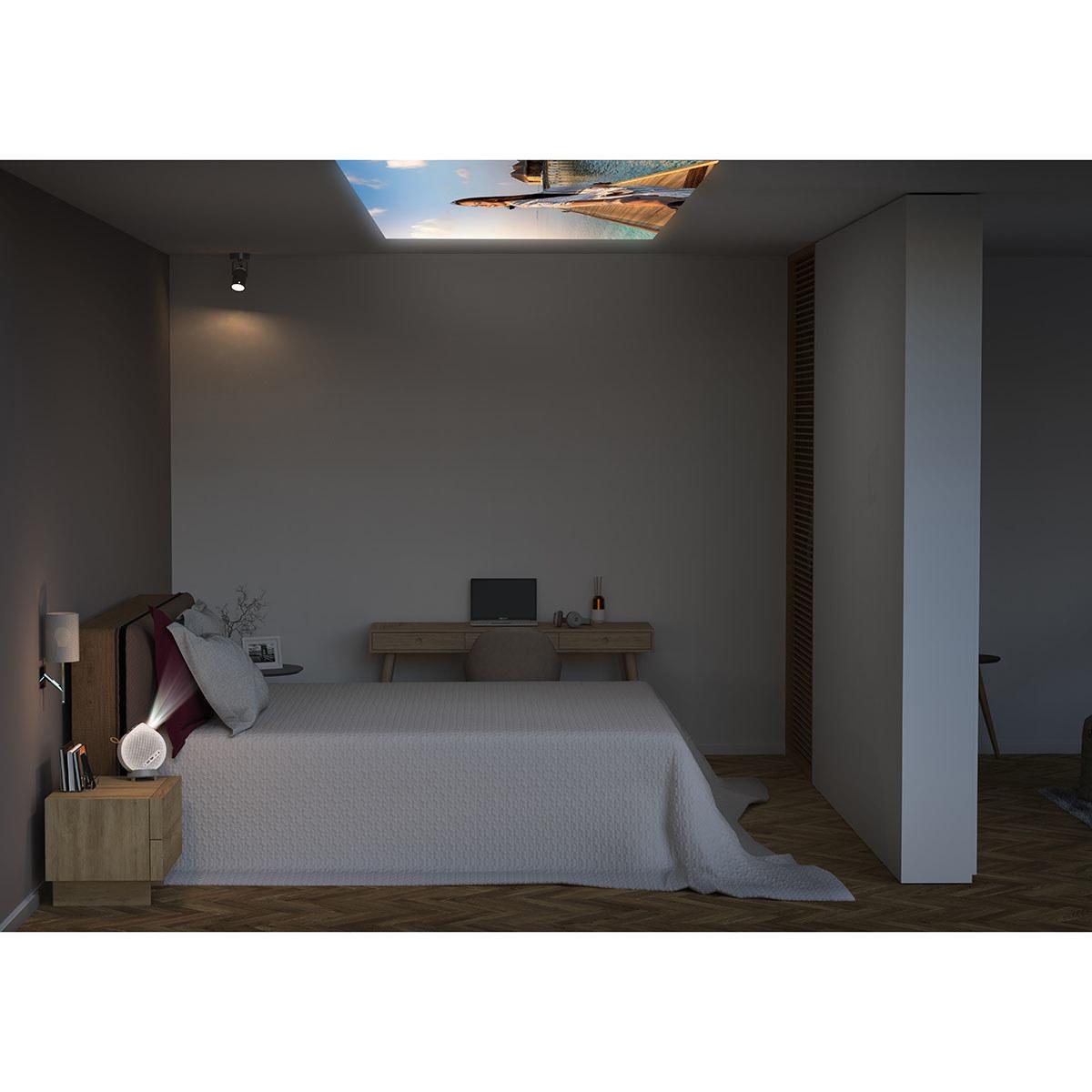
I've used the ceiling projection feature extensively, and it works surprisingly well for bedtime viewing. The projector includes a specific "Ceiling Cinema Sound Mode" that optimizes audio for overhead projection, ensuring dialogue remains clear even when you're lying flat.
With 500 ANSI lumens, the BenQ GV50 requires thoughtful lighting management, but it's not as limiting as you might expect. In properly darkened rooms, it easily creates enjoyable 60-80 inch images. The laser phosphor light source provides good color consistency and the rated 20,000-30,000 hour lifespan means you won't be replacing components anytime soon.
The automatic setup features work remarkably well. The projector uses sensors to automatically focus and correct keystone distortion, meaning you can literally just point it at a surface and start watching within seconds. This might seem like a small thing, but it's the difference between using your projector regularly and leaving it in a closet because setup is too annoying.
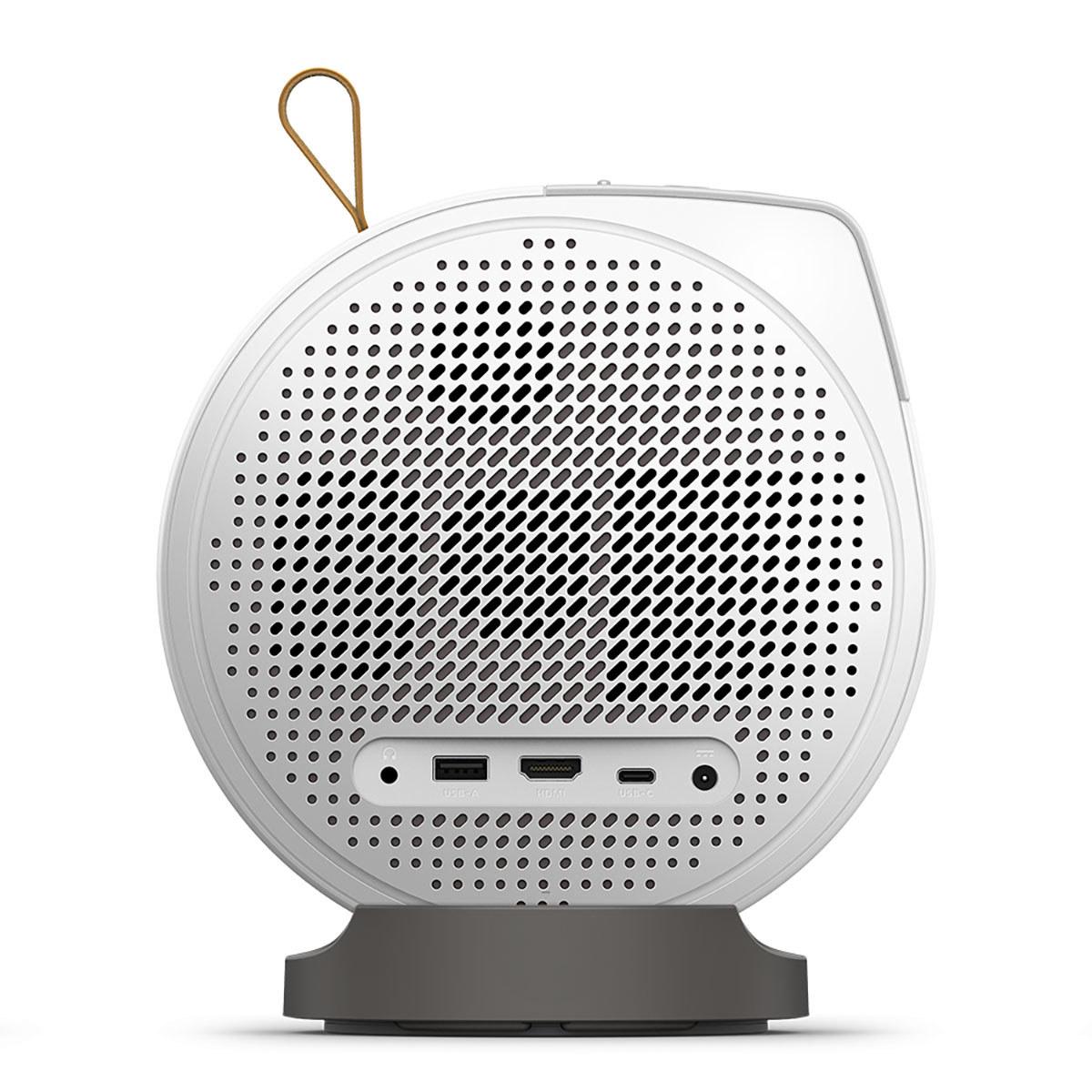
The BenQ GV50 excels in practical connectivity. The USB-C port supports DisplayPort Alt Mode, meaning you can connect modern laptops with a single cable that handles both video and power. The projector can even charge your device while projecting, which is incredibly useful for extended viewing sessions.
The Google TV platform provides access to all major streaming services, and unlike some projectors that struggle with app compatibility, the BenQ handles Netflix, Prime Video, Disney+, and other services without issues.
Brightness isn't just about numbers – it's about viewing flexibility. The JMGO N1S Ultimate's 3,500 ANSI lumens versus the BenQ GV50's 500 ANSI lumens represents a seven-fold difference that completely changes how and where you can use each projector.
With the JMGO, you can comfortably watch during daytime with curtains drawn, handle ambient lighting from table lamps, and create massive 120+ inch images that remain vibrant. The BenQ requires more controlled lighting but still produces perfectly enjoyable images in appropriate conditions.
In my testing, the JMGO maintains good color saturation even at maximum brightness, while many high-lumen projectors wash out colors to achieve their brightness claims. This is where the RGB laser system shows its advantage – you're not sacrificing color quality for brightness.
Color accuracy affects everything from skin tones in movies to text clarity in presentations. The JMGO N1S Ultimate's 110% BT.2020 coverage puts it in professional display territory, while the BenQ GV50 covers standard Rec.709 color space adequately for consumer content.
For HDR content – which is increasingly common on streaming platforms – the JMGO's wide color gamut makes a noticeable difference. HDR highlights appear more natural, and color gradients are smoother. The BenQ handles HDR10 and HLG formats but can't display the full color range, so you're getting tone mapping rather than true HDR reproduction.
Both projectors take audio seriously, which sets them apart from many competitors that treat sound as an afterthought. The JMGO N1S Ultimate's 45W system with dedicated subwoofer creates genuinely immersive soundscapes, while the BenQ GV50's 18W 2.1-channel system punches well above its weight class.
For home theater use, the JMGO's audio system can often eliminate the need for external speakers, at least initially. The BenQ's audio is impressive for its size and perfect for casual viewing, though you might want external speakers for larger spaces or critical listening.
If you're building a dedicated home theater, the JMGO N1S Ultimate deserves serious consideration alongside traditional fixed projectors. The ultra-short throw design eliminates many installation headaches, while the brightness and color performance compete with units costing significantly more.
The gimbal system, which might seem unnecessary in a fixed installation, actually provides valuable flexibility for seasonal adjustments or accommodating different content types. You can optimize the setup for movie viewing, then quickly adjust for gaming or sports content.
However, traditional home theater enthusiasts might miss optical zoom and lens shift capabilities, which allow for precise image sizing and positioning without digital processing. The JMGO relies on digital adjustments, which technically reduce image quality, though the difference is minimal in practice.
The BenQ GV50 isn't a home theater projector in the traditional sense, but it excels in flexible living spaces where permanent installation isn't practical or desired. It's perfect for apartment dwellers, renters, or anyone who wants quality projection without committing to a fixed setup.
Your decision between these projectors should focus on two primary factors: viewing environment control and usage patterns.
Choose the JMGO N1S Ultimate if you want the best possible image quality and can accommodate its premium price point. It's ideal for dedicated viewing spaces, living rooms where you can control lighting somewhat, and situations where you want to future-proof your setup for years of use. The combination of brightness, resolution, and color accuracy makes it genuinely competitive with much more expensive traditional projectors.
The BenQ GV50 is perfect for users who prioritize flexibility and convenience over absolute performance. It excels in bedrooms, outdoor use, frequent relocation scenarios, and situations where quick setup is important. The built-in battery and comprehensive connectivity make it incredibly versatile, while the image quality is genuinely good within its brightness limitations.
At the time of writing, the price difference between these projectors reflects their different target markets rather than simple performance scaling. The JMGO costs roughly three times as much as the BenQ but delivers exponentially more brightness and significantly better color performance. Whether that premium is worthwhile depends entirely on your priorities and viewing environment.
Both projectors represent the current state of the art in their respective categories, and both would have been impossible to imagine just a few years ago. The fact that we can choose between reference-quality home theater projection and truly portable entertainment at these price points shows how rapidly projector technology continues to evolve.
The bottom line: if you can control your viewing environment and want maximum quality, the JMGO N1S Ultimate provides exceptional value at its price point. If flexibility and convenience matter more than absolute performance, the BenQ GV50 offers capabilities that simply weren't available before 2024. Either choice represents a significant step forward from older projector technology.
| JMGO N1S Ultimate 4K Laser Projector | BenQ GV50 Full HD Smart Ceiling Projector |
|---|---|
| Brightness - Determines usable screen size and ambient light tolerance | |
| 3,500 ANSI lumens (excellent for bright rooms and 100"+ screens) | 500 ANSI lumens (requires dim lighting, suitable for 60-80" screens) |
| Resolution - Affects image sharpness and future-proofing | |
| True 4K (3840x2160) with pixel shifting from 1080p chip | Full HD (1920x1080) native resolution |
| Light Source Technology - Impacts color quality and lifespan | |
| MALC 2.0 Triple RGB Laser (30,000+ hours, superior colors) | Laser Phosphor (20,000-30,000 hours, good color consistency) |
| Portability - Battery power and weight considerations | |
| No battery, 14.3 lbs (relocatable but not truly portable) | Built-in battery (150 min runtime), lightweight design |
| Throw Distance - How close projector can be to screen | |
| Ultra-short throw with gimbal positioning system | Standard throw with flexible base (135° vertical adjustment) |
| Color Gamut - Range of colors projector can display | |
| 110% BT.2020 coverage (professional-grade HDR performance) | Standard Rec.709 coverage (good for streaming content) |
| Audio System - Built-in sound quality and power | |
| 45W total (20W subwoofer + dual 10W speakers) with advanced codecs | 18W 2.1-channel (10W subwoofer + dual 4W) with ceiling-optimized modes |
| Smart Platform - Streaming capabilities and app support | |
| Google TV 3.0 with certified Netflix and voice control | Google TV with comprehensive streaming app support |
| Gaming Performance - Input lag and refresh rate capabilities | |
| 16ms input lag, 120Hz refresh rate, HDMI 2.1 with eARC | Standard gaming performance with good connectivity options |
| Installation Flexibility - Setup and positioning options | |
| 360° horizontal, 135° vertical gimbal with auto-correction | 360° rotation, 135° vertical tilt with auto focus and keystone |
| Target Use Case - Best suited environments and users | |
| Dedicated home theater, living rooms, permanent/semi-permanent setup | Bedrooms, outdoor use, frequent relocation, casual viewing |
The JMGO N1S Ultimate is significantly better for dedicated home theater setups. With 3,500 ANSI lumens and true 4K resolution, it creates cinema-quality images on large screens (100"+) even with some ambient light. The BenQ GV50 works well for casual bedroom viewing but requires complete darkness and smaller screen sizes for optimal performance.
The JMGO N1S Ultimate delivers true 4K resolution with professional-grade color accuracy (110% BT.2020 coverage), while the BenQ GV50 offers 1080p Full HD resolution with standard color reproduction. The JMGO provides seven times more brightness (3,500 vs 500 ANSI lumens), resulting in much sharper, more vibrant images suitable for larger screens.
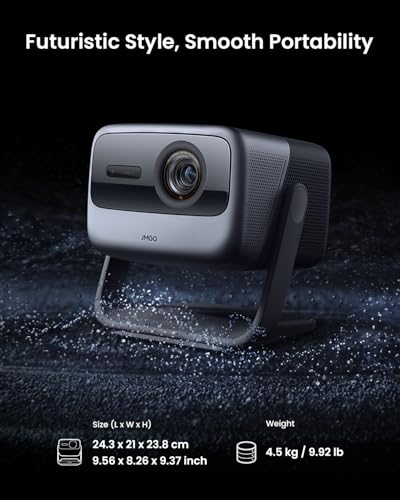
The BenQ GV50 is designed for portability with a built-in battery providing 150 minutes of runtime, lightweight construction, and quick setup features. The JMGO N1S Ultimate weighs 14.3 pounds and requires a power outlet, making it better suited for permanent or semi-permanent installations rather than frequent relocation.
The BenQ GV50 excels for outdoor use with its built-in battery, eliminating the need for power sources during camping or backyard movie nights. The JMGO N1S Ultimate can work outdoors if you have power access, and its higher brightness handles ambient light better, but it's less convenient without battery power.
The JMGO N1S Ultimate has superior audio with a 45W system including a 20W subwoofer and support for advanced audio formats like Dolby Digital Plus. The BenQ GV50 offers surprisingly good 18W 2.1-channel audio for its size, with specialized ceiling projection sound modes, but can't match the JMGO's room-filling performance.
The JMGO N1S Ultimate produces 3,500 ANSI lumens versus the BenQ GV50's 500 ANSI lumens. This massive difference means the JMGO works well in rooms with some ambient light and creates larger, more vibrant images, while the BenQ requires darker environments but still provides enjoyable viewing in appropriate conditions.
The JMGO N1S Ultimate offers superior gaming performance with 16ms input lag, 120Hz refresh rate, and HDMI 2.1 connectivity with eARC support. The larger, brighter 4K image enhances the gaming experience significantly. The BenQ GV50 can handle casual gaming but lacks the low-latency features and screen size capabilities that serious gamers prefer.
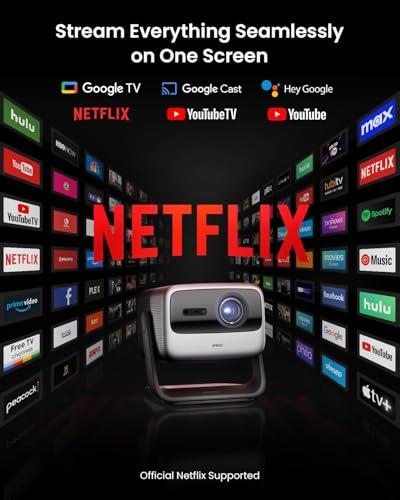
Both the JMGO N1S Ultimate and BenQ GV50 run Google TV platforms with access to major streaming services including certified Netflix support. The BenQ offers additional convenience with comprehensive USB-C connectivity and wireless casting options, while the JMGO includes voice control and more advanced smart features.
Value depends on your priorities. The BenQ GV50 provides exceptional value for users wanting portability, convenience, and good image quality for casual viewing. The JMGO N1S Ultimate offers better value for those prioritizing maximum image quality, larger screen capabilities, and future-proof 4K performance, despite its higher cost.
The BenQ GV50 is specifically designed for ceiling projection with its flexible base allowing 135° vertical adjustment and specialized ceiling sound modes for bedtime viewing. The JMGO N1S Ultimate can project on ceilings using its gimbal system, but it's primarily optimized for wall projection and traditional home theater setups.
The BenQ GV50 excels in quick, automatic setup with instant auto-focus, keystone correction, and flexible positioning that works in seconds. The JMGO N1S Ultimate requires more initial setup consideration due to its ultra-short throw design and permanent installation focus, but offers professional-grade calibration options and gimbal positioning flexibility.
Both the JMGO N1S Ultimate and BenQ GV50 use long-lasting laser light sources rated for 20,000-30,000+ hours of use, eliminating traditional bulb replacements. The JMGO's triple RGB laser system may provide slightly longer lifespan and more consistent performance over time, while both projectors offer maintenance-free operation for many years of regular use.
We've done our best to create useful and informative comparisons to help you decide what product to buy. Our research uses advanced automated methods to create this comparison and perfection is not possible - please contact us for corrections or questions. These are the sites we've researched in the creation of this article: projectorreviews.com - youtube.com - projectorcentral.com - tomsguide.com - global.jmgo.com - global.jmgo.com - projectorcentral.com - global.jmgo.com - youtube.com - vividstorm.us - youtube.com - global.jmgo.com - device.report - global.nothingprojector.com - thewellnessinsider.asia - bhphotovideo.com - thetechnovore.com - howtogeek.com - projectorcentral.com - projectorcentral.com - techradar.com - adorama.com - projectorcentral.com - thesmarthomehookup.com - youtube.com - youtube.com - whathifi.com - youtube.com - cdw.com - projectorcentral.com - youtube.com

Privacy Policy
Terms and Conditions - Affiliate Policy
Home Security
© Copyright 2008-2026.
11816 Inwood Rd #1211, Dallas, TX 75244