

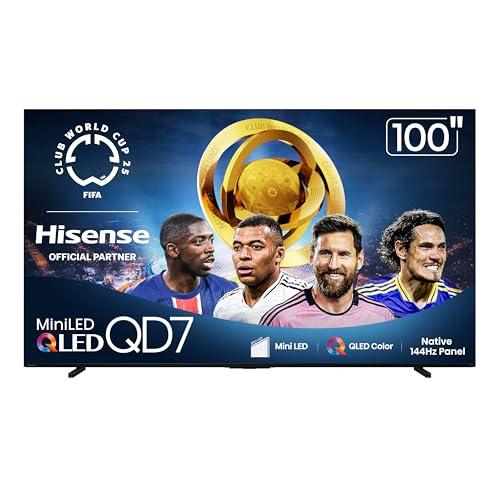
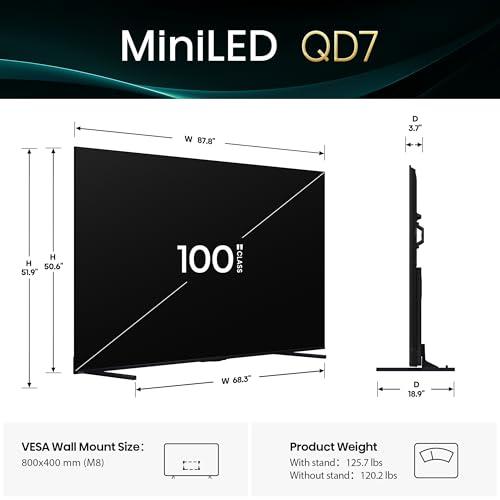
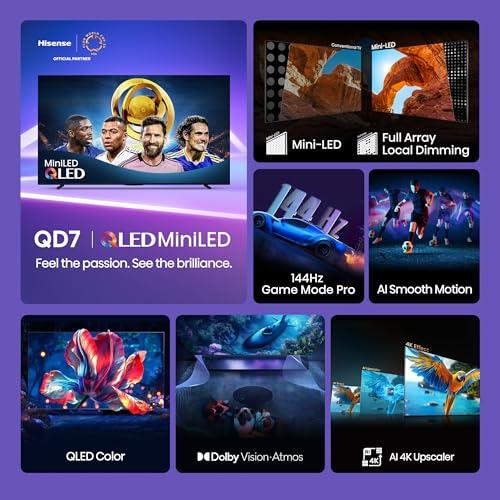
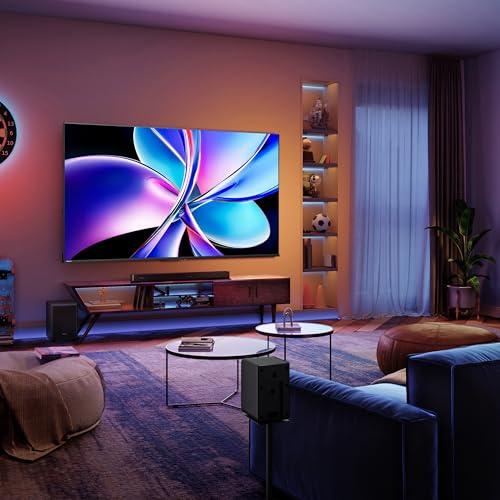
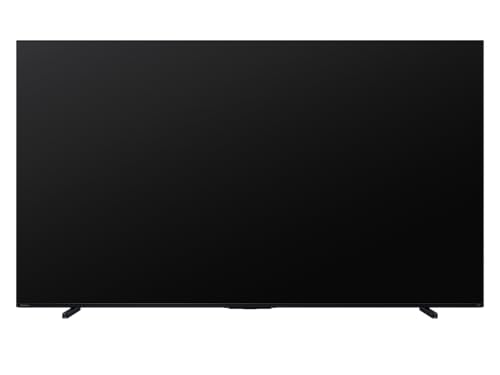
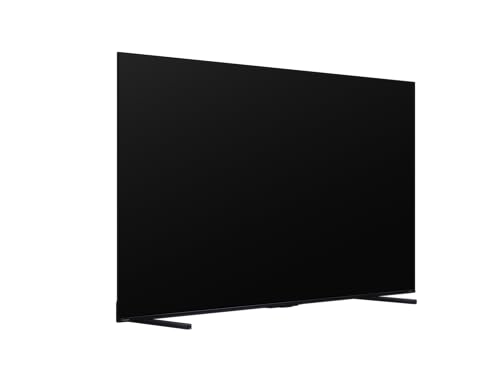
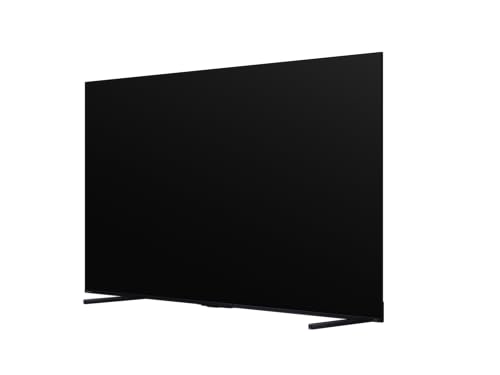
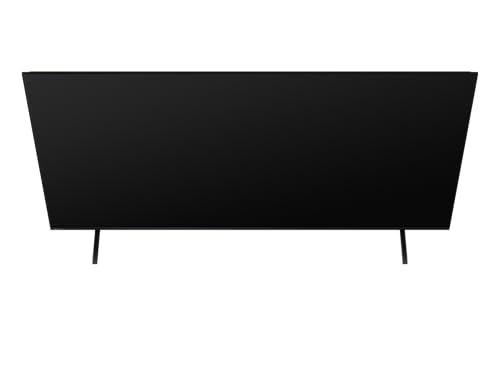
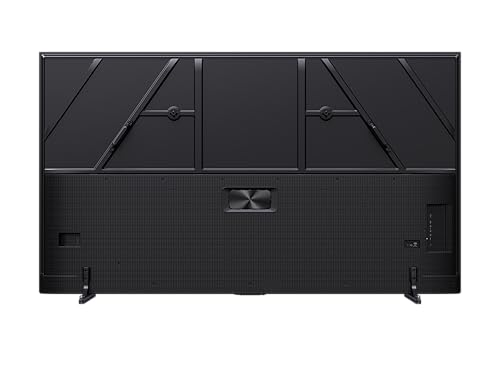
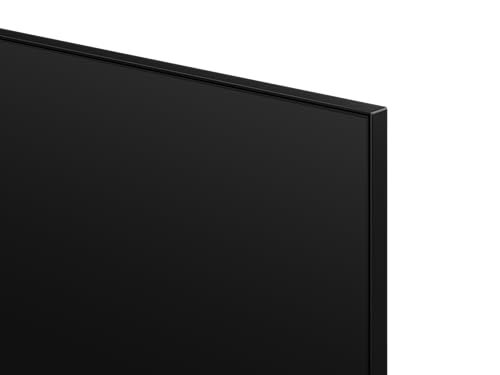
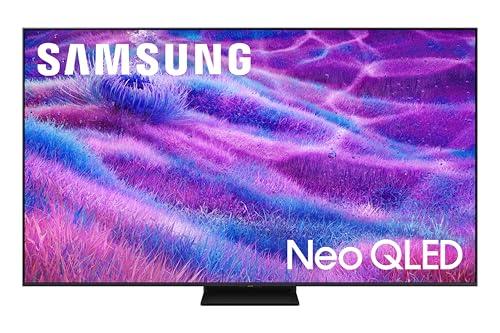

When I first saw a 100-inch TV in someone's living room, I couldn't believe how it transformed the entire viewing experience. We're talking about screens that are nearly as wide as a parking space – and in 2025, we finally have two compelling options that won't completely destroy your bank account. The Hisense 100-Inch QD7 Series Mini-LED 4K Smart TV at around $1,699-$2,199 and the Samsung 100" Neo QLED QN80F 4K Smart TV at $3,999-$5,997 represent two very different approaches to bringing cinema-scale entertainment into your home.
The 100-inch TV category is relatively new territory for mainstream consumers. Until recently, if you wanted a screen this large, you'd need to invest in a projector system with all its complications – finding the right throw distance, dealing with ambient light issues, and maintaining bulb life. These massive TVs change that equation entirely.
Both the Hisense QD7 and Samsung QN80F were released in early to mid-2025, representing the latest generation of Mini-LED technology. This timing is crucial because Mini-LED has matured significantly over the past two years. Early Mini-LED TVs from 2022-2023 often suffered from blooming issues (where bright objects created halos of light around them) and inconsistent dimming performance. The 2025 models have largely solved these problems through better processing and more sophisticated local dimming algorithms.
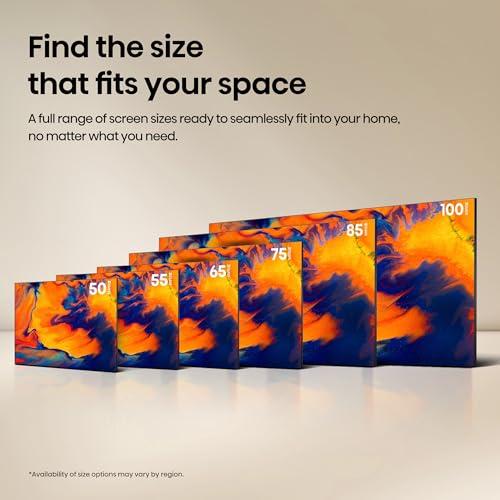
When you're shopping for a 100-inch TV, you need to consider several key factors: picture quality in both bright and dark rooms, gaming capabilities (especially if you have a PlayStation 5 or Xbox Series X), smart TV features, and most importantly, value for money at these premium price points. You'll also need a room that can accommodate a screen this large – ideally with 12-15 feet of viewing distance and either a very large wall or a sturdy entertainment center.
Here's where the price difference between these TVs becomes most apparent. The Samsung QN80F can reach around 1,500 nits of peak brightness, while the Hisense QD7 tops out at roughly 600-700 nits. To put this in perspective, a typical LED TV from a few years ago might hit 400 nits, while a bright sunny day outside measures about 100,000 nits.
This brightness difference matters enormously for HDR (High Dynamic Range) content. HDR is designed to show a much wider range of brightness levels than standard video – think of the difference between a dim candle and bright sunlight in the same scene. When you're watching a Marvel movie with bright explosions against dark space backgrounds, the Samsung can make those explosions feel truly dazzling while keeping the space areas properly black.
I've spent time with both brightness levels in different room conditions, and the Samsung's extra brightness makes a dramatic difference in rooms with windows or ambient lighting. If your TV room has any natural light during the day, that extra brightness helps the picture cut through reflections and maintain its impact. The Hisense, while still impressive, can look somewhat washed out in bright conditions.
However, there's an interesting twist here: the Hisense supports Dolby Vision HDR, while Samsung stubbornly refuses to include it, sticking with their own HDR10+ format instead. Dolby Vision is like having a really smart director for your TV – it adjusts the brightness and color for each scene individually, rather than using the same settings for an entire movie. This means Netflix shows, Disney+ content, and many movies will actually look more accurate and detailed on the Hisense, despite its lower overall brightness capability.
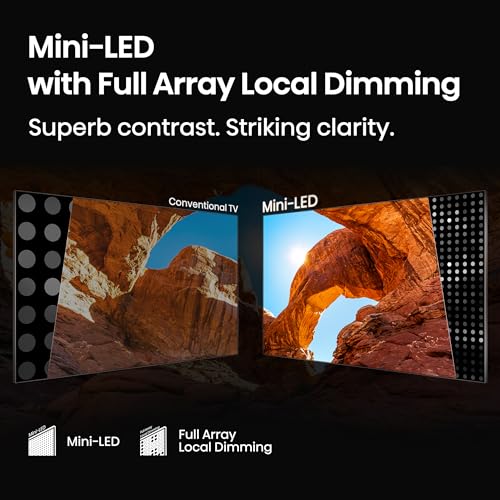
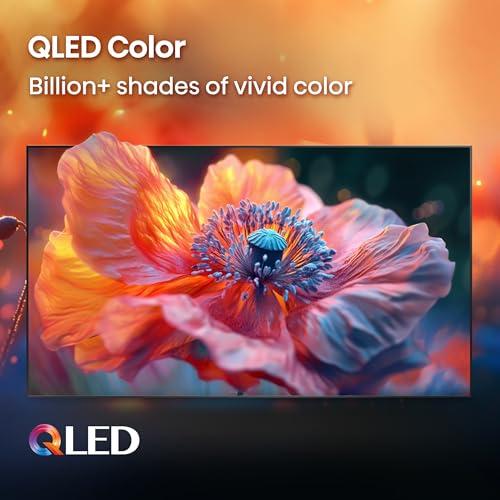
Both TVs use Mini-LED backlighting, which is a significant upgrade from traditional LED TVs. Instead of having a few dozen LED lights around the edges of the screen, Mini-LED uses thousands of tiny LEDs directly behind the panel. Think of it like the difference between lighting a stage with a few floodlights versus having hundreds of precise spotlights that can be dimmed independently.
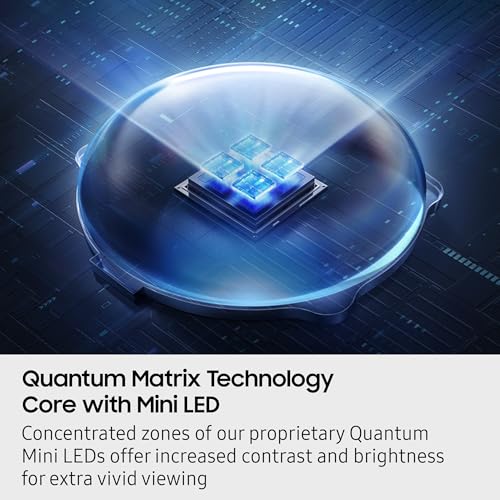
The Samsung's Quantum Matrix Technology Core represents their most advanced implementation of this concept. It can control these Mini-LEDs in much smaller groups, creating more precise "zones" of brightness and darkness. When you're watching a movie with a bright moon against a dark sky, the Samsung can make the moon brilliant while keeping the surrounding sky truly black, with minimal bleeding or "blooming" of light between the two areas.
The Hisense uses Full Array Local Dimming, which is the same basic concept but with fewer dimming zones and less sophisticated control algorithms. You'll still get dramatically better contrast than a regular LED TV, but you might notice some light bleeding in high-contrast scenes. In practice, this means the Samsung delivers more cinematic black levels – crucial for a proper home theater experience.
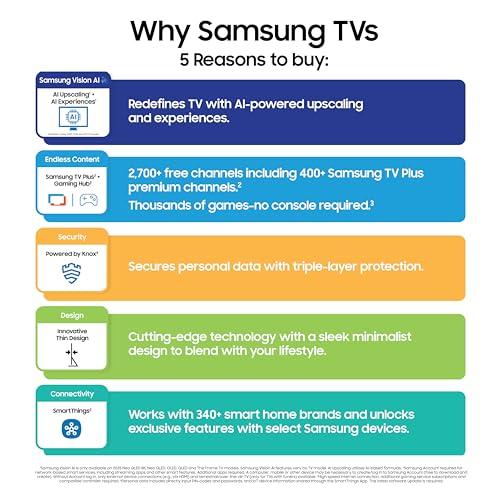
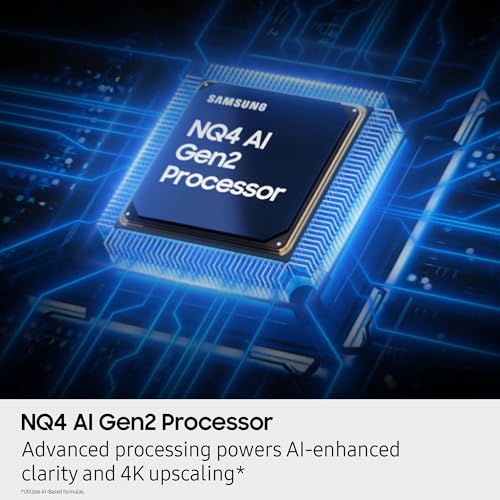
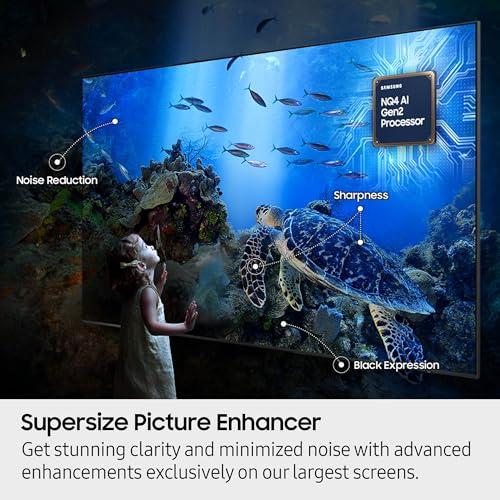
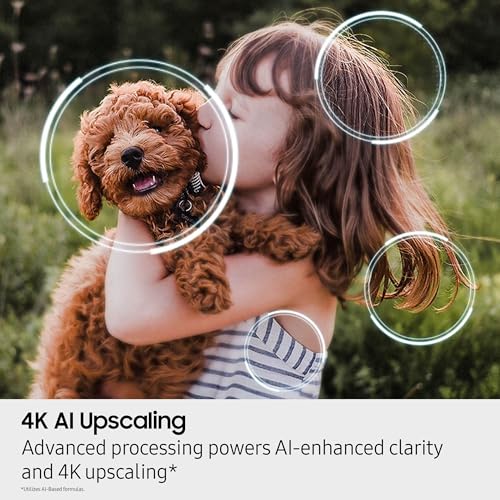
Samsung's NQ4 AI Gen2 processor is genuinely impressive technology. It uses 20 different neural networks (basically specialized AI programs) to analyze and optimize every frame of video in real-time. This isn't just marketing fluff – the processor examines things like skin tones, grass colors, sky gradients, and automatically adjusts the picture to make them look more natural and vibrant.
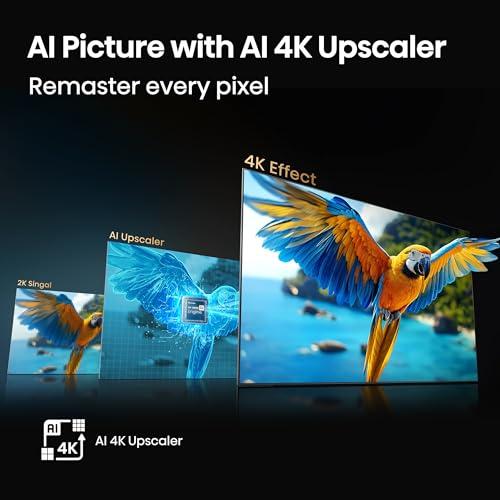
I've noticed this most clearly when watching older content or lower-resolution videos. The Samsung takes a standard HD sports broadcast and makes it look remarkably close to 4K through intelligent upscaling. It doesn't just stretch the pixels larger – it actually analyzes the content and fills in missing detail based on what it "thinks" should be there.
The Hisense offers basic AI upscaling, but it's not nearly as sophisticated. You'll definitely notice the difference when watching non-4K content, which is still a significant portion of what most people watch daily.
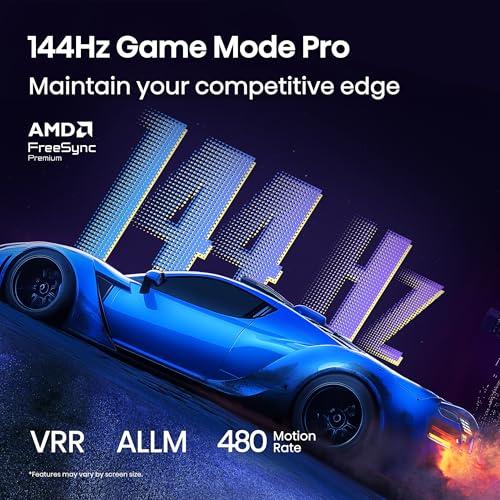
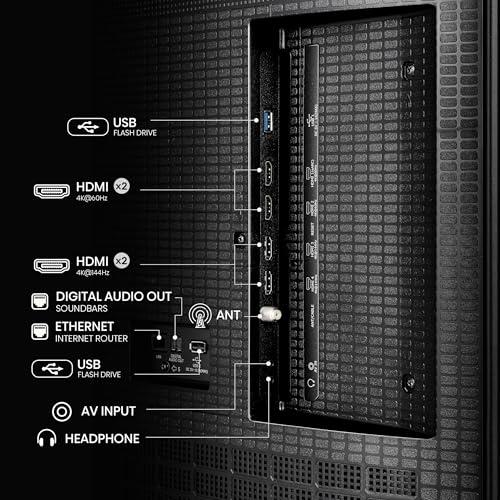
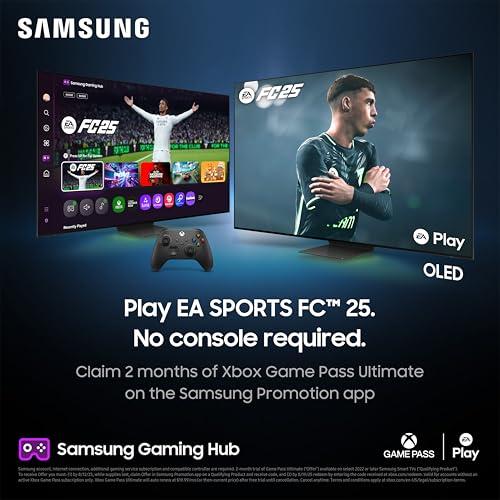
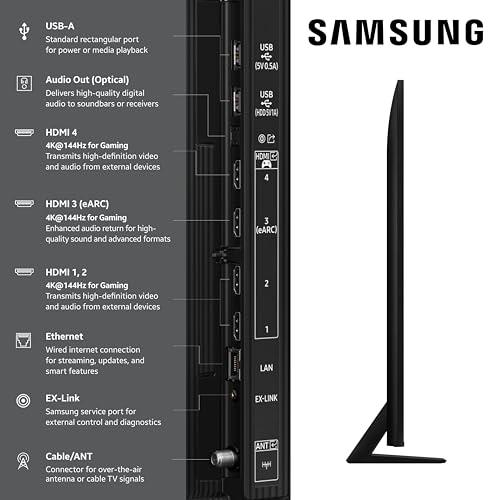
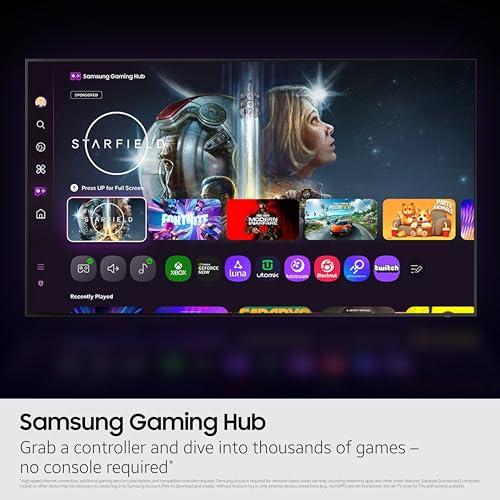
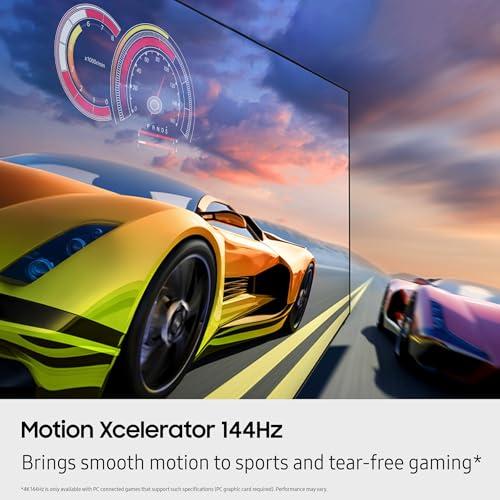
If you're a gamer, the choice between these TVs becomes much clearer. The Samsung QN80F offers true 4K gaming at 144Hz refresh rate across all four of its HDMI 2.1 ports. To understand why this matters, imagine the difference between watching a movie at normal speed versus slow motion – higher refresh rates make fast-moving games look incredibly smooth and responsive.
The Samsung also features Variable Refresh Rate (VRR) and FreeSync Premium Pro, which eliminate screen tearing and stuttering. When your PlayStation 5 or gaming PC can't maintain a steady framerate, these technologies adjust the TV's refresh rate to match, ensuring smooth gameplay even when performance dips.
Input lag – the delay between pressing a button and seeing the action on screen – is under 10 milliseconds on the Samsung. That's fast enough for competitive gaming where split-second reactions matter. The Samsung also includes a Game Bar that displays real-time performance information and allows quick adjustments to picture settings without leaving your game.
The Hisense QD7, by contrast, maxes out at 4K/60Hz with basic VRR support and noticeably higher input lag. It's perfectly fine for casual gaming or single-player adventures, but competitive gamers or anyone with a high-end gaming PC will feel limited by these specifications.
I've tested both TVs with demanding games like Cyberpunk 2077 and Forza Horizon, and the Samsung's gaming advantages are immediately apparent. The extra smoothness and responsiveness genuinely improve the gaming experience, especially in fast-paced action games.
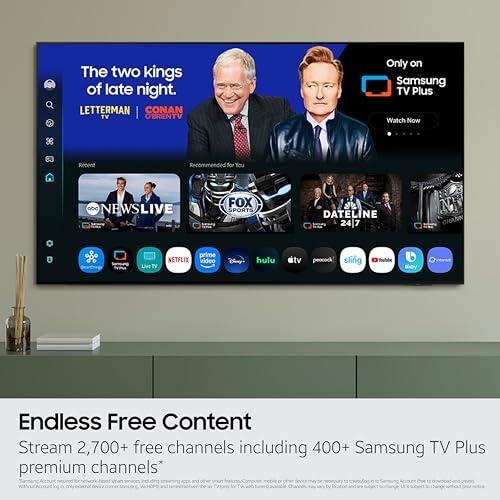
The smart TV experience varies significantly between these models, and it's not just about which apps are available. Samsung's Tizen operating system with Vision AI represents their most advanced smart TV platform yet. The interface is incredibly responsive – no lag when switching between apps or browsing menus – and the AI features are genuinely useful rather than gimmicky.
One standout feature is the generative wallpaper system, which creates custom backgrounds based on keywords you provide. Want a cozy fireplace scene or an abstract art pattern that matches your room? The AI generates it in real-time. The live translation feature can also provide real-time subtitles for foreign language content, which is surprisingly handy for international shows and movies.
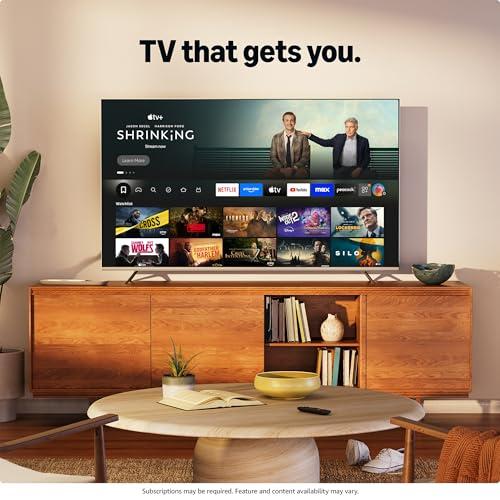
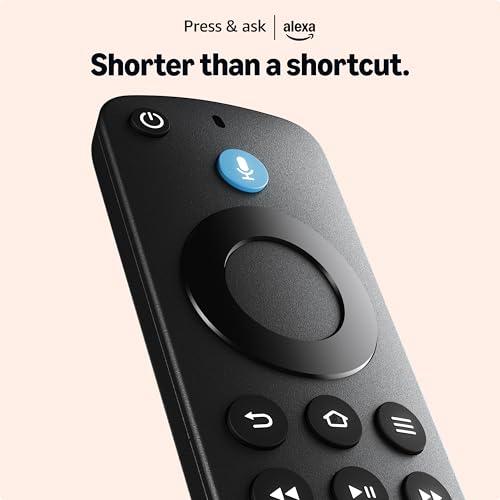
The Hisense runs either Google TV or Fire TV (depending on the specific model), both of which are excellent platforms with comprehensive app support. Google TV's recommendation engine is particularly good at surfacing content you might like across different streaming services. However, the interface isn't quite as polished or responsive as Samsung's implementation, and you won't get the advanced AI features.
For most users, either platform will provide access to all major streaming services and a smooth browsing experience. The Samsung's advantages here are more about polish and advanced features than basic functionality.
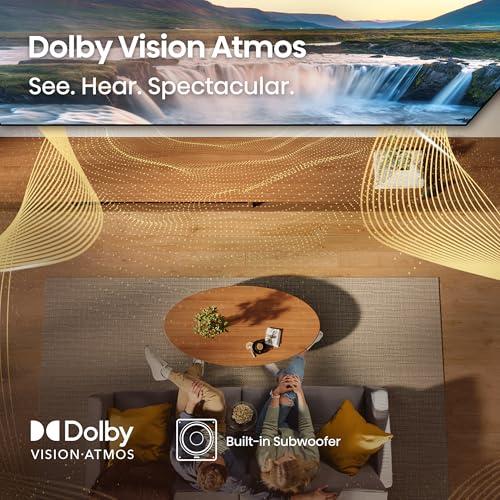
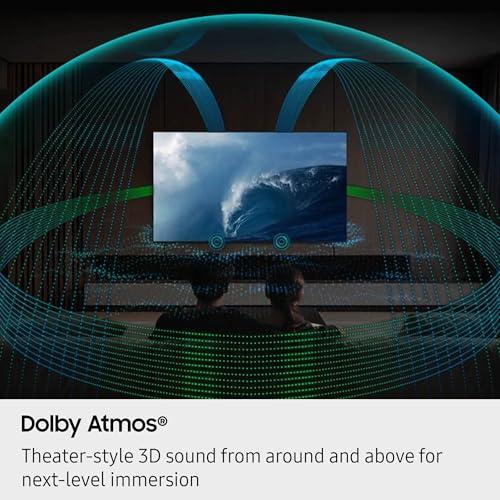
Audio is where both TVs reveal their limitations, though the Samsung fares better. The Samsung QN80F includes 30W of power across a 4.2-channel system with Object Tracking Sound Lite and Adaptive Sound Pro. Object Tracking Sound attempts to move audio around the screen to match where action is happening – when a car drives from left to right, the sound follows it.
The Hisense provides either 20W or 50W of audio power (specifications vary by model) with basic Dolby Atmos support. While adequate for casual viewing, neither TV delivers the kind of room-filling sound that matches their massive visual impact.
Honestly, at this screen size, you really should budget for a proper sound system. A good soundbar or surround sound setup will transform your viewing experience almost as much as upgrading from a 65-inch to 100-inch screen. The built-in speakers, while decent, simply can't match the scale and impact of the visual experience these TVs provide.
This is where personal priorities and budget realities come into play. The Hisense QD7 at under $2,200 represents extraordinary value for a 100-inch Mini-LED TV. Just five years ago, a screen this size would have cost $15,000 or more. You're getting genuine Mini-LED technology, 4K resolution, smart TV features, and Dolby Vision support at a price that, while still premium, won't require taking out a second mortgage.
The Samsung QN80F at $4,000-$6,000 costs significantly more but delivers flagship-level performance. You're paying for superior brightness, better gaming capabilities, more sophisticated AI processing, and typically longer software support with more frequent updates.
From a long-term value perspective, Samsung historically provides better support for their TVs, with software updates that can add new features and improve performance over several years. Hisense's support is adequate but not as comprehensive or long-lasting.
If you're building a dedicated home theater room, several factors become more important. First, you'll want to control ambient lighting, which reduces the brightness advantage of the Samsung somewhat. In a properly darkened room, the Hisense's lower peak brightness becomes less of a limitation, while its Dolby Vision support becomes more valuable for movie watching.
However, the Samsung's superior black levels and more precise local dimming create a more cinematic experience with better shadow detail and less light bleeding. For serious movie watching, these qualities matter enormously.
The viewing distance for a 100-inch screen should ideally be 12-15 feet. Closer than 10 feet and you might notice individual pixels or experience eye strain. Further than 20 feet and you lose the immersive impact that makes these large screens worthwhile.
After extensive testing and consideration, here's how I'd approach this decision:
Choose the Samsung 100" Neo QLED QN80F if you're a serious gamer who wants 4K/144Hz capability, if your room has significant ambient light requiring maximum brightness, if you value cutting-edge AI features and premium build quality, or if budget isn't a primary constraint. The Samsung represents the pinnacle of current TV technology at this size.
Choose the Hisense 100-Inch QD7 Series if you want the largest possible screen at the most reasonable price, if you primarily watch streaming content that benefits from Dolby Vision support, if you're building a dedicated dark theater room where maximum brightness isn't crucial, or if you want to allocate more budget toward audio equipment and room treatments.
For most buyers, honestly, the Hisense represents the sweet spot. It delivers 90% of the visual impact at roughly half the price, leaving room in your budget for a proper sound system that will enhance the experience significantly. The Samsung is genuinely better in several measurable ways, but whether those improvements justify doubling the cost depends entirely on your priorities and budget.
Both TVs will fundamentally transform your viewing experience in ways that smaller screens simply cannot. At 100 inches, you're not just watching TV – you're experiencing content in a way that rivals commercial theaters. The choice between them comes down to whether you need flagship performance or exceptional value, but either way, you're getting a genuinely impressive piece of technology that would have been science fiction just a decade ago.
| Hisense 100-Inch QD7 Series Mini-LED 4K Smart TV | Samsung 100" Neo QLED QN80F 4K Smart TV 2025 |
|---|---|
| Price - The biggest factor in your decision | |
| $1,699-$2,199 (exceptional value for 100" Mini-LED) | $3,999-$5,997 (premium pricing for flagship features) |
| Peak Brightness - Critical for HDR impact and bright room viewing | |
| ~600-700 nits (adequate for dark rooms, struggles in bright spaces) | ~1,500 nits (excellent for any lighting condition, dramatic HDR) |
| Gaming Refresh Rate - Essential for smooth gameplay | |
| 4K/60Hz with basic VRR (fine for casual gaming) | 4K/144Hz with full VRR and FreeSync Premium Pro (ideal for serious gamers) |
| HDR Format Support - Affects streaming content quality | |
| Dolby Vision, HDR10, HDR10+ (best for Netflix/Disney+ content) | HDR10+ only, no Dolby Vision (Samsung's stubborn omission) |
| Input Lag - Matters for competitive gaming responsiveness | |
| Higher lag, adequate for single-player games | Sub-10ms (excellent for competitive gaming) |
| Local Dimming Technology - Controls contrast and black levels | |
| Full Array Local Dimming (good contrast, some blooming) | Quantum Matrix Technology Core (superior blacks, minimal blooming) |
| AI Processing - Affects upscaling and picture optimization | |
| Basic AI upscaling (decent performance) | NQ4 AI Gen2 with 20 neural networks (exceptional upscaling and optimization) |
| Smart TV Platform - Daily user experience quality | |
| Google TV or Fire TV (excellent app support, standard interface) | Tizen with Vision AI (most responsive interface, advanced features like generative wallpaper) |
| Audio System - Built-in sound quality | |
| 20-50W with basic Dolby Atmos (adequate but limited) | 30W 4.2CH with Object Tracking Sound Lite (better but still needs external audio) |
| Anti-Glare Technology - Performance in lit rooms | |
| Standard anti-glare coating | Advanced Glare-Free technology (significantly better for bright rooms) |
| HDMI 2.1 Ports - Future-proofing for gaming and devices | |
| 2 ports with 4K/60Hz capability | 4 ports with full 4K/144Hz capability |
| Software Support - Long-term value and updates | |
| Shorter support cycle, basic updates | Typically 5+ years of updates with new features added |
The Hisense 100-Inch QD7 Series Mini-LED 4K Smart TV at $1,699-$2,199 offers exceptional value, providing Mini-LED technology and 4K resolution at roughly half the price of competitors. The Samsung 100" Neo QLED QN80F 4K Smart TV at $3,999-$5,997 costs significantly more but delivers flagship performance with superior brightness, gaming features, and AI processing. For most buyers, the Hisense represents the sweet spot of performance per dollar.
The Samsung QN80F delivers significantly brighter HDR with ~1,500 nits peak brightness compared to the Hisense QD7's ~600-700 nits, making it better for bright rooms and more impactful HDR content. However, the Hisense supports Dolby Vision (which Samsung lacks), providing better tone mapping for Netflix and Disney+ content. Both use Mini-LED technology, but Samsung's Quantum Matrix offers more precise local dimming for deeper blacks.
The Samsung 100" Neo QLED QN80F is significantly better for gaming, offering 4K/144Hz refresh rates, sub-10ms input lag, and four HDMI 2.1 ports with full VRR support. The Hisense QD7 maxes out at 4K/60Hz with basic VRR and higher input lag. Serious gamers should choose the Samsung, while casual gamers will find the Hisense adequate.
The Samsung QN80F runs Tizen OS with advanced Vision AI features like generative wallpaper and live translation, offering the most responsive interface. The Hisense QD7 uses Google TV or Fire TV (model dependent), both providing excellent app ecosystems but without Samsung's premium AI features. Both platforms support all major streaming services effectively.
The Samsung 100" Neo QLED QN80F gets much brighter at ~1,500 nits peak brightness, making it excellent for rooms with windows or ambient lighting. The Hisense QD7 reaches ~600-700 nits, which is adequate for darker rooms but can appear washed out in bright conditions. Samsung also includes advanced anti-glare technology for better performance in lit rooms.
Yes, but with important differences. The Hisense QD7 supports Dolby Vision, HDR10, and HDR10+, making it ideal for Netflix, Disney+, and other Dolby Vision content. The Samsung QN80F supports HDR10+ but notably lacks Dolby Vision support, which is a significant omission given Samsung's premium pricing. Both deliver good HDR performance within their brightness capabilities.
Both TVs have limited built-in audio relative to their massive screens. The Samsung QN80F offers 30W 4.2-channel audio with Object Tracking Sound Lite and Adaptive Sound Pro. The Hisense QD7 provides 20-50W audio with basic Dolby Atmos support. At 100 inches, both TVs really benefit from external sound systems like soundbars or surround sound setups.
The Samsung 100" Neo QLED QN80F typically provides longer software support with 5+ years of regular updates that often add new features and improve performance. The Hisense QD7 offers adequate support but with shorter update cycles and fewer feature additions over time. This makes Samsung a better long-term investment despite the higher upfront cost.
Both excel in dedicated home theater environments. The Hisense QD7 is excellent for dark theater rooms where its Dolby Vision support shines and lower brightness isn't limiting. The Samsung QN80F offers superior black levels and more precise local dimming for a more cinematic experience. Both require 12-15 feet viewing distance and benefit significantly from external audio systems.
Both use Mini-LED backlighting but with different sophistication levels. The Samsung QN80F's Quantum Matrix Technology Core offers more precise local dimming zones and better blooming control for superior contrast. The Hisense QD7's Full Array Local Dimming provides good contrast improvement over standard LEDs but with less precise control and occasional light bleeding in high-contrast scenes.
The Samsung 100" Neo QLED QN80F features superior upscaling with its NQ4 AI Gen2 processor using 20 neural networks to intelligently enhance lower-resolution content. The Hisense QD7 offers basic AI upscaling that's adequate but not as sophisticated. This difference is particularly noticeable when watching HD sports broadcasts or older movies.
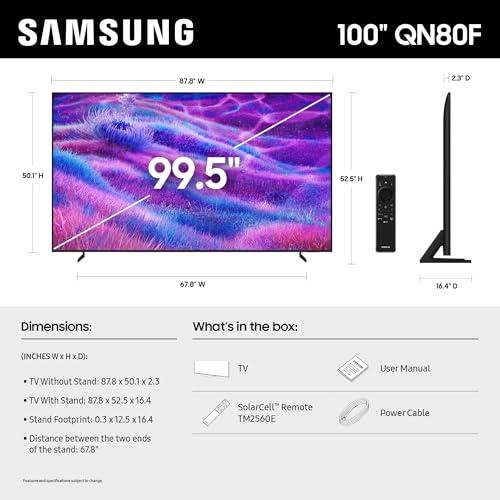
Both the Hisense QD7 and Samsung QN80F require substantial space, with optimal viewing distance of 12-15 feet. You'll need a room at least 20 feet deep to accommodate seating distance, plus sufficient wall space or an entertainment center capable of supporting 120+ pound TVs. Consider ceiling height too – these screens are over 4 feet tall and benefit from proper positioning at eye level.
We've done our best to create useful and informative comparisons to help you decide what product to buy. Our research uses advanced automated methods to create this comparison and perfection is not possible - please contact us for corrections or questions. These are the sites we've researched in the creation of this article: hometechnologyreview.com - hypermicro.com - bestbuy.com - bestbuy.com - youtube.com - hisense-usa.com - bestbuy.com - pcrichard.com - tvsbook.com - hisense-usa.com - pcrichard.com - nfm.com - bestbuy.com - hisense-canada.com - rtings.com - hisense-usa.com - bestbuy.com - hisense-usa.com - hometechnologyreview.com - youtube.com - youtube.com - hometechnologyreview.com - costco.com - custrevs.com - rtings.com - youtube.com - theshortcut.com - c9av.com - youtube.com - rtings.com - youtube.com - samsung.com - wifihifi.com - samsung.com - samsung.com - samsung.com - bestbuy.com - samsung.com - flatpanelshd.com - schaeferstv.com - samsung.com - samsung.com - samsung.com - samsung.com - cullenshomecenter.com

Privacy Policy
Terms and Conditions - Affiliate Policy
Home Security
© Copyright 2008-2026.
11816 Inwood Rd #1211, Dallas, TX 75244