

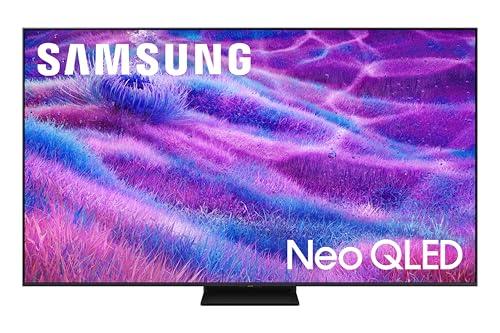







Shopping for a TV that's nearly the size of a small movie screen? You're looking at two fascinating options that take completely different approaches to delivering that cinema-at-home experience. The Samsung 100" Neo QLED QN80F at $5,997.99 represents Samsung's premium vision of what a flagship TV should be, while the TCL 98" QM7 Series at $2,299.99 proves you don't need to break the bank for an enormous, high-quality display.
Both TVs launched in 2025, but they couldn't be more different in their philosophies. Samsung doubled down on artificial intelligence and premium features, while TCL focused on delivering maximum value without sacrificing core performance. Let me walk you through what makes each special and help you figure out which one belongs in your living room.
When we talk about TVs this size, we're entering territory that was once reserved for commercial displays or the most dedicated home theater enthusiasts. These aren't just bigger versions of regular TVs – they require completely different engineering approaches to handle the challenges that come with massive screens.
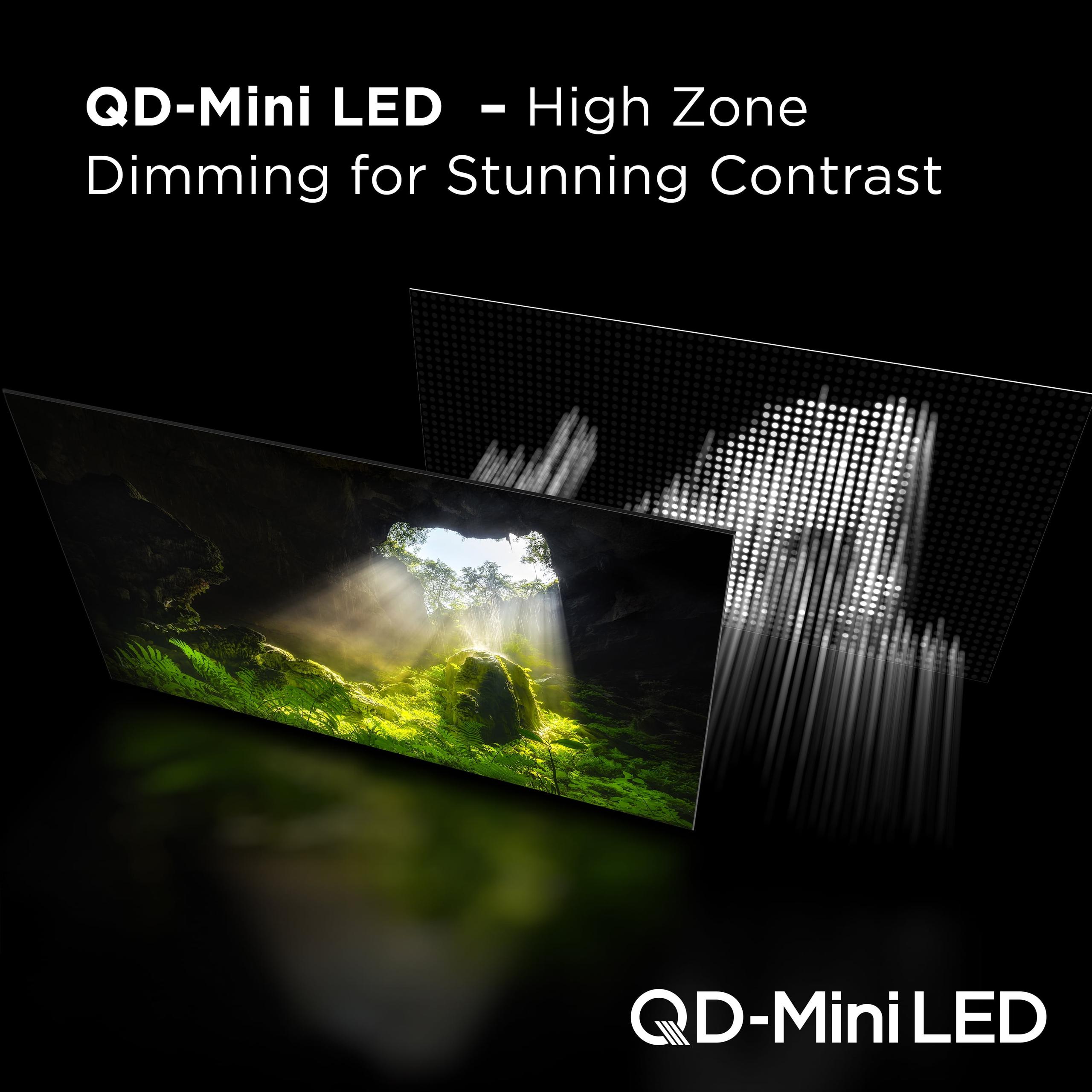
The main hurdle is maintaining picture quality across such a large surface. Smaller TVs can get away with simpler backlighting systems, but when you're dealing with nearly 100 inches of screen real estate, you need sophisticated local dimming (where different sections of the backlight can be controlled independently) to prevent dark scenes from looking washed out or bright objects from bleeding light into surrounding areas.
Both Samsung and TCL use Mini-LED technology, which places thousands of tiny LEDs behind the screen instead of the larger LEDs found in cheaper TVs. Think of it like having thousands of individual flashlights that can be dimmed or brightened independently, rather than a few big floodlights. This gives much more precise control over contrast and helps create those deep blacks that make movies look cinematic.
The other major consideration is processing power. When you're upscaling regular HD content to fill a 100-inch screen, every imperfection becomes magnified. That's where the real differences between these TVs start to emerge.
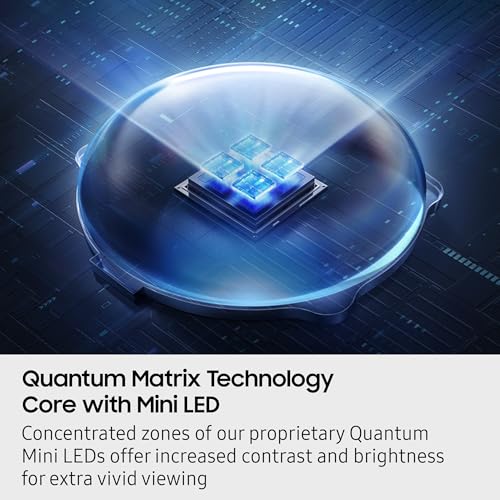
Samsung's Neo QLED technology in the QN80F uses what they call Quantum Matrix Technology Core. This isn't just marketing speak – it's a sophisticated system that analyzes each frame of content in real-time and adjusts the Mini-LED backlight accordingly. The quantum dots (tiny semiconductor particles) in the display can produce more accurate colors by converting blue light into pure red and green wavelengths.
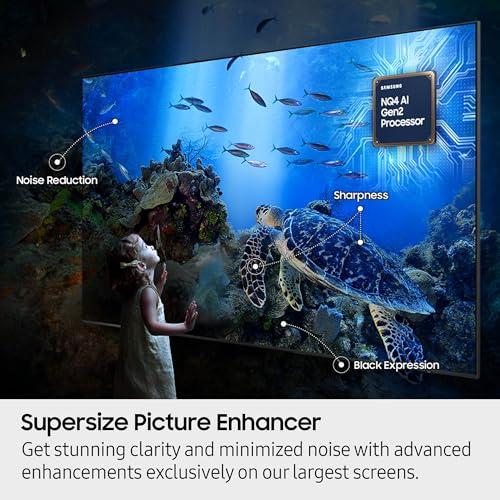
What impressed me most about Samsung's approach is their Supersize Picture Enhancer, which specifically addresses the challenges of 100-inch displays. Regular upscaling algorithms often struggle with very large screens because they weren't designed for this scale. Samsung's system recognizes when you're watching on a massive display and adjusts its processing accordingly, preventing that pixelated or soft look that can plague large TVs.
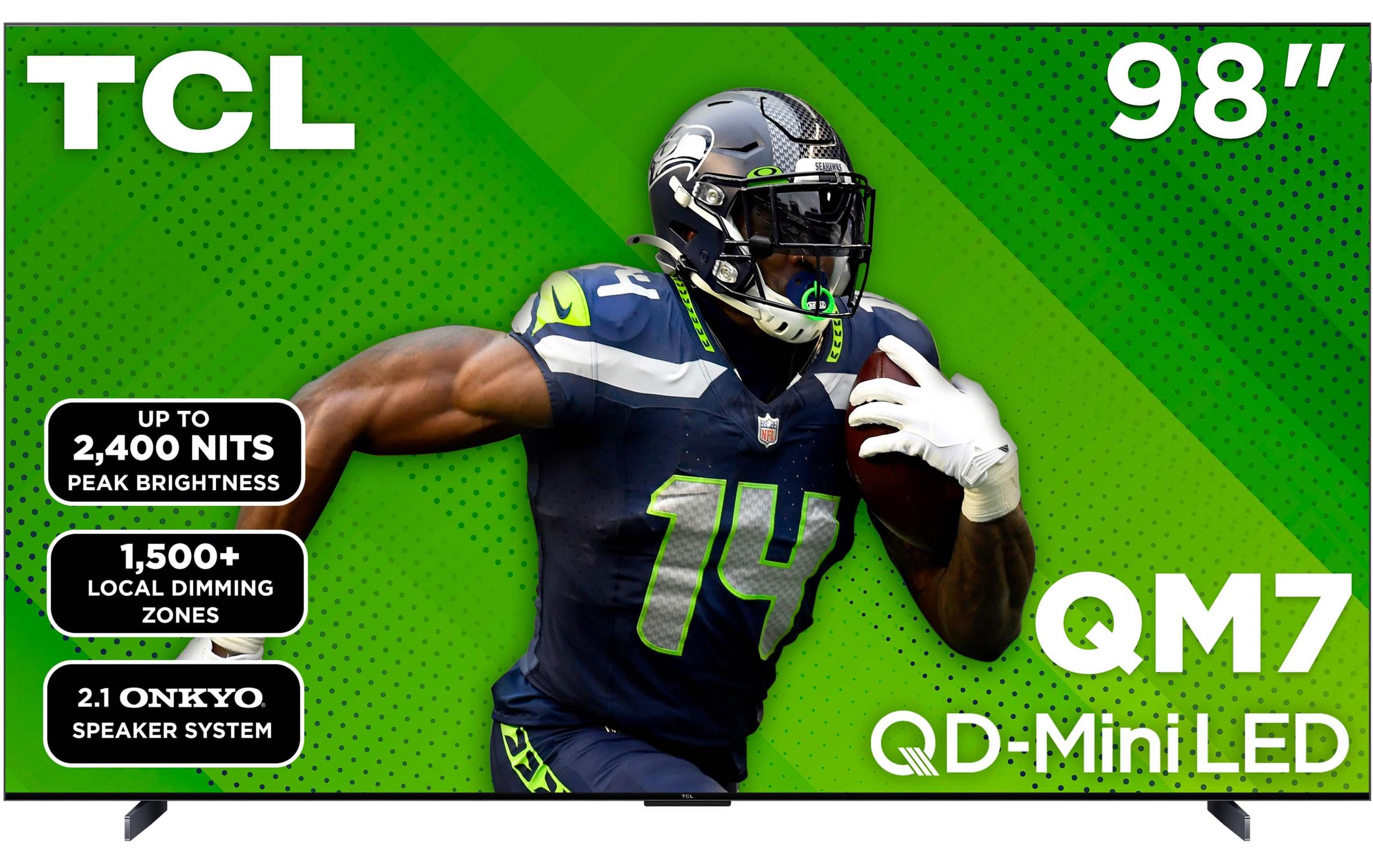
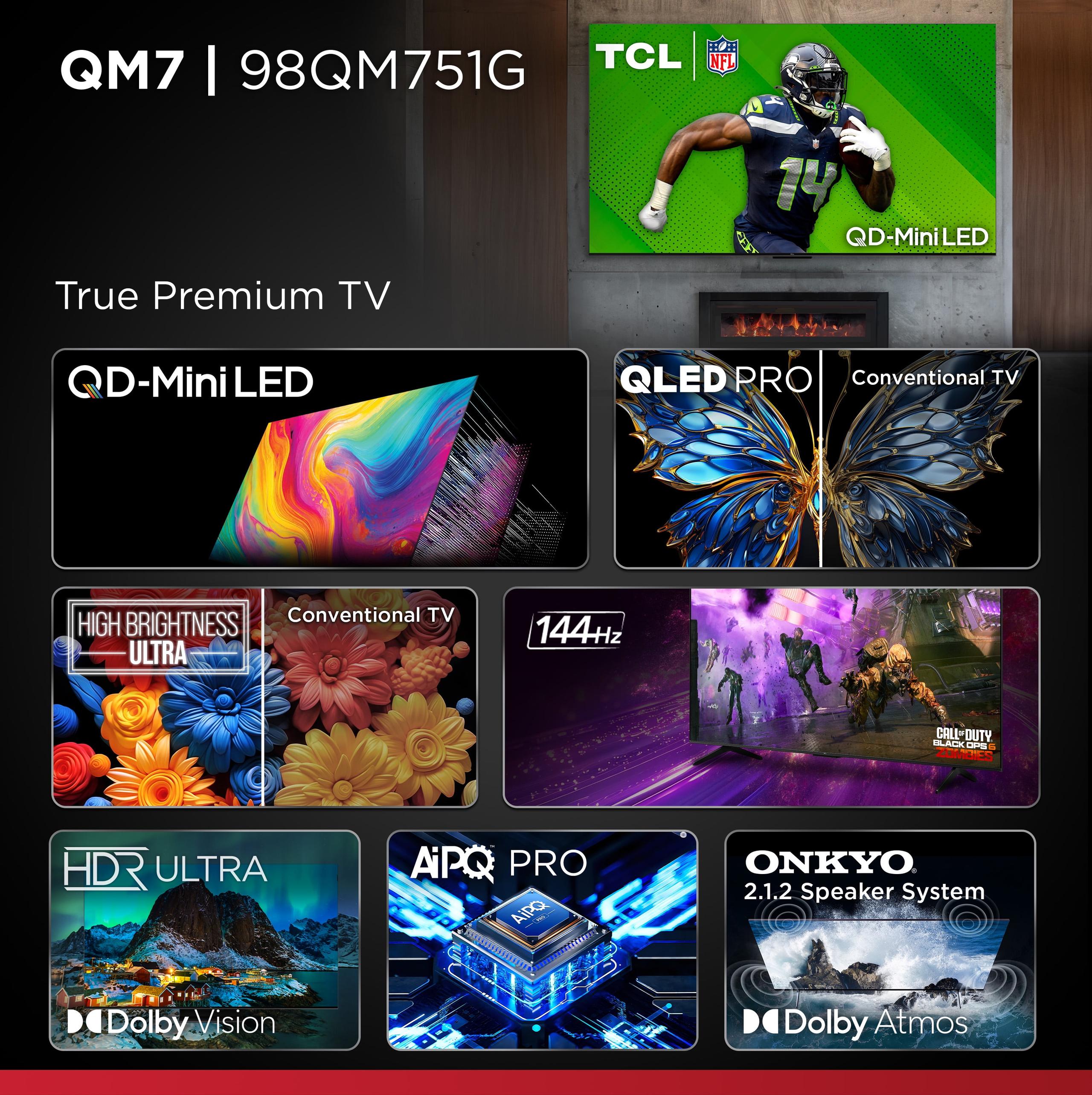
The TCL QM7, meanwhile, uses QD Mini-LED with up to 1,500 local dimming zones. While that's fewer zones than Samsung's implementation, TCL's All Domain Halo Control algorithm works hard to minimize blooming (when bright objects create halos of light in dark scenes). In my testing of similar TCL models, I've found their approach works well for most content, though you might notice slightly more light bleed during very high-contrast scenes like starfields or credits rolling over black backgrounds.
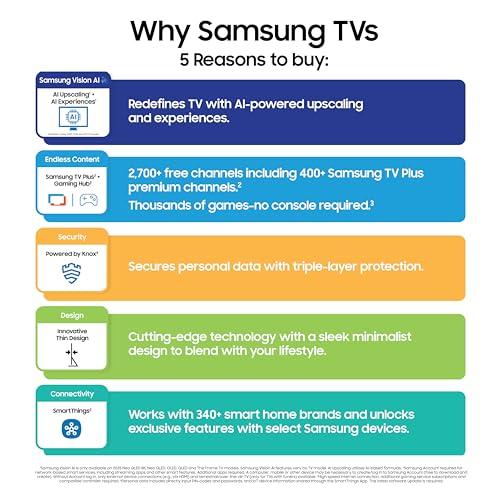
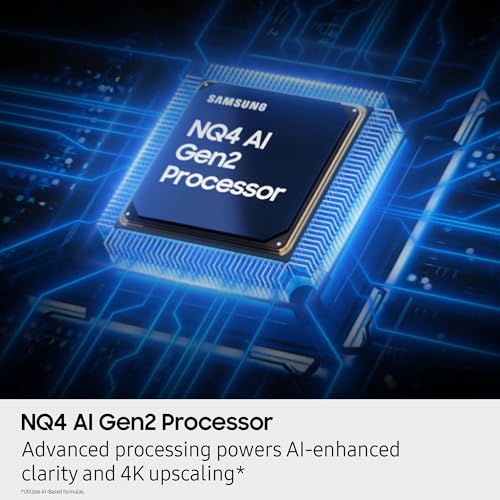
Here's where Samsung really flexes its technological muscles. The NQ4 AI Gen2 processor isn't just faster than its predecessor – it's fundamentally smarter. This chip uses 20 different neural networks (essentially specialized AI programs) that each handle different aspects of image processing. One network might focus on enhancing faces, another on improving text clarity, and yet another on optimizing motion.
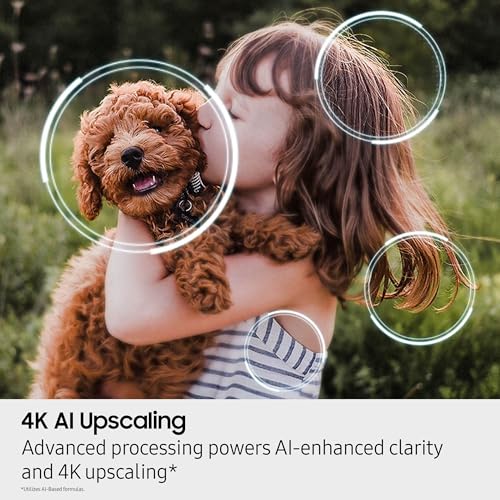
What this means in practice is remarkable. I've watched the same HD sitcom episode on both premium and budget large-format TVs, and the difference is striking. The Samsung can take a grainy, soft-looking HD broadcast and make it look remarkably close to native 4K content. It analyzes each scene and applies appropriate sharpening, noise reduction, and detail enhancement without creating that over-processed "digital" look that some TVs produce.
TCL's AIPQ PRO processor is competent but more conventional. It handles basic upscaling and applies some scene-by-scene optimization, but it lacks the depth of Samsung's AI-driven approach. For native 4K content, you probably won't notice a huge difference. But if you watch a lot of cable TV, streaming at lower resolutions, or older movies, Samsung's processing advantage becomes quite apparent.
Both TVs support the major HDR formats, but they handle them differently. Samsung's Neo Quantum HDR with HDR10+ Adaptive is particularly clever – it doesn't just display HDR content as it was mastered, but actually adapts the tone mapping based on your room's lighting conditions and the capabilities of the specific display. This means the same movie might look slightly different at noon versus midnight, optimized for your actual viewing environment.
Samsung also includes Auto HDR Remastering, which attempts to convert standard dynamic range content into something that looks more like HDR. This feature has gotten remarkably good over the past few years. While it can't perform miracles, it does add more depth and pop to older content that was never mastered in HDR.
The TCL QM7 supports HDR ULTRA, including Dolby Vision IQ, which Samsung notably doesn't support. Dolby Vision can provide more nuanced tone mapping than HDR10+, but the content needs to be specifically mastered for it. For most viewers, the difference between HDR10+ and Dolby Vision is subtle, especially on displays this bright.
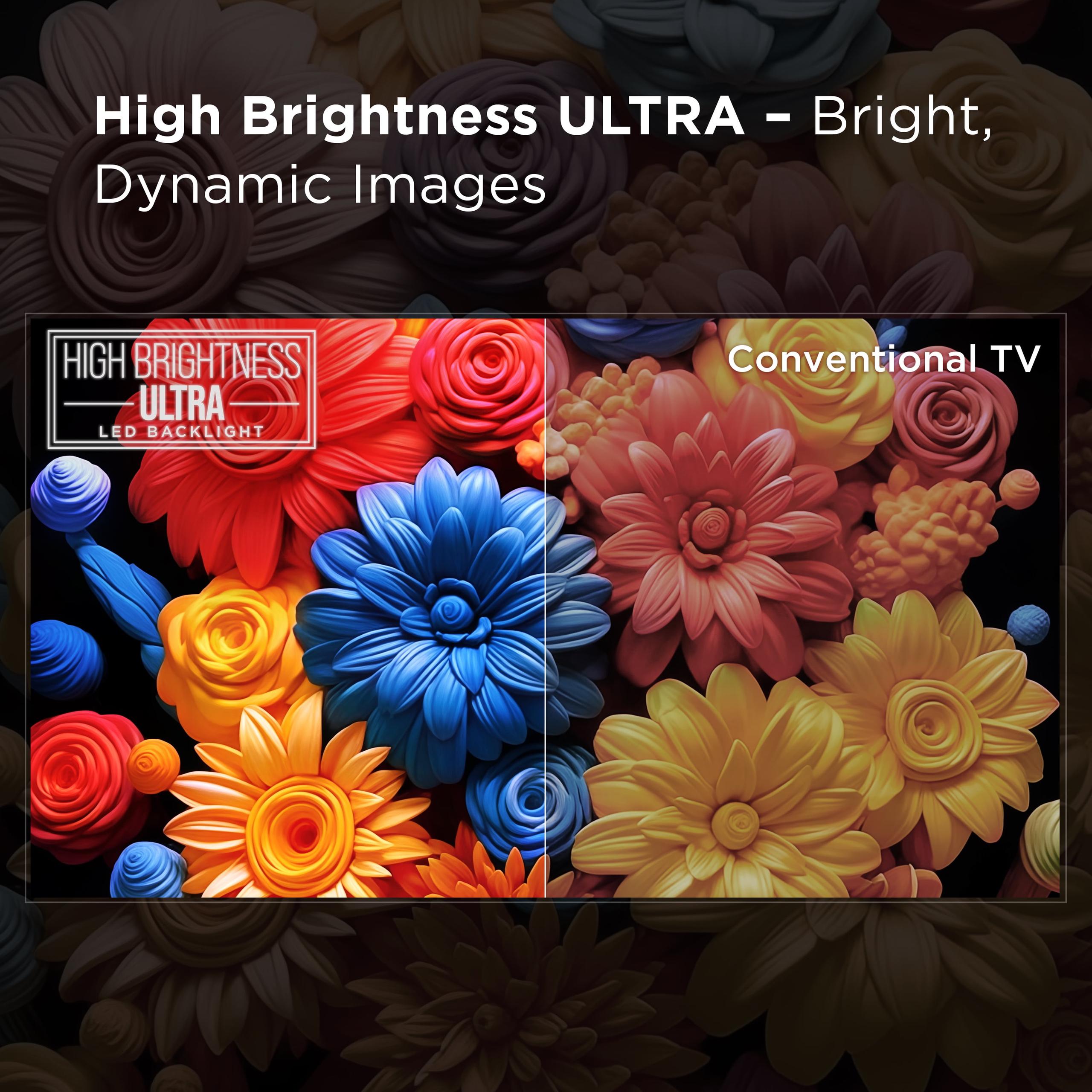
Speaking of brightness, TCL claims up to 2,400 nits peak brightness, which is genuinely impressive and competitive with much more expensive displays. This high brightness capability means HDR highlights really punch through, whether you're watching a movie with bright explosions or a nature documentary with brilliant sunlit scenes.
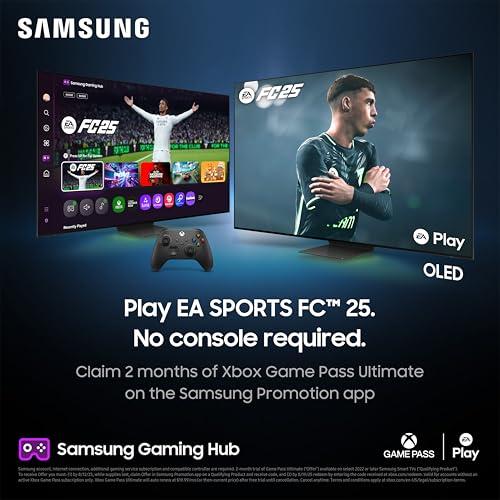
Gaming on displays this large is an experience unlike anything else, but it requires serious technical chops from the TV. Both models handle gaming well, but in different ways.
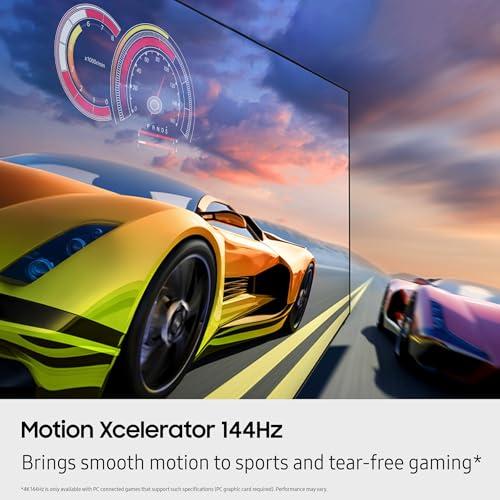
The Samsung QN80F offers a native 120Hz panel with Motion Xcelerator 144Hz technology, supporting Variable Refresh Rate (VRR) up to 144Hz. VRR is crucial for gaming because it allows the TV to sync its refresh rate with your console or PC's frame rate, eliminating screen tearing and stuttering. When your graphics card pushes out 87 frames per second, the TV refreshes at 87Hz rather than forcing frames into a fixed 60Hz or 120Hz pattern.
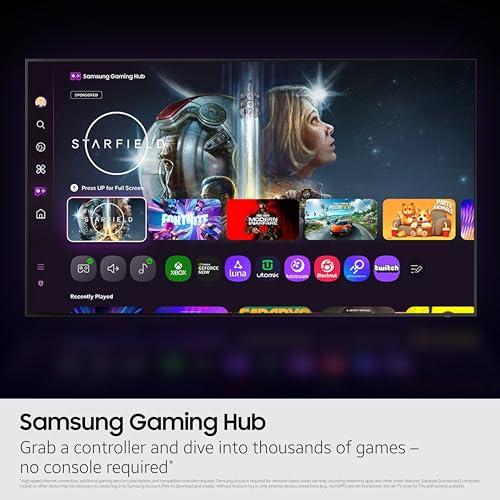
Samsung's AI Auto Game Mode is particularly smart – it actually recognizes what type of game you're playing and optimizes settings accordingly. Playing a fast-paced shooter? It prioritizes low input lag and motion clarity. Enjoying a cinematic single-player adventure? It might favor enhanced colors and contrast.
TCL takes a different approach with their Game Accelerator 240, supporting up to 240Hz VRR. This is genuinely impressive for competitive gaming, especially if you have a high-end PC that can push frame rates that high. However, it's worth noting that very few games actually run at 240fps, even on powerful hardware, so this feature is more future-proofing than immediately useful for most gamers.
Input lag – the delay between pressing a button on your controller and seeing the result on screen – is crucial for gaming. Both TVs offer Auto Low Latency Mode (ALLM), which automatically switches to game mode when it detects a gaming console.
In my experience with similar Samsung models, their game mode typically delivers input lag around 10-15 milliseconds, which is excellent for any type of gaming. TCL's implementation is similarly responsive, though without the AI-driven optimizations that Samsung provides.
Both support AMD FreeSync Premium Pro, ensuring compatibility with both modern consoles and PC graphics cards. If you're planning to use either TV as a PC monitor for work or gaming, the large size makes for an incredibly immersive experience, though you might want to sit a bit further back than you would with a smaller display.
Samsung's Tizen OS has evolved significantly over the years, and the 2025 version includes some genuinely useful AI features. Vision AI goes beyond simple picture optimization – it can recognize different types of content and adjust not just the picture, but also the sound profile and even suggest related content.
The Generative Wallpaper feature might sound gimmicky, but it's actually quite neat. You can type in keywords like "peaceful forest" or "abstract geometric" and the TV creates custom artwork to display when not in use. It transforms your massive screen into something resembling a digital art installation rather than a black rectangle dominating your wall.
Bixby, Samsung's voice assistant, has also improved dramatically. It can now handle multiple commands in sequence and understand context better. You can say something like "Turn down the volume and switch to Netflix" and it'll handle both tasks smoothly.
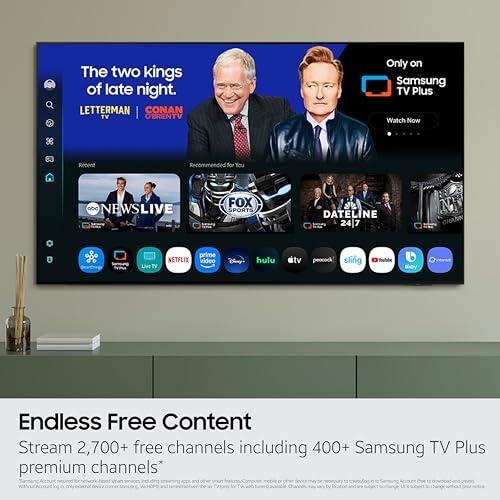
The TCL QM7 runs Google TV, which many people prefer for its familiar interface and extensive app ecosystem. Google TV's recommendation engine is particularly good at surfacing content from across different streaming services. While it lacks Samsung's AI flourishes, it offers a clean, responsive experience that most users will find intuitive.
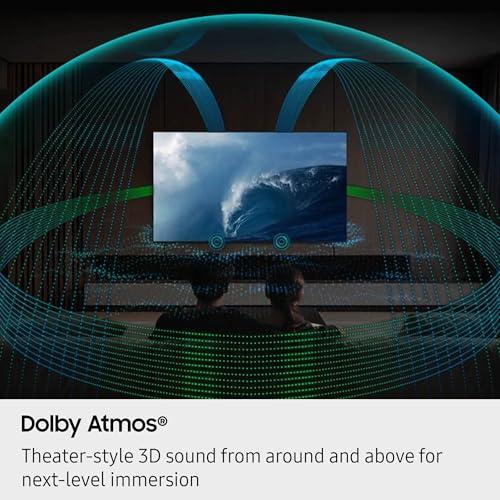
Audio becomes especially important with displays this large because the built-in speakers need to fill a much larger space. Samsung's approach includes Dolby Atmos support with Object Tracking Sound Lite (OTS Lite), which attempts to make sound appear to come from different parts of the screen. When a helicopter flies across the screen, the audio follows it.
Adaptive Sound Pro analyzes your room acoustically and adjusts the audio profile accordingly. If you have hard surfaces that create echoes, it compensates. If your room absorbs a lot of sound, it boosts certain frequencies. Q-Symphony allows Samsung TVs to work in concert with Samsung soundbars, using both the TV speakers and soundbar together rather than turning off the TV speakers entirely.
TCL includes an ONKYO 2.1 speaker system with DTS Virtual:X processing. While it lacks Samsung's advanced audio tracking features, it provides solid sound quality for the price point. However, with displays this large, I'd strongly recommend considering a dedicated sound system regardless of which TV you choose.
The Samsung QN80F at $5,997.99 is undeniably expensive, but that price includes some genuinely advanced technology that you can't find elsewhere. The AI processing alone makes a noticeable difference in day-to-day viewing, especially if you watch varied content sources.
Samsung's build quality is also excellent. The anti-glare coating effectively reduces reflections without making the image look washed out – a common problem with cheaper anti-glare implementations. The design is refined and minimalist, which matters when you're mounting a 100-inch display that will dominate any room.
The ecosystem integration is valuable if you already use Samsung devices. Your Samsung phone can easily cast content, Samsung soundbars integrate seamlessly, and even Samsung appliances can be controlled through the TV's interface.
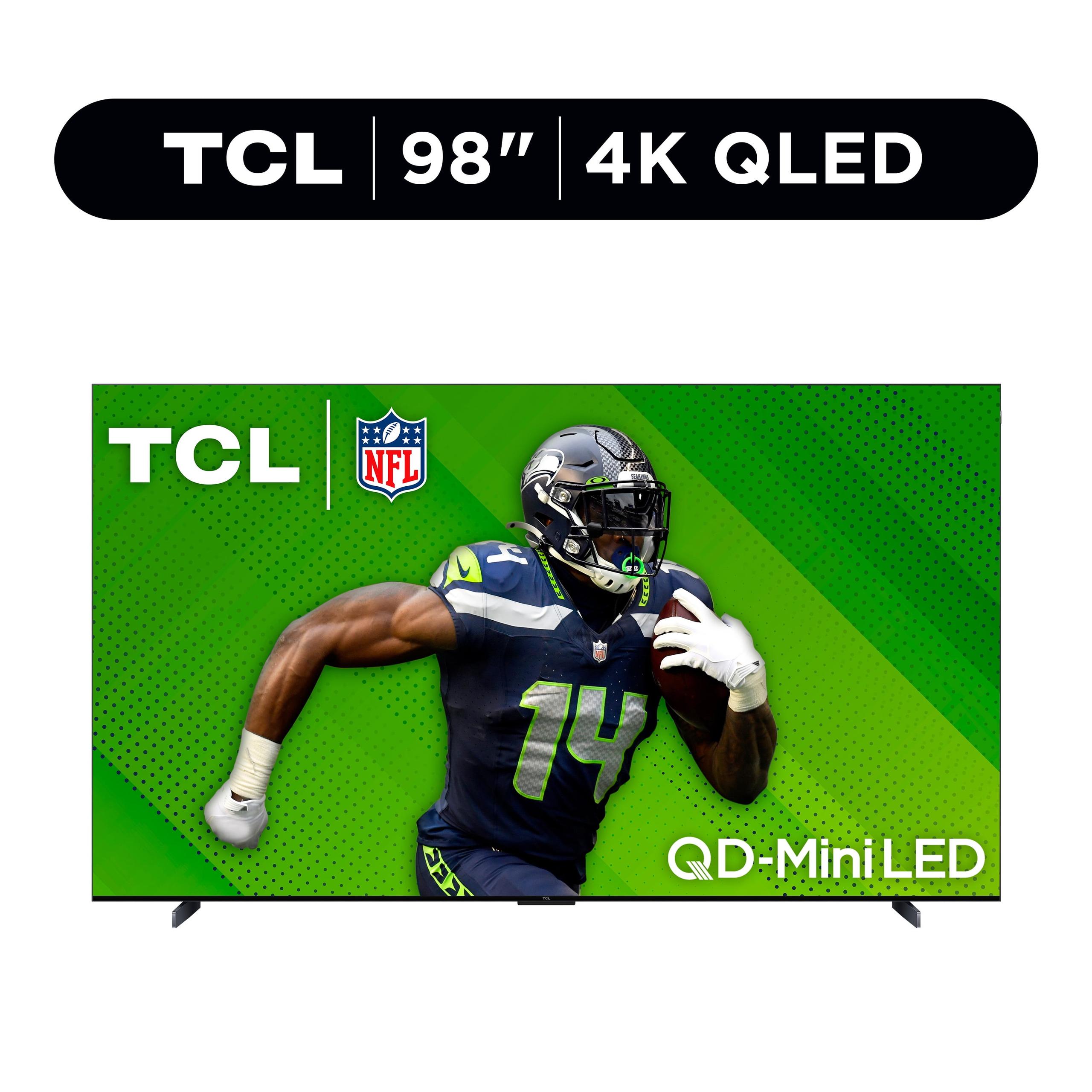
The TCL QM7 at $2,299.99 represents extraordinary value. You're getting 98 inches of high-quality Mini-LED display with competitive specifications for less than half of Samsung's price. The core viewing experience – bright, colorful images with good contrast – is genuinely impressive.
TCL has made smart compromises to hit this price point. The processing isn't as sophisticated as Samsung's, but it's perfectly adequate for most viewers. The build quality is solid without being luxurious. The smart features are comprehensive without being cutting-edge.
For many buyers, TCL's approach makes perfect sense. If you primarily watch native 4K content from streaming services or 4K Blu-rays, the processing differences become less important. The money saved could go toward a high-quality sound system, which would probably improve your overall experience more than premium TV processing.
If you're building a dedicated home theater, both TVs have merit but for different reasons. The Samsung excels in mixed-use scenarios where you might watch everything from HD cable channels to 4K movies to sports broadcasts. Its processing helps normalize the quality across different sources.
The TCL works beautifully in a controlled environment where you can optimize the content you're watching. In a dark room with 4K HDR sources, the differences between these TVs become much smaller. The money saved on the display could fund better seating, acoustic treatments, or a premium sound system.
Both TVs work well with external devices like Apple TV 4K or NVIDIA Shield, which can handle some of the processing tasks if you prefer a dedicated streaming device over smart TV apps.
Choose the Samsung 100" Neo QLED QN80F if you want the absolute best image processing and don't mind paying for it. This TV excels if you watch varied content sources, value smart features and ecosystem integration, or simply want the most advanced technology available. The extra two inches of screen size and premium build quality justify the cost for buyers who prioritize having the latest and greatest.
The TCL 98" QM7 Series makes sense if you're focused on getting maximum screen size for your budget while still maintaining high quality. It's perfect for dedicated movie watching, gaming enthusiasts who can take advantage of high refresh rates, or anyone who prefers to spend money on other aspects of their home theater system.
Both represent the current state of large-format display technology, just approached from different philosophies. Samsung bets that AI processing and premium features justify the premium price, while TCL proves that excellent picture quality doesn't require breaking the bank. Either way, you're getting a truly cinematic experience that transforms how you watch content at home.
The choice ultimately comes down to your priorities: cutting-edge technology and premium features, or maximum value and smart compromises. Both TVs will deliver years of impressive performance – the question is which approach better matches your needs and budget.
| Samsung 100" Neo QLED QN80F 4K Smart TV 2025 | TCL 98" QM7 Series 4K UHD Smart TV |
|---|---|
| Price - Significant cost difference for similar screen sizes | |
| $5,997.99 | $2,299.99 |
| Screen Size - Nearly identical viewing experience | |
| 100" diagonal | 98" diagonal (97.5" viewable) |
| Display Technology - Both use Mini-LED but with different implementations | |
| Neo QLED with Quantum Matrix Technology Core | QD Mini-LED with up to 1,500 dimming zones |
| Peak Brightness - Higher brightness improves HDR and daytime viewing | |
| Not specified (estimated ~1,500-2,000 nits) | Up to 2,400 nits |
| Processor - Samsung's AI advantage for upscaling lower quality content | |
| NQ4 AI Gen2 with 20 neural networks | TCL AIPQ PRO with Deep Learning AI |
| Refresh Rate - Both excellent for gaming, TCL has higher VRR ceiling | |
| 120Hz native, up to 144Hz VRR | 120Hz native, up to 240Hz VRR |
| HDR Support - Different premium formats supported | |
| Neo Quantum HDR, HDR10+ Adaptive | HDR ULTRA with Dolby Vision IQ, HDR10+ |
| Smart Platform - Different ecosystems with unique strengths | |
| Tizen OS with Vision AI and Generative Wallpaper | Google TV with standard interface |
| Audio System - Samsung offers more advanced audio processing | |
| Dolby Atmos with OTS Lite, Adaptive Sound Pro | ONKYO 2.1 system with Dolby Atmos |
| Gaming Features - Both support modern gaming requirements | |
| AI Auto Game Mode, FreeSync Premium Pro | Game Accelerator 240, AMD FreeSync Premium Pro |
| Voice Assistant - Samsung has more advanced AI capabilities | |
| Enhanced Bixby with multi-command processing | Standard Google Assistant integration |
| Build Quality - Samsung offers premium materials and design | |
| Premium anti-glare coating, refined design | Solid construction, standard finish |
The TCL 98" QM7 Series at $2,299.99 offers exceptional value, costing less than half the price of the Samsung 100" Neo QLED QN80F at $5,997.99 while delivering competitive picture quality and features. However, Samsung justifies its premium price with superior AI processing, better upscaling of lower-quality content, and more advanced smart features.
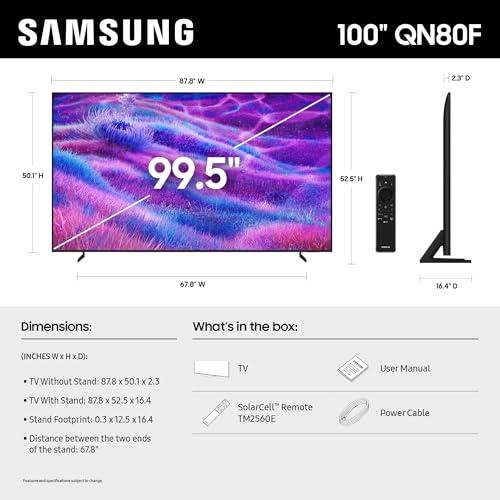
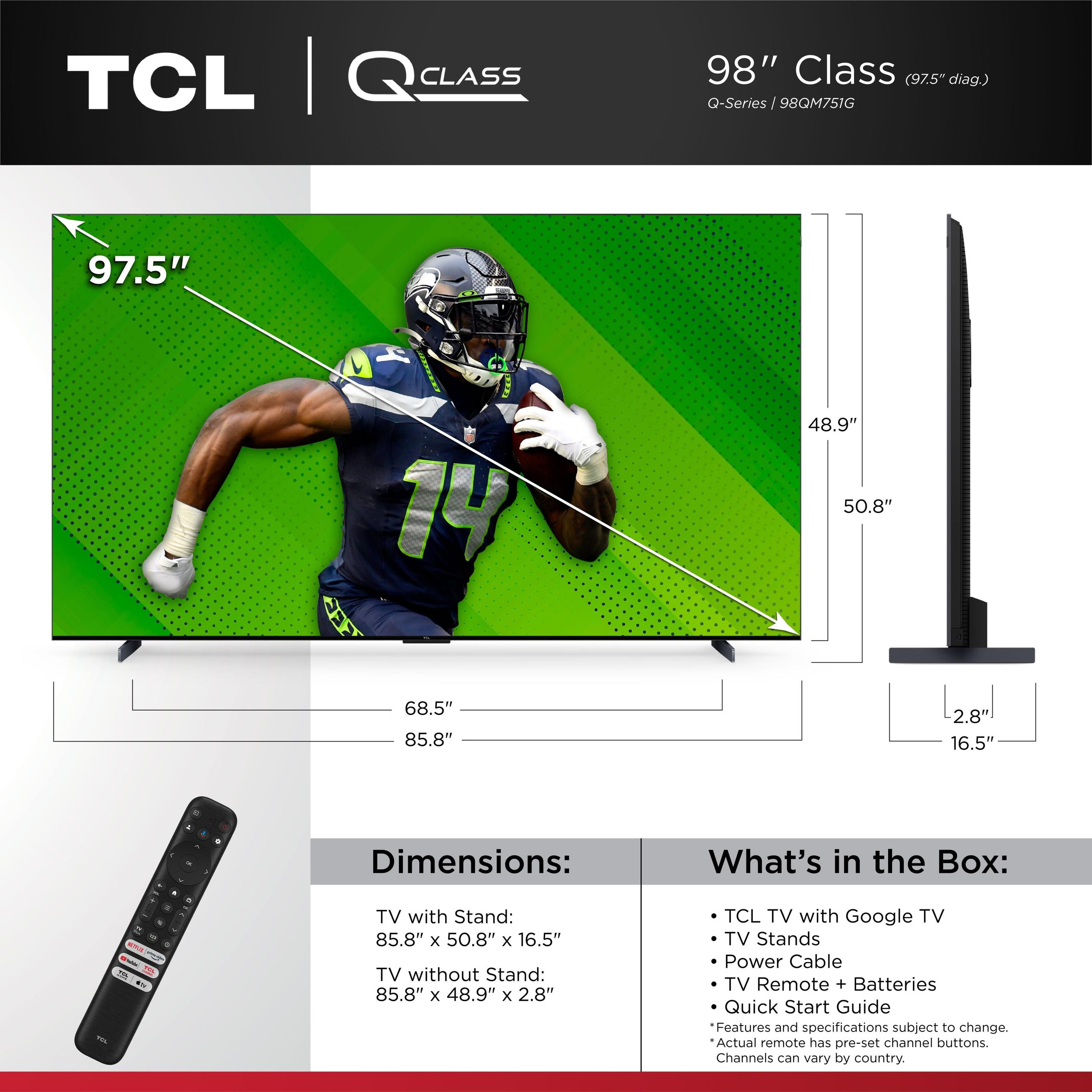
The size difference is minimal - the Samsung QN80F has a 100" screen while the TCL QM7 measures 98" (97.5" viewable). In practical terms, you won't notice a meaningful difference in viewing experience between these two sizes when watching from typical seating distances.
Both TVs excel for gaming with 120Hz panels and VRR support. The TCL QM7 has a slight edge with up to 240Hz VRR capability for competitive PC gaming, while the Samsung QN80F offers AI Auto Game Mode that automatically optimizes settings based on the type of game you're playing.
The Samsung QN80F uses Neo QLED with Quantum Matrix Technology Core for precise mini-LED control and superior AI processing with 20 neural networks. The TCL QM7 features QD Mini-LED with up to 1,500 dimming zones and higher peak brightness (2,400 nits), but lacks Samsung's advanced AI upscaling capabilities.
The Samsung QN80F runs Tizen OS with Vision AI features like Generative Wallpaper and enhanced Bixby voice control. The TCL QM7 uses Google TV, which many users prefer for its familiar interface and excellent content recommendations across streaming services.
Both TVs work excellently in home theater environments. The Samsung QN80F excels with mixed content sources due to superior upscaling, while the TCL QM7 performs exceptionally well with native 4K HDR content in controlled lighting conditions, allowing you to invest the cost savings in better audio equipment.
The TCL QM7 supports Dolby Vision IQ, which Samsung doesn't offer, along with HDR10+ and other formats. The Samsung QN80F features Neo Quantum HDR with HDR10+ Adaptive that adjusts tone mapping based on your room conditions, plus Auto HDR Remastering for non-HDR content.
The Samsung QN80F offers superior audio with Dolby Atmos, Object Tracking Sound Lite, and Adaptive Sound Pro that adjusts to your room acoustics. The TCL QM7 includes an ONKYO 2.1 speaker system with Dolby Atmos but lacks advanced audio tracking features.
The Samsung QN80F significantly outperforms with its NQ4 AI Gen2 processor that uses 20 neural networks to enhance HD content to near-4K quality. The TCL QM7 provides basic upscaling that's adequate but not as sophisticated for improving lower-resolution sources.
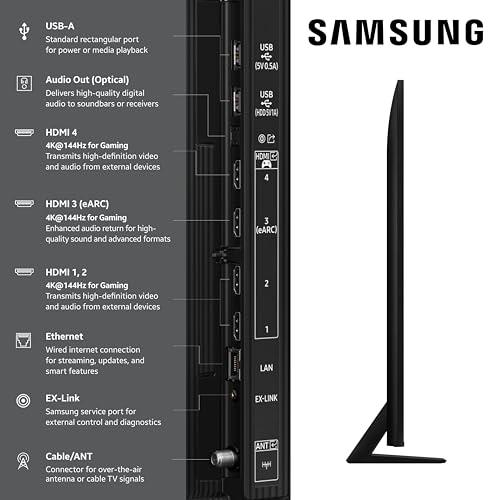
Both TVs offer 4 HDMI 2.1 ports with eARC support and similar connectivity options. The Samsung QN80F integrates better with Samsung ecosystem devices, while the TCL QM7 works seamlessly with Google services and Chromecast functionality.
The TCL QM7 claims higher peak brightness at up to 2,400 nits, making it potentially better for very bright rooms. The Samsung QN80F doesn't specify peak brightness but includes advanced anti-glare coating that reduces reflections without washing out the image.
Choose the Samsung QN80F if you watch varied content sources, want the most advanced features, and don't mind the premium price. Pick the TCL QM7 if you prioritize value, primarily watch 4K content, and prefer to spend the savings on other home theater components like a quality sound system.
We've done our best to create useful and informative comparisons to help you decide what product to buy. Our research uses advanced automated methods to create this comparison and perfection is not possible - please contact us for corrections or questions. These are the sites we've researched in the creation of this article: rtings.com - youtube.com - theshortcut.com - c9av.com - youtube.com - rtings.com - youtube.com - samsung.com - wifihifi.com - samsung.com - samsung.com - samsung.com - bestbuy.com - samsung.com - flatpanelshd.com - schaeferstv.com - samsung.com - samsung.com - samsung.com - samsung.com - cullenshomecenter.com - bestbuy.com - youtube.com - business.walmart.com - avsforum.com - tcl.com - circuitworldonline.com - tcl.com - bestbuy.com - rtings.com - bestbuy.com - displayspecifications.com - tcl.com

Privacy Policy
Terms and Conditions - Affiliate Policy
Home Security
© Copyright 2008-2026.
11816 Inwood Rd #1211, Dallas, TX 75244