

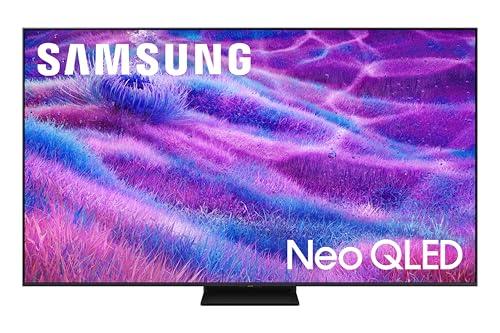
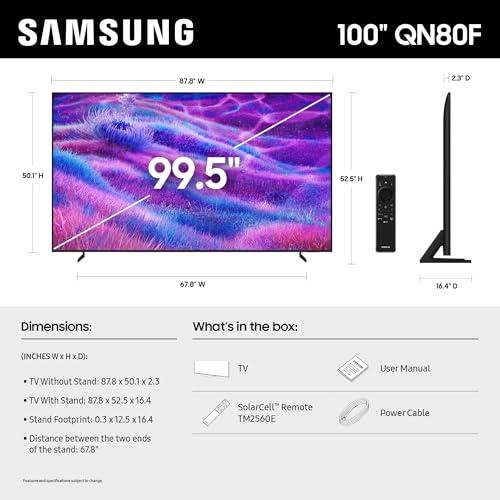

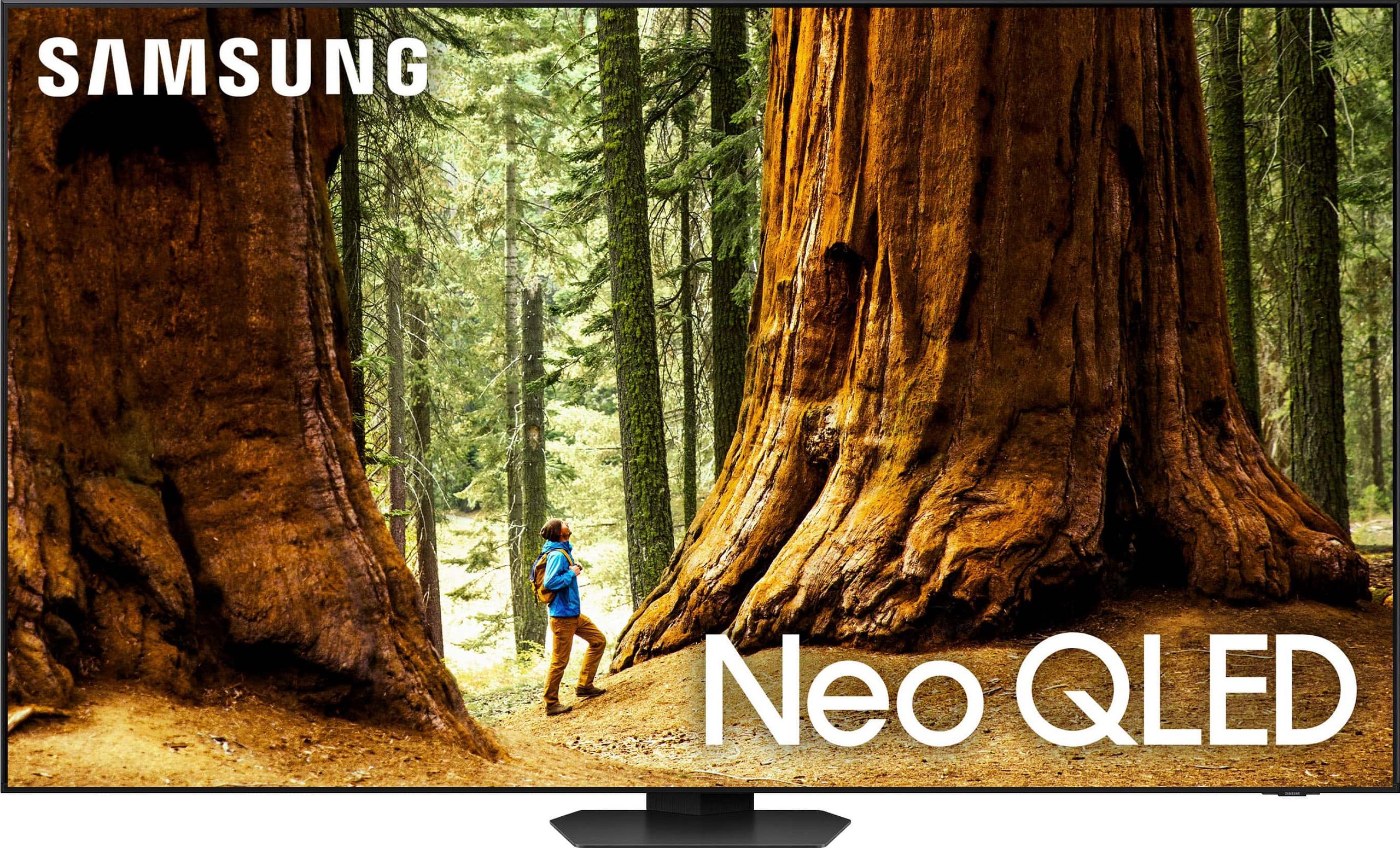
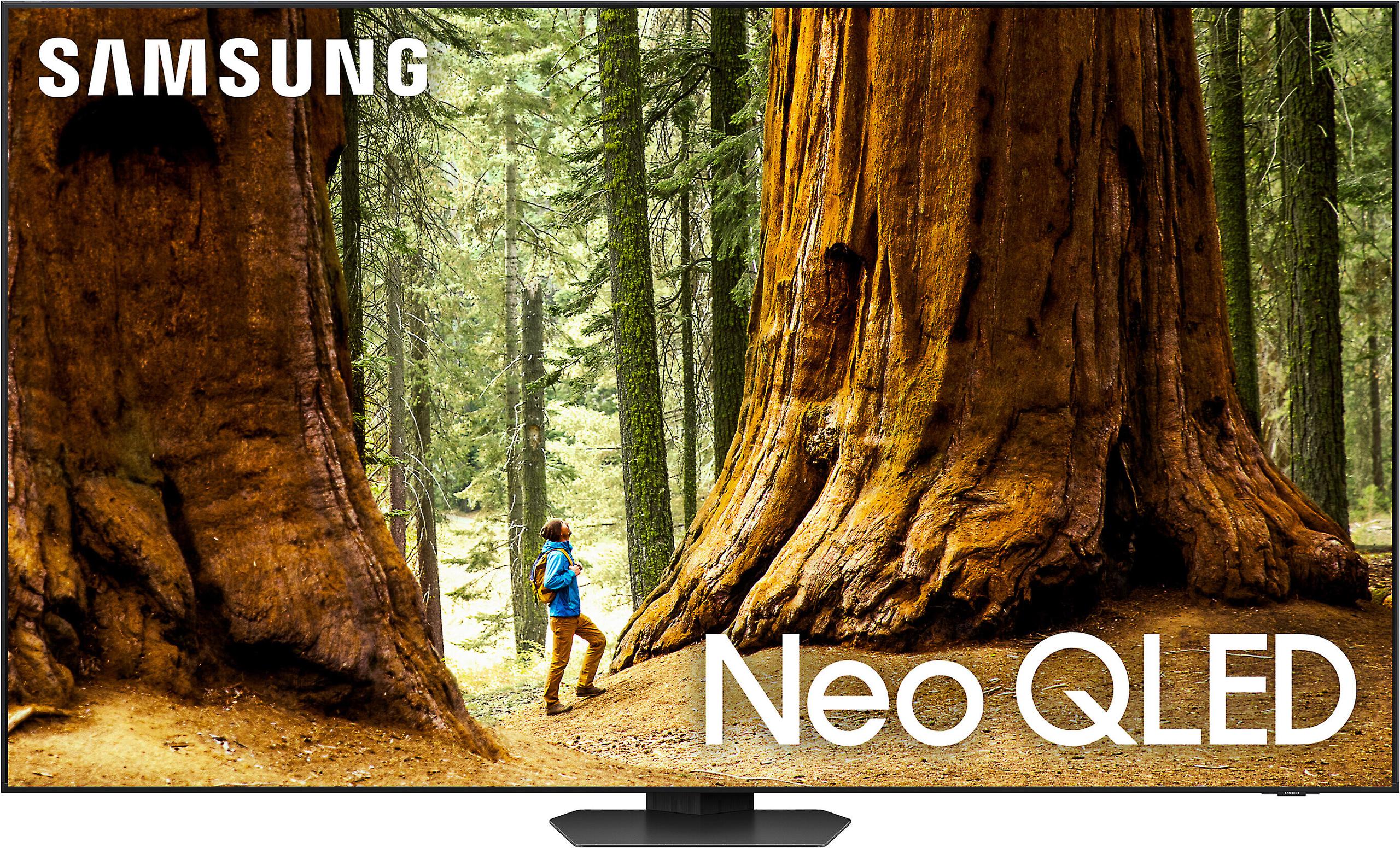
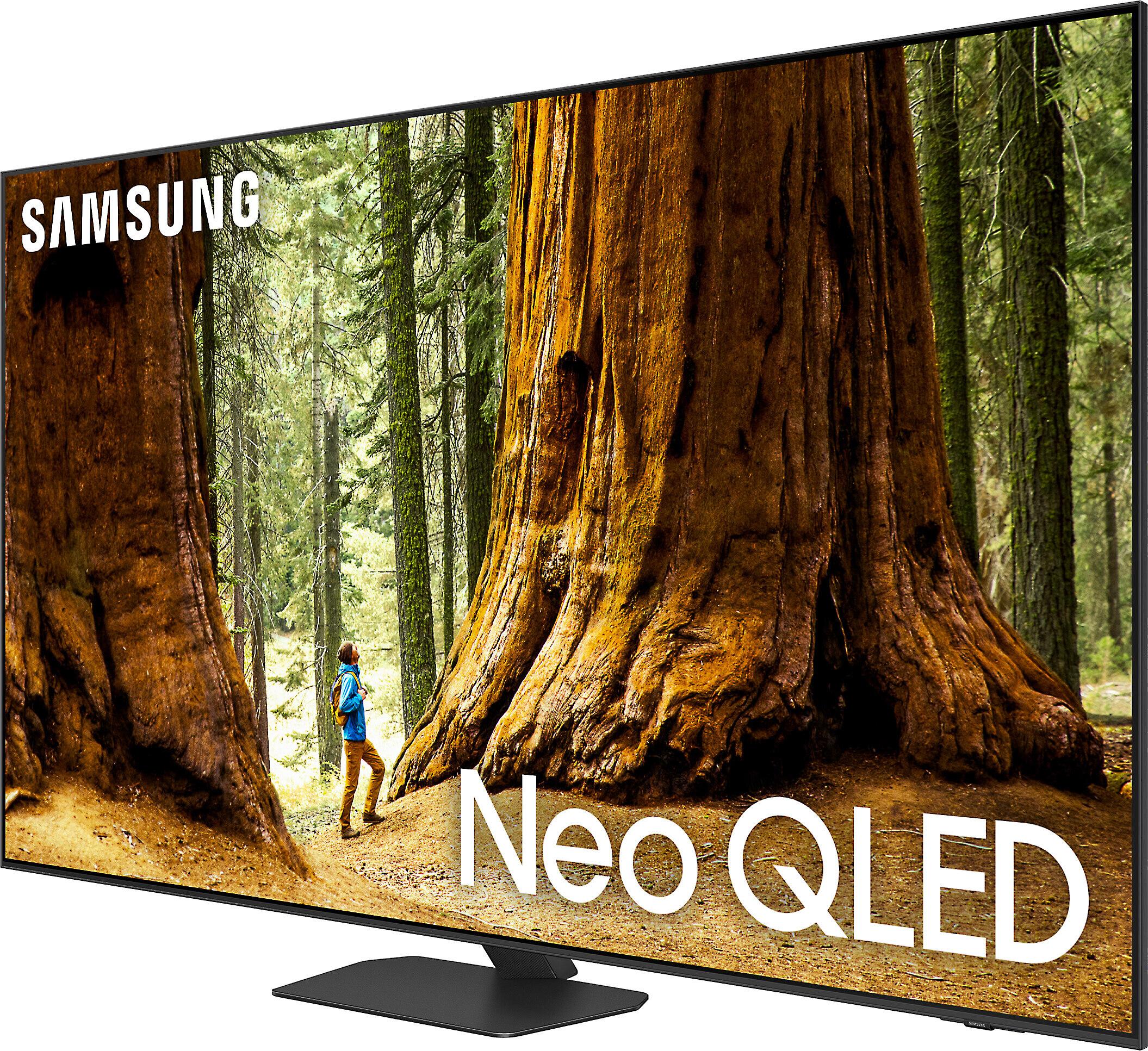
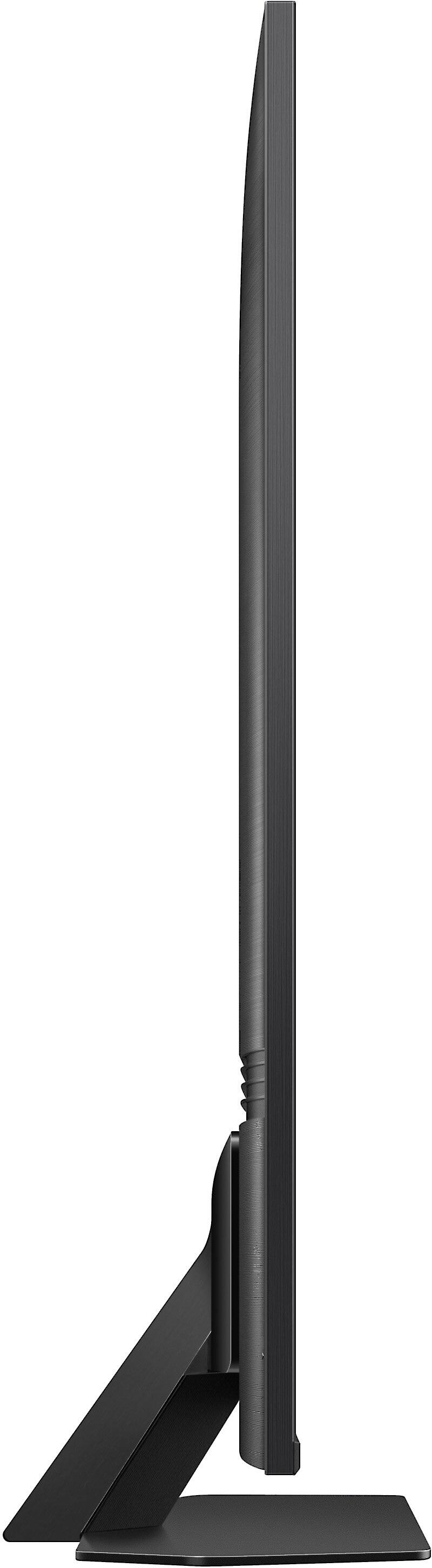
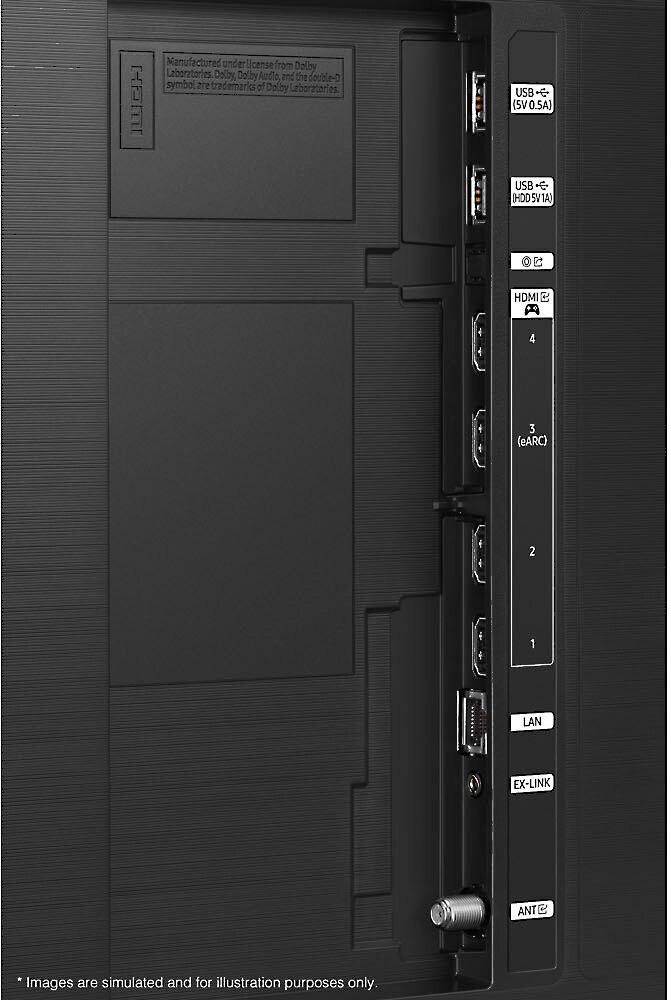
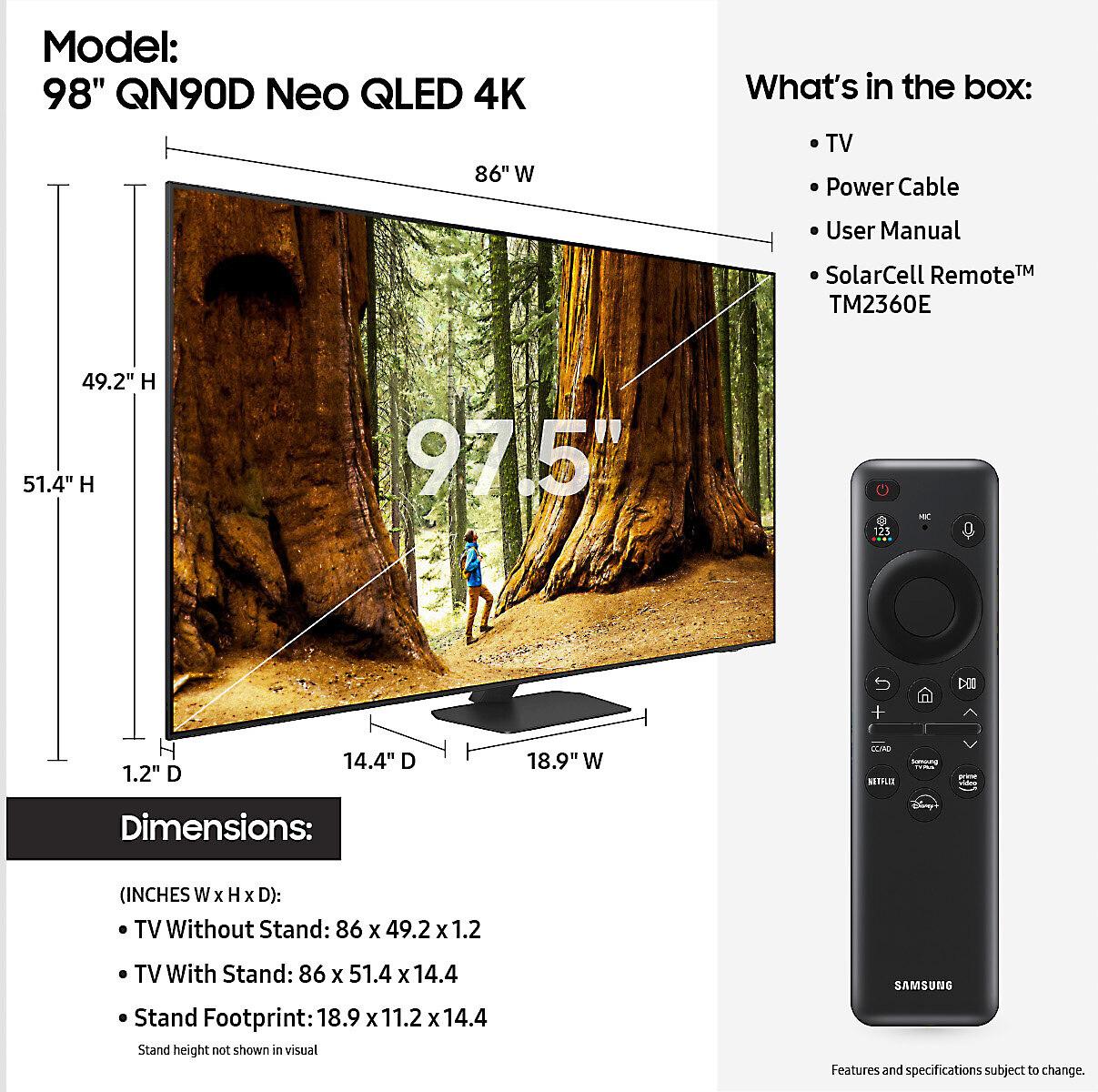
When you're shopping for a premium large-screen TV, the decision often comes down to this: do you want the biggest possible screen, or are you willing to sacrifice a bit of size for top-tier performance? That's exactly the choice you'll face when comparing Samsung's 100" Neo QLED QN80F ($5,997.99) from 2025 with their 98" QN90D ($7,997.99) from 2024.
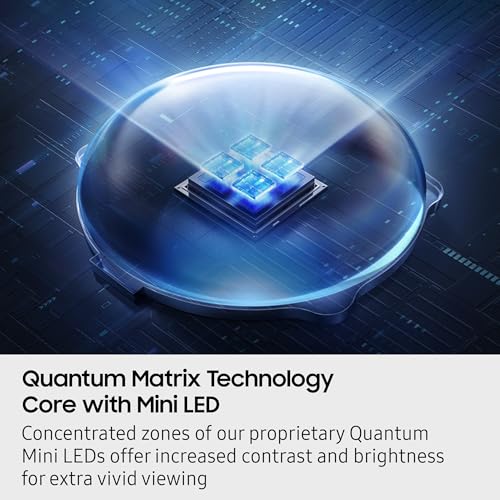
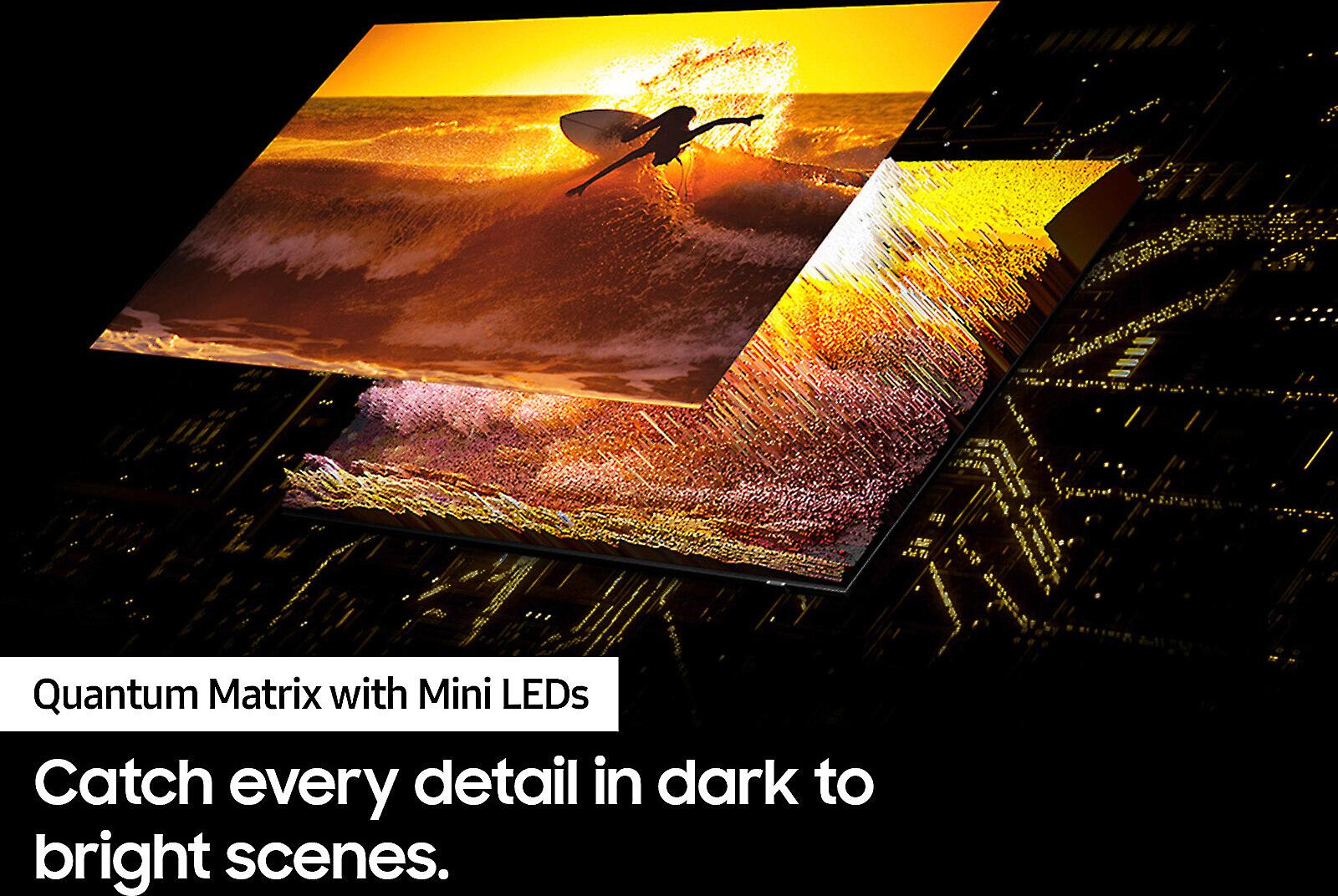
Both TVs belong to Samsung's Neo QLED family, which represents their premium approach to LED television technology. Think of Neo QLED as Samsung's answer to OLED TVs—they use thousands of tiny Mini LEDs (about 1/40th the size of regular LEDs) combined with quantum dot technology to create incredibly bright, colorful pictures with deep blacks. It's like having a high-end movie theater display in your living room.
Before diving into the comparison, it's worth understanding what you're getting with either TV. Neo QLED technology combines Mini LED backlighting with quantum dots—microscopic particles that emit pure colors when hit by light. This creates several advantages over regular LED TVs: much brighter pictures (important for HDR content), more precise control over which parts of the screen are bright or dark, and colors that pop without looking oversaturated.
The main considerations when choosing between premium large TVs like these include picture quality (how bright, colorful, and detailed the image looks), gaming performance (how quickly the TV responds and whether it supports high refresh rates), smart features (how easy and fast the interface is), and of course, value for money.
The QN90D launched in March 2024 as Samsung's flagship 4K Neo QLED model, representing the pinnacle of their Mini LED technology at the time. It packed their most advanced local dimming (the ability to make specific areas of the screen darker while keeping others bright), highest brightness levels, and most sophisticated gaming features.
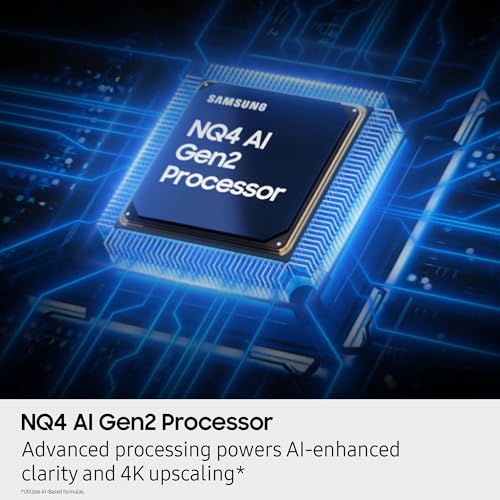
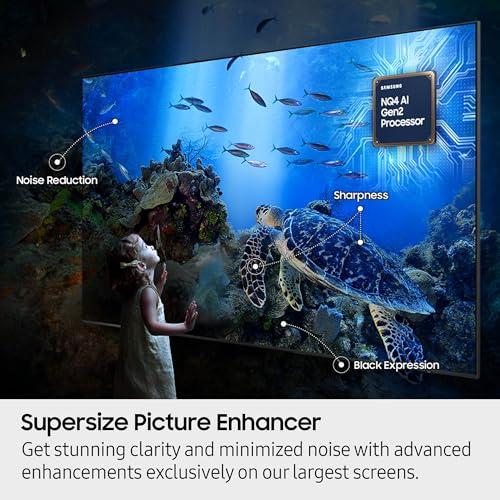
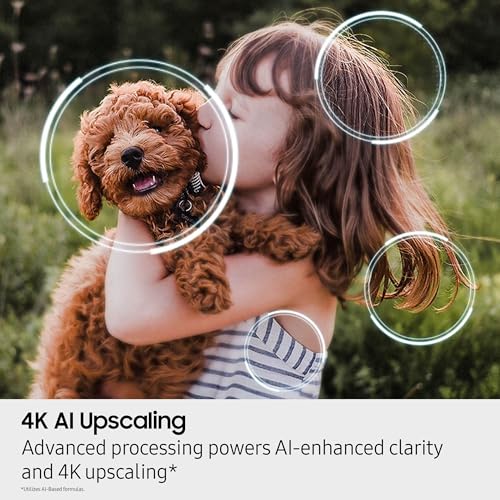
Fast forward to April 2025, and Samsung released the QN80F as part of their updated lineup. While it sits one tier below the flagship level, it benefits from a full year of technological refinement. The newer model includes Samsung's improved NQ4 AI Gen2 processor, which uses artificial intelligence and 20 neural networks to analyze and enhance everything you watch in real-time. It's like having a smart editor constantly optimizing your picture and sound.
The year between these releases brought meaningful improvements in smart TV responsiveness, AI-powered picture processing, and audio technology. However, Samsung also made strategic decisions about where to position each model in their lineup, which explains some of the performance differences we'll explore.
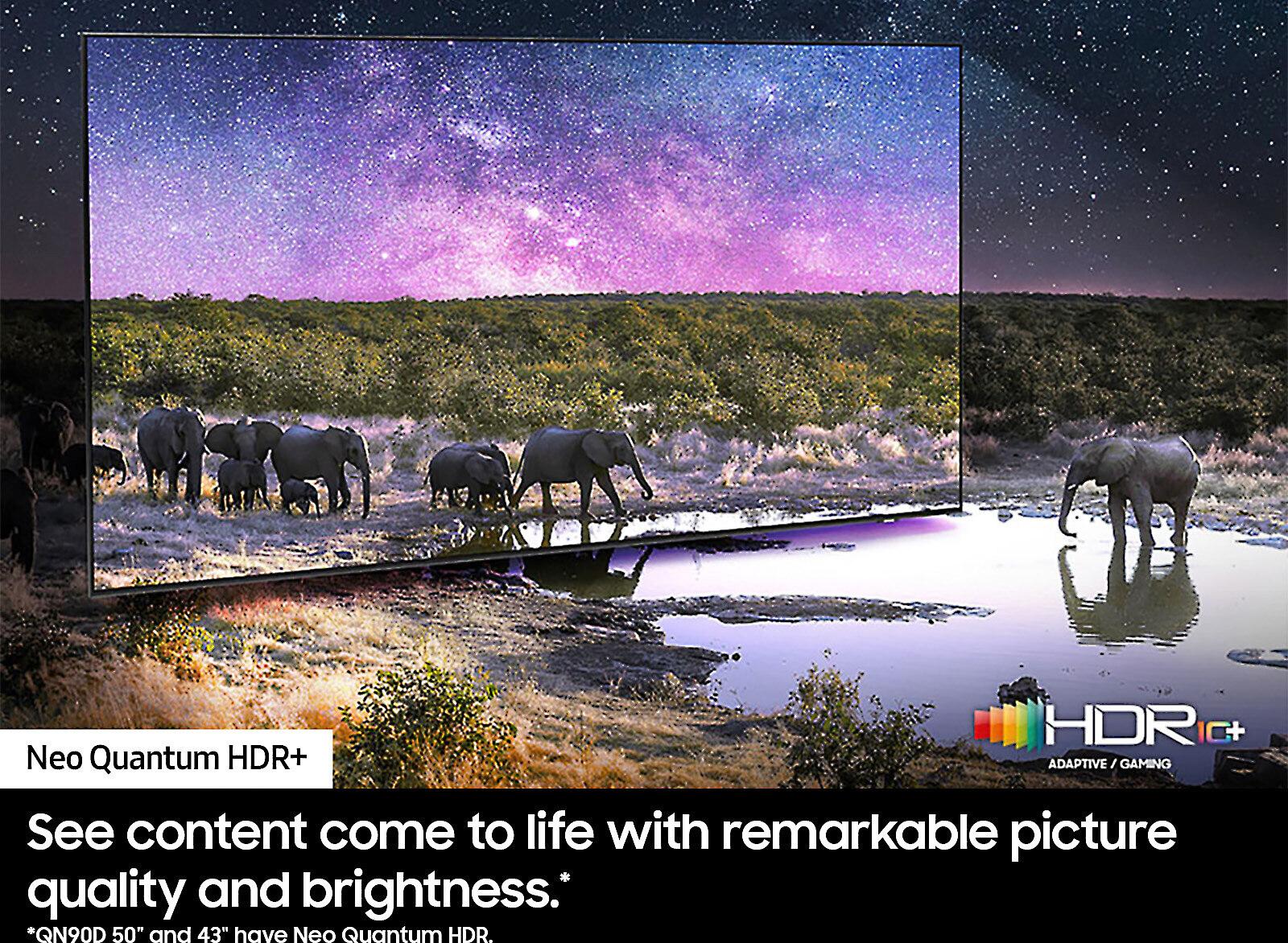
Here's where the QN90D flexes its flagship muscles. With a peak brightness of 2,192 nits in Filmmaker Mode (a measurement of how bright the screen can get), it delivers HDR content the way directors intended. To put this in perspective, a bright sunny day measures about 100,000 nits, while most TVs max out around 1,000 nits. The QN90D's exceptional brightness means HDR highlights—like sunlight glinting off water or explosions in action movies—appear dramatically more realistic.
The QN80F, while still impressive, peaks at notably lower brightness levels. This doesn't mean it looks dim—it's still brighter than most TVs you'll find at electronics stores. But side-by-side, you'd notice the QN90D makes highlights pop more dramatically, especially in bright rooms during daytime viewing.
Why does this matter? If your TV room has large windows or you often watch during the day, the brighter display cuts through ambient light much better. It's the difference between squinting at a dim phone screen outdoors versus easily reading it in direct sunlight.
Both TVs use Mini LED backlighting, but the QN90D implements it more aggressively. It has more dimming zones—individual sections of the backlight that can be controlled independently. Think of it like having more precise control over a dimmer switch, but for hundreds of different areas of the screen simultaneously.
This translates to deeper blacks and less "blooming"—that annoying halo effect you sometimes see around bright objects on dark backgrounds. When watching a movie scene with stars against a night sky, the QN90D keeps the black areas truly black while making the stars shine brightly, without light bleeding between them.
The QN80F's Quantum Matrix Core technology provides good contrast, but with fewer dimming zones, you might notice slightly more blooming in challenging scenes. It's still excellent compared to most TVs, just not quite at the flagship level.
Here's where things get interesting. The newer QN80F actually ships with better out-of-the-box color accuracy, thanks to Samsung's improved 2025 calibration. If you're someone who just wants to plug in the TV and enjoy great colors without hiring a professional calibrator, the QN80F delivers more accurate colors right away.
However, the QN90D achieves superior accuracy after professional calibration. If you're serious about color accuracy—perhaps you're a photographer or videographer—the QN90D can be fine-tuned to reference standards more precisely.
The QN80F's NQ4 AI Gen2 processor brings some genuinely useful improvements. It analyzes content in real-time and adjusts not just picture settings but also sound. Watching a nature documentary? It enhances green foliage and animal details. Switching to a dark thriller? It automatically adjusts to preserve shadow detail while maintaining contrast.
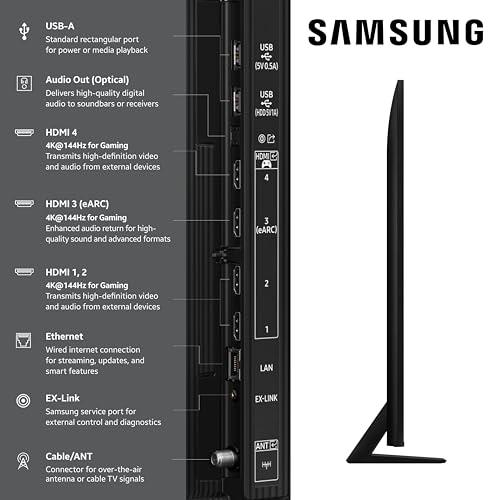
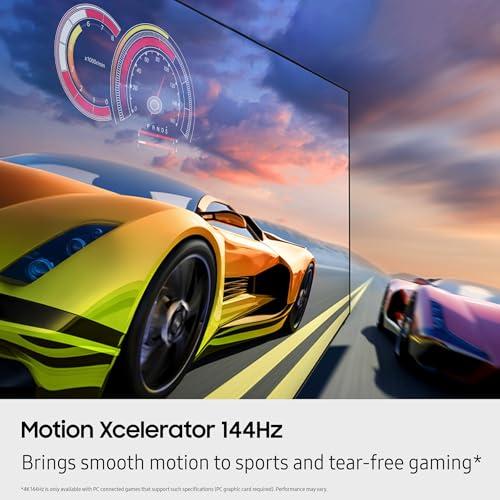
Gaming represents one of the clearest performance differences between these models. The QN90D supports up to 165Hz refresh rate—meaning it can display 165 unique frames per second. Combined with its 9.6ms input lag (the delay between pressing a controller button and seeing the action on screen), it's genuinely competitive with dedicated gaming monitors.
The QN80F maxes out at 144Hz, which is still excellent for gaming but gives competitive advantage to the QN90D. To put this in perspective, most people can't consciously detect the difference between 144Hz and 165Hz, but serious gamers—especially those playing fast-paced competitive games—might notice the extra smoothness.
Input lag matters more for most gamers. Both TVs respond quickly enough for casual gaming, but the QN90D's slightly faster response gives it an edge for online multiplayer games where every millisecond counts.
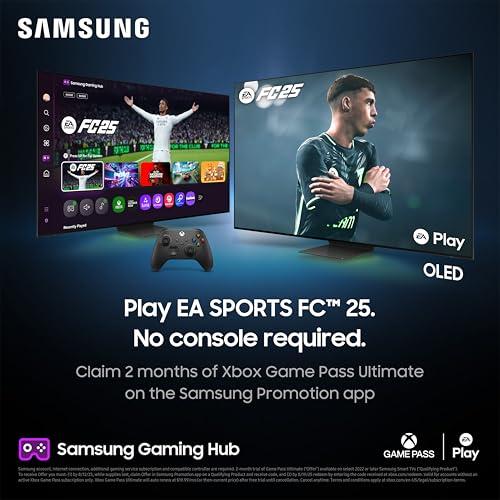
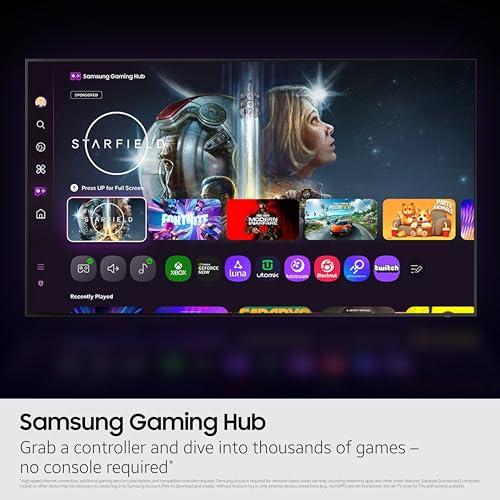
The QN90D includes FreeSync Premium Pro and a comprehensive Game Bar that lets you adjust settings, switch aspect ratios for ultrawide gaming, and monitor performance metrics without leaving your game. It's like having a gaming-focused control center built into the TV.
However, there's a significant caveat: the QN90D's HDR brightness drops considerably in Game Mode. This means you'll need to choose between optimal gaming performance and the best HDR visuals—you can't have both simultaneously. It's a frustrating limitation for a flagship TV.
The QN80F offers FreeSync Premium and solid gaming performance, though without the advanced Game Bar features. For most gamers, especially those playing single-player games or not competing at the highest levels, it provides an excellent experience without the HDR compromise.
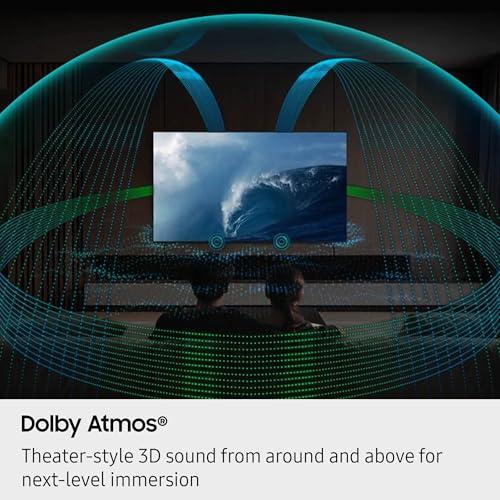
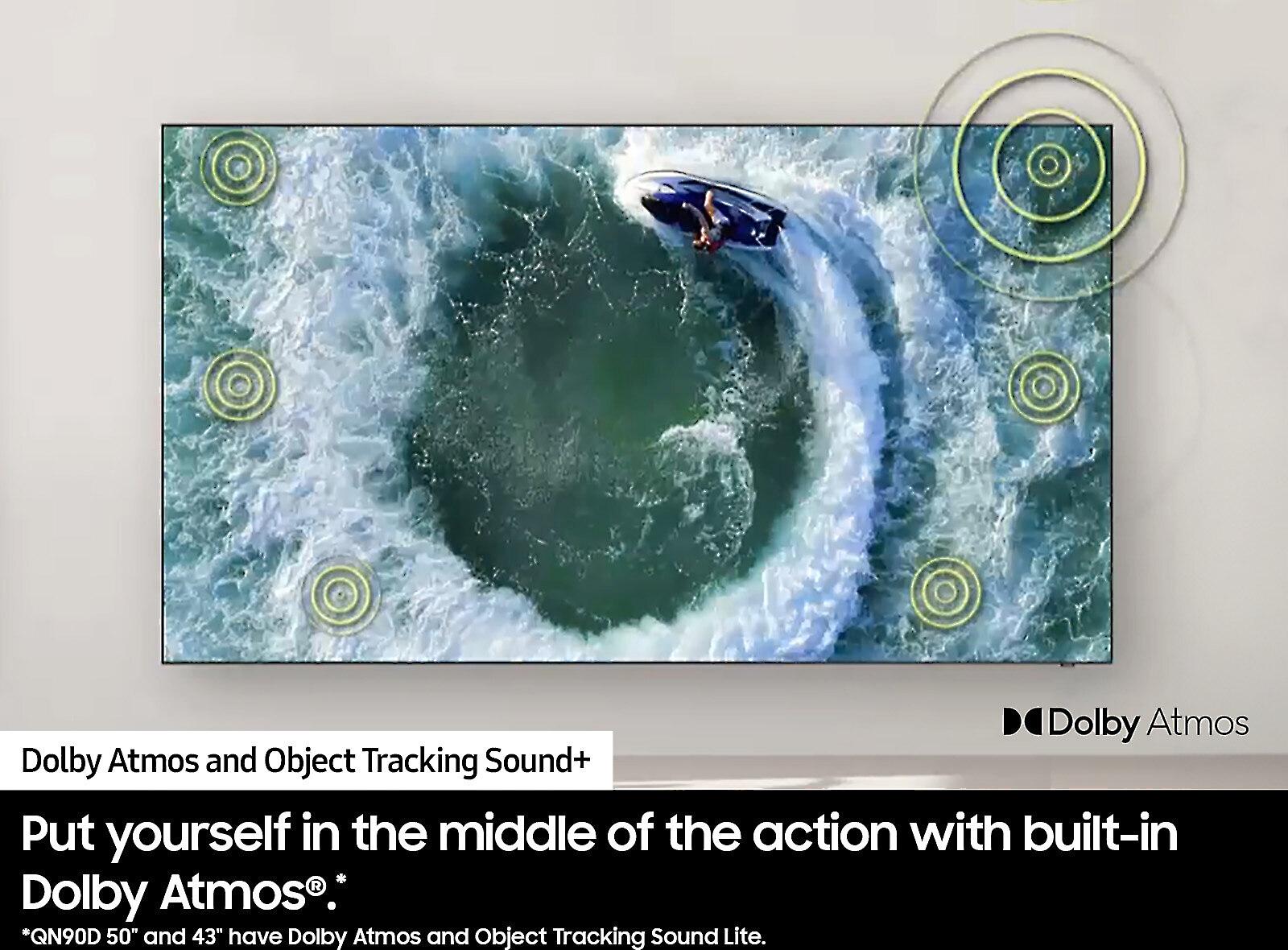
This is where the newer QN80F pulls ahead significantly. It includes Dolby Atmos support with upward-firing speakers, creating a more immersive three-dimensional soundscape. When watching movies with Atmos soundtracks, you'll hear helicopters flying overhead or rain falling from above—not just from the sides.
The QN90D uses a standard 2.2.2 channel system without Atmos support. While it produces clear dialogue and decent bass, it lacks the spatial audio magic that makes modern movie soundtracks come alive.
For home theater enthusiasts, this represents a meaningful difference. Many people underestimate how much good audio contributes to the viewing experience. The QN80F's Atmos capability means you might not need to immediately invest in a separate sound system, potentially saving hundreds of dollars.
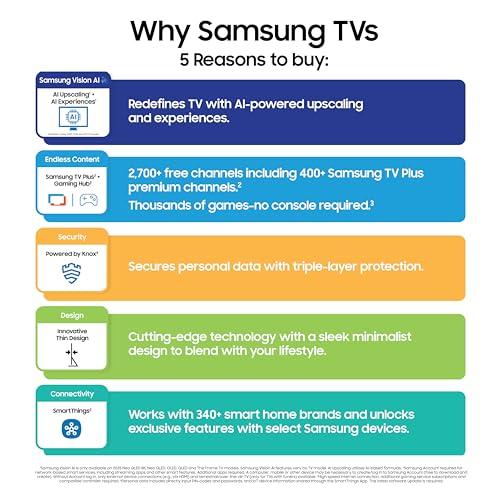
The QN80F benefits from Samsung's 2025 Tizen OS improvements, offering snappier navigation and more responsive app loading. The interface feels modern and intuitive, with AI-powered recommendations that actually seem to understand your viewing preferences.
The QN90D runs the 2024 version of Tizen, which occasionally shows its age with minor lag when switching between apps or adjusting settings. It's not broken, but the newer system feels more polished.
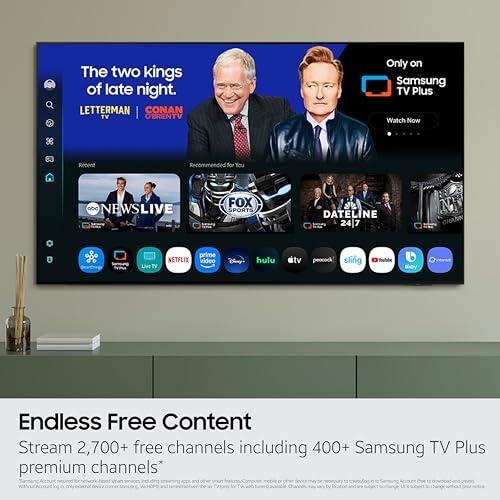
Both TVs support the same streaming apps and smart home integration, so this difference mainly affects daily usability rather than core functionality.
At $2,000 less than the QN90D, the QN80F offers compelling value. You're getting a larger screen, newer smart features, better built-in audio, and solid overall performance. For most viewers, these advantages outweigh the performance compromises.
The QN90D commands its premium through superior brightness, contrast, and gaming specifications. If you're building a dedicated home theater or are a serious gamer, these improvements might justify the extra cost.
The 2-inch difference between 98" and 100" screens is barely noticeable in practice. Both require similar room sizes and viewing distances. The real question is whether you're willing to pay $2,000 extra for the QN90D's picture quality advantages, not for the slightly smaller screen.
For dedicated home theaters, the choice depends on your priorities. The QN90D delivers reference-level picture quality that rivals much more expensive displays. Its superior contrast and brightness make it ideal for dark room viewing where you can appreciate every detail.
However, the QN80F offers advantages for multi-purpose family rooms. Its better built-in audio reduces the immediate need for external speakers, and its improved smart features make it more enjoyable for everyday use beyond movie watching.
If you're planning to add a proper surround sound system anyway, the QN90D's picture quality advantages become more compelling. But if you want great performance out of the box without additional purchases, the QN80F provides better overall value.
Choose the QN80F if you want maximum screen size with excellent overall performance at a more reasonable price point. It's perfect for families who want a premium TV experience without flagship costs, especially if built-in Dolby Atmos appeals to you.
Opt for the QN90D if picture quality is your absolute priority and budget allows. It's the better choice for serious gamers who need every competitive advantage, or for home theater enthusiasts building a dedicated viewing room where its superior contrast and brightness will be most appreciated.
Both are exceptional TVs that will provide years of enjoyment. The QN80F simply offers better value for most buyers, while the QN90D delivers the ultimate performance for those who demand the very best and can afford the premium.
| Samsung 100" Neo QLED QN80F 4K Smart TV 2025 | Samsung 98" QN90D Series Neo QLED 4K Smart TV |
|---|---|
| Price - $2,000 difference impacts overall value proposition | |
| $5,997.99 | $7,997.99 |
| Screen Size - Minimal 2-inch difference in practice | |
| 100" diagonal | 98" diagonal |
| Release Date - Newer model benefits from refined technology | |
| April 2025 | March 2024 |
| Peak Brightness - Critical for HDR impact and bright room viewing | |
| Good brightness for tier (exact specs not disclosed) | 2,192 nits (superior for daytime viewing) |
| Refresh Rate - Higher rates benefit competitive gaming | |
| 144Hz (excellent for most gaming) | 165Hz (advantage for serious gamers) |
| Input Lag - Lower numbers mean more responsive gaming | |
| Not specified (likely similar to tier) | 9.6ms (excellent for competitive gaming) |
| Audio Technology - Built-in sound quality differences | |
| Dolby Atmos with upward-firing speakers | Standard 2.2.2 channel system (no Atmos) |
| Processor - AI capabilities and smart features | |
| NQ4 AI Gen2 (2025 improvements) | Previous generation processing |
| Mini LED Implementation - Affects contrast and black levels | |
| Quantum Matrix Core (fewer dimming zones) | Advanced Mini LED (more precise local dimming) |
| Gaming Features - Extra capabilities for enthusiasts | |
| FreeSync Premium, basic gaming optimizations | FreeSync Premium Pro, comprehensive Game Bar |
| Smart TV Platform - Interface responsiveness and features | |
| 2025 Tizen OS (improved responsiveness) | 2024 Tizen OS (occasional interface lag) |
| HDR Gaming Performance - Picture quality during gaming | |
| Maintains HDR quality in gaming modes | HDR brightness drops significantly in Game Mode |
| Best Value For - Target buyer profiles | |
| Families wanting maximum size and modern features | Serious gamers and picture quality enthusiasts |
The Samsung 100" Neo QLED QN80F ($5,997.99) provides significantly better value, costing $2,000 less than the Samsung 98" QN90D ($7,997.99) while offering a larger 100" screen, newer 2025 technology, and Dolby Atmos audio. Unless you specifically need the QN90D's superior brightness or gaming features, the QN80F delivers more for your dollar.
The QN90D delivers superior picture quality with higher peak brightness (2,192 nits), deeper blacks, and more advanced Mini LED local dimming. However, the QN80F offers excellent picture quality for its price tier with better out-of-box color accuracy and newer AI processing. The difference is noticeable in direct comparison but both provide premium viewing experiences.
The Samsung 98" QN90D is better for serious gaming with its 165Hz refresh rate, 9.6ms input lag, and comprehensive Game Bar features. However, it has a significant drawback where HDR brightness drops in Game Mode. The QN80F offers excellent gaming at 144Hz without HDR compromises, making it better for casual gamers who want consistent picture quality.
The 100" QN80F is only 2 inches larger than the 98" QN90D, which is barely noticeable in real-world viewing. Both require similar room sizes and viewing distances (8-12 feet optimal). The screen size difference shouldn't be a deciding factor—focus on performance and price differences instead.
The Samsung 100" QN80F has significantly better built-in audio with Dolby Atmos support and upward-firing speakers that create immersive 3D sound. The QN90D uses a standard 2.2.2 channel system without Atmos. For home theater use, the QN80F's superior audio could save you from immediately needing a separate sound system.
The Samsung 98" QN90D is much better for bright rooms due to its exceptional 2,192 nits peak brightness, which cuts through ambient light effectively. The QN80F works well in moderately lit rooms but may struggle with direct sunlight or very bright conditions. If your TV room has large windows, the QN90D is worth the extra cost.
The Samsung 100" QN80F has newer technology, launching in April 2025 with an improved NQ4 AI Gen2 processor, updated Tizen OS, and refined smart features. The QN90D from March 2024 uses previous-generation processing and occasionally shows interface lag. The newer model offers better future-proofing and daily usability.
Both TVs run Samsung's Tizen OS, but the QN80F uses the improved 2025 version with faster app loading, more responsive navigation, and better AI recommendations. The QN90D runs the 2024 version which works well but feels less polished. Both support the same streaming apps and smart home integration.
For dedicated home theaters, the Samsung 98" QN90D offers superior contrast and brightness that rivals reference displays. However, the QN80F provides better overall home theater value with its Dolby Atmos audio, larger screen, and excellent picture quality at a lower price. If you're adding a separate sound system anyway, the QN90D's picture advantages become more compelling.
The QN80F has lower peak brightness and fewer gaming features compared to flagship models. The Samsung 98" QN90D costs significantly more, has older smart features, lacks Dolby Atmos, and frustratingly dims HDR content in Game Mode. Neither supports Dolby Vision, which some movie enthusiasts prefer.
The Samsung 100" QN80F costs $5,997.99, while the Samsung 98" QN90D costs $7,997.99. The $2,000 price difference is substantial and should factor heavily into your decision. Consider whether the QN90D's picture quality improvements justify paying 33% more for a slightly smaller screen.
Most buyers should choose the Samsung 100" Neo QLED QN80F for its better value proposition, larger screen, modern features, and Dolby Atmos audio. Only choose the QN90D if you specifically need maximum brightness for bright rooms, require top-tier gaming performance, or are building a dedicated home theater where picture quality is the absolute priority regardless of cost.
We've done our best to create useful and informative comparisons to help you decide what product to buy. Our research uses advanced automated methods to create this comparison and perfection is not possible - please contact us for corrections or questions. These are the sites we've researched in the creation of this article: rtings.com - youtube.com - theshortcut.com - c9av.com - youtube.com - rtings.com - youtube.com - samsung.com - wifihifi.com - samsung.com - samsung.com - samsung.com - bestbuy.com - samsung.com - flatpanelshd.com - schaeferstv.com - samsung.com - samsung.com - samsung.com - samsung.com - cullenshomecenter.com - rtings.com - rtings.com - youtube.com - youtube.com - fullcompass.com - digitalhomecreations.com - jeffsappliance.com - bestbuy.com - displayspecifications.com - samsung.com - samsung.com - image-us.samsung.com - youtube.com

Privacy Policy
Terms and Conditions - Affiliate Policy
Home Security
© Copyright 2008-2026.
11816 Inwood Rd #1211, Dallas, TX 75244