

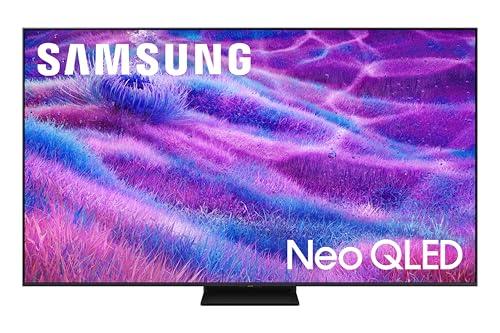

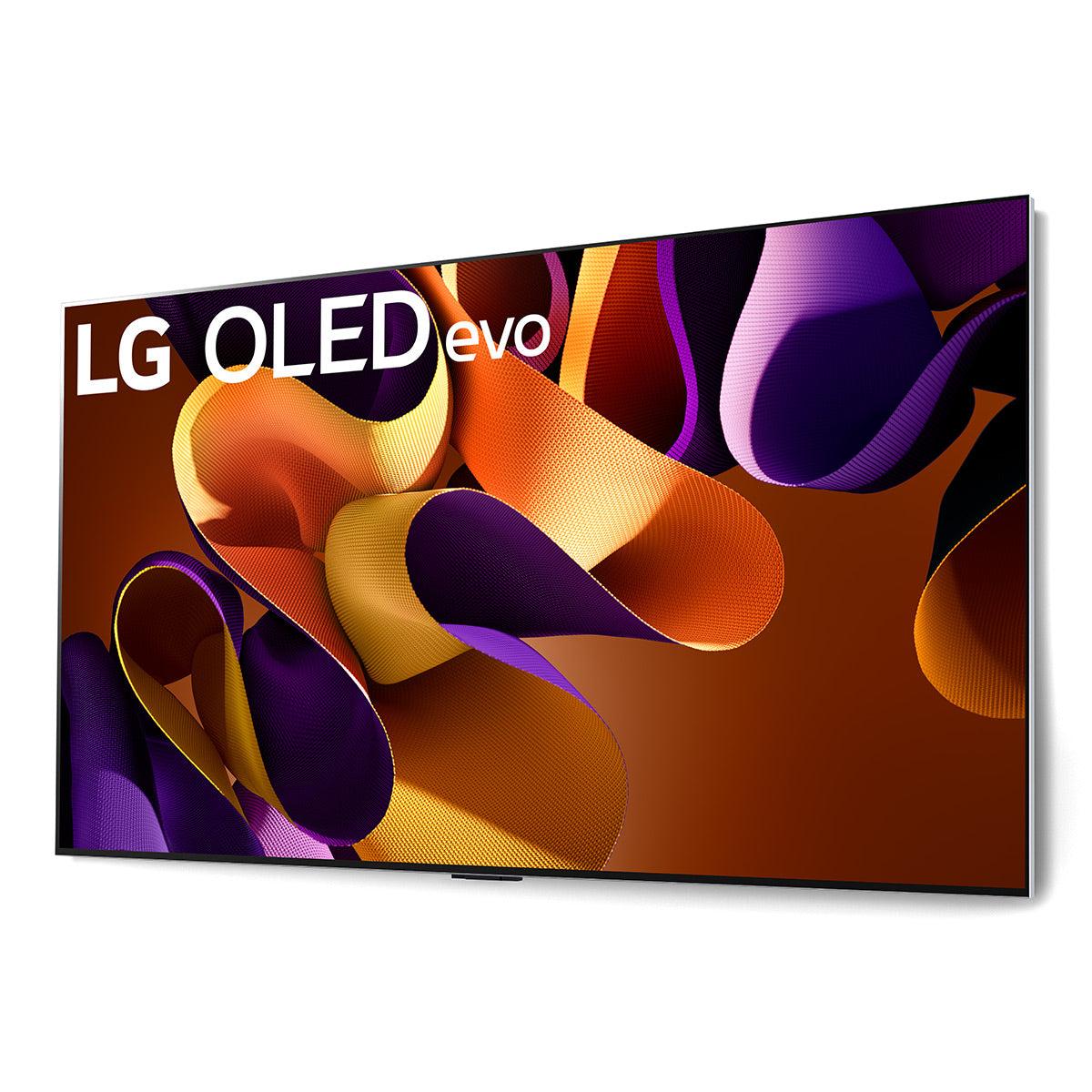
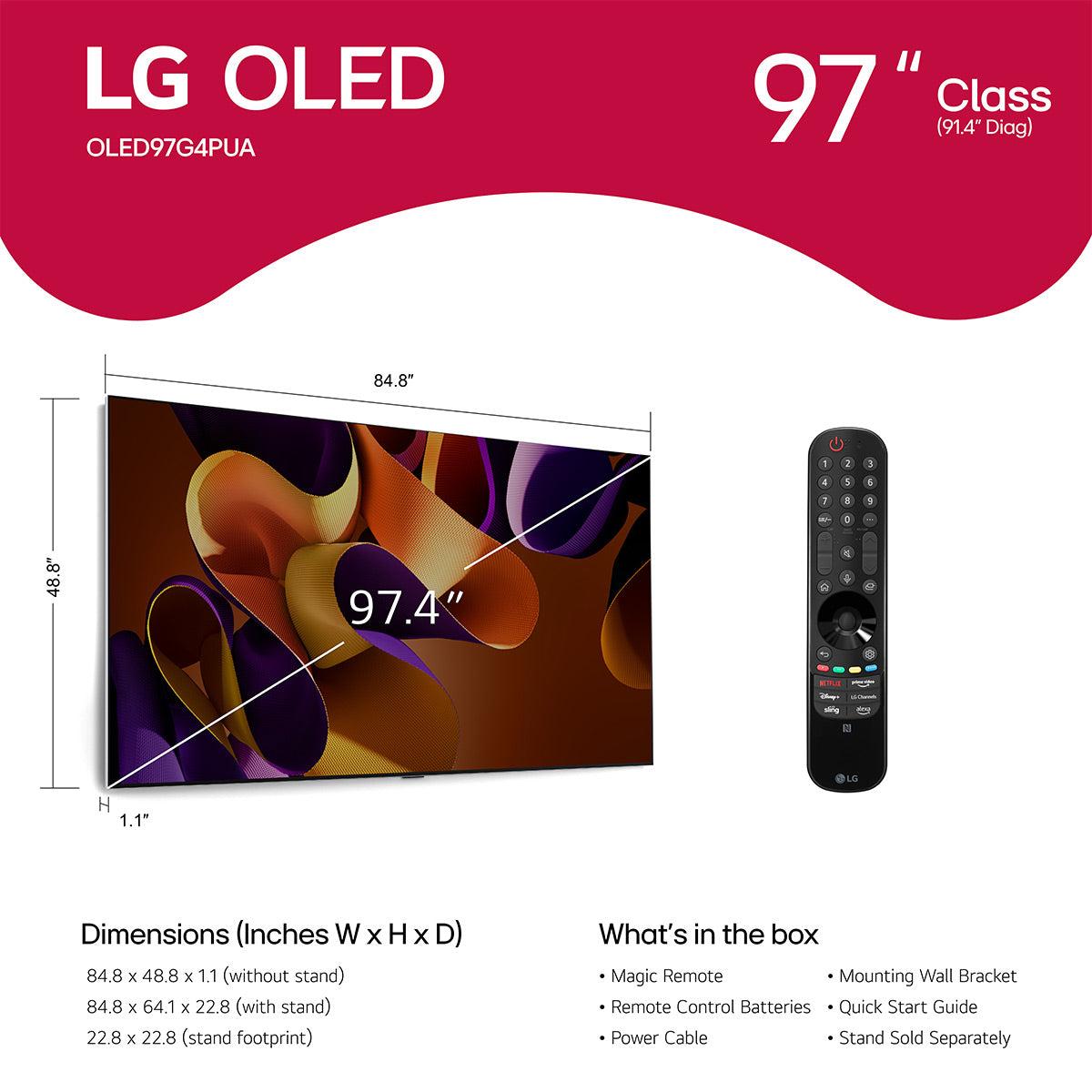
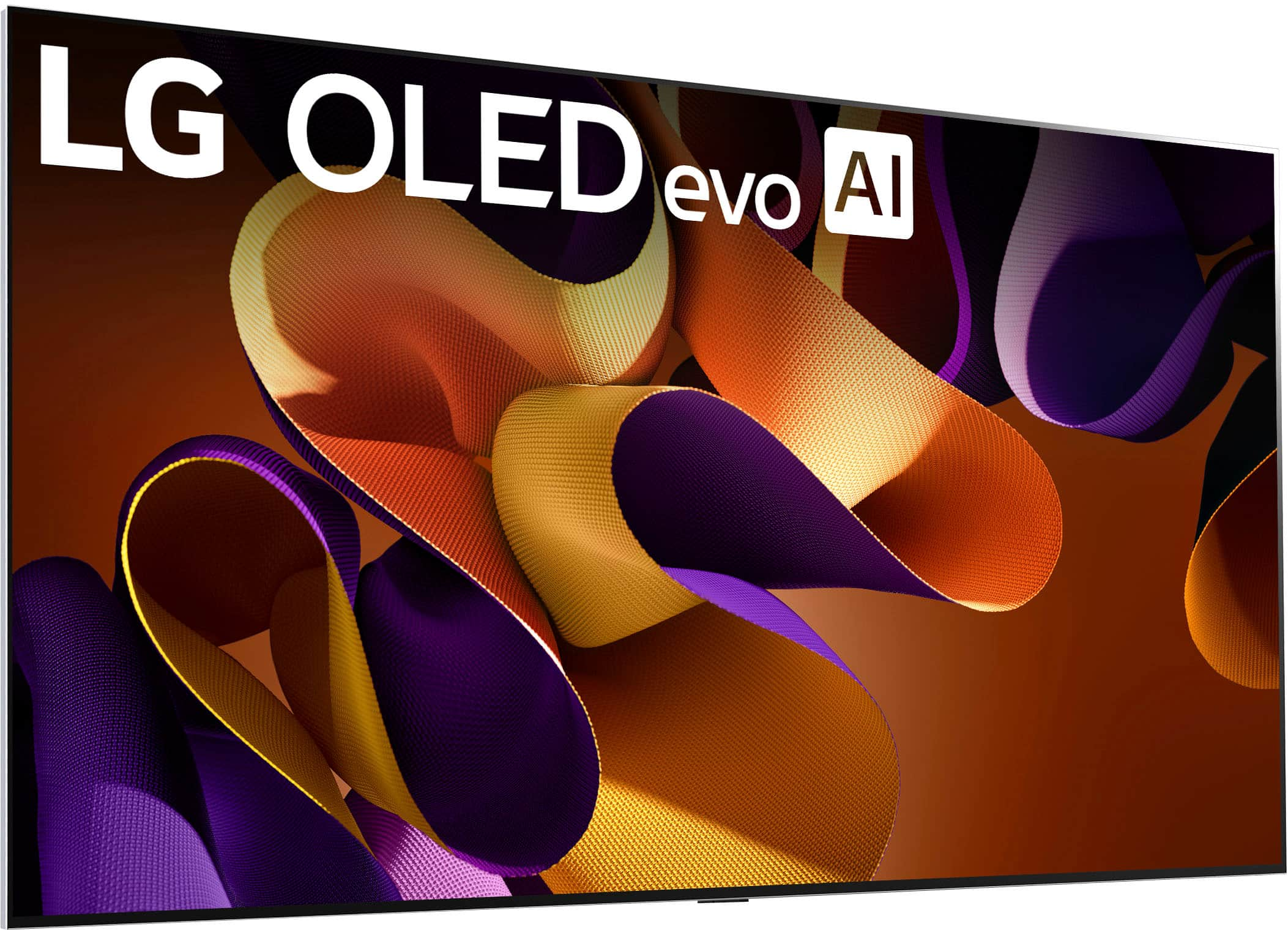
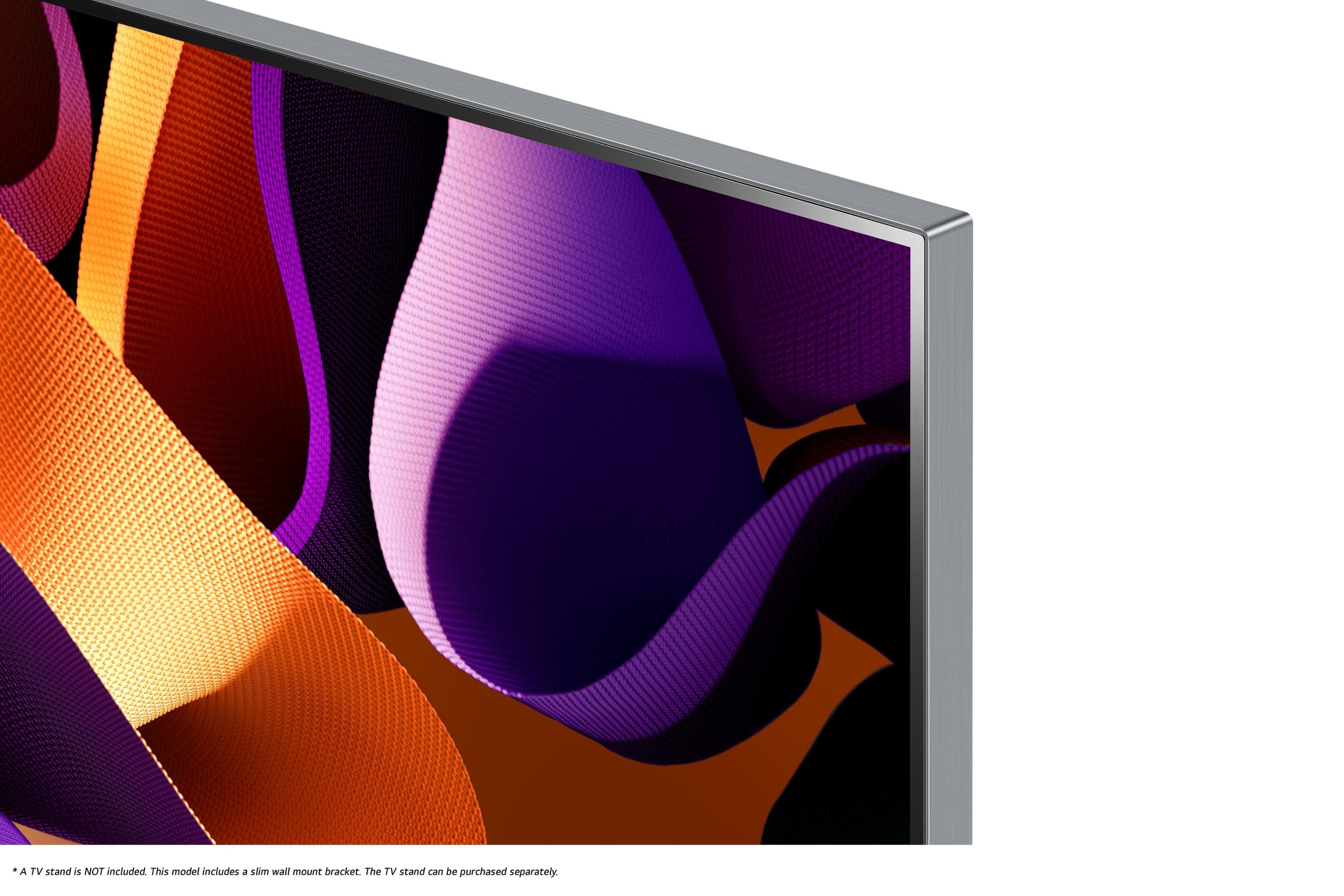
If you're looking at TVs with screens approaching 100 inches, you're already committed to creating something special in your home. The question isn't whether these massive displays will transform your viewing experience—it's which technology will serve you best. Today we're comparing two titans: the Samsung 100" Neo QLED QN80F 4K Smart TV 2025 at $5,997.99 and the LG 97" OLED evo G4 Series 4K UHD Smart TV at $19,996.99.
The price difference alone tells a story, but there's much more beneath the surface. These represent fundamentally different approaches to creating stunning large-screen experiences, and understanding those differences will help you make the right choice for your space and viewing habits.
When we talk about ultra-large TVs (95+ inches), we're entering territory that was once dominated by projectors. These displays serve as the centerpiece of entertainment spaces, whether that's a dedicated home theater, a great room, or a finished basement. At these sizes, every technical choice becomes magnified—literally and figuratively.
The two main considerations are display technology and room compatibility. Mini-LED displays like Samsung's Neo QLED use thousands of tiny LEDs behind the screen to create bright, vibrant images that can compete with sunlight streaming through windows. OLED displays like LG's G4 series use pixels that create their own light, turning completely off to create perfect blacks that make dark movie scenes look incredibly realistic.
Your room's lighting conditions, seating arrangement, and primary use cases will determine which technology serves you better. But first, let's understand what makes each of these 2024-2025 generation displays special.
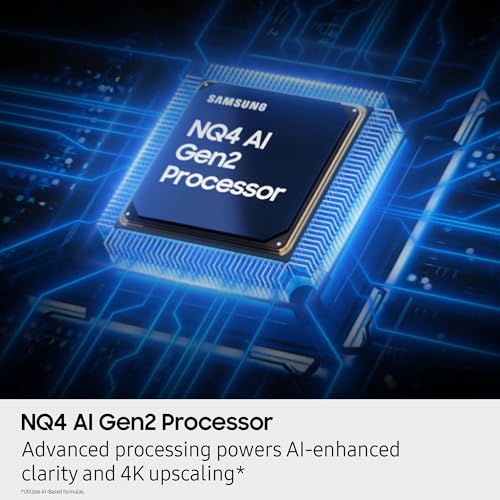
The Samsung QN80F represents Samsung's latest 2025 Mini-LED technology. Released in March 2025, it features their new NQ4 AI Gen2 processor—a significant upgrade that uses 20 neural networks to analyze and optimize every frame in real-time. Think of this as having a professional colorist and sound engineer working behind the scenes, constantly adjusting the picture and audio to match what you're watching.
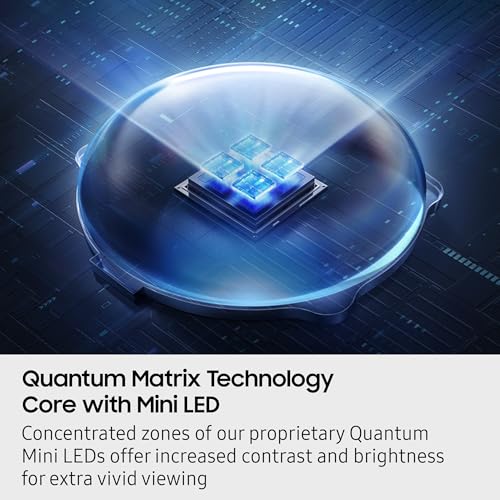
The "Neo QLED" name refers to Samsung's Quantum Matrix Technology Core, which uses Mini-LEDs (much smaller than traditional LEDs) for backlighting. These Mini-LEDs are arranged in zones across the back of the screen, allowing different areas to dim or brighten independently. This creates much better contrast than older LED TVs, though not quite the infinite contrast of OLED.
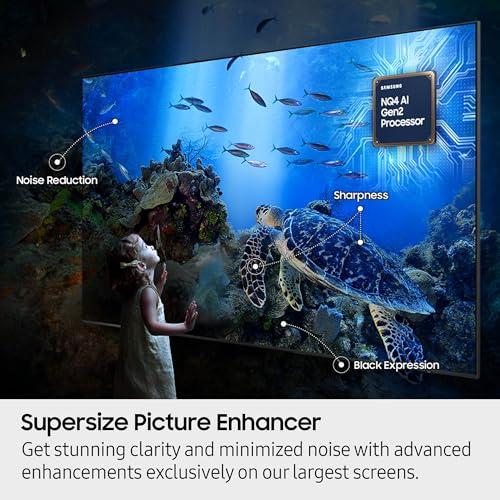
What's particularly impressive about the 2025 model is the Supersize Picture Enhancer—Samsung's solution to the challenge of making content look sharp on a 100-inch screen. When you scale up regular TV content to this size, pixelation can become noticeable. This AI-driven feature analyzes incoming content and adds detail to prevent that "blown up" look.
The quantum dot layer is Samsung's secret weapon for color. These microscopic particles emit pure colors when hit by light, creating more accurate and vibrant colors than traditional LCD displays. Combined with the Mini-LED backlighting, this results in images that can get incredibly bright—over 1,000 nits—making them ideal for rooms with lots of ambient light.
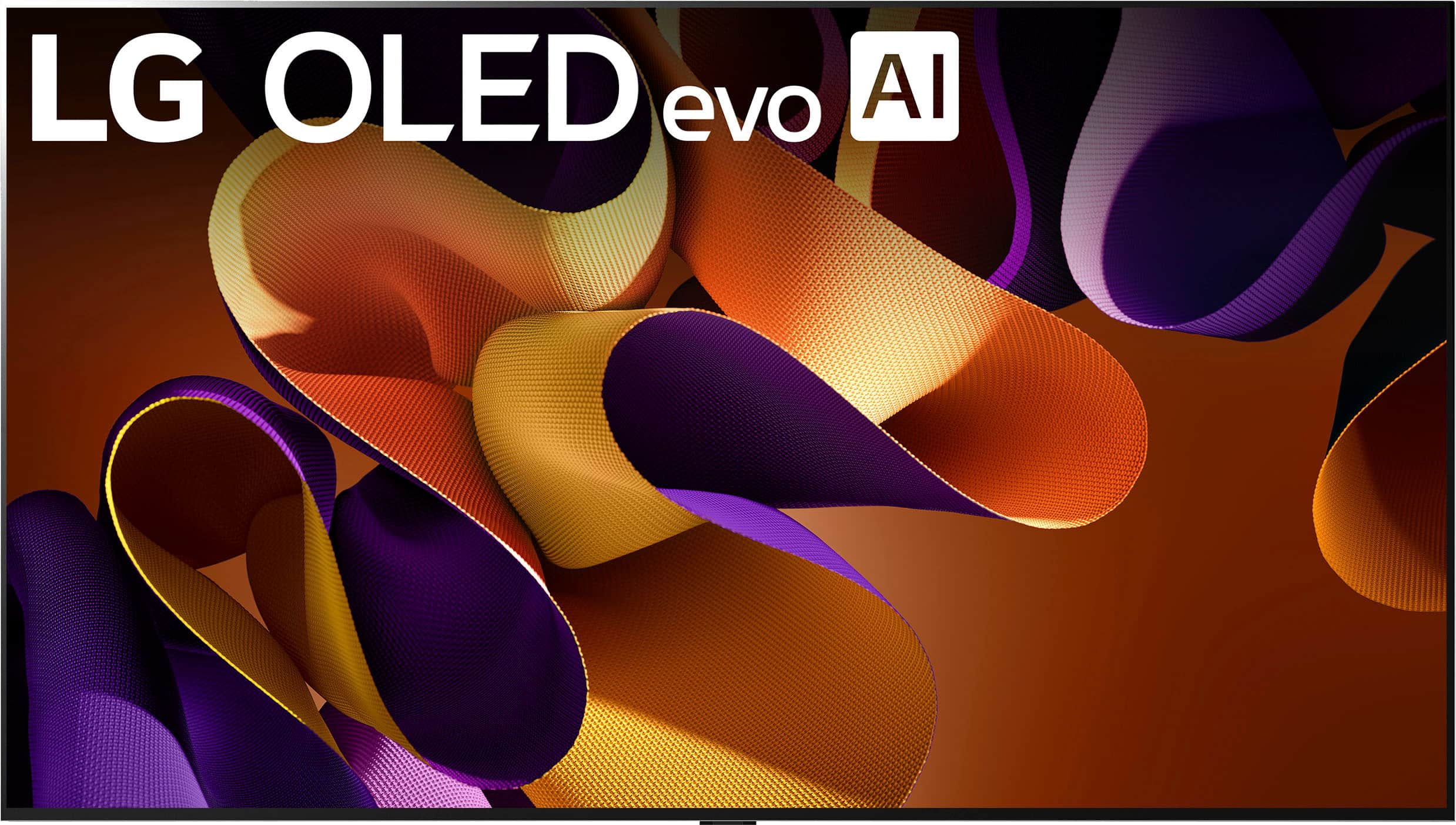
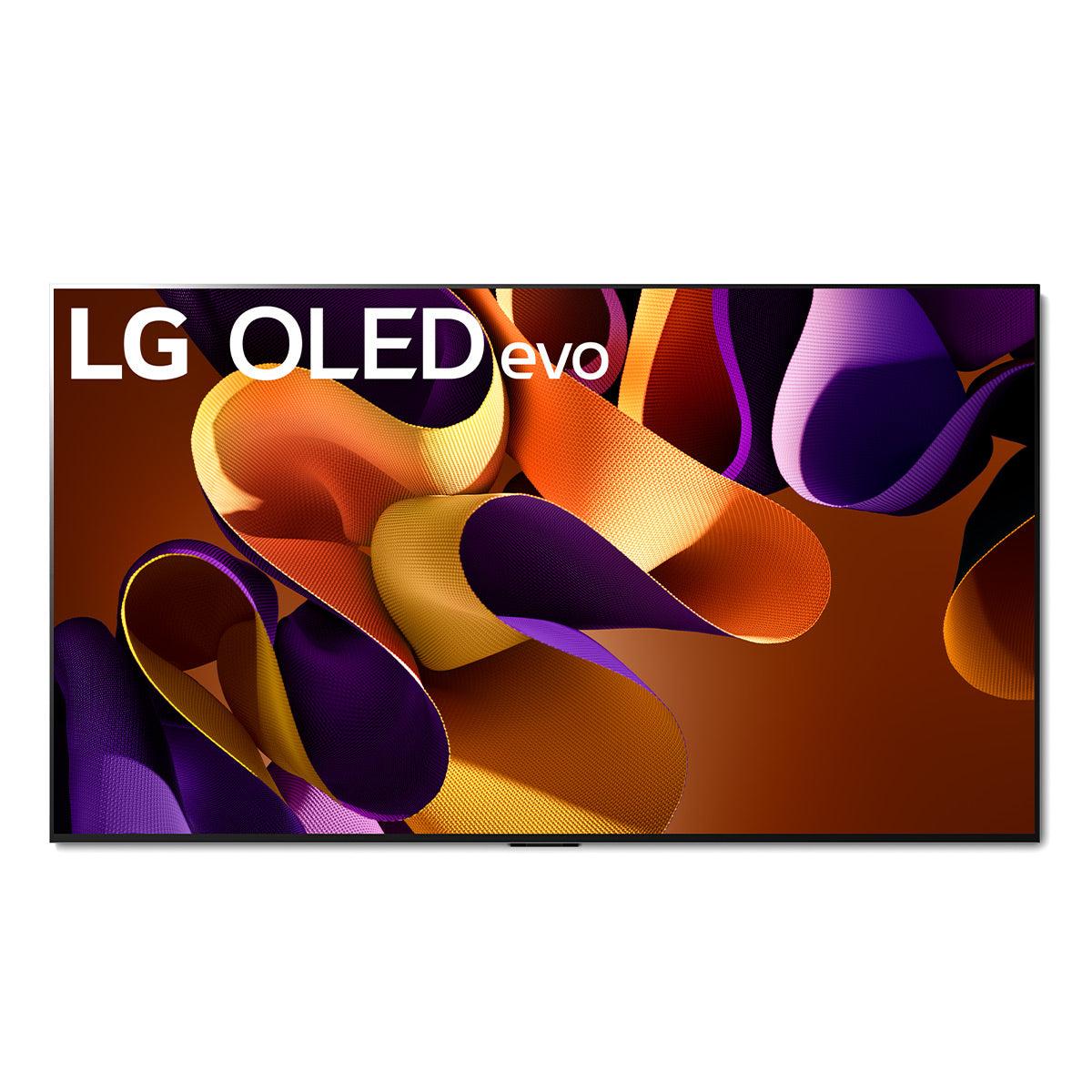
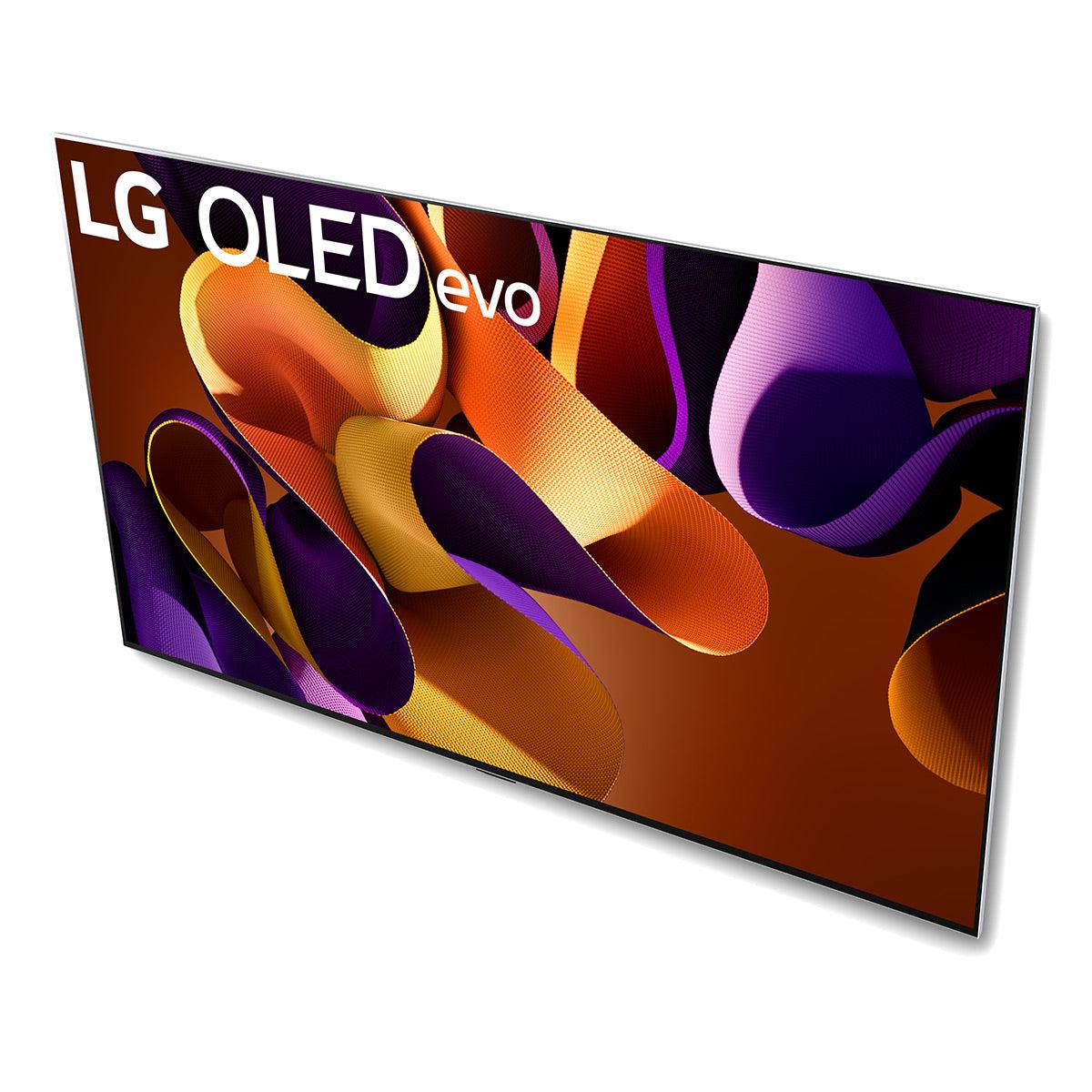
The LG G4, released in 2024, represents LG's second-generation Micro Lens Array (MLA) technology. This might sound like marketing speak, but MLA is genuinely revolutionary for OLED displays. Each pixel has microscopic lenses that focus and amplify the light output, making the display 150% brighter than previous OLED generations while using the same amount of power.
OLED technology works fundamentally differently than any backlit display. Each of the 8.3 million pixels creates its own light and can turn completely off. When a pixel is off, it produces true black—not dark gray, but the complete absence of light. This creates what we call "infinite contrast," where the brightest whites can sit directly next to the deepest blacks without any light bleeding between them.
The α11 AI processor in the G4 focuses heavily on preserving the filmmaker's intent. While Samsung's processor emphasizes enhancement and optimization, LG's approach is more about accurate reproduction. It analyzes content to determine the optimal color temperature, brightness, and tone mapping to match how directors intended their work to be seen.
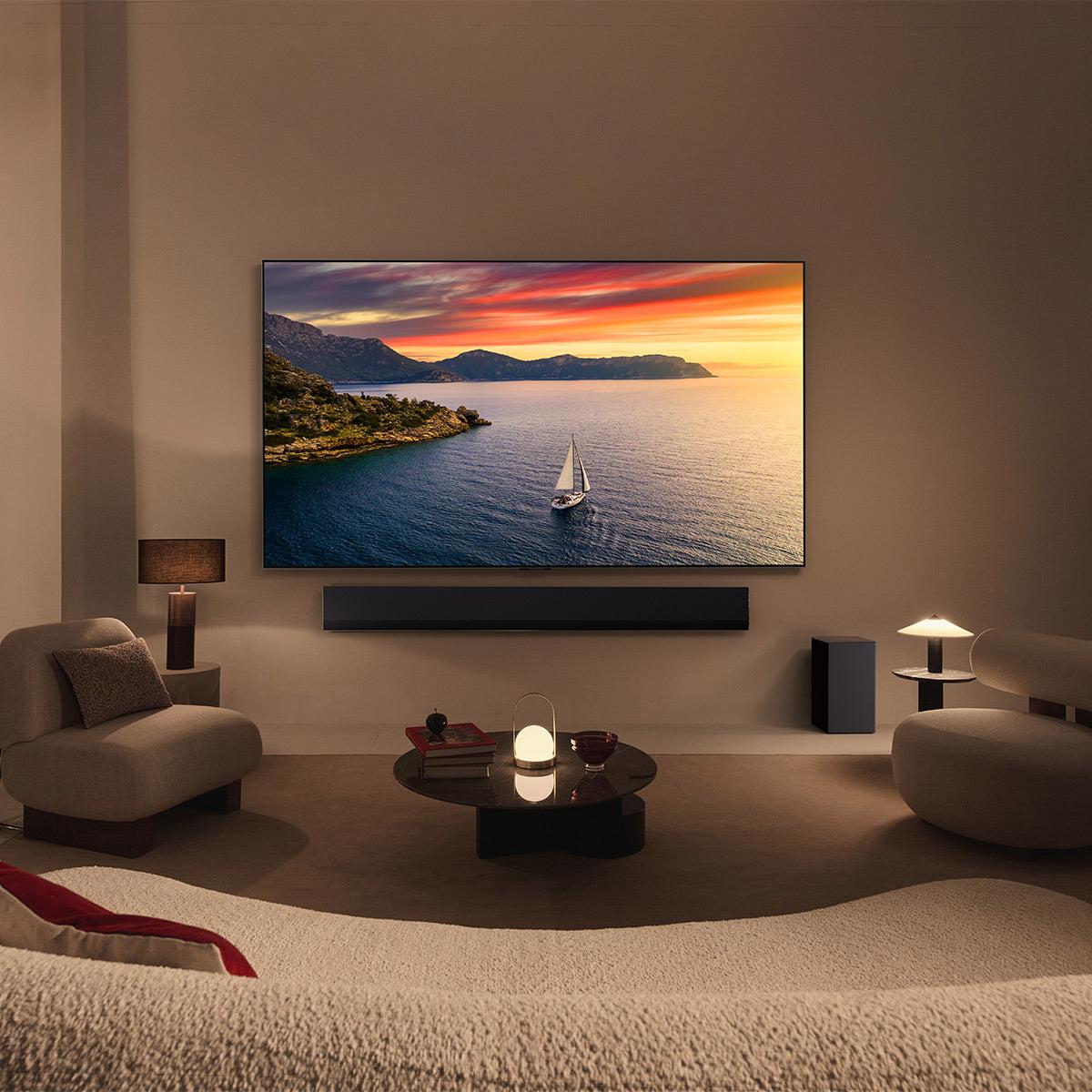
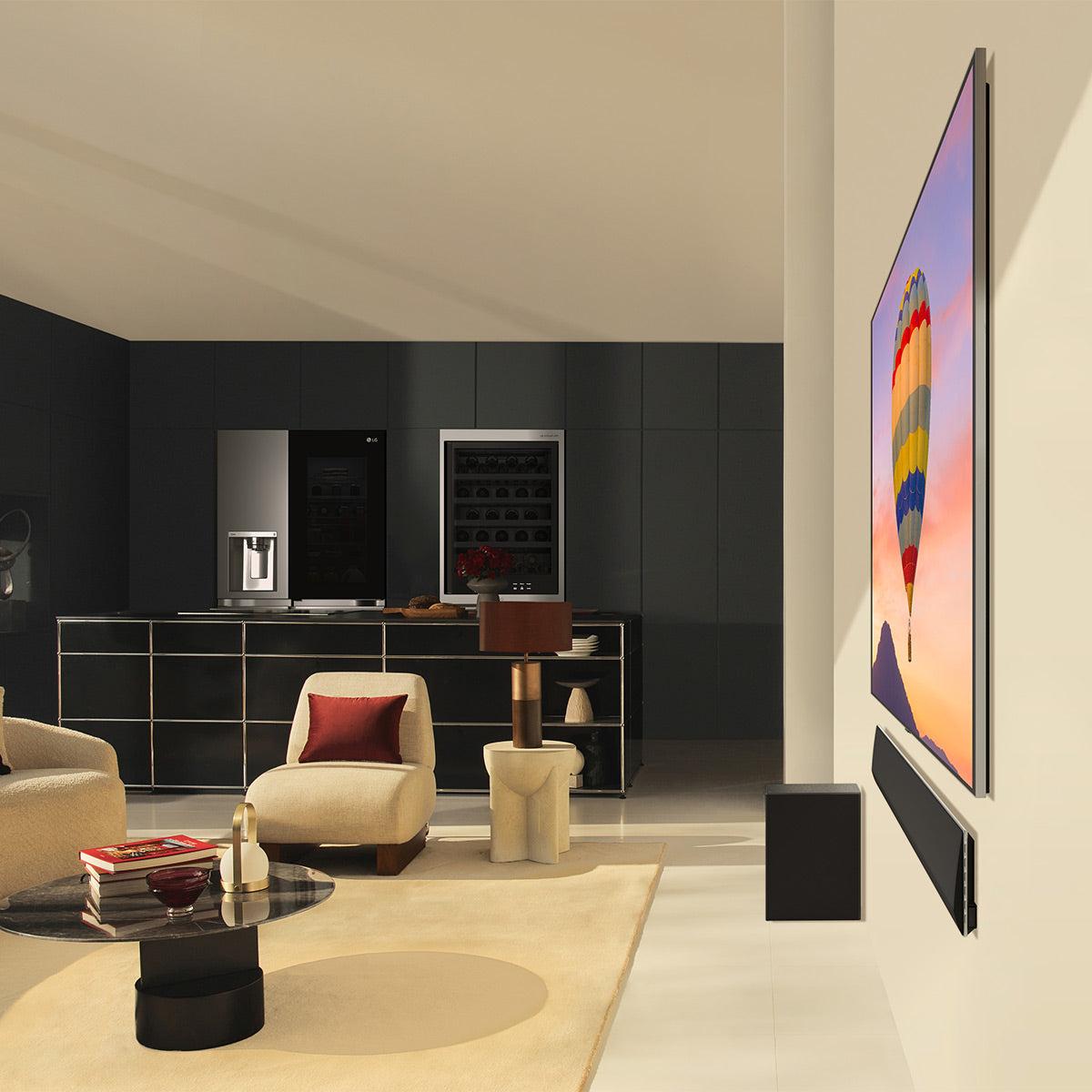
One unique aspect of the G4 is its "One Wall Design," where the TV sits nearly flush against the wall when mounted. At 97 inches, this creates an almost window-like effect that can dramatically change how a room feels.
Here's where the technology differences become most apparent in daily use. The Samsung QN80F can push peak brightness well over 1,000 nits, and in some bright highlights, it can reach even higher. This matters tremendously if your TV room has windows or overhead lighting. I've tested similar Samsung displays in bright showrooms, and they maintain their punch even under harsh retail lighting.
The LG G4 reaches an impressive 1,487 nits peak brightness—exceptional for an OLED—but this brightness is distributed differently. OLED displays excel at maintaining detail in both the brightest and darkest parts of the same scene simultaneously. When you're watching a movie with a campfire scene at night, you'll see every detail in the shadows while the fire still looks realistically bright.
For HDR content, both displays support different standards. Samsung uses HDR10+ Adaptive, which adjusts brightness and contrast scene by scene based on metadata embedded in the content. LG supports Dolby Vision, which does something similar but is more widely adopted by streaming services and UHD Blu-rays. This isn't a dealbreaker either way, but it's worth considering your content sources.
This is where OLED technology shows its biggest advantage. The LG G4's perfect blacks create a contrast ratio that's technically infinite—you literally cannot measure it because you're dividing by zero. In practical terms, this means that dark movie scenes have incredible depth and detail. Space movies, horror films, and dramatic scenes shot in low light all benefit enormously from this capability.
The Samsung QN80F uses local dimming to darken areas of the screen, and with Mini-LED technology, it does this quite well. Samsung has made significant improvements in 2025 to reduce "blooming"—the slight halo effect you might see around bright objects on dark backgrounds. However, physics still applies: when you're using a backlight, some light will always leak through.
In a dedicated home theater with controlled lighting, the OLED's advantage here is substantial. In a bright family room, the difference becomes less noticeable because ambient light raises the overall black level anyway.
Both displays excel at color reproduction, but in different ways. Samsung's quantum dot technology creates colors that are incredibly saturated and vibrant. They cover wide color gamuts and make HDR content really pop off the screen. The 2025 Color Booster Pro feature enhances this further by analyzing each frame and optimizing color saturation in real-time.
LG's approach prioritizes accuracy over enhancement. The G4 covers 98% of the DCI-P3 color space that most movies are mastered in, and it does so with remarkable precision. Colors look natural and faithful to the source material. This is particularly important if you're serious about movies and want to see them as the director intended.
For sports and bright, colorful content, Samsung's approach often looks more impressive at first glance. For films and dramatic content, LG's accuracy tends to create a more immersive, realistic experience.
Modern gaming demands have pushed TV manufacturers to prioritize features that were once only found in computer monitors. Both of these displays deliver excellent gaming performance, but with different strengths.
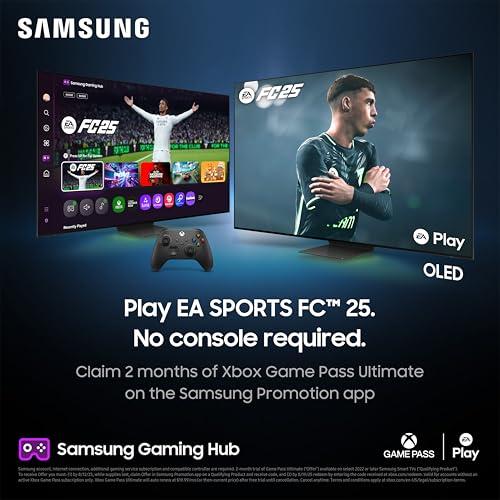
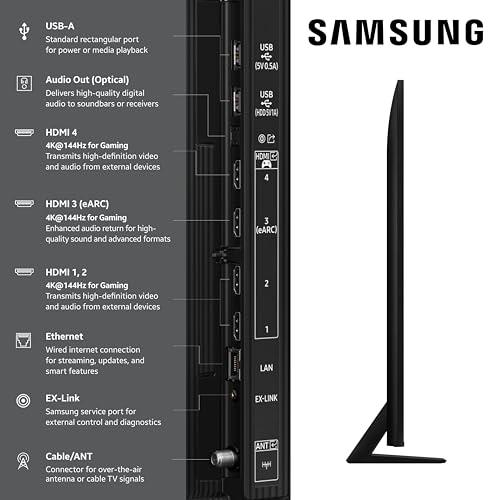
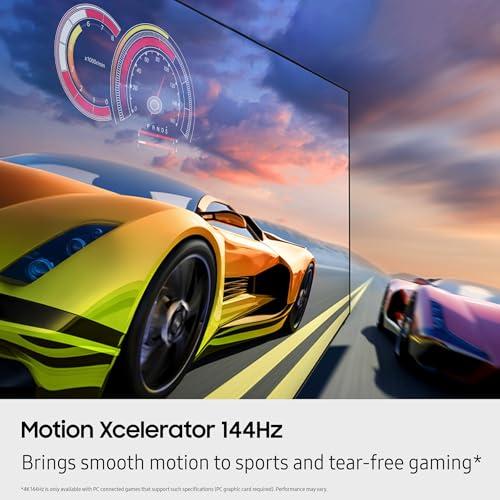
The Samsung QN80F supports up to 144Hz refresh rates through its Motion Xcelerator 144Hz technology. This is particularly valuable for PC gaming, where high-end graphics cards can push frame rates well above 120fps in certain games. The TV also supports Variable Refresh Rate (VRR), which eliminates screen tearing by synchronizing the display's refresh rate with your gaming device's output.
The LG G4 caps at 120Hz, which is still excellent for console gaming since the PlayStation 5 and Xbox Series X max out at 120fps anyway. However, where OLED really shines is response time—the G4 achieves under 0.1 milliseconds. This is the time it takes for a pixel to change from one color to another, and it's virtually instantaneous. In fast-paced games, this translates to incredibly clear motion with no blur trails behind moving objects.
Both displays feature Auto Low Latency Mode (ALLM), which automatically switches to game mode when it detects a gaming console. Input lag—the delay between pressing a controller button and seeing the action on screen—is excellent on both, typically under 20 milliseconds.
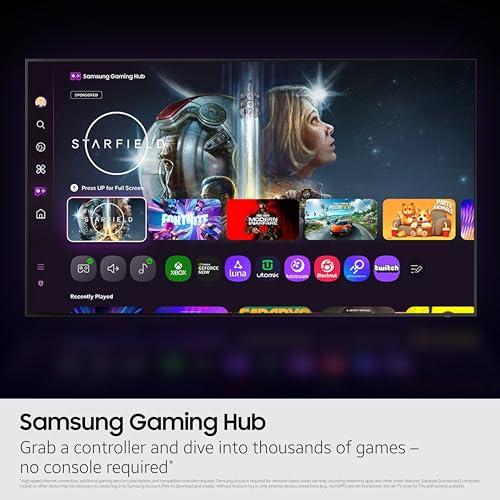
Samsung includes several gaming-specific AI features in the 2025 model. The AI Auto Game Mode detects what type of game you're playing and optimizes picture settings accordingly. Playing a dark horror game? It'll enhance shadow detail. Racing game? It'll prioritize motion clarity and color vibrancy.
The LG G4 supports HGiG (HDR Gaming Interest Group) tone mapping, which ensures that HDR games display with proper brightness levels and don't lose detail in dark areas. This feature is particularly valuable for games with mixed lighting conditions.
Both manufacturers have significantly upgraded their smart TV platforms for these latest models, but with different focuses.
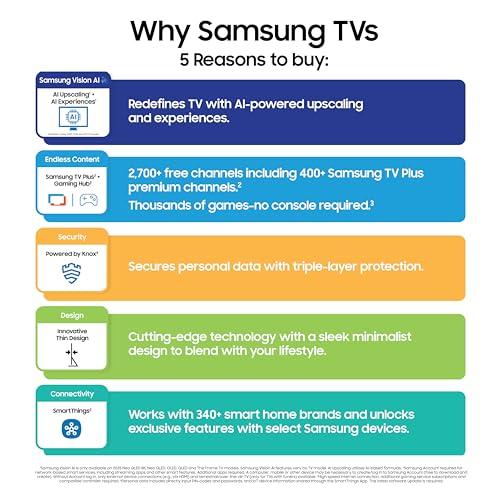
Samsung's Tizen OS in the 2025 QN80F includes their new Vision AI features. The most interesting is Generative Wallpaper, which uses AI to create custom ambient backgrounds based on keywords you provide. Want a serene forest scene? The TV generates one that's unique to your display. It's a small feature, but it demonstrates how AI is being integrated throughout the user experience.
The new far-field voice recognition works impressively well, allowing you to control the TV and connected smart home devices from across the room. Samsung has also improved app performance significantly—navigating between Netflix, Disney+, and other streaming services is noticeably snappier than previous generations.
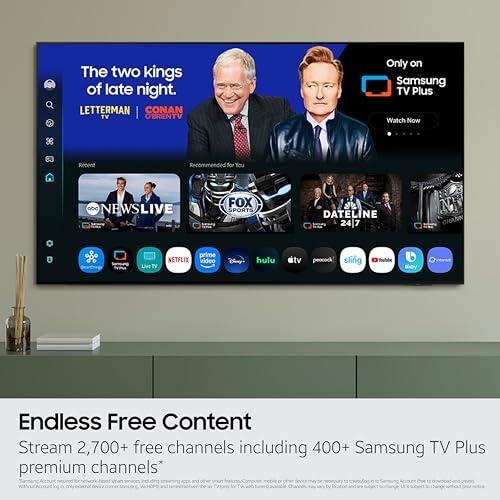
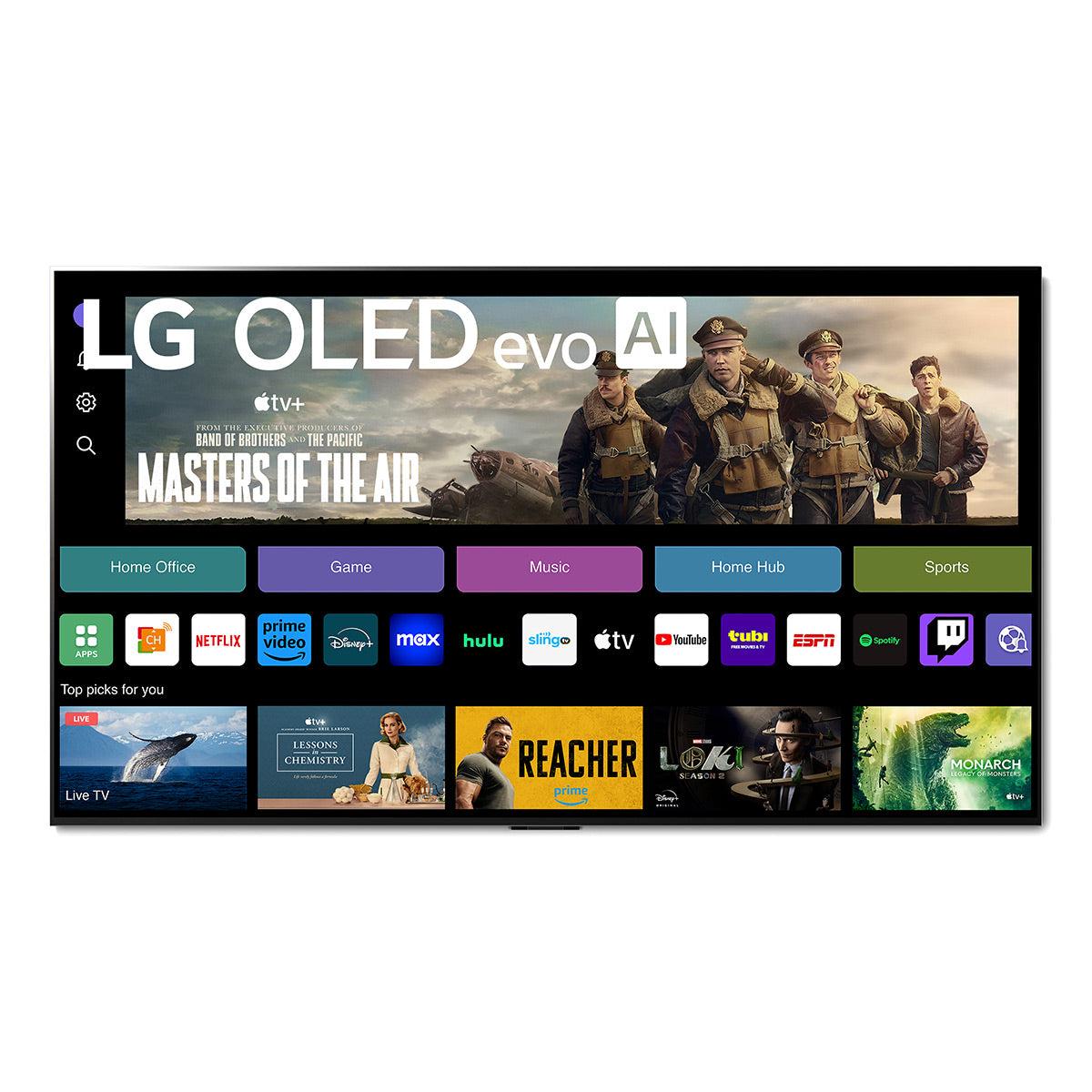
LG's webOS 24 on the G4 focuses more on content discovery and organization. The interface is clean and responsive, with excellent integration of LG's free streaming service, LG Channels. The Alpha 11 processor ensures that upscaling and processing happen smoothly, even when switching between different content types quickly.
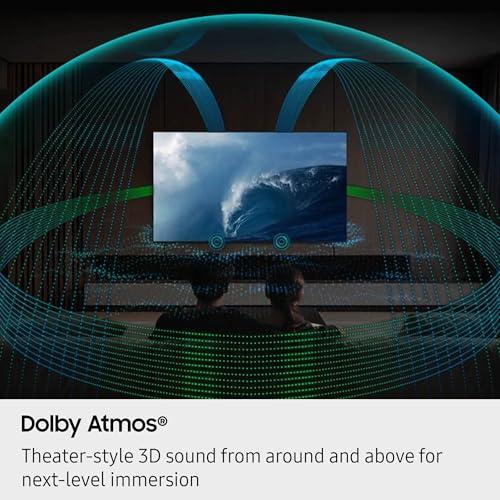
At these screen sizes, built-in audio becomes more important because many users don't immediately invest in external sound systems. The LG G4 includes a 60W, 4.2-channel system with Dolby Atmos support. The speakers fire downward and are designed to work with the TV's thin profile. LG's AI Acoustic Tuning analyzes your room and adjusts the sound accordingly.
The Samsung QN80F has a 30W system, which is more modest, but includes Samsung's Adaptive Sound Pro technology. This AI-driven feature analyzes the content type—dialogue-heavy drama, action movie, sports broadcast—and optimizes the sound profile. The Object Tracking Sound (OTS Lite) technology attempts to make sound follow action across the screen, which can be quite effective in practice.
Both TVs support Q-Symphony (Samsung) or AI Sound Pro (LG) when paired with compatible soundbars from their respective manufacturers. However, at these screen sizes, I'd strongly recommend budgeting for a dedicated sound system. The visual impact of a 97-100 inch display deserves audio that can match its scale.
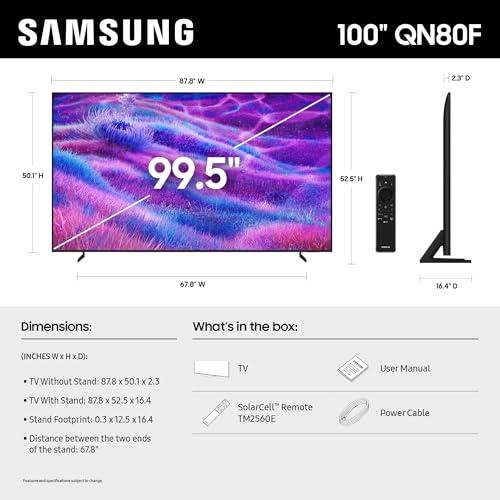
These aren't just large TVs—they're furniture-sized pieces of technology that require careful planning. The Samsung QN80F weighs 64kg (141 lbs) with its stand, while the LG G4 weighs similar at 64kg. Both require professional installation for wall mounting, and you'll need to ensure your wall can support the weight.
Viewing distance becomes crucial at these sizes. For 4K content, you can sit closer than you might expect—8-10 feet is comfortable for most people, while 12-15 feet provides a more traditional viewing experience. The Samsung's superior brightness makes it more forgiving if you need to position it where ambient light might be an issue.
Both displays require careful consideration of room acoustics. At these sizes, sound reflections become more noticeable, and the built-in speakers, while decent, may struggle to fill larger spaces adequately.
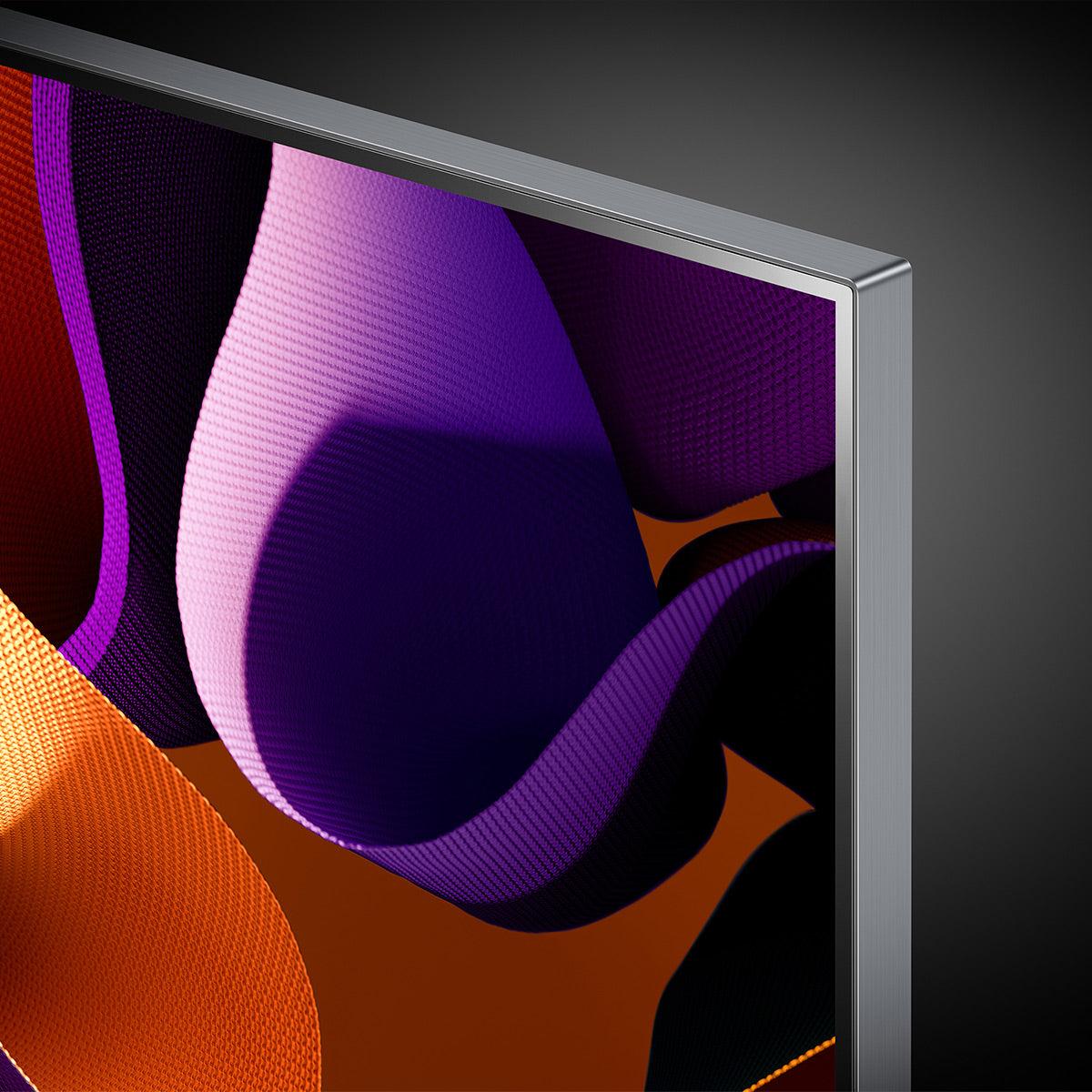
The price difference between these displays—over $14,000—represents more than just a premium for OLED technology. The LG G4 at $19,996.99 is positioned as a luxury product for serious home theater enthusiasts. The build quality, materials, and included calibration options reflect this positioning.
The Samsung QN80F at $5,997.99 offers exceptional value for its feature set and screen size. Samsung is clearly positioning this as the volume leader in the ultra-large category, making 100-inch displays accessible to a much broader audience.
From a price-per-inch perspective, both represent good value within their respective categories. The Samsung offers more screen real estate for less money, while the LG provides superior technology per dollar spent.
If you're building a dedicated home theater, the choice between these displays depends heavily on your room design and priorities. The LG G4 excels in controlled lighting environments where its perfect blacks and accurate colors can shine. The infinite contrast ratio creates depth and dimensionality that's particularly noticeable in scope films and dark dramas.
For home theaters with some ambient light or multi-purpose family rooms, the Samsung QN80F might be the better choice. Its superior brightness ensures that daytime viewing remains enjoyable, and the quantum dot color technology maintains saturation even in brighter conditions.
Both displays benefit from professional calibration, but the LG G4 includes more advanced calibration options out of the box. If you're particular about color accuracy and have the budget for professional setup, the OLED technology provides a higher ceiling for optimization.
Choose the Samsung 100" Neo QLED QN80F if you want maximum screen size at an accessible price point, have a bright viewing room, prioritize gaming features like 144Hz support, or prefer vibrant, punchy colors for varied content types. It's also the clear choice if burn-in concerns keep you away from OLED technology.
Choose the LG 97" OLED evo G4 Series if picture quality is your top priority regardless of cost, you have a controlled lighting environment, you're building a serious home theater setup, or you prioritize color accuracy for film viewing. The perfect blacks and infinite contrast ratio provide an experience that backlit displays simply cannot match.
Both represent the pinnacle of their respective technologies and will provide years of exceptional viewing experiences. The Samsung offers broader appeal and better value, while the LG provides uncompromising picture quality for those willing to pay for perfection. Your choice ultimately depends on your room, your priorities, and your budget—but either way, you're getting a display that will transform how you experience entertainment at home.
| Samsung 100" Neo QLED QN80F 4K Smart TV 2025 | LG 97" OLED evo G4 Series 4K UHD Smart TV |
|---|---|
| Price - The most significant difference between these ultra-large displays | |
| $5,997.99 (exceptional value for 100" screen) | $19,996.99 (premium pricing for OLED technology) |
| Screen Size - Every inch matters at this scale | |
| 100" diagonal (3" larger viewing area) | 97" diagonal (still massive but slightly smaller) |
| Display Technology - Fundamentally different approaches to picture quality | |
| Neo QLED Mini-LED with quantum dots (bright, durable) | OLED evo with MLA (perfect blacks, infinite contrast) |
| Peak Brightness - Critical for bright room performance | |
| 1,000+ nits (excellent for sunlit rooms) | 1,487 nits (brightest OLED ever, good for moderate light) |
| Black Levels - Most important for dark room viewing and contrast | |
| Near-black with minimal blooming (very good) | Perfect blacks with infinite contrast (unmatched) |
| Gaming Refresh Rate - Future-proofing for next-gen gaming | |
| Up to 144Hz with Motion Xcelerator technology | 120Hz native (excellent for current consoles) |
| Response Time - How quickly pixels change color during motion | |
| Low input lag, good motion handling | Under 0.1ms (virtually instantaneous) |
| HDR Support - Compatibility with premium content formats | |
| HDR10+ Adaptive (scene-by-scene optimization) | Dolby Vision, HDR10, HLG (wider streaming compatibility) |
| Processor - AI features and upscaling quality | |
| NQ4 AI Gen2 with 20 neural networks (2025 latest) | α11 AI Processor 4K (focus on accuracy) |
| Audio System - Built-in sound quality | |
| 30W, 4.2-channel with Adaptive Sound Pro | 60W, 4.2-channel with AI Acoustic Tuning |
| Burn-in Risk - Long-term durability consideration | |
| No burn-in risk (Mini-LED backlight technology) | Potential burn-in with static content (OLED limitation) |
| Smart Features - 2025 vs 2024 platform capabilities | |
| Tizen OS with Vision AI, Generative Wallpaper | webOS 24 with LG Channels, streamlined interface |
| Best Use Case - Where each display excels most | |
| Bright rooms, gaming, mixed content, value seekers | Dark rooms, movies, color accuracy, premium experience |
The Samsung 100" Neo QLED QN80F is significantly better for bright rooms. Its Mini-LED technology can reach over 1,000 nits of peak brightness, making it easily visible even with direct sunlight streaming through windows. The quantum dot layer maintains vibrant colors in bright conditions. While the LG 97" OLED G4 is the brightest OLED ever made at 1,487 nits, it still can't compete with the Samsung's brightness in very bright environments.
The LG 97" OLED G4 costs $19,996.99 compared to the Samsung QN80F at $5,997.99—a difference of about $14,000. Whether it's worth it depends on your priorities. The LG offers perfect blacks, infinite contrast, and superior color accuracy for home theaters. The Samsung provides 90% of the visual impact at 30% of the price, making it better value for most buyers.
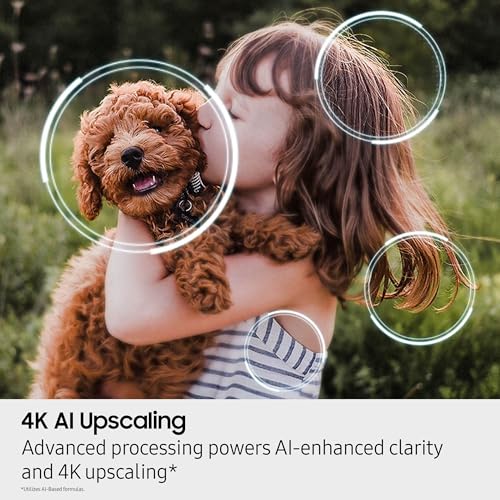
For dark room movie watching, the LG 97" OLED G4 delivers superior picture quality with perfect blacks and infinite contrast that makes dark scenes incredibly detailed. For mixed lighting conditions and varied content, the Samsung 100" Neo QLED QN80F performs better with its higher brightness and vibrant quantum dot colors. Both excel at 4K upscaling and HDR content.
The Samsung QN80F supports up to 144Hz refresh rates, making it better for high-end PC gaming. The LG G4 caps at 120Hz but offers near-instantaneous 0.1ms response time for incredibly clear motion. Both support VRR, ALLM, and have excellent input lag. For console gaming, either works great, but the Samsung has a slight edge for future PC gaming capabilities.
The LG 97" OLED evo G4 is generally better for dedicated home theaters with controlled lighting. The perfect blacks create incredible depth and contrast that's especially noticeable in dark movie scenes. The color accuracy is also superior for film content. However, if your theater has any ambient light, the Samsung 100" Neo QLED QN80F might be the better choice due to its superior brightness.
The Samsung QN80F runs Tizen OS with 2025 Vision AI features including Generative Wallpaper and improved voice control. The LG G4 uses webOS 24 with a clean interface and excellent content discovery. Both platforms are fast and support all major streaming apps. Samsung's 2025 AI features are more advanced, while LG's interface is more streamlined and user-friendly.
The LG 97" OLED G4 does have potential burn-in risk if you frequently display static content like news tickers, gaming HUDs, or channel logos for extended periods. The Samsung 100" Neo QLED QN80F has no burn-in risk since it uses Mini-LED backlighting. For varied viewing habits, this makes the Samsung more worry-free for long-term use.
The LG 97" OLED G4 has superior built-in audio with a 60W, 4.2-channel system compared to the Samsung QN80F's 30W system. The LG includes AI Acoustic Tuning and better Dolby Atmos implementation. However, both TVs benefit significantly from external sound systems, especially at these large screen sizes where the visual impact deserves matching audio quality.
The Samsung 100" Neo QLED QN80F is 3 inches larger diagonally than the LG 97" OLED G4. While this might not sound significant, at these sizes it represents about 6% more viewing area. The Samsung also costs much less while providing more screen real estate, making it better value for size-focused buyers.
The Samsung 100" Neo QLED QN80F excels at sports and bright content with its quantum dot technology creating vibrant, saturated colors and superior brightness for daytime viewing. The motion handling is excellent for fast sports action. The LG G4 offers more natural colors and perfect motion clarity, but the Samsung's punch and brightness make sports more engaging in typical living room conditions.
Both the Samsung QN80F and LG G4 weigh around 64kg and require professional installation for wall mounting. The LG has a "One Wall Design" that sits nearly flush when mounted, while the Samsung has a more traditional profile. Both need careful room planning and strong wall support. The Samsung is more forgiving for placement due to its superior brightness in various lighting conditions.
The Samsung 100" Neo QLED QN80F offers better long-term value with no burn-in concerns, 144Hz gaming support for future consoles, and aggressive pricing. The LG 97" OLED evo G4 provides superior technology that will remain impressive for years, but at a premium price. For most buyers, the Samsung's combination of size, features, and price provides better long-term value proposition.
We've done our best to create useful and informative comparisons to help you decide what product to buy. Our research uses advanced automated methods to create this comparison and perfection is not possible - please contact us for corrections or questions. These are the sites we've researched in the creation of this article: rtings.com - youtube.com - theshortcut.com - c9av.com - youtube.com - rtings.com - youtube.com - samsung.com - wifihifi.com - samsung.com - samsung.com - samsung.com - bestbuy.com - samsung.com - flatpanelshd.com - schaeferstv.com - samsung.com - samsung.com - samsung.com - samsung.com - cullenshomecenter.com - rtings.com - marketplace.sce.com - abt.com - youtube.com - walts.com - videoandaudiocenter.com - youtube.com - fullspecs.net - big-georges.com - techradar.com - youtube.com

Privacy Policy
Terms and Conditions - Affiliate Policy
Home Security
© Copyright 2008-2026.
11816 Inwood Rd #1211, Dallas, TX 75244