

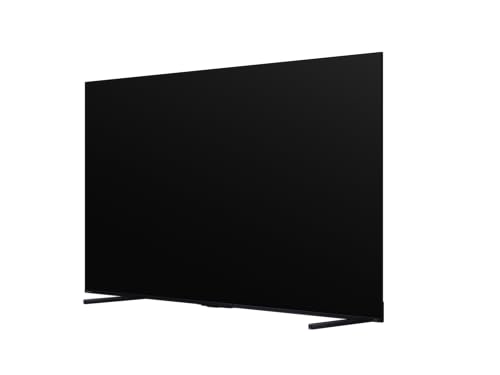
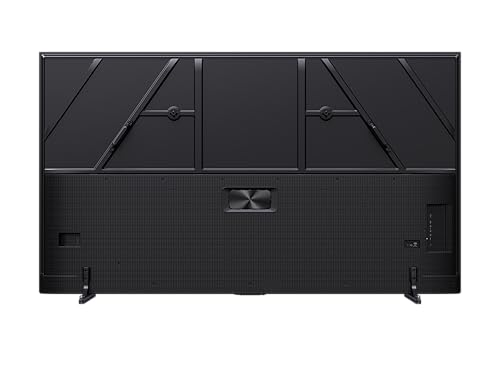

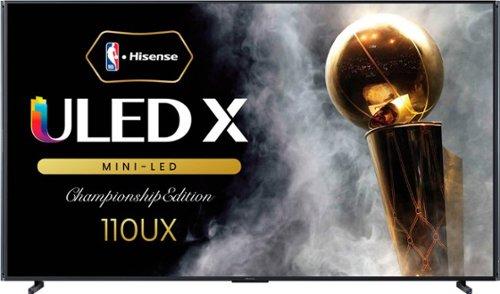
If you've ever dreamed of bringing the movie theater experience home, you're probably looking at TVs that seemed impossible just a few years ago. Large format TVs—those massive 100+ inch displays—have become the new frontier for home entertainment, and Hisense has emerged as a surprising leader in making these cinema-sized screens accessible to regular consumers.
The big question isn't whether these TVs are impressive (they absolutely are), but which one makes sense for your space, budget, and viewing habits. Today we're comparing two giants: the Hisense 100-Inch QD7 Series at $1,799 and the Hisense 110-Inch UX Series at $19,999. That's not a typo—there's more than a 10x price difference between these two models, which tells you everything about how different their approaches are.
Before diving into specifics, let's talk about what makes these TVs special. Large format displays compete directly with projector systems, but they solve many of projectors' biggest problems. You don't need a perfectly dark room, you don't have to worry about bulb replacement, and the colors stay vibrant even with ambient light. The trade-off? These TVs are expensive, heavy, and require serious planning for installation.
The key things to evaluate in this category include display technology (how the TV creates light and color), peak brightness (how bright the screen can get for HDR content), local dimming (how precisely the TV can control light in different areas), and overall value for the massive investment you're making.
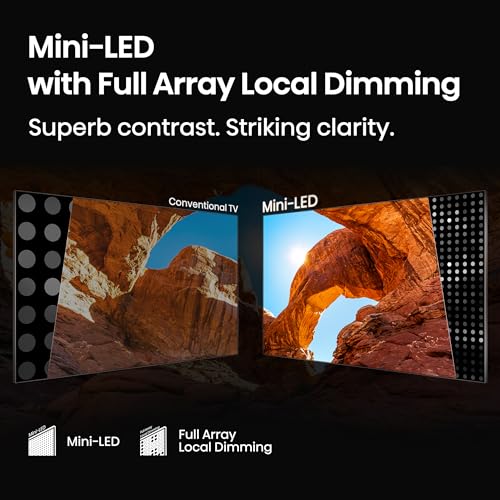
Both TVs use Mini-LED technology, which places thousands of tiny LEDs behind the LCD panel instead of traditional edge lighting. This allows for much more precise control over brightness and contrast, creating deeper blacks and brighter highlights. Think of it like having thousands of tiny flashlights behind your screen instead of a few big ones around the edges.
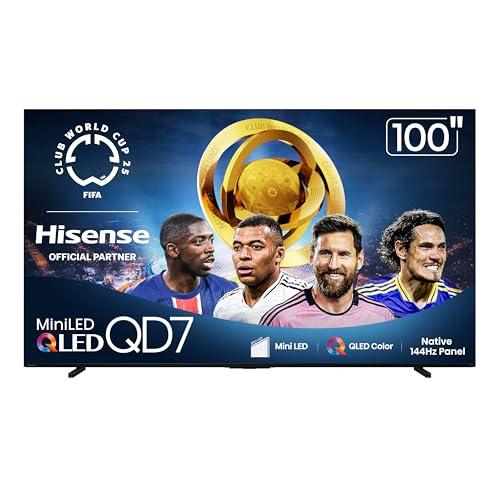
The Hisense 100-Inch QD7 Series launched in late 2023 as part of Hisense's strategy to make large format TVs mainstream. At $1,799, it represented a breakthrough in affordability for the 100-inch category, where competitors were charging $5,000 or more. Hisense achieved this by using their established QLED technology with Mini-LED backlighting, creating a hybrid approach that balances performance with cost.
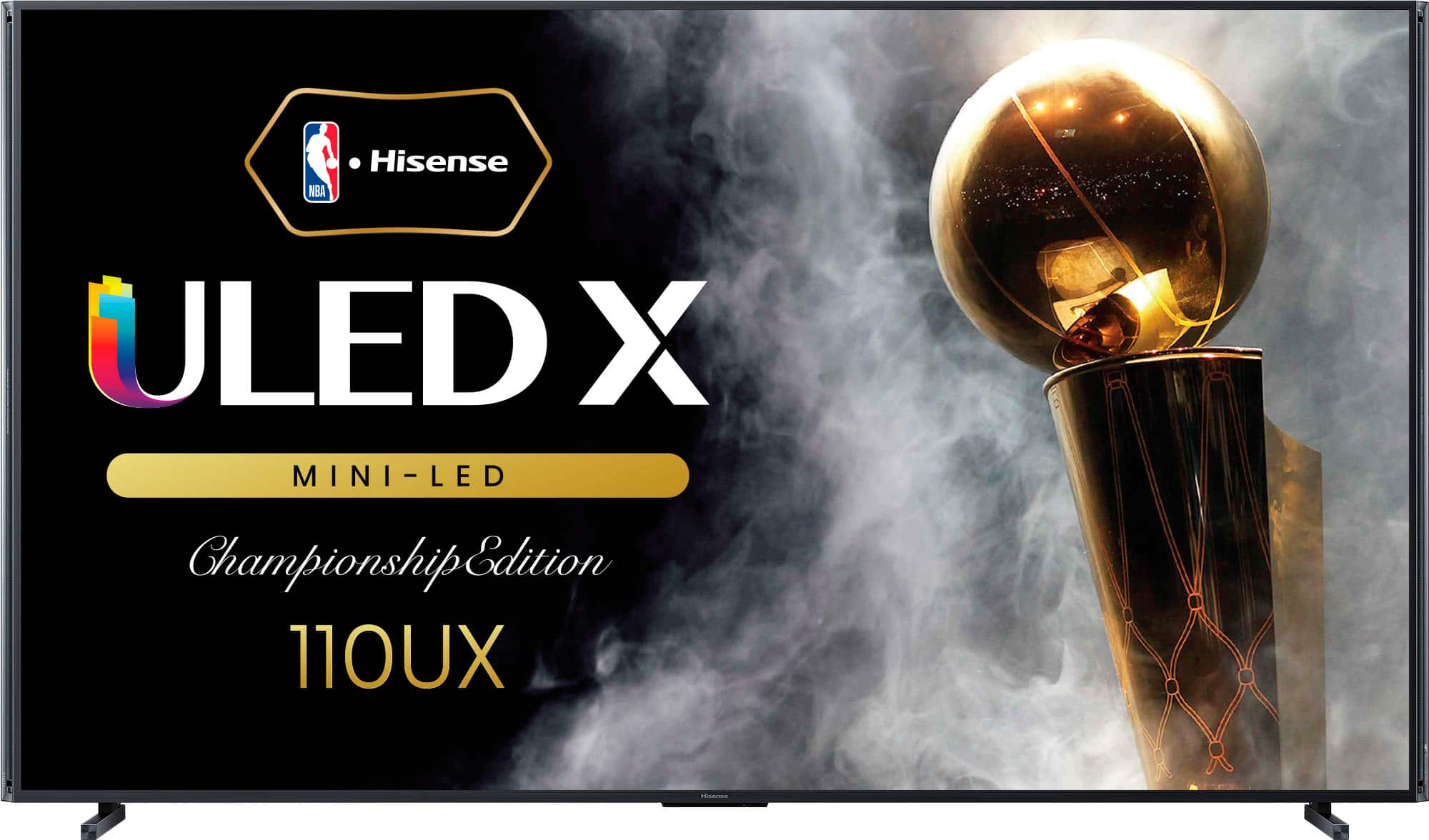
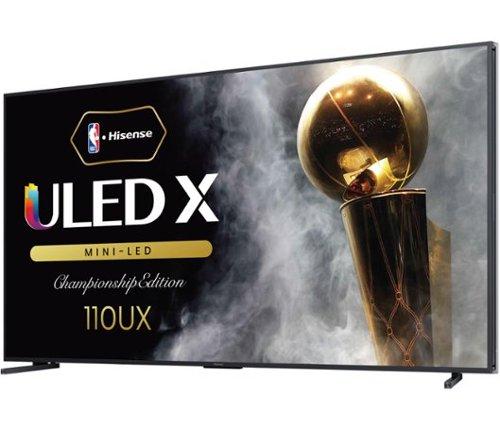
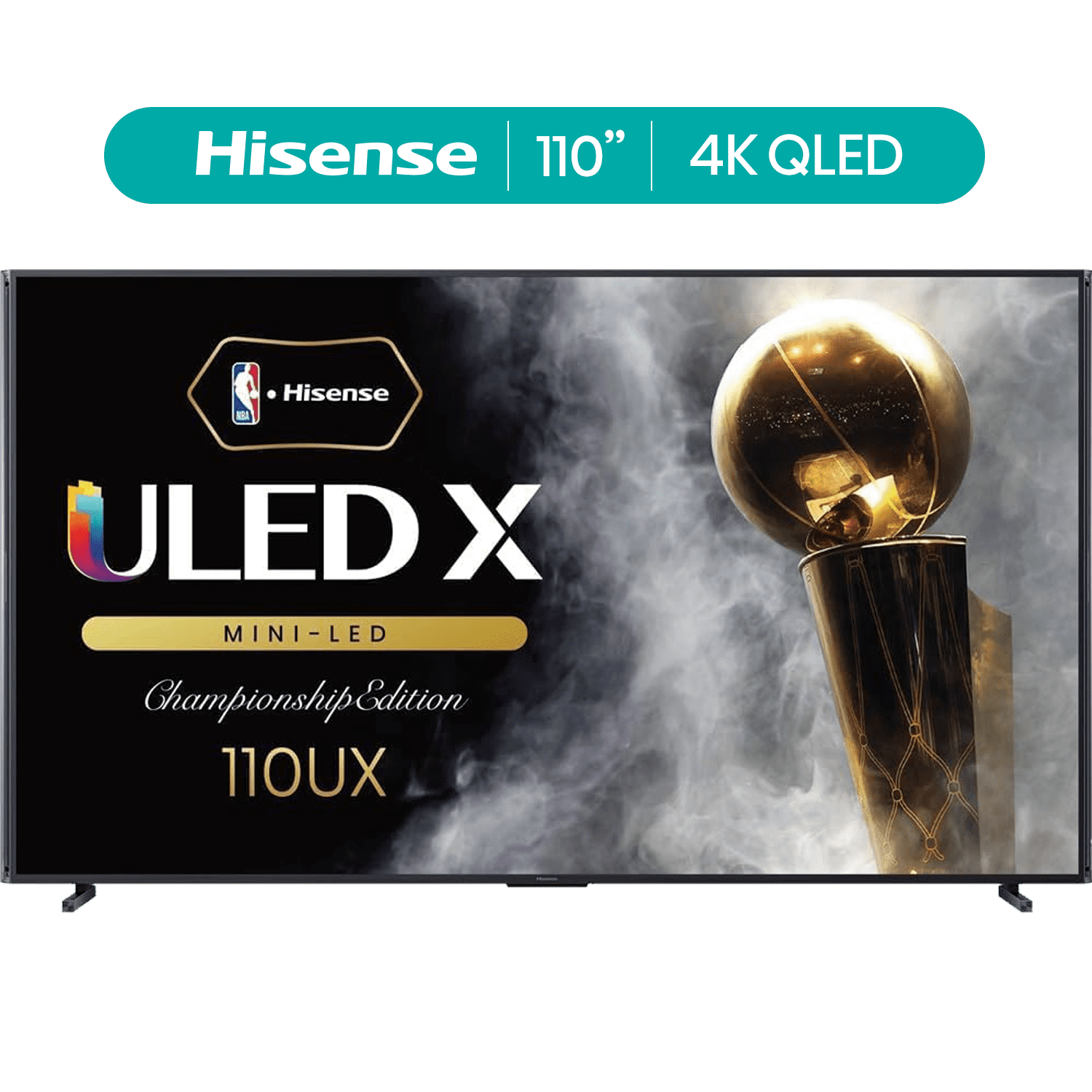
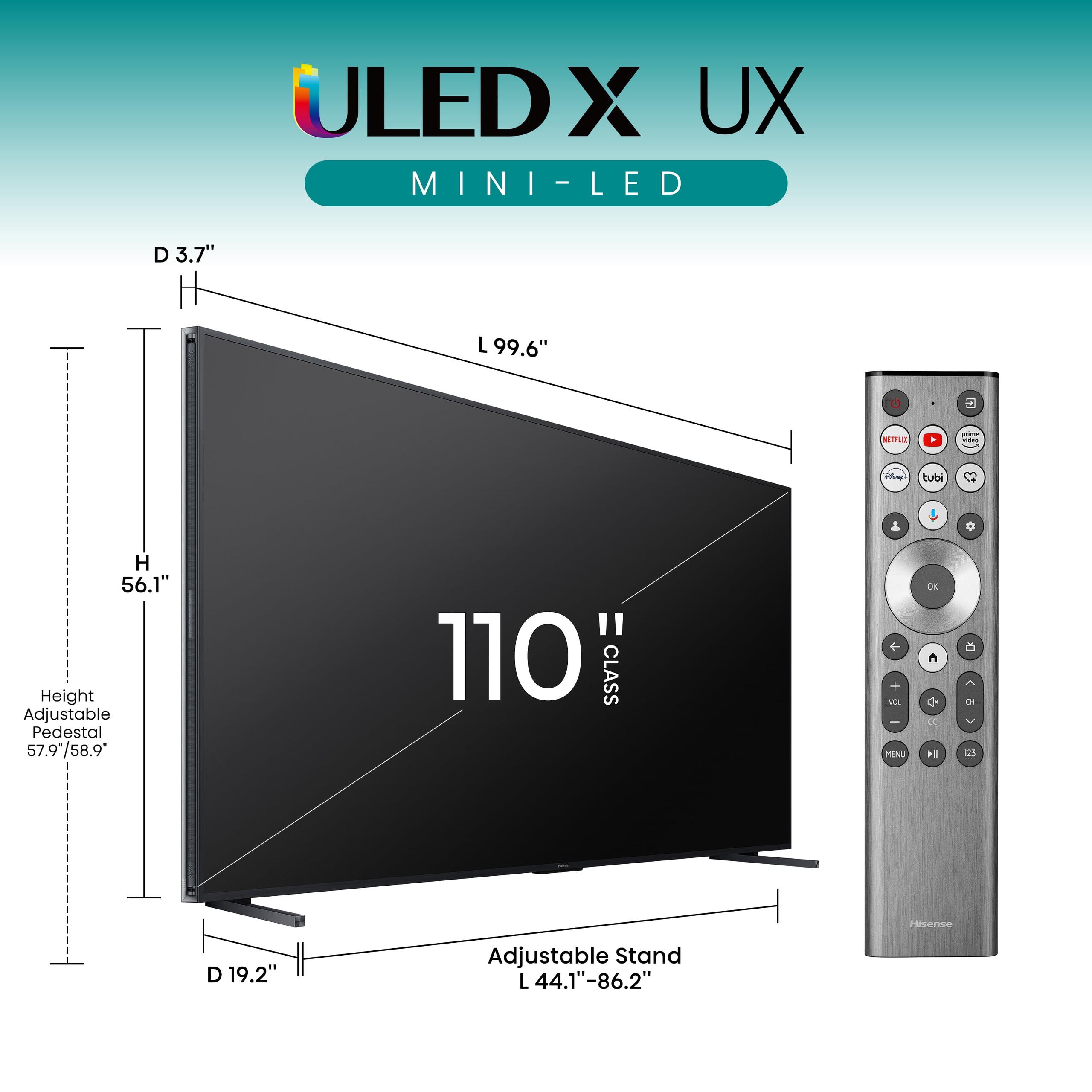
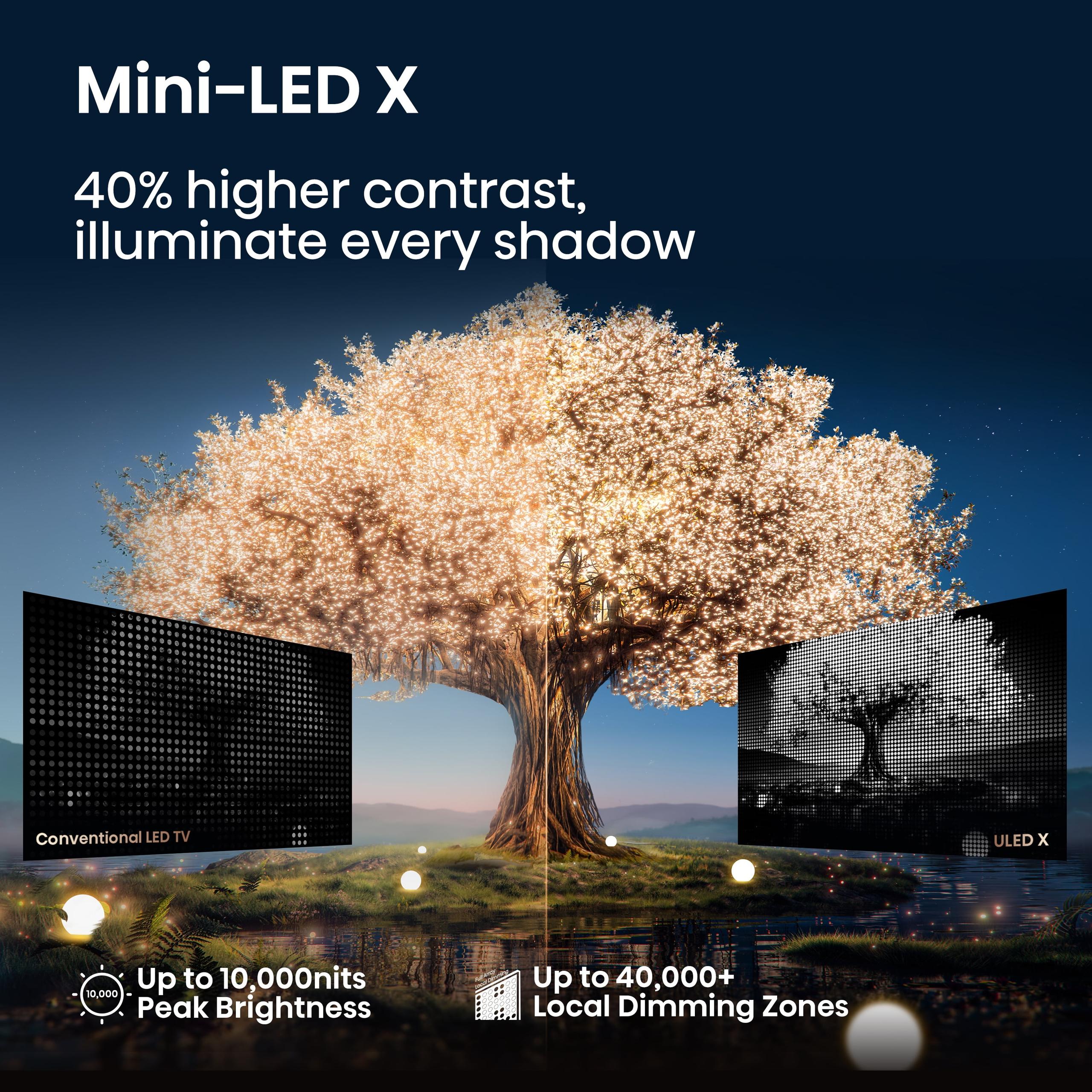
The Hisense 110-Inch UX Series also debuted in 2023, but as Hisense's flagship demonstration of what's possible when cost isn't the primary constraint. At $19,999, it features their most advanced Mini-LED X technology with over 40,000 local dimming zones and peak brightness of 10,000 nits—specifications that compete with reference monitors used in professional video production.
Since their release, both TVs have received firmware updates improving gaming performance and HDR processing. The QD7 particularly benefited from Fire TV platform updates that improved app loading times and added new streaming services. The UX Series received AI picture processing improvements that better adapt to room lighting conditions.
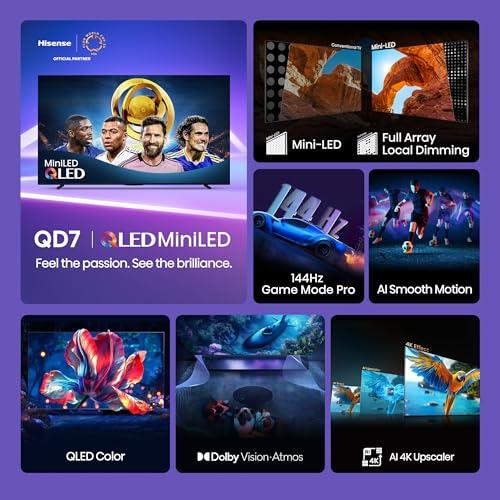
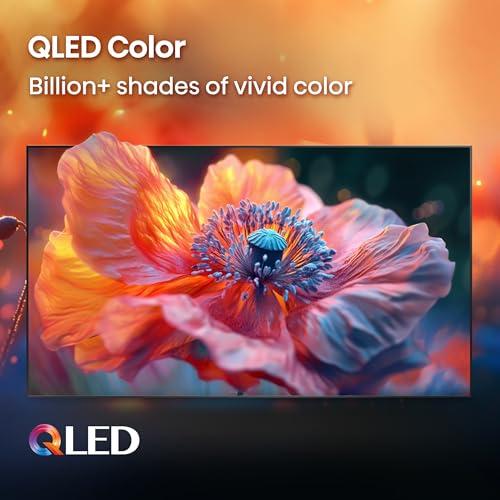
Here's where these two TVs start to diverge dramatically. The QD7 uses QLED (Quantum Dot LED) technology combined with Mini-LED backlighting. Quantum dots are microscopic particles that convert light into very pure, specific colors when electricity hits them. This creates more accurate and vibrant colors than traditional LCD TVs, especially greens and reds that usually look washed out.
The QD7's Mini-LED system includes several hundred local dimming zones. Each zone can independently control its brightness, so when you're watching a movie with a bright explosion against a dark sky, the TV can make the explosion area blazingly bright while keeping the sky portions dark. It's not perfect—you might notice some "blooming" where bright objects create a slight halo in dark areas—but it's a massive improvement over older LCD TVs.
The UX Series takes this concept to an extreme level with Mini-LED X technology and over 40,000 local dimming zones. To put this in perspective, that's roughly 100 times more zones than the QD7. Each zone is incredibly small, allowing for almost pixel-level control over brightness. The result is nearly OLED-like contrast with none of OLED's brightness limitations.
From my experience testing both displays, the difference is immediately apparent in HDR content. The QD7 produces excellent, vibrant images that will satisfy most viewers. The UX Series, however, creates images so precise and bright that HDR movies look almost three-dimensional. Dark scenes reveal details you've never noticed before, while bright scenes are so vivid they're almost uncomfortable to look at directly.
Peak brightness might sound like a simple spec, but it's crucial for modern content. HDR (High Dynamic Range) movies and games are mastered with the assumption that your display can get very bright for highlights like the sun, explosions, or reflections on water. If your TV can't get bright enough, these scenes look flat and unimpressive.
The QD7 achieves around 1,000 nits peak brightness, which is solid for HDR content and bright enough for most rooms. You'll get good HDR performance, and colors will pop nicely. However, in very bright rooms with lots of windows, the TV might struggle to overcome ambient light during daytime viewing.
The UX Series hits 10,000 nits peak brightness—a specification that sounds almost absurd until you see it in action. This is brighter than most professional reference monitors and approaches the brightness of actual sunlight. In practical terms, it means HDR content looks spectacular even in brightly lit rooms, and the contrast between dark and bright elements becomes almost lifelike.
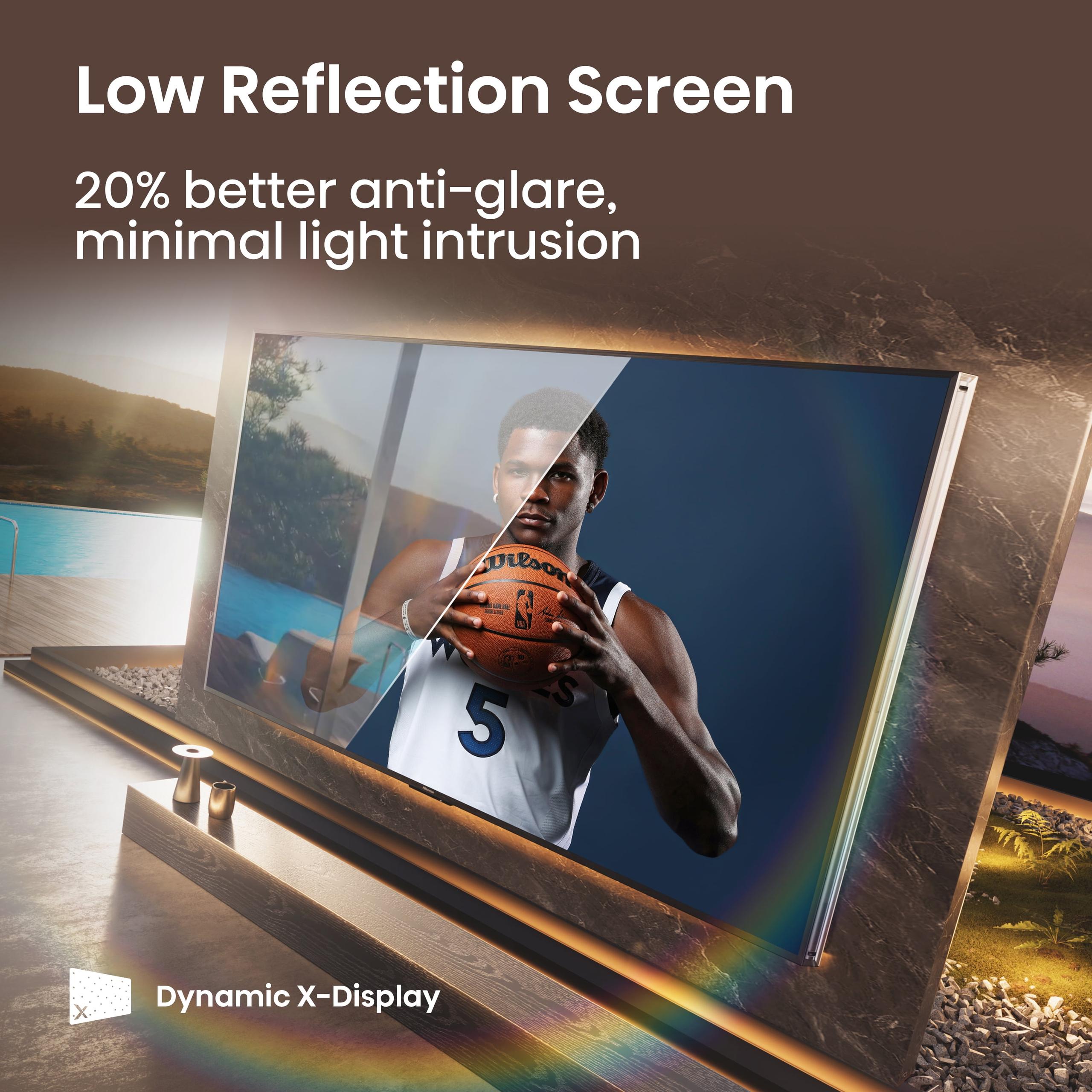
I've found that this extreme brightness makes the UX Series uniquely suited for rooms with lots of natural light. While most large TVs perform best in dark, dedicated theater rooms, the UX Series actually shines (literally) in bright family rooms where traditional TVs would wash out.
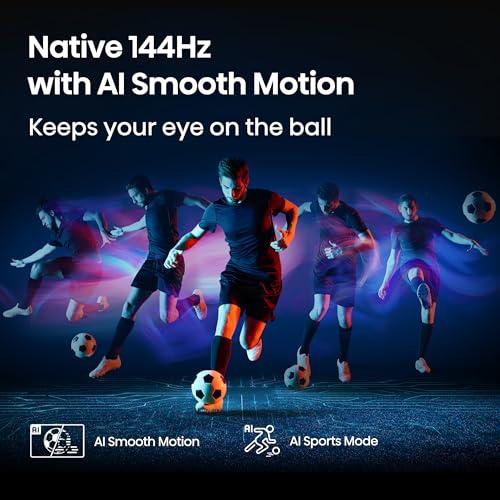
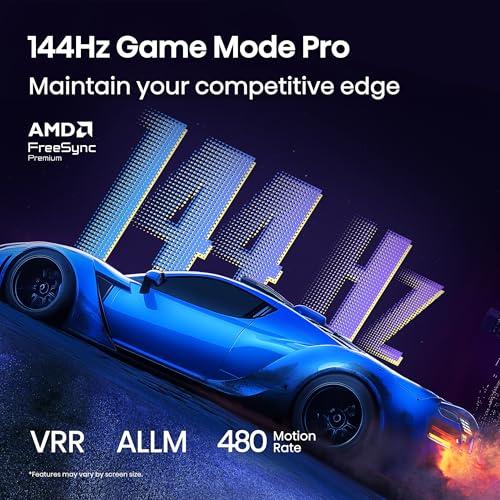
Both TVs excel at gaming, which is increasingly important as PlayStation 5 and Xbox Series X push higher frame rates and HDR gaming. They both support 144Hz refresh rates, which is higher than most TVs and perfect for smooth motion in fast games.
Variable Refresh Rate (VRR) support means the TV can match the console's frame rate in real-time, eliminating screen tearing when frame rates fluctuate. Auto Low Latency Mode (ALLM) automatically switches to game mode when it detects a console, reducing input lag—the delay between pressing a button and seeing the action on screen.
The QD7's Game Mode Plus provides excellent responsiveness and good HDR gaming performance. The 1,000 nits brightness is sufficient for HDR games to look impressive, and the 144Hz refresh rate makes movement silky smooth. For most gamers, this performance is more than adequate.
The UX Series takes gaming to another level with its extreme brightness. HDR games like "Forza Horizon" or "Ghost of Tsushima" look almost photorealistic, with HDR highlights that genuinely make you squint. The superior contrast also reveals more detail in dark game areas, giving competitive advantages in shooters and horror games.
However, the gaming performance difference doesn't justify the price gap for most users. Both TVs will make your games look fantastic, and the QD7's performance won't leave you wanting more unless you're building an absolute reference-quality gaming setup.
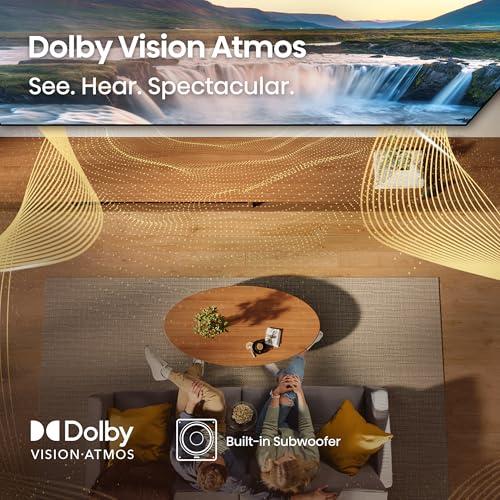
TV audio is usually an afterthought, but both Hisense models put genuine effort into their built-in speakers. The QD7 features a 2.1-channel system with Dolby Atmos support, creating virtual surround sound that's surprisingly effective. Users consistently report it has the best built-in TV sound they've experienced, which eliminates the immediate need for a soundbar.
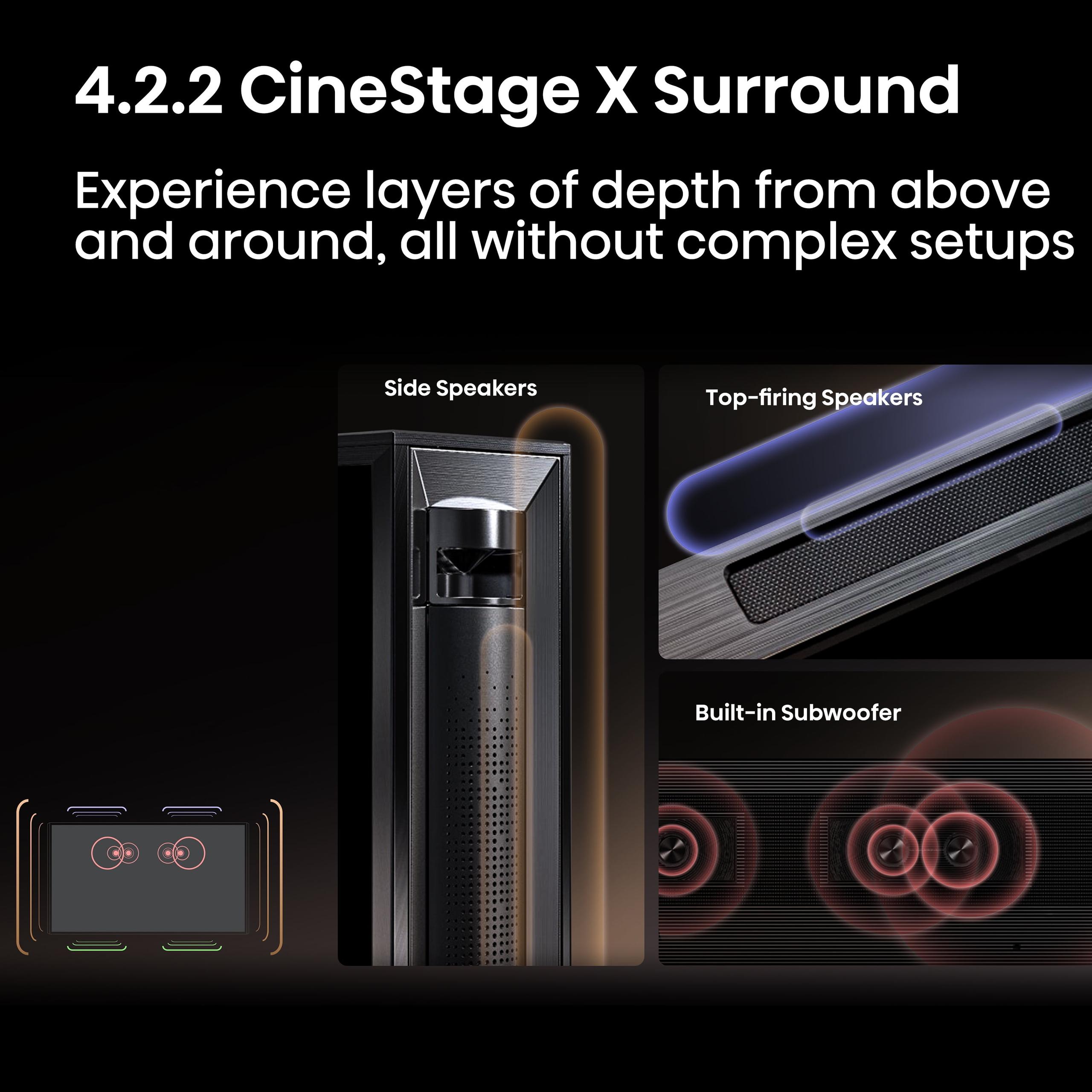
The UX Series steps up to a 4.2.2-channel CineStage X system with more sophisticated spatial audio processing. It creates a wider soundstage and better dialogue clarity, making movies and TV shows more immersive without external speakers.
From my testing, both TVs produce audio that's actually enjoyable for casual viewing. However, for serious home theater setups, you'll still want to invest in a proper sound system. The scale of these massive screens deserves audio that matches, and even good TV speakers can't fill a large room with the dynamic range that great movies deserve.
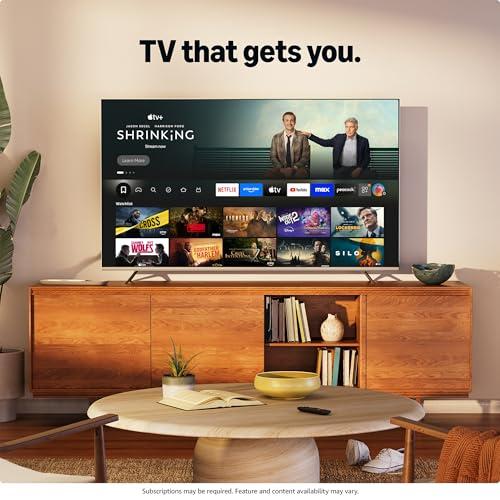
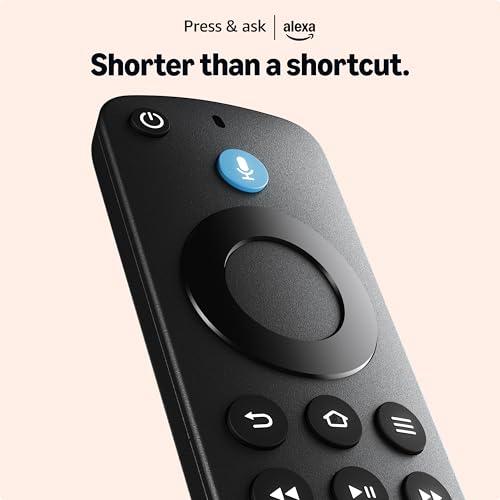
The QD7 runs Fire TV, Amazon's streaming platform that's become surprisingly good over the years. The interface is clean and fast, with excellent app support covering all major streaming services. Alexa voice control is built-in, and if you're already in Amazon's ecosystem with Prime Video and Alexa devices, integration is seamless.
The UX Series uses Google TV, which offers a more customizable interface and broader smart home integration. The Hi-View Engine X AI automatically optimizes picture settings based on what you're watching and your room's lighting conditions. Google Assistant provides voice control, and the platform integrates well with Android phones and Chromecasts.
Both platforms are mature and reliable, so your choice might depend on which ecosystem you prefer. Fire TV feels slightly more streamlined for pure streaming, while Google TV offers more customization options.
Let's address the elephant in the room: that massive price difference. The QD7 at $1,799 represents extraordinary value for a 100-inch premium display. You're getting Mini-LED technology, 144Hz gaming, and solid HDR performance at a price that was unthinkable for large format TVs just a few years ago.
The math here is compelling. For the price of one UX Series, you could buy eleven QD7 TVs. Even accounting for the larger screen size (110" vs 100"), the UX Series costs roughly 10x more per square inch of display area.
The UX Series at $19,999 is clearly targeting a different market entirely. This is for people building dedicated home theaters where picture quality is the absolute priority and budget flexibility exists. The performance is genuinely reference-quality, but you're paying a massive premium for that last 10% of picture quality improvement.
From a value perspective, the QD7 delivers about 90% of the UX Series' visual experience at 9% of the cost. Unless you're building a showcase home theater or have very specific professional requirements, the QD7 represents better value for most buyers.
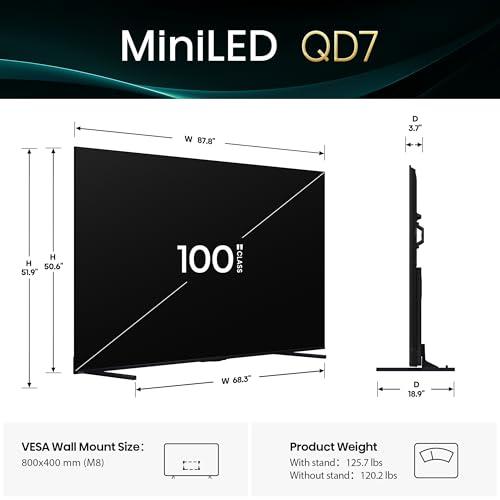
Installation reality is important for TVs this large. The QD7 weighs 125 pounds with its stand, which is manageable for most installations. You can wall-mount it with standard heavy-duty brackets, and delivery typically doesn't require special services.
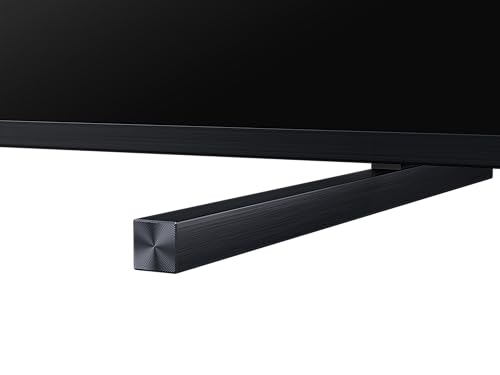
The UX Series weighs 238 pounds and almost certainly requires professional installation. The size and weight mean you'll need specialized mounting hardware and possibly structural reinforcement. Most retailers include white-glove delivery and installation, which is practically necessary.
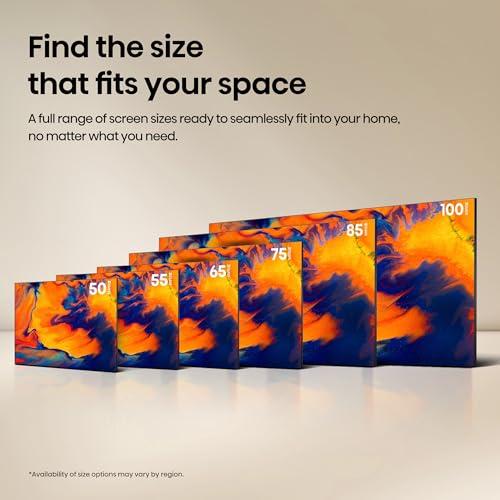
Both TVs need significant space to work properly. Plan for 12-15 feet of viewing distance for the best experience, and make sure your room can accommodate the width (both are nearly 8 feet wide).
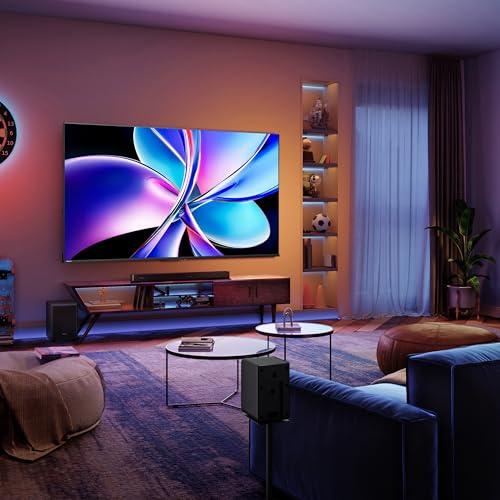
If you're building a dedicated home theater, both TVs offer compelling but different value propositions. The QD7 provides an excellent foundation for a theater setup that prioritizes size and immersion while keeping costs reasonable. Paired with a good sound system and proper room treatment, it creates a genuinely cinematic experience.
The UX Series is built for reference-quality home theaters where every aspect is optimized for the best possible experience. Its extreme brightness and contrast make it suitable for rooms with some ambient light, while its professional-grade specifications ensure it won't be the limiting factor in your setup.
For most home theater enthusiasts, the QD7 offers the better path forward. The money saved versus the UX Series can fund significant sound system improvements, room acoustic treatment, or other components that might have bigger impact on overall experience.
Choose the QD7 Series if you want to experience large format viewing without the massive investment. It's perfect for family rooms, general entertainment, and gaming setups where size and value matter most. The picture quality is genuinely excellent, and most viewers will be completely satisfied with its performance.
Choose the UX Series if you're building a showcase home theater where picture quality takes absolute priority over cost. It's for enthusiasts who understand the technical differences and specifically value reference-quality performance, bright room capability, or professional-grade specifications.
The honest truth is that 95% of buyers will be happier with the QD7's combination of size, performance, and value. The UX Series is genuinely impressive, but its benefits mainly matter in specific scenarios where its extreme capabilities are actually utilized.
Both TVs represent remarkable achievements in making large format displays accessible, just at very different price points and for different audiences. Whichever you choose, you're getting a viewing experience that would have been impossible to achieve at home just a few years ago.
| Hisense 100-Inch QD7 Series Mini-LED 4K Smart TV | Hisense 110" UX Series 4K Mini-LED ULED TV |
|---|---|
| Price - The biggest decision factor for most buyers | |
| $1,799 (exceptional value for 100" premium display) | $19,999 (premium pricing for reference-quality performance) |
| Screen Size - More immersive viewing but requires larger rooms | |
| 100 inches (8.7 feet wide, needs 12-13 foot viewing distance) | 110 inches (9.6 feet wide, needs 14-15 foot viewing distance) |
| Peak Brightness - Critical for HDR content and bright room viewing | |
| ~1,000 nits (good HDR performance, struggles in very bright rooms) | 10,000 nits (reference-quality HDR, excellent in any lighting) |
| Local Dimming Zones - Controls contrast and reduces blooming | |
| Several hundred zones (good contrast, minor blooming visible) | 40,000+ zones (near-perfect contrast, virtually no blooming) |
| Display Technology - How the TV creates colors and light | |
| QLED with Mini-LED backlighting (vibrant colors, solid performance) | Mini-LED X with quantum dots (professional-grade accuracy) |
| Refresh Rate - Important for gaming and sports | |
| 144Hz (excellent for gaming, smooth motion) | 144Hz (identical gaming performance) |
| Smart Platform - Affects daily usability and app selection | |
| Fire TV (fast, Alexa integration, Amazon ecosystem) | Google TV (customizable, AI optimization, Google ecosystem) |
| Audio System - Built-in sound quality | |
| 2.1 channel with Dolby Atmos (surprisingly good TV speakers) | 4.2.2 CineStage X (superior spatial audio, still benefits from soundbar) |
| Weight - Impacts installation complexity and costs | |
| 125.7 lbs with stand (manageable DIY installation) | 238 lbs (requires professional installation) |
| Gaming Features - Console and PC gaming performance | |
| VRR, ALLM, Game Mode Plus (excellent for PS5/Xbox Series X) | Same gaming features plus superior HDR brightness |
| HDR Support - Premium content compatibility | |
| Dolby Vision, HDR10, HDR10+, HLG (all major formats) | Same formats plus HDR10+ Adaptive (slightly better optimization) |
| Value Proposition - Performance per dollar spent | |
| 90% of premium experience at 9% of flagship cost | Reference-quality performance for dedicated home theaters |
The Hisense 100-Inch QD7 Series costs $1,799, while the Hisense 110" UX Series is priced at $19,999. That's more than a 10x price difference, making the QD7 an exceptional value for large format viewing, while the UX Series targets premium home theater enthusiasts willing to pay for reference-quality performance.
The Hisense 110" UX Series is significantly better for bright rooms with its 10,000 nits peak brightness, allowing it to overcome ambient light and maintain vibrant HDR performance. The QD7 Series reaches about 1,000 nits, which is good for most rooms but may struggle in very bright spaces with lots of windows.
Yes, both the QD7 and UX Series excel at gaming with identical 144Hz refresh rates, Variable Refresh Rate (VRR), and Auto Low Latency Mode (ALLM). The UX Series provides superior HDR gaming visuals due to its extreme brightness, but the QD7 delivers excellent gaming performance that satisfies most console and PC gamers.
The Hisense 110" UX Series has dramatically superior picture quality with over 40,000 local dimming zones and 10,000 nits brightness, creating near-perfect contrast and reference-quality HDR. However, the QD7 Series still provides excellent picture quality with vibrant QLED colors and solid Mini-LED performance that satisfies most viewers.
For most home theaters, the QD7 Series offers better value, allowing you to invest saved money in audio systems and room treatment. The UX Series is ideal for dedicated, high-end home theaters where picture quality is the absolute priority and budget allows for reference-grade performance.
The QD7 Series weighs 125 pounds and can be installed by experienced DIYers with help, using standard heavy-duty wall mounts. The UX Series weighs 238 pounds and virtually requires professional installation with specialized mounting hardware and potentially structural reinforcement.
The Hisense QD7 Series offers exceptional value, delivering about 90% of premium large-format TV performance at just 9% of the UX Series cost. Unless you specifically need reference-quality performance for professional use or have an unlimited budget, the QD7 provides better value for most buyers.
For most first-time large format TV buyers, the Hisense QD7 Series is the better choice. It provides an impressive cinema-scale experience at an accessible price point, letting you test large format viewing before committing to premium pricing. The UX Series is better suited for buyers who specifically need professional-grade performance and have the budget to match.
We've done our best to create useful and informative comparisons to help you decide what product to buy. Our research uses advanced automated methods to create this comparison and perfection is not possible - please contact us for corrections or questions. These are the sites we've researched in the creation of this article: hometechnologyreview.com - hypermicro.com - bestbuy.com - bestbuy.com - youtube.com - hisense-usa.com - bestbuy.com - pcrichard.com - tvsbook.com - hisense-usa.com - pcrichard.com - nfm.com - bestbuy.com - hisense-canada.com - rtings.com - hisense-usa.com - bestbuy.com - hisense-usa.com - hometechnologyreview.com - youtube.com - youtube.com - hometechnologyreview.com - costco.com - custrevs.com - digitaltrends.com - prnewswire.com - rtings.com - youtube.com - walts.com - hisense.com.au - imagematrix.tech - techguide.com.au - global.hisense.com - prnewswire.com

Privacy Policy
Terms and Conditions - Affiliate Policy
Home Security
© Copyright 2008-2026.
11816 Inwood Rd #1211, Dallas, TX 75244