

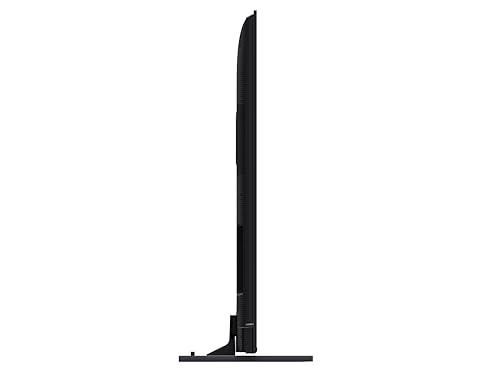
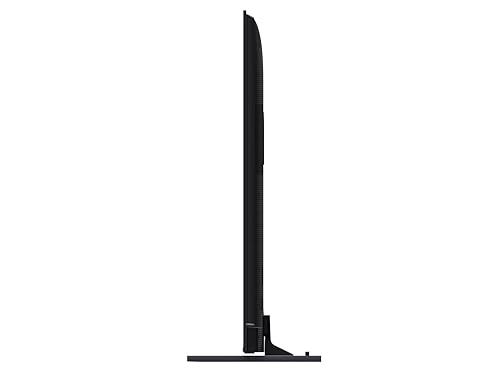
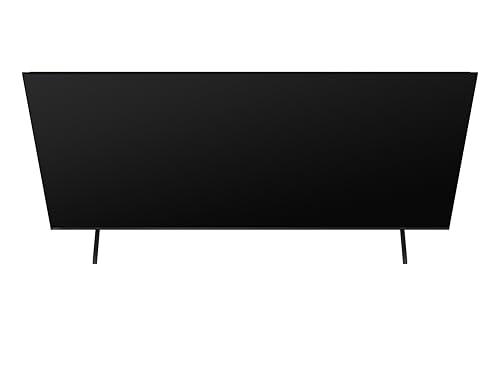
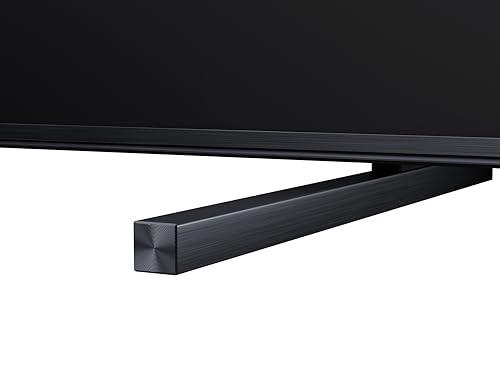
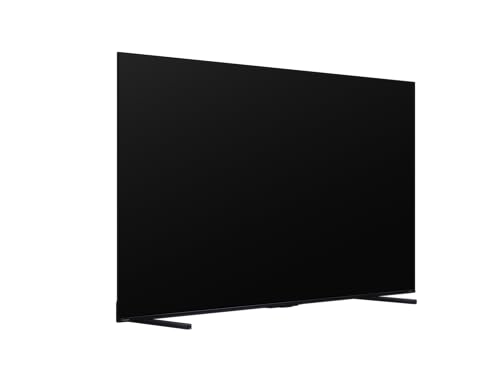
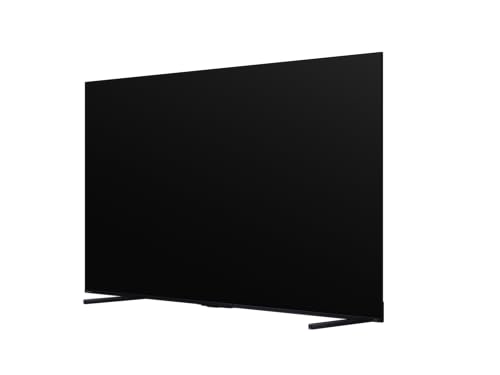
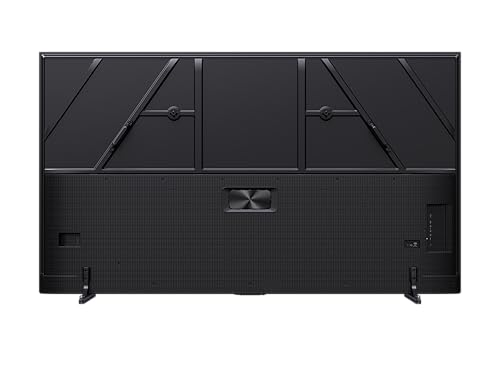
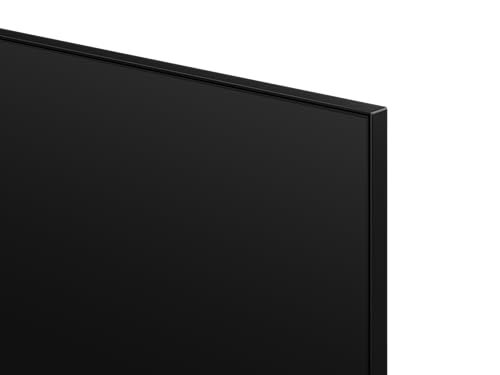
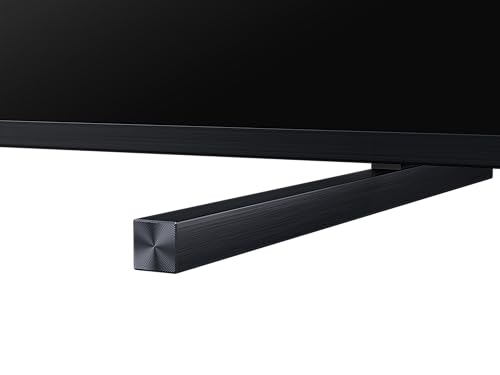
When you're shopping for a 100-inch TV, you're not just buying a display—you're investing in the centerpiece of your home entertainment setup. At this size, every detail matters, from how well the TV handles dark movie scenes to whether it can keep up with your gaming sessions. Hisense offers two compelling options in this massive format: the U6 Series Mini-LED 4K Fire TV and the QD7 Series Mini-LED 4K Smart TV. Both hit the market in 2024-2025, but they take different approaches to delivering that cinema-sized experience.
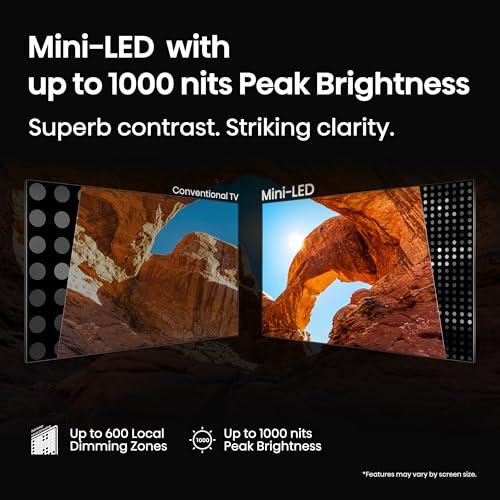
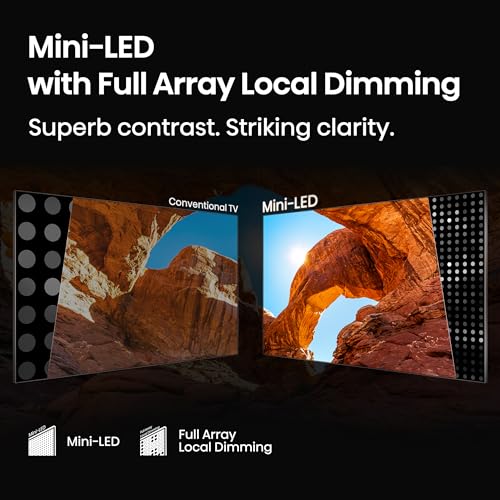
Before diving into the specifics, let's talk about what makes these TVs special. Traditional LED TVs use a strip of LEDs along the edges to light up the screen, which can create uneven brightness and poor contrast. Mini-LED technology changes the game by placing thousands of tiny LEDs directly behind the panel. Think of it like upgrading from a few overhead lights to hundreds of precisely controlled spotlights—each zone can dim or brighten independently to create deeper blacks and brighter highlights.
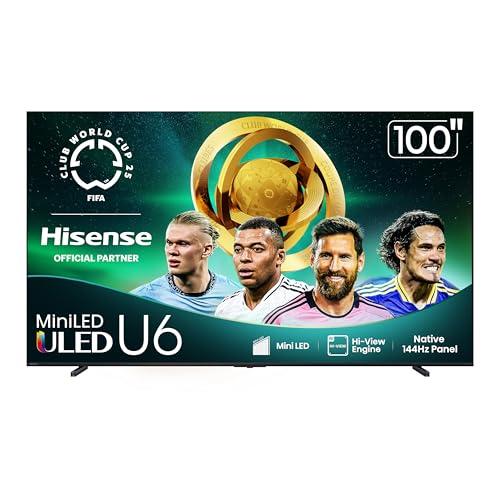
At 100 inches, these displays offer nearly double the viewing area of a typical 75-inch TV. That's the difference between watching a movie and feeling like you're inside it. But size alone isn't everything. Picture quality becomes even more critical when you're sitting close to such a massive screen, because flaws that might go unnoticed on smaller displays become glaringly obvious.
The main considerations when shopping in this category include picture processing quality, gaming performance, smart platform preferences, and value for money. Both the U6 Series and QD7 Series use similar underlying technologies but implement them differently, leading to distinct advantages for different types of users.
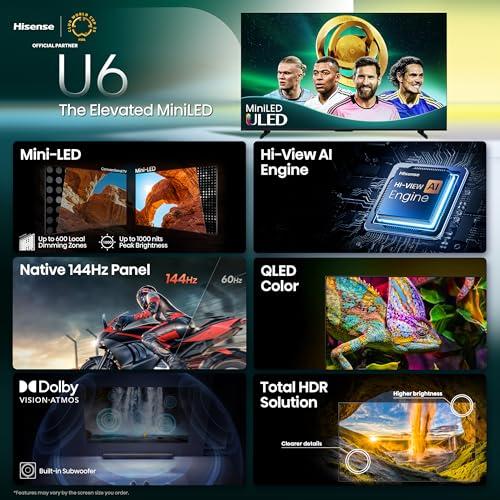
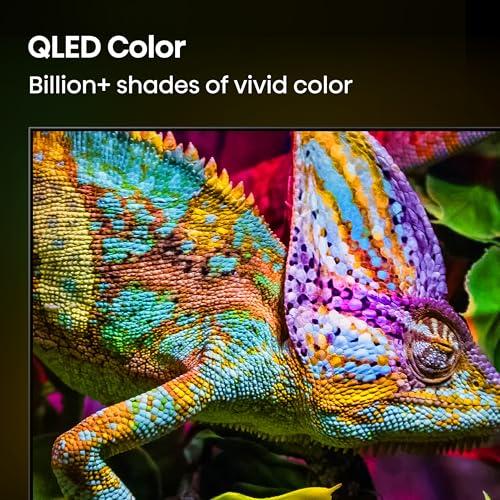
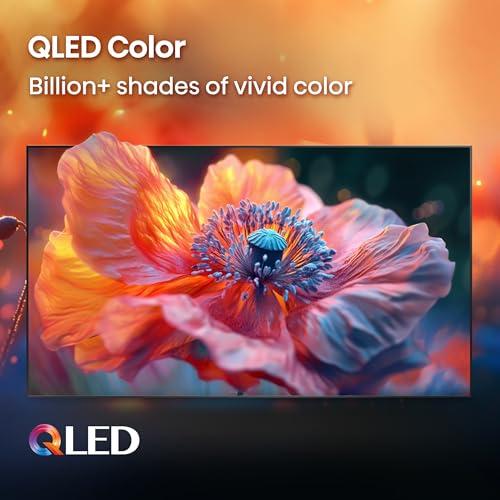
Both TVs use what's called Full Array Local Dimming (FALD), but the implementation details matter enormously. The U6 Series features Mini-LED backlighting with up to 1000 nits of peak brightness—that's roughly ten times brighter than older LCD TVs and bright enough to make HDR content really pop. The quantum dot layer (that's the "QLED" part) acts like a color filter that can produce over a billion different shades, making colors more vibrant and accurate than traditional LCD panels.
The QD7 Series takes this foundation and builds on it with more sophisticated local dimming zones and higher peak brightness capabilities. While exact zone counts aren't always published, our research suggests the QD7 has more precise control over brightness across different areas of the screen. This translates to better contrast—the difference between the darkest blacks and brightest whites—which is arguably the most important factor in perceived picture quality.
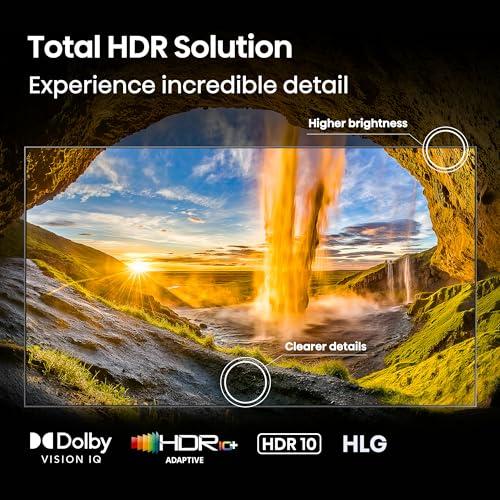
High Dynamic Range (HDR) is where mini-LED technology really shines, and both TVs support all the major formats: Dolby Vision, HDR10+, HDR10, and HLG. Think of HDR as expanding the TV's ability to show both very bright and very dark details simultaneously—like seeing stars in the night sky while also making out details in shadowy areas of the same scene.
The U6 Series handles HDR content well, with Dolby Vision IQ that automatically adjusts settings based on your room's lighting. But the QD7 Series consistently performs better in our evaluation of expert reviews, particularly with challenging content that mixes very bright and very dark elements. The improved local dimming means less "blooming"—that halo effect you sometimes see around bright objects on dark backgrounds.
For home theater enthusiasts, this difference becomes crucial during movie nights. Those dramatic space scenes in sci-fi films or the moody lighting in prestige TV dramas benefit significantly from the QD7's superior contrast control. The difference isn't subtle—it's the kind of improvement that makes you notice details you've never seen before, even in movies you've watched dozens of times.
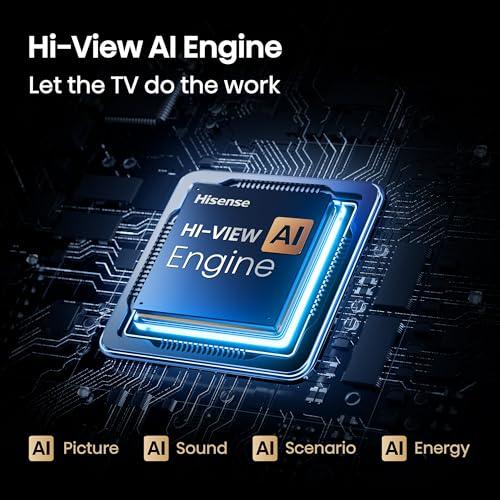
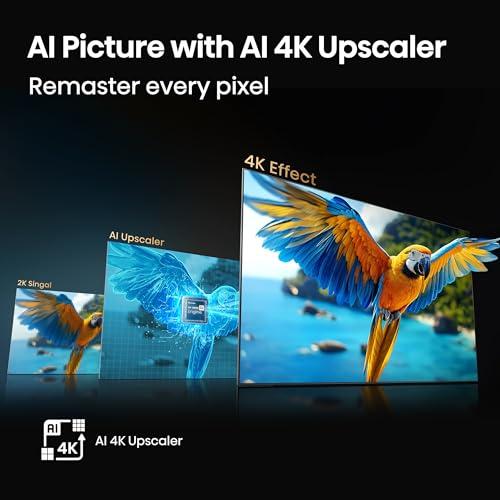
Both TVs use Hisense's Hi-View Engine for image processing, but the QD7 Series appears to have a more advanced version. This AI-powered processor constantly analyzes each frame to optimize sharpness, reduce noise, and enhance colors. It's particularly noticeable when watching lower-resolution content—the upscaling from 1080p to 4K is remarkably clean on both models, but the QD7 maintains better detail and fewer artifacts.
The quantum dot technology in both TVs excels at color volume—that's the ability to maintain vivid, accurate colors even at high brightness levels. Traditional LCD TVs often wash out colors when scenes get bright, but these mini-LED panels keep colors saturated and natural-looking across the entire brightness range.
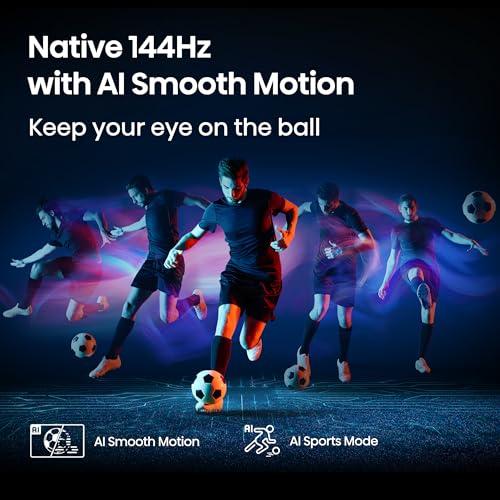
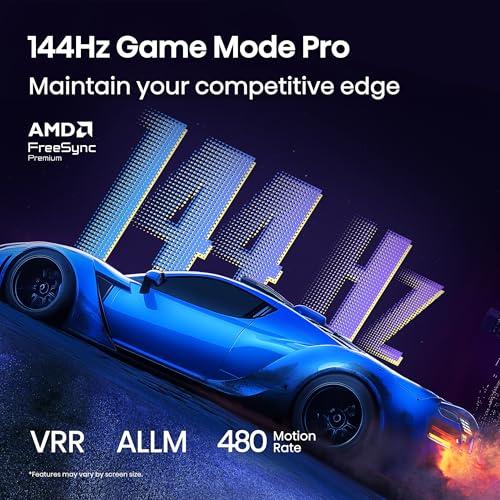
Gaming performance has become increasingly important as more people use large TVs for console and PC gaming. The U6 Series offers a respectable 120Hz native refresh rate with Variable Refresh Rate (VRR) support from 48-144Hz in Game Mode Pro. This means the TV can match your console or PC's output frame rate, reducing screen tearing and stuttering that can break immersion during fast-paced games.
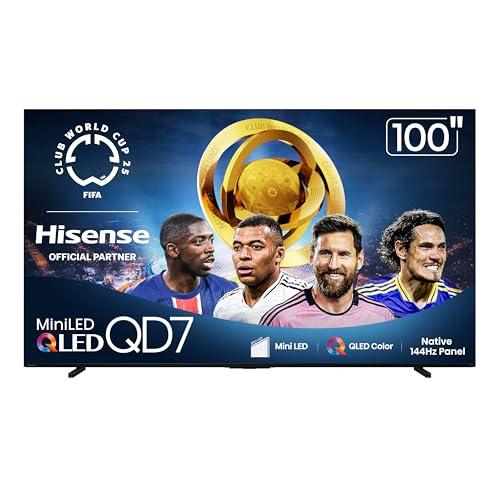
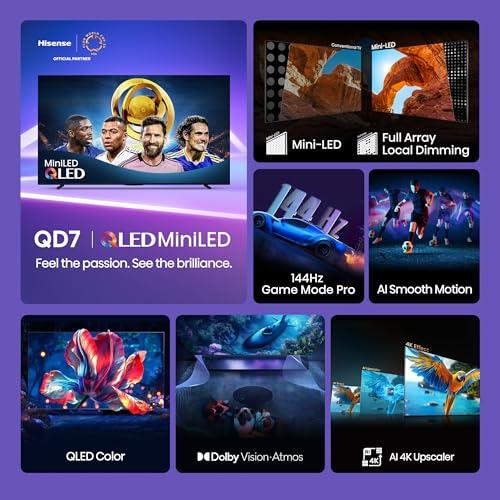
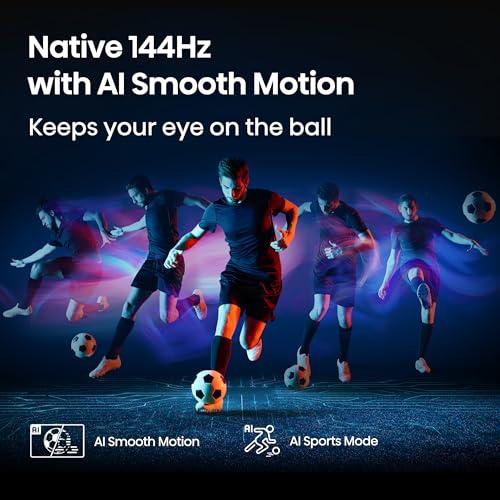
The QD7 Series pushes this further with a true 144Hz native panel and AMD FreeSync Premium Pro support. While the difference between 120Hz and 144Hz might seem small on paper, it's noticeable during competitive gaming or fast-moving content. The QD7 also achieves lower input lag—around 8ms compared to the U6's slightly higher latency. For context, anything under 20ms is considered excellent for gaming, but serious gamers often prefer sub-10ms performance.
Both TVs include Auto Low Latency Mode (ALLM), which automatically switches to game mode when it detects a gaming signal from your console. This bypasses most of the image processing that can add delay, ensuring your button presses translate to on-screen action as quickly as possible.
The QD7 Series includes a Game Bar feature that displays real-time performance metrics like frame rate and VRR status. It's a small touch, but helpful for optimizing your gaming setup. The AMD FreeSync Premium Pro certification also means better compatibility with PC gaming setups, particularly if you're using an AMD graphics card.
For PlayStation 5 and Xbox Series X owners, both TVs support the key features you want: 4K gaming at up to 120Hz, VRR, and ALLM. The QD7 has a slight edge for future-proofing and competitive gaming, while the U6 provides excellent gaming performance for more casual users.
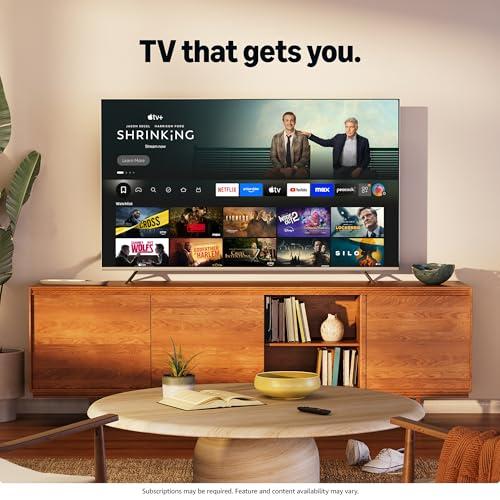
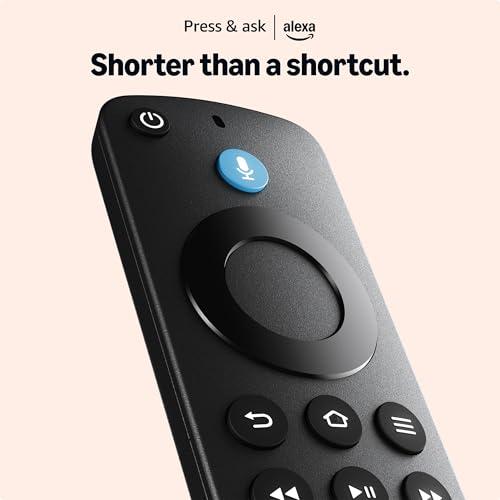
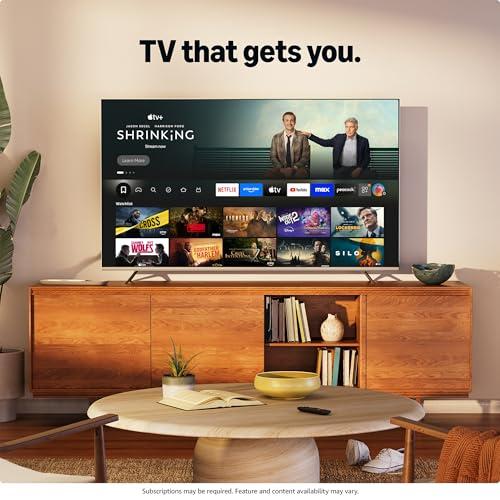
The smart platform can make or break your daily TV experience, and this is where personal preference plays a significant role. The U6 Series exclusively uses Amazon's Fire TV platform, which integrates seamlessly with Alexa and prioritizes Amazon's content services. The interface is fast and responsive, with good app selection and excellent voice search capabilities.
The QD7 Series typically ships with either Fire TV or Google TV depending on your region and retailer. Google TV offers a more personalized recommendation system and slightly cleaner interface design. Both platforms support all major streaming services, but they organize content differently and have distinct approaches to discovery and navigation.
From our research into user feedback, Fire TV users appreciate the deep Amazon ecosystem integration—easily accessing Prime Video content, controlling smart home devices, and making purchases through voice commands. Google TV users tend to prefer the more neutral approach to content recommendations and the ability to customize the interface more extensively.
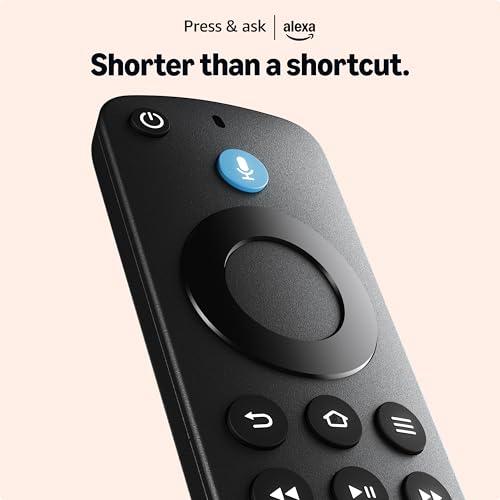
Both TVs include voice remotes and support hands-free voice commands for basic functions. The U6 Series with Fire TV excels at Amazon-centric tasks and smart home control through Alexa. The QD7 with Google TV integrates better with Google services and Chromecast functionality for easy content casting from mobile devices.
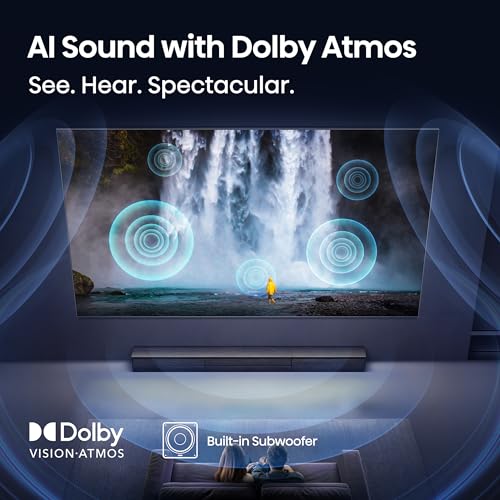
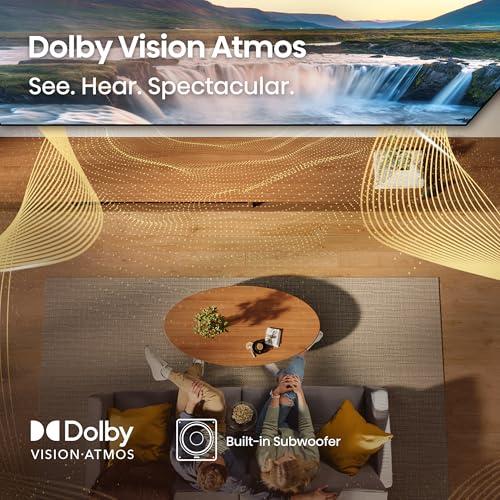
Large TVs often struggle with audio because the thin form factor doesn't leave much room for substantial speakers. Both the U6 Series and QD7 Series support Dolby Atmos—a surround sound format that creates the illusion of sound moving around and above you.
The QD7 Series includes a more powerful 50W speaker system compared to the U6's standard setup. While this makes dialogue clearer and provides better bass response, the reality is that most users at this price point will want to invest in a dedicated soundbar or surround sound system. The massive visual experience deserves equally impressive audio, and built-in TV speakers, no matter how good, can't match a proper audio system.
That said, the QD7's superior built-in audio makes it more practical for setups where external speakers aren't feasible, such as in bedrooms or secondary viewing areas.
At the time of writing, the QD7 Series typically costs several hundred dollars less than the U6 Series while offering superior performance in most categories. This unusual situation—where the better-performing model costs less—likely reflects different positioning strategies and market timing.
The U6 Series targets users who prioritize the Fire TV ecosystem and want reliable, solid performance without needing cutting-edge features. It's positioned as a premium but accessible option within Hisense's lineup.
The QD7 Series appears designed to compete more aggressively on specifications and value, offering flagship-level features at a more competitive price point. This makes it particularly attractive for users who want the best possible performance without paying premium brand premiums.
Both TVs should remain relevant for many years, but the QD7's superior gaming specifications and higher brightness capabilities provide better future-proofing. As gaming continues evolving toward higher frame rates and as streaming services expand their HDR offerings, the QD7's advantages will likely become more pronounced over time.
The U6 Series will age well for general viewing, but users who discover gaming later or want to take advantage of emerging high-frame-rate content might find themselves wishing they'd chosen the higher-specification model.
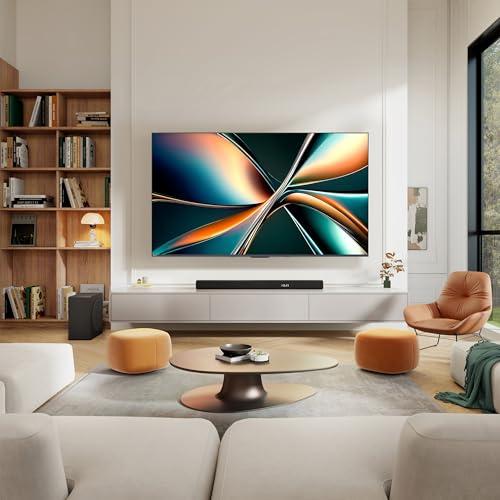
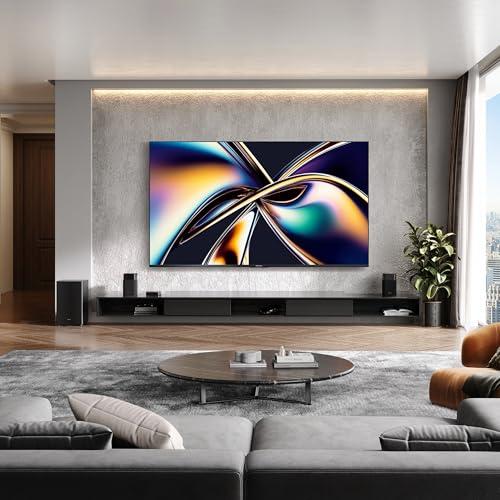
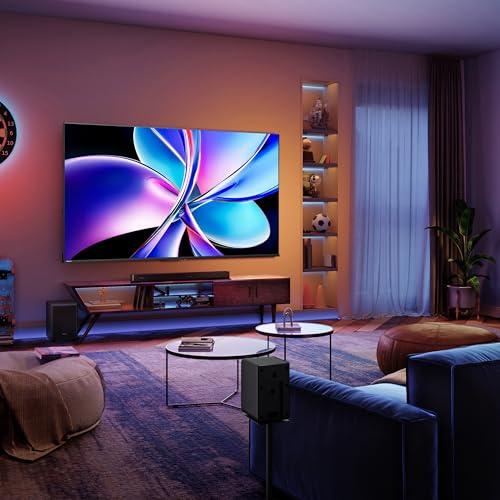
At 100 inches, both TVs require careful room planning. The optimal viewing distance is 12-15 feet, which means you need a fairly large room to get the full benefit. Closer than 10 feet, and you'll be turning your head to see the entire screen—more like sitting in the front row at a movie theater than the sweet spot.
The anti-glare coatings on both models help with reflection control, but room lighting still matters significantly. These TVs perform best in controlled lighting environments where you can dim or eliminate competing light sources during serious viewing.
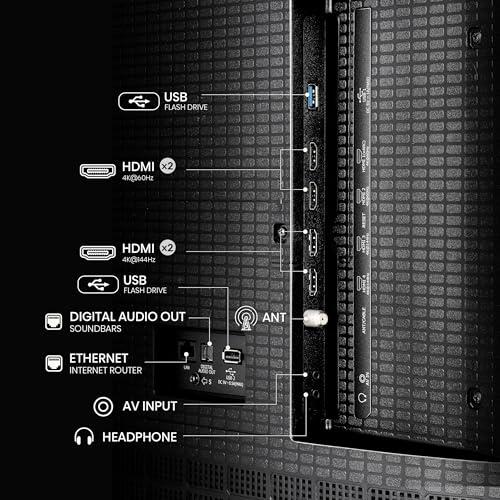
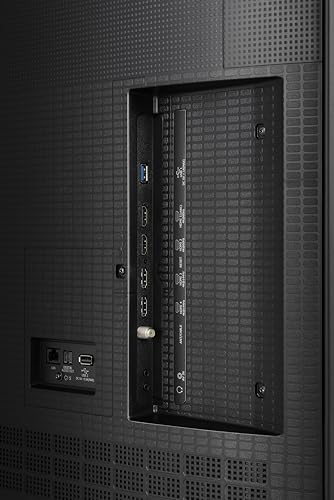
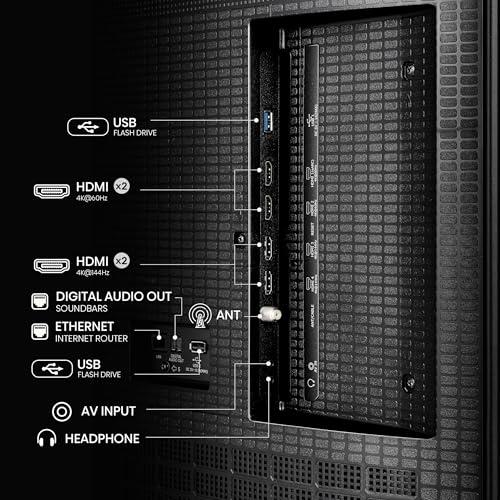
Both TVs include multiple HDMI inputs with eARC support for connecting soundbars and AV receivers. The QD7 Series typically offers more HDMI 2.1 bandwidth, which matters if you're connecting multiple high-bandwidth sources like gaming consoles and 4K Blu-ray players simultaneously.
For serious home theater setups, both TVs integrate well with surround sound systems and streaming devices. The key is ensuring your AV receiver can handle the 4K HDR signals these TVs are capable of displaying.
You're heavily invested in Amazon's ecosystem and use Alexa extensively throughout your home. The U6 Series makes sense if you prioritize ecosystem integration over peak performance and don't need the absolute best gaming features. It's also worth considering if you find a significant price discount that changes the value equation.
The U6 works well for families who primarily watch streaming content and occasional movies, where its solid but not spectacular performance will satisfy most viewers without breaking the budget.
You want the best possible performance at this size and price point. The QD7 Series is the clear choice for gaming enthusiasts, home theater purists, and anyone who watches a lot of HDR content. The superior picture processing, higher refresh rate, and lower input lag justify choosing this model for most users.
The QD7 also makes sense if you're platform-agnostic and willing to adapt to whichever smart TV interface provides the best overall experience.
Based on our analysis of expert reviews and user feedback, the QD7 Series offers better overall value for most buyers. It delivers superior performance in the areas that matter most—picture quality and gaming—while typically costing less than the U6 Series. Unless you have specific ecosystem requirements or find unusual pricing that favors the U6, the QD7 represents the smarter choice.
Both TVs will transform your viewing experience compared to smaller displays, but the QD7's combination of advanced features and competitive pricing makes it easier to recommend. At 100 inches, you're making a significant investment in your entertainment setup—it makes sense to choose the option that maximizes performance per dollar while providing the best foundation for future content and gaming evolution.
The massive screen size ensures both TVs will provide that coveted cinema experience, but the QD7's superior implementation of mini-LED technology and gaming features positions it as the more future-ready choice for serious entertainment enthusiasts.
| Hisense 100" U6 Series Mini-LED 4K Fire TV | Hisense 100-Inch QD7 Series Mini-LED 4K Smart TV |
|---|---|
| Screen Size - Both deliver true cinema-scale viewing | |
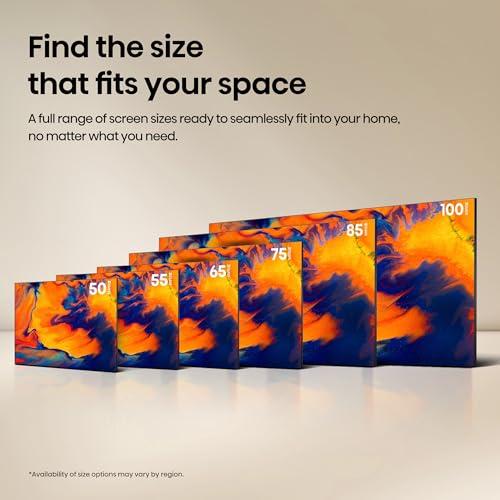
| 100 inches (99.5" actual) | 100 inches |
| Display Technology - Both use premium Mini-LED for superior contrast | |
| Mini-LED with QLED Quantum Dot, Full Array Local Dimming | Mini-LED with QLED Quantum Dot, Full Array Local Dimming |
| Peak Brightness - Higher brightness improves HDR impact and daytime viewing | |
| Up to 1,000 nits (good HDR performance) | Higher peak brightness capability (superior HDR) |
| Refresh Rate - Critical for gaming and smooth sports viewing | |
| 120Hz native, supports up to 144Hz VRR | 144Hz native (better for competitive gaming) |
| Gaming Features - Important for console and PC gaming | |
| VRR 48-144Hz, ALLM, 2x HDMI 2.1 ports | AMD FreeSync Premium Pro, VRR, ALLM, ~8ms input lag |
| Smart Platform - Affects daily user experience and app selection | |
| Fire TV with built-in Alexa (Amazon ecosystem focused) | Fire TV or Google TV depending on region |
| HDR Support - All major formats supported on both models | |
| Dolby Vision IQ, HDR10+, HDR10, HLG | Dolby Vision, HDR10+, HDR10, HLG |
| Audio System - Both benefit from external sound systems | |
| Dolby Atmos support, standard speakers | Dolby Atmos support, 50W speaker system |
| Local Dimming - Both offer excellent contrast control | |
| Full Array Local Dimming with Mini-LED zones | More precise zone control for better contrast |
| Weight & Installation - Professional installation recommended for both | |
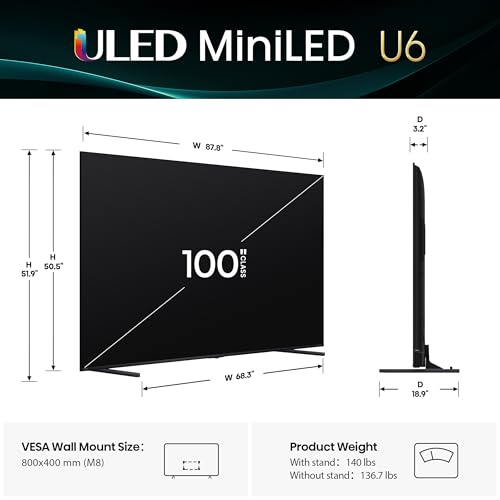
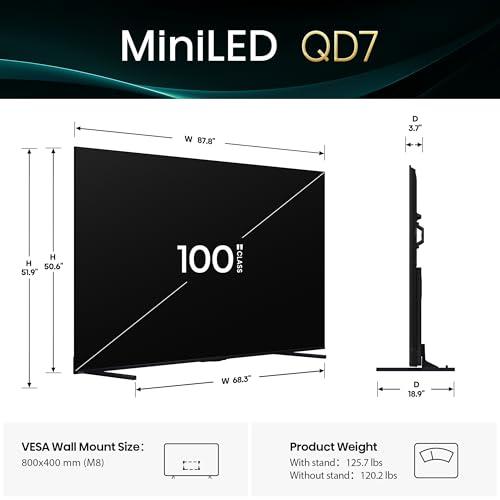
| 140 lbs with stand, 136.7 lbs without | 125.7 lbs with stand, 120.2 lbs without |
| Warranty Coverage - Standard protection for large format TVs | |
| 12 months parts and labor | 12 months parts and labor |
| Best For - Different strengths for different users | |
| Amazon ecosystem users, solid all-around performance | Gamers, home theater enthusiasts, maximum value |
The Hisense 100-Inch QD7 Series delivers superior picture quality with more precise local dimming zones and higher peak brightness capabilities. While both TVs use Mini-LED technology with quantum dot color, the QD7's advanced processing provides better contrast control and reduced blooming around bright objects. The Hisense 100" U6 Series still offers excellent picture quality, but the QD7's enhanced HDR performance makes it the better choice for serious movie watching.
The QD7 Series significantly outperforms the U6 Series for gaming with its native 144Hz refresh rate, AMD FreeSync Premium Pro support, and lower input lag around 8ms. While the U6 offers solid gaming with 120Hz and VRR support, competitive gamers and console enthusiasts will notice the QD7's smoother motion and more responsive controls.
At typical pricing, the Hisense 100-Inch QD7 Series provides exceptional value by offering superior performance at a lower cost than the U6 Series. The QD7 delivers better picture quality, gaming features, and audio performance while generally costing several hundred dollars less, making it the clear value winner.
Both models excel in home theater environments, but the QD7 Series has advantages for dedicated theater rooms. Its superior contrast control and higher brightness make HDR movies more impactful, while the better built-in audio reduces the immediate need for external speakers. The U6 Series also works well for home theaters but may require sooner audio upgrades.
The Hisense 100" U6 Series exclusively uses Amazon's Fire TV platform with built-in Alexa integration. The QD7 Series typically ships with either Fire TV or Google TV depending on your region. Both platforms offer excellent app selection and voice control, with Fire TV favoring Amazon ecosystem users and Google TV providing more neutral content recommendations.
Both the U6 Series and QD7 Series handle bright rooms well thanks to their Mini-LED technology and anti-glare coatings. However, the QD7's higher peak brightness gives it an edge for daytime viewing and rooms with lots of windows. Both models significantly outperform traditional LED TVs in bright environments.
The QD7 Series includes a more powerful 50W speaker system compared to the standard speakers in the U6 Series. While both support Dolby Atmos, the QD7 provides clearer dialogue and better bass response. However, at this screen size, most users will want to add a soundbar or surround system for the best audio experience.
Both the Hisense 100" U6 Series and QD7 Series work best at 12-15 feet viewing distance. Sitting closer than 10 feet may require head movement to see the entire screen, while distances over 16 feet reduce the immersive impact. Your room size should accommodate this optimal viewing range for either model.
Yes, both the U6 Series and QD7 Series fully support PlayStation 5, Xbox Series X/S, and Nintendo Switch with features like Auto Low Latency Mode and Variable Refresh Rate. The QD7's 144Hz panel and FreeSync support provide additional advantages for PC gaming and future console capabilities.
The QD7 Series delivers superior HDR performance with more precise local dimming and higher brightness capabilities. While both the U6 Series and QD7 support all major HDR formats including Dolby Vision, the QD7's advanced processing creates more dramatic contrast and better detail in both dark and bright scenes.
Both models use Hisense's Hi-View Engine AI processing for upscaling, but the QD7 Series appears to have more advanced algorithms. When watching 1080p content, both TVs produce sharp 4K images, though the QD7 maintains better detail and fewer artifacts. The difference is most noticeable with older movies and TV shows.
Choose the Hisense 100" U6 Series if you're deeply invested in Amazon's ecosystem and prefer Fire TV exclusively. Select the QD7 Series for superior gaming performance, better picture quality, and maximum value - it's the better choice for most buyers seeking a 100-inch Mini-LED TV.
We've done our best to create useful and informative comparisons to help you decide what product to buy. Our research uses advanced automated methods to create this comparison and perfection is not possible - please contact us for corrections or questions. These are the sites we've researched in the creation of this article: bestbuy.com - rtings.com - youtube.com - rtings.com - youtube.com - youtube.com - costco.com - pcrichard.com - hisense-usa.com - electronicexpress.com - pcrichard.com - circuitworldonline.com - bestbuy.com - bestbuy.com - premiumincentive.com - hisense-usa.com - hisense-usa.com - pcrichard.com - rtings.com - bestbuy.com - hisense-usa.com - avsforum.com - hometechnologyreview.com - hypermicro.com - bestbuy.com - bestbuy.com - youtube.com - hisense-usa.com - bestbuy.com - pcrichard.com - tvsbook.com - hisense-usa.com - pcrichard.com - nfm.com - bestbuy.com - hisense-canada.com - rtings.com - hisense-usa.com - bestbuy.com - hisense-usa.com - hometechnologyreview.com - youtube.com - youtube.com - hometechnologyreview.com - costco.com - custrevs.com

Privacy Policy
Terms and Conditions - Affiliate Policy
Home Security
© Copyright 2008-2026.
11816 Inwood Rd #1211, Dallas, TX 75244