

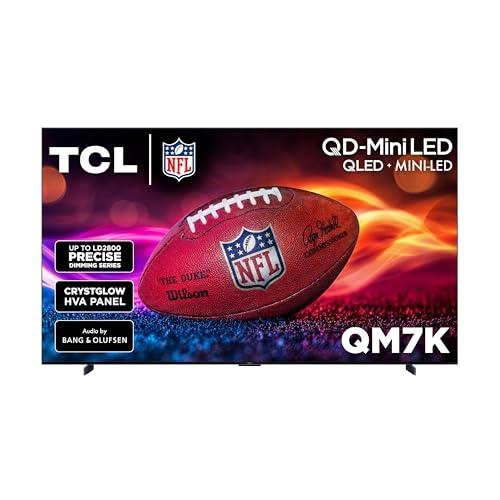
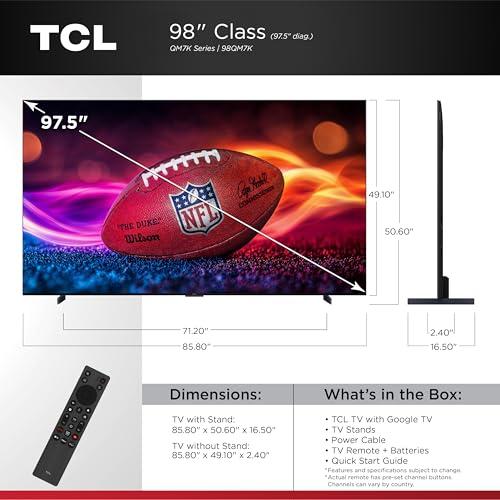
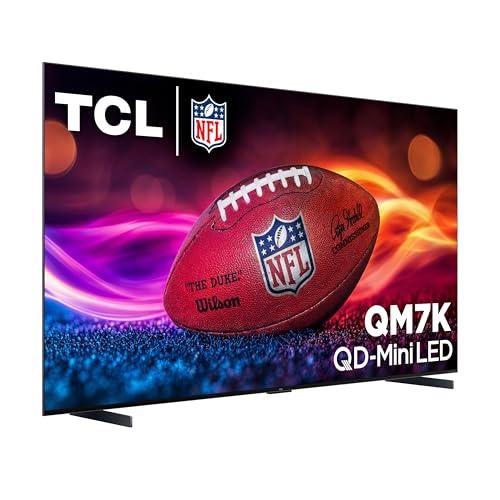
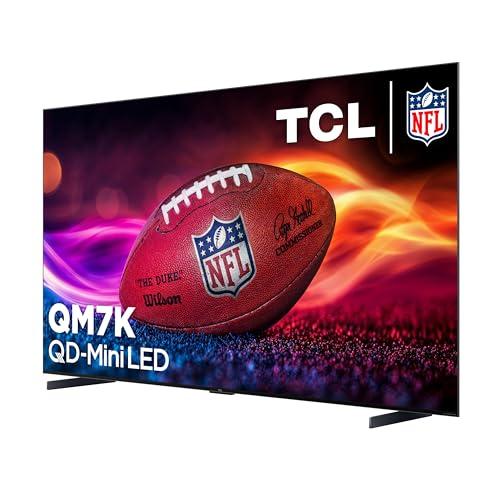
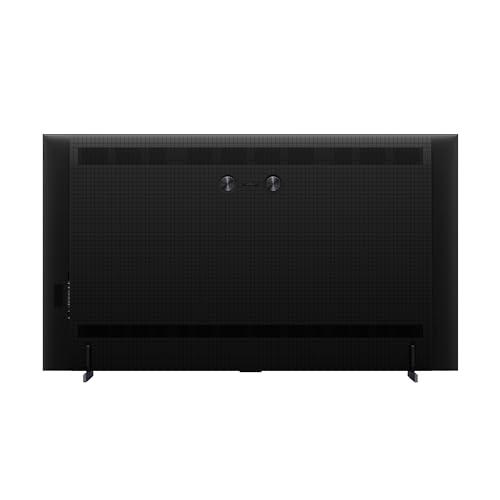
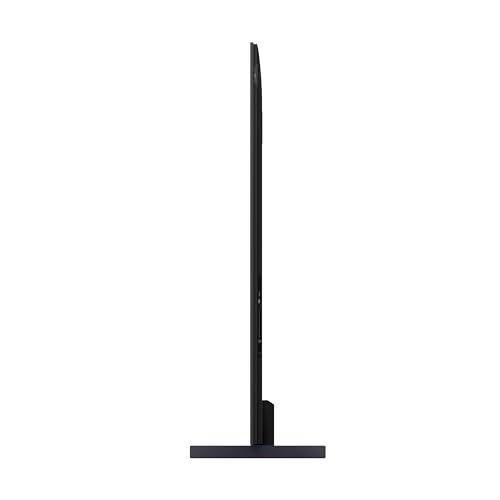
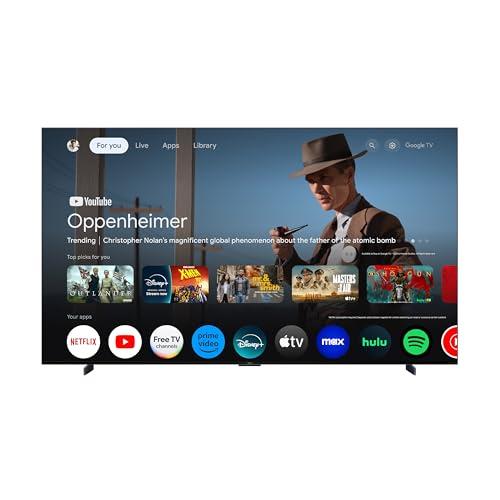
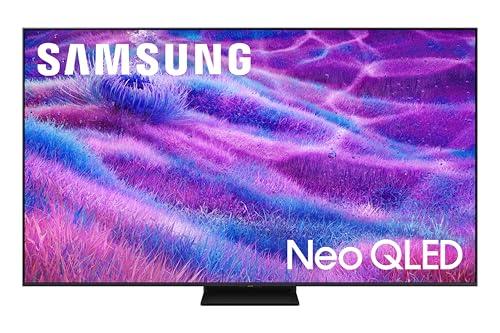

When you're looking at TVs approaching the 100-inch mark, you're not just buying another TV—you're creating a home theater. These massive displays represent the cutting edge of consumer display technology, competing directly with projector setups while offering the convenience of a traditional flat-panel TV. Both the TCL 98" QM7K and Samsung 100" QN80F launched in 2025, bringing the latest advancements in Mini LED technology to screens that can truly transform your living space.
At this size, every technical detail matters more. A small blooming issue that you might ignore on a 65" TV becomes glaringly obvious when magnified across nearly 100 inches of screen real estate. Similarly, the benefits of advanced local dimming or superior brightness become dramatically more apparent—and more important for your viewing experience.
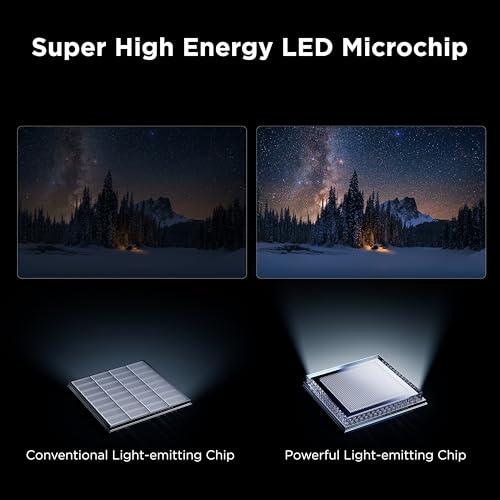
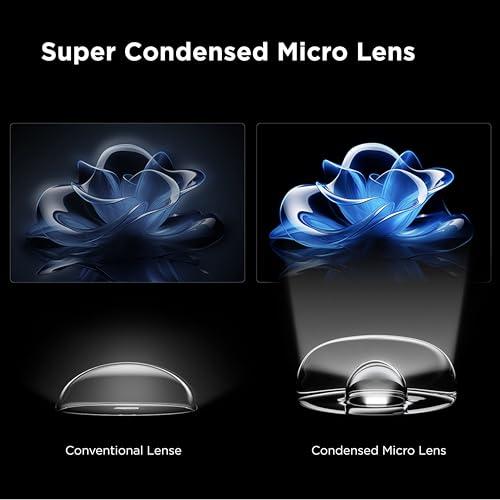
Both TVs use Mini LED backlighting, but they take notably different approaches to this technology. Mini LEDs are exactly what they sound like—LEDs that are much smaller than traditional LED backlights, typically measuring less than 0.2mm. This miniaturization allows TV manufacturers to pack thousands more LEDs behind the screen, creating far more precise local dimming zones.
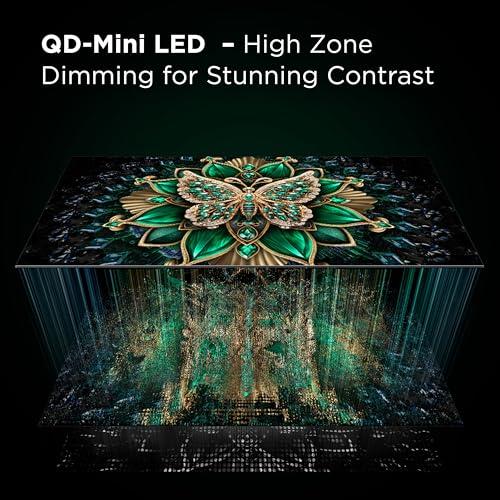
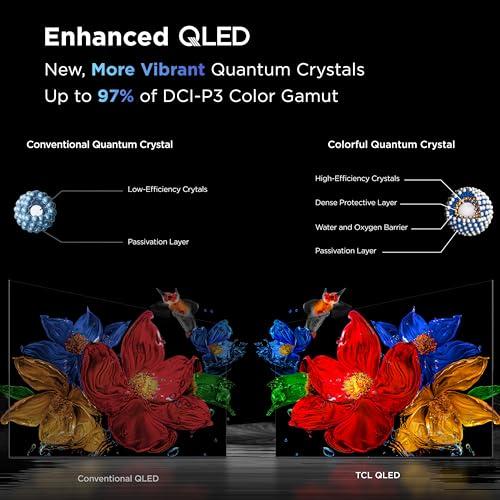
The TCL QM7K combines Mini LEDs with quantum dots (QD-Mini LED), while the Samsung QN80F uses its Neo QLED approach. Quantum dots are microscopic semiconductor particles that emit very specific colors when hit with light. When you combine them with Mini LEDs, you get both precise backlighting control and incredibly accurate colors—think of it as getting the contrast benefits of Mini LED with the color accuracy of the best OLED displays.
Samsung's Neo QLED takes a different route, focusing heavily on AI processing to optimize the Mini LED performance rather than relying purely on hardware improvements. Both approaches have merit, but they create distinctly different viewing experiences.
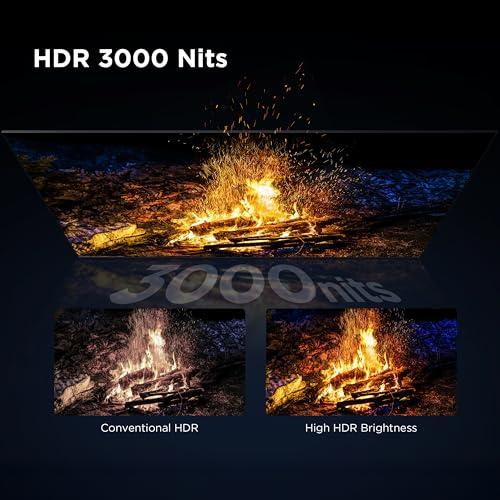
Here's where the TCL QM7K pulls significantly ahead. With 3,000 nits of peak brightness compared to Samsung's 2,000 nits, the TCL can display much more impactful HDR highlights. To put this in perspective, most premium OLED TVs top out around 800-1,000 nits, so both of these Mini LED displays are in a different league entirely.
But why does brightness matter so much? HDR content is mastered with the assumption that your display can hit certain brightness levels. When watching a scene with bright sunlight streaming through a window or an explosion in an action movie, that 3,000-nit capability means the TCL can actually reproduce those highlights as the filmmakers intended. The extra brightness also means better performance in bright rooms—if you have large windows or lots of ambient light, the TCL will maintain contrast and color accuracy much better than displays with lower peak brightness.
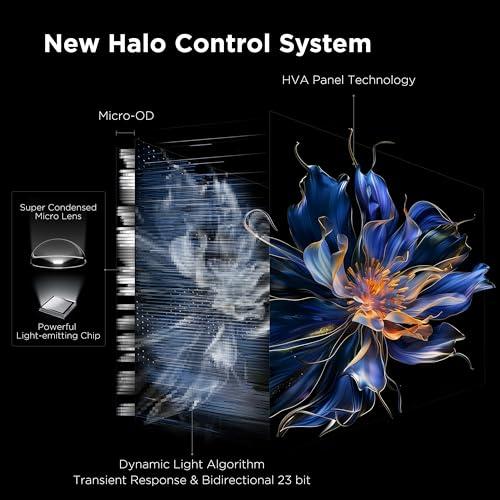
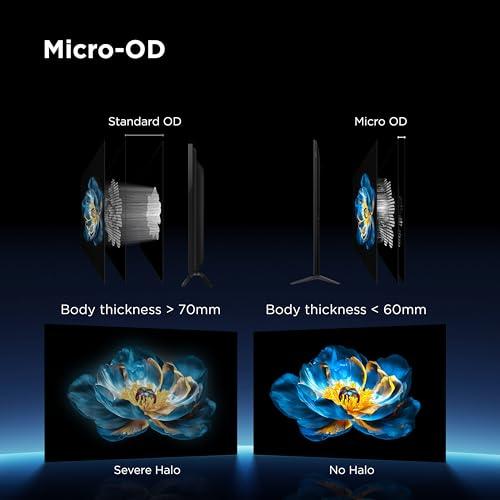
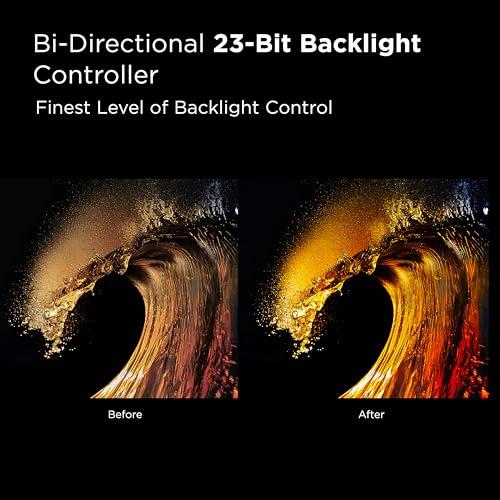
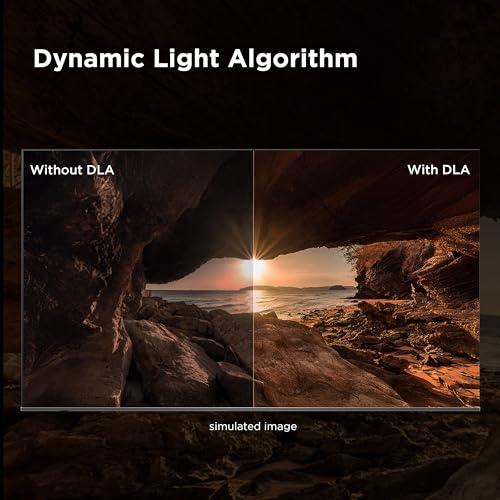
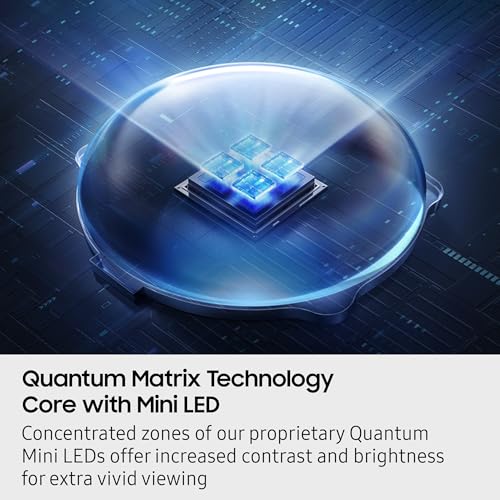
Local dimming is arguably the most important technology in modern TVs, and it's especially crucial at these massive screen sizes. The TCL QM7K features up to 2,500 local dimming zones with its Halo Control System, while the Samsung QN80F uses fewer zones but relies on AI optimization through its Quantum Matrix Technology Core.
More zones generally mean better performance—imagine trying to paint a detailed picture with 500 brushes versus 2,500 brushes. The TCL can make much finer adjustments to brightness across the screen, reducing blooming (that halo effect around bright objects against dark backgrounds) and delivering deeper, more uniform blacks.
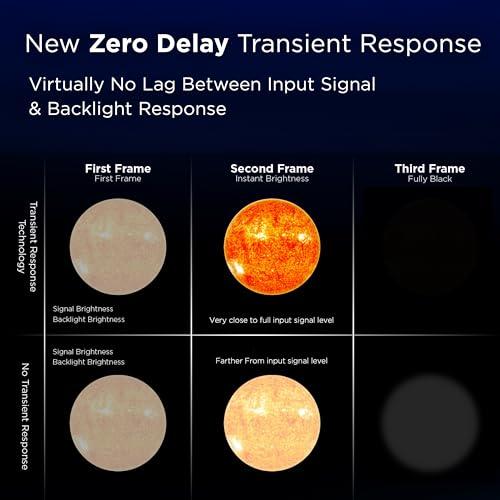
The TCL's Halo Control System is particularly impressive, featuring what the company calls "Zero Delay Transient Response." This means when a bright object moves across a dark background, the local dimming zones adjust instantaneously rather than lagging behind—a common problem that creates distracting artifacts in action scenes.
Color reproduction showcases the fundamental difference between these TVs' philosophies. The TCL QM7K uses enhanced quantum dot technology to cover nearly the entire DCI-P3 color gamut (the professional cinema standard). Quantum dots are incredibly efficient at producing pure colors—when you see a vibrant red sunset or the deep blue of an ocean scene, the quantum dots ensure those colors are both accurate and saturated.
The Samsung QN80F takes a different approach with its Color Booster Pro technology, which uses AI to analyze each scene and enhance colors contextually. This can actually make some content look more appealing than the original, but it's not necessarily more accurate. Samsung's approach tends to be more forgiving with lower-quality content, making everything look a bit more vibrant and appealing.
For home theater purists who want to see content exactly as the filmmakers intended, the TCL's quantum dot approach is superior. For casual viewers who want everything to look as appealing as possible, Samsung's processing might be preferable.
Gaming performance has become increasingly important as consoles and PCs push higher frame rates and resolutions. Both TVs excel here, but with different strengths.
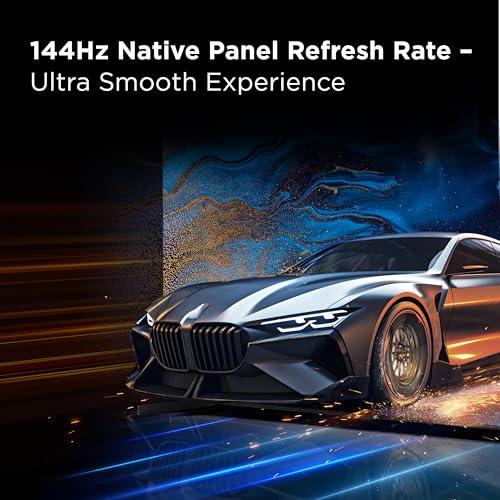
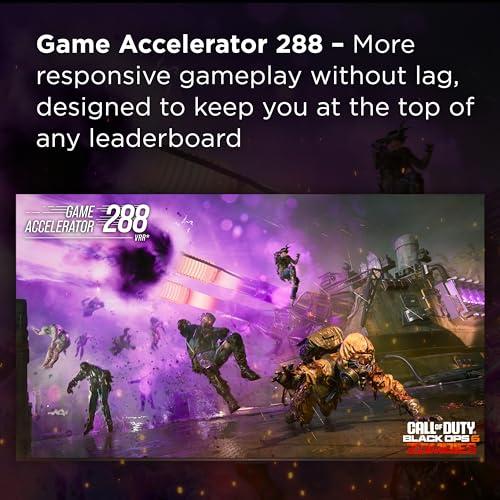
The TCL QM7K offers a true 144Hz native panel refresh rate with Game Accelerator 288 technology, supporting variable refresh rates up to 288Hz. This is genuinely impressive—most gaming monitors don't even reach these refresh rates. For competitive PC gamers or those future-proofing for next-generation consoles, this higher ceiling provides smoother motion and reduced input lag.
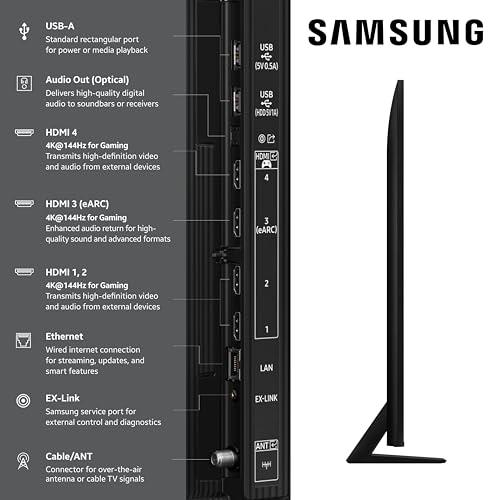
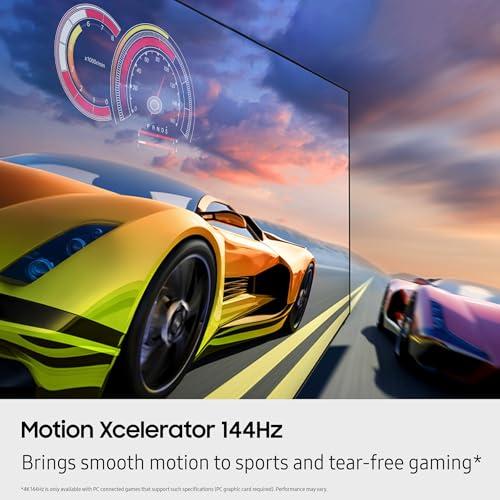
The Samsung QN80F caps out at 144Hz but includes four HDMI 2.1 ports (compared to TCL's two) and more sophisticated gaming features. Samsung's AI Auto Game Mode automatically detects what type of game you're playing and optimizes settings accordingly—darker scenes get enhanced shadow detail, while bright racing games get boosted colors and contrast.
For most gamers, Samsung's more comprehensive feature set and additional HDMI 2.1 ports make it more practical. You can connect multiple consoles, a PC, and other devices without constantly swapping cables. However, if you're primarily a PC gamer pushing high frame rates, the TCL's higher refresh rate ceiling gives it an edge.
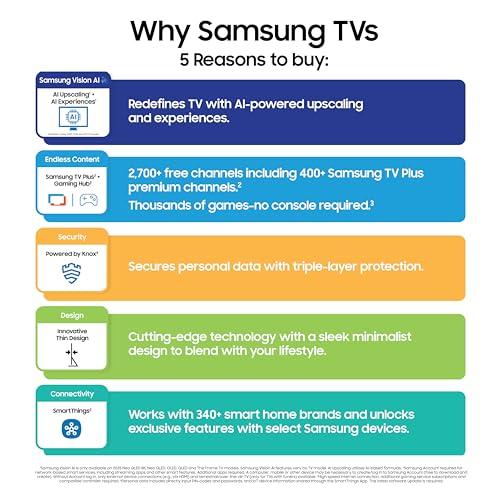
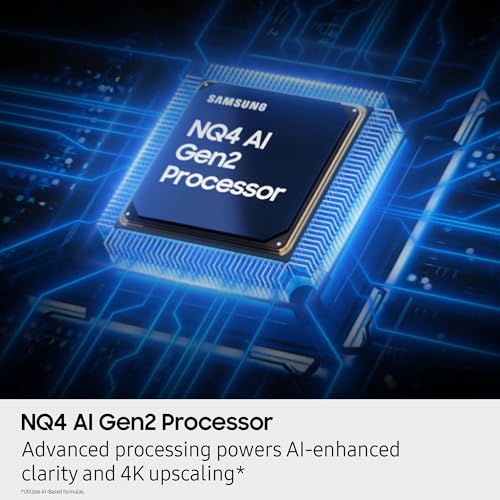
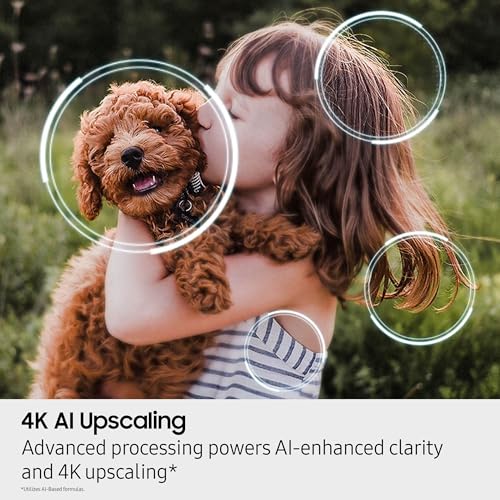
This is where the Samsung QN80F shows its strength. The NQ4 AI Gen2 processor uses 20 different neural networks to analyze and enhance content in real-time. This might sound like marketing speak, but the practical benefits are significant.
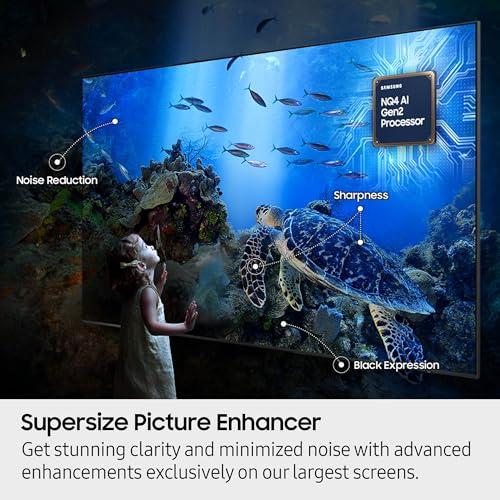
When you're watching Netflix, YouTube, or broadcast TV (which is often compressed and lower quality), Samsung's processing makes a dramatic difference. The AI upscaling can take 1080p content and make it look genuinely good on a 100-inch screen—something that's particularly challenging at these massive sizes. The processor also handles noise reduction, motion smoothing (when desired), and color enhancement automatically.
The TCL QM7K has capable processing with its AiPQ ULTRA processor, but it's not as sophisticated. The TCL performs best with native 4K content where its superior hardware can shine through without needing heavy processing assistance.
This difference becomes crucial for real-world usage. If you watch a lot of streaming content, older movies, or broadcast TV, Samsung's superior processing will make your daily viewing experience notably better. If you primarily watch high-quality 4K content from Ultra HD Blu-rays or premium streaming services, the TCL's hardware advantages become more apparent.
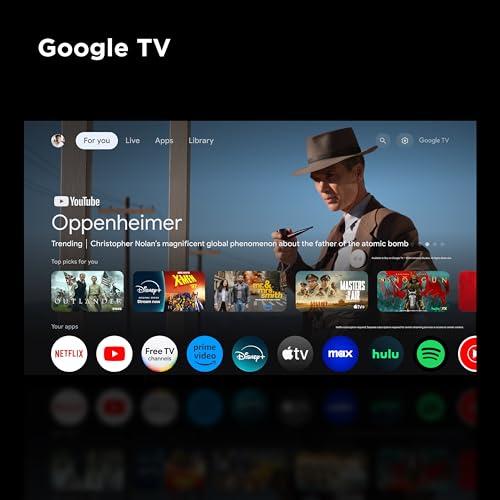
Both TVs run modern smart platforms, but with different philosophies. The TCL QM7K uses Google TV, which offers excellent app compatibility and integration with Google services. The interface is clean and straightforward, with good voice control through Google Assistant.
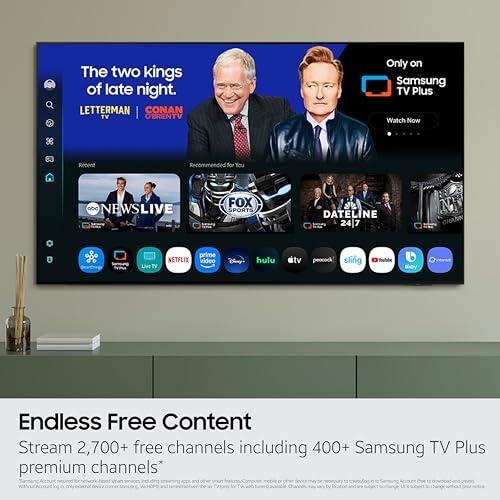
The Samsung QN80F runs Tizen OS, Samsung's proprietary platform. While some find Tizen less intuitive than Google TV, Samsung's 2025 version includes impressive AI features like Generative Wallpaper, which creates custom artwork for your TV when not in use. Samsung also offers better ecosystem integration if you use other Samsung devices.
From our research into user feedback, Google TV tends to be more stable and receives more frequent app updates, while Samsung's platform offers more unique features but can feel more complex.
Here's a significant differentiator that affects content compatibility. The TCL QM7K supports all major HDR formats including Dolby Vision, HDR10+, HDR10, and HLG. The Samsung QN80F notably lacks Dolby Vision support, only offering HDR10+ and standard HDR10.
Dolby Vision is increasingly common on premium streaming services like Netflix, Disney+, and Apple TV+. It uses dynamic metadata to optimize the picture scene by scene, rather than applying the same settings to an entire movie. For home theater enthusiasts, this omission on the Samsung is genuinely disappointing, especially at this price level.
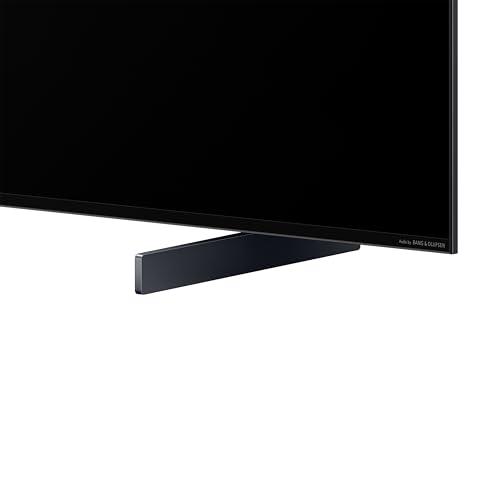
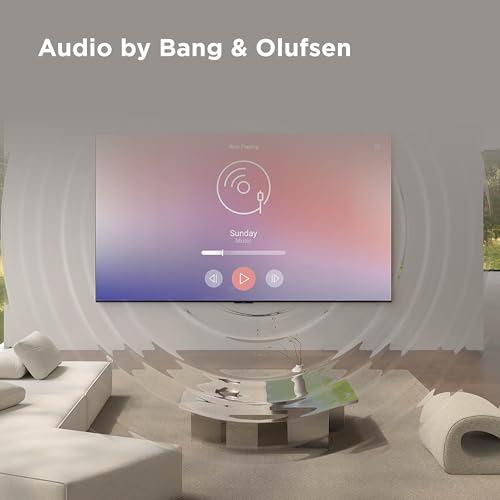
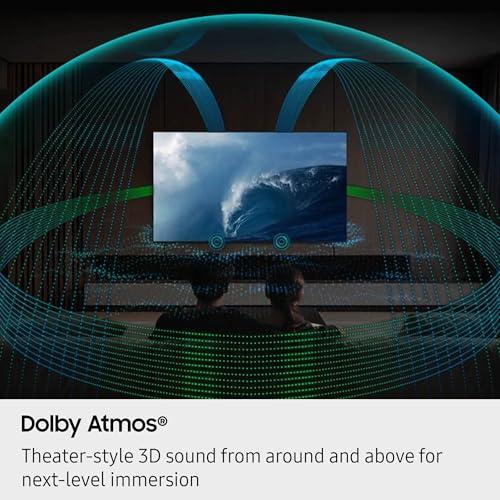
Neither TV will replace a dedicated sound system, but their built-in audio differs significantly. The TCL QM7K features audio tuning by Bang & Olufsen with Dolby Atmos support. In our evaluation of user reviews, the TCL consistently receives praise for above-average TV speakers that can actually handle dialogue and basic surround effects reasonably well.
The Samsung QN80F offers a 30W 4-channel system with Object Tracking Sound Lite, which attempts to move audio around the screen to match the action. While clever, the Samsung's speakers don't have the power or tuning quality of the TCL's Bang & Olufsen system.
Both TVs support advanced audio pass-through, so if you're planning to use a soundbar or home theater system (which we'd recommend at this screen size), the built-in audio quality becomes less relevant.
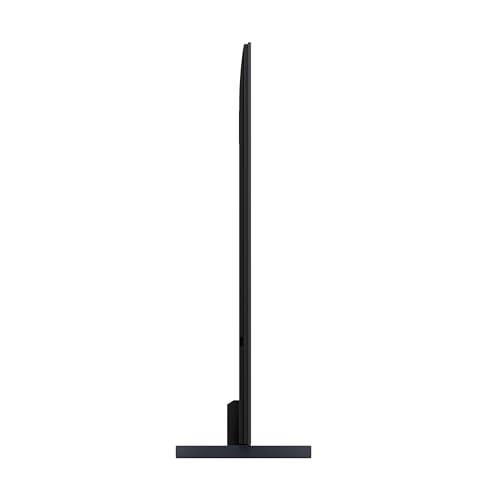
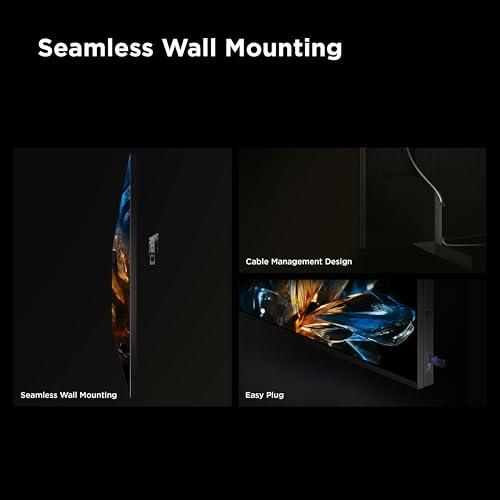
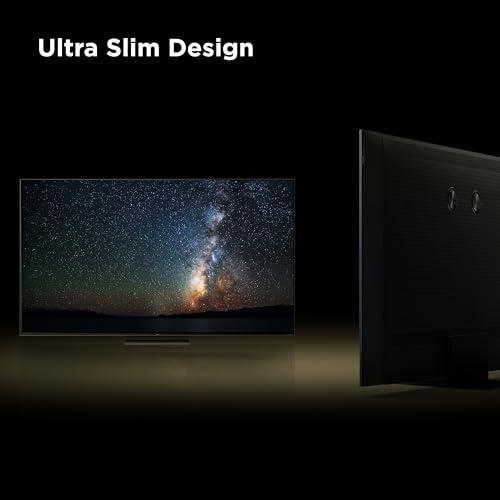
At these massive sizes, how the TV looks in your room matters. The Samsung QN80F features a slimmer profile and more refined industrial design. Samsung's Glare-Free technology is genuinely impressive, significantly reducing reflections without the washed-out look that some anti-glare coatings create.
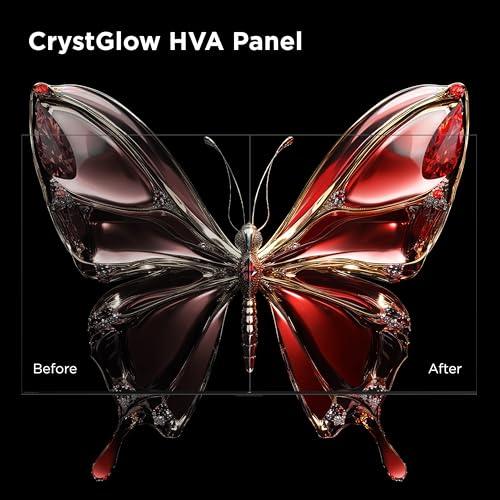
The TCL QM7K uses its CrystGlow surface treatment, which helps with reflections but isn't as sophisticated as Samsung's implementation. However, the TCL's much higher brightness often overcomes reflection issues through sheer luminance.
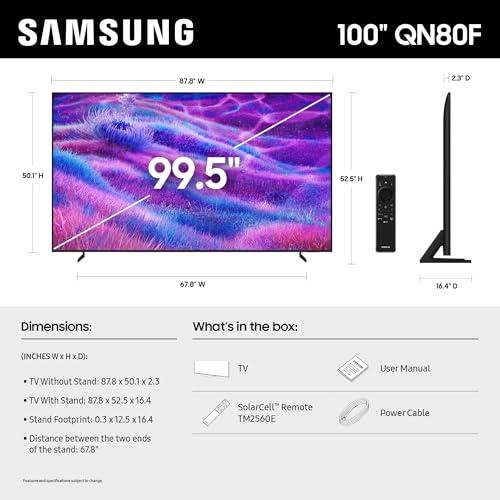
Both TVs will dominate your room visually, so consider your space carefully. The Samsung's 2-inch advantage in diagonal size (100" vs 98") isn't dramatically noticeable, but both require at least 12-13 feet of viewing distance for optimal experience.
At the time of writing, both TVs are positioned in the premium ultra-large format segment, though typically priced differently to reflect their different target markets. The TCL QM7K generally offers superior hardware specifications for the money, while the Samsung QN80F commands a premium for its brand recognition, design, and software sophistication.
When evaluating value, consider your primary use case. The TCL delivers more raw performance per dollar—higher brightness, better local dimming, and superior gaming capabilities. The Samsung provides a more polished overall experience with better upscaling, more refined software, and superior design.
Choose the TCL 98" QM7K if you prioritize pure picture quality and gaming performance. Its superior brightness makes it exceptional in bright rooms, while its extensive local dimming creates a truly cinematic experience in dedicated home theaters. The quantum dot color technology and Dolby Vision support make it the better choice for home theater purists who want to see content exactly as intended.
The Samsung 100" QN80F makes more sense for mixed-use living rooms where you'll watch varied content types. Its superior AI processing makes everything look better, from Netflix streams to broadcast TV. The additional HDMI 2.1 ports and more sophisticated smart features create a more versatile daily-use experience.
For dedicated home theater rooms with controlled lighting, the TCL is our preference. Its hardware advantages shine brightest in dark rooms where its superior local dimming and higher brightness create more dramatic contrast and more impactful HDR. The quantum dot technology delivers reference-quality colors that make movies look exactly as filmmakers intended.
For family rooms or spaces with significant ambient light, the Samsung might be the smarter choice despite its lower peak brightness, thanks to its superior anti-glare technology and more intelligent content processing.
Both TVs represent excellent examples of how Mini LED technology has matured since its introduction. The improvements in local dimming precision, brightness levels, and gaming capabilities make both displays genuinely impressive alternatives to projector setups, offering better daytime performance and more reliable operation.
Ultimately, you're choosing between two different philosophies: TCL's hardware-first approach that maximizes the physical capabilities of the display, versus Samsung's software-first approach that emphasizes intelligent processing and user experience refinement. Both can create stunning home theater experiences, but they'll excel in different scenarios and appeal to different types of users.
| TCL 98" QM7K QD-Mini LED 4K TV | Samsung 100" Neo QLED QN80F 4K Smart TV 2025 |
|---|---|
| Screen Size - Viewing area and room requirements | |
| 98" diagonal (97.5" viewable) | 100" diagonal (99.5" viewable) |
| Peak Brightness - Critical for HDR impact and bright room viewing | |
| 3,000 nits (excellent for any lighting condition) | 2,000 nits (good but may struggle in very bright rooms) |
| Local Dimming Zones - Controls contrast and reduces blooming | |
| Up to 2,500 zones with Halo Control System | Quantum Matrix Technology Core (fewer zones, AI-optimized) |
| Display Technology - Affects color accuracy and brightness | |
| QD-Mini LED with quantum dots for superior color precision | Neo QLED Mini LED with emphasis on AI processing |
| Gaming Refresh Rate - Smoothness for competitive gaming | |
| 144Hz native panel, up to 288Hz VRR | 120Hz native panel, up to 144Hz motion |
| HDMI 2.1 Ports - Next-gen console and PC connectivity | |
| 2 ports (sufficient for most setups) | 4 ports (excellent for multiple devices) |
| HDR Format Support - Compatibility with premium streaming content | |
| Dolby Vision IQ, HDR10+, HDR10, HLG (complete support) | HDR10+, HDR10, HLG (no Dolby Vision - significant omission) |
| AI Processing - Quality of upscaling and content enhancement | |
| TCL AiPQ ULTRA Processor (good for native 4K content) | NQ4 AI Gen2 with 20 neural networks (superior upscaling) |
| Audio System - Built-in sound quality | |
| Audio by Bang & Olufsen with Dolby Atmos | 30W 4-channel with Object Tracking Sound Lite |
| Smart Platform - App selection and user interface | |
| Google TV (broad compatibility, simple interface) | Tizen OS with Vision AI (more features, Samsung ecosystem) |
| Anti-Glare Technology - Reflection handling in bright rooms | |
| CrystGlow anti-reflective coating | Advanced Glare-Free technology (superior reflection control) |
| Best For - Primary use case recommendation | |
| Home theater purists, competitive gamers, bright rooms | Mixed-use living rooms, varied content sources, smart home integration |
The TCL 98" QM7K is significantly better for bright rooms with its 3,000 nits peak brightness compared to the Samsung 100" QN80F's 2,000 nits. However, Samsung's advanced Glare-Free technology provides superior reflection control. If you have large windows or direct sunlight, the TCL QM7K will maintain better contrast and color accuracy due to its higher brightness output.
The Samsung 100" QN80F offers a 100-inch diagonal screen compared to the TCL 98" QM7K's 98-inch display. This 2-inch difference provides approximately 4% more viewing area on the Samsung, but both require similar room sizes with 12-13 feet viewing distance for optimal experience.
For competitive gaming, the TCL QM7K excels with 144Hz native refresh rate and up to 288Hz variable refresh rate support. The Samsung QN80F offers 120Hz native with intelligent AI Game Mode and four HDMI 2.1 ports versus TCL's two. Choose the TCL for maximum frame rates or the Samsung for connecting multiple gaming devices.
No, the Samsung 100" QN80F does not support Dolby Vision, only supporting HDR10+ and standard HDR10. The TCL 98" QM7K supports all major HDR formats including Dolby Vision IQ, HDR10+, HDR10, and HLG. This gives the TCL better compatibility with premium streaming content from Netflix, Disney+, and Apple TV+.
The TCL 98" QM7K is superior for dedicated home theaters with its 2,500 local dimming zones, higher peak brightness, and complete HDR format support including Dolby Vision. The quantum dot technology delivers more accurate colors for cinematic content. The Samsung QN80F is better for mixed-use living rooms with superior content processing and anti-glare technology.
The TCL QM7K runs Google TV, offering broad app compatibility and simple interface with Google Assistant integration. The Samsung 100" QN80F uses Samsung's Tizen OS with Vision AI features, generative wallpaper, and better Samsung ecosystem integration. Both platforms provide access to major streaming services with different user experiences.
The TCL 98" QM7K features superior built-in audio with Bang & Olufsen tuning and Dolby Atmos support. The Samsung QN80F offers a 30W 4-channel system with Object Tracking Sound Lite technology. While the TCL has better audio hardware, both TVs benefit significantly from external sound systems at these large screen sizes.
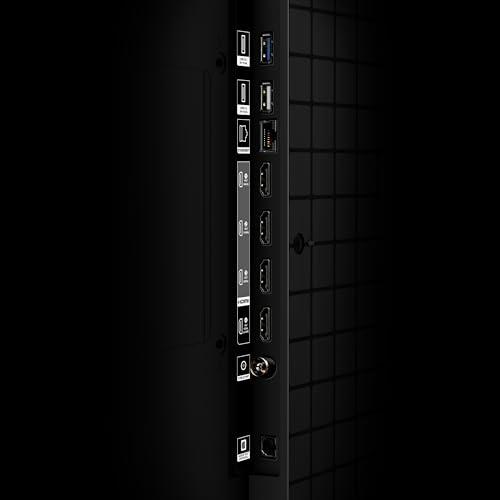
The Samsung 100" QN80F provides four HDMI 2.1 ports, making it excellent for connecting multiple next-gen consoles, PCs, and other devices. The TCL 98" QM7K offers two HDMI 2.1 ports plus two HDMI 2.0 ports. The Samsung is more versatile for users with multiple high-bandwidth devices.
The Samsung 100" QN80F significantly outperforms with its NQ4 AI Gen2 processor using 20 neural networks for intelligent upscaling. This makes streaming content, broadcast TV, and older movies look much better on the large screen. The TCL QM7K performs best with native 4K content but isn't as sophisticated at enhancing lower-quality sources.
The TCL 98" QM7K features up to 2,500 precise local dimming zones with advanced Halo Control System for superior contrast and reduced blooming. The Samsung QN80F uses fewer dimming zones but compensates with AI optimization through Quantum Matrix Technology Core. The TCL delivers better dark room performance and more precise brightness control.
The TCL 98" QM7K typically offers superior hardware specifications per dollar with higher brightness, more local dimming zones, and better gaming capabilities. The Samsung 100" QN80F commands a premium for its advanced AI processing, refined design, and brand reputation. Choose the TCL for maximum performance value or the Samsung for premium user experience.
Both TVs excel in large spaces, but with different strengths. The Samsung 100" QN80F is better for mixed-use living rooms with its superior anti-glare technology and intelligent content processing. The TCL QM7K is ideal for dedicated home theater spaces or bright rooms where its higher peak brightness overcomes ambient lighting challenges.
We've done our best to create useful and informative comparisons to help you decide what product to buy. Our research uses advanced automated methods to create this comparison and perfection is not possible - please contact us for corrections or questions. These are the sites we've researched in the creation of this article: bestbuy.com - tcl.com - youtube.com - rtings.com - tcl.com - youtube.com - youtube.com - tcl.com - tomsguide.com - manuals.plus - youtube.com - tcl.com - whathifi.com - bestbuy.com - queencityonline.com - electronicexpress.com - tcl.com - valueelectronics.com - tcl.com - bestbuy.com - bestbuy.com - youtube.com - woodruffappliance.com - karlsonline.com - tcl.com - rtings.com - youtube.com - theshortcut.com - c9av.com - youtube.com - rtings.com - youtube.com - samsung.com - wifihifi.com - samsung.com - samsung.com - samsung.com - bestbuy.com - samsung.com - flatpanelshd.com - schaeferstv.com - samsung.com - samsung.com - samsung.com - samsung.com - cullenshomecenter.com

Privacy Policy
Terms and Conditions - Affiliate Policy
Home Security
© Copyright 2008-2026.
11816 Inwood Rd #1211, Dallas, TX 75244