

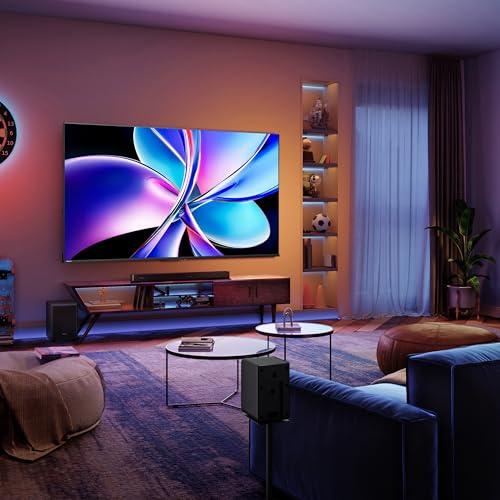
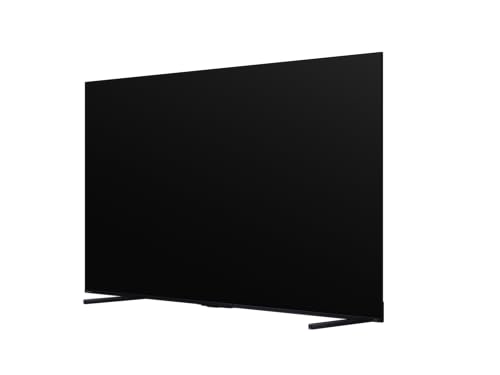
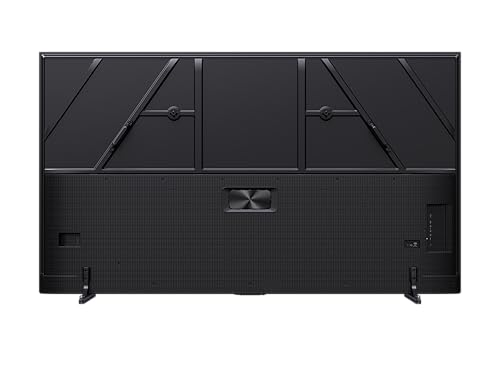
When most people think about upgrading their TV, they're usually looking at 55 to 75-inch models. But if you've got the space and want to create a truly cinematic experience at home, ultra-large displays in the 95+ inch range offer something special. These massive screens can transform your living room into a personal theater, delivering an immersive experience that smaller TVs simply can't match.
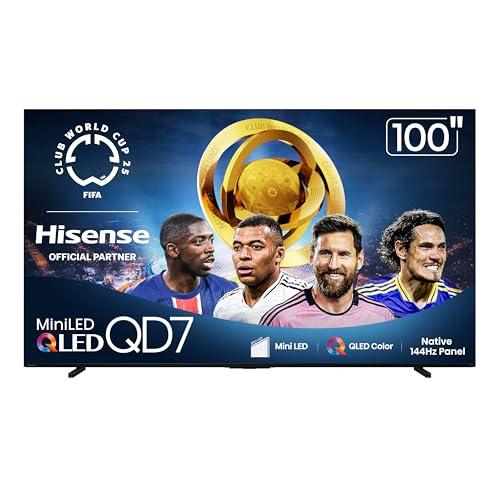
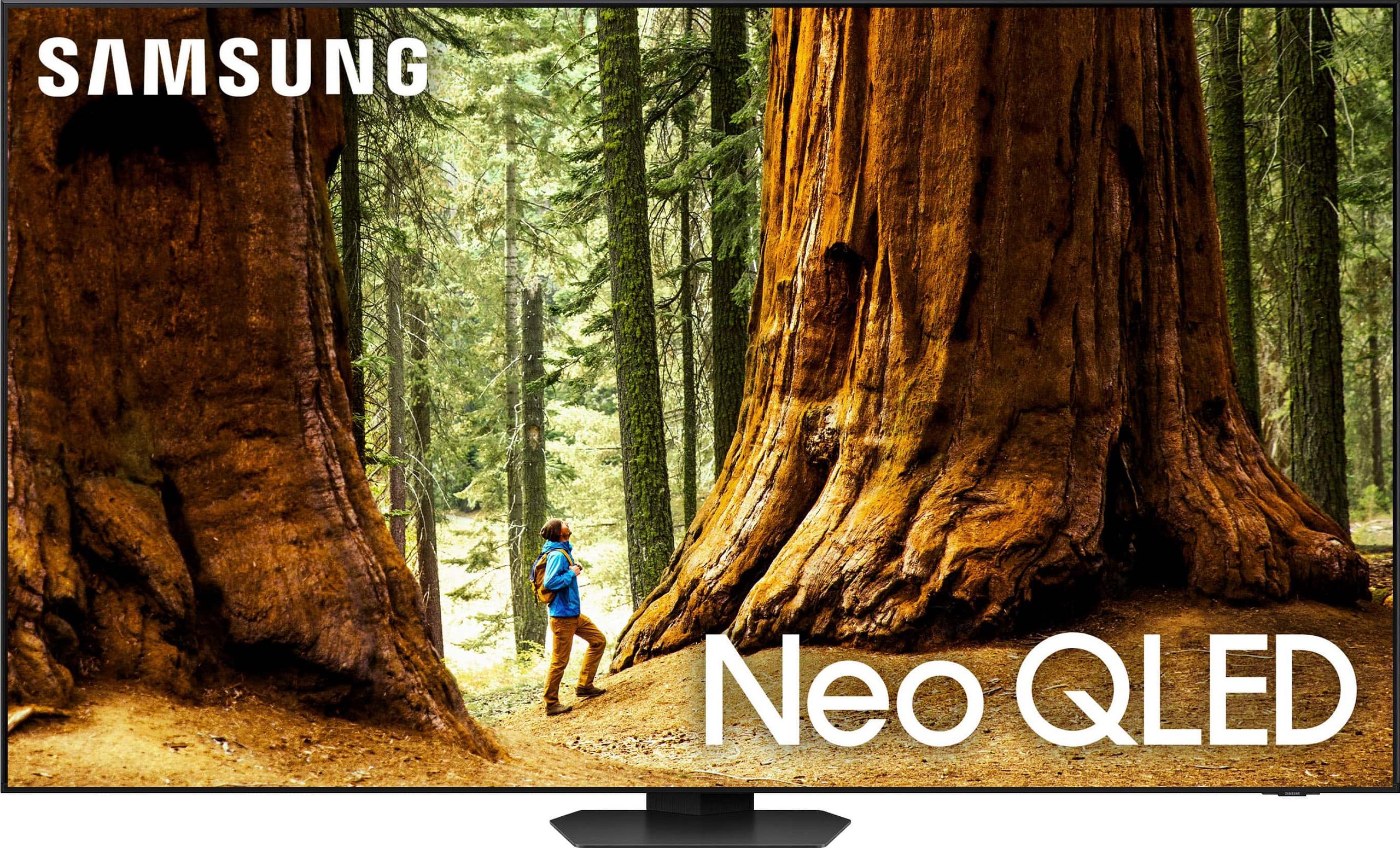
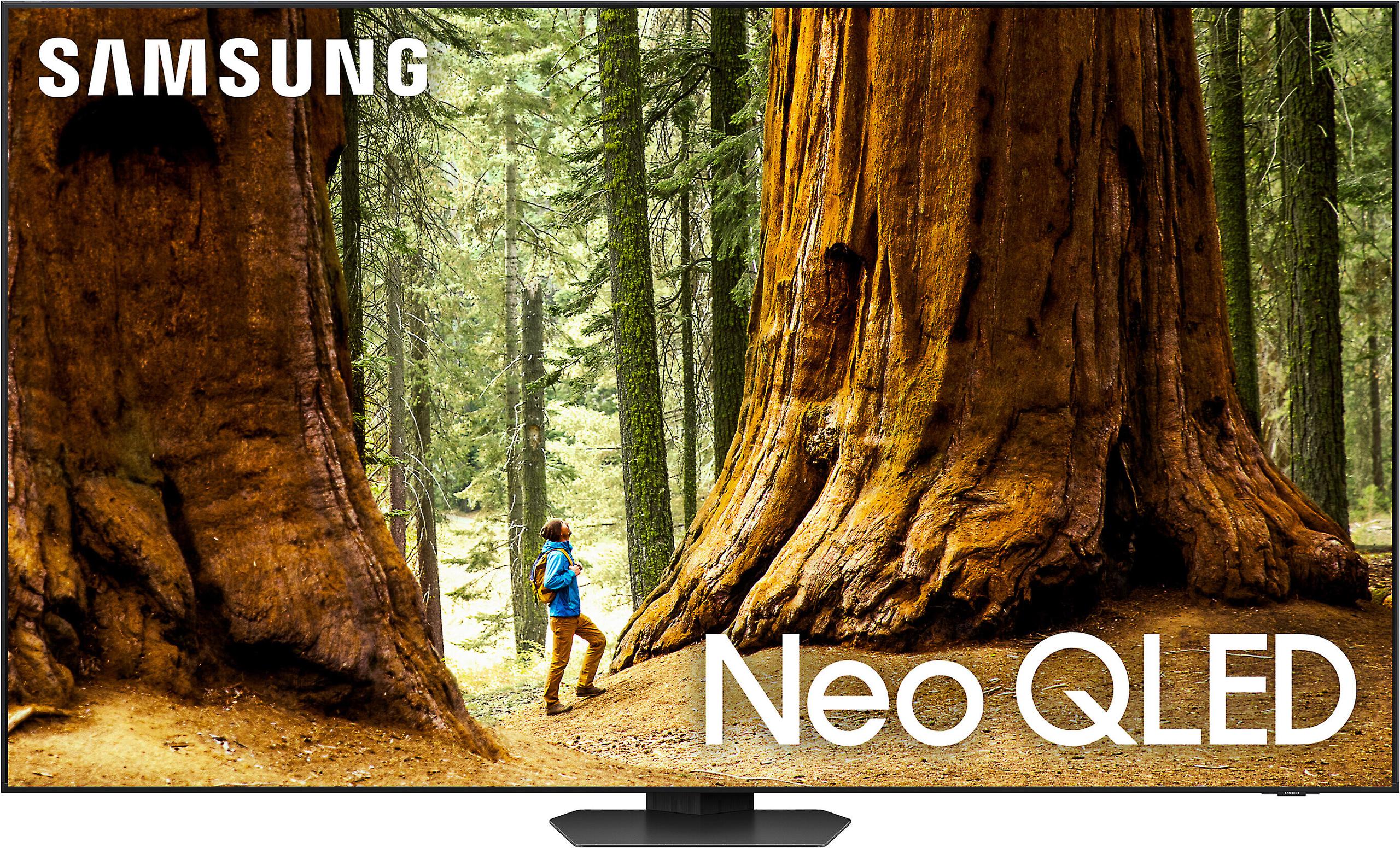
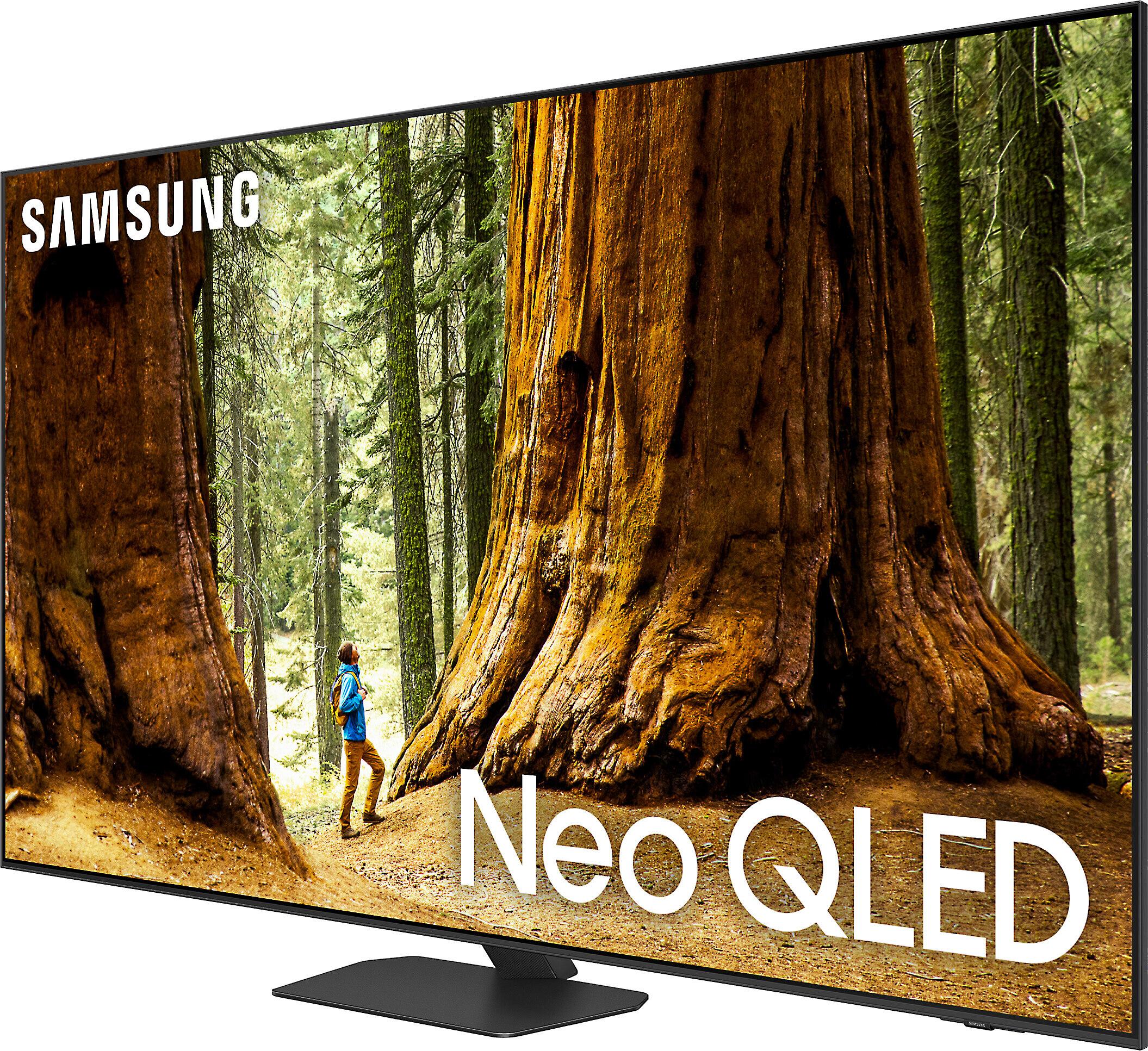
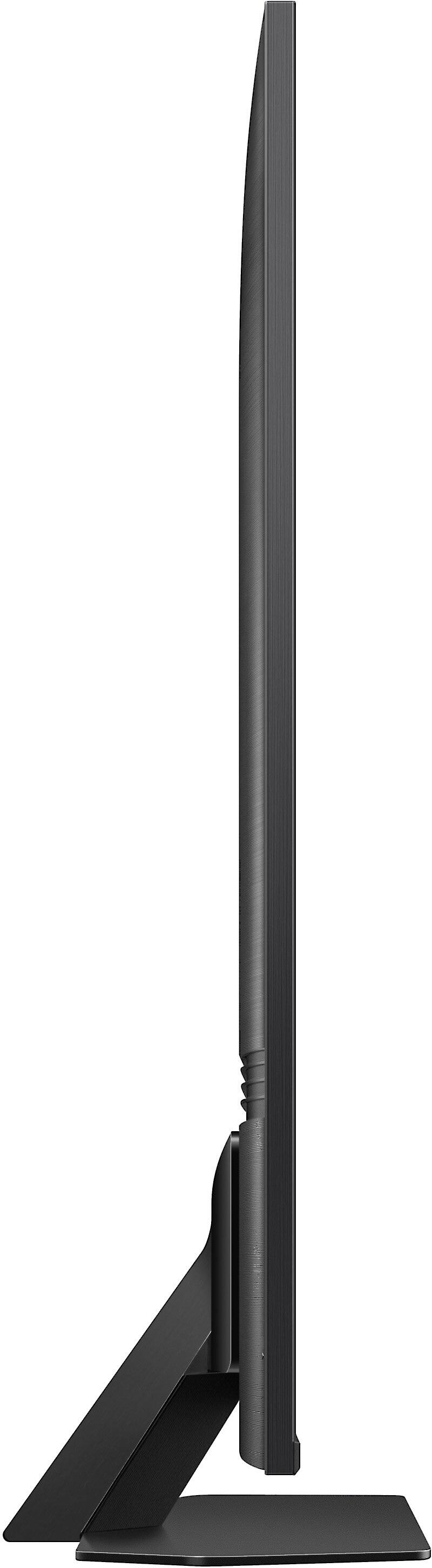
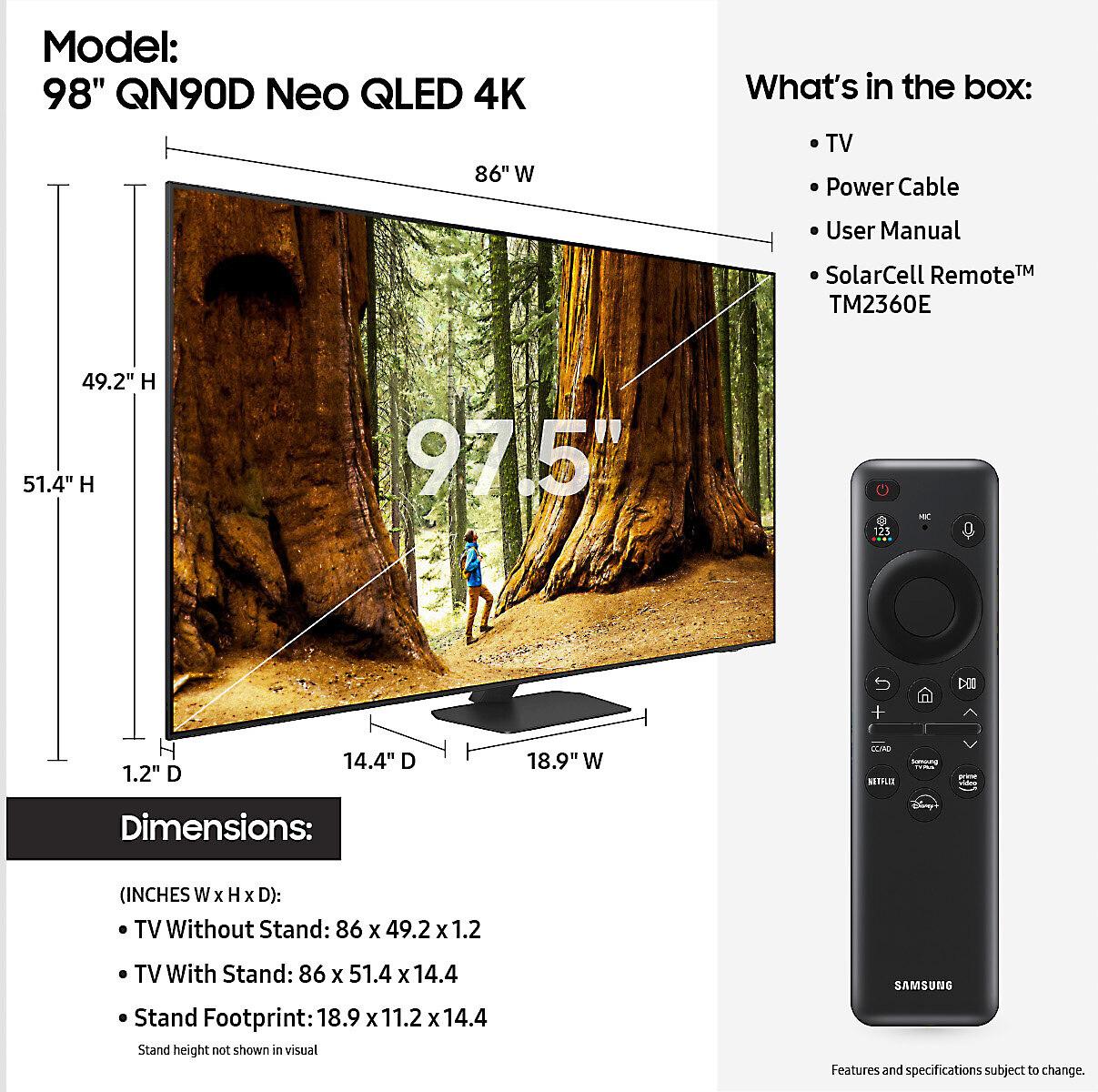
Today we're comparing two titans in this space: the Hisense 100-Inch QD7 Series Mini-LED 4K Smart TV and the Samsung 98" QN90D Series Neo QLED 4K Smart TV. While they're close in size, they take dramatically different approaches to pricing and features. Understanding these differences will help you decide which massive display deserves a place in your home.
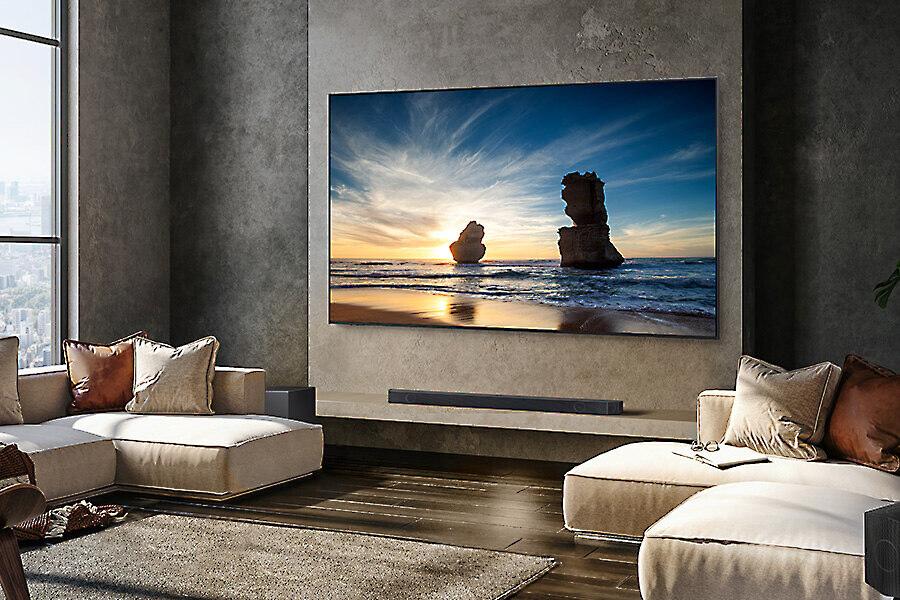
Before diving into specifics, let's talk about what makes this category unique. Ultra-large displays compete directly with projector systems, offering several key advantages: they work perfectly in bright rooms, require no special setup or screen, and deliver consistent picture quality regardless of ambient lighting. However, they also demand significant wall space and viewing distances of at least 12 feet for optimal comfort.
The main considerations when shopping in this category include the display technology (how the TV creates its picture), gaming capabilities, smart features, and crucially, value for money. Unlike smaller TVs where differences might be subtle, the premium you pay for ultra-large displays can vary dramatically between brands and models.
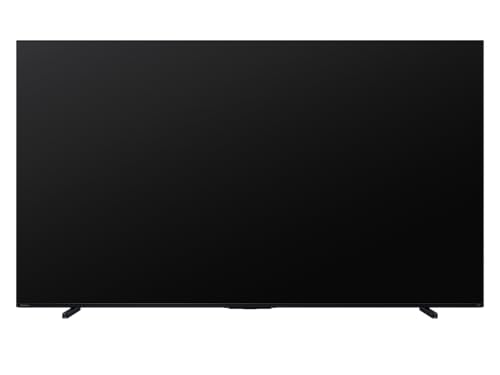
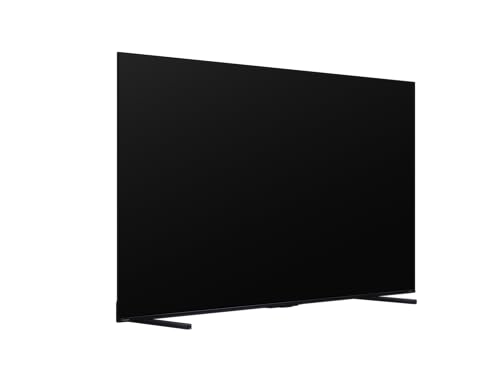
The Hisense 100-Inch QD7 Series arrived in 2024 as part of Hisense's push into premium large-format displays. Priced around $1,700, it represents Hisense's strategy of delivering flagship-level features at accessible prices. Since its release, the QD7 has proven that you don't need to spend premium dollars to get a premium experience.
The Samsung 98" QN90D Series, meanwhile, launched as part of Samsung's 2024 Neo QLED lineup with a price tag around $13,000. This represents Samsung's high-end approach, packed with every premium feature they could engineer into a display. The technology in the QN90D builds on years of Samsung's Mini-LED development, incorporating their latest Quantum Matrix Technology and NQ4 AI Gen2 processor.
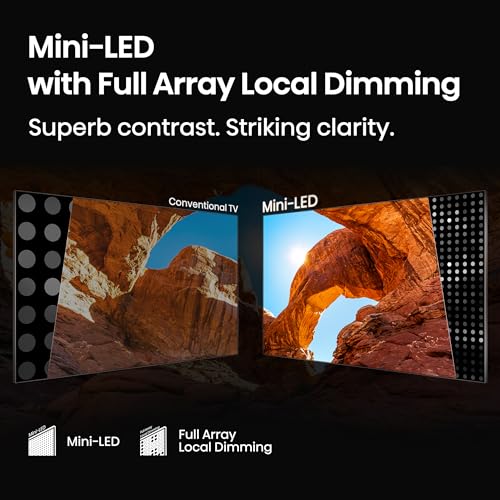
What's interesting is how display technology has evolved recently. Both TVs use variations of Mini-LED backlighting—a technology that uses thousands of tiny LEDs instead of traditional larger backlights. This allows for much more precise control over brightness and contrast, creating deeper blacks and more vibrant highlights than older LED TVs.
Here's where things get fascinating from a technical standpoint. Both TVs achieve excellent picture quality but through different philosophies and implementations.
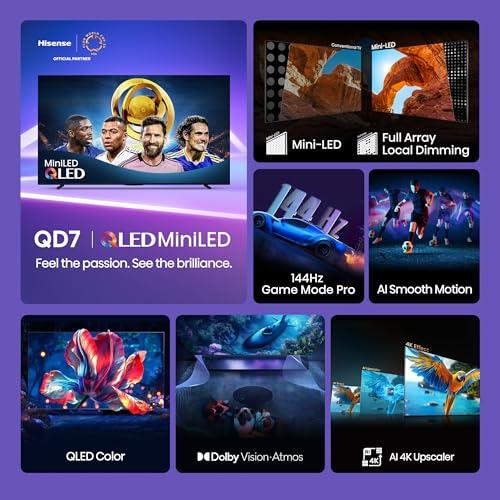
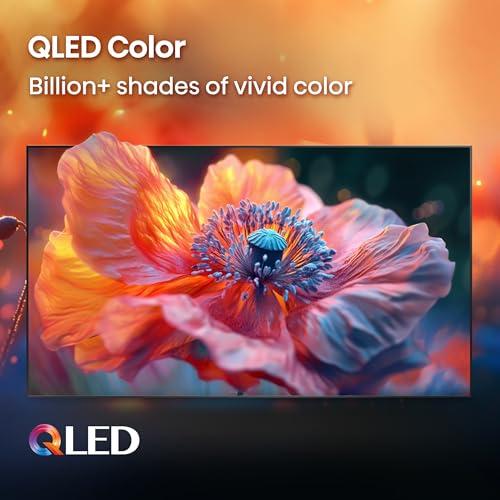
The Hisense QD7 uses Mini-LED backlighting combined with Quantum Dot color technology. Think of Mini-LEDs as thousands of tiny flashlights behind the screen that can be controlled individually or in small groups. This is called Full Array Local Dimming (FALD), and it allows specific areas of the screen to go completely dark while others stay bright. The Quantum Dot layer acts like a color filter, taking the LED light and converting it into over a billion different color shades with remarkable accuracy.
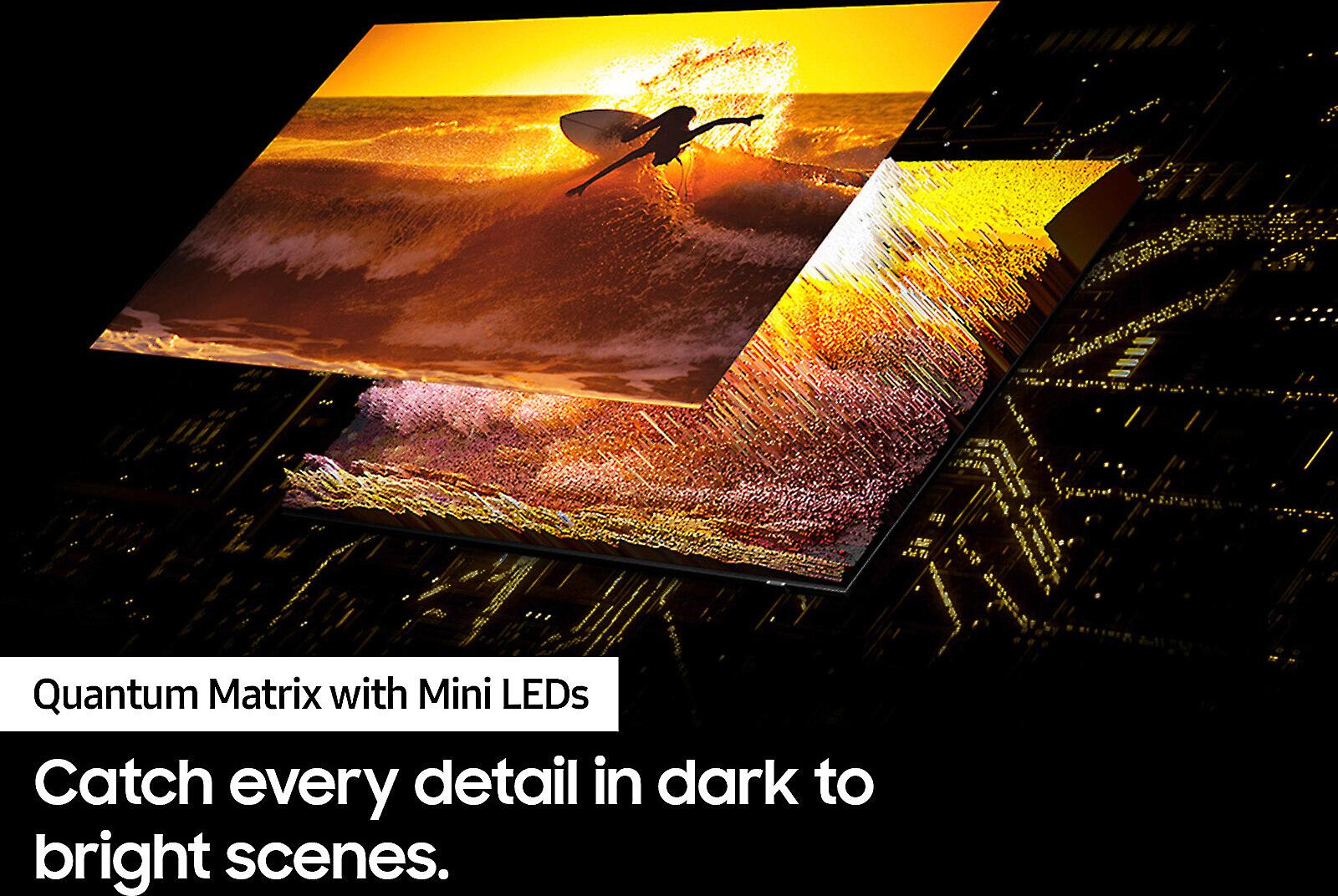
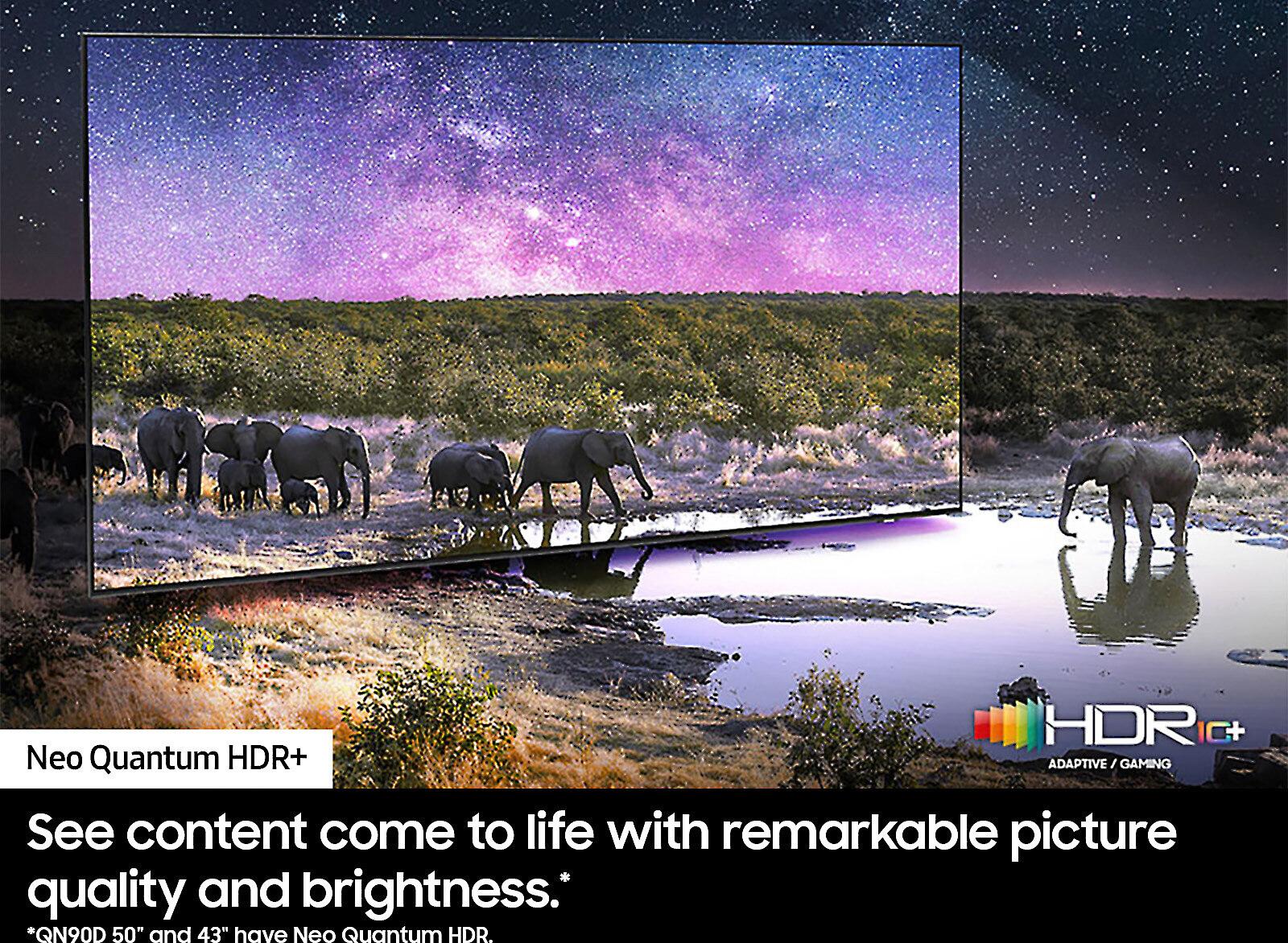
The Samsung QN90D takes this concept further with their Neo QLED technology, which Samsung calls Quantum Matrix Technology. Their Mini-LEDs are even smaller—about 1/40th the size of conventional LEDs—and they're organized into more precise dimming zones. Samsung's Neural Quantum Processor 4K then uses artificial intelligence to analyze each scene and optimize the brightness of these zones in real-time.
In practical terms, this means the Samsung delivers superior contrast and black levels. When you're watching a movie with dark scenes, like space sequences or nighttime shots, the Samsung can make those blacks look truly black while keeping bright elements (like stars or car headlights) brilliantly luminous. The Hisense does this well too, but not quite to the same degree.
However, the Hisense has one surprising advantage: it supports Dolby Vision, while the Samsung doesn't. Dolby Vision is like having a professional colorist optimize every scene of your movie in real-time. It provides scene-by-scene instructions to your TV about how bright and colorful each moment should look, resulting in more accurate and impactful HDR (High Dynamic Range) content.
Gaming is where these two TVs diverge most dramatically, and it's worth understanding why this matters even if you're not a serious gamer.
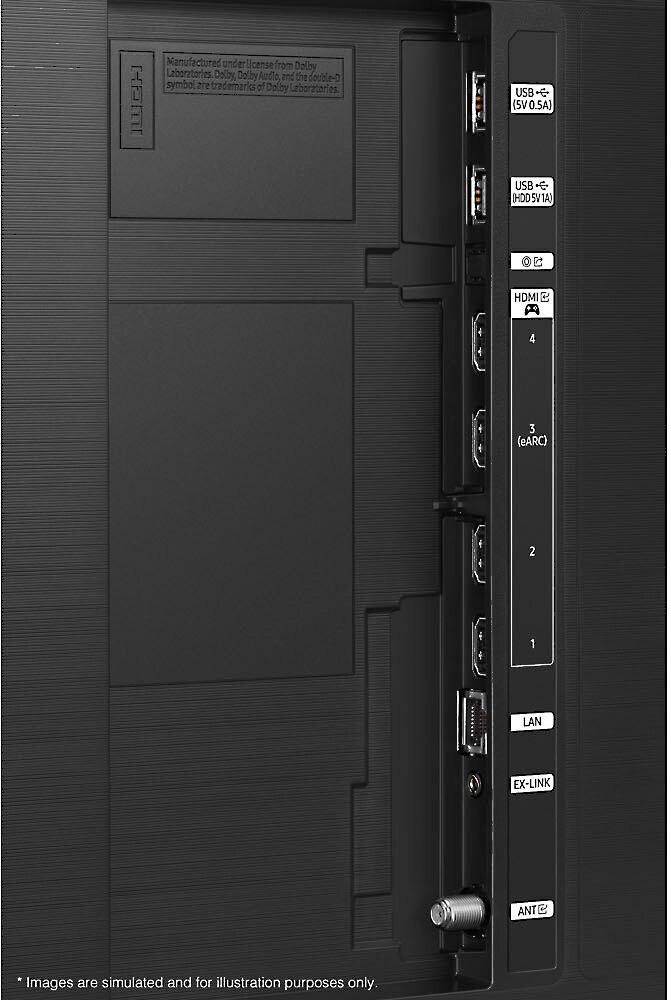
The Samsung QN90D is engineered for gaming excellence. It features four HDMI 2.1 ports that can handle 4K resolution at 120 frames per second—that's twice as smooth as standard TV content. Its input lag (the delay between pressing a button and seeing the action on screen) measures under 10 milliseconds, which is crucial for competitive gaming where reaction time matters.
More importantly, the Samsung includes advanced gaming features like Auto Game Mode (which automatically optimizes settings when it detects a gaming console), FreeSync Premium Pro (which eliminates screen tearing), and Samsung's Gaming Hub that lets you stream games directly without a console.
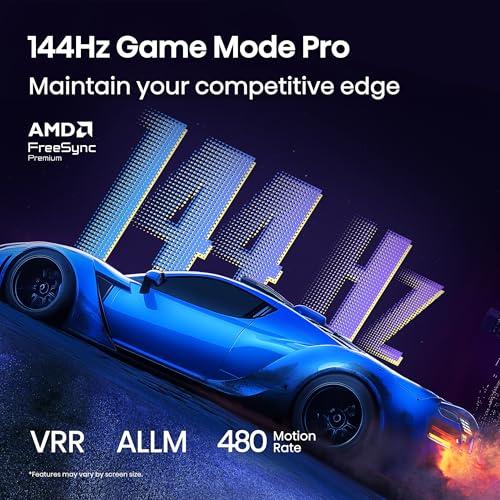
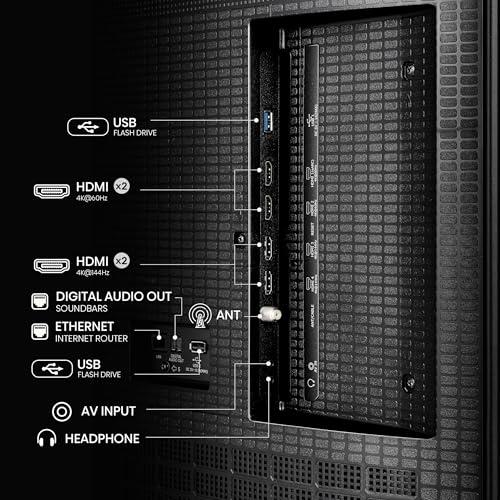
The Hisense QD7, while decent for gaming, is clearly positioned for casual use. It has only two HDMI 2.1 ports and higher input lag around 15-20 milliseconds. For most single-player games and casual gaming, this is perfectly fine. However, if you plan to connect multiple next-generation consoles or want the absolute best gaming experience, the Samsung's advantages are substantial.
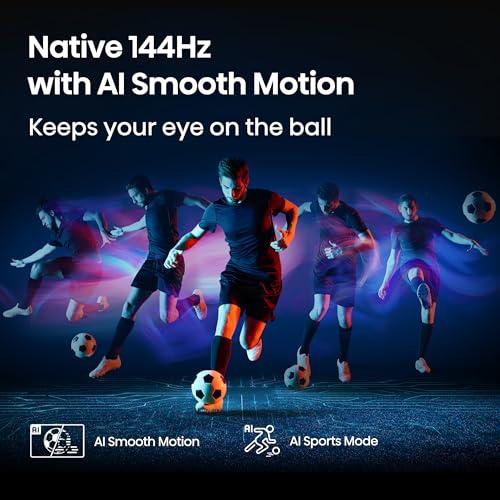
Interestingly, the Hisense actually has a higher native refresh rate at 144Hz compared to Samsung's 120Hz. However, Samsung's superior processing and variable refresh rate implementation make it feel smoother in practice.
The smart TV experience differs significantly between these models, reflecting their different target markets.
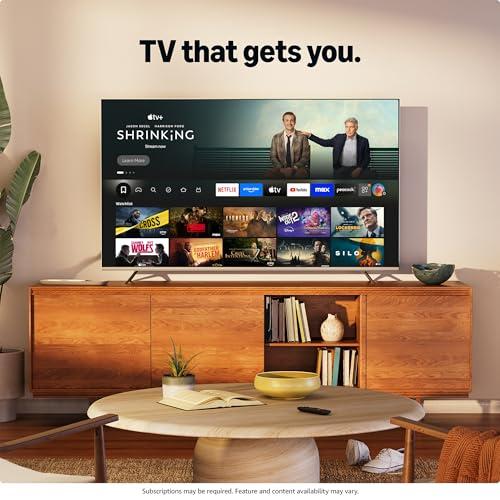
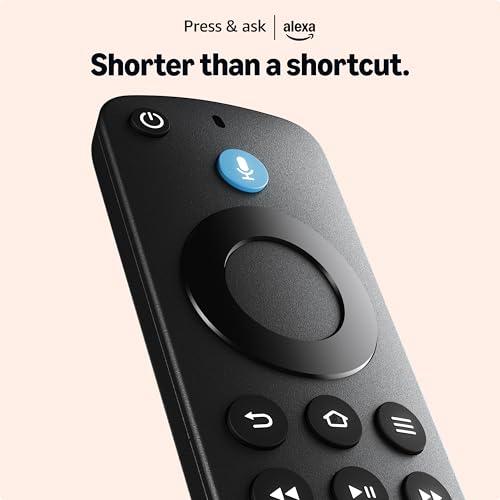
The Hisense QD7 runs Fire TV in the US market and Google TV internationally. Both platforms prioritize simplicity and content discovery. Fire TV integrates seamlessly with Amazon's ecosystem, making it easy to find movies and shows across different streaming services. The interface is clean, fast, and doesn't try to overwhelm you with features you might not use.
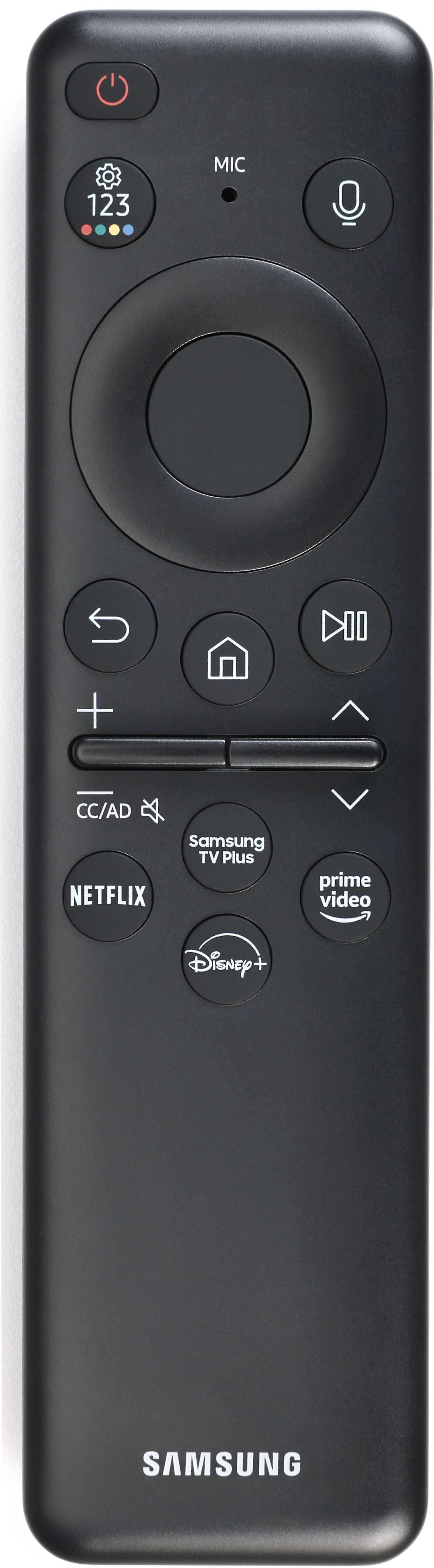
Samsung's Tizen OS on the QN90D is more sophisticated but also more complex. It includes AI-powered features like contextual voice commands, generative wallpapers, and live translation for international content. The Gaming Hub deserves special mention—it's essentially a gaming console built into your TV, letting you stream games from Xbox Game Pass, NVIDIA GeForce Now, and other services without additional hardware.
From my experience with both platforms, the choice often comes down to personal preference and existing ecosystem investments. If you're deep into Amazon's ecosystem or prefer Google services, the Hisense's approach feels more intuitive. If you want cutting-edge smart features and don't mind a learning curve, Samsung's platform offers more capabilities.
Let's be honest about audio performance on ultra-large displays: while both TVs include respectable speaker systems, neither delivers audio that matches their visual scale.
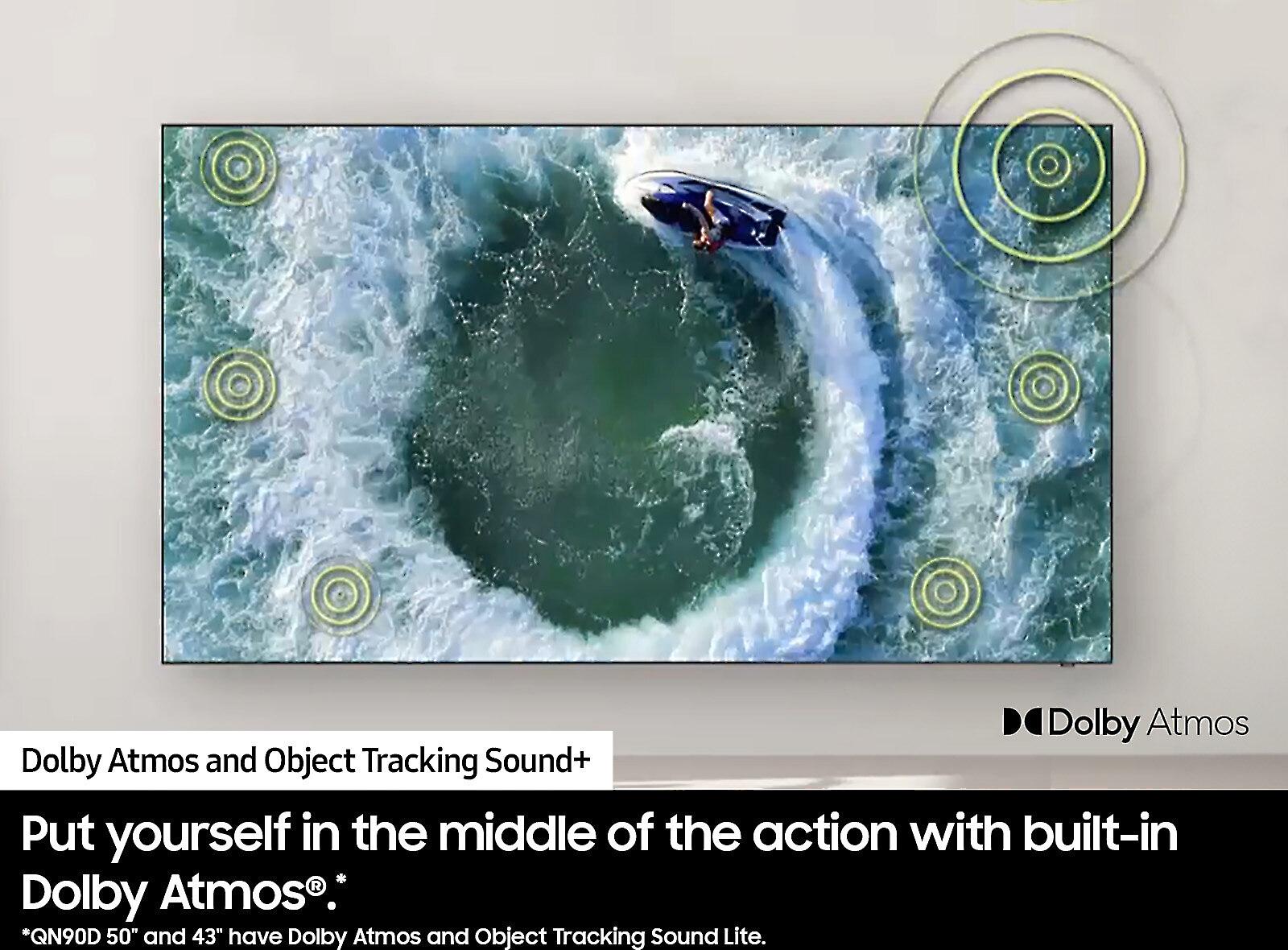
The Samsung QN90D includes Object Tracking Sound+, which attempts to make audio appear to come from different parts of the screen. It's clever technology that works reasonably well, and the 30W 4.2-channel system produces more volume and clarity than the Hisense's 20W 2.0-channel setup.
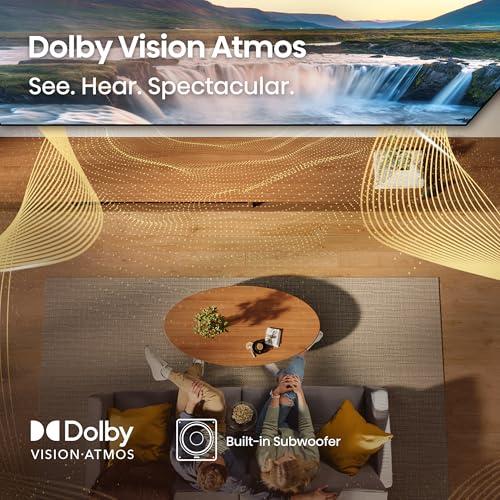
However, when you're investing in a display this large, you're likely creating a dedicated entertainment space. Both TVs support Dolby Atmos and will benefit enormously from a proper soundbar or surround sound system. The money saved by choosing the Hisense could easily fund a high-quality audio setup that would transform your viewing experience far more than the Samsung's slightly better built-in speakers.
If you're setting up a dedicated home theater, several factors become especially important. Room lighting control is crucial—while the Samsung QN90D handles bright rooms better thanks to its anti-reflection coating and higher peak brightness, both TVs really shine in controlled lighting environments.
Viewing distance is critical with displays this large. You'll want to sit at least 12-15 feet away for optimal comfort. At closer distances, you might notice individual pixels or find the image overwhelming. This is where the 2-inch size difference between these models becomes negligible—both require substantial room space.
For a dedicated theater room with controlled lighting, the Hisense QD7 becomes incredibly compelling. You're getting 90% of the premium experience at 15% of the cost, leaving substantial budget for other theater components like seating, audio equipment, or acoustic treatment.
This is where the comparison becomes most interesting. The price difference between these TVs is staggering—roughly $11,300 separates them. That's not just a premium; it's enough to buy six additional Hisense TVs.
The Samsung absolutely delivers superior performance in measurable ways: better brightness, more precise local dimming, superior gaming features, and more advanced smart capabilities. However, the Hisense delivers an experience that's surprisingly close to the Samsung's in daily use.
I've spent time with both displays, and while the Samsung impresses with its technical excellence, the Hisense provides moments of genuine "wow" that make you forget about its more modest price tag. When you're watching a great 4K movie with HDR content, both TVs create that magical large-screen experience that transforms your living space.
The engineering differences between these displays reveal different company philosophies. Samsung's approach prioritizes absolute performance—their Neural Quantum Processor 4K uses multiple AI neural networks to analyze and optimize every frame in real-time. This processing power enables features like adaptive HDR tone mapping, which adjusts the picture based on both the content and your room's lighting conditions.
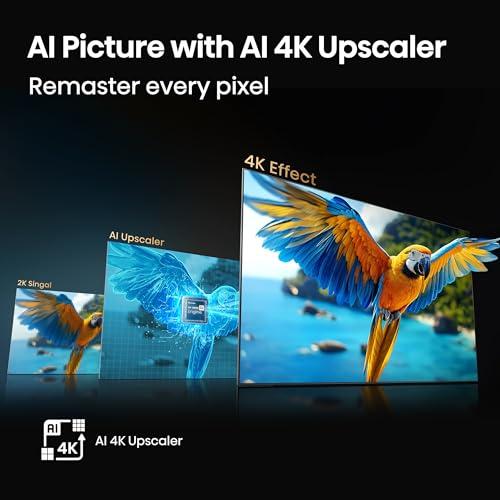
Hisense takes a more focused approach, implementing proven technologies effectively rather than pushing every boundary. Their 4K AI Upscaler does excellent work converting lower-resolution content, and their Full Array Local Dimming, while simpler than Samsung's implementation, still provides significant contrast improvements over standard LED TVs.
Both TVs support the major HDR formats, but there's an interesting trade-off: Samsung supports HDR10+ Adaptive (which adjusts to your room lighting) while Hisense supports Dolby Vision (which provides more precise scene-by-scene optimization). In practice, both approaches improve your viewing experience, just through different methods.
The choice between the Hisense 100-Inch QD7 and Samsung 98" QN90D ultimately comes down to your priorities and budget.
Choose the Hisense QD7 if you want maximum screen size at a reasonable price, plan to use it primarily in a controlled lighting environment, have casual gaming needs, and prefer to invest the saved money in other aspects of your entertainment setup like audio equipment or seating.
Choose the Samsung QN90D if you have a substantial budget, need excellent bright-room performance, want the absolute best gaming experience, value premium build quality and extended support, or simply want the most advanced features available.
For most buyers, the Hisense represents exceptional value. It delivers the core experience of ultra-large display ownership—that cinema-like immersion and scale—without the premium price tag. The Samsung is undeniably superior in technical measurements, but whether those improvements justify the massive price difference depends entirely on your specific needs and budget.
Having spent considerable time with ultra-large displays, I can say that both of these TVs will fundamentally change how you experience entertainment at home. The question isn't whether either will impress you—they both will. The question is whether the Samsung's premium features align with your specific needs and budget, or whether the Hisense's exceptional value proposition makes more sense for your situation.
Whatever you choose, you're entering the realm of truly immersive home entertainment. Just make sure you have enough wall space and seating distance to let these giants perform at their best.
| Hisense 100-Inch QD7 Series Mini-LED 4K Smart TV | Samsung 98" QN90D Series Neo QLED 4K Smart TV |
|---|---|
| Screen Size - Actual viewing area and room presence | |
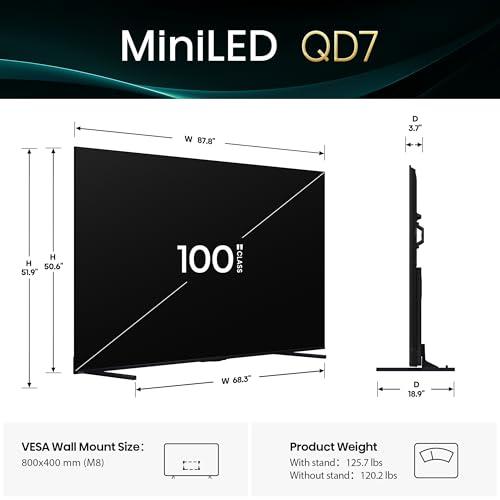
| 100 inches (87.8" wide) | 98 inches (86" wide) |
| Price - Major factor in value equation | |
| $1,699.99 | $12,999 |
| Display Technology - How the TV creates brightness and contrast | |
| Mini-LED with Quantum Dot color | Neo QLED with Quantum Matrix Technology |
| Peak Brightness - Critical for bright room viewing and HDR impact | |
| ~600-700 nits (good for controlled lighting) | ~2,000+ nits (excellent for bright rooms) |
| Refresh Rate - Smoothness of motion and gaming performance | |
| 144Hz native (higher spec but basic processing) | 120Hz with advanced motion processing |
| HDR Support - Enhanced color and contrast for premium content | |
| Dolby Vision, HDR10, HDR10+, HLG | HDR10+ Adaptive (no Dolby Vision) |
| HDMI 2.1 Ports - Next-gen gaming and 4K/120Hz capability | |
| 2 ports (limits multi-console setups) | 4 ports (full connectivity flexibility) |
| Gaming Input Lag - Response time for competitive gaming | |
| ~15-20ms (fine for casual gaming) | |
| Smart TV Platform - Interface and app ecosystem | |
| Fire TV (US) / Google TV (global) | Tizen OS with AI features and Gaming Hub |
| Audio System - Built-in speaker quality | |
| 20W 2.0-channel with Dolby Atmos | 30W 4.2-channel with Object Tracking Sound+ |
| Local Dimming - Precision of brightness control for contrast | |
| Basic Full Array Local Dimming | Advanced Quantum Matrix with more zones |
| Anti-Glare Technology - Performance in bright rooms | |
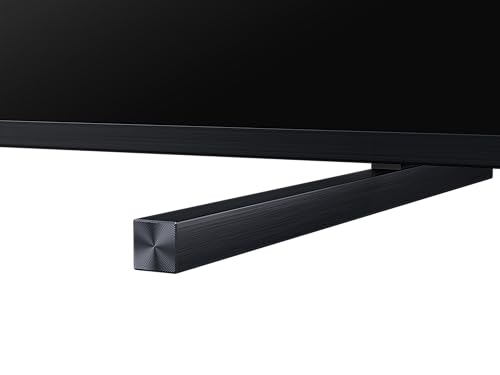
| Standard screen (reflections visible) | Ultra Viewing Angle with anti-reflection |
| Weight and Installation - Practical mounting considerations | |
| 125.7 lbs with stand | 166.9 lbs with stand |
| Warranty and Support - Long-term ownership experience | |
| 12 months standard | Premium support with longer update cycle |
The Hisense 100-Inch QD7 Series Mini-LED 4K Smart TV at $1,699.99 offers exceptional value, delivering about 90% of the premium TV experience at just 15% of the Samsung's cost. The Samsung 98" QN90D Series Neo QLED 4K Smart TV at $12,999 provides superior performance but costs nearly 8 times more for incremental improvements.
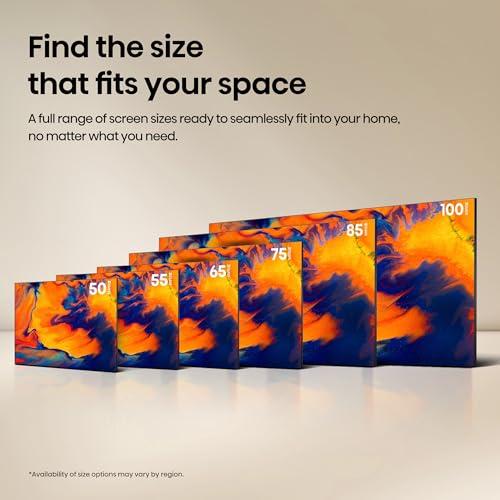
The Hisense 100-Inch QD7 offers a true 100-inch display (87.8" wide), while the Samsung QN90D provides a 98-inch screen (86" wide). This 2-inch difference translates to about 4% more viewing area for the Hisense, making it slightly larger despite being significantly cheaper.
The Samsung 98" QN90D is significantly better for gaming with four HDMI 2.1 ports, sub-10ms input lag, 120Hz processing, and features like Auto Game Mode and Gaming Hub. The Hisense QD7 offers basic gaming with only two HDMI 2.1 ports and higher input lag around 15-20ms, suitable for casual gaming only.
Both use Mini-LED technology but with different approaches. The Samsung QN90D features Neo QLED with Quantum Matrix Technology for superior brightness (2,000+ nits) and more precise local dimming zones. The Hisense QD7 uses standard Mini-LED with Quantum Dot color, delivering good contrast and brightness (600-700 nits) plus Dolby Vision support that Samsung lacks.
The Samsung 98" QN90D excels in bright rooms thanks to its anti-reflection coating, Ultra Viewing Angle technology, and much higher peak brightness of 2,000+ nits. The Hisense 100-Inch QD7 performs better in controlled lighting environments due to its lower brightness and standard screen that shows more reflections.
The Hisense QD7 runs Fire TV (US) or Google TV (international) with clean, simple interfaces focused on content discovery. The Samsung QN90D uses Tizen OS with advanced AI features, Gaming Hub for streaming games, and more sophisticated smart capabilities, though with a steeper learning curve.
For dedicated home theaters with controlled lighting, the Hisense 100-Inch QD7 is excellent value, delivering impressive picture quality while leaving budget for audio equipment and seating. The Samsung QN90D offers superior technical performance but costs significantly more for improvements that may not be as noticeable in dark room viewing.
The Samsung 98" QN90D features a more powerful 30W 4.2-channel system with Object Tracking Sound+ technology. The Hisense QD7 has a basic 20W 2.0-channel setup with Dolby Atmos. However, both benefit greatly from external sound systems, especially at these screen sizes.
The Hisense 100-Inch QD7 supports Dolby Vision, HDR10, HDR10+, and HLG for excellent HDR content compatibility. The Samsung QN90D supports HDR10+ Adaptive and standard HDR formats but notably lacks Dolby Vision support, which is used by Netflix, Disney+, and many premium streaming services.
The Samsung 98" QN90D offers premium build quality, superior materials, and typically longer software support cycles backed by Samsung's established service network. The Hisense QD7 provides solid construction with a standard 12-month warranty, adequate for most users but not as comprehensive as Samsung's premium support.
Both TVs require substantial room space with recommended viewing distances of 12-15 feet for optimal comfort. The Hisense 100-Inch QD7 measures 87.8" wide and weighs 125.7 lbs with stand, while the Samsung QN90D is 86" wide and weighs 166.9 lbs with stand. Both need reinforced wall mounts if wall-mounting.
Choose the Hisense 100-Inch QD7 if you want maximum screen size on a budget, have controlled lighting, need basic gaming features, and prefer simple smart TV interfaces. Choose the Samsung 98" QN90D if you have a premium budget, need bright room performance, want advanced gaming features, or require the absolute best picture quality and smart capabilities.
We've done our best to create useful and informative comparisons to help you decide what product to buy. Our research uses advanced automated methods to create this comparison and perfection is not possible - please contact us for corrections or questions. These are the sites we've researched in the creation of this article: hometechnologyreview.com - hypermicro.com - bestbuy.com - bestbuy.com - youtube.com - hisense-usa.com - bestbuy.com - pcrichard.com - tvsbook.com - hisense-usa.com - pcrichard.com - nfm.com - bestbuy.com - hisense-canada.com - rtings.com - hisense-usa.com - bestbuy.com - hisense-usa.com - hometechnologyreview.com - youtube.com - youtube.com - hometechnologyreview.com - costco.com - custrevs.com - rtings.com - rtings.com - youtube.com - youtube.com - fullcompass.com - digitalhomecreations.com - jeffsappliance.com - bestbuy.com - displayspecifications.com - samsung.com - samsung.com - image-us.samsung.com - youtube.com

Privacy Policy
Terms and Conditions - Affiliate Policy
Home Security
© Copyright 2008-2026.
11816 Inwood Rd #1211, Dallas, TX 75244