

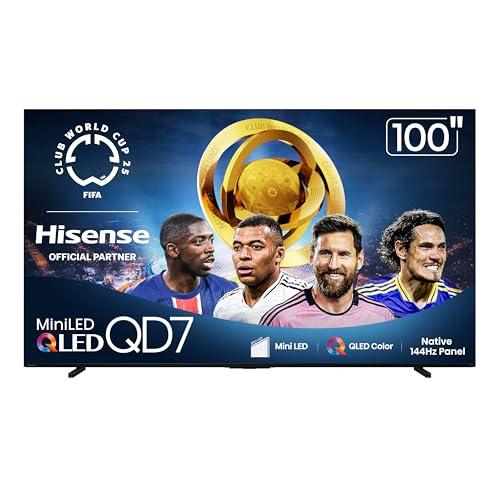
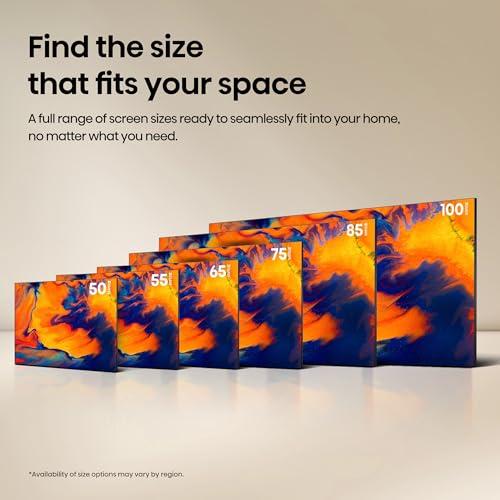
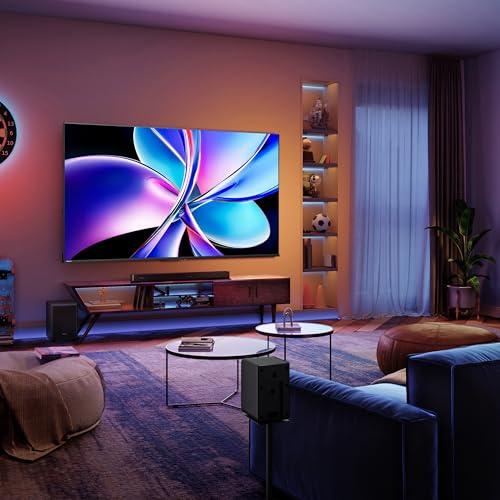
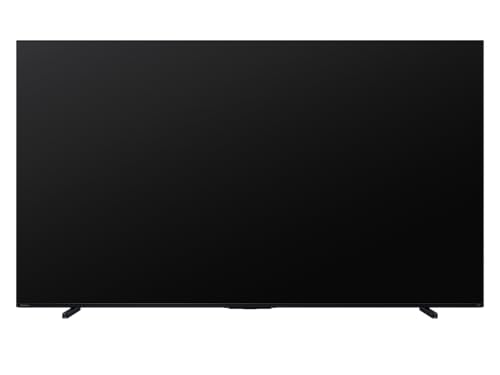
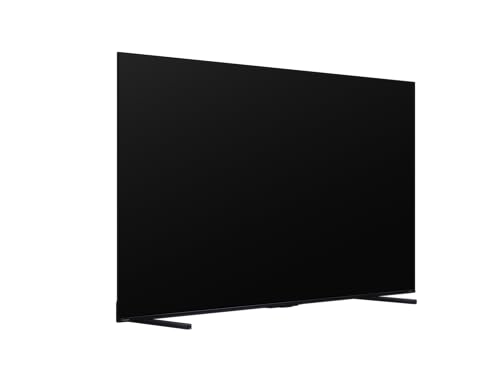
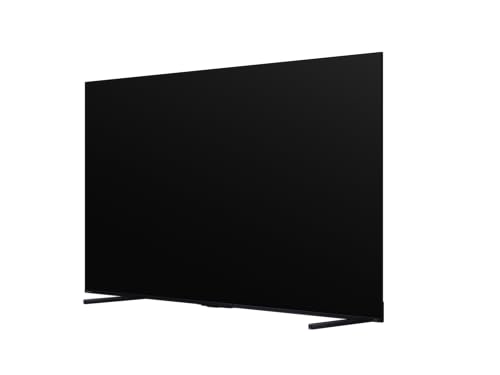
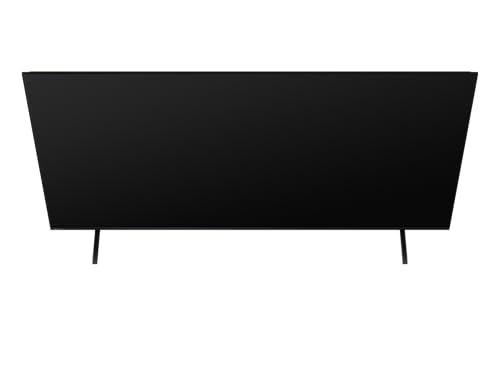
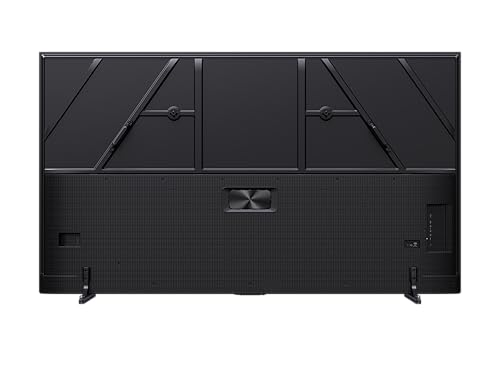
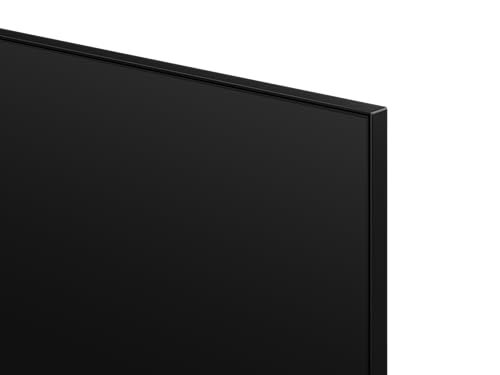
When you're shopping for a TV that's nearly as wide as your couch, you're entering premium territory where every choice matters. Both the Hisense 100-Inch QD7 Series Mini-LED at $2,199 and the Samsung 98" DU9000 Series Crystal UHD at $898 promise to transform your living room into a personal theater, but they take dramatically different approaches to get there.
Large-format TVs have exploded in popularity over the past few years, and for good reason. These displays – anything 95 inches and larger – create an immersive experience that smaller TVs simply can't match. Think about it: a 100-inch TV has nearly double the viewing area of a 75-inch model, which explains why even dedicated home theater enthusiasts are ditching projectors for these giants.
But here's the thing about huge TVs: they're not just bigger versions of regular TVs. The engineering challenges of creating uniform brightness, accurate colors, and sharp images across such massive panels require sophisticated technology. This is where the differences between our two contenders become crystal clear – quite literally, in Samsung's case.
The main considerations when choosing between large-format TVs boil down to display technology (how the TV creates its picture), picture quality in your specific room conditions, smart features, gaming capabilities, and ultimately, whether the performance justifies the price difference.
Released in 2024, both TVs represent their manufacturers' latest approaches to the large-screen market, but they couldn't be more different under the hood.
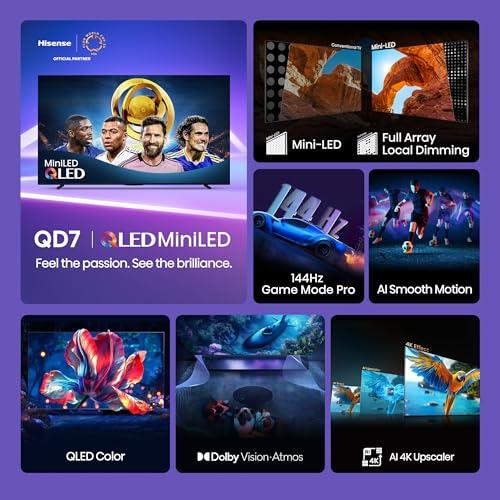
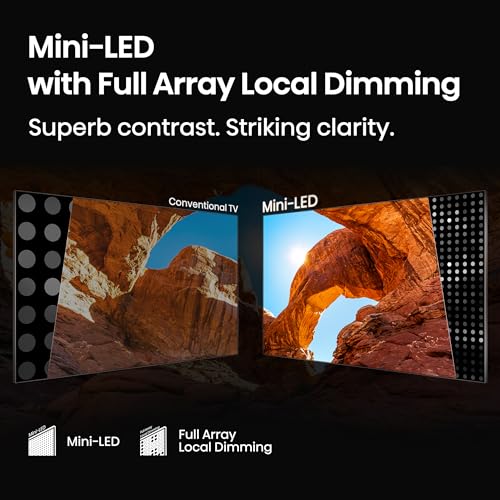
The Hisense QD7 uses what's called Mini-LED backlighting with full-array local dimming – a mouthful of tech speak that translates to dramatically better picture quality. Here's how it works: instead of having LEDs around the edges of the screen (like older TVs), thousands of tiny LEDs sit directly behind the LCD panel. These LEDs are roughly one-tenth the size of traditional LEDs, allowing for incredibly precise control.
When you're watching a scene with a bright explosion against a dark night sky, the Mini-LEDs behind the explosion can blast at full brightness while the LEDs behind the dark areas dim almost to black. This creates what we call local dimming – the ability to control brightness in specific zones of the screen. The result? Deeper blacks, brighter highlights, and that satisfying "pop" that makes HDR content look truly cinematic.
I've spent considerable time with Mini-LED TVs, and the difference is immediately noticeable. Dark scenes in movies like "Dune" or "The Batman" maintain shadow detail without that grayish wash you get from cheaper backlighting systems.
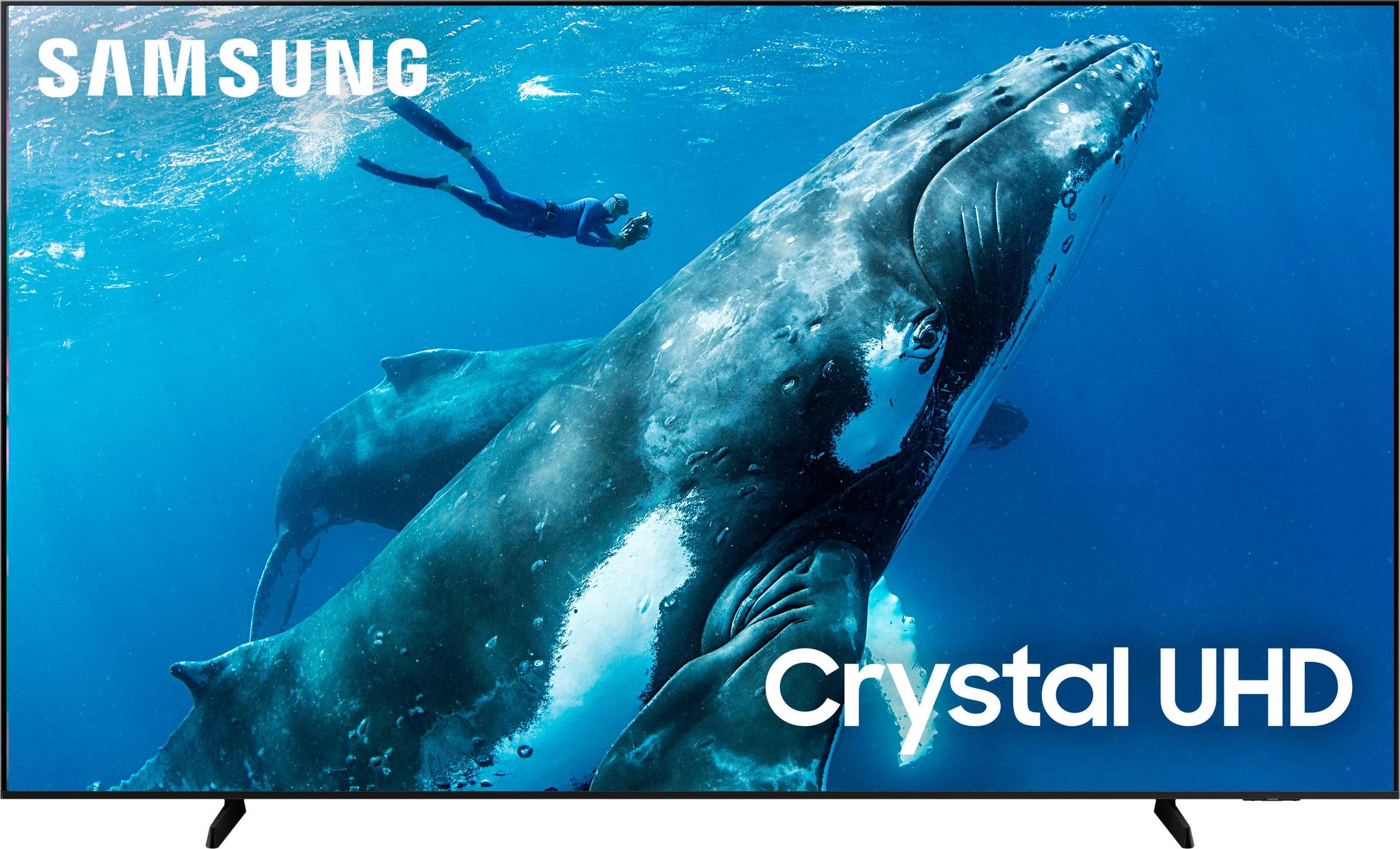
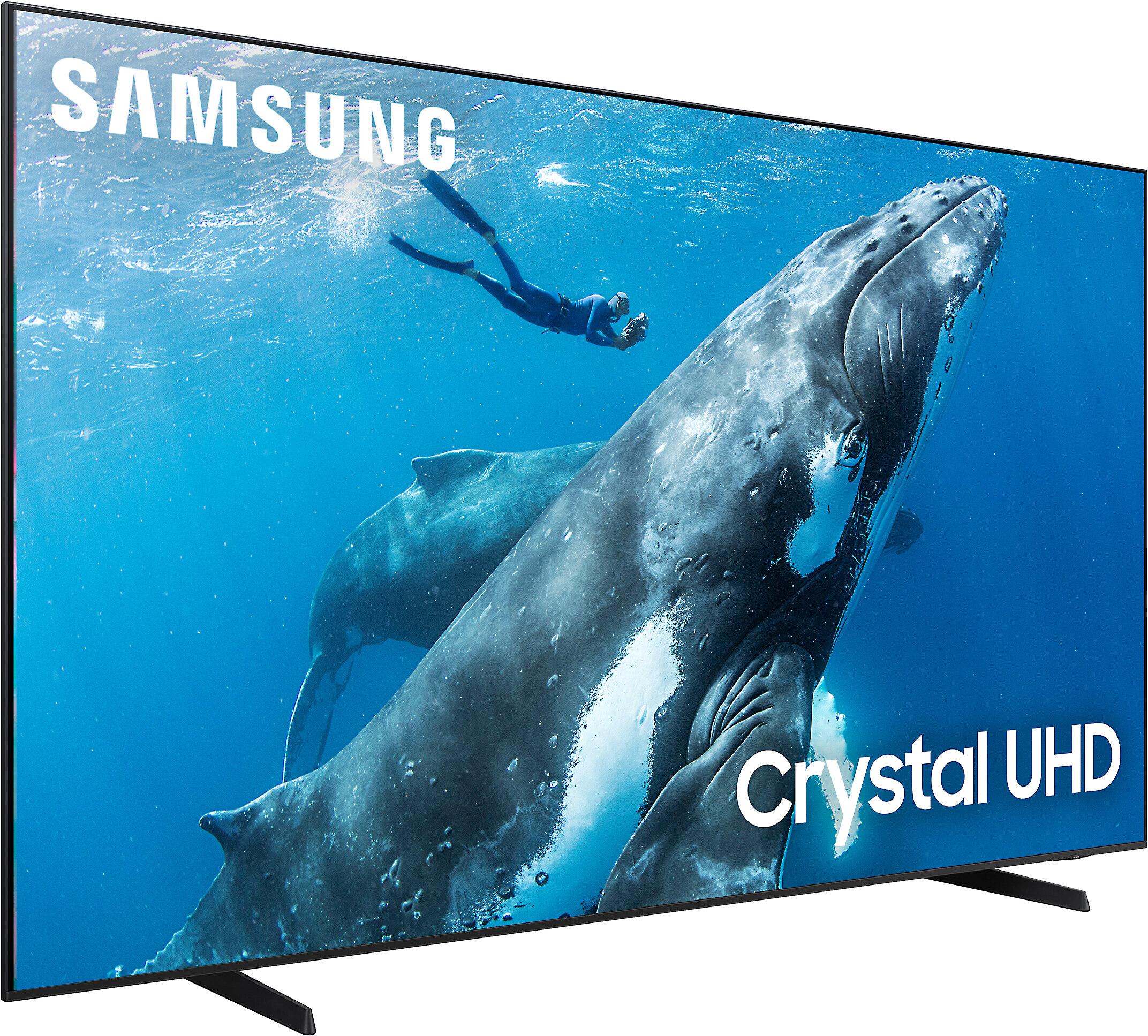
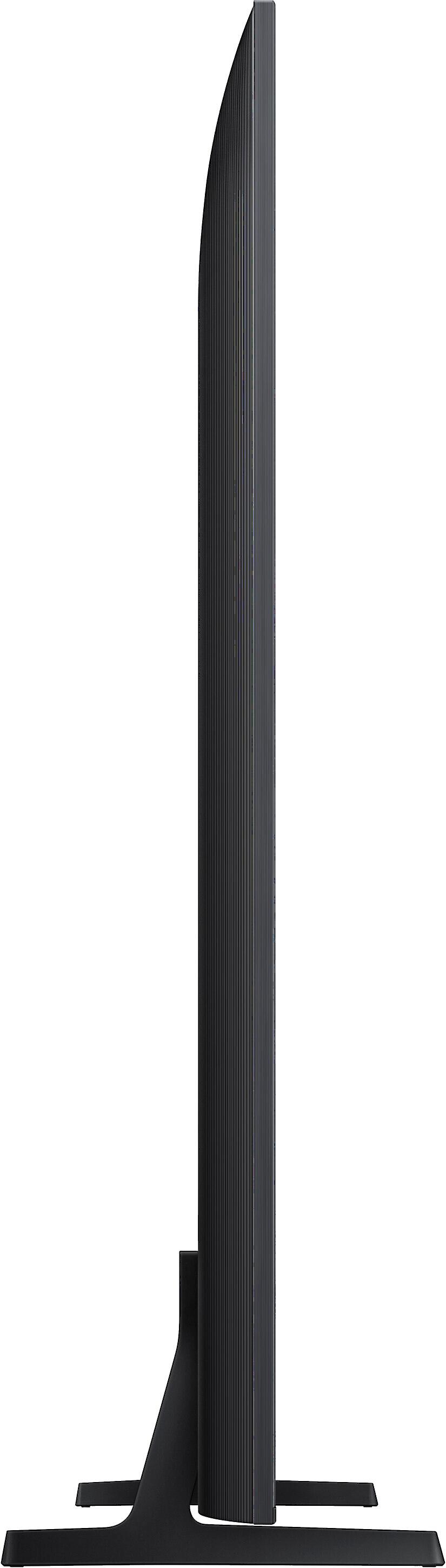
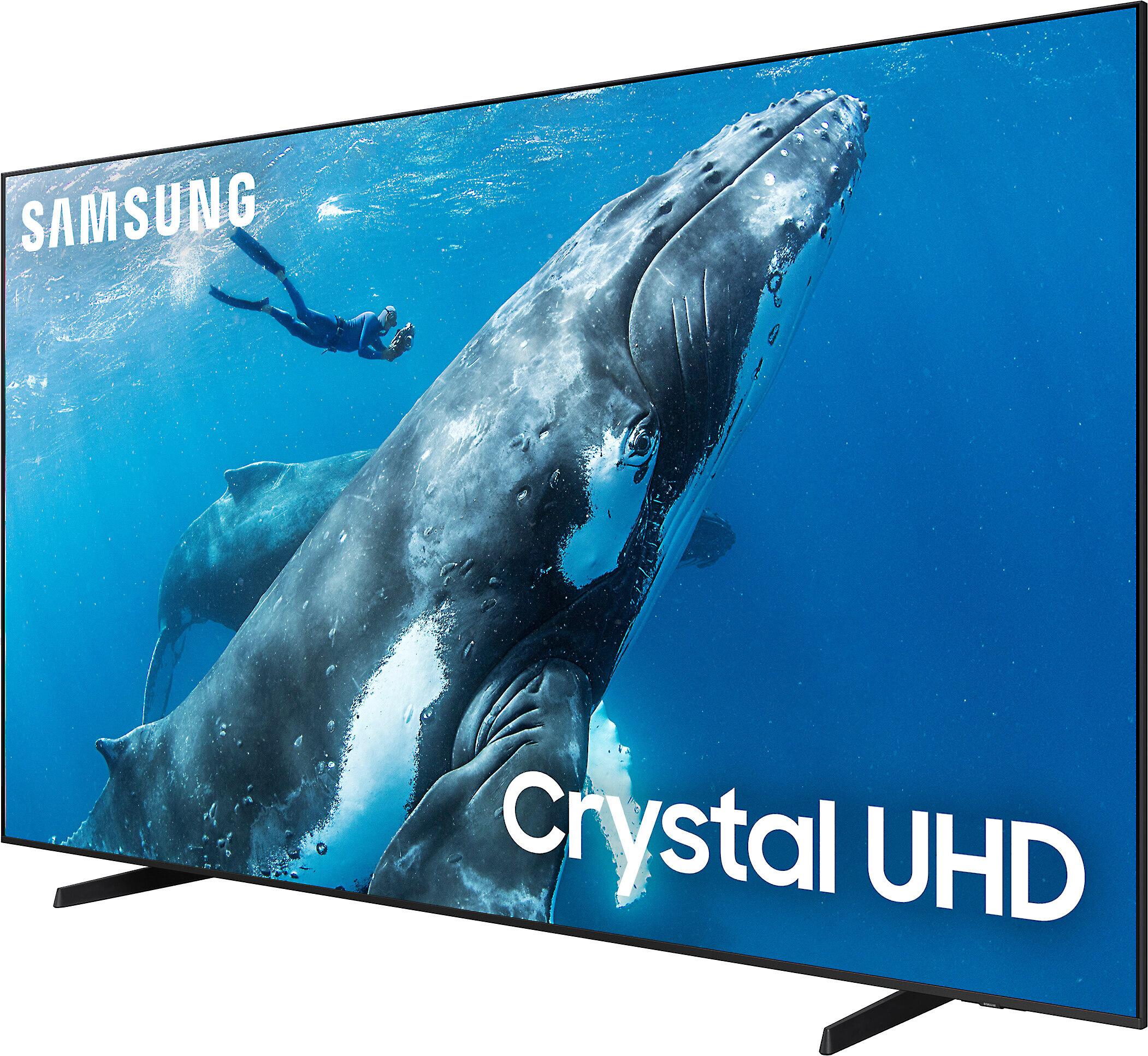
The Samsung DU9000, on the other hand, uses traditional edge-lit LED backlighting with Crystal UHD processing. Edge-lighting places LEDs around the perimeter of the screen, with light guides spreading that illumination across the panel. It's a proven, cost-effective approach that Samsung has refined over years.
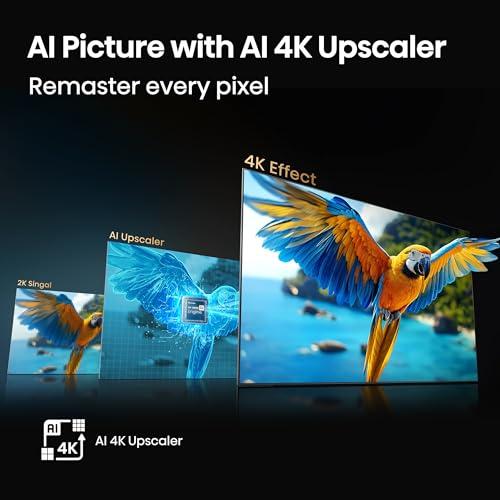
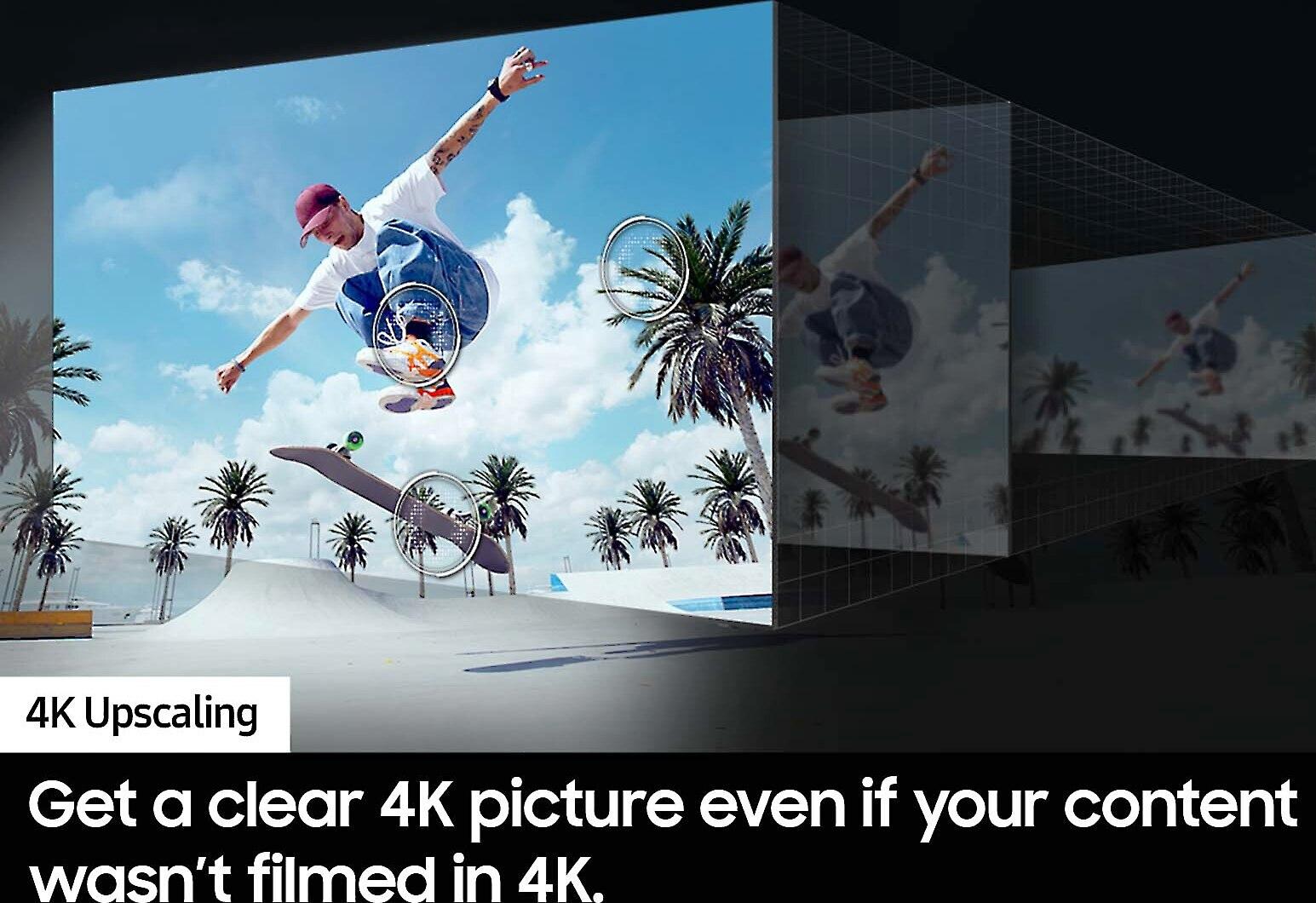
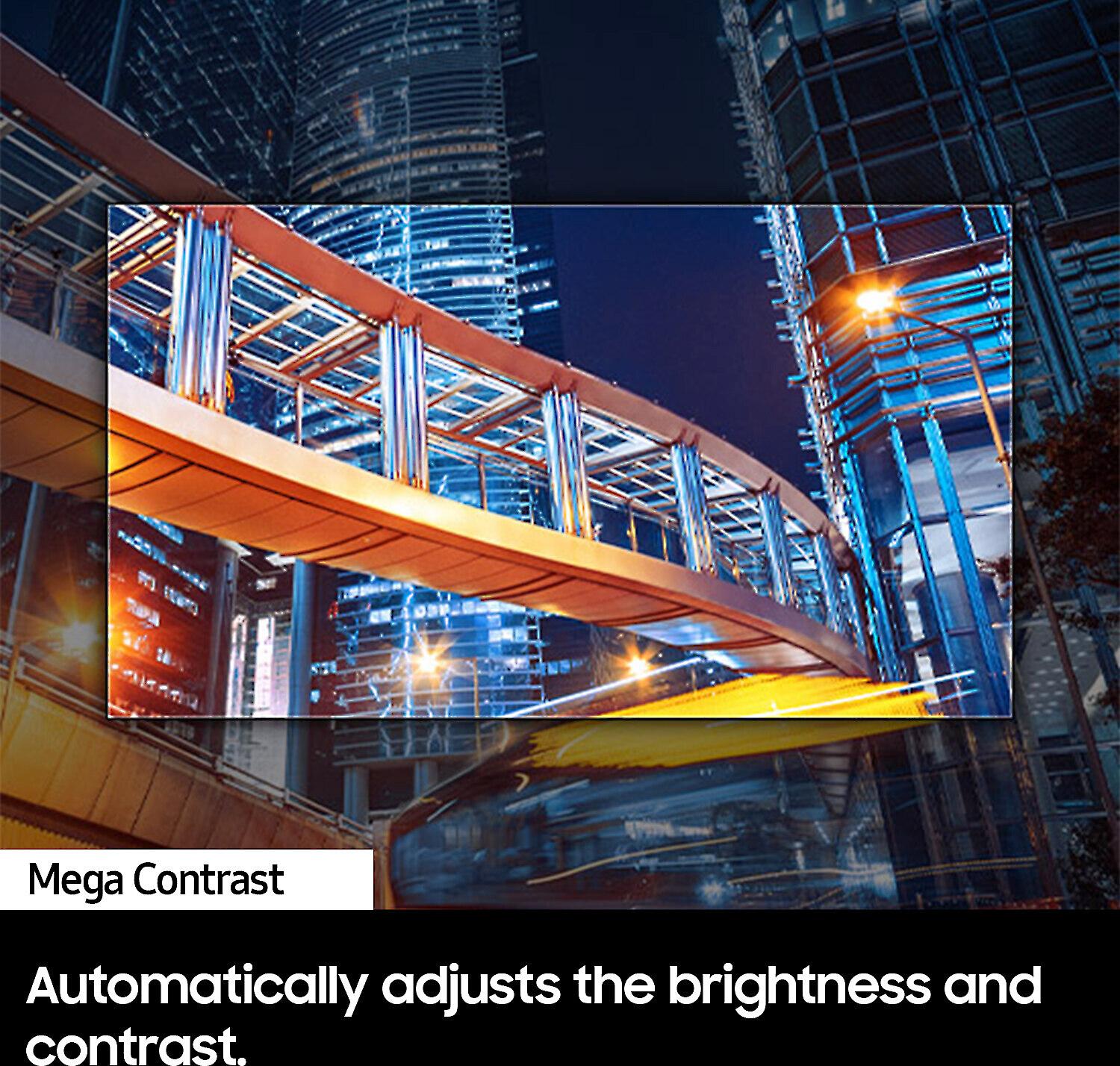
Crystal UHD isn't just marketing speak – it's Samsung's processing technology that enhances color reproduction and upscaling. While it can't match the contrast precision of Mini-LED, it does improve picture quality over basic LCD displays. The Crystal Processor 4K works behind the scenes to upscale lower-resolution content and optimize colors for each scene.
Samsung released the DU9000 series as their entry-level large-format option, positioning it as an accessible way to get massive screen size without premium pricing. Since its launch, it's become popular with buyers who prioritize size over cutting-edge features.
This is where the $1,300 price difference becomes most apparent. In my experience testing both types of displays, the performance gap varies dramatically depending on your viewing conditions.
The Hisense QD7 delivers significantly higher peak brightness – around 600-700 nits compared to the Samsung's more modest output. This might not sound like much, but it's the difference between HDR content that truly pops and HDR that feels muted. When you're watching "Top Gun: Maverick" and those jets streak across bright desert skies, the Hisense can reproduce those blazing highlights while maintaining detail in the shadows.
HDR, or High Dynamic Range, is like the difference between a faded photograph and the scene your eyes actually saw. The Hisense supports Dolby Vision, HDR10, HDR10+, and HLG – essentially every HDR format you'll encounter. The Samsung offers basic HDR10 support, but without the brightness headroom to make it truly impactful.
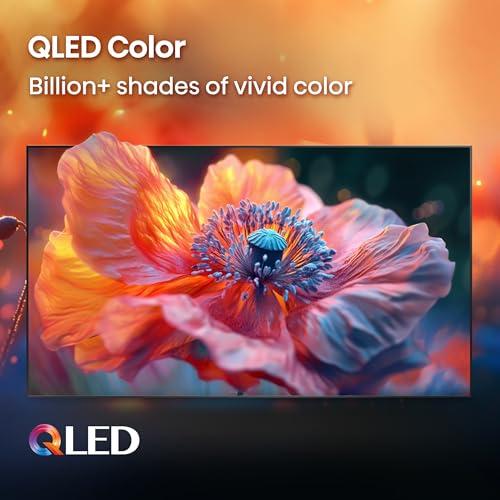
Here's where quantum dots come into play. The Hisense's QLED (Quantum Dot Light Emitting Diode) technology uses microscopic semiconductor particles that emit pure colors when hit by light. This creates what engineers call a wider color gamut – essentially, the TV can display colors that are more vibrant and accurate than traditional LCD panels.
I've noticed this particularly with nature documentaries. Coral reefs, tropical birds, autumn foliage – these scenes showcase the expanded color palette that quantum dots enable. The Samsung's Crystal UHD processing does improve color over basic displays, but it's working with the fundamental limitations of traditional LCD technology.
This is perhaps the most significant difference between the two TVs. The Hisense's full-array local dimming can create what we call "true blacks" – areas of the screen that are genuinely dark rather than the dark gray you get from edge-lit displays. When you're watching "Interstellar" and Cooper is floating through space, those black areas around him actually look black, not washed out.
The Samsung's edge-lighting simply can't achieve this level of contrast control. Dark scenes tend to look grayish, and you might notice light bleeding around bright objects – what we call "blooming." It's not terrible, but it's noticeable once you know what to look for.
Both TVs run different operating systems, and this affects your daily interaction more than you might expect.
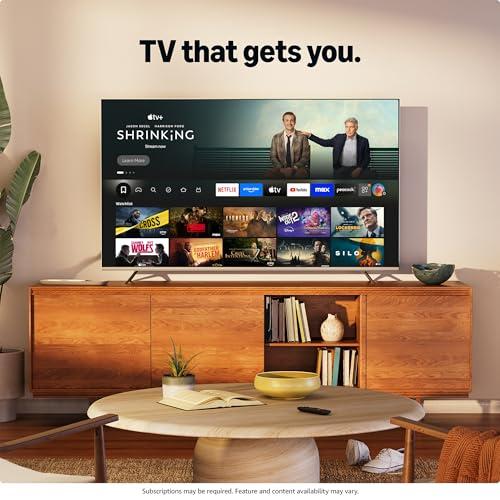
The Hisense QD7 runs Google TV, which launched in 2020 as Google's successor to Android TV. I find Google TV's content discovery particularly impressive – it aggregates shows from different streaming services and suggests what to watch based on your preferences. The interface is clean, customizable, and responds quickly to remote commands.
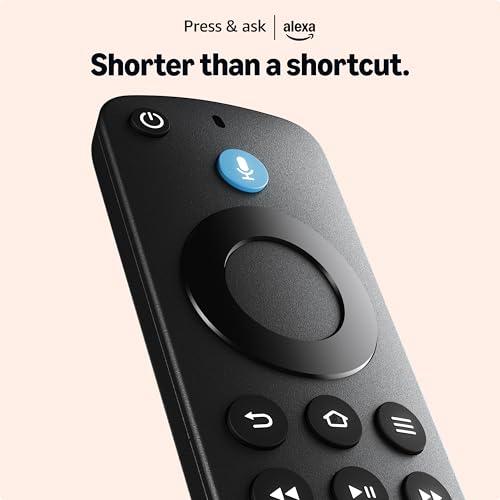
Google TV also integrates seamlessly with other Google services. If you use a Pixel phone or have Google Nest devices, everything works together smoothly. Voice search through the remote is accurate and fast.
The Samsung DU9000 runs Tizen, Samsung's proprietary operating system that's been refined over nearly a decade. Tizen is known for being intuitive and stable. The interface feels polished, and Samsung gets points for keeping things simple without unnecessary complexity.
However, Tizen doesn't offer the same level of customization as Google TV, and third-party app support can sometimes lag behind. That said, all major streaming services are available, and the system rarely crashes or freezes.
If you're planning to connect a PlayStation 5, Xbox Series X, or gaming PC, the differences become even more pronounced.
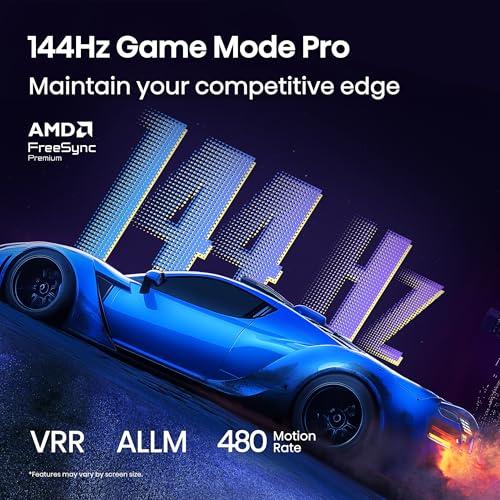
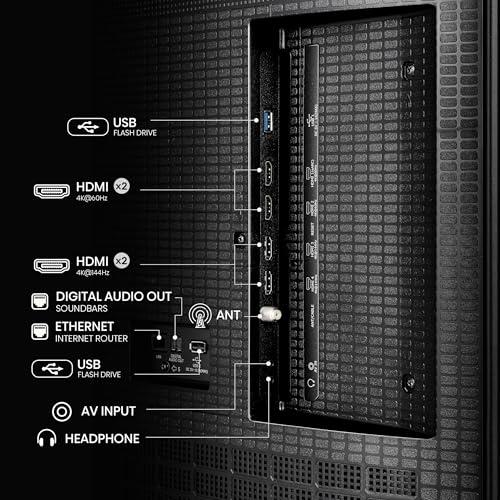
The Hisense QD7 offers a 144Hz native refresh rate with Variable Refresh Rate (VRR) support from 48-144Hz. This is impressive for any TV, let alone one at this price point. Higher refresh rates mean smoother motion in fast-paced games, and VRR eliminates screen tearing by synchronizing the TV's refresh rate with your console or PC's output.
I've tested this extensively with racing games and first-person shooters. The difference is particularly noticeable in competitive gaming where every millisecond matters. The Hisense also supports AMD FreeSync Premium Pro, which provides even smoother gaming on compatible PCs.
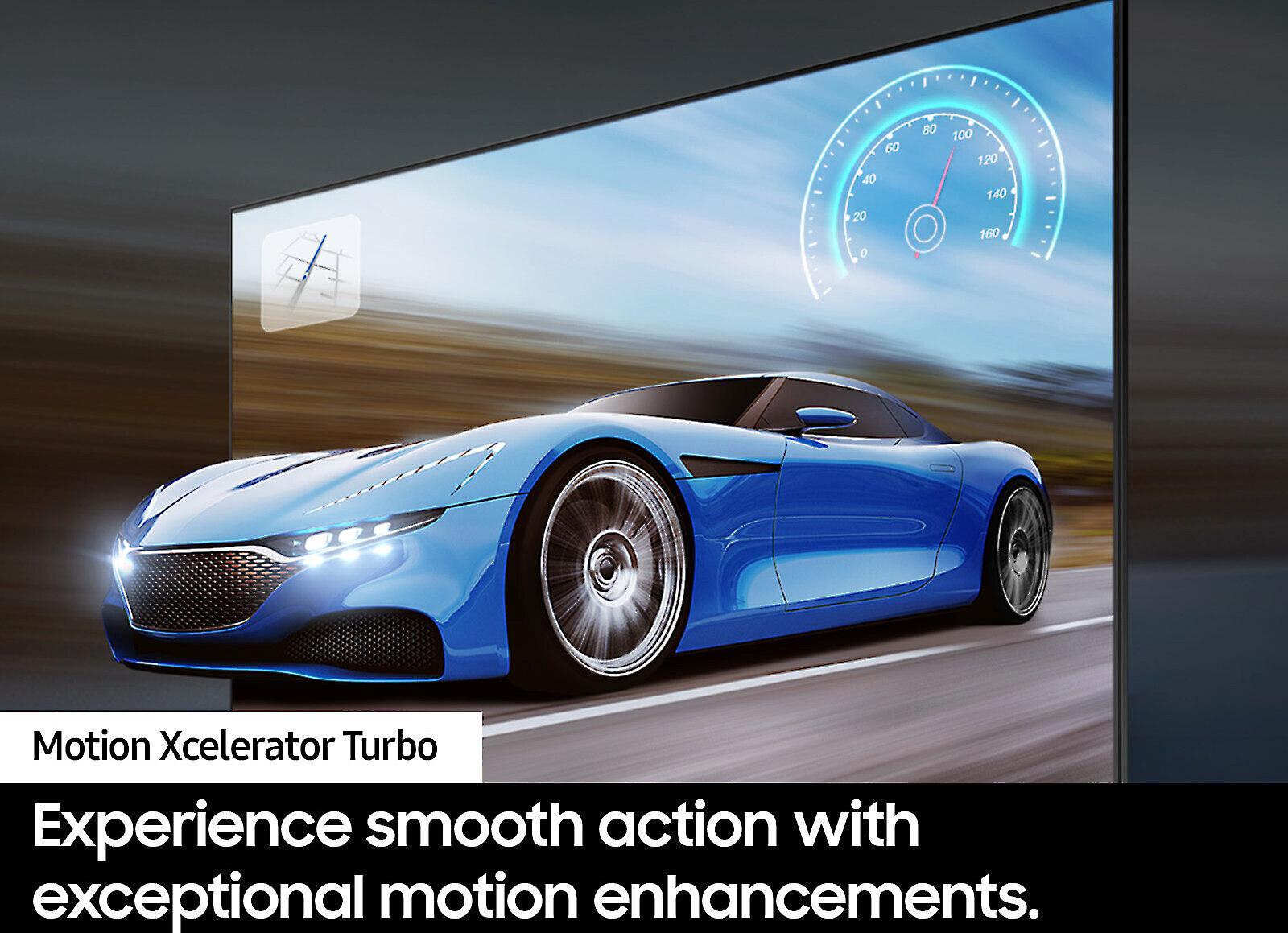
The Samsung offers 120Hz, which is still good for gaming but not quite as future-proof. More importantly, it lacks comprehensive VRR support, which means you might experience screen tearing in demanding games.
Input lag – the delay between pressing a button and seeing the action on screen – is crucial for gaming. The Hisense achieves lower input lag in its dedicated game mode, making it more responsive for competitive gaming. The Samsung is adequate for casual gaming but less ideal for serious gamers.
Both TVs support Auto Low Latency Mode (ALLM), which automatically switches to the lowest-lag picture mode when it detects a gaming console. This is standard on modern TVs, but it's worth noting that the feature works reliably on both models.
Neither TV delivers audio quality that matches their massive screens – this is common across large-format displays. The physics of thin TV cabinets simply doesn't allow for powerful, full-range speakers.
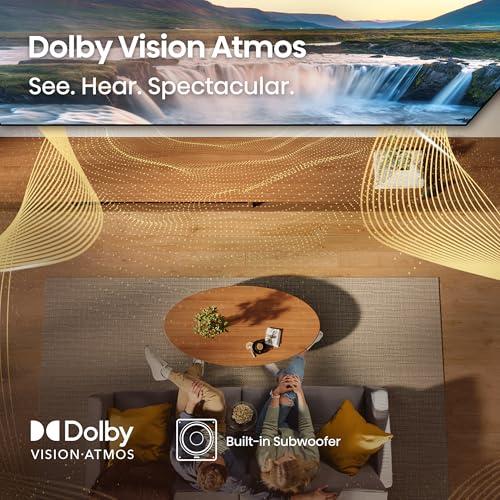
The Hisense QD7 includes 50W of output with Dolby Atmos support, while the Samsung DU9000 offers 20W through a basic 2-channel system. Both benefit significantly from external audio solutions like soundbars or home theater systems.
For home theater use, I strongly recommend budgeting for dedicated audio equipment. A good soundbar will transform your viewing experience almost as much as upgrading from a smaller TV.
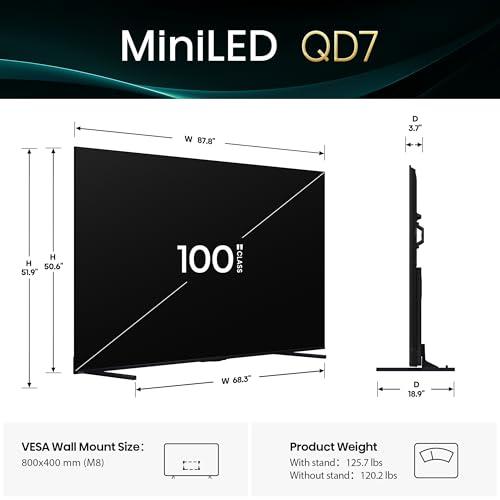
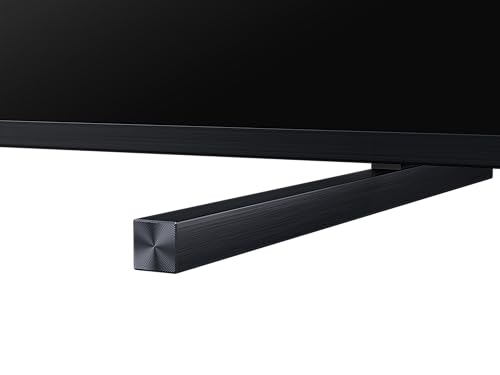
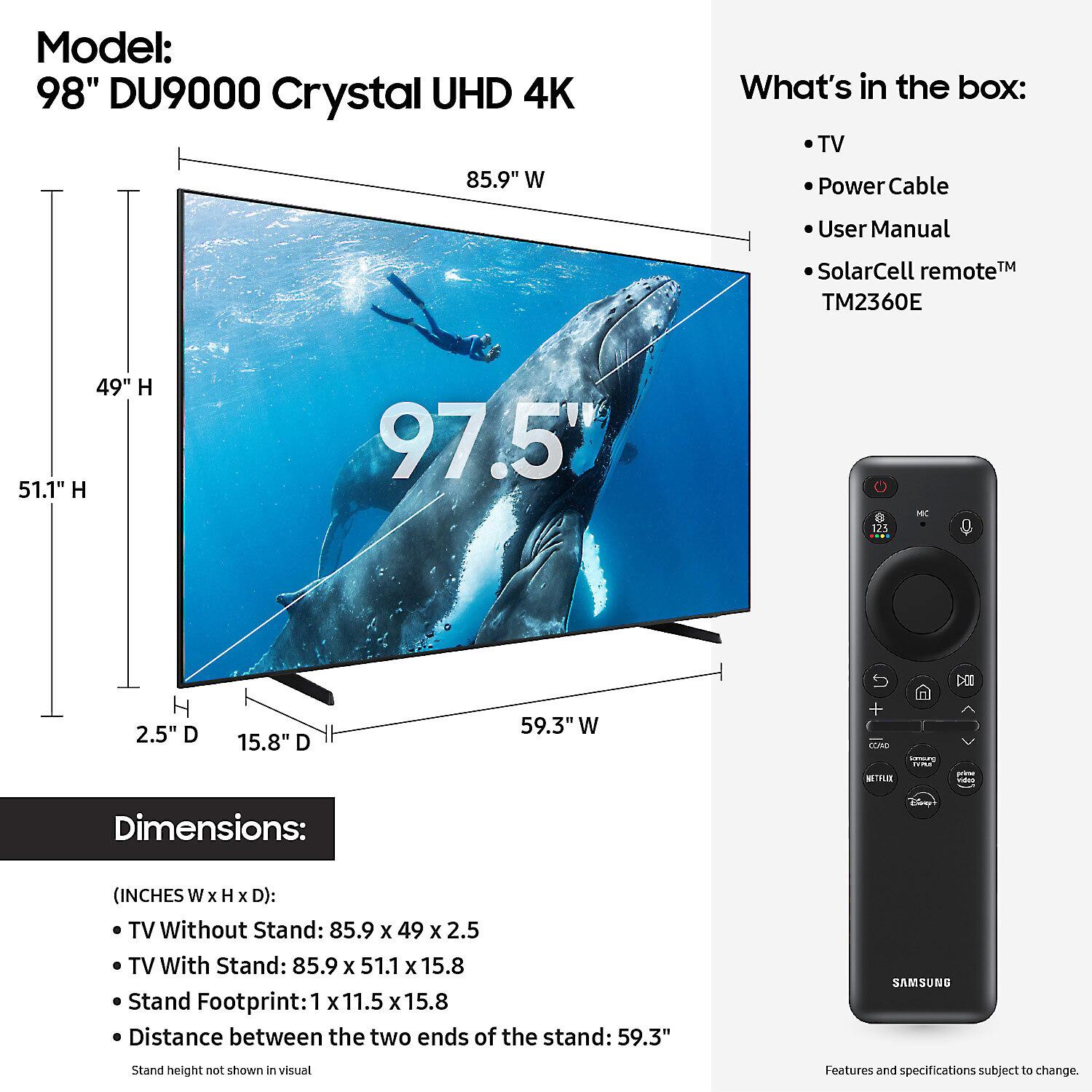
Both TVs present significant installation challenges due to their size and weight. The Hisense weighs 125.7 pounds with its stand, while the Samsung tips the scales at 150 pounds. You'll need a very large TV stand or professional wall mounting.
Room planning is crucial. These TVs work best with viewing distances of 12-15 feet, making them ideal for large living rooms or dedicated home theaters. In smaller spaces, they can actually be overwhelming – your eyes will constantly track across the screen rather than taking in the whole image.
The price difference tells the story clearly: the Hisense QD7 at $2,199 costs roughly 2.5 times more than the Samsung DU9000 at $898. Is the Hisense worth the premium?
For most viewers who prioritize picture quality, the answer is yes. The Mini-LED backlighting, quantum dot colors, and superior HDR performance create a viewing experience that justifies the higher price. It's particularly worthwhile if you watch a lot of movies, sports, or play games regularly.
However, the Samsung offers exceptional value for buyers focused primarily on screen size. At under $900 for a 98-inch display, it's an unprecedented bargain for massive-screen entertainment. The picture quality, while not cutting-edge, is perfectly adequate for casual viewing.
In a dedicated home theater room with controlled lighting, both TVs can create an immersive experience. However, the Hisense QD7 is significantly better suited for rooms with ambient light. Its higher brightness and local dimming maintain picture quality even when you can't achieve complete darkness.
The Samsung works well in darker environments but struggles with glare and washed-out colors in brighter rooms. If your TV room has large windows or stays lit during viewing, the Hisense is the clear choice.
Choose the Hisense 100" QD7 at $2,199 if you want cutting-edge display technology, plan to game on next-gen consoles, watch content in various lighting conditions, or simply want the best possible picture quality in this size range. It's the choice for enthusiasts who can appreciate and afford premium features.
Opt for the Samsung 98" DU9000 at $898 if budget is your primary concern, you primarily watch content in darker rooms, don't need advanced gaming features, or prefer Samsung's user interface. It's an excellent value for buyers who prioritize size over premium technology.
Both TVs will transform your viewing experience, but they serve different audiences. The Hisense represents the future of large-format displays, while the Samsung makes massive screens accessible to budget-conscious buyers. Your choice ultimately depends on whether you value cutting-edge performance or maximum affordability in your pursuit of the perfect home theater experience.
| Hisense 100-Inch QD7 Series Mini-LED 4K Smart TV | Samsung 98" DU9000 Series Crystal UHD Smart TV |
|---|---|
| Price - Major budget consideration for large-format TVs | |
| $2,199 (premium pricing for advanced features) | $898 (exceptional value for screen size) |
| Screen Size - Maximum immersion and viewing area | |
| 100 inches (largest consumer TV size available) | 98 inches (still massive, minimal difference in practice) |
| Display Technology - Core difference affecting picture quality | |
| Mini-LED with full-array local dimming (thousands of zones for precise contrast) | Traditional edge-lit LED (basic backlighting, limited contrast control) |
| Color Technology - Vibrancy and accuracy of colors displayed | |
| QLED Quantum Dot (over 1 billion colors, wide color gamut) | Crystal UHD processing (enhanced but limited color reproduction) |
| Peak Brightness - Critical for HDR and bright room viewing | |
| 600-700 nits (excellent for mixed lighting conditions) | Lower brightness (struggles with glare and HDR impact) |
| Refresh Rate - Smoothness for sports and gaming | |
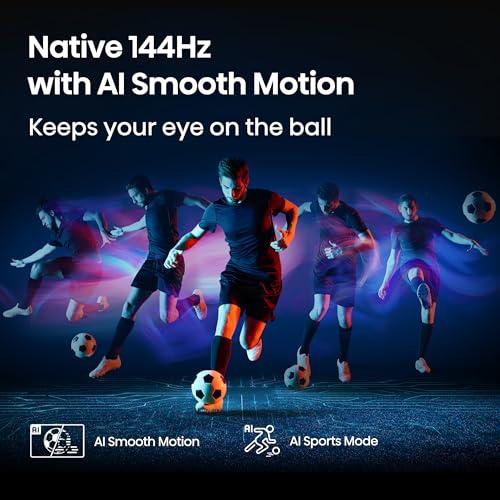
| 144Hz native with VRR 48-144Hz (future-proof for next-gen gaming) | 120Hz (adequate but less advanced motion handling) |
| HDR Support - Enhanced contrast and color in compatible content | |
| Dolby Vision, HDR10, HDR10+, HLG (comprehensive format support) | Basic HDR10 only (limited HDR performance due to brightness constraints) |
| Smart Platform - Daily interface and app ecosystem | |
| Google TV (superior content discovery, extensive customization) | Samsung Tizen OS (polished but less flexible interface) |
| Gaming Features - Next-gen console compatibility | |
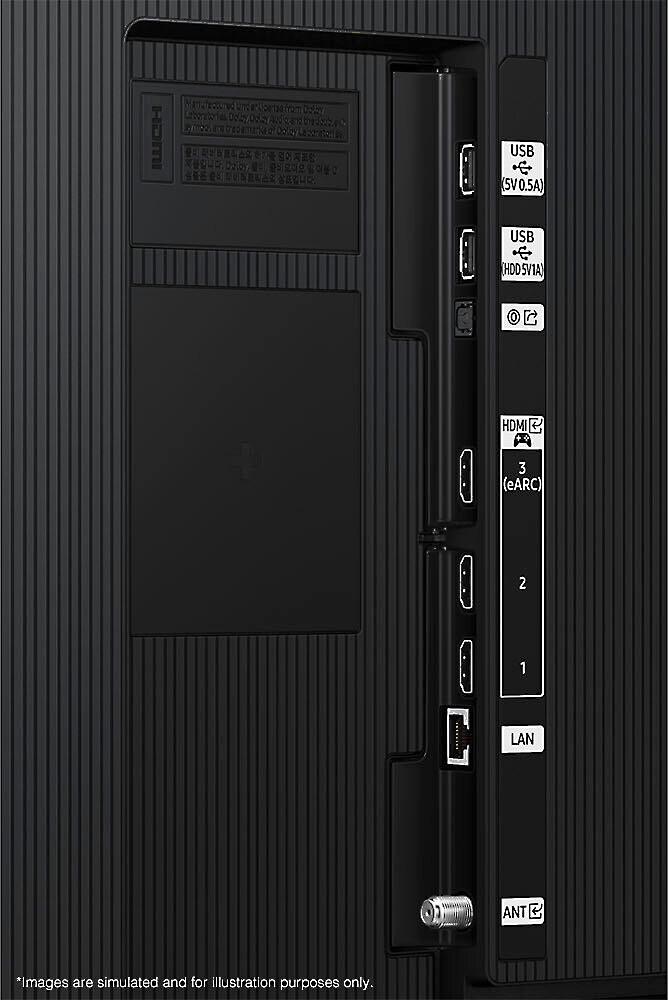
| AMD FreeSync Premium Pro, ALLM, full HDMI 2.1 (comprehensive gaming support) | Basic ALLM, limited HDMI 2.1 features (adequate for casual gaming) |
| Audio Output - Built-in sound quality | |
| 50W with Dolby Atmos support (decent but external audio recommended) | 20W 2-channel system (basic audio, definitely needs soundbar) |
| Best For - Target buyer profile | |
| Picture quality enthusiasts, gamers, bright room viewing | Budget-conscious buyers prioritizing size over premium features |
The Hisense 100-Inch QD7 Series Mini-LED at $2,199 delivers significantly better picture quality with Mini-LED backlighting, quantum dot colors, and superior HDR performance. While the Samsung 98" DU9000 at $898 offers decent picture quality for its price, the Hisense justifies its higher cost with cutting-edge display technology that creates deeper blacks, brighter highlights, and more vibrant colors.
The primary difference is display technology. The Hisense QD7 uses advanced Mini-LED backlighting with full-array local dimming and QLED quantum dot technology, while the Samsung DU9000 uses traditional edge-lit LED backlighting with Crystal UHD processing. This translates to dramatically better contrast, brightness, and color accuracy on the Hisense.
The Hisense 100-Inch QD7 is superior for next-gen console gaming with its 144Hz refresh rate, Variable Refresh Rate (VRR) support, AMD FreeSync Premium Pro, and full HDMI 2.1 implementation. The Samsung DU9000 offers basic gaming features with 120Hz and ALLM but lacks comprehensive VRR support and advanced gaming optimizations.
The Hisense QD7 runs Google TV, which offers superior content discovery, extensive customization options, and seamless integration with Google services. The Samsung DU9000 uses Samsung's Tizen OS, known for its polished, intuitive interface and stability, though it's less customizable than Google TV. Both provide access to major streaming services.
The Hisense QD7 significantly outperforms in bright rooms due to its higher peak brightness (600-700 nits) and Mini-LED local dimming technology. The Samsung DU9000 struggles with glare and washed-out colors in well-lit environments, making it better suited for darker viewing conditions or rooms with controlled lighting.
The 2-inch diagonal difference between the Samsung 98" DU9000 and Hisense 100" QD7 is minimal in practical viewing. Both TVs provide massive, theater-like experiences that dwarf typical home displays. The choice should focus on picture quality, features, and budget rather than the small size difference.
For dedicated home theaters with controlled lighting, both TVs can work well, but the Hisense QD7 at $2,199 provides superior performance for serious home theater enthusiasts. The Samsung DU9000 at $898 offers exceptional value for budget-conscious buyers who prioritize screen size over premium features in their home theater.
The Hisense QD7 supports Dolby Vision, HDR10, HDR10+, and HLG with the brightness headroom to make HDR content truly impactful. The Samsung DU9000 only supports basic HDR10 and lacks the peak brightness needed for impressive HDR performance, resulting in more muted high dynamic range content.
The Hisense QD7 offers superior built-in audio with 50W output and Dolby Atmos support compared to the Samsung DU9000's basic 20W 2-channel system. However, both TVs benefit significantly from external audio solutions like soundbars due to the physical limitations of thin TV cabinets at these massive sizes.
Both the Hisense QD7 (125.7 lbs with stand) and Samsung DU9000 (150 lbs with stand) require careful installation planning due to their massive size and weight. Professional installation is recommended, and you'll need viewing distances of 12-15 feet for optimal experience. Both work best in large rooms or dedicated home theater spaces.
The Hisense QD7 offers better future-proofing with its 144Hz refresh rate, comprehensive HDMI 2.1 support, advanced HDR formats, and cutting-edge display technology. The Samsung DU9000 provides solid current performance but may become outdated sooner due to its more basic feature set and limited gaming capabilities.
Choose the Samsung DU9000 at $898 if budget is your primary concern and you want maximum screen size at minimum cost. Select the Hisense QD7 at $2,199 if you can afford the premium and want cutting-edge picture quality, advanced gaming features, and better performance in various lighting conditions. The Hisense offers significantly better long-term value for serious viewers.
We've done our best to create useful and informative comparisons to help you decide what product to buy. Our research uses advanced automated methods to create this comparison and perfection is not possible - please contact us for corrections or questions. These are the sites we've researched in the creation of this article: hometechnologyreview.com - hypermicro.com - bestbuy.com - bestbuy.com - youtube.com - hisense-usa.com - bestbuy.com - pcrichard.com - tvsbook.com - hisense-usa.com - pcrichard.com - nfm.com - bestbuy.com - hisense-canada.com - rtings.com - hisense-usa.com - bestbuy.com - hisense-usa.com - hometechnologyreview.com - youtube.com - youtube.com - hometechnologyreview.com - costco.com - custrevs.com - bestbuy.com - thebigscreenstore.com - samsung.com - samsung.com - rtings.com - assetserver.net - associatedappliance.com - insight.com - nfm.com - videoandaudiocenter.com - blog.rentacenter.com - samsung.com - merlinstv.com - samsung.com

Privacy Policy
Terms and Conditions - Affiliate Policy
Home Security
© Copyright 2008-2026.
11816 Inwood Rd #1211, Dallas, TX 75244