

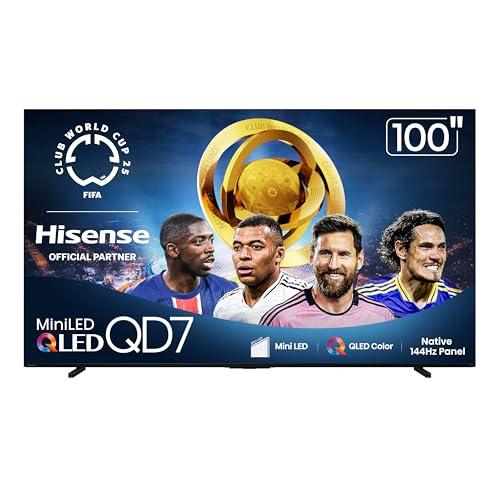
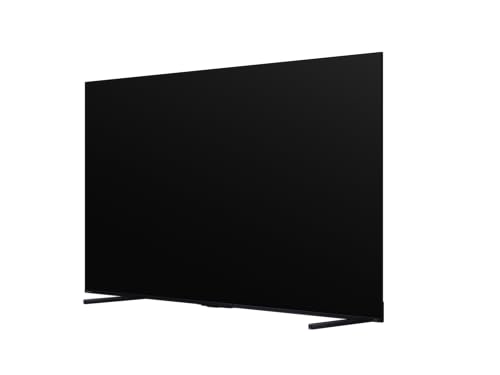
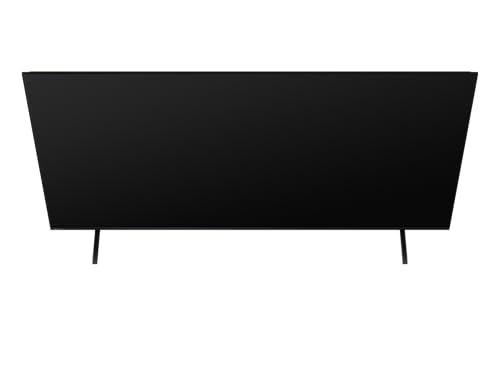
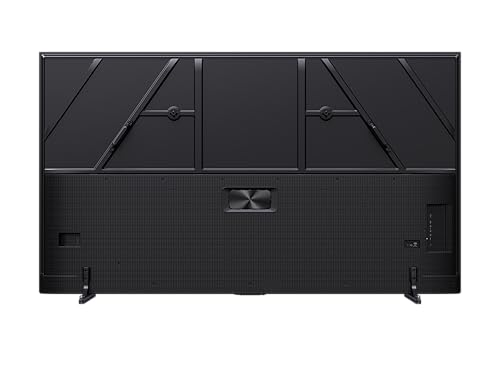
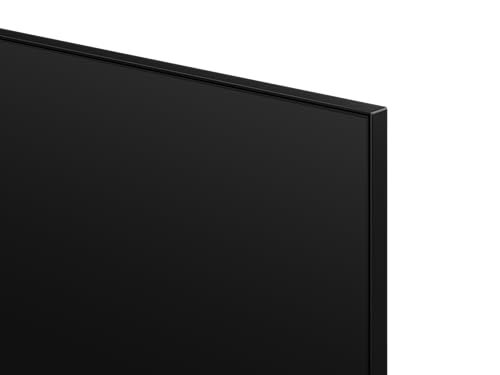
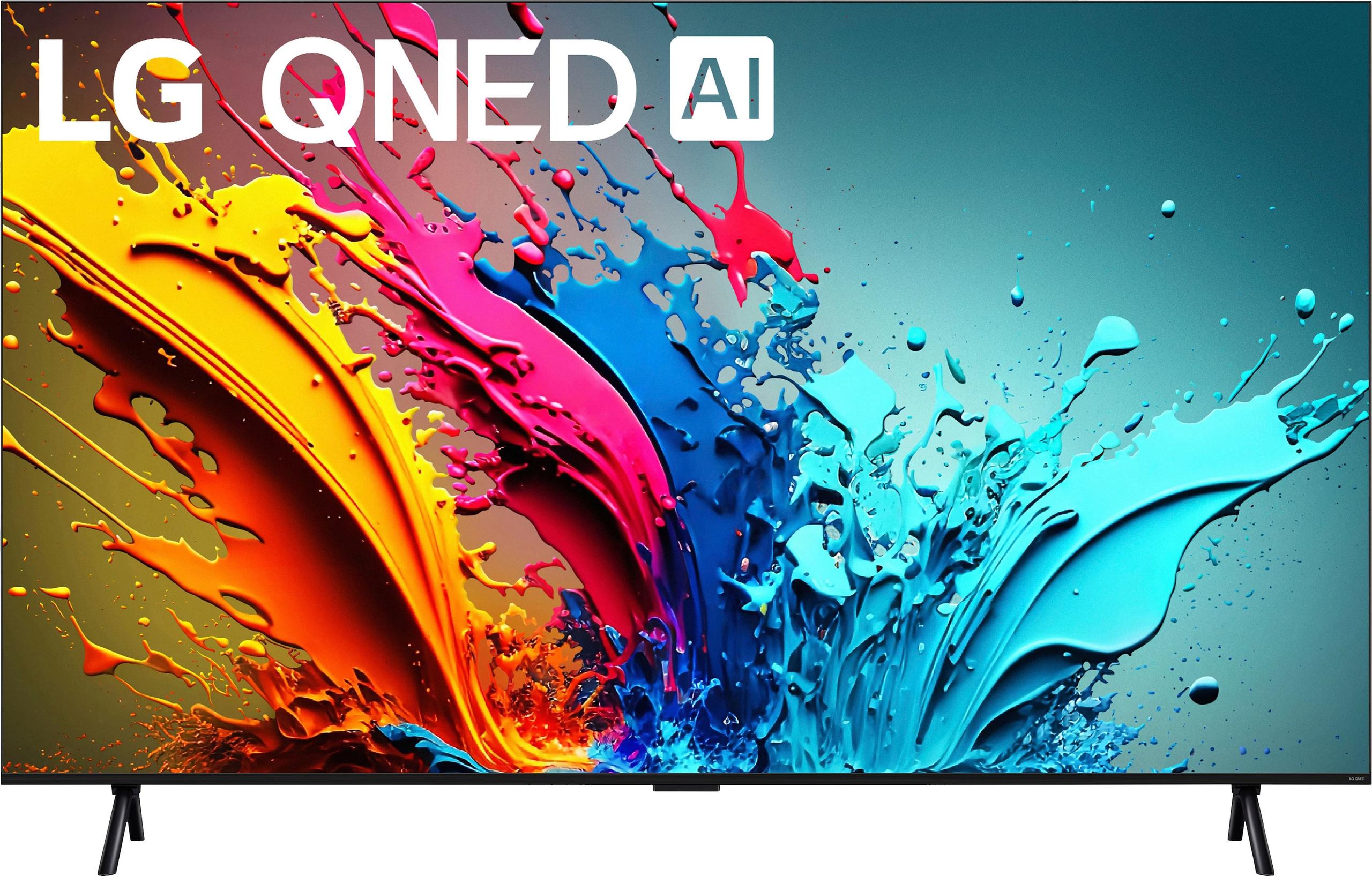

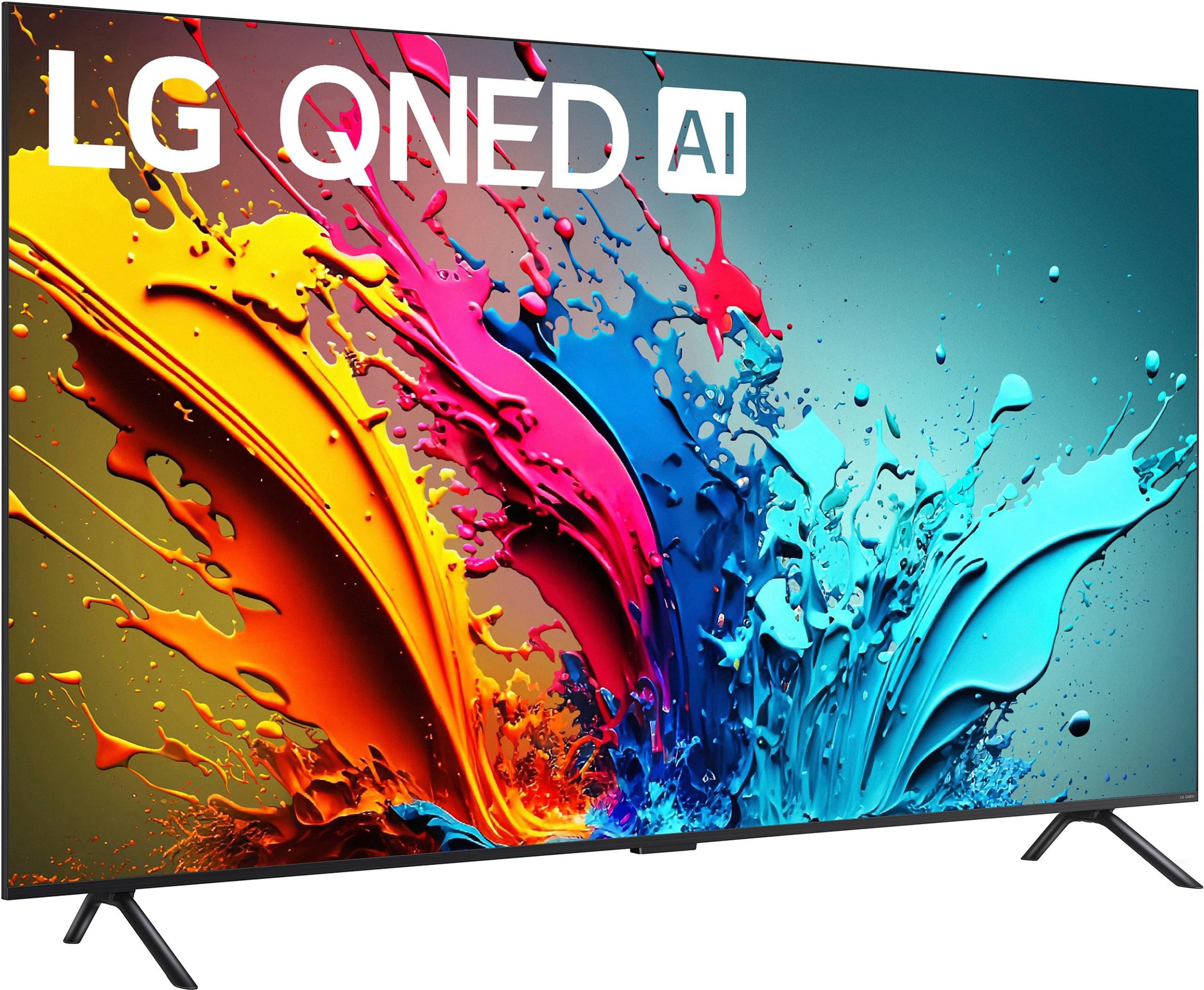
When you're shopping for a TV that can transform your living room into a personal movie theater, the conversation inevitably turns to those massive 95+ inch displays that make everything else look tiny. Two standouts in this premium category are the Hisense 100-Inch QD7 Series Mini-LED 4K Smart TV at $2,199 and the LG 98" QNED 4K UHD Smart TV at $2,996. Both launched in early 2025, representing the latest evolution in ultra-large display technology.
These aren't just big TVs – they're engineering marvels that pack cinema-level experiences into your home. But with an $800 price difference and different technical approaches, choosing between them requires understanding what really matters for your space and viewing habits.
Ultra-large TVs occupy a unique space in home entertainment. Unlike smaller displays where you might compromise on features for affordability, these massive screens demand serious performance to justify their footprint and cost. You're not just buying a TV – you're investing in a centerpiece that will dominate your room and define your viewing experience for years.
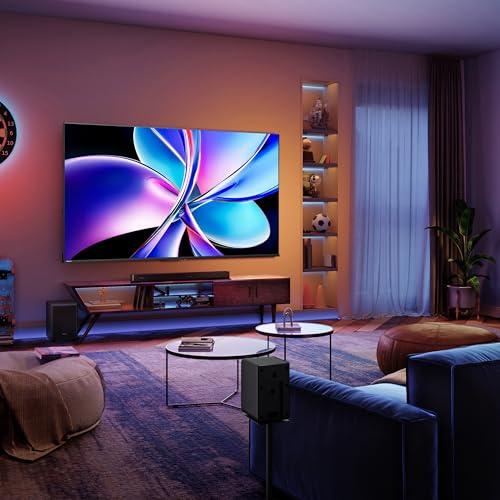
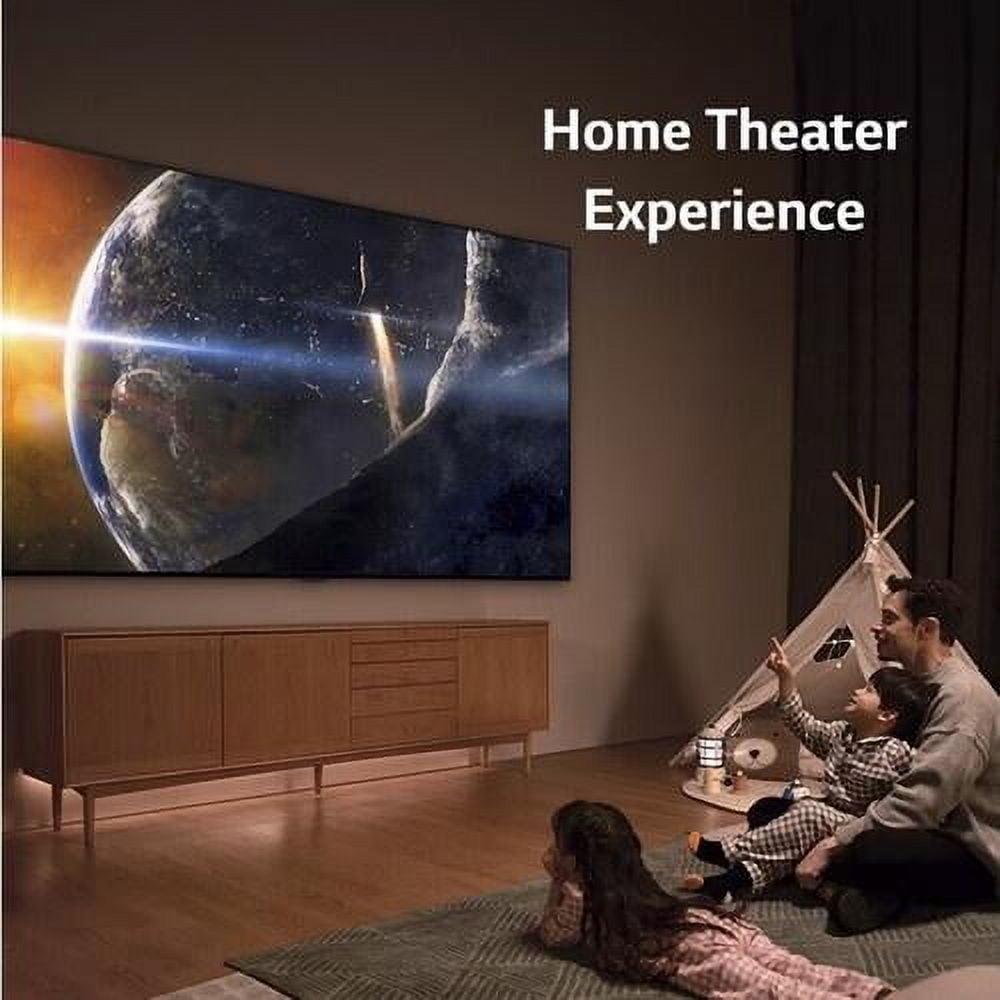
The key considerations go beyond simple specs. Room size becomes critical – both of these displays need 12-15 feet of viewing distance to avoid that "sitting in the front row at the movies" feeling. Mounting becomes a two-person job requiring serious wall anchors, and your existing sound system will likely feel inadequate once you experience content on this scale.
What's fascinating about the 2025 models is how much the technology has matured. Mini-LED backlighting, which was experimental just a few years ago, now provides local dimming capabilities that rival OLED in many scenarios. QNED technology combines quantum dots with LG's NanoCell filtering for unprecedented color accuracy. These advances mean you're getting picture quality that would have cost $10,000+ just three years ago.
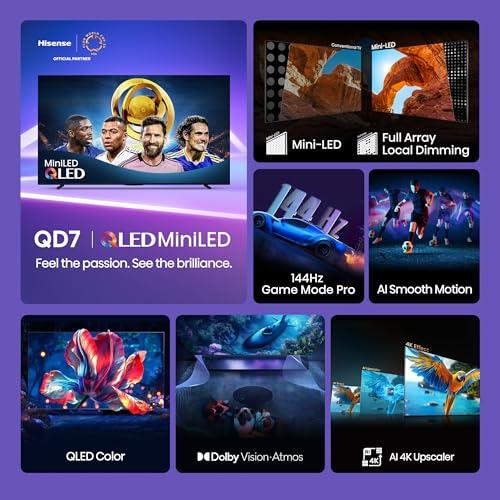
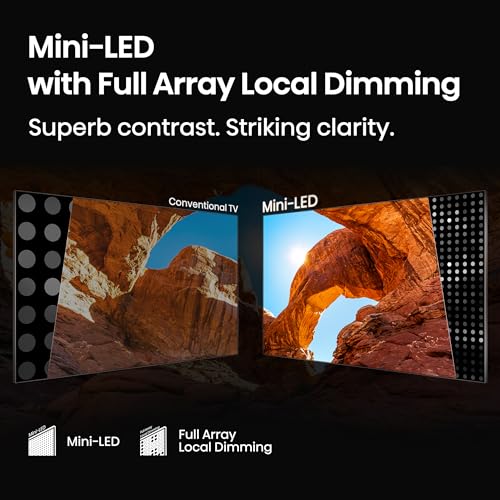
The fundamental difference between these TVs lies in their backlighting philosophy. The Hisense QD7 uses Mini-LED technology – imagine thousands of tiny LEDs behind the screen, each capable of dimming independently. This creates what's called Full Array Local Dimming (FALD), where bright stars can shine against truly dark space backgrounds without the gray "blooming" effect that plagued older LED TVs.
Mini-LED represents a middle ground between traditional LED and OLED technology. Each mini-LED is about 1/40th the size of conventional LEDs, allowing for much more precise control. When I first saw mini-LED in action, the difference was immediately apparent – bright highlights popped without washing out the surrounding image, creating that HDR "wow factor" that makes you want to rewatch your favorite movies.
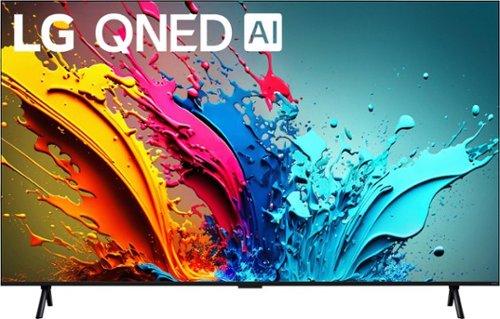
The LG QNED takes a different approach, combining quantum dots with LG's NanoCell technology. Quantum dots are microscopic particles that emit specific colors when hit by light – think of them as incredibly precise color filters. NanoCell adds another layer, filtering out unwanted wavelengths to produce purer colors. The result is less about maximum brightness and more about color accuracy that would satisfy a professional colorist.
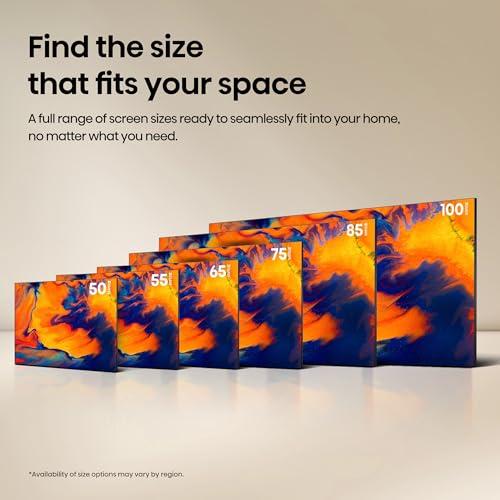
The Hisense's 100-inch screen versus LG's 98-inch might seem like splitting hairs, but at this scale, those two inches translate to meaningful differences in viewing area. Screen area increases exponentially with diagonal measurement, so the Hisense provides roughly 4% more viewing area – equivalent to upgrading from a 65" to a 67" TV.
But size isn't everything. The LG's slightly smaller screen allows for more precise manufacturing tolerances and potentially better uniformity across the panel. In my experience with ultra-large displays, perfect uniformity becomes more challenging as size increases, so LG's approach has merit.
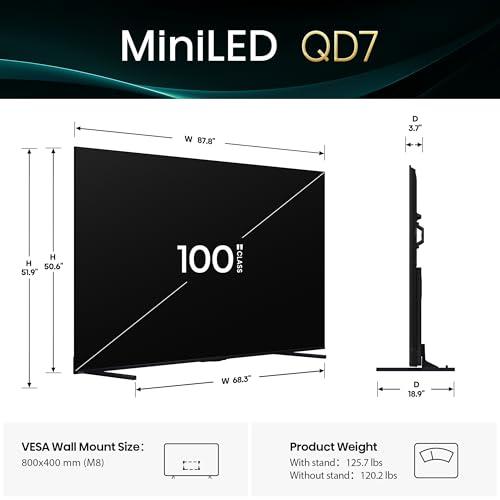
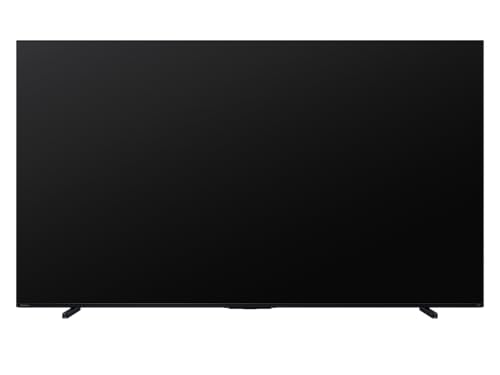
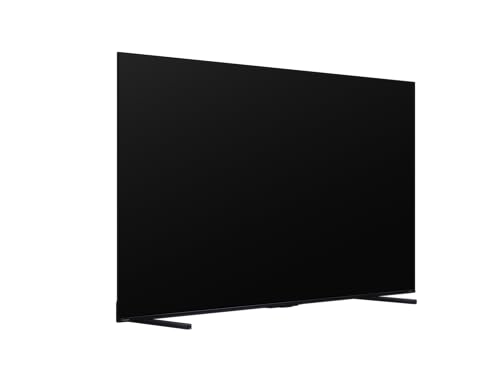
Both displays require substantial room planning. The Hisense measures nearly 88 inches wide, while the LG comes in at about 86 inches. Either way, you're looking at over seven feet of width, plus several inches for the stand. Wall mounting becomes almost mandatory unless you have an entertainment center built for commercial displays.
Here's where the philosophical differences become apparent. The Hisense QD7's mini-LED array can push brightness levels that make HDR content truly spectacular. Peak brightness – the maximum light output for small highlights like explosions or sunlight – reaches levels that create genuine "eye pop" moments. This aggressive brightness approach works beautifully for action movies, sports, and gaming, where visual impact matters more than absolute accuracy.
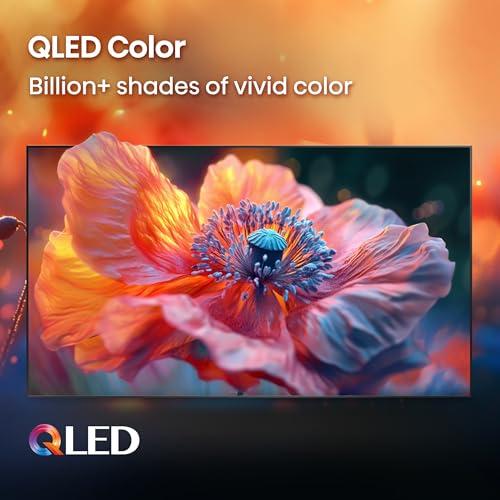
The quantum dot layer adds another dimension, producing what Hisense claims is over one billion colors. Quantum dots excel at creating saturated, vibrant colors that make animated content and nature documentaries look almost hyperreal. Colors appear more "punchy" – grass looks impossibly green, skies incredibly blue.
The LG QNED takes a more measured approach. Its Precision Dimming Pro uses hundreds of dimming zones to control backlight with surgical precision. Rather than going for maximum brightness, LG focuses on contrast – the difference between the darkest darks and brightest brights. This creates more nuanced shadow detail and prevents the slight "blooming" effect that can occur around bright objects on darker backgrounds.
LG's color philosophy emphasizes accuracy over saturation. The combination of quantum dots and NanoCell filtering produces what they call "100% color volume" – essentially meaning colors remain accurate even at high brightness levels. For movie enthusiasts who want to see films as directors intended, this approach has clear advantages.
Gaming on ultra-large displays transforms the experience entirely. Suddenly, racing games feel like you're behind the wheel, and first-person shooters provide peripheral vision that competitive players dream about. But at this scale, any input lag or motion blur becomes immediately noticeable.
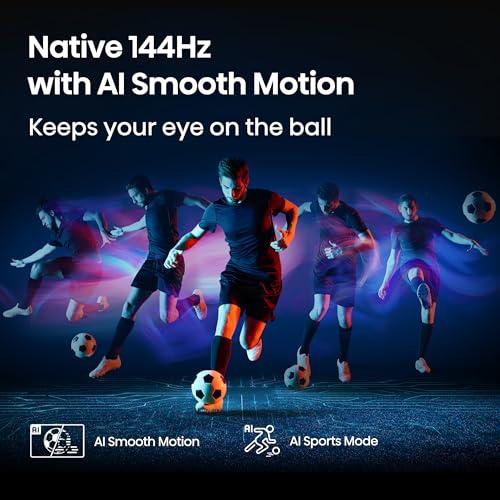
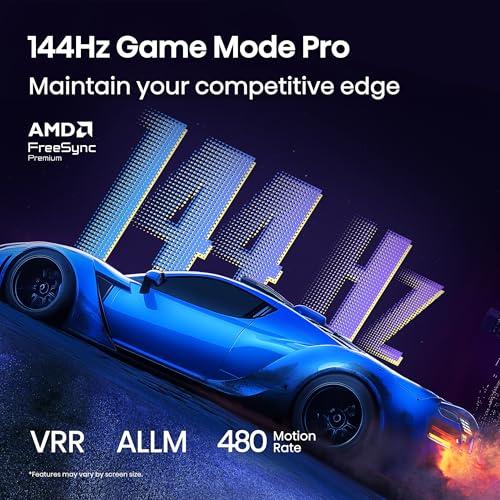
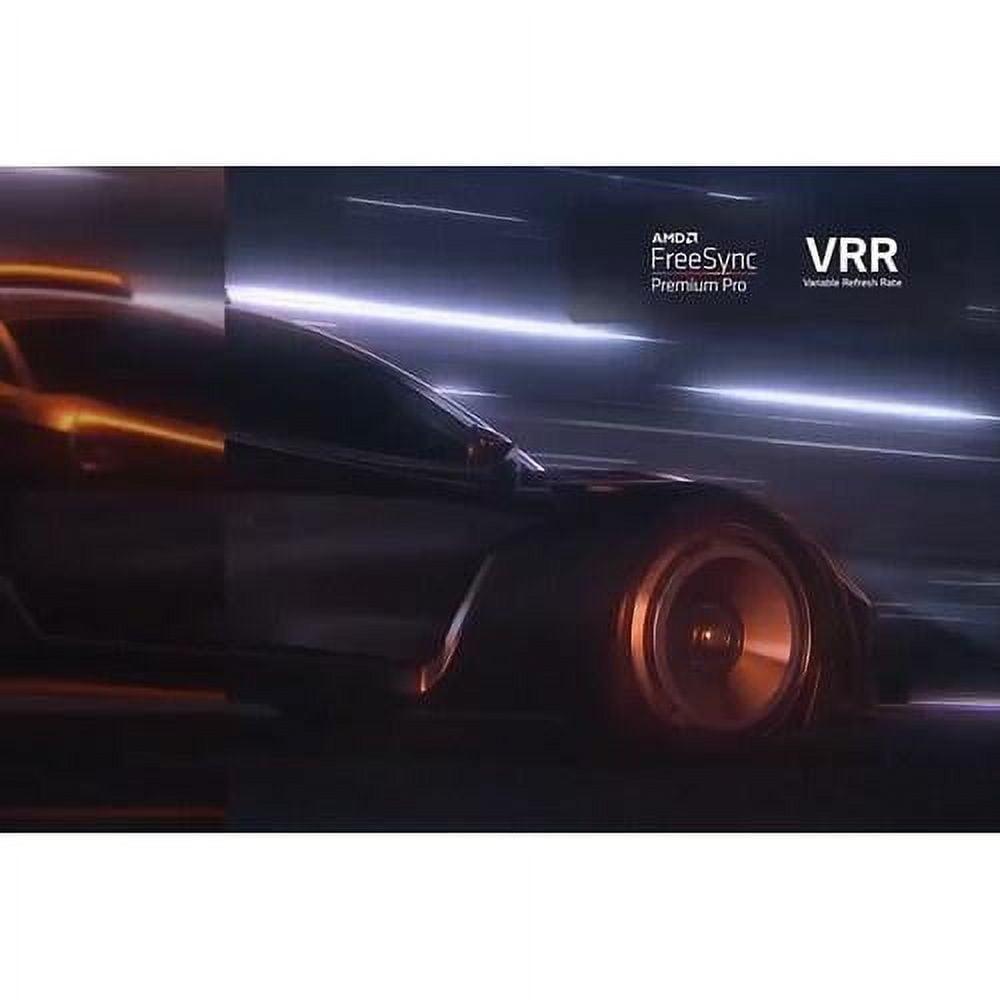
The Hisense QD7 leads with its 144Hz refresh rate – the highest available in this size category. This isn't marketing fluff; the extra frame rate creates noticeably smoother motion, especially for fast-paced gaming or sports content. Combined with Variable Refresh Rate (VRR) and Auto Low Latency Mode (ALLM), the gaming experience rivals dedicated gaming monitors.
What impressed me most was the QD7's Game Mode Pro implementation. It's not just about reducing input lag – the entire picture processing pipeline optimizes for gaming without sacrificing too much image quality. FreeSync Premium support means compatible graphics cards can synchronize perfectly with the display, eliminating screen tearing entirely.
The LG QNED offers a more conventional 120Hz refresh rate, which is still excellent for gaming but lacks that extra smoothness the Hisense provides. However, LG's Game Optimizer dashboard provides real-time performance monitoring – you can see frame rates, VRR status, and input lag measurements directly on screen. For serious gamers, this diagnostic capability proves invaluable for fine-tuning settings.
Both displays support HDMI 2.1's full feature set, including 4K@120Hz gaming from PlayStation 5 and Xbox Series X. The difference lies in implementation details – Hisense pushes raw performance while LG focuses on user experience and monitoring tools.
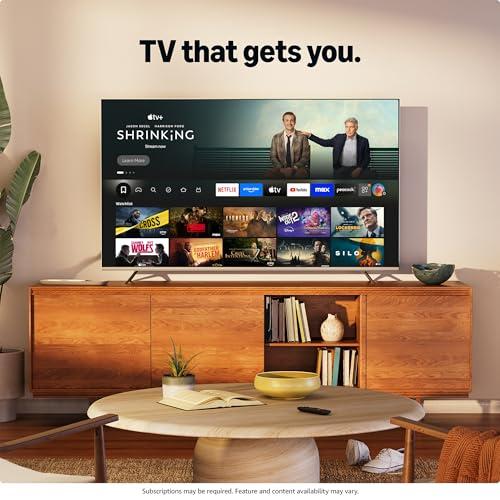
The smart TV platform becomes crucial at this price point because you'll likely use it daily. The Hisense runs Amazon's Fire TV, which integrates seamlessly with Alexa and prioritizes Amazon Prime content. The interface is straightforward, though some users report occasional sluggishness and remote responsiveness issues – not uncommon with Fire TV implementations on non-Amazon hardware.
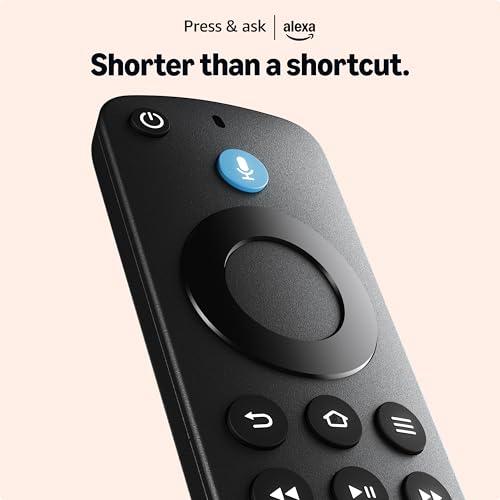
Fire TV's strength lies in its content discovery and voice search capabilities. Finding something to watch across multiple streaming services works intuitively, and the Alexa integration means you can control smart home devices directly from the TV remote. However, the advertising presence can feel intrusive, with promoted content appearing prominently on the home screen.
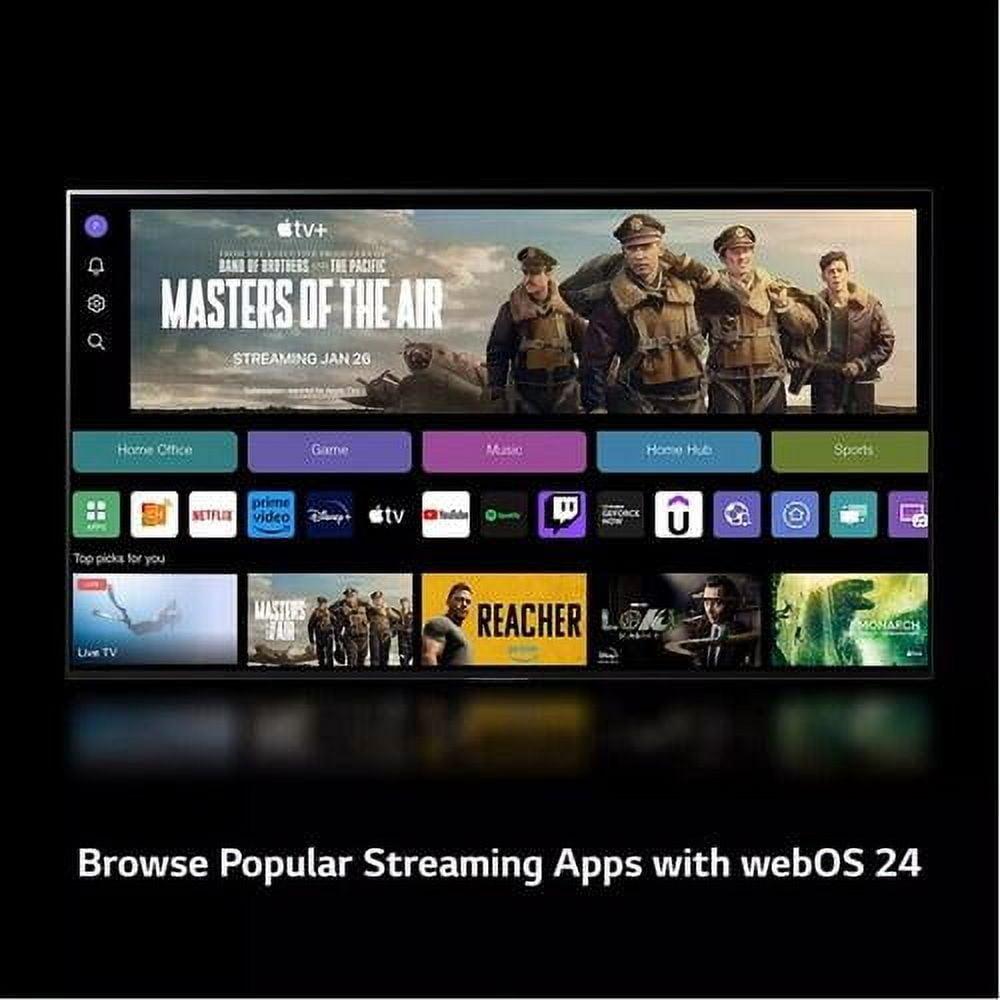
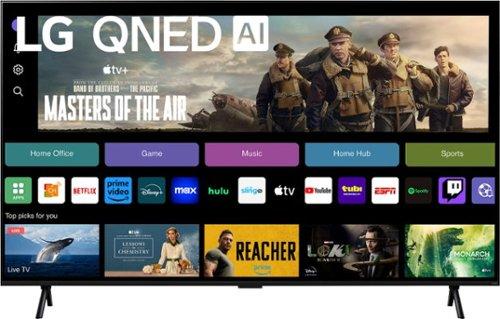
The LG QNED runs webOS, consistently rated among the best smart TV platforms. The interface feels more polished and responsive, with smooth animations and logical menu organization. LG's commitment to software updates typically exceeds other manufacturers, meaning your TV stays current longer.
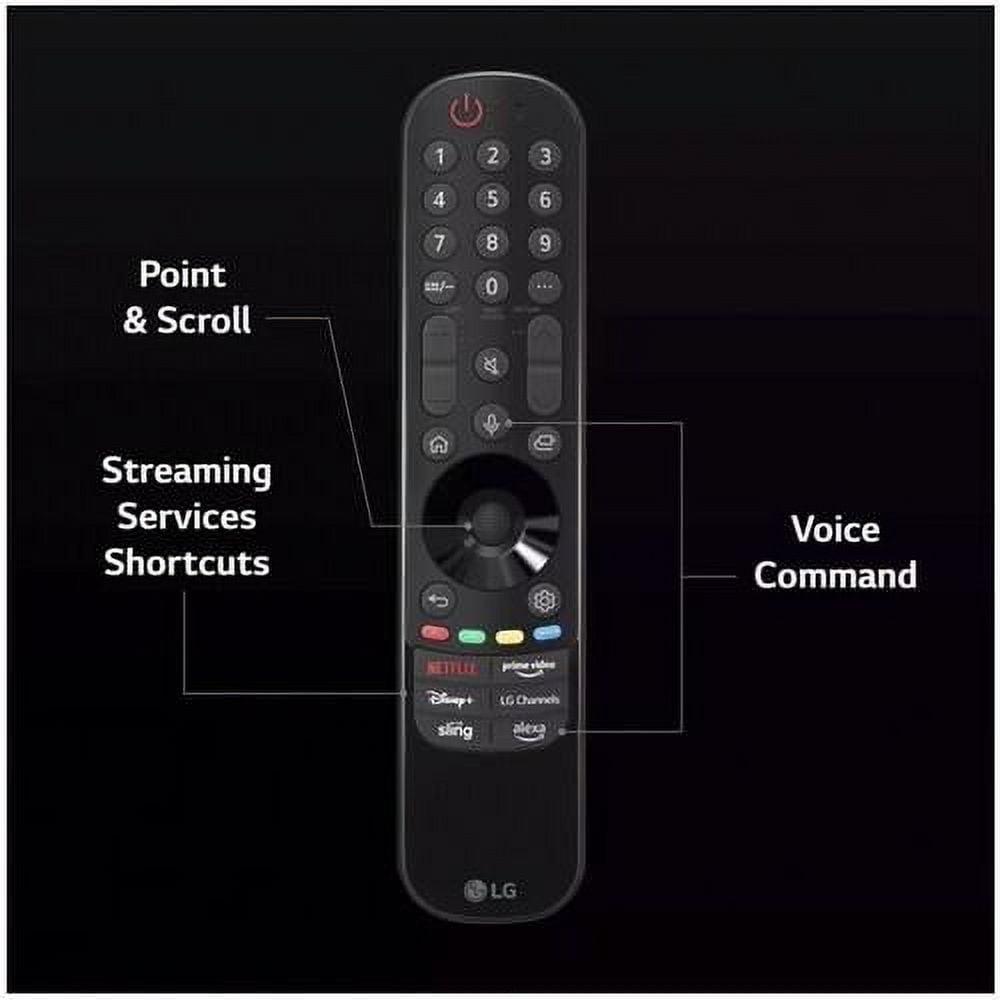
WebOS excels at multitasking – you can browse menus while content continues playing in a corner window. The Magic Remote's pointer functionality makes navigation feel more like using a computer mouse than traditional TV controls. For families with varied technical comfort levels, webOS proves more intuitive.
Both TVs include respectable speaker systems – the Hisense offers 50W output while the LG provides a 2.2 channel configuration with AI Sound Pro processing. However, at this screen size, built-in audio becomes almost comically inadequate. It's like watching an IMAX movie with iPhone speakers.
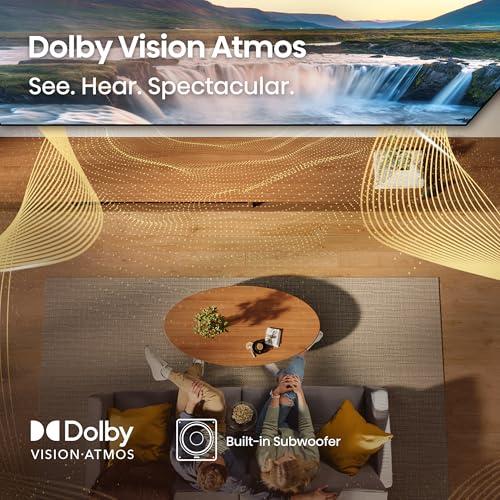
The Hisense supports Dolby Atmos processing, which helps create spatial audio effects even through the TV's speakers. The LG's AI Sound Pro attempts to create virtual 9.1.2 surround sound, analyzing content to optimize audio presentation. Both implementations work better than expected but still pale compared to dedicated audio systems.
For serious home theater use, budget at least $500-1000 for a quality soundbar or consider a full surround system. The visual impact of these massive displays demands audio that can match the scale.
The $800 price difference between these displays represents more than simple cost savings – it reflects different market philosophies. The Hisense QD7 at $2,199 offers exceptional value, providing 100-inch viewing with premium features at a price that seemed impossible just a few years ago. You're getting mini-LED backlighting, 144Hz gaming, and comprehensive HDR support for less than many 85-inch premium displays.
However, value isn't just about the lowest price. The Hisense approach involves some compromises – occasional software quirks, potentially less refined color accuracy, and questions about long-term reliability. Some users report issues with remote responsiveness and occasional system freezes, though these seem to be software-related problems that could be addressed through updates.
The LG QNED at $2,996 commands a premium for brand reputation, superior software experience, and more conservative engineering. LG's track record for reliability and software support justifies the higher cost for many buyers. The color accuracy and viewing angle advantages become significant for households with varied seating arrangements.
In dedicated home theater environments, both displays excel but serve different priorities. The Hisense's maximum brightness advantage shines in rooms with ambient light leakage – basement theaters with occasional natural light or family rooms used for both daytime and nighttime viewing. The aggressive brightness and color saturation create that "wow factor" that impresses guests.
The LG's superior viewing angles and color accuracy make it ideal for theater rooms with multiple seating rows or wide sectional arrangements. The more natural color reproduction works better for extended viewing sessions where eye fatigue becomes a concern. Movie enthusiasts who prioritize accuracy over impact will appreciate LG's approach.
Both require careful calibration for optimal performance. Out-of-box settings typically favor showroom conditions rather than home viewing. Professional calibration costs $300-500 but transforms the viewing experience, especially on displays of this caliber.
Choose the Hisense 100" QD7 if maximum impact and value drive your decision. The larger screen, superior gaming specs, and aggressive pricing make it ideal for households prioritizing entertainment value over absolute refinement. Gaming enthusiasts, sports fans, and anyone wanting the biggest possible screen for their budget will find it compelling.
The software quirks and occasional reliability concerns are real but manageable for most users. If you're comfortable troubleshooting occasional issues in exchange for significant savings and maximum screen size, the Hisense delivers exceptional value.
Choose the LG 98" QNED if you prioritize long-term satisfaction over initial savings. The superior software experience, better viewing angles, and brand reliability justify the premium for many buyers. Households with varied viewing positions, movie enthusiasts who value color accuracy, and anyone preferring proven reliability over cutting-edge value will appreciate LG's approach.
The price difference might seem significant initially, but amortized over several years of daily use, it becomes less meaningful. Sometimes paying more upfront saves frustration later.
Consider your room carefully – both displays require substantial space and professional installation. Factor in additional costs for proper mounting hardware and audio upgrades. These aren't impulse purchases but long-term investments in your home entertainment experience.
Ultimately, both displays represent remarkable achievements in bringing cinema-scale viewing to homes. Your choice depends on whether you prioritize maximum impact and value (Hisense) or refined performance and reliability (LG). Either way, you're getting an experience that transforms how you think about home entertainment.
| Hisense 100-Inch QD7 Series Mini-LED 4K Smart TV | LG 98" QNED 4K UHD Smart TV |
|---|---|
| Price - Base cost before mounting and audio upgrades | |
| $2,199 | $2,996 |
| Screen Size - Actual viewing area and room impact | |
| 100 inches (4% more viewing area than 98") | 98 inches (easier to fit in most rooms) |
| Display Technology - How the TV creates brightness and contrast | |
| Mini-LED with Full Array Local Dimming (superior brightness, some blooming) | QNED with Precision Dimming Pro (better contrast control, less blooming) |
| Refresh Rate - Critical for gaming and sports smoothness | |
| 144Hz (highest available, exceptional for gaming) | 120Hz (excellent for most content, standard premium rate) |
| Color Technology - Affects vibrancy vs accuracy | |
| Quantum Dot (vibrant, punchy colors that pop) | Quantum Dot + NanoCell (accurate, natural colors) |
| HDR Support - Enhanced contrast and color range | |
| Dolby Vision, HDR10, HDR10+, HLG | HDR10, HLG (missing Dolby Vision support) |
| Smart Platform - Daily user experience and app performance | |
| Fire TV with Alexa (occasional lag reported) | webOS with LG ThinQ (smoother, more reliable) |
| Gaming Features - Important for console and PC gaming | |
| 144Hz Game Mode Pro, VRR, ALLM, FreeSync Premium | 120Hz Game Optimizer, VRR, ALLM, performance dashboard |
| Viewing Angles - How picture quality holds up off-center | |
| Limited (typical for LED technology) | Wide angles (better for multiple seating positions) |
| Audio System - Built-in sound before external upgrades | |
| 50W with Dolby Atmos | 2.2 channel with AI Sound Pro virtual surround |
| Dimensions Without Stand - Wall mounting considerations | |
| 87.8" W × 50.6" H × 3.7" D (125.7 lbs) | 85.9" W × 49.5" H × 4.3" D (134.9 lbs) |
| Connectivity - HDMI and gaming compatibility | |
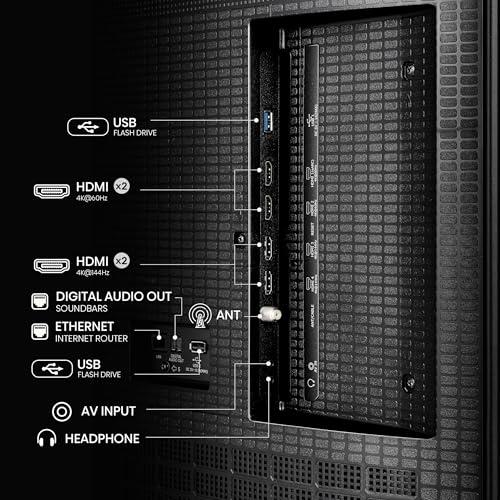
| HDMI 2.1 with 4K@144Hz support | 4x HDMI (2x HDMI 2.1, 2x HDMI 2.0) with eARC |
| Brand Reliability - Long-term support and build quality | |
| Budget-focused with some software quirks reported | Premium brand with established reliability record |
The Hisense 100-Inch QD7 Series Mini-LED 4K Smart TV offers better value at $2,199, providing a larger 100-inch screen with premium mini-LED technology for $800 less than the LG 98" QNED 4K UHD Smart TV at $2,996. However, the LG justifies its higher price with superior build quality, more reliable software, and better viewing angles.
Mini-LED in the Hisense QD7 uses thousands of tiny LEDs for precise backlighting control, delivering exceptional brightness and contrast. QNED in the LG 98" TV combines quantum dots with NanoCell filtering for more accurate, natural colors and wider viewing angles, though typically at lower peak brightness levels.
The Hisense 100-Inch QD7 is superior for gaming with its 144Hz refresh rate, Game Mode Pro, and FreeSync Premium support. The LG QNED offers solid 120Hz gaming with useful diagnostic tools through its Game Optimizer dashboard, but the Hisense provides smoother motion for competitive gaming.
Both TVs require 12-15 feet of viewing distance for optimal experience. The Hisense QD7 measures 87.8 inches wide while the LG QNED is 85.9 inches wide. Both need professional installation and substantial wall mounting hardware due to their 125+ pound weight.
Picture quality depends on priorities: the Hisense QD7 delivers brighter, more vibrant colors ideal for bright rooms and impactful viewing, while the LG QNED provides more accurate colors, better contrast control, and superior viewing angles for critical movie watching.
Yes, the Hisense QD7 uses Fire TV with Alexa integration, though some users report occasional lag. The LG QNED runs webOS, which is generally more polished and responsive with better long-term software support and smoother navigation.
For dedicated home theaters, the Hisense QD7 excels in controlled lighting with maximum brightness and screen size. The LG QNED is better for multi-row seating arrangements due to superior viewing angles and more accurate colors for extended movie viewing sessions.
Both TVs have decent built-in audio - the Hisense QD7 offers 50W with Dolby Atmos while the LG QNED has 2.2 channels with AI Sound Pro. However, at this screen size, external sound systems are highly recommended for matching the visual impact.
LG has a stronger reputation for reliability and software updates with the LG QNED. The Hisense QD7 offers exceptional value but some users report occasional software quirks and remote responsiveness issues, though these may be addressable through updates.
The Hisense 100-inch screen provides approximately 4% more viewing area than the LG 98" display - equivalent to upgrading from a 65" to 67" TV. While modest, at this scale the difference is noticeable, especially for immersive gaming and sports viewing.
The Hisense QD7 performs better in bright rooms due to its mini-LED backlighting delivering higher peak brightness levels. The LG QNED focuses more on contrast and color accuracy, making it better suited for controlled lighting environments.
Choose the Hisense 100-Inch QD7 if you want maximum screen size and gaming performance for the best value. Select the LG 98" QNED if you prioritize brand reliability, color accuracy, and don't mind paying a premium for a more refined overall experience.
We've done our best to create useful and informative comparisons to help you decide what product to buy. Our research uses advanced automated methods to create this comparison and perfection is not possible - please contact us for corrections or questions. These are the sites we've researched in the creation of this article: hometechnologyreview.com - hypermicro.com - bestbuy.com - bestbuy.com - youtube.com - hisense-usa.com - bestbuy.com - pcrichard.com - tvsbook.com - hisense-usa.com - pcrichard.com - nfm.com - bestbuy.com - hisense-canada.com - rtings.com - hisense-usa.com - bestbuy.com - hisense-usa.com - hometechnologyreview.com - youtube.com - youtube.com - hometechnologyreview.com - costco.com - custrevs.com - bestbuy.com - greentoe.com - pcrichard.com - rtings.com - rtings.com - videoandaudiocenter.com - ecdcom.com - youtube.com - bestbuy.com - displayspecifications.com - techradar.com - youtube.com - kitele.com - youtube.com

Privacy Policy
Terms and Conditions - Affiliate Policy
Home Security
© Copyright 2008-2026.
11816 Inwood Rd #1211, Dallas, TX 75244