

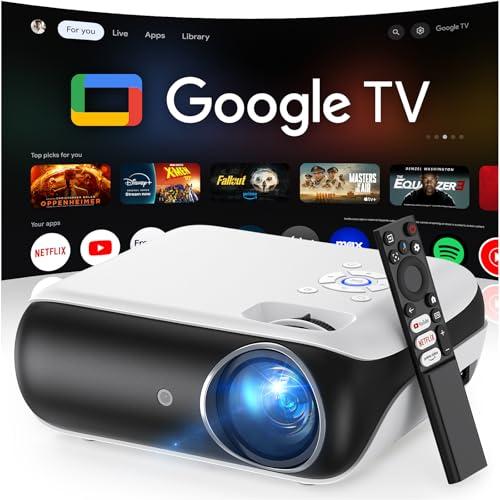
The smart projector market has exploded over the past few years, transforming from a niche tech category into something practically anyone can afford and enjoy. But here's where it gets interesting—while entry-level projectors have become incredibly accessible, premium models have simultaneously reached near-cinema quality levels that would have been impossible just a few years ago.
Today we're comparing two projectors that perfectly represent this divide: the budget-friendly HAPPRUN Google TV Smart Projector and the premium JMGO N1S Ultimate 4K Laser Projector. These aren't just different price points of the same thing—they represent fundamentally different approaches to projection technology, each with distinct advantages depending on what you're trying to achieve.
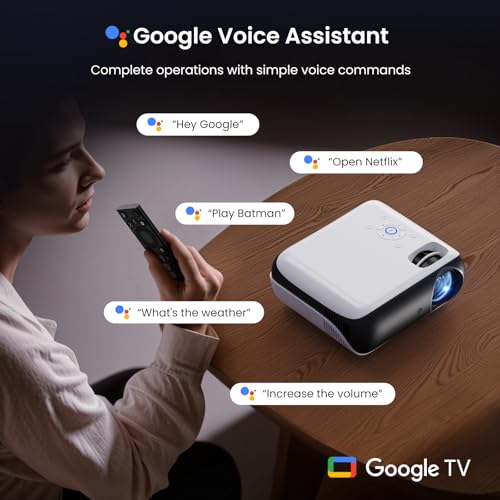
Before diving into specifics, let's establish what we're dealing with. Smart projectors integrate streaming platforms directly into the device, eliminating the need for external streaming sticks or boxes. Think of them as all-in-one entertainment systems that can turn any wall into a massive screen.
The key technical divide in today's market centers around light source technology. Traditional LED projectors use arrays of light-emitting diodes to illuminate the image, while laser projectors use focused laser beams. This isn't just a minor technical difference—it fundamentally affects brightness, color accuracy, longevity, and price.
LED projectors typically produce 200-500 ANSI lumens (ANSI lumens being the standardized brightness measurement), making them suitable mainly for dark rooms. Laser projectors can reach 2,000-4,000+ ANSI lumens, allowing comfortable viewing even with ambient light. The HAPPRUN falls into the LED category at 350 ANSI lumens, while the JMGO N1S Ultimate pushes laser technology to 3,500 ANSI lumens.
Resolution is another critical factor, but it's often misunderstood due to marketing. Many projectors claim "4K support" when they can only decode 4K content and display it at 1080p resolution. True 4K projectors use pixel-shifting technology—rapidly moving the image sensor to create additional apparent pixels—achieving genuine 3840x2160 resolution.
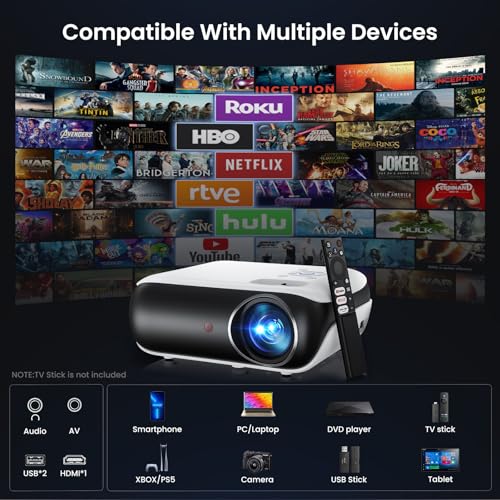
The HAPPRUN Google TV Smart Projector, released in 2024, represents the democratization of smart projection technology. At roughly one-seventh the cost of premium models, it integrates Google TV directly into an LED-based projector, making smart projection accessible to budget-conscious consumers.
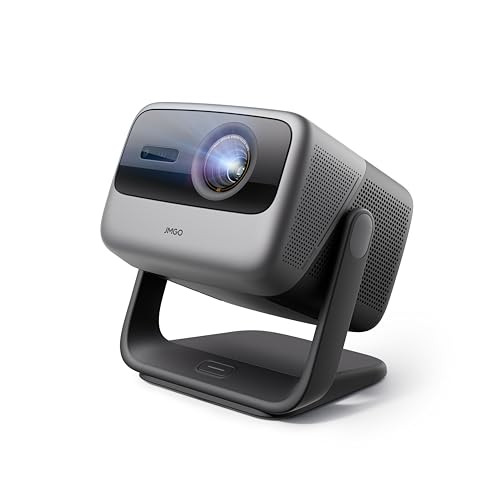
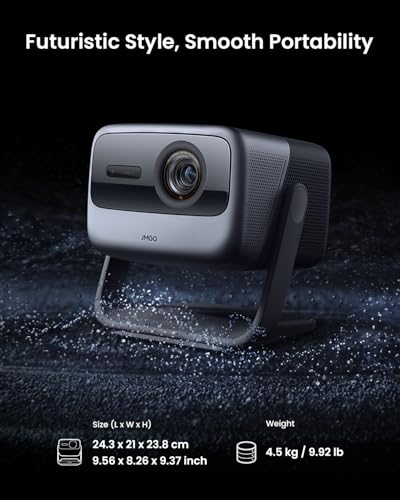
The JMGO N1S Ultimate, also from 2024, takes the opposite approach. It's built around cutting-edge triple-laser technology and includes innovations like a motorized gimbal system that can rotate and tilt the projector automatically. This isn't just about raw specs—it's about eliminating the traditional compromises of projector ownership.
This is where the fundamental difference becomes crystal clear. The HAPPRUN's 350 ANSI lumens strictly limits it to dark environments. Based on extensive user feedback and professional reviews, this projector becomes virtually unwatchable with any significant ambient light. You'll need to close curtains and dim lights for acceptable viewing—think basement home theater or nighttime outdoor movie setup.
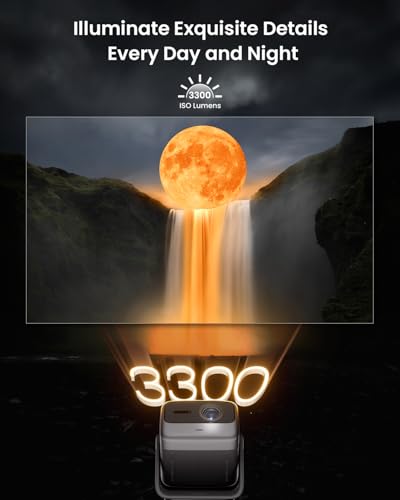
The JMGO N1S Ultimate's 3,500 ANSI lumens changes the game entirely. This brightness level, combined with its advanced quad-layer diffusion system that ensures 95% brightness uniformity across the image, allows comfortable daytime viewing without complete blackout conditions. You can watch movies on weekend afternoons without transforming your living room into a cave.
This brightness difference isn't just about numbers—it fundamentally changes how you can use the device. The HAPPRUN requires you to adapt your environment to the projector, while the JMGO adapts to your environment.
The HAPPRUN displays native 1080p resolution (1920x1080 pixels) while supporting 4K content through decoding and downscaling. This means it can play 4K movies from Netflix or streaming services, but the actual projected image is 1080p. For many users, especially on screen sizes under 120 inches, this resolution is perfectly adequate and provides sharp, detailed images.
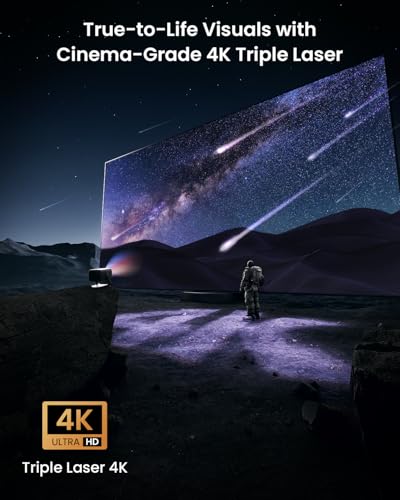
The JMGO N1S Ultimate achieves true 4K resolution through pixel-shifting technology using a 0.47" DLP chip. While purists might argue this isn't "native" 4K like you'd find in $10,000+ cinema projectors, the pixel-shifting approach produces genuinely sharp 4K images that are visually indistinguishable from native 4K for most content.
More importantly, the JMGO supports 10-bit color processing compared to the HAPPRUN's 8-bit system. This means smoother color gradients and better handling of HDR content, which becomes increasingly important as streaming services emphasize high-quality content.
The JMGO's triple-laser system achieves 110% BT.2020 color gamut coverage—essentially meaning it can reproduce more colors than most content even contains. Professional reviews consistently measure color accuracy at ΔE less than 1, which means color errors are virtually imperceptible to human eyes. This level of accuracy rivals professional reference monitors used in film production.
The HAPPRUN uses standard LED illumination with typical consumer-grade color reproduction. While it supports HDR10+ decoding, the limited color gamut and 8-bit processing mean you won't see the full benefit of HDR content. Colors appear pleasant and natural for casual viewing but lack the vibrancy and accuracy for critical applications.
For home theater enthusiasts, this difference is significant. The JMGO can accurately reproduce the filmmaker's intended color palette, while the HAPPRUN provides a more generic, consumer-friendly color profile.
Audio often gets overlooked in projector comparisons, but it's crucial for the all-in-one experience both devices promise.
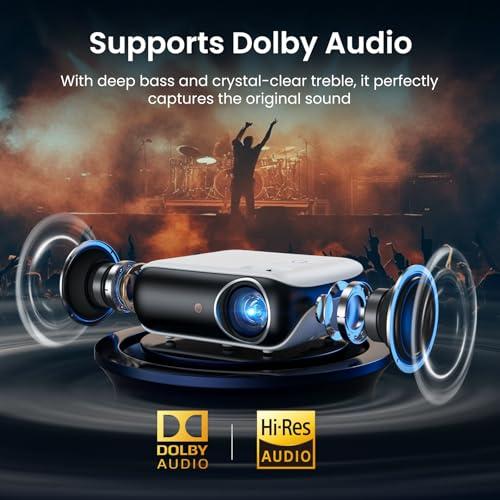
The HAPPRUN's single 8-watt speaker with basic Dolby Audio support provides adequate sound for casual viewing in small rooms. User reviews consistently mention that it's fine for dialogue-heavy content but lacks the power and depth for action movies or music. Most users end up connecting external speakers or soundbars for optimal experience.
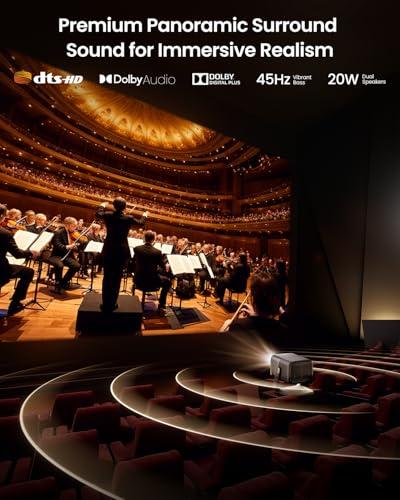
The JMGO's takes audio seriously with dual 10-watt speakers plus a 20-watt subwoofer system supporting Dolby Digital Plus and DTS-HD Master Audio. The system can reproduce frequencies down to 45Hz, providing genuine bass response that makes explosions feel impactful and music sound full. Based on professional audio measurements, this system delivers room-filling, immersive sound that eliminates the need for external speakers in most home theater scenarios.
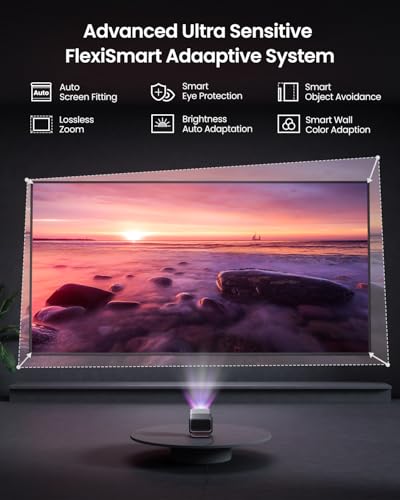
The HAPPRUN uses a conventional projector design—a fixed rectangular box that requires manual positioning and basic keystone correction to achieve proper image geometry. This approach works fine but requires careful planning for permanent installations or patience for temporary setups.
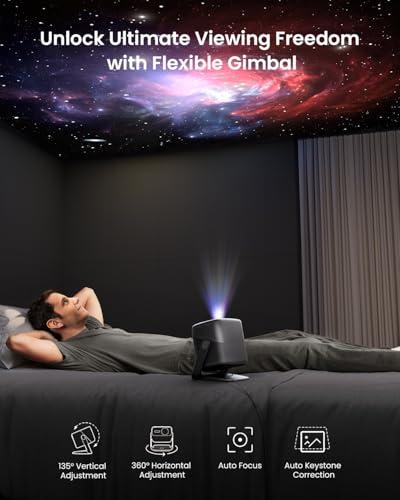
The JMGO's gimbal design represents a genuine innovation in projector usability. The entire optical system can rotate 360° horizontally and adjust 135° vertically, controlled by motors and guided by AI-powered sensors. Want to project on the ceiling for bed viewing? Simply tilt it up. Need to quickly switch from wall to wall? Rotate it without moving the entire unit.
This isn't just a convenience feature—it fundamentally changes how projectors integrate into living spaces. Traditional projectors often require dedicated mounting or careful furniture arrangement, while the JMGO can adapt to whatever space you have available.
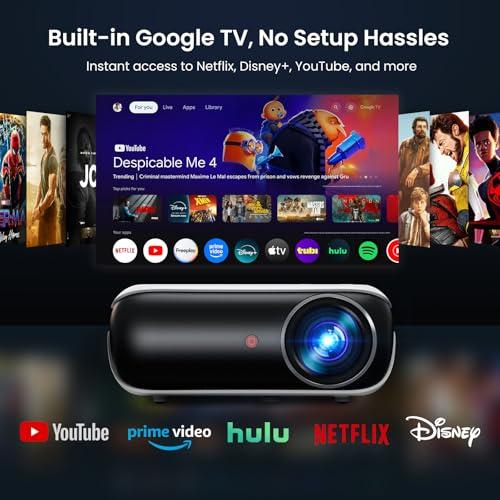
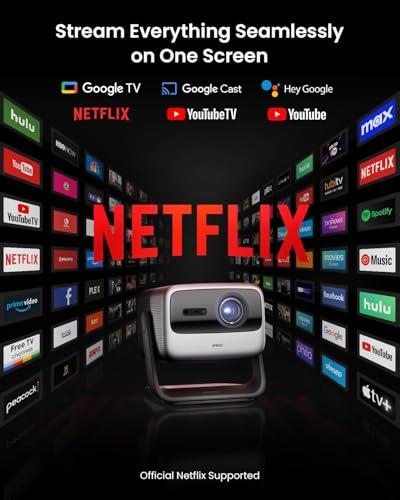
Both projectors run Google TV with official Netflix licensing—a significant advantage over many competitors that require workarounds for Netflix access. However, their connectivity options differ substantially.
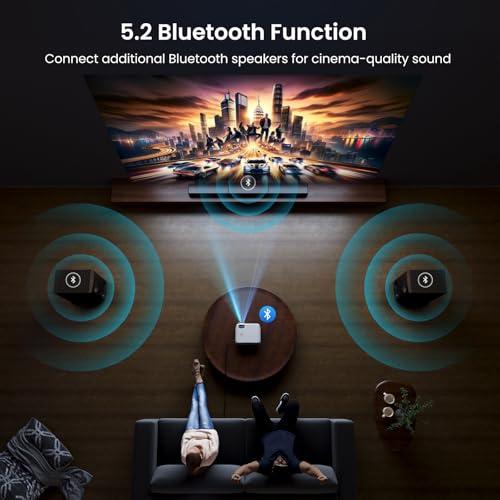
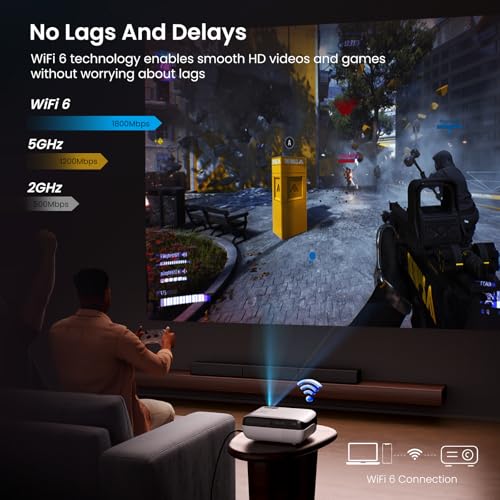
The HAPPRUN includes modern wireless standards (WiFi 6 and Bluetooth 5.2) with basic port selection: one HDMI input, two USB ports, and AV connections. This covers most users' needs for streaming, gaming consoles, or laptop connections.
The JMGO provides more comprehensive connectivity with dual HDMI ports (including HDMI 2.1 with eARC support for advanced audio systems), enhanced wireless capabilities, and professional-grade networking options. The HDMI 2.1 support is particularly valuable for modern gaming consoles or high-end streaming devices.
For dedicated home theater use, the JMGO N1S Ultimate clearly excels. Its brightness allows for larger screen sizes (100-300 inches) while maintaining image quality, and the color accuracy ensures movies appear as filmmakers intended. The robust audio system eliminates the immediate need for external speakers, though serious enthusiasts will eventually want a full surround system.
The HAPPRUN can create an enjoyable home theater experience but with more limitations. Screen sizes should stay under 120 inches for optimal brightness, and the room needs light control. However, for users building their first home theater on a budget, it provides genuine enjoyment at a fraction of the cost.
This is where the JMGO's gimbal design and high brightness create unique value. You can have a normal, well-lit living room during the day and transform it into a cinema space for evening viewing without major environmental changes. The ability to quickly redirect projection to different walls or even the ceiling opens up possibilities that traditional projectors simply can't match.
The HAPPRUN requires more compromise in living room settings. You'll need to plan viewing around lighting conditions and accept that daytime movie watching isn't really viable without significant room darkening.
Both projectors support gaming, but with different strengths. The HAPPRUN provides adequate performance for casual gaming, though the limited brightness can make detailed games difficult to follow in anything but complete darkness.
The JMGO offers low input lag (around 16ms) and supports 120Hz refresh rates, making it genuinely suitable for competitive gaming. The brightness ensures you can see dark game areas clearly, while the color accuracy makes games appear as developers intended.
At the time of writing, the HAPPRUN costs roughly one-seventh the price of the JMGO N1S Ultimate. This isn't just a premium markup—it reflects fundamental differences in technology, components, and capabilities.
The HAPPRUN offers exceptional value for users who understand its limitations. If you have a dedicated dark space and primarily want streaming access on a large screen, it delivers genuine entertainment value at an accessible price point. However, you may need additional investments (external speakers, room darkening) to optimize the experience.
The JMGO represents a long-term investment in projection technology. The laser light source is rated for 30,000+ hours (roughly 10-15 years of typical use), and the performance level eliminates many traditional projector compromises. While the upfront cost is substantial, it provides cinema-quality performance that can replace traditional TV setups entirely.
Choose the HAPPRUN Google TV Smart Projector if you're budget-conscious, have a dedicated dark viewing space, and want to experience large-screen entertainment without major investment. It's perfect for apartment dwellers, first-time projector buyers, or anyone building a basic home theater on a tight budget. Just understand that you're trading performance for affordability—this projector works best when you can control the viewing environment.
Choose the JMGO N1S Ultimate 4K Laser Projector if you want professional-grade performance with maximum flexibility. The high brightness, true 4K resolution, and gimbal design make it suitable for virtually any living situation. It's ideal for home theater enthusiasts, users with challenging installation requirements, or anyone wanting to replace traditional TV setups with projection technology. The premium price delivers premium performance that justifies the investment for serious users.
The decision ultimately comes down to your priorities: immediate affordability with some limitations versus long-term investment in cutting-edge technology. Both projectors succeed in their respective markets, but they serve very different user needs and expectations. Understanding these differences ensures you'll choose the projector that best matches your specific situation and viewing goals.
| HAPPRUN Google TV Smart Projector | JMGO N1S Ultimate 4K Laser Projector |
|---|---|
| Brightness - The single most important factor determining where you can use the projector | |
| 350 ANSI lumens (requires complete darkness) | 3,500 ANSI lumens (works in daylight and ambient light) |
| Resolution - Affects image sharpness and detail clarity | |
| Native 1080p with 4K decoding (downscales 4K content) | True 4K via pixel-shifting (genuine 3840x2160 display) |
| Light Source Technology - Determines lifespan, color quality, and maintenance | |
| LED (standard consumer technology, eventual dimming) | Triple RGB Laser (30,000+ hour life, no lamp replacement) |
| Color Performance - Critical for movie accuracy and HDR content | |
| Standard color gamut, 8-bit processing | 110% BT.2020 coverage, 10-bit processing, ΔE |
| Audio System - Determines if you need external speakers | |
| 8W single speaker (basic Dolby Audio) | Dual 10W + 20W subwoofer (Dolby Digital Plus, DTS-HD) |
| Design Flexibility - How easily you can position and adjust the projector | |
| Fixed traditional design with manual keystone | 360°/135° motorized gimbal with auto-focus and keystone |
| Smart Platform - Streaming capabilities and app access | |
| Google TV with official Netflix licensing | Google TV with official Netflix licensing |
| Connectivity - Ports and wireless capabilities | |
| 1 HDMI, 2 USB, WiFi 6, Bluetooth 5.2 | 2 HDMI (including 2.1 with eARC), enhanced wireless |
| Contrast Ratio - Affects black levels and image depth | |
| 20,000:1 claimed (likely dynamic, not native) | 1,600:1 native (genuine measured contrast) |
| Projection Size Range - Screen size flexibility | |
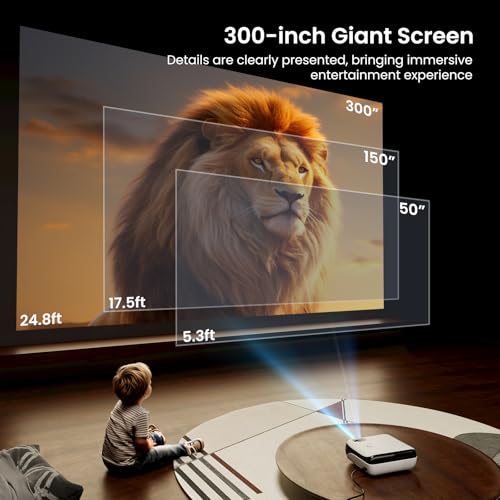
| 40-200 inches (optimal under 120" due to brightness) | 40-300 inches (maintains quality at larger sizes) |
| Noise Level - Important for quiet viewing environments | |
| Not specified (likely 30+ dB) | 26 dB (whisper quiet operation) |
| Weight and Portability - Ease of moving and setup | |
| Lightweight and compact (high portability) | 14.3 lbs (portable but substantial) |
| Best Use Cases - Who should choose this projector | |
| Budget-conscious users with dark rooms, casual viewing | Home theater enthusiasts wanting cinema quality and flexibility |
The JMGO N1S Ultimate 4K Laser Projector is significantly better for dedicated home theater setups. Its 3,500 ANSI lumens brightness allows for larger screen sizes (up to 300 inches) while maintaining image quality, and the true 4K resolution with 110% BT.2020 color coverage delivers cinema-quality visuals. The HAPPRUN Google TV Smart Projector works for basic home theater but requires complete darkness and smaller screen sizes under 120 inches for optimal viewing.
The fundamental difference is light source technology and brightness. The HAPPRUN Google TV Smart Projector uses LED technology with 350 ANSI lumens, requiring dark rooms for viewing. The JMGO N1S Ultimate uses triple RGB laser technology with 3,500 ANSI lumens, allowing daytime viewing and ambient light conditions. This 10x brightness difference completely changes how and where you can use each projector.
This depends on your needs and budget. The HAPPRUN offers exceptional value if you have a dedicated dark viewing space and want basic smart projection features at an affordable price. The JMGO N1S Ultimate provides better long-term value for serious users who want professional-grade performance, flexibility, and the convenience of daytime viewing without room modifications.
Yes, but differently. The HAPPRUN Google TV Smart Projector can decode and play 4K content but displays it at native 1080p resolution. The JMGO N1S Ultimate 4K Laser Projector delivers true 4K resolution (3840x2160) through pixel-shifting technology, providing genuinely sharp 4K images that match the source quality.
The JMGO N1S Ultimate is the clear winner for bright rooms with its 3,500 ANSI lumens output. You can comfortably watch movies during daytime without closing curtains or dimming lights. The HAPPRUN at 350 ANSI lumens becomes virtually unwatchable with any significant ambient light and requires complete darkness for optimal viewing.
The JMGO N1S Ultimate 4K Laser Projector features a superior audio system with dual 10W speakers plus a 20W subwoofer, supporting Dolby Digital Plus and DTS-HD Master Audio with bass down to 45Hz. The HAPPRUN Google TV Smart Projector has a basic 8W single speaker that's adequate for dialogue but typically requires external speakers for an immersive movie experience.
The JMGO N1S Ultimate revolutionizes setup with its motorized gimbal design, allowing 360° horizontal and 135° vertical rotation with automatic focus and keystone correction. Simply point and project. The HAPPRUN uses a traditional fixed design requiring manual positioning and basic keystone adjustments, which works but requires more careful planning.
Both support gaming, but the JMGO N1S Ultimate 4K Laser Projector offers superior gaming performance with low 16ms input lag, 120Hz refresh rate support, and bright enough output to see dark game details clearly. The HAPPRUN Google TV Smart Projector handles casual gaming adequately but the limited brightness can make detailed games difficult to follow except in complete darkness.
For outdoor use, the JMGO N1S Ultimate is more versatile due to its high brightness, allowing earlier evening viewing when some ambient light remains. The HAPPRUN requires complete darkness, limiting outdoor use to late nighttime hours. Both projectors are portable, but the HAPPRUN is lighter and more compact for frequent transport.
Yes, both the HAPPRUN Google TV Smart Projector and JMGO N1S Ultimate 4K Laser Projector feature Google TV with official Netflix licensing, plus access to YouTube, Prime Video, Disney+, and other major streaming platforms without requiring external streaming devices.
The JMGO N1S Ultimate uses laser technology rated for 30,000+ hours of use (roughly 10-15 years of typical viewing), with no lamp replacement needed. The HAPPRUN uses LED technology that gradually dims over time, though modern LEDs still provide years of use. The laser system offers superior longevity and maintains consistent brightness throughout its lifespan.
If budget is your primary concern and you have a dedicated dark room, the HAPPRUN Google TV Smart Projector provides an excellent introduction to large-screen entertainment. For users wanting a long-term investment with professional-grade performance and maximum flexibility, the JMGO N1S Ultimate 4K Laser Projector eliminates most traditional projector limitations and grows with your home theater ambitions.
We've done our best to create useful and informative comparisons to help you decide what product to buy. Our research uses advanced automated methods to create this comparison and perfection is not possible - please contact us for corrections or questions. These are the sites we've researched in the creation of this article: youtube.com - topvisiontec.com - youtube.com - happrunprojector.com - youtube.com - happrunprojector.com - youtube.com - business.walmart.com - youtube.com - walmart.com - cordcuttersnews.com - nexpow.com - projectorreviews.com - youtube.com - projectorcentral.com - tomsguide.com - global.jmgo.com - global.jmgo.com - projectorcentral.com - global.jmgo.com - youtube.com - vividstorm.us - youtube.com - global.jmgo.com - device.report - global.nothingprojector.com

Privacy Policy
Terms and Conditions - Affiliate Policy
Home Security
© Copyright 2008-2026.
11816 Inwood Rd #1211, Dallas, TX 75244