

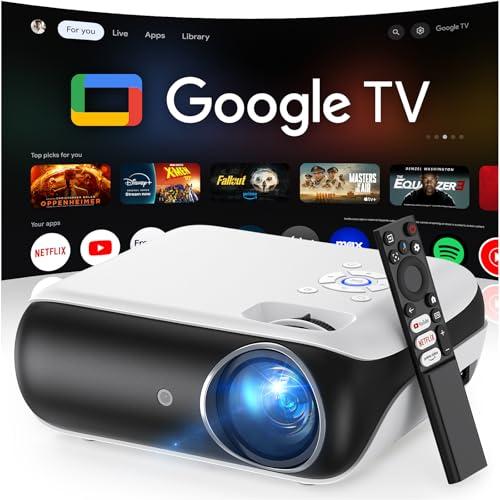
The world of home entertainment has evolved dramatically over the past few years, and smart projectors represent one of the most exciting developments. Unlike traditional projectors that required separate streaming devices or complex setups, today's smart projectors integrate everything you need for streaming entertainment directly into the hardware. Think of them as giant-screen TVs that you can position anywhere you want.
But not all smart projectors are created equal, and the two models we're examining today represent fundamentally different approaches to the same goal. The HAPPRUN Google TV Smart Projector embodies the traditional home theater philosophy: maximize brightness and screen size for the best possible viewing experience in a fixed location. The Nebula Capsule 3 GTV, released in 2022, takes the opposite approach by prioritizing ultimate portability and convenience, even if it means sacrificing some raw performance.
Before diving into specific models, it's important to understand what makes a projector "smart" and what technical specifications actually matter for your viewing experience.
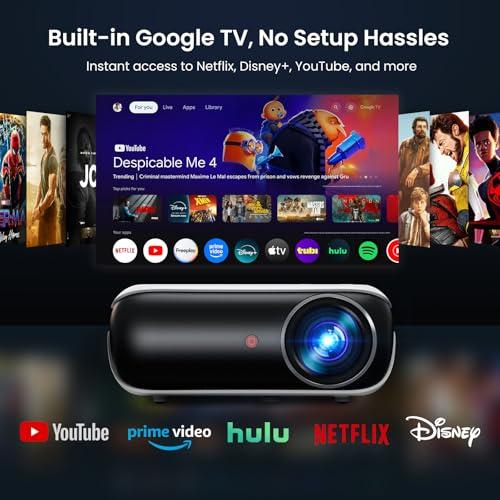
Smart projectors run operating systems like Google TV (which is Google's newer, more refined version of Android TV) directly on the device. This means you can access Netflix, YouTube, Disney+, and other streaming services without plugging in a Fire Stick, Roku, or laptop. The projector essentially becomes a one-stop entertainment hub.
The most critical specification for any projector is brightness, measured in ANSI lumens. This standardized measurement tells you how much light the projector can actually produce. Higher numbers mean you can watch content in brighter rooms or achieve larger screen sizes without the image looking washed out. For context, most smartphone flashlights produce around 100 lumens, while a typical living room needs at least 1,000 lumens of ambient light for comfortable reading.
Native resolution refers to the actual number of pixels the projector can display, not just what it can accept as input. Many budget projectors claim "4K support" but actually display everything at 1080p (1920 x 1080 pixels) after downscaling the image. Both projectors we're discussing offer native 1080p, which provides sharp, detailed images that satisfy most viewers for movies and TV shows.
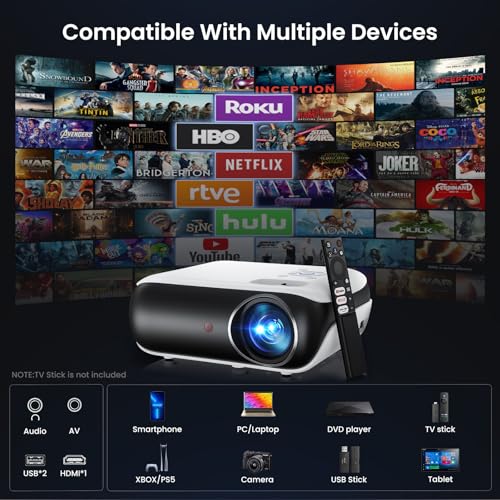
The HAPPRUN Google TV Smart Projector represents what most people expect from a home projector: a device designed to replace your TV with a much larger screen. Released in 2025, it incorporates the latest Google TV interface improvements and Wi-Fi 6 technology that wasn't standard in budget projectors just a few years ago.
At 350 ANSI lumens, the HAPPRUN produces significantly more light than ultra-portable alternatives. This brightness advantage translates to real-world benefits that matter for daily use. You can watch movies in the evening with some ambient lighting – maybe a dim lamp in the corner or light filtering through curtains. It's not bright enough for full daylight viewing like a high-end LCD TV, but it provides much more flexibility than dimmer projectors that require complete darkness.
The projector's 20,000:1 contrast ratio (the difference between the brightest whites and darkest blacks it can display) helps create deeper, more realistic images. Combined with HDR10+ support, which allows the projector to display a wider range of colors and brightness levels than standard video, the HAPPRUN can handle modern streaming content the way directors intended.
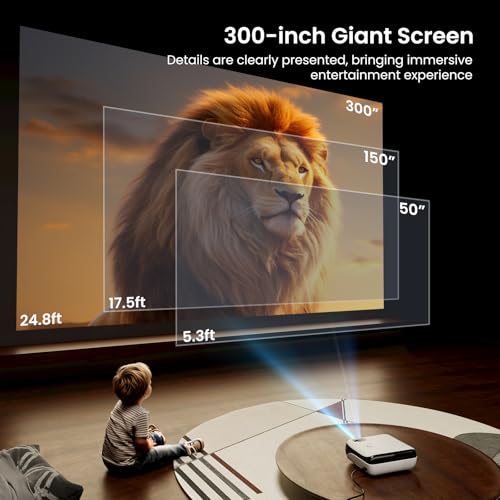
Perhaps most importantly for home theater use, the HAPPRUN supports projection sizes from 40 to 200 inches. This massive range means you can create anything from a modest bedroom setup to a basement cinema that rivals commercial movie theaters. The larger screen sizes remain sharp and bright thanks to the projector's higher light output.
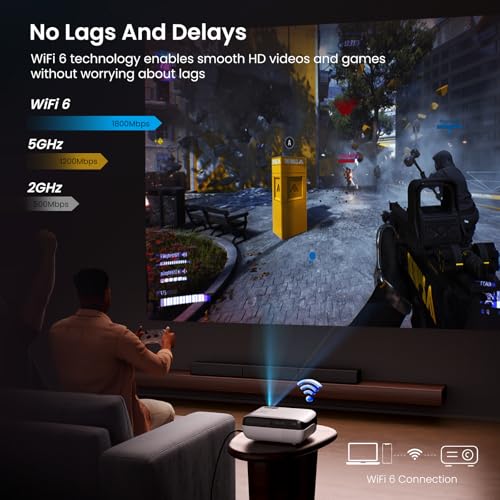
The connectivity options reflect its home theater focus. Wi-Fi 6 provides faster, more stable streaming with less buffering, especially important when multiple devices in your home are competing for bandwidth. The dual-band support (2.4GHz and 5GHz) lets you choose the best frequency for your environment – 2.4GHz travels farther through walls, while 5GHz offers faster speeds at shorter distances.
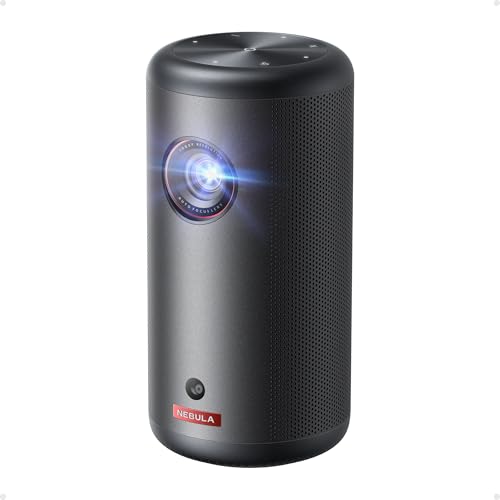
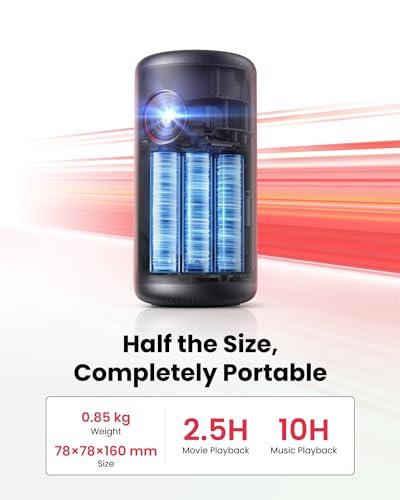
The Nebula Capsule 3 GTV takes an entirely different approach that would have been impossible just a few years ago. At 2.1 pounds and roughly the size of a large water bottle, it represents the cutting edge of miniaturization in projection technology.
The key innovation here is laser projection technology. Instead of traditional LED lights, the Capsule 3 uses a laser light source that produces more focused, precise images. This technology typically appears in projectors costing thousands of dollars, but advances in manufacturing have made it accessible in portable formats. The laser also lasts up to 30,000 hours compared to around 20,000 hours for LED-based projectors, meaning you'll likely never need to replace it.
The built-in 52Wh battery provides about 2.5 hours of video playback, which covers most movies with some power to spare. For comparison, that's similar to the battery capacity of a large laptop. When you're not watching video, the projector can function as a Bluetooth speaker for up to 8 hours, essentially serving as a portable entertainment system.
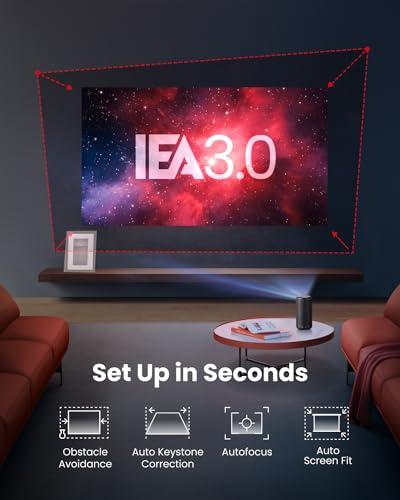
But the real magic happens with Nebula's Intelligent Environment Adaptation technology. When you place the Capsule 3 down and turn it on, it automatically focuses the image, corrects for keystone distortion (the trapezoid effect when projecting at an angle), and even detects obstacles in the projection path. This entire setup process takes about three seconds, compared to several minutes of manual adjustment with traditional projectors.
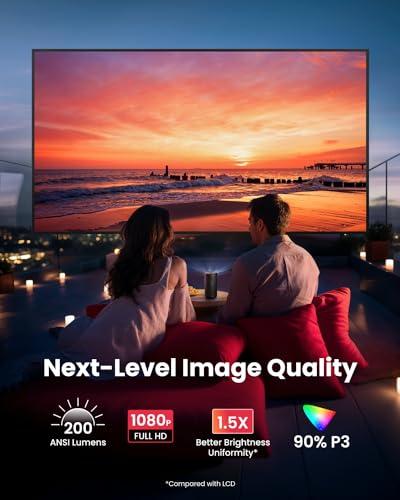
The brightness difference between these projectors creates distinctly different user experiences. At 200 ANSI lumens, the Nebula Capsule 3 produces beautiful, sharp images in completely dark environments. The laser projection creates noticeably crisper text and finer details compared to LED projectors at similar brightness levels. However, even small amounts of ambient light quickly wash out the image.
In our research of user experiences, the consensus is clear: the Capsule 3 is essentially a "lights-off" projector. This isn't necessarily a limitation – many home theater enthusiasts prefer completely dark viewing anyway – but it does restrict when and where you can use it effectively.
The HAPPRUN, with 75% more brightness, provides much more flexibility. Users report satisfactory viewing experiences with dim ambient lighting, making it suitable for casual evening entertainment when you don't want to plunge the entire room into darkness. This difference becomes crucial for family use or when watching content that benefits from note-taking or other activities.
Both projectors handle motion reasonably well for their price ranges, though the Capsule 3 includes MEMC (Motion Estimation, Motion Compensation) technology that reduces judder in lower frame rate content. This feature interpolates frames to create smoother motion, similar to the "soap opera effect" some TVs produce. Whether you prefer this enhancement depends on personal taste and content type.
Here's where things get complicated, and it's worth understanding the technical and legal reasons behind this limitation. Netflix has strict licensing agreements that prevent many smaller projector manufacturers from including native Netflix apps. The HAPPRUN has secured official Netflix licensing, meaning you can launch Netflix directly from the projector's interface just like any other app.
The Nebula Capsule 3, despite its premium positioning and Anker's significant market presence, lacks this licensing. Users must cast Netflix from their phones using Chromecast, connect an external streaming device via HDMI, or find other workarounds. Based on user feedback, this limitation proves more frustrating in practice than it sounds in specifications.
This isn't just about convenience – it's about picture quality too. When you cast from a phone, you're limited by your phone's processing power and potentially dealing with compression artifacts that don't exist with native apps. For a device positioned as a premium portable cinema, this feels like a significant oversight that affects the user experience.
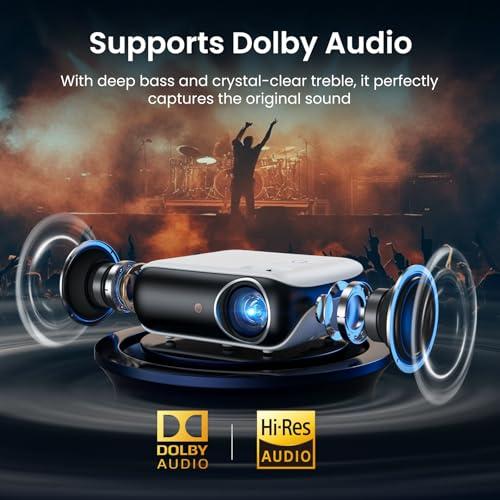
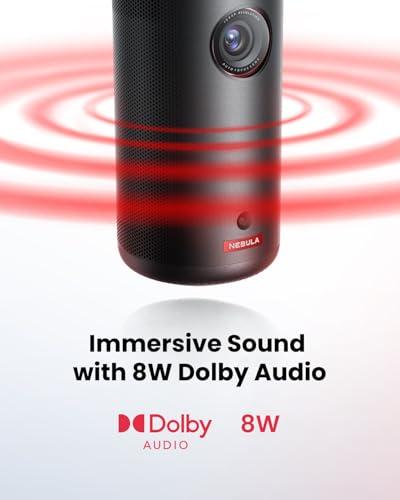
Both projectors include 8W speakers with Dolby audio processing, which represents a reasonable attempt at all-in-one entertainment. The Capsule 3's speaker impresses given the device's tiny size – it's genuinely surprising how much sound comes from such a compact cylinder. However, neither projector replaces a proper sound system for serious home theater use.
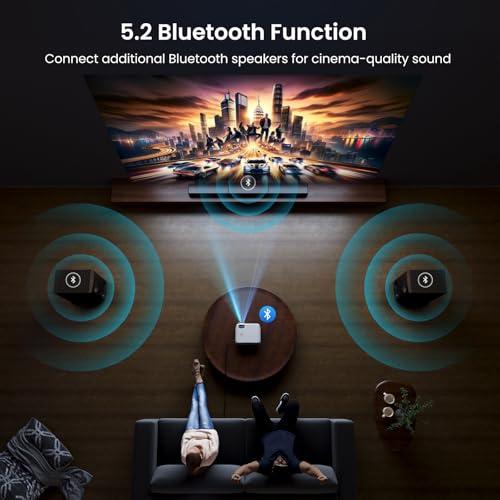
The physics of speaker design work against ultra-portable projectors. Sound quality depends partly on speaker cone size and internal air volume, both of which are severely constrained in portable devices. For casual viewing or outdoor use where you can't easily connect external speakers, the built-in audio suffices. For home theater applications, plan to use the projectors' Bluetooth connectivity or audio output ports with dedicated speakers or soundbars.
Both projectors run Google TV, but they implement it differently based on their target use cases. The HAPPRUN focuses on comprehensive connectivity with multiple USB ports, HDMI input, and even legacy AV connections for older devices. This makes sense for a home theater projector that might need to connect to gaming consoles, cable boxes, or various media players.
The Capsule 3 keeps connectivity minimal with USB-C, HDMI 2.1, and audio output. The HDMI 2.1 support enables higher bandwidth connections for gaming or high-quality video sources, though the projector's other limitations prevent it from fully utilizing these capabilities.
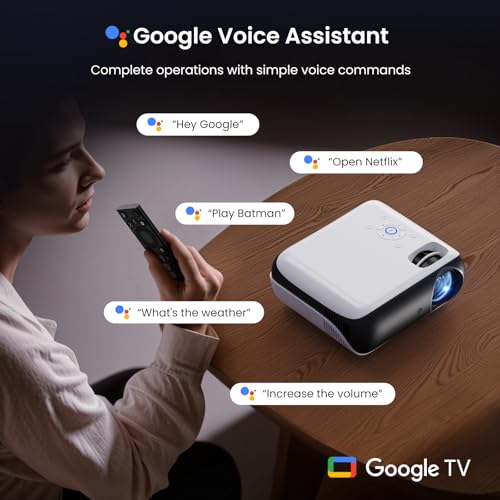
Voice control through Google Assistant works well on both devices, allowing you to search for content, adjust volume, or control smart home devices without using the remote. This feature has improved significantly since Google TV's introduction, with better natural language processing and more reliable responses.
The decision between these projectors often comes down to lifestyle and priorities rather than pure technical specifications. The HAPPRUN makes sense for users establishing a dedicated entertainment space. Whether that's a finished basement, a bedroom, or a living room where you can control lighting, it provides the brightness and connectivity for regular use.
I find the Capsule 3 compelling for entirely different reasons. Its battery operation opens possibilities that AC-powered projectors simply can't match. Backyard movie nights, camping trips, hotel room entertainment, or even moving between rooms in your house become effortless. The auto-setup features mean you're watching content minutes after deciding you want to, rather than spending time adjusting focus and alignment.
For apartment dwellers or college students, the Capsule 3's storage efficiency matters more than maximum brightness. When every square foot counts, a projector that fits in a drawer provides huge entertainment value without dominating your space.
If you're specifically building a home theater setup, the HAPPRUN offers several advantages beyond just brightness. The larger projection capability supports the cinema experience that many enthusiasts seek. There's something magical about filling a wall with your favorite movie that smaller screens can't replicate.
The multiple connectivity options matter more in permanent installations where you might connect gaming consoles, Blu-ray players, or streaming devices simultaneously. Having dedicated HDMI, USB, and audio ports eliminates the need for switching devices or dealing with adapters.
However, don't overlook the Capsule 3 for home theater use entirely. In completely dark environments with controlled screen sizes (typically 80 inches or smaller), its laser-sharp image quality can actually surpass the HAPPRUN. The automatic setup features also appeal to users who want cinema-quality results without manual adjustments.
At the time of writing, these projectors occupy different price tiers that reflect their design philosophies. The HAPPRUN represents exceptional value in the budget smart projector category, delivering features and performance that cost significantly more just a few years ago. The Nebula Capsule 3 commands a premium price that reflects its advanced laser technology and ultra-portable design.
Choose the HAPPRUN Google TV Smart Projector if you want maximum bang for your buck in a home theater setting. Its combination of brightness, screen size capability, and native Netflix support makes it ideal for users who plan to use their projector primarily in one location. The Wi-Fi 6 and comprehensive connectivity options provide future-proofing that matters for long-term use.
The Nebula Capsule 3 GTV justifies its higher cost through capabilities that no traditional projector can match. If portability matters to your lifestyle – whether for travel, outdoor entertainment, or simply moving between rooms – it enables experiences that larger, brighter projectors cannot. The laser technology and premium build quality also suggest better longevity than budget alternatives.
Both projectors represent the current state of smart projection technology, but they serve fundamentally different needs. The HAPPRUN maximizes performance per dollar for fixed installations, while the Capsule 3 reimagines what projection technology can be when untethered from wall outlets and dedicated rooms. Your choice depends on whether you prioritize the biggest, brightest image possible or the freedom to create a cinema anywhere you go.
| HAPPRUN Google TV Smart Projector | Nebula Capsule 3 GTV Projector |
|---|---|
| Brightness - Most critical factor for ambient light performance | |
| 350 ANSI lumens (suitable for dark to dimly lit rooms) | 200 ANSI lumens (requires completely dark environments) |
| Portability - Determines where and how you can use the projector | |
| AC-powered only, designed for fixed installation | Ultra-portable with 2.5-hour battery, weighs only 2.1 lbs |
| Projection Size - Maximum screen size capability | |
| 40-200 inches (excellent for large home theater setups) | 25-120 inches (optimal at 70 inches and below) |
| Native Resolution - Image sharpness and detail level | |
| 1080p (1920 x 1080) with 4K input decoding | 1080p (1920 x 1080) native resolution |
| Light Source Technology - Affects image quality and lifespan | |
| LED-based projection system | Laser projection (sharper images, 30,000-hour lifespan) |
| Netflix Support - Critical for streaming convenience | |
| Official Netflix licensing with native app support | No native Netflix (requires casting or external device) |
| Smart Features - Convenience and setup ease | |
| Google TV 11.0, Wi-Fi 6, manual setup required | Google TV with Intelligent Environment Adaptation (3-second auto-setup) |
| Audio Quality - Built-in speaker performance | |
| 8W Dolby Digital speaker (adequate for casual viewing) | 8W Dolby Digital speaker (surprisingly loud for size) |
| Connectivity Options - Device compatibility and future-proofing | |
| HDMI, AV, 2x USB, headphone jack, Bluetooth 5.2 | HDMI 2.1, USB-C, AUX out, Bluetooth 5.1 |
| Best Use Case - Who should choose this projector | |
| Home theater enthusiasts wanting maximum brightness and screen size on a budget | Travelers, outdoor movie fans, and users prioritizing ultimate portability |
| Value Proposition - What you get for your investment | |
| Exceptional brightness-per-dollar with comprehensive home theater features | Premium laser technology and unmatched portability in compact design |
The HAPPRUN Google TV Smart Projector is significantly brighter at 350 ANSI lumens compared to the Nebula Capsule 3 GTV Projector at 200 ANSI lumens. This makes the HAPPRUN better for rooms with some ambient lighting, while the Capsule 3 requires completely dark environments for optimal viewing.
Only the HAPPRUN Google TV Smart Projector has official Netflix licensing and can stream Netflix directly. The Nebula Capsule 3 GTV Projector does not support native Netflix and requires casting from your phone or connecting an external streaming device.
The Nebula Capsule 3 GTV Projector is extremely portable, weighing just 2.1 pounds with a built-in battery providing 2.5 hours of runtime. The HAPPRUN Google TV Smart Projector requires constant AC power and is designed for fixed installations rather than portability.
The HAPPRUN Google TV Smart Projector can project images from 40-200 inches, making it ideal for large home theater setups. The Nebula Capsule 3 GTV Projector projects from 25-120 inches, with optimal performance at 70 inches and below.
For dedicated home theater setups, the HAPPRUN Google TV Smart Projector is generally better due to its higher brightness, larger projection capability, and comprehensive connectivity options. However, the Nebula Capsule 3 can work well in completely dark home theaters where portability and automatic setup are priorities.
Both the HAPPRUN Google TV Smart Projector and Nebula Capsule 3 GTV Projector feature 8W Dolby Digital speakers that are adequate for casual viewing. The Capsule 3's speaker is surprisingly loud for its compact size, but both benefit from external speakers for the best audio experience.
Both projectors offer 1080p native resolution, but they excel in different areas. The HAPPRUN provides better performance in varied lighting conditions due to higher brightness, while the Nebula Capsule 3 uses laser technology that produces sharper, more focused images in dark environments.
The Nebula Capsule 3 GTV Projector is excellent for outdoor use thanks to its battery operation and portability, but only works well after sunset due to limited brightness. The HAPPRUN Google TV Smart Projector is brighter but requires AC power, limiting outdoor placement options.
The HAPPRUN Google TV Smart Projector offers more connectivity with HDMI, AV, dual USB ports, and headphone jack, plus Wi-Fi 6 and Bluetooth 5.2. The Nebula Capsule 3 has fewer ports (HDMI 2.1, USB-C, AUX) but includes advanced features like automatic setup and obstacle detection.
The Nebula Capsule 3 GTV Projector uses laser technology rated for 30,000 hours of operation, while the HAPPRUN uses LED technology typically lasting around 20,000-25,000 hours. Both should provide many years of regular use without requiring lamp replacements.
The HAPPRUN Google TV Smart Projector typically offers better value for home theater users, providing higher brightness and larger screen capability at a lower price point. The Nebula Capsule 3 commands a premium for its portability, laser technology, and premium build quality.
Choose the HAPPRUN Google TV Smart Projector if you want maximum brightness and screen size for home theater use, need native Netflix support, and prefer the best value per dollar. Choose the Nebula Capsule 3 GTV Projector if portability is essential, you frequently move locations, and you're willing to pay more for premium laser technology and ultra-compact design.
We've done our best to create useful and informative comparisons to help you decide what product to buy. Our research uses advanced automated methods to create this comparison and perfection is not possible - please contact us for corrections or questions. These are the sites we've researched in the creation of this article: youtube.com - topvisiontec.com - youtube.com - happrunprojector.com - youtube.com - happrunprojector.com - youtube.com - business.walmart.com - youtube.com - walmart.com - cordcuttersnews.com - nexpow.com - projectorreviews.com - projectorcentral.com - tvsbook.com - gadgetoid.com - newegg.com - thesmarthomehookup.com - whathifi.com - seenebula.com - rtings.com - cnet.com - seenebula.com - youtube.com - youtube.com - walmart.com - support.seenebula.com

Privacy Policy
Terms and Conditions - Affiliate Policy
Home Security
© Copyright 2008-2026.
11816 Inwood Rd #1211, Dallas, TX 75244