


Smart projectors have transformed home entertainment since their mainstream debut around 2020. What once required a tangle of cables, external streaming devices, and complicated setup procedures now fits in a package smaller than most laptops. The category has exploded with options, but two models stand out for different reasons: the ultra-portable TCL C1 and the performance-focused HAPPRUN Google TV Smart Projector.
After researching countless user reviews and expert evaluations, it's clear these projectors represent two distinct philosophies in portable projection. The TCL C1, released in 2024, prioritizes genuine portability and ease of use above all else. The HAPPRUN, arriving in the same timeframe, takes a more traditional approach emphasizing brightness and screen size over extreme mobility.
Before diving into specifics, let's clarify what separates modern smart projectors from their predecessors. Traditional projectors were essentially display panels that required external devices for content. Smart projectors integrate Android TV or Google TV directly into the unit, eliminating the need for streaming sticks or media players.
The key technical specifications that matter most are brightness (measured in ANSI lumens—a standardized way to measure light output), native resolution (the actual pixel count the projector displays), and contrast ratio (the difference between the brightest whites and darkest blacks). These three factors determine whether you'll get a watchable image in your specific environment.
Brightness particularly matters because projectors work by shining light through or off a surface, unlike TVs that emit their own light. A projector with 200 lumens might create stunning visuals in a pitch-black basement but become completely washed out in a living room with windows. This is why brightness often trumps other specifications for real-world usability.
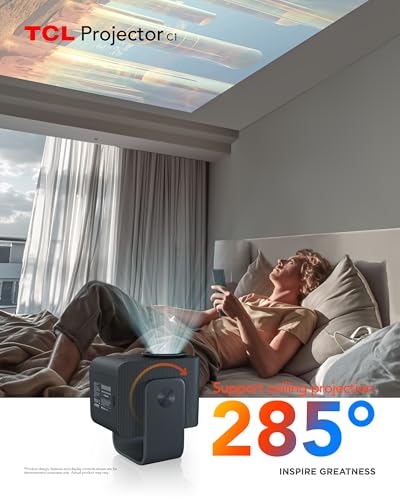
The TCL C1 breaks conventional projector design with its 285-degree rotating gimbal—essentially a pivoting mount that lets you point the projector in almost any direction without moving the base unit. This seemingly simple feature fundamentally changes how you use a projector. Instead of hunting for the perfect flat surface and adjusting furniture, you can set the TCL C1 anywhere and rotate the projection lens to hit your desired surface, including ceilings.
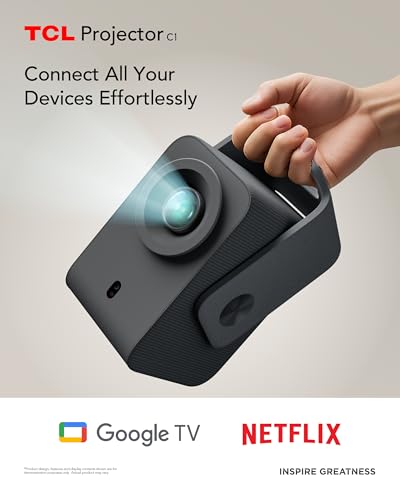
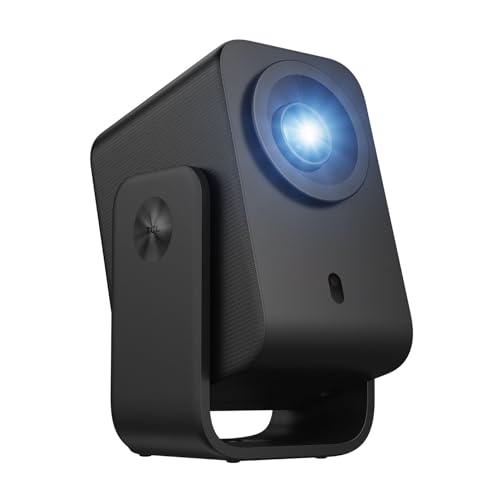
At 1.77 kg (about 3.9 pounds), the TCL C1 weighs less than most laptops while maintaining a footprint roughly the size of a CD case. The integrated handle makes relocation effortless, while the IP5X dust resistance rating means you don't need to baby it during transport. The fully-sealed optical engine prevents dust from entering the lens assembly—a problem that plagues many budget projectors and gradually degrades image quality over time.
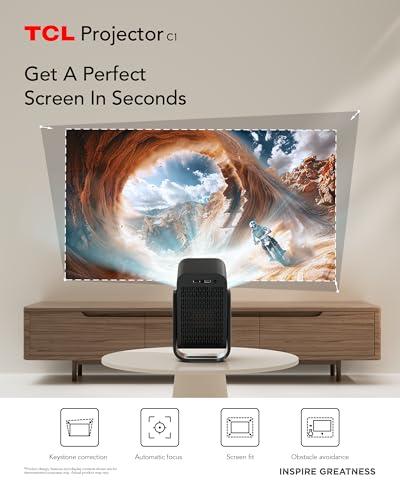
The auto-setup features deserve special mention. Power on the TCL C1, and within about 60 seconds, it automatically focuses the image, corrects keystone distortion (the trapezoidal warping that happens when projecting at angles), and even detects obstacles in the projection path. This obstacle avoidance feature will actually move the projected image around objects like picture frames or furniture, something typically found only in high-end commercial projectors.
However, the TCL C1's 230 ISO lumens brightness reflects its portability focus. ISO lumens provide a more standardized measurement than the inflated "LED lumens" some manufacturers claim, but 230 is still relatively modest. In our research of user experiences, the TCL C1 excels in dark rooms but struggles in environments with ambient lighting. Think bedroom movie nights rather than living room entertainment with lights on.
The HAPPRUN Google TV Smart Projector takes a more conventional approach but delivers where it counts most: raw performance. Its 350-400 ANSI lumens output provides roughly 50-75% more brightness than the TCL C1, translating to dramatically better performance in mixed lighting conditions.
This brightness advantage comes from the HAPPRUN's larger form factor and more powerful LED array. While still portable compared to traditional home theater projectors, it's clearly designed for semi-permanent placement rather than constant relocation. The multiple mounting options—ceiling, wall, tripod, or tabletop—reflect this semi-permanent philosophy.
The HAPPRUN's 20,000:1 contrast ratio significantly outperforms the TCL C1's 1,500:1 rating. Contrast ratio determines how deep blacks appear and how vibrant colors look. In practical terms, the HAPPRUN delivers more dramatic visuals with better shadow detail and more "pop" to bright scenes. The HDR10+ support enhances this further by expanding the range of colors and brightness levels the projector can display.
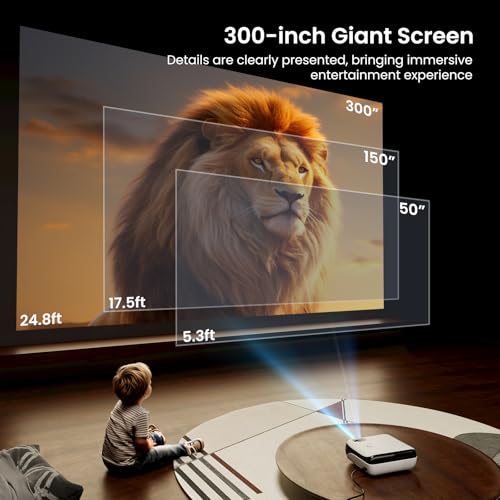
Projection size capabilities tell another story. While the TCL C1 maxes out at 120 inches diagonally, the HAPPRUN can handle up to 200 inches. For context, a 120-inch screen measures about 10 feet diagonally—perfect for most home theaters. The HAPPRUN's 200-inch capability opens up outdoor movie nights and large gathering spaces that would overwhelm the smaller TCL C1.
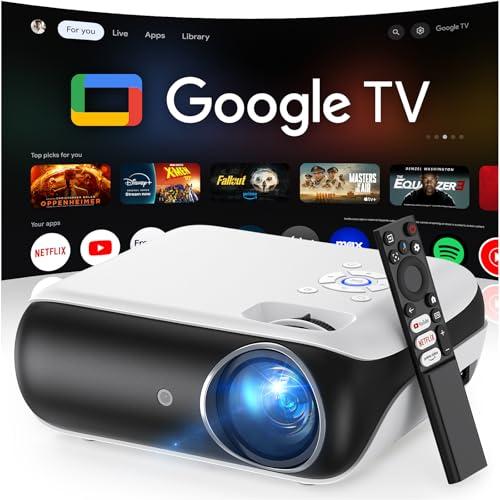
Both projectors run Google TV, which represents a major evolution from earlier Android TV implementations. Google TV's interface aggregates content from multiple streaming services into unified recommendations, making it easier to find something to watch without jumping between apps.
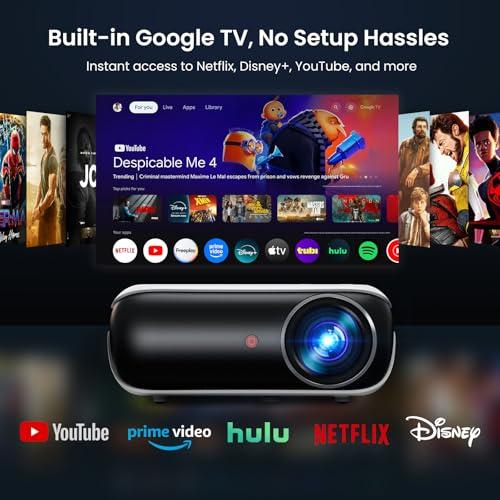
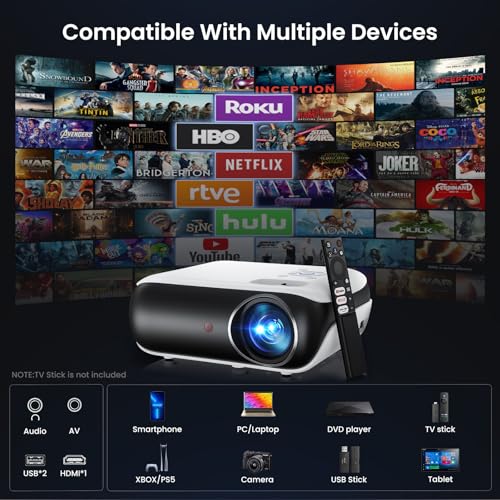
The most significant advantage both projectors share is official Netflix certification. This might sound mundane, but many budget projectors force you to sideload Netflix or cast from a phone because Netflix restricts its app to certified devices. Having native Netflix, YouTube, Prime Video, and other major services built-in eliminates the need for external streaming devices entirely.
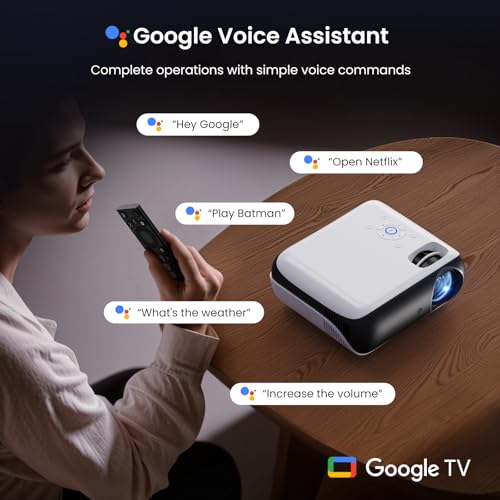
Google Assistant integration means voice control for navigation and smart home integration. You can dim lights, adjust thermostats, or check weather without leaving your movie. Chromecast support allows seamless casting from phones and tablets, while the HAPPRUN adds AirPlay support for iOS devices.
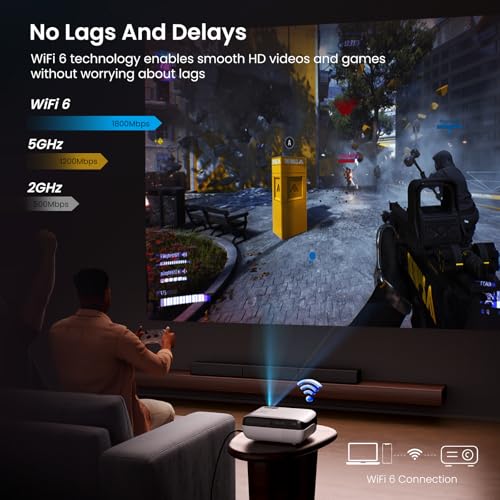
The HAPPRUN edges ahead slightly with WiFi 6 support (in newer variants) versus the TCL C1's WiFi 5. WiFi 6 provides faster data transfer and better performance in crowded network environments, though both handle 4K streaming without issues in typical home setups.
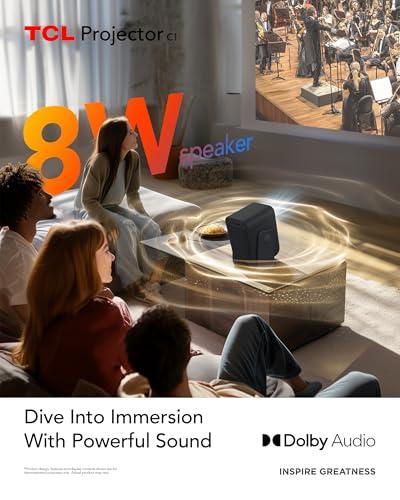
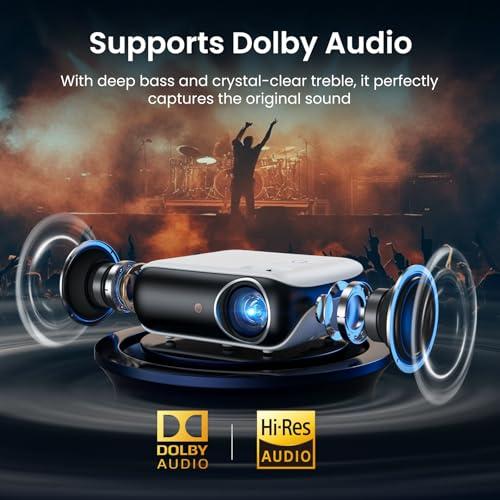
Both projectors include 8-watt Dolby Audio speakers, which sounds modest but actually performs reasonably well for small to medium rooms. The HAPPRUN adds Dolby 3D stereo processing, creating slightly more immersive audio with better spatial separation.
In practice, these built-in speakers work fine for casual viewing and spaces where external audio isn't feasible. However, neither can match dedicated soundbars or home theater systems for true cinematic audio. The TCL C1 offers an interesting bonus feature: it can function as a Bluetooth speaker for smartphones when not actively projecting, essentially giving you a portable speaker system.
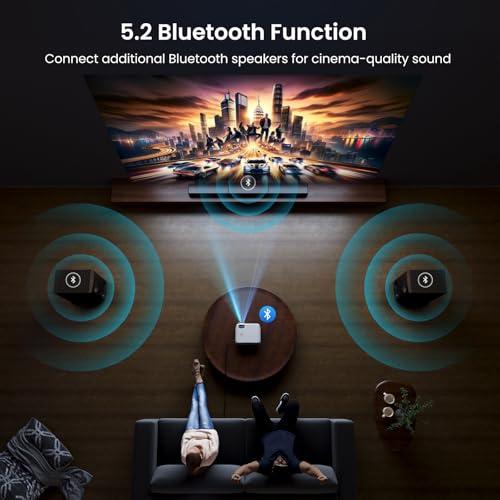
Both support Bluetooth 5.1+ for wireless headphones or speakers, though some users report slight audio-video sync delays with Bluetooth connections during streaming. The 3.5mm audio outputs provide lag-free connections to external speakers or headphones.
Modern projectors have dramatically improved input lag—the delay between controller input and on-screen response—making them viable for gaming. Both the TCL C1 and HAPPRUN handle casual gaming well, though neither matches dedicated gaming monitors for competitive play.
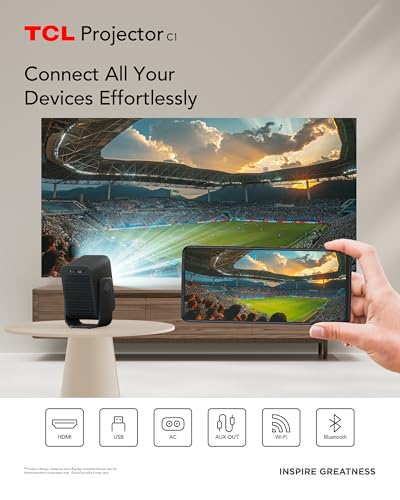
The TCL C1's HDMI 2.1 port provides better compatibility with current-generation gaming consoles, supporting 4K 60Hz HDR input (though displayed at 1080p). The HAPPRUN's additional ports, including dual USB connections, offer more flexibility for connecting multiple devices simultaneously.
For gaming-focused setups, the HAPPRUN's larger projection capability creates more immersive experiences, while the TCL C1's quiet operation (under 30dB) won't disturb others during late-night gaming sessions.
For dedicated home theater use, both projectors serve different needs effectively. The TCL C1 excels in smaller, controlled environments like bedrooms or basement theaters where its quiet operation and ceiling projection capability shine. Its automatic setup features make it perfect for casual home theater enthusiasts who want great results without tweaking settings.
The HAPPRUN better serves traditional home theater setups in living rooms or dedicated theater spaces. Its higher brightness maintains image quality even with some ambient lighting, while the larger projection capability fills bigger spaces effectively. The enhanced contrast ratio and HDR10+ support provide more cinematic visuals for serious movie enthusiasts.
Neither projector replaces high-end home theater projectors costing thousands of dollars, but both deliver surprisingly cinematic experiences for their price points. The key is managing expectations and matching the projector to your specific environment and usage patterns.
At the time of writing, the TCL C1 typically sells for significantly less than the HAPPRUN, making it an exceptional value proposition. You're getting premium features like the gimbal design, automatic setup, and sealed optics at a price point where most competitors offer basic functionality.
The HAPPRUN commands a higher price but justifies it with superior brightness, larger projection capability, and enhanced connectivity options. For users who need projection in mixed lighting or want screens larger than 120 inches, the performance advantages make the price premium worthwhile.
Both projectors offer better value than buying a traditional projector plus separate streaming device, especially considering the integrated Google TV experience and official app support.
Choose the TCL C1 if you prioritize portability above all else. It's perfect for apartment dwellers who want to move their entertainment between rooms, students needing portable presentation capability, or anyone wanting the unique ceiling projection feature. The automatic setup and whisper-quiet operation make it ideal for bedrooms or shared spaces where simplicity matters.
The HAPPRUN makes more sense for users who need brighter projection or larger screen sizes. It's the better choice for family rooms with windows, outdoor movie nights, or dedicated home theater spaces where you can control placement but need better performance in mixed lighting conditions.
Both projectors represent excellent value in the portable smart projector category, but they serve distinctly different use cases. The TCL C1 revolutionizes portable projection with its gimbal design and exceptional ease of use, making it perfect for users who value convenience and genuine portability. The HAPPRUN delivers superior performance metrics for users who can sacrifice some portability for better brightness and larger projection capability.
The smart projector category continues evolving rapidly, with both models representing 2024's state-of-the-art in different aspects. Whether you choose the innovative TCL C1 or the performance-focused HAPPRUN, you'll get a vastly better experience than the complicated projector setups of just a few years ago. The key is honestly assessing your primary use cases and choosing the projector that best matches your specific needs rather than trying to find one device that does everything perfectly.
| TCL C1 Google TV Portable Projector | HAPPRUN Google TV Smart Projector |
|---|---|
| Brightness - Critical for determining where you can use the projector | |
| 230 ISO lumens (dark rooms only, excellent for bedrooms) | 350-400 ANSI lumens (handles ambient light, better for living rooms) |
| Native Resolution - Determines image sharpness | |
| 1080p with 4K decoding (sharp HD, accepts 4K input) | 1080p with 4K decoding (identical resolution capability) |
| Contrast Ratio - How deep blacks appear and color vibrancy | |
| 1,500:1 (decent for the price point) | 20,000:1 (dramatically better blacks and color pop) |
| Maximum Screen Size - Determines room compatibility | |
| 40-120 inches (perfect for bedrooms and small theaters) | 40-200 inches (ideal for large spaces and outdoor use) |
| Weight & Portability - How easily you can move it | |
| 1.77 kg with integrated handle (truly portable, CD case size) | Not specified (larger form factor, semi-portable design) |
| Unique Design Features - What sets each apart | |
| 285° rotating gimbal for ceiling projection, sealed optics | Traditional mounting with multiple position options |
| Audio Quality - Built-in speaker performance | |
| 8W Dolby Audio (adequate for small rooms) | 8W Dolby Audio with 3D stereo processing (slightly enhanced) |
| Smart TV Platform - Streaming capability | |
| Google TV 11.1 with certified Netflix, YouTube, Prime Video | Google TV 11.0 with same apps plus Disney+, Hulu |
| Connectivity - Ports and wireless options | |
| HDMI 2.1, USB-A, WiFi 5, Bluetooth 5.1 | HDMI, AV, 2x USB, WiFi 6, Bluetooth 5.2 |
| Setup Convenience - How quickly you get a perfect image | |
| Auto-focus, keystone correction, obstacle avoidance in 60 seconds | Standard auto-adjustment features |
| Noise Level - Important for bedroom or quiet spaces | |
| Under 30dB at 1m (whisper quiet operation) | Not specified (likely standard projector noise levels) |
| Best Use Cases - Who should choose this projector | |
| Frequent movers, bedroom use, ceiling projection needs | Semi-permanent setups, brighter rooms, larger screens |
The HAPPRUN Google TV Smart Projector is significantly brighter at 350-400 ANSI lumens compared to the TCL C1 Google TV Portable Projector's 230 ISO lumens. This makes the HAPPRUN better for rooms with ambient light, while the TCL C1 works best in dark environments.
The HAPPRUN Google TV Smart Projector can project up to 200 inches, making it ideal for large spaces and outdoor movie nights. The TCL C1 Google TV Portable Projector maxes out at 120 inches, which is perfect for bedrooms and smaller home theater setups.
The TCL C1 Google TV Portable Projector is far more portable, weighing only 1.77 kg with a CD case-sized footprint and integrated handle. The HAPPRUN uses a more traditional design focused on semi-permanent placement rather than frequent relocation.
Yes, both the TCL C1 and HAPPRUN Google TV Smart Projector feature certified Netflix along with YouTube, Prime Video, and other major streaming apps through their built-in Google TV platforms, eliminating the need for external streaming devices.
The HAPPRUN Google TV Smart Projector offers superior image quality with its 20,000:1 contrast ratio and HDR10+ support, delivering deeper blacks and more vibrant colors. The TCL C1 provides good 1080p quality with TrueHue technology but has a lower 1,500:1 contrast ratio.
The TCL C1 Google TV Portable Projector excels at ceiling projection with its unique 285° rotating gimbal design, making it effortless to project upward. The HAPPRUN requires traditional mounting solutions for ceiling projection.
The TCL C1 Google TV Portable Projector operates at under 30dB, making it whisper-quiet and ideal for bedrooms or quiet spaces. The HAPPRUN Google TV Smart Projector doesn't specify noise levels but likely produces standard projector operating sounds.
Both projectors handle casual gaming well, but the TCL C1 Google TV Portable Projector offers HDMI 2.1 for better gaming console compatibility, while the HAPPRUN Google TV Smart Projector provides larger screen sizes for more immersive gaming experiences.
The HAPPRUN Google TV Smart Projector provides more comprehensive connectivity with dual USB ports, AV input, and WiFi 6 support. The TCL C1 offers HDMI 2.1, USB-A, and WiFi 5, focusing on essential connections rather than extensive port selection.
For dedicated home theater setups, the choice depends on your space: the TCL C1 Google TV Portable Projector excels in controlled dark environments with its quiet operation and easy setup, while the HAPPRUN Google TV Smart Projector better serves larger spaces or rooms with ambient light due to its superior brightness and contrast capabilities.
We've done our best to create useful and informative comparisons to help you decide what product to buy. Our research uses advanced automated methods to create this comparison and perfection is not possible - please contact us for corrections or questions. These are the sites we've researched in the creation of this article: youtube.com - thegadgetflow.com - notebookcheck.net - shopabunda.com - youtube.com - youtube.com - youtube.com - youtube.com - tcl.com - androidauthority.com - manuals.plus - westcoast.co.uk - youtube.com - topvisiontec.com - youtube.com - happrunprojector.com - youtube.com - happrunprojector.com - youtube.com - business.walmart.com - youtube.com - walmart.com - cordcuttersnews.com - nexpow.com

Privacy Policy
Terms and Conditions - Affiliate Policy
Home Security
© Copyright 2008-2026.
11816 Inwood Rd #1211, Dallas, TX 75244