

The smart projector market has exploded over the past few years, transforming from a niche category dominated by expensive business projectors into an accessible home entertainment option. These devices combine traditional projection technology with built-in streaming capabilities, eliminating the need for external devices like Roku sticks or Apple TVs. But choosing the right smart projector means understanding some important trade-offs between portability and performance.
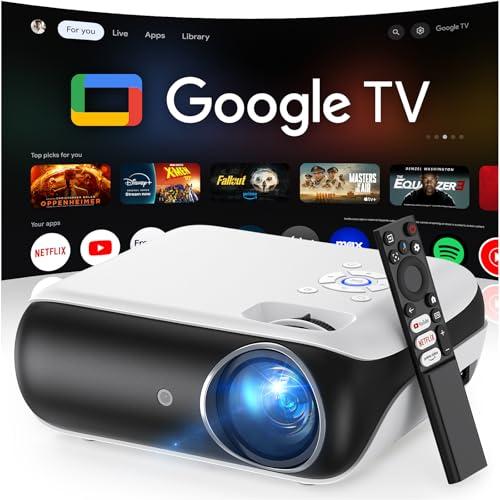
Today we're comparing two very different approaches to smart projection: the HAPPRUN Google TV Smart Projector and the Samsung Freestyle 2nd Gen Smart Projector. Released in 2024 and 2023 respectively, these projectors represent fundamentally different philosophies about what a smart projector should be.
Before diving into specifics, it's worth understanding what makes a projector "smart" and why it matters. Traditional projectors are essentially displays that require a separate input source—your laptop, gaming console, or streaming device. Smart projectors have built-in processors running operating systems like Android TV, Google TV, or Samsung's Tizen, allowing them to stream content directly from the internet.
The key specifications that determine a projector's performance are brightness (measured in ANSI lumens), resolution, and contrast ratio. Brightness determines how well you can see the image in various lighting conditions—more lumens mean you can watch with some lights on. Resolution affects image sharpness, while contrast ratio determines how deep blacks look compared to bright whites.
ANSI lumens, specifically, represent a standardized measurement of brightness that accounts for how light is distributed across the entire projected image, not just the brightest spot. This gives you a more realistic idea of actual viewing performance than peak brightness measurements.
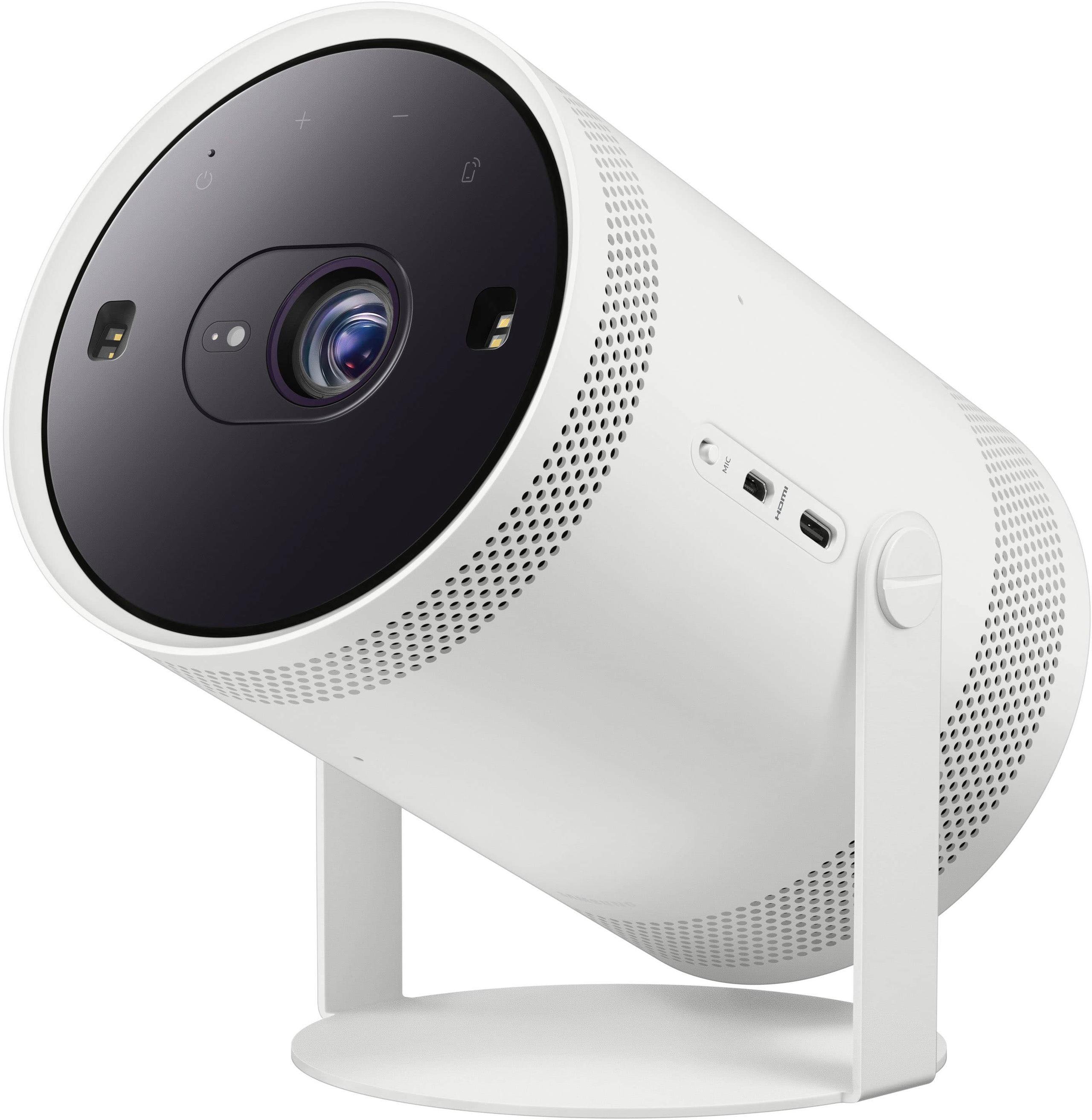
The most striking difference between the HAPPRUN Google TV Smart Projector and Samsung Freestyle 2nd Gen is their fundamental design philosophy. The HAPPRUN follows what I'd call the traditional projector approach—prioritizing image quality and connectivity in a larger form factor that you'll typically set up semi-permanently. The Samsung takes the opposite path, creating an ultra-portable device that sacrifices some performance for unprecedented convenience.
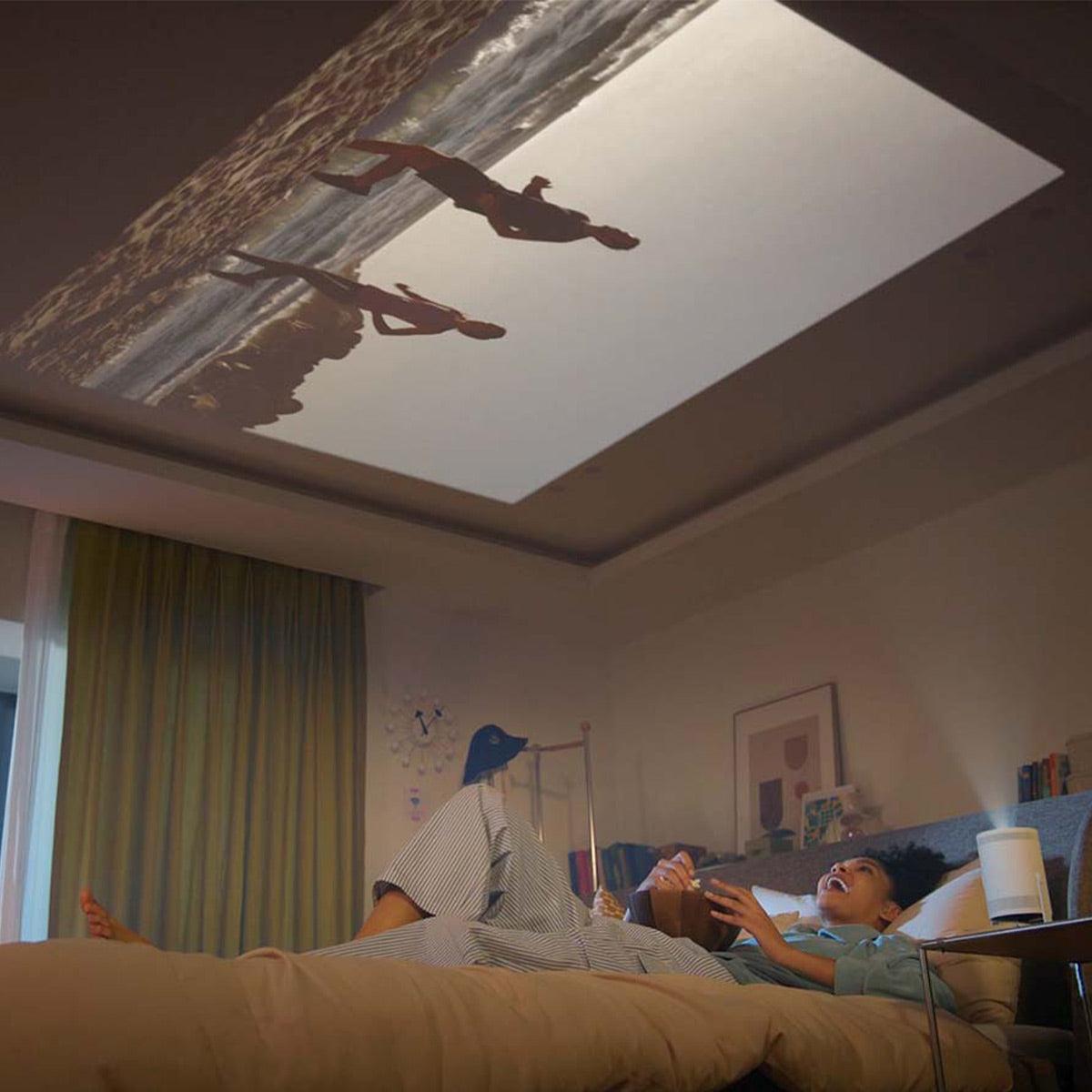
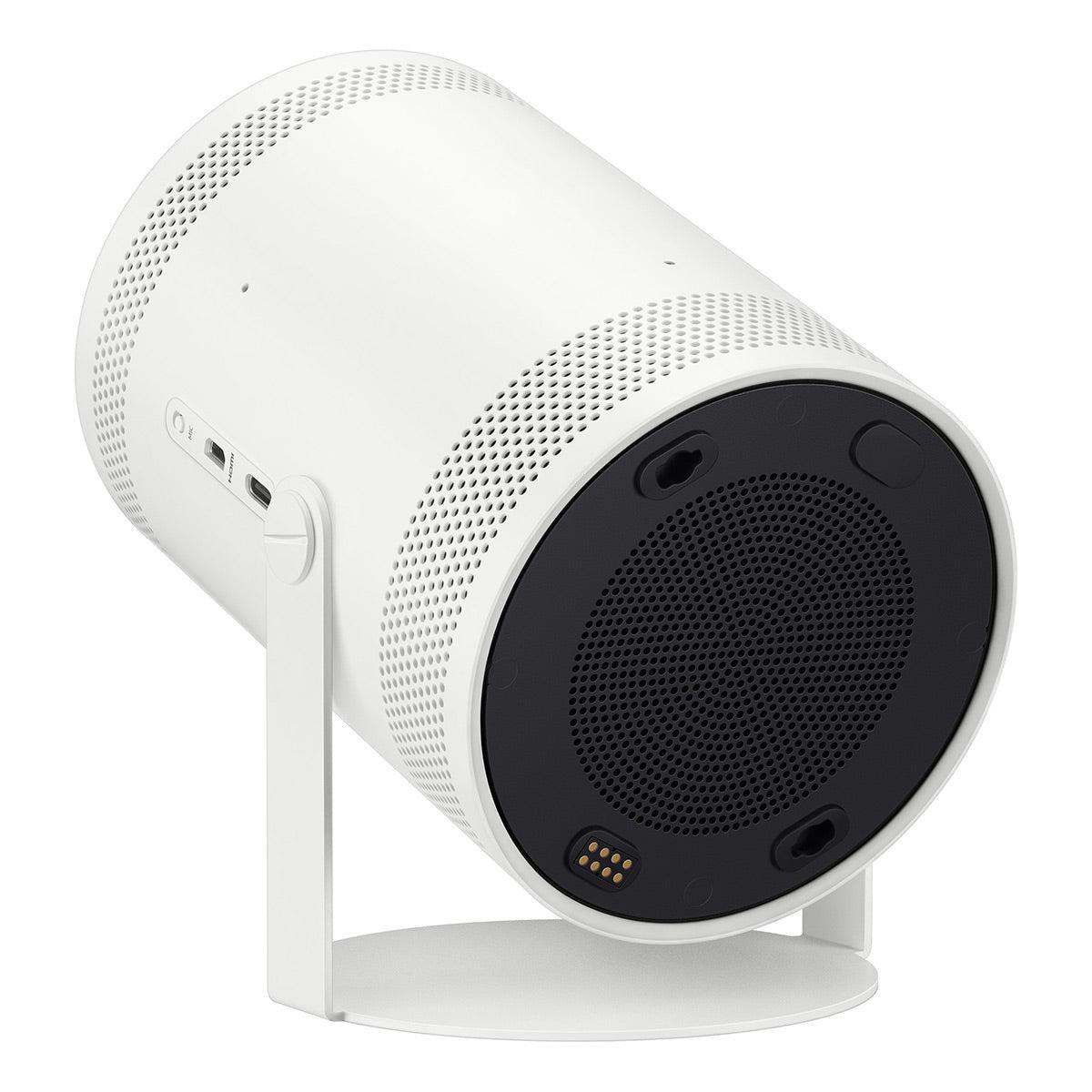
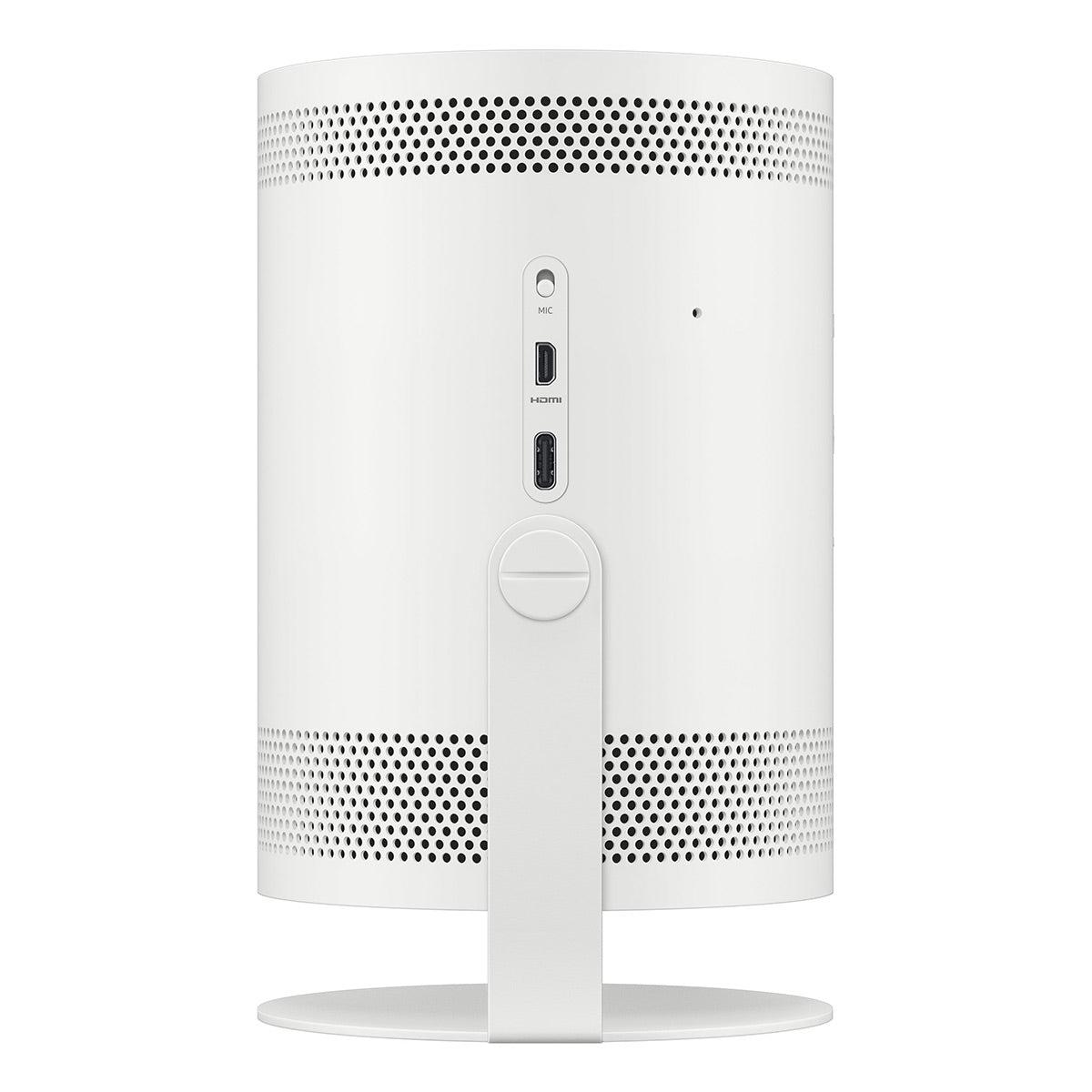
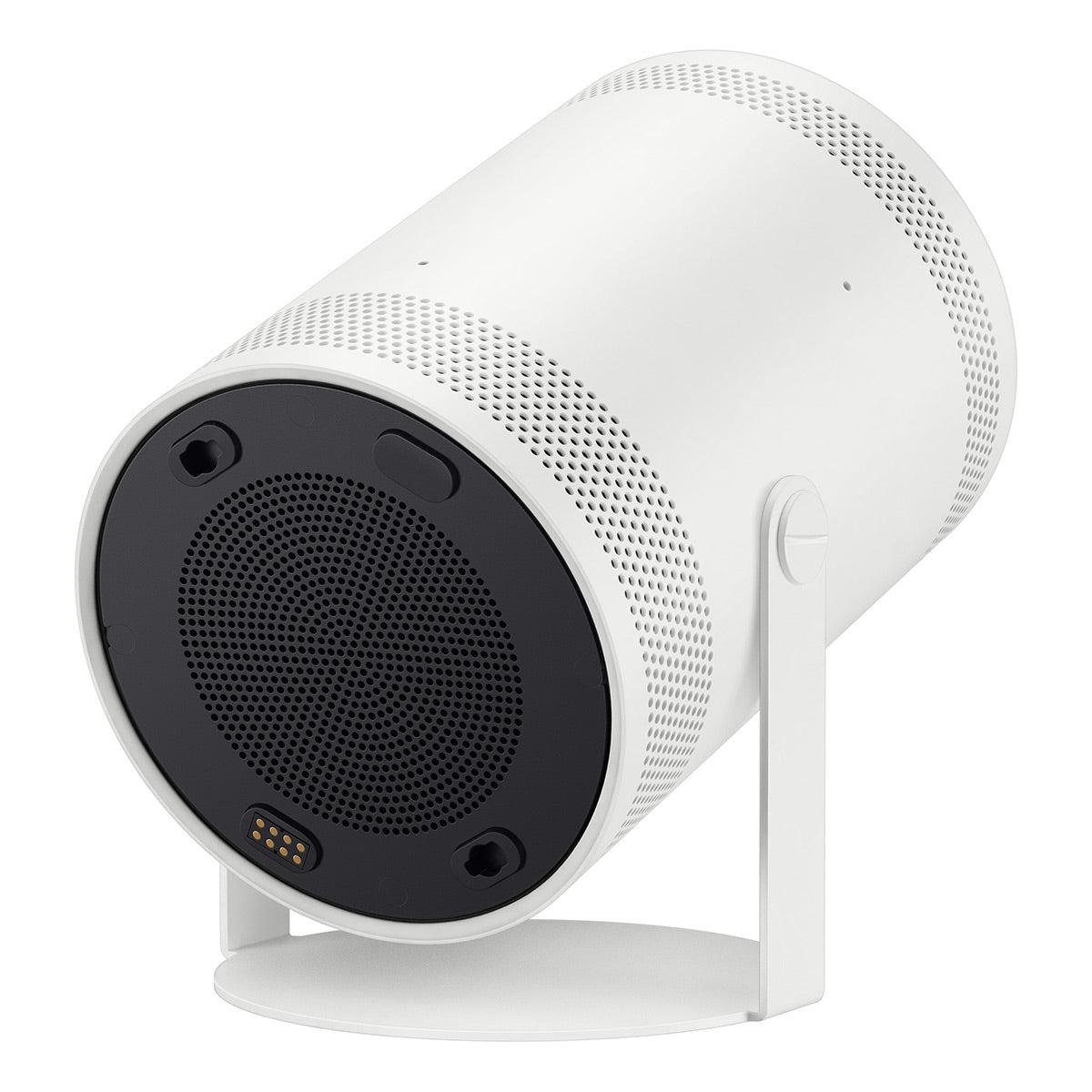
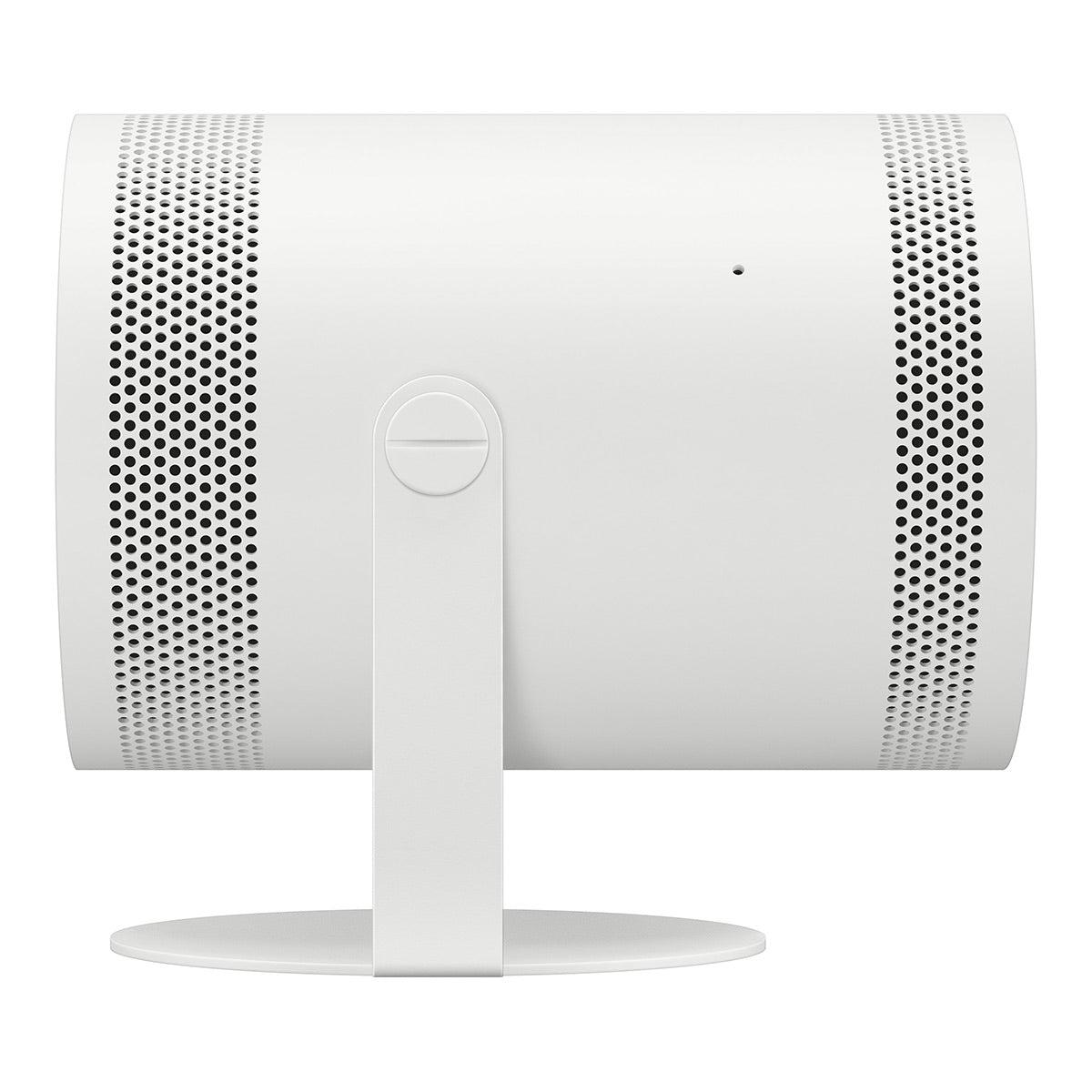
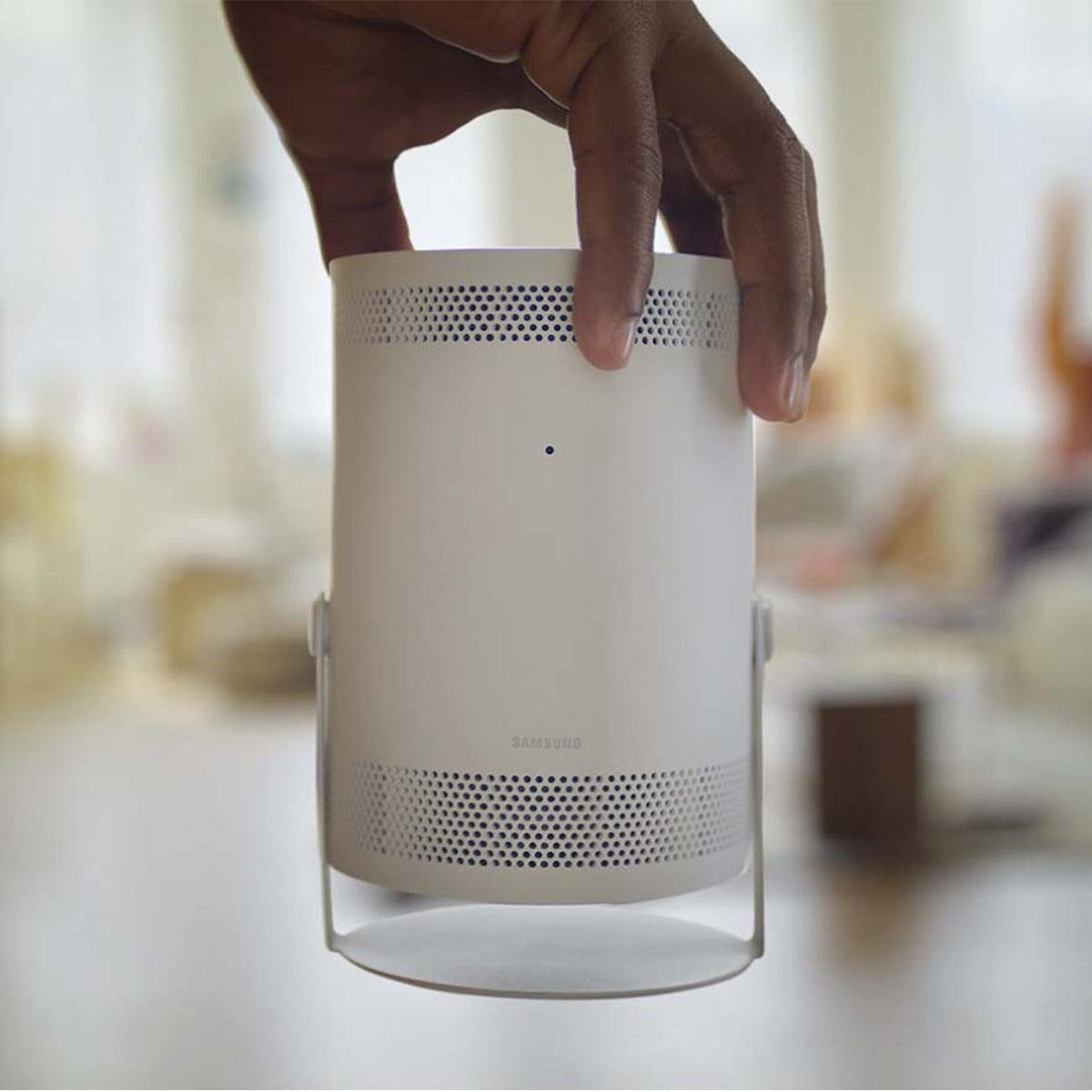
The Samsung Freestyle 2nd Gen weighs just 1.8 pounds and features a unique cylindrical design with a 180-degree rotating base. This isn't just about being smaller—it enables completely different use cases. You can literally point it at the ceiling for bedtime movies or easily pack it in a suitcase for travel. The rotating base means you don't need to physically move the projector to change projection angles, which is surprisingly handy in practice.
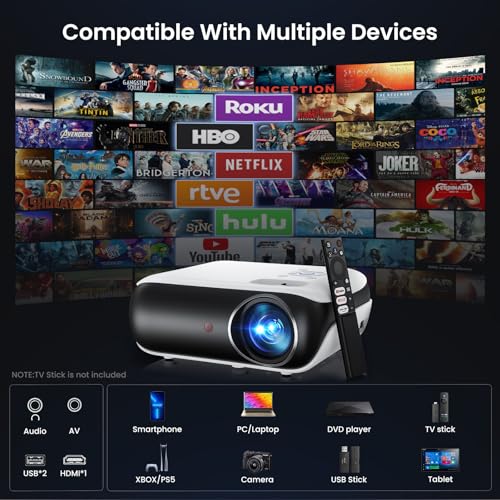
The HAPPRUN, by contrast, follows more conventional projector design principles. It's larger and heavier, but this size translates directly into better performance. More space means room for a brighter lamp, better cooling, and more connectivity ports. It's designed for users who want the best possible image quality and viewing experience, even if that means less portability.
Here's where the performance differences become most apparent, and frankly, most important for your actual viewing experience. The HAPPRUN delivers 350 ANSI lumens compared to the Samsung's 230 ANSI lumens. That 52% difference in brightness might not sound huge, but it's the difference between watchable and frustrating in many real-world scenarios.
Based on our research into user experiences and professional reviews, the Samsung Freestyle struggles with brightness in ways that significantly limit its usability. Users consistently report that it "always looks dim" and requires nearly complete darkness to produce satisfactory image quality. The raised black levels that reviewers mention mean that dark movie scenes appear gray rather than truly black, which kills the cinematic experience.
The HAPPRUN's 350 lumens, while still not daylight-bright, provides much more flexibility. You can watch with some ambient lighting—maybe a few table lamps or light coming through curtains—without the image washing out completely. This difference matters enormously for families who don't want to watch everything in pitch-black conditions.
For context, most home theater enthusiasts consider 1000+ lumens necessary for comfortable viewing in normal room lighting. Neither of these projectors reaches that threshold, but the HAPPRUN gets meaningfully closer. If you're serious about home theater use, you'll want to invest in blackout curtains regardless of which projector you choose.
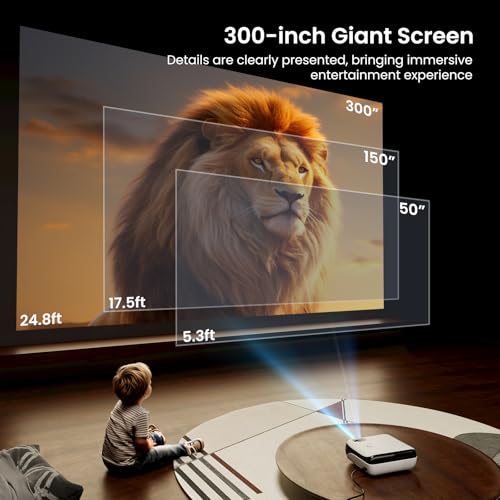
This is where the HAPPRUN absolutely dominates. Its ability to project images up to 300 inches diagonal versus the Samsung's 100-inch maximum represents a fundamental difference in what these projectors can accomplish.
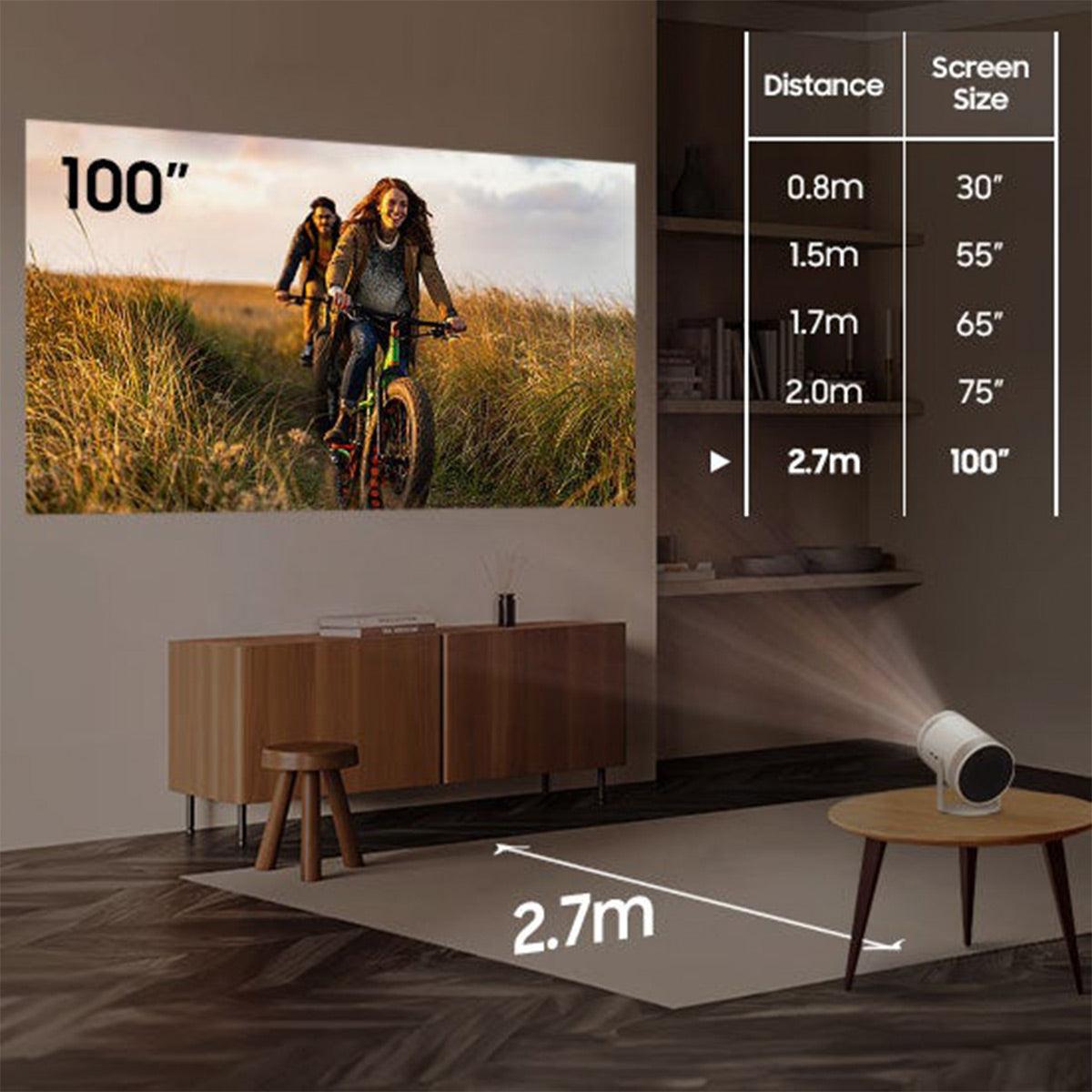
To put this in perspective: a 100-inch diagonal screen is roughly 7.5 feet wide—about the size of a large flat-screen TV. A 300-inch screen is over 22 feet wide. That's the difference between "big TV replacement" and "actual movie theater experience." For outdoor movie nights, large basement home theaters, or any scenario where you want to truly impress people with scale, the HAPPRUN's projection capability is in a completely different league.
The Samsung seems designed around more intimate viewing scenarios—hotel rooms, bedrooms, small apartments, or backyard gatherings where you're sitting relatively close to the projection surface. Its 100-inch limit isn't necessarily a flaw; it's a design choice that prioritizes portability over maximum impact.
Most users will find the sweet spot for image quality falls somewhere between 80-150 inches for either projector, where brightness and sharpness are optimally balanced. But having the option to go larger when the situation calls for it gives the HAPPRUN significantly more flexibility.
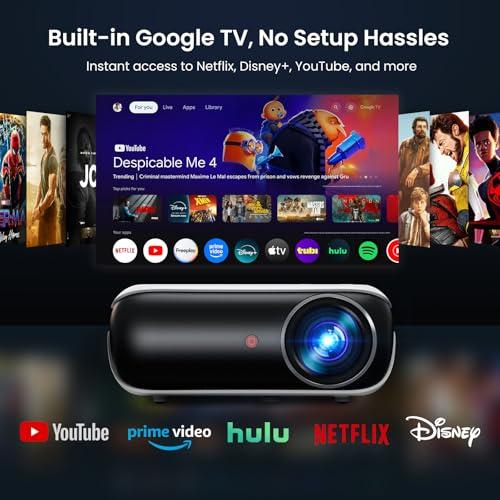
Both projectors eliminate the need for external streaming devices, but they take different approaches to smart functionality. The HAPPRUN runs Google TV 11.0, which is essentially Android TV with Google's more refined interface. This platform offers official Netflix support—something that's surprisingly uncommon among Android-based projectors—along with Disney+, YouTube, Prime Video, and virtually every major streaming service.
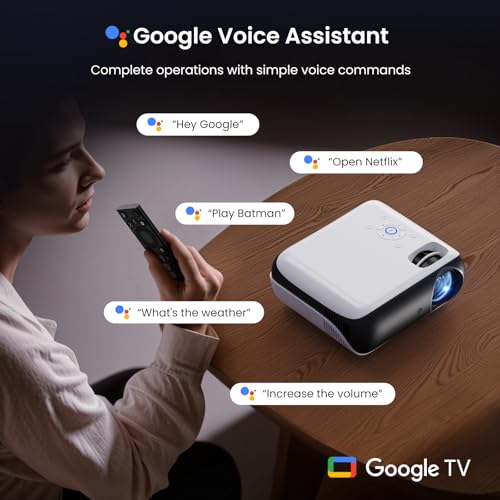
Google TV's interface is intuitive and fast, with excellent voice search through Google Assistant. The platform aggregates content across services, making it easy to find something to watch without hunting through individual apps. Chromecast support is built-in, so you can easily cast content from phones or tablets.
The Samsung Freestyle runs Tizen, Samsung's proprietary smart TV operating system. Tizen is mature and well-supported, offering access to all major streaming services with generally smooth performance. It includes both Bixby and Amazon Alexa voice assistants, giving you flexibility in ecosystem integration. The interface feels familiar if you've used recent Samsung TVs.
Where Tizen really shines is in Samsung's ecosystem integration. If you have Samsung phones, tablets, or smart home devices, the seamless connectivity is genuinely convenient. The Gaming Hub deserves special mention—it enables cloud gaming through services like Xbox Cloud Gaming and NVIDIA GeForce NOW without needing a console. For casual gamers, this is a surprisingly compelling feature.
Both platforms handle 4K content well, though remember that both projectors display at native 1080p resolution. They'll downscale 4K streams, often resulting in better image quality than standard HD content due to improved compression and color processing.
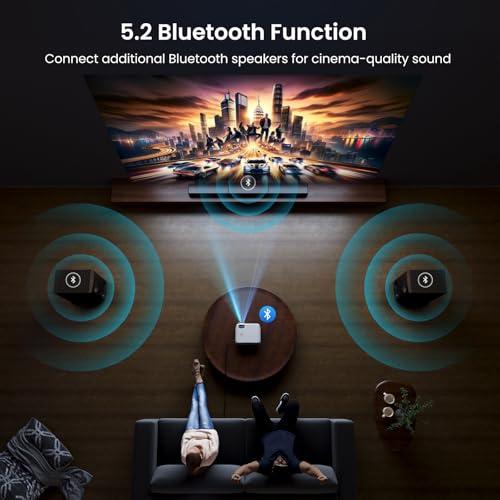
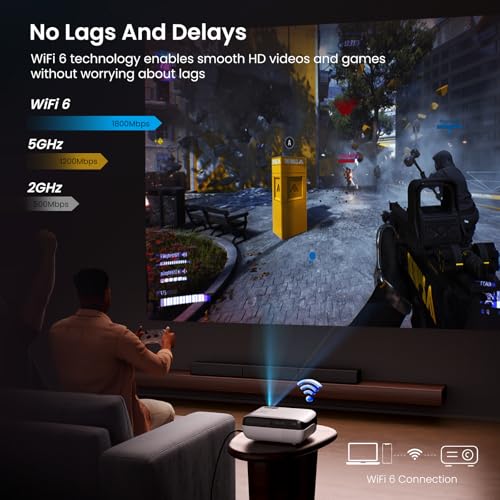
This is where practical daily use differences become apparent. The HAPPRUN provides what most users expect from a modern projector: multiple HDMI ports, USB connections for direct media playback, AV inputs for older devices, and a 3.5mm audio jack. Wi-Fi 6 support means faster, more stable streaming, while Bluetooth 5.2 handles wireless headphones or speakers.
The Samsung Freestyle takes a more minimalist approach that proves problematic in practice. It offers only a micro HDMI port and USB-C for power. This means you'll almost certainly need adapters to connect laptops, gaming consoles, or other devices. Even connecting a simple USB drive requires a hub or adapter. Professional reviewers consistently cite this as a significant limitation that adds cost and complexity.
The Samsung's USB-C power requirement also creates practical issues. Since the port handles power, you can't easily hot-swap external batteries without interrupting viewing. The HAPPRUN uses a standard power adapter, leaving USB ports available for media devices.
For home theater setups, the HAPPRUN's connectivity advantages are substantial. You can easily connect multiple devices—gaming console, laptop, streaming device—without constantly swapping cables or hunting for adapters.
The Samsung Freestyle excels in setup convenience with its comprehensive auto-adjustment features. Auto-focus, auto-keystone correction, and auto-leveling mean you can literally set it down anywhere and get a properly adjusted image within seconds. The keystone correction handles both horizontal and vertical distortion, which is essential when projecting at odd angles or onto non-flat surfaces.
This automatic setup is genuinely impressive and removes the traditional friction of projector use. Professional reviewers consistently praise this functionality, noting that it makes the Samsung accessible to users who might be intimidated by manual projector setup.
The HAPPRUN requires more manual intervention but offers greater control over the final image. You'll need to adjust focus, keystone correction, and positioning manually, which takes more time initially but can result in better-optimized images for permanent installations.
For frequent setup and breakdown—travel, outdoor use, or moving between rooms—the Samsung's automatic features represent a significant practical advantage. For semi-permanent home theater installations, the manual control of the HAPPRUN may actually be preferable for fine-tuning optimal image quality.
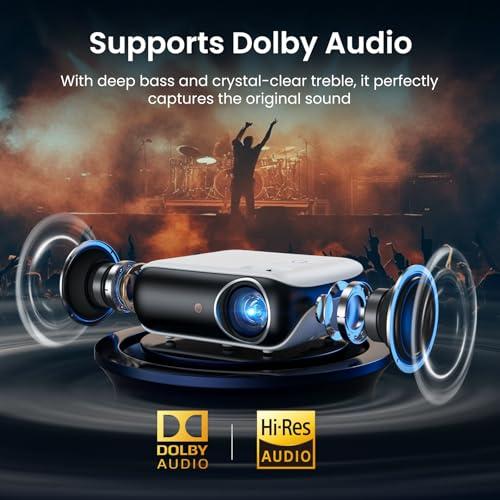
Neither projector will satisfy serious audiophiles with their built-in speakers, but they approach audio differently. The HAPPRUN includes an 8W speaker with Dolby Audio processing, while the Samsung features a 5W speaker with 360-degree sound distribution.
Based on user feedback, the HAPPRUN's speaker provides adequate volume and clarity for small room viewing, though it lacks the bass response and dynamic range for truly immersive experiences. The Samsung's 360-degree design is clever for a portable device, providing more even sound distribution, but the lower power output limits maximum volume.
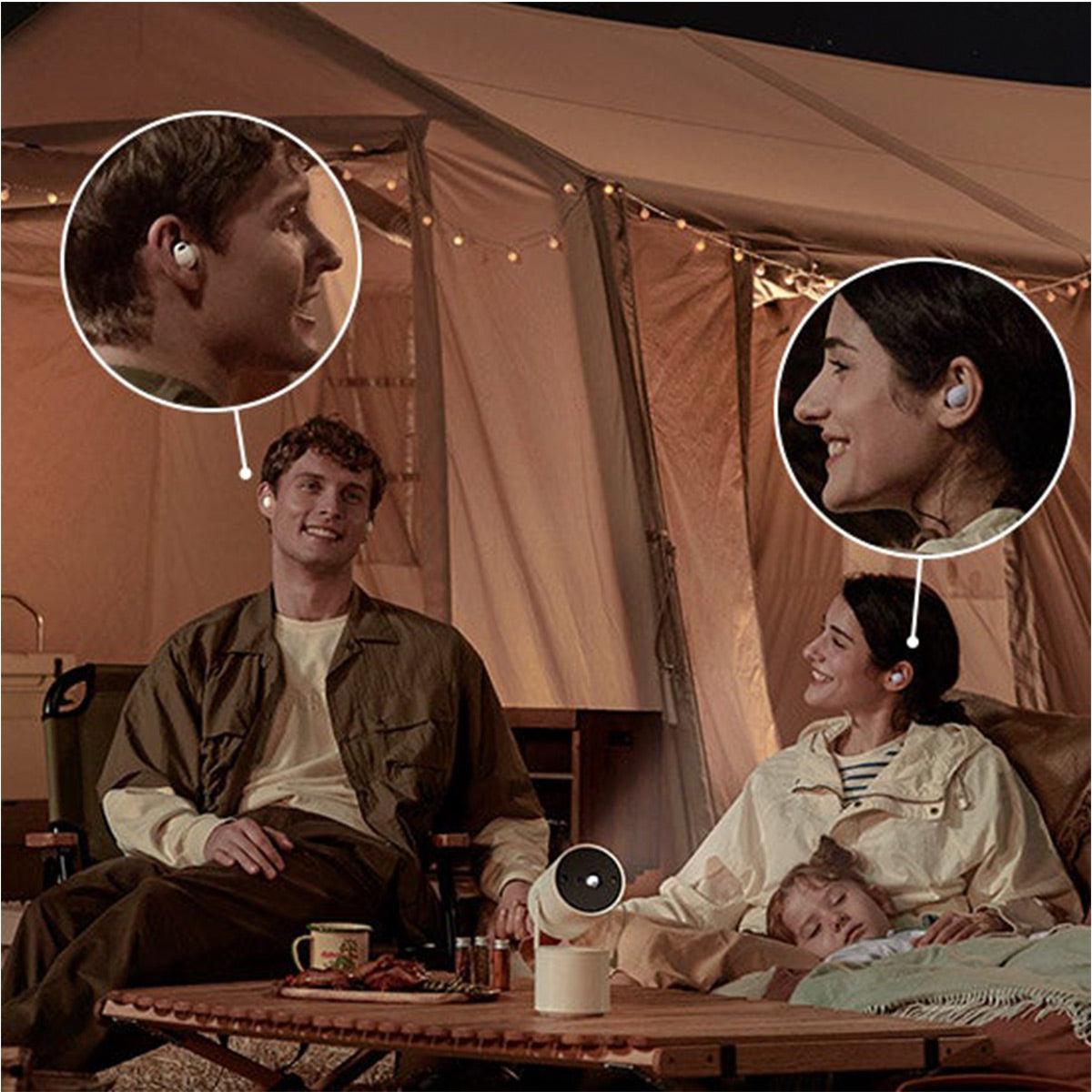
Both projectors support Bluetooth audio output for connecting wireless speakers or headphones. The Samsung adds multi-Bluetooth capability, allowing two sets of wireless headphones to connect simultaneously—useful for late-night viewing without disturbing others.
For home theater use, you'll want to connect external speakers to either projector. The HAPPRUN makes this easier with its 3.5mm audio output, while the Samsung requires Bluetooth or routing audio through connected devices.
Gaming represents an interesting differentiation point. The Samsung Freestyle offers dedicated Gaming Hub functionality that enables cloud gaming without any console. Connect a Bluetooth controller directly to the projector and stream games from Xbox Cloud Gaming, NVIDIA GeForce NOW, or other services. For casual gamers who don't own consoles, this is genuinely compelling.
The HAPPRUN takes a more traditional approach, relying on connected gaming devices through its HDMI ports. Input lag appears reasonable for casual gaming based on user reports, though neither projector is optimized for competitive gaming where millisecond precision matters.
The Samsung's approach is more innovative and potentially cost-saving—no need to buy consoles or gaming PCs. However, you're limited to games available through cloud services and subject to internet connection quality. The HAPPRUN's traditional connectivity supports any gaming device but requires separate hardware purchases.
At the time of writing, both projectors fall into similar price ranges, making the value comparison particularly interesting. The HAPPRUN delivers significantly more brightness and screen size capability per dollar spent, making it the clear winner for pure performance value.
The Samsung Freestyle justifies its pricing through premium build quality, advanced convenience features, and unique portability. You're paying for the engineering that enables ultra-portable design and automatic setup, not just raw projection performance.
For most users focused on home entertainment, the HAPPRUN represents better value. You're getting substantially more capability for similar money. However, if portability and convenience are your primary concerns, the Samsung's premium pricing becomes more defensible.
For dedicated home theater use, the HAPPRUN is the more sensible choice. Its higher brightness makes it more forgiving of room lighting, while the larger projection capability better serves typical home theater distances. The comprehensive connectivity simplifies integration with sound systems, gaming consoles, and media devices.
The Samsung's ultra-portable design, while impressive, isn't particularly advantageous in a dedicated theater room where the projector will remain stationary. Its setup convenience matters less when you're not constantly moving the device.
That said, the Samsung could work well for casual home theater use in smaller spaces or for users who value the ability to easily move their theater setup between rooms. Its ceiling projection capability enables unique installations that might work better in certain room layouts.
Choose the HAPPRUN Google TV Smart Projector if you prioritize image quality and versatility. It's ideal for users who want the biggest possible screen, the brightest image, and comprehensive connectivity without adapter hassles. It's the better choice for outdoor movie nights, large home theaters, and situations where maximum visual impact matters.
The HAPPRUN also makes sense for budget-conscious buyers who want the most performance per dollar, and for users embedded in Google's ecosystem who value seamless integration with Android devices and services.
Choose the Samsung Freestyle 2nd Gen if ultra-portability is essential. It's perfect for frequent travelers, renters who can't install permanent entertainment systems, and users who want grab-and-go convenience above all else. The automatic setup features make it accessible to less technical users who might be intimidated by traditional projector complexity.
The Samsung is also compelling for users interested in cloud gaming who don't want to invest in separate gaming hardware, and for those already invested in Samsung's ecosystem who value tight integration with other Samsung devices.
These projectors represent genuinely different approaches to portable entertainment, and both succeed at their intended goals. The HAPPRUN prioritizes performance and value, delivering substantially more brightness and projection capability for the money. The Samsung prioritizes convenience and portability, creating a genuinely innovative ultra-portable entertainment device.
For most users building a home theater or seeking a primary entertainment projector, the HAPPRUN's performance advantages are decisive. However, the Samsung's unique portability and convenience features serve specific use cases that no other projector addresses as well.
The key is honestly assessing your priorities. Do you want the best possible image quality and value, or do you need ultimate portability and convenience? Both projectors excel in their intended niches—just make sure you choose the right niche for your needs.
| HAPPRUN Google TV Smart Projector | Samsung Freestyle 2nd Gen Smart Projector |
|---|---|
| Brightness - The most critical factor for image visibility in various lighting conditions | |
| 350 ANSI lumens (requires dark room but more flexible than Samsung) | 230 ANSI lumens (requires nearly complete darkness) |
| Maximum Screen Size - Determines viewing experience scale and versatility | |
| Up to 300 inches (suitable for large outdoor events and spacious theaters) | Up to 100 inches (limited to intimate viewing scenarios) |
| Native Resolution - Base image sharpness before upscaling | |
| 1080p Full HD with 4K decoding support | 1080p Full HD |
| Weight & Portability - Critical for travel and frequent setup changes | |
| Larger traditional projector form factor (less portable) | 1.8 pounds ultra-portable cylindrical design |
| Smart Platform - Determines streaming app availability and user experience | |
| Google TV 11.0 with official Netflix licensing and Google Assistant | Samsung Tizen OS with Gaming Hub, Bixby, and Alexa support |
| Connectivity - Affects how many devices you can connect without adapters | |
| 2x HDMI, 2x USB, AV input, 3.5mm audio jack, Wi-Fi 6, Bluetooth 5.2 | 1x micro HDMI, USB-C power only, Wi-Fi 5, Bluetooth 5.2 (requires adapters) |
| Setup Features - Impacts ease of use and time to get optimal image | |
| Manual focus and keystone correction with multiple mounting options | Auto-focus, auto-keystone, auto-leveling with 180-degree rotating base |
| Built-in Audio - Determines if external speakers are necessary | |
| 8W speaker with Dolby Audio support | 5W 360-degree mono speaker |
| Gaming Capabilities - Different approaches to gaming support | |
| Traditional HDMI gaming device connectivity | Built-in Gaming Hub for console-free cloud gaming |
| Contrast Ratio - Affects black level depth and overall image quality | |
| 20,000:1 (good real-world black levels) | 100,000:1 dynamic (poor black levels in practice despite high spec) |
| Best Use Cases - Who should choose each projector | |
| Home theaters, outdoor movies, maximum screen size, comprehensive connectivity | Travel, spontaneous use, unique installations, ultra-portability priority |
The HAPPRUN Google TV Smart Projector is significantly brighter at 350 ANSI lumens compared to the Samsung Freestyle 2nd Gen at 230 ANSI lumens. This 52% brightness advantage means the HAPPRUN can handle some ambient lighting, while the Samsung requires nearly complete darkness for optimal viewing.
The HAPPRUN Google TV Smart Projector can project up to 300 inches, while the Samsung Freestyle 2nd Gen maxes out at 100 inches. For large home theaters or outdoor movie nights, the HAPPRUN offers three times the screen size capability of the Samsung.
The Samsung Freestyle 2nd Gen is far more portable, weighing just 1.8 pounds with a compact cylindrical design. The HAPPRUN Google TV Smart Projector follows a traditional projector form factor that's larger and less travel-friendly but offers better performance.
The HAPPRUN Google TV Smart Projector offers comprehensive connectivity with multiple HDMI ports, USB connections, AV inputs, and a headphone jack. The Samsung Freestyle 2nd Gen has minimal connectivity with only micro HDMI and USB-C, requiring adapters for most devices.
The Samsung Freestyle 2nd Gen excels in setup convenience with automatic focus, keystone correction, and leveling features. The HAPPRUN requires manual adjustments but offers more mounting flexibility. For frequent setup changes, the Samsung is more user-friendly.
Both projectors support gaming but differently. The Samsung Freestyle 2nd Gen includes a Gaming Hub for console-free cloud gaming, while the HAPPRUN Google TV Smart Projector connects traditional gaming devices through HDMI ports with good input lag performance.
The HAPPRUN Google TV Smart Projector provides better performance value with significantly more brightness and screen size capability per dollar. The Samsung Freestyle 2nd Gen justifies its cost through premium portability features and convenience, but offers less raw projection performance.
The HAPPRUN Google TV Smart Projector is superior for outdoor movies due to its higher brightness and ability to project much larger screen sizes. The Samsung Freestyle 2nd Gen works for intimate outdoor gatherings but lacks the brightness and scale for larger events.
The Samsung Freestyle 2nd Gen excels at ceiling projection with its 180-degree rotating base design. While the HAPPRUN Google TV Smart Projector can technically project upward with proper mounting, the Samsung is specifically designed for this unique positioning capability.
For dedicated home theater use, the HAPPRUN Google TV Smart Projector is the better choice. Its higher brightness, larger projection capability, and comprehensive connectivity make it ideal for permanent installations. The Samsung Freestyle 2nd Gen is better suited for portable or multi-room entertainment scenarios.
We've done our best to create useful and informative comparisons to help you decide what product to buy. Our research uses advanced automated methods to create this comparison and perfection is not possible - please contact us for corrections or questions. These are the sites we've researched in the creation of this article: youtube.com - topvisiontec.com - youtube.com - happrunprojector.com - youtube.com - happrunprojector.com - youtube.com - business.walmart.com - youtube.com - walmart.com - cordcuttersnews.com - nexpow.com - techradar.com - tech.slashdot.org - youtube.com - bestbuy.com - youtube.com - youtube.com - rtings.com - samsung.com - samsung.com - samsung.com - thesmarthomehookup.com - nfm.com - samsung.com - abt.com - projectorcentral.com - valueelectronics.com - target.com - samsung.com - samsung.com - images.samsung.com - abt.com - youtube.com - samsung.com - samsung.com - walts.com - bhphotovideo.com - shi.com - youtube.com - publicsector.shidirect.com - provantage.com - abcwarehouse.com

Privacy Policy
Terms and Conditions - Affiliate Policy
Home Security
© Copyright 2008-2026.
11816 Inwood Rd #1211, Dallas, TX 75244