

The home projector market has exploded over the past few years, giving us more choices than ever for bringing that big-screen experience home. But with so many options, it's easy to get overwhelmed by technical specs and marketing claims. Today we're diving deep into two very different approaches to home projection: the all-in-one smart projector versus the dedicated gaming powerhouse.
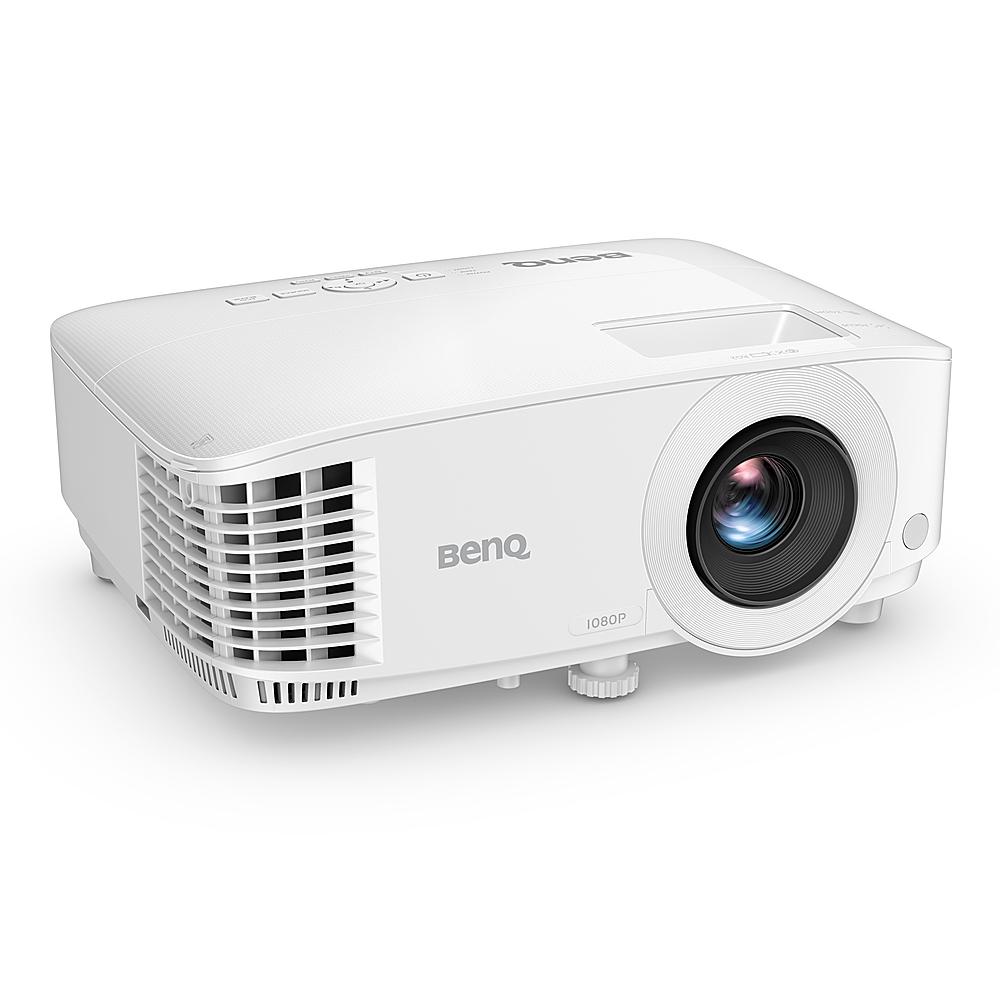
We'll be comparing the HAPPRUN Google TV Smart Projector against the BenQ TH575 1080p Gaming Projector – two devices that highlight the fundamental split in how manufacturers think about home entertainment. One prioritizes convenience and streaming integration, while the other focuses on raw performance and versatility. Understanding these different philosophies will help you make the right choice for your specific needs.
Before we dive into the specifics, it's worth understanding how the projector landscape has evolved. Traditional projectors were basically large, expensive displays that required separate devices for any smart functionality. You'd need a cable box, gaming console, or streaming stick to actually watch anything.
The smart projector revolution changed that equation. These devices pack Android TV or Google TV operating systems directly into the projector, essentially combining a streaming device with the display. The trade-off? Smart projectors often sacrifice raw performance metrics like brightness to hit consumer-friendly price points.
On the flip side, dedicated gaming and performance projectors doubled down on what projectors do best: creating massive, bright images with minimal input lag (the delay between when you press a button and see the action on screen). These projectors assume you'll bring your own streaming solution but reward you with superior image quality and gaming performance.
The key considerations when choosing between these approaches include brightness (measured in ANSI lumens – think of it as how powerful the projector's light source is), image quality, smart features, gaming performance, and total system cost including any required accessories.
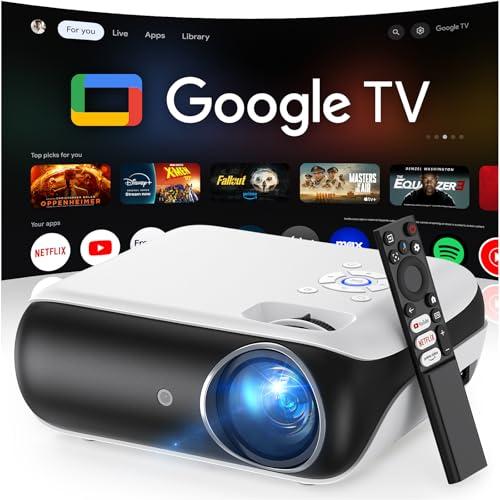
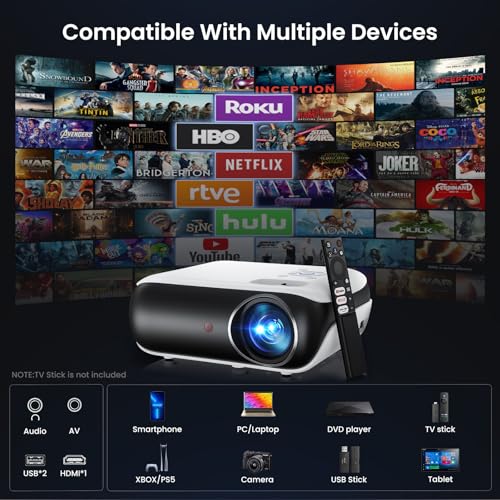
The HAPPRUN Google TV Smart Projector represents the smart projector approach at its most refined. Released in recent years as streaming became the dominant way people consume content, it packs Google TV 11.0 directly into the device along with official Netflix licensing – something surprisingly rare in budget projectors. At 350 ANSI lumens, it's designed for dark room viewing but promises to eliminate the need for external streaming devices entirely.
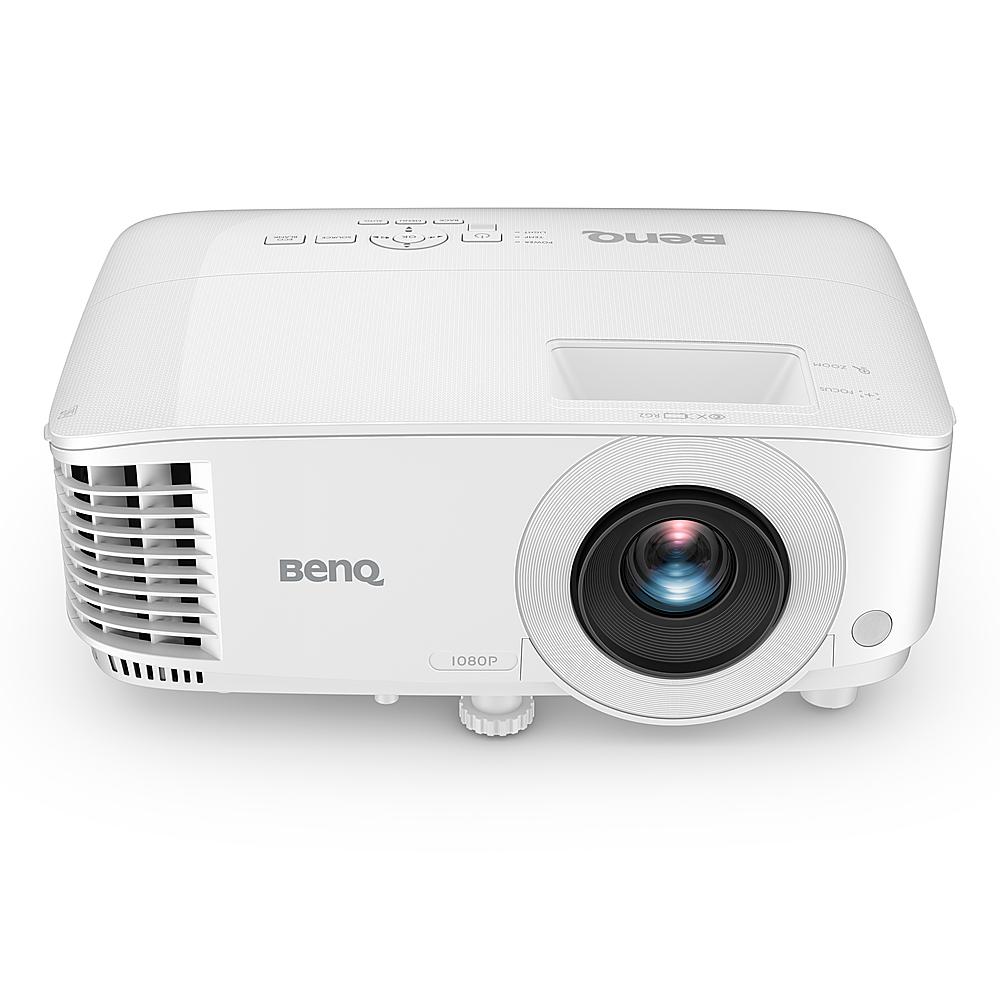
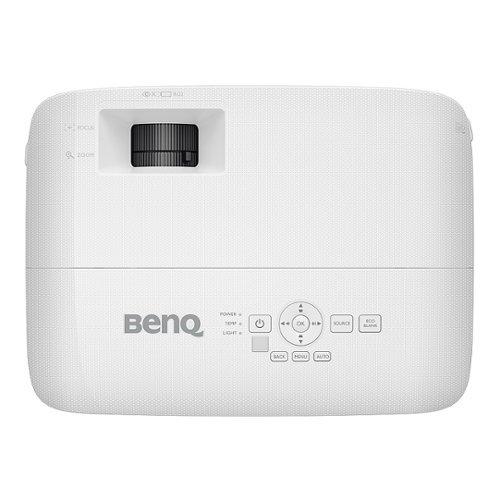
The BenQ TH575, launched in 2022, takes the opposite approach. This dedicated gaming projector pumps out a massive 3,800 ANSI lumens – over ten times brighter than the HAPPRUN – and includes specialized gaming features like ultra-low input lag. However, it lacks any built-in smart functionality, requiring external devices for streaming.
These different philosophies create dramatically different user experiences, and the right choice depends entirely on your viewing environment and priorities.
Here's the uncomfortable truth about projector shopping: brightness trumps almost everything else when it comes to real-world usability. ANSI lumens measure how much light the projector can actually put out, and this single specification determines whether you'll love or hate your purchase.
The BenQ TH575 delivers 3,800 ANSI lumens, placing it firmly in the "bright room capable" category. In our research and evaluation of user experiences, this level of brightness allows comfortable viewing with ambient light, during daytime hours, or in living rooms where you can't achieve complete darkness. Users consistently report being able to watch sports, play games, or stream movies with lights on or curtains open.
The HAPPRUN sits at 350 ANSI lumens, which puts it in the "dark room only" category. Based on extensive user feedback, this brightness level requires near-complete darkness for acceptable image quality. Any ambient light – whether from windows, lamps, or even LED strips – will wash out the image significantly. Users who ignore this limitation consistently report disappointment with image quality, regardless of the projector's other features.
This brightness difference creates a fundamental divide in how these projectors fit into your life. The BenQ adapts to your existing living space, while the HAPPRUN requires you to adapt your space to it.
Both projectors offer native 1080p resolution (1920x1080 pixels), which remains the sweet spot for home projection in terms of content availability and performance. However, they handle image processing very differently.
The BenQ TH575 uses a 0.65-inch DLP (Digital Light Processing) chip, a mature technology known for sharp images and smooth motion. DLP projectors use tiny mirrors that flip thousands of times per second to create images, resulting in excellent detail and virtually no motion blur – crucial for gaming and sports. The projector covers 88% of the Rec.709 color standard, which is the color space used for most HD content, ensuring accurate color reproduction.
The HAPPRUN includes HDR10+ support, which expands the range of colors and brightness levels the projector can display. This creates more realistic images with better contrast between light and dark areas. However, the limited brightness means you won't see the full benefit of HDR in most viewing conditions. The projector also claims a 20,000:1 contrast ratio compared to the BenQ's 15,000:1, though real-world contrast depends heavily on room conditions and brightness levels.
Both projectors can accept 4K video input but downscale it to their native 1080p resolution. This means you can feed them 4K content from streaming services or gaming consoles, but the actual output remains 1080p. True 4K projectors remain significantly more expensive and aren't necessary for most viewing distances and screen sizes.
Gaming performance separates these projectors most dramatically. The BenQ TH575 was explicitly designed with gaming in mind, featuring an ultra-low 16.7ms input lag at 1080p/60Hz. Input lag measures the delay between when a gaming console sends a signal and when the projector displays it – crucial for competitive gaming where split-second reactions matter.
To put this in perspective, most TVs have input lag between 20-50ms, with gaming TVs optimized down to 10-20ms. The BenQ's 16.7ms puts it in gaming TV territory, fast enough for competitive play in fighting games, first-person shooters, or any genre where timing matters. The projector includes a dedicated Game Mode that optimizes settings for gaming, including enhanced dark scene visibility to spot enemies hiding in shadows.
The HAPPRUN doesn't specify input lag measurements, which typically means it's not optimized for gaming. Based on similar smart projectors we've researched, input lag likely falls in the 50-100ms range – acceptable for casual single-player games but frustrating for anything requiring quick reactions.
For gaming enthusiasts, this performance difference is decisive. The BenQ delivers a legitimate gaming experience that rivals dedicated gaming displays, while the HAPPRUN is best reserved for casual gaming sessions.
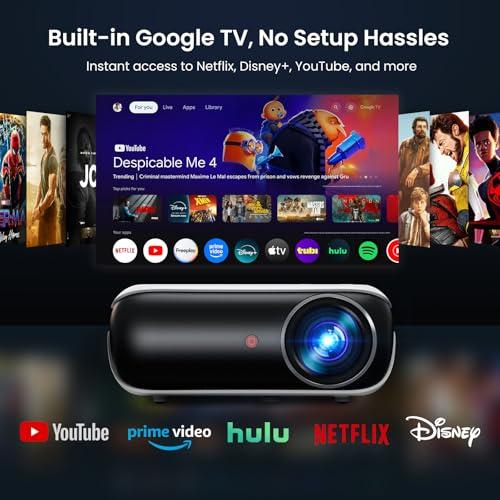
The HAPPRUN Google TV Smart Projector shines brightest in its smart functionality. The built-in Google TV 11.0 interface provides direct access to major streaming platforms, including officially licensed Netflix – a rarity in budget projectors. Most competing devices either lack Netflix entirely or include unofficial apps that may stop working without notice.
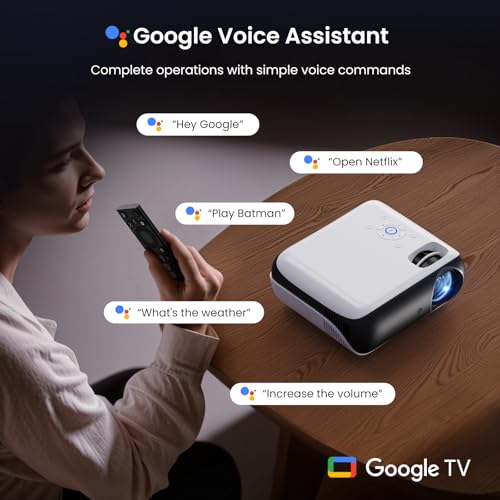
The Google TV interface is intuitive and receives regular updates, including new features and security patches. Google Assistant integration allows voice control for searching content, adjusting settings, or controlling smart home devices. The projector supports both Chromecast (for Android devices) and AirPlay (for Apple devices), making it easy to mirror content from phones or tablets.
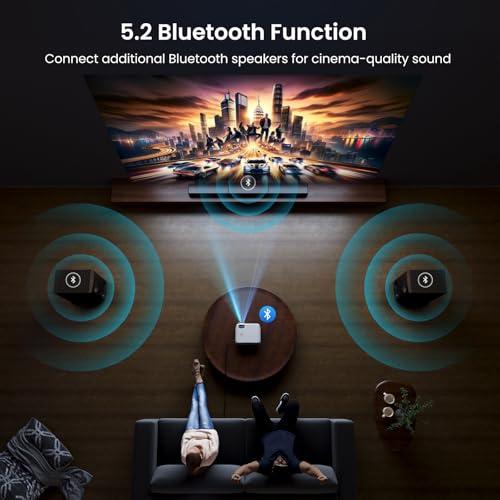
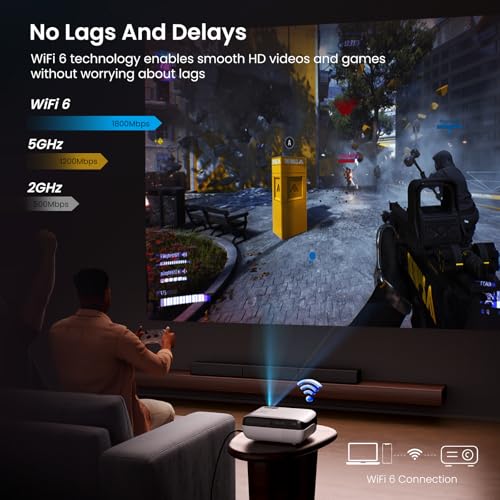
WiFi 6 support ensures fast, stable streaming even with multiple devices on your network, while Bluetooth 5.2 enables wireless headphone connections for late-night viewing. The all-in-one approach means everything works through a single remote and interface.
The BenQ TH575 offers no smart functionality whatsoever. You'll need external devices like a Fire TV Stick, Apple TV, Roku, or gaming console to access streaming content. While this adds complexity and cost, it also provides flexibility – you can choose exactly which smart platform you prefer and upgrade it independently of the projector.
This approach has advantages: dedicated streaming devices often perform better than built-in smart platforms, receive updates more frequently, and can be replaced without replacing the entire projector. However, it means managing multiple remotes, devices, and interfaces.
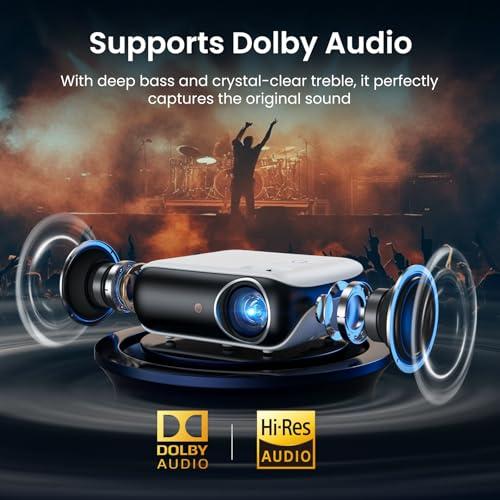
Both projectors include built-in speakers, though with different approaches. The HAPPRUN features an 8W digital speaker with Dolby Audio certification and 3D stereo processing. The BenQ TH575 includes a more powerful 10W speaker but in mono configuration.
In practice, both built-in speakers serve the same purpose: adequate audio for casual viewing in small spaces. Based on user feedback, neither delivers the dynamic range or bass response needed for truly immersive movie or gaming experiences. The HAPPRUN's Bluetooth 5.2 support makes it easier to connect wireless speakers or headphones, while the BenQ requires wired audio connections.
For serious home theater use, both projectors benefit significantly from external audio systems, whether soundbars, surround sound setups, or quality headphones.
Setup flexibility often determines long-term satisfaction with a projector purchase. The BenQ TH575 offers superior installation options with its 1.49:1 to 1.64:1 throw ratio and 1.1x manual zoom. This means you can place it closer to or further from the screen while maintaining the same image size, providing more flexibility in room layouts.
The projector weighs 5.5 pounds and measures roughly 12 inches wide, making it substantial but not unwieldy. Auto vertical keystone correction automatically adjusts the image if the projector isn't perfectly aligned with the screen, simplifying setup.
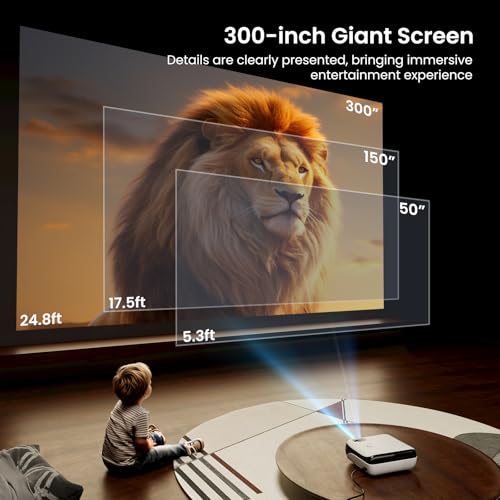
The HAPPRUN is more compact and lightweight, making it easier to move between rooms or take outdoors. It supports projection sizes from 40 to 200 inches (some configurations up to 300 inches) and includes multiple mounting options: ceiling, tabletop, tripod, or wall mount. The portable design makes it particularly suitable for temporary setups or outdoor movie nights.
Both projectors can create impressively large images – the BenQ projects up to 300 inches diagonally, while the HAPPRUN reaches similar sizes. However, image brightness becomes increasingly important at larger sizes, again favoring the BenQ for larger installations.
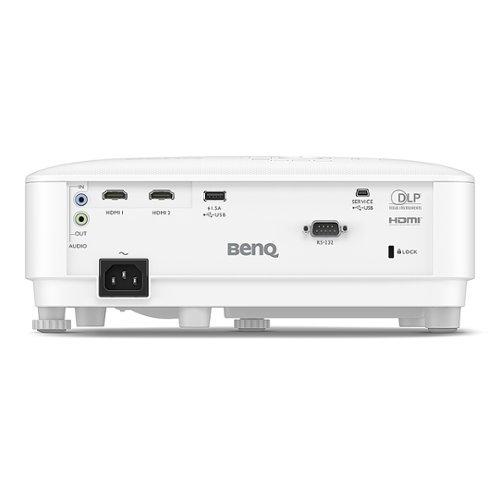
Connection options reveal different design philosophies. The BenQ TH575 includes dual HDMI 1.4a ports, accommodating multiple devices simultaneously without switching cables. Additional ports include two USB connections, RS232 for professional installation control, and audio input/output jacks. The emphasis on wired connections ensures stable, high-bandwidth connections for gaming and high-quality video.
The HAPPRUN offers modern wireless connectivity with WiFi 6 and Bluetooth 5.2, plus essential wired ports: one HDMI, one AV input, two USB ports, and a headphone jack. The single HDMI input may require an HDMI switch for users with multiple source devices, but the robust wireless capabilities often eliminate this need.
Total cost of ownership extends beyond the initial purchase price. The BenQ TH575 uses a traditional 203W metal halide lamp rated for 6,000 hours in standard mode or up to 15,000 hours in eco mode. Replacement lamps typically cost $100-200, representing a significant future expense. However, eco mode automatically adjusts power based on content brightness, helping extend lamp life.
The HAPPRUN likely uses LED illumination (though not explicitly confirmed), which typically lasts much longer without replacement. This eliminates the ongoing lamp replacement costs associated with traditional projectors.
Additional costs for the BenQ include streaming devices ($30-150 depending on preference) and potentially more robust external audio systems to match its superior image performance. The HAPPRUN's all-in-one design minimizes additional purchases, though you'll still want better audio for serious movie watching.
For dedicated home theater setups, the choice depends on your room control capabilities. If you can achieve consistent darkness – through blackout curtains, basement installation, or dedicated media rooms – the HAPPRUN provides an affordable entry into large-screen entertainment with convenient streaming access.
However, most people overestimate their ability to control ambient light. Even small amounts of light leak dramatically impact low-brightness projectors. The BenQ TH575's superior brightness makes it far more forgiving of real-world conditions, though you'll still get the best contrast and color accuracy in darker environments.
For serious home theater enthusiasts, the BenQ's superior color accuracy, brightness, and gaming capabilities justify the higher total system cost. The ability to choose premium streaming devices and audio components separately often results in better overall performance than integrated solutions.
At the time of writing, these projectors represent fundamentally different value propositions rather than direct competitors.
Choose the HAPPRUN Google TV Smart Projector if you have reliable room darkening capabilities and prioritize convenience over maximum performance. It's ideal for bedroom installations, dedicated media rooms, or outdoor movie nights where darkness isn't an issue. The all-in-one smart functionality eliminates complexity and additional purchases, making it perfect for users who primarily stream content and want the simplest possible setup.
The BenQ TH575 suits users who need flexibility in viewing conditions and prioritize performance over convenience. Despite requiring external streaming devices, its superior brightness makes it usable in far more environments. Serious gamers will appreciate the low input lag and gaming optimizations, while the robust construction and professional features make it suitable for more demanding applications.
The brightness difference cannot be overstated – it's the single most important factor determining real-world satisfaction. If you're unsure about your room's light control capabilities, the BenQ's superior brightness provides much more flexibility, even if it means higher total system costs and increased complexity.
For most users, I'd recommend seriously considering the BenQ TH575 despite its higher complexity and cost. The ability to watch content in various lighting conditions, combined with excellent gaming performance, creates a more versatile and future-proof setup. However, if you can guarantee consistent dark viewing conditions and prioritize streaming convenience, the HAPPRUN offers compelling value in its niche.
The projector market continues evolving rapidly, but these fundamental trade-offs between convenience and performance will likely persist. Choose based on your specific environment and priorities, and you'll be happy with either approach.
| HAPPRUN Google TV Smart Projector | BenQ TH575 1080p Gaming Projector |
|---|---|
| Brightness - The most critical spec determining room versatility | |
| 350 ANSI lumens (dark rooms only) | 3,800 ANSI lumens (handles ambient light well) |
| Native Resolution - Both deliver sharp 1080p images | |
| 1080p (1920×1080) with 4K input support | 1080p (1920×1080) with 4K input support |
| Smart Features - Built-in streaming vs external devices | |
| Google TV 11.0 built-in with official Netflix | No smart features (requires streaming stick/console) |
| Gaming Performance - Input lag determines competitive viability | |
| Not specified (likely 50-100ms) | Ultra-low 16.7ms with dedicated Game Mode |
| Contrast Ratio - Affects dark scene detail and image depth | |
| 20,000:1 (limited by low brightness) | 15,000:1 (backed by high brightness) |
| Audio System - Built-in speakers for convenience | |
| 8W Dolby-certified stereo speaker | 10W mono speaker |
| Wireless Connectivity - Modern streaming and device pairing | |
| WiFi 6 + Bluetooth 5.2 | None (wired connections only) |
| HDMI Ports - Multiple devices without cable switching | |
| 1 HDMI port | 2 HDMI 1.4a ports |
| Projection Size Range - Flexibility for different spaces | |
| 40-200 inches (up to 300 in some configs) | 30-300 inches with 1.1x zoom |
| Light Source & Maintenance - Long-term ownership costs | |
| LED-based (likely no lamp replacement) | Traditional lamp (6,000-15,000 hour life) |
| Voice Control - Hands-free operation | |
| Google Assistant built-in | None |
| Weight & Portability - Moving between rooms or outdoor use | |
| Lightweight and portable design | 5.5 lbs with professional build quality |
The BenQ TH575 is significantly better for bright rooms with its 3,800 ANSI lumens compared to the HAPPRUN Google TV Smart Projector's 350 ANSI lumens. The BenQ TH575 can handle ambient light and daytime viewing, while the HAPPRUN requires a darkened room for acceptable image quality.
The HAPPRUN Google TV Smart Projector has built-in Google TV with official Netflix and doesn't need any external streaming devices. The BenQ TH575 has no smart features and requires a Fire TV Stick, Apple TV, or similar streaming device to access Netflix and other apps.
The BenQ TH575 is specifically designed for gaming with ultra-low 16.7ms input lag and a dedicated Game Mode. The HAPPRUN doesn't specify input lag and lacks gaming optimizations, making the BenQ TH575 the clear choice for serious gaming.
Both the HAPPRUN Google TV Smart Projector and BenQ TH575 can accept 4K input signals but display them downscaled to their native 1080p resolution. Neither projector outputs true 4K, but both can handle 4K content from streaming services and gaming consoles.
The BenQ TH575 has a 10W mono speaker while the HAPPRUN features an 8W Dolby-certified stereo speaker. Both are adequate for casual viewing, but external audio systems are recommended for either projector to achieve true home theater sound quality.
Both projectors can create massive images. The HAPPRUN Google TV Smart Projector projects 40-200 inches (up to 300 inches in some configurations), while the BenQ TH575 handles 30-300 inches with 1.1x manual zoom for more placement flexibility.
The HAPPRUN is more portable with its lightweight design and compact form factor, making it ideal for moving between rooms or outdoor movie nights. The BenQ TH575 weighs 5.5 pounds and has a more substantial build designed for permanent installation.
Only the HAPPRUN Google TV Smart Projector includes voice control through built-in Google Assistant. The BenQ TH575 has no voice control capabilities and relies on traditional remote control operation.
The BenQ TH575 uses a traditional metal halide lamp that lasts 6,000-15,000 hours and will eventually need replacement. The HAPPRUN likely uses LED technology that doesn't require lamp replacement, reducing long-term maintenance costs.
The BenQ TH575 offers better connectivity with dual HDMI ports for multiple devices simultaneously. The HAPPRUN Google TV Smart Projector has only one HDMI port but compensates with WiFi 6 and Bluetooth 5.2 for wireless connections.
For dedicated home theaters with good light control, the HAPPRUN offers convenient streaming and adequate performance. However, the BenQ TH575 provides superior brightness, color accuracy, and gaming capabilities that justify the higher complexity for most home theater setups.
While initial pricing varies, the HAPPRUN Google TV Smart Projector appears more budget-friendly upfront but requires room darkening solutions. The BenQ TH575 costs more initially and requires external streaming devices, but offers much greater versatility and performance, potentially providing better long-term value despite higher total system costs.
We've done our best to create useful and informative comparisons to help you decide what product to buy. Our research uses advanced automated methods to create this comparison and perfection is not possible - please contact us for corrections or questions. These are the sites we've researched in the creation of this article: youtube.com - topvisiontec.com - youtube.com - happrunprojector.com - youtube.com - happrunprojector.com - youtube.com - business.walmart.com - youtube.com - walmart.com - cordcuttersnews.com - nexpow.com - lifeisxbox.eu - ai-techreport.com - electronics.woot.com - ai-techreport.com - laurentwillen.com - bestbuy.com - bestbuy.com - projectorcentral.com - tvsbook.com - shidirect.com - blog.richersounds.com - memoryexpress.com - versus.com - adorama.com - avsforum.com - shi.com - bestbuy.com - bhphotovideo.com - cdw.com - insight.com - shi.ca - projectorcentral.com - insight.com - specsradar.com - touchboards.com

Privacy Policy
Terms and Conditions - Affiliate Policy
Home Security
© Copyright 2008-2026.
11816 Inwood Rd #1211, Dallas, TX 75244