

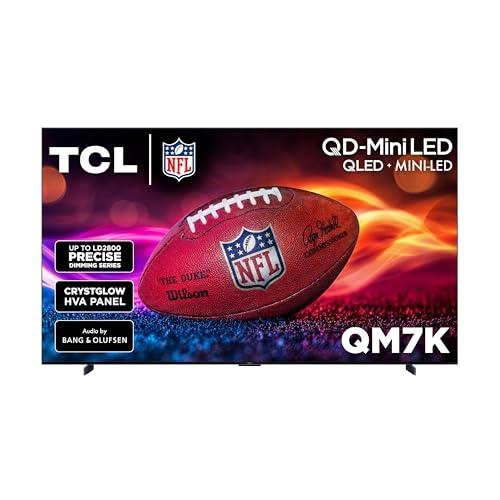
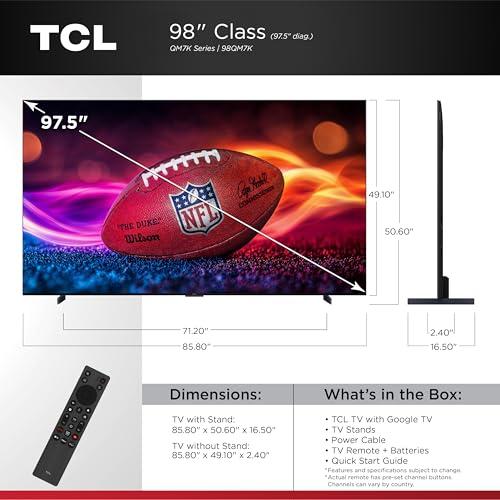

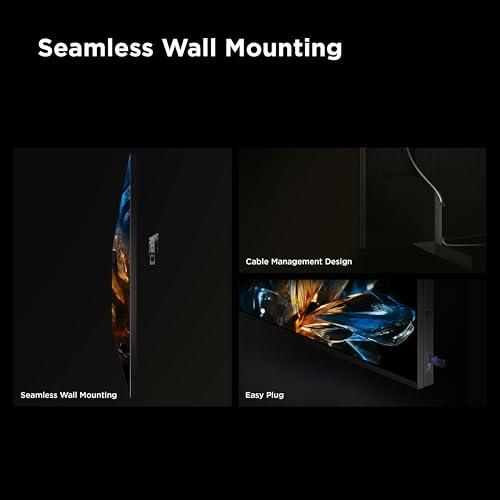
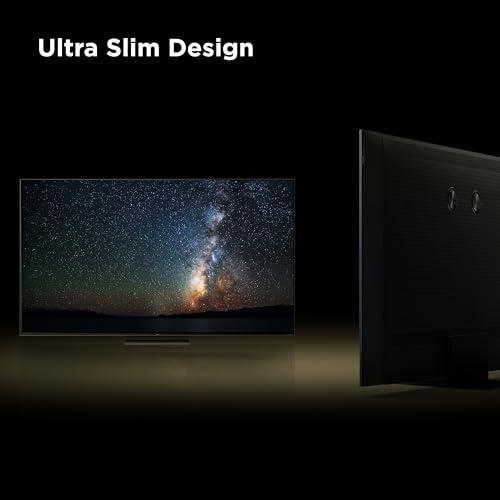
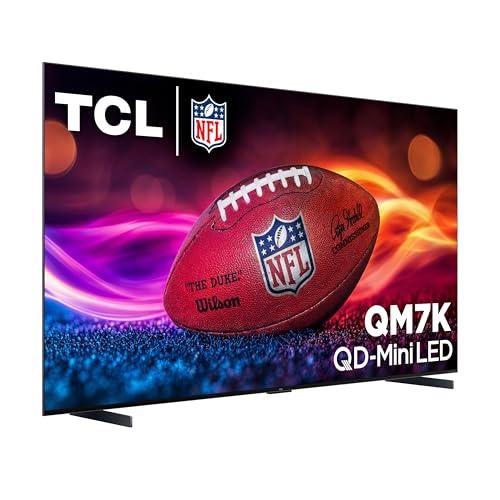
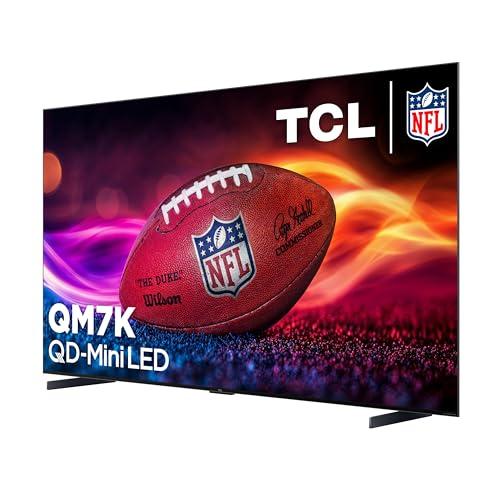
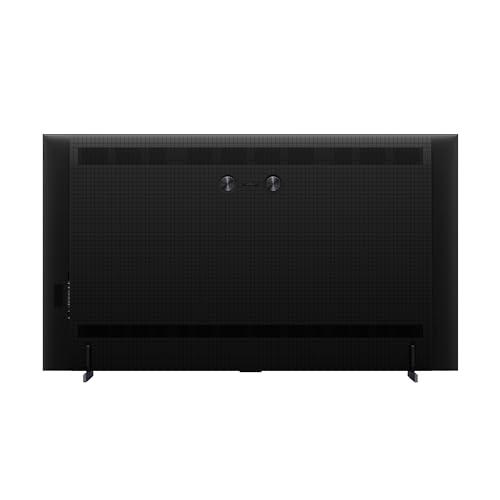
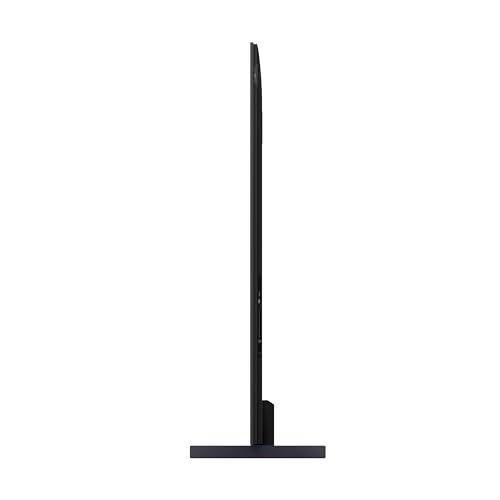
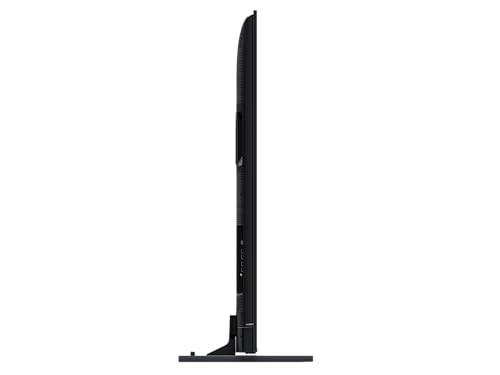
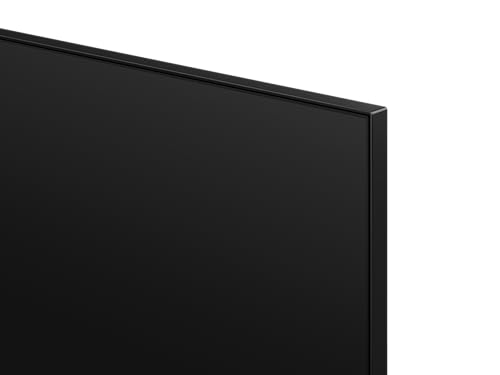
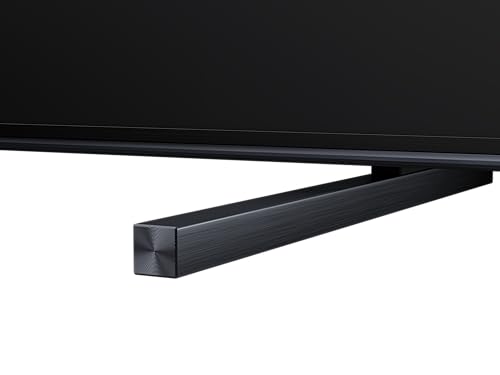
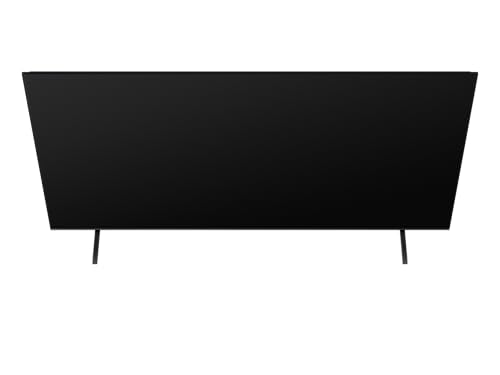
When you're ready to transform your living room into a proper home theater, the choice between ultra-large TVs becomes surprisingly complex. The TCL 98" QM7K and Hisense 100" U7 Series represent two compelling approaches to massive screen entertainment, each with distinct philosophies about what makes a great viewing experience.
Both TVs arrived in 2025, marking significant evolution in the ultra-large display market. The TCL QM7K represents the company's flagship push into premium Mini-LED technology, while the Hisense U7 focuses on delivering maximum screen size with solid performance at a more accessible price point. Understanding their differences requires diving deep into display technology, gaming capabilities, and real-world performance.
Shopping for a TV over 95 inches means you're entering enthusiast territory. These aren't impulse purchases – they're investments in your home entertainment experience. The fundamental question isn't just about screen size; it's about understanding what technologies deliver the most impact for your viewing habits.
Picture quality dominates everything else at this level. Peak brightness determines how HDR content looks in your room, while local dimming zones (the ability to independently control different areas of the backlight) create the deep blacks and bright whites that make movies pop. Color accuracy and motion handling separate good TVs from great ones.
Gaming performance has become equally critical. Modern consoles and PCs can push 4K at high refresh rates, but only if your TV can keep up. Input lag (the delay between controller input and screen response) and variable refresh rate support (which eliminates screen tearing) determine whether your $3,000+ TV enhances or hampers your gaming experience.
The smart platform quality affects daily usability more than specs suggest. A slow, ad-heavy interface can make even the best display frustrating to use. Similarly, built-in audio quality matters because many buyers won't immediately invest in a separate sound system for their new centerpiece.
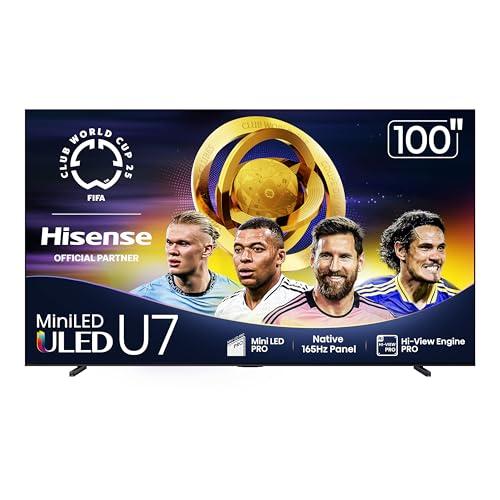
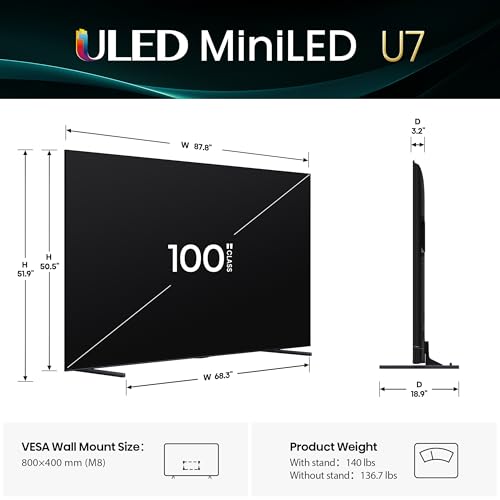
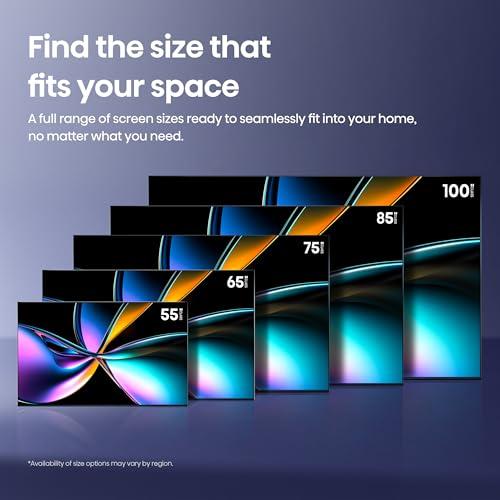
The Hisense U7 claims the size crown at 100 inches compared to the TCL QM7K's 98-inch display. In practical terms, you're talking about roughly 2 inches of additional diagonal measurement – significant but not transformational.
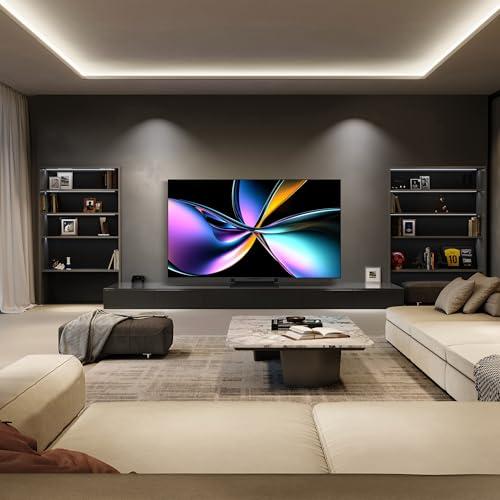
The real consideration is your room. Both TVs require substantial wall space and viewing distance. For a 98-100 inch display, you'll want to sit 8-12 feet away for optimal viewing, though personal preference varies widely. The Hisense edges slightly larger, but both demand serious commitment to the home theater experience.
What's more interesting is how each company approaches achieving that massive scale. The TCL focuses on premium display technology to justify its 98-inch footprint, while Hisense pushes size boundaries while maintaining reasonable pricing. Neither approach is wrong – they serve different priorities.
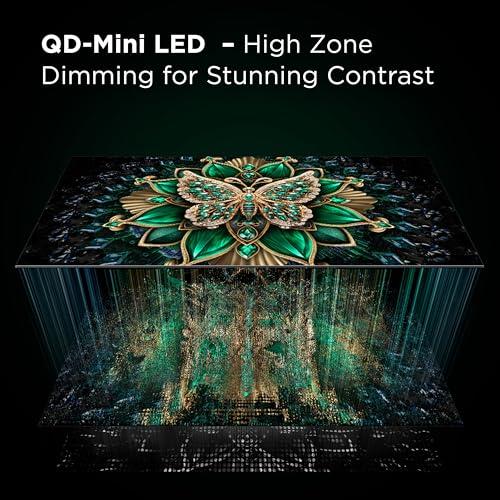
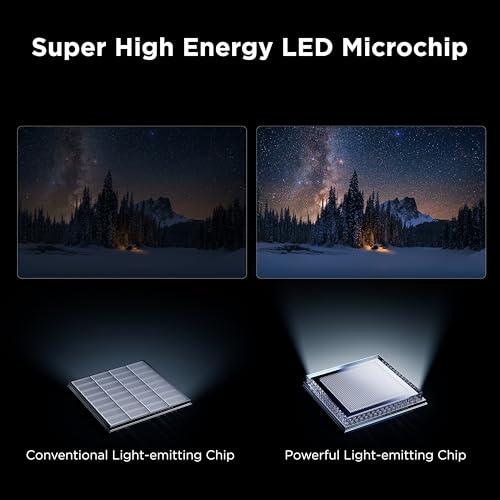
Here's where things get fascinating. The TCL QM7K implements what might be the most advanced Mini-LED system available in consumer TVs. Mini-LED backlighting uses thousands of tiny LEDs behind the screen, each controllable independently. Think of it like having thousands of tiny flashlights that can turn on and off to create perfect blacks next to brilliant whites.
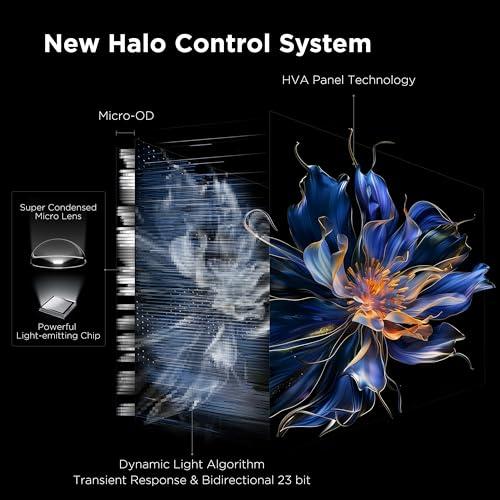
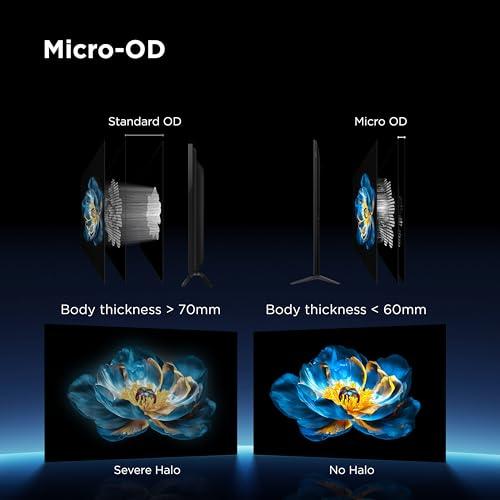
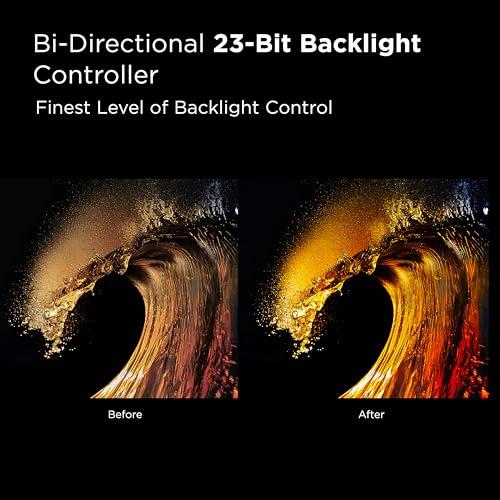
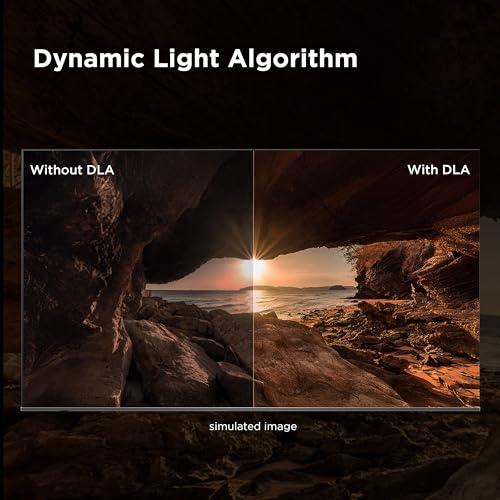
The TCL takes this concept to an extreme with up to 2,500 local dimming zones. Each zone can be controlled independently, creating incredibly precise contrast. When a movie shows a starry night sky, those 2,500 zones can display deep black space while keeping stars brilliantly white without the "blooming" effect (unwanted light bleeding around bright objects) that plagued earlier LED TVs.
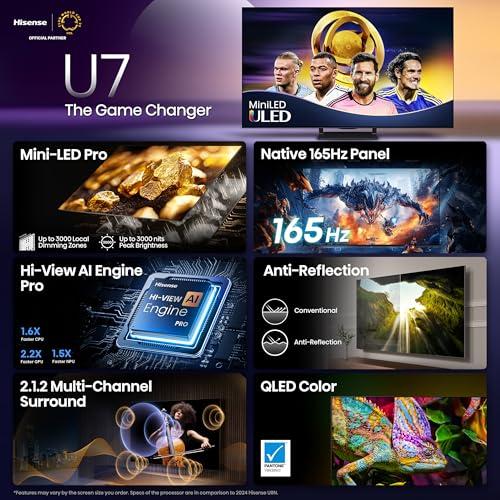
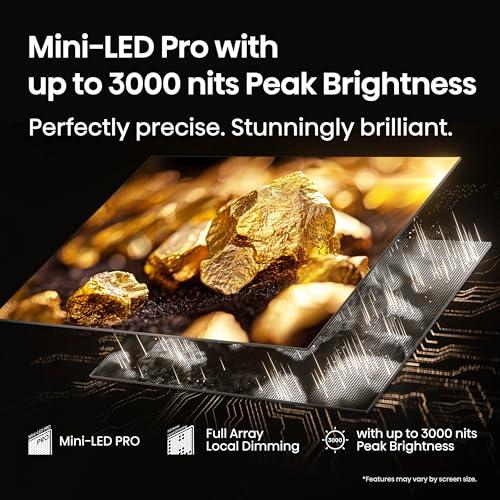
The Hisense U7 uses 256 local dimming zones – still respectable, but roughly one-tenth the precision of the TCL. In practice, this means the Hisense can create good contrast but may struggle with complex scenes that have both very dark and very bright elements close together.
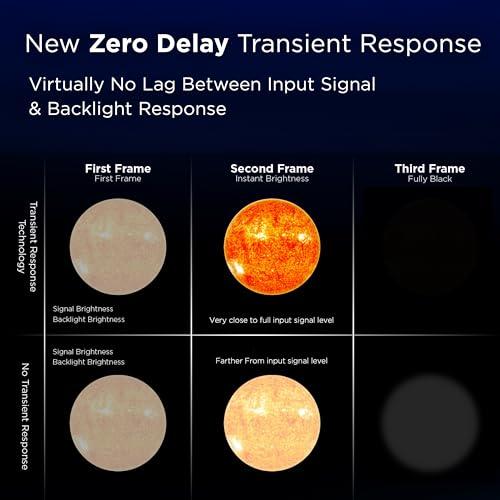
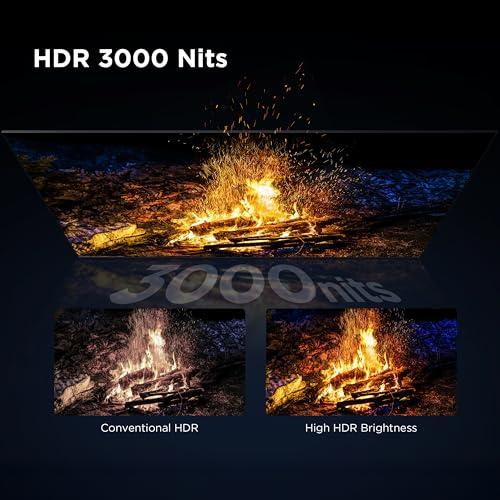
Peak brightness capability separates premium TVs from merely good ones. The TCL QM7K reaches 3,000 nits – an almost absurd level of brightness that approaches what you'd experience looking at bright clouds on a sunny day. The Hisense U7 peaks around 800 nits, which is solid but dramatically lower.
Why does this matter? HDR (High Dynamic Range) content is mastered assuming your display can show both deep blacks and brilliant highlights. Movies like "Blade Runner 2049" or "Mad Max: Fury Road" rely on this contrast to create visual impact. The TCL can reproduce the full creative intent of HDR mastering, while the Hisense compresses that range, losing some dramatic effect.
In bright rooms, high peak brightness becomes even more critical. The TCL can overcome ambient light that would wash out the Hisense, maintaining picture quality regardless of viewing conditions.
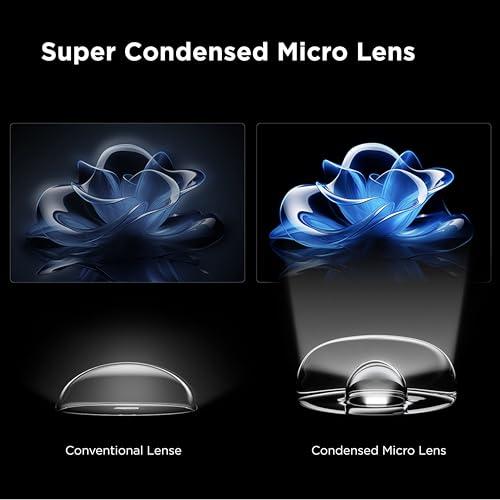
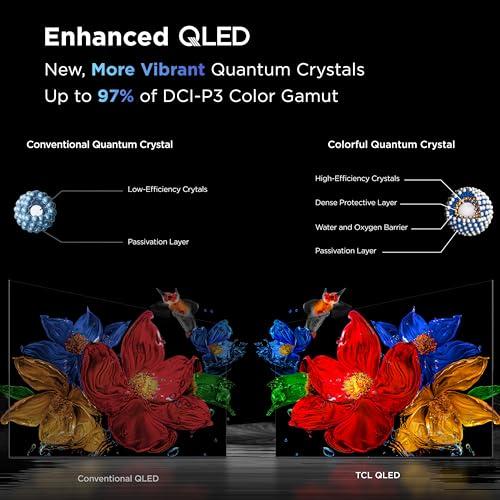
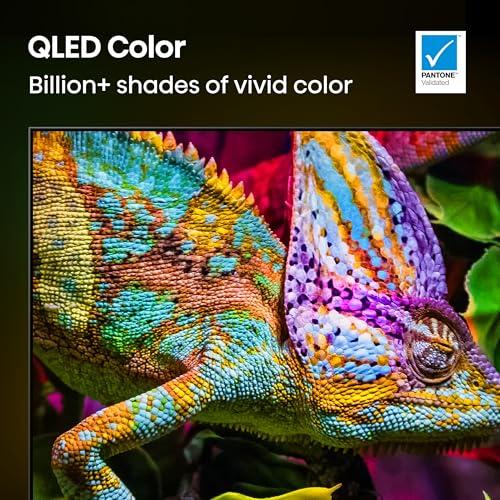
Both TVs use QLED (Quantum Dot LED) technology, which places a layer of quantum dots between the backlight and LCD panel. These microscopic crystals convert blue LED light into precise red and green wavelengths, creating more accurate colors than traditional LED TVs.
The TCL claims enhanced quantum dot materials with improved stability and color volume. The Hisense U7 offers solid quantum dot implementation covering wide color gamuts. In practice, both deliver vibrant, accurate colors, though the TCL's superior brightness helps colors appear more saturated and lifelike.
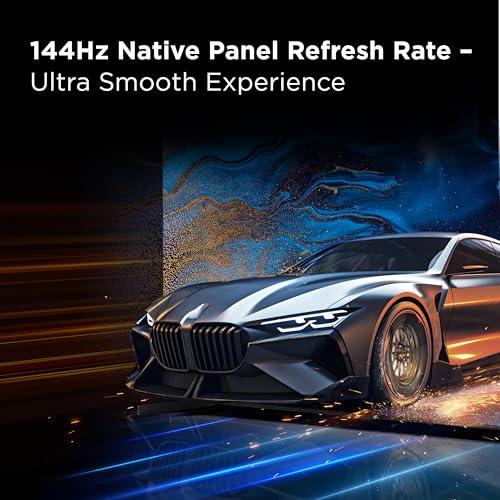
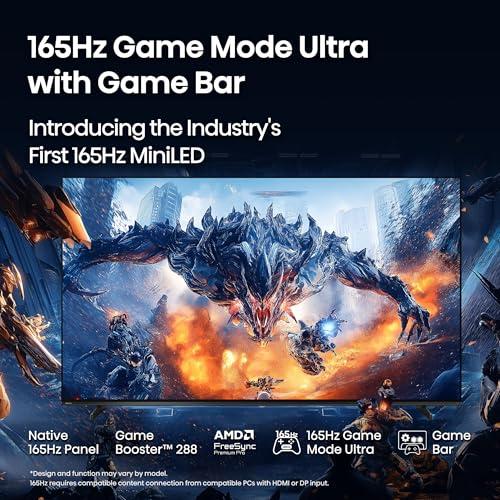
Modern gaming demands have transformed TV requirements. Both the TCL QM7K and Hisense U7 target serious gamers with 144Hz refresh rates and HDMI 2.1 connectivity.
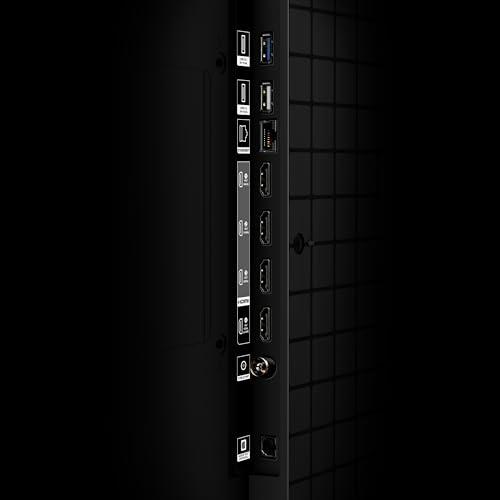
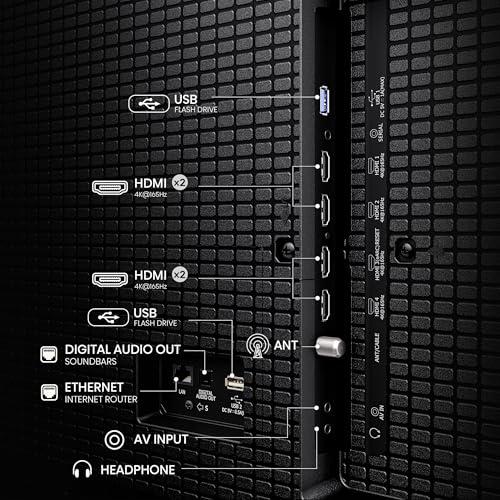
The TCL supports up to 288Hz variable refresh rate through its Game Accelerator feature, though this likely applies to 1080p gaming. For 4K gaming, both TVs handle 144Hz from compatible sources. The TCL includes two HDMI 2.1 ports, while the Hisense provides four – a significant advantage for gamers with multiple consoles, gaming PCs, and other high-bandwidth devices.
Input lag measurements from similar models in each series suggest both TVs achieve gaming-appropriate response times under 20 milliseconds in game mode. The Hisense includes AMD FreeSync Premium Pro support, which helps eliminate screen tearing during variable frame rate gaming.
Auto Low Latency Mode (ALLM) on both TVs automatically switches to game mode when it detects gaming sources, optimizing settings for responsiveness rather than picture processing.
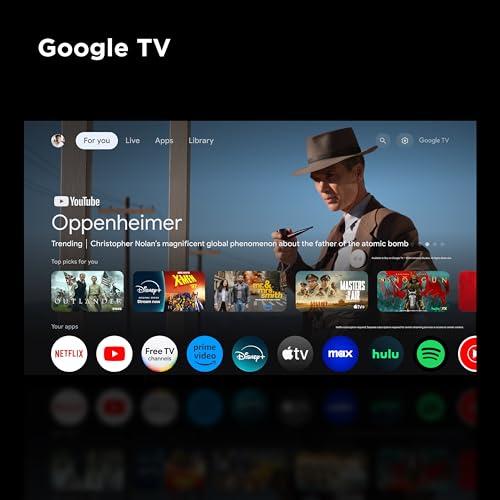
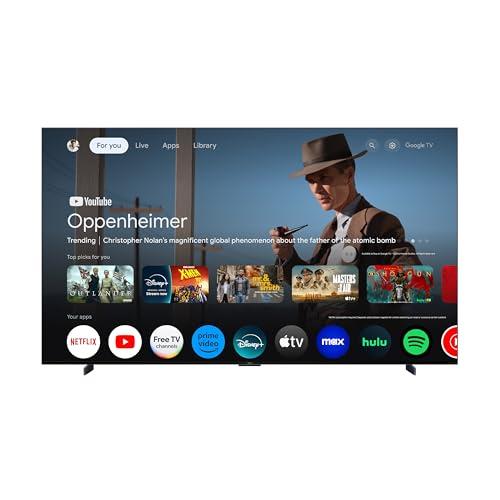
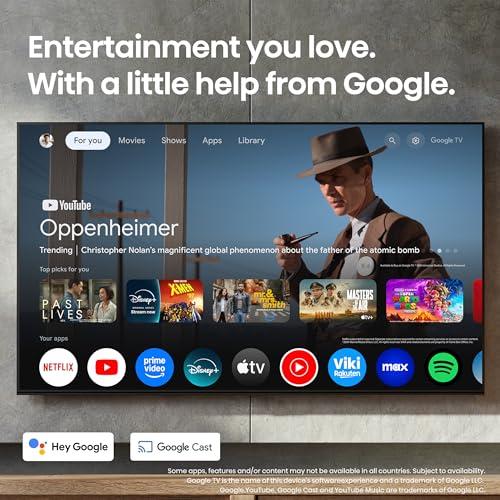
Both TVs run Google TV, Google's evolved Android TV platform that launched in 2020. The interface organizes content from multiple streaming services into unified recommendations, making it easier to find something to watch across Netflix, Disney+, Amazon Prime, and other services.
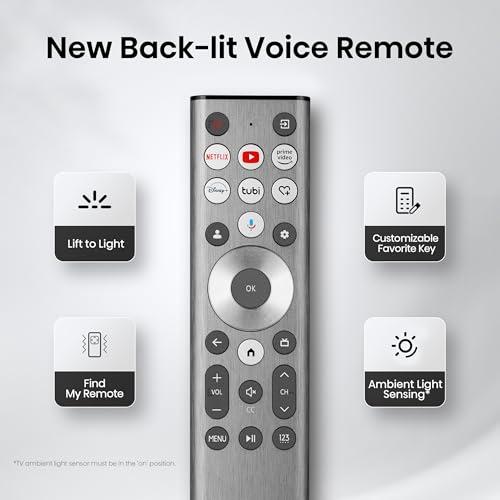
The Hisense U7 supports broader smart home integration, working with Google Assistant, Amazon Alexa, and Apple HomeKit. This matters if you're building a connected home ecosystem. The TCL includes far-field microphones for hands-free voice control, letting you change channels or search content without the remote.
Platform performance varies between implementations. Based on reviews of similar models, both offer reasonably responsive interfaces, though dedicated streaming devices like Apple TV 4K or NVIDIA Shield often provide smoother experiences for heavy streaming users.
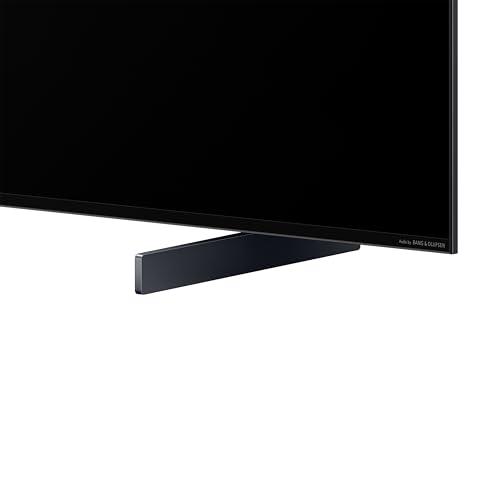
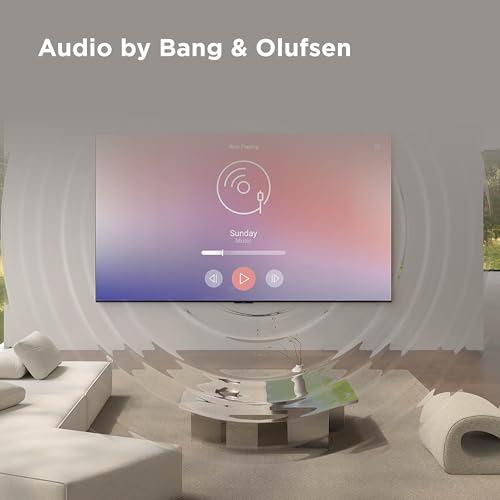
TV audio often disappoints at these screen sizes. The TCL QM7K partners with Bang & Olufsen for audio tuning, the Danish company known for premium audio products. While this doesn't guarantee exceptional sound, it suggests more attention to audio processing and speaker configuration.
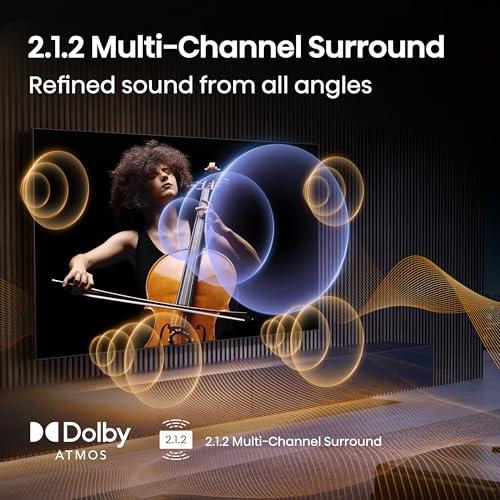
The Hisense U7 implements a 2.1.2 channel system with a built-in subwoofer, potentially offering better bass response than typical TV speakers. Both support Dolby Atmos for spatial audio processing when available.
Realistically, TVs this large deserve dedicated sound systems. A quality soundbar or home theater receiver will dramatically improve the experience beyond any built-in audio system. However, the Hisense's inclusion of a subwoofer might provide better temporary audio while you plan your full audio setup.
At the time of writing, the Hisense 100" U7 typically costs significantly less than the TCL 98" QM7K, despite offering 2 additional inches of screen. This price difference reflects their different market positioning.
The TCL justifies premium pricing through advanced display technology. Those 2,500 dimming zones, 3,000-nit peak brightness, and sophisticated anti-blooming systems represent genuine technological advantages. For home theater enthusiasts who prioritize picture quality, these features deliver measurable improvements in contrast, HDR impact, and overall viewing experience.
The Hisense offers compelling value by maximizing screen size while maintaining good performance. Its 256 dimming zones and 800-nit brightness provide solid results, especially considering the price difference. The four HDMI 2.1 ports add practical value for users with multiple gaming systems and high-bandwidth devices.
In dedicated home theater environments, display quality trumps other considerations. The TCL QM7K's superior contrast control and brightness capability create more immersive experiences with properly mastered content. Those extra dimming zones become noticeable during dark scenes in movies like "Dune" or "The Batman," where the TCL can maintain shadow detail while the Hisense might crush some darker elements together.
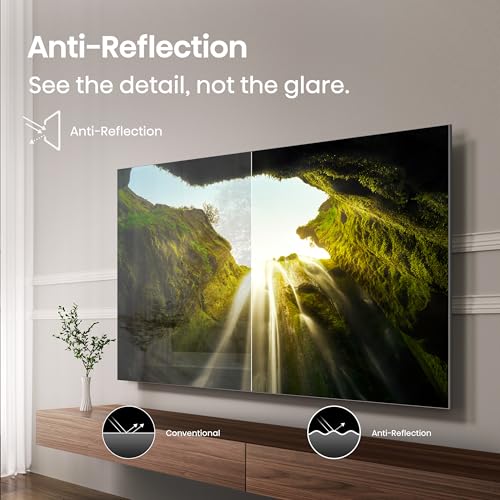
Room lighting affects this equation. In bright family rooms, the TCL's 3,000-nit capability maintains picture quality that would wash out on the Hisense. In controlled lighting environments, the Hisense's limitations become less apparent, making its size and value advantages more compelling.
Both TVs benefit from proper calibration, though the TCL offers more adjustment parameters through its advanced processing. Professional calibration can optimize either TV, but the TCL provides a higher performance ceiling.
Choose the TCL 98" QM7K if picture quality represents your primary concern. The advanced Mini-LED implementation, superior brightness, and contrast control create genuinely better viewing experiences, especially with HDR content. This TV suits enthusiasts willing to pay premium prices for measurable performance advantages.
The Hisense 100" U7 makes sense for buyers prioritizing size and value. That 100-inch screen creates undeniable presence, while solid performance handles most content well. The additional HDMI 2.1 ports benefit multi-device setups, and the lower price leaves budget for audio upgrades or other home theater components.
Consider your viewing environment carefully. Bright rooms strongly favor the TCL's higher brightness, while dark theater spaces allow the Hisense to showcase its strengths. Gaming enthusiasts might lean toward the Hisense for connectivity, while movie lovers will appreciate the TCL's superior HDR handling.
Both represent excellent choices in the ultra-large TV category. Your decision ultimately comes down to whether you prioritize cutting-edge display technology (TCL) or maximum size with strong value (Hisense). Either choice transforms your living space – just in slightly different ways.
| TCL 98" QM7K QD-Mini LED 4K TV | Hisense 100" U7 Series Mini-LED TV |
|---|---|
| Screen Size - Physical presence and room requirements | |
| 98" (97.5" viewable) - Massive but fits more rooms | 100" (99.5" viewable) - Maximum size for most homes |
| Local Dimming Zones - Critical for contrast and blooming control | |
| Up to 2,500 zones with Halo Control System - Industry-leading precision | 256 zones with Full Array Local Dimming - Good but basic |
| Peak Brightness - HDR impact and bright room performance | |
| 3,000 nits - Exceptional for any lighting condition | 800 nits - Adequate for controlled lighting |
| Native Refresh Rate - Gaming and motion smoothness | |
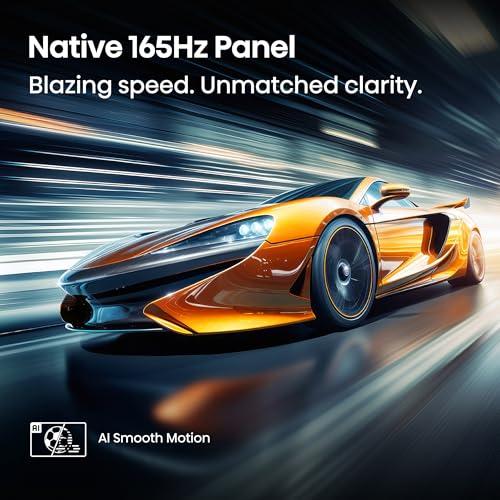
| 144Hz throughout signal chain - Professional gaming ready | 144Hz native (some sources claim 165Hz) - Excellent gaming |
| HDMI 2.1 Ports - Future-proof connectivity for gaming | |
| 2 ports supporting 4K@144Hz - Sufficient for most setups | 4 ports all HDMI 2.1 - Better for multi-device gaming |
| Gaming Features - Competitive gaming performance | |
| Game Accelerator 288 (up to 288Hz VRR), ALLM | Game Mode Ultra (48-165Hz VRR), AMD FreeSync Premium Pro, ALLM |
| Display Technology - Picture quality foundation | |
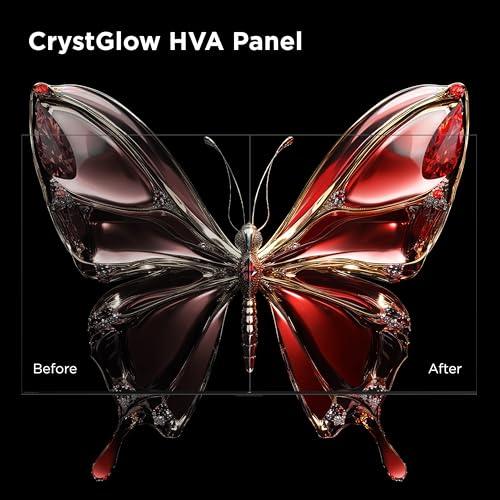
| CrystGlow HVA panel with 8,000:1 native contrast | ULED Mini-LED with quantum dot enhancement |
| Smart Platform - Daily usability and features | |
| Google TV with far-field voice control | Google TV with multi-assistant support (Google/Alexa/HomeKit) |
| Audio System - Built-in sound quality | |
| Audio by Bang & Olufsen tuning, Dolby Atmos | 2.1.2 system with subwoofer, Dolby Atmos, IMAX Enhanced |
| HDR Support - Premium content compatibility | |
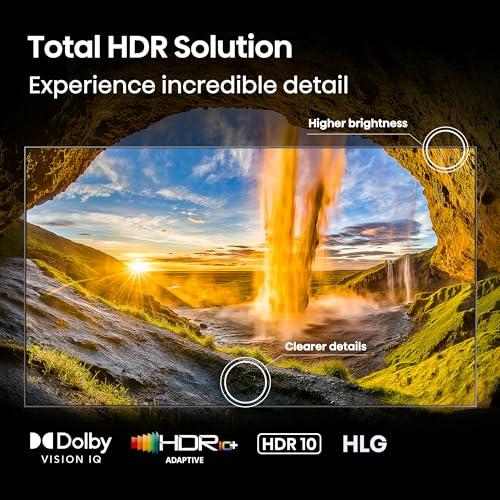
| Dolby Vision IQ, HDR10+, HDR10, HLG | Dolby Vision, HDR10+, HDR10, HLG |
| Value Position - Performance per dollar consideration | |
| Premium pricing for flagship display technology | Better value with larger size and solid performance |
The Hisense 100" U7 Series is slightly larger at 100 inches compared to the TCL 98" QM7K at 98 inches. While both are massive displays, the Hisense U7 provides 2 additional inches of diagonal screen space, though the difference is minimal in real-world viewing.
The TCL 98" QM7K delivers superior picture quality with up to 2,500 local dimming zones and 3,000 nits peak brightness compared to the Hisense U7's 256 zones and 800 nits. This means the TCL QM7K produces deeper blacks, brighter highlights, and better HDR performance for cinematic content.
Both TVs excel for gaming with 144Hz refresh rates and low input lag. The Hisense U7 Series has an advantage with four HDMI 2.1 ports versus the TCL QM7K's two ports, making it better for multiple gaming consoles. However, the TCL supports higher variable refresh rates up to 288Hz.
Yes, both the TCL QM7K and Hisense U7 Series support 4K resolution and comprehensive HDR formats including Dolby Vision, HDR10+, and HDR10. The TCL handles HDR content better due to its significantly higher peak brightness capability.
The Hisense 100" U7 Series typically offers better value with a larger 100-inch screen at a lower price point than the TCL 98" QM7K. However, the TCL justifies its premium pricing with superior display technology and picture quality.
Both the TCL QM7K and Hisense U7 Series run Google TV, providing access to popular streaming apps like Netflix, Disney+, and Amazon Prime Video. The Hisense U7 offers broader smart home integration with support for Google Assistant, Alexa, and Apple HomeKit.
The TCL 98" QM7K performs much better in bright rooms due to its 3,000 nits peak brightness, nearly four times brighter than the Hisense U7's 800 nits. The TCL can overcome ambient light and glare that would wash out the Hisense.
The Hisense U7 Series features a 2.1.2 channel system with a built-in subwoofer, potentially offering better bass response. The TCL QM7K uses Bang & Olufsen audio tuning for premium sound processing. Both support Dolby Atmos, though external sound systems are recommended for optimal audio at these screen sizes.
The Hisense 100" U7 Series provides four HDMI 2.1 ports compared to the TCL QM7K's two HDMI 2.1 ports plus two HDMI 2.0 ports. This gives the Hisense an advantage for users with multiple gaming consoles, streaming devices, and other high-bandwidth equipment.
Both work well for home theaters, but the TCL 98" QM7K is superior for dedicated theater rooms due to its advanced local dimming and higher contrast ratio. The Hisense U7 Series offers excellent performance for the price and provides a larger screen, making it suitable for casual home theater use.
Both the TCL QM7K and Hisense U7 Series offer 144Hz refresh rates and motion processing features that handle fast-moving content well. The TCL may have a slight edge due to its more advanced processing, but both deliver smooth motion for sports and action content.
Choose the TCL 98" QM7K if picture quality is your top priority and you want the best HDR performance, especially in bright rooms. Select the Hisense 100" U7 Series if you want maximum screen size at better value, need multiple HDMI ports, or prioritize size over absolute picture quality refinement.
We've done our best to create useful and informative comparisons to help you decide what product to buy. Our research uses advanced automated methods to create this comparison and perfection is not possible - please contact us for corrections or questions. These are the sites we've researched in the creation of this article: bestbuy.com - tcl.com - youtube.com - rtings.com - tcl.com - youtube.com - youtube.com - tcl.com - tomsguide.com - manuals.plus - youtube.com - tcl.com - whathifi.com - bestbuy.com - queencityonline.com - electronicexpress.com - tcl.com - valueelectronics.com - tcl.com - bestbuy.com - bestbuy.com - youtube.com - woodruffappliance.com - karlsonline.com - tcl.com - rtings.com - bestbuy.com - rtings.com - lueckeaudiovideo.com - youtube.com - hisense-usa.com - youtube.com - hisense-usa.com - costco.com - hisense-usa.com - pcrichard.com - files.hisense-usa.com - bestbuy.com - youtube.com - hisense-usa.com - displayspecifications.com - bestbuy.com - hisense-usa.com - eftm.com - youtube.com - youtube.com

Privacy Policy
Terms and Conditions - Affiliate Policy
Home Security
© Copyright 2008-2026.
11816 Inwood Rd #1211, Dallas, TX 75244