

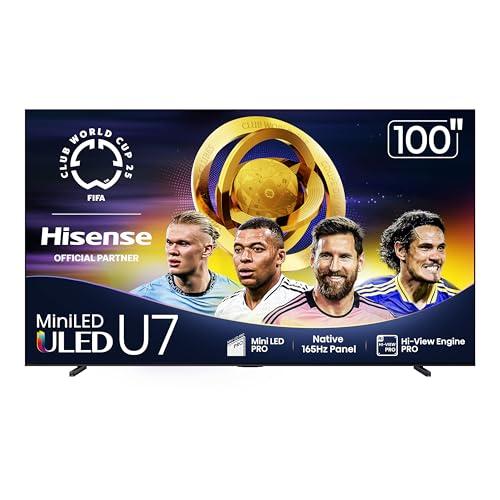
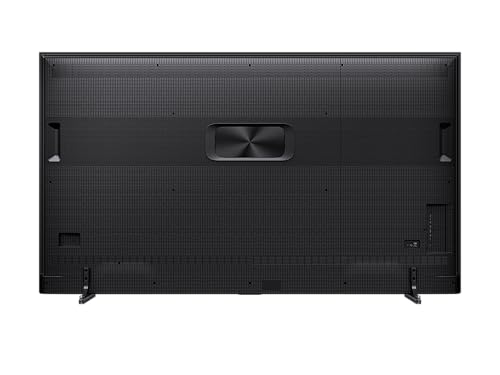
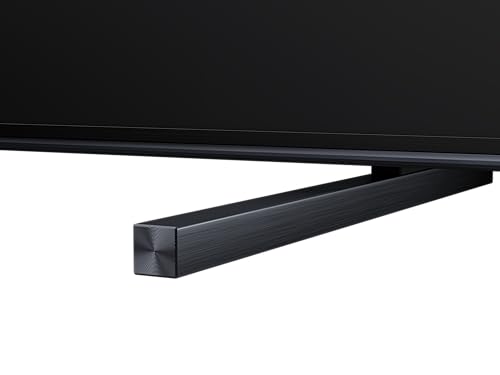
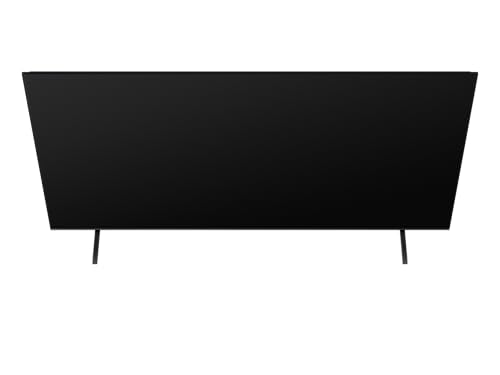
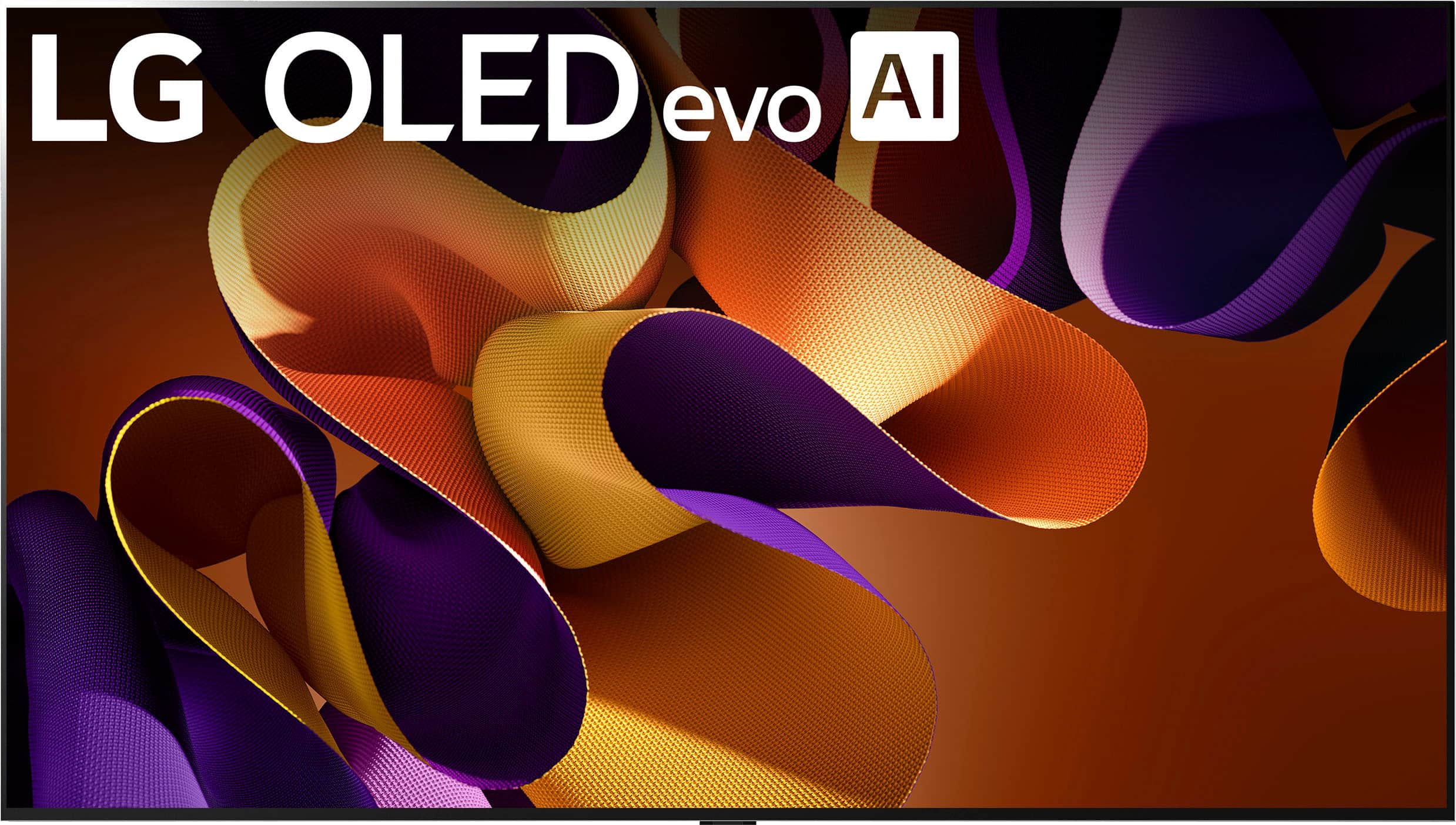
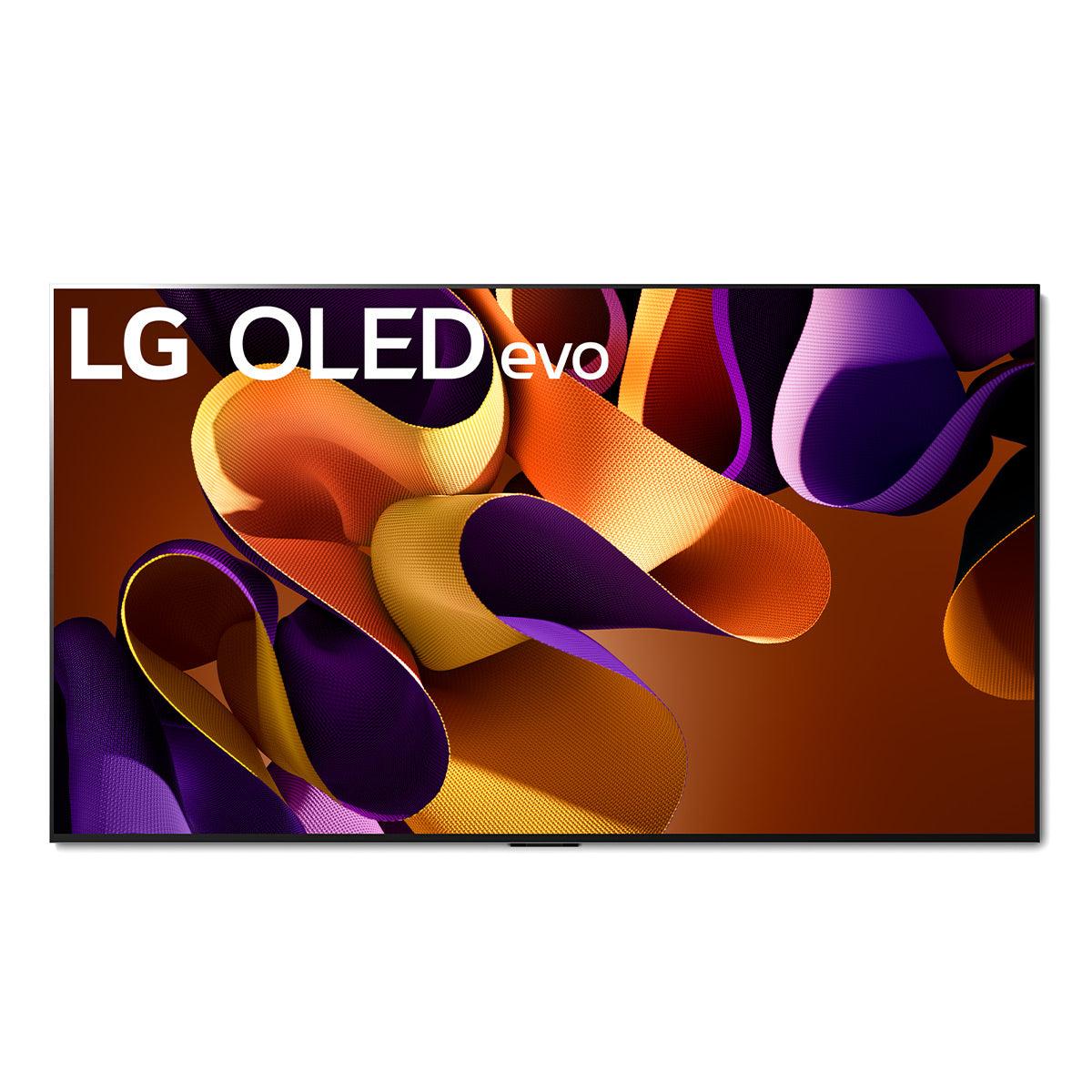
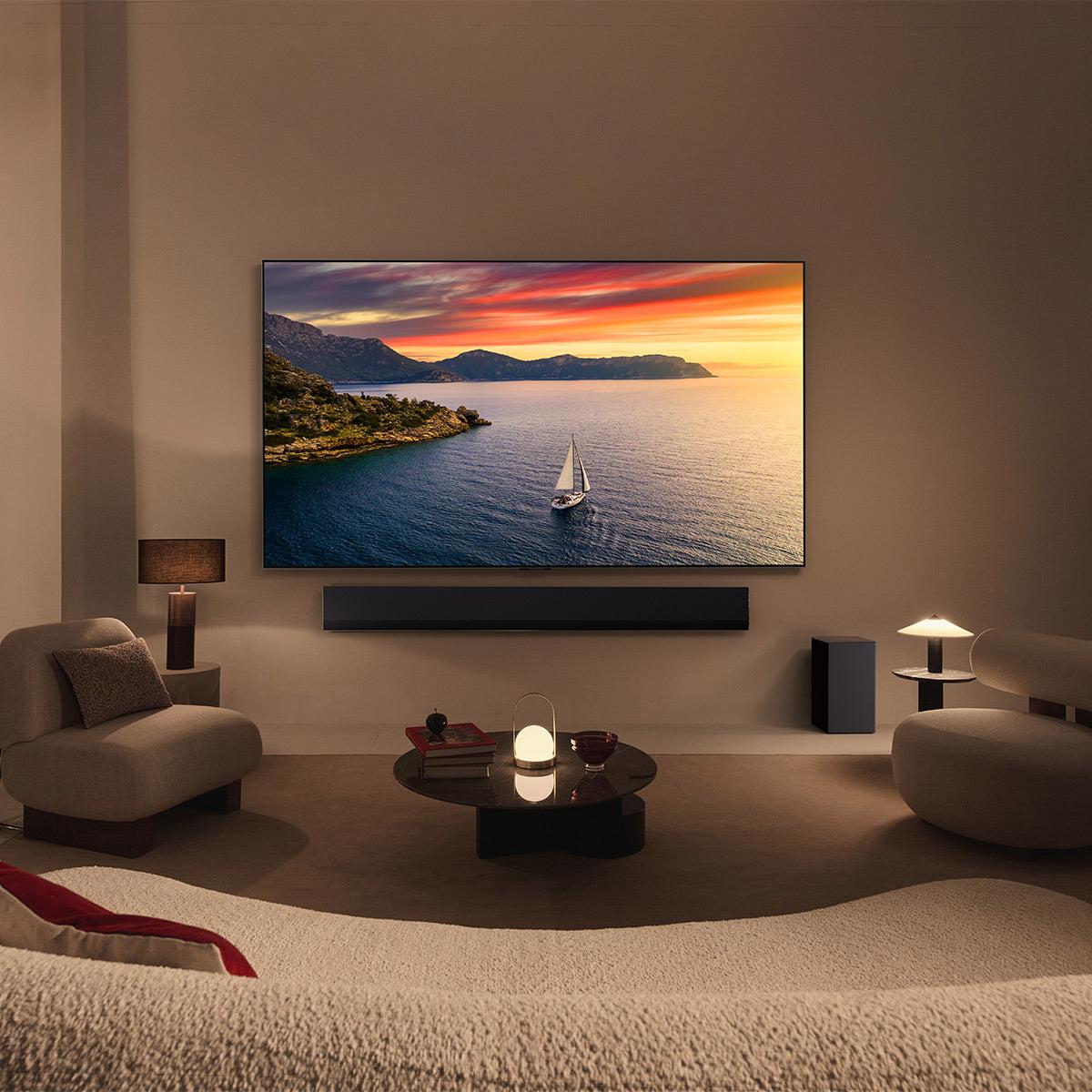
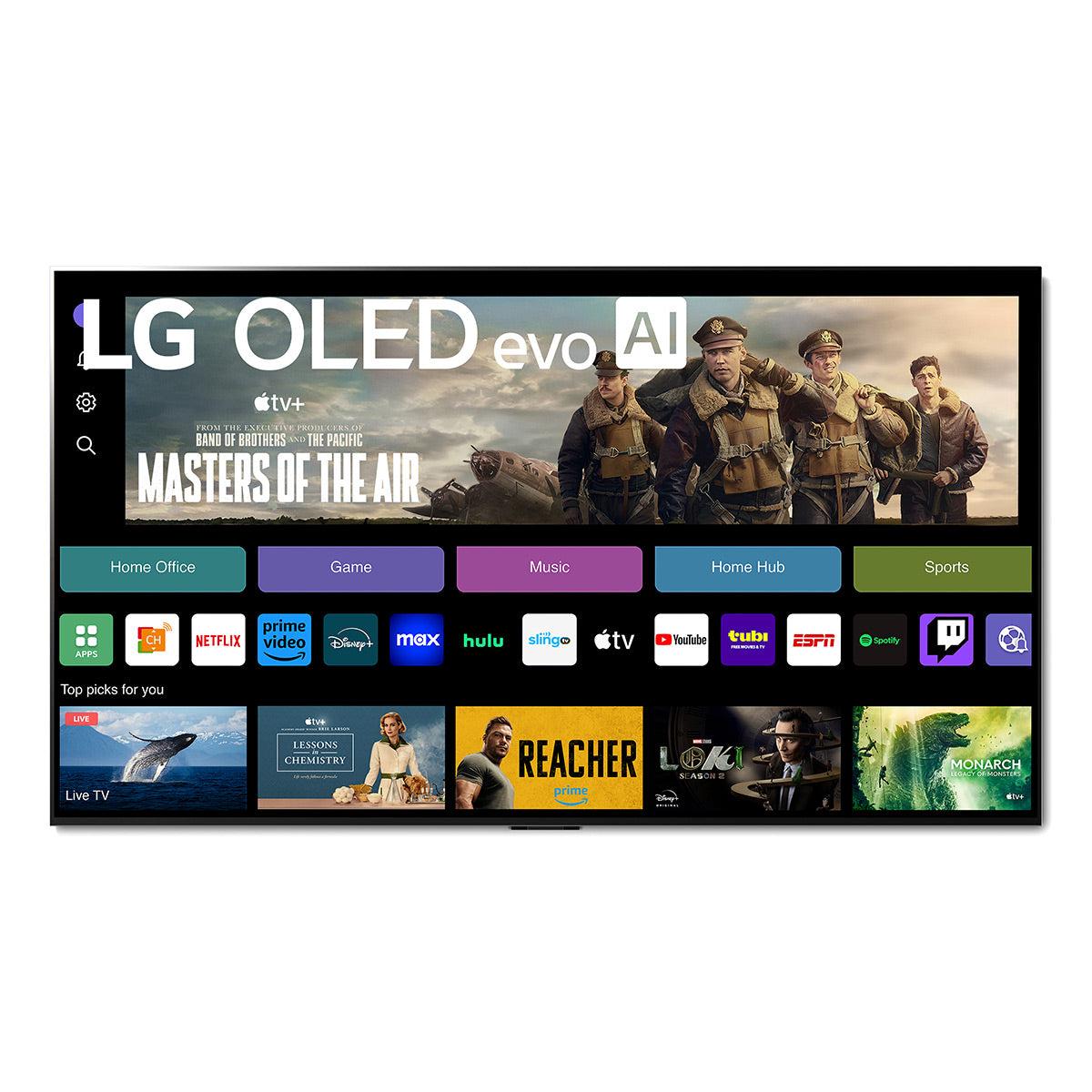
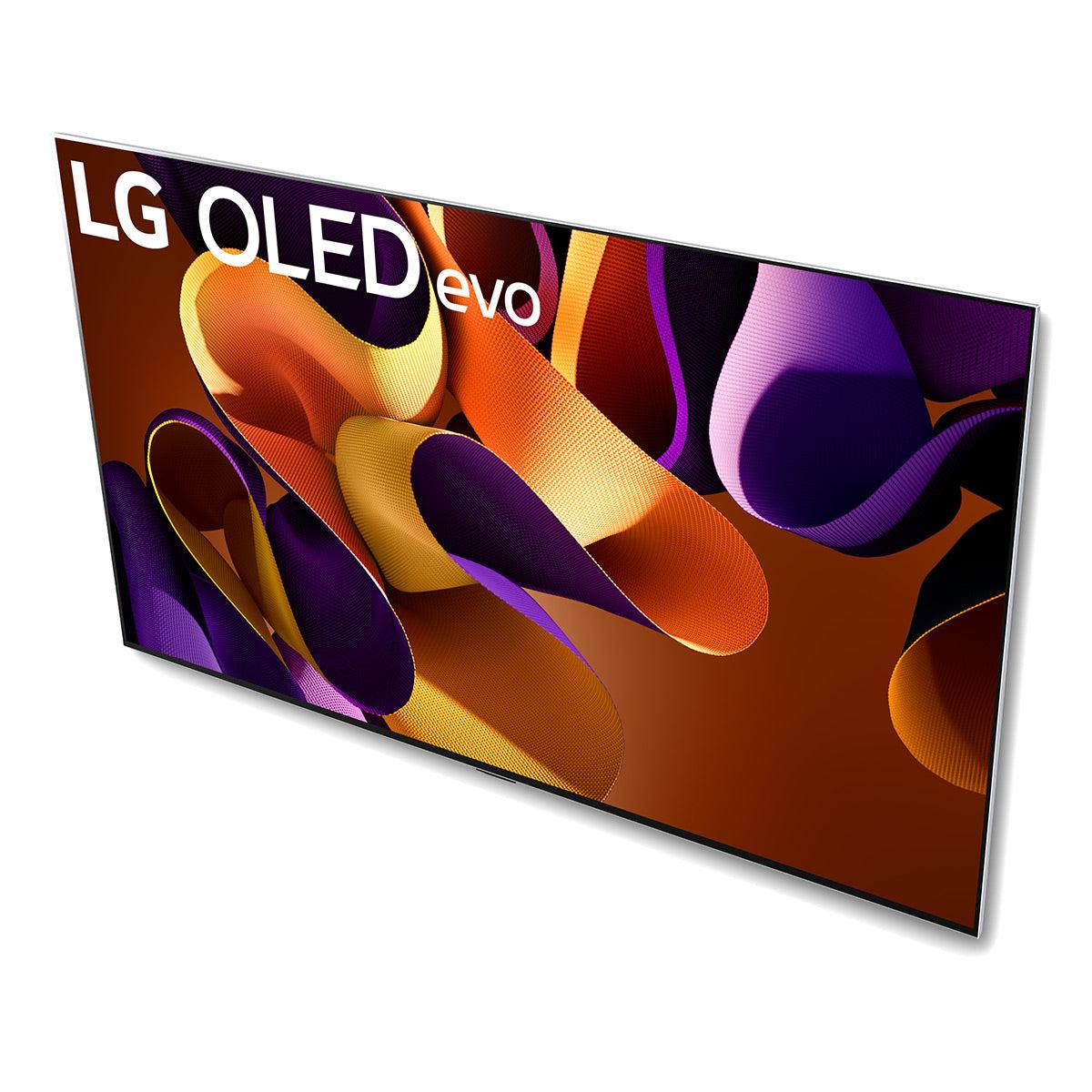
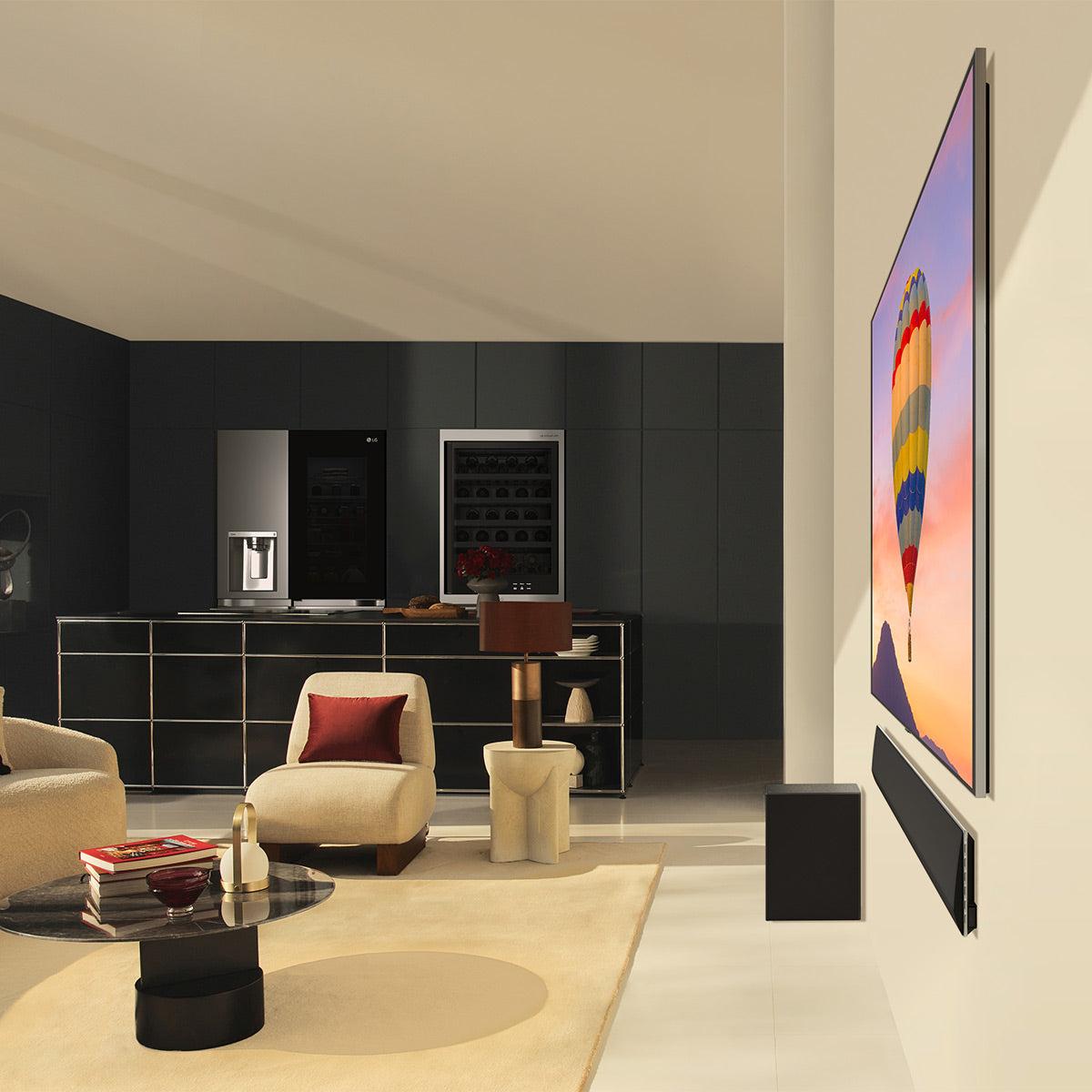
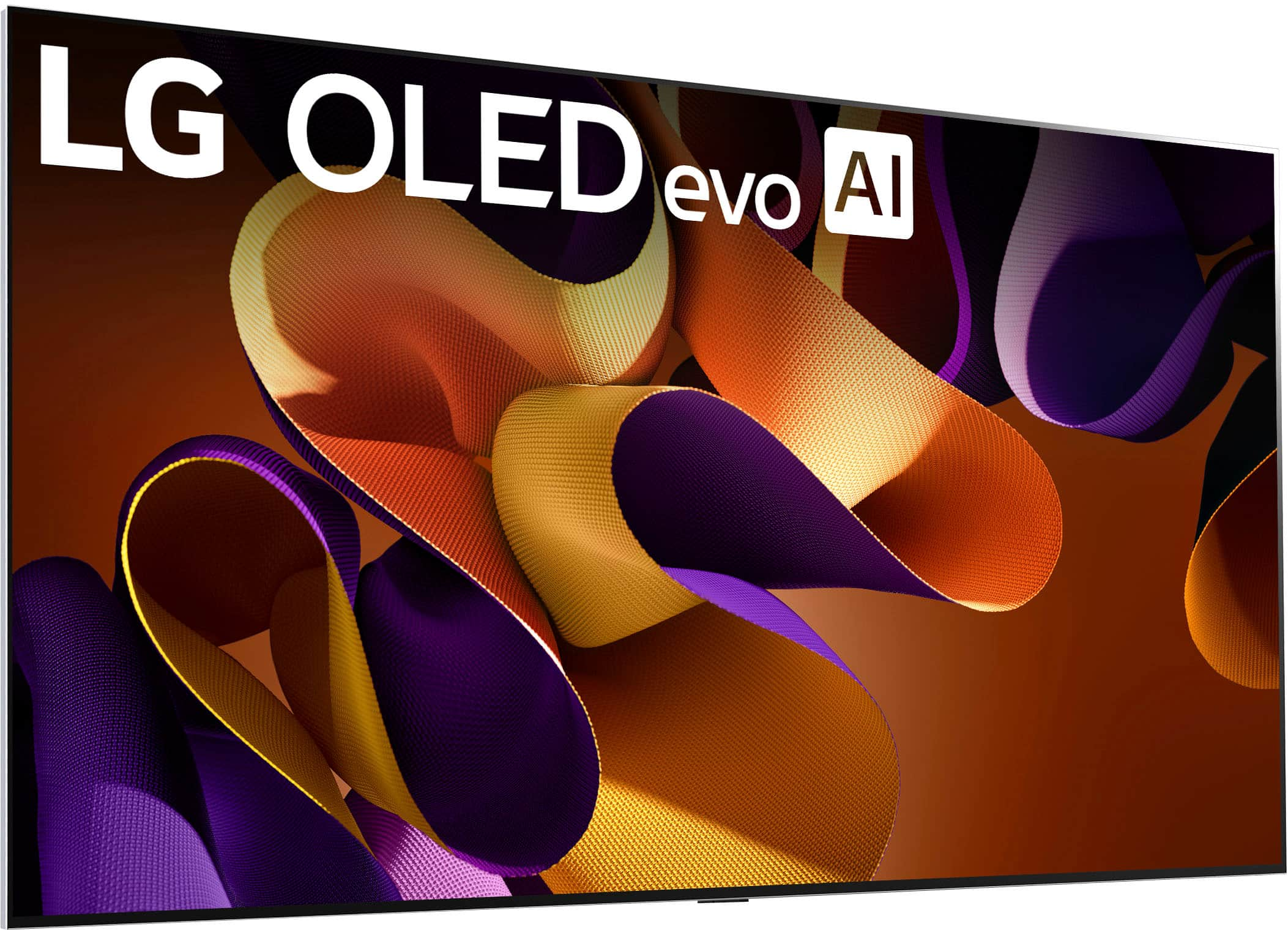
When you're looking at TVs approaching the 100-inch mark, you're entering territory that most people only dream about. These aren't just big TVs – they're home theater centerpieces that can transform your living room into something approaching a cinema experience. Today we're comparing two fascinating approaches to ultra-large premium displays: the Hisense 100" U7 Series Mini-LED TV ($2,997.99) and the LG 97" OLED evo G4 Series ($19,996.99).
What makes this comparison particularly interesting is that these represent two fundamentally different philosophies in TV technology. The Hisense takes the "bigger and brighter for less money" approach using cutting-edge Mini-LED backlighting, while the LG pursues absolute picture perfection through OLED technology at a premium price point. Both were designed for 2024-2025, representing the latest thinking in large-screen TV design.
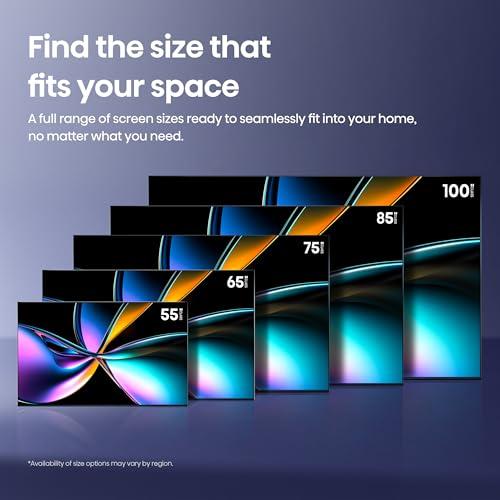
The ultra-large TV category has exploded in recent years as manufacturing costs have dropped and people have created dedicated entertainment spaces in their homes. These TVs typically start around 85 inches and go up to 100+ inches, targeting serious enthusiasts who want that "wow factor" that only massive screens can provide.
The two dominant technologies in this space couldn't be more different. Mini-LED backlighting uses thousands of tiny LEDs behind an LCD panel to create precise lighting control – imagine having thousands of individual flashlights that can dim or brighten independently to create deeper blacks and brighter highlights. OLED technology takes the opposite approach by making each pixel its own light source, meaning pixels can turn completely off for perfect blacks or shine brightly for highlights.
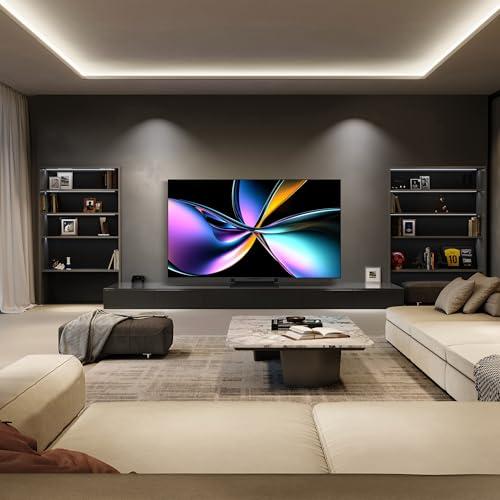
Having spent considerable time with both technologies, I can tell you that each has distinct advantages depending on your viewing environment and preferences. Mini-LED excels in bright rooms where you need that extra punch to overcome ambient light, while OLED creates an almost magical viewing experience in darker environments where its perfect blacks can truly shine.
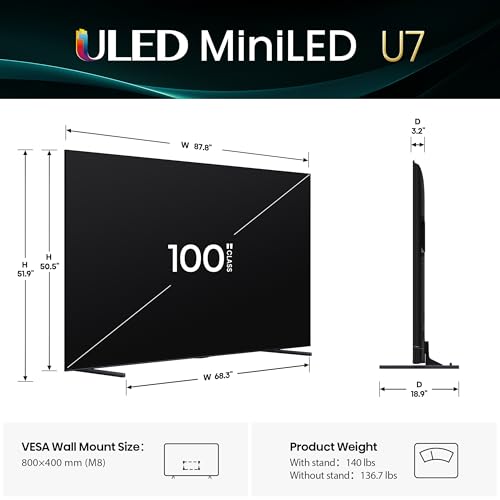
The Hisense 100" U7 Series, released in 2025, represents Hisense's most ambitious consumer TV to date. At 100 inches diagonal (actually 99.5 inches if you're measuring precisely), it's targeting people who want maximum impact without breaking the bank entirely.
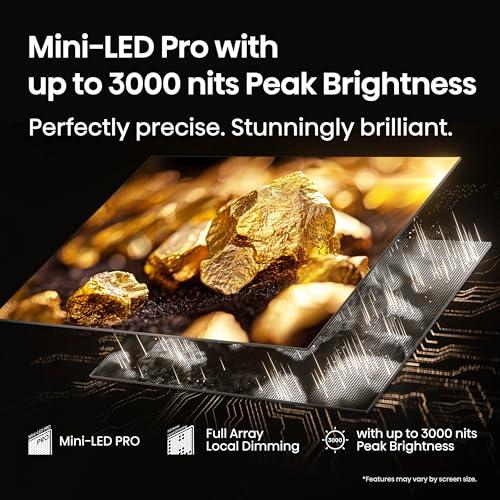
The heart of this TV is its Mini-LED backlighting system with 256 local dimming zones. Think of these zones as independently controllable sections of the backlight – when a movie scene shows stars against a black sky, the zones behind the stars can shine brightly while the zones behind the black sky dim down significantly. This creates much better contrast than traditional LED TVs, though not quite the infinite contrast of OLED.
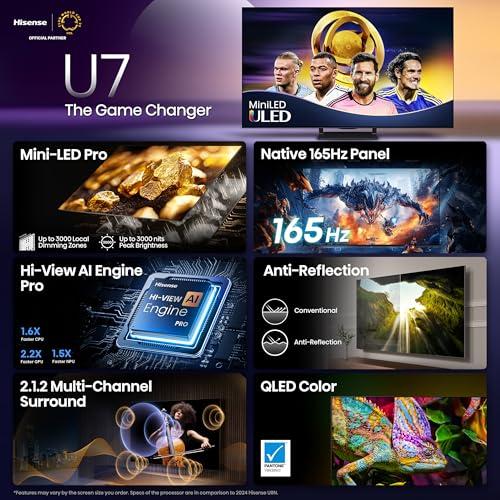
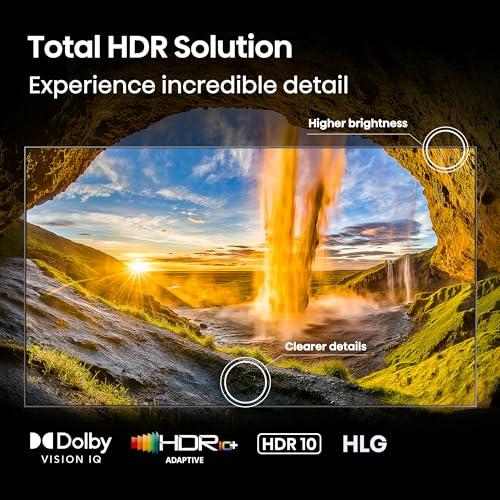
What's particularly impressive about the U7 Series is its peak brightness capability. While the standard rating is 800 nits (a measurement of brightness), the Mini-LED Pro technology can push certain highlights up to 3,000 nits in HDR content. To put that in perspective, that's brighter than most computer monitors and significantly brighter than older TV technologies. This makes HDR content really pop, especially bright explosions, sunlight reflections, or other high-impact visual elements.
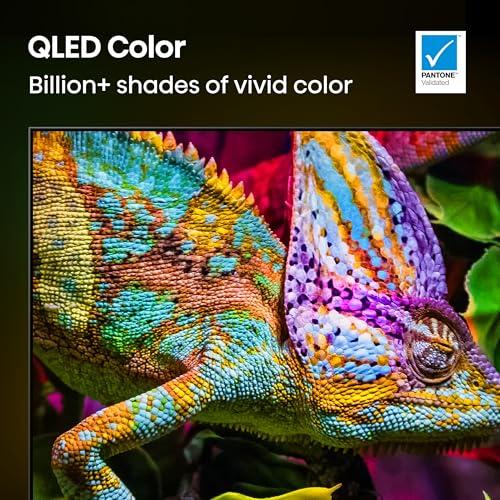
The TV uses Quantum Dot color enhancement, which is essentially a layer of microscopic crystals that convert backlight into purer, more saturated colors. Combined with the Mini-LED backlighting, this delivers over a billion color combinations and wide color gamut coverage that can display most of what modern content creators intended.
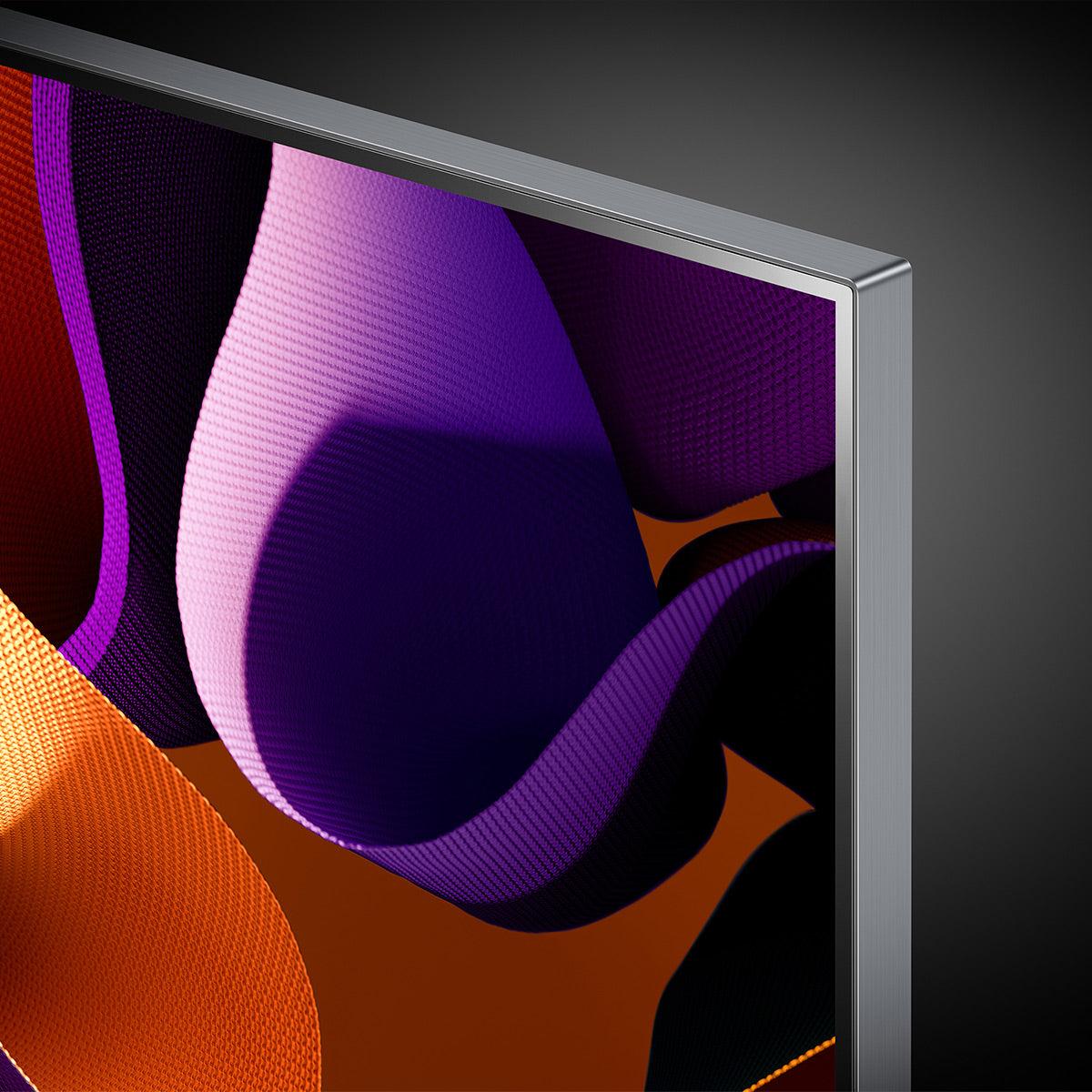
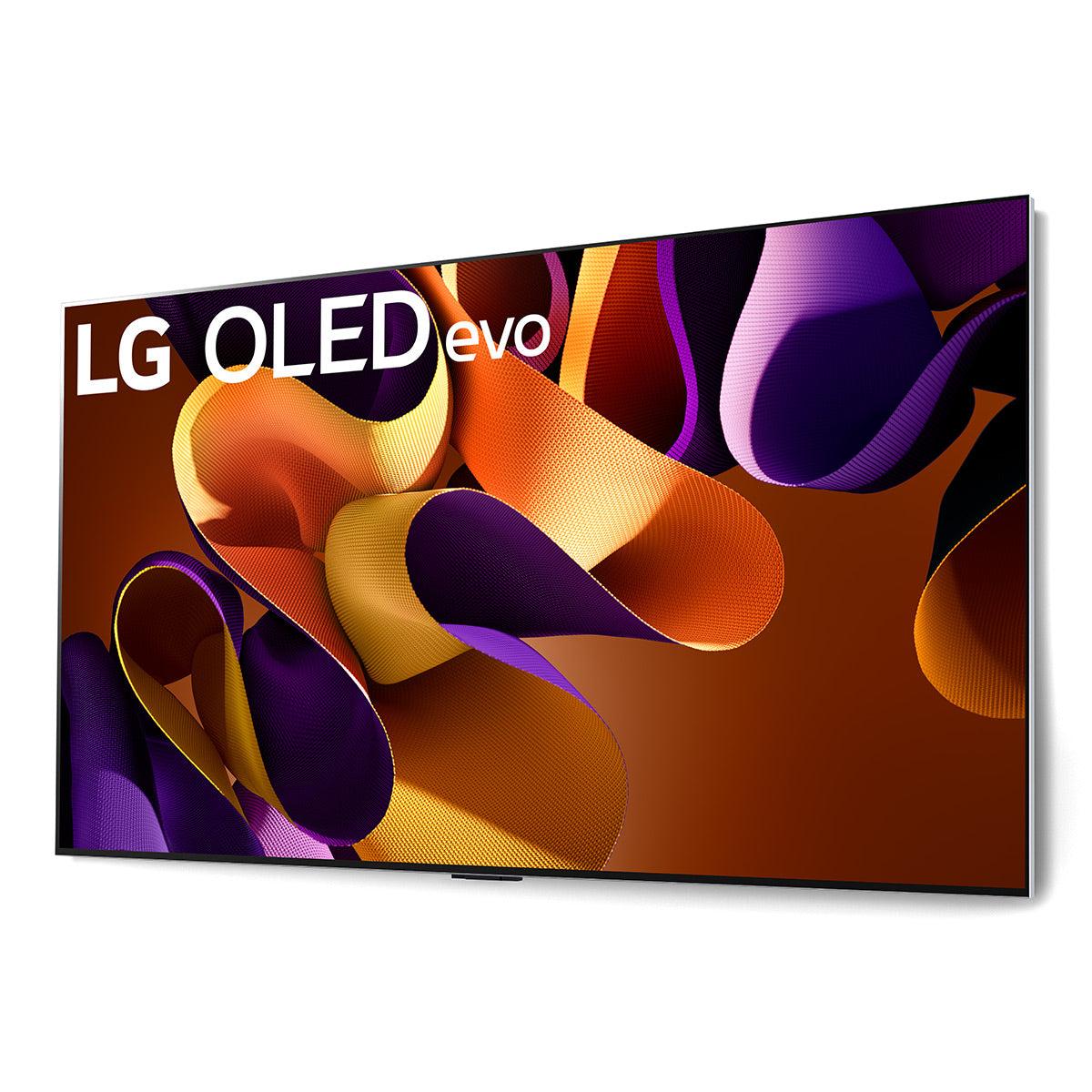
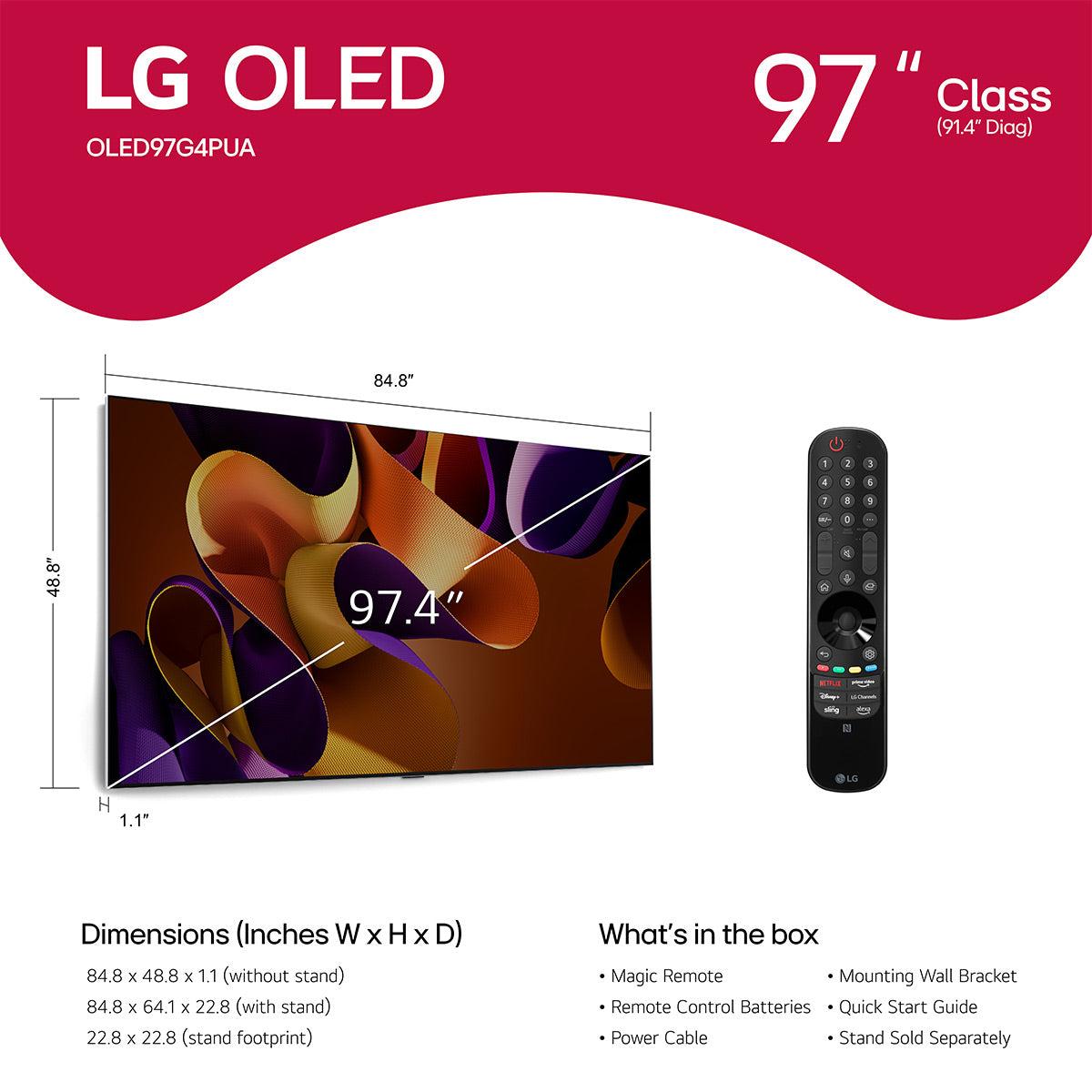
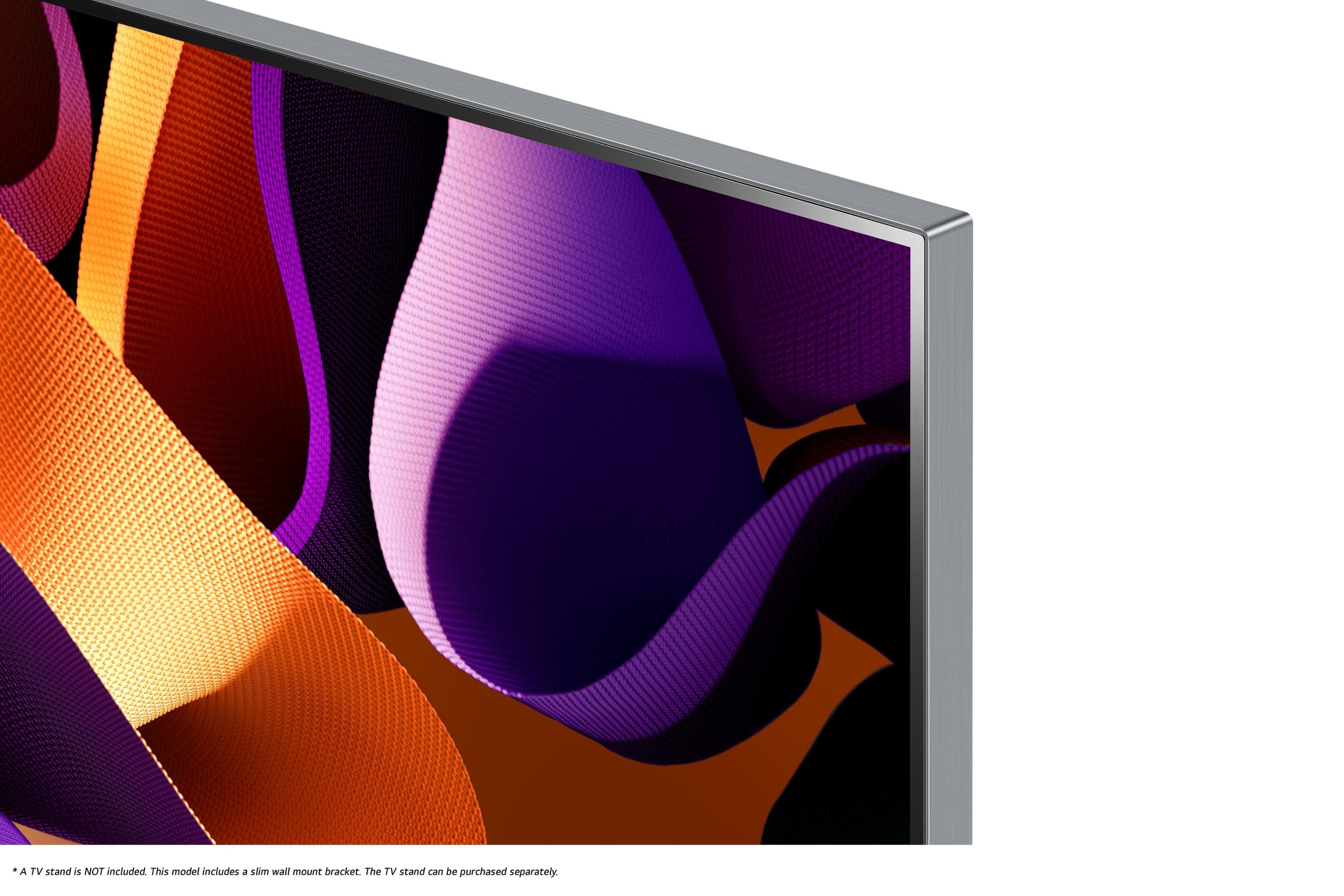
The LG 97" OLED evo G4 Series, while technically a 2024 model, remains current in LG's 2025 lineup and represents their flagship large-screen OLED technology. At 97 inches, it's slightly smaller than the Hisense but uses fundamentally superior display technology.
OLED stands for Organic Light Emitting Diode, and the key difference is that each pixel creates its own light. When a pixel needs to be black, it simply turns off completely – no backlight bleeding through, no compromises. When it needs to be bright, it can shine independently of its neighbors. This creates what's called "infinite contrast ratio" because you're dividing by zero (the black level).
The G4 series introduces Micro Lens Array (MLA) technology, which is LG's solution to OLED's traditional brightness limitations. These microscopic lenses sit on top of each pixel and help focus the light output, making the display 150% brighter than LG's previous B4 series while maintaining OLED's perfect black levels.
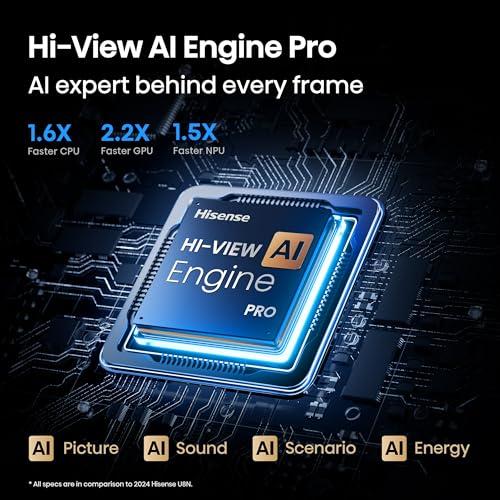
The α11 AI Processor 4K is worth mentioning because it's genuinely impressive in real-world use. This chip analyzes incoming content frame by frame and adjusts contrast, brightness, and color in real-time. When you're watching a dark movie scene, it might lift the brightness slightly to reveal shadow detail, or when you're watching vibrant animation, it might boost color saturation automatically.
Both TVs target serious gamers, but they approach gaming optimization differently, and having tested both technologies extensively, the differences are significant.
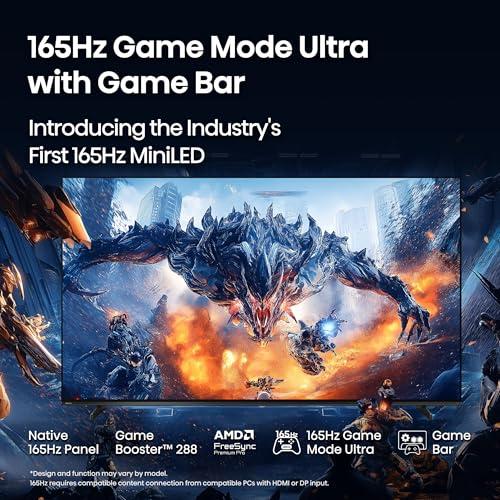
The Hisense 100" U7 Series pushes gaming specifications to impressive levels with its 165Hz Game Mode Ultra. This means the display can refresh up to 165 times per second, creating incredibly smooth motion in fast-paced games. The Variable Refresh Rate (VRR) technology syncs the TV's refresh rate with your gaming console's output, eliminating screen tearing – that annoying horizontal line that appears when the display and graphics card get out of sync.
What's particularly noteworthy is the TV's support for AMD FreeSync Premium Pro and Dolby Vision Gaming at 4K 144Hz. This combination means you can experience HDR gaming (high dynamic range with enhanced brightness and color) while maintaining high refresh rates for competitive play. The TV also includes a Game Bar interface that lets you monitor and adjust gaming settings without leaving your game.
However, the LG 97" OLED G4 takes a different approach that, in my experience, often feels superior in actual gameplay. While it "only" supports 144Hz refresh rates, its response time is essentially instantaneous at less than 0.1 milliseconds. This means there's virtually no delay between when a pixel receives a signal to change and when it actually changes color.
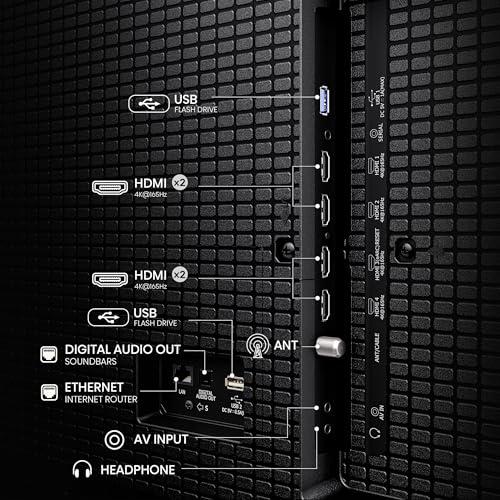
For competitive gaming, this difference is profound. In first-person shooters or racing games where split-second reactions matter, OLED's instantaneous response creates a more connected feeling between your controller inputs and what happens on screen. The LG also includes four full-bandwidth HDMI 2.1 ports, meaning you can connect multiple high-end gaming devices without compromising performance.
This is where the fundamental technology differences become most apparent, and where personal preference and viewing environment play crucial roles.
The Mini-LED approach in the Hisense creates what I'd describe as "impressive" picture quality. Colors are vibrant and punchy, brightness levels can be spectacular, and HDR content has real impact. The Quantum Dot technology ensures color accuracy is excellent, and the 256 local dimming zones provide much better contrast than traditional LED TVs.
However, Mini-LED still faces some inherent limitations. Because the backlight zones are relatively large compared to OLED's pixel-level control, you can sometimes see subtle "blooming" around bright objects against dark backgrounds – imagine a streetlight in a night scene where the area immediately around the light appears slightly gray instead of pure black. It's not always noticeable, but critical viewers will spot it in certain content.
The OLED approach in the LG creates what I can only describe as "reference quality" picture. Blacks are absolutely perfect because pixels turn completely off. This creates contrast that's literally infinite – you're dividing any brightness level by true zero. Colors appear to float in space rather than being displayed on a screen, and viewing angles are perfect from any position in the room.
The MLA technology addresses OLED's traditional brightness limitations effectively. While it doesn't reach the peak brightness levels of high-end Mini-LED displays, it provides plenty of brightness for HDR content while maintaining OLED's perfect black levels. In my experience, this combination of perfect blacks and adequate brightness often looks more impressive than higher peak brightness with imperfect blacks.
Both TVs run sophisticated smart platforms, but they take notably different approaches to user experience.
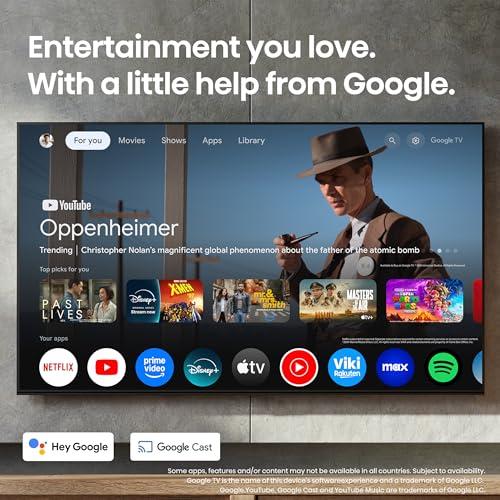
The Hisense runs Google TV, which has become my preferred smart TV platform for its simplicity and integration. The interface is clean, content recommendations are generally accurate, and the Google Assistant integration works seamlessly with smart home devices. Chromecast is built-in, making it effortless to cast content from phones or tablets. The WiFi 6E support ensures strong wireless performance for streaming high-bandwidth content.
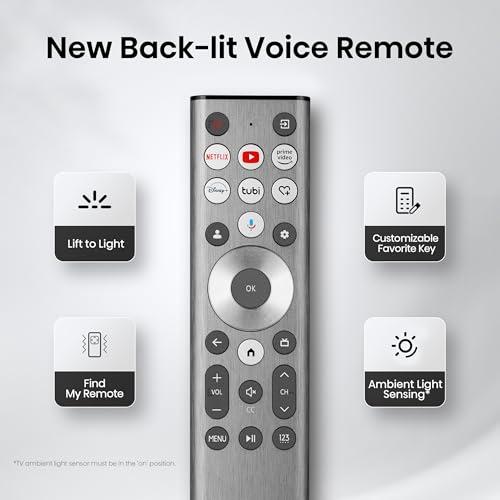
The LG's webOS 24 platform is more sophisticated but also more complex. The AI processing genuinely improves the experience – the TV learns your viewing habits and adjusts picture settings automatically. The interface is more visually appealing than Google TV, and the magic remote with pointer control feels more premium than traditional remotes.
Where LG pulls ahead is in audio processing. The built-in 4.2 channel system with 60W output and virtual 11.1.2 upmixing creates genuinely impressive sound for a TV. The AI Acoustic Tuning analyzes your room and adjusts the audio accordingly, which actually works well in practice.
The price difference between these TVs is dramatic – the Hisense 100" U7 Series at $2,997.99 versus the LG 97" OLED G4 at $19,996.99 represents nearly a 7:1 price ratio. However, value isn't just about upfront cost.
The Hisense offers exceptional value for buyers who want maximum screen impact. You're getting 100 inches of premium Mini-LED technology with comprehensive gaming features and modern smart TV capabilities at a price that, while not cheap, is accessible to serious enthusiasts. The larger screen size creates more immersive viewing, and the bright, punchy picture quality works well in most home environments.
The LG justifies its premium pricing through several factors. The OLED picture quality is simply superior in most viewing conditions, particularly in dedicated home theater environments. LG includes a 5-year panel warranty, which is crucial given OLED's higher cost and potential for image retention issues. The build quality is exceptional, with gallery-design aesthetics that complement high-end home décor.
From a long-term perspective, the Hisense faces no burn-in risk since it's LCD-based technology, while OLED can potentially develop image retention with extreme use patterns (though this is much less common with modern panels). However, OLED technology has proven quite durable, with modern panels rated for 100,000+ hours of use.
In dedicated home theater environments, these TVs serve different purposes and excel in different scenarios.
The Hisense 100" U7 Series works best in multi-purpose rooms where you can't fully control lighting. Its high brightness output ensures good visibility even with some ambient light, and the larger screen size creates more immersive viewing for the whole family. The comprehensive gaming features make it excellent for households where the TV serves both entertainment and gaming purposes.
The LG 97" OLED G4 shines in dedicated theater rooms where you can control lighting completely. In a dark environment, OLED's perfect blacks create an almost magical viewing experience where the screen seems to disappear and you're viewing through a window into another world. The accurate colors and infinite contrast make it ideal for critical movie viewing.
For serious home theater enthusiasts, the LG's support for professional calibration standards and filmmaker mode ensures content appears as directors intended. However, the Hisense's brighter output can actually be preferable for HDR content in rooms where you can't achieve complete darkness.
Choose the Hisense 100" U7 Series if you want maximum screen size with modern premium features at a reasonable price point. It's ideal for bright living rooms, mixed-use entertainment spaces, and buyers who prioritize value and screen size over absolute picture perfection. The comprehensive gaming features and reliable LCD technology make it a smart choice for households where the TV serves multiple purposes.
Choose the LG 97" OLED G4 if you're building a dedicated home theater and prioritize absolute picture quality over cost considerations. The perfect blacks, infinite contrast, and professional-grade color accuracy justify the premium pricing for serious enthusiasts. The 5-year warranty and premium build quality make it a long-term investment in viewing excellence.
Both represent excellent choices in their respective categories, but they're targeting fundamentally different buyers with different priorities and budgets. The Hisense maximizes impact per dollar, while the LG maximizes picture quality regardless of cost.
| Hisense 100" U7 Series Mini-LED TV ($2,997.99) | LG 97" OLED evo G4 Series ($19,996.99) |
|---|---|
| Screen Size - Bigger is more immersive, but 3" difference is barely noticeable at viewing distance | |
| 100 inches (99.5" actual) | 97 inches |
| Display Technology - Fundamental difference affecting contrast, brightness, and viewing angles | |
| Mini-LED with 256 local dimming zones + QLED Quantum Dot | OLED with self-lit pixels + Micro Lens Array (MLA) |
| Peak Brightness - Critical for HDR impact and bright room viewing | |
| 800 nits standard, up to 3,000 nits (Mini-LED Pro) | 150% brighter than LG B4 series with Brightness Booster Max |
| Black Level Performance - Affects contrast and dark scene detail | |
| Very good (Mini-LED local dimming with some blooming) | Perfect (pixels turn completely off, infinite contrast) |
| Gaming Refresh Rate - Higher numbers mean smoother motion in fast games | |
| 165Hz Game Mode Ultra with 48-165Hz VRR | 144Hz with VRR support |
| Input Lag - Lower is better for competitive gaming responsiveness | |
| 6ms response time | <0.1ms (nearly instantaneous) |
| HDMI 2.1 Ports - Needed for 4K 120Hz+ gaming from modern consoles | |
| 4 ports (all HDMI 2.1) | 4 ports (all full-bandwidth HDMI 2.1) |
| Smart TV Platform - Affects daily usability and app selection | |
| Google TV with Google Assistant | webOS 24 with AI processing |
| Audio System - Built-in sound quality before adding external speakers | |
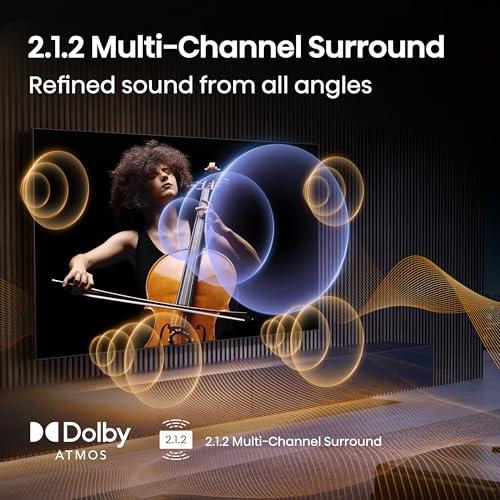
| 2.1.2 system (55W total) with Dolby Atmos | 4.2 channel system (60W total) with virtual 11.1.2 upmix |
| Viewing Angles - How picture quality degrades when viewed from the side | |
| Limited (typical LCD/VA panel degradation) | Perfect (178° with no color shift) |
| Burn-in Risk - Potential for permanent image retention with static content | |
| None (LCD technology immune to burn-in) | Minimal with modern OLED panels, but possible |
| Warranty Coverage - Protection for your investment | |
| 24 months parts and labor | 5-year panel warranty included |
| Power Consumption - Ongoing electricity costs | |
| 500W standard operation | 328W standard operation |
| Best Room Type - Where each TV performs optimally | |
| Bright living rooms, mixed-use spaces | Dark/controlled lighting home theaters |
| Value Proposition - What you get for the price difference | |
| Maximum screen size with premium features at accessible price | Reference-quality OLED picture with luxury build and warranty |
The Hisense 100" U7 Series Mini-LED TV ($2,997.99) is significantly better for bright rooms. Its Mini-LED backlighting can reach up to 3,000 nits peak brightness, easily overcoming glare and ambient light. The LG 97" OLED evo G4 Series ($19,996.99) performs best in dark or controlled lighting environments where its perfect blacks can shine.
Mini-LED uses thousands of tiny LEDs behind an LCD panel for precise backlighting control, offering extremely high brightness but with some light bleeding. OLED pixels create their own light and can turn completely off for perfect blacks and infinite contrast, but with lower peak brightness than Mini-LED.
Both excel at gaming but differently. The Hisense 100" U7 Series offers 165Hz refresh rate and comprehensive gaming features. The LG 97" OLED evo G4 has lower input lag at <0.1ms and instantaneous pixel response, making it better for competitive gaming where reaction time matters most.
At typical viewing distances (10-12 feet), the 3-inch difference between the Hisense 100" U7 Series and LG 97" OLED G4 is barely perceptible. Both provide an immersive, cinema-like experience, so choose based on picture quality and features rather than the small size difference.
The LG 97" OLED evo G4 Series has superior overall picture quality with perfect blacks, infinite contrast, and excellent color accuracy. The Hisense 100" U7 Series offers impressive picture quality with brighter highlights and vibrant colors, but can't match OLED's contrast performance.
The LG 97" OLED G4 ($19,996.99) costs about 7 times more than the Hisense 100" U7 Series ($2,997.99). The LG justifies its premium with superior picture quality, 5-year warranty, and luxury build quality, but the Hisense offers exceptional value for most buyers.
For dedicated home theaters with controlled lighting, the LG 97" OLED evo G4 is superior due to its perfect blacks and infinite contrast. For multi-purpose rooms or brighter spaces, the Hisense 100" U7 Series works better with its higher brightness and larger screen size.
The Hisense 100" U7 Series has no burn-in risk since it uses LCD technology. The LG 97" OLED G4 has minimal burn-in risk with modern OLED panels, but static images displayed for extended periods could potentially cause permanent retention.
Both offer excellent smart platforms. The Hisense 100" U7 Series uses Google TV with simple navigation and strong Google Assistant integration. The LG 97" OLED G4 features webOS 24 with AI processing and more sophisticated interface design, though it's slightly more complex.
The LG 97" OLED evo G4 has superior built-in audio with a 4.2 channel 60W system and virtual 11.1.2 upmixing. The Hisense 100" U7 Series offers decent 2.1.2 sound with 55W total power and Dolby Atmos support, but most buyers will want external speakers for either TV.
The Hisense 100" U7 Series faces no burn-in risk and uses proven LCD technology, but comes with standard 2-year warranty. The LG 97" OLED G4 includes a 5-year panel warranty and has proven OLED durability, rated for 100,000+ hours of use.
Choose the Hisense 100" U7 Series ($2,997.99) if you want maximum screen size and value, have a bright room, or prioritize gaming features. Choose the LG 97" OLED evo G4 Series ($19,996.99) if you have a dedicated dark theater room, prioritize absolute picture quality, and can justify the premium price for reference-level performance.
We've done our best to create useful and informative comparisons to help you decide what product to buy. Our research uses advanced automated methods to create this comparison and perfection is not possible - please contact us for corrections or questions. These are the sites we've researched in the creation of this article: rtings.com - bestbuy.com - rtings.com - lueckeaudiovideo.com - youtube.com - hisense-usa.com - youtube.com - hisense-usa.com - costco.com - hisense-usa.com - pcrichard.com - files.hisense-usa.com - bestbuy.com - youtube.com - hisense-usa.com - displayspecifications.com - bestbuy.com - hisense-usa.com - eftm.com - youtube.com - youtube.com - rtings.com - marketplace.sce.com - abt.com - youtube.com - walts.com - videoandaudiocenter.com - youtube.com - fullspecs.net - big-georges.com - techradar.com - youtube.com

Privacy Policy
Terms and Conditions - Affiliate Policy
Home Security
© Copyright 2008-2026.
11816 Inwood Rd #1211, Dallas, TX 75244