

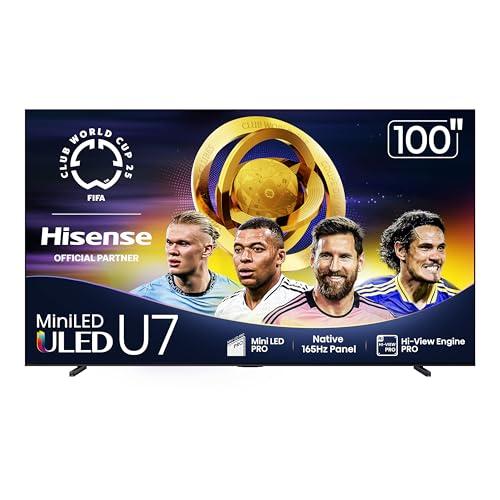
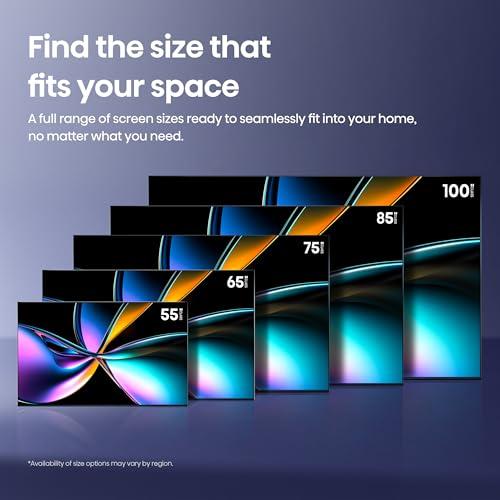
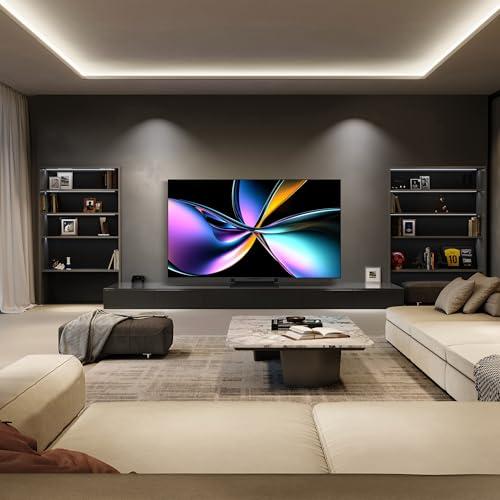
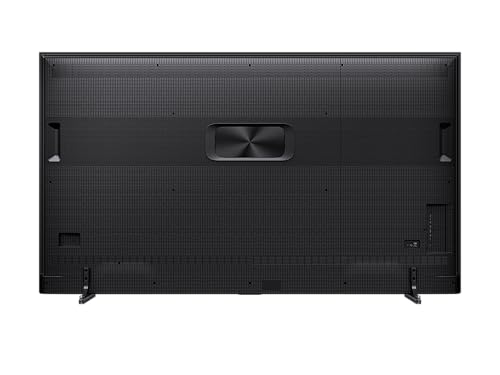
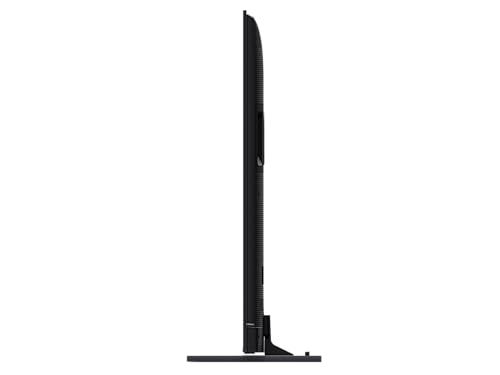
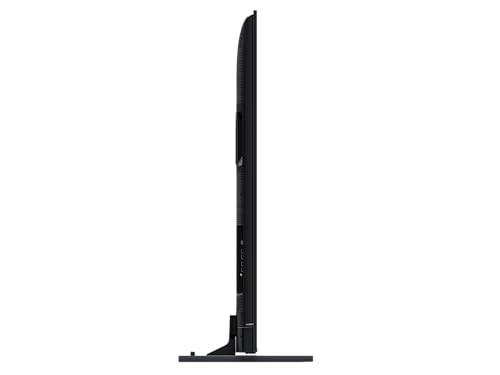
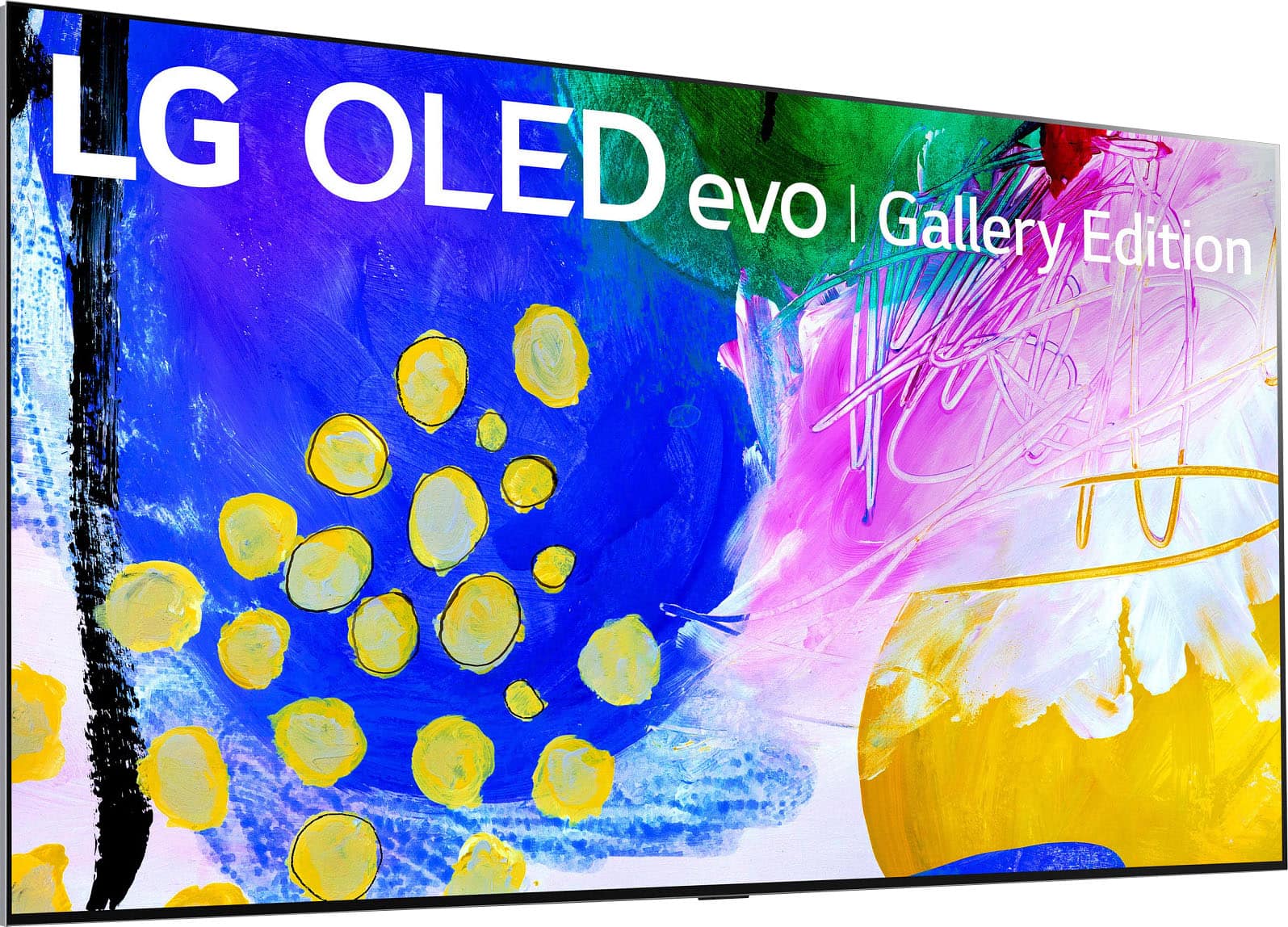
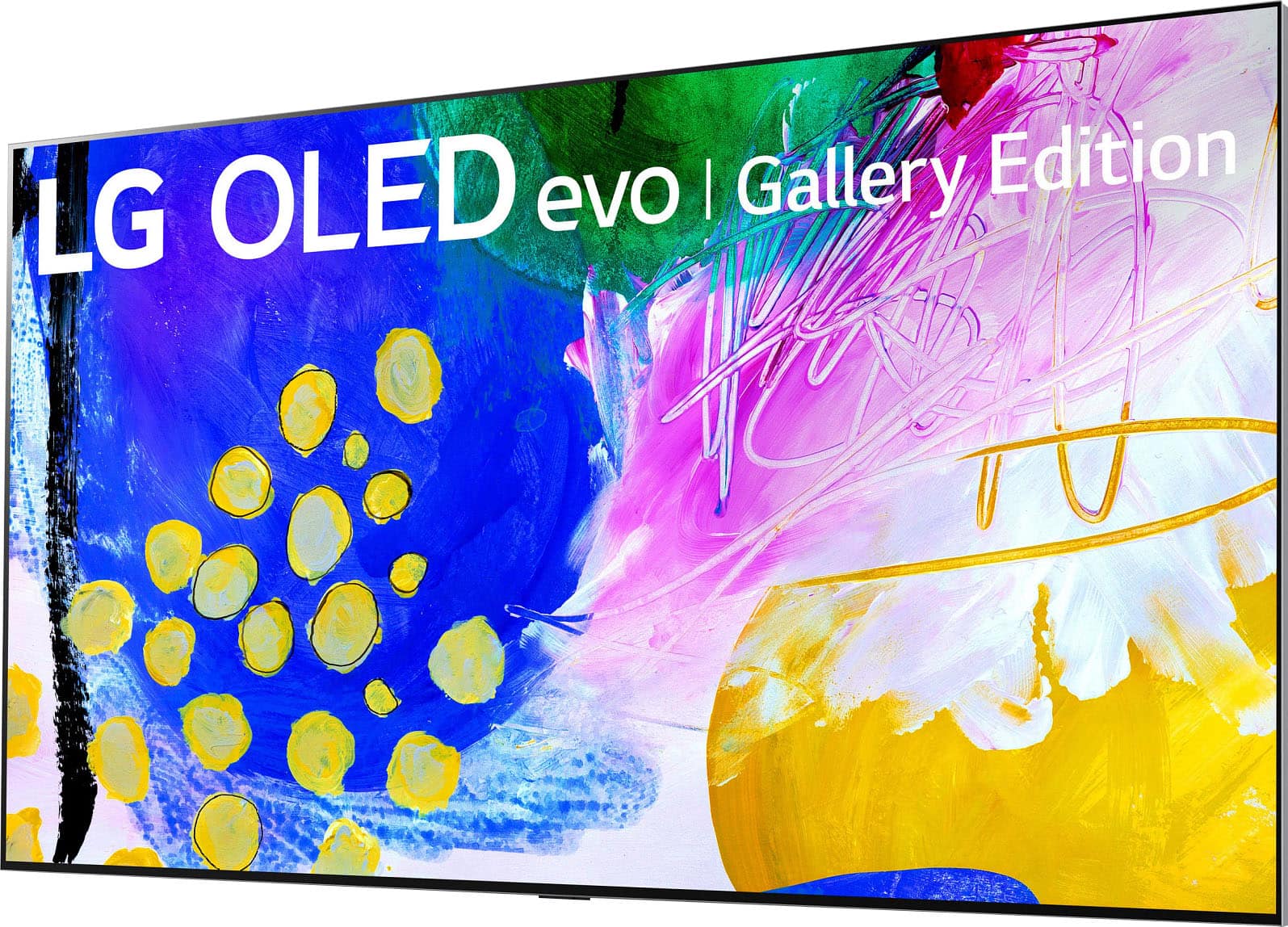
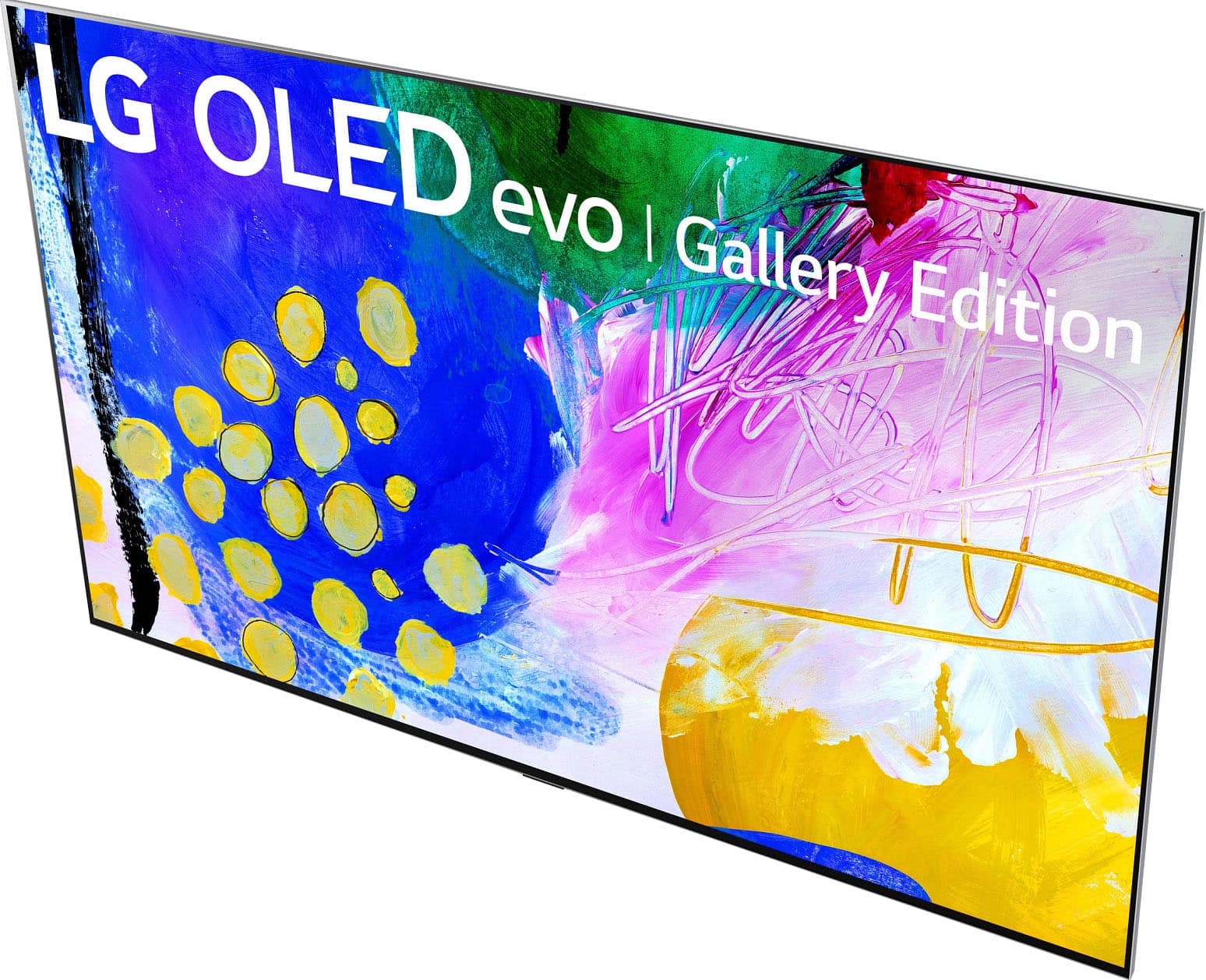
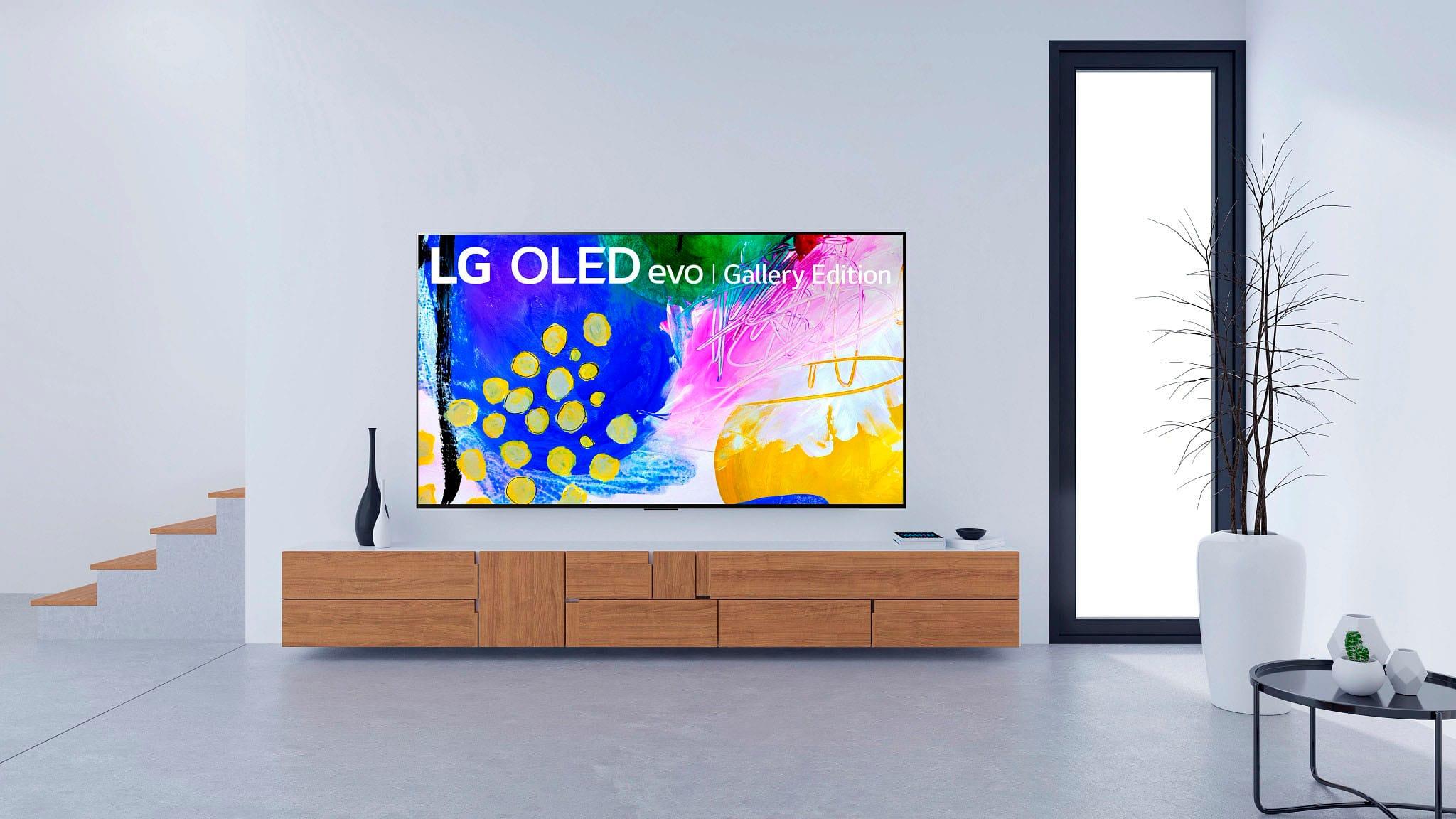
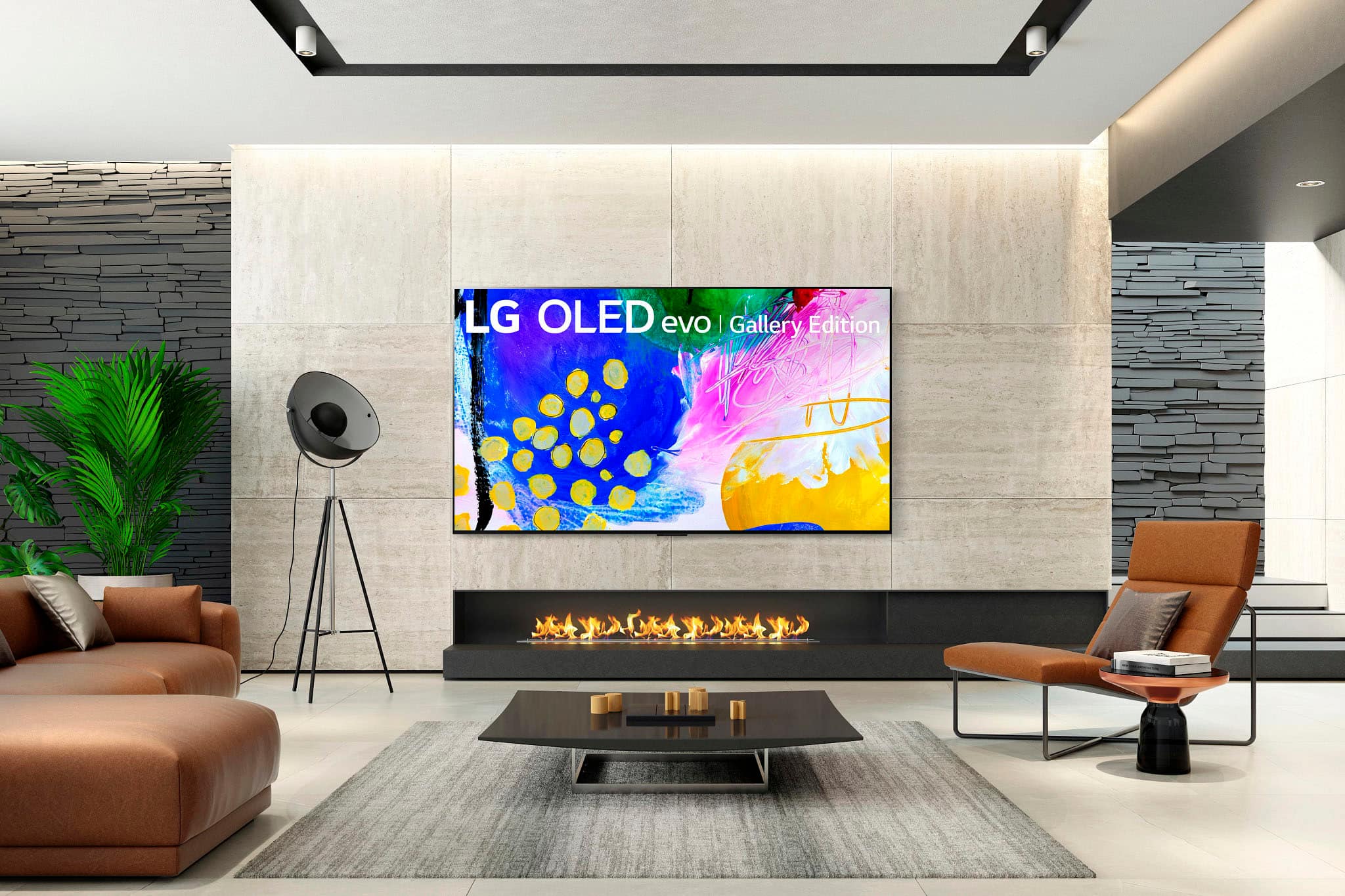
When you're ready to transform your living room into a personal cinema, two massive displays stand out from the crowd: the Hisense 100" U7 Series Mini-LED TV at $2,997.99 and the LG 97" G2 Series OLED evo priced at $10,799.99. Both promise theater-like experiences, but they take completely different approaches to get there.
Large premium TVs – those massive 95+ inch displays – represent the cutting edge of home entertainment technology. Think of them as the sports cars of the TV world: they're built to impress and deliver experiences you simply can't get elsewhere. But just like choosing between a turbocharged muscle car and a refined luxury sedan, the decision comes down to understanding what each technology does best.
The main considerations when shopping in this category include display technology (how the TV actually creates the picture), picture quality across different lighting conditions, gaming performance for modern consoles and PCs, smart features that integrate with your digital life, and ultimately, whether the performance justifies the cost.
What makes this comparison particularly interesting is that we're looking at two fundamentally different approaches to premium display technology, each with distinct advantages depending on how you plan to use your TV.
The Hisense 100" U7 Series, released in 2025 as part of Hisense's latest ULED lineup, uses Mini-LED technology – and it's exactly what it sounds like. Instead of using a few large LED lights behind the screen like traditional LCD TVs, Mini-LED employs thousands of incredibly small LEDs, each about the size of a grain of sand.
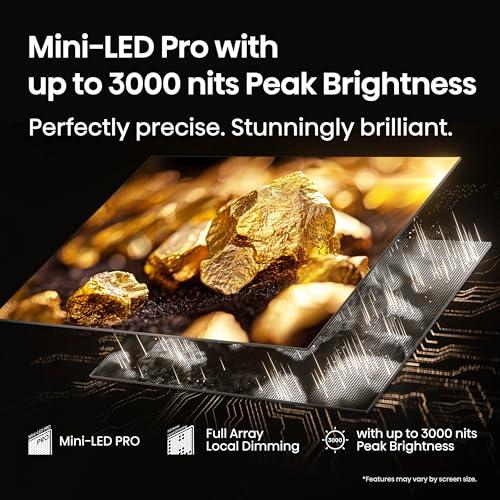
These tiny LEDs work together through a system called Full Array Local Dimming with 256 zones. Imagine your TV screen divided into 256 separate sections, each capable of getting brighter or darker independently. When you're watching a movie scene with a bright explosion against a dark night sky, the TV can make just the explosion area blazingly bright while keeping the night sky portions completely dark. This precision control is what creates that dramatic, lifelike contrast.
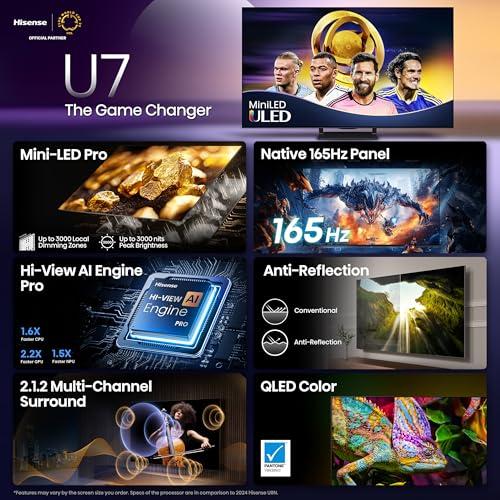
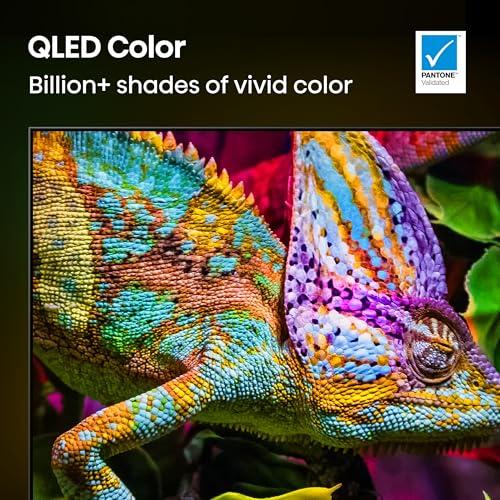
The Mini-LED Pro technology in this Hisense can push brightness up to 3,000 nits – that's roughly three times brighter than a typical TV and bright enough to make HDR (High Dynamic Range) content really pop, even in a bright living room with windows. Combined with Quantum Dot color technology, which uses microscopic particles to produce over a billion different colors, you get incredibly vibrant and accurate color reproduction.
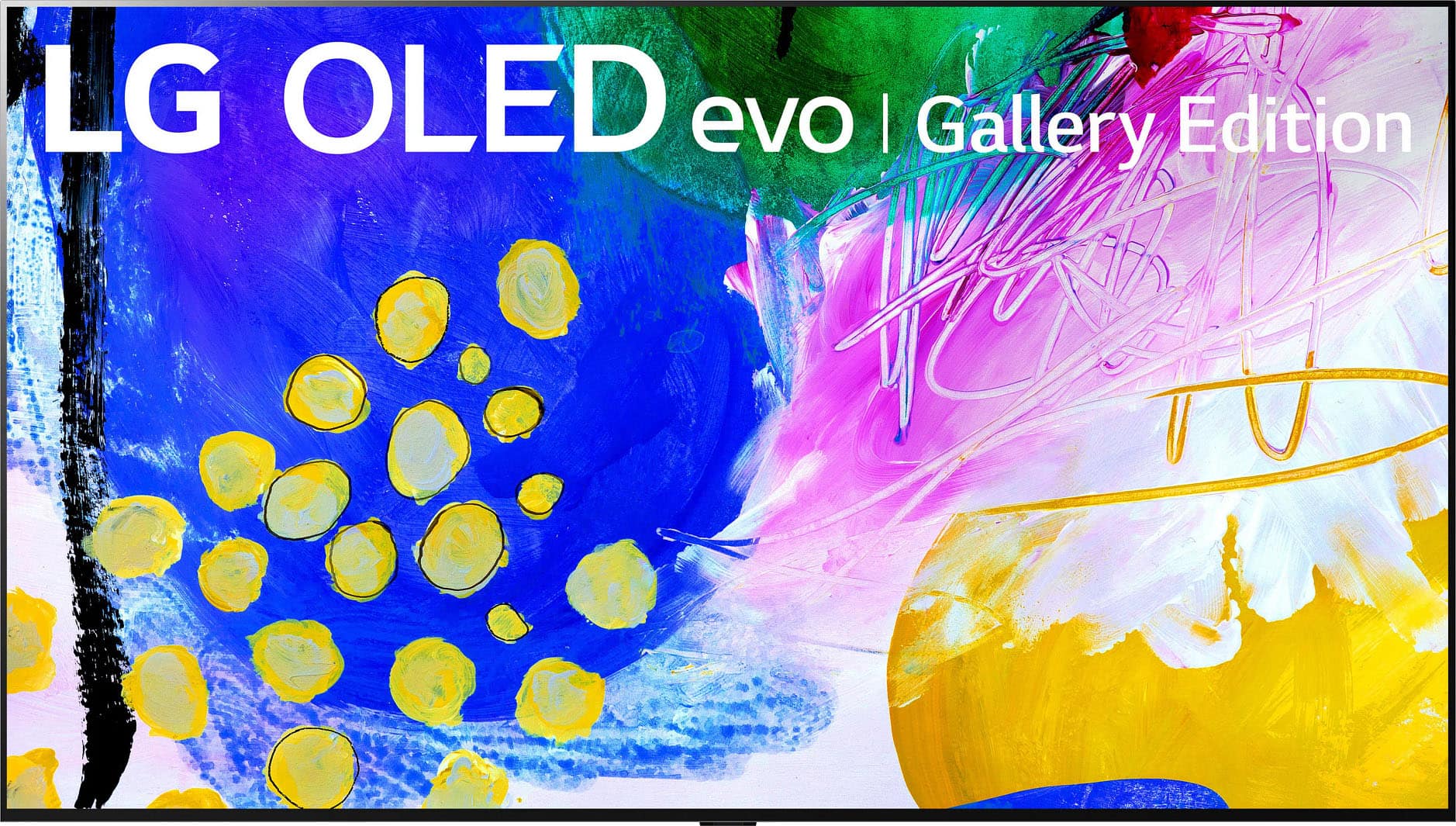
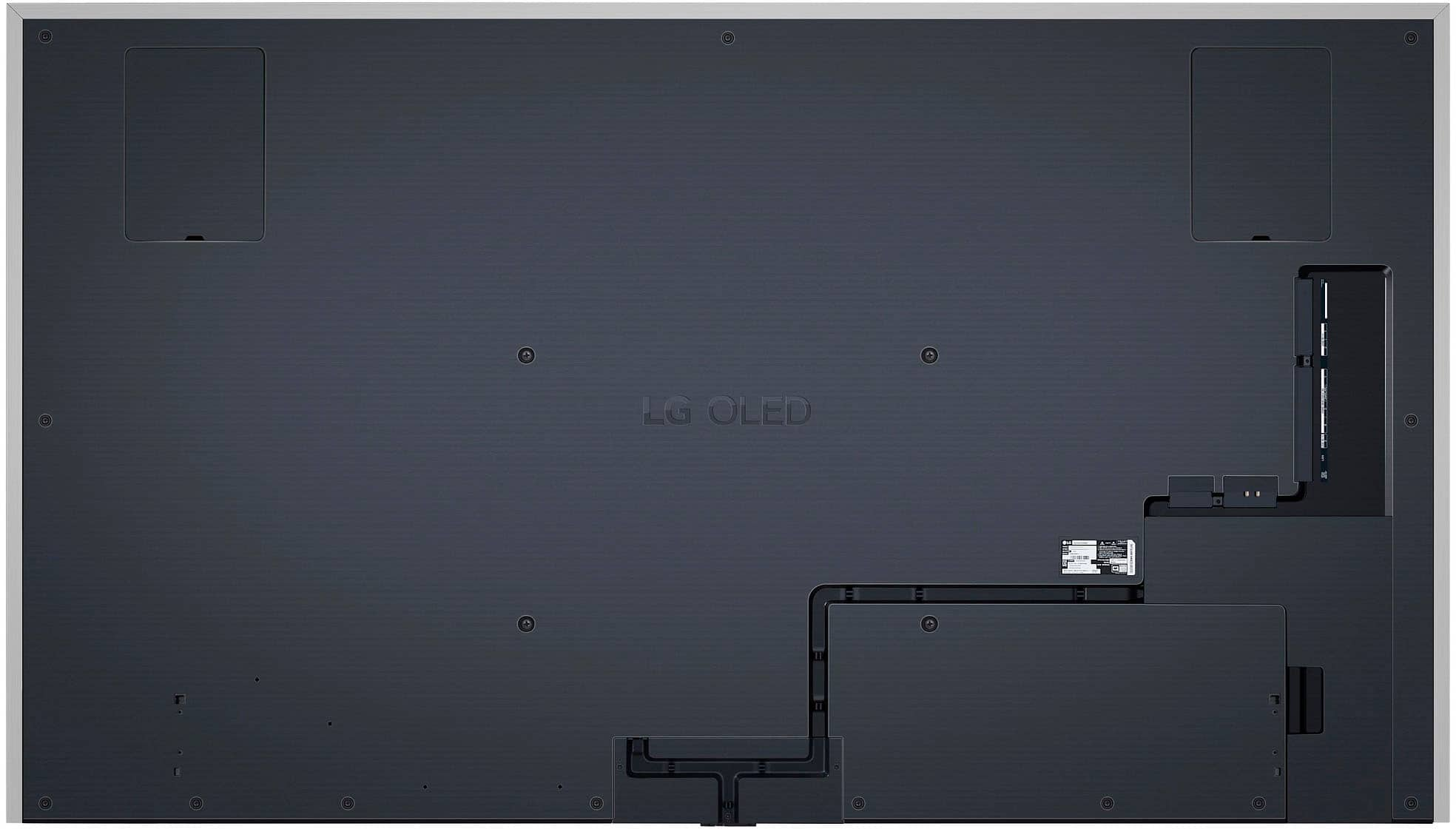
The LG 97" G2 Series, part of LG's 2022 Gallery Series lineup, takes a completely different approach with OLED evo technology. OLED stands for Organic Light-Emitting Diode, and the key word here is "self-emissive." Unlike the Hisense, which needs a backlight shining through layers of LCD material, each pixel in the LG OLED produces its own light.
This means when the TV wants to show pure black – like the empty space in a movie scene – those pixels simply turn off completely. No light bleeding through, no compromise. It's like having 8.3 million tiny light bulbs (one for each pixel in 4K resolution) that can individually turn on, off, or dim to any level in between.
The "evo" part of OLED evo represents LG's latest improvements to traditional OLED technology. They've refined the organic compounds and processing algorithms to squeeze more brightness out of the panel while maintaining those perfect blacks. The α9 Gen 5 AI Processor constantly analyzes what you're watching and adjusts the picture in real-time, enhancing brightness, contrast, and color to match each scene.
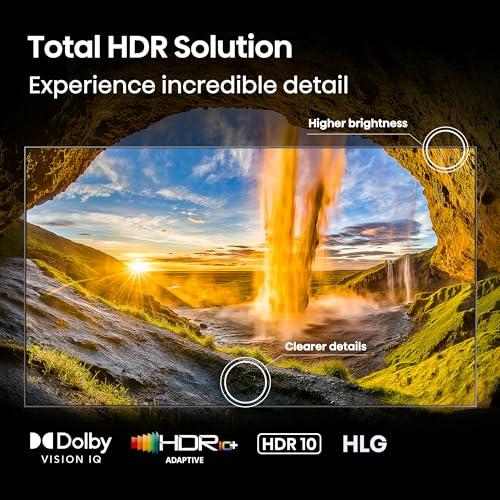
Here's where these two TVs diverge dramatically. The Hisense U7 Series absolutely dominates in brightness, capable of sustained output around 800+ nits with peak highlights reaching much higher. In practical terms, this means HDR content – those movies and shows specifically mastered to take advantage of bright highlights and dark shadows – will look spectacular even if you're watching during the day with sunlight streaming through your windows.
I've found that this level of brightness makes a huge difference when watching content like nature documentaries or action movies with lots of outdoor scenes. The sun reflecting off water, explosions, or even just a bright sky looks remarkably realistic because the TV can actually produce light levels that approach what your eyes expect to see.
The LG G2, while improved over previous OLED generations, typically peaks around 200-300 nits in sustained brightness. This isn't a flaw – it's a characteristic of OLED technology. OLEDs prioritize perfect contrast over raw brightness, and for many viewing scenarios, this trade-off works beautifully.
This is where the LG G2 fights back with its secret weapon: infinite contrast ratio. Because OLED pixels can turn completely off, the difference between the brightest white and the darkest black is technically infinite. When you're watching a movie in a darkened room – the ideal home theater environment – this creates an incredibly immersive experience where dark scenes have depth and dimension that's impossible to achieve with any backlit display.
The Hisense, despite its 256 local dimming zones, still faces the fundamental challenge of LCD technology: light bleed. While modern Mini-LED greatly reduces this issue compared to older TVs, you might still notice subtle halos around bright objects against dark backgrounds. It's the trade-off for that superior brightness.
Both TVs excel at color reproduction but with different philosophies. The Hisense's Quantum Dot technology produces incredibly saturated, vibrant colors that really pop off the screen. This approach works wonderfully for HDR content, animated movies, and gaming, where that extra color punch enhances the experience.
The LG G2 takes a more reference-accurate approach, producing colors that closely match what content creators intended. For serious movie enthusiasts who want to see films exactly as the director envisioned them, this accuracy is invaluable.
Modern gaming demands have pushed TV manufacturers to prioritize features that were once exclusive to computer monitors. Both of these displays deliver, but with different strengths.
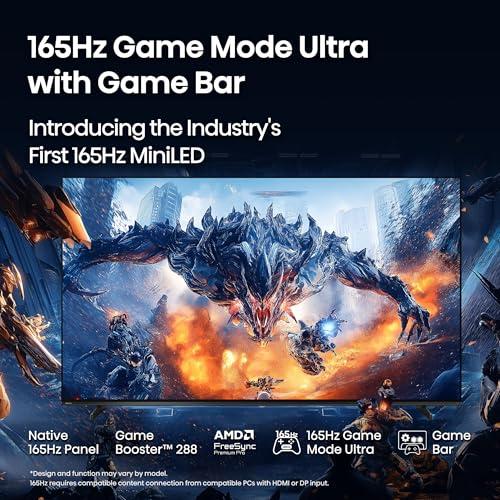
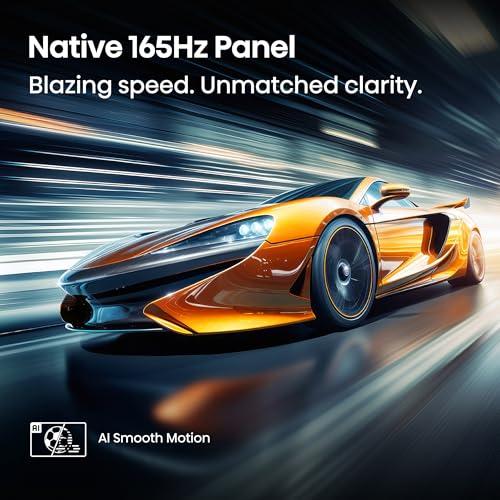
The Hisense 100" U7 Series pushes boundaries with its 165Hz Game Mode Ultra, supporting 4K gaming at up to 144Hz. This means if you have a high-end gaming PC, you can experience incredibly smooth gameplay that traditional 60Hz TVs simply can't match. The response time of around 6ms is excellent for a TV this size.
The LG G2 caps out at 120Hz but compensates with an exceptional sub-1ms response time. For console gaming with PlayStation 5 or Xbox Series X, which typically target 120Hz maximum, this is more than sufficient and provides incredibly responsive gameplay.
Both TVs include Variable Refresh Rate (VRR) technology, which synchronizes the TV's refresh rate with your gaming device's output frame rate. This eliminates screen tearing – those annoying horizontal lines that can appear during fast action – creating smoother, more immersive gameplay.
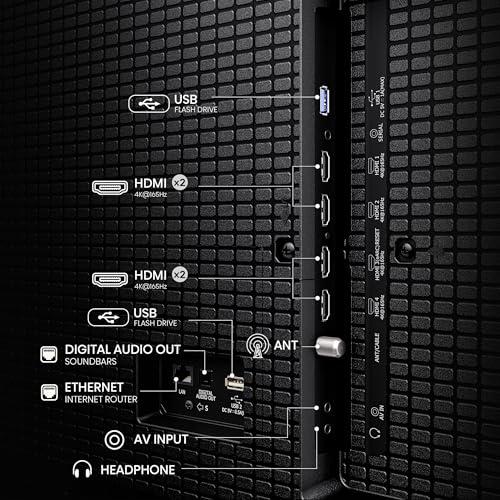
The Hisense supports AMD FreeSync Premium Pro and includes four HDMI 2.1 ports, meaning you can connect multiple high-bandwidth devices without switching cables. The comprehensive Game Bar interface lets you adjust settings without leaving your game.
The LG offers NVIDIA G-Sync compatibility and includes unique features like cloud gaming integration with GeForce Now, letting you stream high-end games without owning a powerful gaming PC.
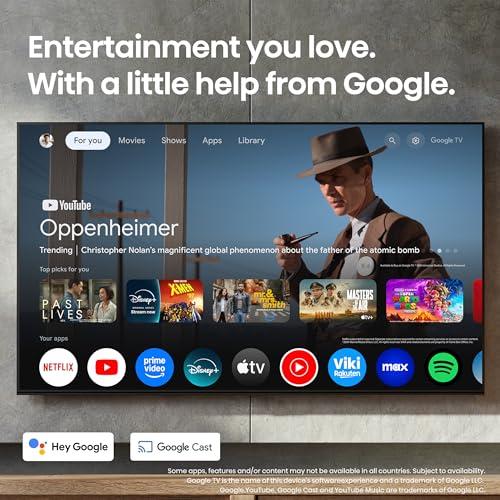
The Hisense runs Google TV, which essentially puts the entire Google ecosystem at your fingertips. Google Assistant integration means you can control your TV, search for content, and even manage smart home devices using voice commands. The interface organizes content from all your streaming services into a unified, easy-to-navigate experience.
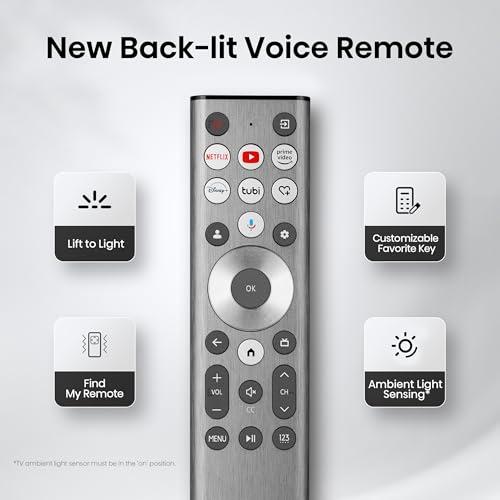
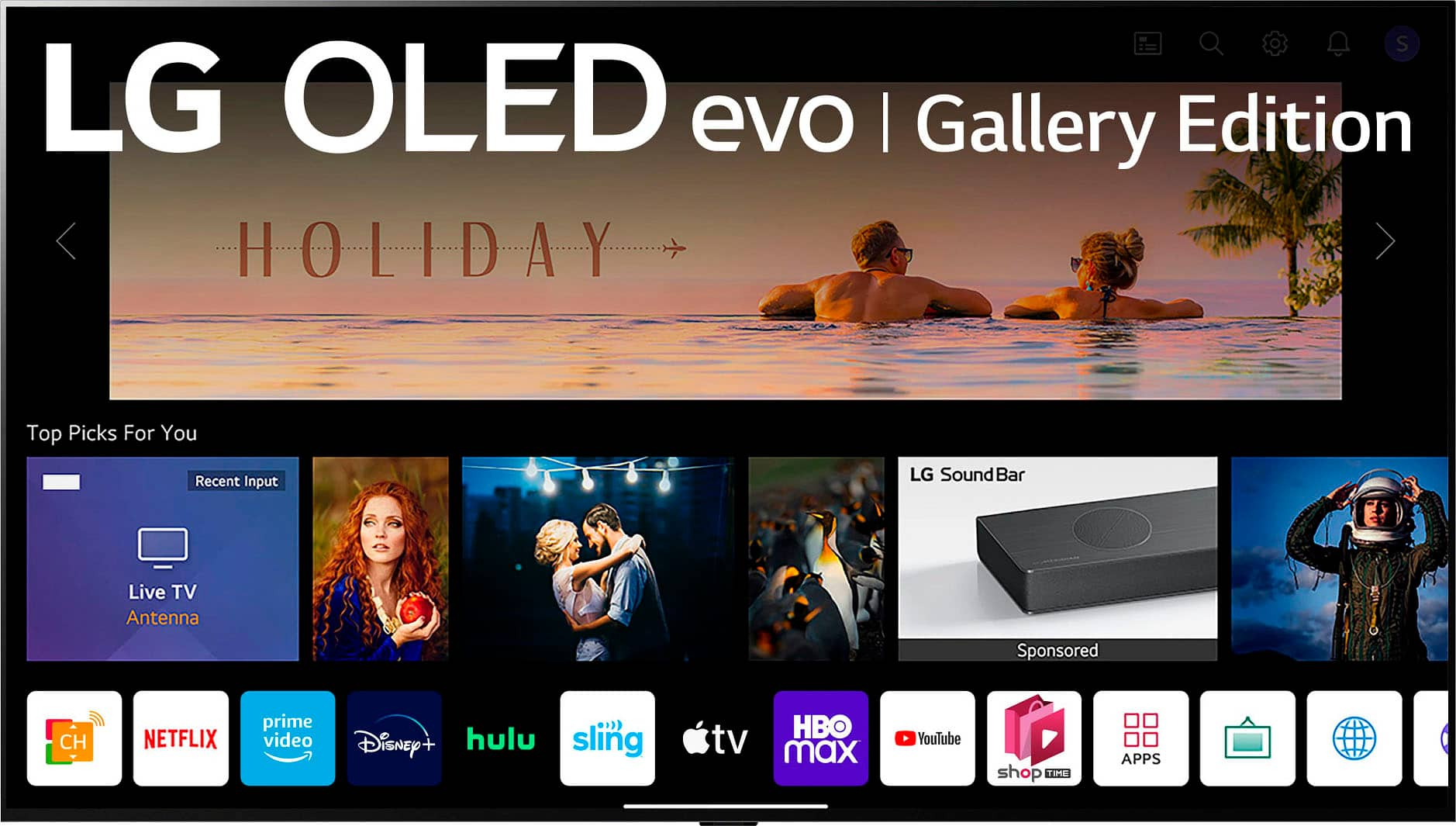
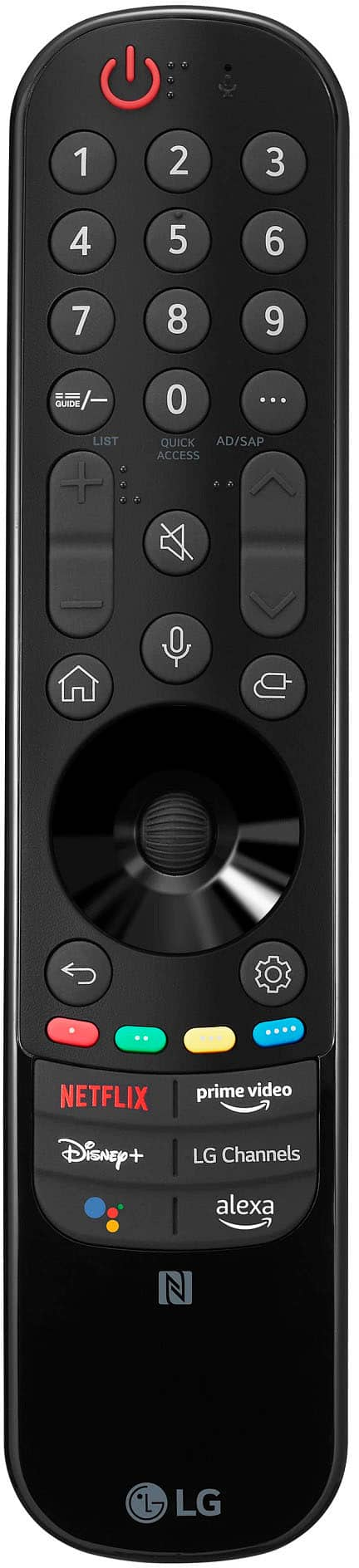
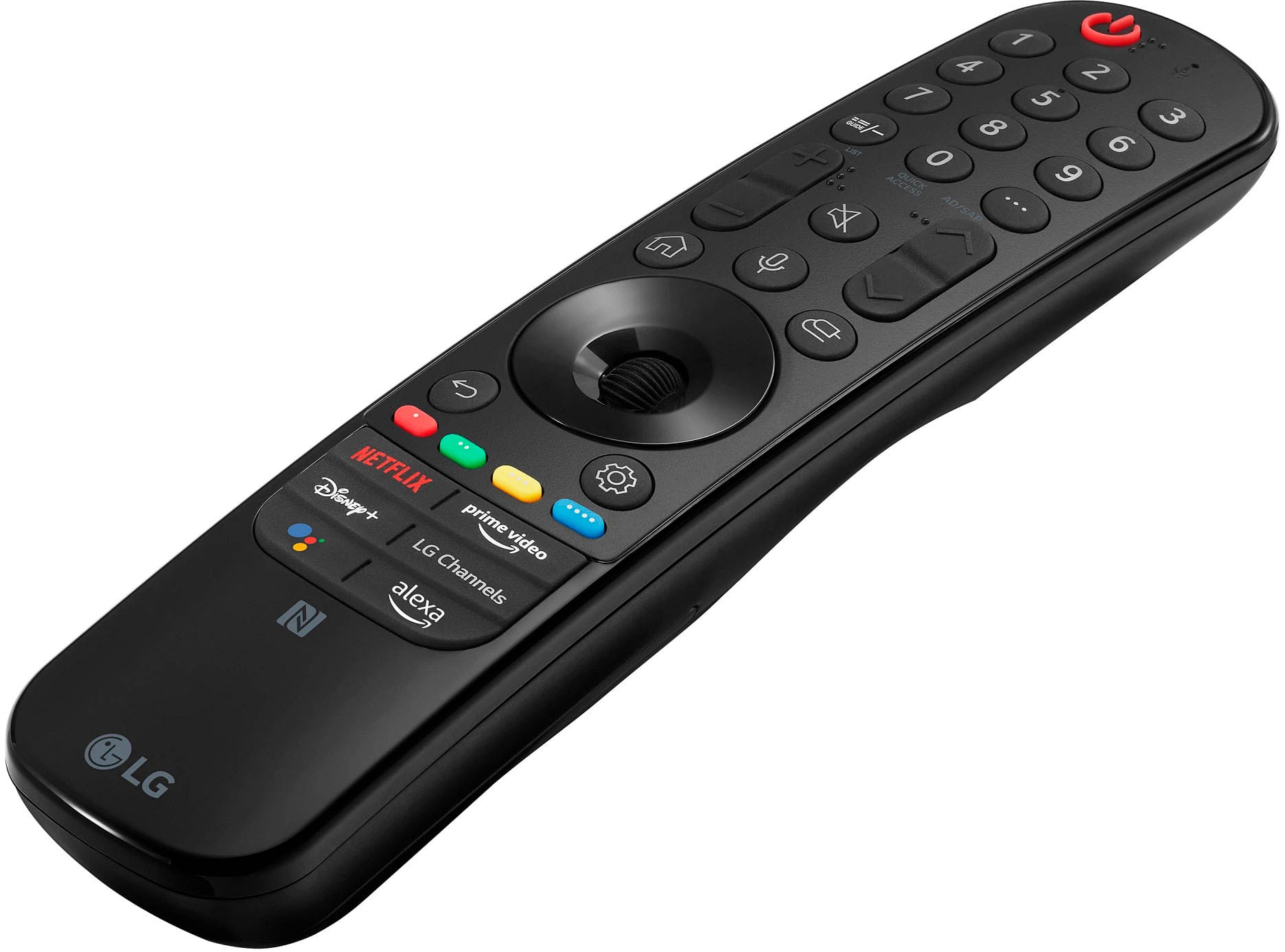
The LG's webOS platform has earned praise for its intuitive interface and the unique Magic Remote that works like a computer mouse – you can point and click on screen elements rather than navigating with traditional directional buttons. It's particularly helpful when browsing streaming services or using the built-in web browser.
Here's where the conversation gets interesting. At $2,997.99 for 100 inches, the Hisense U7 Series costs roughly $0.30 per square inch of screen real estate. The LG G2 at $10,799.99 for 97 inches works out to about $1.18 per square inch – nearly four times more expensive while providing slightly less screen area.
But value isn't just about price per square inch. The LG justifies its premium through OLED's inherent advantages: perfect blacks, wide viewing angles, and reference-quality color accuracy. For videophiles who prioritize picture quality above all else, these benefits can justify the cost difference.
The Hisense represents exceptional value for most users, delivering about 90-95% of the premium TV experience at roughly 28% of the LG's cost. Those savings could fund a complete sound system upgrade, which both TVs would benefit from.
If your TV room has large windows or you frequently watch during daylight hours, the Hisense's superior brightness becomes crucial. I've noticed that many premium TVs lose their impact in bright environments, but Mini-LED technology maintains that HDR wow factor even with ambient light.
For a dedicated theater room with controlled lighting, the LG G2's perfect blacks create an almost ethereal viewing experience. Movies feel more immersive when dark scenes have true depth, and the wide viewing angles mean everyone in your theater seating gets the same excellent picture quality.
The Hisense's higher refresh rates and excellent HDR brightness make it ideal for households where the TV serves multiple purposes – family movie nights, serious gaming sessions, and daytime sports viewing.
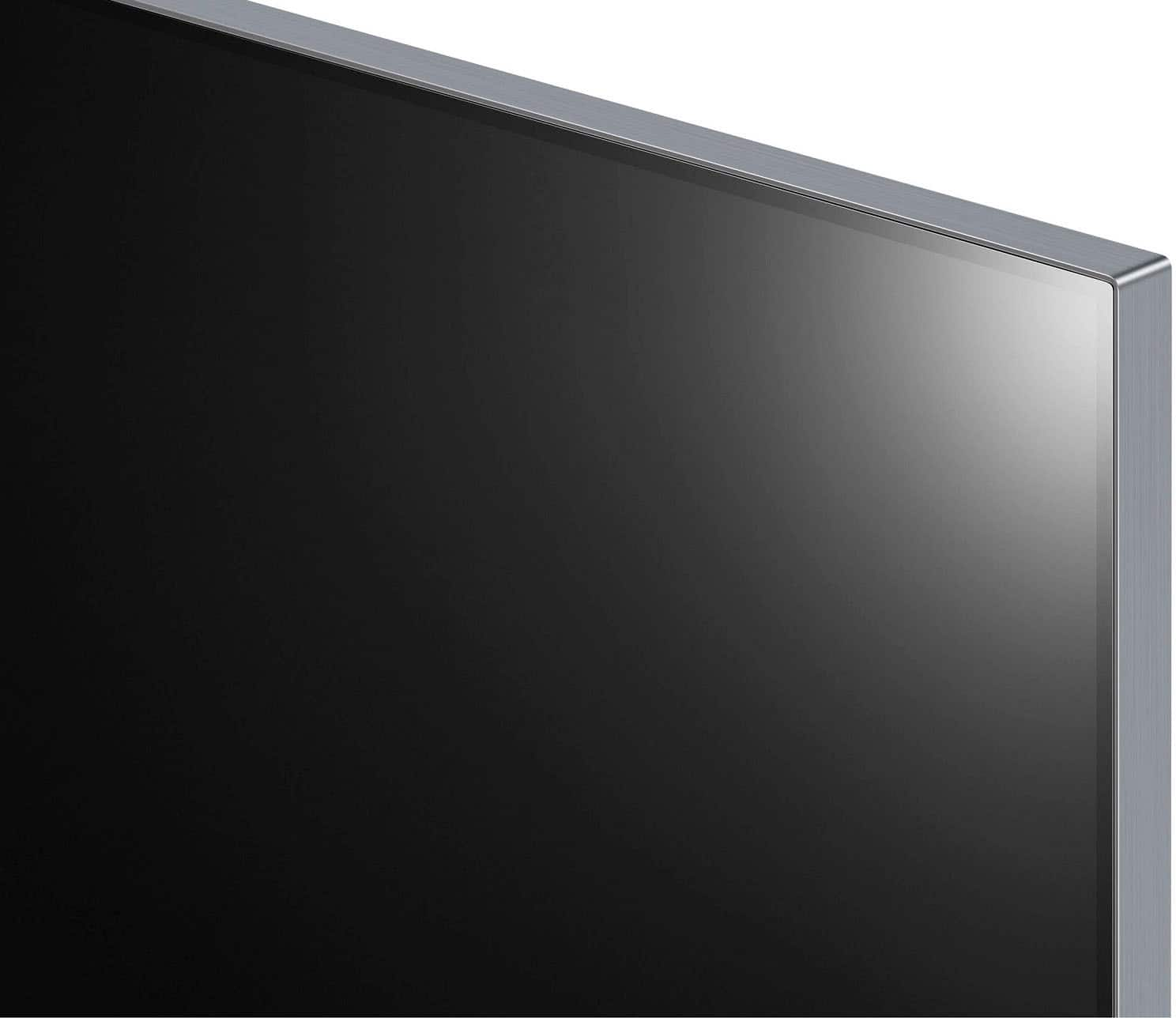
The LG G2's Gallery Series design is specifically intended for wall mounting, creating a "picture frame" aesthetic that can enhance upscale home theater installations. The ultra-thin profile and premium materials justify its positioning as a luxury item.
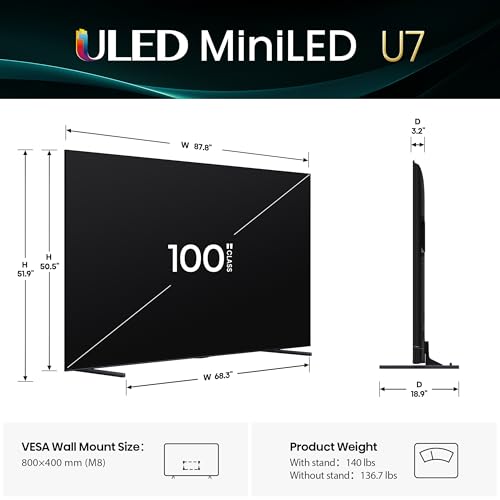
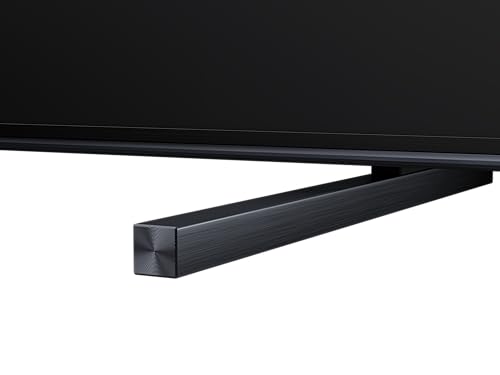
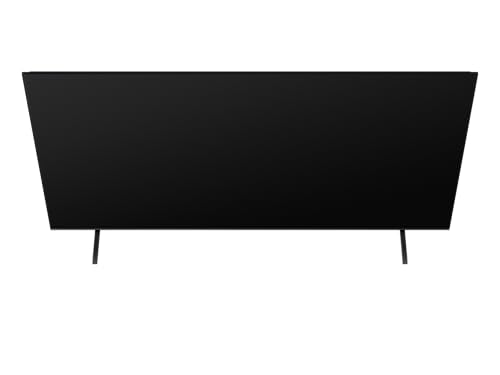
The Hisense, while not as aesthetically refined, offers more practical mounting options and comes with a robust stand that can accommodate most soundbars without blocking the screen.
OLED technology has historically faced concerns about burn-in – permanent image retention from static elements like video game HUDs or TV channel logos. Modern OLEDs like the G2 include extensive protection measures, but it remains a consideration for certain usage patterns.
Mini-LED technology doesn't face burn-in concerns and may maintain its brightness performance better over many years of use.
You want maximum value without sacrificing performance. The massive 100-inch screen combined with excellent HDR brightness makes it ideal for most living rooms. If you're a gamer who wants those high refresh rates, or if your room has significant ambient light, the Hisense delivers exceptional performance at a price that won't require a second mortgage.
Picture quality is your absolute priority and budget isn't a primary concern. If you're building a dedicated home theater, frequently watch movies in darkened rooms, or simply want the prestige of owning one of the finest displays available, the G2's perfect blacks and reference-quality color make it worth the premium.
Both the Hisense 100" U7 Series and LG 97" G2 Series represent the pinnacle of large-screen TV technology, just with different approaches to getting there. The Hisense democratizes the premium large TV experience, bringing theater-like viewing to a much broader audience. The LG maintains OLED's position as the technology of choice for those who demand absolute picture quality perfection.
For most buyers, the Hisense offers the better value proposition – you're getting 95% of the premium experience at 28% of the cost. That price difference could fund significant upgrades to your audio system, streaming setup, or even leave money for the next TV generation a few years down the road.
However, if you're among the enthusiasts who can genuinely appreciate and afford the LG's technical superiority, its perfect blacks and flawless color accuracy provide a viewing experience that's simply unmatched. The choice ultimately comes down to whether that final 5% of picture quality improvement is worth the substantial price premium – and for some viewers, it absolutely is.
| Hisense 100" U7 Series Mini-LED TV | LG 97" G2 Series OLED evo 4K UHD Smart TV |
|---|---|
| Screen Size - Larger screens provide more immersive viewing but require more space | |
| 100 inches (true cinema experience) | 97 inches (still massive but slightly smaller) |
| Price - Major factor in value calculation | |
| $2,997.99 | $10,799.99 |
| Display Technology - Fundamentally different approaches to picture quality | |
| Mini-LED with 256 local dimming zones | OLED evo with self-emissive pixels |
| Peak Brightness - Critical for HDR impact and daytime viewing | |
| 800+ nits sustained, 3,000 nits peak (excellent for bright rooms) | 200-300 nits sustained (best for controlled lighting) |
| Black Levels - Determines contrast and dark scene detail | |
| Very good blacks with minimal blooming | Perfect blacks with infinite contrast |
| Refresh Rate - Important for gaming and sports | |
| 165Hz Game Mode Ultra (future-proofed for PC gaming) | 120Hz maximum (perfect for current consoles) |
| Response Time - Affects gaming responsiveness | |
| 6ms (excellent for TV gaming) | <1ms (monitor-level performance) |
| Viewing Angles - Matters for seating arrangements | |
| Limited (VA panel limitation) | Wide angles with minimal color shift |
| Gaming Features - Modern console and PC compatibility | |
| AMD FreeSync Premium Pro, 4x HDMI 2.1, VRR | NVIDIA G-Sync compatible, GeForce Now, VRR |
| Smart Platform - Interface and app ecosystem | |
| Google TV with Google Assistant | webOS with Magic Remote |
| Audio System - Built-in sound quality | |
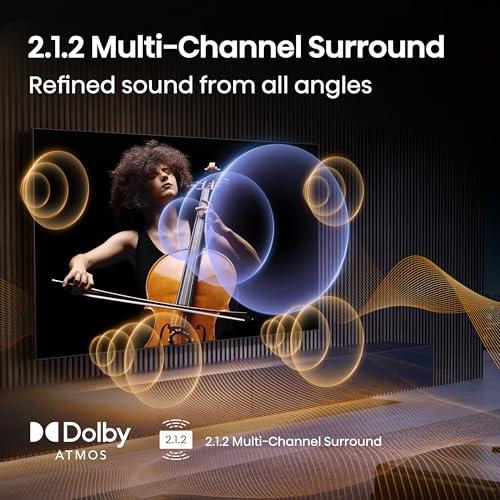
| 2.1.2 Multi-Channel with subwoofer (55W total) | Built-in speakers with Dolby Atmos |
| Power Consumption - Ongoing electricity costs | |
| 500W (higher due to backlight) | 230W typical (more efficient OLED) |
| Best Use Case - Ideal viewing scenarios | |
| Bright rooms, gaming, value-focused buyers | Dark room theaters, premium installations |
| Warranty - Protection for your investment | |
| 24 months parts and labor | Standard manufacturer warranty |
The Hisense 100" U7 Series is significantly better for bright rooms due to its Mini-LED technology that can reach 800+ nits sustained brightness and up to 3,000 nits peak. This makes HDR content visible even with windows and ambient lighting. The LG 97" G2 Series OLED typically peaks at 200-300 nits, making it better suited for controlled lighting environments.
The Hisense 100" U7 Series costs $2,997.99, while the LG 97" G2 Series OLED is priced at $10,799.99. This means the Hisense offers a 72% cost savings while actually providing a larger 100-inch screen compared to the LG's 97-inch display.
The LG 97" G2 Series OLED has superior black levels with perfect blacks and infinite contrast ratio since each pixel can turn completely off. The Hisense 100" U7 Series offers very good blacks with its 256 local dimming zones, but some light bleed may occur around bright objects on dark backgrounds.
Both TVs excel at gaming but with different strengths. The Hisense 100" U7 Series offers 165Hz Game Mode Ultra with support for 4K at 144Hz, making it better for PC gaming. The LG 97" G2 Series OLED provides <1ms response time and 120Hz refresh rate, which is perfect for console gaming with PlayStation 5 or Xbox Series X.
Yes, both work excellently for home theaters but in different ways. The LG 97" G2 Series OLED is ideal for dedicated dark-room theaters due to its perfect blacks and wide viewing angles. The Hisense 100" U7 Series works better for multi-purpose theaters or rooms with some ambient light due to its superior brightness and larger 100-inch screen.
Both offer excellent smart platforms. The Hisense 100" U7 Series runs Google TV with Google Assistant integration and access to all major streaming apps. The LG 97" G2 Series OLED uses webOS with the unique Magic Remote that works like a computer mouse, plus built-in support for cloud gaming services.
The Hisense 100" U7 Series offers a true 100-inch diagonal screen, while the LG 97" G2 Series OLED provides a 97-inch display. The 3-inch difference translates to about 6% more screen area for the Hisense, making it the larger option despite being significantly less expensive.
Mini-LED technology in the Hisense 100" U7 Series doesn't face burn-in concerns and may maintain brightness better over time. OLED displays like the LG 97" G2 Series OLED can experience gradual brightness degradation and potential burn-in with static content, though modern OLEDs include extensive protection measures.
The LG 97" G2 Series OLED is more energy efficient with 230W typical consumption due to OLED's self-emissive technology. The Hisense 100" U7 Series consumes more power at 500W because it requires a backlight system to illuminate the LCD panel.
The LG 97" G2 Series OLED offers wide viewing angles with minimal color shift, making it ideal for larger seating arrangements. The Hisense 100" U7 Series has limited viewing angles due to its VA panel technology, with picture quality degrading when viewed from the side.
The Hisense 100" U7 Series provides exceptional value at $0.30 per square inch compared to the LG 97" G2 Series OLED at $1.18 per square inch. The Hisense delivers about 90-95% of the premium TV experience at roughly 28% of the LG's cost, making it the clear value winner for most buyers.
Choose the Hisense 100" U7 Series if you want maximum value, have a bright room, prioritize gaming performance, or want the largest possible screen. Choose the LG 97" G2 Series OLED if picture quality is your top priority, you have a dedicated dark theater room, budget isn't a concern, or you want reference-quality color accuracy for professional content viewing.
We've done our best to create useful and informative comparisons to help you decide what product to buy. Our research uses advanced automated methods to create this comparison and perfection is not possible - please contact us for corrections or questions. These are the sites we've researched in the creation of this article: rtings.com - bestbuy.com - rtings.com - lueckeaudiovideo.com - youtube.com - hisense-usa.com - youtube.com - hisense-usa.com - costco.com - hisense-usa.com - pcrichard.com - files.hisense-usa.com - bestbuy.com - youtube.com - hisense-usa.com - displayspecifications.com - bestbuy.com - hisense-usa.com - eftm.com - youtube.com - youtube.com - digitaltrends.com - xssentials.com - valueelectronics.com - youtube.com - bestbuy.com - rangsemart.com.bd - woodburyappliance.com - displaymate.com - youtube.com - rtings.com - displayspecifications.com - techradar.com - avsforum.com - lg.com - youtube.com

Privacy Policy
Terms and Conditions - Affiliate Policy
Home Security
© Copyright 2008-2026.
11816 Inwood Rd #1211, Dallas, TX 75244