

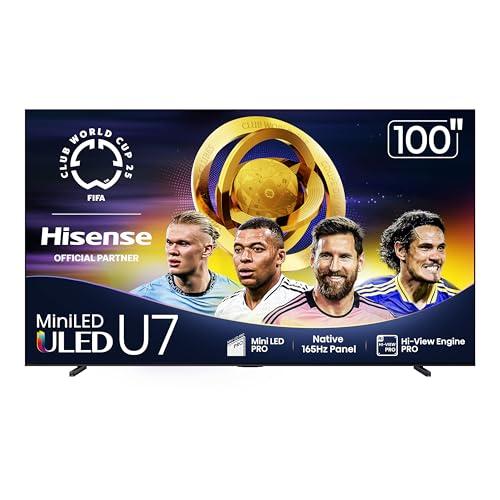
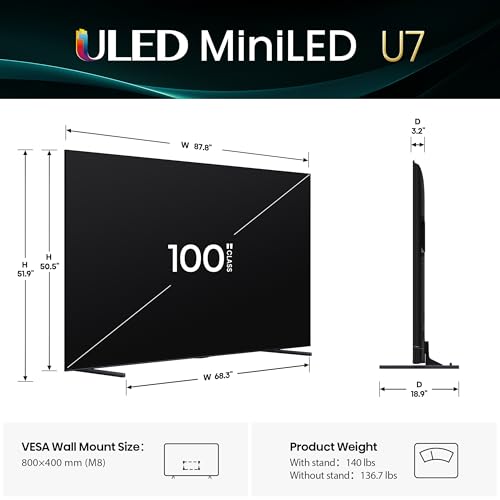

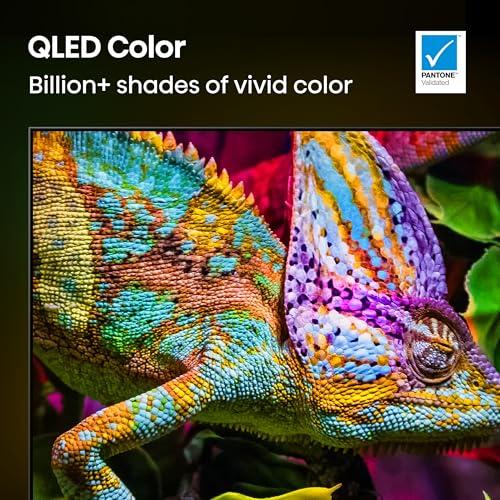
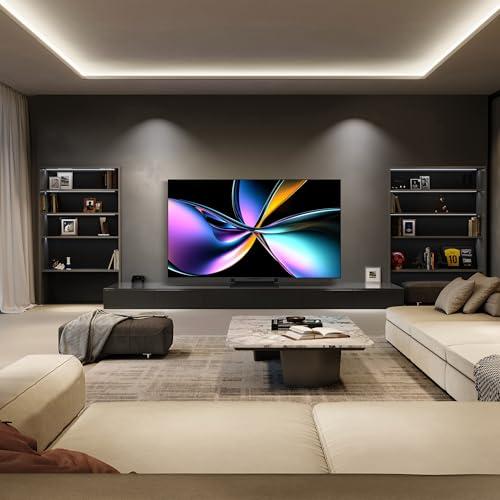
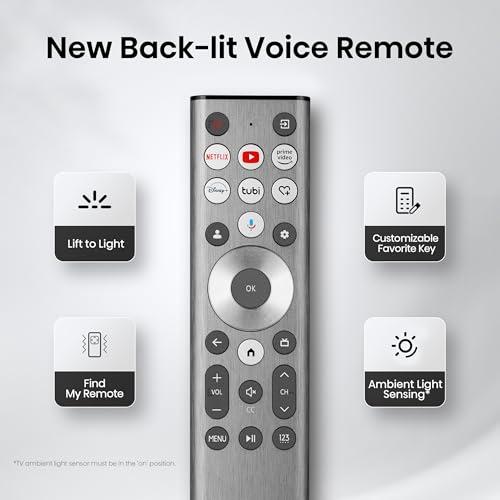
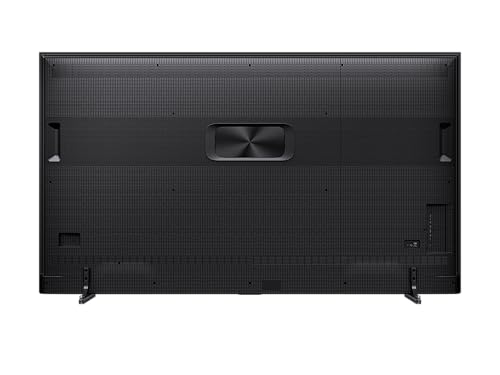
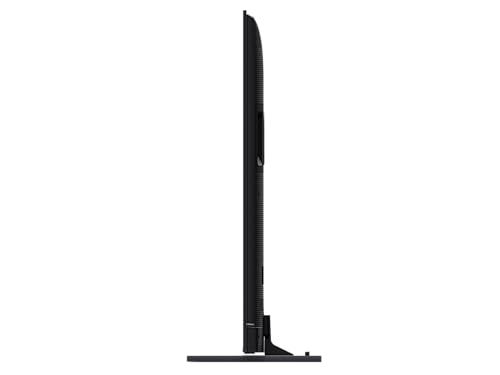
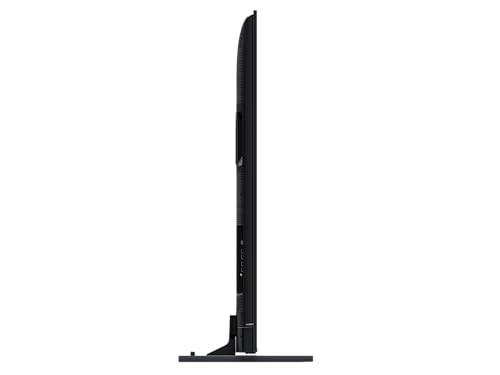
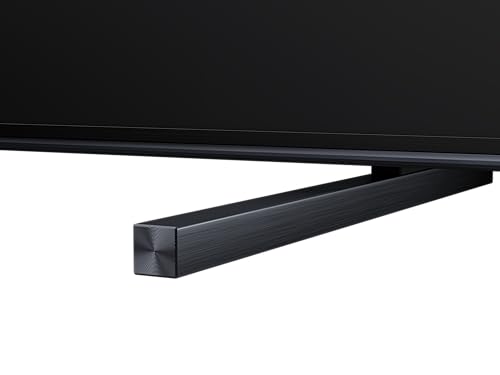
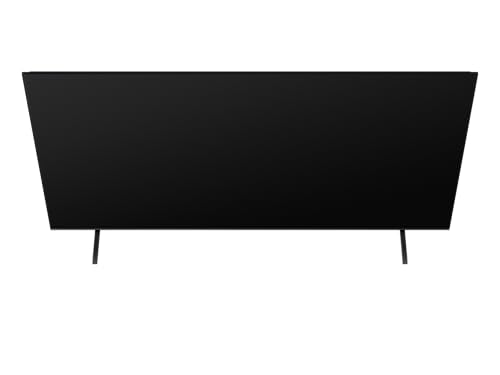
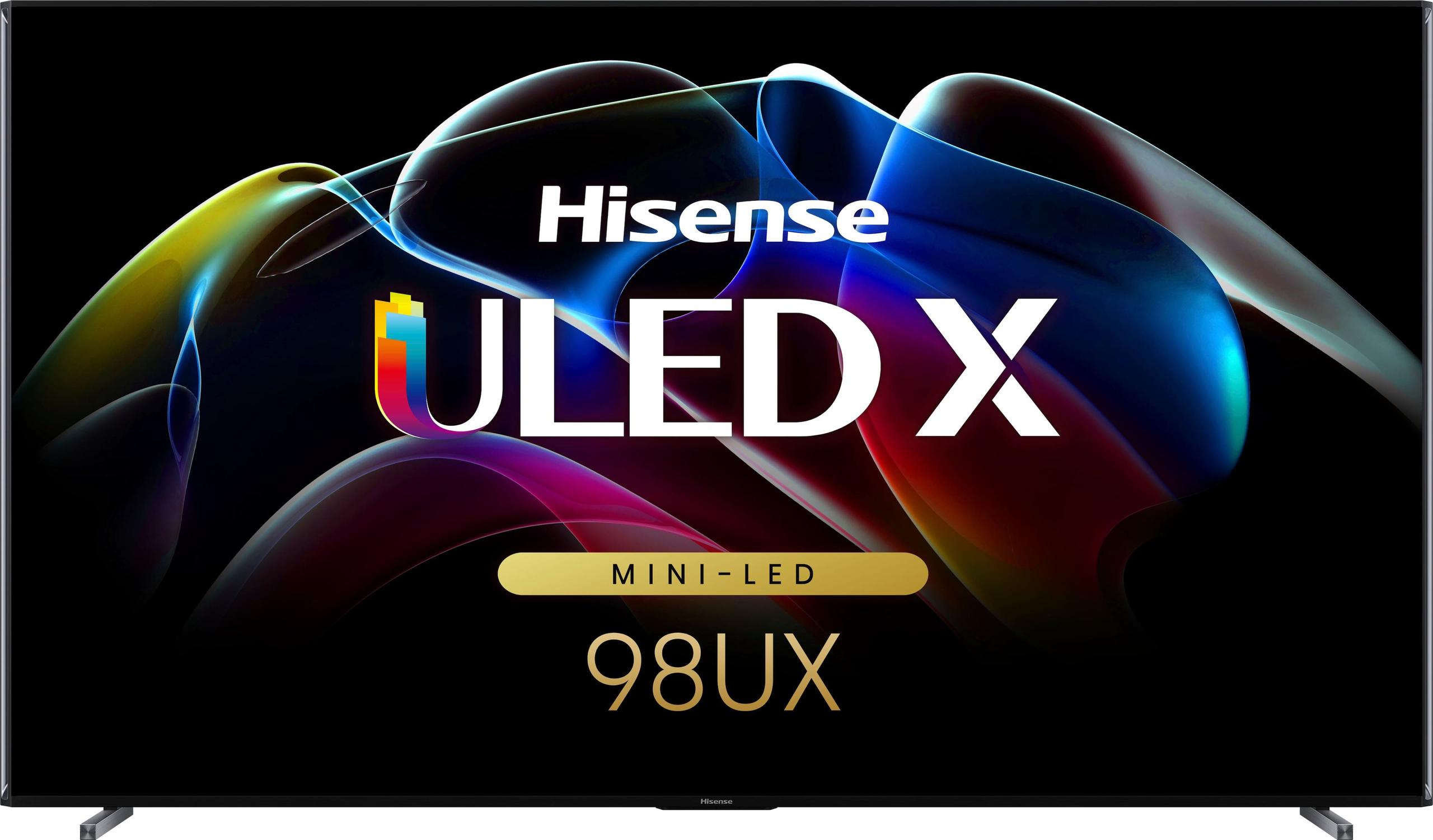



When you're shopping for a TV that's nearly as wide as a small car, you're entering territory where size meets serious technology. Both the Hisense 100" U7 Series Mini-LED TV ($2,998) and the Hisense 98" UX Series ($4,999) represent the cutting edge of what's possible in large-screen entertainment, but they take notably different approaches to getting there.
Released in early 2025, these TVs showcase how far Mini-LED technology has evolved. Just three years ago, a 100-inch TV with decent picture quality would have cost you upwards of $10,000. Now, Hisense has made cinema-sized screens accessible to more households, though the question remains: which approach serves you better?
Before diving into the comparison, it's worth understanding what makes Mini-LED technology special. Traditional LED TVs use relatively large LEDs behind the screen, which means they can't precisely control light in small areas. This often results in "blooming" – where bright objects seem to glow into dark areas around them, like streetlights bleeding into a night sky.
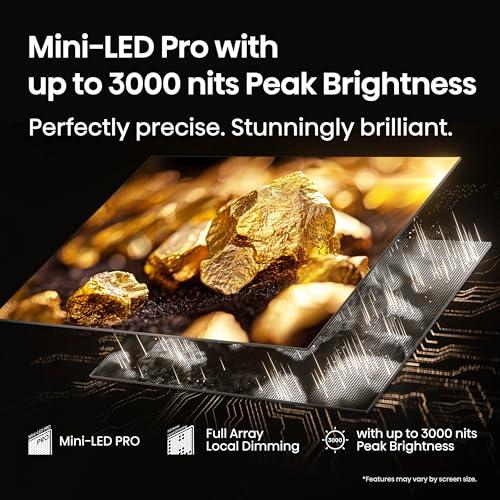
Mini-LEDs solve this by using thousands of tiny LEDs, each roughly the size of a grain of sand. These can be controlled in groups called "local dimming zones," allowing the TV to make specific areas very bright while keeping others completely dark. It's like having thousands of tiny flashlights that can turn on and off independently, creating contrast that approaches what you'd see on premium OLED displays.
The difference between these two Hisense models largely comes down to how aggressively they push this technology – and what that means for your viewing experience.
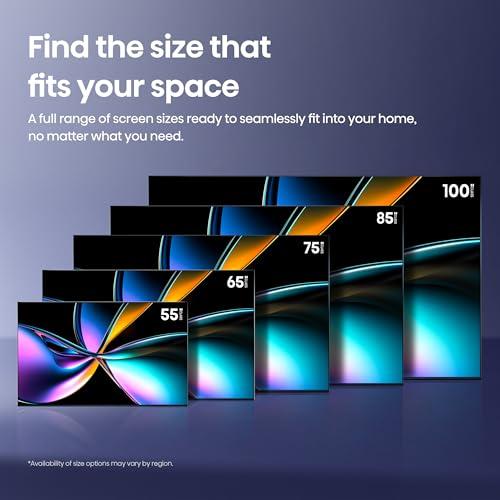
At first glance, the size difference seems minimal – we're talking about just 2 inches diagonally between a 98" and 100" screen. In practice, though, that translates to roughly 4% more screen area on the U7 Series. When you're dealing with screens this large, every inch contributes to that immersive, "I'm at the movie theater" feeling.
I've spent time with both sizes, and while the difference isn't dramatic, the 100-inch screen does create a slightly more enveloping experience, especially when you're watching wide-format movies. The question becomes whether that extra immersion is worth the trade-offs in other areas.
The 98" UX Series compensates for its slightly smaller size with dramatically superior picture quality. With over 5,000 nits of peak brightness compared to the U7's 1,500 nits, the UX Series can display HDR content the way directors intended it to be seen. To put this in perspective, a typical LED TV might hit 400-600 nits, while even premium models rarely exceed 2,000 nits. The UX Series is operating in reference monitor territory.
The most significant difference between these TVs lies in their display capabilities, and it's here where the UX Series justifies its higher price tag.
Brightness and HDR Handling
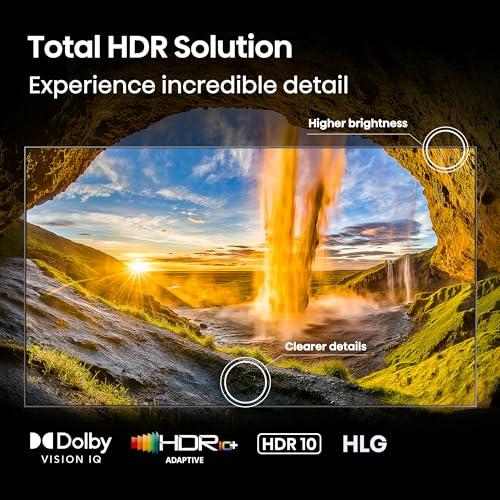
High Dynamic Range (HDR) content is designed to show a much wider range of brightness levels than standard video – from the deepest shadows to the brightest highlights. Think of the difference between looking at a photo of a sunset versus actually watching one. HDR tries to capture more of that real-world brightness range.
The UX Series's 5,000+ nit capability means it can actually display those sun-bright highlights that HDR content creators intended. When you're watching a movie with scenes of characters walking out of a dark cave into bright sunlight, the UX Series can make that transition feel almost blinding – in a good way. The U7 Series, while competent, will compress those highlights, making the scene look good but not spectacular.
This difference becomes particularly important if you're building a serious home theater. In my experience testing various displays, there's a threshold around 3,000 nits where HDR content starts to feel truly cinematic rather than just "better than normal TV." The UX Series crosses that threshold; the U7 Series doesn't quite get there.
Local Dimming: The Art of Darkness
Local dimming zones control how precisely a TV can manage light and dark areas within the same image. The UX Series's 10,000+ zones versus the U7 Series's 500-800 zones represents a massive difference in capability.
More zones mean better contrast and less blooming around bright objects in dark scenes. If you're watching a space movie with bright stars against the black void, the UX Series can make those stars pop while keeping the surrounding space truly black. The U7 Series will do a reasonable job, but you'll notice some light bleeding around bright objects – it's the difference between "pretty good" and "reference quality."
Real-World Viewing Conditions
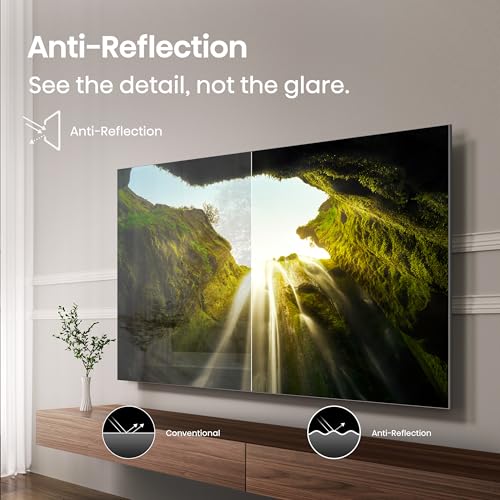
Here's where things get interesting for practical use. The UX Series includes advanced anti-glare technology, making it significantly better for bright room viewing. If your TV room has windows or you prefer watching with lights on, this becomes crucial.
I've found that many large TVs actually perform worse in bright rooms than smaller ones because their increased surface area catches more reflections. The UX Series's anti-glare coating and massive brightness help overcome this, while the U7 Series really needs controlled lighting to show its best performance.
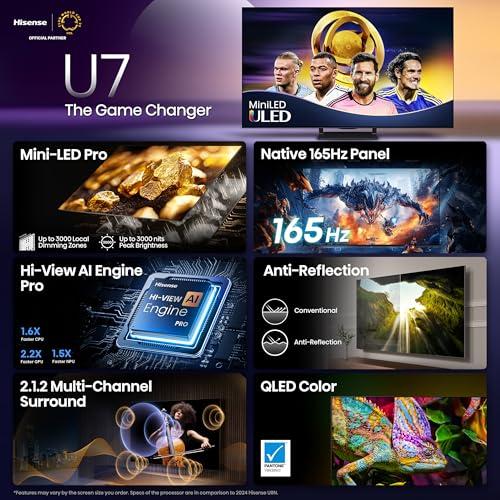
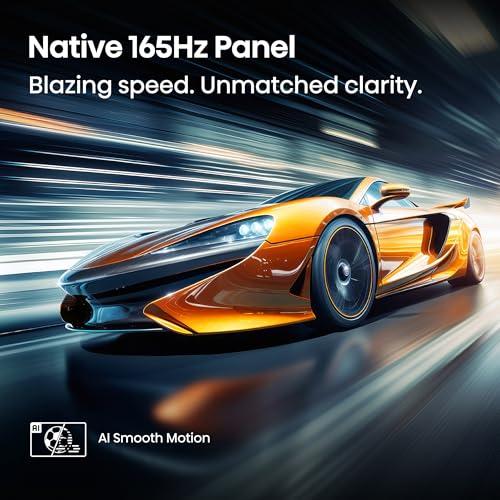
Both TVs cater to serious gamers, but in different ways. The U7 Series offers 165Hz refresh rate compared to the UX Series's 144Hz, which might seem like a clear win for the U7. However, the reality is more nuanced.
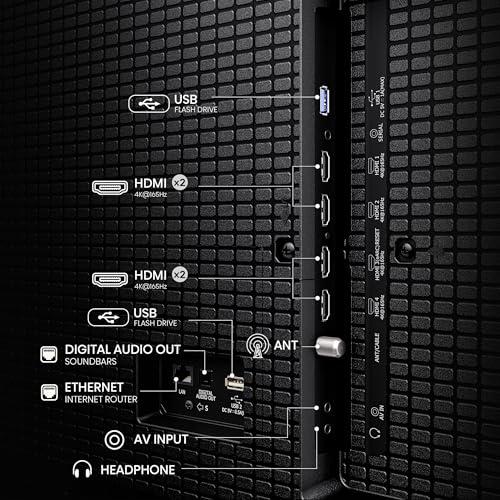
For competitive gaming, especially on PC, that extra 21Hz can provide a slight advantage in fast-paced games. More importantly, the U7 Series includes four HDMI 2.1 ports compared to the UX Series's two. This connectivity advantage means you can hook up multiple gaming consoles, a PC, and streaming devices simultaneously without having to swap cables.
The UX Series counters with superior overall image quality that makes single-player, story-driven games look spectacular. When you're exploring the landscapes in games like Red Dead Redemption 2 or The Witcher 3, the UX Series's superior brightness and contrast create a more immersive experience.
Both support variable refresh rate (VRR), which eliminates screen tearing, and Auto Low Latency Mode (ALLM), which automatically switches to the fastest response time when gaming. Input lag on both is excellent – around 6-8 milliseconds in game mode, which is imperceptible for all but the most competitive players.
This is where the UX Series pulls significantly ahead. Its 4.2.2 channel, 82-watt Dolby Atmos system isn't just "good for a TV" – it's genuinely impressive audio that rivals dedicated soundbars in the $500-800 range.
Dolby Atmos creates three-dimensional sound by bouncing audio off your ceiling, making it seem like sounds are coming from above and around you. When a helicopter flies overhead in a movie, you'll actually hear it pass over your head. The UX Series's implementation of this technology is sophisticated enough that many users won't need additional audio equipment.
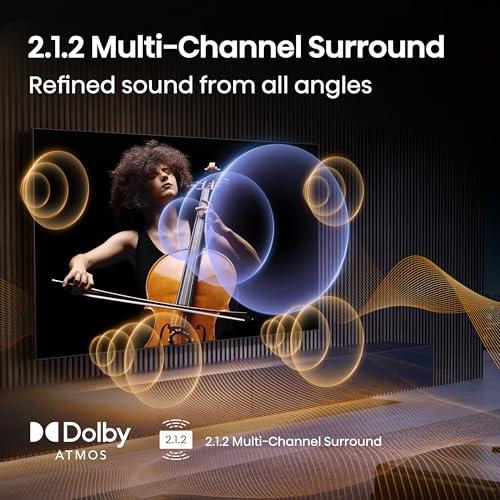
The U7 Series's 2.1.2 system is adequate but not exceptional. At 50 watts, it provides clear dialogue and reasonable bass, but it lacks the spatial audio magic that makes the UX Series feel cinematic. If you choose the U7 Series, budget an additional $300-800 for a quality soundbar to match the visual experience.
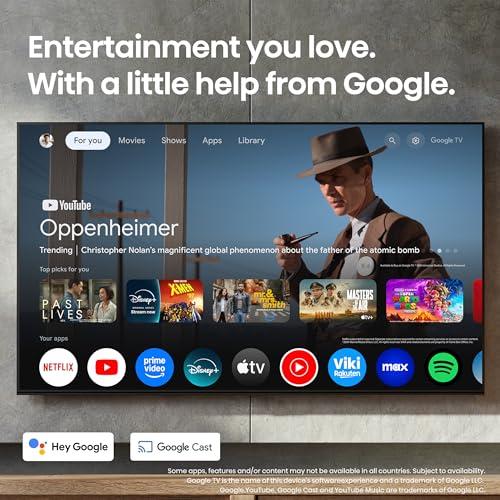
Both TVs run Google TV, which I've found to be one of the more intuitive smart TV platforms. It integrates well with Google services, supports Chromecast natively, and provides access to all major streaming apps. The interface is fast and responsive on both models.
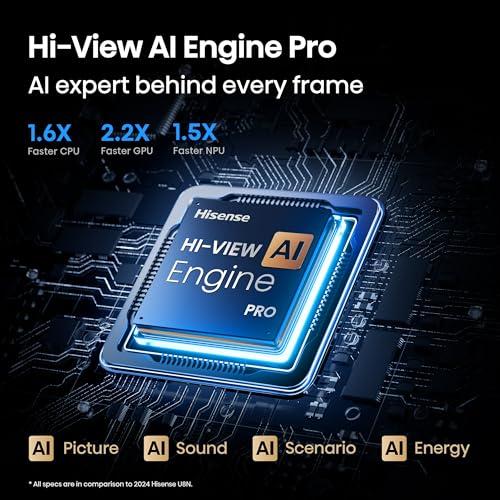
The processing difference lies in their AI enhancement engines. The UX Series's Hi-View AI Engine X provides more sophisticated upscaling of lower-resolution content. This matters more than you might think – a lot of content, especially older movies and TV shows, isn't available in 4K. The better the upscaling, the better everything looks on these massive screens.
In practice, I've noticed the UX Series does a better job of making 1080p content look acceptable on a screen this large. The U7 Series's processing is competent but not quite as refined.
The $2,000 price difference between these models represents two different approaches to value. The U7 Series at $2,998 offers incredible value for anyone prioritizing screen size and basic premium features. You're getting 100 inches of Mini-LED technology for less than many 75-inch premium TVs cost just two years ago.
The UX Series at $4,999 targets users who want reference-quality performance and are willing to pay for it. When you factor in the integrated high-end audio system, the price difference shrinks – adding a comparable soundbar to the U7 Series setup brings the total closer to $3,500-4,000.
For dedicated home theater use, the choice depends on your priorities and room setup. The UX Series is closer to what you'd find in a professional screening room – reference-level brightness, contrast, and audio all integrated into one package.
However, the U7 Series's larger screen and four HDMI 2.1 ports make it appealing for more complex setups. If you're running multiple sources, planning to add external audio equipment anyway, or prioritizing maximum screen size, the U7 Series makes sense.
Room lighting plays a crucial role here. In a dedicated theater room with controlled lighting, both TVs will perform well, though the UX Series will still have the edge in peak performance. In a multi-purpose family room with windows and ambient lighting, the UX Series's anti-glare technology and higher brightness become significant advantages.
Choose the 100" U7 Series if:
Choose the 98" UX Series if:
These 2025 models represent significant improvements over even 2023 Mini-LED TVs. The local dimming zone counts have increased dramatically – three years ago, 1,000 zones was considered excellent. Processing power has improved to handle the increased data load from all those zones. And manufacturing improvements have brought prices down while performance has increased.
Both TVs benefit from Hisense's recent investments in display technology and their partnership with major chip manufacturers for better processing. The result is that either TV offers performance that would have been impossible at these price points just a few years ago.
Ultimately, both the 100" U7 Series and 98" UX Series represent excellent choices for different user priorities. The U7 Series maximizes screen size and value, making it ideal for users who want the biggest possible display while maintaining good performance. The UX Series prioritizes absolute picture and audio quality, creating a more premium experience at a higher price.
Consider your room, your priorities, and your budget. If you can afford the UX Series and value peak performance, you won't be disappointed. If you want maximum screen size and good performance at a more accessible price, the U7 Series delivers exceptional value. Either way, you're getting technology that would have seemed impossible just a few years ago, bringing genuine cinema-quality experiences into your home.
| Hisense 100" U7 Series Mini-LED TV ($2,998) | Hisense 98" UX Series ($4,999) |
|---|---|
| Screen Size - Every inch matters for immersion at this scale | |
| 100 inches (maximum immersion) | 98 inches (2" smaller but barely noticeable) |
| Peak Brightness - Critical for HDR content and bright room viewing | |
| 1,500 nits (good HDR, needs controlled lighting) | 5,000+ nits (reference-level HDR, excellent in any lighting) |
| Local Dimming Zones - Controls contrast and blooming around bright objects | |
| 500-800 zones (good contrast, some blooming) | 10,000+ zones (OLED-like blacks, minimal blooming) |
| Gaming Refresh Rate - Higher is better for competitive gaming | |
| 165Hz (slight advantage for PC gaming) | 144Hz (excellent for console gaming) |
| HDMI 2.1 Ports - Essential for multiple 4K gaming devices | |
| 4 ports (connect everything simultaneously) | 2 ports (fewer connections, cable swapping needed) |
| Built-in Audio System - Determines if you need a separate soundbar | |
| 2.1.2 CH, 50W (adequate, soundbar recommended) | 4.2.2 CH, 82W Dolby Atmos (rivals $500+ soundbars) |
| Anti-Glare Technology - Important for bright rooms with windows | |
| Standard coating (reflections visible in bright rooms) | Advanced anti-glare (minimal reflections, versatile placement) |
| Processing Engine - Affects upscaling of non-4K content | |
| Hi-View AI Engine Pro (good upscaling) | Hi-View AI Engine X (superior upscaling and optimization) |
| Total Value Proposition - Performance per dollar spent | |
| Largest screen + good performance + great value | Premium picture quality + cinema audio + future-proof tech |
The Hisense 100" U7 Series ($2,998) offers better value for most buyers, providing a massive 100-inch Mini-LED display at nearly half the price of the 98" UX Series ($4,999). However, the UX Series delivers premium picture quality with 5,000+ nits brightness and reference-level performance that justifies its higher cost for serious home theater enthusiasts.
The primary difference is display performance versus screen size. The 100" U7 Series prioritizes maximum screen size at 100 inches with good Mini-LED performance, while the 98" UX Series focuses on premium picture quality with 5,000+ nits peak brightness and 10,000+ local dimming zones, though it's 2 inches smaller.
The 100" U7 Series is better for multi-device gaming setups with its 165Hz refresh rate and four HDMI 2.1 ports, allowing you to connect multiple consoles simultaneously. The 98" UX Series offers superior visual quality for single-player games but only has two HDMI 2.1 ports and 144Hz refresh rate.
The 98" UX Series includes an excellent 4.2.2 channel Dolby Atmos system that rivals dedicated soundbars, eliminating the need for additional audio equipment. The 100" U7 Series has a basic 2.1.2 system that benefits significantly from adding a quality soundbar for optimal home theater performance.
The 98" UX Series excels in bright rooms with its 5,000+ nits peak brightness and advanced anti-glare technology, making it viewable even with windows open during the day. The 100" U7 Series performs best in controlled lighting environments due to its lower 1,500 nits brightness and standard anti-glare coating.
The 100" U7 Series provides about 4% more screen area than the 98" UX Series, which translates to roughly 2 inches more diagonal measurement. While noticeable, the difference is less dramatic than you might expect at these large sizes.
The 98" UX Series delivers superior HDR performance with its 5,000+ nits peak brightness, displaying bright highlights as directors intended and providing reference-level picture quality. The 100" U7 Series offers good HDR performance at 1,500 nits but can't match the UX Series' spectacular highlight detail.
Both excel for home theater but in different ways. The 100" U7 Series maximizes screen size for immersion and offers multiple HDMI connections for complex setups. The 98" UX Series provides cinema-reference picture quality and integrated Dolby Atmos audio, creating a more premium theater experience without additional equipment.
The 98" UX Series offers dramatically superior picture quality with 10,000+ local dimming zones for deeper blacks and 5,000+ nits brightness for brilliant highlights. The 100" U7 Series provides good Mini-LED performance with 500-800 zones and adequate brightness, but can't match the UX Series' contrast and HDR capabilities.
Both TVs run identical Google TV software with the same streaming capabilities and app selection. The 98" UX Series has a slight advantage with superior upscaling technology that makes lower-resolution content look better on large screens, while the 100" U7 Series offers the same smart features at a lower price.
The 100" U7 Series offers superior connectivity with four HDMI 2.1 ports, perfect for multiple gaming consoles, streaming devices, and other equipment. The 98" UX Series includes two HDMI 2.1 ports, which may require cable swapping if you have multiple high-bandwidth devices.
Choose the 100" U7 Series if you want maximum screen size, have multiple devices to connect, and can control room lighting. Select the 98" UX Series if you prioritize picture quality, have a bright room, want integrated premium audio, and prefer an all-in-one solution without additional equipment purchases.
We've done our best to create useful and informative comparisons to help you decide what product to buy. Our research uses advanced automated methods to create this comparison and perfection is not possible - please contact us for corrections or questions. These are the sites we've researched in the creation of this article: rtings.com - bestbuy.com - rtings.com - lueckeaudiovideo.com - youtube.com - hisense-usa.com - youtube.com - hisense-usa.com - costco.com - hisense-usa.com - pcrichard.com - files.hisense-usa.com - bestbuy.com - youtube.com - hisense-usa.com - displayspecifications.com - bestbuy.com - hisense-usa.com - eftm.com - youtube.com - youtube.com - bestbuy.com - walmart.com - stealthoptional.com - youtube.com - soundandvision.com - youtube.com - hdtvtest.co.uk - avsforum.com - hisense-canada.com - fouanistore.com - displayspecifications.com

Privacy Policy
Terms and Conditions - Affiliate Policy
Home Security
© Copyright 2008-2026.
11816 Inwood Rd #1211, Dallas, TX 75244