

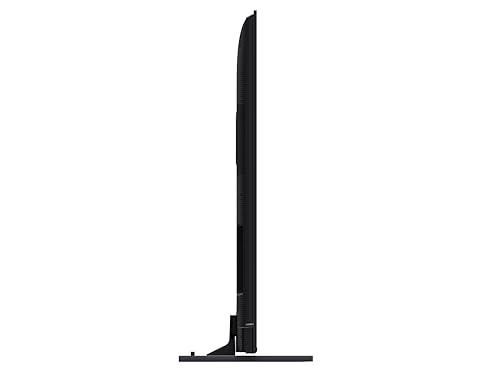
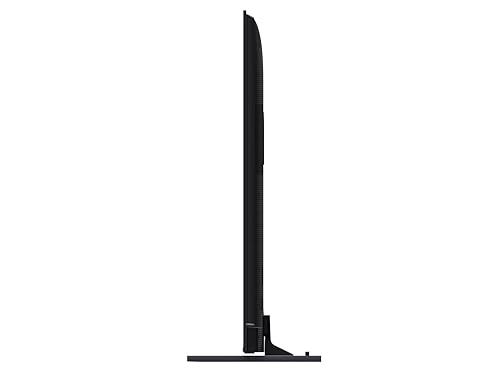
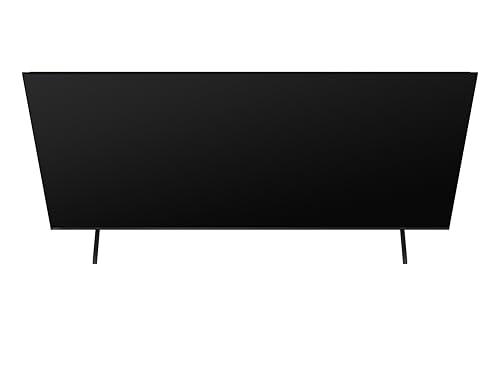
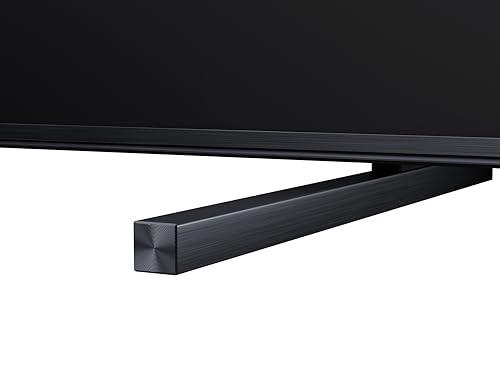
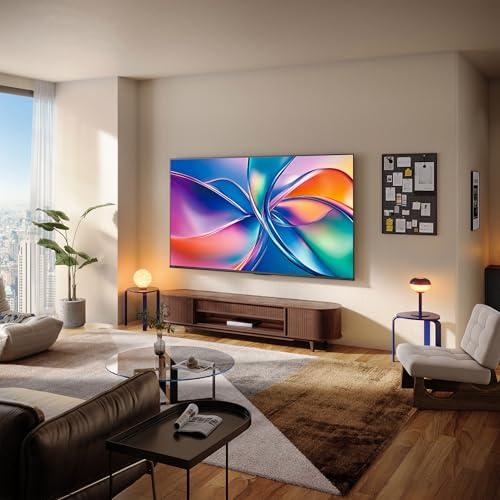
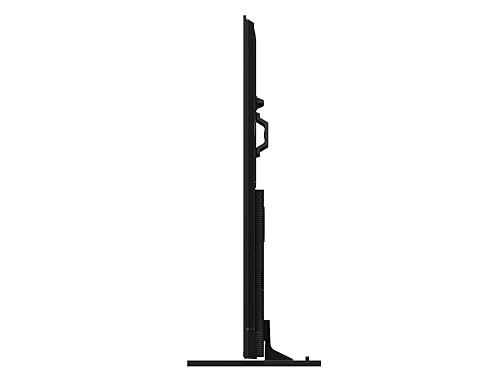
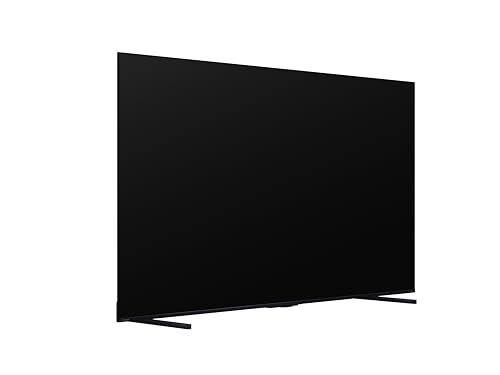
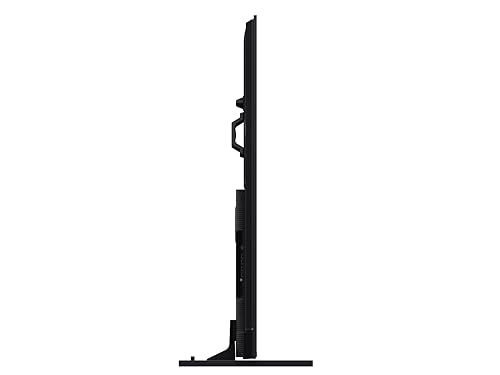
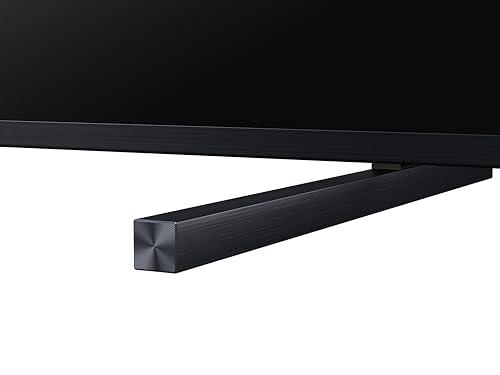
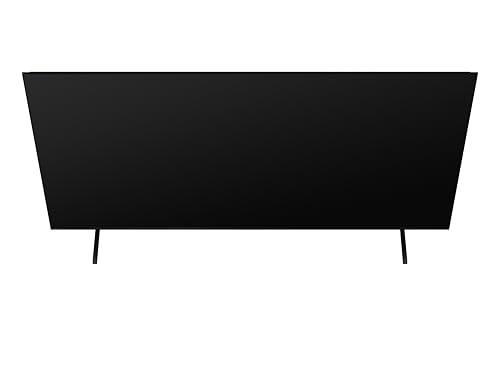
When you're shopping for a 100-inch TV, you're not just buying a television—you're creating the centerpiece of a home theater experience that needs to deliver for years to come. The sheer size means every detail matters more, from how deep the blacks look during a dark movie scene to whether fast action in games appears smooth or stuttery.
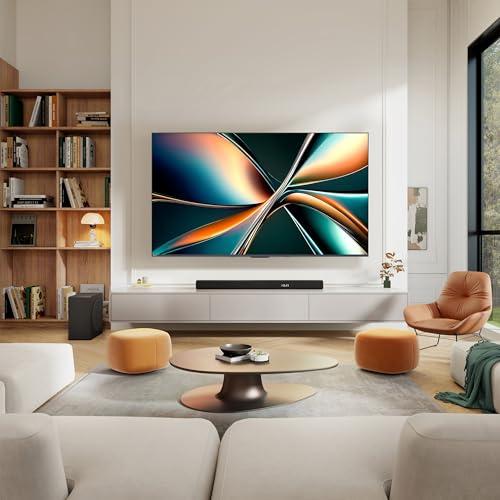
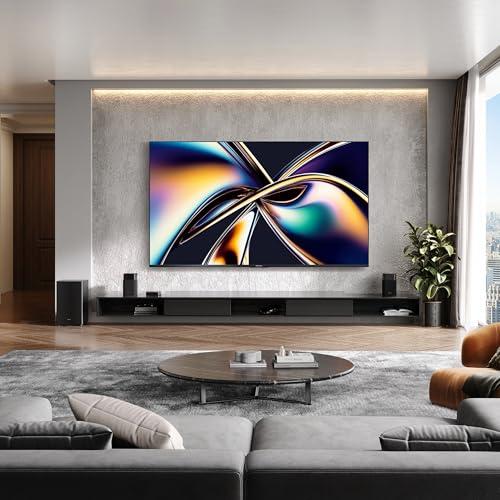
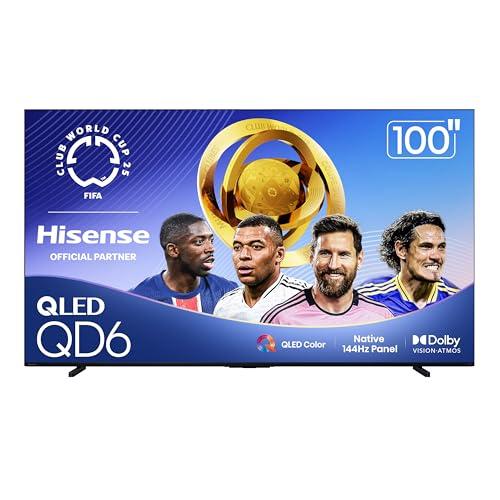
Hisense released two compelling 100-inch options in 2025 that take dramatically different approaches to achieving that cinematic experience. The U6 Series Mini-LED 4K Fire TV represents their premium offering with advanced backlighting technology, while the QD6 Series QLED 4K UHD Fire TV focuses on delivering maximum value without breaking the bank.
At 100 inches, picture quality flaws that you'd never notice on a 55-inch TV become glaringly obvious. That's why the technology inside becomes so critical. The two most important factors are the backlight system (how the TV creates brightness and darkness) and the refresh rate (how smoothly motion appears).
Think of the backlight as the foundation of everything you see. Traditional LED TVs use a uniform backlight that illuminates the entire screen evenly—imagine a giant flashlight behind the panel. This works fine for most content, but creates problems when you have bright objects next to dark ones, like stars against a night sky. The bright areas cause the dark areas to appear grayish instead of true black.
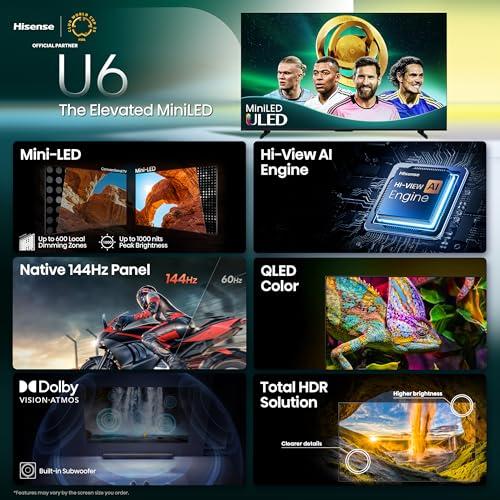
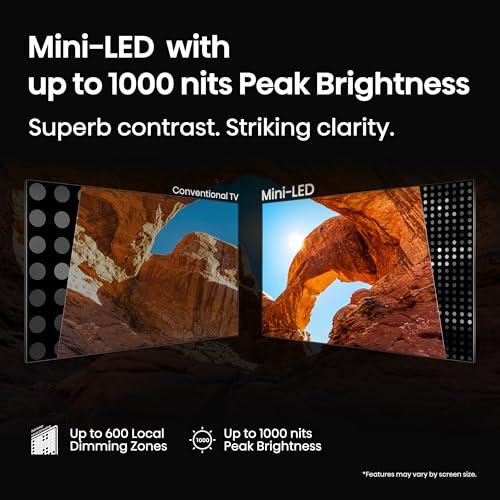
Mini-LED technology, found in the U6 Series, uses thousands of tiny LEDs arranged in zones that can be controlled independently. Instead of one giant flashlight, it's like having hundreds of small, precise spotlights that can turn on and off individually. This creates deeper blacks and prevents light from spilling into areas that should be dark.
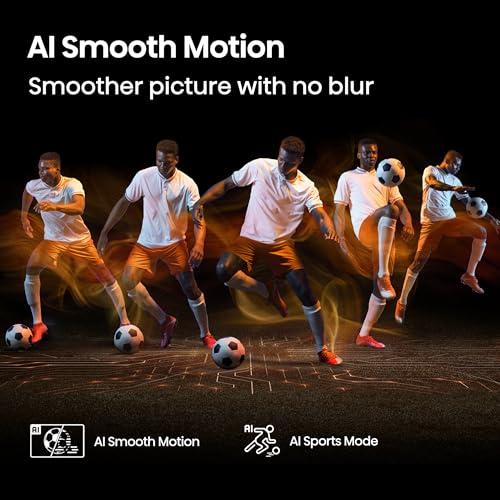
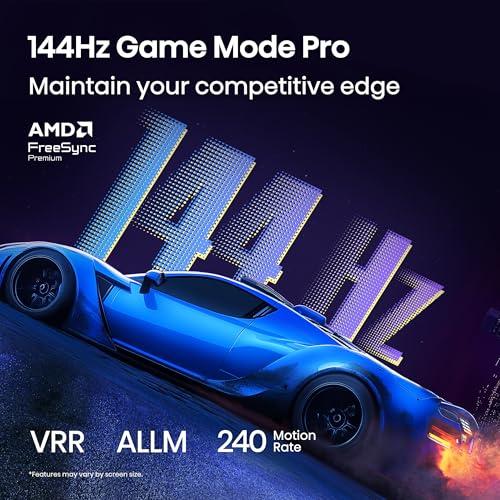
The refresh rate, measured in hertz (Hz), determines how many times per second the image updates. Standard TVs refresh 60 times per second (60Hz), which works fine for movies and TV shows. But for gaming, especially with newer consoles like the PlayStation 5 and Xbox Series X, higher refresh rates like 120Hz or 144Hz create noticeably smoother motion.
The fundamental difference between these two Hisense models lies in their backlighting approach, and it's not a subtle distinction—it completely changes what you see on screen.
The U6 Series uses Mini-LED backlighting with 608 local dimming zones. Each zone can independently adjust its brightness based on what's being displayed in that area of the screen. When you're watching a movie with a night scene, the zones displaying the dark sky can dim completely while zones showing a streetlight remain bright. This creates the kind of contrast that makes HDR (High Dynamic Range) content look truly impressive.
Our research into user and expert reviews consistently shows that this contrast difference is immediately noticeable. Dark movie scenes that look washed out and grayish on standard LED TVs appear deep and rich on Mini-LED displays. The effect is particularly dramatic in content like "Blade Runner 2049" or "The Dark Knight," where dark scenes with bright highlights showcase the technology's capabilities.
The QD6 Series, meanwhile, uses standard LED backlighting with no local dimming zones. The entire backlight operates uniformly, which means dark scenes will always have some level of background lighting. This isn't necessarily bad—it's the same technology most TVs have used for years—but it does limit the dramatic impact of HDR content and makes the TV less suitable for dedicated home theater environments.
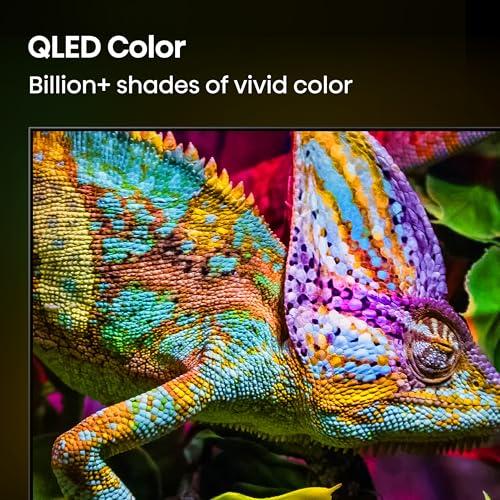
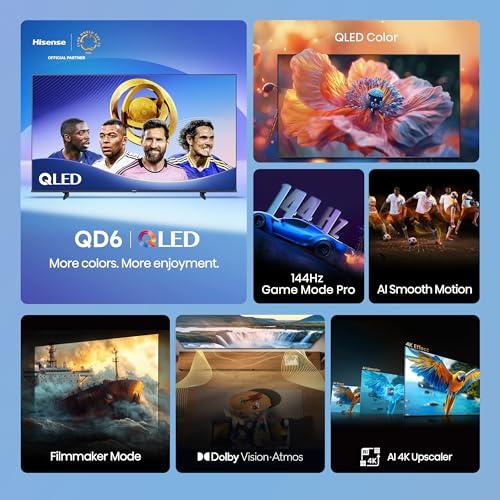
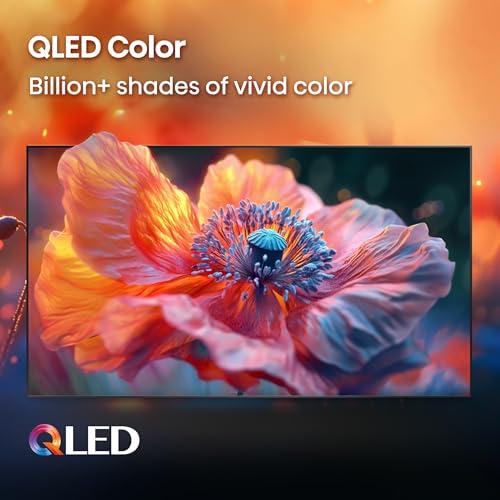
Both models feature QLED (Quantum Dot Light Emitting Diode) technology, which uses microscopic semiconductor particles to enhance color reproduction. These quantum dots act like precise color filters, allowing both TVs to display over a billion different color shades with improved accuracy compared to standard LED displays. In bright, colorful content like nature documentaries or animated movies, both TVs will look similarly vibrant.
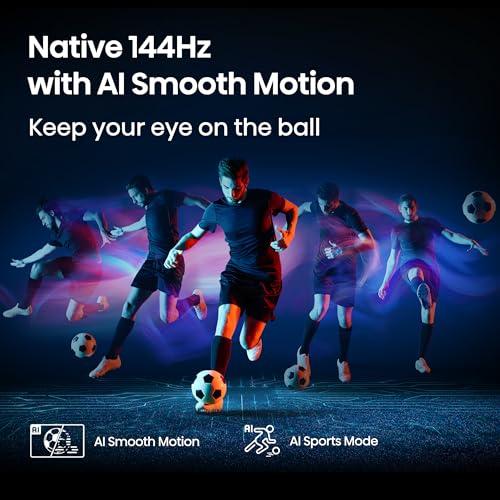
If you're a serious gamer, the refresh rate difference between these models is game-changing—literally. The U6 Series supports a native 144Hz refresh rate, while the QD6 Series is limited to 60Hz.
This matters tremendously for modern gaming. Current-generation consoles support 120Hz gaming in many titles, which creates noticeably smoother motion, reduced input lag, and less screen tearing (when the image appears to split or stutter). Racing games, first-person shooters, and sports games all benefit significantly from higher refresh rates.
The difference is similar to the jump from 30 frames per second to 60 in video games—once you experience it, going back feels sluggish and less responsive. For competitive gaming or anyone who takes their gaming seriously, the U6 Series offers a substantial advantage that will remain relevant as more games support high refresh rate modes.
Both models include gaming-specific features like Variable Refresh Rate (VRR) and Auto Low Latency Mode (ALLM). VRR synchronizes the TV's refresh rate with the game console's output to eliminate screen tearing, while ALLM automatically switches the TV to its lowest-latency mode when it detects gaming input. However, these features work much more effectively with the U6's higher refresh rate ceiling.
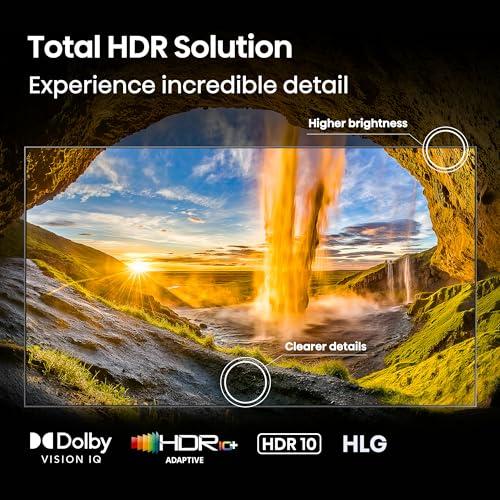
High Dynamic Range content represents the future of television, offering brighter highlights, deeper shadows, and more realistic colors than standard content. Both TVs support all major HDR formats including Dolby Vision, HDR10+, and standard HDR10, but they deliver very different experiences.
The U6 Series can achieve significantly higher peak brightness levels—likely approaching 1000 nits based on similar Mini-LED models—compared to the QD6's approximately 350-nit maximum. Peak brightness directly impacts how impressive HDR content appears. Bright scenes like explosions, sunlight reflecting off water, or neon signs should appear luminous and eye-catching, not dim and muted.
More importantly, the U6's local dimming creates the contrast necessary for HDR to work effectively. HDR content is mastered expecting displays that can show true blacks next to bright highlights simultaneously. Without local dimming, the QD6 Series simply cannot reproduce this full dynamic range, making HDR content look closer to enhanced standard definition rather than the dramatic improvement it should represent.
For home theater enthusiasts who invest in 4K HDR movies or premium streaming content, this difference justifies the price gap between the models. The enhanced contrast and brightness create a genuinely cinematic experience that standard LED backlighting cannot match.
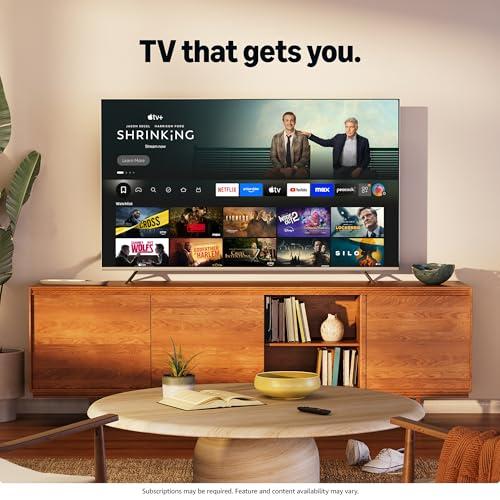
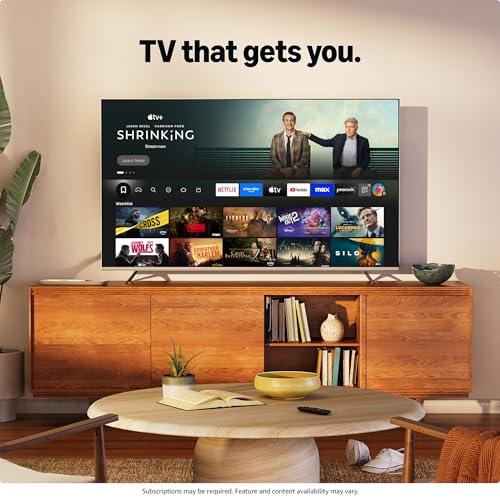
Both models run Amazon's Fire TV platform, which has evolved significantly since its introduction. The 2025 versions include improved processors that make navigation faster and more responsive than earlier Fire TV implementations.
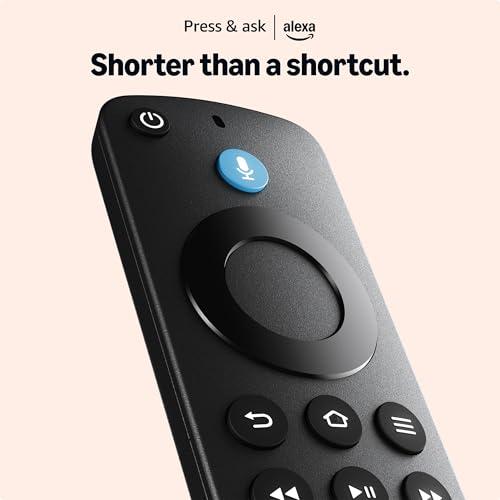
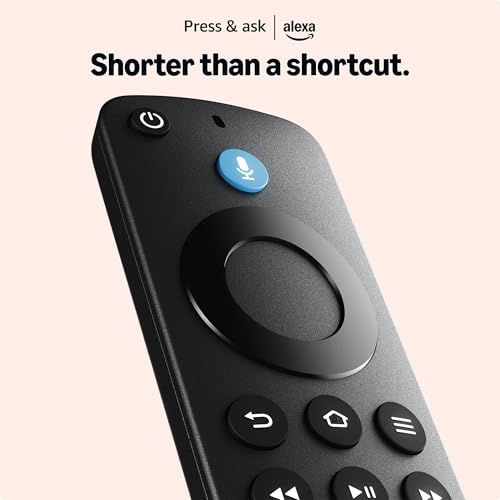
The interface organizes content from multiple streaming services into a unified home screen, making it easy to find shows and movies across different apps. Built-in Alexa voice control allows natural language searches like "show me action movies with good reviews" rather than browsing through endless menus.
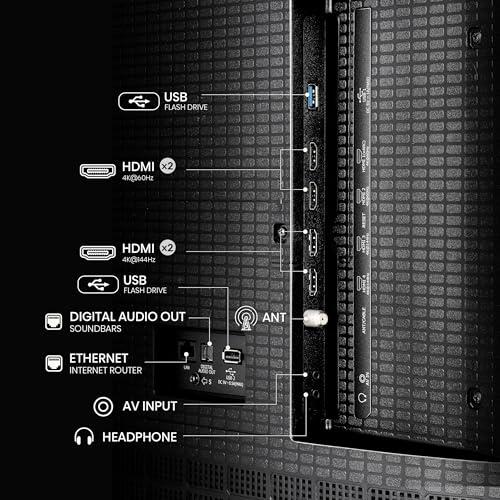
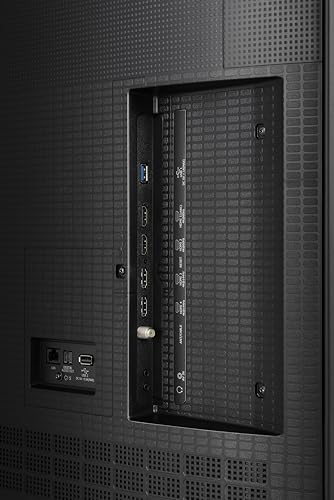
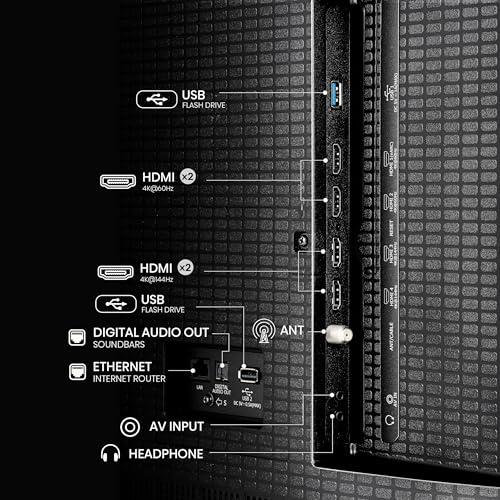
Both TVs include identical connectivity options with multiple HDMI ports, USB inputs, and wireless capabilities. The U6 Series likely includes more advanced HDMI 2.1 implementation to support its higher refresh rate gaming, but for standard streaming and content consumption, both offer the same capabilities.
Apple users will appreciate built-in AirPlay support for easy screen mirroring from iPhones and iPads, while the Fire TV platform provides access to essentially every major streaming service including Netflix, Disney+, HBO Max, and Amazon Prime Video.
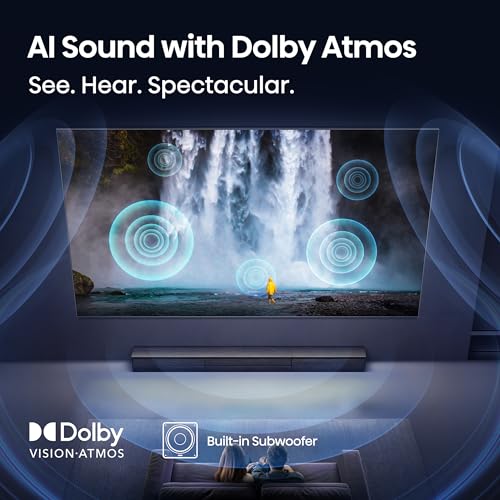
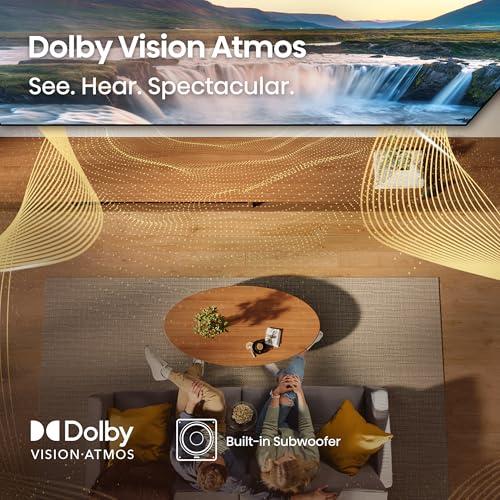
At 100 inches, built-in TV speakers face physics challenges that smaller displays don't encounter. Both models include Dolby Atmos support, which creates a more immersive surround sound experience than standard stereo, but the speakers themselves are still built into the TV chassis.
Our evaluation of similar large-format TVs suggests that while both models provide adequate audio for casual viewing, anyone investing in a 100-inch display should seriously consider a dedicated soundbar or surround sound system. The screen size creates expectations for audio that match the visual impact, and TV speakers—regardless of brand or processing—struggle to fill large rooms with sufficient volume and bass response.
At the time of writing, the price difference between these models represents roughly a 40% premium for the U6 Series Mini-LED technology. This isn't a small gap, but it's important to understand what that additional investment purchases.
The Mini-LED backlighting, higher refresh rate, and superior HDR performance represent fundamental technological upgrades rather than incremental improvements. These aren't features you might occasionally notice—they change the daily viewing experience in measurable ways.
For buyers primarily interested in maximizing screen size within a budget, the QD6 Series delivers exceptional value. At this price point, you're getting quantum dot color technology, comprehensive smart features, and a genuinely cinematic 100-inch experience that would have cost significantly more just a few years ago.
However, for home theater enthusiasts or serious gamers, the U6 Series upgrades address the most important performance limitations of large-format displays. The contrast improvement alone transforms dark movie scenes from disappointing to impressive, while the gaming performance ensures compatibility with current and future console capabilities.
A 100-inch TV requires careful consideration of your viewing space. The QD6 Series works best in bright or moderately lit rooms where its contrast limitations matter less. Family rooms, open floor plans, and spaces with lots of natural light suit this model well.
The U6 Series performs effectively across different lighting conditions, making it more versatile for rooms that serve multiple purposes. Its superior contrast means it maintains impact even in dedicated home theater setups with controlled lighting.
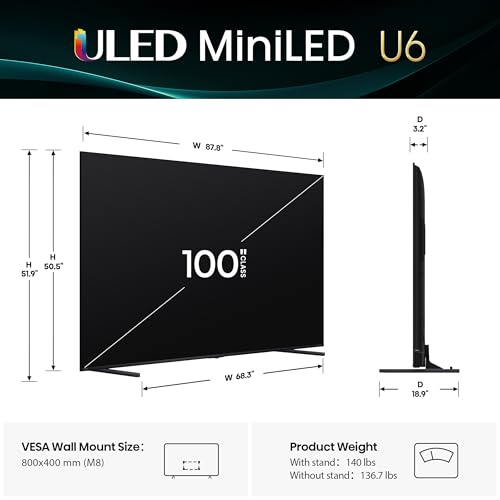
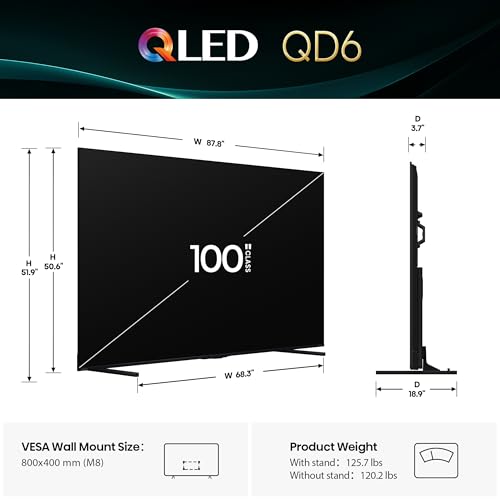
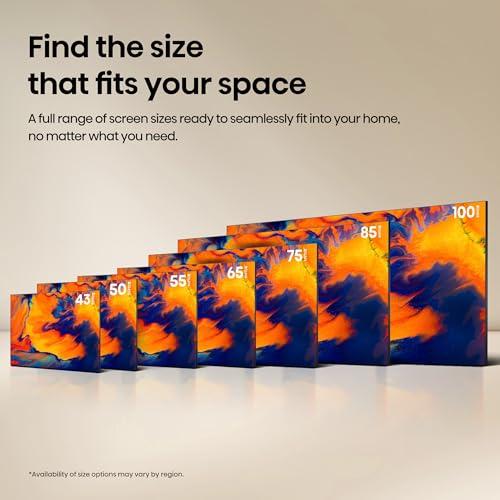
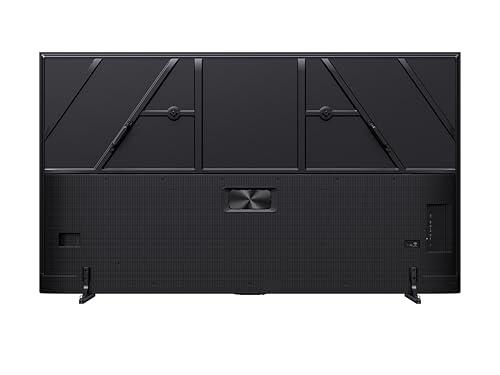
Both models require professional installation or at least two people for setup due to their size and weight. Wall mounting requires appropriate structural support and VESA-compatible brackets rated for displays of this size.
Choose the QD6 Series if your primary goal is achieving maximum screen size within budget constraints. This makes sense for buyers who primarily watch in bright rooms, don't require cutting-edge gaming performance, and focus on streaming content, broadcast television, and casual entertainment. The quantum dot color technology ensures vibrant, accurate colors that surpass basic LED TVs at this size, while the Fire TV platform provides comprehensive smart features.
The U6 Series makes more sense for buyers who prioritize picture quality and future-proof features over budget considerations. Home theater enthusiasts who watch movies in controlled lighting, serious gamers who want to fully utilize next-generation consoles, and anyone who frequently watches HDR content will immediately notice and appreciate the superior performance.
The decision ultimately comes down to how you balance value versus performance. The QD6 maximizes value by delivering a premium 100-inch experience at the lowest possible price point. The U6 maximizes performance by incorporating display technology that fundamentally improves the viewing experience.
Consider your viewing habits, room setup, and long-term expectations. If you're building a dedicated home theater or plan to keep this TV for many years, the U6's superior technology provides better long-term value despite the higher initial cost. If you're primarily focused on upgrading from a much smaller TV and want to experience large-format viewing without premium pricing, the QD6 delivers that experience effectively.
Both represent significant improvements over standard LED TVs at this size, but they serve different audiences with different priorities and expectations.
| Hisense 100" U6 Series Mini-LED 4K Fire TV | Hisense 100" QD6 Series QLED 4K UHD Fire TV 2025 |
|---|---|
| Backlight Technology - Most critical difference affecting picture quality | |
| Mini-LED with 608 local dimming zones for deep blacks and superior contrast | Standard LED with no local dimming - uniform backlighting across entire screen |
| Refresh Rate - Essential for smooth gaming and sports | |
| 144Hz native refresh rate supports next-gen console gaming at 120Hz+ | 60Hz maximum limits gaming performance and motion smoothness |
| Peak Brightness - Determines HDR impact and bright room performance | |
| Up to 1000 nits estimated for impressive HDR highlights | ~350 nits limits HDR effectiveness and bright room viewing |
| Color Technology - Both deliver vibrant, accurate colors | |
| QLED Quantum Dot with over 1 billion color shades | QLED Quantum Dot with over 1 billion color shades |
| HDR Support - Same formats but different performance levels | |
| Dolby Vision IQ, HDR10+, HDR10, HLG with full contrast range | Dolby Vision, HDR10+, HDR10, HLG with limited contrast |
| Gaming Features - Both include VRR and ALLM but perform differently | |
| Game Mode Pro with 144Hz, VRR, ALLM for competitive gaming | Game Mode Plus with 60Hz, VRR, ALLM for casual gaming |
| Smart Platform - Identical experience on both models | |
| Fire TV with built-in Alexa voice control | Fire TV with built-in Alexa voice control |
| Audio - Both benefit from external sound systems | |
| Dolby Atmos support with built-in speakers | Dolby Atmos support with built-in speakers |
| HDMI Connectivity - Both support next-gen consoles | |
| 4 HDMI ports with 2 HDMI 2.1 (optimized for high refresh gaming) | 4 HDMI ports with 2 HDMI 2.1 (60Hz bandwidth limitation) |
| Ideal Room Environment - Consider your viewing space | |
| Versatile performance in bright and dark rooms | Best in bright/moderate lighting where contrast limits matter less |
| Best For - Target audience for each model | |
| Home theater enthusiasts, serious gamers, HDR content viewers | Budget-conscious buyers prioritizing size over premium features |
| Value Proposition - Understanding the price difference | |
| Premium Mini-LED technology justifies higher cost for enthusiasts | Exceptional value for 100" QLED experience at entry price point |
The primary difference is the backlight technology. The Hisense 100" U6 Series Mini-LED 4K Fire TV uses Mini-LED backlighting with 608 local dimming zones, while the Hisense 100" QD6 Series QLED 4K UHD Fire TV uses standard LED backlighting without local dimming. This means the U6 delivers much better contrast, deeper blacks, and superior HDR performance.
The Hisense 100" U6 Series Mini-LED 4K Fire TV is significantly better for gaming with its 144Hz refresh rate compared to the QD6's 60Hz limitation. The U6 can fully utilize PlayStation 5 and Xbox Series X 120Hz gaming modes, providing smoother motion and reduced input lag for competitive gaming.
Yes, both the U6 Series and QD6 Series run the same Fire TV platform with built-in Alexa voice control, identical streaming app access, and the same user interface. The smart TV experience is essentially identical between both models.
The Hisense 100" U6 Series Mini-LED 4K Fire TV is far superior for home theater use. Its Mini-LED local dimming creates the deep blacks and high contrast essential for cinematic viewing, especially in dark rooms. The QD6 Series lacks the contrast needed for premium home theater experiences.
The U6 Series offers 144Hz while the QD6 Series is limited to 60Hz. Higher refresh rates create smoother motion in fast-paced content like sports and action movies, and are essential for next-generation console gaming at 120Hz.
Both the Hisense 100" U6 Series Mini-LED 4K Fire TV and Hisense 100" QD6 Series QLED 4K UHD Fire TV use identical QLED quantum dot technology, delivering over a billion color shades with excellent accuracy and vibrancy. The color performance is essentially the same between both models.
The U6 Series handles HDR content significantly better due to its higher peak brightness and local dimming capability. While both support Dolby Vision and HDR10+, the QD6 Series cannot achieve the contrast range needed for impactful HDR viewing.
The Hisense 100" U6 Series Mini-LED 4K Fire TV performs better in bright rooms due to its higher peak brightness. The QD6 Series works adequately in moderate lighting but may struggle with direct sunlight or very bright room conditions.
There's a dramatic difference in dark scene performance. The U6 Series produces true blacks and maintains detail in shadows thanks to its Mini-LED local dimming. The QD6 Series shows grayish blacks and loses shadow detail due to its uniform backlighting.
The QD6 Series offers exceptional value for buyers prioritizing screen size over premium features. The Hisense 100" U6 Series Mini-LED 4K Fire TV provides better value for enthusiasts who want superior picture quality and gaming performance despite the higher cost.
While both the U6 Series and QD6 Series include Dolby Atmos support, their built-in speakers are adequate only for casual viewing. At 100 inches, both models benefit significantly from external soundbars or surround sound systems for a truly immersive experience.
Choose the QD6 Series if you want maximum screen size at the lowest cost and primarily watch in bright rooms with casual gaming needs. Choose the Hisense 100" U6 Series Mini-LED 4K Fire TV if you prioritize picture quality, serious gaming, home theater viewing, or plan to keep the TV for many years.
We've done our best to create useful and informative comparisons to help you decide what product to buy. Our research uses advanced automated methods to create this comparison and perfection is not possible - please contact us for corrections or questions. These are the sites we've researched in the creation of this article: bestbuy.com - rtings.com - youtube.com - rtings.com - youtube.com - youtube.com - costco.com - pcrichard.com - hisense-usa.com - electronicexpress.com - pcrichard.com - circuitworldonline.com - bestbuy.com - bestbuy.com - premiumincentive.com - hisense-usa.com - hisense-usa.com - pcrichard.com - rtings.com - bestbuy.com - hisense-usa.com - avsforum.com - bestbuy.com - youtube.com - tvsbook.com - rtings.com - youtube.com - youtube.com - bestbuy.com - leaseville.com - pcrichard.com - bestbuy.com - youtube.com - hisense-usa.com - manuals.plus - hisense-usa.com - hisense-usa.com - brandsmartusa.com

Privacy Policy
Terms and Conditions - Affiliate Policy
Home Security
© Copyright 2008-2026.
11816 Inwood Rd #1211, Dallas, TX 75244