

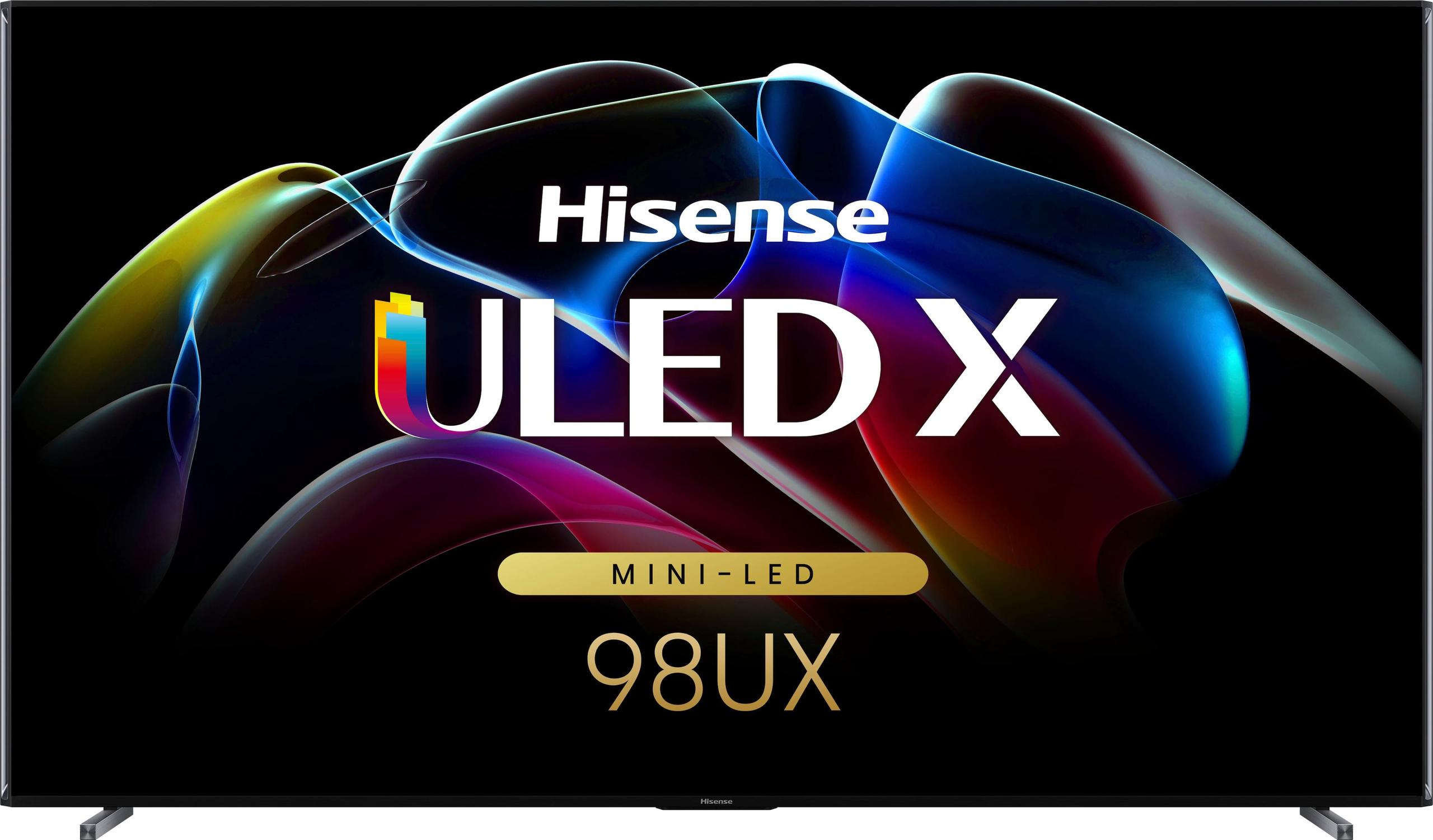


When you're shopping for a TV that could literally take over your living room wall, the choices can feel overwhelming. Hisense has carved out an interesting position in the mega-screen market with two compelling but very different approaches: the 100" U6 Series Mini-LED that prioritizes sheer size, and the 98" UX Series that focuses on premium picture quality. Both launched in 2024-2025, representing Hisense's push into the American premium TV market, but they serve distinctly different needs.
The fundamental question isn't just about which TV is better—it's about what matters most to you: those extra two inches of screen real estate, or a significantly more advanced picture that might make you forget about the size difference entirely.
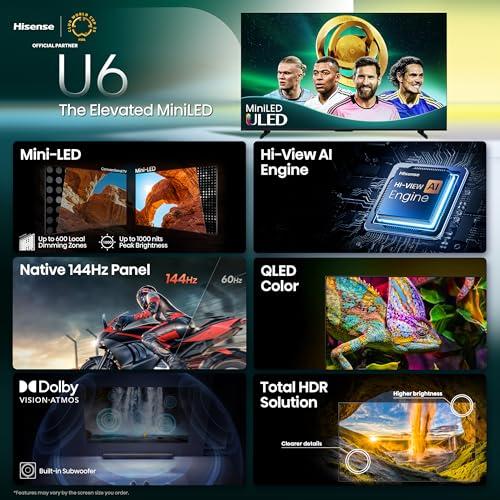
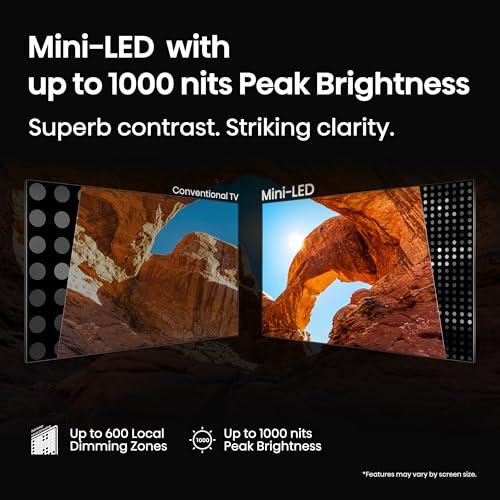
Before diving into the comparison, it's worth understanding what Mini-LED actually brings to the table. Traditional LED TVs use a handful of LED zones behind the screen—maybe 50-200 zones on a good model. Mini-LED technology shrinks these LEDs down to incredibly small sizes and packs thousands of them behind the display. This creates what's called "local dimming zones"—essentially tiny sections of the backlight that can be turned on, off, or dimmed independently.
Why does this matter? Imagine watching a movie scene with bright stars against a black night sky. A regular LED TV might make the entire section glow, creating a halo effect around bright objects. Mini-LED can keep those stars bright while making the sky truly black, approaching the contrast quality of OLED displays but with much higher brightness capabilities.
The U6 Series uses up to 600 of these local dimming zones, while the UX Series packs in over 10,000 zones. That's like comparing a mosaic made of large tiles to one made of tiny, intricate pieces—both can create a picture, but one offers far more detail and precision.
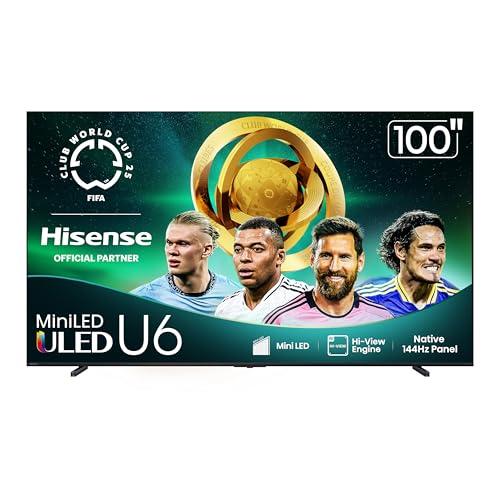
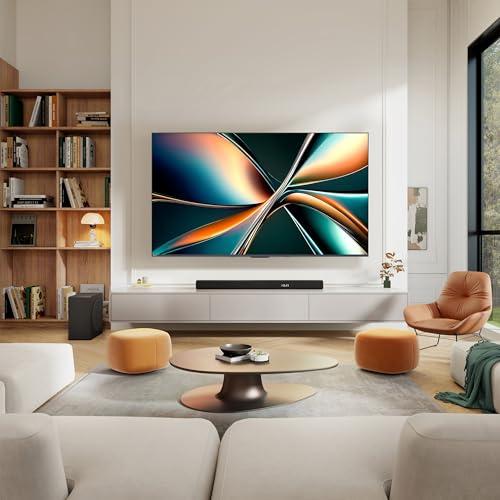
Here's where things get interesting. The 100" U6 Series gives you those extra two inches diagonally, which translates to about 8% more screen area—not insignificant when you're talking about displays this large. At 100 inches, you're getting a truly cinema-scale experience that can make a dedicated home theater feel like a commercial movie theater.
However, the 98" UX Series takes a different approach entirely. Rather than maximizing size, it maximizes performance within a slightly smaller (but still massive) package. The difference between 98" and 100" becomes less noticeable when the picture quality gap is this significant.
In our research across professional reviews and user feedback, the consensus is clear: while that extra screen real estate is nice, the performance differences are what people notice day-to-day. The UX Series consistently receives praise for picture quality that rivals TVs costing significantly more, while the U6 earns recognition as an excellent value entry point into Mini-LED technology.
The brightness difference between these models is dramatic. The U6 Series peaks at around 1,000 nits—already quite good for most viewing conditions and significantly brighter than many TVs in its class. But the UX Series reaches over 5,000 nits, putting it in rarified air among consumer displays.
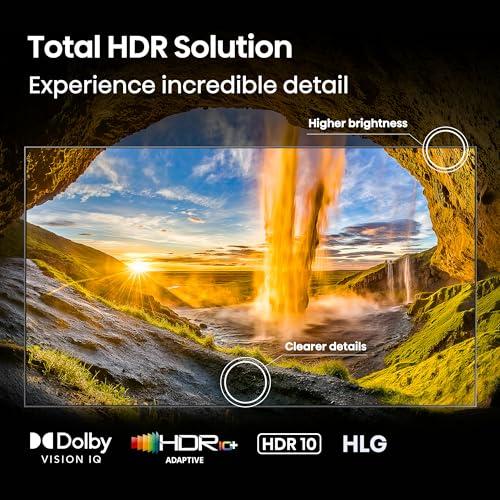
Why does brightness matter so much? HDR (High Dynamic Range) content is designed to use these extreme brightness levels to create more realistic images. Think about the difference between looking at a photo of the sun and actually looking outside on a bright day. That's the kind of impact proper HDR brightness can have on your viewing experience.
The local dimming zone difference—600 vs. 10,000+—creates even more dramatic real-world improvements. Professional reviews consistently note that the UX Series achieves "OLED-like" black levels, meaning dark scenes in movies maintain detail without the grayish look that plagues many LED displays. The U6 Series, while good for its price point, can't match this level of contrast precision.
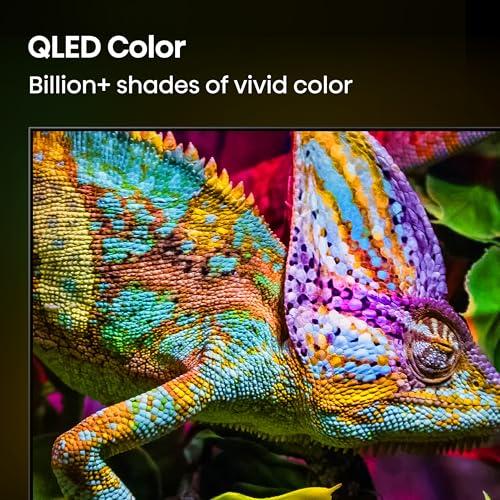
Color accuracy tells a similar story. Both models use quantum dot technology (that's the "QLED" designation), which uses tiny crystals to produce more accurate and vibrant colors. However, the UX Series covers 100% of the DCI-P3 color space—the professional standard used in movie production—while the U6 covers a smaller but still impressive range.
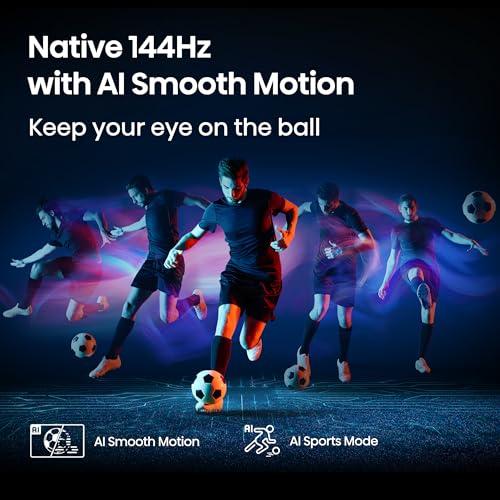
Gaming performance has become increasingly important as next-generation consoles and high-end PC graphics cards push 4K gaming at high frame rates. Both models support 144Hz refresh rates, which is excellent news for gamers—this means the display can show up to 144 unique images per second, creating incredibly smooth motion.
The U6 Series includes Game Mode Pro with Variable Refresh Rate (VRR) support from 48Hz to 144Hz. VRR is crucial for eliminating screen tearing—that annoying visual artifact where the image appears to be split horizontally. It also supports FreeSync, AMD's adaptive refresh technology.
The UX Series takes gaming further with AMD FreeSync Premium Pro certification and Dolby Vision Gaming support. Dolby Vision Gaming is relatively new technology that applies HDR optimization specifically to game content, potentially making games look more vibrant and realistic. The additional HDMI 2.1 ports on the UX also provide more flexibility for connecting multiple high-performance gaming devices.
From our analysis of user feedback, serious gamers consistently report better experiences with the UX Series, particularly for competitive gaming where every frame matters. The improved local dimming helps with visibility in dark game scenes, while the higher peak brightness makes HDR games more impactful.
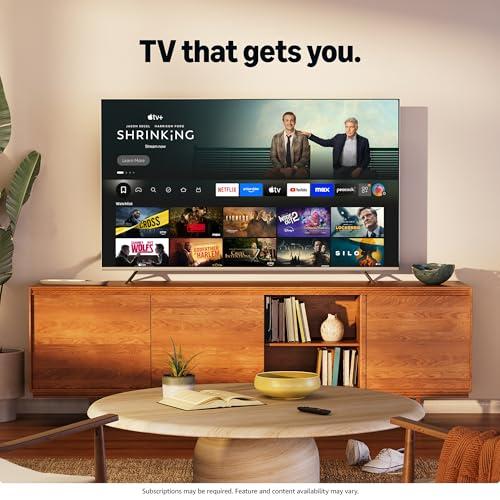
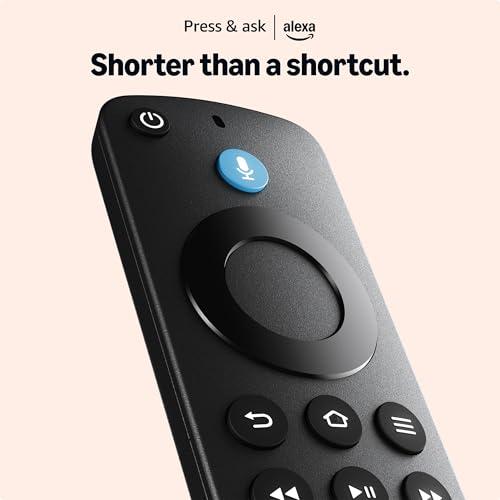
This represents one of the most significant philosophical differences between the models. The U6 Series runs Fire TV, Amazon's streaming platform, while the UX Series uses Google TV with Chromecast built-in.
Fire TV excels at integration with Amazon's ecosystem. If you're a Prime subscriber, use Alexa devices throughout your home, or prefer Amazon's content recommendations, Fire TV feels natural and responsive. The interface is clean and focuses heavily on Amazon's content while still providing access to all major streaming apps. Voice control through Alexa is notably smooth and comprehensive.
Google TV takes a more platform-agnostic approach, aggregating content from multiple streaming services into unified recommendations. If you use Google services, Android phones, or Chromecast regularly, this integration feels seamless. Google TV also tends to receive app updates more quickly and supports a wider variety of streaming services, including some smaller or regional platforms that might not make it to Fire TV.
Neither platform is objectively better—it really comes down to your existing ecosystem and preferences. However, Google TV's broader app support and more flexible interface give it an edge for users who want maximum streaming options.
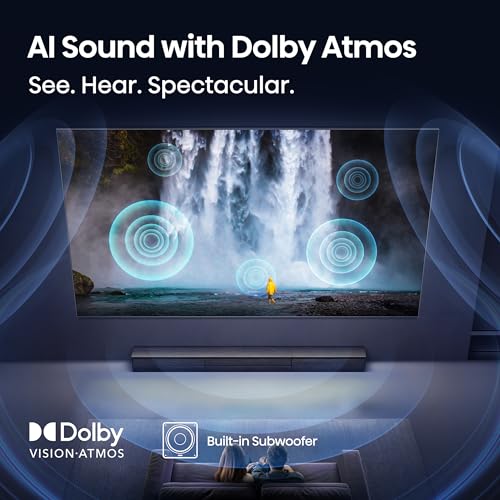
Audio often gets overlooked in TV comparisons, but with displays this large, sound quality becomes more important. The U6 Series includes a 2.1-channel system with 50W of power and a built-in subwoofer. It supports Dolby Atmos, which creates overhead sound effects for more immersive audio. For a TV in its price range, this is quite respectable.
The UX Series steps up significantly with its CineStage X 4.2.2-channel system. This includes seven speakers total, arranged to create surround sound effects, plus a built-in subwoofer. The system supports both Dolby Atmos and DTS Virtual X, providing multiple surround sound processing options.
Professional reviews note that the UX's audio system produces noticeably clearer dialogue and more convincing surround effects. However, both models benefit significantly from external audio solutions. At these screen sizes, most users eventually add a soundbar or full surround system to match the visual scale with appropriate audio impact.
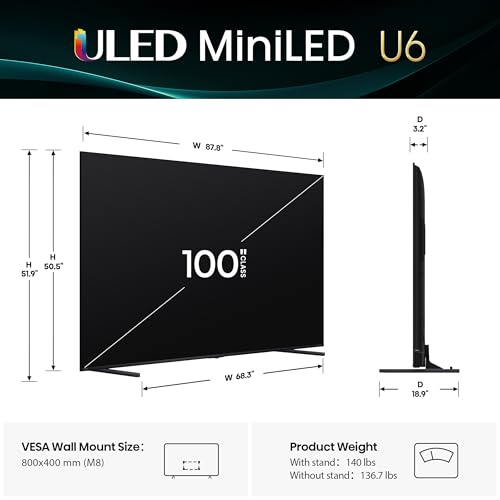
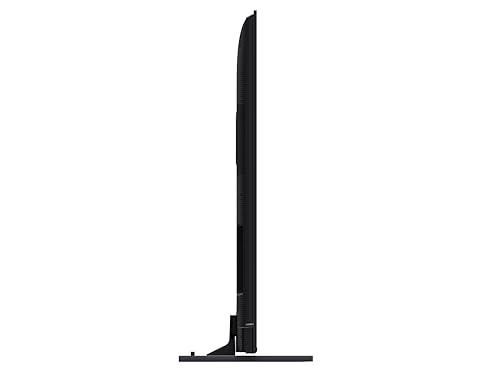
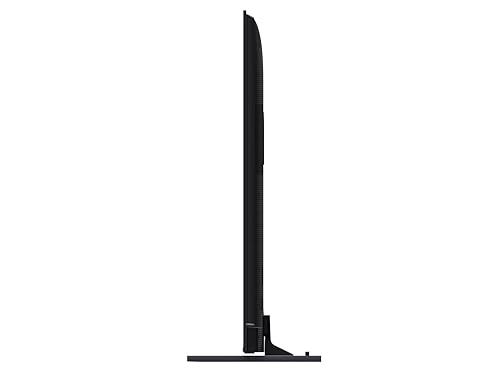
TVs this large present unique challenges that smaller displays don't. The 100" U6 Series measures nearly 88 inches wide and weighs about 140 pounds with its stand. The 98" UX Series is slightly smaller but still requires careful planning and likely professional installation.
Both models include anti-glare technology, but the UX Series performs better in bright rooms due to its much higher peak brightness. If your viewing room has windows or significant ambient lighting, the UX's ability to punch through that light while maintaining contrast becomes a significant advantage.
The viewing distance sweet spot for both models falls between 8-12 feet, though personal preference plays a big role. Sitting too close can make the pixel structure visible, while sitting too far negates the immersive benefit of such a large screen.
At the time of writing, these models occupy different value segments. The U6 Series positions itself as an accessible entry into Mini-LED technology, offering impressive size and solid performance without flagship pricing. It's designed for buyers who want the biggest possible screen with modern features but don't need absolute picture quality.
The UX Series commands premium pricing but competes against models costing significantly more from Samsung and Sony. Professional reviews consistently note that it delivers flagship-level performance at a relative bargain compared to similarly sized premium displays from other manufacturers.
For context, premium 98" displays from major competitors often cost several thousand dollars more than the UX Series, making Hisense's offering look quite attractive for the performance level delivered.
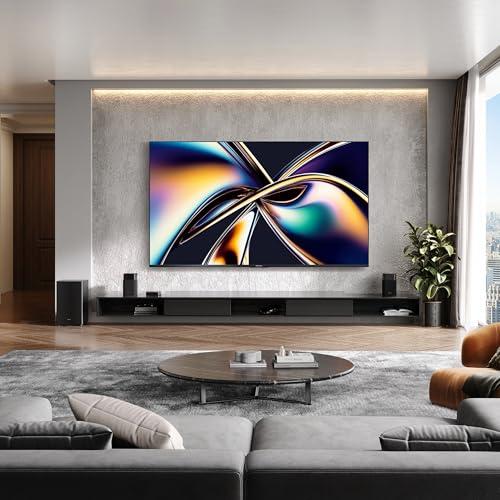
If you're building a dedicated home theater, the choice becomes clearer. The UX Series provides the color accuracy, contrast, and brightness levels that make movie content look as directors intended. Its IMAX Enhanced certification and comprehensive HDR support ensure compatibility with premium content formats.
The U6 Series works well in home theaters but represents more of a mainstream approach. It delivers solid performance that will satisfy most viewers without the refinements that enthusiasts might notice.
Future-proofing considerations favor the UX Series due to its more advanced gaming features, broader HDR support, and superior brightness levels that will remain impressive as content standards evolve.
Choose the 100" U6 Series if you prioritize maximum screen size above all else, want solid Mini-LED performance without premium pricing, prefer Amazon's ecosystem, or plan to use the TV primarily for mainstream content viewing. It's ideal for large family rooms where the biggest possible screen makes sense, or for buyers entering Mini-LED technology who want to see what it offers without a major investment.
The 98" UX Series makes more sense for serious home theater enthusiasts, gamers who want the best possible performance, or anyone planning to keep their TV for many years and wanting maximum future-proofing. If picture quality matters more than those extra two inches, or if you frequently watch content in bright rooms, the UX's superior performance justifies its higher price.
Both TVs represent strong values in their respective segments, but they serve different priorities. The U6 Series maximizes size and provides solid Mini-LED performance at an accessible price point. The UX Series delivers flagship performance that competes with much more expensive alternatives.
The decision ultimately comes down to whether you value maximum size or maximum performance more highly. In most cases, the performance advantages of the UX Series will be more noticeable in day-to-day viewing than the two-inch size difference. However, if budget constraints or size requirements drive your decision, the U6 Series provides an excellent entry point into large-format Mini-LED technology.
Either choice will transform your viewing experience—just make sure your living room is ready for the change.
| Hisense 100" U6 Series Mini-LED 4K Fire TV | Hisense 98" UX Series 4K Mini-LED ULED Google TV |
|---|---|
| Screen Size - More inches means more immersive viewing but requires larger room | |
| 100" (actual 99.5") - Maximum cinema-scale experience | 98" - Still massive but slightly more manageable |
| Peak Brightness - Critical for HDR impact and bright room viewing | |
| Up to 1,000 nits (good for most rooms) | Over 5,000 nits (handles any lighting condition) |
| Local Dimming Zones - More zones = better contrast and black levels | |
| Up to 600 zones (solid entry-level Mini-LED) | 10,000+ zones (flagship-level precision) |
| Smart Platform - Determines app selection and ecosystem integration | |
| Fire TV with Alexa (Amazon ecosystem focus) | Google TV with Chromecast (broader app support) |
| Gaming Performance - Important for console and PC gaming | |
| 144Hz, VRR 48-144Hz, Game Mode Pro | 144Hz, VRR, AMD FreeSync Premium Pro, Dolby Vision Gaming |
| Audio System - Built-in sound quality affects need for external speakers | |
| 2.1 channel, 50W with subwoofer | CineStage X 4.2.2 system with 7 speakers |
| HDR Support - Determines compatibility with premium content | |
| Dolby Vision IQ, HDR10+, HDR10, HLG | All U6 formats plus Dolby Vision Gaming, IMAX Enhanced |
| HDMI Connectivity - Affects gaming and device connections | |
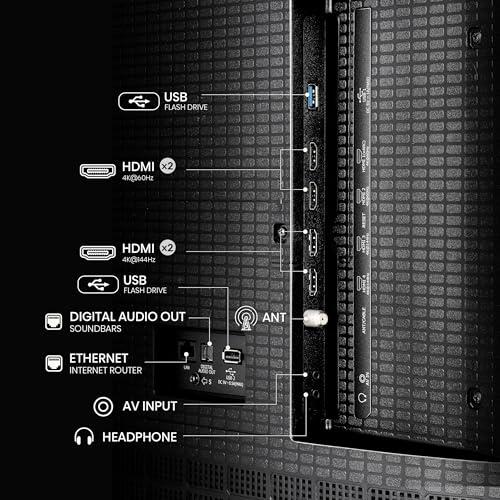
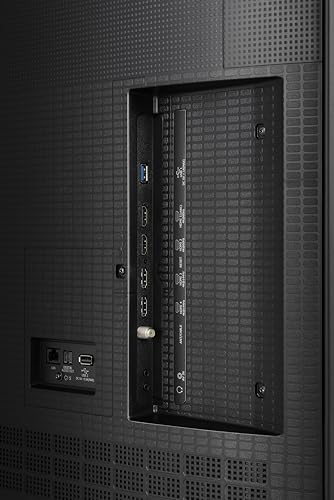
| 2 HDMI 2.1, 2 HDMI 2.0 ports | 2 HDMI 2.1 (4K/144Hz), additional HDMI with eARC |
| Panel Technology - Impacts viewing angles and color accuracy | |
| Standard Mini-LED with QLED quantum dots | IPS-ADS with advanced dimming (wider viewing angles) |
| Target Market - Who each model is designed for | |
| Value-focused buyers wanting maximum size | Home theater enthusiasts prioritizing picture quality |
| Warranty Coverage - Protection for your investment | |
| 12 months parts and labor | 2 years parts and labor |
For dedicated home theaters, the Hisense 98" UX Series is the clear winner despite being 2 inches smaller. Its 5,000+ nits peak brightness, 10,000+ local dimming zones, and IMAX Enhanced certification deliver cinema-quality picture performance. The 100" U6 Series offers more screen real estate but can't match the contrast and color accuracy that serious movie watching demands.
The 98" UX Series offers superior gaming performance with AMD FreeSync Premium Pro, Dolby Vision Gaming support, and more advanced optimization features. While both support 144Hz refresh rates, the UX provides smoother gameplay and better HDR gaming experiences than the 100" U6.
Choose Fire TV on the U6 Series if you're invested in Amazon's ecosystem with Alexa devices and Prime subscriptions. Pick Google TV on the UX Series if you want broader app support, use Google services, or prefer platform-agnostic content recommendations. Both work well, but Google TV typically gets faster app updates.
Both offer excellent value in different ways. The 100" U6 Series provides maximum screen size at entry-level Mini-LED pricing, making it great value for size-focused buyers. The 98" UX Series delivers flagship performance for less than competitors charge, making it better value for quality-focused buyers.
The 98" UX Series has significantly better audio with its CineStage X 4.2.2-channel system featuring 7 speakers and a subwoofer. The 100" U6 Series has a decent 2.1-channel system, but both TVs benefit from adding a soundbar or surround system for optimal audio at these screen sizes.
The 98" UX Series is far superior for bright rooms thanks to its 5,000+ nits peak brightness and advanced anti-glare technology. The 100" U6 Series works in moderately lit rooms but struggles with significant ambient light, making the UX the clear choice for rooms with windows or overhead lighting.
Both support all major streaming services, but the UX Series with Google TV typically has broader app compatibility and faster updates. The 100" U6 Series with Fire TV focuses more on Amazon's ecosystem but still provides access to Netflix, Disney+, HBO Max, and other popular platforms.
The 98" UX Series is more future-proof with superior HDR support, advanced gaming features, and flagship-level performance that will remain impressive longer. While the 100" U6 Series is well-built, the UX's higher-end specifications and 2-year warranty versus 1-year coverage make it the better long-term investment.
We've done our best to create useful and informative comparisons to help you decide what product to buy. Our research uses advanced automated methods to create this comparison and perfection is not possible - please contact us for corrections or questions. These are the sites we've researched in the creation of this article: bestbuy.com - rtings.com - youtube.com - rtings.com - youtube.com - youtube.com - costco.com - pcrichard.com - hisense-usa.com - electronicexpress.com - pcrichard.com - circuitworldonline.com - bestbuy.com - bestbuy.com - premiumincentive.com - hisense-usa.com - hisense-usa.com - pcrichard.com - rtings.com - bestbuy.com - hisense-usa.com - avsforum.com - bestbuy.com - walmart.com - stealthoptional.com - youtube.com - soundandvision.com - youtube.com - hdtvtest.co.uk - avsforum.com - hisense-canada.com - fouanistore.com - displayspecifications.com

Privacy Policy
Terms and Conditions - Affiliate Policy
Home Security
© Copyright 2008-2026.
11816 Inwood Rd #1211, Dallas, TX 75244