

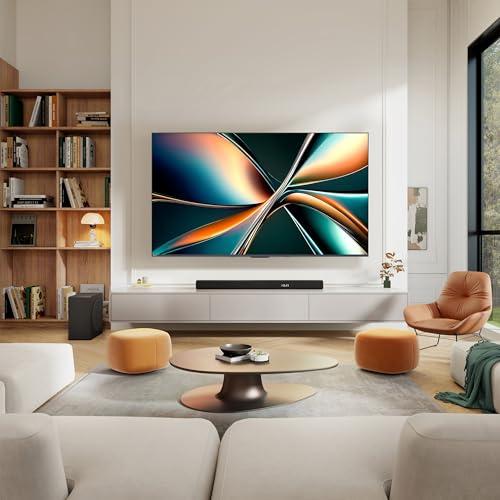
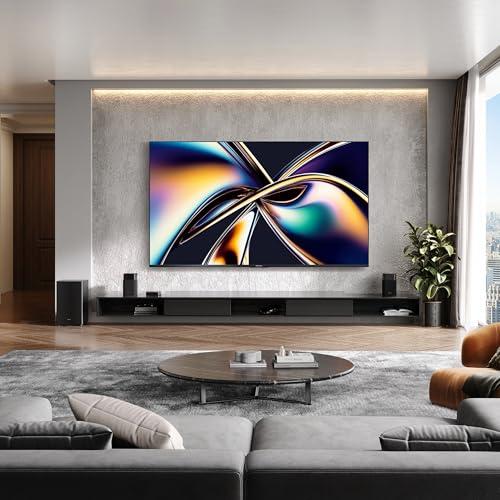
When it comes to creating a true home theater experience, nothing beats the impact of a massive screen. We're talking about displays that dwarf your living room and make movie night feel like a trip to the cinema. But with screens this large, the choice between value and premium options becomes especially critical—you're making a significant investment either way.
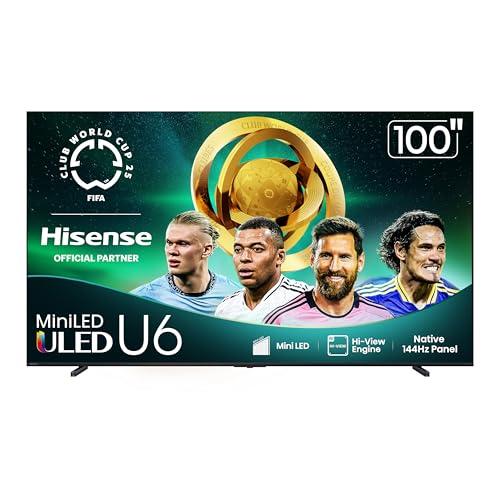
Today we're comparing two heavyweights in the large-format TV space: the Hisense 100" U6 Series Mini-LED from 2025 and Sony's BRAVIA XR X90L 98" from 2023. These represent fundamentally different approaches to large-screen entertainment, and understanding their differences will help you make the right choice for your home theater.
Large format TVs—those 95 inches and bigger—occupy a unique space in home entertainment. They're designed to replace or compete with projector setups while delivering the convenience and reliability of traditional televisions. At these sizes, several factors become more important than with smaller displays.
Picture quality consistency matters enormously because flaws become more noticeable on bigger screens. A TV that looks great at 65 inches might reveal uniformity issues or processing artifacts when scaled up to 100 inches. Peak brightness becomes crucial for daytime viewing—larger screens need more light output to maintain impact in bright rooms.
Local dimming performance (how well the TV controls brightness in different screen areas) separates good large TVs from mediocre ones. Poor local dimming creates visible "blooming" or halos around bright objects, which becomes distracting on cinema-sized screens. Motion handling for sports and action content also becomes more critical as motion blur that's barely noticeable on smaller screens can become nauseating on massive displays.
Finally, gaming performance has become increasingly important as next-generation consoles push 4K gaming at higher frame rates. Many buyers use these large displays as both TV and gaming monitor, making features like variable refresh rate (VRR) and low input lag essential.
The fundamental difference between our contenders lies in their backlighting technology, and this shapes everything about their performance.
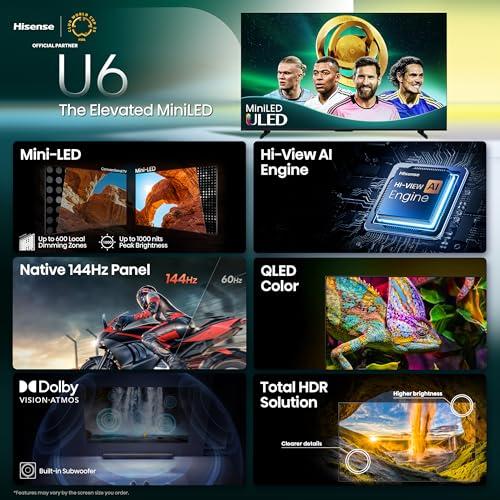
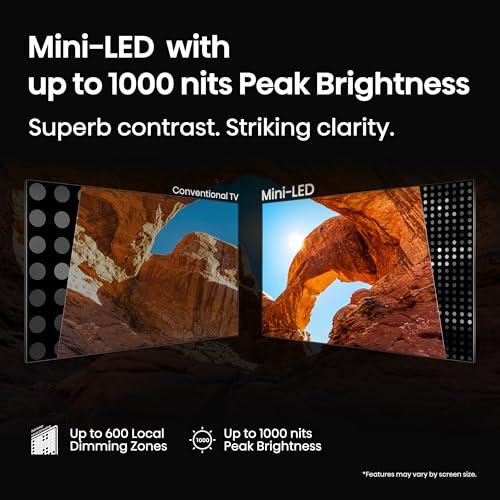
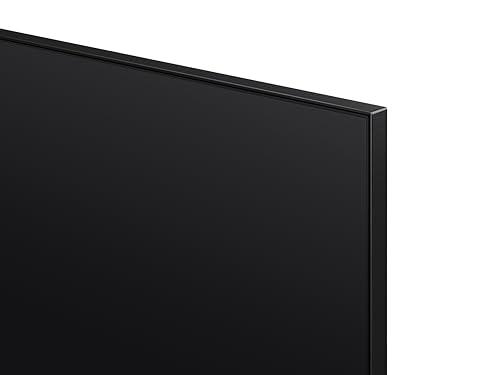
The Hisense 100" U6 Series uses Mini-LED backlighting—one of the newest display technologies to reach mainstream pricing. Mini-LEDs are exactly what they sound like: thousands of tiny LEDs that are much smaller than traditional LED backlights. This allows manufacturers to pack many more light sources behind the screen, creating up to 600 local dimming zones in the Hisense model. Think of each zone as a separate brightness control for different areas of the screen.
This technology delivers several real-world benefits. Dark scenes maintain deep, inky blacks while bright highlights can simultaneously reach up to 1000 nits of brightness (for reference, a typical LED TV might peak at 400-600 nits). The result is HDR content that actually looks high dynamic range—bright explosions pop against dark backgrounds without washing out the entire scene.
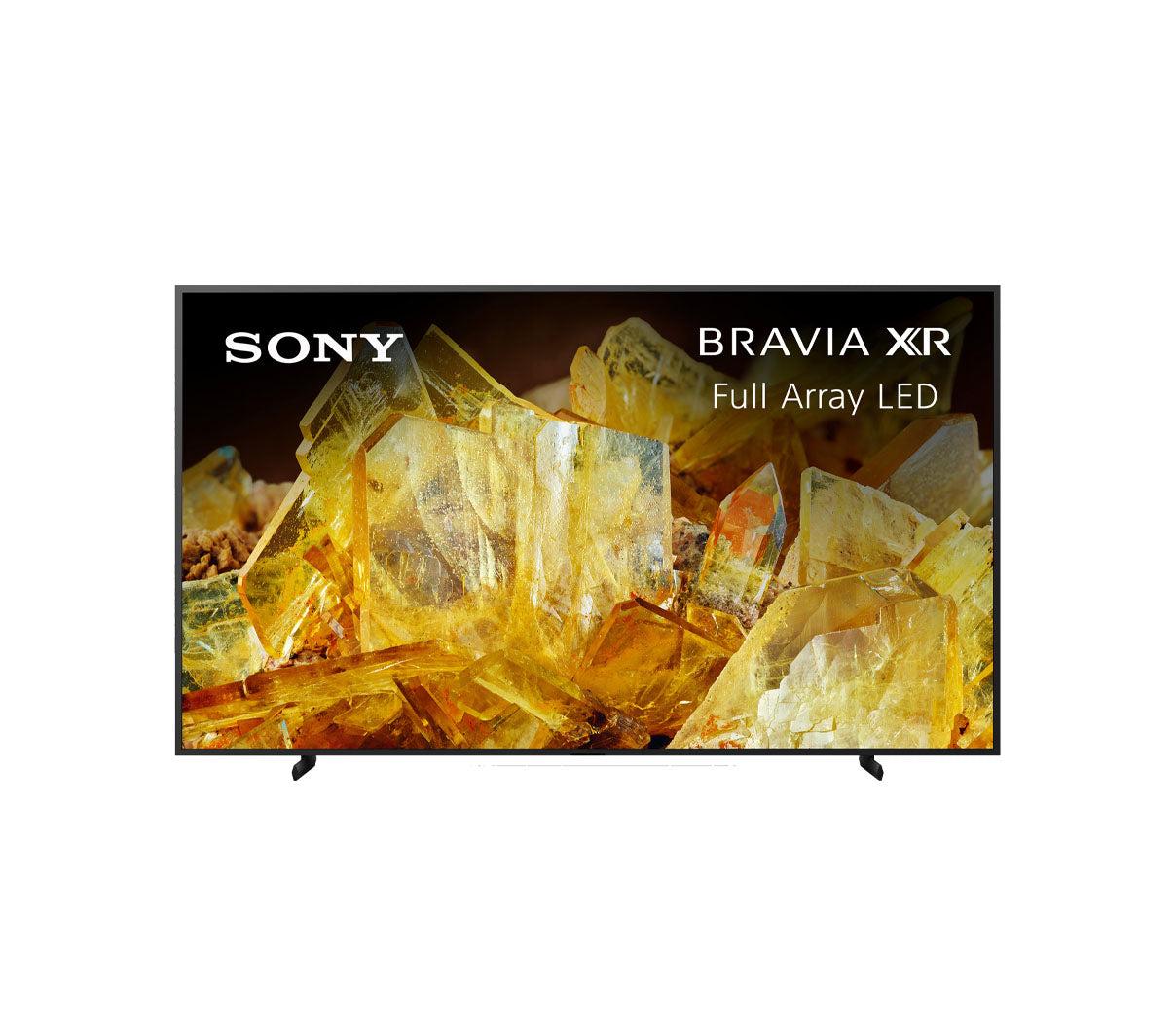
The Sony X90L, by contrast, uses Full Array LED backlighting—a more mature technology that Sony has refined extensively. While it has fewer dimming zones than the Hisense's Mini-LED system, Sony's Cognitive Processor XR (their flagship processing chip) works to maximize what those zones can accomplish.
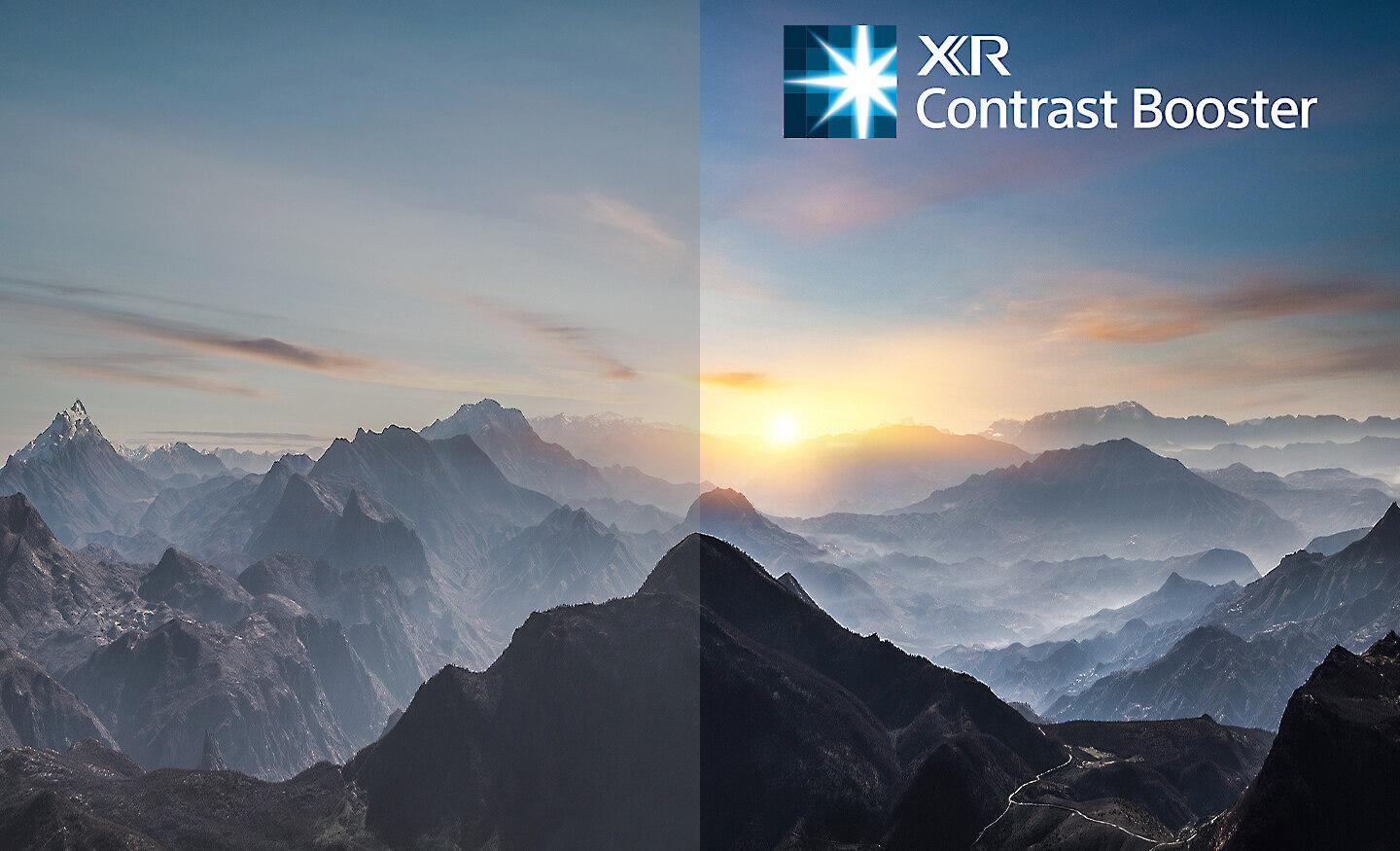
Sony's approach emphasizes processing over hardware specs. Their Cognitive Processor XR analyzes hundreds of thousands of screen elements simultaneously, making intelligent decisions about brightness, color, and contrast. It's designed to mimic human vision, focusing processing power on the parts of the image your eye naturally gravitates toward.
In our research and analysis of expert reviews, the picture quality differences between these TVs reveal the strengths of each approach.
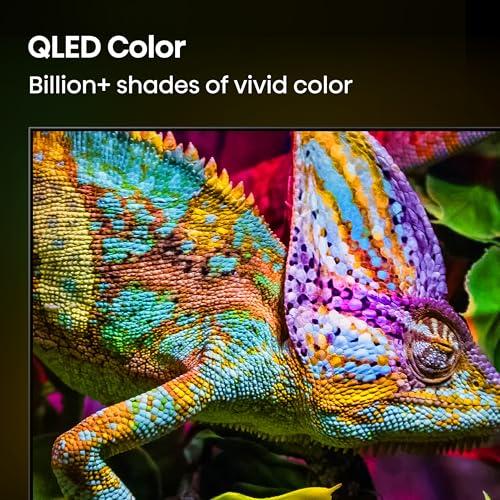
The Hisense's Mini-LED system delivers superior contrast performance in most situations. Dark movie scenes maintain excellent shadow detail while bright elements remain punchy. The quantum dot color technology (QLED) expands the color gamut significantly, displaying over a billion distinct colors compared to standard LED displays. This translates to more vibrant, lifelike colors—particularly noticeable in nature documentaries or animated content.
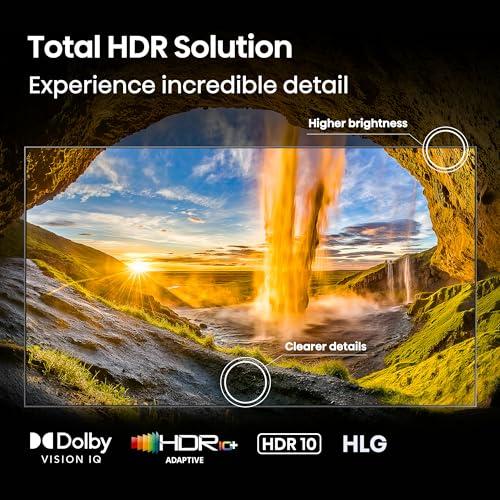
Peak brightness measurements consistently show the Hisense achieving around 1000 nits, making it excellent for bright room viewing. HDR content benefits enormously from this brightness headroom, with highlights that genuinely look brighter than the rest of the image rather than just slightly less dim.
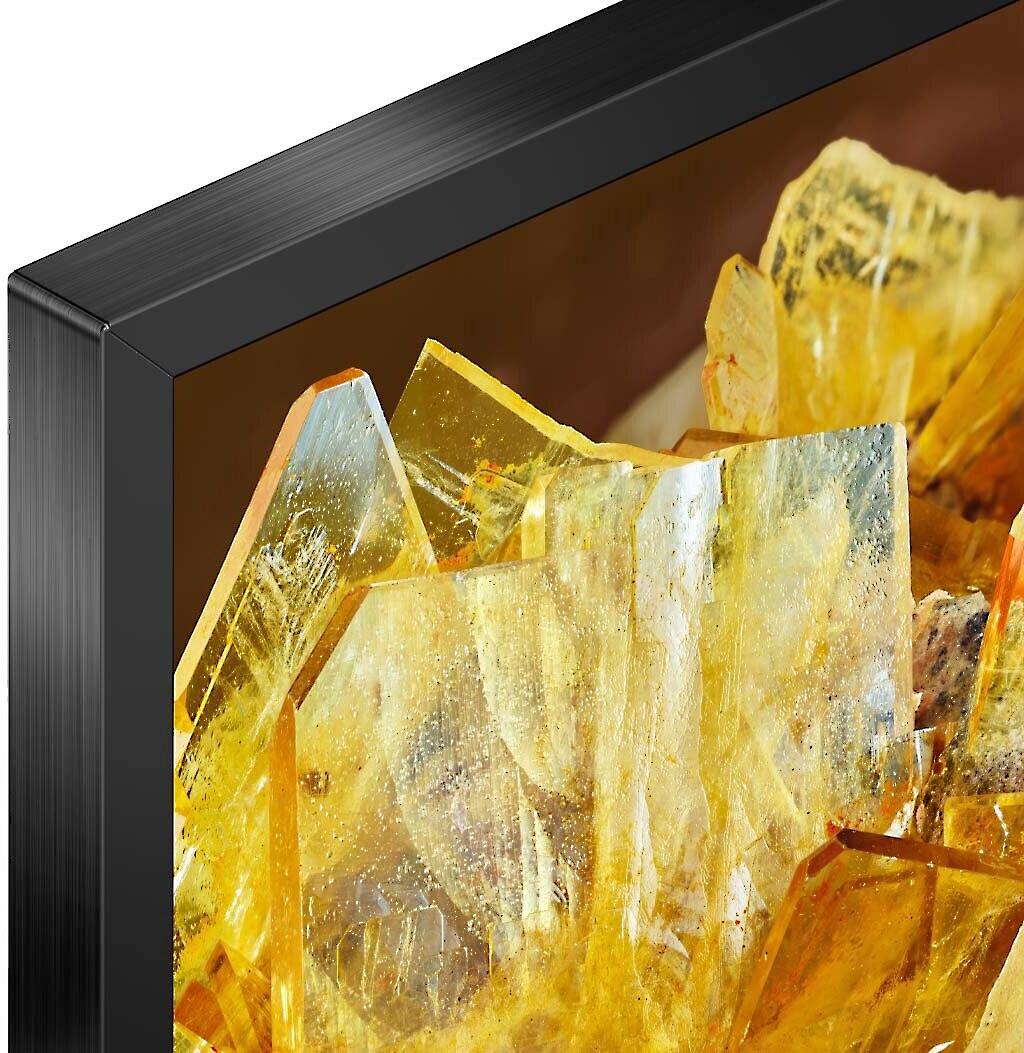
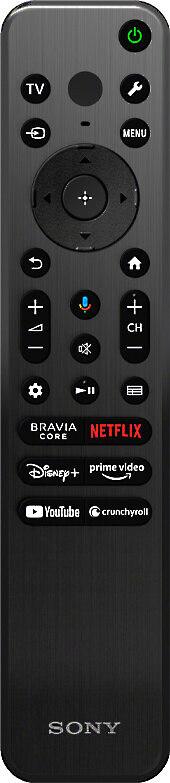
The Sony X90L takes a different approach, prioritizing natural color reproduction and motion processing over raw specifications. Sony's XR Triluminos Pro color system focuses on accuracy rather than vibrancy, producing colors that look more true-to-life even if they don't always pop as dramatically. The Cognitive Processor XR's strength shows in upscaling performance—taking lower resolution content and intelligently enhancing it for the large screen.
Where Sony traditionally excels is motion handling. Sports content and action movies benefit from their processing algorithms that reduce blur and judder. However, the Hisense's higher refresh rate capabilities help level this playing field significantly.
For home theater use, both displays excel, but in different scenarios. The Hisense creates more dramatic, reference-quality HDR experiences with superior contrast that makes dark theaters feel more immersive. The Sony delivers more consistent, refined pictures across all content types with excellent upscaling that makes even standard definition content watchable on the massive screen.
Gaming performance has become a crucial differentiator in large format TVs, and here the Hisense takes a commanding lead with specifications that seemed impossible just a few years ago.
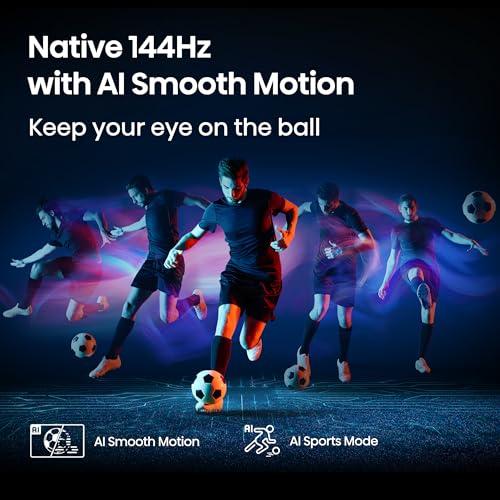
The headline feature is the 144Hz native refresh rate—significantly higher than most TVs in any size class. This means games can display up to 144 frames per second, creating incredibly smooth motion. More importantly, the variable refresh rate (VRR) support ranges from 48Hz to 144Hz, allowing the TV to match whatever frame rate your gaming console or PC produces. This eliminates screen tearing and stuttering that can ruin fast-paced games.
The Hisense supports multiple gaming resolutions and refresh rate combinations: full 4K at 60Hz for visually stunning single-player games, or 1440p at 120Hz for competitive multiplayer games where smooth motion matters more than maximum resolution. The TV includes FreeSync Premium support and an integrated gaming interface that displays frame rate, input lag, and other gaming metrics without leaving your game.
Input lag measurements (the delay between pressing a controller button and seeing the action on screen) consistently show the Hisense performing well in Game Mode Pro, typically measuring under 20 milliseconds—competitive with dedicated gaming monitors.
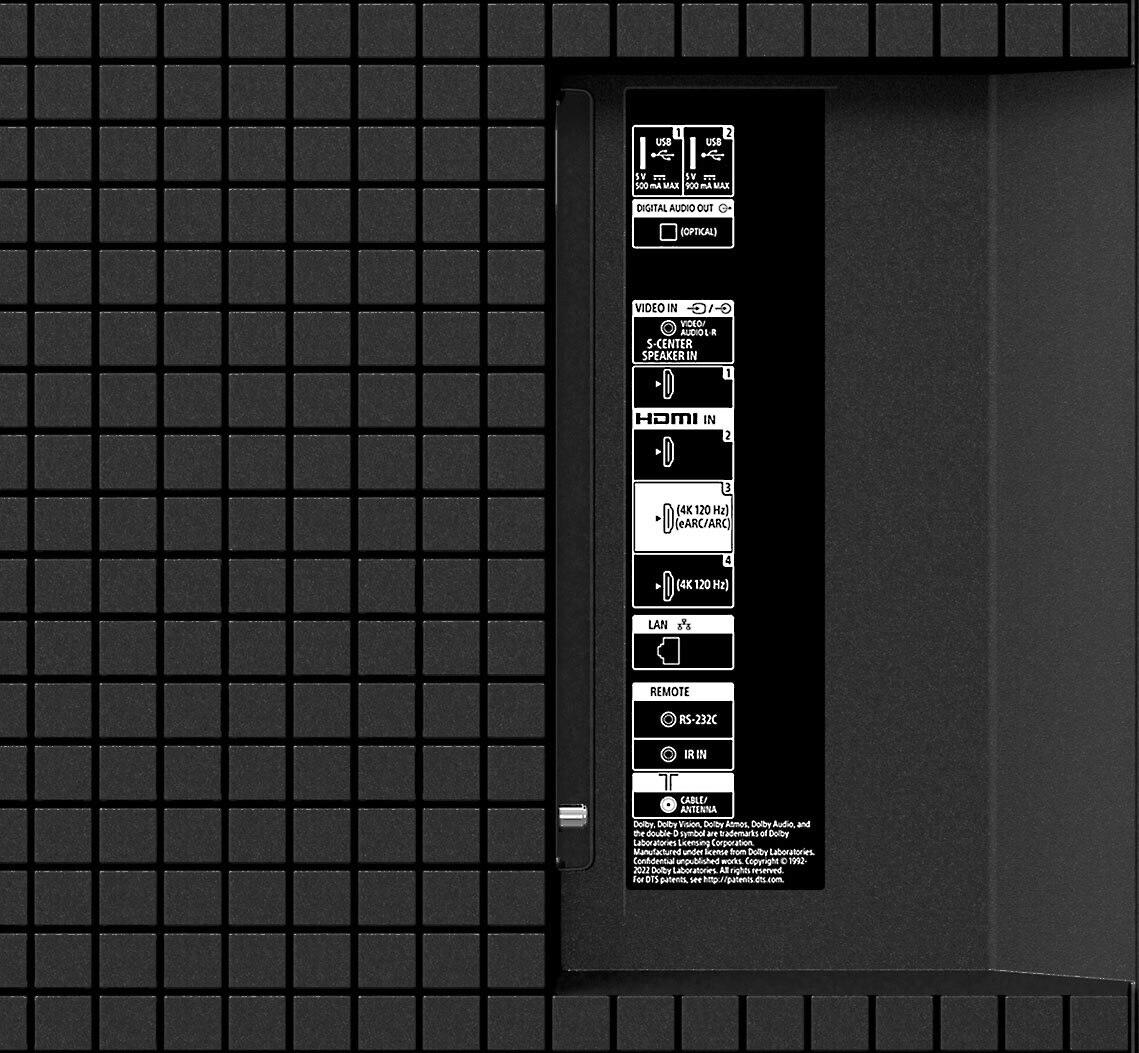
The Sony X90L offers respectable gaming features with its 120Hz refresh rate and HDMI 2.1 support, including VRR and Auto Low Latency Mode (ALLM). However, it's limited to HDMI Forum VRR without G-SYNC compatibility, and the lower refresh rate ceiling means less smooth motion in high frame rate games.
For serious gamers, particularly those with high-end gaming PCs or who prioritize competitive gaming, the Hisense provides a significantly better experience. Console gamers focused primarily on single-player games will find both TVs adequate, though the Hisense's superior contrast enhances dark game environments considerably.
The choice between Fire TV and Google TV represents more than just interface preference—it affects your daily interaction with the television and integration with other devices.
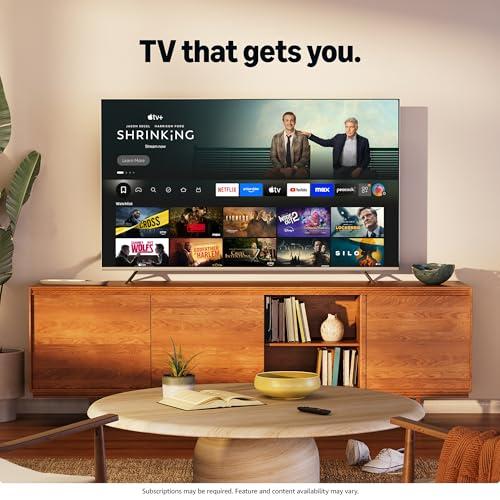
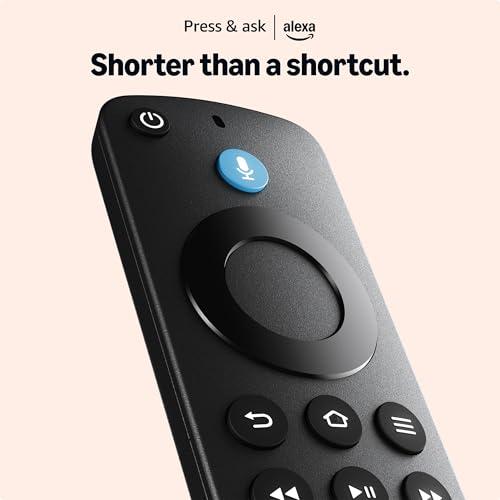
The Hisense's Fire TV platform centers around Amazon's ecosystem. Alexa voice control feels natural and comprehensive, handling everything from content searches to smart home control to shopping. The interface prioritizes content discovery, surfacing shows and movies from multiple streaming services on the home screen. Fire TV's strength lies in its simplicity and speed—apps load quickly, and navigation feels responsive even with the large display.
Amazon's approach favors content over complexity. The Fire TV interface doesn't overwhelm with options, making it particularly appealing for families or less tech-savvy users. Integration with Amazon Prime Video receives special treatment, though all major streaming services work well.
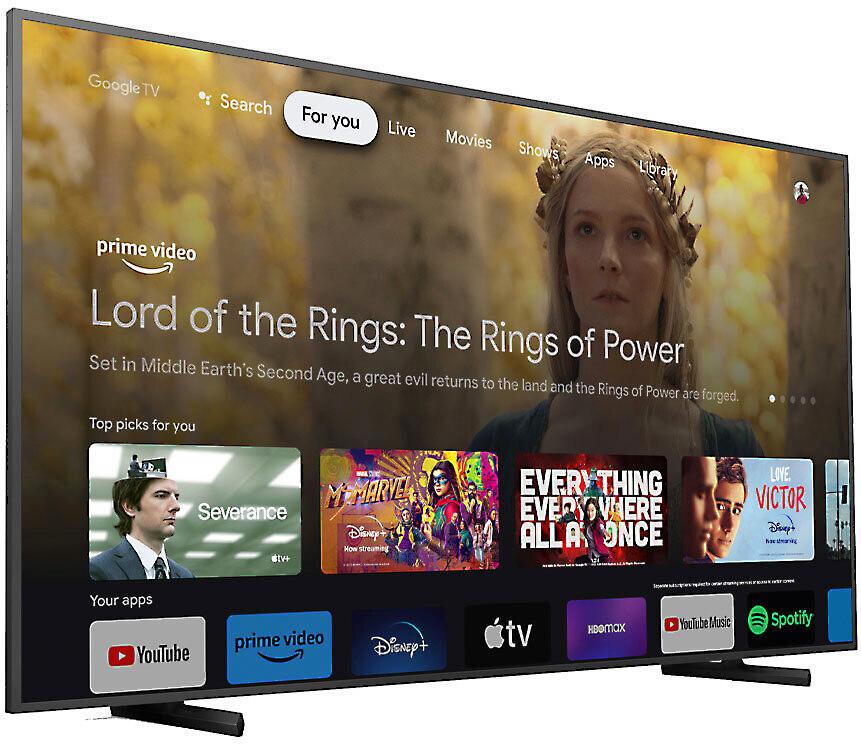
The Sony's Google TV platform offers a more sophisticated, personalized experience. Google Assistant provides broader smart home integration and more natural conversation-style voice commands. The recommendation engine across multiple streaming services tends to be more accurate, learning your preferences over time.
Google TV's strength is cross-platform compatibility and integration with Google services. If you use Gmail, Google Photos, or other Google services extensively, the TV becomes a natural extension of that ecosystem. Chromecast functionality is built-in, making screen mirroring from Android devices seamless.
Both platforms support Apple AirPlay for iOS device integration, ensuring neither choice locks you out of Apple's ecosystem entirely.
At screen sizes this large, audio becomes more critical because viewers sit farther away from built-in speakers. Both TVs handle this challenge differently.
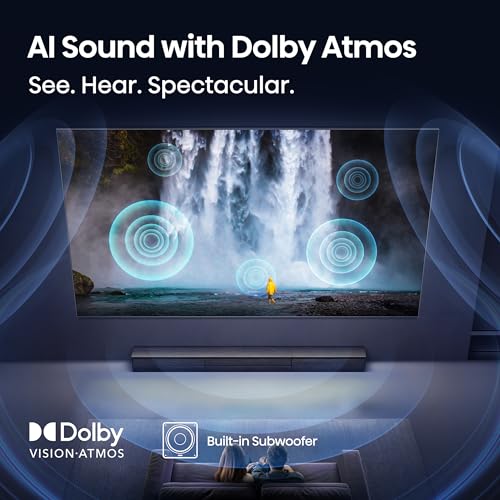
The Hisense includes a 50W 2.1-channel audio system with a built-in subwoofer. This configuration provides more bass response than typical TV speakers, creating a fuller sound that better matches the large visual experience. Dolby Atmos support enables three-dimensional audio effects when paired with compatible soundbars or receivers.
The Sony X90L features Sony's acoustic technologies, including positioning tweeters and Acoustic Center Sync capability. This system works to match audio positioning with visual elements on screen—voices appear to come from characters' mouths rather than from below the screen. When paired with compatible Sony soundbars, Acoustic Center Sync creates a more integrated audio experience.
However, at these screen sizes, most users benefit significantly from adding a dedicated sound system. The large displays create expectations for room-filling audio that built-in speakers, regardless of quality, struggle to meet. Both TVs support high-quality audio passthrough via HDMI ARC/eARC for external sound systems.
Installing 100-inch class televisions requires serious planning. These aren't TVs you casually mount on drywall or set on existing furniture.
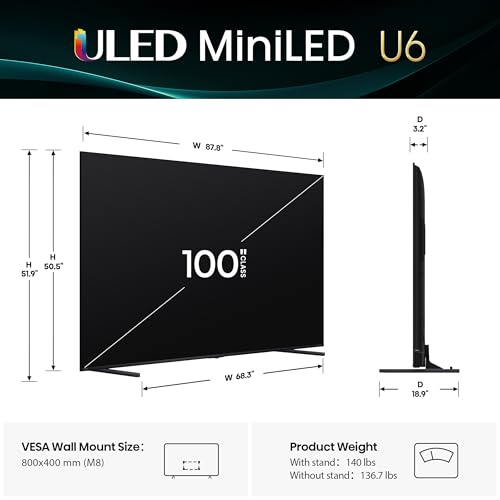
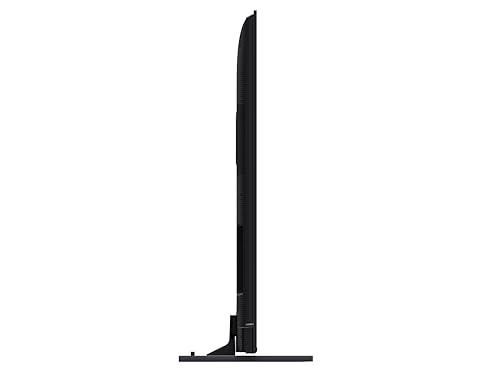
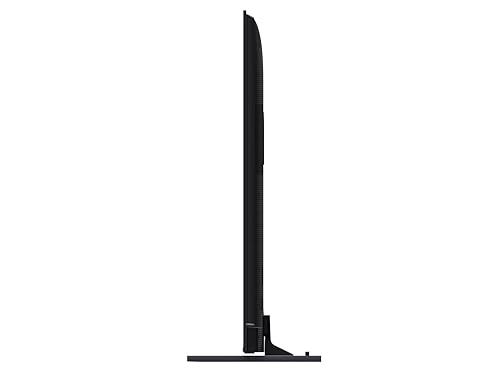
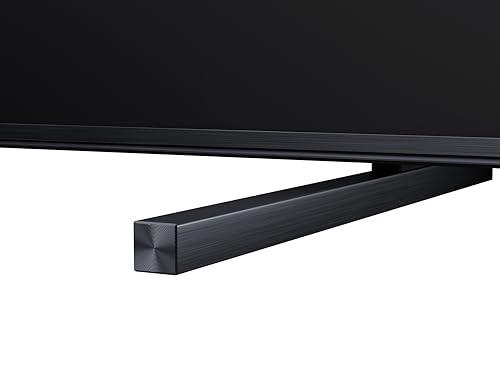
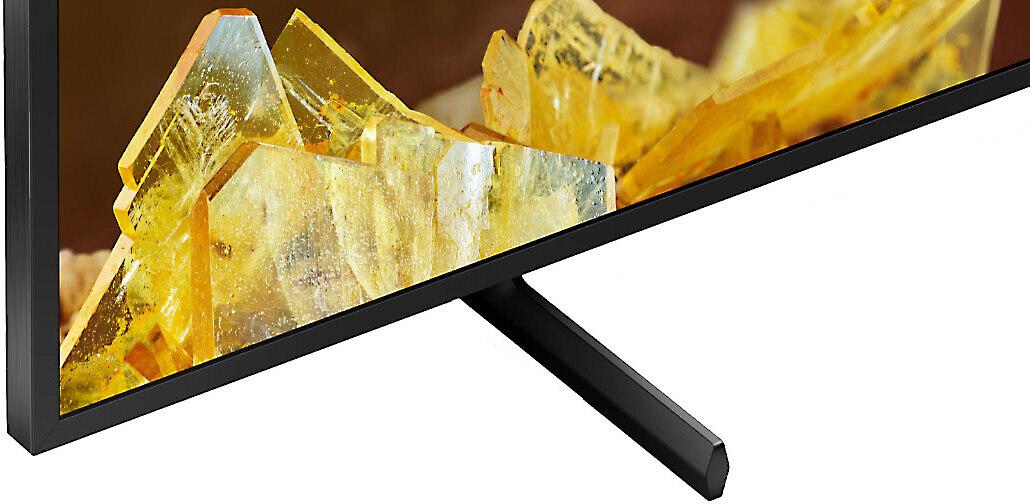
The Hisense measures nearly 88 inches wide and weighs 140 pounds with its stand. Wall mounting requires finding and reinforcing wall studs capable of supporting this weight safely. The included multi-position stand offers flexibility—it can be set low for a clean look or raised to accommodate soundbars underneath.
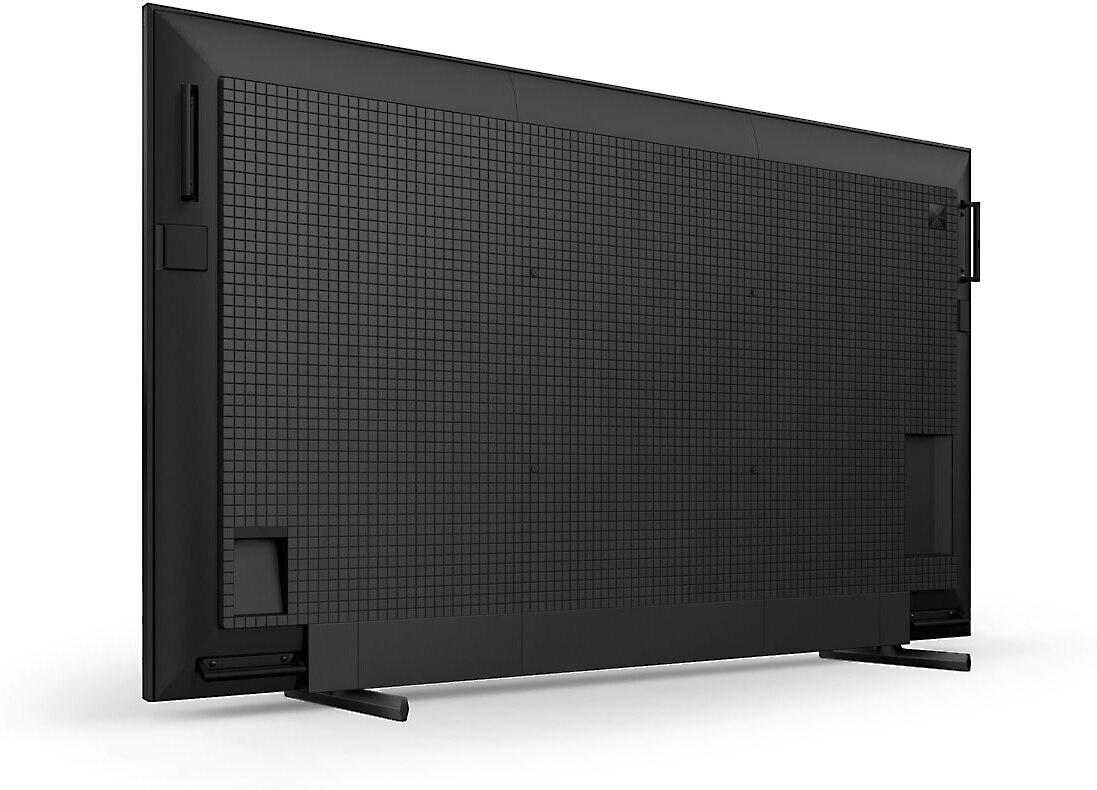
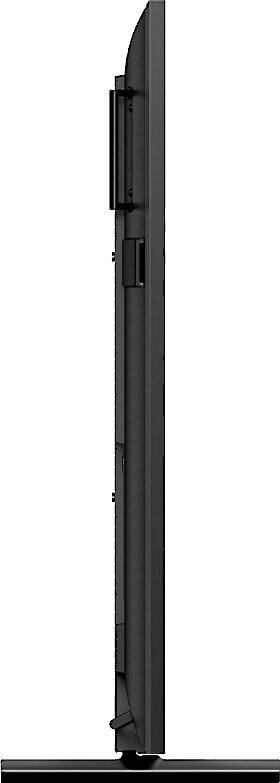
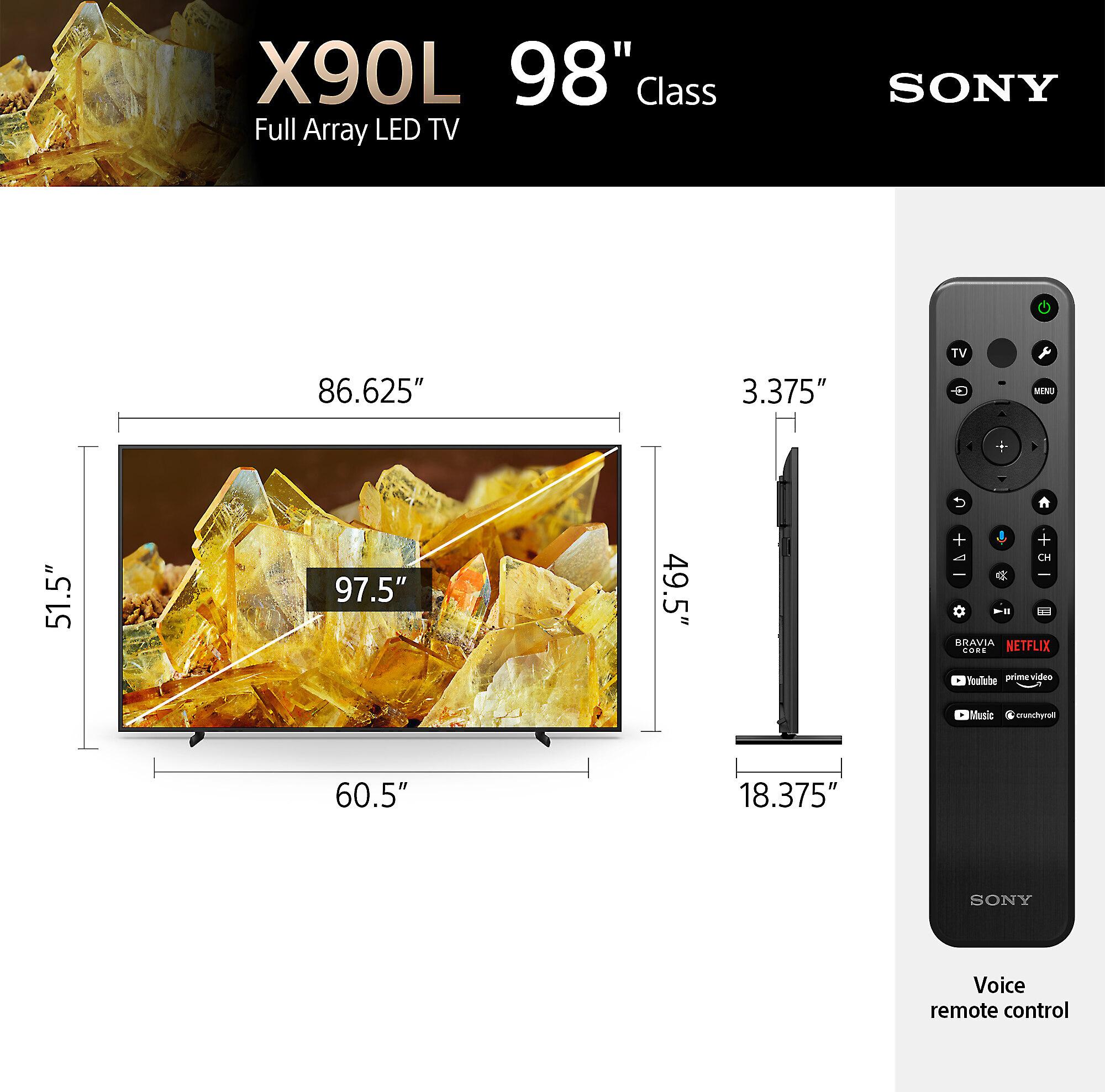
The Sony, while slightly smaller in screen size, actually weighs more at over 150 pounds without its stand. Both TVs require minimum viewing distances of 12-14 feet for comfortable viewing without eye strain.
Professional installation becomes almost mandatory at these sizes. The physical challenges of maneuvering these displays through doorways and up stairs, combined with the importance of secure mounting, make professional installation a worthwhile investment.
Room lighting considerations also intensify with screens this large. The Hisense's superior peak brightness provides more flexibility in bright rooms, while both displays benefit from controlled lighting for optimal HDR performance.
At the time of writing, the Hisense costs roughly half as much as the Sony, representing substantial savings that could fund a premium sound system or room improvements. But value involves more than initial cost.
The Hisense offers newer technology that's likely to age better. Mini-LED represents the current state-of-the-art in LED backlighting, while the Sony's 2023 Full Array LED technology, while refined, is fundamentally older. The Hisense's higher refresh rate capabilities also provide more future-proofing for gaming and potential broadcast improvements.
However, the Sony brings brand reputation and proven reliability. Sony's processing algorithms have been refined over years, and their service network is well-established. The TV also holds resale value better, partially offsetting the higher initial cost.
For home theater enthusiasts, the choice often comes down to priorities. The money saved choosing the Hisense could fund significant audio improvements or room treatments that might impact the overall experience more than the processing differences between the TVs.
Choose the Hisense 100" U6 Series if you:
Choose the Sony X90L 98" if you:
Both televisions deliver genuine home theater experiences, but they represent different philosophies. The Hisense 100" U6 Series brings cutting-edge display technology and impressive gaming capabilities at an accessible price point. It's the choice for buyers who want maximum screen impact and the latest features without paying premium prices.
The Sony X90L 98" commands a premium for refined processing, brand reputation, and proven reliability. It's the conservative choice that prioritizes consistent performance and brand trust over raw specifications.
For most buyers, the Hisense delivers exceptional value with superior display technology and gaming features that will remain relevant longer. The significant cost savings allow for investments in audio or room improvements that might impact the overall experience more than the processing differences between these displays.
However, if budget isn't the primary concern and you value Sony's approach to picture processing or strongly prefer Google TV, the Sony remains an excellent choice that will deliver years of reliable entertainment.
Ultimately, both TVs transform living rooms into private cinemas. The choice between them depends on whether you prioritize cutting-edge technology and value (Hisense) or refined processing and brand heritage (Sony). Either way, you'll end up with a display that makes every movie night feel like an event.
| Hisense 100" U6 Series Mini-LED 4K Fire TV | Sony BRAVIA XR X90L 98" 4K UHD LED Google TV |
|---|---|
| Screen Size - Actual viewing area matters more than marketing numbers | |
| 99.5" diagonal (100" class) - Slightly larger viewing area | 97.5" diagonal (98" class) - More compact footprint |
| Display Technology - Determines contrast, brightness, and picture quality | |
| Mini-LED with up to 600 local dimming zones - Newer tech with superior contrast | Full Array LED with fewer zones - Mature, refined processing |
| Peak Brightness - Critical for HDR impact and bright room viewing | |
| Up to 1000 nits - Excellent for daytime viewing and vibrant HDR | Lower peak brightness - Better suited for controlled lighting |
| Gaming Refresh Rate - Higher rates mean smoother motion and less blur | |
| 144Hz native with VRR 48-144Hz - Industry-leading gaming performance | 120Hz with VRR support - Good but not exceptional for gaming |
| Color Technology - Affects color accuracy and vibrancy | |
| QLED Quantum Dot (1+ billion colors) - More vibrant, punchy colors | XR Triluminos Pro - More natural, accurate color reproduction |
| Smart TV Platform - Daily interface and ecosystem integration | |
| Fire TV with Alexa built-in - Simple, Amazon-focused experience | Google TV with Google Assistant - More sophisticated, personalized recommendations |
| Gaming Features - Important for next-gen console compatibility | |
| 4K@60Hz, 1440p@120Hz, FreeSync Premium, integrated game bar | 4K@60Hz, limited VRR support, HDMI 2.1 basic features |
| Processing Power - Affects upscaling and motion handling | |
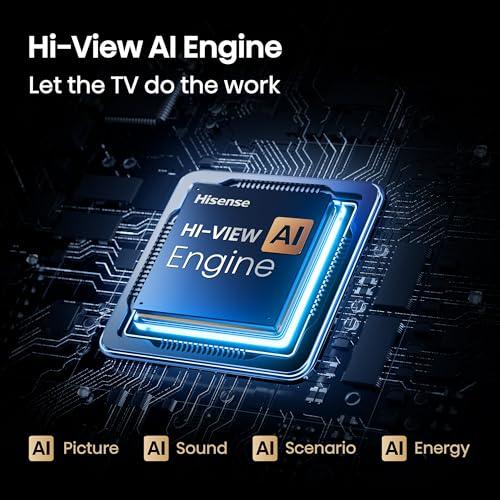
| Hi-View AI Engine with AI upscaling - Good but newer technology | Cognitive Processor XR - Proven, mature processing algorithms |
| HDR Support - Different formats provide varying picture quality | |
| Dolby Vision IQ, HDR10+, HDR10+ Adaptive - Comprehensive format support | Dolby Vision, HDR10, HLG - Standard premium format support |
| Audio System - Built-in sound quality before adding external speakers | |
| 50W 2.1-channel with subwoofer - Above-average TV audio | Sony acoustic positioning technology - More refined audio processing |
| Release Year - Indicates technology generation and future-proofing | |
| 2025 model - Latest Mini-LED technology and features | 2023 model - Mature but older Full Array LED technology |
| Weight and Installation - Important for mounting and room planning | |
| 140 lbs with stand - Requires professional installation | 151.8 lbs without stand - Heavier construction, professional installation recommended |
| Value Proposition - Cost versus performance and features delivered | |
| Exceptional value with cutting-edge display tech at accessible pricing | Premium pricing justified by brand reputation and refined processing |
The Hisense 100" U6 Series Mini-LED delivers superior contrast and brightness with its Mini-LED technology, reaching up to 1000 nits peak brightness and featuring up to 600 local dimming zones. This creates deeper blacks and brighter highlights that are ideal for dark room home theater viewing. The Sony BRAVIA XR X90L 98" offers more refined color processing through its Cognitive Processor XR, providing natural-looking colors and excellent upscaling. For home theater enthusiasts prioritizing dramatic HDR performance, the Hisense has the edge, while the Sony excels at consistent picture quality across all content types.
The Hisense 100" U6 Series Mini-LED is significantly better for gaming, featuring a 144Hz native refresh rate compared to the Sony X90L's 120Hz. The Hisense supports variable refresh rate from 48-144Hz, offers both 4K@60Hz and 1440p@120Hz gaming modes, includes FreeSync Premium support, and features an integrated gaming interface. The Sony provides basic HDMI 2.1 gaming features but lacks the advanced refresh rate capabilities and gaming-specific features that make the Hisense the clear winner for serious gamers.
The Hisense 100" U6 Series offers a 99.5-inch diagonal screen (marketed as 100" class), while the Sony BRAVIA XR X90L features a 97.5-inch diagonal (98" class). This means the Hisense provides slightly more viewing area, though both require similar room sizes and viewing distances of 12-14 feet for comfortable viewing.
The Hisense 100" U6 Series runs Fire TV with built-in Alexa, offering a streamlined interface focused on content discovery and strong integration with Amazon services. The Sony X90L uses Google TV with Google Assistant, providing more sophisticated recommendations and better cross-platform compatibility. Fire TV is simpler and faster, while Google TV offers more personalization. The choice depends on whether you prefer Amazon's ecosystem (Hisense) or Google's more comprehensive smart features (Sony).
At the time of writing, the Hisense 100" U6 Series Mini-LED costs significantly less than the Sony BRAVIA XR X90L 98" - roughly half the price. This substantial cost difference makes the Hisense an exceptional value proposition, offering newer Mini-LED technology and superior gaming features at a much lower price point. The Sony commands a premium for its brand reputation and refined processing algorithms.
The Hisense 100" U6 Series Mini-LED performs better in bright rooms due to its higher peak brightness of up to 1000 nits, which helps combat glare and maintains picture quality in well-lit environments. The Mini-LED technology also provides better contrast control in varying lighting conditions. While the Sony X90L includes anti-glare features, its lower peak brightness makes it better suited for controlled lighting environments typical of dedicated home theaters.
The Hisense 100" U6 Series uses cutting-edge Mini-LED backlighting with up to 600 local dimming zones, combined with QLED Quantum Dot color technology. This newer technology provides superior contrast, brighter highlights, and more vibrant colors. The Sony X90L uses traditional Full Array LED backlighting with fewer dimming zones but relies on Sony's advanced Cognitive Processor XR for image enhancement. The Hisense offers superior hardware specifications, while the Sony emphasizes processing refinement.
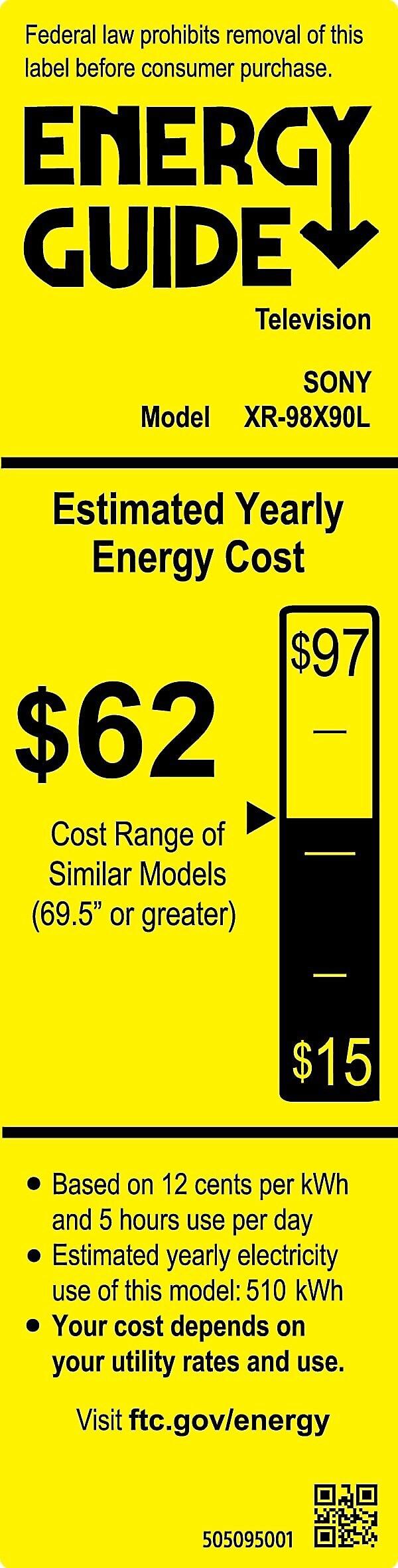
The Sony BRAVIA XR X90L has a reputation for superior build quality and long-term reliability, backed by Sony's established service network and proven track record. The TV weighs more (151.8 lbs) indicating robust construction. The Hisense 100" U6 Series represents newer technology that should age well, weighs 140 lbs with stand, and comes with comprehensive warranty support. While Sony has the reliability advantage historically, Hisense has significantly improved build quality in recent years.
The Sony X90L traditionally excels at motion processing for sports content, with refined algorithms that reduce blur and judder in fast-moving scenes. However, the Hisense 100" U6 Series counters with its superior 144Hz refresh rate, which provides inherently smoother motion than the Sony's 120Hz panel. For sports viewing, both TVs perform well, but the Hisense's higher refresh rate gives it an edge in fast-paced action, while the Sony's processing provides more consistent motion handling across all content types.
The Hisense 100" U6 Series Mini-LED offers exceptional value, providing newer Mini-LED technology, superior gaming features, higher brightness, and a larger screen at roughly half the cost of the Sony. The significant savings could fund a premium sound system or room improvements. The Sony BRAVIA XR X90L justifies its premium pricing through brand reputation, refined processing, and proven reliability, but the Hisense delivers better performance per dollar for most users.
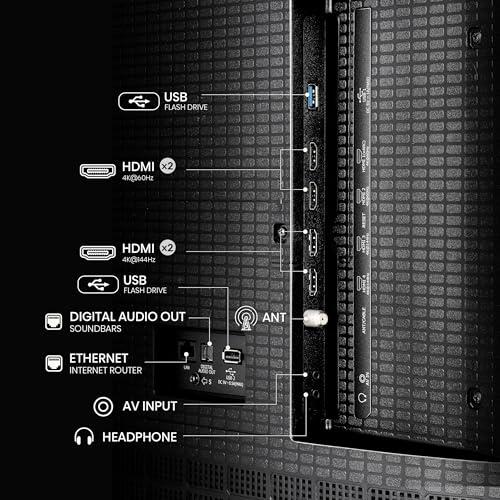
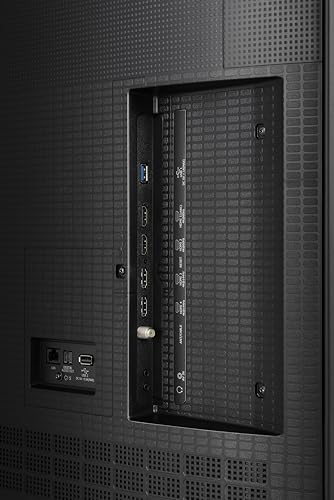
Both TVs offer comprehensive connectivity with 4 HDMI ports, USB inputs, and wireless capabilities. The Hisense 100" U6 Series includes 2 HDMI 2.1 ports specifically for gaming, Wi-Fi 6 support for faster streaming, and Bluetooth 5.2. The Sony X90L provides HDMI 2.1 support across its ports with good wireless connectivity. Both support Apple AirPlay and their respective casting technologies (Chromecast for Sony, Fire TV casting for Hisense).
For a dedicated home theater with controlled lighting, both TVs excel but serve different priorities. The Hisense 100" U6 Series Mini-LED provides more cinematic impact with superior contrast, deeper blacks, and brighter highlights that make HDR content more dramatic. The larger 100-inch screen also enhances the theatrical experience. The Sony BRAVIA XR X90L offers more refined, natural picture quality with excellent upscaling for older content. Home theater enthusiasts prioritizing maximum impact should choose the Hisense, while those preferring consistent, refined picture quality across all sources should consider the Sony.
We've done our best to create useful and informative comparisons to help you decide what product to buy. Our research uses advanced automated methods to create this comparison and perfection is not possible - please contact us for corrections or questions. These are the sites we've researched in the creation of this article: bestbuy.com - rtings.com - youtube.com - rtings.com - youtube.com - youtube.com - costco.com - pcrichard.com - hisense-usa.com - electronicexpress.com - pcrichard.com - circuitworldonline.com - bestbuy.com - bestbuy.com - premiumincentive.com - hisense-usa.com - hisense-usa.com - pcrichard.com - rtings.com - bestbuy.com - hisense-usa.com - avsforum.com - avsforum.com - valueelectronics.com - youtube.com - bestbuy.com - electronics.sony.com - stewartappliance.com - rcwilley.com - rtings.com - abt.com - pcrichard.com - videoandaudiocenter.com - avsforum.com

Privacy Policy
Terms and Conditions - Affiliate Policy
Home Security
© Copyright 2008-2026.
11816 Inwood Rd #1211, Dallas, TX 75244