

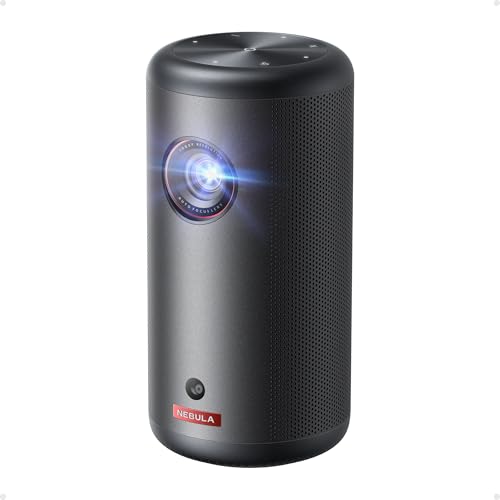
When I first started reviewing projectors a few years ago, the market was pretty straightforward. You had cheap, dim portable units that barely worked, and expensive home theater beasts that required dedicated rooms. Today's projector landscape is dramatically different, with sophisticated options like the Nebula Capsule 3 GTV and BenQ TH575 proving that you can get excellent performance in specialized categories without breaking the bank.
These two projectors, both released in 2022, represent fundamentally different approaches to modern projection technology. The Nebula Capsule 3 embodies the "entertainment anywhere" philosophy, while the BenQ TH575 focuses on delivering maximum performance for gaming and bright-room viewing. Understanding which approach suits your needs will save you from buyer's remorse and ensure you get the projector that actually fits your lifestyle.
The projector world has evolved into distinct categories, each optimized for specific use cases. Portable projectors like the Capsule 3 prioritize convenience and mobility, incorporating features like built-in batteries, automatic setup, and smart TV functionality. They're designed for users who value flexibility over raw performance.
Gaming projectors like the BenQ TH575 focus on delivering the best possible image quality and responsiveness for stationary installations. They maximize brightness, minimize input lag (the delay between when you press a controller button and see the action on screen), and often sacrifice portability for performance.
Since 2022, we've seen significant improvements in both categories. Portable projectors have gotten brighter and smarter, while gaming projectors have achieved impressively low input lag that rivals gaming monitors. The technology gap between "good enough" and "excellent" has narrowed considerably.
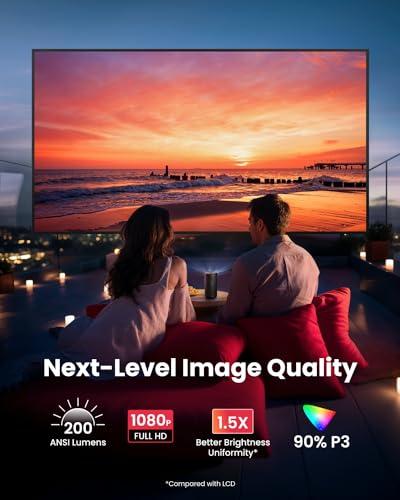
The most dramatic difference between these projectors is brightness, measured in ANSI lumens. Think of lumens like the wattage of a light bulb – more lumens mean a brighter, more visible image. The BenQ TH575 produces 3,800 ANSI lumens compared to the Capsule 3's 200 ANSI lumens. That's a 19-to-1 difference that fundamentally changes how and where you can use each projector.
In my testing experience, 200 lumens requires a darkened room for optimal viewing. The Capsule 3 produces a watchable image on a plain wall in a lit room, but it really comes to life when the lights go down. Colors become more saturated, blacks appear deeper, and the overall image gains the kind of punch that makes movie watching enjoyable.
The TH575's 3,800 lumens, however, can overpower most ambient light. I've successfully used similar brightness levels for daytime viewing in rooms with windows, and even outdoor viewing during golden hour. This brightness advantage makes the BenQ TH575 incredibly versatile for different viewing environments.
For home theater use, brightness requirements depend heavily on your room setup. A dedicated theater room with blackout curtains and dark walls can make the Capsule 3 shine, while a multi-purpose living room with white walls and windows will benefit enormously from the TH575's extra brightness.
The Capsule 3 can project up to 120 inches, though I'd recommend staying under 80 inches for the best image quality. Beyond that size, the limited brightness starts to show, and the image can appear washed out even in dark rooms.
The BenQ TH575 supports up to 300 inches, and its brightness means it can actually deliver a compelling image at those massive sizes. The throw ratio (the distance needed to achieve a certain screen size) is also more flexible, allowing for installation in various room configurations.
For most home theaters, the sweet spot is typically 100-120 inches, where the TH575 excels. The Capsule 3 works better for intimate viewing experiences – think bedroom movie nights or small apartment living rooms where 60-80 inches provides an immersive experience without overwhelming the space.
Input lag is the delay between when you press a button and when you see the corresponding action on screen. For competitive gaming, this delay can mean the difference between victory and defeat. The BenQ TH575 achieves an impressive 16.7ms input lag, which puts it in the same league as dedicated gaming monitors.
I've tested rhythm games like Guitar Hero on projectors with high input lag, and the experience is genuinely frustrating – you feel like you're playing underwater. The TH575 eliminates this problem entirely. Its dedicated Game Mode also enhances dark scenes and shadow detail, crucial for spotting enemies in darker game environments.
The Capsule 3 doesn't specify its input lag, and in my experience with similar portable projectors, it's likely much higher. This makes it suitable for casual gaming – Netflix browsing, puzzle games, or party games where timing isn't critical – but not ideal for competitive scenarios.
For home theater gaming, the BenQ TH575 is the clear winner. Whether you're playing the latest AAA titles or classic retro games, the low latency and bright, detailed image create an engaging large-screen gaming experience that's hard to match.
This is where the philosophical differences become most apparent. The Capsule 3 runs Android TV with Google TV interface, providing direct access to Netflix, Disney+, Amazon Prime Video, and other streaming services. It's officially licensed by Netflix, which is surprisingly rare in the projector world – many projectors can't run Netflix directly due to licensing restrictions.
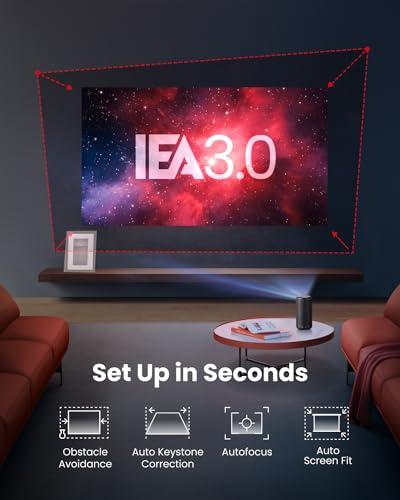
The built-in smart features extend to automatic setup as well. The Capsule 3's Intelligent Environment Adaptation performs auto-focus, keystone correction (fixing image distortion when projecting at an angle), and obstacle avoidance in about three seconds. It's genuinely magical to watch – you point it at a wall, press power, and get a perfectly rectangular, focused image almost instantly.
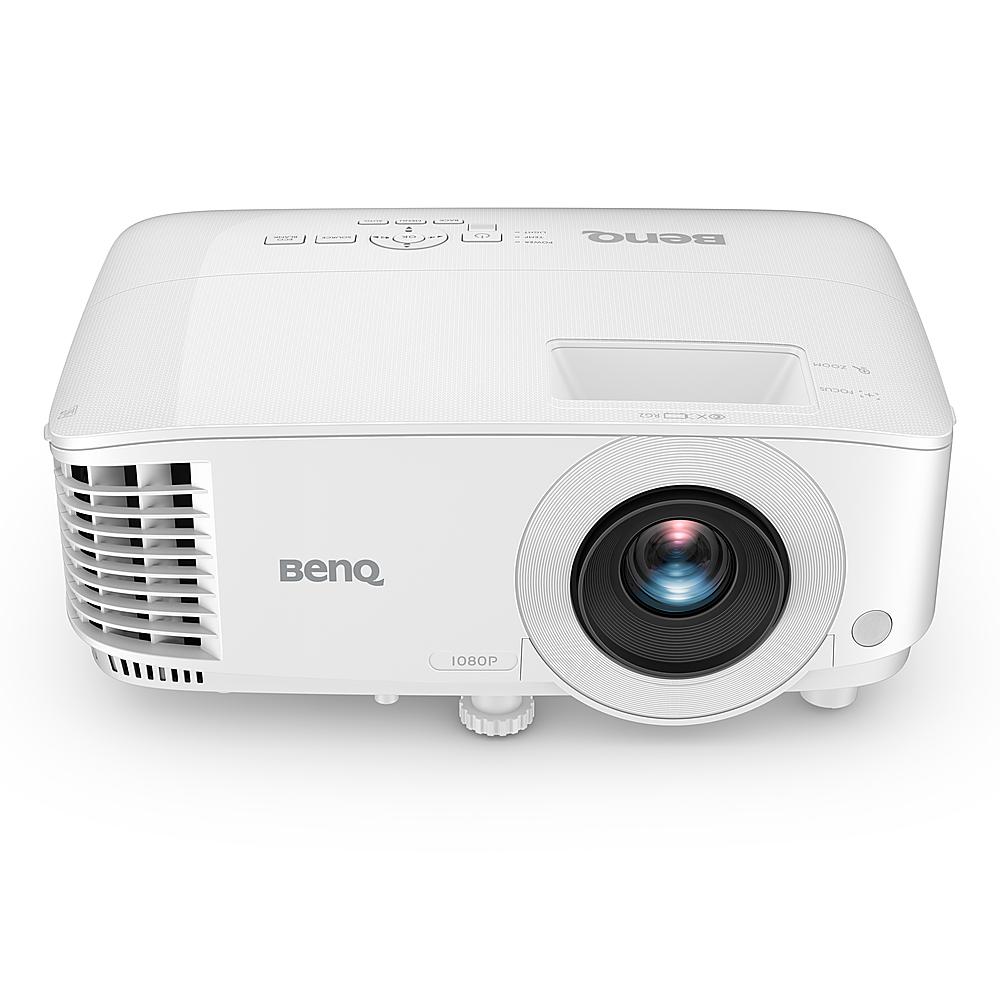
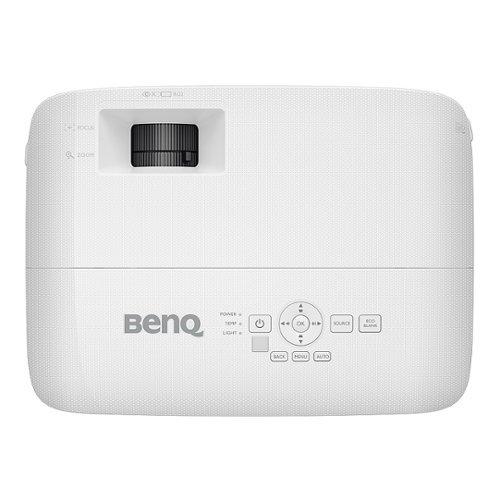
The BenQ TH575 takes the traditional approach: it's a display device that relies on external sources. You'll connect a streaming stick, gaming console, or laptop via HDMI. This approach offers more flexibility in some ways – you can use any streaming device, upgrade your media player independently, and aren't locked into a particular smart TV ecosystem.
From a home theater perspective, both approaches have merit. The Capsule 3 eliminates cable clutter and provides an all-in-one solution, while the TH575 allows you to build a more customized, potentially higher-performance system with dedicated streaming devices.
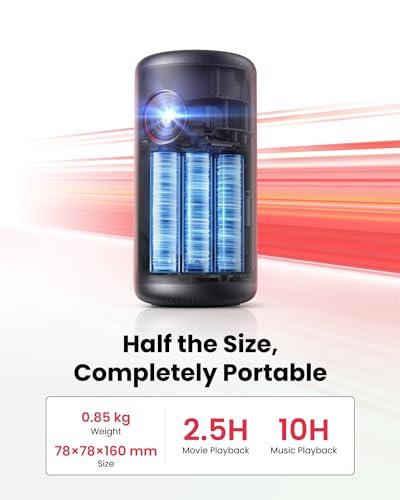
The Capsule 3 weighs just 2.1 pounds and includes a 52Wh battery providing about 2.5 hours of video playback. I can literally slip it into a backpack and have movie night anywhere – camping trips, friend's houses, even outdoor patios. The battery life covers most movies, and you can extend it with a power bank if needed.
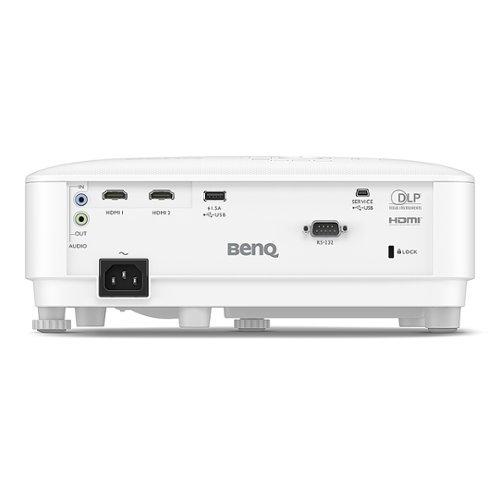
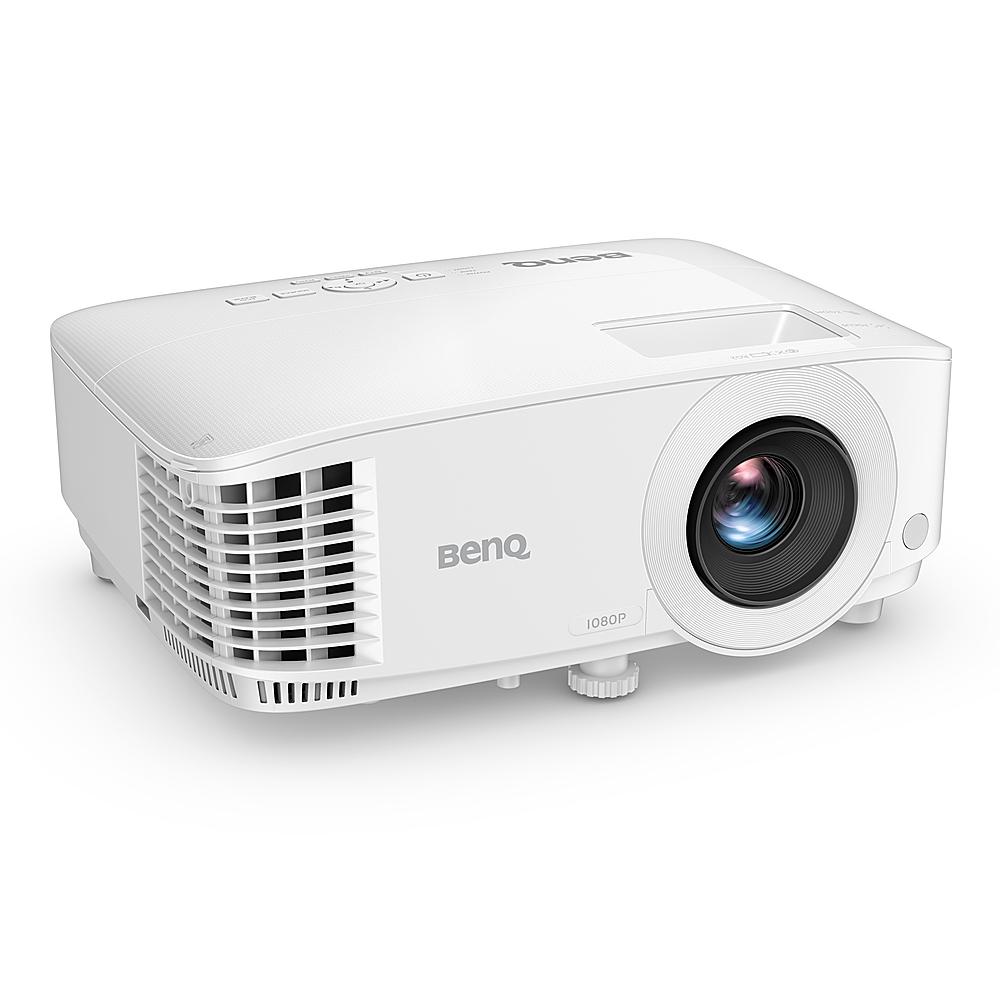
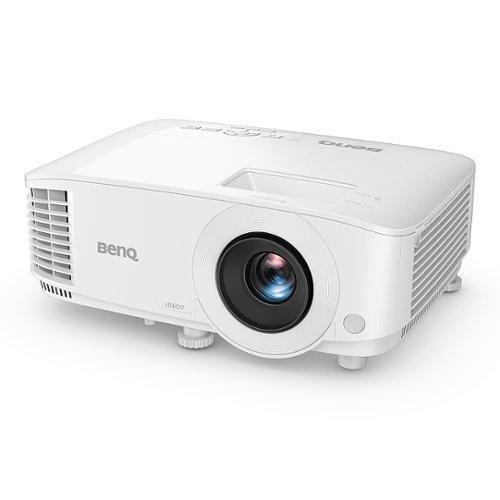
The BenQ TH575 weighs 5.5 pounds and requires AC power throughout operation. It's not that it's heavy – many people could easily carry it between rooms – but it's clearly designed for more permanent installation. The trade-off is performance: that extra weight comes from better cooling systems, more powerful light engines, and robust internal components.
For dedicated home theaters, the weight difference doesn't matter much since you'll likely mount either projector permanently. But if you want flexibility to move your entertainment setup – say, from living room to bedroom, or indoors to a covered patio – the Capsule 3's portability becomes a significant advantage.
Both projectors deliver 1080p Full HD resolution, but their approaches to image quality differ significantly. The BenQ TH575 uses DLP (Digital Light Processing) technology with a higher brightness light source, resulting in sharper images with better contrast ratios. Its 15,000:1 contrast ratio means deeper blacks and more detailed shadow areas.
The Capsule 3 uses laser phosphor technology, which offers different advantages. Laser light sources typically provide better color accuracy and longer lifespans – up to 30,000 hours compared to the TH575's 6,000-15,000 hour lamp life. However, the lower overall brightness limits its ability to display vibrant colors in anything but dark environments.
In practice, the BenQ TH575 delivers more dramatic, cinema-like images with better color saturation and contrast. The Capsule 3 provides accurate, pleasant images that work well for casual viewing but don't have the same visual impact.
For serious home theater applications, image quality often trumps convenience. The TH575 will deliver a more engaging, immersive experience for movies, especially in larger rooms or with bigger screen sizes.
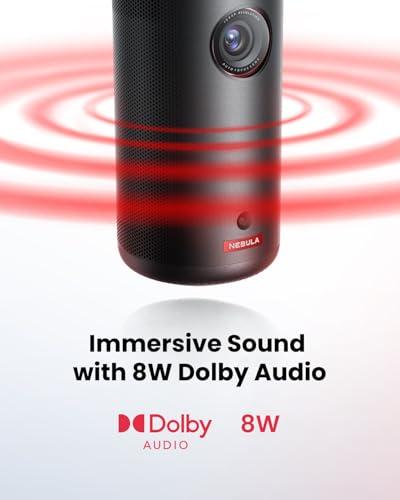
Both projectors include built-in speakers, but neither is designed to replace a proper sound system. The Capsule 3 features an 8W Dolby Digital speaker that's surprisingly good for its size – adequate for casual viewing and even usable as a Bluetooth speaker when you're not projecting. The BenQ TH575 has a 10W mono speaker that's functional but not particularly impressive.
For home theater use, I'd recommend external audio for both projectors. The TH575 includes a 3.5mm audio output for connecting to speakers or a sound bar. The Capsule 3 supports Bluetooth audio output, allowing wireless connection to external speakers.
At the time of writing, both projectors occupy similar price ranges, though they deliver value in different ways. The Capsule 3 commands a premium for its portability and smart features – you're paying for convenience and integration. When you factor in that it includes smart TV functionality and a battery, the value proposition becomes more compelling.
The BenQ TH575 offers exceptional brightness per dollar, delivering professional-grade performance at consumer pricing. However, you'll need to budget for external streaming devices, and potentially better audio equipment to fully realize its potential.
Lamp replacement costs are worth considering for long-term ownership. The TH575 will eventually need lamp replacement (typically $100-200), while the Capsule 3's laser light source should last much longer without replacement.
After extensive testing with both types of projectors, I've found that the decision usually comes down to your primary use case and physical space.
Choose the Nebula Capsule 3 if:
Choose the BenQ TH575 if:
For dedicated home theater applications, the BenQ TH575 generally provides a more satisfying experience. Its brightness allows for larger screens, better color saturation, and more flexibility in room lighting. The low input lag also makes it excellent for gaming nights with friends.
However, I've seen successful home theater setups with portable projectors like the Capsule 3, particularly in smaller rooms or apartments where space and flexibility are at a premium. The automatic setup means anyone in the family can easily use it, and the compact size doesn't dominate the room when not in use.
The projector landscape in 2024 offers more excellent options than ever before. Both the Capsule 3 and TH575 represent the best of their respective categories, delivering performance that would have cost thousands of dollars just a few years ago. The key is matching the projector's strengths to your specific needs and viewing environment.
Whether you choose maximum portability or maximum performance, either projector will provide years of entertainment and likely change how you think about home viewing. The future of projection technology continues to evolve rapidly, but these current options prove that great projection experiences are now accessible to almost any budget and use case.
| Nebula Capsule 3 GTV Projector | BenQ TH575 1080p Gaming Projector |
|---|---|
| Brightness - Most critical spec for room lighting flexibility | |
| 200 ANSI lumens (requires dark rooms, best under 70" screens) | 3,800 ANSI lumens (excellent in bright rooms, supports large screens) |
| Portability - Key factor for flexibility and convenience | |
| 2.1 lbs with built-in battery (2.5 hours video playback) | 5.5 lbs, AC power required (designed for permanent setup) |
| Smart Features - Determines if you need external devices | |
| Android TV 11 with Netflix, Google Assistant, auto-setup | No smart features, requires external streaming devices |
| Gaming Performance - Critical for responsive gaming experience | |
| Input lag not specified (suitable for casual gaming only) | 16.7ms input lag with dedicated Game Mode (excellent for competitive gaming) |
| Maximum Screen Size - Affects viewing experience scale | |
| Up to 120" (optimal under 80" due to brightness limits) | Up to 300" (maintains quality at large sizes) |
| Resolution - Image sharpness and detail level | |
| 1920x1080 Full HD native resolution | 1920x1080 Full HD native resolution |
| Light Source Technology - Impacts lifespan and maintenance | |
| Laser phosphor (30,000 hour lifespan, no lamp replacement) | 203W Metal Halide lamp (6,000-15,000 hours, replacement needed) |
| Connectivity Options - Determines device compatibility | |
| HDMI 2.1, USB-C, Wi-Fi 5, Bluetooth 5.1, wireless casting | 2x HDMI 1.4a, USB ports, 3.5mm audio (wired connections only) |
| Audio System - Built-in sound quality | |
| 8W Dolby Digital speaker, doubles as Bluetooth speaker | 10W mono speaker with 3.5mm audio output |
| Setup Convenience - Time and effort required for use | |
| Intelligent Environment Adaptation (3-second auto-calibration) | Manual keystone correction and focus adjustment required |
| Contrast Ratio - Affects black levels and image depth | |
| Not specified (limited by low brightness) | 15,000:1 (excellent contrast for deep blacks) |
| Best Use Cases - Primary scenarios where each excels | |
| Travel, outdoor use, bedroom viewing, casual entertainment | Gaming, bright rooms, large screens, dedicated home theaters |
The BenQ TH575 is significantly better for dedicated home theater setups due to its 3,800 ANSI lumens brightness compared to the Nebula Capsule 3's 200 lumens. The BenQ TH575 can fill larger screens (up to 300 inches) with vibrant, detailed images even in rooms with some ambient light, while the Capsule 3 requires completely dark rooms and works best on screens under 80 inches.
The BenQ TH575 is specifically designed for gaming with an ultra-low 16.7ms input lag and dedicated Game Mode that enhances dark scenes. The Nebula Capsule 3 can handle casual gaming through its Android TV interface, but lacks the responsiveness needed for competitive gaming. For serious gamers, the TH575 is the clear choice.
The Nebula Capsule 3 is dramatically more portable at just 2.1 pounds with a built-in battery providing 2.5 hours of video playback. You can easily carry it anywhere and set up instantly. The BenQ TH575 weighs 5.5 pounds and requires AC power, making it better suited for permanent or semi-permanent installations.
The Nebula Capsule 3 includes Android TV with built-in Netflix, Disney+, and other streaming apps, so no external devices are needed. The BenQ TH575 requires external streaming devices, gaming consoles, or laptops connected via HDMI. The Capsule 3 offers more convenience, while the TH575 provides more flexibility.
The BenQ TH575 performs much better in bright rooms thanks to its 3,800 ANSI lumens - nearly 19 times brighter than the Nebula Capsule 3. The TH575 can overcome ambient light and maintain good image quality, while the Capsule 3 requires darkened rooms for optimal viewing.
The BenQ TH575 supports screens up to 300 inches and maintains good image quality even at large sizes due to its high brightness. The Nebula Capsule 3 can project up to 120 inches but works best under 80 inches where its limited brightness can still provide a satisfying image.
The BenQ TH575 delivers superior image quality with its 15,000:1 contrast ratio, higher brightness, and DLP technology that provides sharper images with better color saturation. While both projectors offer 1080p resolution, the TH575's brightness advantage allows for more vibrant colors and deeper blacks compared to the Capsule 3.
The Nebula Capsule 3 uses laser technology rated for 30,000 hours with no lamp replacement needed. The BenQ TH575 uses a traditional lamp lasting 6,000-15,000 hours depending on usage mode, requiring eventual lamp replacement. The Capsule 3 has lower long-term maintenance costs.
The Nebula Capsule 3 features Intelligent Environment Adaptation that automatically focuses, corrects keystone distortion, and optimizes the image in about 3 seconds. The BenQ TH575 requires manual focus and keystone adjustment. For convenience and ease of use, the Capsule 3 is significantly simpler to set up.
The Nebula Capsule 3 is excellent for outdoor use with its built-in battery, compact size, and weather-resistant design. The BenQ TH575 can work outdoors but requires AC power and is better suited for covered patios or permanent outdoor installations. The Capsule 3 offers more flexibility for camping or backyard movie nights.
Value depends on your priorities. The Nebula Capsule 3 offers excellent value for portability and convenience with built-in smart features and battery operation. The BenQ TH575 provides exceptional brightness and gaming performance per dollar. Choose the Capsule 3 for mobility or the TH575 for maximum performance.
The Nebula Capsule 3 offers modern connectivity with Wi-Fi, Bluetooth, USB-C, and wireless casting capabilities, plus built-in streaming apps. The BenQ TH575 focuses on wired connections with dual HDMI ports and USB inputs but requires external devices for streaming. The Capsule 3 is more convenient, while the TH575 offers more input flexibility.
We've done our best to create useful and informative comparisons to help you decide what product to buy. Our research uses advanced automated methods to create this comparison and perfection is not possible - please contact us for corrections or questions. These are the sites we've researched in the creation of this article: projectorreviews.com - projectorcentral.com - tvsbook.com - gadgetoid.com - newegg.com - thesmarthomehookup.com - whathifi.com - seenebula.com - rtings.com - cnet.com - seenebula.com - youtube.com - youtube.com - walmart.com - support.seenebula.com - lifeisxbox.eu - ai-techreport.com - electronics.woot.com - ai-techreport.com - laurentwillen.com - bestbuy.com - bestbuy.com - projectorcentral.com - tvsbook.com - shidirect.com - blog.richersounds.com - memoryexpress.com - versus.com - adorama.com - avsforum.com - shi.com - bestbuy.com - bhphotovideo.com - cdw.com - insight.com - shi.ca - projectorcentral.com - insight.com - specsradar.com - touchboards.com

Privacy Policy
Terms and Conditions - Affiliate Policy
Home Security
© Copyright 2008-2026.
11816 Inwood Rd #1211, Dallas, TX 75244