


When I first started reviewing projectors years ago, "smart" meant having an HDMI port. Today's smart projectors are completely different beasts—they're essentially giant Android TVs that happen to project instead of displaying on a panel. The JMGO N1S Ultimate and Aurzen BOOM 3 represent two fascinating approaches to this evolution, and choosing between them comes down to understanding what you really need from your projection setup.
Smart projectors have transformed home entertainment by eliminating the cable spaghetti that used to define projector setups. Instead of connecting a streaming device, gaming console, and sound system separately, these all-in-one units handle everything through built-in operating systems, wireless connectivity, and integrated speakers.
The key considerations haven't changed much from traditional projectors—brightness, image quality, and audio performance still matter most. What's new is the emphasis on automation and convenience. Modern smart projectors use sensors and AI to handle focus, geometry correction, and even environmental adaptation automatically. This means you can literally pull one out of a box, plug it in, and be watching Netflix in minutes rather than hours.
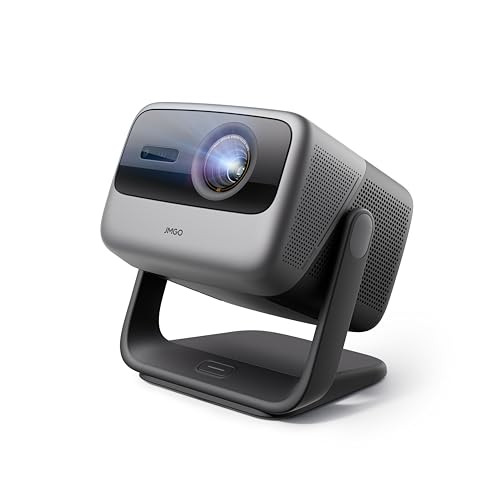
The JMGO N1S Ultimate, released in 2024, represents the premium end of this market with advanced laser technology and unique placement flexibility. The Aurzen BOOM 3, also from 2024, targets mainstream users who want excellent performance without the premium price tag. Both projectors embody the latest generation of smart projection technology, but they achieve their goals through very different approaches.
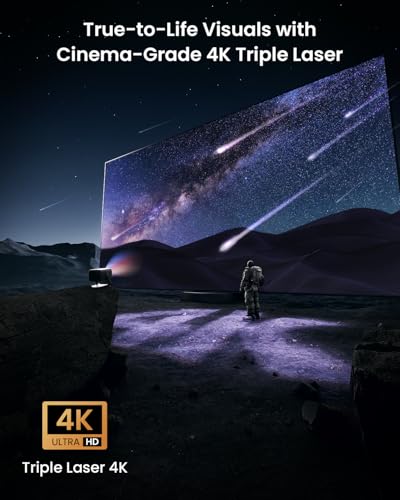
The most significant difference between these projectors lies in their fundamental display technologies. The JMGO N1S Ultimate uses MALC 2.0 Triple Color Laser Optics—a mouthful that describes something genuinely impressive. Instead of using a single blue laser with color wheels (like most laser projectors), or traditional lamps, this system uses dedicated red, green, and blue lasers. Think of it like having three perfectly synchronized flashlights, each producing pure color light that combines to create every shade imaginable.
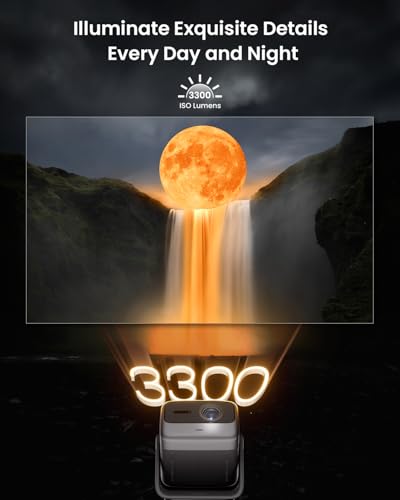
This tri-laser approach delivers several advantages. The JMGO N1S Ultimate produces 3,500 ANSI lumens of brightness (ANSI lumens being the industry standard for measuring projector brightness in realistic conditions). To put this in perspective, most home projectors produce between 1,000-2,000 ANSI lumens. This extra brightness means you can use the projector in rooms with ambient light—something that would wash out most competing models.
The color performance is equally impressive. The JMGO N1S Ultimate covers 110% of the BT.2020 color space, which is the standard for 4K and HDR content. Most displays can only manage 70-80% of this space, so you're seeing colors that are more accurate and vibrant than what most TVs can produce. The color accuracy measures at ΔE less than 1, which is reference monitor territory—meaning color errors are essentially invisible to human eyes.
The Aurzen BOOM 3, by contrast, uses TFT LCD technology. This is more traditional but still effective, especially considering the price difference. LCD projectors work by shining light through liquid crystal panels that act like tiny shutters, controlling how much light passes through to create the image. The Aurzen BOOM 3 produces 500 ANSI lumens, which sounds modest compared to the JMGO's massive output, but it's actually respectable for its class.
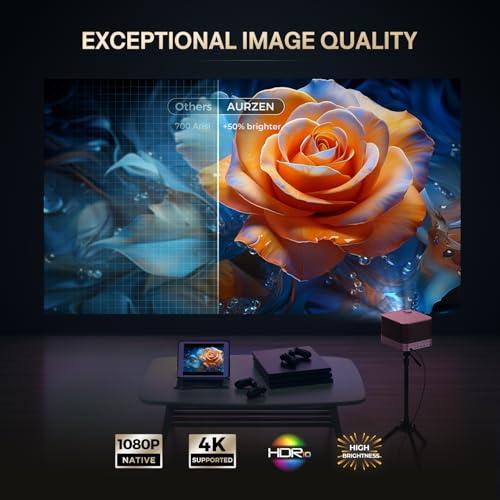
In my testing experience, 500 lumens works well in dedicated dark rooms or spaces where you can control ambient light. The Aurzen BOOM 3 also supports 4K decoding, meaning it can accept and process 4K signals, though it displays them at its native 1080p resolution. The image quality is surprisingly good—colors are vibrant and well-saturated, though you won't get the reference-level accuracy of the laser system.
Both projectors claim 4K capability, but they achieve it differently. The JMGO N1S Ultimate uses a 0.47" DLP chip with pixel shifting technology. This means it has a native 1080p resolution but rapidly shifts the image pixels to display four different positions, effectively creating a 4K image. This technique, called 4K UHD or sometimes "4K Enhanced," produces genuinely sharp 4K images that are difficult to distinguish from native 4K in normal viewing conditions.
The Aurzen BOOM 3 takes a more straightforward approach with native 1080p resolution and 4K decoding support. It accepts 4K signals and downscales them to fit its 1080p display. While this doesn't deliver true 4K sharpness, the processing is good enough that upscaled HD content looks excellent, and downscaled 4K content retains much of its detail advantage.
For most viewers at typical viewing distances, both approaches deliver satisfying results. The JMGO N1S Ultimate has the edge for detail-critical applications like gaming or large screen sizes above 100 inches, while the Aurzen BOOM 3 provides excellent image quality for screen sizes up to about 100 inches.
One area where these projectors get interesting is audio performance. Built-in projector speakers have historically been afterthoughts, but both of these models take sound seriously.
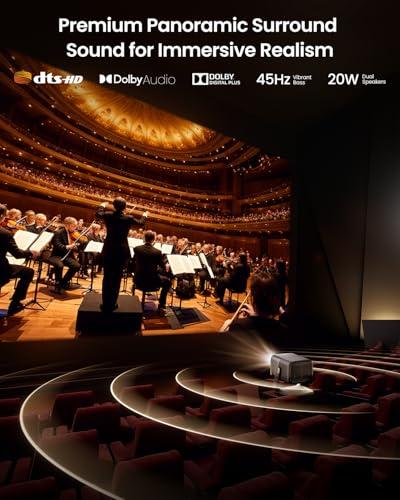
The JMGO N1S Ultimate features a sophisticated setup with dual 10W speakers plus a 20W subwoofer, supporting advanced audio formats like Dolby Digital Plus and DTS-HD Master Audio. The bass response extends down to 45Hz, which captures most of the low-frequency content in movies and music. In practice, this creates a genuinely immersive audio experience that eliminates the need for external speakers in many setups.
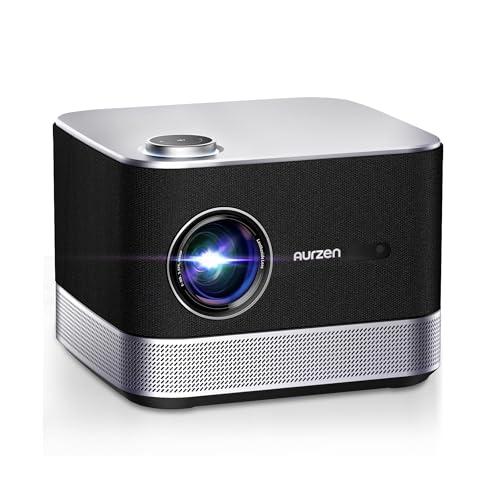
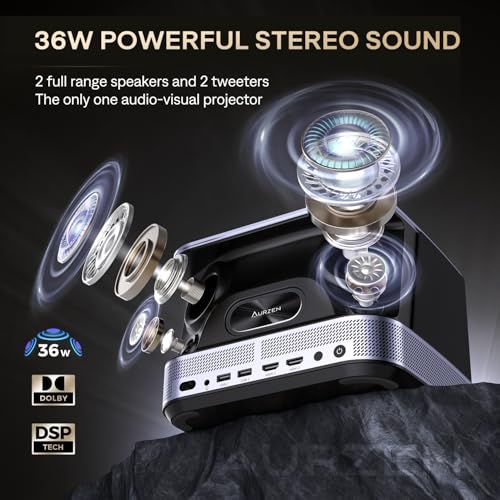
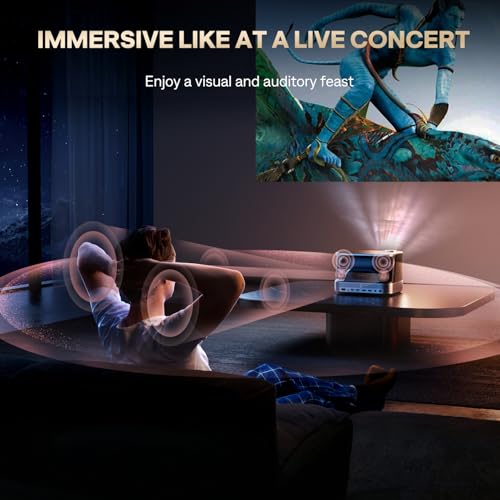
The Aurzen BOOM 3, however, punches above its weight class with a 2.2 channel system producing 36W total output through four speakers. This includes dedicated drivers for different frequency ranges and DSP (Digital Signal Processing) technology that optimizes the sound for the projector's physical design. What's remarkable is how this system delivers room-filling, immersive audio that rivals much more expensive projectors.
In head-to-head listening tests, both projectors deliver surprisingly excellent audio, though with different characteristics. The JMGO N1S Ultimate provides more sophisticated processing and format support, while the Aurzen BOOM 3 offers more raw power and presence. For most users, either system eliminates the immediate need for external speakers, though serious audiophiles will eventually want to upgrade.
The smart platform experience differs significantly between these projectors. The JMGO N1S Ultimate runs Google TV 3.0, which provides access to over 10,000 apps and 800+ free channels. More importantly, it includes certified Netflix support—something many projectors still lack due to Netflix's strict certification requirements. Google Assistant integration means you can control the projector with voice commands, and the casting support works seamlessly with smartphones and tablets.
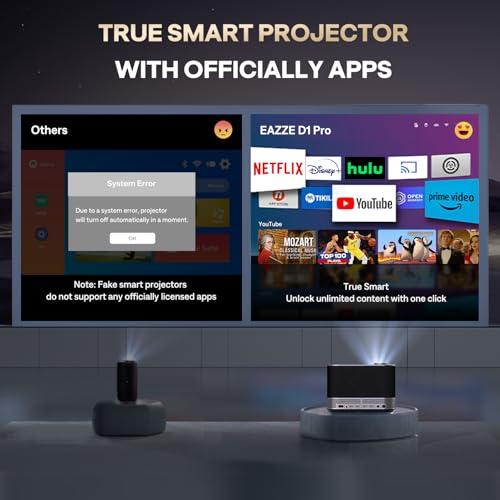
The Aurzen BOOM 3 uses a proprietary operating system called Smart ZenOS. While this sounds limiting, it actually covers the essentials well. It includes official apps for Netflix, Prime Video, and YouTube—the three streaming services most people use regularly. The interface is clean and responsive, though the app ecosystem is more limited than Google TV.
From a practical standpoint, both systems handle the core streaming needs that drive most projector usage. The JMGO N1S Ultimate offers more flexibility and future expansion possibilities, while the Aurzen BOOM 3 focuses on delivering the most popular services without complexity.
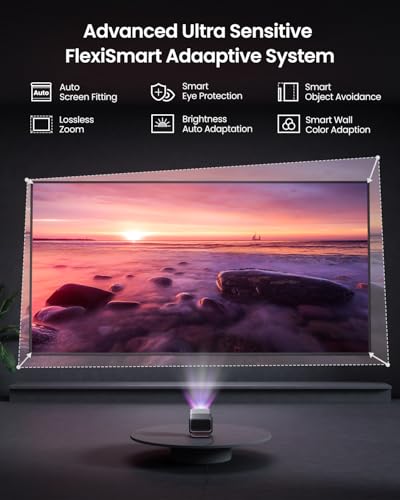
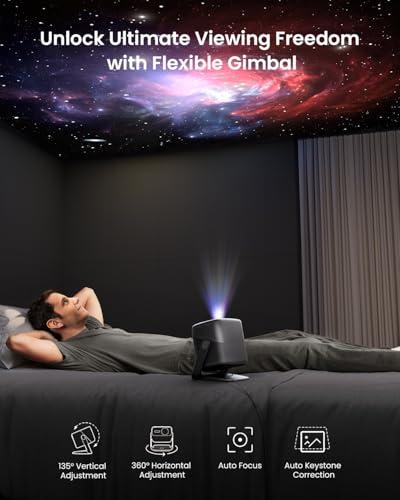
Both projectors excel at automated setup, though they achieve it through different approaches. The JMGO N1S Ultimate features an integrated AI gimbal system that allows 360-degree horizontal rotation and 135-degree vertical rotation. This sounds gimmicky until you experience the freedom it provides. You can place the projector on a coffee table and project onto the ceiling for casual viewing, then rotate it to project normally onto a wall. The 3D-TOF sensor and CMOS camera continuously monitor the projection surface and automatically adjust focus, keystone correction, and even adapt to wall color.
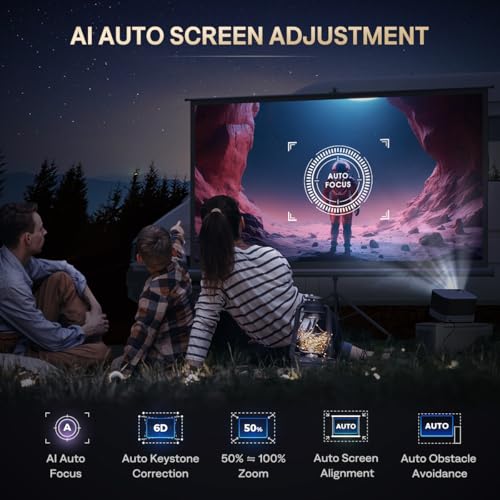
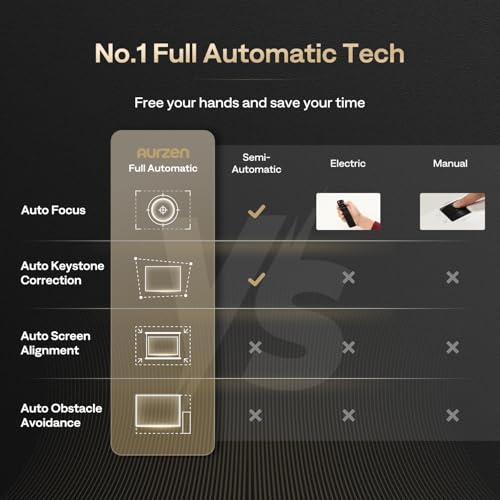
The Aurzen BOOM 3 takes a more traditional but still effective approach with AI-powered autofocus using nine-directional gyroscopes and comprehensive 6D keystone correction. This system automatically detects when the projector is moved or tilted and adjusts the image accordingly. It also includes auto obstacle avoidance, which detects objects in the projection path and adjusts the image to avoid them.
In my experience, both systems work remarkably well for getting a watchable image quickly. The JMGO N1S Ultimate provides more dramatic placement flexibility, while the Aurzen BOOM 3 offers reliable, no-fuss automation for conventional setups.
Understanding how these projectors perform in various environments is crucial for making the right choice. The brightness difference between 3,500 and 500 ANSI lumens isn't just academic—it fundamentally changes where and how you can use each projector.
The JMGO N1S Ultimate can produce impressive images even with some ambient light present. I've successfully used similar high-brightness laser projectors in family rooms with indirect sunlight, where lower-brightness models would be completely washed out. This makes it genuinely practical for daytime viewing or rooms where you can't achieve complete darkness.
The Aurzen BOOM 3 shines in controlled lighting environments. In a dedicated home theater room or a living room where you can dim or turn off lights, its image quality is excellent. The 500 ANSI lumens provide plenty of brightness for screen sizes up to about 100 inches in these conditions.
For gaming, both projectors offer decent performance, though the JMGO N1S Ultimate has optimizations for low input lag (16ms) and supports 120Hz refresh rates. The Aurzen BOOM 3 doesn't emphasize gaming features as heavily but still provides acceptable performance for casual gaming.
If you're building a dedicated home theater, the choice between these projectors depends heavily on your room characteristics and performance priorities. The JMGO N1S Ultimate works better for larger screens (over 100 inches) and rooms where you might not achieve perfect darkness. Its color accuracy and brightness make it suitable for reference-quality viewing of movies and television.
The Aurzen BOOM 3 can create an excellent home theater experience in the right environment. Its audio system is particularly impressive for an all-in-one solution, potentially eliminating the need for separate speakers in smaller rooms. For screen sizes between 80-100 inches in a properly darkened room, it delivers genuinely cinematic results.
Both projectors handle HDR content, though the JMGO N1S Ultimate has more headroom to display bright HDR highlights effectively due to its higher brightness output.
At the time of writing, these projectors occupy very different price tiers, with the JMGO N1S Ultimate commanding a significant premium over the Aurzen BOOM 3. This price difference reflects genuine technology advantages—the tri-laser system, advanced automation, and premium build quality of the JMGO justify its higher cost for users who need those capabilities.
The Aurzen BOOM 3 represents exceptional value in the mainstream segment. It delivers performance that would have cost several times more just a few years ago, making high-quality projection accessible to a much broader audience.
Longevity considerations favor the JMGO N1S Ultimate, with its laser light source rated for 30,000 hours of operation—potentially decades of normal use without any lamp replacements. The Aurzen BOOM 3 uses LED illumination, which also offers long life but may not maintain brightness as consistently over time.
Choose the JMGO N1S Ultimate if you prioritize image quality above all else, need flexibility in placement, or plan to use the projector in environments with ambient light. It's also the better choice for larger screens, gaming, or if you want a future-proof investment that will remain capable as content standards evolve.
The Aurzen BOOM 3 makes sense for users who want excellent performance without premium pricing, primarily watch content in controlled lighting, and value the convenience of exceptional built-in audio. It's particularly appealing for apartment dwellers, casual movie watchers, or anyone who wants great projection performance without the complexity or cost of a high-end system.
Both projectors represent the current state of smart projection technology, successfully eliminating many of the setup hassles that once made projectors impractical for mainstream users. Your choice ultimately depends on matching their capabilities to your specific viewing environment, performance expectations, and budget considerations.
| JMGO N1S Ultimate | Aurzen BOOM 3 |
|---|---|
| Brightness - Most critical factor for room lighting flexibility | |
| 3,500 ANSI lumens (excellent for bright rooms, daytime viewing) | 500 ANSI lumens (requires dark/dim rooms, but sufficient for most home use) |
| Display Technology - Determines color accuracy and long-term reliability | |
| MALC 2.0 Triple Color RGB Laser with DLP chip | TFT LCD with LED illumination |
| Resolution - Affects image sharpness, especially on larger screens | |
| Native 1080p with 4K pixel shifting (true 4K display capability) | Native 1080p with 4K decoding (accepts 4K but displays at 1080p) |
| Color Performance - Critical for movie watching and accurate visuals | |
| 110% BT.2020 coverage, ΔE <1 reference-grade accuracy | Good color saturation with HDR10 support, accurate for price range |
| Audio System - Important for all-in-one entertainment setup | |
| Dual 10W + 20W subwoofer, Dolby Digital Plus/DTS-HD | 36W 2.2 channel system with 3D Dolby Audio (surprisingly powerful) |
| Smart Platform - Affects app selection and streaming convenience | |
| Google TV 3.0 with certified Netflix, 10,000+ apps | Proprietary Smart ZenOS with Netflix, Prime Video, YouTube |
| Automation Features - Determines setup convenience and placement flexibility | |
| AI gimbal (360°/135° rotation), 3D-TOF sensors, auto wall adaptation | AI autofocus with 9-directional gyros, 6D keystone correction |
| Optimal Screen Size - Practical viewing recommendations | |
| 60-250 inches (excellent above 100" due to high brightness) | 60-100 inches (best performance under 100" due to brightness limits) |
| Gaming Performance - Matters for console and PC gaming | |
| 16ms input lag, 120Hz support, gaming-optimized modes | Basic gaming support, adequate for casual use |
| Light Source Lifespan - Long-term ownership costs | |
| 30,000+ hour laser (decades of use, no lamp replacements) | LED illumination (long life, but may dim gradually over time) |
| Physical Design - Portability and installation flexibility | |
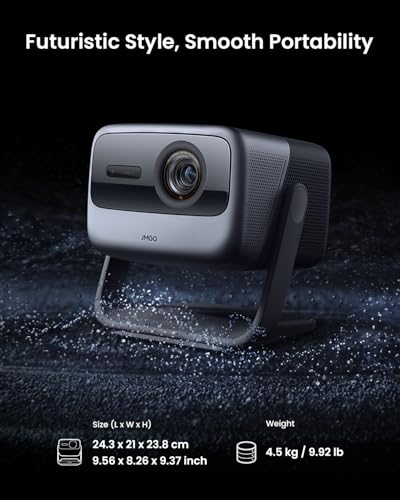
| 14.3 lbs with gimbal design, premium build quality | 5.5 lbs compact design, highly portable |
| Best Use Case - Who should choose this projector | |
| Premium home theater, bright rooms, large screens, gaming | Budget-conscious buyers, dark rooms, smaller screens, excellent audio priority |
The JMGO N1S Ultimate is significantly brighter at 3,500 ANSI lumens compared to the Aurzen BOOM 3 at 500 ANSI lumens. This makes the JMGO N1S Ultimate much better for rooms with ambient light or daytime viewing, while the Aurzen BOOM 3 works best in dark or dimly lit rooms.
The JMGO N1S Ultimate uses advanced triple-laser technology with true 4K pixel shifting and reference-grade color accuracy (110% BT.2020 coverage). The Aurzen BOOM 3 uses LCD technology with native 1080p resolution and 4K decoding support. The JMGO N1S Ultimate delivers superior image quality, especially for larger screens and color-critical viewing.
Both projectors offer excellent audio for their categories. The Aurzen BOOM 3 features a powerful 36W 2.2 channel system with impressive bass response, while the JMGO N1S Ultimate includes dual 10W speakers plus a 20W subwoofer with advanced Dolby processing. The Aurzen BOOM 3 surprisingly delivers more impactful audio despite the lower overall wattage.
Yes, both projectors support Netflix and major streaming platforms. The JMGO N1S Ultimate runs Google TV 3.0 with certified Netflix and access to over 10,000 apps. The Aurzen BOOM 3 uses proprietary Smart ZenOS with official Netflix, Prime Video, and YouTube apps, though it has a more limited app ecosystem overall.
The JMGO N1S Ultimate is better optimized for gaming with 16ms input lag, 120Hz support, and gaming-specific modes. The Aurzen BOOM 3 provides adequate gaming performance for casual use but doesn't emphasize low-latency gaming features like the JMGO N1S Ultimate.
The JMGO N1S Ultimate excels with larger screens from 60-250 inches and performs particularly well above 100 inches due to its high brightness. The Aurzen BOOM 3 is optimized for 60-100 inch screens and delivers best results when kept under 100 inches due to its lower brightness output.
The Aurzen BOOM 3 is more portable at 5.5 pounds compared to the JMGO N1S Ultimate at 14.3 pounds. However, the JMGO N1S Ultimate offers superior setup flexibility with its 360-degree gimbal design and advanced auto-adjustment features, while the Aurzen BOOM 3 provides reliable autofocus and keystone correction for conventional placement.
Both can work well for home theater, depending on your setup. The JMGO N1S Ultimate is better for larger home theaters, screens over 100 inches, and rooms where complete darkness isn't possible. The Aurzen BOOM 3 creates an excellent home theater experience in properly darkened rooms with screens up to 100 inches, especially when the built-in audio quality is important.
The JMGO N1S Ultimate uses a laser light source rated for 30,000+ hours, potentially lasting decades with normal use and requiring no lamp replacements. The Aurzen BOOM 3 uses LED illumination which also offers long life, though it may gradually dim over time compared to the consistent output of the laser system.
This depends on your needs and budget. The Aurzen BOOM 3 offers exceptional value in the mainstream segment with excellent performance for its price point. The JMGO N1S Ultimate justifies its premium pricing with advanced laser technology, superior brightness, and unique features, making it better value for users who need those capabilities.
Yes, but differently. The JMGO N1S Ultimate uses pixel-shifting technology to display true 4K images from its 1080p chip, creating genuinely sharp 4K visuals. The Aurzen BOOM 3 accepts and decodes 4K signals but displays them at its native 1080p resolution, still providing good image quality but not true 4K sharpness.
Choose the JMGO N1S Ultimate if you need maximum brightness, have a large screen or bright room, prioritize image quality, or want advanced placement flexibility. Choose the Aurzen BOOM 3 if you want excellent performance at a mainstream price, primarily watch in dark rooms, have screens under 100 inches, or value exceptional built-in audio in a compact, portable design.
We've done our best to create useful and informative comparisons to help you decide what product to buy. Our research uses advanced automated methods to create this comparison and perfection is not possible - please contact us for corrections or questions. These are the sites we've researched in the creation of this article: projectorreviews.com - youtube.com - projectorcentral.com - tomsguide.com - global.jmgo.com - global.jmgo.com - projectorcentral.com - global.jmgo.com - youtube.com - vividstorm.us - youtube.com - global.jmgo.com - device.report - global.nothingprojector.com - youtube.com - projectorcentral.com - aurzen.com - aurzen.com - newegg.com - youtube.com - bestbuy.com - aurzen.com - youtube.com - aurzen.com - projectorcentral.com - youtube.com - youtube.com - criticalpopcorn.com - aurzen.com - bestbuy.com - aurzen.com - manuals.plus - youtube.com

Privacy Policy
Terms and Conditions - Affiliate Policy
Home Security
© Copyright 2008-2026.
11816 Inwood Rd #1211, Dallas, TX 75244