


The portable projector market has exploded over the past few years, and for good reason. These compact entertainment powerhouses promise to turn any wall into a movie screen while fitting into a backpack. But with so many options flooding the market, choosing the right one can feel overwhelming. Today we're comparing two standout models that take very different approaches to portable projection: the TCL C1 Google TV Portable Projector and the Aurzen BOOM 3 Smart Projector.
Both projectors launched in 2023, riding the wave of improved LED technology and more powerful processing chips that have made truly portable, high-quality projection possible. Since their release, we've seen the market mature significantly, with manufacturers focusing more on smart features and all-in-one convenience rather than just raw specifications.
Before diving into specifics, let's talk about what makes a portable projector actually useful. The biggest challenge these devices face is the fundamental physics of light—you need lots of it to create a bright image, but powerful light sources generate heat and require larger cooling systems. This creates an unavoidable trade-off between brightness and portability that every manufacturer must navigate.
The key specifications that matter most are brightness (measured in lumens), native resolution, and what we call "setup friction"—how much work it takes to get a watchable image. Brightness determines whether you can use the projector in normal room lighting or need to dim the lights. Native resolution affects image sharpness, though the difference between good 1080p and 4K is less dramatic on projectors than on TVs due to the nature of projected light.
Smart features have become crucial too. The ability to stream Netflix or YouTube directly without connecting a laptop or streaming stick transforms these devices from tech accessories into primary entertainment systems. Audio quality often gets overlooked in spec sheets, but it's actually critical—a projector with terrible built-in speakers forces you to set up additional audio equipment, defeating the portability advantage.
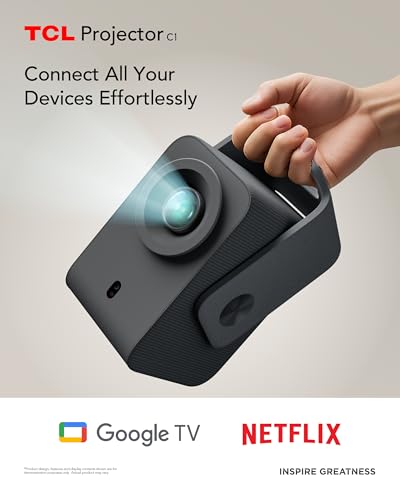
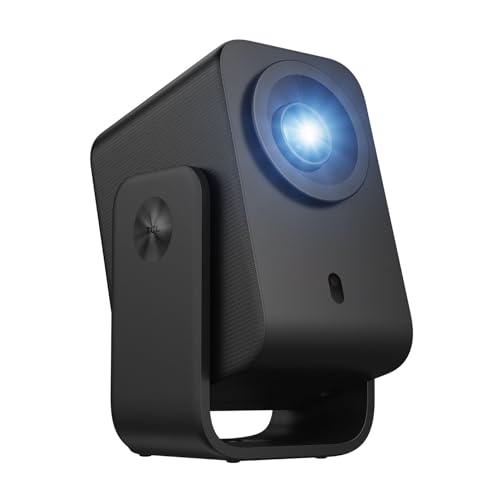
The TCL C1 represents what happens when a major TV manufacturer decides to make the most portable projector possible without completely sacrificing image quality. Released in 2023, it weighs just under 4 pounds and features TCL's signature understated design aesthetic.
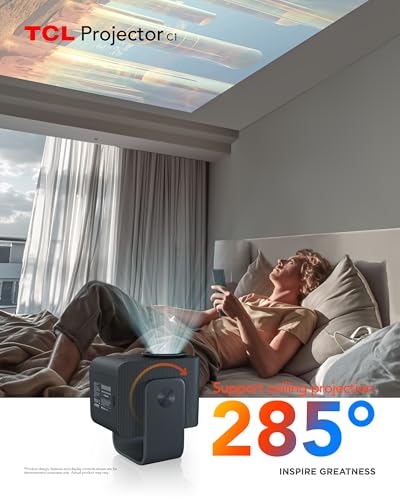
What makes the TCL C1 unique is its gimbal mounting system—essentially a pivoting joint that lets you angle the projector in almost any direction, including straight up at the ceiling. This 285-degree rotation capability means you can set it on a nightstand and project onto the ceiling for bed viewing, or place it on a coffee table and aim it at any wall. Most projectors require you to position them directly in front of your intended screen, but the TCL C1 breaks that limitation.
The projector uses a fully sealed optical engine, which might sound like marketing speak but actually matters quite a bit. Traditional projectors suck in air to cool their components, which also means sucking in dust particles that eventually settle on internal lenses and mirrors. Over time, this creates fuzzy spots and reduces image quality. TCL's sealed system prevents this degradation, though it does limit the maximum brightness they can achieve due to cooling constraints.
Speaking of brightness, the TCL C1 produces 230 ISO lumens. ISO lumens is a standardized measurement that tends to be more conservative than the ANSI lumens many manufacturers use, so these numbers aren't directly comparable across brands. In practical terms, 230 ISO lumens means you need fairly dark room conditions for the best viewing experience. It's perfectly adequate for nighttime movie watching but struggles in rooms with ambient light from windows or bright overhead fixtures.
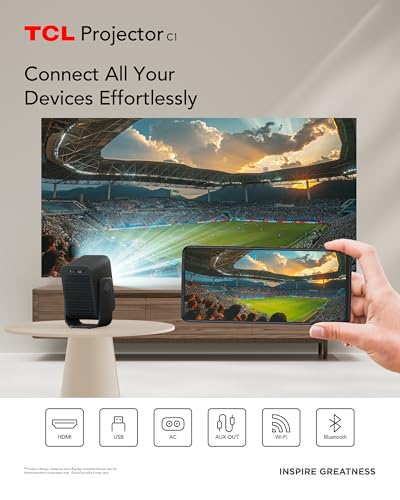
The smart features center around Google TV, which is essentially Android TV with Google's interface and content recommendations. This gives you access to virtually every streaming service, including Netflix (which requires special certification that many cheaper projectors lack). The TCL C1 can also function as a Bluetooth speaker when you're not projecting, and as an external monitor for gaming consoles or laptops.
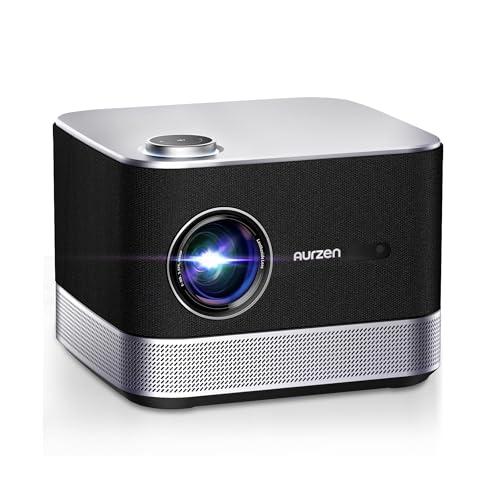
The Aurzen BOOM 3 takes a fundamentally different approach, prioritizing brightness and audio quality over extreme portability. Also released in 2023, it weighs about 5.5 pounds and has a more substantial footprint, but delivers significantly higher performance in key areas.
The standout feature is brightness—500 ANSI lumens, which translates to roughly double the usable light output of the TCL C1. This makes an enormous difference in practical use. While the TCL C1 requires you to dim the lights and close curtains, the BOOM 3 remains watchable in normal room lighting and even works reasonably well for outdoor evening viewing.
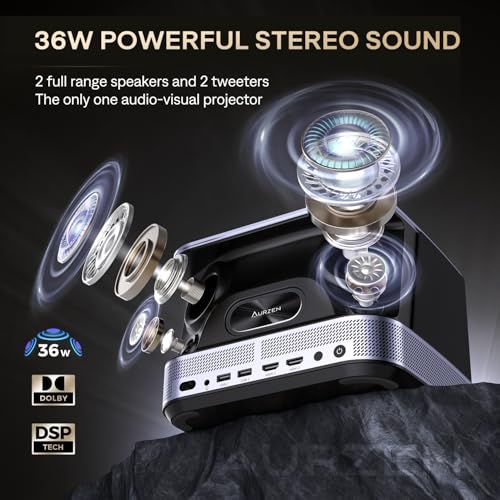
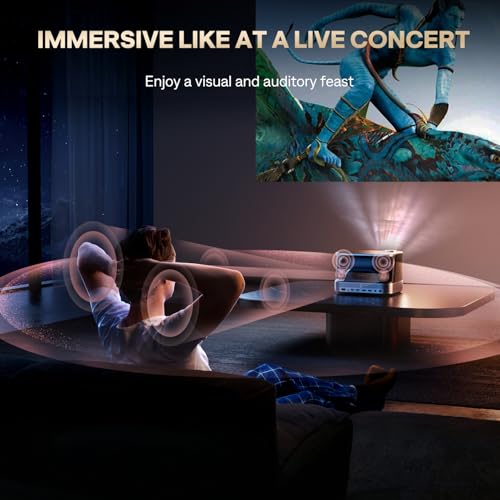
But the real differentiator is the audio system. Most portable projectors treat sound as an afterthought, including tiny speakers that produce tinny, weak audio. The BOOM 3 features a 36-watt, 2.2-channel speaker system with four individual drivers—two full-range speakers and two dedicated tweeters (high-frequency speakers) plus passive radiators that enhance bass response. This creates genuinely immersive audio that rivals many soundbars.
The audio system uses DSP (Digital Signal Processing) technology, which automatically adjusts the sound characteristics based on content type. When you're watching an action movie, it emphasizes dialogue clarity while maintaining explosive sound effects. For music, it enhances the stereo separation and frequency balance. This isn't just marketing—the difference is immediately apparent when switching between content types.
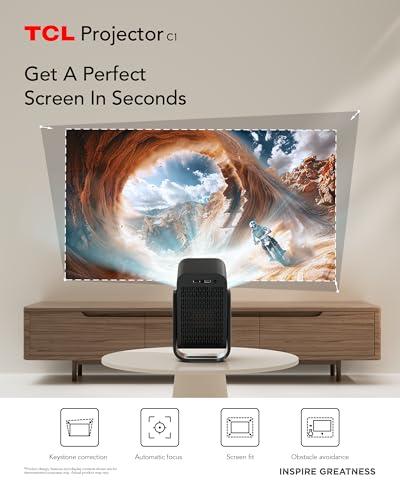
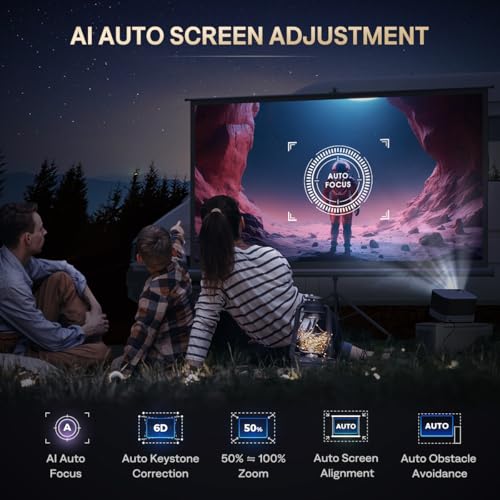
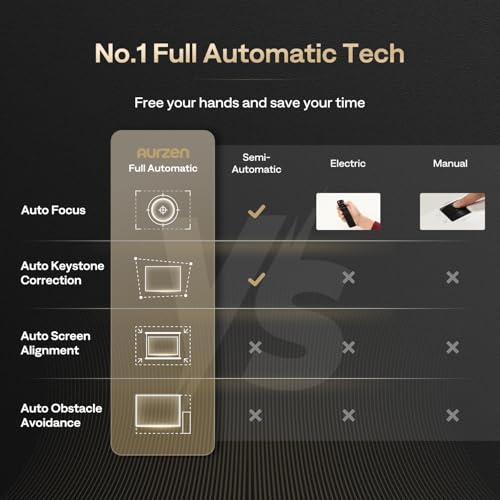
The BOOM 3 also includes more advanced auto-correction features. While the TCL C1 has solid auto-focus and keystone correction (automatically making the image rectangular even when projecting at an angle), the BOOM 3 adds AI-powered focus with nine-directional gyroscopes. These sensors continuously monitor the projector's position and automatically adjust focus and geometry in real-time, even if someone bumps the projector during viewing.
The brightness difference between these projectors fundamentally changes how you use them. Our research into user reviews consistently shows that the TCL C1 delivers excellent image quality in dark rooms—colors are accurate, details are sharp, and the overall viewing experience rivals much more expensive projectors. However, introduce any ambient light, and the image quickly becomes washed out and difficult to watch.
The BOOM 3, with its higher brightness, maintains image quality even with some room lighting. This might not sound like a big deal, but it's the difference between a projector you can only use at night versus one that works for afternoon movie sessions or evening gatherings where you don't want to turn off all the lights.
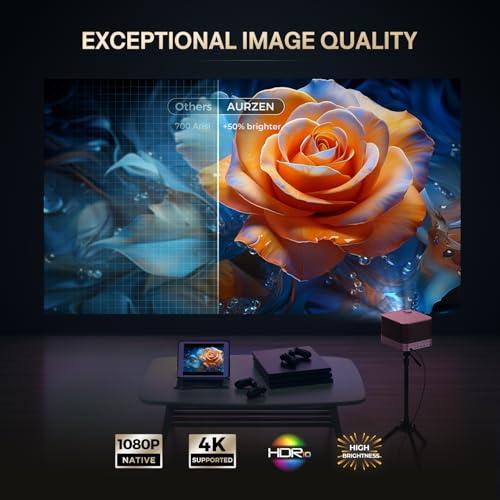
Both projectors offer native 1080p resolution with support for 4K input signals. They'll accept a 4K signal from your streaming device or gaming console but downscale it to 1080p for display. The processing quality matters here—both do a respectable job maintaining detail and color accuracy during this conversion.
Color reproduction varies between the models due to their different approaches to image processing. The TCL C1 uses TrueHue technology, which adjusts color and contrast on a frame-by-frame basis. This creates smoother, more film-like images but can sometimes make colors appear slightly muted compared to TVs. The BOOM 3 supports HDR10, which expands the range of colors and contrast the projector can display, leading to more vibrant (though sometimes less natural) images.
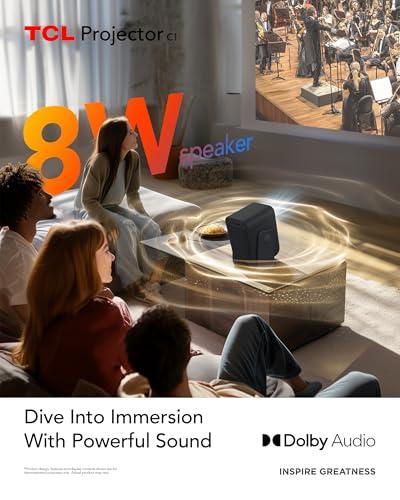
Audio quality often determines whether a portable projector becomes a go-to entertainment device or an occasional novelty. The TCL C1 includes a single 8-watt speaker with Dolby Audio processing. It's adequate for dialogue and background music but lacks the dynamic range needed for action movies or music content. You'll want to connect external speakers or headphones for serious viewing sessions.
The BOOM 3's 36-watt audio system changes the entire value proposition. User reviews consistently praise its ability to fill medium-sized rooms with clear, balanced sound. The bass response is particularly impressive for a device this size—while it won't shake the walls like a dedicated subwoofer, it provides enough low-end presence to make movie soundtracks feel impactful.
The stereo separation also matters more than you might expect. With properly positioned left and right channels, you get a sense of directionality in the audio that makes action scenes more immersive and music more spacious. The TCL C1 simply cannot provide this experience with its single speaker design.
Both projectors eliminate the need for external streaming devices, but they take different software approaches. The TCL C1 runs Google TV, which provides access to essentially every streaming service and regularly receives updates with new features. The interface is polished and familiar to anyone who's used modern smart TVs.
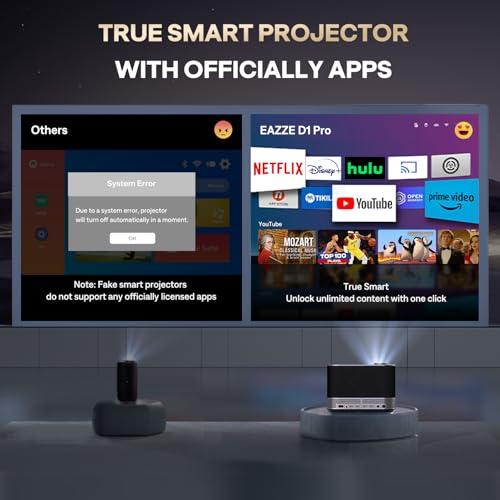
The BOOM 3 uses a proprietary smart OS that covers the major streaming services (Netflix, Amazon Prime Video, YouTube) but has a more limited app ecosystem. The interface is functional but less refined than Google TV. However, both projectors include multiple HDMI and USB ports, so you can always connect external devices if needed.
Connection options favor the BOOM 3, which includes dual HDMI ports versus the TCL C1's single port. This matters if you want to connect multiple devices—say, a gaming console and a streaming stick—without constantly swapping cables.
For studio apartments, dorm rooms, or small bedrooms, the TCL C1 often makes more sense. Its compact footprint and gimbal design mean you can store it easily and set it up anywhere without requiring dedicated space or mounting hardware. The ceiling projection feature is genuinely useful in cramped quarters where wall space is limited.
The lower brightness becomes less of an issue in small, easily darkened spaces. You can close blinds and turn off overhead lights without creating an uncomfortable cave-like atmosphere. The modest audio output is also less problematic in smaller rooms where you're sitting closer to the projector.
Larger living areas tend to favor the BOOM 3. The higher brightness works better in rooms with multiple windows or ambient lighting from other areas of the home. The superior audio system eliminates the need for additional speakers, keeping the setup simple while delivering satisfying sound for family movie nights.
The ability to project much larger images (up to 250 inches versus 120 inches) becomes relevant in bigger spaces where you might want to create a true cinema experience. However, remember that larger projection sizes require proportionally more brightness to maintain image quality, so even the BOOM 3 has practical limits in well-lit environments.
For backyard movie nights or camping trips, brightness and audio become even more critical factors. Outdoor environments typically have some ambient light even after sunset, and you're often sitting farther from the projector than you would indoors. The BOOM 3 handles these challenges much better, though both projectors require power outlets, limiting true portability.
The TCL C1's gimbal design can be advantageous outdoors where you might need to project from unconventional positions, but this advantage is often outweighed by its brightness limitations.
At the time of writing, both projectors compete in the $200-350 price range, though street prices fluctuate significantly with sales and promotions. The TCL C1 typically costs less but often requires additional spending on external speakers for optimal audio. When you factor in a decent Bluetooth speaker or soundbar, the total cost approaches that of the BOOM 3.
The BOOM 3 represents better value if you prioritize brightness and audio quality, while the TCL C1 offers superior value for ultra-portability and Google TV integration. Neither projector competes with dedicated home theater equipment in terms of pure performance, but both provide compelling alternatives to traditional TVs in specific use cases.
The decision between these projectors ultimately depends on your primary use case and physical environment. Choose the TCL C1 if you need maximum portability, have limited space, or primarily watch content in dark conditions. Its unique gimbal design and compact size make it ideal for renters, students, or anyone who needs a projector that can easily move between different rooms or locations.
Opt for the BOOM 3 if you want a projector that can handle diverse lighting conditions and provide cinema-quality audio without additional equipment. It's better suited for dedicated entertainment spaces, outdoor use, or situations where multiple people will be watching together regularly.
Both projectors represent significant improvements over portable models from just a few years ago, offering legitimate alternatives to traditional TVs for many users. The key is matching the projector's strengths to your specific needs rather than simply chasing the highest specifications on paper.
| TCL C1 Google TV Portable Projector | Aurzen BOOM 3 Smart Projector |
|---|---|
| Brightness - Most critical spec for daytime viewing | |
| 230 ISO lumens (requires dark rooms) | 500 ANSI lumens (usable in ambient light) |
| Native Resolution - Determines image sharpness | |
| 1080p Full HD with 4K input support | 1080p Full HD with 4K input support |
| Audio System - Key factor for all-in-one convenience | |
| Single 8W Dolby Audio speaker | 36W 2.2-channel system with four speakers |
| Weight & Portability - Affects ease of transport | |
| 1.77 kg (3.9 lbs) with integrated handle | 5.5 lbs (2.5 kg) - more stationary design |
| Projection Size Range - Determines screen size flexibility | |
| 40-120 inches | 60-250 inches |
| Smart Platform - Affects streaming app availability | |
| Google TV with Netflix certification | Proprietary Smart OS with licensed apps |
| Unique Design Features - Special capabilities that set each apart | |
| 285° gimbal rotation enables ceiling projection | AI auto-focus with 9-directional gyroscopes |
| Connectivity Options - Number of inputs for devices | |
| 1x HDMI 2.1, 1x USB-A | 2x HDMI, 2x USB |
| Optical Engine Design - Affects long-term maintenance | |
| Fully sealed (dust-proof, low maintenance) | Standard LCD (requires occasional cleaning) |
| Auto-Correction Features - Simplifies setup process | |
| Auto focus, omni-directional keystone, obstacle avoidance | AI auto focus, 6D keystone correction, screen alignment |
| HDR Support - Enhances color and contrast range | |
| Standard color processing | HDR10 support |
| Throw Distance - How close you need to place the projector | |
| 1.15m - 3.30m | 1.8m - 7.5m (5.9' - 24.5') |
| Best Use Cases - Who should choose each projector | |
| Small spaces, bedroom ceiling viewing, maximum portability | Larger rooms, outdoor use, all-in-one audio solution |
The Aurzen BOOM 3 Smart Projector is significantly brighter at 500 ANSI lumens compared to the TCL C1 Google TV Portable Projector's 230 ISO lumens. This means the BOOM 3 can handle rooms with ambient light and even some daytime viewing, while the TCL C1 requires dark room conditions for the best image quality.
The Aurzen BOOM 3 has substantially better audio with its 36W 2.2-channel speaker system featuring four speakers, compared to the TCL C1's single 8W speaker. The BOOM 3 delivers cinema-quality sound that eliminates the need for external speakers, while the TCL C1 may require additional audio equipment for immersive viewing.
The TCL C1 Google TV Portable Projector is much more portable at 1.77 kg (3.9 lbs) with an integrated handle and gimbal design, compared to the Aurzen BOOM 3's 5.5 lbs weight and larger footprint. The TCL C1 is designed for frequent movement between rooms or travel, while the BOOM 3 is better suited for semi-permanent setups.
The TCL C1 runs Google TV with Netflix certification and access to over 10,000 apps, providing a more comprehensive smart platform than the Aurzen BOOM 3's proprietary Smart OS. However, both projectors offer the major streaming services like Netflix, Prime Video, and YouTube without requiring external devices.
Yes, the TCL C1 Google TV Portable Projector features a unique 285° gimbal design that enables ceiling projection, making it perfect for bedroom viewing. The Aurzen BOOM 3 requires traditional placement facing a wall or screen and cannot easily project overhead.
The Aurzen BOOM 3 Smart Projector is better for larger spaces due to its higher brightness (500 lumens) and ability to project up to 250 inches, compared to the TCL C1's maximum 120-inch projection size. The BOOM 3's superior audio also fills larger rooms more effectively.
The Aurzen BOOM 3 includes 2 HDMI ports and 2 USB ports, while the TCL C1 Google TV Portable Projector has 1 HDMI port and 1 USB port. The additional connectivity on the BOOM 3 is beneficial for connecting multiple gaming consoles or media devices simultaneously.
The Aurzen BOOM 3 is superior for outdoor use due to its higher brightness handling ambient light better and its powerful 36W audio system projecting sound effectively in open spaces. The TCL C1 may struggle with brightness in outdoor evening conditions and would require external speakers for adequate audio coverage.
Both projectors feature automatic focusing systems. The TCL C1 has standard auto-focus with keystone correction, while the Aurzen BOOM 3 Smart Projector uses AI-powered auto-focus with 9-directional gyroscopes for more precise real-time adjustments. Both eliminate the need for manual focus tweaking during setup.
For dedicated home theater setups, the Aurzen BOOM 3 typically offers better value due to its higher brightness, superior audio system, and larger projection capabilities eliminating the need for additional equipment. The TCL C1 provides better value for casual viewing or space-constrained setups where extreme portability is prioritized.
Yes, both projectors can function as Bluetooth speakers. The TCL C1 Google TV Portable Projector can stream audio from smartphones when not projecting, while the Aurzen BOOM 3's powerful 36W speaker system makes it particularly effective as a standalone audio device with much better sound quality than typical Bluetooth speakers.
Both projectors offer easy setup with auto-correction features, but the TCL C1 may have a slight edge due to its gimbal design allowing flexible placement and Google TV's familiar interface. The Aurzen BOOM 3 compensates with more advanced AI auto-focus and 6D keystone correction that handles challenging placement scenarios more effectively than the TCL C1.
We've done our best to create useful and informative comparisons to help you decide what product to buy. Our research uses advanced automated methods to create this comparison and perfection is not possible - please contact us for corrections or questions. These are the sites we've researched in the creation of this article: youtube.com - thegadgetflow.com - notebookcheck.net - shopabunda.com - youtube.com - youtube.com - youtube.com - youtube.com - tcl.com - androidauthority.com - manuals.plus - westcoast.co.uk - youtube.com - projectorcentral.com - aurzen.com - aurzen.com - newegg.com - youtube.com - bestbuy.com - aurzen.com - youtube.com - aurzen.com - projectorcentral.com - youtube.com - youtube.com - criticalpopcorn.com - aurzen.com - bestbuy.com - aurzen.com - manuals.plus - youtube.com

Privacy Policy
Terms and Conditions - Affiliate Policy
Home Security
© Copyright 2008-2026.
11816 Inwood Rd #1211, Dallas, TX 75244