



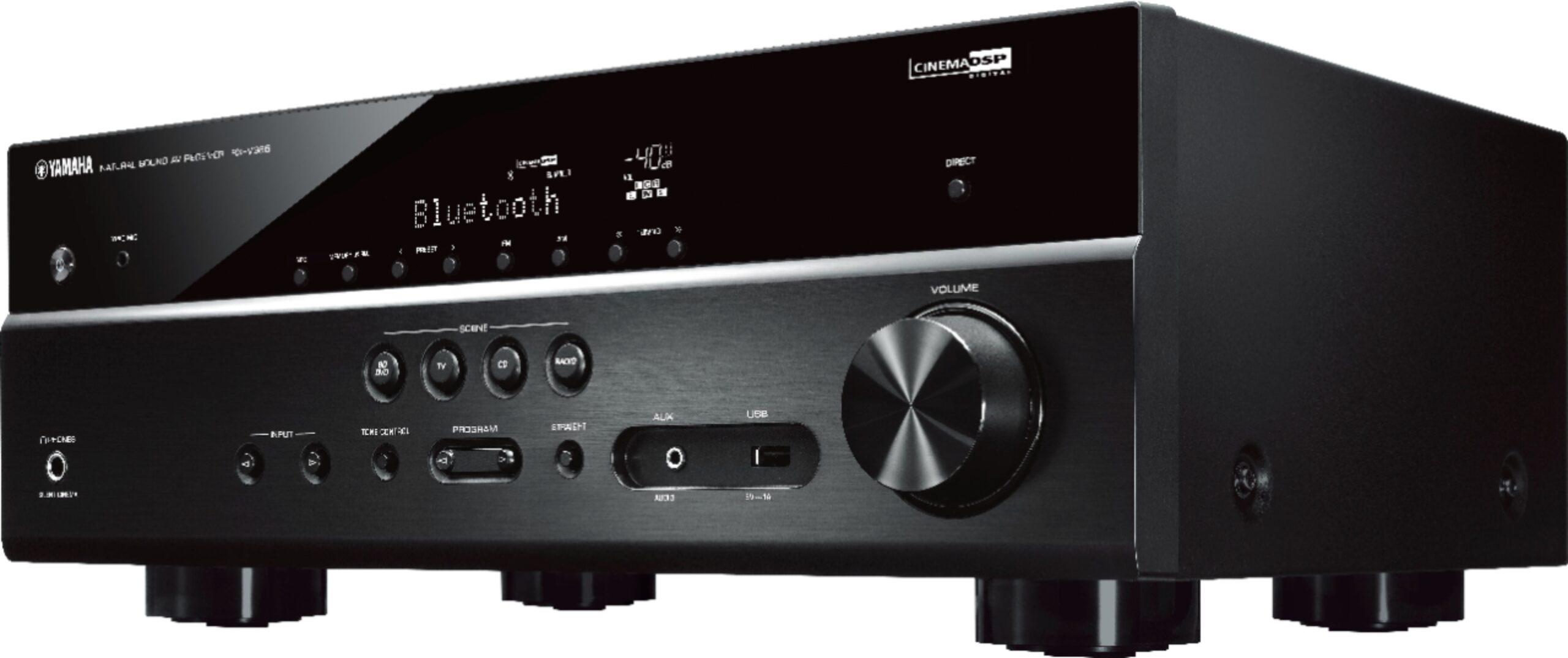
When setting up a home audio system, one of the most important decisions is choosing the right receiver. Today we're comparing two distinctly different approaches from Yamaha: the music-focused $649 R-N602 stereo receiver and the home theater-oriented $349 RX-V385. Let's explore how these receivers serve different needs and help you decide which approach makes sense for your setup.
These receivers were released at different times for different purposes. The R-N602 debuted in 2016 as part of Yamaha's hi-fi audio line, while the RX-V385 launched more recently as an entry-level home theater solution. Despite their age difference, both remain relevant thanks to their core capabilities.
The fundamental distinction is that the R-N602 focuses on delivering exceptional two-channel stereo sound, while the RX-V385 trades some audio refinement for the ability to process surround sound and handle video. Think of it like comparing a sports car to an SUV - both are vehicles, but they're optimized for different purposes.
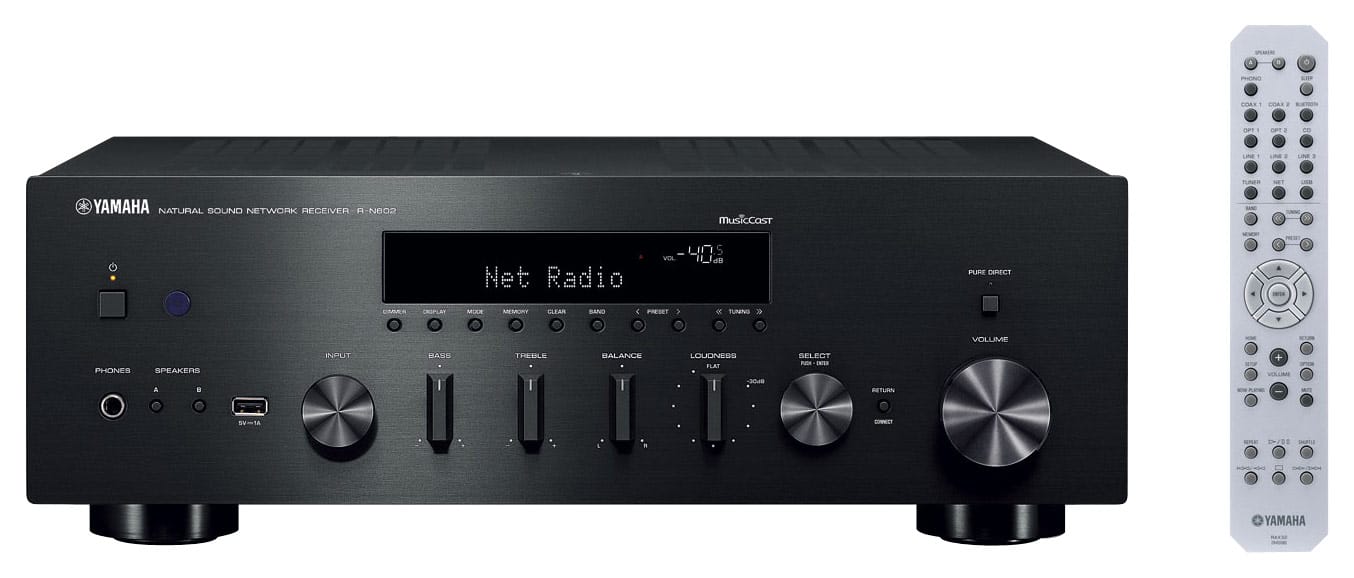
The R-N602 really shines when it comes to music playback. Its high-current amplifier design (delivering 80 watts per channel into 8 ohms) uses carefully selected audiophile-grade components throughout the signal path. The "ToP-ART" (Total Purity Audio Reproduction Technology) design philosophy means shorter signal paths and symmetrical channel layouts, resulting in cleaner sound with less interference.
In contrast, the RX-V385's amplifier section (70 watts per channel into 6 ohms) is designed to balance music and movie performance. While it's certainly capable of enjoyable music playback, it doesn't quite match the R-N602's refinement in areas like soundstage depth (how three-dimensional the music sounds) and micro-detail retrieval (hearing subtle nuances in recordings).
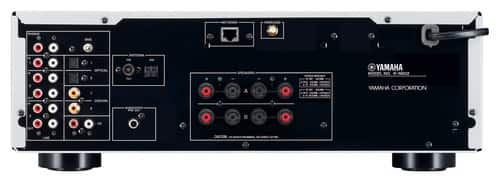
A key advantage of the R-N602 is its high-quality phono preamp for turntables. If you're into vinyl, this built-in feature saves you from needing a separate phono preamp and delivers excellent performance for the price point. The RX-V385 lacks this capability entirely.
Both receivers handle digital audio differently:
The R-N602 uses premium Burr-Brown DACs (Digital-to-Analog Converters) and can process high-resolution audio up to 192kHz/24-bit, including DSD files. It also features a "Pure Direct" mode that bypasses unnecessary circuits for the cleanest possible sound.
The RX-V385 uses multiple DACs optimized for surround sound processing. While they're good quality, the focus here is on handling multiple channels simultaneously rather than maximizing two-channel performance.
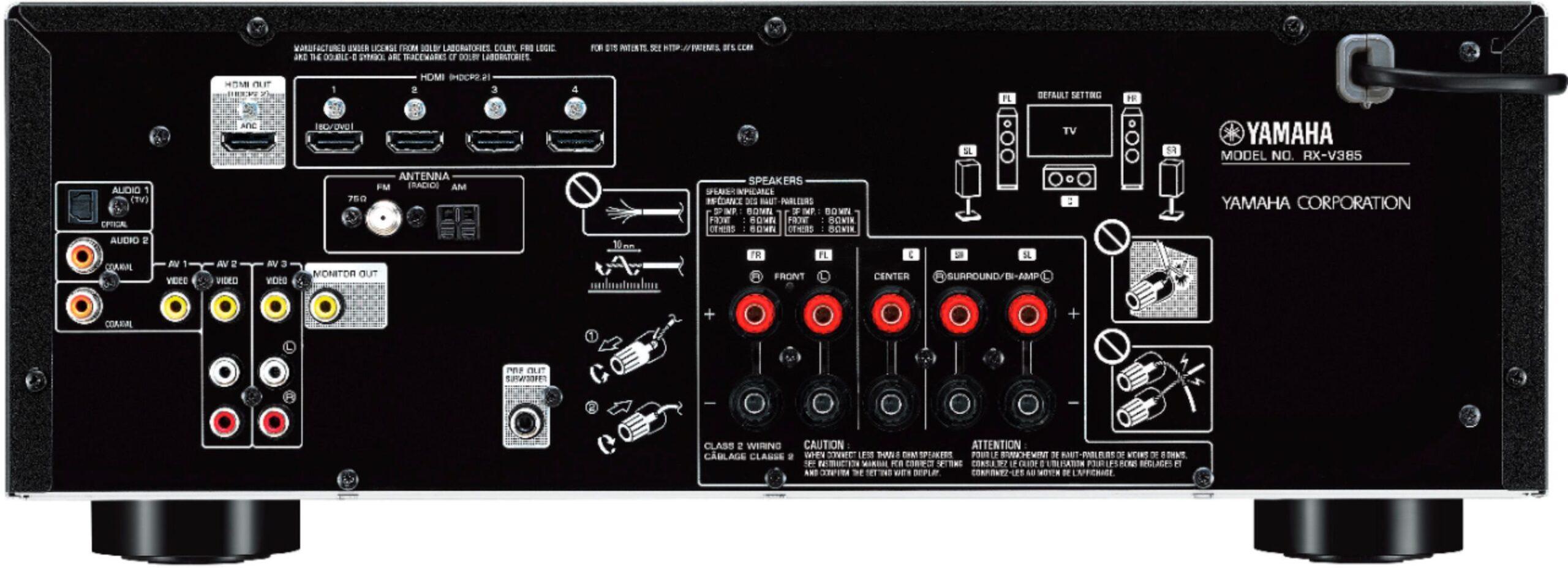
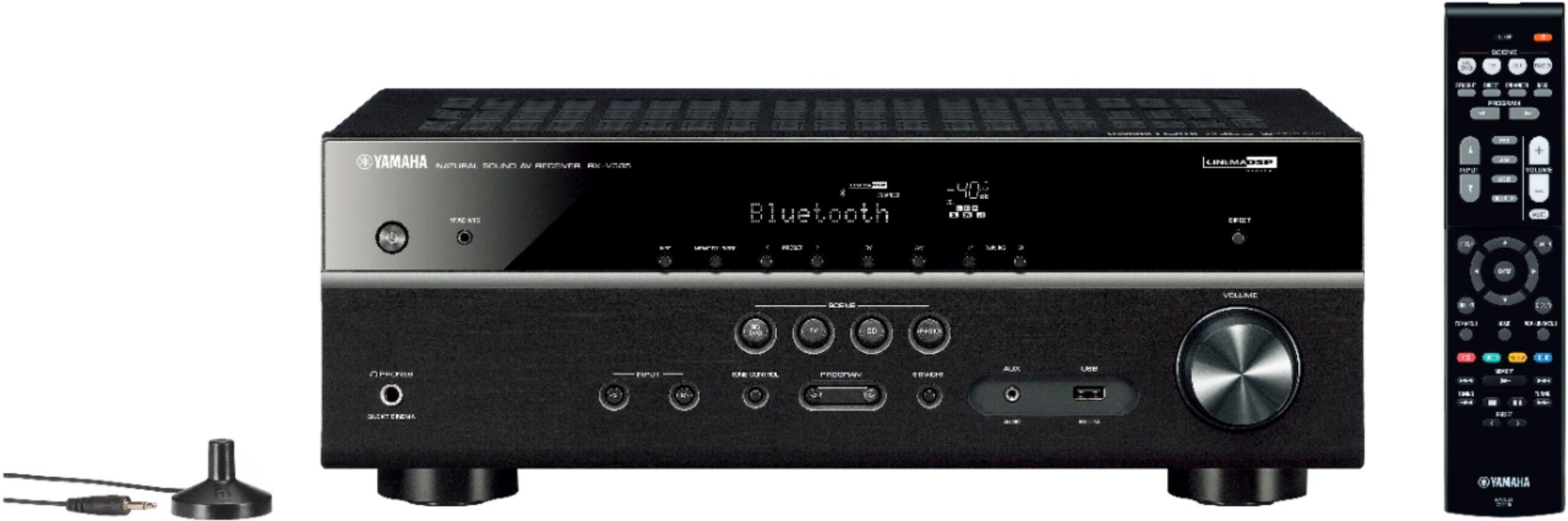
This is where the RX-V385 really comes into its own. With 5.1 channel processing, support for modern surround formats like Dolby TrueHD and DTS-HD Master Audio, and HDMI 2.0 inputs that handle 4K HDR video, it's well-equipped for movie and gaming duties. The YPAO room correction system automatically calibrates speaker levels and timing for optimal surround sound performance.
The R-N602 is limited to stereo for movies and TV. While it can still sound excellent, you won't get the immersive experience of discrete surround effects. However, if you're primarily watching dialogue-driven content or news, this might not be a significant limitation.
The R-N602 offers impressive network capabilities:
The RX-V385 is more basic in this regard:
The R-N602 provides:
The RX-V385 offers:
The value equation depends entirely on your needs. At $649, the R-N602 is more expensive but delivers superior music performance and streaming features. If you're building a music-first system or want to integrate a turntable, it's worth the premium.
At $349, the RX-V385 is an excellent value for home theater use. While it may not match the R-N602's music performance, it's more than adequate for most listeners and adds substantial home theater capabilities.
Consider these questions:
Choose the R-N602 if:
Choose the RX-V385 if:
Both receivers excel in their intended roles. The key is matching their capabilities to your specific needs rather than assuming the more expensive option is automatically better for everyone.
Remember, you can always start with the RX-V385 and upgrade later if you find yourself wanting more refined music performance, or invest in the R-N602 now if you know music will always be your priority. Either way, both represent solid choices within their respective categories.
| Yamaha R-N602 Network Stereo Receiver | Yamaha RX-V385 5.1 Channel AV Receiver |
|---|---|
| Price - Base investment required | |
| $649 - Premium pricing for superior audio | $349 - Excellent value for home theater |
| Power Output - Determines speaker compatibility and room-filling capability | |
| 80W per channel (8 ohms, higher quality amp section) | 70W per channel (6 ohms, optimized for surround) |
| Audio Channels - Defines core functionality and use case | |
| 2.1 channels (stereo only, optional subwoofer) | 5.1 channels (full surround sound support) |
| Digital Audio Processing - Impacts sound quality from digital sources | |
| High-end Burr-Brown DACs, up to 192kHz/24-bit, DSD support | Standard DACs focused on multi-channel processing |
| Video Capabilities - Essential for home theater use | |
| No video processing or HDMI | 4K/60Hz HDR passthrough, 4 HDMI inputs |
| Network Features - Affects streaming and multi-room audio | |
| WiFi, MusicCast, AirPlay, built-in streaming services | Bluetooth only, no network features |
| Analog Inputs - Important for traditional audio sources | |
| High-quality phono input, multiple line-level inputs | Basic analog inputs, no phono stage |
| Room Correction - Helps optimize sound for your space | |
| Manual tone controls only | YPAO automatic calibration system |
| Special Features - Additional functionality | |
| Pure Direct mode, gapless playback, multi-room audio | Virtual surround, SCENE presets, HDMI-CEC |
| Primary Use Case - Who should buy this model | |
| Dedicated music listening, vinyl playback, streaming | Home theater, gaming, casual music playback |
The R-N602 is significantly better for music, offering superior stereo performance, better DACs, and a high-quality phono input for turntables. While the RX-V385 plays music well, it's not optimized for critical music listening.
Yes, the RX-V385 has Bluetooth connectivity for wireless music streaming from phones and other devices. The R-N602 offers both Bluetooth and WiFi streaming with additional services like Spotify Connect.
We've done our best to create useful and informative comparisons to help you decide what product to buy. Our research uses advanced automated methods to create this comparison and perfection is not possible - please contact us for corrections or questions. These are the sites we've researched in the creation of this article: theaudiophileman.com - crutchfield.com - forums.whathifi.com - usa.yamaha.com - youtube.com - hifiengine.com - yamaha.com - adorama.com - parts-express.com - usa.yamaha.com - audiosciencereview.com - usa.yamaha.com - usa.yamaha.com - avsforum.com - crutchfield.com - hifiheaven.net - europe.yamaha.com - my.yamaha.com - hifiengine.com - abt.com - abcwarehouse.com

Privacy Policy
Terms and Conditions - Affiliate Policy
Home Security
© Copyright 2008-2026.
11816 Inwood Rd #1211, Dallas, TX 75244