




When you're shopping for wireless headphones, the sheer number of options can feel overwhelming. Today, I'm breaking down two headphones that represent completely different approaches to audio excellence: the Beats Solo 4 and the Shure Aonic 50 Gen 2. While both deliver wireless audio, they're designed for different users with different priorities.
The wireless headphone market has exploded over the past few years, with manufacturers pushing the boundaries of what's possible without cables. We've seen major improvements in battery life, sound quality, and features like active noise cancellation (ANC) - a technology that uses microphones to detect outside noise and creates opposite sound waves to cancel it out. The question isn't whether wireless headphones are good anymore; it's about finding the right pair for your specific needs and budget.
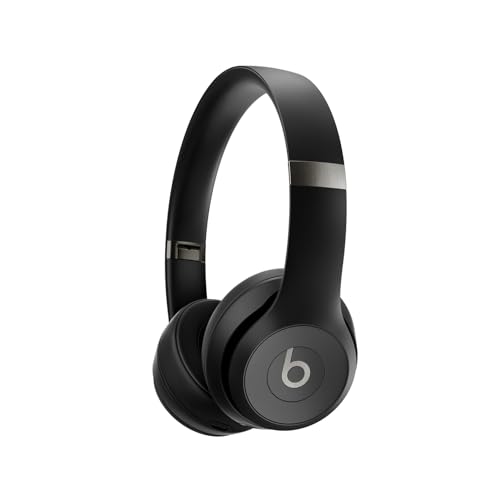
The Beats Solo 4, released in 2024, represents Apple's consumer-focused philosophy. At the time of writing, it's positioned as a mid-range option that's often available at significant discounts from its original price. This is an on-ear design, meaning the ear cups sit directly on your ears rather than around them. The result is a much more portable headphone that you can easily toss in a backpack.
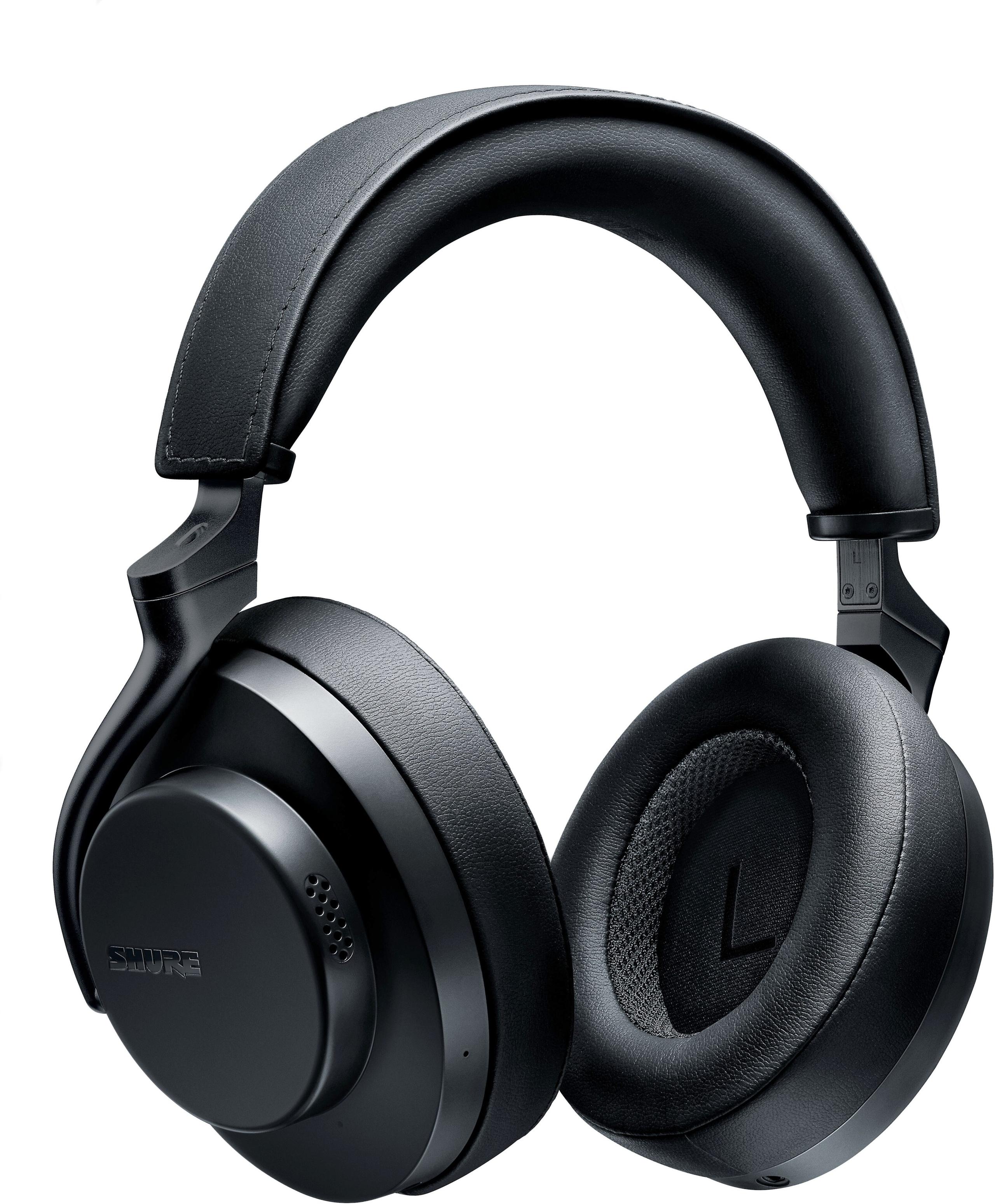
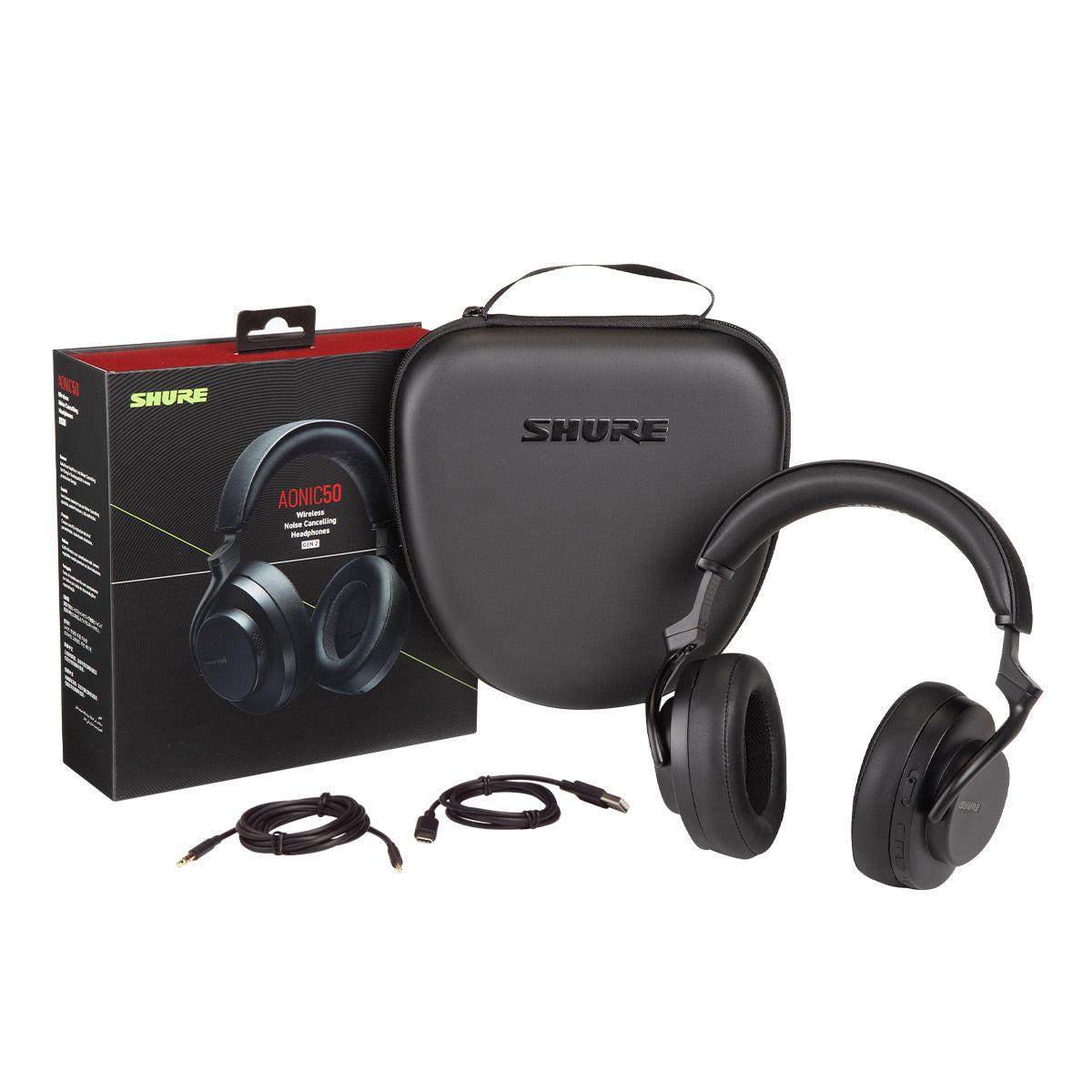
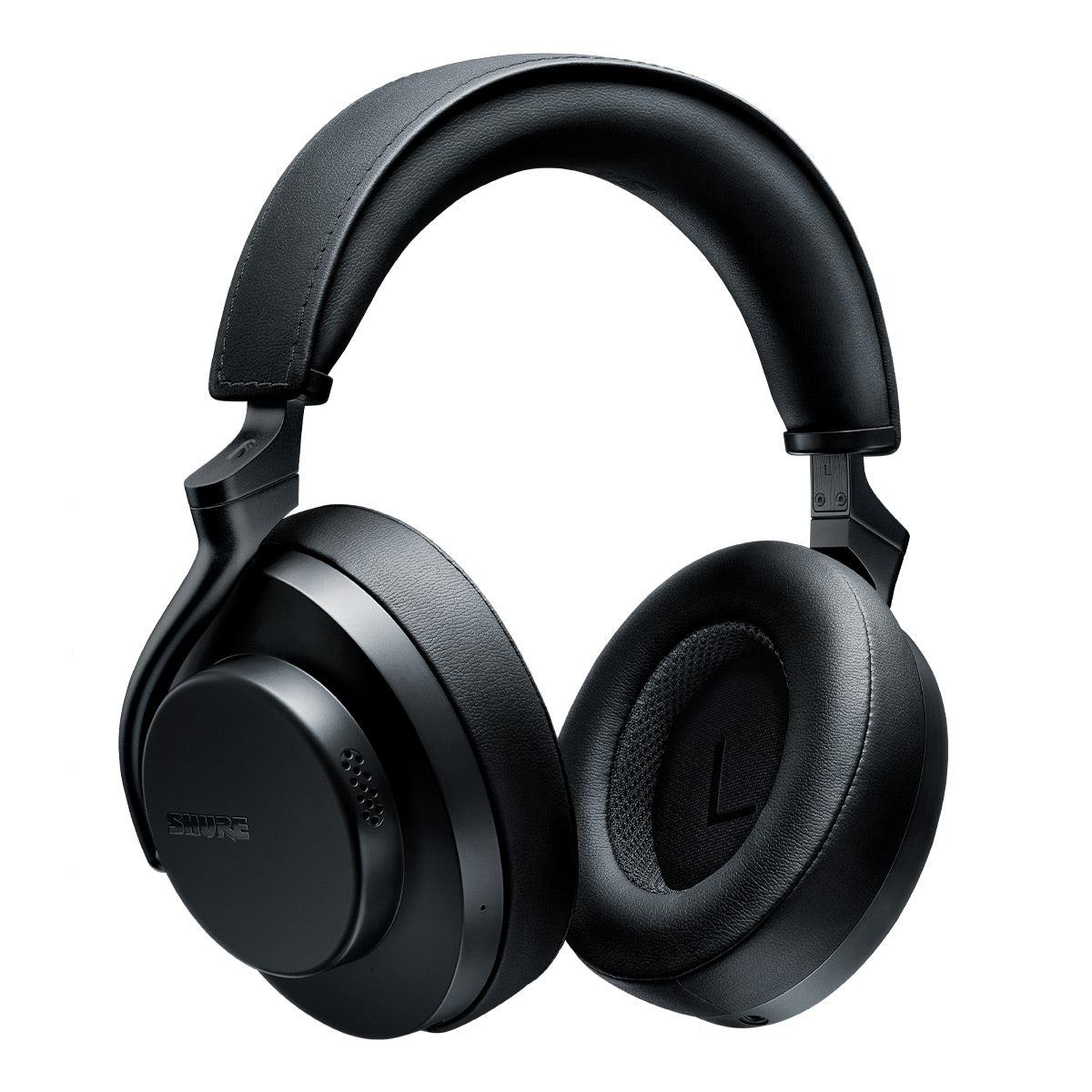
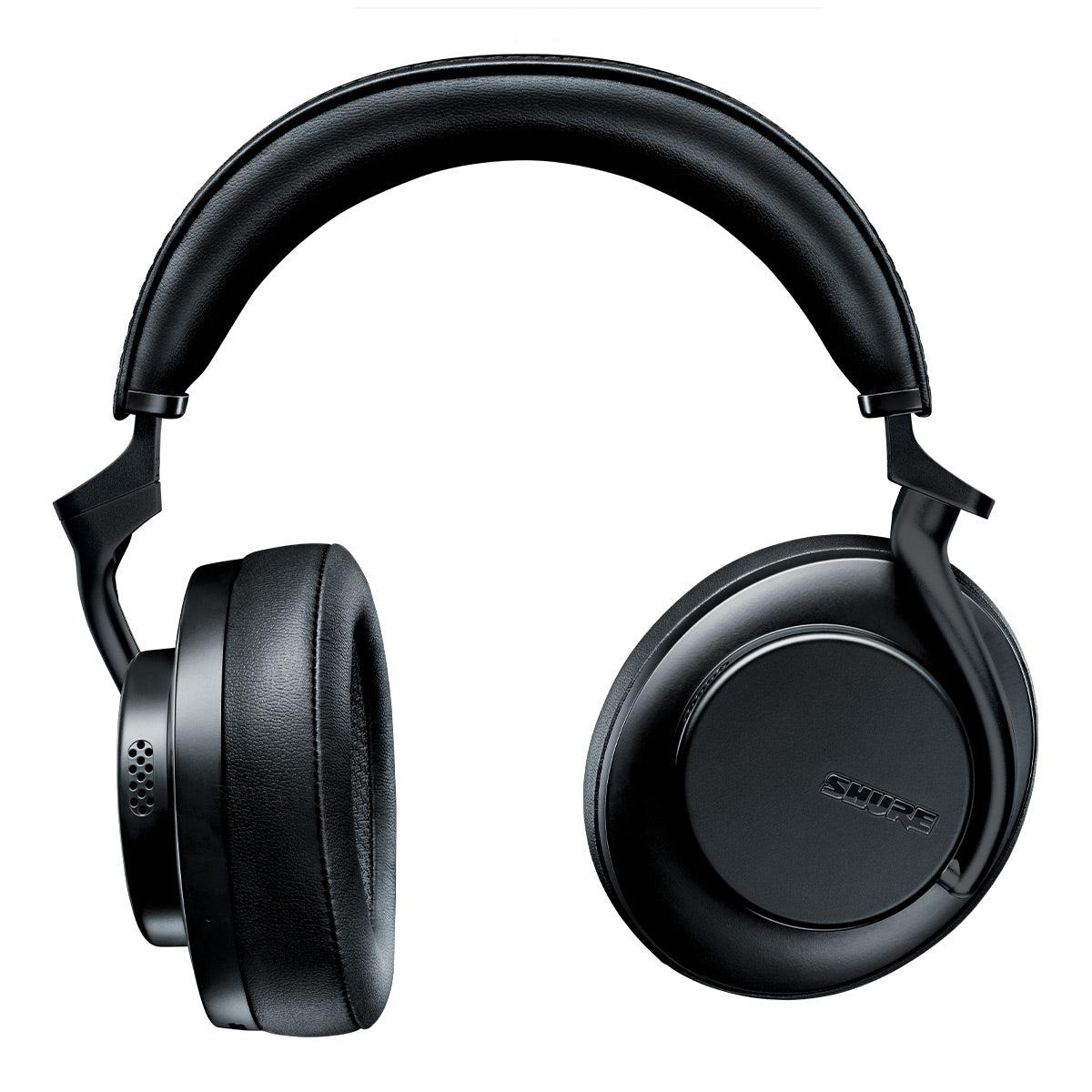
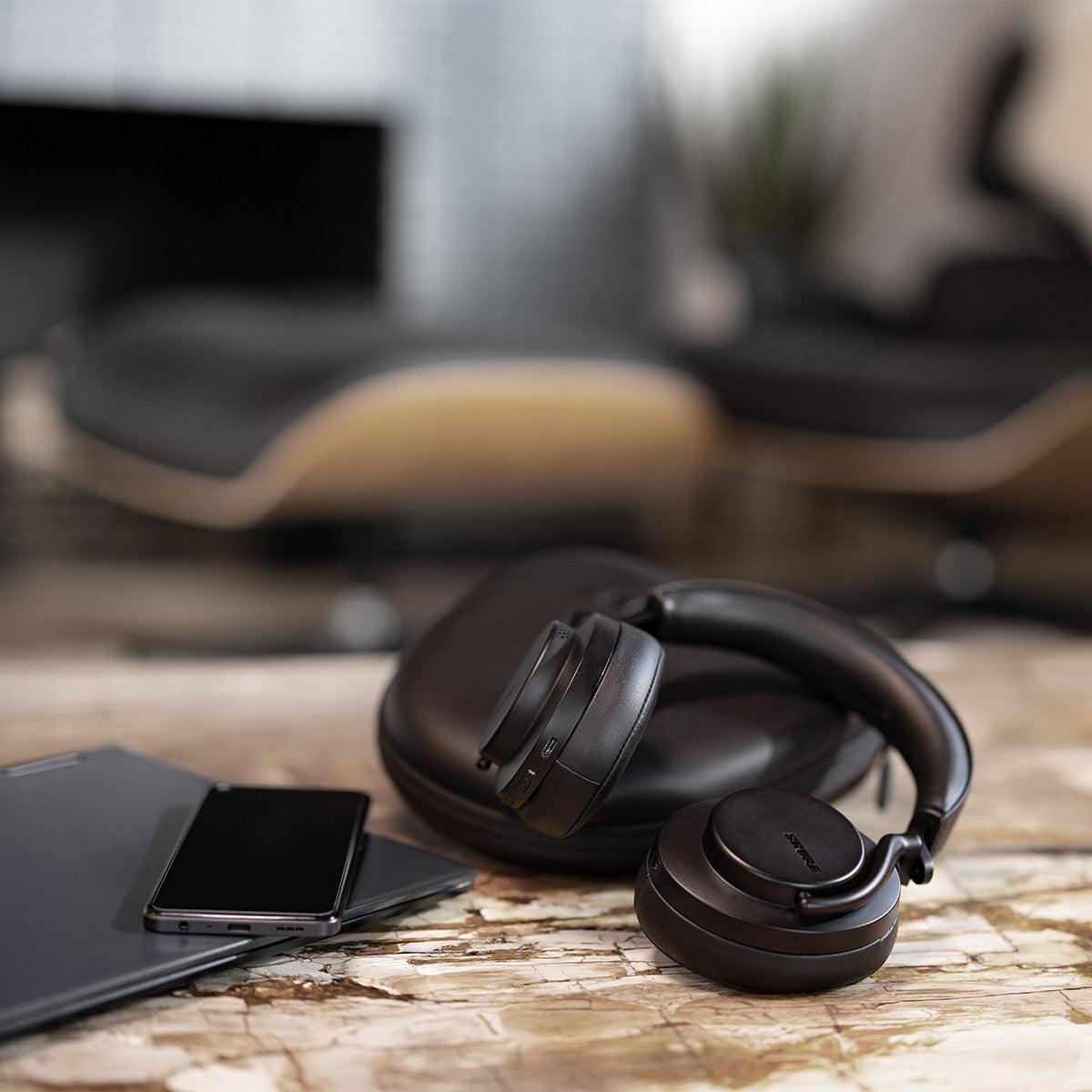
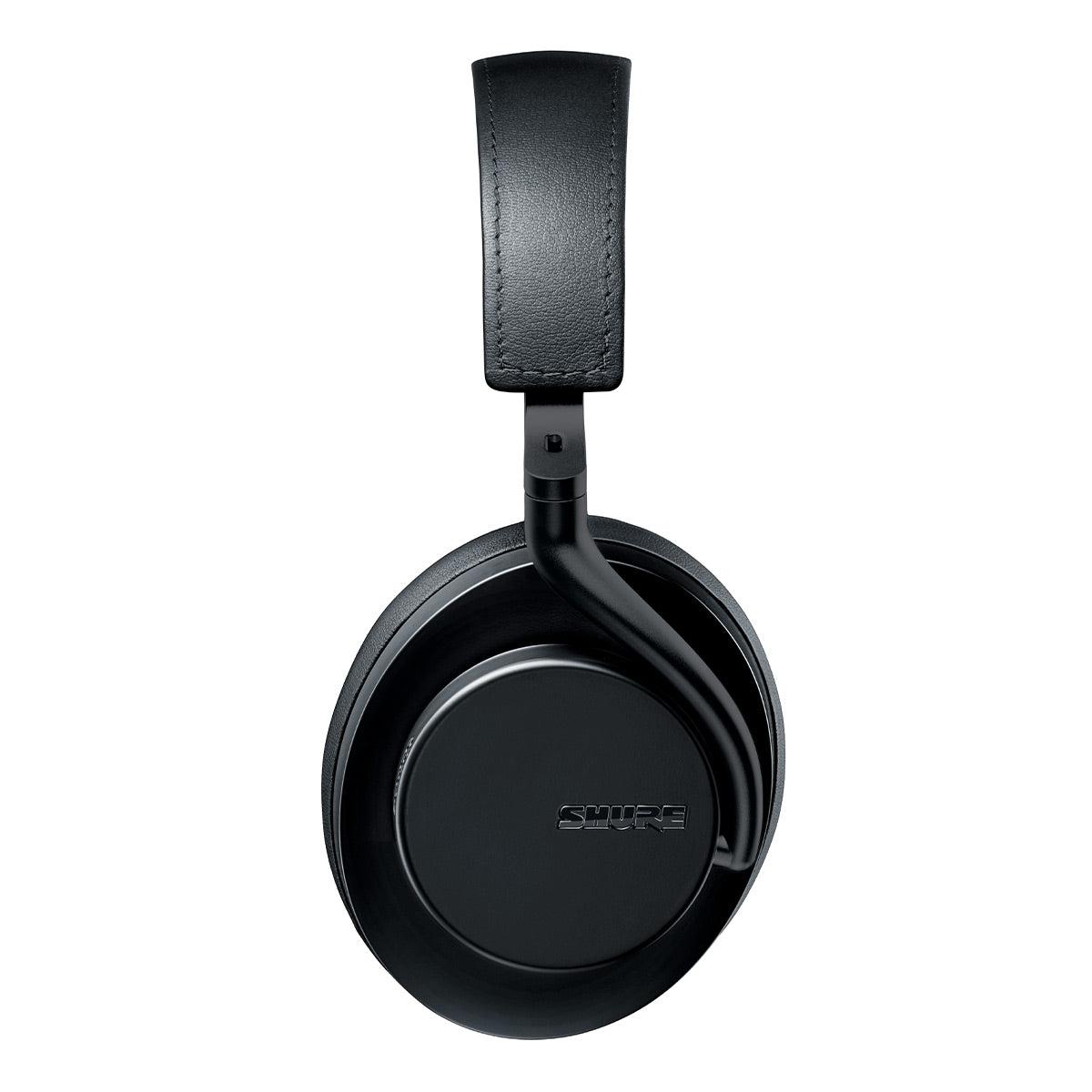
The Shure Aonic 50 Gen 2, also from 2024, takes the opposite approach. Shure has decades of experience making professional audio equipment for recording studios and live performances. These are over-ear headphones, where the ear cups completely surround your ears. They're built for people who prioritize sound quality above all else and are willing to pay a premium for it.
The price difference between these two is substantial - at the time of writing, you're looking at roughly a 3-to-1 price ratio, with the Shure commanding significantly more money. But does that price difference translate to better performance? That's exactly what we're here to figure out.
Let's start with the most important aspect: how these headphones actually sound. This is where the different approaches between Beats and Shure become crystal clear.
The Beats Solo 4 features custom-built 40mm drivers (the speaker components inside the headphones). What's particularly interesting is that Beats has moved away from their traditionally bass-heavy sound signature. Previous Beats headphones were known for emphasizing low frequencies, sometimes at the expense of clarity in other areas. The Solo 4 takes a much more balanced approach, with what audio engineers call a "neutral" sound signature - meaning no particular frequency range is artificially boosted.
This change makes the Solo 4 surprisingly good for a wide variety of music genres. Where older Beats might have made rock music sound muddy or made dialogue in podcasts less clear, the Solo 4 delivers crisp vocals and well-controlled bass. The drivers are specifically engineered to minimize distortion and latency (the delay between when audio is sent and when you hear it), which is particularly noticeable when watching videos.
The Shure Aonic 50 Gen 2 takes sound quality even further with larger 50mm drivers and a frequency response that extends from 20Hz all the way up to 22,000Hz. To put that in perspective, human hearing typically tops out around 20,000Hz, so the Shure is reproducing sounds at the very edge of what we can perceive. The larger drivers also mean more air is being moved, which typically translates to better bass response and overall dynamics.
But here's where it gets interesting: the Shure maintains what audio professionals call "reference quality" tuning. This means the headphones are designed to reproduce music exactly as the artist and sound engineer intended, without adding their own coloration. For casual listening, this can sometimes sound less exciting than headphones that boost certain frequencies to make music more immediately appealing.
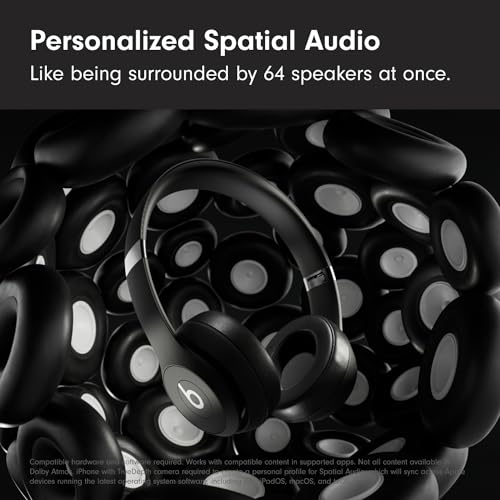
One of the most innovative features of the Beats Solo 4 is Personalized Spatial Audio with dynamic head tracking. This technology uses built-in gyroscopes and accelerometers (the same sensors that detect when you turn your phone) to track your head movements and adjust the audio accordingly.
Imagine you're listening to a song where the guitar is positioned to your left and the drums are to your right. With traditional headphones, that positioning is fixed relative to your head. But with spatial audio, if you turn your head to the right, the guitar sound will shift to maintain its position in space, just like it would if you were listening to real speakers in a room.
This isn't just a gimmick - it can genuinely make music more immersive, especially for genres with complex arrangements or live recordings. However, it's worth noting that spatial audio works best with compatible content and can drain the battery faster when active.
The Shure Aonic 50 Gen 2 takes a different approach with their Spatialized Audio technology. Instead of head tracking, Shure offers three distinct modes: Music mode simulates listening in a high-end acoustic room, Cinema mode recreates movie theater sound, and Podcast mode focuses on vocal clarity. While less technologically flashy than head tracking, many users find Shure's implementation more consistently useful across different types of content.
The comfort difference between these two headphones is night and day, and it all comes down to the fundamental design choice: on-ear versus over-ear.
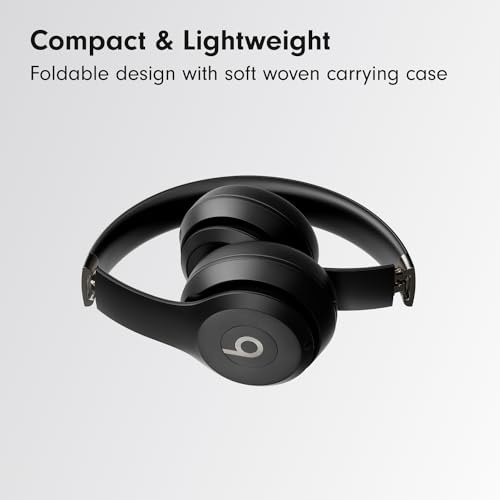
The Beats Solo 4 weighs just 217 grams and sits directly on your ears. The benefit is incredible portability - these fold up into a compact package that's easy to carry anywhere. The UltraPlush memory foam ear cushions do their best to provide comfort, but physics works against on-ear designs. After about an hour of listening, many users experience what's commonly called "ear fatigue" - a combination of pressure and heat buildup that makes the headphones uncomfortable.
However, if you're someone who listens for 30-60 minutes at a time and values being able to easily transport your headphones, the Solo 4 makes a lot of sense. They're perfect for commuting, working out (though they lack water resistance), or just casual listening around the house.
The Shure Aonic 50 Gen 2, at 337 grams, is significantly heavier but distributes that weight much more effectively. The over-ear design means the ear cups rest on your head around your ears, not on them. This eliminates pressure on your ear cartilage and creates a better seal for sound isolation. I've worn these for 3-4 hour listening sessions without discomfort, something that would be challenging with the Beats.
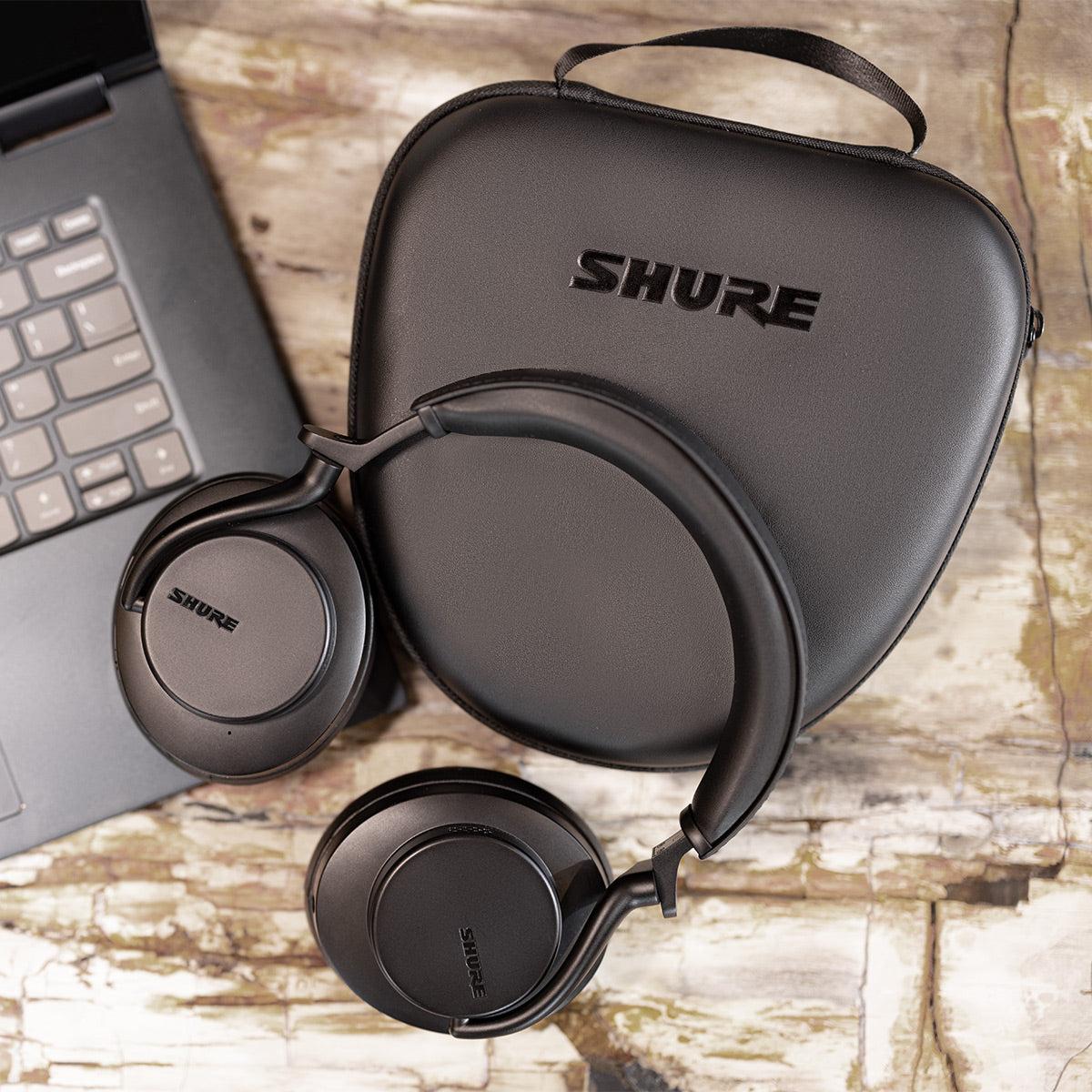
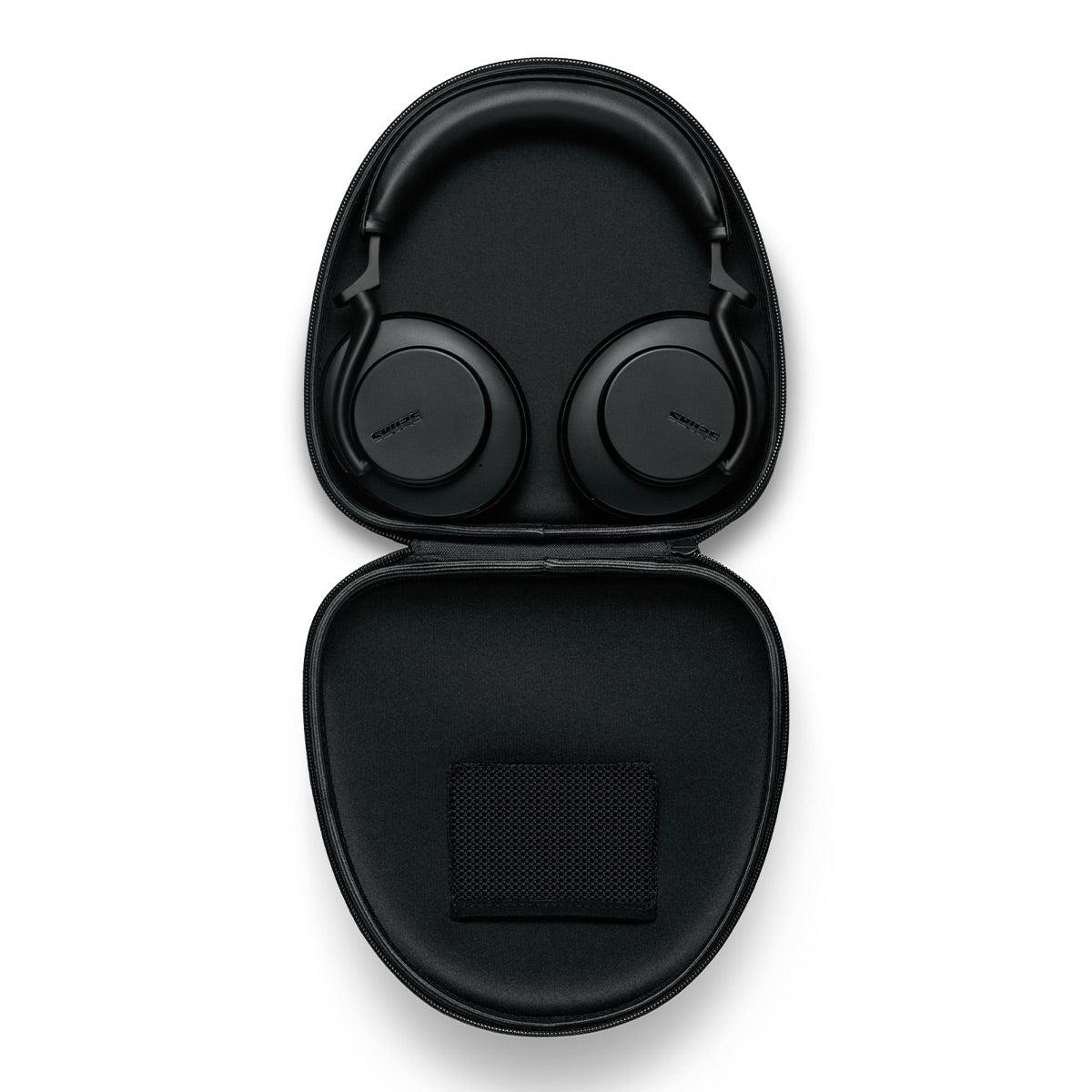
The trade-off is portability. While the Shure headphones fold flat, they don't collapse as compactly as the Solo 4. If you're planning to travel frequently or need headphones that easily fit in a small bag, this difference matters more than you might think.
This is perhaps the most significant functional difference between these two headphones. The Beats Solo 4 has no active noise cancellation whatsoever. In noisy environments like airplanes, busy coffee shops, or public transportation, you'll need to turn the volume up significantly to overcome ambient noise. This isn't ideal for your hearing health and can lead to listener fatigue.
The Shure Aonic 50 Gen 2 features what they call "hybrid active noise cancellation." This system uses microphones both inside and outside the ear cups to detect and cancel ambient noise. The "hybrid" designation means it's working on multiple fronts - the outer microphones catch noise before it reaches your ears, while the inner microphones fine-tune the cancellation for any noise that gets through.
What sets the Shure apart is the customization. You get four different ANC modes, including something called "MaxAware" that balances noise cancellation with environmental awareness. This is particularly useful when you need to hear announcements or be aware of your surroundings for safety reasons.
The Environmental Mode goes even further, offering 11 different levels of ambient sound pass-through. This means you can dial in exactly how much outside sound you want to hear without removing your headphones. It's incredibly useful for office environments or when you need to have occasional conversations while wearing your headphones.
For anyone who frequently finds themselves in noisy environments, this difference alone might justify the Shure's higher price point.
Battery technology in headphones has improved dramatically over the past few years, and both of these models showcase that progress.
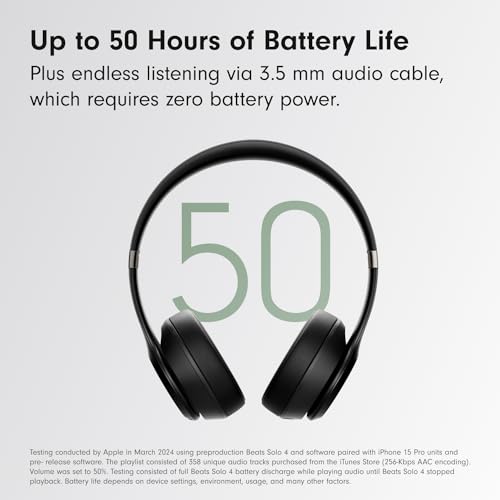
The Beats Solo 4 delivers an exceptional 50 hours of playback time on a single charge. To put this in perspective, if you listened to music for 2 hours every day, you'd need to charge these headphones roughly once every 3.5 weeks. The Fast Fuel charging is equally impressive - just 10 minutes plugged in gives you 5 hours of listening time, perfect for those "oh no, my headphones are dead" moments before a long flight.
What's particularly clever about the Solo 4 is that if the battery completely dies, you can still use them with the included 3.5mm cable. The headphones will work in completely passive mode, though you'll lose all the wireless features and any digital processing.
The Shure Aonic 50 Gen 2 offers 45 hours of battery life, which is still excellent but slightly less than the Beats. However, the Shure includes more power-hungry features like active noise cancellation and more sophisticated digital processing, so this difference is understandable. The quick charge feature provides 5 hours of playback from a 15-minute charge, which is competitive.
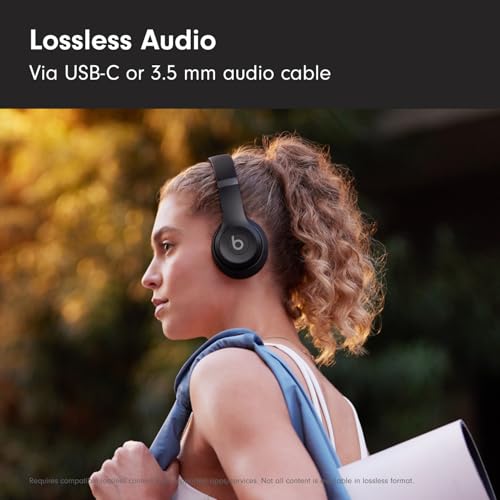
Both headphones use USB-C for charging, which is convenient if you're already using USB-C for other devices. The Shure also supports high-resolution audio playback through its USB-C port, essentially turning the headphones into a high-end DAC (Digital-to-Analog Converter) when connected to your computer.
The connectivity differences between these headphones really highlight their different target audiences.
The Beats Solo 4 uses Bluetooth 5.3, which provides a stable connection and good range. However, it only supports basic audio codecs like SBC and AAC. For iPhone users, this is perfectly fine since AAC is Apple's preferred codec and provides good quality. Android users might notice slightly lower audio quality compared to headphones that support more advanced codecs.
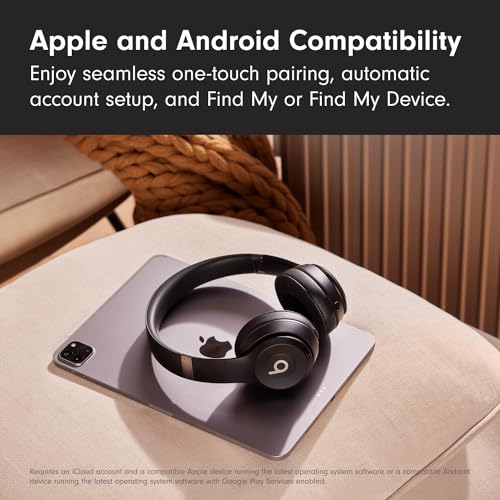
Where the Solo 4 shines is in Apple ecosystem integration. If you're using an iPhone, iPad, or Mac, these headphones pair instantly and show up in the Find My app if you lose them. The seamless switching between Apple devices works well, though it's not as sophisticated as some higher-end options.
The Shure Aonic 50 Gen 2 supports a much wider range of high-quality audio codecs, including aptX, aptX HD, aptX Adaptive, and Sony's LDAC. These codecs can transmit much more audio data than basic Bluetooth, resulting in noticeably better sound quality when streaming from compatible devices. LDAC, in particular, can handle high-resolution audio files that approach CD quality over Bluetooth.
The ShurePlus PLAY app is where the Shure really shows its professional heritage. You get a full parametric EQ, which means you can adjust not just bass and treble, but specific frequency ranges with surgical precision. This level of customization is typically found in professional audio software, not consumer headphone apps.
The choice between these headphones often comes down to how and where you'll use them most often.
Choose the Beats Solo 4 if you're:
Choose the Shure Aonic 50 Gen 2 if you're:
If you're considering either of these for home theater use, there are some important factors to consider.
The Beats Solo 4 can work well for casual movie watching, especially if you're using the spatial audio features with compatible content. The head tracking can make action movies more immersive. However, the on-ear design might become uncomfortable during longer viewing sessions, and the lack of noise cancellation means household sounds might intrude on your experience.
The Shure Aonic 50 Gen 2 is generally better suited for home theater use. The over-ear comfort allows for longer viewing sessions, and the Cinema mode in the spatialized audio is specifically designed to recreate a theater-like experience. The superior noise isolation means you can watch movies at lower volumes without losing detail, which is better for your hearing and more considerate of others in your home.
Both headphones support low-latency connections that minimize the delay between video and audio, but the Shure offers more connectivity options, including high-resolution USB-C audio that can provide better quality than Bluetooth when connected to a computer or compatible streaming device.
At the time of writing, the price difference between these headphones is substantial, with the Shure Aonic 50 Gen 2 commanding roughly three times the price of the Beats Solo 4. This price gap reflects fundamentally different approaches to headphone design.
The Solo 4 represents exceptional value in the consumer headphone space. You're getting innovative features like spatial audio, impressive battery life, and solid build quality at a price point that makes premium headphone features accessible to more people. The compromises - lack of noise cancellation, limited comfort for long sessions, and basic customization options - are reasonable given the price.
The Shure is an investment in audio quality and professional features. You're paying for decades of audio engineering expertise, premium materials, advanced noise cancellation, and the kind of sound customization typically found in much more expensive equipment. Whether that investment makes sense depends entirely on how much you value these improvements and how often you'll use them.
Consider your typical listening habits, your budget, and what features matter most to you. If you primarily listen to music during commutes or workouts and value portability, the Beats Solo 4 might be perfect. If you're someone who deeply appreciates audio quality and spends hours listening to music, the Shure Aonic 50 Gen 2 could be worth every penny.
Both headphones represent the current state of wireless audio technology, just optimized for different users and use cases. The good news is that whichever you choose, you'll be getting a quality product that showcases how far wireless headphones have evolved.
| Beats Solo 4 | Shure Aonic 50 Gen 2 |
|---|---|
| Design Type - Fundamentally affects comfort and portability | |
| On-ear, 217g (highly portable but may cause ear fatigue after 1-2 hours) | Over-ear, 337g (excellent long-session comfort but less portable) |
| Driver Size - Larger drivers typically provide better bass and dynamics | |
| 40mm custom transducers (good for balanced sound) | 50mm dynamic drivers (superior bass response and detail) |
| Active Noise Cancellation - Essential for travel and noisy environments | |
| None (must rely on volume to overcome ambient noise) | Hybrid ANC with 4 modes plus 11-stage ambient control |
| Battery Life - Critical for daily use and travel | |
| Up to 50 hours (industry-leading endurance) | 45 hours (excellent, slightly less due to power-hungry features) |
| Bluetooth Codecs - Higher quality codecs mean better wireless sound | |
| SBC, AAC only (good for iPhone, limited for Android) | SBC, AAC, aptX, aptX HD, LDAC (excellent high-res audio support) |
| Spatial Audio Technology - Immersive listening experience | |
| Personalized Spatial Audio with head tracking (innovative but battery-draining) | Spatialized Audio with 3 modes (Music, Cinema, Podcast - no head tracking) |
| App Customization - Important for personalizing sound | |
| Basic controls only (minimal customization options) | ShurePlus PLAY with parametric EQ (professional-level sound tuning) |
| Wired Audio Support - Backup option and audiophile feature | |
| 3.5mm and USB-C (works with dead battery via analog cable) | 3.5mm and USB-C DAC mode (supports up to 32-bit/384kHz high-res audio) |
| Target Market - Determines value proposition | |
| Consumer/lifestyle focused (great features at accessible pricing) | Professional/audiophile focused (premium audio quality at premium price) |
| Frequency Response - Range of sounds the headphones can reproduce | |
| Not specified (tuned for balanced, consumer-friendly sound) | 20 Hz - 22 kHz (extends beyond typical human hearing range) |
| Portability Factor - Important for daily carry and travel | |
| Folds compact with soft case (excellent for backpacks and purses) | Fold-flat design with case (good but significantly bulkier than Solo 4) |
| Comfort Duration - Maximum comfortable listening time | |
| 1-2 hours typical before ear pressure becomes uncomfortable | 3-4+ hours due to over-ear design that doesn't press on ears |
The Shure Aonic 50 Gen 2 are significantly better for extended listening sessions. Their over-ear design eliminates pressure on your ears, allowing comfortable use for 3-4+ hours. The Beats Solo 4 sit directly on your ears and typically become uncomfortable after 1-2 hours due to ear pressure and heat buildup.
It depends on your listening environment. The Shure Aonic 50 Gen 2 include advanced hybrid active noise cancellation with multiple modes, making them excellent for travel, offices, or noisy environments. The Beats Solo 4 have no noise cancellation, so they're better suited for quiet spaces where ambient noise isn't a concern.
The Shure Aonic 50 Gen 2 deliver superior sound quality with larger 50mm drivers, professional-grade tuning, and support for high-resolution audio codecs like LDAC and aptX HD. The Beats Solo 4 offer good sound quality with a balanced signature, but the Shure headphones provide more detail, better bass response, and audiophile-level accuracy.
Neither headphone is specifically designed for workouts. The Beats Solo 4 are more portable and lightweight, making them slightly better for light exercise, but they lack water resistance. The Shure Aonic 50 Gen 2 are too heavy and bulky for most workout activities. Consider dedicated sports headphones for regular exercise use.
The Beats Solo 4 integrate seamlessly with iPhones, offering features like Find My support and spatial audio. However, they work fine with Android too. The Shure Aonic 50 Gen 2 actually work better with Android devices due to support for advanced Bluetooth codecs, while iPhone users are limited to AAC codec with both models.
The Beats Solo 4 lead with up to 50 hours of battery life, while the Shure Aonic 50 Gen 2 offer 45 hours. Both provide excellent endurance, with the slight difference explained by the Shure's power-hungry noise cancellation features. Both support fast charging for quick top-ups.
The Beats Solo 4 are significantly more portable, weighing just 217g and folding into a compact size. The Shure Aonic 50 Gen 2 are heavier at 337g and fold flat but don't collapse as compactly. For frequent travel where space matters, the Beats have a clear advantage.
Both work for home theater, but the Shure Aonic 50 Gen 2 are better suited due to their comfortable over-ear design for long viewing sessions and Cinema mode in their spatialized audio feature. The Beats Solo 4 offer spatial audio with head tracking for movies, but comfort limitations make them less ideal for lengthy film sessions.
Yes, both headphones can operate with dead batteries using wired connections. The Beats Solo 4 work in passive mode with the 3.5mm cable, while the Shure Aonic 50 Gen 2 can also function wired via 3.5mm or USB-C. The Shure maintains more functionality when wired, including high-resolution audio processing.
The Shure Aonic 50 Gen 2 provide extensive customization through the ShurePlus PLAY app, including parametric EQ controls and detailed sound tuning options. The Beats Solo 4 have minimal app functionality with basic controls only. For users who want to fine-tune their audio experience, the Shure offer professional-level customization.
The value depends on your priorities. The Beats Solo 4 offer excellent features and performance at their price point, especially considering the spatial audio technology and exceptional battery life. The Shure Aonic 50 Gen 2 cost significantly more but provide professional-grade audio quality, noise cancellation, and extensive customization that justify the premium for serious audio enthusiasts.
For most first-time premium headphone buyers, the Beats Solo 4 offer a better entry point with innovative features, solid performance, and more accessible pricing. The Shure Aonic 50 Gen 2 are better for users who already know they prioritize audio quality above all else and are comfortable with the significantly higher investment for professional-grade performance.
We've done our best to create useful and informative comparisons to help you decide what product to buy. Our research uses advanced automated methods to create this comparison and perfection is not possible - please contact us for corrections or questions. These are the sites we've researched in the creation of this article: bestbuy.com - soundguys.com - rtings.com - cnet.com - youtube.com - rtings.com - therunningchannel.com - youtube.com - soundguys.com - rtings.com - beatsbydre.com - kubookstore.com - apple.com - panthertech.fiu.edu - beatsbydre.com - cnet.com - techwelike.com - beatsbydre.com - beatsbydre.com - tomsguide.com - headphonecheck.com - whathifi.com - majorhifi.com - rtings.com - versus.com - majorhifi.com - versus.com - audio46.com - youtube.com - bhphotovideo.com - techradar.com - soundpro.com - shure.com - americanmusical.com - pubs.shure.com - blog.zzounds.com - service.shure.com - fullcompass.com

Privacy Policy
Terms and Conditions - Affiliate Policy
Home Security
© Copyright 2008-2026.
11816 Inwood Rd #1211, Dallas, TX 75244