

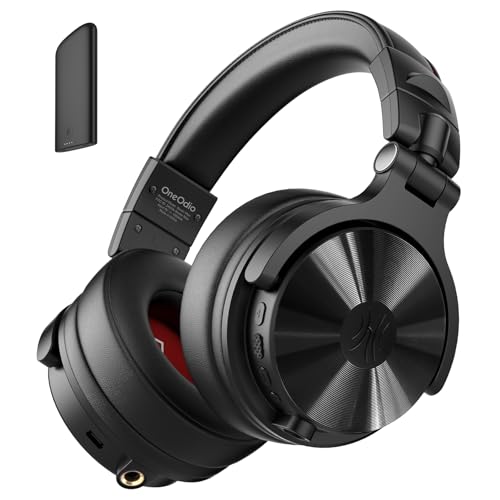





When I first started researching wireless headphones seriously, I assumed all models were basically the same – just different brands slapping wireless technology onto similar drivers. Boy, was I wrong. The OneOdio Studio Max 1 and Beats Solo 4 perfectly illustrate how two wireless headphones can take completely different approaches to solving audio problems, even when they might look similar on paper.
Released in 2024, both headphones represent their manufacturers' latest thinking about what wireless audio should be. But here's the thing: they're solving entirely different problems for completely different users. Understanding this distinction is crucial to making the right choice for your needs.
The wireless headphone market has exploded beyond simple "good sound without wires" into highly specialized categories. At the time of writing, you'll find everything from ultra-budget models under $50 to professional studio monitors costing hundreds of dollars. The key is understanding that wireless technology isn't just about cutting the cord – it's become a platform for entirely new capabilities.
Modern wireless headphones need to balance several competing priorities: sound quality, battery life, connection stability, latency (the delay between audio being sent and heard), comfort, and specialized features. The challenge is that excelling in one area often means compromising in another. Professional-grade low latency, for instance, typically requires more power and specialized hardware, while consumer-focused features like active noise cancellation add weight and complexity.
The OneOdio Studio Max 1 and Beats Solo 4 represent two distinct philosophies in this evolving landscape. One prioritizes professional capability and versatility, while the other focuses on refined consumer experience and ecosystem integration.
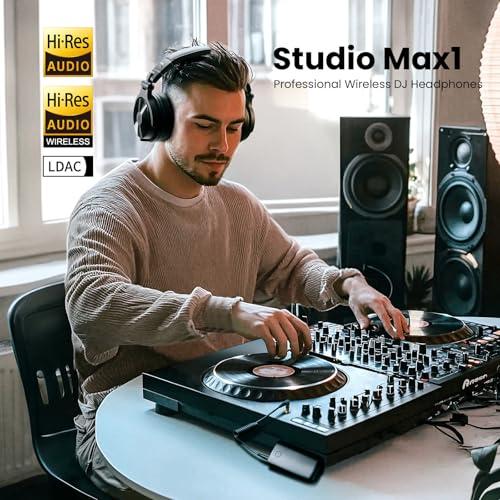
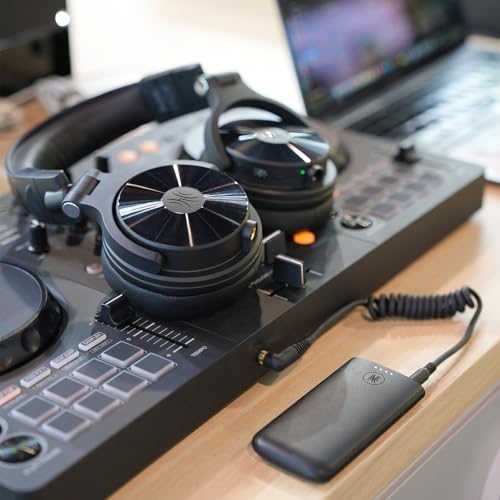
The OneOdio Studio Max 1 isn't trying to be everything to everyone – it's laser-focused on solving professional audio problems. Released in 2024, it represents OneOdio's attempt to bridge the gap between consumer wireless convenience and professional audio requirements. This isn't just marketing speak; the headphones were co-developed with Italian DJ Arianna, who spent months testing them in actual club environments.
What makes this approach interesting is OneOdio's decision to build multiple connection systems into a single product. Rather than forcing users to choose between wireless convenience and professional capability, the Studio Max 1 offers four distinct connection modes. This versatility comes at the cost of additional weight and complexity, but for professionals who need to adapt to different equipment setups throughout their work, it's invaluable.
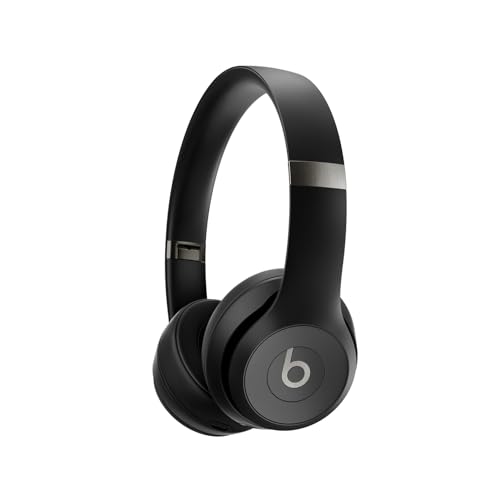
The Beats Solo 4, also launched in 2024, takes the opposite approach. Rather than cramming in professional features, Beats focused on perfecting the consumer wireless experience. This represents a significant evolution from the bass-heavy "Beats sound" that defined the brand for years.
Apple's influence on Beats is evident throughout the Solo 4. The integration with Apple's ecosystem, the refined sound tuning, and the focus on lifestyle features all reflect Apple's design philosophy. But unlike some Apple products, the Solo 4 maintains strong Android compatibility, suggesting Beats recognizes the importance of cross-platform appeal.
This is where the fundamental differences between these headphones become most apparent. Sound quality isn't just about "which sounds better" – it's about which sounds right for your intended use.
The OneOdio Studio Max 1 uses 50mm neodymium drivers – significantly larger than most consumer headphones. Neodymium is a rare earth metal that creates particularly strong magnetic fields, allowing for more precise driver control and better bass response. The larger driver size means more air can be moved, theoretically providing better bass extension and overall dynamics.
However, based on user feedback, the Studio Max 1 suffers from what I'd call "professional tuning syndrome." It's designed to be exciting and punchy for DJ work, which means emphasizing certain frequencies that help tracks cut through club noise and sound systems. This results in a sound signature that can feel bass-heavy and somewhat harsh for casual listening.
The frequency response extends from 20Hz to 40kHz, which looks impressive on paper. But frequency response specifications only tell part of the story – how those frequencies are balanced matters more than the raw numbers. The Studio Max 1 appears to prioritize impact and clarity for mixing over smooth, natural reproduction for music enjoyment.
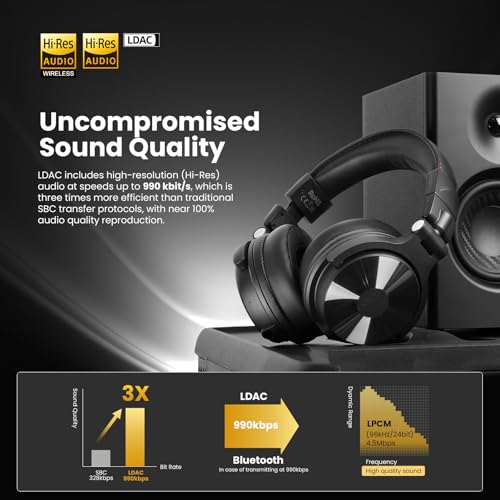
One area where the OneOdio genuinely excels is in its support for high-resolution audio codecs. LDAC, Sony's proprietary codec, can transmit up to three times more data than standard Bluetooth audio. This means less compression and potentially better sound quality when streaming from compatible devices. It's a feature that's still relatively rare in this price range.
The Beats Solo 4 represents perhaps the most significant sound signature shift in the brand's history. Gone is the overwhelmingly bass-heavy tuning that made earlier Beats headphones sound like they were designed exclusively for hip-hop. The Solo 4 adopts what Beats calls "rebalanced acoustics," which translates to a much more neutral sound profile.
The custom 40mm drivers in the Solo 4 are smaller than the OneOdio's, but that's not necessarily a limitation. Smaller drivers can be more precise and faster-responding, which often translates to better detail reproduction and clearer vocals. The trade-off is typically in bass extension and overall volume capability, but for on-ear headphones used primarily with portable devices, this balance makes sense.
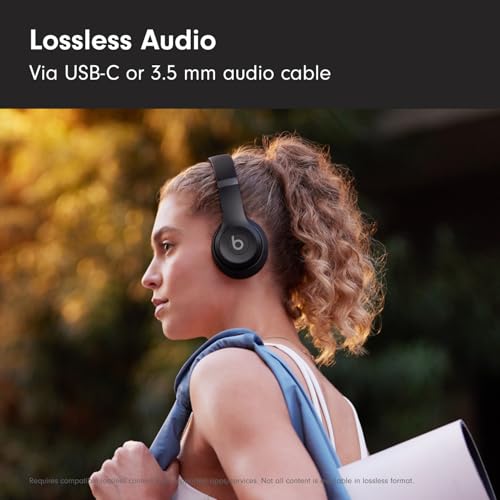
What's particularly impressive about the Solo 4 is its support for lossless audio through both USB-C and 3.5mm connections. The built-in DAC (Digital-to-Analog Converter) means you're not relying on your phone's potentially inferior DAC for audio conversion. This is a feature typically found in much more expensive headphones.
The sound signature has been described by reviewers as bright and detailed, with clean vocals and controlled bass. However, some users find the treble occasionally harsh during extended listening sessions. This suggests Beats may have overcorrected from their bass-heavy past, pushing the high frequencies a bit too prominently.
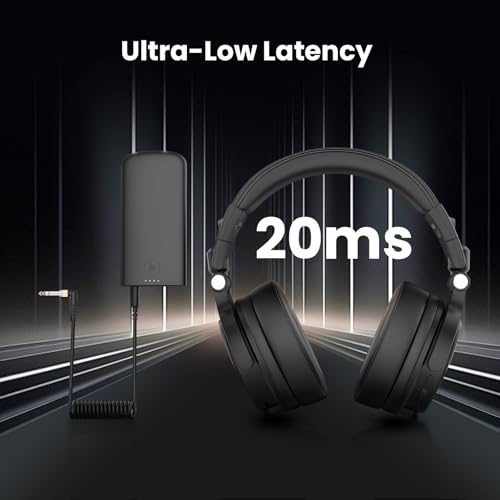
For home theater use, both headphones present interesting but different propositions. The OneOdio Studio Max 1 offers that crucial ultra-low latency mode through its dedicated transmitter. Latency is critical for video watching – if audio arrives noticeably after the video, it creates an annoying lip-sync issue that makes movies unwatchable.
Most standard Bluetooth headphones have latency between 100-200 milliseconds, which is noticeable but often tolerable. The Studio Max 1's 20-millisecond latency in wireless mode is essentially imperceptible, making it excellent for movie watching or gaming where timing matters.
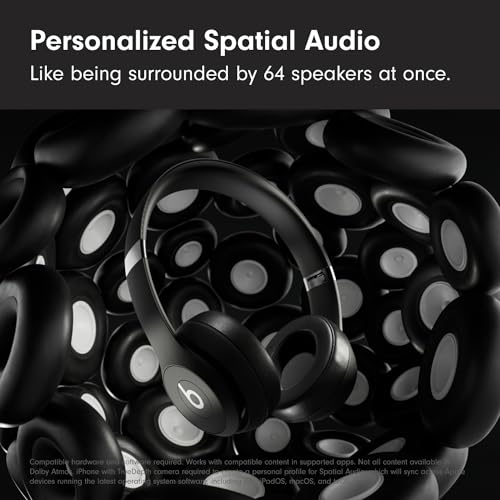
The Beats Solo 4 takes a different approach with Personalized Spatial Audio. Using built-in gyroscopes and accelerometers, it creates a surround sound effect that adapts as you move your head. This can make movie soundtracks feel more immersive, like you're sitting in a theater rather than wearing headphones. However, this only works with compatible content and devices, primarily in the Apple ecosystem.
This is where the OneOdio Studio Max 1 absolutely dominates, and it's worth understanding why this matters beyond just technical bragging rights.
Audio latency is the delay between when sound is created (or a button is pressed) and when you hear it. In casual music listening, moderate latency isn't usually problematic – your brain adapts, and you don't notice delays in music playback. But latency becomes critical in three scenarios: watching videos (lip-sync), gaming (reaction timing), and professional audio work (real-time monitoring).
Traditional Bluetooth has inherent latency because of how the audio compression and transmission process works. Your device compresses the audio, transmits it wirelessly, then the headphones decompress and play it. Each step adds delay.
The OneOdio Studio Max 1 solves this with its proprietary Rapid WiLL+ technology and M1 transmitter. Instead of using standard Bluetooth for time-critical applications, it creates a dedicated wireless connection specifically optimized for minimal delay. The result is that 20-millisecond latency – fast enough that your brain can't detect any delay between visual and audio cues.
This isn't just a minor technical improvement; it's a game-changer for certain use cases. DJs need to hear their audio in real-time to properly beatmatch and mix tracks. Gamers benefit from hearing footsteps and gunshots without delay. Movie watchers get perfect lip-sync without the awkward mismatch that plagues many wireless headphones.
The M1 transmitter also adds wireless capability to devices that don't have Bluetooth built-in, like many DJ mixers, older TVs, or professional audio equipment. This versatility extends the Studio Max 1's usefulness beyond typical consumer scenarios.
The Beats Solo 4 uses standard Bluetooth 5.3, which offers good connection stability and range but typical latency performance. For most users listening to music or taking calls, this is perfectly adequate. The Spatial Audio feature actually works around latency limitations by predicting head movements and adjusting audio accordingly, creating an immersive experience that doesn't rely on ultra-low latency.
Where the Solo 4 might struggle is in scenarios requiring precise timing. Gaming, DJ work, or watching videos on devices that don't offer automatic latency compensation could result in noticeable delays.
Both headphones offer excellent battery performance, but they achieve it through different strategies that reveal their design priorities.
The OneOdio Studio Max 1 offers genuinely impressive 120-hour battery life in standard Bluetooth mode. This isn't just marketing exaggeration – multiple reviewers have confirmed battery life approaching these figures in real-world use. Even when using the power-hungry M1 transmitter for low-latency mode, the headphones still provide around 50 hours of use.
This extreme endurance comes from several design decisions. The larger physical size allows for a bigger battery, and the lack of power-hungry features like active noise cancellation means more energy goes toward actual audio playback. The quick-charge feature provides one hour of playback from just five minutes of charging, which is crucial for professionals who might forget to charge between gigs.
For context, 120 hours means you could listen for three hours every single day for over a month before needing to recharge. This level of battery life essentially eliminates range anxiety – the worry about whether your headphones will last through a long flight, work session, or event.
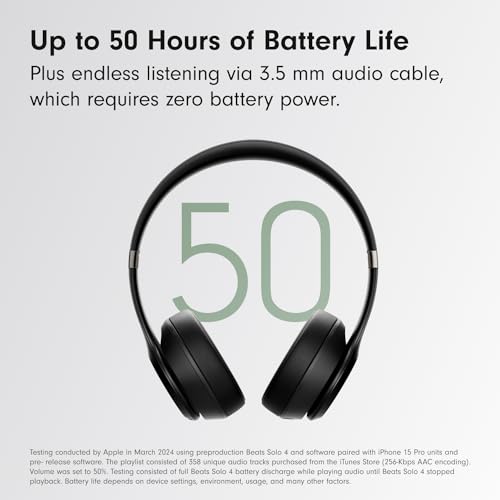
The Beats Solo 4 offers 50 hours of battery life, which is still excellent but represents a more balanced approach to design priorities. The smaller, lighter form factor limits battery size, but 50 hours is still more than enough for most users' needs.
The Fast Fuel charging provides five hours of playback from just 10 minutes of charging, which is more generous than the OneOdio's quick-charge ratio. Additionally, the Solo 4 can continue operating through the 3.5mm cable even with a completely dead battery – a useful backup that the OneOdio doesn't offer in its wireless modes.
For most consumers, 50 hours represents about two weeks of typical use, making charging a weekly rather than daily concern. This hits the sweet spot between convenience and practicality without the weight penalty of larger batteries.
The physical design of these headphones reflects their intended use cases and target audiences in ways that go beyond simple aesthetics.
The OneOdio Studio Max 1 weighs between 330-350 grams, making it noticeably heavier than typical consumer headphones. This weight comes from the robust build quality, larger drivers, and multiple connection ports built into the housing. For professional use, this trade-off makes sense – durability and functionality matter more than all-day comfort.
The over-ear design with protein leather earpads provides good isolation and comfort for shorter sessions, but the weight can become fatiguing during extended use. The 90-degree swiveling earcups are specifically designed for DJ monitoring, allowing users to move one ear cup away while keeping the other in place for cueing tracks.
The multiple connection ports (3.5mm and 6.35mm) built into the headphones themselves, along with single-sided cable routing, show clear professional influence. These features might seem unnecessary for casual use, but they're invaluable in professional environments where different cable types and quick connections are routine.
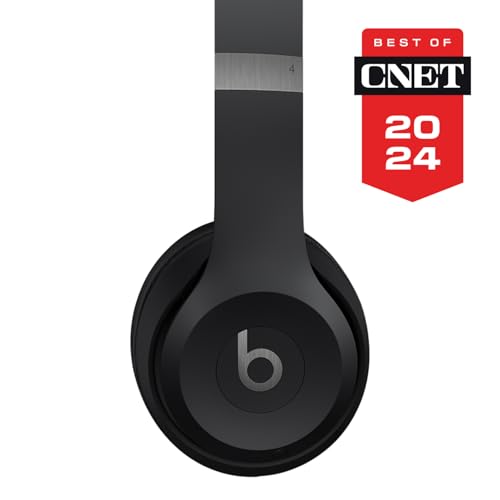
The Beats Solo 4 weighs just 217 grams, making it significantly more portable and comfortable for extended wear. The on-ear design with UltraPlush memory foam cushions strikes a balance between isolation and comfort, though on-ear designs inherently create more pressure than over-ear alternatives.
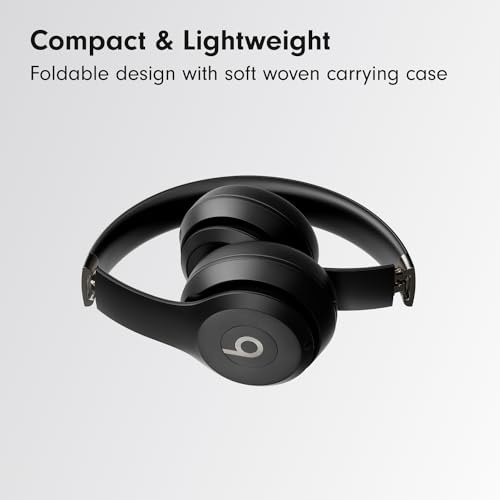
The ergonomically angled ear cups and flex-grip headband show careful attention to comfort during daily use. The foldable design and included soft case make the Solo 4 genuinely portable in a way that the bulkier OneOdio isn't quite.
However, the on-ear design does create limitations. Many users find on-ear headphones become uncomfortable after 1-2 hours, and they provide less noise isolation than over-ear designs. For professional use requiring extended wear, this could be a significant limitation.
The connection options available on each model reveal fundamentally different philosophies about how wireless headphones should integrate with various devices and use cases.
The OneOdio Studio Max 1 offers four distinct connection modes, each optimized for different scenarios:
DJ Wireless Mode: Uses the M1 transmitter for ultra-low latency professional monitoring. This proprietary connection bypasses standard Bluetooth limitations and works with any device that has an audio output.
Wired Monitoring Mode: Traditional 3.5mm connection for direct analog audio. This provides the highest audio fidelity and works with any device with a headphone output.
DJ Wired Mode: 6.35mm (quarter-inch) connection for professional audio equipment. Most professional mixers, audio interfaces, and studio gear use these larger connectors.
Portable Bluetooth Mode: Standard Bluetooth 5.3 with support for high-quality codecs including LDAC for compatible devices.
This versatility means the Studio Max 1 can adapt to virtually any audio source, from smartphones to professional DJ mixers to studio equipment. The M1 transmitter effectively adds wireless capability to devices that were never designed for it.
The Beats Solo 4 focuses on perfecting fewer connection options rather than offering maximum versatility:
Bluetooth 5.3: Class 1 wireless provides extended range and stable connections with both iOS and Android devices. The pairing process is seamless, particularly with Apple devices.
USB-C Audio: Digital connection with built-in DAC provides lossless audio playback and charging simultaneously.
3.5mm Analog: Traditional wired connection that works even with a dead battery.
The Solo 4's strength lies not in the number of connection options, but in how well each option is implemented. The Bluetooth connection is particularly stable, the USB-C audio provides genuine lossless playback, and the ecosystem integration with Apple devices offers features like automatic device switching and Spatial Audio.
At the time of writing, both headphones occupy similar price ranges, but they offer dramatically different value propositions depending on your needs and priorities.
The OneOdio Studio Max 1 provides capabilities that are difficult or impossible to find elsewhere in its price range. The ultra-low latency wireless mode, 120-hour battery life, and professional connectivity options represent genuine technical achievements that justify the price for users who need these features.
For DJs, content creators, or anyone requiring real-time audio monitoring, the Studio Max 1 offers professional-grade functionality at a consumer-friendly price point. The question isn't whether you could find cheaper headphones, but whether you could find these specific capabilities elsewhere without spending significantly more.
However, for casual listening, the OneOdio might represent poor value. The sound quality, while decent, doesn't match the technical innovation in other areas. If you don't need the professional features, you're essentially paying for capabilities you won't use.
The Beats Solo 4 represents excellent value for users seeking a premium consumer wireless experience. The balanced sound signature, comfortable design, long battery life, and ecosystem integration create a package that's hard to match in its price range.
The brand recognition and build quality of Beats products typically hold their value well, making the Solo 4 a safer long-term investment. The refined sound tuning and lossless audio support show that Beats has evolved beyond its bass-heavy reputation into a genuinely competent audio company.
For most users, the Solo 4 provides better day-to-day value than the OneOdio. It's more comfortable for extended use, more portable, and offers better sound quality for music listening.
Both headphones include technologies that suggest where wireless audio is heading, but they're betting on different futures.
The OneOdio Studio Max 1's proprietary low-latency system represents one vision of wireless audio's future – specialized, high-performance connections that overcome traditional Bluetooth limitations. As more devices support advanced wireless standards and professional applications demand real-time performance, this approach could become increasingly valuable.
The Beats Solo 4's Spatial Audio and ecosystem integration represent another vision – seamless, intelligent audio that adapts to content and user behavior. As streaming services add more immersive audio formats and device ecosystems become more integrated, these features could become table stakes for premium headphones.
Choosing between the OneOdio Studio Max 1 and Beats Solo 4 ultimately depends on understanding your primary use case and priorities.
Choose the OneOdio Studio Max 1 if you:
Choose the Beats Solo 4 if you:
The most important thing to understand is that these aren't competing products in the traditional sense – they're solving different problems for different users. The OneOdio is a professional tool that happens to work for consumer use, while the Solo 4 is a consumer product that lacks professional capabilities. Your choice should be driven by which set of compromises better matches your actual needs rather than which looks better on paper.
Both represent significant achievements in wireless audio technology, just pointed in different directions. Understanding those directions – and honestly assessing which path serves your needs better – is the key to making the right choice.
| OneOdio Studio Max 1 Wireless DJ Headphones | Beats Solo 4 Wireless On-Ear Headphones |
|---|---|
| Driver Size - Larger drivers typically mean better bass and volume | |
| 50mm neodymium drivers | 40mm custom transducers |
| Latency Performance - Critical for gaming, videos, and professional use | |
| 20ms ultra-low latency with M1 transmitter (imperceptible delay) | Standard Bluetooth latency ~100-200ms (noticeable in videos) |
| Battery Life - Determines how often you need to charge | |
| 120 hours Bluetooth / 50 hours with transmitter (weeks of use) | 50 hours (still excellent, about 2 weeks typical use) |
| Weight - Affects comfort during extended wear | |
| 330-350g (heavier, can cause fatigue) | 217g (much lighter, better for portability) |
| Design Type - Over-ear vs on-ear affects comfort and isolation | |
| Over-ear closed-back (better isolation, bulkier) | On-ear (more portable, less isolation, pressure on ears) |
| Connection Modes - Flexibility for different devices and use cases | |
| 4 modes: Bluetooth, proprietary wireless, 3.5mm, 6.35mm professional | 3 modes: Bluetooth 5.3, USB-C digital, 3.5mm analog |
| Sound Signature - Determines what music genres sound best | |
| Bass-heavy, energetic DJ tuning (can sound muddy for casual listening) | Neutral, balanced profile (good for all genres, slight treble emphasis) |
| Professional Features - Important for DJs and audio work | |
| Single-ear monitoring, swiveling cups, multiple pro outputs | Consumer-focused, no professional monitoring features |
| Ecosystem Integration - How well it works with your devices | |
| Basic compatibility, focuses on hardware features | Seamless Apple integration, Spatial Audio, Find My support |
| Audio Codecs - Affects wireless sound quality | |
| LDAC, AAC, SBC (Hi-Res Audio certified) | AAC, SBC (lossless via USB-C/wired only) |
| Unique Technologies | |
| Rapid WiLL+ proprietary wireless, M1 transmitter for any device | Personalized Spatial Audio with head tracking, built-in DAC |
| Target User - Who each product is designed for | |
| Professional DJs, musicians, content creators needing real-time audio | General consumers, Apple users wanting style and balanced sound |
The Beats Solo 4 offers better sound quality for casual music listening with its balanced, neutral tuning that works well across all genres. The OneOdio Studio Max 1 has a bass-heavy, energetic sound designed for DJ work that can sound muddy for regular music enjoyment. If you're primarily listening to music for pleasure, the Beats Solo 4 provides clearer vocals and more refined audio.
The OneOdio Studio Max 1 dominates with an exceptional 120 hours of battery life in Bluetooth mode, while the Beats Solo 4 offers 50 hours. Both provide excellent endurance, but the OneOdio Studio Max 1 can last weeks longer between charges. For most users, the Beats Solo 4's 50 hours is still more than adequate for daily use.
The Beats Solo 4 is significantly lighter at 217g compared to the OneOdio Studio Max 1's 330-350g weight. However, the OneOdio uses an over-ear design that distributes pressure better, while the Beats Solo 4 sits on your ears. For extended wear, the lighter weight of the Beats Solo 4 generally wins despite the on-ear pressure.
The OneOdio Studio Max 1 excels for video watching with its ultra-low 20ms latency when using the M1 transmitter, eliminating lip-sync issues. The Beats Solo 4 has standard Bluetooth latency that may cause noticeable audio delay with video. For home theater use, the OneOdio Studio Max 1 is the clear winner for timing-critical content.
The Beats Solo 4 integrates seamlessly with Apple devices, offering features like Spatial Audio with head tracking, automatic device switching, and Find My support. The OneOdio Studio Max 1 works with iPhones but lacks ecosystem-specific features. Apple users will get more functionality from the Beats Solo 4.
The OneOdio Studio Max 1 is specifically designed for DJ use with features like single-ear monitoring, swiveling ear cups, ultra-low latency wireless, and professional 6.35mm outputs. The Beats Solo 4 lacks these professional features entirely. For DJ work, the OneOdio Studio Max 1 is the only viable choice between these two.
The Beats Solo 4 is much more travel-friendly due to its lighter weight, smaller on-ear design, and compact folding mechanism. The OneOdio Studio Max 1 is bulkier and heavier, making it less convenient for frequent travel. The Beats Solo 4 easily fits in carry-on bags and won't strain your neck during long flights.
Neither the OneOdio Studio Max 1 nor the Beats Solo 4 includes active noise cancellation (ANC). The OneOdio provides better passive isolation due to its over-ear design, while the Beats Solo 4 offers minimal noise blocking as an on-ear model. If ANC is important, you'll need to consider other options.
Both use Bluetooth 5.3, but they serve different purposes. The OneOdio Studio Max 1 offers more connection options including its proprietary ultra-low latency wireless mode and professional outputs. The Beats Solo 4 focuses on seamless consumer connectivity with better ecosystem integration. The OneOdio wins for versatility, while the Beats Solo 4 wins for ease of use.
Both headphones offer good call quality, but the OneOdio Studio Max 1 includes dual-mic Environmental Noise Cancellation (ENC) technology that's specifically designed to work in noisy environments like DJ booths. The Beats Solo 4 has advanced voice-targeting algorithms that work well for everyday calls. The OneOdio has a slight edge for calls in loud environments.
Value depends on your needs. The OneOdio Studio Max 1 offers exceptional value for DJs and professionals needing its unique low-latency wireless and professional features. The Beats Solo 4 provides better value for general consumers wanting balanced sound and Apple integration. The Beats Solo 4 is the better choice for most casual users.
The OneOdio Studio Max 1 is excellent for gaming thanks to its 20ms ultra-low latency mode, which eliminates audio delay crucial for competitive gaming. The Beats Solo 4 has standard Bluetooth latency that may affect gaming performance. For serious gaming, especially competitive titles, the OneOdio Studio Max 1 provides a significant advantage over the Beats Solo 4.
We've done our best to create useful and informative comparisons to help you decide what product to buy. Our research uses advanced automated methods to create this comparison and perfection is not possible - please contact us for corrections or questions. These are the sites we've researched in the creation of this article: techradar.com - youtube.com - oneodio.com - androidguys.com - audioxpress.com - versus.com - audioreviews.org - youtube.com - oneodio.com - youtube.com - thomannmusic.com - teqclub.com - youtube.com - homestudiobasics.com - youtube.com - youtube.com - homedjstudio.com - oneodio.com - enostech.com - oneodio.com - yourrightscount.com - bestbuy.com - soundguys.com - rtings.com - cnet.com - youtube.com - rtings.com - therunningchannel.com - youtube.com - soundguys.com - rtings.com - beatsbydre.com - kubookstore.com - apple.com - panthertech.fiu.edu - beatsbydre.com - cnet.com - techwelike.com - beatsbydre.com - beatsbydre.com

Privacy Policy
Terms and Conditions - Affiliate Policy
Home Security
© Copyright 2008-2026.
11816 Inwood Rd #1211, Dallas, TX 75244